Chinese Journal of Plant Ecology >
Progress in the effects of elevated ground-level ozone on terrestrial ecosystems
- 1Jiangsu Key Laboratory of Agricultural Meteorology, School of Applied Meteorology, Nanjing University of Information Science & Technology, Nanjing 210044, China
2State Key Laboratory of Urban and Regional Ecology, Research Center for Eco-Environmental Science, Chinese Academy of Sciences, Beijing 100085, China
Received date: 2019-06-13
Accepted date: 2019-08-03
Online published: 2019-12-12
Supported by
National Natural Science Foundation of China(41771034)
Abstract
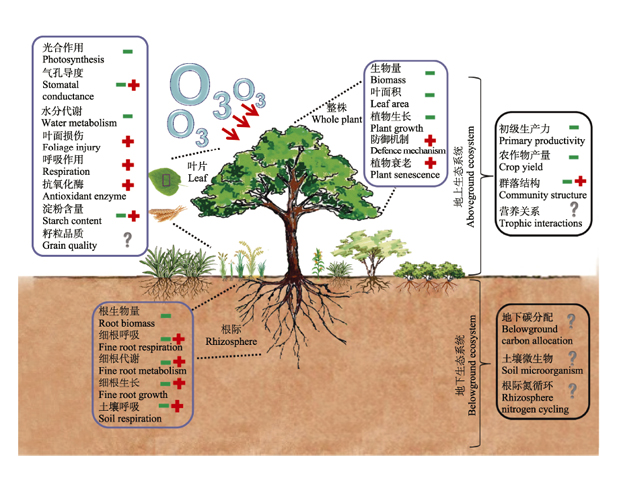
Rising ground-level ozone (O3) is currently an essential environmental issue in the world, especially in China. While research on the effects of O3 on leaf photosynthetic gas exchange, plant growth and biomass has received a lot of attention, ecosystem-scale studies are however scarce and subject to great uncertainties. This article combs trends and hotpots of ground-level O3 concentration and its effects on plants and ecosystems over the past 40 years. Research techniques and assessment methods for studying the ecological effects of ozone pollution are covered. The most important advances on the impacts of elevated ozone on terrestrial ecosystem are reviewed: plant response mechanisms, effects on grain yield, crop quality, carbon sequestration capacity, community structure and below-ground processes of different terrestrial ecosystems. Finally, regional risk assessment of the O3 pollution is discussed. Considering the main knowledge gaps, future research should focus on belowground ecosystem response to elevated O3 and should also incorporate O3 and multi-factor experiments using Free-Air Ozone Concentration Elevation (FACE) system. More attention should also be paid on food security, establishment of Asian ozone network, standardization of risk assessment approach, and exploration of ecological measures to reduce the negative effects of O3 pollution. This review can help to promote more studies on the ecological effects of ground-level O3 pollution.
Cite this article
FENG Zhao-Zhong, YUAN Xiang-Yang, LI Pin, SHANG Bo, PING Qin, HU Ting-Jian, LIU Shuo . Progress in the effects of elevated ground-level ozone on terrestrial ecosystems[J]. Chinese Journal of Plant Ecology, 2020 , 44(5) : 526 -542 . DOI: 10.17521/cjpe.2019.0144
References
| [1] | Agathokleous E, Saitanis CJ, Wang XN, Watanabe M, Koike T (2016). A review study on past 40 years of research on effects of tropospheric O3 on belowground structure, functioning, and processes of trees: a linkage with potential ecological implications. Water, Air, & Soil Pollution, 227, 33. DOI: 10.1007/s11270-015-2715-9. |
| [2] | Ainsworth EA (2017). Understanding and improving global crop response to ozone pollution. The Plant Journal, 90, 886-897. |
| [3] | Ainsworth EA, Lemonnier P, Wedow JM (2020). The influence of rising tropospheric carbon dioxide and ozone on plant productivity. Plant Biology, 22(S1), 5-11. |
| [4] | Ainsworth EA, Yendrek CR, Sitch S (2012). The effects of tropospheric ozone on net primary productivity and implications for climate change. Annual Review of Plant Biology, 63, 637-661. |
| [5] | Andersen CP (2003). Source-sink balance and carbon allocation below ground in plants exposed to ozone: tansley review. New Phytologist, 157, 213-228. |
| [6] | Ashmore MR (2005). Assessing the future global impacts of ozone on vegetation. Plant, Cell & Environment, 28, 949-964. |
| [7] | Avnery S, Mauzerall DL, Liu JF, Horowitz LW (2011). Global crop yield reductions due to surface ozone exposure: 1. Year 2000 crop production losses and economic damage. Atmospheric Environment, 45, 2284-2296. |
| [8] | Bai YM, Wang CY, Liu L, Guo JP, Wen M (2002). A diagnostic experiment and study of the influence of O3 on pakchoi. Journal of Applied Meteorological Science, 13, 364-370. |
| [8] | [ 白月明, 王春乙, 刘玲, 郭建平, 温民 (2002). O3浓度增加对油菜影响的诊断试验研究. 应用气象学报, 13, 364-370.] |
| [9] | Bai YM, Wang CY, Wen M (2005). Response of soybean to O3, CO2 and their combination. Journal of Applied Meteorological Science, 16, 545-549. |
| [9] | [ 白月明, 王春乙, 温民 (2005). 大豆对臭氧、二氧化碳及其复合效应的响应. 应用气象学报, 16, 545-549.] |
| [10] | Barbo DN, Chappelka AH, Somers GL, Miller-Goodman MS, Stolte K (1998). Diversity of an early successional plant community as in?uenced by ozone. New Phytologist, 138, 653-662. |
| [11] | Bergmann E, Bender J, Weigel HJ (2017). Impact of tropospheric ozone on terrestrial biodiversity: a literature analysis to identify ozone sensitive taxa. Journal of Applied Botany and Food Quality, 90, 83-105. |
| [12] | Booker FR. Muntifering R, McGrath M, Burkey K, Decoteau D, Fiscus E, Manning W, Krupa S, Chappelka A, Grantz D (2009). The ozone component of global change: potential effects on agricultural and horticultural plant yield, product quality and interactions with invasive species. Journal of Integrative Plant Biology, 51, 337-351. |
| [13] | Broberg MC, Feng ZZ, Xin Y, Pleijel H (2015). Ozone effects on wheat grain quality—A summary. Environmental Pollution, 197, 203-213. |
| [14] | Büker P, Feng ZZ, Uddling J, Briolat A, Alonso R, Braun S, Elvira S, Gerosa G, Karlsson PE, Thiec DL, Marzuoli R, Mills G, Oksanen E, Wieser G, Wilkinson M, Emberson LD (2015). New flux based dose-response relationships for ozone for European forest tree species. Environmental Pollution, 206, 163-174. |
| [15] | Cannon WN (1990). Olfactory response of eastern spruce budworm larvae to red spruce needles exposed to acid-rain and elevated levels of ozone. Journal of Chemical Ecology, 16, 3255-3261. |
| [16] | Cao JC, Zheng YF, Zhao H, Xu JX (2017). Impact of elevated ozone concentration on growth and yield of winter wheat and soybean. Asian Journal of Ecotoxicology, 12(2), 129-136. |
| [16] | [ 曹嘉晨, 郑有飞, 赵辉, 徐静馨 (2017). 地表臭氧浓度升高对冬小麦和大豆生长和产量的影响. 生态毒理学报, 12(2), 129-136.] |
| [17] | Chameides WL, Kasibhatla PS, Yienger J, Levy IIH (1994). Growth of continental-scale metro-agro-plexes, regional ozone pollution and world food production. Science, 264, 74-77. |
| [18] | Chappelka AH, Samuelson LJ (1998). Ambient ozone effects on forest trees of the eastern United States: a review. New Phytologist, 139, 91-108. |
| [19] | Collins WJ, Sitch S, Boucher O (2010). How vegetation impacts affect climate metrics for ozone precursors. Journal of Geophysical Research, 115, D23308. DOI: 10.1029/2010JD014187. |
| [20] | Cooper OR, Parrish DD, Ziemke J, Balashov NV, Cupeiro M, Galbally IE, Gilge S, Horowitz L, Jensen NR, Lamarque JF, Naik V, Oltmans SJ, Schwab J, Shindell DT, Thompson AM, Thouret V, Wang Y, Zbinden RM (2014). Global distribution and trends of tropospheric ozone: an observation- based review. Elementa Science of the Anthropocene, 2, 000029. DOI: 10.12952/journal.elementa.000029. |
| [21] | Dahlsten DL, Rowneu DL, Kickert RN (1997). Effects of oxidant air pollutants on western pine beetle (Coleoptera: Scolytidae) populations in southern California. Environmental Pollution, 96, 415-423. |
| [22] | Dai LL, Feng ZZ, Pan XD, Xu YS, Li P, Lefohn AS, Harmens H, Kobayashi K (2019). Increase of apoplastic ascorbate induced by ozone is insufficient to remove the negative effects in tobacco, soybean and poplar. Environmental Pollution, 245, 380-388. |
| [23] | Eltayeb AE, Kawano N, Badawi GH, Kaminaka H, Sanekata T, Morishima I, Shibahara T, Inanaga S, Tanaka K (2006). Enhanced tolerance to ozone and drought stresses in transgenic tobacco overexpressing dehydroascorbate reductase in cytosol. Physiologia Plantarum, 127, 57-65. |
| [24] | Evans PA, Ashmore MR (1992). The effects of ambient air on a seminatural grassland community. Agriculture Ecosystems and Environment, 38, 91-97. |
| [25] | Felzer B, Kicklighter D, Melillo J, Wang C, Zhuang QL, Prinn RG (2004). Effects of ozone on net primary production and carbon sequestration in the conterminous United States using a biogeochemistry model. Tellus, 56B, 230-248. |
| [26] | Felzer B, Reilly J, Melillo J, Kicklighter DW, Wang C, Prinn RG, Sarofim MC, Zhuang Q (2005). Future effects of ozone on carbon sequestration and climate change policy using a global biogeochemical model. Climate Change, 73, 345-373. |
| [27] | Feng ZZ, Büker P, Pleijel H, Emberson L, Karlsson PE, Uddling J (2018a). A unifying explanation for variation in ozone sensitivity among woody plants. Global Change Biology, 24, 78-84. |
| [28] | Feng ZZ, Hu EZ, Wang XK, Jiang LJ, Liu XJ (2015a). Ground-level O3 pollution and its impacts on food crops in China: a review. Environmental Pollution, 199, 42-48. |
| [29] | Feng ZZ, Kobayashi K (2009). Assessing the impacts of current and future concentrations of surface ozone on crop yield with meta-analysis. Atmospheric Environment, 43, 1510-1519. |
| [30] | Feng ZZ, Li P, Yuan XY, Gao F, Jiang LJ, Dai LL (2018). Progress in ecological and environmental effects of ground-level O3 in China. Acta Ecologica Sinica, 38, 1530-1541. |
| [30] | [ 冯兆忠, 李品, 袁相洋, 高峰, 姜立军, 代碌碌 (2018). 我国地表臭氧的生态环境效应研究进展. 生态学报, 38, 1530-1541.] |
| [31] | Feng ZZ, Liu XJ, Zhang FS (2015b). Air pollution affects food security in China: taking ozone as an example. Frontiers of Agricultural Science and Engineering, 2, 152-158. |
| [32] | Feng ZZ, Tang HY, Uddling J, Pleijel H, Kobayashi K, Zhu JG, Oue H, Guo W (2012). A stomatal ozone flux-response relationship to assess ozone-induced yield loss of winter wheat in subtropical China. Environmental Pollution, 164, 16-23. |
| [33] | Feng ZZ, Uddling J, Tang HY, Zhu JG, Kobayashi K (2018b). Comparison of crop yield sensitivity to ozone between open-top chamber and free-air experiments. Global Change Biology, 24, 2231-2238. |
| [34] | Fuhrer J (2009). Ozone risk for crops and pastures in present and future climates. Naturwissenschaften, 96, 173-194. |
| [35] | Fuhrer J, Shariat-Madari H, Perler R, Tschannen W, Grub A (1994). Effects of ozone on managed pasture: II. Yield, species composition, canopy structure, and forage quality. Environmental Pollution, 86, 307-314. |
| [36] | Fuhrer J, Skarby L, Ashmore M (1997). Critical levels for ozone effects on vegetation in Europe. Environmental Pollution, 97, 91-106. |
| [37] | Fuhrer J, Val Martin M, Mills G, Heald CL, Harmens H, Hayes F, Sharps K, Bender J, Ashmore MR (2016). Current and future ozone risks to global terrestrial biodiversity and ecosystem processes. Ecology and Evoluton, 6, 8785-8799. |
| [38] | Gao F (2018). Effects of Ozone Pollution and Drought Stress on Growth Regulatory Mechanism of Poplar Saplings. PhD dissertation, Research Center for Eco-Environmental Sciences, Chinese Academy of Sciences, Beijing. 7-8. |
| [38] | [ 高峰 (2018). 臭氧污染和干旱胁迫对杨树幼苗生长的影响机制研究. 博士学位论文, 中国科学院生态环境研究中心, 北京. 7-8.] |
| [39] | Gao F, Calatayud V, García-Breijo F, Reig-Arminana J, Feng ZZ (2016). Effects of elevated ozone on physiological, anatomical and ultrastructural characteristics of four common urban tree species in China. Ecological Indicators, 67, 367-379. |
| [40] | Gao F, Catalayud V, Paoletti E, Hoshik Y, Feng ZZ (2017). Water stress mitigates the negative effects of ozone on photosynthesis and biomass in poplar plants. Environmental Pollution, 230, 268-279. |
| [41] | Gessner MO, Swan CM, Dang CK, McKie BG, Bardget RD, Wall DH, H?tenschwiler S (2010). Diversity meets decompositon. Trends in Ecology and Evoluton, 25, 372-380. |
| [42] | Ghimire RP, Kasurinen A, H?iki? E, Holopainen JK, Julkunen-Tiitto R, Holopainen T, Kivim?enp?? M (2018). Combined effects of elevated ozone, temperature, and nitrogen on stem phenolic concentrations of Scots pine (Pinus sylvestris) seedlings. Canadian Journal of Forest Research, 49, 246-255. |
| [43] | Grantz DA, Gunn S, Vu HB (2006). O3 impacts on plant development: a meta-analysis of root/shoot allocation and growth. Plant, Cell & Environment, 29, 1193-1209. |
| [44] | Grulke NE, Heath RL (2020). Ozone effects on plants in natural ecosystems. Plant Biology, 22, 12-37. |
| [45] | Grulke NE, Minnich RA, Paine TD, Seybold SJ, Chavez DJ, Fenn ME, Riggan PJ, Dunn A (2009). Chapter 17 Air pollution increases forest susceptibility to wildfires: a case study in the San Bernardino Mountains in southern California. Developments in Environmental Science, 8, 365-403. |
| [46] | Guo JP, Wang CY, Wen M, Bai YM (2003). Study on the impacts of ozone concentration on vegetables. Chinese Journal of Eco-Agriculture, 11(2), 18-20. |
| [46] | [ 郭建平, 王春乙, 温民, 白月明 (2003). 大气中臭氧浓度变化对蔬菜的影响研究. 中国生态农业学报, 11(2), 18-20.] |
| [47] | Handley T, Grulke NE (2008). Interactive effects of O3 exposure on California black oak (Quercus kelloggii Newb.) seedlings with and without N amendment. Environmental Pollution, 156, 53-60. |
| [48] | Hayes F, Mills G, Ashmore M (2009). Effects of ozone on inter- and intra-species competition and photosynthesis in mesocosms of Lolium perenne and Trifolium repens. Environmental Pollution, 157, 208-214. |
| [49] | Hayes F, Mills G, Jones L, Ashmore M (2010). Does a simulated upland grassland community respond to increasing background, peak or accumulated exposure of ozone? Atmospheric Environment, 44, 4155-4164. |
| [50] | Heagle AS, Body DE, Heck WW (1973). An open-top field chamber to assess the impact of air pollution on plants. Journal of Environmental Quality, 2, 365-368. |
| [51] | Heagle AS, Philbeck RB, Rogers HH, Letchworth MB (1979). Dispensing and monitoring ozone in open-top field chambers for plant-effects studies. Phytopathology, 69, 15-20. |
| [52] | Hendrey GR, Kimball B (1994). The FACE program. Agricultural and Forest Meteorology, 70, 3-14. |
| [53] | Hewitt CN, MacKenzie AR, Di Carlo P, Di Marco CF, Dorsey JR, Evans M, Fowler D, Gallagher MW, Hopkins JR, Jones CE, Langford B, Lee JD, Lewis AC, Lim SF, McQuaid J, Misztal P, Moller SJ, Monks PS, Nemitz E, Oram DE, Owen SM, Phillips GJ, Pugh TAM, Pyle JA, Reeves CE, Ryder J, Siong J, Skiba U, Stewart DJ (2009). Nitrogen management is essential to prevent tropical oil palm plantations from causing ground-level ozone pollution. Proceedings of the National Academy of Sciences of the United States of America, 106, 18447-18451. |
| [54] | Hofstra G, Ali A, Wukasch RT, Fletcher RA (1981). The rapid inhibition of root respiration after exposure of bean (Phaseolus vulgaris L.) plants to ozone. Atmospheric Environment, 15, 483-487. |
| [55] | Hoshika Y, Watanabe M, Inada N, Koike T (2012). Ozone-induced stomatal sluggishness develops progressively in Siebold’s beech (Fagus crenata). Environmental Pollution, 166, 152-156. |
| [56] | Hu EZ, Gao F, Xin Y, Jia HX, Li KH, Hu JJ, Feng ZZ (2015). Concentration- and flux-based ozone dose-response relationships for five poplar clones grown in North China. Environmental Pollution, 207, 21-30. |
| [57] | ICP Vegetation (2011). Ozone pollution: a hidden threat to food security. Programme Coordination Centre for the ICP Vegetation//Mills G, Harmens H. Programme Coordination Centre for the ICP Vegetation. NERC/Centre for Ecology and Hydrology, Bangor, UK. 116. |
| [58] | ICP Vegetation (2013). Ozone pollution: impacts on ecosystem services and biodiversity. Programme Coordination Centre for the ICP Vegetation//Mills G, Wagg S, Harmens H. Programme Coordination Centre for the ICP Vegetation. NERC/Centre for Ecology and Hydrology, Bangor, UK. 104. |
| [59] | Jia YL (2016). Effects of Ozone Stress on Grain Yield, Quality and Plant Lodging Resistance of Different Wheat Varieties. Masters degree dissertation, Yangzhou University, Yangzhou, Jiangsu. 21-38. |
| [59] | [ 贾一磊 (2016). 臭氧胁迫对不同小麦品种产量、品质和抗倒性的影响. 硕士学位论文, 扬州大学, 江苏扬州. 21-38.] |
| [60] | Kangasj?rvi J, Jaspers P, Kollist H (2005). Signalling and cell death in ozone-exposed plants. Plant, Cell & Environment, 28, 1021-1036. |
| [61] | Karnosky DF, Pregitzer KS, Zak DR, Kubiske ME, Hendrey GR, Weinstein D, Nosal M, Percy KE (2005). Scaling ozone responses of forest trees to the ecosystem level in a changing climate. Plant, Cell & Environment, 28, 965-981. |
| [62] | Karnosky DF, Zak DR, Pregitzer KS, Awmack CS, Bockheim JG, Dickson RE, Hendrey GR, Host GE, King JS, Kopper BJ, Kruger EL, Kubiske ME, Lindroth RL, Mattson WFJ, Mcdonald EP, Noormets A, Oksanen E, Parsons WFJ, Percy KE, Podile GK, Riemenschneider DE, Sharma P, Thakur R, S?ber A, S?ber J, Jones WS, Anttonen S, Vapaavuori E, Mankovska B, Heilman W, Isebrands JG (2003). Tropospheric O3 moderates responses of temperate hardwood forests to elevated CO2: a synthesis of molecular to ecosystem results from the Aspen FACE project. Functional Ecology, 17, 289-394. |
| [63] | Kasurinen A, Peltonen PA, Holopainen JK, Vapaavuori E, Holopainen T (2007). Leaf litter under changing climate: Will increasing levels of CO2 and O3 affect decomposition and nutrient cycling processes? Dynamic Soil, Dynamic Plant, 1, 58-67. |
| [64] | Kasurinen A, Riikonen J, Oksanen E, Vapaavuori V, Holopainen T (2006). Chemical composition and decomposition of silver birch leaf litter produced under elevated CO2 and O3. Plant and Soil, 282, 261-280. |
| [65] | King JS, Kubiske ME, Pregitzer KS, Hendrey GR, McDonald EP, Giardina CP, Quinn V, Karnosky D (2005). Tropospheric O3 compromises net primary production in young stands of trembling aspen, paper birch and sugar maple in response to elevated atmospheric CO2. New Phytologist, 168, 623-636. |
| [66] | Kopper BJ, Lindroth RL (2003). Effects of elevated carbon dioxide and ozone on the phytochemistry of aspen and performance of an herbivore. Oecologia, 134, 95-103. |
| [67] | Kubiske ME, Quinn VS, Marquardt PE, Karnosky DF (2007). Effects of elevated atmospheric CO2 and/or O3 on intra- and interspecific competitive ability of aspen. Plant Biology, 9, 342-355. |
| [68] | Larson JL, Zak DR, Sinsabaugh RL (2002). Extracellular enzyme activity beneath temperate trees growing under elevated carbon dioxide and ozone. Soil Science Society of America Journal, 66, 1848-1856. |
| [69] | Leeds AR (1880). Lines of discovery in the history of ozone. Annals of the New York Academy of Sciences, 1, 363-391. |
| [70] | Lefohn AS, Foley JK (1992). NCLAN results and their application to the standard setting process: protecting vegetation from surface ozone exposures. Journal of the Air and Waste Management Association, 42, 1046-1052. |
| [71] | Lefohn AS, Malley CS, Smith L, Wells B, Hazucha M, Simon H, Naik V, Mills G, Schultz MG, Paoletti E, De Marco A, Xu XB, Zhang L, Wang T, Neufeld HS, Musselman RC, Tarasick D, Brauer M, Feng ZZ, Tang HY, Kobayashi K, Sicard P, Solberg S, Gerosa G (2018). Tropospheric ozone assessment report: global ozone metrics for climate change, human health, and crop/ecosystem research. Elementa Science of the Anthropocene, 6, 28. DOI: 10.1525/elementa.279. |
| [72] | Legge AH, Grünhage L, Noal M, J?ger HJ, Krupa SV (1995). Ambient ozone and adverse crop response: an evaluation of north American and European data as they relate to exposure indices and critical levels. Journal of Applied Botany, 69, 192-205. |
| [73] | Li P, Calatayud V, Gao F, Uddling J, Feng ZZ (2016). Differences in ozone sensitivity among woody species are related to leaf morphology and antioxidant levels. Tree Physiology, 36, 1105-1116. |
| [74] | Li P, Feng ZZ, Calatayud V, Yuan XY, Xu YS, Paoletti E (2017). A meta-analysis on growth, physiological, and biochemical responses of woody species to ground-level ozone highlights the role of plant functional types. Plant, Cell & Environment, 40, 2369-2380. |
| [75] | Li P, Feng ZZ, Shang B, Yuan XY, Dai LL, Xu YS (2018). Stomatal characteristics and ozone dose-response relationships for six greening tree species. Acta Ecologica Sinica, 38, 2710-2721. |
| [75] | [ 李品, 冯兆忠, 尚博, 袁相洋, 代碌碌, 徐彦森 (2018). 6种绿化树种的气孔特性与臭氧剂量的响应关系. 生态学报, 38, 2710-2721.] |
| [76] | Lie GW, Xue L (2014). Interactions of ozone stress and other environmental factors on plants. Chinese Journal of Ecology, 33, 1678-1687. |
| [76] | [ 列淦文, 薛立 (2014). 臭氧与其他环境因子对植物的交互作用. 生态学杂志, 33, 1678-1687.] |
| [77] | Lin YY, Jiang F, Zhao J, Zhu G, He XJ, Ma XL, Li S, Sabel CE, Wang HK (2018). Impacts of O3 on premature mortality and crop yield loss across China. Atmospheric Environment, 194, 41-47. |
| [78] | Lindroth RL (2010). Impacts of elevated atmospheric CO2 and O3 on forests: phytochemistry, trophic interactions, and ecosystem dynamics. Journal of Chemical Ecology, 36, 2-21. |
| [79] | Long SP, Ainsworth EA, Leakey ADB, Morgan PB (2005). Global food insecurity. Treatment of major food crops with elevated carbon dioxide or ozone under large-scale fully open-air conditions suggests recent models may have overestimated future yields. Philosophical Transactions of the Royal Society B: Biological Sciences, 360, 2011-2020. |
| [80] | LRTAR Convention (2015). Draft Chapter III: Mapping Critical Levels for Vegetation, of the Manual on Methodologies and Criteria for Modelling and Mapping Critical Loads and Levels and Air Pollution Effects, Risks and Trends. http://icpmapping.org/Mapping_Manual. Cited: 2019-06-13. |
| [81] | Lu X, Hong JY, Zhang L, Cooper OR, Schultz MG, Xu XB, Wang T, Gao M, Zhao YH, Zhang YH (2018). Severe surface ozone pollution in China: a global perspective. Environmental Science and Technology Letters, 5, 487-494. |
| [82] | Luwe M (1996). Antioxidants in the apoplast and symplast of beech (Fagus sylvatica L.) leaves: seasonal variations and responses to changing ozone concentrations in air. Plant, Cell & Environment, 19, 321-328. |
| [83] | Mandle RH (1973). A cylindrical open top chamber for the exposure of plants to air pollutants in the field. Journal of Environmental Quality, 2, 371-376. |
| [84] | Matyssek R, Bytnerowicz A, Karlsson PE, Paoletti E, Sanze M, Schaub M, Wieser G (2007). Promoting the O3 flux concept for European forest trees. Environmental Pollution, 146, 587-607. |
| [85] | Matyssek R, Wieser G, Ceulemans R, Rennenberg H, Pretzsch H, Haberer K, Low M, Nunn AJ, Werner H, Wipfler P, Osswald W, Nikolova PS, Hanke DE, Kraiger H, Tausz M, Bahnweg G, Kitao M, Dieler J, Sandermann H, Herbinger K, Grebenc T, Blumenrother M, Deckmyn G, Grams TEE, Heerdt C, Leuchner M, Fabian P, Haberle KH (2010). Enhanced ozone strongly reduces carbon sink strength of adult beech (Fagus sylvatica)—Resume from the free-air fumigation study at Kranzberg forest. Environmental Pollution, 158, 2527-2532. |
| [86] | McDonald EP, Kruger EL, Riemenschneider DE, Isebrands JG (2002). Competitive status influences tree-growth responses to elevated CO2 and O3 in aggrading aspen stands. Functional Ecology, 16, 792-801. |
| [87] | McLaughlin SB, Wullschleger SD, Sun G, Nosal M (2007). Interactive effects of ozone and climate on water use, soil moisture content and streamflow in a southern Appalachian forest in the USA. New Phytologist, 174, 125-136. |
| [88] | Mills G, Buse A, Gimeno B, Bermejo V, Holland M, Emberson L, Pleijel H (2007). A synthesis of AOT40-based response functions and critical levels of ozone for agricultural and horticultural crops. Atmospheric Environment, 41, 2630-2643. |
| [89] | Mills G, Hayes F, Simpson D, Emberson L, Norris D, Harmens H, Buker P (2011). Evidence of widespread effects of ozone on crops and (semi-) natural vegetation in Europe (1990-2006) in relation to AOT40- and flux-based risk maps. Global Change Biology, 17, 592-613. |
| [90] | Mills G, Sharps K, Simpson D, Pleijel H, Broberg M, Uddling J, Jaramillo F, Davies WJ, Dentener F, van den Berg M, Agrawal M, Agrawal SB, Ainsworth EA, Buker P, Emberson L, Feng ZZ, Harmens H, Hayes F, Kobayashi K, Paoletti E, Dingenen RV (2018). Ozone pollution will compromise efforts to increase global wheat production. Global Change Biology, 24, 3560-3574. |
| [91] | Morgan PB, Bernacchi CJ, Ort DR, Long SP (2004). An in vivo analysis of the effect of season-long open-air elevation of ozone to anticipated 2050 levels on photosynthesis in soybean. Plant Physiology, 135, 2348-2357. |
| [92] | Musselman RC, Lefohn AS, Massman WJ, Heath RL (2006). A critical review and analysis of the use of exposure- and flux-based ozone indices for predicting vegetation effects. Atmospheric Environment, 40, 1869-1888. |
| [93] | Oksanen E (2003). Responses of selected birch (Betula pendula) clones to ozone change over time. Plant, Cell & Environment, 26, 875-886. |
| [94] | Ollinger SV, Aber JD, Reich PB, Freuder RJ (2002). Interactive effects of nitrogen deposition, tropospheric ozone, elevated CO2 and land use history on the carbon dynamics of northern hardwood forests. Global Change Biology, 8, 545-562. |
| [95] | Paoletti E (2009). Ozone and urban forests in Italy. Environmental Pollution, 157, 1506-1512. |
| [96] | Paoletti E, Materassi A, Fasano G, Hoshika Y, Carriero G, Silaghi D, Badea O (2017). A new-generation 3D ozone FACE (Free Air Controlled Exposure). Science of the Total Environment, 575, 1407-1414. |
| [97] | Pell EJ, Pearson NS (1984). Ozone-induced reduction in quantity and quality of two potato cultivars. Environmental Pollution, 35, 345-352. |
| [98] | Pellegrini E, Campanella A, Cotrozzi L, Tonelli M, Nali C, Lorenzini G (2018). What about the detoxification mechanisms underlying ozone sensitivity in Liriodendron tulipifera? Environmental Science and Pollution Research, 25, 8148-8160. |
| [99] | Percy KE, Awmack CS, Lindroth RL, Kubiske ME, Kopper BJ, Isebrands JG, Pregitzer KS, Hendrey GR, Dickson RE, Zak DR, Oksanen E, Sober J, Harrington R, Karnosky DF (2002). Altered performance of forest pests under CO2- and O3-enriched atmospheres. Nature, 420, 403-407. |
| [100] | Pollastrini M, Desotgiu R, Cascio C, Bussotti F, Cherubini P, Saurer M, Gerosa G, Marzuoli R (2010). Growth and physiological responses to ozone and mild drought stress of tree species with different ecological requirements. Trees, 24, 695-704. |
| [101] | Pretzsch H, Dieler J, Matyssek R, Wipfler P (2010). Tree and stand growth of mature Norway spruce and European beech under long-term ozone fumigation. Environmental Pollution, 158, 1061-1070. |
| [102] | Reich PR (1987). Quantifying plant response to ozone: a unifying theory. Tree Physiology, 3, 63-91. |
| [103] | Ren W, Tian HQ, Tao B, Chappelka AH, Sun G, Lu CQ, Liu ML, Chen GS, Xu XF (2011). Impacts of tropospheric ozone and climate change on net primary productivity and net carbon exchange of China’s forest ecosystems. Global Ecology and Biogeography, 20, 391-406. |
| [104] | Richards BL, Middleton JT, Hewitt WB (1958). Air pollution with relation to agronomic crops: V. Oxidant stipple of grape. Journal of the American Society of Agronomy, 50, 559-560. |
| [105] | Rogers LH, Renzetti NA, Neiburger M (1956). Smog effects and chemical analysis of the Los Angeles atmosphere. Journal of the Air Pollution Control Association, 6, 165-170. |
| [106] | Sawada H, Tsukahara K, Kohno Y, Suzuki K, Nagasawa N, Masanori T (2016). Elevated ozone deteriorates grain quality of Japonica Rice cv. Koshihikari, even if it does not cause yield reduction. Rice, 9, 1-10. |
| [107] | Schloter M, Winkler JB, Aneja M, Koch N, Fleischmann F, Pritsch K, Heller W, Stich S, Grams TE, G?ttlein A, Matyssek R, Munch JC (2005). Short term effects of ozone on the plant-rhizosphere-bulk soil system of young beech trees. Plant Biology, 7, 728-736. |
| [108] | Schmadel-Hageb?lling HE, Engel C, Schmitt V, Wild A (1998). The combined effects of CO2, ozone and drought on rubisco and nitrogen metabolism of young oak trees (Quercus petraea)—A phytotron study. Chemosphere, 36, 789-794. |
| [109] | Sicard P, Agathokleous E, Araminiene V, Carrari E, Hoshika Y, de Marco A, Paoletti E (2018). Should we see urban trees as effective solutions to reduce increasing ozone levels in cities? Environmental Pollution, 243, 163-176. |
| [110] | Singh AA, Agrawal SB (2017). Tropospheric ozone pollution in India: effects on crop yield and product quality. Environmental Science and Pollution Research, 24, 4367-4382. |
| [111] | Sitch S, Cox PM, Collins WJ, Huntingford C (2007). Indirect radiative forcing of climate change through ozone effects on the land-carbon sink. Nature, 448, 791-794. |
| [112] | Sun G, Mclaughlin SB, Porter JH, Uddling J, Mulholland PJ, Adams MB, Pederson N (2012). Interactive influences of ozone and climate on streamflow of forested watersheds. Global Change Biology, 18, 3395-3409. |
| [113] | Tai APK, Val Martin M, Heald CL (2014). Threat to future global food security from climate change and ozone air pollution. Nature Climate Change, 4, 817-821. |
| [114] | Tang HY, Liu G, Han Y, Zhu JG, Kobayashi K (2011). A system for free-air ozone concentration elevation with rice and wheat: control performance and ozone exposure regime. Atmospheric Environment, 45, 6276-6282. |
| [115] | Tausz M, Grulke NE, Wieser G (2007). Defense and avoidance of ozone under global change. Environmental Pollution, 147, 525-531. |
| [116] | Tomer R, Bhatia A, Kumar V, Kumar A, Singh R, Singh B, Singh SD (2015). Impact of elevated ozone on growth, yield and nutritional quality of two wheat species in Northern India. Aerosol and Air Quality Research, 15, 329-340. |
| [117] | van Dingenen R, Dentener FJ, Raes F, Krol MC, Emberson L, Cofala J (2009). The global impact of ozone on agricultural crop yields under current and future air quality legislation. Atmospheric Environment, 43, 604-618. |
| [118] | Volk M, Geissmann M, Blatter A, Contat F, Fuhrer J (2003). Design and performance of a free-air exposure system to study long-term effects of ozone on grasslands. Atmospheric Environment, 37, 1341-1350. |
| [119] | Wang CY (1995). Effects of ozone on crops. Journal of Applied Meteorological Science, 6, 343-349. |
| [119] | [ 王春乙 (1995). 臭氧对农作物的影响研究. 应用气象学报, 6, 343-349.] |
| [120] | Wang N, Lyu XP, Deng XJ, Huang X, Jiang F, Ding AJ (2019). Aggravating O3 pollution due to NOx emission control in eastern China. Science of the Total Environment, 677, 732-744. |
| [121] | Wang XP, Mauzerall DL (2004). Characterizing distributions of surface ozone and its impact on grain production in China, Japan and South Korea: 1990 and 2020. Atmospheric Environment, 38, 4383-4402. |
| [122] | Wang YX, Yang LX, Han Y, Zhu JG, Kobayashi K, Tang HY, Wang YL (2012). The impact of elevated tropospheric ozone on grain quality of hybrid rice: a free-air gas concentration enrichment (FACE) experiment. Field Crops Research, 129, 81-89. |
| [123] | Watanabe M, Hoshika Y, Inada N, Wang XN, Mao QZ, Koike T (2013). Photosynthetic traits of Siebold’s beech and oak saplings grown under free air ozone exposure. Environmental Pollution, 174, 50-56. |
| [124] | Wieser G, Tegischer K, Tausz M, H?berle KH, Grams TE, Matyssek R (2002). Age effects on Norway spruce (Picea abies) susceptibility to ozone uptake: a novel approach relating stress avoidance to defense. Tree Physiology, 22, 583-590. |
| [125] | Wittig VE, Ainsworth EA, Naidu SL, Karnosky DF, Long SP (2009). Quantifying the impact of current and future tropospheric ozone on tree biomass, growth, physiology and biochemistry: a quantitative meta-analysis. Global Change Biology, 15, 396-424. |
| [126] | Xu YS, Feng ZZ, Tarvainen L, Shang B, Dai LL, Uddling J (2019). Mesophyll conductance limitation of photosynthesis in poplar under elevated ozone. Science of the Total Environment, 657, 136-145. |
| [127] | Yamaguchi M, Watanabe M, Matsumura H, Kohno Y, Izuta T (2010). Effects of ozone on nitrogen metabolism in the leaves of Fagus crenata seedlings under different soil nitrogen loads. Trees, 24, 175-184. |
| [128] | Yue X, Unger N, Harper K, Xia XG, Liao H, Zhu T, Xiao JF, Feng ZZ, Li J (2017). Ozone and haze pollution weakens net primary productivity in China. Atmospheric Chemistry and Physics, 17, 6073-6089. |
| [129] | Zhang RB, Hu HJ, Zhao Z, Yang DD, Zhu XK, Guo WS, Zhu JG, Kobayashi K (2013). Effects of elevated ozone concentration on starch and starch synthesis enzymes of yangmai 16 under fully open-air field conditions. Journal of Integrative Agriculture, 12, 2157-2163. |
| [130] | Zhao H, Zheng YF, Wu XY (2018). Assessment of yield and economic losses for wheat and rice due to ground level O3 exposure in the Yangtze River Delta, China. Atmospheric Environment, 191, 241-248. |