
植物生态学报 ›› 2020, Vol. 44 ›› Issue (5): 461-474.DOI: 10.17521/cjpe.2019.0125 cstr: 32100.14.cjpe.2019.0125
所属专题: 全球变化与生态系统
冯兆忠1,*( ), 李品2, 张国友1, 李征珍2, 平琴2, 彭金龙2, 刘硕2
收稿日期:2019-05-24
接受日期:2019-08-25
出版日期:2020-05-20
发布日期:2020-03-26
基金资助:
FENG Zhao-Zhong1,*(), LI Pin2, ZHANG Guo-You1, LI Zheng-Zhen2, PING Qin2, PENG Jin-Long2, LIU Shuo2
Received:2019-05-24
Accepted:2019-08-25
Online:2020-05-20
Published:2020-03-26
Supported by:摘要:
理解生态系统对过去、现在和未来CO2浓度变化的响应,对于在生态进化的时间尺度上认识和预测全球变化的后果至关重要。过去三十多年来CO2浓度升高相关的科学问题主要集中在对植物生长和生产力的影响, 碳氮周转, 生态系统渐进式氮限制(PNL)形成, 与其他胁迫因子(O3污染、氮沉降、升温、干旱)之间的交互作用等方面。尽管生态学家在数据累积、基础理论上取得了一定进展, 但是仍然存在较大不确定性和大量未知有待解决。该文探究了近30年来CO2浓度升高对陆地生态系统影响研究的国际研究进展、重点领域及热点, 回顾了CO2浓度升高对植物影响的模拟实验研究发展, 重点论述了CO2浓度升高对粮食产量及品质、碳固定、水分利用效率、生态系统氮利用和土壤微生物响应等国际前沿动态研究中存在的主要问题与不足, 在此基础上展望了未来研究中值得关注的前沿研究方向。
冯兆忠, 李品, 张国友, 李征珍, 平琴, 彭金龙, 刘硕. 二氧化碳浓度升高对陆地生态系统的影响: 问题与展望. 植物生态学报, 2020, 44(5): 461-474. DOI: 10.17521/cjpe.2019.0125
FENG Zhao-Zhong, LI Pin, ZHANG Guo-You, LI Zheng-Zhen, PING Qin, PENG Jin-Long, LIU Shuo. Impacts of elevated carbon dioxide concentration on terrestrial ecosystems: problems and prospective. Chinese Journal of Plant Ecology, 2020, 44(5): 461-474. DOI: 10.17521/cjpe.2019.0125
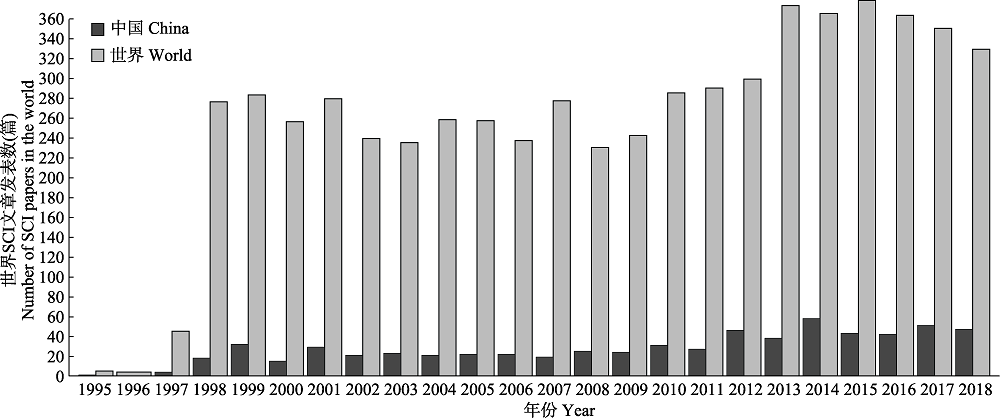
图1 中国与世界CO2浓度升高对陆地生态系统影响研究的SCI文章数量变化情况(1990-2018)。
Fig. 1 Changes in the number of SCI articles in terms of the impact of rising CO2 concentrations on terrestrial ecosystems in China and the world (1990-2018).
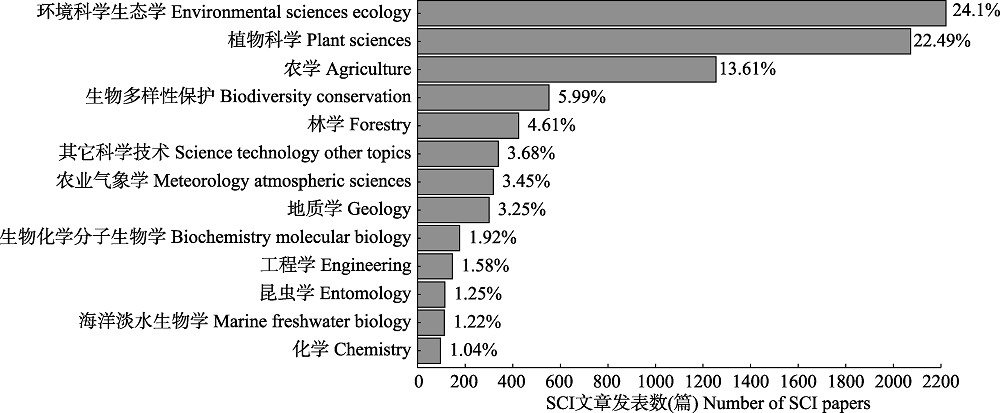
图2 CO2浓度升高对生态系统影响的SCI文章发文的学科领域。
Fig. 2 Discipline distribution of SCI articles in terms of the impact of rising CO2 concentrations on terrestrial ecosystems.
| 序号 Number | 关键词 Keyword | 频次 Frequency | 序号 Number | 关键词 Keyword | 频次 Frequency |
|---|---|---|---|---|---|
| 1 | CO2升高 Elevated CO2 | 1 148 | 26 | 全球变暖 Global warming | 75 |
| 2 | 气候变化 Climate change | 769 | 27 | 叶绿素荧光 Chlorophyll fluorescence | 74 |
| 3 | 二氧化碳 Carbon dioxide | 729 | 28 | 产量 Yield | 73 |
| 4 | 光合作用 Photosynthesis | 524 | 29 | 蒸腾作用 Transpiration | 67 |
| 5 | 全球变化 Global change | 310 | 30 | 增温 Warming | 63 |
| 6 | FACE系统 FACE | 244 | 31 | 植食 Herbivory | 62 |
| 7 | 氮 Nitrogen | 228 | 32 | 碳水化合物 Carbohydrates | 61 |
| 8 | CO2富集 CO2 enrichment | 188 | 33 | 竞争 Competition | 58 |
| 9 | 气孔导度 Stomatal conductance | 186 | 34 | 磷 Phosphorus | 57 |
| 10 | 生长 Growth | 178 | 35 | 大气CO2 Atmospheric CO2 | 56 |
| 11 | 干旱 Drought | 154 | 36 | 水分胁迫 Water stress | 56 |
| 12 | 温度 Temperature | 140 | 37 | 碳循环 Carbon cycle | 54 |
| 13 | 生物量 Biomass | 109 | 38 | 分解 Decomposition | 53 |
| 14 | 臭氧 Ozone/O3 | 102 | 39 | 温度升高 Elevated temperature | 52 |
| 15 | 自由大气CO2富集 Free-air CO2 enrichment | 100 | 40 | 蒸散 Evapotranspiration | 52 |
| 16 | 呼吸 Respiration | 94 | 41 | 土壤湿度 Soil moisture | 52 |
| 17 | 二磷酸核酮糖羧化酶 Rubisco | 83 | 42 | 气孔 Stomata | 52 |
| 18 | 土壤呼吸 Soil respiration | 83 | 43 | 淀粉 Starch | 51 |
| 19 | 驯化 Acclimation | 82 | 44 | 土壤有机质 Soil organic matter | 49 |
| 20 | 碳固定 Carbon sequestration | 82 | 45 | 氮沉降 Nitrogen deposition | 48 |
| 21 | 水分利用效率 Water use efficiency | 80 | 46 | 大豆 Soybean | 47 |
| 22 | 草地 Grassland | 79 | 47 | 碳 Carbon | 45 |
| 23 | 气体交换 Gas exchange | 78 | 48 | 全球气候变化 Global climate change | 45 |
| 24 | 小麦 Wheat | 77 | 49 | 根际 Rhizosphere | 45 |
| 25 | 水稻 Rice | 76 | 50 | Meta分析 Meta-analysis | 44 |
表1 CO2浓度升高对生态系统影响的SCI文章出现频次最多的前50个关键词
Table 1 Top 50 most frequent keywords of SCI articles in terms of the impact of rising CO2 concentrations on terrestrial ecosystems
| 序号 Number | 关键词 Keyword | 频次 Frequency | 序号 Number | 关键词 Keyword | 频次 Frequency |
|---|---|---|---|---|---|
| 1 | CO2升高 Elevated CO2 | 1 148 | 26 | 全球变暖 Global warming | 75 |
| 2 | 气候变化 Climate change | 769 | 27 | 叶绿素荧光 Chlorophyll fluorescence | 74 |
| 3 | 二氧化碳 Carbon dioxide | 729 | 28 | 产量 Yield | 73 |
| 4 | 光合作用 Photosynthesis | 524 | 29 | 蒸腾作用 Transpiration | 67 |
| 5 | 全球变化 Global change | 310 | 30 | 增温 Warming | 63 |
| 6 | FACE系统 FACE | 244 | 31 | 植食 Herbivory | 62 |
| 7 | 氮 Nitrogen | 228 | 32 | 碳水化合物 Carbohydrates | 61 |
| 8 | CO2富集 CO2 enrichment | 188 | 33 | 竞争 Competition | 58 |
| 9 | 气孔导度 Stomatal conductance | 186 | 34 | 磷 Phosphorus | 57 |
| 10 | 生长 Growth | 178 | 35 | 大气CO2 Atmospheric CO2 | 56 |
| 11 | 干旱 Drought | 154 | 36 | 水分胁迫 Water stress | 56 |
| 12 | 温度 Temperature | 140 | 37 | 碳循环 Carbon cycle | 54 |
| 13 | 生物量 Biomass | 109 | 38 | 分解 Decomposition | 53 |
| 14 | 臭氧 Ozone/O3 | 102 | 39 | 温度升高 Elevated temperature | 52 |
| 15 | 自由大气CO2富集 Free-air CO2 enrichment | 100 | 40 | 蒸散 Evapotranspiration | 52 |
| 16 | 呼吸 Respiration | 94 | 41 | 土壤湿度 Soil moisture | 52 |
| 17 | 二磷酸核酮糖羧化酶 Rubisco | 83 | 42 | 气孔 Stomata | 52 |
| 18 | 土壤呼吸 Soil respiration | 83 | 43 | 淀粉 Starch | 51 |
| 19 | 驯化 Acclimation | 82 | 44 | 土壤有机质 Soil organic matter | 49 |
| 20 | 碳固定 Carbon sequestration | 82 | 45 | 氮沉降 Nitrogen deposition | 48 |
| 21 | 水分利用效率 Water use efficiency | 80 | 46 | 大豆 Soybean | 47 |
| 22 | 草地 Grassland | 79 | 47 | 碳 Carbon | 45 |
| 23 | 气体交换 Gas exchange | 78 | 48 | 全球气候变化 Global climate change | 45 |
| 24 | 小麦 Wheat | 77 | 49 | 根际 Rhizosphere | 45 |
| 25 | 水稻 Rice | 76 | 50 | Meta分析 Meta-analysis | 44 |
| 植物名称 Plant name | 暴露时间(天) Exposure time (Day) | WUE (%) | 参考文献 Reference |
|---|---|---|---|
| 海岸松 Pinus pinaster | 79 | +48 | Picon et al., 1996 |
| 垂枝桦 Betula pendula | 45 | +39 | Pettersson et al., 1993 |
| 北美鹅掌楸 Liriodendron tulipifera | Norby & O’Neill, 1991 | ||
| 高营养 High nutrition | 168 | +93 | |
| 低营养 Low nutrition | 168 | +66 | |
| Tabebuia rosea | - | +125 | |
| 木瓜 Chaenomeles sinensis | Cruz et al., 2016 | ||
| 高氮 High nitrogen | 45 | +84 | |
| 低氮 Low nitrogen | 45 | +30 |
表2 CO2浓度升高对植物水分利用效率(WUE)的生态正效应
Table 2 Positive ecological effect of the rising CO2 concentrations on water use efficiency (WUE) of plants
| 植物名称 Plant name | 暴露时间(天) Exposure time (Day) | WUE (%) | 参考文献 Reference |
|---|---|---|---|
| 海岸松 Pinus pinaster | 79 | +48 | Picon et al., 1996 |
| 垂枝桦 Betula pendula | 45 | +39 | Pettersson et al., 1993 |
| 北美鹅掌楸 Liriodendron tulipifera | Norby & O’Neill, 1991 | ||
| 高营养 High nutrition | 168 | +93 | |
| 低营养 Low nutrition | 168 | +66 | |
| Tabebuia rosea | - | +125 | |
| 木瓜 Chaenomeles sinensis | Cruz et al., 2016 | ||
| 高氮 High nitrogen | 45 | +84 | |
| 低氮 Low nitrogen | 45 | +30 |
| [1] |
Ainsworth EA, Long SP (2005). What have we learned from 15 years of free-air CO2 enrichment (FACE)? A meta-analytic review of the responses of photosynthesis, canopy properties and plant production to rising CO2. New Phytologist, 165, 351-372.
DOI URL PMID |
| [2] |
Alberton O, Kuyper TW, Gorissen A (2005). Taking mycocentrism seriously: mycorrhizal fungal and plant responses to elevated CO2. New Phytologist, 167, 859-868.
DOI URL PMID |
| [3] |
Austin EE, Castro HF, Sides KE, Schadt CW, Classen AT (2009). Assessment of 10 years of CO2 fumigation on soil microbial communities and function in a sweetgum plantation. Soil Biology & Biochemistry, 41, 514-520.
DOI URL |
| [4] |
Becklin KM, Walker II SM, Way DA, Ward JK (2017). CO2 studies remain key to understanding a future world. New Phytologist, 214, 34-40.
DOI URL PMID |
| [5] |
Billings SA, Ziegler SE (2005). Linking microbial activity and soil organic matter transformations in forest soils under elevated CO2. Global Change Biology, 11, 203-212.
DOI URL |
| [6] |
Bishop K, Betzelberger A, Long S, Ainsworth E (2014). Is there potential to adapt soybean (Glycine max Merr.) to future [CO2]? An analysis of the yield response of 18 genotypes in free-air CO2 enrichment. Plant, Cell & Environment, 38, 1765-1774.
DOI URL PMID |
| [7] |
Bloom AJ, Burger M, Kimball BA, Pinter PJ (2014). Nitrate assimilation is inhibited by elevated CO2 in field-grown wheat. Nature Climate Change, 4, 477-480.
DOI URL |
| [8] |
Bloom AJ, Smart DR, Nguyen DT, Searles PS (2002). Nitrogen assimilation and growth of wheat under elevated carbon dioxide. Proceedings of the National Academy of Sciences of the United States of America, 99, 1730-1735.
DOI URL PMID |
| [9] |
Booker FL, Prior SA, Torbert HA, Fiscus EL, Pursley WA, Hu S (2005). Decomposition of soybean grown under elevated concentrations of CO2 and O3. Global Change Biology, 11, 685-698.
DOI URL |
| [10] |
Bourgault M, Brand J, Tausz-Posch S, Armstrong R, O’Leary G, Fitzgerald GJ, Tausz M (2017). Yield growth and grain nitrogen response to elevated CO2 in six lentil (Lens culinaris) cultivars grown under Free Air CO2 Enrichment (FACE) in a semi-arid environment. European Journal of Agronomy, 87, 50-58.
DOI URL |
| [11] |
Bunce JA (2016). Responses of soybeans and wheat to elevated CO2 in free-air and open top chamber systems. Field Crops Research, 186, 78-85.
DOI URL |
| [12] |
Bunce JA (2017). Using FACE systems to screen wheat cultivars for yield increases at elevated CO2. Agronomy, 7, 20.
DOI URL |
| [13] |
Carney KM, Hungate BA, Drake BG, Megonigal P (2007). Altered soil microbial community at elevated CO2 leads to loss of soil carbon. Proceedings of the National Academy of Sciences of the United States of America, 104, 4990-4995.
DOI URL PMID |
| [14] |
Cernusak LA, Winter K, Dalling JW, Holtum JAM, Jaramillo C, Körner C, Leakey ADB, Norby RJ, Poulter B, Turner BL, Wright SJ (2013). Tropical forest responses to increasing atmospheric CO2: current knowledge and opportunities for future research. Functional Plant Biology, 40, 531-551.
DOI URL |
| [15] |
Chaturvedi AK, Bahuguna RN, Pal M, Shah D, Maurya S, Jagadish KSV (2017). Elevated CO2 and heat stress interactions affect grain yield quality and mineral nutrient composition in rice under field conditions. Field Crops Research, 206, 149-157.
DOI URL |
| [16] |
Chen CP, Sakai H, Tokida T, Usui Y, Nakamura H, Hasegawa T (2014). Do the rich always become richer? Characterizing the leaf physiological response of the high-yielding rice cultivar Takanari to free-air CO2 enrichment. Plant & Cell Physiology, 55, 381-391.
DOI URL PMID |
| [17] |
Cheng L, Booker FL, Tu C, Burkey KO, Zhou LS, Shew HD, Rufty TW, Hu SJ (2012). Arbuscular mycorrhizal fungi increase organic carbon decomposition under elevated CO2. Science, 337, 1084-1087.
DOI URL PMID |
| [18] |
Cotrufo MF, Ineson P, Scott A (1998). Elevated CO2 reduces the nitrogen concentration of plant tissues. Global Change Biology, 4, 43-54.
DOI URL |
| [19] |
Cox PM, Pearson D, Booth BB, Friedlingstein P, Huntingford C, Jones CD, Luke CM (2013). Sensitivity of tropical carbon to climate change constrained by carbon dioxide variability. Nature, 494, 341-344.
DOI URL |
| [20] |
Cruz JL, Alves AAC, LeCain DR, Ellis DD, Morgan JA (2016). Interactive effects between nitrogen fertilization and elevated CO2 on growth and gas exchange of papaya seedlings. Scientia Horticulturae, 202, 32-40.
DOI URL |
| [21] |
de Graaff MA, van Groenigen KJ, Six J, Hungate B, van Kessel C (2006). Interactions between plant growth and soil nutrient cycling under elevated CO2: a meta-analysis. Global Change Biology, 12, 2077-2091.
DOI URL |
| [22] |
Deng Q, Hui DF, Luo YQ, Elser J, Wang YP, Loladze I, Zhang QF, Dennis S (2015). Down-regulation of tissue N:P ratios in terrestrial plants by elevated CO2. Ecology, 96, 3354-3362.
DOI URL PMID |
| [23] |
Dieleman WIJ, Vicca S, Dijkstra FA, Hagedorn F, Hovenden MJ, Larsen KS, Morgan JA, Volder A, Beier C, Dukes JS, King J, Leuzinger S, Linder S, Luo YQ, Oren R, de Angelis P, Tingey D, Hoosbeek MR, Janssens IA (2012). Simple additive effects are rare: a quantitative review of plant biomass and soil process responses to combined manipulations of CO2 and temperature. Global Change Biology, 18, 2681-2693.
DOI URL PMID |
| [24] | Dorodnikov M, Blagodatskaya E, Blagodatsky S, Marhan S, Fangmeier A, Kuzyakov Y (2009). Stimulation of microbial extracellular enzyme activities by elevated CO2 depends on soil aggregate size. Global Change Biology, 15, 1603-1614. |
| [25] |
Drake JE, Gallet-Budynek A, Hofmockel KS, Bernhardt ES, Billings SA, Jackson RB, Johnsen KS, Lichter J, McCarthy H R, McCormack ML, Moore DJP, Oren R, Palmroth S, Phillips RP, Pippen JS, Pritchard SG, Treseder KK, Schlesinger WH, DeLucia EH, Finzi AC (2011). Increases in the flux of carbon belowground stimulate nitrogen uptake and sustain the long-term enhancement of forest productivity under elevated CO2. Ecology Letters, 14, 349-357.
DOI URL |
| [26] | Fang JY (2002). Forest productivity in China and its response to global climate change. Acta Phytoecologica Sinica, 24, 513-517. |
| [27] |
Feng ZZ, Kobayashi K (2009). Assessing the impacts of current and future concentrations of surface ozone on crop yield with meta-analysis. Atmospheric Environment, 43, 1510-1519.
DOI URL |
| [28] |
Feng ZZ, Rütting T, Pleijel H, Wallin G, Reich PB, Kammann C, Newton PCD, Kobayashi K, Luo YJ, Uddling J (2015). Constraints to nitrogen acquisition of terrestrial plants under elevated CO2. Global Change Biology, 21, 3152-3168.
DOI URL PMID |
| [29] |
Fierer N, Strickland MS, Liptzin D, Bradford MA, Cleveland CC (2009). Global patterns in belowground communities. Ecology Letters, 12, 1238-1249.
DOI URL PMID |
| [30] |
Finzi AC, Moore DJ, Delucia EH, Lichter J, Hofmockel KS, Jackson RB, Kim HS, Matamala R, McCarthy HR, Oren R, Pippen JS, Schlesinger WH (2006). Progressive nitrogen limitation of ecosystem processes under elevated CO2 in a warm-temperate forest. Ecology, 87, 15-25.
DOI URL PMID |
| [31] |
Gill RA, Polley HW, Johnson HB, Anderson LJ, Maherali H, Jackson RB (2002). Nonlinear grassland responses to past and future atmospheric CO2. Nature, 417, 279-282.
DOI URL PMID |
| [32] |
Godfray HCJ, Beddington JR, Crute IR, Haddad L, Lawrence D, Muir JF, Pretty J, Robinson S, Thomas SM, Toulmin C (2010). Food security: the challenge of feeding 9 billion people. Science, 327, 812-818.
DOI URL PMID |
| [33] |
Guru-Pirasanna-Pandi G, Chander S, Pal M, Soumia PS (2018). Impact of elevated CO2 on Oryza sativa phenology and brown planthopper, Nilaparvata lugens (Hemiptera: Delphacidae) population. Current Science, 114, 1767-1777.
DOI URL |
| [34] |
Hasegawa T, Sakai H, Tokida T, Nakamura H, Zhu C, Usui Y, Yoshimoto M, Fukuoka M, Wakatsuki H, Katayanagi N, Matsunami T, Kaneta Y, Sato T, Takakai F, Sameshima R, Okada M, Mae T, Makino A (2013). Rice cultivar responses to elevated CO2 at two free-air CO2 enrichment (FACE) sites in Japan. Functional Plant Biology, 40, 148-159.
DOI URL |
| [35] |
Hatfield JL, Boote KJ, Kimball BA, Ziska LH, Lzaurralde RC (2011). Climate impacts on agriculture: implications for crop production. Agronomy Journal, 103, 351-370.
DOI URL |
| [36] |
Hoosbeek MR, Vos JM, Bakker EJ, Scarascia-Mugnozza GE (2006). Effects of Free Atmospheric CO2 Enrichment (FACE), N fertilization and poplar genotype on the physical protection of carbon in the mineral soil of a polar plantation after five years. Biogeosciences, 3, 479-487.
DOI URL |
| [37] |
Houshmandfar A, Fitzgerald GJ, O’Leary G, Tausz-Posch S, Fletcher A, Tausz M (2018). The relationship between transpiration and nutrient uptake in wheat changes under elevated atmospheric CO2. Physiologia Plantarum, 163, 516-529.
DOI URL PMID |
| [38] |
Hovenden M, Newton P (2018). Plant responses to CO2 are a question of time. Science, 360, 263-264.
URL PMID |
| [39] |
Hu S, Tu C, Chen X, Gruver JB (2006). Progressive N limitation of plant response to elevated CO2: a microbiological perspective. Plant and Soil, 289, 47-58.
DOI URL |
| [40] | Hungate BA, Holland EA, Jackson RB, Chapin III FS, Mooney HA, Field CB(1997). The fate of carbon in grasslands under carbon dioxide enrichment. Nature, 388, 576-579. |
| [41] |
Huntingford C, Zelazowski P, Galbraith D, Mercado LM, Sitch S, Fisher R, Lomas M, Walker AP, Jones CD, Booth BBB, Malhi Y, Hemming D, Kay G, Good P, Lewis SL, Phillips OL, Atkin OK, Lloyd J, Gloor E, Zaragoza-Castells J, Meir P, Betts R, Harris PP, Nobre C, Marengo J, Cox PM (2013). Simulated resilience of tropical rainforests to CO2-induced climate change. Nature Geoscience, 6, 268-273.
DOI URL |
| [42] |
Ikawa H, Chen CP, Sikma M, Yoshimoto M, Sakai H, Tokida T, Usui Y, Nakamura H, Ono K, Maruyama A, Watanabe T, Kuwagata T, Hasegawa T (2018). Increasing canopy photosynthesis in rice can be achieved without a large increase in water use—A model based on free-air CO2 enrichment. Global Change Biology, 24, 1321-1341.
DOI URL PMID |
| [43] | IPCC (Intergovernmental Panel on Climate Change) (2013). Climate Change 2013: the Physical Science Basis. Cambridge University Press, Cambridge, UK. |
| [44] |
Jing L, Wang J, Shen S, Wang Y, Zhu J, Wang Y, Yang L (2016). The impact of elevated CO2 and temperature on grain quality of rice grown under open-air field conditions. Journal of the Science of Food and Agriculture, 96, 3658-3667.
DOI URL PMID |
| [45] |
Jones AG, Scullion J, Ostle N, Levy PE, Gwynn-Jones D (2014). Completing the FACE of elevated CO2 research. Environment International, 73, 252-258.
DOI URL |
| [46] |
Jones TH, Thompson LJ, Lawton JH, Bezemer TM, Bardgett RD, Blackburn TM, Bruce KD, Cannon PF, Hall GS, Hartley SE, Howson G, Jones CG, Kampichler C, Kandeler E, Ritchie DA (1998). Impacts of rising atmospheric carbon dioxide on model terrestrial ecosystems. Science, 280, 441-443.
DOI URL PMID |
| [47] | Kaminski KP, Korup K, Nielsen KL, Liu FL, Topbjerg HB, Kirk HG, Andersen MN (2014). Gas-exchange, water use efficiency and yield responses of elite potato (Solanum tuberosum L.) cultivars to changes in atmospheric carbon dioxide concentration, temperature and relative humidity. Agricultural & Forest Meteorology, 201, 381-383. |
| [48] |
Kang S, Zhang FC, Hu XT, Zhang JH (2002). Benefits of CO2 enrichment on crop plants are modified by soil water status. Plant and Soil, 238, 69-77.
DOI URL |
| [49] |
Karnosky DF, Zak DR, Pregitzer KS, Awmack CS, Bockheim JG, Dickson RE, Hendrey GR, Host GE, King JS, Kopper BJ, Kruger EL, Kubiske ME, Lindroth RL, Mattson WJ, McDonald EP, Noormets A, Oksanen E, Parsons WFJ, Percy KE, Podila GK, Riemenschneider DE, Sharma P, Thakur R, Sôber A, Sober J, Jones WS, Anttonen S, Vapaavuori E, Mankovska B, Heilman W, Isebrands JG (2003). Tropospheric O3 moderates responses of temperate hardwood forests to elevated CO2: a synthesis of molecular to ecosystem results from the Aspen FACE project. Functional Ecology, 17, 289-304.
DOI URL |
| [50] |
Keenan TF, Hollinger DY, Bohrer G, Dragoni D, Munger JW, Schmid HP, Richardson AD (2013). Increase in forest water- use efficiency as atmospheric carbon dioxide concentrations rise. Nature, 499, 324-327.
DOI URL PMID |
| [51] | Kimball BA, Morris CF, Pinter Jr PJ, Wall GW, Hunsaker DJ, Adamsen FJ, LaMorte RL, Leavitt SW, Thompson TL, Matthias AD, Brooks TJ (2001). Wheat grain quality as affected by elevated CO2, drought, and soil nitrogen. New Phytologist, 150, 295-303. |
| [52] | King JS, Hanson PJ, Bernhardt EY, DeAngelis P, Norby RJ, Pregitzer KS (2004). A multiyear synthesis of soil respiration responses to elevated atmospheric CO2 from four forest FACE experiments. Global Change Biology, 10, 1027-1042. |
| [53] |
Körner C, Asshof R, Bignucolo O, Hattenschwiler S, Keel SG, Peláez-Riedl S, Pepin S, Siegwolf RTW, Zotz G (2005). Carbon flux and growth in mature deciduous forest trees exposed to elevated CO2. Science, 309, 1360-1362.
DOI URL PMID |
| [54] |
Langley JA, Mckinley DC, Wolf AA, Hungate BA, Drake BG, Megonigal JP (2009). Priming depletes soil carbon and releases nitrogen in a scrub-oak ecosystem exposed to elevated CO2. Soil Biology & Biochemistry, 41, 54-60.
DOI URL |
| [55] |
Lichter J, Billings SA, Ziegler SE, Gaindh D, Ryals R, Finzi AC, Jackson RB, Stemmler EA, Schlesinger WH (2008). Soil carbon sequestration in a pine forest after 9 years of atmospheric CO2 enrichment. Global Change Biology, 14, 2910-2922.
DOI URL |
| [56] |
Loladze I (2014). Hidden shift of the ionome of plants exposed to elevated CO2 depletes minerals at the base of human nutrition. Elife, 3, e02245. DOI: 10.7554/eLife.02245.
DOI URL PMID |
| [57] |
Long SP (2006). Food for thought: lower-than-expected crop yield stimulation with rising CO2 concentrations. Science, 312, 1918-1921.
URL PMID |
| [58] |
Long SP, Ainsworth EA, Rogers A, Ort DR (2004). Rising atmospheric carbon dioxide: plants face the future. Annual Review of Plant Biology, 55, 591-628.
DOI URL PMID |
| [59] | Luo Y, Su B, Currie WS, Dukes JS, Finzi A, Hartwig U, Hungate B, McMurtrie RE, Oren R, Parton WJ (2004). Progressive nitrogen limitation of ecosystem responses to rising atmospheric carbon dioxide. BioScience, 54, 731-739. |
| [60] |
Luo YQ, Hui DF, Zhang DQ (2006). Elevated CO2 stimulates net accumulations of carbon and nitrogen in land ecosystems: a meta-analysis. Ecology, 87, 53-63.
DOI URL PMID |
| [61] | Muryono M, Chen CP, Sakai H, Tokida T, Hasegawa T, Usui Y, Nakamura H, Hikosaka K (2017). Nitrogen distribution in leaf canopies of high-yielding rice cultivar Takanari. Crop Science, 57, 2080-2088. |
| [62] |
Myers SS, Zanobetti A, Kloog I, Huybers P, Leakey ADB, Bloom AJ, Carlisle E, Dietterich LH, Fitzgerald G, Hasegawa T, Holbrook NM, Nelson RL, Ottman MJ, Raboy V, Sakai H, Sartor KA, Schwartz J, Seneweera S, Tausz M, Usui Y (2014). Increasing CO2 threatens human nutrition. Nature, 510, 139-142.
DOI URL |
| [63] |
Nakano H, Yoshinaga S, Takai T, Arai-Sanoh Y, Kondo K, Yamamoto T, Sakai H, Tokida T, Usui Y, Nakamura H, Hasegawa T, Kondo M (2017). Quantitative trait loci for large sink capacity enhance rice grain yield under free-air CO2 enrichment conditions. Scientific Reports, 7, 1827. DOI: 10.1038/s41589-017-01690-8.
DOI URL PMID |
| [64] |
Norby RJ, Cotrufo MF, Ineson P, O’Neill EG, Canadell JG (2001a). Elevated CO2: litter chemistry, and decomposition: a synthesis. Oecologia, 127, 153-165.
DOI URL PMID |
| [65] | Norby RJ, Kobayashi K, Kimball BA (2001b). Rising CO2 future ecosystems. New phytologist, 150, 215-221. |
| [66] | Norby RJ, O’Neill EG (1991). Leaf area compensation and nutrient interactions in CO2-enriched seedlings of yellow- poplar (Liriodendron tulipifera L.). New Phytologist, 117, 515-528. |
| [67] |
Norby RJ, Warren JM, Iversen CM, Medlyn BE, McMurtrie RE (2010). CO2 enhancement of forest productivity constrained by limited nitrogen availability. Proceedings of the National Academy of Sciences of the United States of America, 107, 19368-19373.
DOI URL PMID |
| [68] | Norby RJ, Zak DR (2011). Ecological lessons from Free-Air CO2 Enrichment (FACE) experiments. Annual Review of Ecology, Evolution, and Systematics, 42, 181-203. |
| [69] | Oechel WC, Cowles S, Grilke N, Hastings SJ, Lawrence B, Prudhomme T, Riechers G, Strain B, Tissue D, Vourlitis G (1994). Transient nature of CO2 fertilization in Arctic tundra. Nature, 371, 500-503. |
| [70] | Oikawa S, Ehara H, Koyama M, Hirose T, Hikosaka K, Chen CP, Nakamura H, Sakai H, Tokida T, Usui Y, Hasegawa T (2017). Nitrogen resorption in senescing leaf blades of rice exposed to free-air CO2 enrichment (FACE) under different N fertilization levels. Plant and Soil, 418, 231-240. |
| [71] | Pendall E, Bridgham S, Hanson PJ, Hungate B, Kicklighter DW, Johnson DW, Law BE, Luo Y, Megonigal JP, Olsrud M, Ryan MG, Wan S (2004). Below-ground process responses to elevated CO2 and temperature: a discussion of observation, measurement methods, and models. New Phytologist, 162, 311-322. |
| [72] | Pettersson R, McDonald AJS, Stadenberg I (1993). Response of small birch plants (Betula pendula Roth.) to elevated CO2 and nitrogen supply. Plant, Cell & Environment, 16, 1115-1121. |
| [73] |
Phillips RP, Finzi AC, Bernhardt ES (2011). Enhanced root exudation induces microbial feedbacks to N cycling in a pine forest under long-term CO2 fumigation. Ecology Letters, 14, 187-194.
DOI URL PMID |
| [74] | Phillips RP, Meier IC, Bernhardt ES, Grandy AS, Wickings K, Finzi AC (2012). Roots and fungi accelerate carbon and nitrogen cycling in forests exposed to elevated CO2. Ecology Letters, 15, 1042-1049. |
| [75] | Picon C, Guehl JM, Ferhi A (1996). Leaf gas exchange and carbon isotope composition responses to drought in a drought-avoiding (Pinus pinaster) and a drought-tolerant (Quercus petraea) species under present and elevated atmospheric CO2 concentrations. Plant, Cell & Environment, 19, 182-190. |
| [76] | Ponton S, Flanagan LB, Alstad KP, Johnson BG, Morgenstern K, Kljun N, Black TA, Barr AG (2006). Comparison of ecosystem water-use efficiency among Douglas-fir forest, aspen forest and grassland using eddy covariance and carbon isotope techniques. Global Change Biology, 12, 294-310. |
| [77] | Reich PB, Hobbie SE, Lee T, Ellsworth DS, West JB, Tilman D, Knops JMH, Naeem S, Trost J (2006). Nitrogen limitation constrains sustainability of ecosystem response to CO2. Nature, 440, 922-925. |
| [78] | Reich PB, Hobbie SE, Lee TD, Pastore MA (2018). Unexpected reversal of C3 versus C4 grass response to elevated CO2 during a 20-year field experiment. Science, 360, 317-320. |
| [79] |
Rustad LE (2008). The response of terrestrial ecosystems to global climate change: towards an integrated approach. Science of the Total Environment, 404, 222-235.
DOI URL PMID |
| [80] | Rutting T, Andresen LC (2015). Nitrogen cycle responses to elevated CO2 depend on ecosystem nutrient status. Nutrient Cycling in Agroecosystems, 101, 285-294. |
| [81] | Shimono H, Okada M, Yamakawa Y, Nakamura H, Kobayashic K, Hasegawa T (2007). Lodging in rice can be alleviated by atmospheric CO2 enrichment. Agriculture Ecosystems & Environment, 118, 223-230. |
| [82] | Sitch S, Friedlingstein P, Gruber N, Jones SD, Murray-Tortarolo G, Ahlstrom A, Doney SC, Graven H, Heinze C, Huntingford C, Levis S, Levy PE, Lomas M, Poulter B, Viovy N, Zaehle S, Zeng N, Arneth A, Bonan G, Bopp L, Canadell JG, Chevallier F, Ciais P, Ellis R, Gloor M, Peylin P, Piao SL, Le Quere C, Smith B, Zhu Z, Myneni R (2015). Recent trends and drivers of regional sources and sinks of carbon dioxide. Biogeosciences, 12, 653-679. |
| [83] | Taub D, Miller B, Allen H (2008). Effects of elevated CO2 on the protein concentration of food crops: a meta-analysis. Global Change Biology, 14, 565-575. |
| [84] |
Taub DR, Wang XZ (2008). Why are nitrogen concentrations in plant tissues lower under elevated CO2? A critical examination of the hypotheses. Journal of Integrative Plant Biology, 50, 1365-1374.
URL PMID |
| [85] | Tausz-Posch S, Dempsey RW, Seneweera S, Norton RM, Fitzgerald G, Tausz M (2015). Does a freely tillering wheat cultivar benefit more from elevated CO2 than a restricted tillering cultivar in a water-limited environment? European Journal of Agronomy, 64, 21-28. |
| [86] | Terao T, Miura S, Yanagihara T, Hirose T, Nagata K, Tabuchi H, Kim HY, Lieffering M, Okada M, Kobayashi K (2005). Influence of free-air CO2 enrichment (FACE) on the eating quality of rice. Journal of the Science of Food and Agriculture, 85, 1861-1868. |
| [87] | Terashima I, Yanagisawa S, Sakakibara H (2014). Plant responses to CO2: background and perspectives. Plant & Cell Physiology, 55, 237-240. |
| [88] | Terrer C, Vicca S, Stocker BD, Hungate BA, Phillips RP, Reich PB, Finzi AC, Prentice IC (2018). Ecosystem responses to elevated CO2 governed by plant-soil interactions and the cost of nitrogen acquisition. New Phytologist, 217, 507-522. |
| [89] | Thompson GB, Woodward FI (1994). Some influences of CO2 enrichment nitrogen nutrition and competition on grain yield and quality in spring wheat and barley. Journal of Experimental Botany, 45, 937-942. |
| [90] | Tian D, Du E, Jiang L, Ma S, Zeng W, Zou A (2018). Responses of forest ecosystems to increasing N deposition in China: a critical review. Environmental Pollution, 243, 75-86. |
| [91] |
Uddling J, Brobery MC, Feng ZZ, Pleijel H (2018). Crop quality under rising atmospheric CO2. Current Opinion in Plant Biology, 45, 262-267.
DOI URL PMID |
| [92] | Usui Y, Sakai H, Tokida T, Nakamura H, Nakagawa H, Hasegawa T (2014). Heat-tolerant rice cultivars retain grain appearance quality under free-air CO2 enrichment. Rice, 7, 6. DOI: 10.1186/s12284-014-0006-5. |
| [93] |
Usui Y, Sakai H, Tokida T, Nakamura H, Nakagawa H, Hasegawa T (2016). Rice grain yield and quality responses to free-air CO2 enrichment combined with soil and water warming. Global Change Biology, 22, 1256-1270.
URL PMID |
| [94] | Wand SJE, Midgley GYF, Jones MH, Curtis PS (1999). Responses of wild C4 and C3 grass (Poaceae) species to elevated atmospheric CO2 concentration: a meta-analytic test of current theories and perceptions. Global Change Biology, 5, 723-741. |
| [95] | Wang B, Li J, Wan Y, Li Y, Qin X, Gao Q, Waqas MA, Wilkes A, Cai W, You S, Zhou S (2018). Responses of yield CH4 and N2O emissions to elevated atmospheric temperature and CO2 concentration in a double rice cropping system. European Journal of Agronomy, 96, 60-69. |
| [96] | Wang J, Wang C, Chen N, Xiong Z, Wolfe D, Zou J (2015). Response of rice production to elevated [CO2] and its interaction with rising temperature or nitrogen supply: a meta- analysis. Climatic Change, 130, 529-543. |
| [97] | Wang RJ, Gao SM, Zhang XC (2010). The physiological mechanism of the increment of C3 plant leaf water use efficiency under high atmospheric CO2 condition. Agricultural Research in the Arid Area, 28, 190-195. |
| [ 王润佳, 高世铭, 张绪成 (2010). 高大气CO2浓度下C3植物叶片水分利用效率升高的研究进展. 干旱地区农业研究, 28, 190-195.] | |
| [98] |
Way DA, Oren R, Kroner Y (2015). The space-time continuum: the effects of elevated CO2 and temperature on trees and the importance of scaling. Plant, Cell & Environment, 38, 991-1007.
URL PMID |
| [99] |
Weigel HJ, Manderscheid R (2012). Crop growth responses to free air CO2 enrichment and nitrogen fertilization: rotating barley ryegrass, sugar beet and wheat. European Journal of Agronomy, 43, 97-107.
DOI URL |
| [100] |
Wu J, Kronzucker HJ, Shi W (2018). Dynamic analysis of the impact of free-air CO2 enrichment (FACE) on biomass and N uptake in two contrasting genotypes of rice. Functional Plant Biology, 45, 696-704.
URL PMID |
| [101] |
Xie B, Zhou Z, Mei B, Zheng X, Dong H, Wang R, Han S, Cui F, Wang Y, Zhu J (2012). Influences of free-air CO2 enrichment (FACE) nitrogen fertilizer and crop residue incorporation on CH4 emissions from irrigated rice fields. Nutrient Cycling in Agroecosystems, 93, 373-385.
DOI URL |
| [102] | Xu Z, Zheng X, Wang Y, Han S, Huang Y, Zhu J, Butterbach- Bahl K (2004). Effects of elevated CO2 and N fertilization on CH4 emissions from paddy rice fields. Global Biogeochemical Cycles, 18, GB3009. DOI: 10.1029/2004GB002233. |
| [103] | Yang L, Liu H, Wang Y, Zhu J, Huang J, Liu G, Dong G, Wang Y (2009). Yield formation of CO2-enriched inter- subspecific hybrid rice cultivar Liangyoupeijiu under fully open-air field condition in a warm sub-tropical climate. Agriculture, Ecosystems & Environment, 129, 193-200. |
| [104] | Yang L, Wang Y, Dong G, Gu H, Huang J, Zhu J, Yang H, Liu G, Han Y (2007). The impact of free-air CO2 enrichment (FACE) and nitrogen supply on grain quality of rice. Field Crops Research, 102, 128-140. |
| [105] | Yoshida H, Horie T, Nakazono K, Ohno H, Nakagawa H (2011). Simulation of the effects of genotype and N availability on rice growth and yield response to an elevated atmospheric CO2 concentration. Field Crops Research, 124, 433-440. |
| [106] | Zak DR, Pregitzer KS, King JS, Holmes WE (2000). Elevated atmospheric CO2, fine roots and the response of soil microorganisms: a review and hypothesis. New phytologist, 147, 201-222. |
| [107] | Zhang G, Sakai H, Usui Y, Tokida T, Nakamura H, Zhu C, Fukuoka M, Kobayashi K, Hasegawa T (2015). Grain growth of different rice cultivars under elevated CO2 concentrations affects yield and quality. Field Crops Research, 179, 72-80. |
| [108] | Zhang W, Parker K, Luo Y, Wan S, Wallace LL, Hu S (2005). Soil microbial responses to experimental warming and clipping in a tallgrass prairie. Global Change Biology, 11, 266-277. |
| [109] |
Zhao X, Zhou N, Lai S, Frei M, Wang Y, Yang L (2019). Elevated CO2 improves lodging resistance of rice by changing physicochemical properties of the basal internodes. Science of the Total Environment, 647, 223-231.
URL PMID |
| [110] |
Ziska LH, Hogan KP, Smith AP, Drake BG (1991). Growth and photosynthetic response of nine tropical species with long-term exposure to elevated carbon dioxide. Oecologia, 86, 383-389.
DOI URL PMID |
| [111] | Zscheischler J, Reichstein M, von Buttlar J, Mu M, Randerson JT, Mahecha MD (2014). Carbon cycle extremes during the 21st century in CMIP5 models: future evolution and attribution to climatic drivers. Geophysical Research Letters, 41, 8853-8861. |
| [1] | 封逸凡, 朱时应, 周淑荣, 江乐乐, 陈隆, 王苗, 邓国芳, 刘兰. 热带次生林恢复中土壤微生物对菌根化树苗存活和生长性状的影响[J]. 植物生态学报, 2026, 50(预发表): 1-. |
| [2] | 姜庆宏, 丁露, 王哲, 郑春丽, 冯昭绰. 丛枝菌根真菌与不同功能细菌联用对苜蓿的促生作用[J]. 植物生态学报, 2026, 50(3): 774-788. |
| [3] | 马建辉, 童鑫, 张思榕, 毛子昆, 秦俊, 马克平. 菌根真菌生理生态功能研究进展及展望[J]. 植物生态学报, 2026, 50(3): 498-514. |
| [4] | 皮惠之, 张秋芳, 孙浩, 曾泉鑫, 彭园珍, 元晓春, 徐建国, 陈岳民. 微生物碳氮不平衡影响罗浮栲林土壤微生物氮利用效率对氮富集的响应[J]. 植物生态学报, 2026, 50(1): 34-44. |
| [5] | 朱瑞德, 杨俊薇, 刘宵含, 陈冰瑞, 池秀莲, 田地, 杨光, 程蒙, 戴亚峰, 王诗文. 霍山石斛设施和林下栽培模式中养分对植物-微生物关联的调控[J]. 植物生态学报, 2025, 49(9): 1434-1447. |
| [6] | 范亚冉, 夏少攀, 于冰冰, 朱紫琪, 杨威, 范豫川, 刘晓雨, 张旭辉, 郑聚锋. 大气CO2浓度升高和增温对土壤有机碳库积累、分子组成和结构稳定性的影响[J]. 植物生态学报, 2025, 49(7): 1053-1069. |
| [7] | 李欣怡, 张丽芳, 吴友贵, 郭静, 兰荣光, 吕洪飞, 于明坚. 不同海拔高度下百山祖冷杉幼苗的生长特征及其影响因素[J]. 植物生态学报, 2025, 49(4): 610-623. |
| [8] | 赵洪贤, 刘鹏, 史曼英, 徐铭泽, 贾昕, 田赟, 查天山. 毛乌素沙地典型固沙植物黑沙蒿和赖草叶片氮分配对最大净光合速率的影响[J]. 植物生态学报, 2025, 49(3): 460-474. |
| [9] | 李冬梅, 孙龙, 韩宇, 胡同欣, 杨光, 蔡慧颖. 计划火烧对红松人工林生物多样性与生态系统多功能性关系的影响[J]. 植物生态学报, 2025, 49(3): 379-392. |
| [10] | 竹万宽, 许宇星, 黄润霞, 杜阿朋, 王志超. 雷州半岛桉树人工林生态系统水分利用效率旱雨季差异及其控制因素[J]. 植物生态学报, 2025, 49(12): 2015-2029. |
| [11] | 徐源, 谭卓然, 殷缘, 化佳敏, 韩迎新, 蔺吉祥, 王傲, 王竞红. 入侵植物对土壤特性影响的研究进展[J]. 植物生态学报, 2025, 49(11): 1767-1777. |
| [12] | 胡同欣, 石林, 窦旭, 于澄, 韩宇, 孙龙. 林火对兴安落叶松根际与非根际土壤微生物群落的影响[J]. 植物生态学报, 2025, 49(10): 1755-1766. |
| [13] | 马录花, 孟宪超, 王贵强, 马子峰, 李以康, 李月梅, 周华坤, 张法伟, 林丽. 藓类结皮接种对三江源高寒草甸土壤性状和微生物的影响[J]. 植物生态学报, 2025, 49(1): 173-188. |
| [14] | 姚博, 陈云, 曹雯婕, 龚相文, 罗永清, 郑成卓, 王旭洋, 王正文, 李玉强. 呼伦贝尔退化沙地植被-土壤碳氮磷互馈关系及微生物驱动机制[J]. 植物生态学报, 2025, 49(1): 59-73. |
| [15] | 吴风燕, 吴永胜, 陈晓涵, 冯骥, 卢丽媛, 查斯娜, 王超宇, 孟元发, 尹强. 鄂尔多斯高原3种固沙灌木水分利用效率的时空变化特征[J]. 植物生态学报, 2024, 48(9): 1180-1191. |
| 阅读次数 | ||||||
|
全文 |
|
|||||
|
摘要 |
|
|||||
Copyright © 2026 版权所有 《植物生态学报》编辑部
地址: 北京香山南辛村20号, 邮编: 100093
Tel.: 010-62836134, 62836138; Fax: 010-82599431; E-mail: apes@ibcas.ac.cn, cjpe@ibcas.ac.cn
备案号: 京ICP备16067583号-19

