
植物生态学报 ›› 2020, Vol. 44 ›› Issue (7): 782-790.DOI: 10.17521/cjpe.2020.0114 cstr: 32100.14.cjpe.2020.0114
• 研究论文 • 上一篇
庞芳1, 夏维康1, 何敏1, 祁珊珊2, 戴志聪1,2,*( ), 杜道林1
收稿日期:2020-04-21
接受日期:2020-06-12
出版日期:2020-07-20
发布日期:2020-06-23
基金资助:
PANG Fang1, XIA Wei-Kang1, HE Min1, QI Shan-Shan2, DAI Zhi-Cong1,2,*(), DU Dao-Lin1
Received:2020-04-21
Accepted:2020-06-12
Online:2020-07-20
Published:2020-06-23
Supported by:摘要:
丛枝菌根真菌(AMF)能与大多数陆生植物的根系形成共生体, 有助于宿主植物吸收养分。但营养胁迫下, 根系微生物对AMF与宿主植物间关系的影响少见报道。该研究假设: 在营养极度匮乏(如氮胁迫)环境下, AMF与宿主植物可能产生营养竞争, 而固氮菌的介入能够缓解两者对营养的竞争关系。为了验证这一假设, 该文探究了加拿大一枝黄花(Solidago canadensis)生长受限的氮浓度, 并在氮受限条件下检验了AMF、加拿大一枝黄花及固氮菌三者间的关系。结果表明: 低氮处理明显抑制了加拿大一枝黄花的地上生物量和总生物量, 尤其以0.025 mmol·L-1 N的氨态氮对加拿大一枝黄花的负影响更甚。在此氮浓度下, 单独添加AMF总体上都进一步抑制了加拿大一枝黄花的生长, 而固氮菌的添加在一定程度上提高了氮受限条件下AMF对宿主的根部侵染率及宿主植物生物量。这表明固氮菌能够缓和氮受限条件下AMF和加拿大一枝黄花间的营养竞争关系。研究结果加深了对外来植物在极度营养胁迫环境下与多种微生物互作的入侵机制的理解。
庞芳, 夏维康, 何敏, 祁珊珊, 戴志聪, 杜道林. 固氮菌缓解氮限制环境中丛枝菌根真菌对加拿大一枝黄花的营养竞争. 植物生态学报, 2020, 44(7): 782-790. DOI: 10.17521/cjpe.2020.0114
PANG Fang, XIA Wei-Kang, HE Min, QI Shan-Shan, DAI Zhi-Cong, DU Dao-Lin. Nitrogen-fixing bacteria alleviates competition between arbuscular mycorrhizal fungi and Solidago canadensis for nutrients under nitrogen limitation. Chinese Journal of Plant Ecology, 2020, 44(7): 782-790. DOI: 10.17521/cjpe.2020.0114
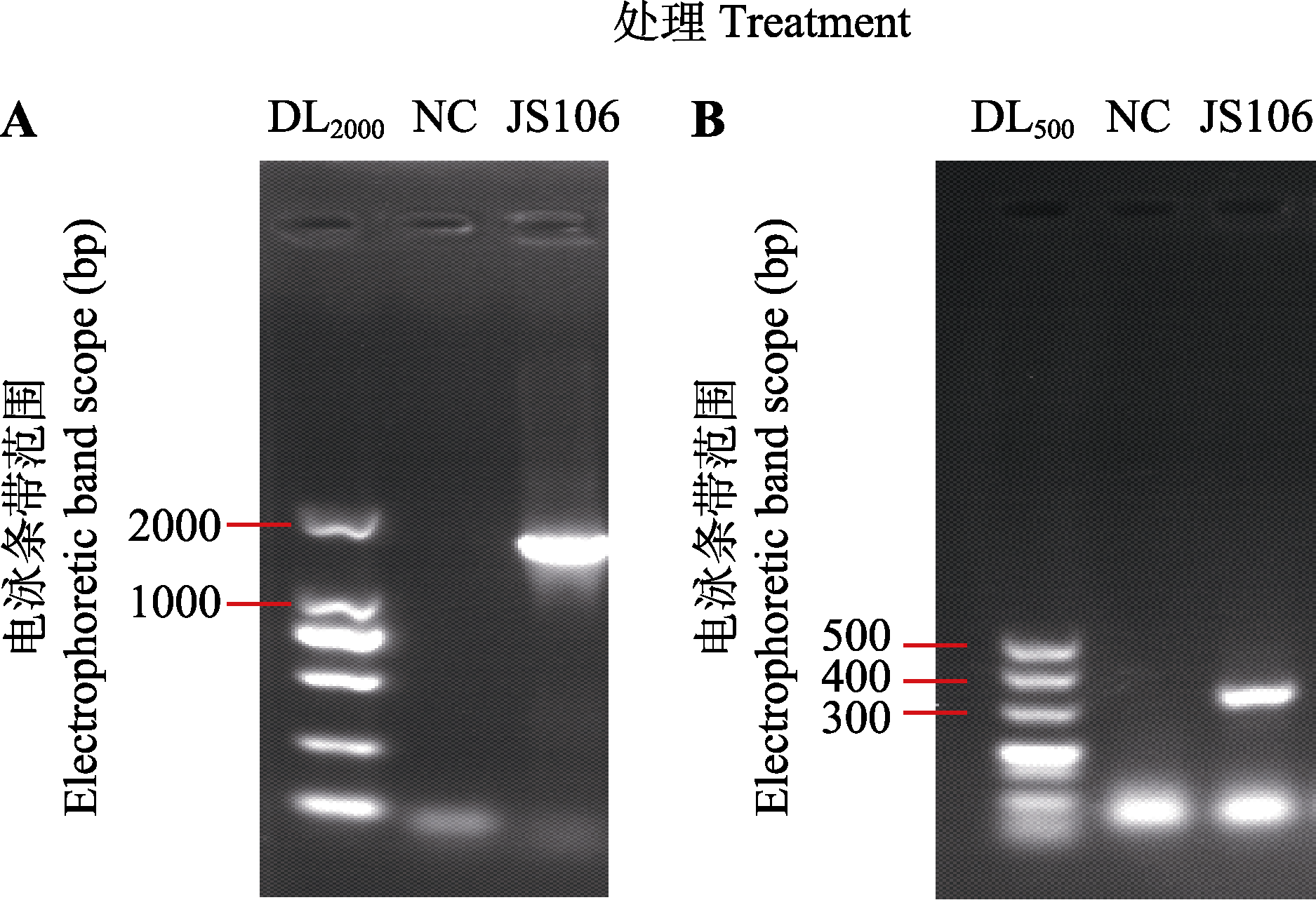
图1 分离固氮菌的16S rDNA (A)和固氮基因nifH (B)电泳图。 DL, DNA分子量标准物; NC, 空白对照; JS106, 星孢类芽孢杆菌ScRB-JS106。
Fig. 1 Electrophoretogram of the isolated nitrogen-fixing bacterium. A, 16S rDNA. B, Nitrogen-fixing gene nifH. DL, DNA marker; NC, negative control; JS106, Paenibacillus stellifer ScRB-JS106.
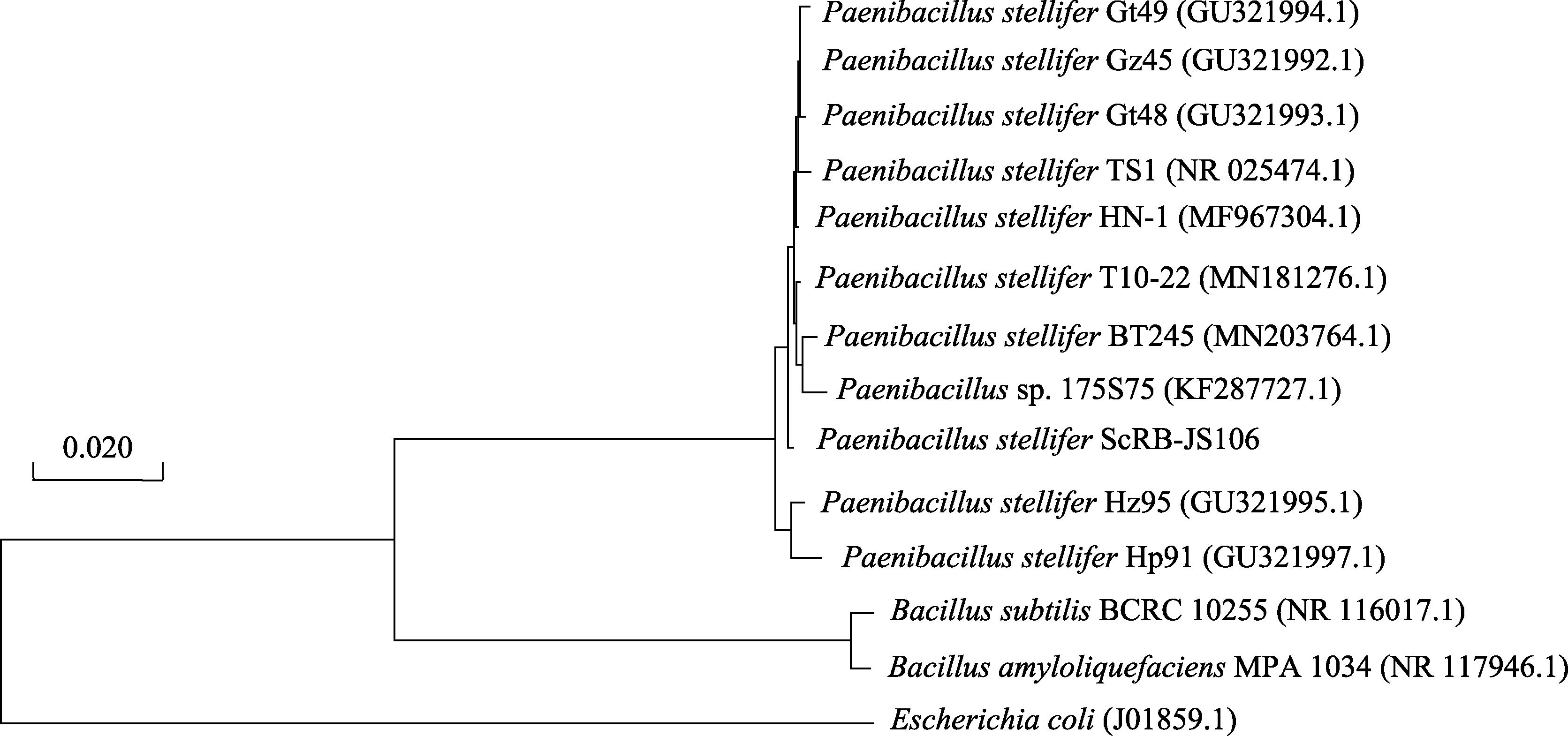
图2 基于16S rDNA序列的分离固氮菌的亲缘关系树(邻接法)。其他菌株的序列是从基因库中下载所得。
Fig. 2 Neighbour-joining tree of the isolated nitrogen-fixing bacterium, ScRB-JS106, based on 16S rDNA. Sequences for the other isolates were downloaded from GenBank.
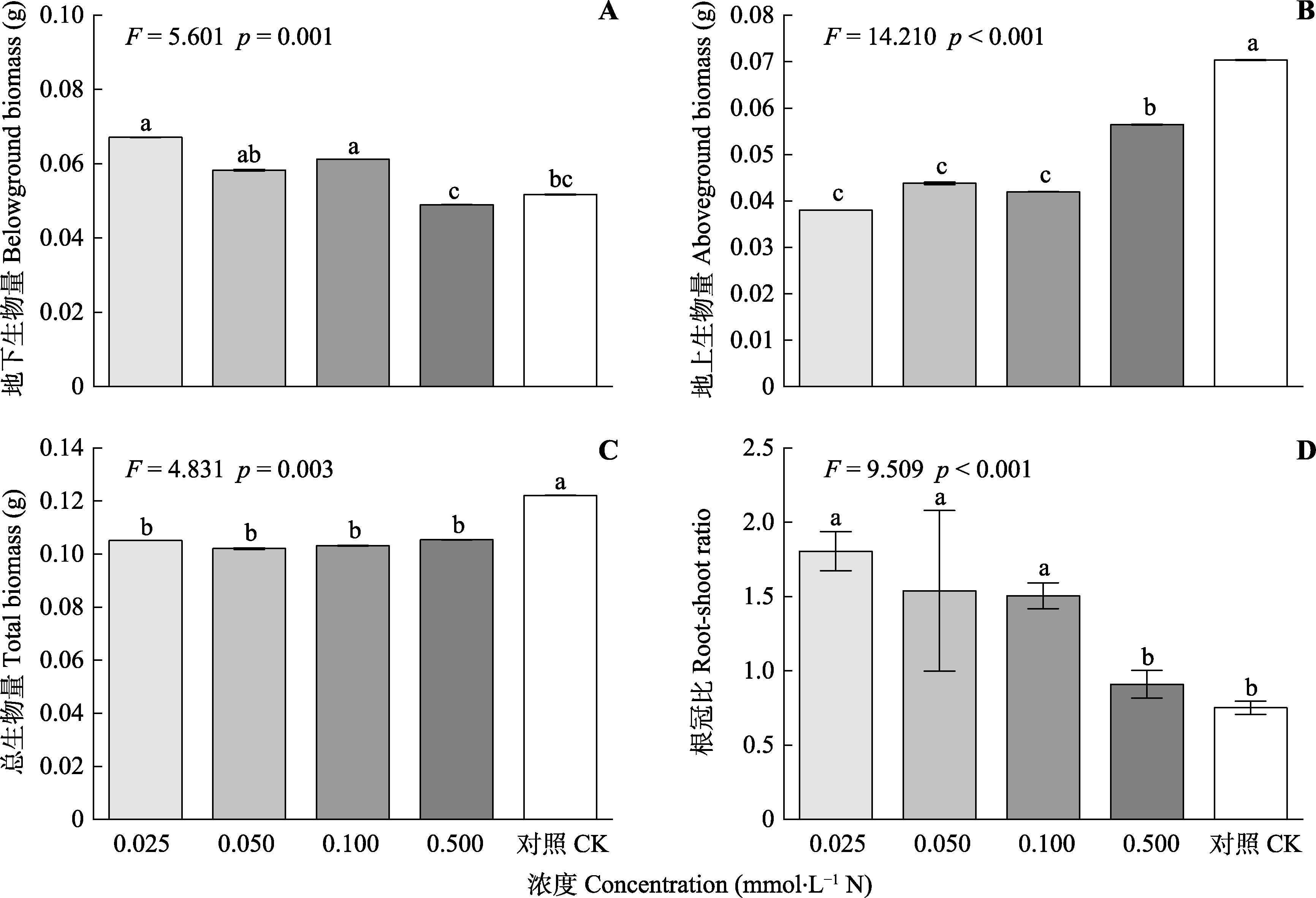
图3 不同NH4Cl浓度下加拿大一枝黄花的生长情况(平均值±标准偏差, n = 4)。 CK, 对照处理(10 mmol·L-1 N)。不同小写字母表示差异显著(p < 0.05)。
Fig. 3 Growth of Solidago canadensis under different concentrations of ammonium chloride (mean ± SE, n = 4). CK, negative control (10 mmol·L-1 N). Different lowercase letters indicate significant differences (Duncan’s test, p < 0.05).
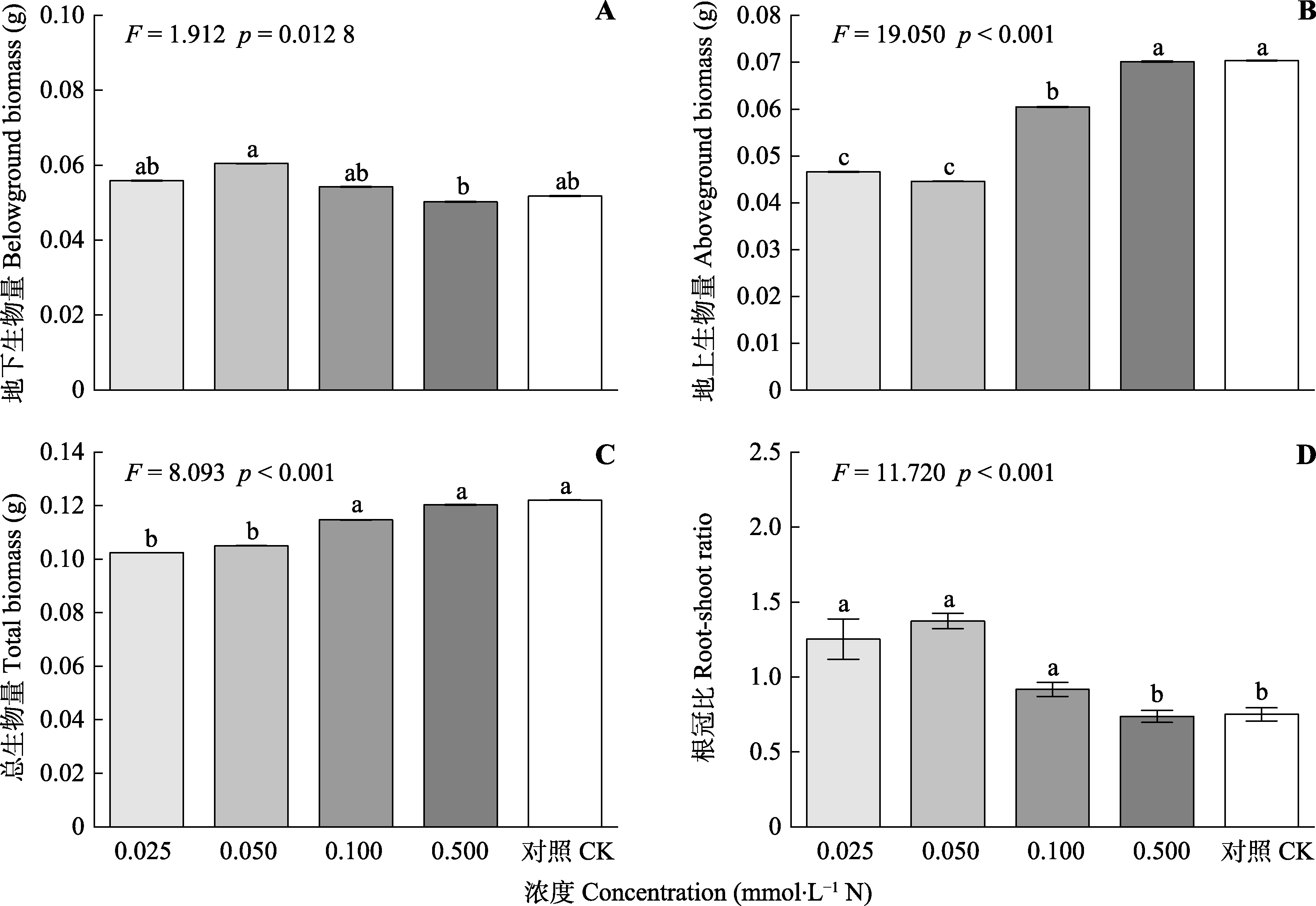
图4 不同KNO3浓度下加拿大一枝黄花的生长情况(平均值±标准偏差, n = 4)。 CK, 对照处理(10 mmol·L-1 N)。不同小写字母表示差异显著(p < 0.05)。
Fig. 4 Growth of Solidago canadensis under different concentrations of potassium nitrate (mean ± SE, n = 4). CK, negative control (10 mmol·L-1 N). Different lowercase letters indicate significant differences (Duncan’s test, p < 0.05).
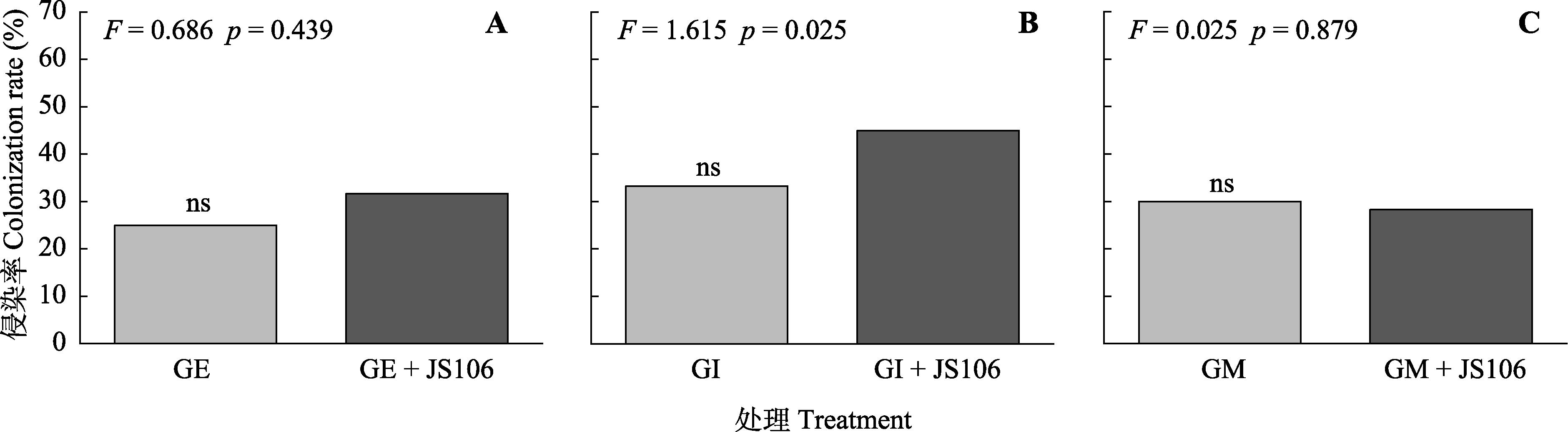
图5 不同菌剂接种方式下加拿大一枝黄花根部的丛枝菌根真菌侵染率(平均值±标准偏差, n = 6)。 A, 幼套球囊霉(GE)。 B, 根内球囊霉(GI)。C, 摩西球囊霉(GM)。JS106, 星孢类芽孢杆菌ScRB-JS106。ns, 无显著性差异(p > 0.05)。
Fig. 5 Root colonization rate of Solidago canadensis inoculated with various arbuscular mycorrhizal fungi and nitrogen-fixing bacteria (mean ± SE, n = 6). A, Glomus etunicatum (GE). B, Glomus intraradices (GI). C, Glomus mosseae (GM). JS106, Paenibacillus stellifer ScRB-JS106. ns, no significant difference (p > 0.05).
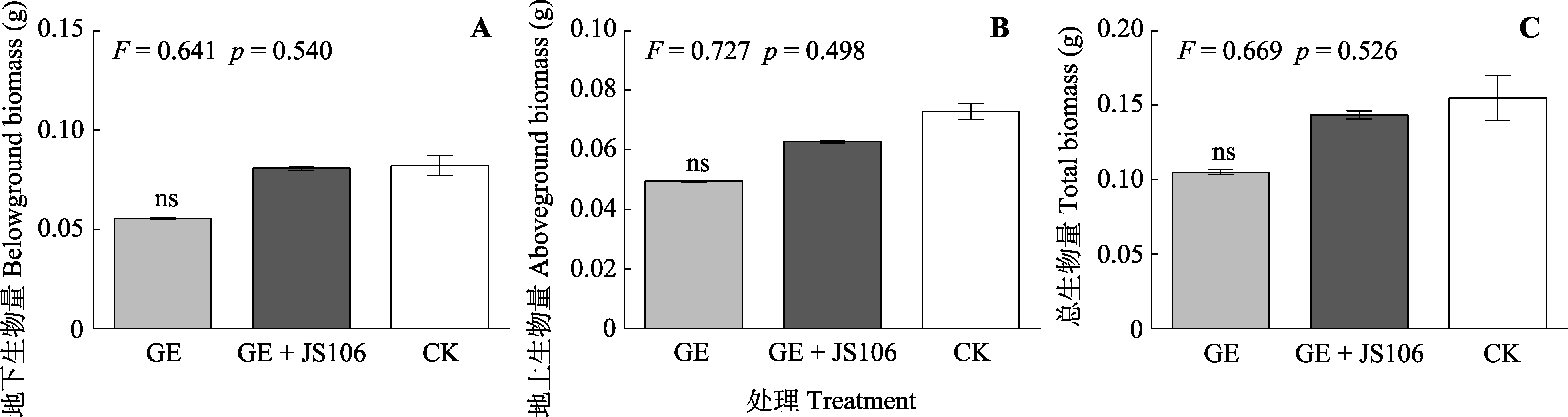
图6 氮限制环境中接种幼套球囊霉及同时添加固氮菌处理加拿大一枝黄花的生长情况(平均值±标准偏差, n = 6)。 GE, 幼套球囊霉。JS106, 星孢类芽孢杆菌ScRB-JS106。CK, 未添加GE处理。ns, 无显著性差异(p > 0.05)。
Fig. 6 Growth of Solidago canadensis inoculated with Glomus etunicatum and nitrogen-fixing bacteria under nitrogen limitation (mean ± SE, n = 6). GE, G. etunicatum. JS106, Paenibacillus stellifer ScRB-JS106. CK, un-inoculated control. ns, no significant difference (p > 0.05).
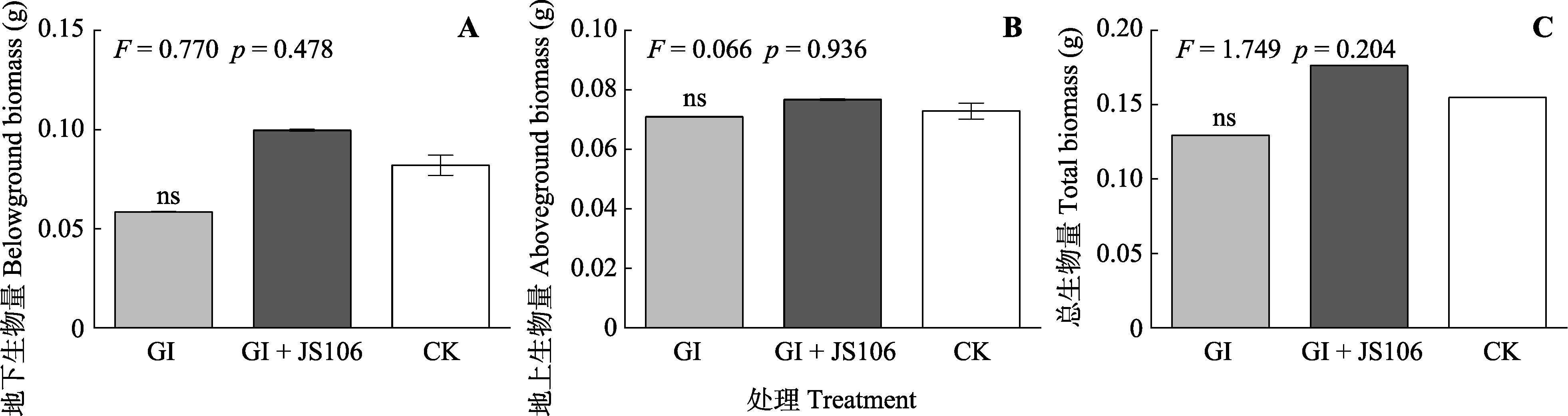
图7 氮限制环境中接种根内球囊霉及同时添加固氮菌处理加拿大一枝黄花的生长情况(平均值±标准偏差, n = 6)。 GI, 根内球囊霉。JS106, 星孢类芽孢杆菌ScRB-JS106。CK, 未添加GI处理。ns, 无显著性差异(p > 0.05)。
Fig. 7 Growth of Solidago canadensis inoculated with Glomus intraradices and nitrogen-fixing bacteria (mean ± SE, n = 6). GI, Glomus intraradices. JS106, Paenibacillus stellifer ScRB-JS106. CK, un-inoculated control. ns, no significant difference (p > 0.05).
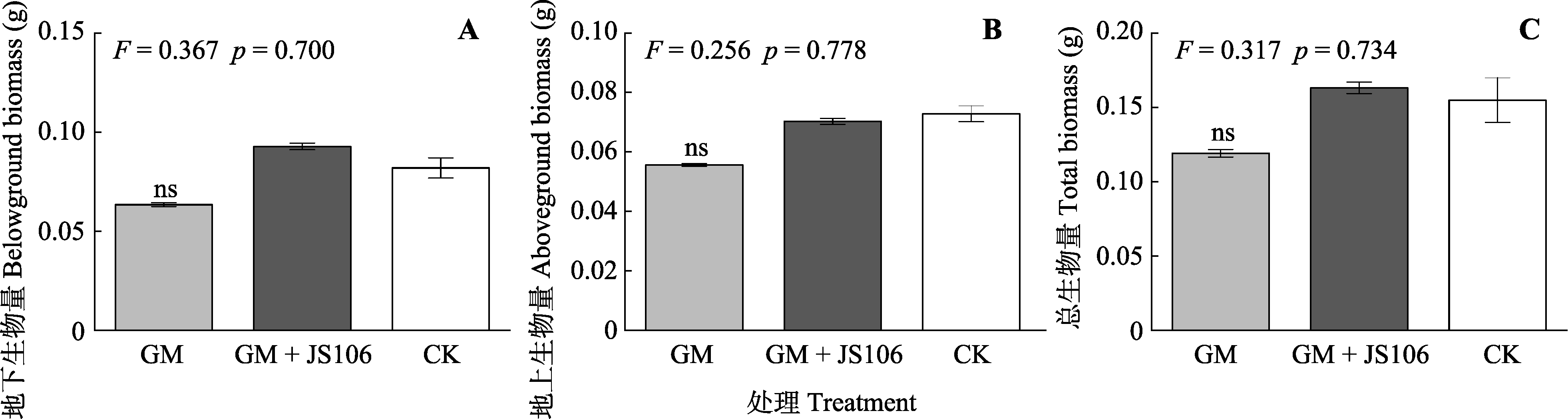
图8 氮限制环境中接种摩西球囊霉及同时添加固氮菌处理加拿大一枝黄花的生长情况(平均值±标准偏差, n = 6)。 GM, 摩西球囊霉。JS106, 星孢类芽孢杆菌ScRB-JS106。CK, 未添加GM处理。ns, 无显著性差异(p > 0.05)。
Fig. 8 Growth of Solidago canadensis inoculated with Glomus mosseae and nitrogen-fixing bacteria (mean ± SE, n = 6). GM, G. mosseae. JS106, Paenibacillus stellifer ScRB-JS106. CK, un-inoculated control. ns, no significant difference (p > 0.05).
| [1] |
Battini F, Grønlund M, Agnolucci M, Giovannetti M, Jakobsen I (2017). Facilitation of phosphorus uptake in maize plants by mycorrhizosphere bacteria. Scientific Reports, 7, 4686. DOI: 10.1038/s41598-017-04959-0.
DOI URL PMID |
| [2] | Bloom AJ, Chapin III FS, Mooney HA (1985). Resource limitation in plants—An economic analogy. Annual Review of Ecology, Evolution, and Systematics, 16, 363-392. |
| [3] |
Bonfante P, Genre A (2010). Mechanisms underlying beneficial plant-fungus interactions in mycorrhizal symbiosis. Nature Communications, 1, 48. DOI: 10.1038/ncomms1046.
DOI URL PMID |
| [4] |
Bunn RA, Lekberg Y, Gallagher C, Rosendahl S, Ramsey PW (2014). Grassland invaders and their mycorrhizal symbionts: a study across climate and invasion gradients. Ecology and Evolution, 4, 794-805.
URL PMID |
| [5] |
Cambui CA, Svennerstam H, Gruffman L, Nordin A, Ganeteg U, Näsholm T (2011). Patterns of plant biomass partitioning depend on nitrogen source. PLOS ONE, 6, e19211. DOI: 10.1371/journal.pone.0019211.
URL PMID |
| [6] |
Chandrasekaran M, Boughattas S, Hu SJ, Oh SH, Sa TM (2014). A meta-analysis of arbuscular mycorrhizal effects on plants grown under salt stress. Mycorrhiza, 24, 611-625.
URL PMID |
| [7] | Chen Q, Wu WW, Qi SS, Cheng H, Li Q, Ran Q, Dai ZC, Du DL, Egan S, Thomas T (2020). Arbuscular mycorrhizal fungi improve the growth and disease resistance of the invasive plantWedelia trilobata. Journal of Applied Microbiology, 2019,0665. DOI: 10.1111/jam.14415. |
| [8] | Chen YL, Chen BD, Liu L, Hu YJ, Xu TL, Zhang X (2014). The role of arbuscular mycorrhizal fungi in soil nitrogen cycling. Acta Ecologica Sinica, 34, 4807-4815. |
| [ 陈永亮, 陈保冬, 刘蕾, 胡亚军, 徐天乐, 张莘 (2014). 丛枝菌根真菌在土壤氮素循环中的作用. 生态学报, 34, 4807-4815.] | |
| [9] | Cheng JK, Yue MF, Yang HR, Chen BM, Xin GR (2019). Do arbuscular mycorrhizal fungi help the native speciesBidens biternata resist the invasion of Bidens alba? Plant and Soil, 444, 443-455. |
| [10] | Ci E, Gao M (2004). Research progress on biological nitrogen fixation. Chinese Agricultural Science Bulletin, 20(1), 25-28. |
| [ 慈恩, 高明 (2004). 生物固氮的研究进展. 中国农学通报, 20(1), 25-28.] | |
| [11] | Cocking EC (2003). Endophytic colonization of plant roots by nitrogen-fixing bacteria. Plant and Soil, 252, 169-175. |
| [12] |
Dai ZC, Fu W, Qi SS, Zhai DL, Chen SC, Wan LY, Huang P, Du DL (2016a). Different responses of an invasive clonal plant Wedelia trilobata and its native congener to gibberellin: implications for biological invasion. Journal of Chemical Ecology, 42, 85-94.
URL PMID |
| [13] |
Dai ZC, Fu W, Wan LY, Cai HH, Wang N, Qi SS, Du DL (2016b). Different growth promoting effects of endophytic bacteria on invasive and native clonal plants. Frontiers in Plant Science, 7, 706. DOI: 10.3389/fpls.2016. 00706.
DOI URL PMID |
| [14] |
Ding Y, Wang J, Liu Y, Chen S (2005). Isolation and identification of nitrogen-fixing bacilli from plant rhizospheres in Beijing region. Journal of Applied Microbiology, 99, 1271-1281.
DOI URL PMID |
| [15] | Franche C, Lindström K, Elmerich C (2009). Nitrogen-fixing bacteria associated with leguminous and non-leguminous plants. Plant and Soil, 321, 35-59. |
| [16] |
Hodge A, Campbell CD, Fitter AH (2001). An arbuscular mycorrhizal fungus accelerates decomposition and acquires nitrogen directly from organic material. Nature, 413, 297-299.
URL PMID |
| [17] | Jin L (2005). Ecology of Arbuscular Mycorrhizal Associations in Solidago canadensis, an Invasive Alien Plant. PhD dissertation, Fudan University, Shanghai. |
| [ 金樑 (2005). 外来入侵种加拿大一枝黄花的菌根生态学研究. 博士学位论文, 复旦大学, 上海.] | |
| [18] |
Jin L, Gu YJ, Xiao M, Chen JK, Li B (2004). The history of Solidago canadensis invasion and the development of its mycorrhizal associations in newly-reclaimed land. Functional Plant Biology, 31, 979-986.
URL PMID |
| [19] |
Johnson N, Wilson G, Bowker M, Wilson J, Miller R (2010). Resource limitation is a driver of local adaptation in mycorrhizal symbioses. Proceedings of the National Academy of Sciences of the United States of America, 107, 2093-2098.
URL PMID |
| [20] | Johnson NC (2010). Resource stoichiometry elucidates the structure and function of arbuscular mycorrhizas across scales. New Phytologist, 185, 631-647. |
| [21] | Khan AG (1974). The occurrence of mycorrhizas in halophytes, hydrophytes and xerophytes, and of Endogone spores in adjacent soils. Microbiology, 81, 7-14. |
| [22] | Lee MR, Tu C, Chen X, Hu SJ (2014). Arbuscular mycorrhizal fungi enhance P uptake and alter plant morphology in the invasive plant Microstegium vimineum. Biological Invasions, 16, 1083-1093. |
| [23] | Leigh J, Hodge A, Fitter AH (2009). Arbuscular mycorrhizal fungi can transfer substantial amounts of nitrogen to their host plant from organic material. The New Phytologist, 181, 199-207. |
| [24] |
Liu CL, Zuo WY, Zhao ZY, Qiu LH (2012). Bacterial diversity of different successional stage forest soils in Dinghushan. Acta Microbiologica Sinica, 52, 1489-1496.
URL PMID |
|
[ 柳春林, 左伟英, 赵增阳, 邱礼鸿 (2012). 鼎湖山不同演替阶段森林土壤细菌多样性. 微生物学报, 52, 1489-1496.]
PMID |
|
| [25] |
Murugesan C, Boughattas S, Hu SJ, Oh SH, Sa T (2014). A meta-analysis of arbuscular mycorrhizal effects on plants grown under salt stress. Mycorrhiza, 24, 611-625.
DOI URL PMID |
| [26] |
Pepe A, Sbrana C, Ferrol N, Giovannetti M (2017). An in vivo whole-plant experimental system for the analysis of gene expression in extraradical mycorrhizal mycelium. Mycorrhiza, 27, 659-668.
URL PMID |
| [27] | Phillips JM, Hayman DS (1970). Improved procedures for clearing roots and staining parasitic and vesicular-arbuscular mycorrhizal fungi for rapid assessment of infection. Transactions of the British Mycological Society, 55, 158-161. |
| [28] |
Schmid B, Puttick GM, Burgess KH, Bazzaz FA (1988). Clonal integration and effects of simulated herbivory in old-field perennials. Oecologia, 75, 465-471.
URL PMID |
| [29] | Shah M, Reshi Z, Rashid I (2008a). Mycorrhizal source and neighbour identity differently influence Anthemis cotula L. invasion in the Kashmir Himalaya, India. Applied Soil Ecology, 40, 330-337. |
| [30] | Shah MA, Reshi Z, Rashid I (2008b). Mycorrhizosphere mediated Mayweed chamomile invasion in the Kashmir himalaya, India. Plant and Soil, 312, 219-225. |
| [31] |
Smith FA, Grace EJ, Smith SE (2009). More than a carbon economy: nutrient trade and ecological sustainability in facultative arbuscular mycorrhizal symbioses. New Phytologist, 182, 347-358.
DOI URL PMID |
| [32] | Smith SE, Read D (2008). Mycorrhizal Symbiosis. 3rd ed. Academic Press, Washington. |
| [33] |
Smith SE, Smith FA (2011). Roles of arbuscular mycorrhizas in plant nutrition and growth: new paradigms from cellular to ecosystem scales. Annual Review of Plant Biology, 62, 227-250.
URL PMID |
| [34] | Sun HW, Wang WL, Liu SJ, Hou MM, Xie TN, Liang ZH, Fan YN, Zhang YL (2014). Formation of rice root regulated by nitrogen deficiency. Acta Pedologica Sinica, 51, 1096-1102. |
| [35] | Tanaka Y, Yano K (2005). Nitrogen delivery to maize via mycorrhizal hyphae depends on the form of N supplied. Plant Cell and Environment, 28, 1247-1254. |
| [36] | Tang JJ, Zhang Q, Yang RY, Chen X (2009). Effects of exotic plant Solidago canadensis L. on local arbuscular mycorrhizal fungi. Bulletin of Science and Technology, 25, 233-237. |
| [ 唐建军, 张倩, 杨如意, 陈欣 (2009). 外来植物加拿大一枝黄花对入侵地丛枝菌根真菌(AMF)的影响. 科技通报, 25, 233-237.] | |
| [37] | Thornley JHM (1972). A balanced quantitative model for root:shoot ratios in vegetative plants. Annals of Botany, 36, 431-441. |
| [38] | Tilman D, Wedin DA (1991). Plant traits and resource reduction for five grasses growing on a nitrogen gradient. Ecology, 72, 685-700. |
| [39] | Wang B (2013). Effects of Allelopathy and Arbuscular Mycorrhizae in the Invasion of Solidago canadensis L. Master degree dissertation, Zhejiang University, Hangzhou. |
| [ 王兵 (2013). 化感作用与丛枝菌根在加拿大一枝黄花入侵过程中的作用研究. 硕士学位论文, 浙江大学, 杭州.] | |
| [40] | Wang CQ, Liu S, Wang XL, Chen HW, Wu YJ, Wang ZG (2015). Isolation, identification and characteristics of authigenic azotobacters from the rhizosphere of soybean. Soybean Science, 34, 850-854. |
| [ 王超群, 刘帅, 王晓璐, 陈慧文, 吴勇军, 王志刚 (2015). 大豆根际高效自生固氮菌分离鉴定与特性研究. 大豆科学, 34, 850-854.] | |
| [41] |
Wang YH, Wang MQ, Li Y, Wu AP, Huang JY (2018). Effects of arbuscular mycorrhizal fungi on growth and nitrogen uptake of Chrysanthemum morifolium under salt stress. PLOS ONE, 13, e0196408. DOI: 10.1371/journal.pone. 0196408.
URL PMID |
| [42] | Werner PA, Gross RS, Bradbury IK (1980). The biology of Canadian.: 45.Solidago canadensis L. Canadian Journal of Plant Science, 60, 1393-1409. |
| [43] |
Wilson GWT, Hickman KR, Williamson MM (2012). Invasive warm-season grasses reduce mycorrhizal root colonization and biomass production of native prairie grasses. Mycorrhiza, 22, 327-336.
URL PMID |
| [44] | Yang JY, Wang YH, Wen GS, Yi LT (2013). Effects of AM fungi and simulated nitrogen deposition on the growth and biomass accumulation of Solidago canadensis seedings. Chinese Journal of Ecology, 32, 2953-2958. |
| [ 杨剑宇, 王艳红, 温国胜, 伊力塔 (2013). AMF和模拟氮沉降对加拿大一枝黄花(Solidago canadensis)幼苗生长和生物量积累的影响. 生态学杂志, 32, 2953-2958.] | |
| [45] | Yang RY, Zhou G, Zan ST, Guo FY, Su NN, Li J (2014). Arbuscular mycorrhizal fungi facilitate the invasion of Solidago canadensis L. in southeastern China. Acta Oecologica, 61, 71-77. |
| [46] | Yang XY (2007). Allelopathic Effects of Invasive Weeds on Arbuscular Mycorrhizae of Native Plants. Master degree dissertation, Zhejiang University, Hangzhou. |
| [ 杨贤燕 (2007). 外来杂草对本地植物丛枝菌根的化感作用.硕士学位论文, 浙江大学, 杭州.] | |
| [47] | Zhang FJ, Li Q, Chen FX, Xu HY, Inderjit , Wan FH (2017). Arbuscular mycorrhizal fungi facilitate growth and competitive ability of an exotic species Flaveria bidentis. Soil Biology & Biochemistry, 115, 275-284. |
| [48] | Zhou G, Zan S, Guo FY, Su NN, Li J (2014). Arbuscular mycorrhizal fungi facilitate the invasion of Solidago canadensis L. in southeastern China. Acta Oecologica, 61, 71-77. |
| [49] | Zhu C, Tian GL, Luo GW, Kong YL, Guo JJ, Wang M, Guo SW, Ling N, Shen QR (2018). N-fertilizer-driven association between the arbuscular mycorrhizal fungal community and diazotrophic community impacts wheat yield. Agriculture Ecosystems & Environment, 254, 191-201. |
| [1] | 魏莉, 王鹏森, 刘珊, 樊锐, 黄楠, 张建国, 其美拉姆, 苟扬, 刘沫含, 黄婷, 周冀琼. 丛枝菌根真菌对豆禾混播植物垂直生态位养分吸收的影响[J]. 植物生态学报, 2026, 50(3): 760-773. |
| [2] | 周春菡, 熊智诚, 杨明新, 史海兰, 周亚星, 唐玉, 张静, 纪宝明, 代心灵. 黄河源园区高寒湿地菌根真菌群落特征及其影响因素[J]. 植物生态学报, 2026, 50(3): 625-638. |
| [3] | 姜庆宏, 丁露, 王哲, 郑春丽, 冯昭绰. 丛枝菌根真菌与不同功能细菌联用对苜蓿的促生作用[J]. 植物生态学报, 2026, 50(3): 774-788. |
| [4] | 马建辉, 童鑫, 张思榕, 毛子昆, 秦俊, 马克平. 菌根真菌生理生态功能研究进展及展望[J]. 植物生态学报, 2026, 50(3): 498-514. |
| [5] | 王海浪, 付伟, 伍松林, 陈保冬. 丛枝菌根真菌生态功能及群落调控[J]. 植物生态学报, 2026, 50(3): 515-535. |
| [6] | 秦斐斐, 唐朝辉, 司彤, 慈敦伟. 盐碱耐受型和敏感型花生生长发育及根际土壤特性对丛枝菌根真菌的响应[J]. 植物生态学报, 2026, 50(3): 742-759. |
| [7] | 邹纪开, 吴佳怡, 谷云懿, 陈宝明. 不同形态氮添加与丛枝菌根真菌对外来入侵植物白花鬼针草竞争力的影响[J]. 植物生态学报, 2026, 50(3): 722-730. |
| [8] | 何正嘉, 曾歆然, 王琳影, 薛昕宇, 苏钦泽, 李宇, 张寅杰, 吴辉煌, 陈成聪, 吴良泉, 魏安妮, 仇云鹏, 郭梨锦. 茶园丛枝菌根真菌群落和土壤有机碳对镁肥的响应[J]. 植物生态学报, 2026, 50(3): 700-709. |
| [9] | 段世龙, 余成瑾, 许心垚, 冯固, 谢贤安, 张林. 植物-丛枝菌根真菌-细菌连续体及其维持机制[J]. 植物生态学报, 2026, 50(3): 600-611. |
| [10] | 江康威, 吕程, 王亚菲, 李宏, 张芷晴, 王雨, 张青青, 吐尔逊娜依•热依木. 放牧干扰下丛枝菌根真菌群落对土壤多功能性的影响[J]. 植物生态学报, 2026, 50(3): 685-699. |
| [11] | 何堂庆, 王变变, 曹鑫鑫, 张康成, 汪晓东, 王浩, 白彤硕, 赵叶新, 张艺, 王益, 仇云鹏, 胡水金. 半干旱草地植物和丛枝菌根真菌群落对长期降水增加的响应[J]. 植物生态学报, 2026, 50(3): 674-684. |
| [12] | 王梦雪, 胡明艳, 储诚进, 陈阳, 罗文启, 马子龙. 亚热带森林不同菌根真菌树种叶片和细根的碳氮磷化学计量特征[J]. 植物生态学报, 2026, 50(2): 334-343. |
| [13] | 张斌, 张浩成, 乔天, 吕治兵, 许亚男, 李雪芹, 原向阳, 冯美臣, 张美俊. 接种丛枝菌根真菌对干旱胁迫燕麦非结构性碳水化合物及碳氮磷化学计量特征的影响[J]. 植物生态学报, 2025, 49(7): 1082-1095. |
| [14] | 徐源, 谭卓然, 殷缘, 化佳敏, 韩迎新, 蔺吉祥, 王傲, 王竞红. 入侵植物对土壤特性影响的研究进展[J]. 植物生态学报, 2025, 49(11): 1767-1777. |
| [15] | 焦荟颖, 刘立强, 杨佳鑫, 秦伟, 王睿哲. 新疆野苹果自然种群根际固氮菌、解磷菌及解钾菌对叶片养分和生理指标的影响[J]. 植物生态学报, 2024, 48(7): 930-942. |
| 阅读次数 | ||||||
|
全文 |
|
|||||
|
摘要 |
|
|||||
Copyright © 2026 版权所有 《植物生态学报》编辑部
地址: 北京香山南辛村20号, 邮编: 100093
Tel.: 010-62836134, 62836138; Fax: 010-82599431; E-mail: apes@ibcas.ac.cn, cjpe@ibcas.ac.cn
备案号: 京ICP备16067583号-19

