
大气CO2浓度升高和增温对土壤有机碳库积累、分子组成和结构稳定性的影响
收稿日期: 2024-10-21
录用日期: 2025-02-26
网络出版日期: 2025-02-26
基金资助
江苏省自然科学基金(BK20221028);国家自然科学基金(42303078)
Effects of elevated atmospheric CO2 concentration and warming on stability of soil organic carbon pool accumulation, molecular composition and structure stability
Received date: 2024-10-21
Accepted date: 2025-02-26
Online published: 2025-02-26
Supported by
Natural Science Foundation of Jiangsu Province(BK20221028);National Natural Science Foundation of China(42303078)
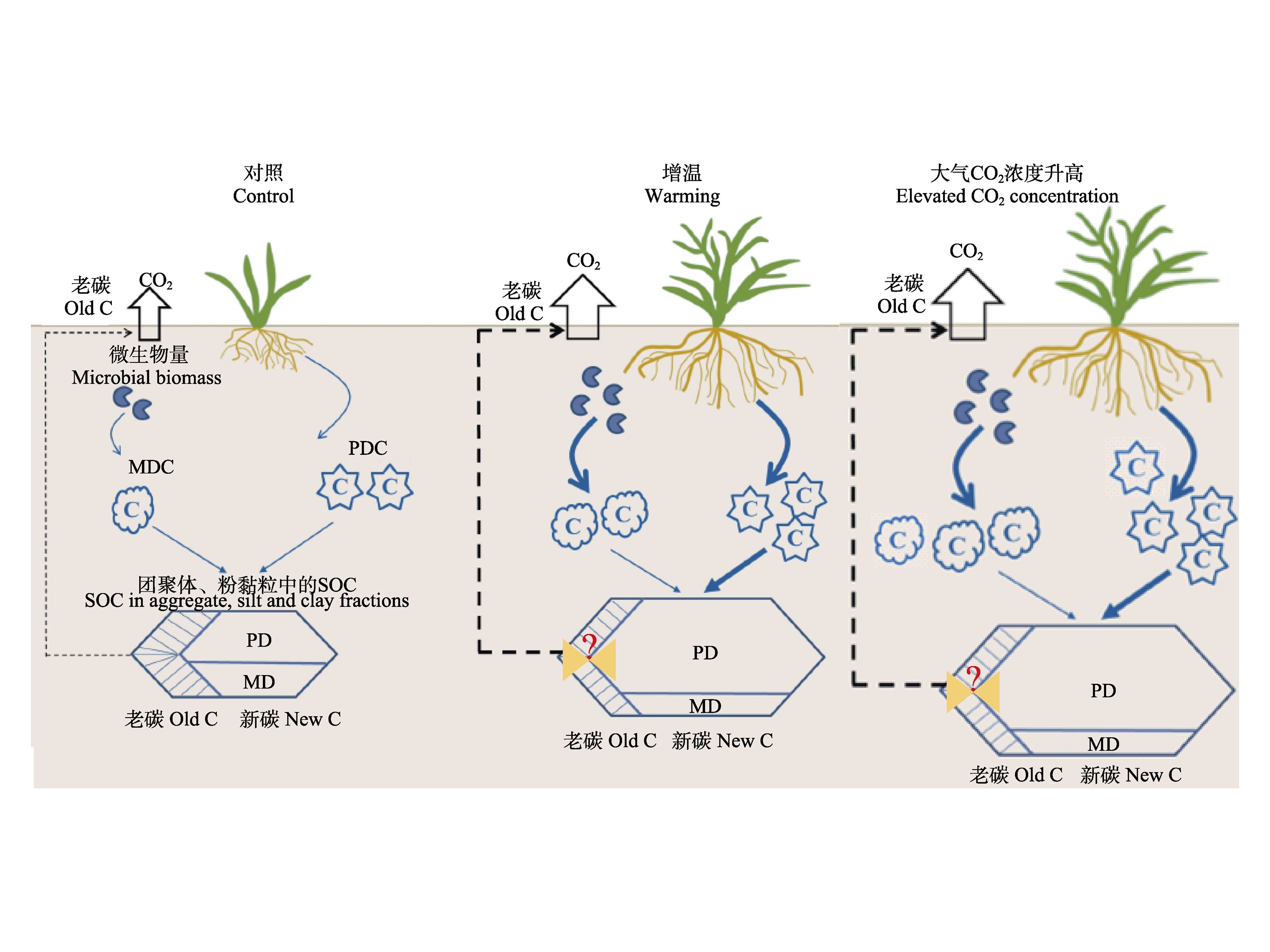
在固碳减排和“双碳”目标的背景下, 以大气CO2浓度升高和增温协同作用为特征的气候变化对土壤有机碳(SOC)动态变化的影响成为当前的研究热点, 气候变化对SOC库的影响机制也一直是学术界研究的难点问题。以往关于气候变化对陆地生态系统碳循环过程的研究主要是基于CO2浓度升高或增温的单一因素, 主要集中于植物生长、凋落物基质质量、土壤理化性质、有机碳物理/化学组分和微生物群落结构等方面。结合国内外研究进展, 该文在论述CO2浓度升高和增温对SOC库累积的影响及机制基础上, 从SOC组分、分子组成、结构特征、表层与底层响应差异与有机碳稳定性的耦合效应方面, 概括CO2浓度升高和增温对SOC积累和转化的内在影响机制。在此基础上, 提出未来研究中应着重关注: (1)明晰SOC端元输入-分子组成-结构特征耦合关系; (2)揭示长期气候变化对多生态系统SOC稳定性和埋藏潜力的影响机制。理清土壤碳源/汇功能, 必须全面深入了解气候变化下陆地生态系统SOC来源、转化、埋藏和分解的生物地球化学循环过程, 旨在为未来土壤碳中和管理决策提供科学理论依据。
范亚冉 , 夏少攀 , 于冰冰 , 朱紫琪 , 杨威 , 范豫川 , 刘晓雨 , 张旭辉 , 郑聚锋 . 大气CO2浓度升高和增温对土壤有机碳库积累、分子组成和结构稳定性的影响[J]. 植物生态学报, 2025 , 49(7) : 1053 -1069 . DOI: 10.17521/cjpe.2024.0376
In the context of carbon sequestration, emission reduction, and the “Dual Carbon” goals, the impact of climate change characterized by the combined effects of elevated atmospheric carbon dioxide (CO2) concentration and global warming on the dynamics of soil organic carbon (SOC) has emerged as a critical research focus. Understanding the mechanisms through of climate change influences SOC pools remains a significant challenge in academic research. Previous studies on the effect of climate change on terrestrial ecosystem carbon cycling have predominantly examined single factors, such as increased CO2 concentration or warming, with a focus on plant growth, litter substrate quality, soil physicochemical properties, physical/chemical fractions of organic carbon, and microbial community structure. Building on recent advancements in both domestic and international research, this review synthesizes the effects and underlying mechanisms of elevated CO2 concentration and warming on SOC accumulation. By integrating the coupling effects of SOC fractions, molecular composition, structural characteristics, and the differential responses of topsoil and subsoil, we elucidate the intrinsic mechanism governing SOC carbon accumulation and transformation under these climatic conditions. Furthermore, we highlight key areas for future research, including (1) clarifying the coupling relationships among SOC end-member inputs, molecular composition, and structural characteristics, and (2) uncovering the mechanisms by which long-term climate change influences the stability and burial potential of SOC across diverse ecosystems. To fully understand the carbon source/sink functions of soil, it is essential to comprehensively investigate the biogeochemical processes governing SOC sources, transformation, burial, and decomposition in terrestrial ecosystems under climate change. This review aims to provide a robust scientific foundation for future soil carbon management strategies and decision-making in support of carbon neutrality goals.
| [1] | Arndal MF, Tolver A, Larsen KS, Beier C, Schmidt IK (2018). Fine root growth and vertical distribution in response to elevated CO2, warming and drought in a mixed heathland-grassland. Ecosystems, 21, 15-30. |
| [2] | Beillouin D, Corbeels M, Demenois J, Berre D, Boyer A, Fallot A, Feder F, Cardinael R (2023). A global meta-analysis of soil organic carbon in the Anthropocene. Nature Communications, 14, 3700. DOI: 10.1038/s41467-023-39338-z. |
| [3] | Black CK, Davis SC, Hudiburg TW, Bernacchi CJ, DeLucia EH (2017). Elevated CO2 and temperature increase soil C losses from a soybean-maize ecosystem. Global Change Biology, 23, 435-445. |
| [4] | Cai MK, Zhao G, Zhao B, Cong N, Zheng ZT, Zhu JT, Duan XQ, Zhang YJ (2023). Climate warming alters the relative importance of plant root and microbial community in regulating the accumulation of soil microbial necromass carbon in a Tibetan alpine meadow. Global Change Biology, 29, 3193-3204. |
| [5] | Carrillo Y, Dijkstra F, LeCain D, Blumenthal D, Pendall E (2018). Elevated CO2 and warming cause interactive effects on soil carbon and shifts in carbon use by bacteria. Ecology Letters, 21, 1639-1648. |
| [6] | Chang RY, Liu SG, Chen LY, Li N, Bing HJ, Wang T, Chen XP, Li Y, Wang GX (2021). Soil organic carbon becomes newer under warming at a permafrost site on the Tibetan Plateau. Soil Biology & Biochemistry, 152, 108074. DOI: 10.1016/j.soilbio.2020.108074. |
| [7] | Chen J, Luo Y, Sinsabaugh RL (2023a). Subsoil carbon loss. Nature Geoscience, 16, 284-285. |
| [8] | Chen XB, Hu YJ, Xia YH, Zheng SM, Ma C, Rui YC, He HB, Huang DY, Zhang ZH, Ge TD, Wu JS, Guggenberger G, Kuzyakov Y, Su YR (2021). Contrasting pathways of carbon sequestration in paddy and upland soils. Global Change Biology, 27, 2478-2490. |
| [9] | Chen Y, Han MG, Yuan X, Hou YH, Qin WK, Zhou HK, Zhao XQ, Klein JA, Zhu B (2022). Warming has a minor effect on surface soil organic carbon in alpine meadow ecosystems on the Qinghai-Tibetan Plateau. Global Change Biology, 28, 1618-1629. |
| [10] | Chen Y, Han MG, Yuan X, Zhou HK, Zhao XQ, Schimel JP, Zhu B (2023b). Long-term warming reduces surface soil organic carbon by reducing mineral-associated carbon rather than “free” particulate carbon. Soil Biology & Biochemistry, 177, 108905. DOI: 10.1016/j.soilbio.2022.108905. |
| [11] | Cheng X, Luo Y, Xu X, Sherry R, Zhang Q (2011). Soil organic matter dynamics in a North America tallgrass prairie after 9 yr of experimental warming. Biogeosciences, 8, 1487-1498. |
| [12] | Conant RT, Ryan MG, ?gren GI, Birge HE, Davidson EA, Eliasson PE, Evans SE, Frey SD, Giardina CP, Hopkins FM, Hyv?nen R, Kirschbaum MUF, et al. (2011). Temperature and soil organic matter decomposition rates-synthesis of current knowledge and a way forward. Global Change Biology, 17, 3392-3404. |
| [13] | Crowther TW, Todd-Brown KEO, Rowe CW, Wieder WR, Carey JC, Machmuller MB, Snoek BL, Fang S, Zhou G, Allison SD, Blair JM, Bridgham SD, Burton AJ, Carrillo Y, Reich PB, et al. (2016). Quantifying global soil carbon losses in response to warming. Nature, 540, 104-108. |
| [14] | Deressa A (2015). Effects of soil moisture and temperature on carbon and nitrogen mineralization in grassland soils fertilized with improved cattle slurry manure with and without manure additive. Journal of Environment and Human, 2, 2373-8332. |
| [15] | Dietzen CA, Larsen KS, Ambus PL, Michelsen A, Arndal MF, Beier C, Reinsch S, Schmidt IK (2019). Accumulation of soil carbon under elevated CO2 unaffected by warming and drought. Global Change Biology, 25, 2970-2977. |
| [16] | Ding XL, Chen SY, Zhang B, Liang C, He HB, Horwath WR (2019). Warming increases microbial residue contribution to soil organic carbon in an alpine meadow. Soil Biology & Biochemistry, 135, 13-19. |
| [17] | Dusenge ME, Duarte AG, Way DA (2019). Plant carbon metabolism and climate change: elevated CO2and temperature impacts on photosynthesis, photorespiration and respiration. New Phytologist, 221, 32-49. |
| [18] | Fan YR, Yu BB, Xia SP, Zhu ZQ, Fan YC, Liu XY, Zhang XH, Zheng JF (2024). Responses of soil carbon, nitrogen, and phosphorus contents and their ecological stoichiometry characteristics to elevated atmospheric CO2 concentration and warming in paddy field. Chinese Journal of Applied Ecology, 35, 3409-3418. |
| [范亚冉, 于冰冰, 夏少攀, 朱紫琪, 范豫川, 刘晓雨, 张旭辉, 郑聚锋 (2024). 稻田土壤碳氮磷含量及其生态化学计量特征对大气CO2浓度升高和增温的响应. 应用生态学报, 35, 3409-3418.] | |
| [19] | Fang R, Li YS, Yu ZH, Xie ZH, Wang GH, liu XB, Herbert SJ, Jin J (2022). Warming offsets the beneficial effect of elevated CO2 on maize plant-carbon accumulation in particulate organic carbon pools in a mollisol. Catena, 213, 106219. DOI: 10.1016/j.catena.2022.106219. |
| [20] | Feng Q (2019). Effects of Elevated CO2 on Soil Carbon and Nitrogen Fractions and Roots of Maize in a Semiarid Region. Master degree dissertation, Northwest A&F University, Xianyang, Shaanxi. |
| [冯倩 (2019). 大气CO2浓度升高对旱作玉米农田土壤碳氮组分及根系的影响. 硕士学位论文, 西北农林科技大学, 陕西咸阳.] | |
| [21] | Feng XJ, Simpson AJ, Wilson KP, Dudley Williams D, Simpson MJ (2008). Increased cuticular carbon sequestration and lignin oxidation in response to soil warming. Nature Geoscience, 1, 836-839. |
| [22] | Feng XJ, Wang YY, Liu T, Jia J, Dai GH, Ma T, Liu ZG (2020). Biomarkers and their applications in ecosystem research. Chinese Journal of Plant Ecology, 44, 384-394. |
| [冯晓娟, 王依云, 刘婷, 贾娟, 戴国华, 马田, 刘宗广 (2020). 生物标志物及其在生态系统研究中的应用. 植物生态学报, 44, 384-394.] | |
| [23] | Fierer N, Allen AS, Schimel JP, Holden PA (2003). Controls on microbial CO2 production: a comparison of surface and subsurface soil horizons. Global Change Biology, 9, 1322-1332. |
| [24] | Fontaine S, Barot S, Barré P, Bdioui N, Mary B, Rumpel C (2007). Stability of organic carbon in deep soil layers controlled by fresh carbon supply. Nature, 450, 277-280. |
| [25] | Frey SD, Lee J, Melillo JM, Six J (2013). The temperature response of soil microbial efficiency and its feedback to climate. Nature Climate Change, 3, 395-398. |
| [26] | Frosteg?rd A, B??th E (1996). The use of phospholipid fatty acid analysis to estimate bacterial and fungal biomass in soil. Biology and Fertility of Soils, 22, 59-65. |
| [27] | Gao DC, Shi WJ, Wang HM, Liu ZP, Jiang QO, Lv WJ, Wang SY, Zhang YL, Zhao CH, Hagedorn F (2024). Contrasting global patterns of soil microbial quotients of carbon, nitrogen, and phosphorus in terrestrial ecosystems. Catena, 243, 108145. DOI: 10.1016/j.catena.2024.108145. |
| [28] | Ge ZM, Zhou X, Kellom?ki S, Biasi C, Wang KY, Peltola H, Martikainen PJ (2012). Carbon assimilation and allocation (13C labeling) in a boreal perennial grass (Phalaris arundinacea) subjected to elevated temperature and CO2 through a growing season. Environmental and Experimental Botany, 75, 150-158. |
| [29] | González-García MP, Conesa CM, Lozano-Enguita A, Baca-González V, Simancas B, Navarro-Neila S, Sánchez-Bermúdez M, Salas-González I, Caro E, Castrillo G, del Pozo JC (2023). Temperature changes in the root ecosystem affect plant functionality. Plant Communications, 4, 100514. DOI: 10.1016/j.xplc.2022.100514. |
| [30] | Grandy AS, Neff JC (2008). Molecular C dynamics downstream: the biochemical decomposition sequence and its impact on soil organic matter structure and function. Science of the Total Environment, 404, 297-307. |
| [31] | Guan S, An N, Zong N, Zhong N, He YT, Shi PL, Zhang JJ, He NP (2018). Climate warming impacts on soil organic carbon fractions and aggregate stability in a Tibetan alpine meadow. Soil Biology & Biochemistry, 116, 224-236. |
| [32] | Gunina A, Kuzyakov Y (2015). Sugars in soil and sweets for microorganisms: review of origin, content, composition and fate. Soil Biology & Biochemistry, 90, 87-100. |
| [33] | Hall SJ, Ye CL, Weintraub SR, Hockaday WC (2020). Molecular trade-offs in soil organic carbon composition at continental scale. Nature Geoscience, 13, 687-692. |
| [34] | Han MX, Yu HY, Liu PY, Rao DA, Teng Y, Zou LY (2021). Effects of the mole fraction of elevated atmospheric CO2 on soil organic carbon stability. Journal of Zhejiang A&F University, 38, 963-972. |
| [韩米雪, 郁红艳, 刘潘洋, 饶德安, 腾跃, 邹路易 (2021). 大气二氧化碳摩尔分数升高对土壤有机碳稳定性的影响. 浙江农林大学学报, 38, 963-972.] | |
| [35] | Haverd V, Smith B, Canadell JG, Cuntz M, Mikaloff-Fletcher S, Farquhar G, Woodgate W, Briggs PR, Trudinger CM (2020). Higher than expected CO2 fertilization inferred from leaf to global observations. Global Change Biology, 26, 2390-2402. |
| [36] | Hopkins FM, Filley TR, Gleixner G, Lange M, Top SM, Trumbore SE (2014). Increased belowground carbon inputs and warming promote loss of soil organic carbon through complementary microbial responses. Soil Biology & Biochemistry, 76, 57-69. |
| [37] | Hopkins FM, Torn MS, Trumbore SE (2012). Warming accelerates decomposition of decades-old carbon in forest soils. Proceedings of the National Academy of Sciences of the United States of America, 109, E1753-E1761. |
| [38] | IPCC (the Intergovernmental Panel on Climate Chang) (2021). Climate change 2021:the physical science basis//Contribution of Working Group I to the Sixth Assessment Report of the Intergovernmental Panel on Climate Chang. Cambridge University Press, Cambridge, USA. |
| [39] | Jansen B, Wiesenberg GLB (2017). Opportunities and limitations related to the application of plant-derived lipid molecular proxies in soil science. Soil, 3, 211-234. |
| [40] | Jia J, Cao ZJ, Liu CZ, Zhang ZH, Lin L, Wang YY, Haghipour N, Wacker L, Bao HY, Dittmar T, Simpson MJ, Yang H, Crowther TW, Eglinton TI, He JS, Feng XJ (2019). Climate warming alters subsoil but not topsoil carbon dynamics in alpine grassland. Global Change Biology, 25, 4383-4393. |
| [41] | Jobbágy EG, Jackson RB (2000). The vertical distribution of soil organic carbon and its relation to climate and vegetation. Ecological Applications, 10, 423-436. |
| [42] | Joergensen RG (2018). Amino sugars as specific indices for fungal and bacterial residues in soil. Biology and Fertility of Soils, 54, 559-568. |
| [43] | Keidel L, Lenhart K, Moser G, Müller C (2018). Depth-dependent response of soil aggregates and soil organic carbon content to long-term elevated CO2 in a temperate grassland soil. Soil Biology & Biochemistry, 123, 145-154. |
| [44] | Kleber M, Eusterhues K, Keiluweit M, Mikutta C, Mikutta R, Nico PS (2015). Mineral-organic associations: formation, properties, and relevance in soil environments. Advances in Agronomy, 130, 1-140. |
| [45] | Lal R (2008). Carbon sequestration. Philosophical Transactions of the Royal Society B: Biological Sciences, 363, 815-830. |
| [46] | Lehmann J, Hansel CM, Kaiser C, Kleber M, Maher K, Manzoni S, Nunan N, Reichstein M, Schimel JP, Torn MS, Wieder WR, K?gel-Knabner I (2020). Persistence of soil organic carbon caused by functional complexity. Nature Geoscience, 13, 529-534. |
| [47] | Lehmann J, Kleber M (2015). The contentious nature of soil organic matter. Nature, 528, 60-68. |
| [48] | Lei JS, Su YL, Jian SY, Guo X, Yuan MT, Bates CT, Shi ZJ, Li JB, Su YF, Ning DL, Wu LY, Zhou JZ, Yang YF (2024). Warming effects on grassland soil microbial communities are amplified in cool months. The ISME Journal, 18, wrae088. DOI: 10.1093/ismejo/wrae088. |
| [49] | Liang C, Balser TC (2012). Warming and nitrogen deposition lessen microbial residue contribution to soil carbon pool. Nature Communications, 3, 1222. DOI: 10.1038/ncomms2224. |
| [50] | Lin ZB, Zhang RD (2012). Effects of climate change and elevated atmospheric CO2 on soil organic carbon: a response equation. Climatic Change, 113, 107-120. |
| [51] | Liu GD, Sun JF, Xie P, Guo C, Zhu KX, Tian K (2024). Climate warming enhances microbial network complexity by increasing bacterial diversity and fungal interaction strength in litter decomposition. Science of the Total Environment, 908, 168444. DOI: 10.1016/j.scitotenv.2023.168444. |
| [52] | Liu HY, Mi ZR, Lin L, Wang YH, Zhang ZH, Zhang FW, Wang H, Liu LL, Zhu B, Cao GM, Zhao XQ, Sanders NJ, Classen AT, Reich PB, He JS (2018). Shifting plant species composition in response to climate change stabilizes grassland primary production. Proceedings of the National Academy of Sciences of the United States of America, 115, 4051-4056. |
| [53] | Liu ZW, Liu XX, Wu XL, Bian RJ, Liu XY, Zheng JF, Zhang XH, Cheng K, Li LQ, Pan GX (2021). Long-term elevated CO2 and warming enhance microbial necromass carbon accumulation in a paddy soil. Biology and Fertility of Soils, 57, 673-684. |
| [54] | Lu M, Zhou XH, Yang Q, Li H, Luo YQ, Fang CM, Chen JK, Yang X, Li B (2013). Responses of ecosystem carbon cycle to experimental warming: a meta-analysis. Ecology, 94, 726-738. |
| [55] | Meeran K, Ingrisch J, Reinthaler D, Canarini A, Müller L, P?tsch EM, Richter A, Wanek W, Bahn M (2021). Warming and elevated CO2 intensify drought and recovery responses of grassland carbon allocation to soil respiration. Global Change Biology, 27, 3230-3243. |
| [56] | Moritz LK, Liang C, Wagai R, Kitayama K, Balser TC (2009). Vertical distribution and pools of microbial residues in tropical forest soils formed from distinct parent materials. Biogeochemistry, 92, 83-94. |
| [57] | Nissan A, Alcolombri U, Peleg N, Galili N, Jimenez-Martinez J, Molnar P, Holzner M (2023). Global warming accelerates soil heterotrophic respiration. Nature Communications, 14, 3452. DOI: 10.1038/s41467-023-38981-w. |
| [58] | Nottingham AT, Meir P, Velasquez E, Turner BL (2020). Soil carbon loss by experimental warming in a tropical forest. Nature, 584, 234-237. |
| [59] | Ofiti NOE, Solly EF, Hanson PJ, Malhotra A, Wiesenberg GLB, Schmidt MWI (2022). Warming and elevated CO2 promote rapid incorporation and degradation of plant-derived organic matter in an ombrotrophic peatland. Global Change Biology, 28, 883-898. |
| [60] | Ofiti NOE, Zosso CU, Soong JL, Solly EF, Torn MS, Wiesenberg GLB, Schmidt MWI (2021). Warming promotes loss of subsoil carbon through accelerated degradation of plant-derived organic matter. Soil Biology & Biochemistry, 156, 108185. DOI: 10.1016/j.soilbio.2021.108185. |
| [61] | Otto A, Simpson MJ (2006). Sources and composition of hydrolysable aliphatic lipids and phenols in soils from western Canada. Organic Geochemistry, 37, 385-407. |
| [62] | Pan GX, Ding YJ, Chen ST, Sun JL, Feng X, Zhang C, Doross M, Zheng JF, Zhang XH, Cheng K, Liu XY, Bian RJ, Li LQ (2019). Exploring the nature of soil organic matter from humic substances isolation to SOMics of molecular assemblage. Advances in Earth Science, 34, 451-470. |
| [潘根兴, 丁元君, 陈硕桐, 孙景玲, 冯潇, 张晨, Marios Doross, 郑聚锋, 张旭辉, 程琨, 刘晓雨, 卞荣军, 李恋卿 (2019). 从土壤腐殖质分组到分子有机质组学认识土壤有机质本质. 地球科学进展, 34, 451-470.] | |
| [63] | Pold G, Grandy AS, Melillo JM, DeAngelis KM (2017). Changes in substrate availability drive carbon cycle response to chronic warming. Soil Biology & Biochemistry, 110, 68-78. |
| [64] | Rumpel C, K?gel-Knabner I (2011). Deep soil organic matter—A key but poorly understood component of terrestrial C cycle. Plant and Soil, 338, 143-158. |
| [65] | Samal SK, Dwivedi SK, Rao KK, Choubey AK, Prakash V, Kumar S, Mishra JS, Bhatt BP, Moharana PC (2020). Five years’ exposure of elevated atmospheric CO2 and temperature enriched recalcitrant carbon in soil of subtropical humid climate. Soil and Tillage Research, 203, 104707. DOI: 10.1016/j.still.2020.104707. |
| [66] | Sanderman J, Baldock JA, Dangal SRS, Ludwig S, Potter S, Rivard C, Savage K (2021). Soil organic carbon fractions in the Great Plains of the United States: an application of mid-infrared spectroscopy. Biogeochemistry, 156, 97-114. |
| [67] | Sch?ning I, K?gel-Knabner I (2006). Chemical composition of young and old carbon pools throughout Cambisol and Luvisol profiles under forests. Soil Biology & Biochemistry, 38, 2411-2424. |
| [68] | Schouten S, Hopmans EC, Sinninghe Damsté JS (2013). The organic geochemistry of glycerol dialkyl glycerol tetraether lipids: a review. Organic Geochemistry, 54, 19-61. |
| [69] | Shang ZY, Abdalla M, Xia LL, Zhou F, Sun WJ, Smith P (2021). Can cropland management practices lower net greenhouse emissions without compromising yield? Global Change Biology, 27, 4657-4670. |
| [70] | Shi Z, Allison SD, He Y, Levine PA, Hoyt AM, Beem-Miller J, Zhu Q, Wieder WR, Trumbore S, Randerson JT (2020). The age distribution of global soil carbon inferred from radiocarbon measurements. Nature Geoscience, 13, 555-559. |
| [71] | Singh BK, Bardgett RD, Smith P, Reay DS (2010). Microorganisms and climate change: terrestrial feedbacks and mitigation options. Nature Reviews Microbiology, 8, 779-790. |
| [72] | Song Y, Liu C, Song CC, Wang XW, Ma XY, Gao JL, Gao SQ, Wang LL (2021). Linking soil organic carbon mineralization with soil microbial and substrate properties under warming in permafrost peatlands of Northeastern China. Catena, 203, 105348. DOI: 10.1016/j.catena.2021.105348. |
| [73] | Soong JL, Castanha C, Hicks Pries CE, Ofiti N, Porras RC, Riley WJ, Schmidt MWI, Torn MS (2021). Five years of whole-soil warming led to loss of subsoil carbon stocks and increased CO2 efflux. Science Advances, 7, eabd1343. DOI: 10.1126/sciadv.abd1343. |
| [74] | Tang SR, Cheng WG, Hu RG, Guigue J, Hattori S, Tawaraya K, Tokida T, Fukuoka M, Yoshimoto M, Sakai H, Usui Y, Xu XK, Hasegawa T (2021). Five-year soil warming changes soil C and N dynamics in a single rice paddy field in Japan. Science of the Total Environment, 756, 143845. DOI: 10.1016/j.scitotenv.2020.143845. |
| [75] | Thakur MP, Del Real IM, Cesarz S, Steinauer K, Reich PB, Hobbie S, Ciobanu M, Rich R, Worm K, Eisenhauer N (2019). Soil microbial, nematode, and enzymatic responses to elevated CO2, N fertilization, warming, and reduced precipitation. Soil Biology & Biochemistry, 135, 184-193. |
| [76] | Thevenot M, Dignac MF, Rumpel C (2010). Fate of lignins in soils: a review. Soil Biology & Biochemistry, 42, 1200-1211. |
| [77] | Tucker CL, Bell J, Pendall E, Ogle K (2013). Does declining carbon-use efficiency explain thermal acclimation of soil respiration with warming? Global Change Biology, 19, 252-263. |
| [78] | VandenEnden L, Anthony MA, Frey SD, Simpson MJ (2021). Biogeochemical evolution of soil organic matter composition after a decade of warming and nitrogen addition. Biogeochemistry, 156, 161-175. |
| [79] | Vesterg?rd M, Reinsch S, Bengtson P, Ambus P, Christensen S (2016). Enhanced priming of old, not new soil carbon at elevated atmospheric CO2. Soil Biology & Biochemistry, 100, 140-148. |
| [80] | Wan S, Norby RJ, Ledford J, Weltzin JF (2007). Responses of soil respiration to elevated CO2, air warming, and changing soil water availability in a model old-field grassland. Global Change Biology, 13, 2411-2424. |
| [81] | Wang XH, Yin LM, Dijkstra FA, Lu JY, Wang P, Cheng WX (2020). Rhizosphere priming is tightly associated with root-driven aggregate turnover. Soil Biology & Biochemistry, 2020, 149, 107964. DOI: 10.1016/j.soilbio.2020.107964. |
| [82] | Wang Y, Gao SQ, Li CL, Zhang JJ, Wang LC (2016). Effects of temperature on soil organic carbon fractions contents, aggregate stability and structural characteristics of humic substances in a Mollisol. Journal of Soils and Sediments, 16, 1849-1857. |
| [83] | Wei H, Guenet B, Vicca S, Nunan N, AbdElgawad H, Pouteau V, Shen WJ, Janssens IA (2014). Thermal acclimation of organic matter decomposition in an artificial forest soil is related to shifts in microbial community structure. Soil Biology & Biochemistry, 71, 1-12. |
| [84] | Wen SH, Chen JY, Yang ZM, Deng L, Feng J, Zhang W, Zeng XM, Huang QY, Delgado-Baquerizo M, Liu YR (2023). Climatic seasonality challenges the stability of microbial-driven deep soil carbon accumulation across China. Global Change Biology, 29, 4430-4439. |
| [85] | Weng Z, Lehmann J, van Zwieten L, Joseph S, Archanjo BS, Cowie B, Thomsen L, Tobin MJ, Vongsvivut J, Klein A, Doolette CL, Hou HE, Mueller CW, Lombi E, Kopittke PM (2022). Probing the nature of soil organic matter. Critical Reviews in Environmental Science and Technology, 52, 4072-4093. |
| [86] | Wu MY, Chen L, Pang DB Liu LZ, Liu B, Zhu ZY, Li XB (2021). Study on distribution and stability of soil aggregate under vegatati different elevations in Helan Mountains. Journal of Soil and Water Conservation, 35, 210-216. |
| [吴梦瑶, 陈林, 庞丹波, 刘丽贞, 刘波, 祝忠有, 李学斌 (2021). 贺兰山不同海拔植被下土壤团聚体分布及其稳定性研究. 水土保持学报, 35, 210-216.] | |
| [87] | Xiong L, Liu XY, Vinci G, Spaccini R, Drosos M, Li LQ, Piccolo A, Pan GX (2019). Molecular changes of soil organic matter induced by root exudates in a rice paddy under CO2 enrichment and warming of canopy air. Soil Biology & Biochemistry, 137, 107544. DOI: 10.1016/j.soilbio.2019.107544. |
| [88] | Xue HQ, Yue Y, Feng Q, Long JQ, Miao H, Miao SJ, Qiao YF (2023). Effects of elevated temperature and CO2 enrichment on stability of soil organic carbon storage in mollisols. Bulletin of Soil and Water Conservation, 43, 366-373. |
| [薛海清, 岳娅, 冯茜, 龙杰琦, 苗欢, 苗淑杰, 乔云发 (2023). 大气温度和CO2增加对黑土有机碳稳定性的影响. 水土保持通报, 43, 366-373.] | |
| [89] | Yanni SF, Helgason BL, Janzen HH, Ellert BH, Gregorich EG (2020). Warming effects on carbon dynamics and microbial communities in soils of diverse texture. Soil Biology & Biochemistry, 140, 107631. DOI: 10.1016/j.soilbio.2019.107631. |
| [90] | Zhang WX, Shao YH, Zou XM, Yan JH, Xu M, Zhou GY, Fu SL (2024). Fluctuating “soil CO2-lake” is key for understanding global climate change. The Innovation, 5, 100642. DOI: 10.1016/j.xinn.2024.100642. |
| [91] | Zhang ZS, Li M, Song XL, Xue ZS, Lü XG, Jiang M, Wu HT, Wang XH (2018). Effects of climate change on molecular structure and stability of soil carbon pool: a general review. Acta Pedologica Sinica, 55, 273-282. |
| [张仲胜, 李敏, 宋晓林, 薛振山, 吕宪国, 姜明, 武海涛, 王雪宏 (2018). 气候变化对土壤有机碳库分子结构特征与稳定性影响研究进展. 土壤学报, 55, 273-282.] | |
| [92] | Zhou M, Xiao Y, Zhang XY, Sui YY, Xiao LL, Lin JK, Cruse RM, Ding GW, Liu XB (2023). Warming-dominated climate change impacts on soil organic carbon fractions and aggregate stability in Mollisols. Geoderma, 438, 116618. DOI: 10.1016/j.geoderma.2023.116618. |
| [93] | Zhou YX, Lyu MK, Xie JS, Yang ZJ, Jiang J, Yang YS (2013). Sources, characteristics and stability of organic carbon in deep soil. Journal of Subtropical Resources and Environment, 8(1), 48-55. |
| [周艳翔, 吕茂奎, 谢锦升, 杨智杰, 江军, 杨玉盛 (2013). 深层土壤有机碳的来源、特征与稳定性. 亚热带资源与环境学报, 8(1), 48-55.] | |
| [94] | Zhou ZH, Liu L, Hou L (2022). Soil organic carbon stabilization and formation: mechanism and model. Journal of Beijing Forestry University, 44(10), 11-22. |
| [周正虎, 刘琳, 侯磊 (2022). 土壤有机碳的稳定和形成: 机制和模型. 北京林业大学学报, 44(10), 11-22.] | |
| [95] | Zhu CW, Xu X, Wang D, Zhu JG, Liu G, Seneweera S (2016). Elevated atmospheric [CO2] stimulates sugar accumulation and cellulose degradation rates of rice straw. Global Change Biology Bioenergy, 8, 579-587. |
| [96] | Zosso CU, Ofiti NOE, Soong JL, Solly EF, Torn MS, Huguet A, Wiesenberg GLB, Schmidt MWI (2021). Whole-soil warming decreases abundance and modifies the community structure of microorganisms in the subsoil but not in surface soil. Soil, 7, 477-494. |
| [97] | Zosso CU, Ofiti NOE, Torn MS, Wiesenberg GLB, Schmidt MWI (2023). Rapid loss of complex polymers and pyrogenic carbon in subsoils under whole-soil warming. Nature Geoscience, 16, 344-348. |
/
| 〈 |
|
〉 |
Copyright © 2026 版权所有 《植物生态学报》编辑部
地址: 北京香山南辛村20号, 邮编: 100093
Tel.: 010-62836134, 62836138; Fax: 010-82599431; E-mail: apes@ibcas.ac.cn, cjpe@ibcas.ac.cn
备案号: 京ICP备16067583号-19

