
基于Sentinel-2A数据的东北森林植物多样性监测方法研究
收稿日期: 2021-10-15
录用日期: 2022-01-14
网络出版日期: 2022-05-21
基金资助
中国科学院战略性先导科技专项(A类)(XDA23080303)
Study on forest plant diversity monitoring based on Sentinel-2A satellite data in northeast China
Received date: 2021-10-15
Accepted date: 2022-01-14
Online published: 2022-05-21
Supported by
Strategic Priority Research Program of Chinese Academy of Sciences(XDA23080303)
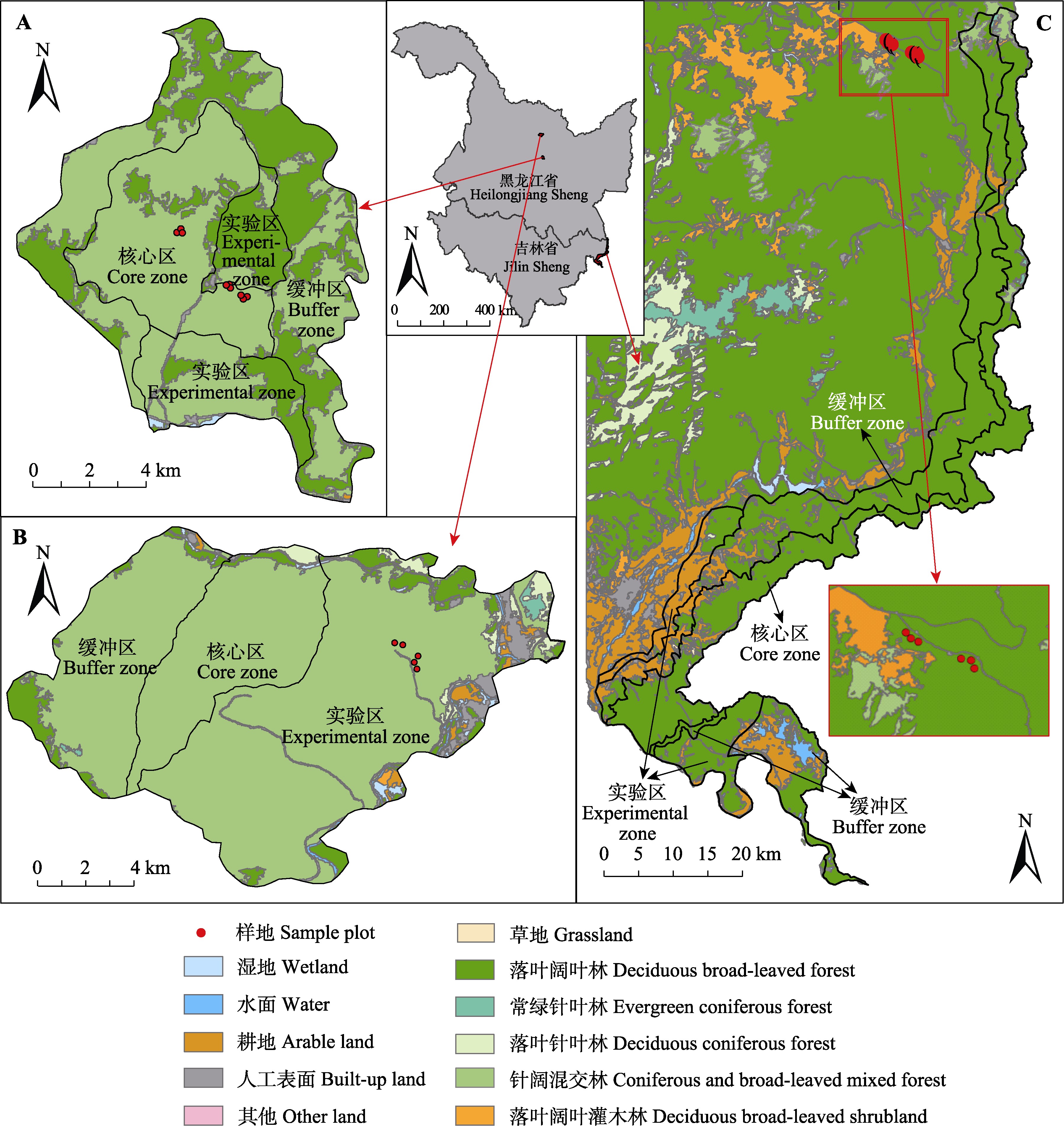
植物多样性监测是开展生物多样性评估, 制定生物多样性保护政策的基础。传统的森林植物多样性监测以实地调查为主, 难以快速获取森林植物多样性的空间分布及其动态变化信息。遥感技术的发展为评估区域尺度森林植物多样性提供了重要工具。该研究选取凉水、丰林和珲春3个国家级自然保护区, 利用Sentinel-2A卫星影像和野外实测数据, 探讨了基于像元和聚类的光谱多样性直接估算方法, 以及基于随机森林回归的森林植物多样性反演方法。研究结果表明: (1)在像元尺度, 基于凸包面积计算的光谱多样性指数对Shannon-Wiener多样性指数的估算精度(R2 = 0.74)优于基于变异系数的方法(R2 = 0.60); (2)基于像元的光谱多样性估算方法对Shannon-Wiener多样性指数的估算精度优于聚类分析方法(R2 = 0.59); (3)基于6个特征变量, 利用随机森林回归算法对Shannon-Wiener多样性指数的估算精度最高(R2 = 0.79); (4)上述方法均不能精确估算Simpson多样性指数和物种丰富度。研究发现基于Sentinel-2A卫星影像能较好地反演Shannon-Wiener多样性指数, 为下一步能在大尺度上进行森林植物多样性估算提供了参考和依据。
关键词: 森林植物多样性; Sentinel-2A; 光谱多样性; 聚类分析; 随机森林回归
周楷玲, 赵玉金, 白永飞 . 基于Sentinel-2A数据的东北森林植物多样性监测方法研究[J]. 植物生态学报, 2022 , 46(10) : 1251 -1267 . DOI: 10.17521/cjpe.2021.0373
Aims Plant diversity monitoring is the basis of biodiversity assessment and developing conservation policy. Traditional forest plant diversity monitoring is mainly based on field surveys, which is difficult to quickly obtain the spatial distribution and dynamic change of forest plant diversity. The development of remote sensing technology provides an important tool for assessing forest plant diversity at the regional scale. In this study, we explored two methods of forest plant diversity estimation based on Sentinel-2A satellite images and field data in three selected national nature reserves (Liangshui, Fenglin, and Hunchun).
Methods We used two methods to estimate forest plant diversity: (1) Direct estimation based on spectral diversity at the pixel and cluster scales, respectively; (2) Indirect estimation based on random forest regression. The spectral diversity was calculated based on the coefficient of variation and convex hull area at the pixel scale, respectively. K-means clustering method was used for cluster analysis to calculate the spectral diversity between clusters. For the indirect estimation, we used 10-fold cross validation to select characteristic variables for later diversity calculation.
Important findings Our results showed that: (1) At the pixel scale, the estimation accuracy of Shannon-Wiener diversity index based on convex hull area (R2= 0.74) was better than that of coefficient of variation (R2= 0.60); (2) The pixel-based estimation accuracy of Shannon-Wiener diversity index outperformed clustering basis (R2= 0.59); (3) Based on six feature variables, the Shannon-Wiener diversity index was best estimated using the random forest regression algorithm (R2= 0.79); (4) Both the Simpson diversity index and species richness could not be accurately estimated by the above methods. Our findings indicate the capability of Sentinel-2A satellite images to estimate the Shannon-Wiener diversity index, providing reference and basis for forest plant diversity estimation at a large scale.
| [1] | Asner GP, Martin RE. (2009). Airborne spectranomics: mapping canopy chemical and taxonomic diversity in tropical forests. Frontiers in Ecology and the Environment, 7, 269-276. |
| [2] | Asner GP, Martin RE, Knapp DE, Tupayachi R, Anderson CB, Sinca F, Vaughn NR, Llactayo W. (2017). Airborne laser-guided imaging spectroscopy to map forest trait diversity and guide conservation. Science, 355, 385-389. |
| [3] | Breiman L. (2001). Random forests. Machine Learning, 45, 5-32. |
| [4] | Carlson KM, Asner GP, Hughes RF, Ostertag R, Martin RE. (2007). Hyperspectral remote sensing of canopy biodiversity in Hawaiian lowland rainforests. Ecosystems, 10, 536-549. |
| [5] | Ceballos G, Ehrlich PR, Barnosky AD, García A, Pringle RM, Palmer TM. (2015). Accelerated modern human-induced species losses: entering the sixth mass extinction. Science Advances, 1, e1400253. DOI: 10.1126/sciadv.1400253. |
| [6] | Chang CI. (2000). An information-theoretic approach to spectral variability, similarity, and discrimination for hyperspectral image analysis. IEEE Transactions on Information Theory, 46, 1927-1932. |
| [7] | Chrysafis I, Korakis G, Kyriazopoulos AP, Mallinis G. (2020). Predicting tree species diversity using geodiversity and Sentinel-2 multi-seasonal spectral information. Sustainability, 12, 9250. DOI: 10.3390/su12219250. |
| [8] | Clark ML, Roberts DA. (2012). Species-level differences in hyperspectral metrics among tropical rainforest trees as determined by a tree-based classifier. Remote Sensing, 4, 1820-1855. |
| [9] | Cross M, Scambos T, Pacifici F, Vargas-Ramirez O, Moreno- Sanchez R, Marshall W. (2019). Classification of tropical forest tree species using meter-scale image data. Remote Sensing, 11, 1411. DOI: 10.3390/rs11121411. |
| [10] | Dahlin KM. (2016). Spectral diversity area relationships for assessing biodiversity in a wildland-agriculture matrix. Ecological Applications, 26, 2756-2766. |
| [11] | Datt B. (1999). Visible/near infrared reflectance and chlorophyll content in Eucalyptus leaves. International Journal of Remote Sensing, 20, 2741-2759. |
| [12] | Delegido J, Verrelst J, Alonso L, Moreno J. (2011). Evaluation of Sentinel-2 red-edge bands for empirical estimation of green LAI and chlorophyll content. Sensors, 11, 7063-7081. |
| [13] | Deng S, Katoh M, Yu X, Hyyppa J, Gao T. (2016). Comparison of tree species classifications at the individual tree level by combining ALS data and RGB images using different algorithms. Remote Sensing, 8, 1034. DOI: 10.3390/rs8121034. |
| [14] | Dong WX, Zeng Y, Zhao YJ, Zhao D, Zheng ZJ, Yi HY. (2018). Forest species diversity mapping using airborne LiDAR and hyperspectral data. Journal of Remote Sensing, 22, 833-847. |
| [14] | [董文雪, 曾源, 赵玉金, 赵旦, 郑朝菊, 衣海燕 (2018). 机载激光雷达及高光谱的森林乔木物种多样性遥感监测. 遥感学报, 22, 833-847.] |
| [15] | Duro DC, Coops NC, Wulder MA, Han T. (2007). Development of a large area biodiversity monitoring system driven by remote sensing. Progress in Physical Geography: Earth and Environment, 31, 235-260. |
| [16] | Edwards JA, Santos-Medellin CM, Liechty ZS, Nguyen B, Lurie E, Eason S, Phillips G, Sundaresan V. (2018). Compositional shifts in root-associated bacterial and archaeal microbiota track the plant life cycle in field-grown rice. PLOS Biology, 16, e2003862. DOI: 10.1371/journal.pbio.2003862. |
| [17] | Erinjery JJ, Singh M, Kent R. (2018). Mapping and assessment of vegetation types in the tropical rainforests of the Western Ghats using multispectral Sentinel-2 and SAR Sentinel-1 satellite imagery. Remote Sensing of Environment, 216, 345-354. |
| [18] | Fairbanks DHK, McGwire KC. (2004). Patterns of floristic richness in vegetation communities of California: regional scale analysis with multi-temporal NDVI. Global Ecology and Biogeography, 13, 221-235. |
| [19] | Fauvel M, Lopes M, Dubo T, Rivers-Moore J, Frison PL, Gross N, Ouin A. (2020). Prediction of plant diversity in grasslands using Sentinel-1 and -2 satellite image time series. Remote Sensing of Environment, 237, 111536. DOI: 10.1016/j.rse.2019.111536. |
| [20] | Feeley KJ, Gillespie TW, Terborgh JW. (2005). The utility of spectral indices from Landsat ETM+ for measuring the structure and composition of tropical dry forests. Biotropica, 37, 508-519. |
| [21] | Féret JB, Asner GP. (2014). Mapping tropical forest canopy diversity using high-fidelity imaging spectroscopy. Ecological Applications, 24, 1289-1296. |
| [22] | Féret JB, de Boissieu F (2020). biodivMapR: an R package for α- and β-diversity mapping using remotely sensed images. Methods in Ecology and Evolution, 11, 64-70. |
| [23] | Frampton WJ, Dash J, Watmough G, Milton EJ. (2013). Evaluating the capabilities of Sentinel-2 for quantitative estimation of biophysical variables in vegetation. ISPRS Journal of Photogrammetry and Remote Sensing, 82, 83-92. |
| [24] | Genuer R, Poggi JM, Tuleau-Malot C. (2010). Variable selection using Random forests. Pattern Recognition Letters, 31, 2225-2236. |
| [25] | Gholizadeh H, Gamon JA, Helzer CJ, Cavender-Bares J. (2020). Multi-temporal assessment of grassland α- and β-diversity using hyperspectral imaging. Ecological Applications, 30, e02145. DOI: 10.1002/eap.2145. |
| [26] | Gholizadeh H, Gamon JA, Townsend PA, Zygielbaum AI, Helzer CJ, Hmimina GY, Yu R, Moore RM, Schweiger AK, Cavender-Bares J. (2019). Detecting prairie biodiversity with airborne remote sensing. Remote Sensing of Environment, 221, 38-49. |
| [27] | Gholizadeh H, Gamon JA, Zygielbaum AI, Wang R, Schweiger AK, Cavender-Bares J. (2018). Remote sensing of biodiv improve ersity: soil correction and data dimension reduction methods assessment of α-diversity (species richness) in prairie ecosystems. Remote Sensing of Environment, 206, 240-253. |
| [28] | Gillespie TW, Foody GM, Rocchini D, Giorgi AP, Saatchi S. (2008). Measuring and modelling biodiversity from space. Progress in Physical Geography: Earth and Environment, 32, 203-221. |
| [29] | Gitelson A, Merzlyak MN. (1994). Quantitative estimation of chlorophyll-a using reflectance spectra: experiments with autumn chestnut and maple leaves. Journal of Photochemistry and Photobiology B: Biology, 22, 247-252. |
| [30] | Gitelson AA, Buschmann C, Lichtenthaler HK. (1999). The chlorophyll fluorescence ratio F735/F700 as an accurate measure of the chlorophyll content in plants. Remote Sensing of Environment, 69, 296-302. |
| [31] | Gitelson AA, Gritz Y, Merzlyak MN. (2003). Relationships between leaf chlorophyll content and spectral reflectance and algorithms for non-destructive chlorophyll assessment in higher plant leaves. Journal of Plant Physiology, 160, 271-282. |
| [32] | Gitelson AA, Merzlyak MN. (1997). Remote estimation of chlorophyll content in higher plant leaves. International Journal of Remote Sensing, 18, 2691-2697. |
| [33] | Gitelson AA, Zur Y, Chivkunova OB, Merzlyak MN. (2002). Assessing carotenoid content in plant leaves with reflectance spectroscopy. Photochemistry and Photobiology, 75, 272-281. |
| [34] | Gotelli NJ, Colwell RK. (2001). Quantifying biodiversity: procedures and pitfalls in the measurement and comparison of species richness. Ecology Letters, 4, 379-391. |
| [35] | Graham CH, Hijmans RJ. (2006). A comparison of methods for mapping species ranges and species richness. Global Ecology and Biogeography, 15, 578-587. |
| [36] | Gyamfi-Ampadu E, Gebreslasie M, Mendoza-Ponce A. (2021). Evaluating multi-sensors spectral and spatial resolutions for tree species diversity prediction. Remote Sensing, 13, 1033. DOI: 10.3390/rs13051033. |
| [37] | Hardisky M, Klemas V, Smart RM. (1983). The influence of soil-salinity, growth form, and leaf moisture on the spectral radiance of Spartina alterniflora canopies. Photogrammetric Engineering and Remote Sensing, 48, 77-84. |
| [38] | Harrison PA, Berry PM, Simpson G, Haslett JR, Blicharska M, Bucur M, Dunford R, Egoh B, Garcia-Llorente M, Geam?n? N, Geertsema W, Lommelen E, Meiresonne L, Turkelboom F. (2014). Linkages between biodiversity attributes and ecosystem services: a systematic review. Ecosystem Services, 9, 191-203. |
| [39] | Hauser LT, Féret JB, An Binh N, van der Windt N, Sil AF, Timmermans J, Soudzilovskaia NA, van Bodegom PM. (2021). Towards scalable estimation of plant functional diversity from Sentinel-2: in-situ validation in a heterogeneous (semi-)natural landscape. Remote Sensing of Environment, 262, 112505. DOI: 10.1016/j.rse.2021.112505. |
| [40] | Huete AR. (1988). A soil-adjusted vegetation index (SAVI). Remote Sensing of Environment, 25, 295-309. |
| [41] | Huete AR, Liu HQ, Batchily K, Vanleeuwen W. (1997). A comparison of vegetation indices over a global set of TM images for EOS-MODIS. Remote Sensing of Environment, 59, 440-451. |
| [42] | Hunt Jr ER, Rock BN. (1989). Detection of changes in leaf water content using Near- and Middle-Infrared reflectances. Remote Sensing of Environment, 30, 43-54. |
| [43] | Jetz W, Cavender-Bares J, Pavlick R, Schimel D, Davis FW, Asner GP, Guralnick R, Kattge J, Latimer AM, Moorcroft P, Schaepman ME, Schildhauer MP, Schneider FD, Schrodt F, Stahl U, Ustin SL. (2016). Monitoring plant functional diversity from space. Nature Plants, 2, 16024. DOI: 10.1038/NPLANTS.2016.24. |
| [44] | Kalacska M, Sanchez-Azofeifa GA, Rivard B, Caelli T, White HP, Calvo-Alvarado JC. (2007). Ecological fingerprinting of ecosystem succession: estimating secondary tropical dry forest structure and diversity using imaging spectroscopy. Remote Sensing of Environment, 108, 82-96. |
| [45] | Kaufman YJ, Tanre D. (1992). Atmospherically resistant vegetation index (ARVI) for EOS-MODIS. IEEE Transactions on Geoscience and Remote Sensing, 30, 261-270. |
| [46] | Ke YH, Quackenbush LJ, Im J. (2010). Synergistic use of QuickBird multispectral imagery and LIDAR data for object-based forest species classification. Remote Sensing of Environment, 114, 1141-1154. |
| [47] | Kerr JT, Ostrovsky M. (2003). From space to species: ecological applications for remote sensing. Trends in Ecology & Evolution, 18, 299-305. |
| [48] | Kim MS, Daughtry CST, Chappelle EW, McMurtrey JE, Walthall CL. (1994). The use of high spectral resolution bands for estimating absorbed photosynthetically active radiation (a Par)//Proceedings of the 6th International Symposium on Physical Measurements and Signatures in Remote Sensing. Val d?Isère, France. 299-306. |
| [49] | Laliberté E, Schweiger AK, Legendre P. (2020). Partitioning plant spectral diversity into alpha and beta components. Ecology Letters, 23, 370-380. |
| [50] | Levrel H, Fontaine B, Henry PY, Jiguet F, Julliard R, Kerbiriou C, Couvet D. (2010). Balancing state and volunteer investment in biodiversity monitoring for the implementation of CBD indicators: a French example. Ecological Economics, 69, 1580-1586. |
| [51] | Lucas KL, Carter GA. (2008). The use of hyperspectral remote sensing to assess vascular plant species richness on Horn Island, Mississippi. Remote Sensing of Environment, 112, 3908-3915. |
| [52] | Ma X, Mahecha MD, Migliavacca M, van der Plas F, Benavides R, Ratcliffe S, Kattge J, Richter R, Musavi T, Baeten L, Barnoaiea I, Bohn FJ, Bouriaud O, Bussotti F, Coppi A, et al. (2019). Inferring plant functional diversity from space: the potential of Sentinel-2. Remote Sensing of Environment, 233, 111368. DOI: 10.1016/j.rse.2019.111368. |
| [53] | Ma Z, Li B, Li WJ, Han NY, Chen JK, Watkinson AR. (2009). Conflicts between biodiversity conservation and development in a biosphere reserve. Journal of Applied Ecology, 46, 527-535. |
| [54] | Major DJ, Baret F, Guyot G. (1990). A ratio vegetation index adjusted for soil brightness. International Journal of Remote Sensing, 11, 727-740. |
| [55] | Mallinis G, Chrysafis I, Korakis G, Pana E, Kyriazopoulos AP. (2020). A random forest modelling procedure for a multi-sensor assessment of tree species diversity. Remote Sensing, 12, 1210. DOI: 10.3390/rs12071210. |
| [56] | Marceau DJ, Gratton DJ, Fournier RA, Fortin JP. (1994). Remote sensing and the measurement of geographical entities in a forested environment. 2. The optimal spatial resolution. Remote Sensing of Environment, 49, 105-117. |
| [57] | McMurtrey III JE, Chappelle EW, Kim MS, Meisinger JJ, Corp LA. (1994). Distinguishing nitrogen fertilization levels in field corn (Zea mays L.) with actively induced fluorescence and passive reflectance measurements. Remote Sensing of Environment, 47, 36-44. |
| [58] | Medina O, Manian V, Chinea JD. (2013). Biodiversity assessment using hierarchical agglomerative clustering and spectral unmixing over hyperspectral images. Sensors, 13, 13949-13959. |
| [59] | Merzlyak MN, Gitelson AA, Chivkunova OB, Rakitin VY. (1999). Non-destructive optical detection of pigment changes during leaf senescence and fruit ripening. Physiologia Plantarum, 106, 135-141. |
| [60] | Miao X, Heaton JS, Zheng S, Charlet DA, Liu H. (2012). Applying tree-based ensemble algorithms to the classification of ecological zones using multi-temporal multi- source remote-sensing data. International Journal of Remote Sensing, 33, 1823-1849. |
| [61] | Nagendra H. (2001). Using remote sensing to assess biodiversity. International Journal of Remote Sensing, 22, 2377-2400. |
| [62] | Nagendra H, Rocchini D. (2008). High resolution satellite imagery for tropical biodiversity studies: the devil is in the detail. Biodiversity and Conservation, 17, 3431-3442. |
| [63] | Nicholson E, Mace GM, Armsworth PR, Atkinson G, Buckle S, Clements T, Ewers RM, Fa JE, Gardner TA, Gibbons J, Grenyer R, Metcalfe R, Mourato S, Mu?ls M, Osborn D, et al. (2009). Priority research areas for ecosystem services in a changing world. Journal of Applied Ecology, 46, 1139-1144. |
| [64] | Oldeland J, Wesuls D, Rocchini D, Schmidt M, Jürgens N. (2010). Does using species abundance data improve estimates of species diversity from remotely sensed spectral heterogeneity? Ecological Indicators, 10, 390-396. |
| [65] | Palmer MW, Earls PG, Hoagland BW, White PS, Wohlgemuth T. (2002). Quantitative tools for perfecting species lists. Environmetrics, 13, 121-137. |
| [66] | Pan Y, Birdsey RA, Phillips OL, Jackson RB. (2013). The structure, distribution, and biomass of the world?s forests. Annual Review of Ecology, Evolution, and Systematics, 44, 593-622. |
| [67] | Pereira HM, Belnap J, Brummitt N, Collen B, Ding H, Gonzalez- Espinosa M, Gregory RD, Honrado J, Jongman RHG, Julliard R, McRae L, Proenca V, Rodrigues P, Opige M, Rodriguez JP, et al. (2010). Global biodiversity monitoring. Frontiers in Ecology and the Environment, 8, 459-460. |
| [68] | Pielou EC. (1966). The measurement of diversity in different types of biological collections. Journal of Theoretical Biology, 13, 131-144. |
| [69] | Rocchini D. (2007). Effects of spatial and spectral resolution in estimating ecosystem α-diversity by satellite imagery. Remote Sensing of Environment, 111, 423-434. |
| [70] | Rocchini D, Balkenhol N, Carter GA, Foody GM, Gillespie TW, He KS, Kark S, Levin N, Lucas K, Luoto M, Nagendra H, Oldeland J, Ricotta C, Southworth J, Neteler M. (2010). Remotely sensed spectral heterogeneity as a proxy of species diversity: recent advances and open challenges. Ecological Informatics, 5, 318-329. |
| [71] | Rondeaux G, Steven M, Baret F. (1996). Optimization of soil- adjusted vegetation indices. Remote Sensing of Environment, 55, 95-107. |
| [72] | Rossi C, Kneubüler M, Schütz M, Schaepman ME, Haller RM, Risch AC. (2020). From local to regional: functional diversity in differently managed alpine grasslands. Remote Sensing of Environment, 236, 111415. DOI: 10.1016/j.rse.2019.111415. |
| [73] | Rozenstein O, Haymann N, Kaplan G, Tanny J. (2019). Validation of the cotton crop coefficient estimation model based on Sentinel-2 imagery and eddy covariance measurements. Agricultural Water Management, 223, 105715. DOI: 10.1016/j.agwat.2019.105715. |
| [74] | Ruiz-Benito P, Gómez-Aparicio L, Paquette A, Messier C, Kattge J, Zavala MA. (2014). Diversity increases carbon storage and tree productivity in Spanish forests. Global Ecology and Biogeography, 23, 311-322. |
| [75] | Sch?fer E, Heiskanen J, Heikinheimo V, Pellikka P. (2016). Mapping tree species diversity of a tropical montane forest by unsupervised clustering of airborne imaging spectroscopy data. Ecological Indicators, 64, 49-58. |
| [76] | Schneider FD, Morsdorf F, Schmid B, Petchey OL, Hueni A, Schimel DS, Schaepman ME. (2017). Mapping functional diversity from remotely sensed morphological and physiological forest traits. Nature Communications, 8, 1441. DOI: 10.1038/s41467-017-01530-3. |
| [77] | Schweiger AK, Cavender-Bares J, Townsend PA, Hobbie SE, Madritch MD, Wang R, Tilman D, Gamon JA. (2018). Plant spectral diversity integrates functional and phylogenetic components of biodiversity and predicts ecosystem function. Nature Ecology & Evolution, 2, 976-982. |
| [78] | Sims DA, Gamon JA. (2002). Relationships between leaf pigment content and spectral reflectance across a wide range of species, leaf structures and developmental stages. Remote Sensing of Environment, 81, 337-354. |
| [79] | Somers B, Asner GP, Martin RE, Anderson CB, Knapp DE, Wright SJ, van de Kerchove R (2015). Mesoscale assessment of changes in tropical tree species richness across a bioclimatic gradient in Panama using airborne imaging spectroscopy. Remote Sensing of Environment, 167, 111-120. |
| [80] | Tilman D, Knops J, Wedin D, Reich P, Ritchie M, Siemann E. (1997). The influence of functional diversity and composition on ecosystem processes. Science, 277, 1300-1302. |
| [81] | Torresani M, Rocchini D, Sonnenschein R, Zebisch M, Marcantonio M, Ricotta C, Tonon G. (2019). Estimating tree species diversity from space in an alpine conifer forest: the Rao?s Q diversity index meets the spectral variation hypothesis. Ecological Informatics, 52, 26-34. |
| [82] | Turner W. (2014). Sensing biodiversity. Science, 346, 301-302. |
| [83] | Turner W, Spector S, Gardiner N, Fladeland M, Sterling E, Steininger M. (2003). Remote sensing for biodiversity science and conservation. Trends in Ecology & Evolution, 18, 306-314. |
| [84] | Ustin SL, Gamon JA. (2010). Remote sensing of plant functional types. New Phytologist, 186, 795-816. |
| [85] | Wang R, Gamon JA. (2019). Remote sensing of terrestrial plant biodiversity. Remote Sensing of Environment, 231, 111128. DOI: 10.1016/j.rse.2019.111218. |
| [86] | Wang R, Gamon JA, Emmerton CA, Li H, Nestola E, Pastorello GZ, Menzer O. (2016). Integrated analysis of productivity and biodiversity in a southern Alberta prairie. Remote Sensing, 8, 214. DOI: 10.3390/rs8030214. |
| [87] | Wang R, Gamon JA, Schweiger AK, Cavender-Bares J, Townsend PA, Zygielbaum AI, Kothari S. (2018). Influence of species richness, evenness, and composition on optical diversity: a simulation study. Remote Sensing of Environment, 211, 218-228. |
| [88] | Waring RH, Coops NC, Fan W, Nightingale JM. (2006). MODIS enhanced vegetation index predicts tree species richness across forested ecoregions in the contiguous USA. Remote Sensing of Environment, 103, 218-226. |
| [89] | Wu CY, Niu Z, Tang Q, Huang WJ. (2008). Estimating chlorophyll content from hyperspectral vegetation indices: modeling and validation. Agricultural and Forest Meteorology, 148, 1230-1241. |
| [90] | Xi YB, Ren CY, Wang ZM, Wei SQ, Bai JL, Zhang B, Xiang HX, Chen L. (2019). Mapping tree species composition using OHS-1 hyperspectral data and deep learning algorithms in Changbai Mountains, northeast China. Forests, 10, 818. DOI: 10.3390/f10090818. |
| [91] | Xu W, Li X, Pimm SL, Hull V, Zhang J, Zhang L, Xiao Y, Zheng H, Ouyang Z. (2016). The effectiveness of the zoning of China?s protected areas. Biological Conservation, 204, 231-236. |
| [92] | Yi HY, Zeng Y, Zhao YJ, Zheng ZJ, Xiong J, Zhao D. (2020). Forest species diversity mapping based on clustering algorithm. Chinese Journal of Plant Ecology, 44, 598-615. |
| [92] | [衣海燕, 曾源, 赵玉金, 郑朝菊, 熊杰, 赵旦 (2020). 利用聚类算法监测森林乔木物种多样性. 植物生态学报, 44, 598-615.] |
| [93] | Zarco-Tejada PJ, Pushnik JC, Dobrowski S, Ustin SL. (2003). Steady-state chlorophyll a fluorescence detection from canopy derivative reflectance and double-peak red-edge effects. Remote Sensing of Environment, 84, 283-294. |
| [94] | Zhang J, Rivard B, Sánchez-Azofeifa A, Castro-Esau K. (2006). Intra- and inter-class spectral variability of tropical tree species at La Selva, Costa Rica: implications for species identification using HYDICE imagery. Remote Sensing of Environment, 105, 129-141. |
| [95] | Zhao YJ, Zeng Y, Zheng ZJ, Dong WX, Zhao D, Wu BF, Zhao QJ. (2018). Forest species diversity mapping using airborne LiDAR and hyperspectral data in a subtropical forest in China. Remote Sensing of Environment, 213, 104-114. |
| [96] | Zheng Z, Zeng Y, Schneider FD, Zhao Y, Zhao D, Schmid D, Schaepman ME, Morsdorf F. (2021). Mapping functional diversity using individual tree-based morphological and physiological traits in a subtropical forest. Remote Sensing of Environment, 252, 112170. DOI: 10.1016/j.rse.2020.112170. |
/
| 〈 |
|
〉 |
Copyright © 2026 版权所有 《植物生态学报》编辑部
地址: 北京香山南辛村20号, 邮编: 100093
Tel.: 010-62836134, 62836138; Fax: 010-82599431; E-mail: apes@ibcas.ac.cn, cjpe@ibcas.ac.cn
备案号: 京ICP备16067583号-19

