
陆地生态系统野外增温控制实验的技术与方法
收稿日期: 2019-07-08
录用日期: 2019-09-16
网络出版日期: 2019-11-30
基金资助
国家重点研发计划(2017YFC0503903);国家自然科学基金(31622013);国家自然科学基金(31971528)
Techniques and methods for field warming manipulation experiments in terrestrial ecosystems
Received date: 2019-07-08
Accepted date: 2019-09-16
Online published: 2019-11-30
Supported by
National Key R&D Program of China(2017YFC0503903);National Natural Science Foundation of China(31622013);National Natural Science Foundation of China(31971528)
由于人类活动导致的碳排放急剧增加, 工业革命以来全球地表温度显著增加约1 ℃, 未来全球气候还将持续变暖, 到21世纪末最高可升温4 ℃。这种前所未有的气候变化不仅影响陆地植被的适应策略, 也深刻影响生态系统的结构和功能。其中陆地生态系统碳收支对全球变暖的反馈, 是决定未来气候变化强度的关键因素, 因此全球已经开展了大量的生态系统尺度的野外增温控制实验, 研究生态系统碳收支对气温升高的响应, 从而提高地球系统模型的预测精度。然而由于增温技术和方法的不同, 不同研究的结果之间难以进行比较。该文系统总结了常见的野外增温技术和方法, 包括主动增温和被动增温, 阐述了其优缺点、适用对象以及相关研究成果。同时简要介绍了野外增温控制实验的前沿研究方向——新一代野外增温技术(包括全土壤剖面增温和全生态系统增温)和基于新一代增温技术开展的野外增温联网实验。
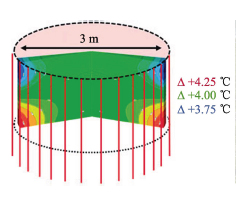
朱彪, 陈迎 . 陆地生态系统野外增温控制实验的技术与方法[J]. 植物生态学报, 2020 , 44(4) : 330 -339 . DOI: 10.17521/cjpe.2019.0179
Due to the sharp increase in carbon emissions from human activities, global surface air temperature has increased significantly by approximately 1 °C since the Industrial Revolution, and it will continue to increase by up to 4 °C by the end of 21st century. This unprecedented climate change will not only affect the adaptation strategies of terrestrial vegetation, but also profoundly affect the structure and function of terrestrial ecosystems. The feedbacks of terrestrial ecosystem carbon cycling to warming is the key factor controlling the speed of future climate change. Therefore, a large number of ecosystem-scale field warming manipulation experiments have been conducted globally to study the carbon budget of terrestrial ecosystems and to improve the prediction accuracy of earth system models. However, due to differences in techniques and methods of these field warming experiments, results among different studies are difficult to compare and synthesize. This paper reviews the common techniques and methods of field warming manipulation experiments, including active warming and passive warming. It also summarizes advantages and disadvantages, applicable objects and related publications for these techniques and methods. Moreover, it briefly introduces future directions of field warming manipulation experiments—the next-generation field warming techniques, namely whole-soil-profile warming and whole-ecosystem warming, and calls for establishing a coordinated distributed network of field warming manipulation experiments using these techniques.
| [1] | Aronson EL, McNulty SG (2009). Appropriate experimental ecosystem warming methods by ecosystem, objective, and practicality. Agricultural and Forest Meteorology, 149, 1791-1799. |
| [2] | Bradford MA, Wieder WR, Bonan GB, Fierer N, Raymond PA, Crowther TW (2016). Managing uncertainty in soil carbon feedbacks to climate change. Nature Climate Change, 6, 751-758. |
| [3] | Castanha C, Zhu B, Hicks Pries CE, Georgiou K, Torn MS (2018). The effects of heating, rhizosphere, and depth on root litter decomposition are mediated by soil moisture. Biogeochemistry, 137, 267-279. |
| [4] | Chen J, Luo YQ, Xia JY, Jiang LF, Zhou XH, Lu M, Liang JY, Shi Z, Shelton S, Cao JJ (2015). Stronger warming effects on microbial abundances in colder regions. Scientific Reports, 5, 18032. DOI: 10.1038/srep18032. |
| [5] | Ciais P, Sabine C, Bala G, Bopp L, Brovkin V, Canadell J, Chhabra A, DeFries R, Galloway J, Heimann M, Jones C, Le Quéré C, Myneni RB, Piao SL, Thornton P (2013). Carbon and other biogeochemical cycles//Contribution of Working Group I to the Fifth Assessment Report of the Intergovernmental Panel on Climate Change. Climate Change 2013: the Physical Science Basis. Cambridge University Press, Cambridge, UK. |
| [6] | Elmendorf SC, Henry GHR, Hollister RD, Bj?rk RG, Bjorkman AD, Callaghan TV, Collier LS, Cooper EJ, Cornelissen JHC, Day TA, Fosaa AM, Gould WA, Grétarsdóttir J, Harte J, Hermanutz L, Hik DS, Hofgaard A, Jarrad F, Jónsdóttir IS, Keuper F, Klanderud K, Klein JA, Koh S, Kudo G, Lang SI, Loewen V, May JL, Mercado J, Michelsen A, Molau U, Myers-Smith IH, Oberbauer SF, Pieper S, Post E, Rixen C, Robinson CH, Schmidt NM, Shaver GR, Stenstr?m A, Tolvanen A, Totland ?, Troxler T, Wahren CH, Webber PJ, Welker JM, Wookey PA (2012). Global assessment of experimental climate warming on tundra vegetation: heterogeneity over space and time. Ecology Letters, 15, 164-175. |
| [7] | Fraser LH, Henry HA, Carlyle CN, White SR, Beierkuhnlein C, Cahill Jr JF, Casper BB, Cleland E, Collins SL, Dukes JS, Knapp AK, Lind E, Long RJ, Luo YQ, Reich PB, Smith MD, Sternberg M, Turkington R (2013). Coordinated distributed experiments: an emerging tool for testing global hypotheses in ecology and environmental science. Frontiers in Ecology and the Environment, 11, 147-155. |
| [8] | Friedlingstein P, Meinshausen M, Arora VK, Jones CD, Anav A, Liddicoat SK, Knutti R (2014). Uncertainties in CMIP5 climate projections due to carbon cycle feedbacks. Journal of Climate, 27, 511-526. |
| [9] | Gill AL, Giasson MA, Yu R, Finzi AC (2017). Deep peat warming increases surface methane and carbon dioxide emissions in a black spruce-dominated ombrotrophic bog. Global Change Biology, 23, 5398-5411. |
| [10] | Gross CD, Harrison RB (2019). The case for digging deeper: Soil organic carbon storage, dynamics, and controls in our changing world. Soil Systems, 3, 28. DOI: 10.3390/soilsystems3020028. |
| [11] | Hanson PJ, Childs KW, Wullschleger SD, Riggs JS, Thomas WK, Todd DE, Warren JM (2011). A method for experimental heating of intact soil profiles for application to climate change experiments. Global Change Biology, 17, 1083-1096. |
| [12] | Hanson PJ, Riggs JS, Nettles WR, Phillips JR, Krassovski MB, Hook LA, Gu LH, Richardson AD, Aubrecht DM, Ricciuto DM, Warren JM, Barbier C (2017). Attaining whole-ecosystem warming using air and deep-soil heating methods with an elevated CO2 atmosphere. Biogeosciences, 14, 861-883. |
| [13] | Harpole WS, Sullivan LL, Lind EM, Firn J, Adler PB, Borer ET, Chase J, Fay PA, Hautier Y, Hillebrand H, MacDougall AS, Seabloom EW, Williams R, Bakker JD, Cadotte MW, Chaneton EJ, Chu CJ, Cleland EE, D’Antonio C, Davies KF, Gruner DS, Hagenah N, Kirkman K, Knops JMH, La Pierre KJ, McCulley RL, Moore JL, Morgan JW, Prober SM, Risch AC, Schuetz M, Stevens CJ, Wragg PD (2016). Addition of multiple limiting resources reduces grassland diversity. Nature, 537, 93-96. |
| [14] | Harte J, Saleska SR, Levy C (2015). Convergent ecosystem responses to 23-year ambient and manipulated warming link advancing snowmelt and shrub encroachment to transient and long-term climate-soil carbon feedback. Global Change Biology, 21, 2349-2356. |
| [15] | Harte J, Torn MS, Chang FR, Feifarek B, Kinzig AP, Shaw R, Shen K (1995). Global warming and soil microclimate: results from a meadow-warming experiment. Ecological Applications, 5, 132-150. |
| [16] | Heimann M, Reichstein M (2008). Terrestrial ecosystem carbon dynamics and climate feedbacks. Nature, 451, 289-292. |
| [17] | Henry GHR, Molau U (1997). Tundra plants and climate change: the International Tundra Experiment (ITEX). Global Change Biology, 3(S1), 1-9. |
| [18] | Hicks Pries CE, Castanha C, Porras R, Phillips C, Torn MS (2018). Response to Comment on “The whole-soil carbon flux in response to warming”. Science, 359, eaao0457. DOI: 10.1126/science.aao0457. |
| [19] | Hicks Pries CE, Castanha C, Porras RC, Torn MS (2017). The whole-soil carbon flux in response to warming. Science, 355, 1420-1422. |
| [20] | Hungate BA, Holland EA, Jackson RB, Chapin III FS, Mooney HA, Field CB (1997). The fate of carbon in grasslands under carbon dioxide enrichment. Nature, 388, 576-579. |
| [21] | IPCC (2013). Climate Change: the Physical Science Basis. Cambridge University Press, Cambridge, UK. |
| [22] | Kimball BA, Alonso-Rodríguez AM, Cavaleri MA, Reed SC, González G, Wood TE (2018). Infrared heater system for warming tropical forest understory plants and soils. Ecology and Evolution, 8, 1932-1944. |
| [23] | Kimball BA, Conley MM (2009). Infrared heater arrays for warming field plots scaled up to 5-m diameter. Agricultural and Forest Meteorology, 149, 721-724. |
| [24] | Kimball BA, Conley MM, Wang SP, Lin XW, Luo CY, Morgan J, Smith D (2008). Infrared heater arrays for warming ecosystem field plots. Global Change Biology, 14, 309-320. |
| [25] | Kimball BA, White JW, Ottman MJ, Wall GW, Bernacchi CJ, Morgan J, Smith DP (2015). Predicting canopy temperatures and infrared heater energy requirements for warming field plots. Agronomy Journal, 107, 129-141. |
| [26] | Knapp AK, Hoover DL, Wilcox KR, Avolio ML, Koerner SE, La Pierre KJ, Loik ME, Luo YQ, Sala OE, Smith MD (2015). Characterizing differences in precipitation regimes of extreme wet and dry years: implications for climate change experiments. Global Change Biology, 21, 2624-2633. |
| [27] | Le Quéré C, Andrew RM, Friedlingstein P, Sitch S, Pongratz J, Manning AC, Korsbakken JI, Peters GP, Canadell JG, Jackson RB, Boden TA, Tans PP, Andrews OD, Arora VK, Bakker DCE, Barbero L, Becker M, Betts RA, Bopp L, Chevallier F, Chini LP, Ciais P, Cosca CE, Cross J, Currie K, Gasser T, Harris I, Hauck J, Haverd V, Houghton RA, Hunt CW, Hurtt G, Ilyina T, Jain AK, Kato E, Kautz M, Keeling RF, Klein Goldewijk K, K?rtzinger A, Landschützer P, Lefèvre N, Lenton A, Lienert S, Lima I, Lombardozzi D, Metzl N, Millero F, Monteiro PMS, Munro DR, Nabel JEMS, Nakaoka SI, Nojiri Y, Padin XA, Peregon A, Pfeil B, Pierrot D, Poulter B, Rehder G, Reimer J, R?denbeck C, Schwinger J, Séférian R, Skjelvan I, Stocker BD, Tian H, Tilbrook B, Tubiello FN, van der Laan-Luijkx IT, van der Werf GR, van Heuven S, Viovy N, Vuichard N, Walker AP, Watson AJ, Wiltshire AJ, Zaehle S, Zhu D (2018). Global carbon budget 2017. Earth System Science Data, 10, 405-448. |
| [28] | Li XN, Jiang LL, Meng FD, Wang SP, Niu HS, Iler AM, Duan JC, Zhang ZH, Luo CY, Cui SJ, Zhang LR, Li YM, Wang Q, Zhou Y, Bao XY, Dorji T, Li YN, Pe?uelas J, Du MY, Zhao XQ, Zhao L, Wang GJ (2016). Responses of sequential and hierarchical phenological events to warming and cooling in alpine meadows. Nature Communications, 7, 12489. DOI: 10.1038/ncomms12489. |
| [29] | Lin WS, Li YQ, Yang ZJ, Giardina CP, Xie JS, Chen SD, Lin CF, Kuzyakov Y, Yang YS (2018). Warming exerts greater impacts on subsoil than topsoil CO2 efflux in a subtropical forest. Agricultural and Forest Meteorology, 263, 137-146. |
| [30] | Liu HY, Mi ZR, Lin L, Wang YH, Zhang ZH, Zhang FW, Wang H, Liu LL, Zhu B, Cao GM, Zhao XQ, Sanders NJ, Classen AT, Reich PB, He JS (2018). Shifting plant species composition in response to climate change stabilizes grassland primary production. Proceedings of the National Academy of Sciences of the United States of America, 115, 4051-4056. |
| [31] | Lu M, Zhou XH, Yang Q, Li H, Luo YQ, Fang CM, Chen JK, Yang X, Li B (2013). Responses of ecosystem carbon cycle to experimental warming: a meta-analysis. Ecology, 94, 726-738. |
| [32] | Luo YQ, Melillo J, Niu SL, Beier C, Clark JS, Classen AT, Davidson E, Dukes JS, Evans RD, Field CB, Czimczik CI, Keller M, Kimball BA, Kueppers LM, Norby RJ, Pelini SL, Pendall E, Rastetter E, Six J, Smith M, Tjoelker MG, Torn MS (2011). Coordinated approaches to quantify long-term ecosystem dynamics in response to global change. Global Change Biology, 17, 843-854. |
| [33] | Melillo JM, Butler S, Johnson J, Mohan J, Steudler P, Lux H, Burrows E, Bowles F, Smith R, Scott L, Vario C, Hill T, Burton A, Zhou YM, Tang J (2011). Soil warming, carbon-nitrogen interactions, and forest carbon budgets. Proceedings of the National Academy of Sciences of the United States of America, 108, 9508-9512. |
| [34] | Melillo JM, Frey SD, DeAngelis KM, Werner WJ, Bernard MJ, Bowles FP, Pold G, Knorr MA, Grandy AS (2017). Long-term pattern and magnitude of soil carbon feedback to the climate system in a warming world. Science, 358, 101-105. |
| [35] | Niu SL, Han XG, Ma KP, Wan SQ (2007). Field facilities in global warming and terrestrial ecosystem research. Journal of Plant Ecology (Chinese Version), 31, 262-271. |
| [35] | [ 牛书丽, 韩兴国, 马克平, 万师强 (2007). 全球变暖与陆地生态系统研究中的野外增温装置. 植物生态学报, 31, 262-271.] |
| [36] | Norby R, Edwards N, Riggs J, Abner C, Wullschleger S, Gunderson C (1997). Temperature-controlled open-top chambers for global change research. Global Change Biology, 3, 259-267. |
| [37] | Peterjohn WT, Melillo JM, Bowles FP, Steudler PA (1993). Soil warming and trace gas fluxes: experimental design and preliminary flux results. Oecologia, 93, 18-24. |
| [38] | Plaza C, Pegoraro E, Bracho R, Celis G, Crummer KG, Hutchings JA, Hicks Pries CE, Mauritz M, Natali SM, Salmon VG, Sch?del C, Webb EE, Schuur EAG (2019). Direct observation of permafrost degradation and rapid soil carbon loss in tundra. Nature Geoscience, 12, 627-631. |
| [39] | Reich PB, Sendall KM, Stefanski A, Rich RL, Hobbie SE, Montgomery RA (2018). Effects of climate warming on photosynthesis in boreal tree species depend on soil moisture. Nature, 562, 263-267. |
| [40] | Rich RL, Stefanski A, Montgomery RA, Hobbie SE, Kimball BA, Reich PB (2015). Design and performance of combined infrared canopy and belowground warming in the B4WarmED (Boreal Forest Warming at an Ecotone in Danger) experiment. Global Change Biology, 21, 2334-2348. |
| [41] | Richardson AD, Hufkens K, Milliman T, Aubrecht DM, Furze ME, Seyednasrollah B, Krassovski MB, Latimer JM, Nettles WR, Heiderman RR, Warren JM, Hanson PJ (2018). Ecosystem warming extends vegetation activity but heightens vulnerability to cold temperatures. Nature, 560, 368-371. |
| [42] | Rumpel C, K?gel-Knabner I (2011). Deep soil organic matter—A key but poorly understood component of terrestrial C cycle. Plant and Soil, 338, 143-158. |
| [43] | Shaver GR, Canadell J, Chapin FS, Gurevitch J, Harte J, Henry G, Ineson P, Jonasson S, Melillo J, Pitelka L, Rustad L (2000). Global warming and terrestrial ecosystems: a conceptual framework for analysis. BioScience, 50, 871-882. |
| [44] | Shi GX, Yao BQ, Liu YJ, Jiang SJ, Wang WY, Pan JB, Zhao XQ, Feng HY, Zhou HK (2017). The phylogenetic structure of AMF communities shifts in response to gradient warming with and without winter grazing on the Qinghai- Tibet Plateau. Applied Soil Ecology, 121, 31-40. |
| [45] | Sistla SA, Moore JC, Simpson RT, Gough L, Shaver GR, Schimel JP (2013). Long-term warming restructures Arctic tundra without changing net soil carbon storage. Nature, 497, 615-618. |
| [46] | Torn MS, Chabbi A, Crill P, Hanson PJ, Janssens IA, Luo Y, Hicks Pries CE, Rumpel C, Schmidt MWI, Six J, Schrumpf M, Zhu B (2015). A call for international soil experiment networks for studying, predicting, and managing global change impacts. Soil, 1, 575-582. |
| [47] | Wan SQ, Xia JY, Liu WX, Niu SL (2009). Photosynthetic overcompensation under nocturnal warming enhances grassland carbon sequestration. Ecology, 90, 2700-2710. |
| [48] | Wang SP, Duan JC, Xu GP, Wang YF, Zhang ZH, Rui YC, Luo CY, Xu B, Zhu XX, Chang XF, Cui XY, Niu HS, Zhao XQ, Wang WY (2012). Effects of warming and grazing on soil N availability, species composition, and ANPP in an alpine meadow. Ecology, 93, 2365-2376. |
| [49] | Wilson RM, Hopple AM, Tfaily MM, Sebestyen SD, Schadt CW, Pfeifer-Meister L, Medvedeff C, McFarlane KJ, Kostka JE, Kolton M, Kolka RK, Kluber LA, Keller JK, Guilderson TP, Griffiths NA, Chanton JP, Bridgham SD, Hanson PJ (2016). Stability of peatland carbon to rising temperatures. Nature Communications, 7, 13723. DOI: 10.1038/ncomms13723. |
| [50] | Wu ZT, Dijkstra P, Koch GW, Hungate BA (2012). Biogeochemical and ecological feedbacks in grassland responses to warming. Nature Climate Change, 2, 458-461. |
| [51] | Yu XC, Yao BQ, Zhou HK, Jin YX, Yang YJ, Wang WY, Dong SK, Zhao XQ (2015). Variable responses to long-term simulated warming of underground biomass and carbon allocations of two alpine meadows on the Qinghai- Tibet Plateau. Chinese Science Bulletin, 60, 379-388. |
| [51] | [ 余欣超, 姚步青, 周华坤, 金艳霞, 杨月娟, 王文颖, 董世魁, 赵新全 (2015). 青藏高原两种高寒草甸地下生物量及其碳分配对长期增温的响应差异. 科学通报, 60, 379-388.] |
| [52] | Zhu JT (2016). Effects of experimental warming on plant reproductive phenology in Xizang alpine meadow. Chinese Journal of Plant Ecology, 40, 1028-1036. |
| [52] | [ 朱军涛 (2016). 实验增温对藏北高寒草甸植物繁殖物候的影响. 植物生态学报, 40, 1028-1036.] |
/
| 〈 |
|
〉 |
Copyright © 2026 版权所有 《植物生态学报》编辑部
地址: 北京香山南辛村20号, 邮编: 100093
Tel.: 010-62836134, 62836138; Fax: 010-82599431; E-mail: apes@ibcas.ac.cn, cjpe@ibcas.ac.cn
备案号: 京ICP备16067583号-19

