
植物生态学报 ›› 2026, Vol. 50 ›› Issue (4): 789-800.DOI: 10.17521/cjpe.2025.0391 cstr: 32100.14.cjpe.2025.0391
• 综述 • 下一篇
常春玲1,2, 赵雪1, 徐一鸣1, 唐宽强1,*( )
)
收稿日期:2025-10-31
接受日期:2025-12-13
出版日期:2026-04-20
发布日期:2026-06-29
通讯作者:
*唐宽强(tangkuanqiang@126.com)基金资助:
CHANG Chun-Ling1,2, ZHAO Xue1, XU Yi-Ming1, TANG Kuan-Qiang1,*()
Received:2025-10-31
Accepted:2025-12-13
Online:2026-04-20
Published:2026-06-29
Contact:
*TANG Kuan-Qiang(tangkuanqiang@126.com)Supported by:摘要:
作物驯化不仅直接塑造作物的表型特征, 还通过根系构型和根系分泌物组成的动态调控, 对根际微生物群落组装产生选择性压力, 进而形成宿主与微生物互作网络。该网络通过多重机制促进宿主作物的适应性: 一方面显著增强对生物胁迫(如病原菌侵染)和非生物胁迫(如干旱和盐碱胁迫等)的抗性, 另一方面高效优化氮、磷等关键营养元素的吸收效率。这些功能的实现源于宿主基因型与环境因素共同调控的根际互作动态系统。值得注意的是, 宿主作物遗传调控对微生物组组装的分子机制仍是当前研究的核心问题。该文综述了近年来作物遗传背景对微生物组选择性招募机制的研究进展, 并展望“微生物组再野化”在农业可持续发展中的应用前景, 为相关领域的理论创新与实践提供了重要参考。
常春玲, 赵雪, 徐一鸣, 唐宽强. 作物功能基因与根际微生物组互作的分子调控机制研究进展. 植物生态学报, 2026, 50(4): 789-800. DOI: 10.17521/cjpe.2025.0391
CHANG Chun-Ling, ZHAO Xue, XU Yi-Ming, TANG Kuan-Qiang. Molecular regulatory mechanisms of crop functional genes in rhizosphere microbiome interactions. Chinese Journal of Plant Ecology, 2026, 50(4): 789-800. DOI: 10.17521/cjpe.2025.0391
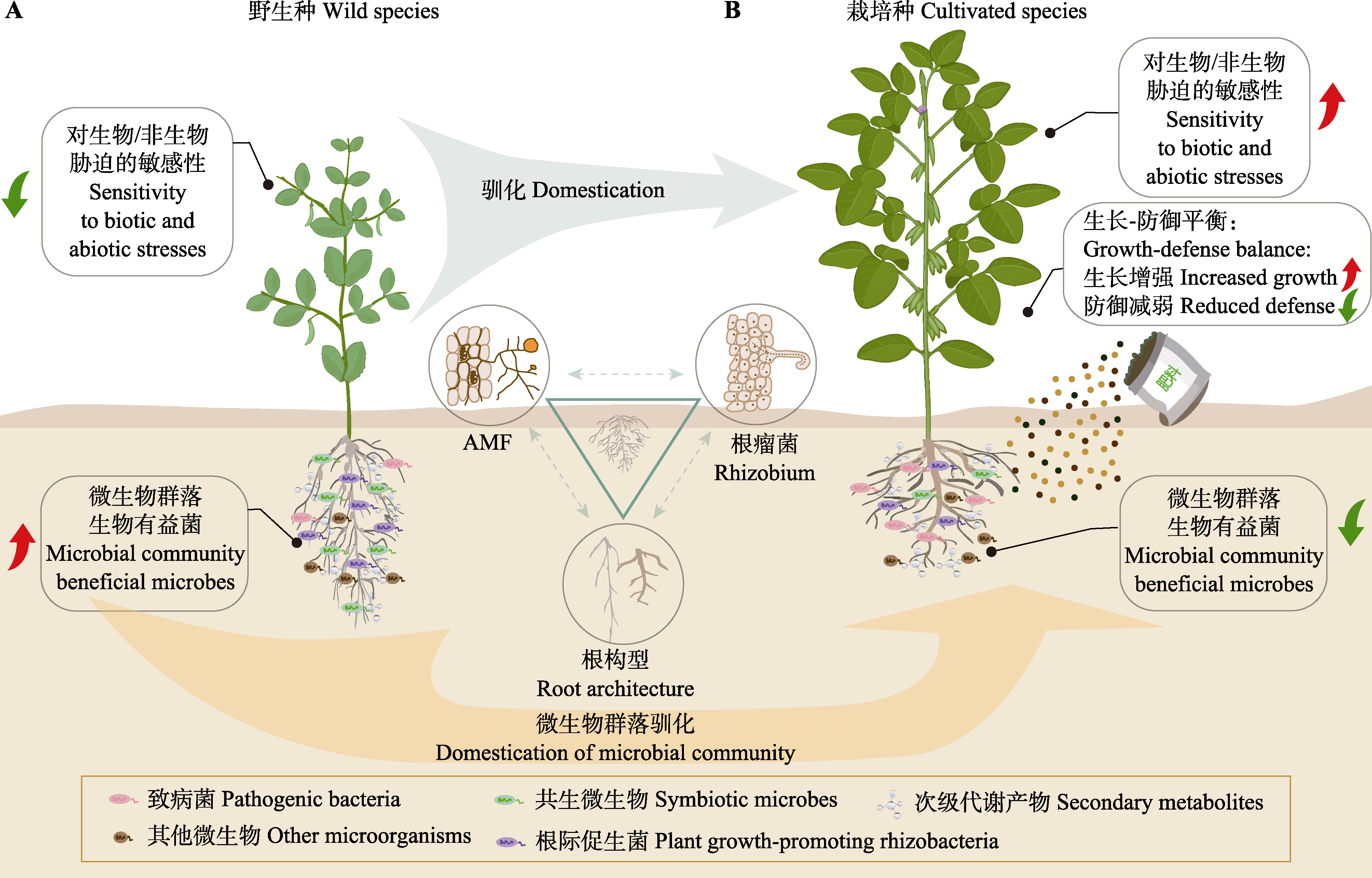
图1 野生种与栽培种在根际微生物多样性、抗逆性和人为干预方面的对比。A, 野生种表现出更强的环境适应性(包括生物和非生物胁迫), 拥有更丰富的根际微生物群落, 并维持稳定的生长与防御机制。B, 栽培种由于人类采取灌溉、施肥及施用农药等干预措施, 其抗逆性及招募植物相关微生物的能力显著减弱。AMF, 丛枝菌根真菌。
Fig. 1 Schematic comparing wild plants and related cultivated crops in terms of rhizosphere microbial diversity, stress resistance, and human intervention. A, Wild relative plant exhibits higher adaptation to biotic and abiotic environmental stresses, maintains a balanced growth-defense trade-off, and harbors a diverse microbiome. B, Domesticated plants show reduced stress resilience and diminished ability to recruit beneficial microbes due to human interventions, such as irrigation, fertilization and pesticide application. AMF, arbuscular mycorrhizal fungi.
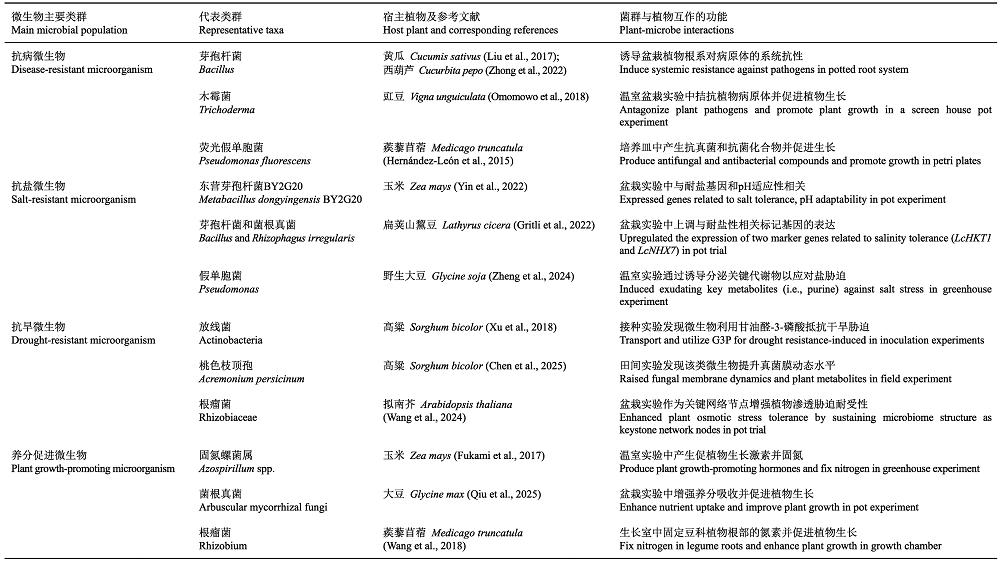 |
表1 宿主植物与重要微生物组的互作关系简述
Table 1 A brief overview of notable microbes involved in the regulation of plant genes
| |
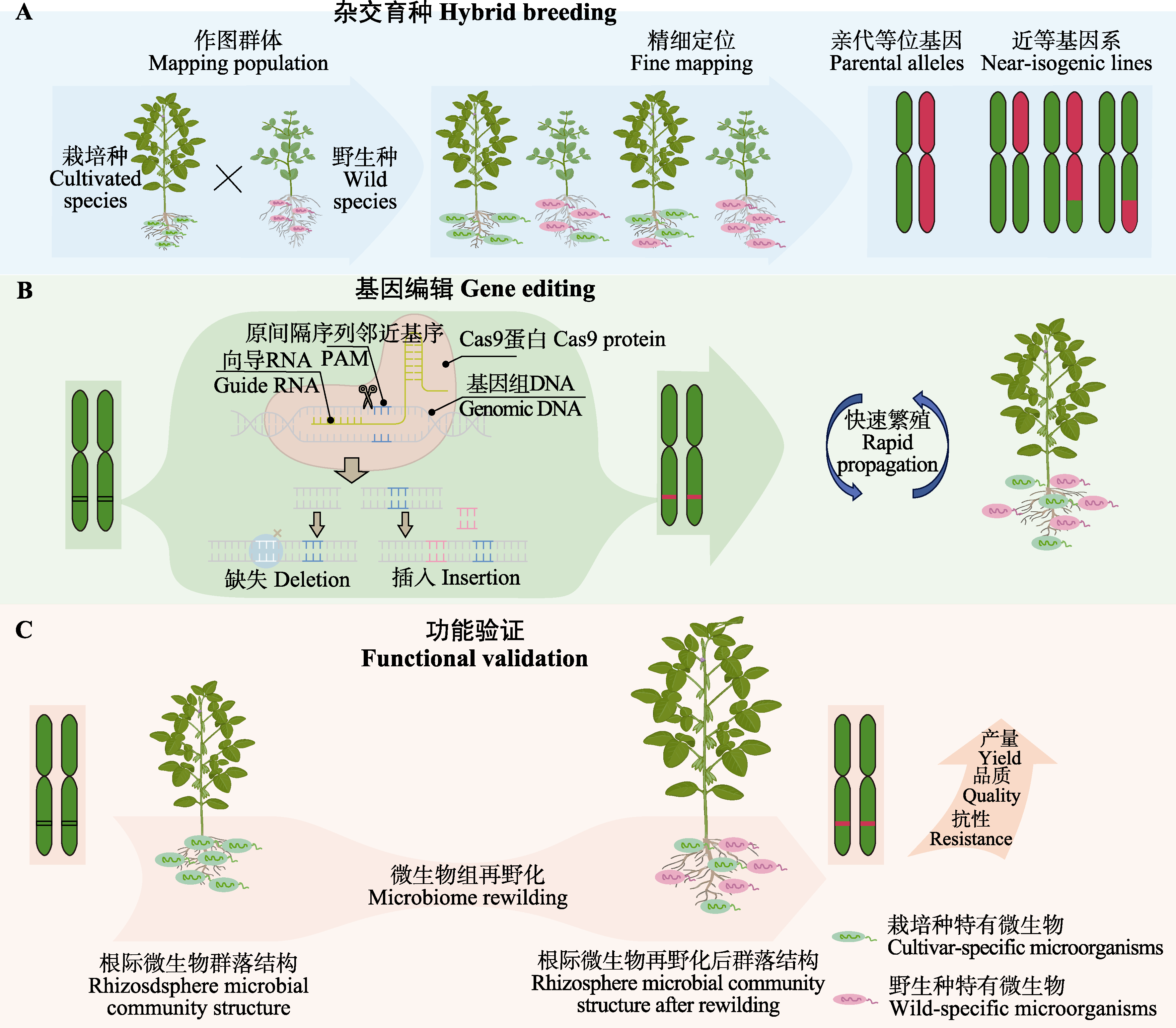
图2 微生物组再野化的研究流程。流程包括野生种质资源利用、基因编辑与微生物组再野化引入等步骤。A, 野生近缘种与优良栽培作物的杂交有助于鉴定与微生物相关的新型植物性状。B, 基因编辑技术能够精准调控植物基因以影响相关微生物组。C, 通过植物育种或基因编辑植物, 确定野生作物微生物组的引入, 并鉴定野生近缘植物基因对微生物组的招募作用。
Fig. 2 Research process of microbiome rewilding, including steps such as utilization of wild germplasm resources, gene editing, and microbiome introduction. A, Crosses between wild relatives and cultivated crops enable the identification of novel microbial- associated plant traits. B, Gene editing techniques enable precise manipulation of plant genes of related microbiota. C, Evaluating the effects of relative wild plant gene on microbial recruitment and host performance through plant breeding or editing plant genes to recruit rewilding microbiomes. PAM, protospacer adjacent motif.
| [1] |
Bakker PAHM, Pieterse CMJ, de Jonge R, Berendsen RL (2018). The soil-borne legacy. Cell, 172, 1178-1180.
DOI PMID |
| [2] |
Bettenfeld P, Fontaine F, Trouvelot S, Fernandez O, Courty PE (2020). Woody plant declines. What’s wrong with the microbiome? Trends in Plant Science, 25, 381-394.
DOI PMID |
| [3] | Brachi B, Morris GP, Borevitz JO (2011). Genome-wide association studies in plants: the missing heritability is in the field. Genome Biology, 12, 232. DOI: 10.1186/gb-2011-12-10-232. |
| [4] |
Carrión VJ, Perez-Jaramillo J, Cordovez V, Tracanna V, de Hollander M, Ruiz-Buck D, Mendes LW, Gomez-Exposito R, Elsayed SS, Mohanraju P, Arifah A, van der Oost J, Paulson JN, Mendes R, et al. (2019). Pathogen induced activation of disease-suppressive functions in the endophytic root microbiome. Science, 366, 606-612.
DOI PMID |
| [5] |
Castrillo G, Teixeira PJPL, Paredes SH, Law TF, de Lorenzo L, Feltcher ME, Finkel OM, Breakfield NW, Mieczkowski P, Jones CD, Paz-Ares J, Dangl JL (2017). Root microbiota drive direct integration of phosphate stress and immunity. Nature, 543, 513-518.
DOI |
| [6] | Cesco S, Neumann G, Tomasi N, Pinton R, Weisskopf L (2010). Release of plant-borne flavonoids into the rhizosphere and their role in plant nutrition. Plant and Soil, 329, 266. DOI: 10.1007/s11104-009-0266-9. |
| [7] |
Chang CL, Tian L, Tian ZJ, McLaughlin N, Tian CJ (2022). Change of soil microorganism communities under saline- sodic land degradation on the Songnen Plain in Northeast China. Journal of Plant Nutrition and Soil Science, 185, 297-307.
DOI URL |
| [8] | Chang CL, Zhang JX, Liu TT, Song KJ, Xie JH, Luo SS, Qu TB, Zhang JJ, Tian CJ, Zhang JF (2020). Rhizosphere fungal communities of wild and cultivated soybeans grown in three different soil suspensions. Applied Soil Ecology, 153, 103586. DOI: 10.1016/j.apsoil.2020.103586. |
| [9] |
Chen PL, Yu QY, Wang C, Montoya L, West PT, Xu L, Varoquaux N, Cole B, Hixson KK, Kim YM, Liu L, Zhang BD, Zhang J, Li BY, Purdom E, et al. (2025). Holo- omics disentangle drought response and biotic interactions among plant, endophyte and pathogen. New Phytologist, 246, 2702-2717.
DOI URL |
| [10] |
Chen Y, Bonkowski M, Shen Y, Griffiths BS, Jiang YJ, Wang XY, Sun B (2020). Root ethylene mediates rhizosphere microbial community reconstruction when chemically detecting cyanide produced by neighbouring plants. Microbiome, 8, 4. DOI: 10.3410/f.737230381.793577905.
PMID |
| [11] |
de Vries FT, Griffiths RI, Knight CG, Nicolitch O, Williams A (2020). Harnessing rhizosphere microbiomes for drought- resilient crop production. Science, 368, 270-274.
DOI URL |
| [12] |
de Zelicourt A, Al-Yousif M, Hirt H (2013). Rhizosphere microbes as essential partners for plant stress tolerance. Molecular Plant, 6, 242-245.
DOI PMID |
| [13] | Duan QH, Kita D, Li C, Cheung AY, Wu HM (2010). FERONIA receptor-like kinase regulates RHO GTPase signaling of root hair development. Proceedings of the National Academy of Sciences of the United States of America, 107, 17821-17826. |
| [14] |
Escudero-Martinez C, Coulter M, Alegria Terrazas R, Foito A, Kapadia R, Pietrangelo L, Maver M, Sharma R, Aprile A, Morris J, Hedley PE, Maurer A, Pillen K, Naclerio G, Mimmo T, et al. (2022). Identifying plant genes shaping microbiota composition in the barley rhizosphere. Nature Communications, 13, 3443. DOI: 10.1038/s41467-022-31022-y.
PMID |
| [15] |
Estrada B, Aroca R, Maathuis FJM, Barea JM, Ruiz-Lozano JM (2013). Arbuscular mycorrhizal fungi native from a Mediterranean saline area enhance maize tolerance to salinity through improved ion homeostasis. Plant, Cell & Environment, 36, 1771-1782.
DOI URL |
| [16] |
Farag MA, Zhang HM, Ryu CM (2013). Dynamic chemical communication between plants and bacteria through airborne signals: induced resistance by bacterial volatiles. Journal of Chemical Ecology, 39, 1007-1018.
DOI PMID |
| [17] |
Favela A, Bohn MO, Kent AD (2021). Maize germplasm chronosequence shows crop breeding history impacts recruitment of the rhizosphere microbiome. The ISME Journal, 15, 2454-2464.
DOI URL |
| [18] |
Fernie AR, Yan JB (2019). De novo domestication: an alternative route toward new crops for the future. Molecular Plant, 12, 615-631.
DOI URL |
| [19] | Fitzpatrick CR, Copeland J, Wang PW, Guttman DS, Kotanen PM, Johnson MTJ (2018). Assembly and ecological function of the root microbiome across angiosperm plant species. Proceedings of the National Academy of Sciences of the United States of America, 115, E1157-E1165. |
| [20] |
Foster KR, Schluter J, Coyte KZ, Rakoff-Nahoum S (2017). The evolution of the host microbiome as an ecosystem on a leash. Nature, 548, 43-51.
DOI URL |
| [21] | Fukami J, Ollero FJ, Megías M, Hungria M (2017). Phytohormones and induction of plant-stress tolerance and defense genes by seed and foliar inoculation with Azospirillum brasilense cells and metabolites promote maize growth. AMB Express, 7, 153. DOI: 10.1186/s13568-017-0453-7. |
| [22] | Fuller DQ, Denham T, Allaby R (2023). Plant domestication and agricultural ecologies. Current Biology, 33, R636-R649. |
| [23] | Gargallo-Garriga A, Preece C, Sardans J, Oravec M, Urban O, Peñuelas J (2018). Root exudate metabolomes change under drought and show limited capacity for recovery. Scientific Reports, 8, 12696. DOI: 10.1038/s41598-018-30150-0. |
| [24] | Garrido-Oter R, Nakano RT, Dombrowski N, Ma KW, McHardy AC, Schulze-Lefert P (2018). Modular traits of the rhizobiales root microbiota and their evolutionary relationship with symbiotic rhizobia. Cell Host & Microbe, 24, 155-167. |
| [25] |
Gritli T, Boubakri H, Essahibi A, Hsouna J, Ilahi H, Reinhardt D, Mnasri B (2022). Salt stress mitigation in Lathyrus cicera by combining different microbial inocula. Physiology and Molecular Biology of Plants, 28, 1191-1206.
DOI PMID |
| [26] |
Guan RX, Qu Y, Guo Y, Yu LL, Liu Y, Jiang JH, Chen JG, Ren YL, Liu GY, Tian L, Jin LG, Liu ZX, Hong HL, Chang RZ, Gilliham M, et al. (2014). Salinity tolerance in soybean is modulated by natural variation in GmSALT3. The Plant Journal, 80, 937-950.
DOI URL |
| [27] |
Gutjahr C, Gobbato E, Choi J, Riemann M, Johnston MG, Summers W, Carbonnel S, Mansfield C, Yang SY, Nadal M, Acosta I, Takano M, Jiao WB, Schneeberger K, Kelly KA, et al. (2015). Rice perception of symbiotic arbuscular mycorrhizal fungi requires the karrikin receptor complex. Science, 350, 1521-1524.
DOI PMID |
| [28] |
Haruta M, Sabat G, Stecker K, Minkoff BB, Sussman MR (2014). A peptide hormone and its receptor protein kinase regulate plant cell expansion. Science, 343, 408-411.
DOI PMID |
| [29] | Hassani MA, Durán P, Hacquard S (2018). Microbial interactions within the plant holobiont. Microbiome, 6, 58. DOI: 10.1186/s40168-018-0445-0. |
| [30] |
Hernández-León R, Rojas-Solís D, Contreras-Pérez M, del Carmen Orozco-Mosqueda M, Macías-Rodríguez LI, Reyes-de la Cruz H, Valencia-Cantero E, Santoyo G (2015). Characterization of the antifungal and plant growth-promoting effects of diffusible and volatile organic compounds produced by Pseudomonas fluorescens strains. Biological Control, 81, 83-92.
DOI URL |
| [31] | Hoban AE, Stilling RM, Moloney GM, Moloney RD, Shanahan F, Dinan TG, Cryan JF, Clarke G (2017). Microbial regulation of microRNA expression in the amygdala and prefrontal cortex. Microbiome, 5, 102. DOI: 10.1186/s40168-017-0321-3. |
| [32] |
Jansson JK, Hofmockel KS (2020). Soil microbiomes and climate change. Nature Reviews Microbiology, 18, 35-46.
DOI PMID |
| [33] |
Jiang L, Liu X, Xiong GS, Liu HH, Chen FL, Wang L, Meng XB, Liu GF, Yu H, Yuan YD, Yi W, Zhao LH, Ma HL, He YZ, Wu ZS, et al. (2013). DWARF 53 acts as a repressor of strigolactone signalling in rice. Nature, 504, 401-405.
DOI |
| [34] |
Kumari S, Vaishnav A, Jain S, Varma A, Choudhary DK (2015). Bacterial-mediated induction of systemic tolerance to salinity with expression of stress alleviating enzymes in soybean (Glycine max L. Merrill). Journal of Plant Growth Regulation, 34, 558-573.
DOI URL |
| [35] |
Lebeis SL, Paredes SH, Lundberg DS, Breakfield N, Gehring J, McDonald M, Malfatti S, Glavina del Rio T, Jones CD, Tringe SG, Dangl JL (2015). Salicylic acid modulates colonization of the root microbiome by specific bacterial taxa. Science, 349, 860-864.
DOI PMID |
| [36] |
Leng GY, Hall J (2019). Crop yield sensitivity of global major agricultural countries to droughts and the projected changes in the future. Science of the Total Environment, 654, 811-821.
DOI URL |
| [37] |
Levy A, Salas Gonzalez I, Mittelviefhaus M, Clingenpeel S, Herrera Paredes S, Miao JM, Wang KR, Devescovi G, Stillman K, Monteiro F, Rangel Alvarez B, Lundberg DS, Lu TY, Lebeis S, Jin Z, et al. (2018). Genomic features of bacterial adaptation to plants. Nature Genetics, 50, 138-150.
DOI |
| [38] | Lian TX, Huang YY, Xie XN, Huo X, Shahid MQ, Tian L, Lan T, Jin J (2020). Rice SST Variation shapes the rhizosphere bacterial community, conferring tolerance to salt stress through regulating soil metabolites. mSystems, 5, e00721-20. DOI: 10.1128/mSystems.00721-20. |
| [39] |
Liu HW, Brettell LE, Qiu ZG, Singh BK (2020a). Microbiome- mediated stress resistance in plants. Trends in Plant Science, 25, 733-743.
DOI URL |
| [40] | Liu JG, Yu XC, Qin QL, Dinkins RD, Zhu HY (2020b). The impacts of domestication and breeding on nitrogen fixation symbiosis in legumes. Frontiers in Genetics, 11, 00973. DOI: 10.3389/fgene.2020.00973. |
| [41] |
Liu YP, Chen L, Wu GW, Feng HC, Zhang GS, Shen QR, Zhang RF (2017). Identification of root-secreted compounds involved in the communication between cucumber, the beneficial Bacillus amyloliquefaciens, and the soil-borne pathogen Fusarium oxysporum. Molecular Plant-Microbe Interactions, 30, 53-62.
DOI URL |
| [42] |
Liu YX, Qin Y, Bai Y (2019). Reductionist synthetic community approaches in root microbiome research. Current Opinion in Microbiology, 49, 97-102.
DOI URL |
| [43] | Martin FM, Uroz S, Barker DG (2017). Ancestral alliances: plant mutualistic symbioses with fungi and bacteria. Science, 356, eaad4501. DOI: 10.1126/science.aad4501. |
| [44] |
Martín-Robles N, Lehmann A, Seco E, Aroca R, Rillig MC, Milla R (2018). Impacts of domestication on the arbuscular mycorrhizal symbiosis of 27 crop species. New Phytologist, 218, 322-334.
DOI PMID |
| [45] |
Martiny JBH, Martiny AC, Weihe C, Lu Y, Berlemont R, Brodie EL, Goulden ML, Treseder KK, Allison SD (2017). Microbial legacies alter decomposition in response to simulated global change. The ISME Journal, 11, 490-499.
DOI URL |
| [46] |
Mei CS, Flinn B (2010). The use of beneficial microbial endophytes for plant biomass and stress tolerance improvement. Recent Patents on Biotechnology, 4, 81-95.
DOI PMID |
| [47] |
Müller LM, Flokova K, Schnabel E, Sun XP, Fei ZJ, Frugoli J, Bouwmeester HJ, Harrison MJ (2019). A CLE-SUNN module regulates strigolactone content and fungal colonization in arbuscular mycorrhiza. Nature Plants, 5, 933-939.
DOI PMID |
| [48] |
Munns R, Gilliham M (2015). Salinity tolerance of crops—What is the cost? New Phytologist, 208, 668-673.
DOI PMID |
| [49] | Naylor D, Coleman-Derr D (2018). Drought stress and root- associated bacterial communities. Frontiers in Plant Science, 8, 2223. DOI: 10.3389/fpls.2017.02223. |
| [50] | Naz A, Arifuzzaman M, Muzammil S, Pillen K, Léon J (2014). Wild barley introgression lines revealed novel QTL alleles for root and related shoot traits in the cultivated barley (Hordeum vulgare L.). BMC Genetics, 15, 107. DOI: 10.1186/s12863-014-0107-6. |
| [51] |
Ofek M, Voronov-Goldman M, Hadar Y, Minz D (2014). Host signature effect on plant root-associated microbiomes revealed through analyses of resident vs. active communities. Environmental Microbiology, 16, 2157-2167.
DOI PMID |
| [52] |
Omomowo IO, Fadiji AE, Omomowo OI (2018). Assessment of bio-efficacy of Glomus versiforme and Trichoderma harzianum in inhibiting powdery mildew disease and enhancing the growth of cowpea. Annals of Agricultural Sciences, 63, 9-17.
DOI URL |
| [53] | Oyserman BO, Flores SS, Griffioen T, Pan XY, van der Wijk E, Pronk L, Lokhorst W, Nurfikari A, Paulson JN, Movassagh M, Stopnisek N, Kupczok A, Cordovez V, Carrión VJ, Ligterink W, et al. (2022). Disentangling the genetic basis of rhizosphere microbiome assembly in tomato. Nature Communications, 13, 3228. DOI: 10.1038/s41467-022-30849-9. |
| [54] |
Pantigoso HA, Ossowicki A, Stringlis IA, Carrión VJ (2025). Hub metabolites at the root-microbiome interface: unlocking plant drought resilience. Trends in Plant Science, 30, 1046-1059.
DOI URL |
| [55] |
Peiffer JA, Spor A, Koren O, Jin Z, Tringe SG, Dangl JL, Buckler ES, Ley RE (2013). Diversity and heritability of the maize rhizosphere microbiome under field conditions. Proceedings of the National Academy of Sciences of the United States of America, 110, 6548-6553.
DOI PMID |
| [56] |
Pérez-Jaramillo JE, Carrión VJ, de Hollander M, Raaijmakers JM (2018). The wild side of plant microbiomes. Microbiome, 6, 143. DOI: 10.1186/s40168-018-0519-z.
PMID |
| [57] | Pitman MG, Läuchli A (2002). Global impact of salinity and agricultural ecosystems//Läuchli A, Lüttge U. Salinity: Environment-Plants-Molecules. Kluwer Academic Publishers, Dordrecht. 3-20. |
| [58] |
Porter SS, Sachs JL (2020). Agriculture and the disruption of plant-microbial symbiosis. Trends in Ecology & Evolution, 35, 426-439.
DOI URL |
| [59] | Preece C, Peñuelas J (2016). Rhizodeposition under drought and consequences for soil communities and ecosystem resilience. Plant and Soil, 409, 3090. DOI: 10.1007/s11104-016-3090-z. |
| [60] | Purugganan MD (2019). Evolutionary insights into the nature of plant domestication. Current Biology, 29, R705-R714. |
| [61] | Qi XP, Li MW, Xie M, Liu X, Ni M, Shao GH, Song C, Kay-Yuen Yim A, Tao Y, Wong FL, Isobe S, Wong CF, Wong KS, Xu CY, Li CQ, et al. (2014). Identification of a novel salt tolerance gene in wild soybean by whole- genome sequencing. Nature Communications, 5, 4340. DOI: 10.1038/ncomms5340. |
| [62] |
Qiu W, Kang J, Ye ZM, Yang SD, Tu XJ, Xie PH, Ge JP, Ping WX, Yuan J (2025). Arbuscular mycorrhizal fungi build a bridge for soybeans to recruit Pseudomonas putida. New Phytologist, 246, 1276-1292.
DOI URL |
| [63] |
Quantin C, Grunberger O, Suvannang N, Bourdon E (2008). Land management effects on biogeochemical functioning of salt-affected paddy soils. Pedosphere, 18, 183-194.
DOI URL |
| [64] |
Raaijmakers JM, Kiers ET (2022). Rewilding plant microbiomes. Science, 378, 599-600.
DOI PMID |
| [65] | Ramirez-Villacis DX, Leon-Reyes A, Pieterse CMJ, Raaijmakers JM (2025). Born to rewild: reconnecting beneficial plant- microbiome alliances for resilient future crops. Cell Host & Microbe, 33, 1241-1255. |
| [66] |
Roy SJ, Negrão S, Tester M (2014). Salt resistant crop plants. Current Opinion in Biotechnology, 26, 115-124.
DOI PMID |
| [67] | Samodelov SL, Beyer HM, Guo XJ, Augustin M, Jia KP, Baz L, Ebenhöh O, Beyer P, Weber W, Al-Babili S, Zurbriggen MD (2016). StrigoQuant: a genetically encoded biosensor for quantifying strigolactone activity and specificity. Science Advances, 2, e1601266. DOI: 10.1126/sciadv.1601266. |
| [68] |
Schimel J, Balser TC, Wallenstein M (2007). Microbial stress- response physiology and its implications for ecosystem function. Ecology, 88, 1386-1394.
DOI PMID |
| [69] |
Schmidt JE, Bowles TM, Gaudin ACM (2016). Using ancient traits to convert soil health into crop yield: impact of selection on maize root and rhizosphere function. Frontiers in Plant Science, 7, 373. DOI: 10.3389/fpls.2016.00373.
PMID |
| [70] |
Shi SH, Tian L, Nasir F, Li XJ, Li WQ, Tran LP, Tian CJ (2018). Impact of domestication on the evolution of rhizomicrobiome of rice in response to the presence of Magnaporthe oryzae. Plant Physiology and Biochemistry, 132, 156-165.
DOI URL |
| [71] |
Song Y, Wilson AJ, Zhang XC, Thoms D, Sohrabi R, Song SY, Geissmann Q, Liu Y, Walgren L, He SY, Haney CH (2021). FERONIA restricts Pseudomonas in the rhizosphere microbiome via regulation of reactive oxygen species. Nature Plants, 7, 644-654.
DOI PMID |
| [72] | Spence C, Alff E, Johnson C, Ramos C, Donofrio N, Sundaresan V, Bais H (2014). Natural rice rhizospheric microbes suppress rice blast infections. BMC Plant Biology, 14, 130. DOI: 10.1186/1471-2229-14-130. |
| [73] |
Stegmann M, Monaghan J, Smakowska-Luzan E, Rovenich H, Lehner A, Holton N, Belkhadir Y, Zipfel C (2017). The receptor kinase FER is a RALF-regulated scaffold controlling plant immune signaling. Science, 355, 287-289.
DOI PMID |
| [74] | Su P, Kang HX, Peng QZ, Wicaksono WA, Berg G, Liu ZX, Ma JJ, Zhang DY, Cernava T, Liu Y (2024). Microbiome homeostasis on rice leaves is regulated by a precursor molecule of lignin biosynthesis. Nature Communications, 15, 23. DOI: 10.1038/s41467-023-44335-3. |
| [75] |
Szoboszlay M, Lambers J, Chappell J, Kupper JV, Moe LA, McNear DH (2015). Comparison of root system architecture and rhizosphere microbial communities of Balsas teosinte and domesticated corn cultivars. Soil Biology & Biochemistry, 80, 34-44.
DOI URL |
| [76] | Tian L, Chang CL, Ma LN, Nasir F, Zhang JF, Li WQ, Tran LP, Tian CJ (2019). Comparative study of the mycorrhizal root transcriptomes of wild and cultivated rice in response to the pathogen Magnaporthe oryzae. Rice, 12, 35. DOI: 10.1186/s12284-019-0287-9. |
| [77] |
Tian ZX, Wang XB, Lee R, Li YH, Specht JE, Nelson RL, McClean PE, Qiu LJ, Ma JX (2010). Artificial selection for determinate growth habit in soybean. Proceedings of the National Academy of Sciences of the United States of America, 107, 8563-8568.
DOI PMID |
| [78] |
Tohge T, Watanabe M, Hoefgen R, Fernie AR (2013). Shikimate and phenylalanine biosynthesis in the green lineage. Frontiers in Plant Science, 4, 62. DOI: 10.3389/fpls.2013.00062.
PMID |
| [79] |
Trivedi P, Leach JE, Tringe SG, Sa TM, Singh BK (2020). Plant-microbiome interactions: from community assembly to plant health. Nature Reviews Microbiology, 18, 607-621.
DOI |
| [80] | Vannier N, Agler M, Hacquard S (2019). Microbiota-mediated disease resistance in plants. PLoS Pathogens, 15, e1007740. DOI: 10.1371/journal.ppat.1007740. |
| [81] |
Vannier N, Mony C, Bittebière AK, Vandenkoornhuyse P (2015). Epigenetic mechanisms and microbiota as a toolbox for plant phenotypic adjustment to environment. Frontiers in Plant Science, 6, 1159. DOI: 10.3389/fpls.2015.01159.
PMID |
| [82] |
Verbon EH, Liberman LM (2016). Beneficial microbes affect endogenous mechanisms controlling root development. Trends in Plant Science, 21, 218-229.
DOI PMID |
| [83] | Vorholt JA, Vogel C, Carlström CI, Müller DB (2017). Establishing causality: opportunities of synthetic communities for plant microbiome research. Cell Host & Microbe, 22, 142-155. |
| [84] | Wang L, Yang T, Lin QL, Wang BQ, Li X, Luan S, Yu F (2020). Receptor kinase FERONIA regulates flowering time in Arabidopsis. BMC Plant Biology, 20, 26. DOI: 10.1186/s12870-019-2223-y. |
| [85] |
Wang Q, Liu JG, Li H, Yang SM, Körmöczi P, Kereszt A, Zhu HY (2018). Nodule-specific cysteine-rich peptides negatively regulate nitrogen-fixing symbiosis in a strain- specific manner in Medicago truncatula. Molecular Plant- Microbe Interactions, 31, 240-248.
DOI URL |
| [86] | Wang ZH, Li ZW, Zhang YJ, Liao JY, Guan KX, Zhai JX, Meng PF, Tang XL, Dong T, Song Y (2024). Root hair developmental regulators orchestrate drought triggered microbiome changes and the interaction with beneficial Rhizobiaceae. Nature Communications, 15, 10068. DOI: 10.1038/s41467-024-54417-5. |
| [87] | Wen T, Yuan J, He XM, Lin Y, Huang QW, Shen QR (2020). Enrichment of beneficial cucumber rhizosphere microbes mediated by organic acid secretion. Horticulture Research, 7, 154. DOI: 10.1038/s41438-020-00380-3. |
| [88] | Xia ZJ, Watanabe S, Yamada T, Tsubokura Y, Nakashima H, Zhai H, Anai T, Sato S, Yamazaki T, Lü SX, Wu HY, Tabata S, Harada K (2012). Positional cloning and characterization reveal the molecular basis for soybean maturity locus E1that regulates photoperiodic flowering. Proceedings of the National Academy of Sciences of the United States of America, 109, E2155-E2164. |
| [89] |
Xu L, Coleman-Derr D (2019). Causes and consequences of a conserved bacterial root microbiome response to drought stress. Current Opinion in Microbiology, 49, 1-6.
DOI PMID |
| [90] | Xu L, Naylor D, Dong ZB, Simmons T, Pierroz G, Hixson KK, Kim YM, Zink EM, Engbrecht KM, Wang Y, Gao C, DeGraaf S, Madera MA, Sievert JA, Hollingsworth J, et al. (2018). Drought delays development of the sorghum root microbiome and enriches for monoderm bacteria. Proceedings of the National Academy of Sciences of the United States of America, 115, E4284-E4293. |
| [91] | Xu XM, Dinesen C, Pioppi A, Kovács ÁT, Lozano-Andrade CN (2025). Composing a microbial symphony: synthetic communities for promoting plant growth. Trends in Microbiology, 33, 738-751. |
| [92] | Yin ZQ, Wang X, Hu YJ, Zhang JK, Li H, Cui YR, Zhao DY, Dong XS, Zhang XH, Liu K, Du BH, Ding YQ, Wang CQ (2022). Metabacillus dongyingensis sp. nov. is represented by the plant growth-promoting bacterium BY2G20 isolated from saline-alkaline soil and enhances the growth of Zea mays L. under salt stress. mSystems, 7, e0142621. DOI: 10.1128/msystems.01426-21. |
| [93] |
Yu P, He XM, Baer M, Beirinckx S, Tian T, Moya YAT, Zhang XC, Deichmann M, Frey FP, Bresgen V, Li CJ, Razavi BS, Schaaf G, von Wirén N, Su Z, et al. (2021). Plant flavones enrich rhizosphere Oxalobacteraceae to improve maize performance under nitrogen deprivation. Nature Plants, 7, 481-499.
DOI PMID |
| [94] |
Zeder MA (2015). Core questions in domestication research. Proceedings of the National Academy of Sciences of the United States of America, 112, 3191-3198.
DOI PMID |
| [95] |
Zhalnina K, Louie KB, Hao Z, Mansoori N, da Rocha UN, Shi SJ, Cho H, Karaoz U, Loqué D, Bowen BP, Firestone MK, Northen TR, Brodie EL (2018). Dynamic root exudate chemistry and microbial substrate preferences drive patterns in rhizosphere microbial community assembly. Nature Microbiology, 3, 470-480.
DOI PMID |
| [96] |
Zhang JY, Liu YX, Guo XX, Qin Y, Garrido-Oter R, Schulze- Lefert P, Bai Y (2021). High-throughput cultivation and identification of bacteria from the plant root microbiota. Nature Protocols, 16, 988-1012.
DOI PMID |
| [97] |
Zhang JY, Liu YX, Zhang N, Hu B, Jin T, Xu HR, Qin Y, Yan PX, Zhang XN, Guo XX, Hui J, Cao SY, Wang X, Wang C, Wang H, et al. (2019). NRT1.1B is associated with root microbiota composition and nitrogen use in field-grown rice. Nature Biotechnology, 37, 676-684.
DOI |
| [98] | Zheng YF, Cao XW, Zhou YN, Ma SQ, Wang YQ, Li Z, Zhao DL, Yang YZ, Zhang H, Meng C, Xie ZH, Sui XN, Xu KW, Li YQ, Zhang CS (2024). Purines enrich root- associated Pseudomonas and improve wild soybean growth under salt stress. Nature Communications, 15, 3520. DOI: 10.1038/s41467-024-47773-9. |
| [99] |
Zhong Y, Xun WB, Wang XH, Tian SW, Zhang YC, Li DW, Zhou Y, Qin YX, Zhang B, Zhao GW, Cheng X, Liu YG, Chen HM, Li LG, Osbourn A, et al. (2022). Root-secreted bitter triterpene modulates the rhizosphere microbiota to improve plant fitness. Nature Plants, 8, 887-896.
DOI PMID |
| [100] |
Zhou Y, Ma YS, Zeng JG, Duan LX, Xue XF, Wang HS, Lin T, Liu ZQ, Zeng KW, Zhong Y, Zhang S, Hu Q, Liu M, Zhang HM, Reed J, et al. (2016). Convergence and divergence of bitterness biosynthesis and regulation in Cucurbitaceae. Nature Plants, 2, 16183. DOI: 10.1038/nplants.2016.183.
PMID |
| [101] |
Zhu SR, Estévez JM, Liao HD, Zhu YH, Yang T, Li CY, Wang YC, Li L, Liu XM, Pacheco JM, Guo HW, Yu F (2020). The RALF1-FERONIA complex phosphorylates eIF4E1 to promote protein synthesis and polar root hair growth. Molecular Plant, 13, 698-716.
DOI PMID |
| [1] | 程可心, 杜尧, 李凯航, 王浩臣, 杨艳, 金一, 何晓青. 玉米与叶际微生物组的互作遗传机制[J]. 植物生态学报, 2024, 48(2): 215-228. |
| [2] | 谢育杭, 贾璞, 郑修坛, 李金天, 束文圣, 王宇涛. 驯化对作物微生物组多样性和群落结构的影响及作用途径[J]. 植物生态学报, 2022, 46(3): 249-266. |
| [3] | 吴霖升, 张永光, 章钊颖, 张小康, 吴云飞. 日光诱导叶绿素荧光遥感及其在陆地生态系统监测中的应用[J]. 植物生态学报, 2022, 46(10): 1167-1199. |
| [4] | 高贵锋, 褚海燕. 微生物组学的技术和方法及其应用[J]. 植物生态学报, 2020, 44(4): 395-408. |
| [5] | 邓邦良, 刘倩, 刘喜帅, 郑利亚, 江亮波, 郭晓敏, 刘苑秋, 张令. UV-B辐射增强和氮沉降对入侵植物乌桕生长的影响[J]. 植物生态学报, 2017, 41(4): 471-479. |
| [6] | 滕中秋, 付卉青, 贾少华, 孟薇薇, 戴荣继, 邓玉林. 植物应答非生物胁迫的代谢组学研究进展[J]. 植物生态学报, 2011, 35(1): 110-118. |
| 阅读次数 | ||||||
|
全文 |
|
|||||
|
摘要 |
|
|||||
Copyright © 2026 版权所有 《植物生态学报》编辑部
地址: 北京香山南辛村20号, 邮编: 100093
Tel.: 010-62836134, 62836138; Fax: 010-82599431; E-mail: apes@ibcas.ac.cn, cjpe@ibcas.ac.cn
备案号: 京ICP备16067583号-19

