
Chin J Plant Ecol ›› 2026, Vol. 50 ›› Issue (4): 895-906.DOI: 10.17521/cjpe.2025.0282 cstr: 32100.14.cjpe.2025.0282
• Research Articles • Previous Articles Next Articles
HE Qing1,2, YUAN Xu-Dong1,2, REN Bo-Shen1,2, FENG Zhi-Yang1,2, LU Meng-Zhen1,2, LIN Qiao-Ling1,2, JIANG Qing-Hu1,*( ), YANG Lin-Sen3,4, YU Hui-Liang3,4, YAO Hui3,4, YANG Jing-Yuan3,4, LIU Feng1, JIANG Ming-Xi1
Received:2025-07-29
Accepted:2025-12-13
Online:2026-04-20
Published:2026-06-25
Contact:
JIANG Qing-Hu
HE Qing, YUAN Xu-Dong, REN Bo-Shen, FENG Zhi-Yang, LU Meng-Zhen, LIN Qiao-Ling, JIANG Qing-Hu, YANG Lin-Sen, YU Hui-Liang, YAO Hui, YANG Jing-Yuan, LIU Feng, JIANG Ming-Xi. Effects of Erigeron annuus invasion on plant community structure and diversity in subalpine peat wetlands[J]. Chin J Plant Ecol, 2026, 50(4): 895-906.
Add to citation manager EndNote|Ris|BibTeX
URL: https://www.plant-ecology.com/EN/10.17521/cjpe.2025.0282
| 物种 Species | 科 Family | 编号 Code | 平均重要值 Average importance value (%) | |
|---|---|---|---|---|
| 对照样地 Control plot | 入侵样地 Invasion plot | |||
| 香青 Anaphalis sinica | 菊科 Asteraceae | AS | 5.32 | 6.21 |
| 野艾蒿 Artemisia lavandulifolia | 菊科 Asteraceae | ARL | 7.69 | 11.40 |
| 大狼耙草 Bidens frondosa | 菊科 Asteraceae | BF | 1.96 | 7.14 |
| 一年蓬 Erigeron annuus | 菊科 Asteraceae | EN | 0.41 | 20.81 |
| 小花剪股颖 Agrostis micrantha | 禾本科 Poaceae | AM | 15.77 | 5.34 |
| 拂子茅 Calamagrostis epigejos | 禾本科 Poaceae | CE | 13.86 | 0.49 |
| 酸模叶蓼 Persicaria lapathifolia | 蓼科 Polygonaceae | PL | 4.38 | 5.40 |
| 白车轴草 Trifolium repens | 豆科 Fabaceae | TR | 2.81 | 8.51 |
| 东方草莓 Fragaria orientalis | 蔷薇科 Rosaceae | FO | 2.41 | 5.05 |
| 三叶委陵菜 Potentilla freyniana | 蔷薇科 Rosaceae | PF | 5.13 | - |
| 分枝灯芯草 Juncus luzuliformis | 灯芯草科 Juncaceae | JL | 6.05 | 3.06 |
Table 1 Average importance values of the main species across sample plots
| 物种 Species | 科 Family | 编号 Code | 平均重要值 Average importance value (%) | |
|---|---|---|---|---|
| 对照样地 Control plot | 入侵样地 Invasion plot | |||
| 香青 Anaphalis sinica | 菊科 Asteraceae | AS | 5.32 | 6.21 |
| 野艾蒿 Artemisia lavandulifolia | 菊科 Asteraceae | ARL | 7.69 | 11.40 |
| 大狼耙草 Bidens frondosa | 菊科 Asteraceae | BF | 1.96 | 7.14 |
| 一年蓬 Erigeron annuus | 菊科 Asteraceae | EN | 0.41 | 20.81 |
| 小花剪股颖 Agrostis micrantha | 禾本科 Poaceae | AM | 15.77 | 5.34 |
| 拂子茅 Calamagrostis epigejos | 禾本科 Poaceae | CE | 13.86 | 0.49 |
| 酸模叶蓼 Persicaria lapathifolia | 蓼科 Polygonaceae | PL | 4.38 | 5.40 |
| 白车轴草 Trifolium repens | 豆科 Fabaceae | TR | 2.81 | 8.51 |
| 东方草莓 Fragaria orientalis | 蔷薇科 Rosaceae | FO | 2.41 | 5.05 |
| 三叶委陵菜 Potentilla freyniana | 蔷薇科 Rosaceae | PF | 5.13 | - |
| 分枝灯芯草 Juncus luzuliformis | 灯芯草科 Juncaceae | JL | 6.05 | 3.06 |
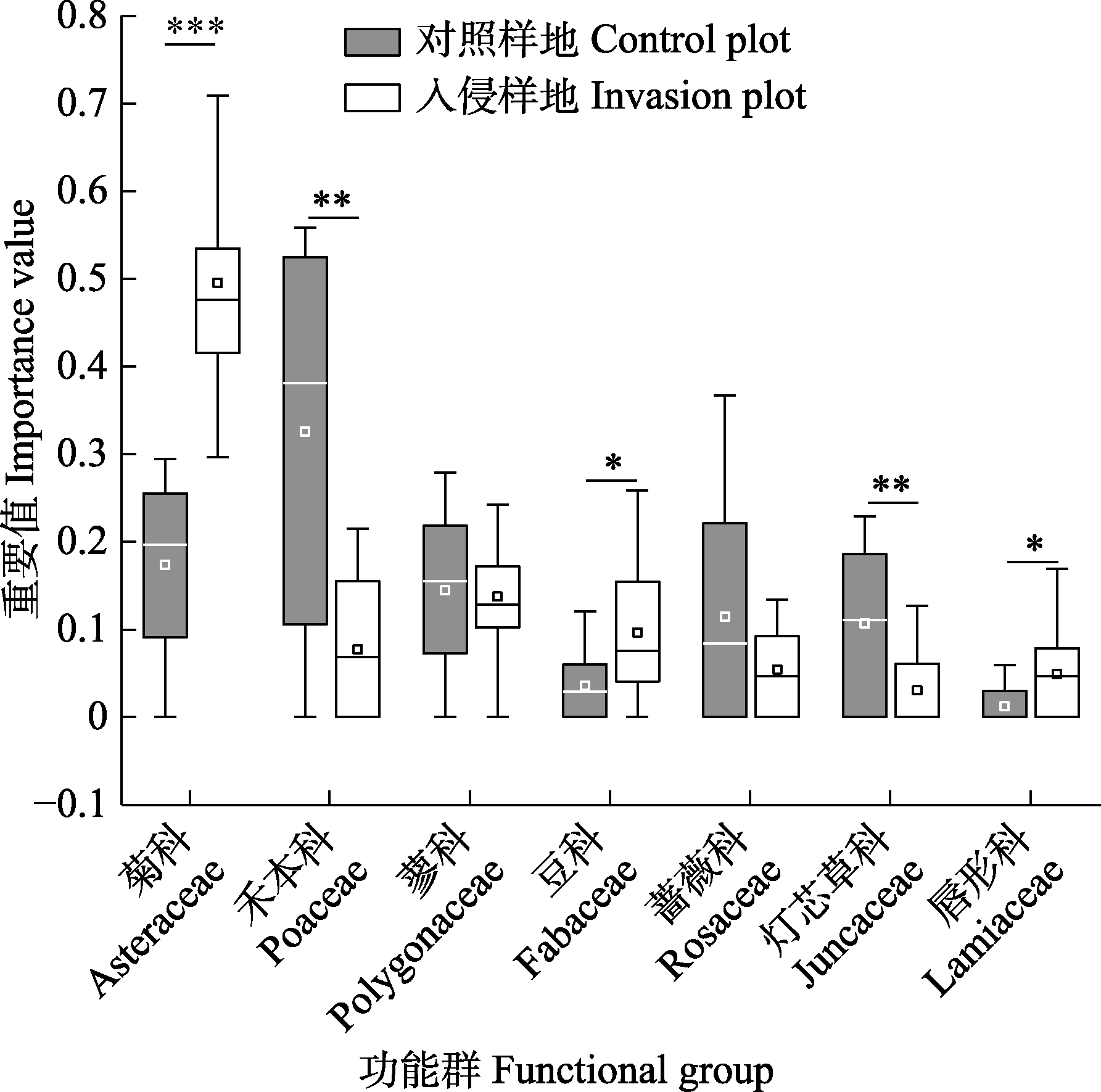
Fig. 1 Comparison of the important values of functional groups between control and invaded plots. *, p < 0.05; **, p < 0.01; ***, p < 0.001.
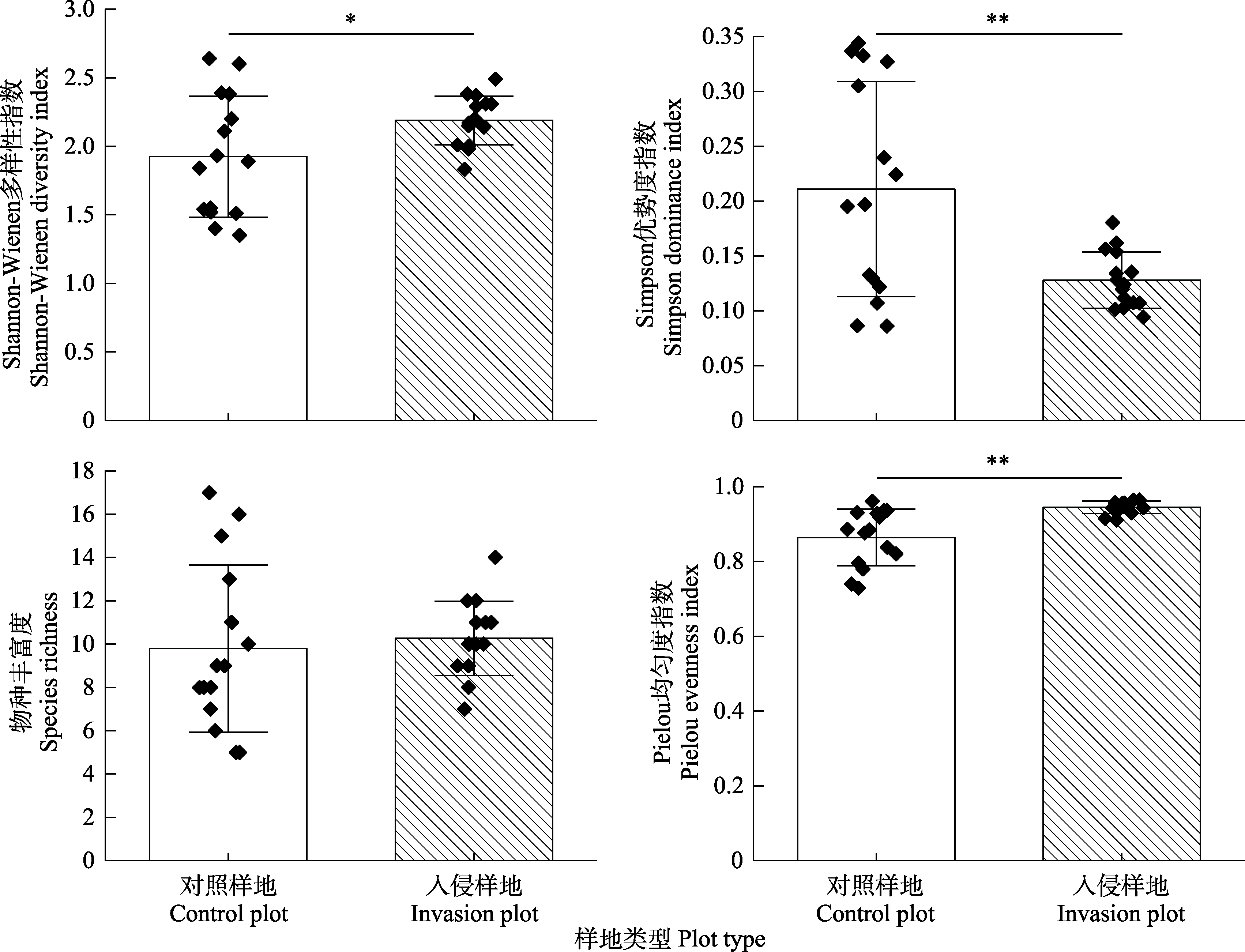
Fig. 2 Species diversity index for control and invasion plots (mean ± SD). *, p < 0.05; **, p < 0.01.
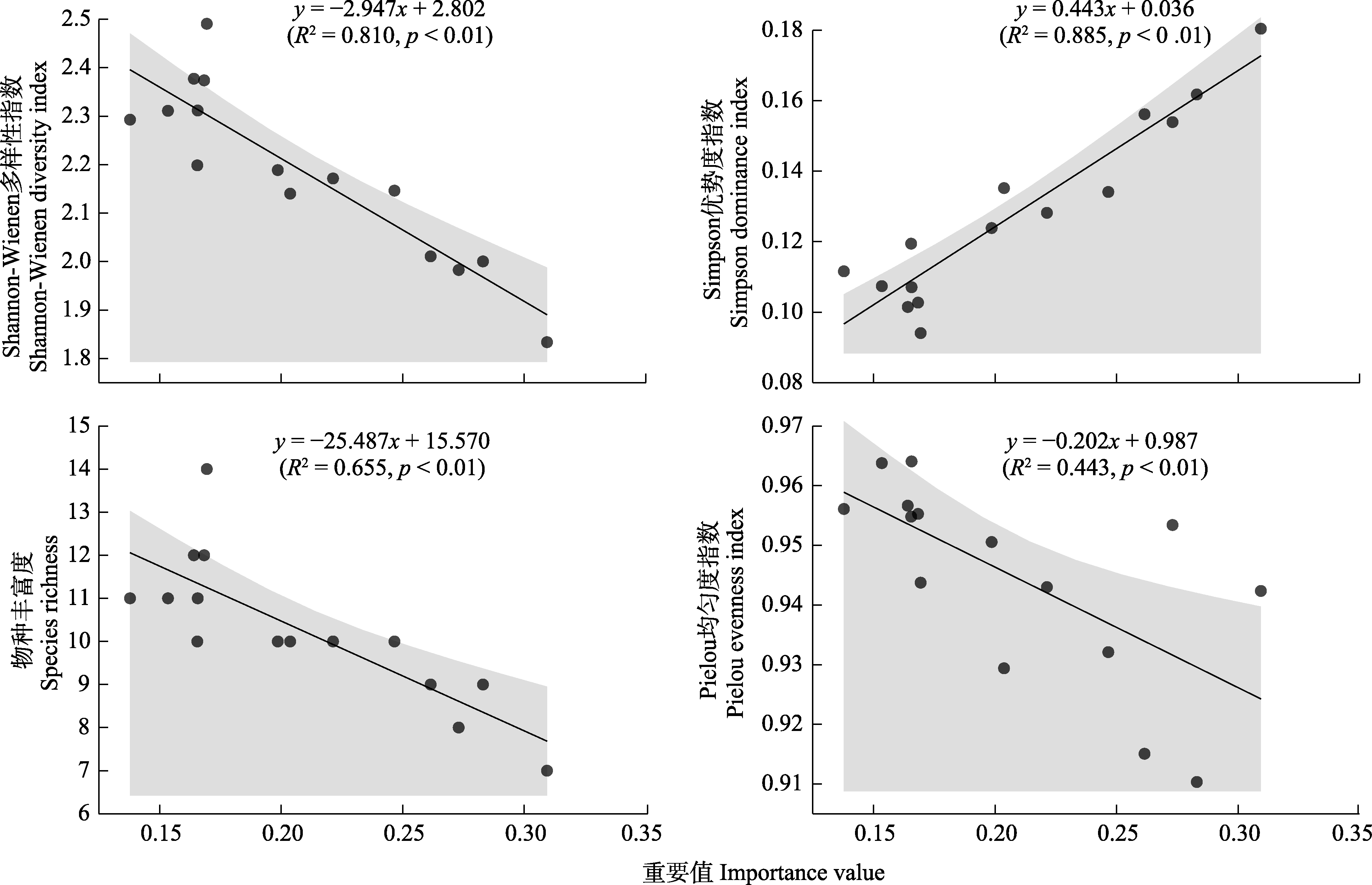
Fig. 3 Regression fitting of the importance value of Erigeron annuus with species diversity index.
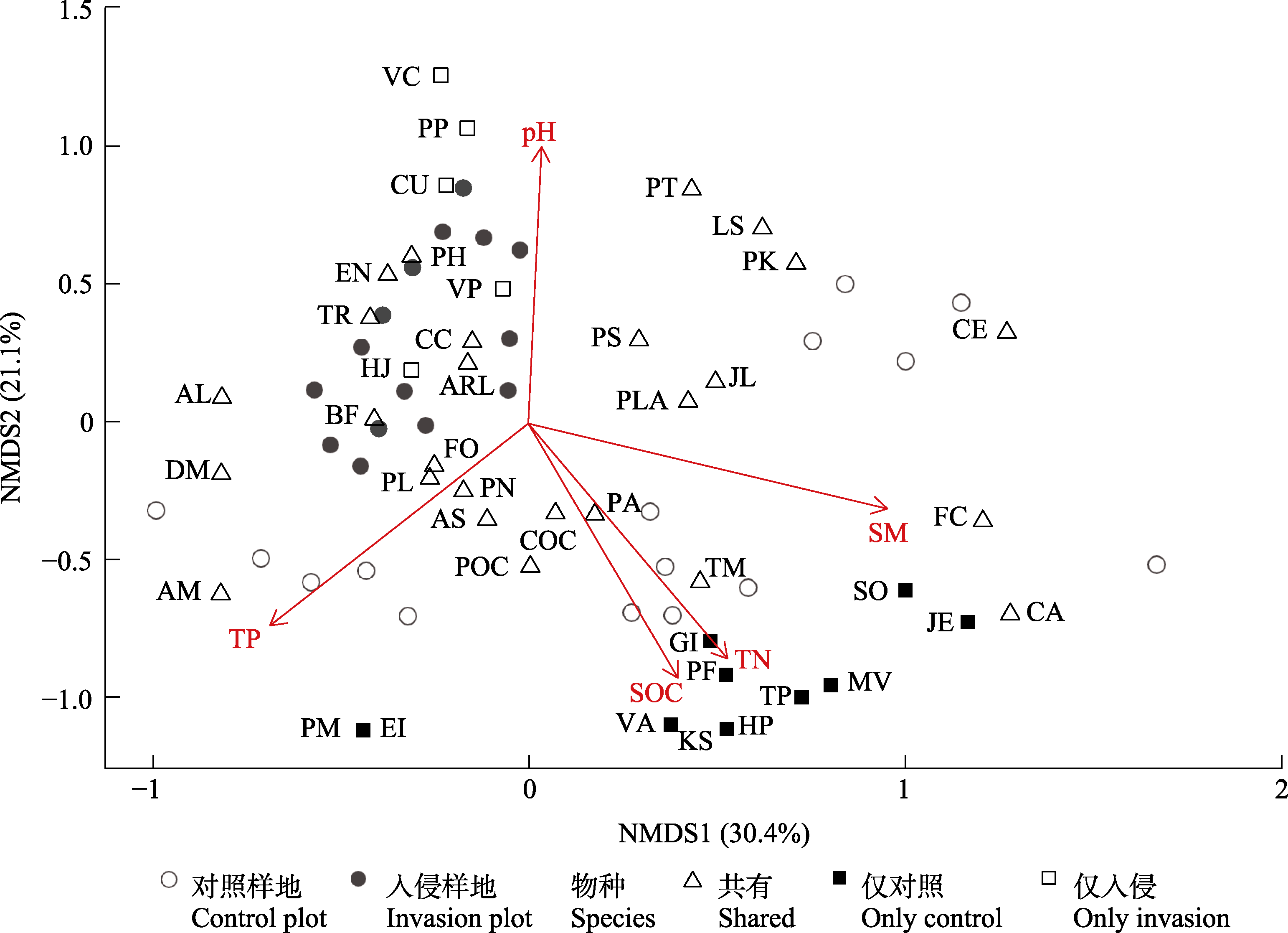
Fig. 4 Non-metric multidimensional scaling (NMDS) ranking and soil factor fitting results for plant community composition. pH, soil potential of hydrogen; SM, soil moisture; SOC, soil organic carbon content; TN, total nitrogen content; TP, total phosphorus content. The species abbreviations are given in Supplement.
| [1] |
Bever JD, Westover KM, Antonovics J (1997). Incorporating the soil community into plant population dynamics: the utility of the feedback approach. Journal of Ecology, 85, 561-573.
DOI URL |
| [2] |
Bezabih BB, Li JJ, Yuan JJ, Dong YH, Liu DY, Chen ZM, Kim J, Kang H, Freeman C, Ding WX (2022). Non-native plant invasion can accelerate global climate change by increasing wetland methane and terrestrial nitrous oxide emissions. Global Change Biology, 28, 5453-5468.
DOI PMID |
| [3] |
Boutin C, Keddy PA (1993). A functional classification of wetland plants. Journal of Vegetation Science, 4, 591-600.
DOI URL |
| [4] |
Brookes PC, Kragt JF, Powlson DS, Jenkinson DS (1985). Chloroform fumigation and the release of soil nitrogen: the effects of fumigation time and temperature. Soil Biology & Biochemistry, 17, 831-835.
DOI URL |
| [5] |
Byun C, de Blois S, Brisson J (2013). Plant functional group identity and diversity determine biotic resistance to invasion by an exotic grass. Journal of Ecology, 101, 128-139.
DOI URL |
| [6] |
Byun C, de Blois S, Brisson J (2020). Restoring functionally diverse communities enhances invasion resistance in a freshwater wetland. Journal of Ecology, 108, 2485-2498.
DOI URL |
| [7] |
Diagne C, Leroy B, Vaissière AC, Gozlan RE, Roiz D, Jarić I, Salles JM, Bradshaw CJA, Courchamp F (2021). High and rising economic costs of biological invasions worldwide. Nature, 592, 571-576.
DOI |
| [8] |
Dı́az S, Cabido M (2001). Vive la différence: plant functional diversity matters to ecosystem processes. Trends in Ecology & Evolution, 16, 646-655.
DOI URL |
| [9] | Ding XL, Wang WQ, Wen JH, Feng TS, Peñuelas J, Sardans J, Liang C, Agathokleous E, Wang C, Song ZL, Li Q, Filley TR, He HB, Zhang XD (2023). Spartina alterniflora invasion differentially alters microbial residues and their contribution to soil organic C in coastal marsh and mangrove wetlands. Catena, 230, 107246. DOI: 10.1016/j.catena.2023.107246. |
| [10] | Du Y, Cai SM, Wang XL, He BY, Xu GL, Jiang MX, Xue HP, Xiao F (2008). Environmental background and ecological restoration of the Dajiuhu sub-alpine wetland in Mt. Shennongjia. Resources and Environment in the Yangtze Basin, 17, 915-919. |
| [杜耘, 蔡述明, 王学雷, 何报寅, 徐贵来, 江明喜, 薛怀平, 肖飞 (2008). 神农架大九湖亚高山湿地环境背景与生态恢复. 长江流域资源与环境, 17, 915-919.] | |
| [11] |
Ehrenfeld JG (2003). Effects of exotic plant invasions on soil nutrient cycling processes. Ecosystems, 6, 503-523.
DOI URL |
| [12] | Ehrenfeld JG, Kourtev P, Huang WZ (2001). Changes in soil functions following invasions of exotic understory plants in deciduous forests. Ecological Applications, 11, 1287. DOI: 10.2307/3060920. |
| [13] |
Ehrenfeld JG, Ravit B, Elgersma K (2005). Feedback in the plant-soil system. Annual Review of Environment and Resources, 30, 75-115.
DOI URL |
| [14] | Fan JJ, Yi YM, Zhu XZ (2020). Advances on the invasive weed, Erigeron annuus. Journal of Weed Science, 38(2), 1-8. |
| [范建军, 乙杨敏, 朱珣之 (2020). 入侵杂草一年蓬研究进展. 杂草学报, 38(2), 1-8.] | |
| [15] | Fang XH, Chen XM, Liu RL, Zhang SH, Gao JQ, Dong BC, Yu FH (2024). Effects of Alligator weed invasion on wetlands in protected areas: a case study of Lishui Jiulong National Wetland Park. Science of the Total Environment, 953, 176230. DOI: 10.1016/j.scitotenv.2024.176230. |
| [16] | Gaffney PPJ, Tang QH, Li QW, Zhang RY, Pan JX, Xu XM, Li Y, Niu SL (2024). The impacts of land-use and climate change on the Zoige peatland carbon cycle: a review. WIREs Climate Change, 15, e862. DOI: 10.1002/wcc.862. |
| [17] |
Gallardo B, Clavero M, Sánchez MI, Vilà M (2016). Global ecological impacts of invasive species in aquatic ecosystems. Global Change Biology, 22, 151-163.
DOI PMID |
| [18] |
Hejda M, Pyšek P, Jarošík V (2009). Impact of invasive plants on the species richness, diversity and composition of invaded communities. Journal of Ecology, 97, 393-403.
DOI URL |
| [19] |
Hovick SM, Adams CR, Anderson NO, Kettenring KM (2023). Progress on mechanisms and impacts of wetland plant invasions: a twenty-year retrospective analysis and priorities for the next twenty. Critical Reviews in Plant Sciences, 42, 239-282.
DOI URL |
| [20] | Hu TY, Wang Y, Yin LP, Guo SL (2008). Physiological adaptation of invasive plant Erigeron philadelphicus to different environments. Journal of Zhejiang University (Agriculture and Life Sciences), 34, 395-400. |
| [胡天印, 王勇, 印丽萍, 郭水良 (2008). 入侵植物春一年蓬对不同环境的生理适应性研究. 浙江大学学报(农业与生命科学版), 34, 395-400.] | |
| [21] | Jin P, Yang LM, Han M (2010). Preliminary studies of Erigeron annuus water extracts on allelopathic effects of five kinds of plants. Journal of Jilin Agricultural University, 32, 419-424. |
| [金攀, 杨利民, 韩梅 (2010). 一年蓬水浸液对5种植物化感作用的研究. 吉林农业大学学报, 32, 419-424.] | |
| [22] |
Keane RM, Crawley MJ (2002). Exotic plant invasions and the enemy release hypothesis. Trends in Ecology & Evolution, 17, 164-170.
DOI URL |
| [23] | Kulmatiski A, Kardol P (2008). Getting plant-soil feedbacks out of the greenhouse: experimental and conceptual approaches//Lüttge U, Beyschlag W, Murata J. Progress in Botany. Springer, Berlin. 449-472. |
| [24] | Li HY, Meng WQ (2006). Plant invasion in wetland and invasiveness of wetland plants. Chinese Journal of Ecology, 25, 577-580. |
| [李洪远, 孟伟庆 (2006). 湿地中的植物入侵及湿地植物的入侵性. 生态学杂志, 25, 577-580.] | |
| [25] | Li T, Xu CC, Zhang JT (2025). Characteristics of rhizosphere soil physicochemical properties and enzyme activities during the invasion process of Mikania micrantha. Journal of Anhui Agricultural Sciences, 53(19), 81-84. |
| [李铤, 许昌超, 张俊涛 (2025). 薇甘菊入侵过程中根际土壤理化和酶活性特征. 安徽农业科学, 53(19), 81-84.] | |
| [26] | Lin J, Yang L, Wang AD, Xu N, Feng JJ (2012). Invasion and spread characteristics of alien species Erigeron annuusin in Chanba ecological district and control measures. Value Engineering, 31, 315-316. |
| [林娟, 杨柳, 王艾迪, 徐娜, 冯俊姣 (2012). 浐灞湿地外来物种一年蓬的入侵扩散特性及防治对策. 价值工程, 31, 315-316.] | |
| [27] | Liu JL, Liu X, Fu SJ, Wang HF, Mu LQ (2025). Allelopathic impact of Erigeron canadensis and Erigeron annuus on major crop species. Diversity, 17, 318. DOI: 10.3390/d17050318. |
| [28] | Liu TT, Zhang HJ, Wang XL, Wu L (2010). Influence of alien invasive specie Erigeron annuus on biodiversity in region of Wuling Mountain. Acta Scientiarum Naturalium Universitatis Pekinensis, 46, 365-370. |
| [刘婷婷, 张洪军, 王晓磊, 吴琳 (2010). 外来植物一年蓬对雾灵山生物多样性的影响. 北京大学学报(自然科学版), 46, 365-370.] | |
| [29] | Liu XY, Guo ZL, Zhang MY, Zhou WC, Pang HD, Ma GF, Long SZ, Mei YJ (2020). Diversity and flora of vascular plants in Dajiuhu wetlands, Shennongjia. Wetland Science & Management, 16(3), 58-62. |
| [刘欣艳, 郭子良, 张曼胤, 周文昌, 庞宏东, 马国飞, 龙水枝, 梅玉娇 (2020). 神农架大九湖湿地维管束植物多样性及区系研究. 湿地科学与管理, 16(3), 58-62.] | |
| [30] | Luo T, Lun ZJ, Gu YS, Qin YM, Zhang ZQ, Zhang B (2015). Plant community survey and ecological protection of Dajiuhu Wetlands in Shennongjia area. Wetland Science, 13, 153-160. |
| [罗涛, 伦子见, 顾延生, 秦养民, 张志麒, 张兵 (2015). 神农架大九湖湿地植物群落调查与生态保护研究. 湿地科学, 13, 153-160.] | |
| [31] | Ma KP, Huang JH, Yu SL, Chen LZ (1995). Plant community diversity in Dongling Mountain, Beijing China: II. Species richness, evenness and species diversities. Acta Ecologica Sinica, 15, 268-277. |
| [马克平, 黄建辉, 于顺利, 陈灵芝 (1995). 北京东灵山地区植物群落多样性的研究II丰富度、均匀度和物种多样性指数. 生态学报, 15, 268-277.] | |
| [32] | Ma KP, Liu YM (1994). Measurement methods of biological community diversity I. measurement methods of α diversity (Part 2). Chinese Biodiversity, 2, 231-239. |
| [马克平, 刘玉明 (1994). 生物群落多样性的测度方法I α多样性的测度方法(下). 生物多样性, 2, 231-239.] | |
| [33] | Magurran AE (2021). Measuring biological diversity. Current Biology, 31, R1174-R1177. |
| [34] |
McKinney ML, Lockwood JL (1999). Biotic homogenization: a few winners replacing many losers in the next mass extinction. Trends in Ecology & Evolution, 14, 450-453.
DOI URL |
| [35] | Niu HB, Liu WX, Wan FH (2007). Invasive effects of Ageratina adenophora Sprengel (Asteraceae) on soil microbial community and physical and chemical properties. Acta Ecologicl Sinica, 27, 3051-3060. |
| [牛红榜, 刘万学, 万方浩 (2007). 紫茎泽兰(Ageratina adenophora)入侵对土壤微生物群落和理化性质的影响. 生态学报, 27, 3051-3060.] | |
| [36] |
Oh H, Lee S, Lee HS, Lee DH, Lee SY, Chung HT, Kim TS, Kwon TO (2002). Germination inhibitory constituents from Erigeron annuus. Phytochemistry, 61, 175-179.
DOI URL |
| [37] |
Pacanoski Z (2017). Current situation with invasive Erigeron annuus (L.) Pers. (daisy fleabane) in the Republic of Macedonia. EPPO Bulletin, 47, 118-124.
DOI URL |
| [38] |
Page SE, Baird AJ (2016). Peatlands and global change: response and resilience. Annual Review of Environment and Resources, 41, 35-57.
DOI URL |
| [39] |
Prieur-Richard AH, Lavorel S, Grigulis K, Dos Santos A (2000). Plant community diversity and invasibility by exotics: invasion of Mediterranean old fields by Conyza bonariensis and Conyza canadensis. Ecology Letters, 3, 412-422.
DOI URL |
| [40] |
Trtikova M (2009). Effects of competition and mowing on growth and reproduction of the invasive plant Erigeron annuus at two contrasting altitudes. Botanica Helvetica, 119, 1-6.
DOI URL |
| [41] |
Trtikova M, Edwards PJ, Güsewell S (2010). No adaptation to altitude in the invasive plant Erigeron annuus in the Swiss Alps. Ecography, 33, 556-564.
DOI URL |
| [42] |
Tunaitienė V, Patamsytė J, Naugžemys D, Kleizaitė V, Čėsnienė T, Rančelis V, Žvingila D (2017). Genetic and allelopathic differences between populations of daisy fleabane Erigeron annuus (L.) Pers. (Asteraceae) from disturbed and stable habitats. Biochemical Systematics and Ecology, 70, 294-303.
DOI URL |
| [43] |
Vilà M, Espinar JL, Hejda M, Hulme PE, Jarošík V, Maron JL, Pergl J, Schaffner U, Sun Y, Pyšek petr (2011). Ecological impacts of invasive alien plants: a meta-analysis of their effects on species, communities and ecosystems. Ecology Letters, 14, 702-708.
DOI PMID |
| [44] | Wang CY, Xiang JG, Du DL (2012). The ecological effects of two invasive plants on soil microbial microorganism community in rhizosphere. Ecology and Environmental Sciences, 21, 1247-1251. |
|
[王从彦, 向继刚, 杜道林 (2012). 2种入侵植物对根际土壤微生物种群及代谢的影响. 生态环境学报, 21, 1247-1251.]
DOI |
|
| [45] | Wang R, Wang YZ, Wan FH (2010). Spatiotemporal expansion pattern and potential spread of invasive aline plant Erigeron annuus (Asteraceae) in China. Chinese Journal of Ecology, 29, 1068-1074. |
| [王瑞, 王印政, 万方浩 (2010). 外来入侵植物一年蓬在中国的时空扩散动态及其潜在分布区预测. 生态学杂志, 29, 1068-1074.] | |
| [46] |
Weber E, Gut D (2004). Assessing the risk of potentially invasive plant species in Central Europe. Journal for Nature Conservation, 12, 171-179.
DOI URL |
| [47] |
Wei M, Wang S, Xiao HG, Wu BD, Jiang K, Wang CY (2020). Co-invasion of daisy fleabane and Canada goldenrod pose synergistic impacts on soil bacterial richness. Journal of Central South University, 27, 1790-1801.
DOI |
| [48] |
Wu J, Joergensen RG, Pommerening B, Chaussod R, Brookes PC (1990). Measurement of soil microbial biomass C by fumigation-extraction—An automated procedure. Soil Biology & Biochemistry, 22, 1167-1169.
DOI URL |
| [49] |
Xu H, Hu CC, Xu SQ, Sun XC, Liu XY (2018). Effects of exotic plant invasion on soil nitrogen availability. Chinese Journal of Plant Ecology, 42, 1120-1130.
DOI |
|
[许浩, 胡朝臣, 许士麒, 孙新超, 刘学炎 (2018). 外来植物入侵对土壤氮有效性的影响. 植物生态学报, 42, 1120-1130.]
DOI |
|
| [50] |
Zedler JB, Kercher S (2004). Causes and consequences of invasive plants in wetlands: opportunities, opportunists, and outcomes. Critical Reviews in Plant Sciences, 23, 431-452.
DOI URL |
| [51] | Zhang H, Li WH, Zhao HX, Zhao MX, Liu WX, Sun WX (2023). Effects of invasive compositae plants on soil nitrogen content. Pratacultural Science, 40, 1766-1778. |
| [张涵, 李伟华, 赵海霞, 赵梦欣, 刘万学, 孙文秀 (2023). 菊科植物改变土壤氮素的可利用性. 草业科学, 40, 1766-1778.] | |
| [52] | Zhao ST, Li EH, Cai XB, Wang XL, Jiang LZ, Yan RR (2013). Research on the higher plant diversity of subalpine Sphagnum mire in western Hubei Province, China. Resources and Environment in the Yangtze Basin, 22, 468-475. |
| [赵素婷, 厉恩华, 蔡晓斌, 王学雷, 姜刘志, 燕然然 (2013). 鄂西亚高山泥炭藓沼泽湿地高等植物多样性研究. 长江流域资源与环境, 22, 468-475.] | |
| [53] | Zhou WC, Zhang MY, Guo ZL, Shi YH, Pang HD, Yang JW (2022). Effects of different land use modes on soil-vegetation C, N and P stoichiometry in Dajiuhu Wetland, Shennongjia, China. Journal of Central China Normal University (Natural Sciences), 56, 363-372. |
| [周文昌, 张曼胤, 郭子良, 史玉虎, 庞宏东, 杨佳伟 (2022). 不同沼泽地对神农架大九湖湿地土壤—植被碳氮磷化学计量比的影响. 华中师范大学学报(自然科学版), 56, 363-372.] | |
| [54] | Zhu Q, Zou MH, An L, Tian ZY, Guo YQ (2014). Preliminary evaluation of the allelopathy of common garden plants. Pratacultural Science, 31, 1884-1890. |
| [朱强, 邹梦辉, 安黎, 田曾元, 郭予琦 (2014). 常见园林植物化感作用的初步评价. 草业科学, 31, 1884-1890.] |
| [1] | Chen Jing, Li Yang Zhou, Lu Xiong Wen, Sun Han Yi, Ren Kun Zhi, Sun Yan. Soil legacy effects mediate the performance of annual Asteraceae across elevational gradients and human disturbance in Shennongjia [J]. Chin J Plant Ecol, 2026, 50(预发表): 0-. |
| [2] | ZHANG Kun, CHEN Ming-Tao, XIN Fu-Ning, FENG Jin-Xia, LIU Xing, GOU Chang, WU Shuai-Kai, Bai Jian-Hua, WANG Le, YANG Xiao-Hui. A plot-based dataset of plant communities on the Xiaowutai Mountain, China [J]. Chin J Plant Ecol, 2026, 50(预发表): 0-. |
| [3] | WANG Huiwen, CHENG Ruiming, CHENG Yiqing, Zhang Tao, Zhou Zhang, YAO Jie, ZANG Runguo, DING Yi. Species Diversity and Influencing Factors Across Different Plantation Types in Mt. Jianfeng section in the National Park of HainanTropical Rainforest, China [J]. Chin J Plant Ecol, 2026, 50(5): 1132-1145. |
| [4] | YANG Mei-Hua, ZHANG Zi-Jia, QIAO Dong, FENG Jun-Na, PANG Zi-Jie, QIAN Long, LIU Zhi-Hui, CAI Na-Na, HU Zhong-Min, YANG Guo-Jiao. Dataset of arbor individual surveys and species diversity in Hainan tropical forests [J]. Chin J Plant Ecol, 2026, 50(4): 1016-1022. |
| [5] | ZOU Ji-Kai, WU Jia-Yi, GU Yun-Yi, CHEN Bao-Ming. Effects of different nitrogen forms and arbuscular mycorrhizal fungi on competitive ability of invasive alien plant Bidens alba [J]. Chin J Plant Ecol, 2026, 50(3): 722-730. |
| [6] | REN Xi-Tong, LI Ying, ZHANG Yu, XIONG Hu-An-He, ZHANG Rui-Ke, QI Shan-Shan, DAI Zhi-Cong, DU Dao-Lin. Interaction between arbuscular mycorrhizal fungi and litter contributes to responses of Solidago canadensis to nutrient stress [J]. Chin J Plant Ecol, 2026, 50(3): 710-721. |
| [7] | CAI Rong-Rong, SHEN Li-Du, LIU Ya-Ge, FEI Wen-Li, DAI Guan-Hua. Dataset of plant species composition and community characteristics of the Changbai Mountain broadleaf Korean pine forest permanent plot from 2005 to 2010 [J]. Chin J Plant Ecol, 2025, 49(8): 1236-1245. |
| [8] | BAI Fan, WANG Yang. Dataset of plant species composition and community characteristics from a long-term observation plot of warm-temperate deciduous broadleaf forests in Dongling Mountain, Beijing from 2007 to 2015 [J]. Chin J Plant Ecol, 2025, 49(8): 1229-1235. |
| [9] | ZHAO Chang-Ming, XIONG Gao-Ming, SHEN Guo-Zhen, GE Jie-Lin, XU Wen-Ting, XU Kai, WU Yuan-Shuai, XIE Zong-Qiang. Dataset of plant species composition and community characteristics of mixed evergreen and deciduous broadleaf forest and subalpine coniferous forest of Shennongjia in 2010 [J]. Chin J Plant Ecol, 2025, 49(8): 1215-1228. |
| [10] | RAO Xing-Quan, CAI Xi-An, LIN Yong-Biao, LIU Su-Ping. Dataset of plant species composition and community characteristics of a long-term observation plot of Acacia mangium forest plantation at Heshan Station from 2005 to 2015 [J]. Chin J Plant Ecol, 2025, 49(8): 1246-1254. |
| [11] | XU Zhi-Xiong, QI Jin-Hua, YANG Guo-Ping, LU Zhi-Yun, YANG Xiao-Dong, FAN Ze-Xin. Dataset of plant species composition and community characteristics in a long-term observation plot of mid-mountain moist evergreen broadleaf forest at Ailaoshan Station from 2005 to 2010 [J]. Chin J Plant Ecol, 2025, 49(8): 1191-1204. |
| [12] | ZHOU Zhi-Qiong, DING Jian-Lin, LI Xiao-Ming, HE Qi-Hua. Dataset on plant species composition and community characteristics in a long-term observation plot of montane coniferous plantations in southwest China from 2005 to 2010 [J]. Chin J Plant Ecol, 2025, 49(8): 1255-1262. |
| [13] | LIU Shi-Zhong, ZHANG Qian-Mei, ZHANG De-Qiang, LIU Ju-Xiu, CHU Guo-Wei, LI Yue-Lin. Dataset of plant species composition and community characteristics in a long-term observation plot of monsoon evergreen broadleaf forest in Dinghushan from 1999 to 2015 [J]. Chin J Plant Ecol, 2025, 49(8): 1205-1214. |
| [14] | HUI Cheng-Yang, ZHANG Qiao-Yi, LIU Teng-Teng, LIU Wei-Yong, ZHOU Li-Na, JIN Xin-Jie, ZHANG Yong-Hua, LIU Jin-Liang. Main vegetation types and species composition of Daluo Mountain, Wenzhou, Zhejiang, China [J]. Chin J Plant Ecol, 2025, 49(6): 990-998. |
| [15] | ZHANG Kun, YI Li-Qing, LIU Zhan-Jun, ZHANG Zhi-Jie, WANG Xu, LI Ming-Le, MIAO Bai-Ling, ZHANG Jing-Hui, LI Zhi-Yong, DONG Lei, LIANG Cun-Zhu. Characteristics and classification of Caragana tibetica community [J]. Chin J Plant Ecol, 2025, 49(6): 888-896. |
| Viewed | ||||||
|
Full text |
|
|||||
|
Abstract |
|
|||||
Copyright © 2026 Chinese Journal of Plant Ecology
Tel: 010-62836134, 62836138, E-mail: apes@ibcas.ac.cn, cjpe@ibcas.ac.cn

