
Chin J Plant Ecol ›› 2026, Vol. 50 ›› Issue (6): 1380-1392.DOI: 10.17521/cjpe.2025.0055 cstr: 32100.14.cjpe.2025.0055
• Research Articles • Previous Articles Next Articles
YU Dong-Sheng1, ZHANG Ze-Long1, GAN De-Zhao2, LI Zheng3, LI Hui-Nan4, LIN Zhen-Rong3, MA Lei2, NAN Li-Li1,*( )
)
Received:2025-02-20
Accepted:2025-05-13
Online:2026-06-28
Published:2026-08-26
Contact:
NAN Li-Li
Supported by:YU Dong-Sheng, ZHANG Ze-Long, GAN De-Zhao, LI Zheng, LI Hui-Nan, LIN Zhen-Rong, MA Lei, NAN Li-Li. Rodent disturbances inhibit ecosystem respiration in an alpine meadow[J]. Chin J Plant Ecol, 2026, 50(6): 1380-1392.
Add to citation manager EndNote|Ris|BibTeX
URL: https://www.plant-ecology.com/EN/10.17521/cjpe.2025.0055
| 指标 Index | 健康草甸 HM | 鼠丘斑块 ZM |
|---|---|---|
| 经纬度 Longitude and latitude | 32.80° N, 102.55° E | 32.80° N, 102.55° E |
| 土壤容重 Soil bulk density (g·cm-3) (0-5 cm) | 0.89 ± 0.04a | 0.81 ± 0.02a |
| 土壤有机碳含量 Soil organic carbon content (g·kg-1) | 53.86 ± 0.44a | 40.41 ± 0.77b |
| 土壤全氮含量 Soil total nitrogen content (g·kg-1) | 3.39 ± 0.32a | 4.47 ± 0.16a |
| pH | 5.53 ± 0.00a | 5.54 ± 0.01a |
| 地上生物量 Aboveground biomass (g·m-2) | 481.54 ± 103.73a | 231.60 ± 25.92b |
| 植被盖度 Vegetation coverage (%) | 97.00 ± 1.08a | 52.25 ± 12.75b |
| 优势物种 Dominant species | 矮生嵩草、薹草、雪白委陵菜、连翘叶黄芩 Carex alatauensis, Carex sp., Potentilla nivea, Scutellaria hypericifolia | 草地早熟禾、发草、垂穗披碱草、雪白委陵菜 Poa pratensis, Deschampsia caespitosa, Elymus nutans, Potentilla nivea |
Table 1 Basic soil and vegetation characteristics of healthy meadow (HM) and zokor mound (ZM) plots in the alpine meadows of the northeastern Qingzang Plateau (mean ± SE)
| 指标 Index | 健康草甸 HM | 鼠丘斑块 ZM |
|---|---|---|
| 经纬度 Longitude and latitude | 32.80° N, 102.55° E | 32.80° N, 102.55° E |
| 土壤容重 Soil bulk density (g·cm-3) (0-5 cm) | 0.89 ± 0.04a | 0.81 ± 0.02a |
| 土壤有机碳含量 Soil organic carbon content (g·kg-1) | 53.86 ± 0.44a | 40.41 ± 0.77b |
| 土壤全氮含量 Soil total nitrogen content (g·kg-1) | 3.39 ± 0.32a | 4.47 ± 0.16a |
| pH | 5.53 ± 0.00a | 5.54 ± 0.01a |
| 地上生物量 Aboveground biomass (g·m-2) | 481.54 ± 103.73a | 231.60 ± 25.92b |
| 植被盖度 Vegetation coverage (%) | 97.00 ± 1.08a | 52.25 ± 12.75b |
| 优势物种 Dominant species | 矮生嵩草、薹草、雪白委陵菜、连翘叶黄芩 Carex alatauensis, Carex sp., Potentilla nivea, Scutellaria hypericifolia | 草地早熟禾、发草、垂穗披碱草、雪白委陵菜 Poa pratensis, Deschampsia caespitosa, Elymus nutans, Potentilla nivea |
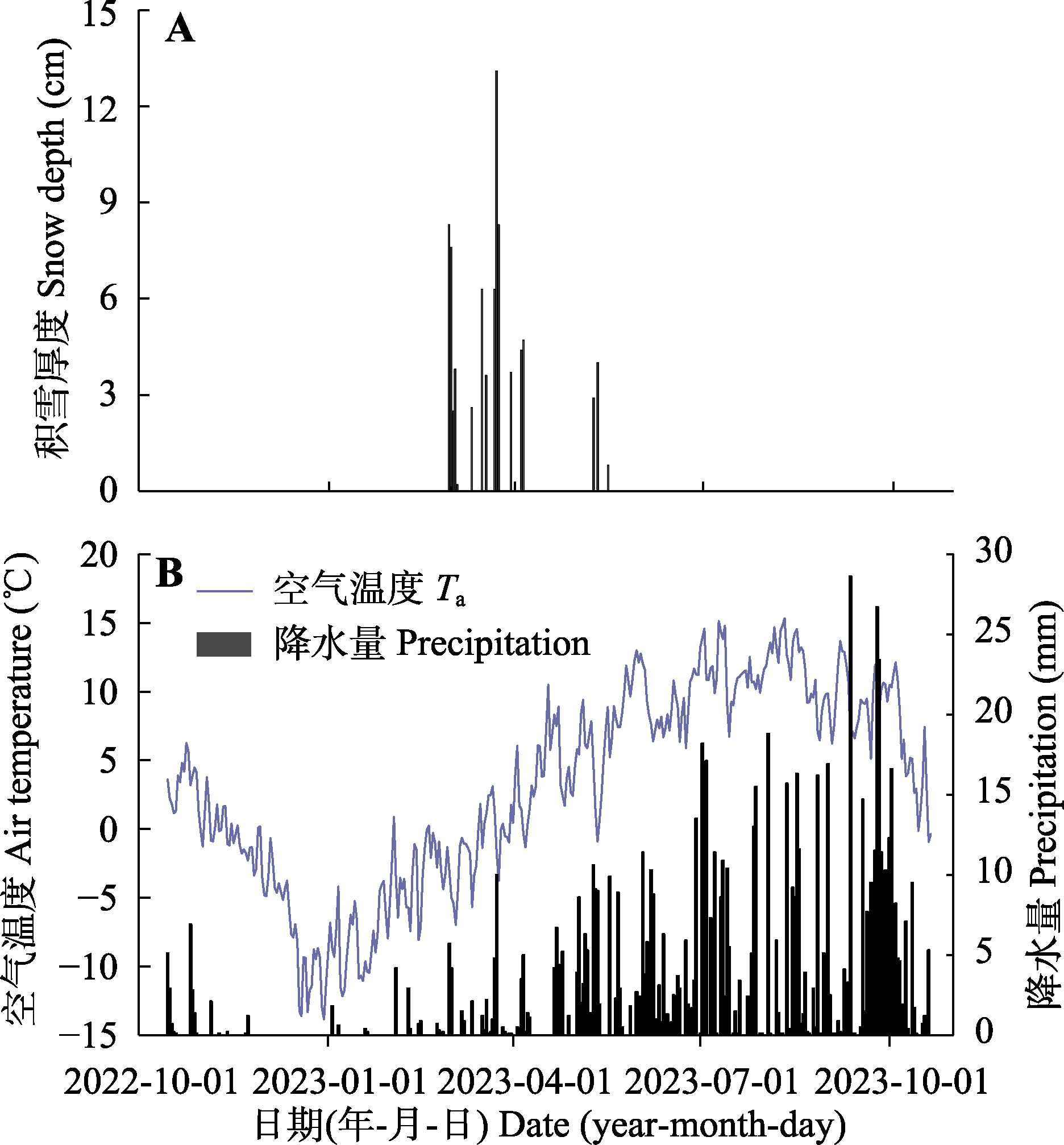
Fig. 1 Daily variation in snow depth (A), air temperature (Ta), and precipitation (B) in the alpine meadows on the northeastern edge of Qingzang Plateau.
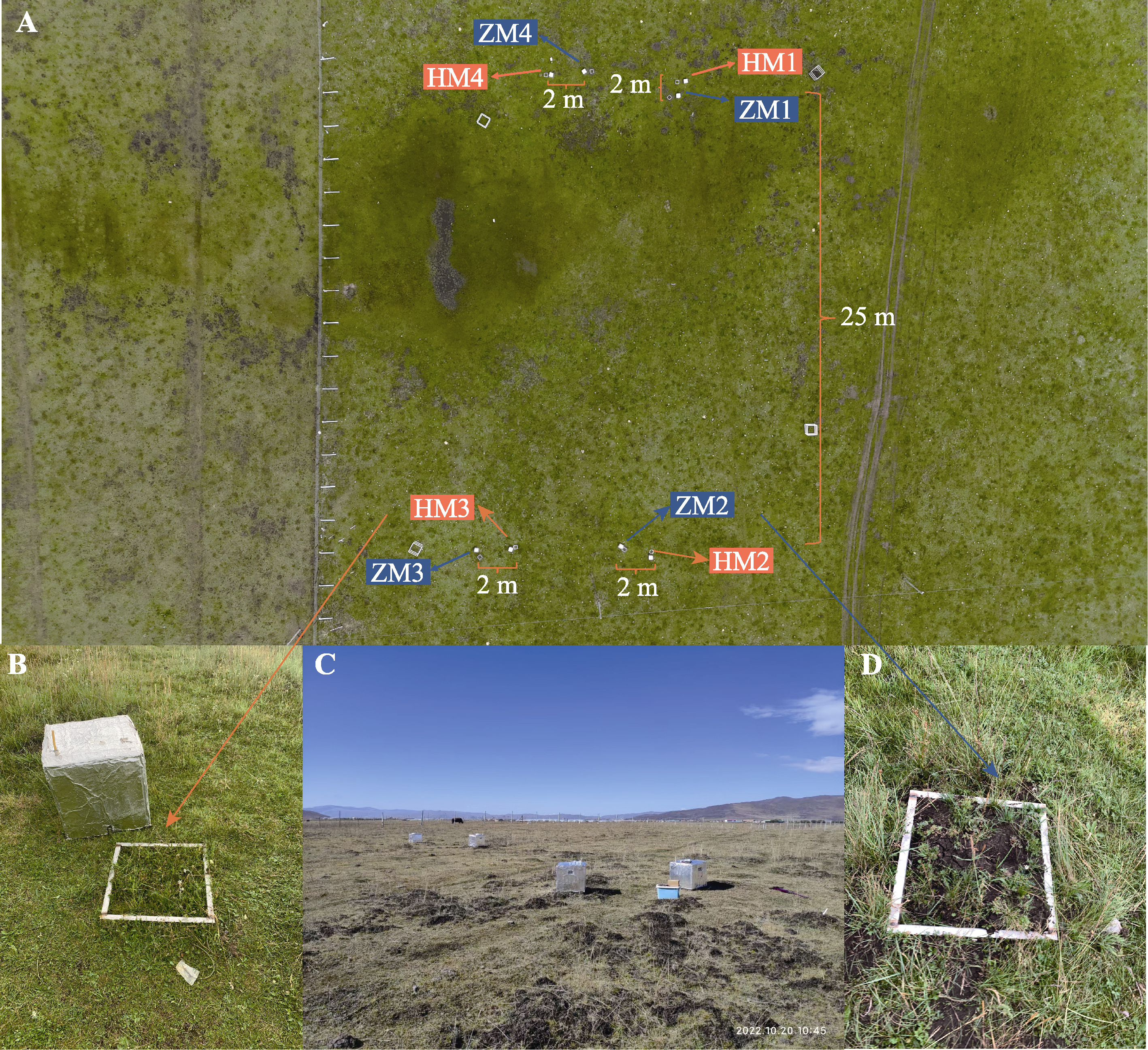
Fig. 2 Types of plant patches and plot settings in the alpine meadows on the northeastern edge of the Qingzang Plateau. A, Sample plot layout. B, Healthy meadow patch (HM). C, Rodent-disturbed area. D, Zokor mound patches (ZM).
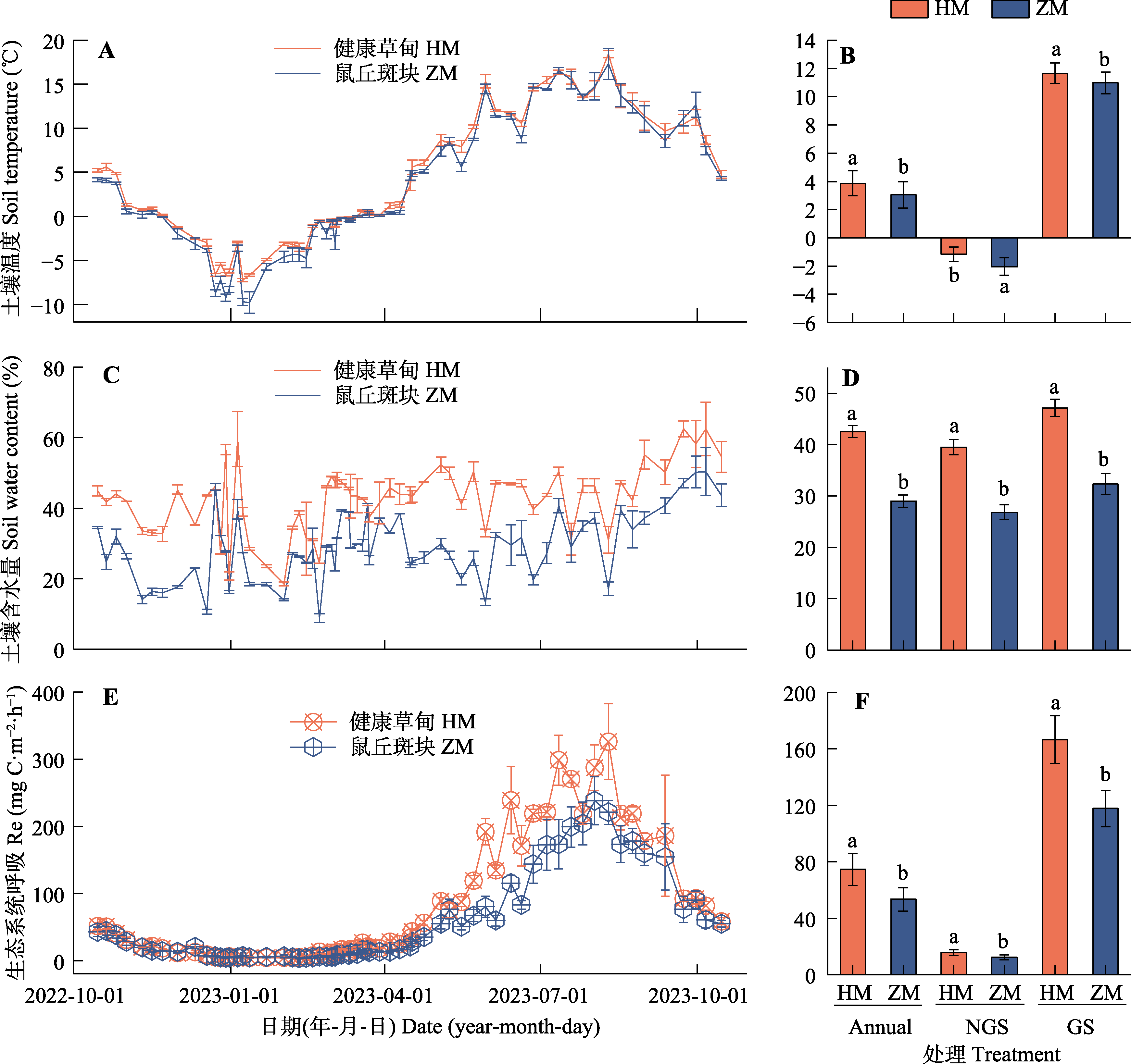
Fig. 3 Seasonal variation patterns of 0-5 cm soil temperature (Ts, A), soil water content (SWC, C), and ecosystem respiration (Re, E) in healthy meadow (HM) and zokor mounds patches (ZM) of an alpine meadow on the northeastern edge of the Qingzang Plateau, as well as the mean differences for the annual, non-growing season (NGS), and growing season (GS) (B, D, F) (mean ± SE). Different lowercase letters denote significant differences between treatments at different times (p < 0.05).
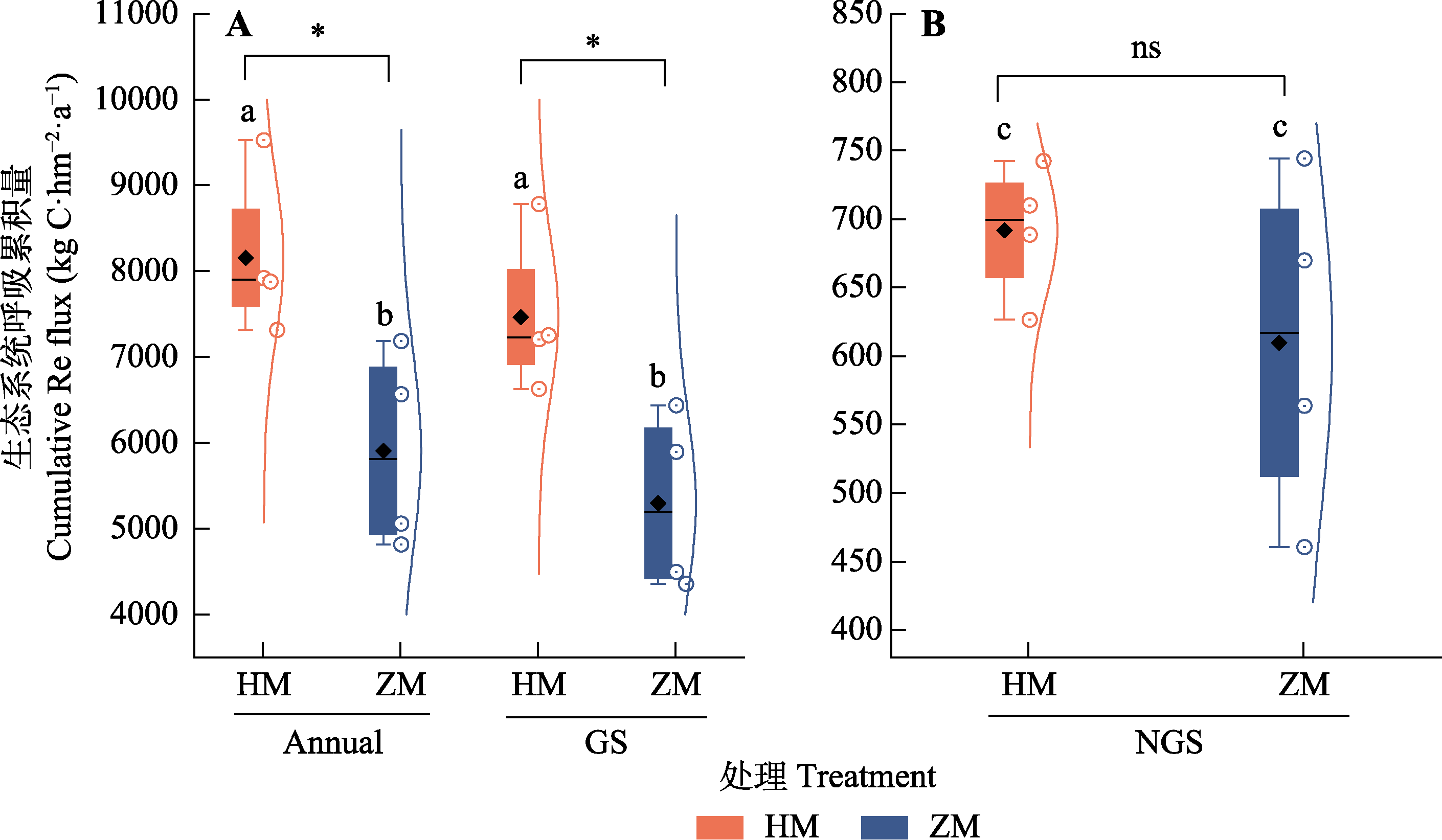
Fig. 4 Differences in cumulative fluxes of ecosystem respiration for the annual, growing season (GS), and non-growing season (NGS) in the healthy meadow (HM) and zokor mounds patches (ZM) of an alpine meadow on the northeastern edge of Qingzang Plateau. Different lowercase letters denote significant differences among different treatments across the three periods (p < 0.05). * denote significance at the levels of p < 0.05, and ns indicates no significance.
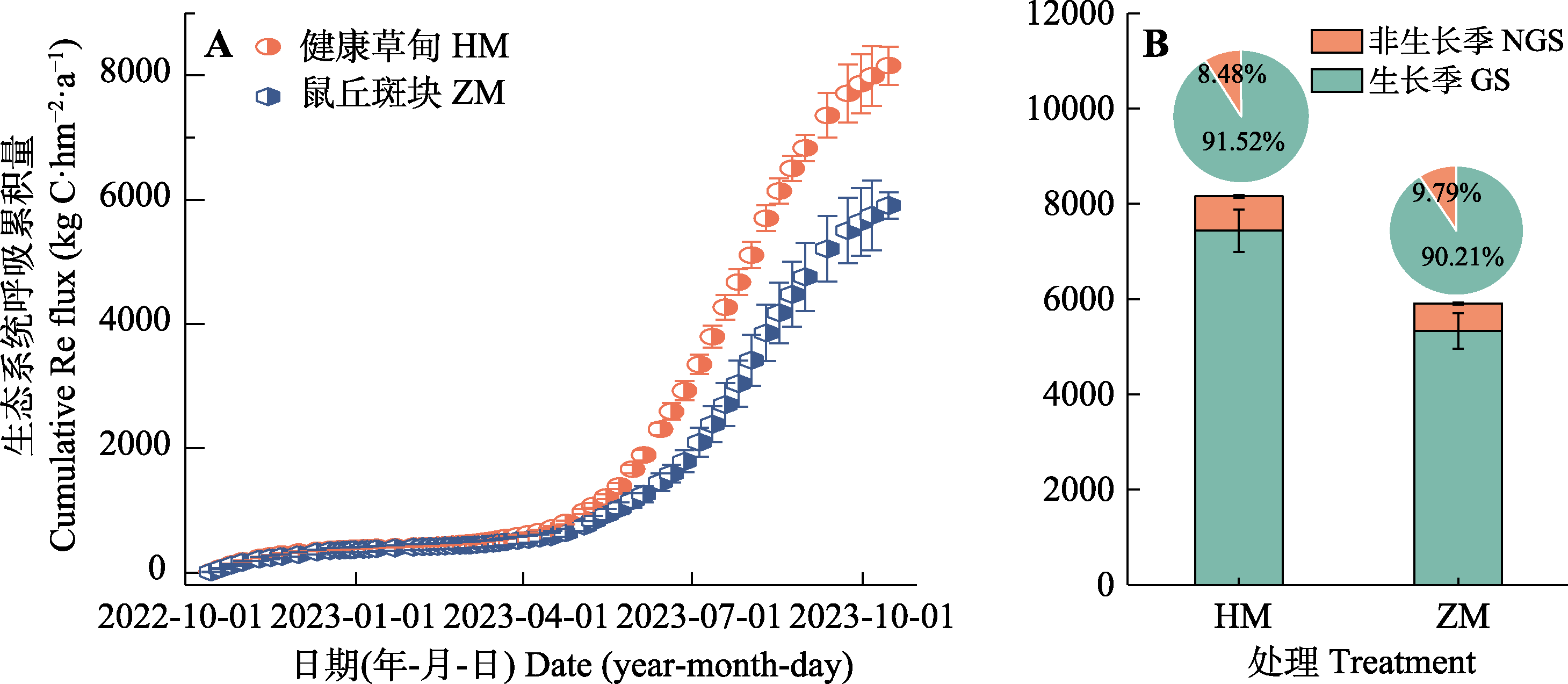
Fig. 5 Cumulative ecosystem respiration flux in the healthy meadow (HM) and zokor mounds patches (ZM) (A) and the contribution of non-growing season (B) (mean ± SE) of an alpine meadow on the northeastern edge of Qingzang Plateau.
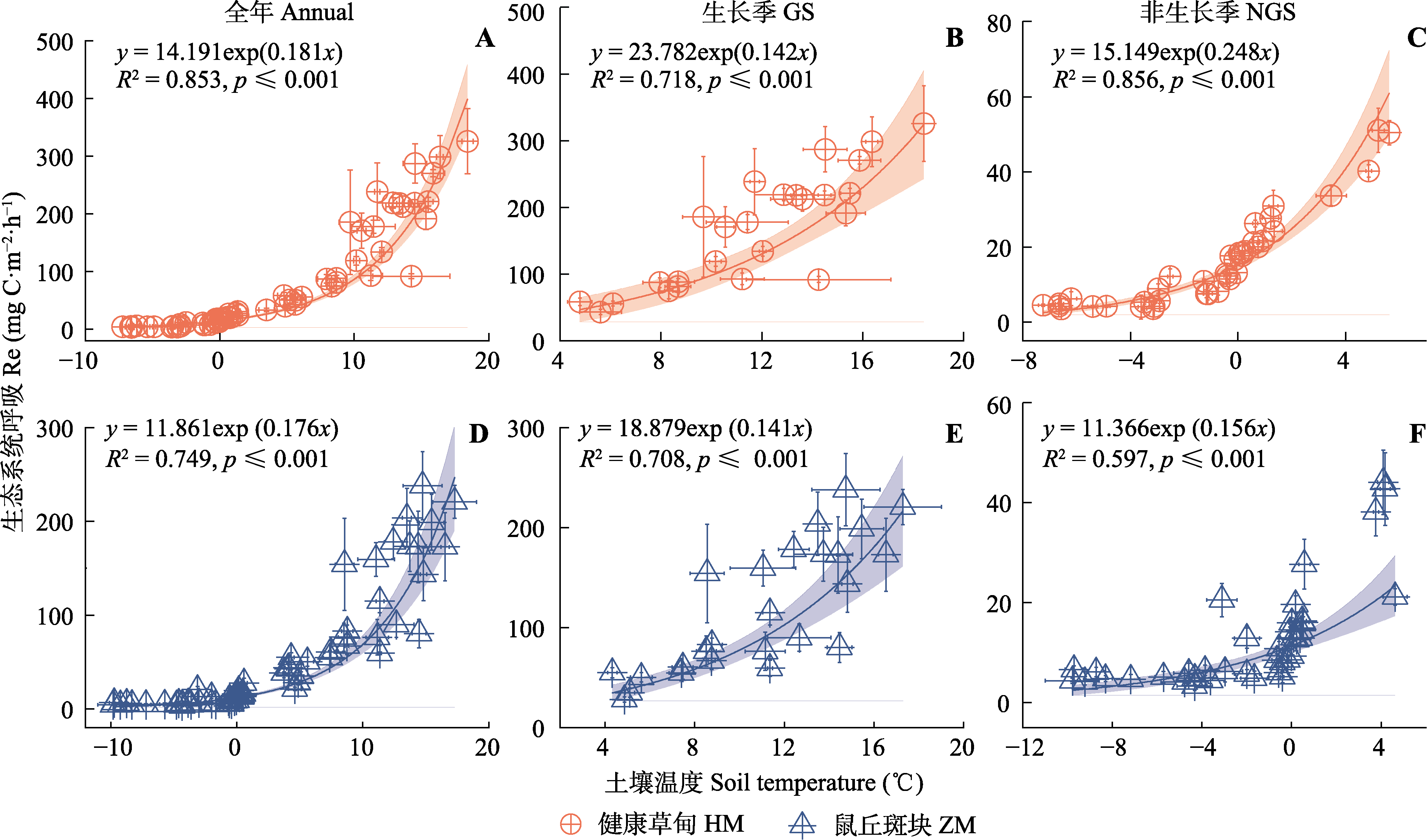
Fig. 6 Effect of soil temperature (Ts) on ecosystem respiration flux (Re) for the annual (A, D), growing season (GS, B, E), and non-growing season (NGS, C, F) in the healthy meadow and zokor mounds patches of an alpine meadow on the northeastern edge of Qingzang Plateau (mean ± SE). HM, healthy meadow; ZM, zokor mound patches.
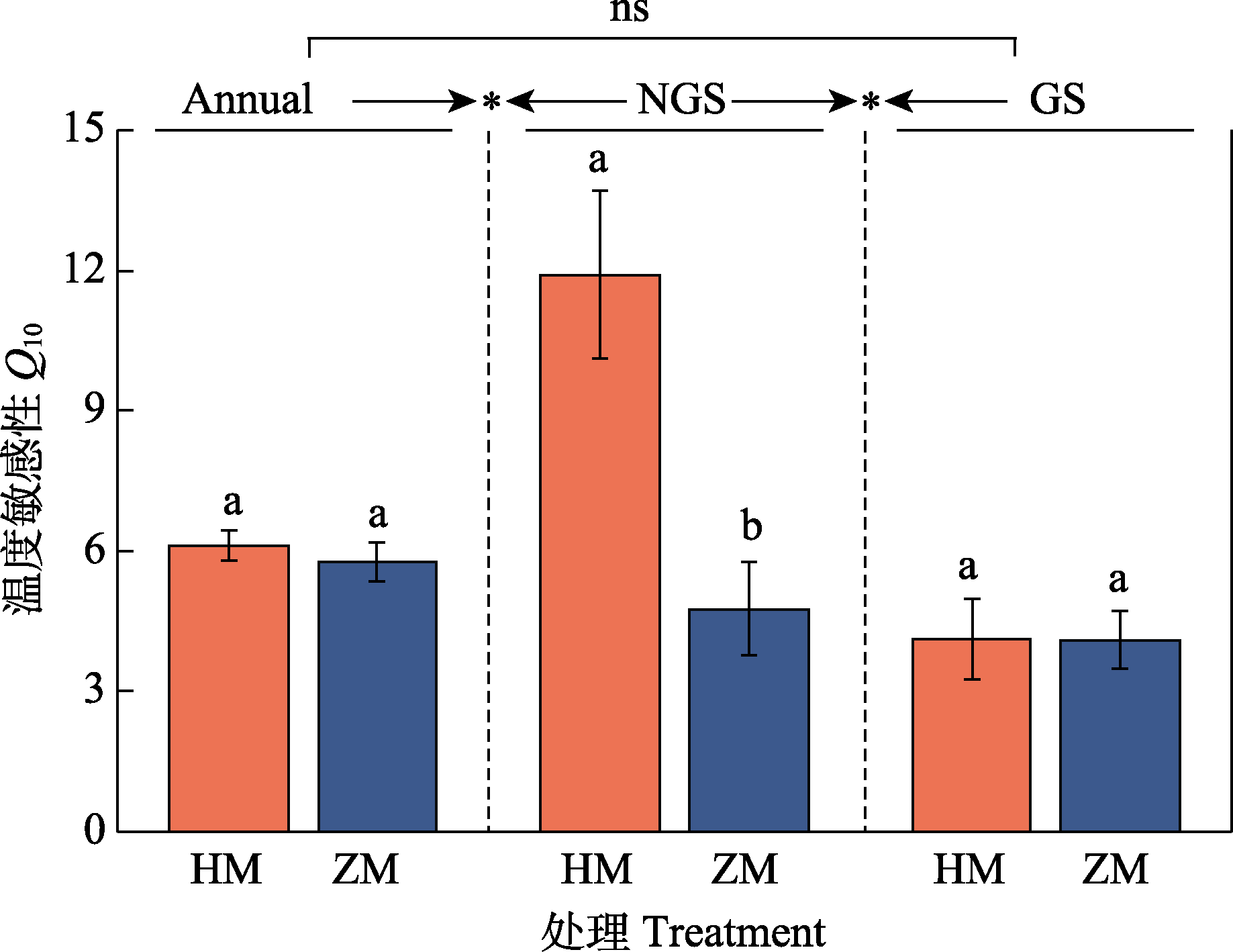
Fig. 7 Temperature sensitivity (Q10) of ecosystem respiration flux (Re) in healthy meadow (HM) and zokor mounds patches of an alpine meadow on the northeastern edge of Qingzang Plateau for the annual, non-growing season (NGS) and growing season (GS) (mean ± SE). Different lowercase letters denote significant differences among different treatments across the three periods (p < 0.05). * denote significance at the levels of p < 0.05, and ns indicates no significance.
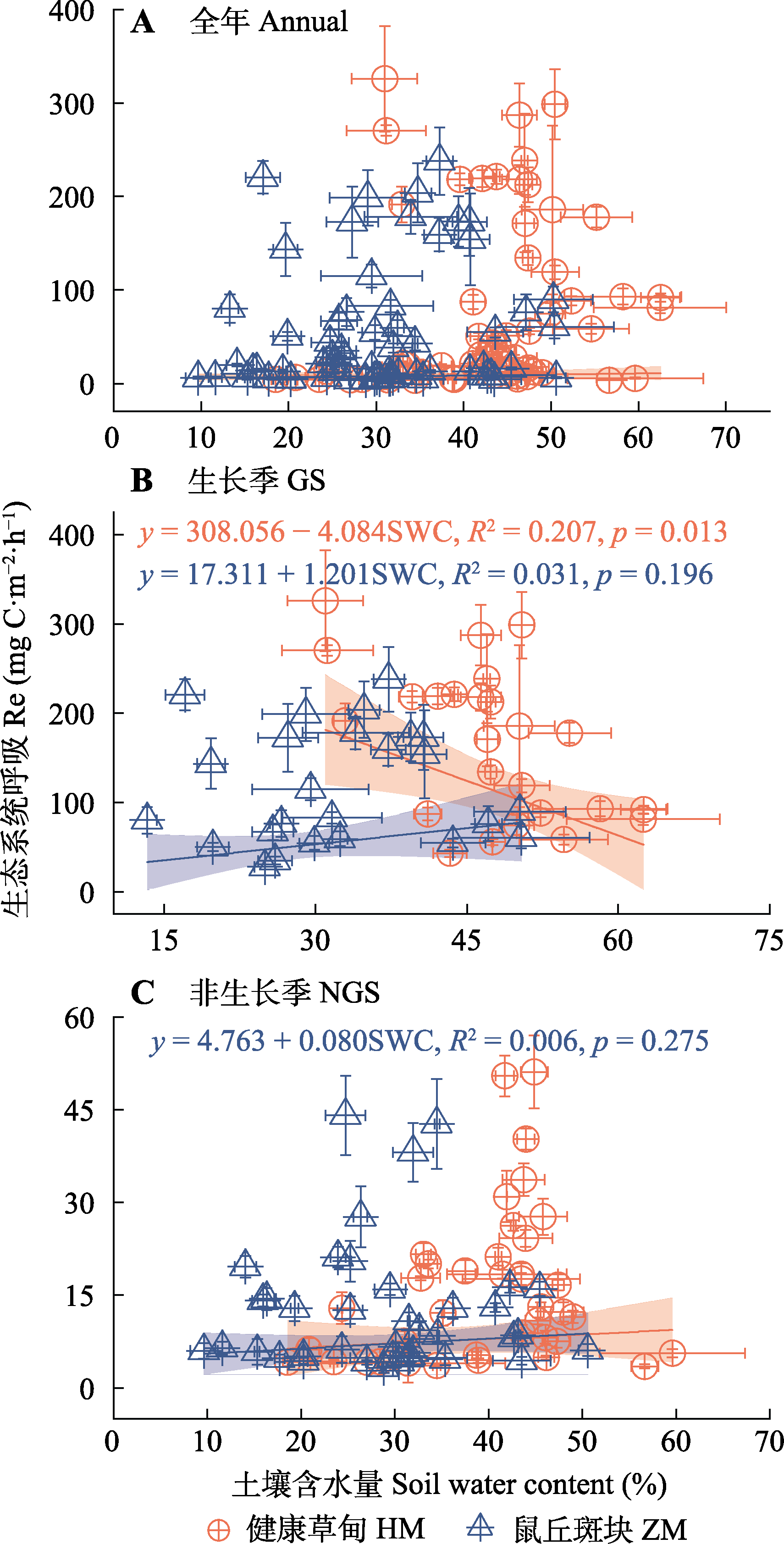
Fig. 8 Effect of soil water content (SWC) on seasonal ecosystem respiration flux (Re) of an alpine meadow on the northeastern edge of Qingzang Plateau (mean ± SE). HM, healthy meadow; ZM, zokor mound patches. GS, growing season; NGS, non-growing season.
| [1] |
Bai YF, Ma LN, Degen AA, Rafiq MK, Kuzyakov Y, Zhao JX, Zhang R, Zhang T, Wang WY, Li XG, Long RJ, Shang ZH (2020). Long-term active restoration of extremely degraded alpine grassland accelerated turnover and increased stability of soil carbon. Global Change Biology, 26, 7217-7228.
DOI URL |
| [2] | Bao SD (2006). Agrochemical Analysis of Soil. China Agricultural Press, Beijing. 25-103. |
| [鲍士旦 (2006). 土壤农化分析. 中国农业出版社, 北京. 25-103.] | |
| [3] |
Beca G, Valentine LE, Galetti M, Hobbs RJ (2022). Ecosystem roles and conservation status of bioturbator mammals. Mammal Review, 52, 192-207.
DOI URL |
| [4] |
Cao GM, Tang YH, Mo WH, Wang YS, Li YN, Zhao XQ (2004). Grazing intensity alters soil respiration in an alpine meadow on the Tibetan Plateau. Soil Biology & Biochemistry, 36, 237-243.
DOI URL |
| [5] |
Cao GM, Xu XL, Long RJ, Wang QL, Wang CT, Du YG, Zhao XQ (2008). Methane emissions by alpine plant communities in the Qinghai-Tibet Plateau. Biology Letters, 4, 681-684.
DOI PMID |
| [6] | Carbone MS, Winston GC, Trumbore SE (2008). Soil respiration in perennial grass and shrub ecosystems: linking environmental controls with plant and microbial sources on seasonal and diel timescales. Journal of Geophysical Research: Biogeosciences, 113, 2007JG000611. DOI: 10.1029/2007JG000611. |
| [7] |
Chen HQ, Fan MS, Kuzyakov Y, Billen N, Stahr K (2014). Comparison of net ecosystem CO2 exchange in cropland and grassland with an automated closed chamber system. Nutrient Cycling in Agroecosystems, 98, 113-124.
DOI URL |
| [8] |
Chen JJ, Yi SH, Qin Y (2017). The contribution of plateau pika disturbance and erosion on patchy alpine grassland soil on the Qinghai-Tibetan Plateau: implications for grassland restoration. Geoderma, 297, 1-9.
DOI URL |
| [9] | Chen WN, Wang S, Niu SL (2023). A dataset of carbon, water and heat fluxes of Zoige alpine meadow from 2015 to 2020. China Scientific Data, 8(2), 65-72. |
| [陈卫楠, 王松, 牛书丽 (2023). 2015-2020年若尔盖高寒草甸碳水热通量观测数据集. 中国科学数据, 8(2), 65-72.] | |
| [10] |
Chen WW, Wolf B, Zheng XH, Yao ZS, Butterbach-Bahl K, Brüggemann N, Han SH, Liu CY, Han XG (2013). Carbon dioxide emission from temperate semiarid steppe during the non-growing season. Atmospheric Environment, 64, 141-149.
DOI URL |
| [11] |
Chu B, Ye GH, Yang SW, Zhou FF, Zhang FY, Zhou JW, Hua LM (2020). Effect of plateau zokor (Myospalax fontanierii) disturbance on plant community structure and soil properties in the eastern Qinghai-Tibet Plateau, China. Rangeland Ecology & Management, 73, 520-530.
DOI URL |
| [12] | Dong ZB, Hu GY, Yan CZ, Wang WL, Lu JF (2010). Aeolian desertification and its causes in the Zoige Plateau of China’s Qinghai-Tibetan Plateau. Environmental Earth Sciences, 59, 1731-1740. |
| [13] |
Du EZ, Zhou Z, Li P, Jiang L, Hu XY, Fang JY (2013). Winter soil respiration during soil-freezing process in a boreal forest in Northeast China. Journal of Plant Ecology, 6, 349-357.
DOI |
| [14] |
Harris RB (2010). Rangeland degradation on the Qinghai-Tibetan Plateau: a review of the evidence of its magnitude and causes. Journal of Arid Environments, 74, 1-12.
DOI URL |
| [15] |
He GX, Li KH, Liu XJ, Gong YM, Hu YK (2014). Fluxes of methane, carbon dioxide and nitrous oxide in an alpine wetland and an alpine grassland of the Tianshan Mountains, China. Journal of Arid Land, 6, 717-724.
DOI |
| [16] | Hu YG, Chang XF, Lin XW, Wang YF, Wang SP, Duan JC, Zhang ZH, Yang XX, Luo CY, Xu GP, Zhao XQ (2010). Effects of warming and grazing on N2O fluxes in an alpine meadow ecosystem on the Tibetan Plateau. Soil Biology & Biochemistry, 42, 944-952. |
| [17] |
Juszczak R, Humphreys E, Acosta M, Michalak-Galczewska M, Kayzer D, Olejnik J (2013). Ecosystem respiration in a heterogeneous temperate peatland and its sensitivity to peat temperature and water table depth. Plant and Soil, 366, 505-520.
DOI URL |
| [18] |
Karhu K, Auffret MD, Dungait JAJ, Hopkins DW, Prosser JI, Singh BK, Subke JA, Wookey PA, Ågren GI, Sebastià MT, Gouriveau F, Bergkvist G, Meir P, Nottingham AT, Salinas N, et al (2014). Temperature sensitivity of soil respiration rates enhanced by microbial community response. Nature, 513, 81-84.
DOI |
| [19] |
Kato T, Tang YH, Gu S, Hirota M, Du MY, Li YN, Zhao XQ (2006). Temperature and biomass influences on interannual changes in CO2 exchange in an alpine meadow on the Qinghai-Tibetan Plateau. Global Change Biology, 12, 1285-1298.
DOI URL |
| [20] | Li D, Luo XP, Cao GM, Wu Q, Hu QW, Zhuo MC, Li HM (2015). Effect of degradation succession process on the temperature sensitivity of ecosystem respiration in alpine Potentilla fruticosa scrub meadow. Environmental Science, 36, 1075-1083. |
| [李东, 罗旭鹏, 曹广民, 吴琴, 胡启武, 卓玛措, 李惠梅 (2015). 高寒灌丛退化演替过程对生态系统呼吸温度敏感性的影响. 环境科学, 36, 1075-1083.] | |
| [21] |
Li XC, Wang ZN, Wang DL, Wang L, Pan DF, Li J, De KJ, Seastedt TR (2019). Livestock grazing impacts on plateau pika (Ochotona curzoniae) vary by species identity. Agriculture, Ecosystems & Environment, 275, 23-31.
DOI URL |
| [22] |
Li XG, Zhang ML, Li ZT, Shi XM, Ma QF, Long RJ (2009). Dynamics of soil properties and organic carbon pool in topsoil of zokor-made mounds at an alpine site of the Qinghai-Tibetan Plateau. Biology and Fertility of Soils, 45, 865-872.
DOI URL |
| [23] |
Liebig MA, Kronberg SL, Hendrickson JR, Dong X, Gross JR (2013). Carbon dioxide efflux from long-term grazing management systems in a semiarid region. Agriculture, Ecosystems & Environment, 164, 137-144.
DOI URL |
| [24] | Lindenmayer DB, Fischer J (2013). Habitat fragmentation and land scape change: an ecological and conservation synthesis. Island Press, 32, 477-478. |
| [25] |
Liptzin D, Williams MW, Helmig D, Seok B, Filippa G, Chowanski K, Hueber J (2009). Process-level controls on CO2 fluxes from a seasonally snow-covered subalpine meadow soil, Niwot Ridge, Colorado. Biogeochemistry, 95, 151-166.
DOI URL |
| [26] |
Liu YS, Fan JW, Harris W, Shao QQ, Zhou YC, Wang N, Li YZ (2013). Effects of plateau pika (Ochotona curzoniae) on net ecosystem carbon exchange of grassland in the Three Rivers Headwaters region, Qinghai-Tibet, China. Plant and Soil, 366, 491-504.
DOI URL |
| [27] | Ma L, Zuo HC (2022). Quantifying net carbon fixation by Tibetan alpine ecosystems should consider multiple anthropogenic activities. Proceedings of the National Academy of Sciences of the United States of America, 119, e2115676119. DOI: 10.1073/pnas.2115676119. |
| [28] |
Ma YJ, Wu YN, Liu WL, Li XY, Lin HS (2018). Microclimate response of soil to plateau pika’s disturbance in the northeast Qinghai-Tibet Plateau. European Journal of Soil Science, 69, 232-244.
DOI URL |
| [29] |
Marcolla B, Cescatti A, Manca G, Zorer R, Cavagna M, Fiora A, Gianelle D, Rodeghiero M, Sottocornola M, Zampedri R (2011). Climatic controls and ecosystem responses drive the inter-annual variability of the net ecosystem exchange of an alpine meadow. Agricultural and Forest Meteorology, 151, 1233-1243.
DOI URL |
| [30] |
Morgan JA, Parton W, Derner JD, Gilmanov TG, Smith DP (2016). Importance of early season conditions and grazing on carbon dioxide fluxes in Colorado shortgrass steppe. Rangeland Ecology & Management, 69, 342-350.
DOI URL |
| [31] | Niu B, Zhang XZ, Piao SL, Janssens IA, Fu G, He YT, Zhang YJ, Shi PL, Dai EF, Yu CQ, Zhang J, Yu GR, Xu M, Wu JS, Zhu LP, et al. (2021). Warming homogenizes apparent temperature sensitivity of ecosystem respiration. Science Advances, 7, eabc7358. DOI: 10.1126/sciadv.abc7358. |
| [32] |
Pang XP, Guo ZG (2017). Plateau pika disturbances alter plant productivity and soil nutrients in alpine meadows of the Qinghai-Tibetan Plateau, China. The Rangeland Journal, 39, 133-144.
DOI URL |
| [33] |
Pang XP, Wang Q, Zhang J, Xu HP, Zhang WN, Wang J, Guo ZG (2020). Responses of soil inorganic and organic carbon stocks of alpine meadows to the disturbance by plateau pikas. European Journal of Soil Science, 71, 706-715.
DOI URL |
| [34] |
Peng F, Quangang Y, Xue X, Guo J, Wang T (2015). Effects of rodent-induced land degradation on ecosystem carbon fluxes in an alpine meadow in the Qinghai-Tibet Plateau, China. Solid Earth, 6, 303-310.
DOI URL |
| [35] |
Qi YC, Dong YS, Domroes M, Geng YB, Liu LX, Liu XR (2006). Comparison of CO2 effluxes and their driving factors between two temperate steppes in Inner Mongolia, China. Advances in Atmospheric Sciences, 23, 726-736.
DOI URL |
| [36] |
Qin Y, Yi SH, Ding YJ, Xu GW, Chen JJ, Wang ZW (2018). Effects of small-scale patchiness of alpine grassland on ecosystem carbon and nitrogen accumulation and estimation in northeastern Qinghai-Tibetan Plateau. Geoderma, 318, 52-63.
DOI URL |
| [37] | Rafalska A, Walkiewicz A, Osborne B, Klumpp K, Bieganowski A (2023). Variation in methane uptake by grassland soils in the context of climate change—A review of effects and mechanisms. Science of the Total Environment, 871, 162127. DOI: 10.1016/j.scitotenv.2023.162127. |
| [38] |
Reichstein M, Tenhunen JD, Roupsard O, Ourcival JM, Rambal S, Dore S, Valentini R (2002). Ecosystem respiration in two Mediterranean evergreen Holm Oak forests: drought effects and decomposition dynamics. Functional Ecology, 16, 27-39.
DOI URL |
| [39] |
Rong YP, Ma L, Johnson DA, Yuan F (2015). Soil respiration patterns for four major land-use types of the agro-pastoral region of northern China. Agriculture, Ecosystems & Environment, 213, 142-150.
DOI URL |
| [40] | Schmitz OJ, Wilmers CC, Leroux SJ, Doughty CE, Atwood TB, Galetti M, Davies AB, Goetz SJ (2018). Animals and the zoogeochemistry of the carbon cycle. Science, 362, eaar3213. DOI: 10.1126/science.aar3213. |
| [41] |
Smith AT, Foggin JM (1999). The plateau pika (Ochotona curzoniae) is a keystone species for biodiversity on the Tibetan Plateau. Animal Conservation, 2, 235-240.
DOI URL |
| [42] | Sun JJ, Wang PB, Wang HB, Yu XJ (2021). Changes in plant communities, soil characteristics, and microbial communities in alpine meadows degraded to different degrees by pika on the Qinghai-Tibetan Plateau. Global Ecology and Conservation, 27, e01621. DOI: 10.1016/j.gecco.2021.e01621. |
| [43] |
von Buttlar J, Zscheischler J, Rammig A, Sippel S, Reichstein M, Knohl A, Jung M, Menzer O, Arain MA, Buchmann N, Cescatti A, Gianelle D, Kiely G, Law BE, Magliulo V, et al. (2018). Impacts of droughts and extreme-temperature events on gross primary production and ecosystem respiration: a systematic assessment across ecosystems and climate zones. Biogeosciences, 15, 1293-1318.
DOI URL |
| [44] | Wang X, Yan RR, Deng Y, Yan YC, Xin XP (2014a). Effect of grazing on the temperature sensitivity of soil respiration in Hulunber Meadow Steppe. Environmental Science, 35, 1909-1914. |
| [45] |
Wang YH, Liu HY, Chung H, Yu LF, Mi ZR, Geng Y, Jing X, Wang SP, Zeng H, Cao GM, Zhao XQ, He JS (2014b). Non-growing-season soil respiration is controlled by freezing and thawing processes in the summer monsoon-dominated Tibetan alpine grassland. Global Biogeochemical Cycles, 28, 1081-1095.
DOI URL |
| [46] |
Wang YX, Sun J, Hou SJ, Tan YH, Wang ZF, Chang SH, Chen JH, Qian YQ, Chu JM, Hou FJ (2022). Plateau pika burrowing and yak grazing jointly determine ecosystem greenhouse gas emissions of alpine meadow. Land Degradation & Development, 33, 3914-3925.
DOI URL |
| [47] |
Wei HX, Zhao JX, Luo TX (2019). The effect of pika grazing on Stipa purpurea is amplified by warming but alleviated by increased precipitation in an alpine grassland. Plant Ecology, 220, 371-381.
DOI |
| [48] |
Wu RX, Chai Q, Zhang JQ, Zhong MY, Liu YH, Wei XT, Pan D, Shao XQ (2015). Impacts of burrows and mounds formed by plateau rodents on plant species diversity on the Qinghai-Tibetan Plateau. The Rangeland Journal, 37, 117-123.
DOI URL |
| [49] | Yang L, Zhao B, Chen P, Zhao XH (2019). Effects of simulated nitrogen deposition and earthworm addition on ecosystem respiration of Pinus tabuliformis and Quercus liaotungensis seedlings. Chinese Journal of Ecology, 38, 44-50. |
| [杨璐, 赵博, 陈平, 赵秀海 (2019). 模拟氮沉降与蚯蚓添加对油松和辽东栎幼苗生态系统呼吸的影响. 生态学杂志, 38, 44-50.] | |
| [50] |
Yi SH, Chen JJ, Qin Y, Xu GW (2016). The burying and grazing effects of plateau pika on alpine grassland are small: a pilot study in a semiarid basin on the Qinghai-Tibet Plateau. Biogeosciences, 13, 6273-6284.
DOI URL |
| [51] |
You QG, Xue X, Peng F, Dong SY, Gao YH (2017). Surface water and heat exchange comparison between alpine meadow and bare land in a permafrost region of the Tibetan Plateau. Agricultural and Forest Meteorology, 232, 48-65.
DOI URL |
| [52] |
Yu C, Pang XP, Wang Q, Jin SH, Shu CC, Guo ZG (2017a). Soil nutrient changes induced by the presence and intensity of plateau pika (Ochotona curzoniae) disturbances in the Qinghai-Tibet Plateau, China. Ecological Engineering, 106, 1-9.
DOI URL |
| [53] |
Yu C, Zhang J, Pang XP, Wang Q, Zhou YP, Guo ZG (2017b). Soil disturbance and disturbance intensity: response of soil nutrient concentrations of alpine meadow to plateau pika bioturbation in the Qinghai-Tibetan Plateau, China. Geoderma, 307, 98-106.
DOI URL |
| [54] |
Zhang T, Wang GX, Yang Y, Mao TX, Chen XP (2015). Non-growing season soil CO2 flux and its contribution to annual soil CO2 emissions in two typical grasslands in the permafrost region of the Qinghai-Tibet Plateau. European Journal of Soil Biology, 71, 45-52.
DOI URL |
| [55] |
Zhang Y, Dong SK, Gao QZ, Liu SL, Liang Y, Cao XJ (2016). Responses of alpine vegetation and soils to the disturbance of plateau pika (Ochotona curzoniae) at burrow level on the Qinghai-Tibetan Plateau of China. Ecological Engineering, 88, 232-236.
DOI URL |
| [56] |
Zhang YM, Liu JK (2003). Effects of plateau zokors (Myospalax fontanierii) on plant community and soil in an alpine meadow. Journal of Mammalogy, 84, 644-651.
DOI URL |
| [57] | Zhang ZY, Zhang HY, Cui ZK, Tao F, Chen ZW, Chang YX, Magliulo V, Wohlfahrt G, Zhao DS (2021). Global consistency in response of terrestrial ecosystem respiration to temperature. Agricultural and Forest Meteorology, 308-309, 108576. DOI: 10.1016/j.agrformet.2021.108576. |
| [58] |
Zhao JX, Tian LH, Wei HX, Zhang T, Bai YF, Li RC, Tang YH (2021). Impact of plateau pika (Ochotona curzoniae) burrowing-induced microtopography on ecosystem respiration of the alpine meadow and steppe on the Tibetan Plateau. Plant and Soil, 458, 217-230.
DOI |
| [59] | Zheng XH, Wang R (2017). Ground Observation Methods for the Exchange Fluxes of Carbon and Nitrogen Gases Between Terrestrial Ecosystems and the Atmosphere: Methods for Observing CH4 and N2O Fluxes by the Static Chamber-Gas Chromatography Technique and Specifications for Data Quality Control. China Meteorological Press, Beijing. |
| [郑循华, 王睿 (2017). 陆地生态系统-大气碳氮气体交换通量的地面观测方法: 静态箱-气相色谱法观测CH4和N2O通量的方法与数据质量控制规范. 气象出版社, 北京.] | |
| [60] |
Zheng Y, Yang W, Sun X, Wang SP, Rui YC, Luo CY, Guo LD (2012). Methanotrophic community structure and activity under warming and grazing of alpine meadow on the Tibetan Plateau. Applied Microbiology and Biotechnology, 93, 2193-2203.
DOI PMID |
| [61] |
Zheng ZM, Yu GR, Fu YL, Wang YS, Sun XM, Wang YH (2009). Temperature sensitivity of soil respiration is affected by prevailing climatic conditions and soil organic carbon content: a trans-China based case study. Soil Biology & Biochemistry, 41, 1531-1540.
DOI URL |
| [62] | Zhou HK, Zhao XQ, Zhou L, Liu W, Tang YH (2005). A study on correlations between vegetation degradation and soil degradation in the alpine meadow of the Qinghai-Tibetan Plateau. Acta Pratacultural Science, 14(3), 31-40. |
| [周华坤, 赵新全, 周立, 刘伟, 李英年, 唐艳鸿 (2005). 青藏高原高寒草甸的植被退化与土壤退化特征研究. 草业学报, 14(3), 31-40.] |
| [1] | XIAO Zhi-Shu. Advances in pollination and seed dispersal of tropical liana Mucuna (Fabaceae): current status and outlook [J]. Chin J Plant Ecol, 2027, 51(动植物互作): 0-. |
| [2] | Chen Jing, Li Yang Zhou, Lu Xiong Wen, Sun Han Yi, Ren Kun Zhi, Sun Yan. Soil legacy effects mediate the performance of annual Asteraceae across elevational gradients and human disturbance in Shennongjia [J]. Chin J Plant Ecol, 2026, 50(7): 0-. |
| [3] | YANG Ying, YANG Zhi-Yong, MENG Fan-Dong, Ciren Quzong, FANG Bo, ZHANG Yuan, MAO Jing-Ting, Cuose , ZHANG Guo-Tai, Tsechoe Dorji. Responses of first flowering of three common plant species in an alpine meadow to diurnal and seasonal asymmetric warming on the Qingzang Plateau [J]. Chin J Plant Ecol, 2026, 50(5): 1162-1176. |
| [4] | DING Ming-Li, WEI Yao, MA Jian-Yu, LAN Yu-Ting, LIU Hui-Ying, ZHANG Zhen-Hua. Effects of seasonal droughts on antioxidants, osmoregulation, and photosynthesis in typical alpine plants [J]. Chin J Plant Ecol, 2026, 50(5): 1187-1201. |
| [5] | LI Yi, HUANG Huan, ZHAO Yan-Chao, CHEN Li-Tong. Effects of nutrient addition on species diversity and composition of alpine meadows at different altitudes [J]. Chin J Plant Ecol, 2026, 50(4): 870-882. |
| [6] | ZHENG Zi-Yi, CHEN Jiang-Hui, LIU Hui-Ying. Climate warming increases root exudation rates of dominant species in alpine meadow on the Qingzang Plateau [J]. Chin J Plant Ecol, 2025, 49(9): 1363-1373. |
| [7] | ZHANG Fa-Wei, LI Hong-Qin, ZHU Jing-Bin, FAN Bo, ZHOU Hua-Kun, LI Ying-Nian, LIANG Nai-Shen. Response of aboveground and belowground carbon storage to nitrogen addition and precipitation change in an alpine meadow ecosystem [J]. Chin J Plant Ecol, 2025, 49(9): 1399-1409. |
| [8] | LI Lin, HUANG Jia-Fang, DING Zhong-Hao, GUO Ping-Ping, CAI Yuan-Bin, LI Shi-Hua, LI Yun-Qin, LUO Min. Impact of increased inundation height on the net ecosystem CO2 exchange in a Cyperus malaccensis tidal marsh [J]. Chin J Plant Ecol, 2025, 49(4): 526-539. |
| [9] | GE Xiao-Cai, LI Jing-Long, SUN Jun, WU Pan-Pan, HU Dan-Dan, CHENG Dong-Liang, ZHONG Quan-Lin. Characteristics of soil respiration components and influencing factors in the subalpine meadows of Wuyi Mountain [J]. Chin J Plant Ecol, 2025, 49(3): 502-512. |
| [10] | LU Lei-Qin, SUN Long, SONG Yu-Xuan, YANG Guang, CAI Hui-Ying. Post-fire time impacts on nonstructural carbohydrates in leaves-branches-roots of Vaccinium vitis-idaea in Da Hinggan Mountains [J]. Chin J Plant Ecol, 2025, 49(12): 2105-2118. |
| [11] | LIU Yang, LIU Ao, SONG Xuan-Zi, YANG Yun, AN Bai-Heng, HAN Meng-Jiao, Banma-Caigeer , Migmar-Wangdwei. Effects of plateau pika disturbance on the niche and interspecific associations of major plant species in alpine rangelands [J]. Chin J Plant Ecol, 2025, 49(12): 2054-2068. |
| [12] | XU Jia-Xin, XIAO Yuan-Ming, WANG Xiao-Yun, WANG Wen-Ying, MA Yu-Hua, LI Qiang-Feng, ZHOU Guo-Ying. Effects of microbial fertilizer and nitrogen and phosphorus fertilizer backfilling on soil physicochemical properties and enzyme activities in degraded alpine meadows [J]. Chin J Plant Ecol, 2025, 49(1): 159-172. |
| [13] | WANG Wen-Ying, XIAO Yuan-Ming, WANG Xiao-Yun, XU Jia-Xin, MA Yu-Hua, LI Qiang-Feng, ZHOU Guo-Ying. Relationship between plant diversity and ecosystem multifunctionality in degraded alpine meadows under multifunctional group species combination models [J]. Chin J Plant Ecol, 2025, 49(1): 103-117. |
| [14] | ZHANG Hui, ZHAO Yun-Peng, LIU Xiao-Chen, GUO Zeng-Peng, HU Guo-Rui, FENG Yan-Hao, MA Miao-Jun. Dynamics of soil seed bank and its role in plant community regeneration during alpine meadow degradation [J]. Chin J Plant Ecol, 2025, 49(1): 74-82. |
| [15] | MA Dong-Feng, JIA Cun-Zhi, WANG Xue-Peng, ZHAO Peng-Peng, HU Xiao-Wen. Effect of multi-species grouping on restoration of alpine degraded meadows in Gannan, China [J]. Chin J Plant Ecol, 2025, 49(1): 93-102. |
| Viewed | ||||||
|
Full text |
|
|||||
|
Abstract |
|
|||||
Copyright © 2026 Chinese Journal of Plant Ecology
Tel: 010-62836134, 62836138, E-mail: apes@ibcas.ac.cn, cjpe@ibcas.ac.cn

