
Chin J Plant Ecol ›› 2026, Vol. 50 ›› Issue (2): 268-278.DOI: 10.17521/cjpe.2025.0229 cstr: 32100.14.cjpe.2025.0229
• Research Articles • Previous Articles Next Articles
HOU Xiao-Fan( ), MA Chen-Han, SUN Yu-Qian, GAO Yu-Han, LI Pin**()(
 )
)
Received:2025-06-18
Accepted:2025-12-17
Online:2026-02-28
Published:2026-04-01
Contact:
LI Pin
About author:First author contact:* Contributed equally to this work
Supported by:HOU Xiao-Fan, MA Chen-Han, SUN Yu-Qian, GAO Yu-Han, LI Pin. Differential ecological stoichiometry of leaf and fine root litter decomposition under ozone stress[J]. Chin J Plant Ecol, 2026, 50(2): 268-278.
Add to citation manager EndNote|Ris|BibTeX
URL: https://www.plant-ecology.com/EN/10.17521/cjpe.2025.0229
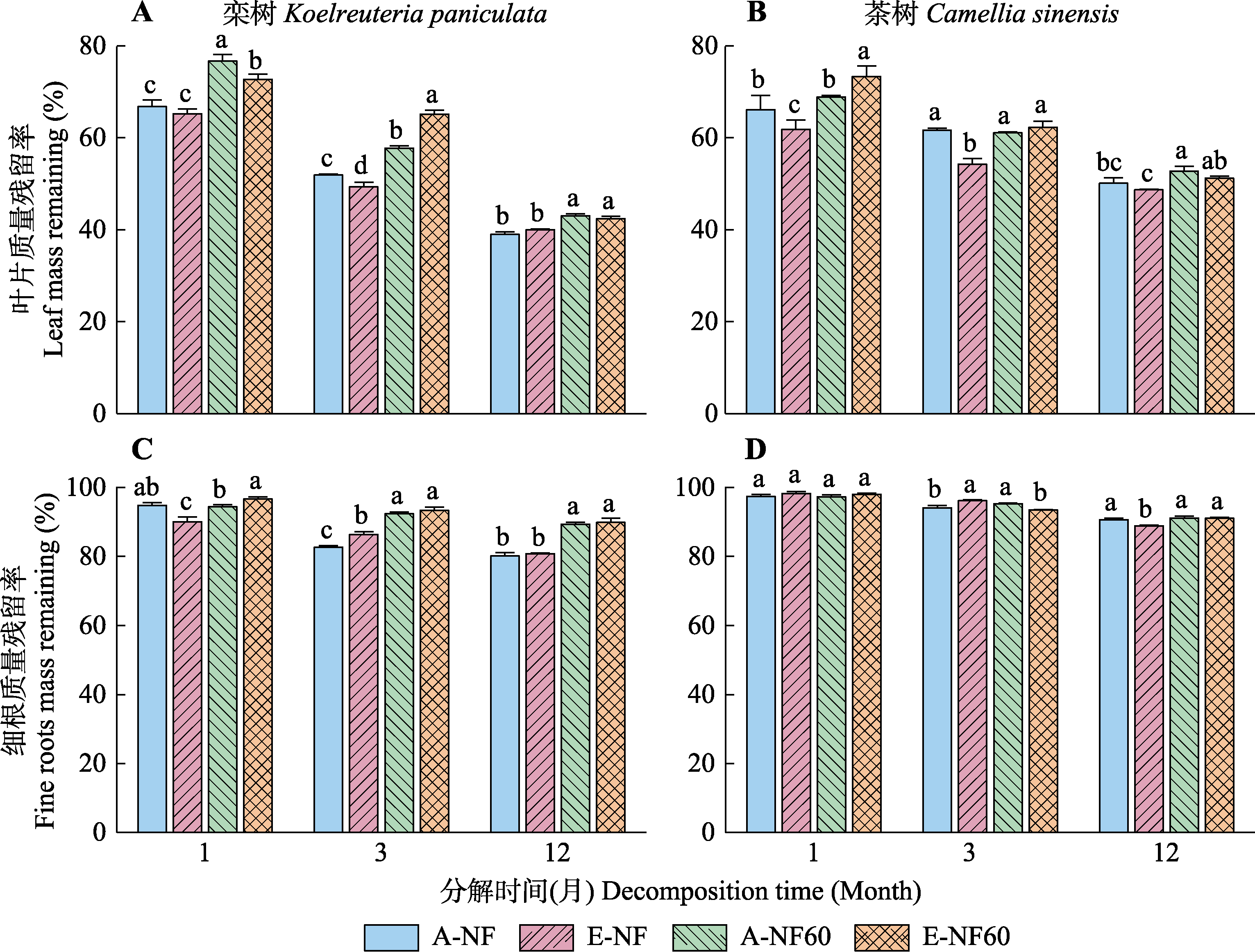
Fig. 1 Effects of ozone treatments on the mass remaining (%) of leaf and fine root litter from two tree species after 1, 3, and 12 months of decomposition (mean ± SE). A, the ambient decomposition environment; E, the elevated ozone environment; NF, litter derived from plants grown under ambient air; NF60, litter derived from plants exposed to ambient air + 60 nmol·mol-1 O3. Different lowercase letters indicate significant differences among treatments within the same decomposition stage (p < 0.05).
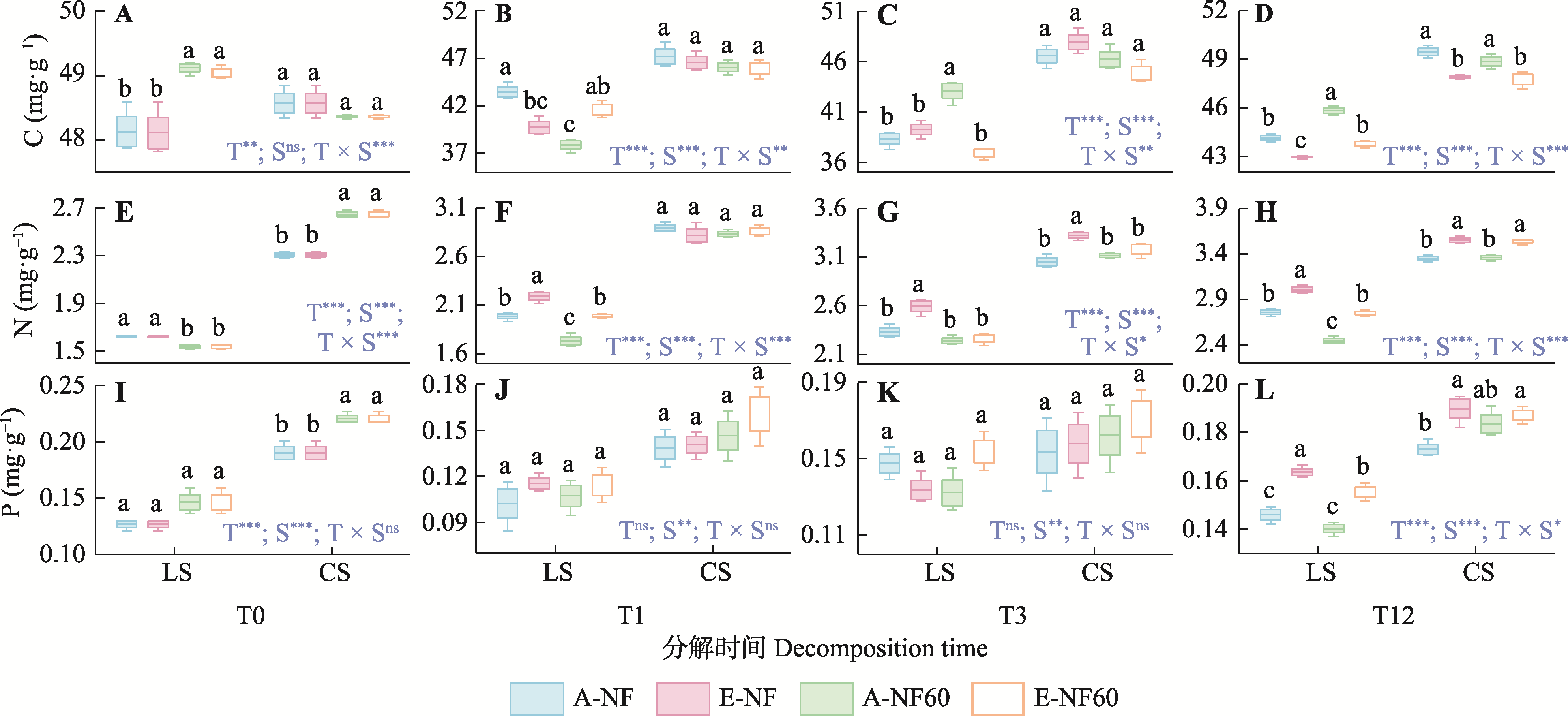
Fig. 2 Changes in carbon (C) (A-D), nitrogen (N) (E-H), and phosphorus (P) (I-L) contents in leaf litter across different decomposition stages (mean ± SE, n = 3). T0, T1, T3 and T12 denote decomposition times of 0, 1, 3 and 12 months, respectively. CS, Camellia sinensis; LS, Koelreuteria paniculata. Different lowercase letters indicate significant differences among treatments within the same decomposition stage (p < 0.05). A two-way ANOVA was used to examine the effects of treatment (T), species (S), and their interaction (T × S) on the chemical components: *, p < 0.05; **, p < 0.01; ***, p < 0.001; ns, no significant difference.
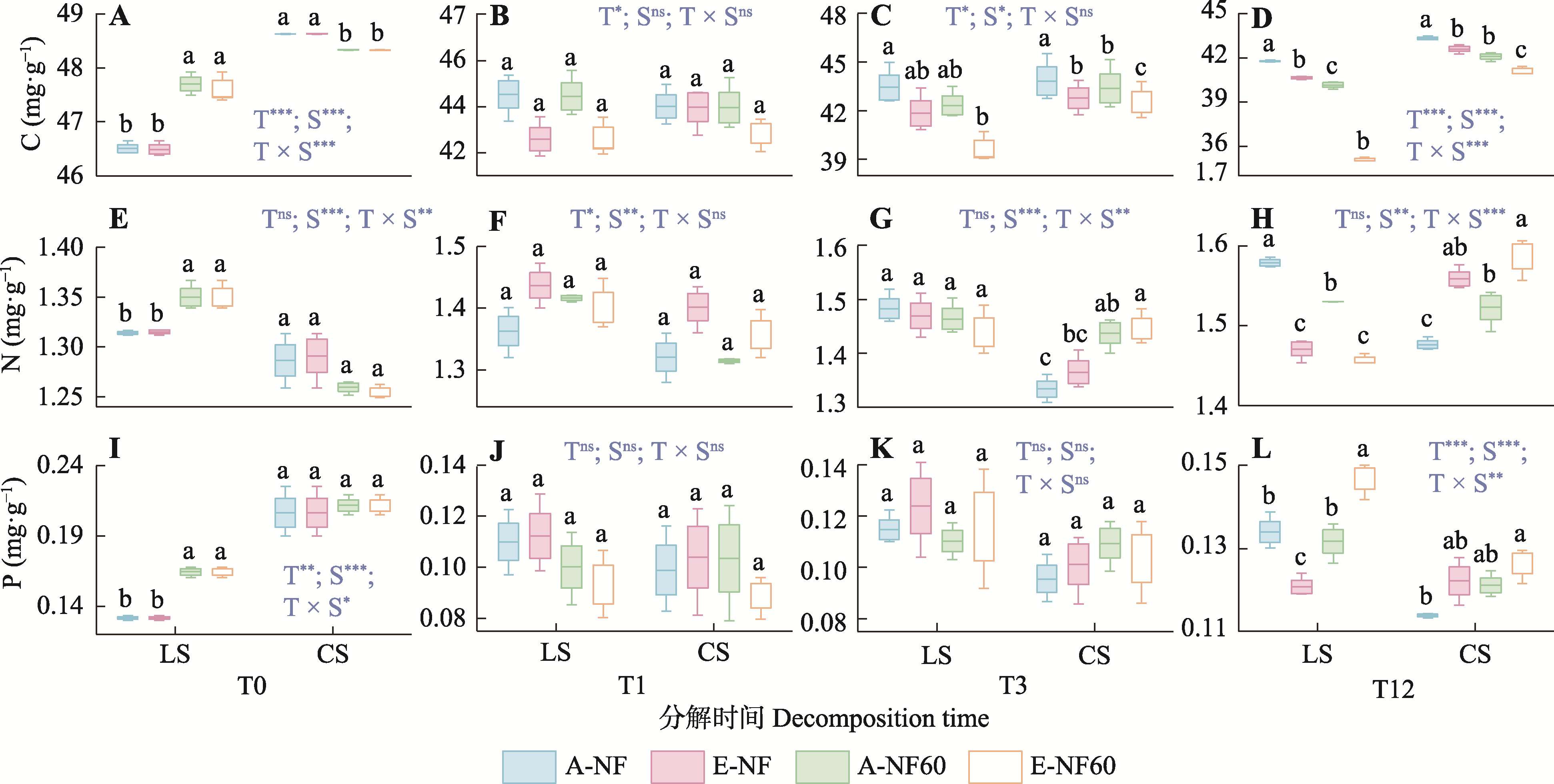
Fig. 3 Changes in carbon (C) (A-D), nitrogen (N) (E-H), and phosphorus (P) (I-L) contents in fine roots across different decomposition stages. T0, T1, T3 and T12 denote decomposition times of 0, 1, 3 and 12 months, respectively. CS, Camellia sinensis; LS, Koelreuteria paniculata. Different lowercase letters indicate significant differences among treatments within the same decomposition stage (p < 0.05). A two-way ANOVA was used to examine the effects of treatment (T), species (S), and their interaction (T × S) on the chemical components: *, p < 0.05; **, p < 0.01; ***, p < 0.001; ns, no significant difference.
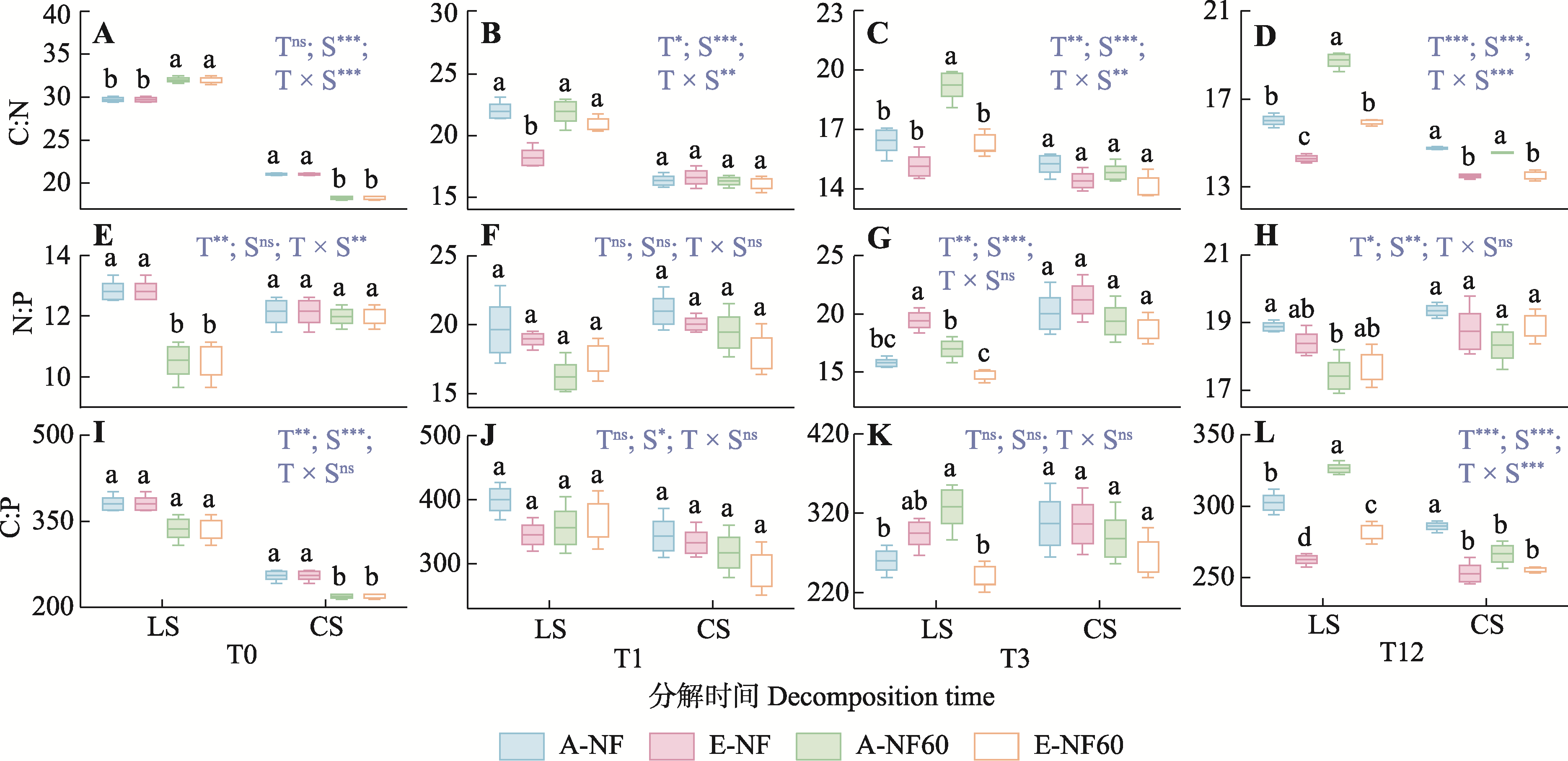
Fig. 4 Changes in stoichiometric ratios in leaf litter across different decomposition stages. T0, T1, T3 and T12 denote decomposition times of 0, 1, 3 and 12 months, respectively. C, carbon; N, nitrogen; P, phosphorus. CS, Camellia sinensis; LS, Koelreuteria paniculata. Different lowercase letters indicate significant differences among treatments within the same decomposition stage (p < 0.05). A two-way ANOVA was used to examine the effects of treatment (T), species (S), and their interaction (T × S) on the chemical components: *, p < 0.05; **, p < 0.01; ***, p < 0.001; ns, no significant difference.
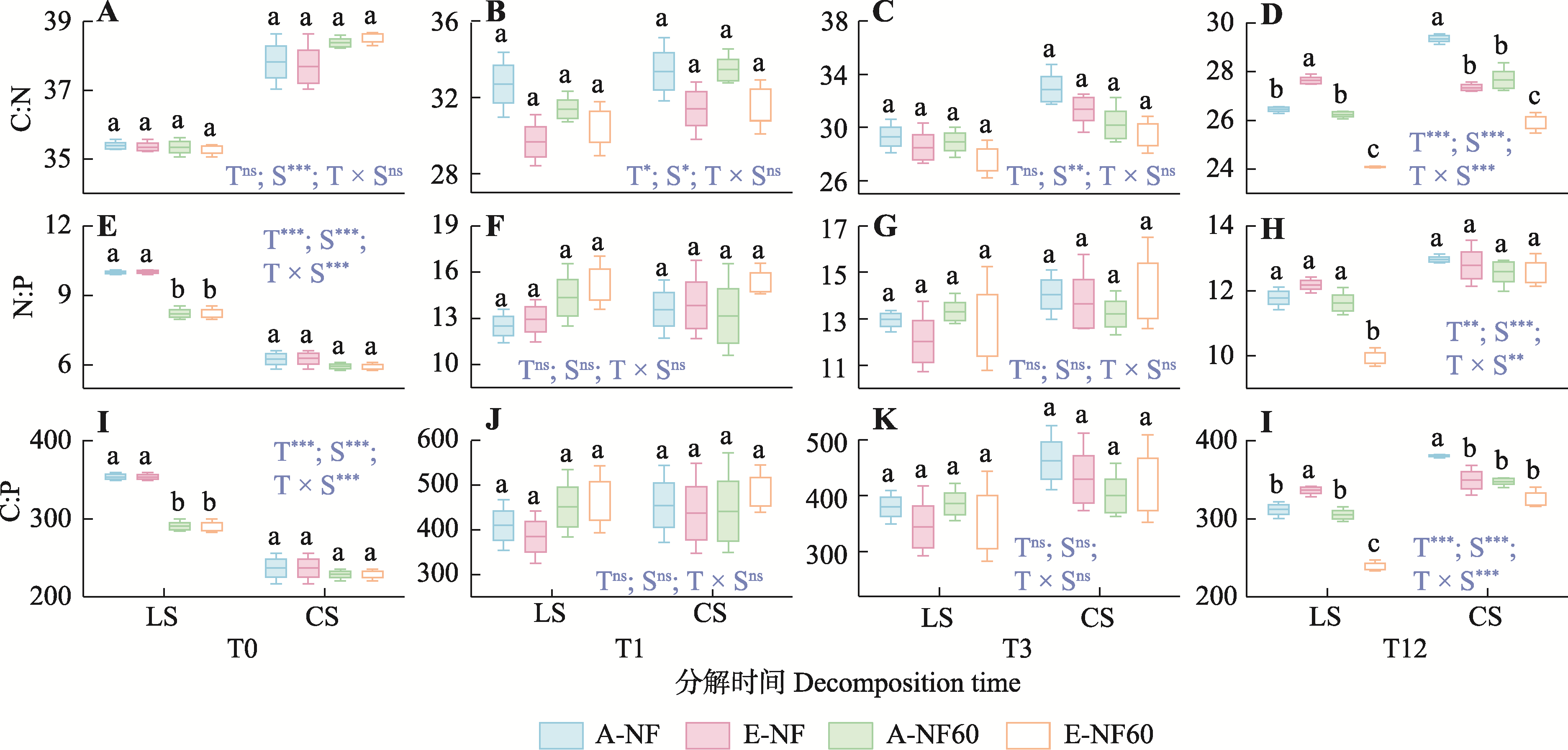
Fig. 5 Changes in stoichiometric ratios in fine roots across different decomposition stages. T0, T1, T3 and T12 denote decomposition times of 0, 1, 3 and 12 months, respectively. C, carbon; N, nitrogen; P, phosphorus. CS, Camellia sinensis; LS, Koelreuteria paniculata. Different lowercase letters indicate significant differences among treatments within the same decomposition stage (p < 0.05). A two-way ANOVA was used to examine the effects of treatment (T), species (S), and their interaction (T × S) on the chemical components: *, p < 0.05; **, p < 0.01; ***, p < 0.001; ns, no significant difference.
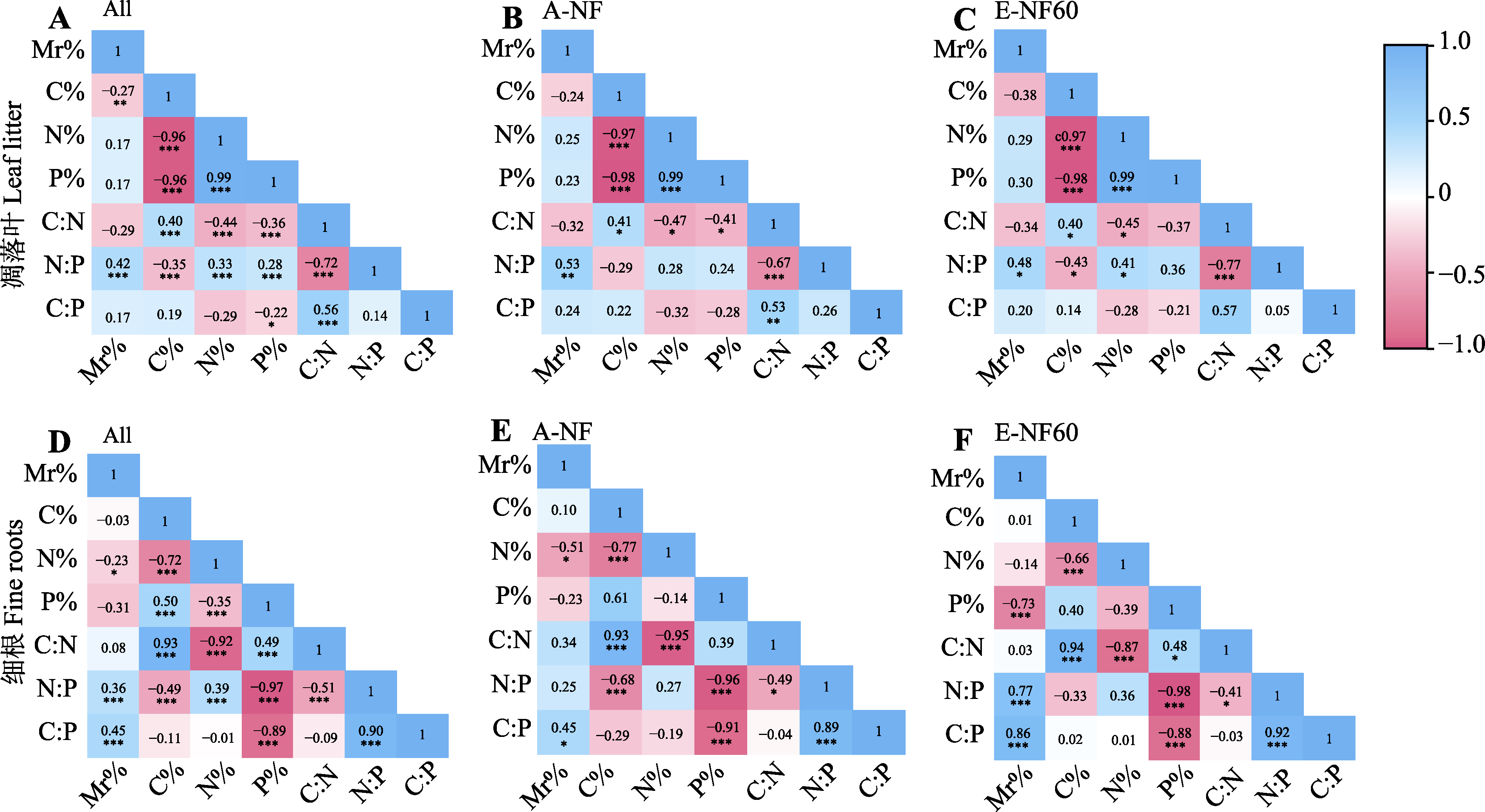
Fig. 6 Correlations among the mass remaining of leaf litter (A-C) and fine roots (D-F) and their stoichiometric characteristics of C, N, and P. A, natural decomposition environment; E, elevated O3 decomposition environment; NF, decomposition substrate under ambient air; NF60, decomposition substrate pretreated with 60 nmol·mol-1 O3. *, p < 0.05; **, p < 0.01; ***, p < 0.001.
| [1] | Agathokleous E, Feng ZZ, Oksanen E, Sicard P, Wang Q, Saitanis CJ, Araminiene V, Blande JD, Hayes F, Calatayud V, Domingos M, Veresoglou SD, Peñuelas J, Wardle DA, de Marco A, et al. (2020). Ozone affects plant, insect, and soil microbial communities: a threat to terrestrial ecosystems and biodiversity. Science Advances, 6, eabc1176. DOI: 10.1126/sciadv.abc1176. |
| [2] | Auwal M, Sun H, Adamu UK, Meng J, van Zwieten L, Pal Singh B, Luo Y, Xu J (2023). The phosphorus limitation in the post-fire forest soils increases soil CO2 emission via declining cellular carbon use efficiency and increasing extracellular phosphatase. Catena, 224, 106968. DOI: 10.1016/j.catena.2023.106968. |
| [3] | Berg B, McClaugherty C (2014). Plant Litter: Decomposition, Humus Formation, Carbon Sequestration. 3rd ed. Springer, Berlin. |
| [4] | Brewster C, Fenner N, Hayes F (2024). Chronic ozone exposure affects nitrogen remobilization in wheat at key growth stages. Science of the Total Environment, 908, 168288. DOI: 10.1016/j.scitotenv.2023.168288. |
| [5] |
Carrillo Y, Bell C, Koyama A, Canarini A, Boot CM, Wallenstein M, Pendall E (2017). Plant traits, stoichiometry and microbes as drivers of decomposition in the rhizosphere in a temperate grassland. Journal of Ecology, 105, 1750-1765.
DOI URL |
| [6] | Chen J, Xu H, Seven J, Zilla T, Dippold MA, Kuzyakov Y (2023). Microbial phosphorus recycling in soil by intra- and extracellular mechanisms. ISME Communications, 3, 135. DOI: 10.1038/s43705-024-00320-4. |
| [7] |
Cotrufo MF, Soong JL, Horton AJ, Campbell EE, Haddix ML, Wall DH, Parton WJ (2015). Formation of soil organic matter via biochemical and physical pathways of litter mass loss. Nature Geoscience, 8, 776-779.
DOI |
| [8] | Elias DMO, Robinson S, Both S, Goodall T, Majalap-Lee N, Ostle NJ, McNamara NP (2020). Soil microbial community and litter quality controls on decomposition across a tropical forest disturbance gradient. Frontiers in Forests and Global Change, 3, 81. DOI: 10.3389/ffgc.2020.00081. |
| [9] |
Elser JJ, Acharya K, Kyle M, Cotner J, Makino W, Markow T, Watts T, Hobbie S, Fagan W, Schade J, Hood J, Sterner RW (2003). Growth rate-stoichiometry couplings in diverse biota. Ecology Letters, 6, 936-943.
DOI URL |
| [10] |
Fioretto A, Papa S, Curcio E, Sorrentino G, Fuggi A (2000). Enzyme dynamics on decomposing leaf litter of Cistus incanus and Myrtus communis in a Mediterranean ecosystem. Soil Biology & Biochemistry, 32, 1847-1855.
DOI URL |
| [11] |
Freschet GT, Cornwell WK, Wardle DA, Elumeeva TG, Liu WD, Jackson BG, Onipchenko VG, Soudzilovskaia NA, Tao JP, Cornelissen JHC (2013). Linking litter decomposition of above- and below-ground organs to plant-soil feedbacks worldwide. Journal of Ecology, 101, 943-952.
DOI URL |
| [12] |
Güsewell S (2004). N:P ratios in terrestrial plants: variation and functional significance. New Phytologist, 164, 243-266.
DOI PMID |
| [13] |
Güsewell S, Verhoeven JTA (2006). Litter N:P ratios indicate whether N or P limits the decomposability of graminoid leaf litter. Plant and Soil, 287, 131-143.
DOI URL |
| [14] |
He PC, Lian JY, Ye Q, Liu H, Zheng Y, Yu KL, Zhu SD, Li RH, Yin DY, Ye WH, Wright IJ (2022). How do functional traits influence tree demographic properties in a subtropical monsoon forest. Functional Ecology, 36, 3200-3210.
DOI URL |
| [15] | Hobbie SE (2015). Plant species effects on nutrient cycling: revisiting litter feedbacks. Trends in Ecology & Evolution 30, 357-363. |
| [16] | Hou XF, Li P, Wu XJ, Xu S, Sun Q (2024). Differences in nutrient release and decay rate of poplar leaf litter and fine roots and their relationship with substrate quality and decomposition environment under ozone pollution. Environmental and Experimental Botany, 226, 105898. DOI: 10.1016/j.envexpbot.2024.105898. |
| [17] | Hou XF, Wu XJ, Ma CH, Tian D, Yan ZB, Li P (2022). Effect of the elevated ozone on greening tree species of urban: Alterations in C-N-P stoichiometry and nutrient stock allocation to leaves and fine roots. Urban Forestry & Urban Greening, 76, 127735. DOI: 10.1016/j.ufug.2022.127735. |
| [18] |
Kasurinen A, Silfver T, Rousi M, Mikola J (2017). Warming and ozone exposure effects on silver birch (Betula pendula Roth) leaf litter quality, microbial growth and decomposition. Plant and Soil, 414, 127-142.
DOI URL |
| [19] |
Koerselman W, Meuleman AFM (1996). The vegetation N/P ratio: a new tool to detect the nature of nutrient limitation. Journal of Applied Ecology, 33, 1441-1450.
DOI URL |
| [20] |
Kontunen-Soppela S, Ossipov V, Ossipova S, Oksanen E (2007). Shift in birch leaf metabolome and carbon allocation during long-term open-field ozone exposure. Global Change Biology, 13, 1053-1067.
DOI URL |
| [21] |
Kraus TEC, Dahlgren RA, Zasoski RJ (2003). Tannins in nutrient dynamics of forest ecosystems—A review. Plant and Soil, 256, 41-66.
DOI |
| [22] |
Li P, Calatayud V, Gao F, Uddling J, Feng ZZ (2016). Differences in ozone sensitivity among woody species are related to leaf morphology and antioxidant levels. Tree Physiology, 36, 1105-1116.
DOI PMID |
| [23] |
Li P, Yang YH, Han WX, Fang JY (2014). Global patterns of soil microbial nitrogen and phosphorus stoichiometry in forest ecosystems. Global Ecology and Biogeography, 23, 979-987.
DOI URL |
| [24] | Li P, Yin RB, Shang B, Agathokleous E, Zhou HM, Feng ZZ (2020). Interactive effects of ozone exposure and nitrogen addition on tree root traits and biomass allocation pattern: an experimental case study and a literature meta-analysis. Science of the Total Environment, 710, 136379. DOI: 10.1016/j.scitotenv.2019.136379. |
| [25] |
Li P, Yin RB, Zhou HM, Xu S, Feng ZZ (2022). Functional traits of poplar leaves and fine roots responses to ozone pollution under soil nitrogen addition. Journal of Environmental Sciences, 113, 118-131.
DOI PMID |
| [26] |
Livesley SJ, McPherson EG, Calfapietra C (2016). The urban forest and ecosystem services: impacts on urban water, heat, and pollution cycles at the tree, street, and city scale. Journal of Environmental Quality, 45, 119-124.
DOI PMID |
| [27] |
Manzoni S, Trofymow JA, Jackson RB, Porporato A (2010). Stoichiometric controls on carbon, nitrogen, and phosphorus dynamics in decomposing litter. Ecological Monographs, 80, 89-106.
DOI URL |
| [28] | Mooshammer M, Wanek W, Hämmerle I, Fuchslueger L, Hofhansl F, Knoltsch A, Schnecker J, Takriti M, Watzka M, Wild B, Keiblinger KM, Zechmeister-Boltenstern S, Richter A (2014). Adjustment of microbial nitrogen use efficiency to carbon:nitrogen imbalances regulates soil nitrogen cycling. Nature Communications, 5, 3694. DOI: 10.1038/ncomms4694. |
| [29] | Qiu YP, Guo LJ, Xu XY, Zhang L, Zhang KC, Chen MF, Zhao YX, Burkey KO, Shew HD, Zobel RW, Zhang Y, Hu SJ (2021). Warming and elevated ozone induce tradeoffs between fine roots and mycorrhizal fungi and stimulate organic carbon decomposition. Science Advances, 7, eabe9256. DOI: 10.1126/sciadv.abe9256. |
| [30] | Shang B, Li ZZ, Yuan XY, Xu YS, Feng ZZ (2022). Effects of elevated ozone on the uptake and allocation of macronutrients in poplar saplings above- and belowground. Science of the Total Environment, 851, 158044. DOI: 10.1016/j.scitotenv.2022.158044. |
| [31] |
Sinsabaugh RL, Hill BH, Follstad Shah JJ (2009). Ecoenzymatic stoichiometry of microbial organic nutrient acquisition in soil and sediment. Nature, 462, 795-798.
DOI |
| [32] | Sterner RW, Elser JJ (2002). Ecological Stoichiometry: the Biology of Elements from Molecules to the Biosphere. Princeton University Press, Princeton. |
| [33] | Wang DN, Freschet GT, McCormack ML, Lambers H, Gu JC (2025). Nutrient resorption of leaves and roots coordinates with root nutrient-acquisition strategies in a temperate forest. New Phytologist, 246, 515-527. |
| [34] | Wang N, Wang YX, Zhang XY, Wu YQ, Zhang L, Liu GH, Fu JY, Li X, Mu D, Li ZZ (2024). Elevated ozone reduces the quality of tea leaves but may improve the resistance of tea plants. Plants, 13, 1108. DOI: 10.3390/plants13081108. |
| [35] |
Wang T, Xue LK, Brimblecombe P, Lam YF, Li L, Zhang L (2017). Ozone pollution in China: a review of concentrations, meteorological influences, chemical precursors, and effects. Science of the Total Environment, 575, 1582-1596.
DOI URL |
| [36] | Wu JJ, Zhang H, Cheng XL, Liu GH (2023). Nitrogen addition stimulates litter decomposition rate: from the perspective of the combined effect of soil environment and litter quality. Soil Biology & Biochemistry, 179, 108992. DOI: 10.1016/j.soilbio.2023.108992. |
| [37] | Yang JJ, Guan PT, Zhang P, Wu YG, Wang DL, Wu DH (2023). Stronger microbial nutrient limitations in subsoil along the precipitation gradient of agroecosystem: insights from soil enzyme activity and stoichiometry. Frontiers in Ecology and Evolution, 11, 1137172. DOI: 10.3389/fevo.2023.1137172. |
| [38] |
Yendrek CR, Erice G, Montes CM, Tomaz T, Sorgini CA, Brown PJ, McIntyre LM, Leakey ADB, Ainsworth EA (2017). Elevated ozone reduces photosynthetic carbon gain by accelerating leaf senescence of inbred and hybrid maize in a genotype-specific manner. Plant, Cell & Environment, 40, 3088-3100.
DOI URL |
| [1] | Cao Yi-fei, Su Tao, Cao Min, Wang Hai-yan, Yang Jie. Drivers of Cenozoic Angiosperm Leaf Vein Density Evolution: Climate Adaptation and Herbivory Pressure [J]. , 2027, 51(动植物互作): 0-. |
| [2] | Zhao Zhi-Yi, HUANG Wei-Quan, HU Jing-Yan, WANG Yi-yue, Yu Mengjie, Yuhuan Wu. Advances of plant litter decomposition and its microbial mechanisms in peatland [J]. , 2026, 50(预发表): 0-. |
| [3] | Rao Chaokang, Tang Liang. Characteristics and Drivers of Mangrove Phyllosphere Microbial Communities across Different Tidal Elevations [J]. Chin J Plant Ecol, 2026, 50(预发表): 1-. |
| [4] | WANG Meng-Xue, HU Ming-Yan, CHU Cheng-Jin, CHEN Yang, LUO Wen-Qi, MA Zi-Long. C, N, P stoichiometric characteristics of leaves and fine roots in different mycorrhizal tree species in subtropical forests [J]. Chin J Plant Ecol, 2026, 50(2): 334-343. |
| [5] | ZHANG Jing, CHEN Jie, LI Yan-Peng, PAN Li-Jun, XU Han, LI Yi-De, HE Hai-Sheng. Comparison of plant biomass in conifer and broadleaf mixed artificial forests in south subtropical area and analyses of influential factors [J]. Chin J Plant Ecol, 2026, 50(2): 400-416. |
| [6] | ZHANG Jing-Wen, LI Jing, WANG Ru-Miao, WANG He-Nian, CUI Li-Juan. Ecological stoichiometry characteristics and homeostasis analysis of plant roots and soil in coastal wetlands at different latitudes [J]. Chin J Plant Ecol, 2026, 50(2): 461-473. |
| [7] | YU Jiang-Shan, XU Hao, GUO Yong-Zhong, HOU Ji-Hua. Important role of organ age in variation and coordination of stoichiometry in Pinus tabuliformis leaves, twigs and roots [J]. Chin J Plant Ecol, 2026, 50(2): 306-317. |
| [8] | FENG Zhe, XU Ge-Xi, LIU Shun, CHEN Jian, LI Fei-Fan, GONG Shan-Shan, JIA Lei, SUN Zhen, YU Mei-Ni, SHI Zuo-Min, ZHOU Qing-Hong, JIANG Dong-Mei. Habitat factors and phylogeny jointly drive leaf stoichiometry in dry-hot valley region of Jinsha River, Yunnan, China [J]. Chin J Plant Ecol, 2026, 50(2): 352-361. |
| [9] | LI Qin, HE Peng-Cheng, YE Qing. Variation in flower and leaf functional traits of 24 species in South China National Botanical Garden [J]. Chin J Plant Ecol, 2026, 50(2): 474-488. |
| [10] | TIAN Di, CHI Xiao-Long, SHI Liang, LIU Xiao-Han, ZHAO Chang-Ti, WU Mei, ZHANG Yu-Zhong, GAO Yong-Liang. Stoichiometric characteristics of dominant afforestation tree species and their environmental drivers in Saihanba region [J]. Chin J Plant Ecol, 2026, 50(2): 362-373. |
| [11] | TAN Cong, SHI Liang, ZHAO Chang-Ti, GAN Pei-Qin, CHEN Bing-Rui, TAN Shen, BU Yan-Hua, TIAN Di. Analysis of ecological optimization strategies for Beijing plain forests based on multidimensional characteristics of leaf functional traits [J]. Chin J Plant Ecol, 2026, 50(2): 388-399. |
| [12] | YE Xue-Min, GAO Wei, TANG Xing-Lin, CHEN Fu-Sheng, SUN Rong-Xi, LUO Kun-Shui. Effects of nitrogen and phosphorus additions on leaf herbivory damage and its underlying mechanisms in saplings in an evergreen broad-leaved forest [J]. Chin J Plant Ecol, 2026, 50(2): 256-267. |
| [13] | ZHAO Kun, WANG Yun-Qi, LIANG Jun, ZHOU Xiao-Zhou, FENG Yin-Cheng, QI Zi-Han, LI Jun-Jie, CUI Xin-Rui, LIU Xuan-Wo, MAO Wei. Characteristics and influencing factors of energy fluxes in the coniferous and broadleaf forests in Jinyun Mountains at different temporal scales [J]. Chin J Plant Ecol, 2026, 50(1): 70-81. |
| [14] | PI Hui-Zhi, ZHANG Qiu-Fang, SUN Hao, ZENG Quan-Xin, PENG Yuan-Zhen, YUAN Xiao-Chun, XU Jian-Guo, CHEN Yue-Min. Microbial carbon-nitrogen imbalance affects the response of microbial nitrogen use efficiency to nitrogen enrichment in Castanopsis faberi forest soils [J]. Chin J Plant Ecol, 2026, 50(1): 34-44. |
| [15] | LIANG Tian-Hao, WU Fan, HUANG Jin-Xue, JING Chen-Hong, FU He-Jing, YANG Zhi-Jie, XIONG De-Cheng. Effects of soil warming on fine root growth and morphology of Castanopsis kawakamii in mid-subtropical forests [J]. Chin J Plant Ecol, 2026, 50(1): 94-106. |
| Viewed | ||||||
|
Full text |
|
|||||
|
Abstract |
|
|||||
Copyright © 2026 Chinese Journal of Plant Ecology
Tel: 010-62836134, 62836138, E-mail: apes@ibcas.ac.cn, cjpe@ibcas.ac.cn

