
Chinese Journal of Plant Ecology >
Characteristics of soil carbon and nitrogen contents and enzyme activities in sub-alpine secondary forests with different successional stages in Western Sichuan, China
Received date: 2020-06-19
Revised date: 2020-08-06
Online published: 2020-09-03
Supported by
Supported by Forest and Wetland Ecological Restoration and Conservation of Open Project from Key Laboratory of Sichuan Province(2019KFKT03);the National Key R&D Program of China(2017YFC0505004);the Environmental Governance and Ecological Protection Major Project of Sichuan Province(2018SZDZX0031)
Aims Regeneration of sub-alpine forests have an capacity to sequester carbon and nitrogen. Our objectives were to quantify variations of soil organic carbon and nitrogen content and enzyme activities at different successional stages of natural secondary forests, and to better understand the underlying mechanisms of carbon and nitrogen sequestration in these sub-alpine forests.
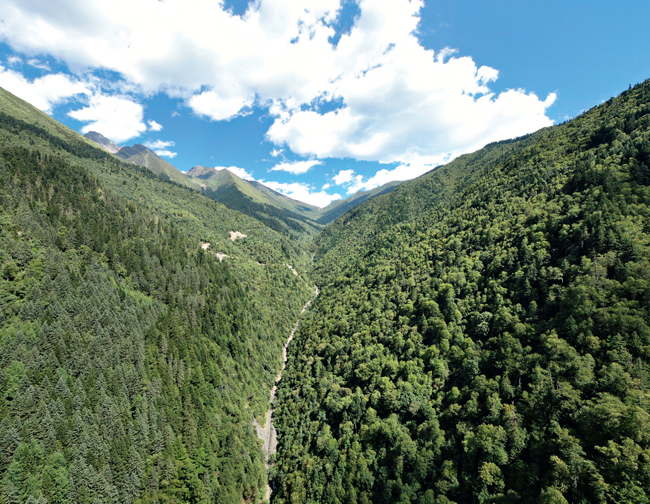
Methods We used the space-for-time substitution method and selected four sub-alpine forests in Miyaluo forest of Western Sichuan, China. The secondary forests were at different successional stages with natural regeneration on cutting-blanks in 1960s (60-NSF), 1970s (70-NSF) and 1980s (80-NSF), and the Abies faxoniana primary forest was used as control (CK). The soil samples were taken from 0 to 20 cm depths in each forest in late July, 2019, and were transferred to the laboratory. Soil organic carbon (SOC), soil total nitrogen (TN), dissolved organic carbon (DOC) and nitrogen (DON), light fraction organic carbon (LFOC) content and soil enzyme activities were measured. The activities of five soil extracellular enzymes related to soil carbon and nitrogen cycling were determined to explain their relationships with soil physico-chemical properties.
Important findings The contents of topsoil SOC, DOC, LFOC decreased with succession stage, whereas TN and DON were all in the order of 60-NSF < 80-NSF < 70-NSF, although 80-NSF and 70-NSF exhibited no significant difference. The topsoil organic carbon and nitrogen and their active fractions contents in natural secondary forests were lower than those in the primary forest, while no significant difference in DOC and DON contents was observed between 80-NSF and CK. The activities of soil β-4-glucosidase (βG), β-4-N-acetylglucosa- minidase (NAG) and polyphenol oxidase (PHO) in CK were significantly higher than those in natural secondary forests, whereas soil cellulose hydrolysis (CBH) and phenol oxidase (PEO) activities had no significant difference between secondary forests and CK. Activities of βG and CBH in 60-NSF were significantly lower than those in 70-NSF and 80-NSF, but activities of NAG in 80-NSF were significantly higher than those in 60-NSFand 70-NSF. There was no significant difference in PEO activities among different types of forest. Both Pearson correlation analysis and redundancy analysis showed that soil enzyme activities were significantly correlated with soil TN, LFOC and DOC contents. TN content explained 65.4% of the variations in enzyme activity, which implied that change in soil nitrogen content might affect C-related hydrolytic enzyme activities (e.g. βG, CBH and NAG). Meanwhile soil microorganisms prefer to use readily decomposable carbon and nitrogen. Therefore, activities of some soil enzymes such as βG, CBH and NAG in natural secondary forests decreased due to the declines in soil TN, LFOC and DOC contents. We conclude that soil enzyme activities could be more favorable to C and N cycling in the Abies faxoniana primary forest than in the secondary forest at the early-successional stages (<60 a) in high-altitude sub-alpine forest ecosystems in Western Sichuan, China.
HU Zong-Da, LIU Shi-Rong, LUO Ming-Xia, HU Jing, LIU Xing-Liang, LI Ya-Fei, YU Hao, OU Ding-Hua . Characteristics of soil carbon and nitrogen contents and enzyme activities in sub-alpine secondary forests with different successional stages in Western Sichuan, China[J]. Chinese Journal of Plant Ecology, 2020 , 44(9) : 973 -985 . DOI: 10.17521/cjpe.2020.0203
| [1] | Adamczyk B, Adamczyk S, Kukkola M, Tamminen P, Smolander A ( 2015). Logging residue harvest may decrease enzymatic activity of boreal forest soils. Soil Biology & Biochemistry, 82, 74-80. |
| [2] | Adamczyk B, Sieti? O-M, Straková P, Prommer J, Wild B, Hagner M, Pihlatie M, Fritze H, Richter A, Heinonsalo J ( 2019). Plant roots increase both decomposition and stable organic matter formation in boreal forest soil. Nature Communications, 10, 3982. DOI: 10.1038/s41467-019- 11993-1. |
| [3] | Bao Y, Gao Y, Zeng XM, Yuan P, Si YT, Chen YM, Chen YY ( 2018). Relationships between carbon and nitrogen contents and enzyme activities in soil of three typical subtropical forests in China. Chinese Journal of Plant Ecology, 42, 508-516. |
| [3] | [ 鲍勇, 高颖, 曾晓敏, 袁萍, 司友涛, 陈岳民, 陈滢伊 ( 2018). 中亚热带3种典型森林土壤碳氮含量和酶活性的关系. 植物生态学报, 42, 508-516.] |
| [4] | Burns RG, DeForest JL, Marxsen J, Sinsabaugh RL, Stromberger ME, Wallenstein MD, Weintraub MN, Zoppini A ( 2013). Soil enzymes in a changing environment: current knowledge and future directions. Soil Biology & Biochemistry, 58, 216-234. |
| [5] | Chandra LR, Gupta S, Pande V, Singh N ( 2016). Impact of forest vegetation on soil characteristics: a correlation between soil biological and physico-chemical properties. 3 Biotech, 6, 188. DOI: 10.1007/s13205-016-0510-y. |
| [6] | Chen J, Luo Y, Li J, Zhou X, Cao J, Wang R-W, Wang Y, Shelton S, Jin Z, Walker LM, Feng Z, Niu S, Feng W, Jian S, Zhou L ( 2017). Costimulation of soil glycosidase activity and soil respiration by nitrogen addition. Global Change Biology, 23, 1328-1337. |
| [7] | Chen QM, Wang ZX, Liu Y, Zheng HF, Li HJ, Wang LF, Chen YM, Chen X, Tang SY ( 2019). Response of soil enzyme activity and stoichiometric ratio to simulated nitrogen deposition in subalpine coniferous forests of western Sichuan. Chinese Journal of Applied & Environmental Biology, 25, 791-800. |
| [7] | [ 陈倩妹, 王泽西, 刘洋, 郑海峰, 李洪杰, 王利峰, 陈亚梅, 谌贤, 唐实玉 ( 2019). 川西亚高山针叶林土壤酶及其化学计量比对模拟氮沉降的响应. 应用与环境生物学报, 25, 791-800.] |
| [8] | C?té L, Brown S, Paré D, Fyles J, Bauhus J ( 2000). Dynamics of carbon and nitrogen mineralization in relation to stand type, stand age and soil texture in the boreal mixedwood. Soil Biology & Biochemistry, 32, 1079-1090. |
| [9] | Das C, Mondal NK ( 2019). Temporal and vertical variation of selected extracellular enzyme activities on tree litter degradation of a subtropical forest. Agricultural Research, 8, 84-91. |
| [10] | DeForest JL ( 2009). The influence of time, storage temperature, and substrate age on potential soil enzyme activity in acidic forest soils using MUB-linked substrates and l-DOPA. Soil Biology & Biochemistry, 41, 1180-1186. |
| [11] | del Valle I, Webster TM, Cheng HY, Thies JE, Kessler A, Miller MK, Ball ZT, MacKenzie KR, Masiello CA, Silberg JJ, Lehmann J ( 2020). Soil organic matter attenuates the efficacy of flavonoid-based plant-microbe communication. Science Advances, 6, eaax8254. DOI: 10.1126/ sciadv.aax8254. |
| [12] | Deng L, Wang KB, Chen ML, Shangguan ZP, Sweeney S ( 2013). Soil organic carbon storage capacity positively related to forest succession on the Loess Plateau, China. Catena, 110, 1-7. |
| [13] | Dhillon GS, van Rees KCJ ( 2017). Distribution of soil organic carbon in the light and heavy fractions for six shelterbelt species and their adjacent agricultural fields in Saskatchewan. Canadian Journal of Soil Science, 97, 732-744. |
| [14] | Dove NC, Stark JM, Newman GS, Hart SC ( 2019). Carbon control on terrestrial ecosystem function across contrasting site productivities: the carbon connection revisited. Ecology, 100, e02695. DOI: 10.1002/ecy.2695. |
| [15] | Fan YX, Yang YS, Yang ZJ, Xie JS, Chen GS, Zhong XJ, Guo JF ( 2013). Seasonal dynamics and content of soil labile organic carbon of mid-subtropical evergreen broadleaved forest during natural succession. Acta Ecologica Sinica, 33, 5751-5759. |
| [15] | [ 范跃新, 杨玉盛, 杨智杰, 谢锦升, 陈光水, 钟小剑, 郭剑芬 ( 2013). 中亚热带常绿阔叶林不同演替阶段土壤活性有机碳含量及季节动态. 生态学报, 33, 5751-5759.] |
| [16] | Feng C, Ma YH, Jin X, Wang Z, Ma Y, Fu SL, Chen HYH ( 2019). Soil enzyme activities increase following restoration of degraded subtropical forests. Geoderma, 351, 180-187. |
| [17] | Fujii K, Uemura M, Hayakawa C, Funakawa S, Kosaki T ( 2013). Environmental control of lignin peroxidase, manganese peroxidase, and laccase activities in forest floor layers in humid Asia. Soil Biology & Biochemistry, 57, 109-115. |
| [18] | Gong L, Liu GH, Li ZS, Ye X, Wang H ( 2017). Altitudinal changes in nitrogen, organic carbon, and its labile fractions in different soil layers in an Abies faxoniana forest in Wolong. Acta Ecologica Sinica, 37, 4696-4705. |
| [18] | [ 宫立, 刘国华, 李宗善, 叶鑫, 王浩 ( 2017). 川西卧龙岷江冷杉林土壤有机碳组分与氮素关系随海拔梯度的变化特征. 生态学报, 37, 4696-4705.] |
| [19] | Gu X, Zhang SJ, Liu ZD, Li LD, Chen JL, Wang LF, Fang X ( 2018). Effects of vegetation restoration on soil organic carbon concentration and density in the mid-subtropical region of China. Chinese Journal of Plant Ecology, 42, 595-608. |
| [19] | [ 辜翔, 张仕吉, 刘兆丹, 李雷达, 陈金磊, 王留芳, 方晰 ( 2018). 中亚热带植被恢复对土壤有机碳含量、碳密度的影响. 植物生态学报, 42, 595-608.] |
| [20] | Gu X, Zhang SJ, Xiang WH, Li LD, Liu ZD, Sun WJ, Fang X ( 2016). Seasonal dynamics of active soil organic carbon in four subtropical forests in Southern China. Chinese Journal of Plant Ecology, 40, 1064-1076. |
| [20] | [ 辜翔, 张仕吉, 项文化, 李雷达, 刘兆丹, 孙伟军, 方晰 ( 2016). 中亚热带4种森林类型土壤活性有机碳的季节动态特征. 植物生态学报, 40, 1064-1076.] |
| [21] | Hagedorn F, Gavazov K, Alexander JM ( 2019). Above- and belowground linkages shape responses of mountain vegetation to climate change. Science, 365, 1119-1123. |
| [22] | Hu S, Zhang Y, Shi RJ, Han SQ, Li H, Xu H ( 2013). Temporal variations of soil microbial biomass and enzyme activities during the secondary succession of primary broadleaved- Pinus koraiensis forests in Changbai Mountains of Northeast. Chinese Journal of Applied Ecology, 24, 366-372. |
| [22] | [ 胡嵩, 张颖, 史荣久, 韩斯琴, 李慧, 徐慧 ( 2013). 长白山原始红松林次生演替过程中土壤微生物生物量和酶活性变化. 应用生态学报, 24, 366-372.] |
| [23] | Huang YM, Yang WQ, Zhang J ( 2015). Process of leaf litter mass loss and the contributions of soil organisms in Picea aspoerata plantations of western Sichuan. Resources and Environment in the Yangtze Basin, 24, 676-683. |
| [23] | [ 黄玉梅, 杨万勤, 张健 ( 2015). 川西亚高山云杉叶凋落物质量损失过程及土壤生物的作用. 长江流域资源与环境, 24, 676-683.] |
| [24] | Jiang FY, Sun H, Lin B, Liu Q ( 2009). Dynamic changes of topsoil organic carbon in subalpine spruce plantation at different succession stages in western Sichuan Province. Chinese Journal of Applied Ecology, 20, 2581-2587. |
| [24] | [ 姜发艳, 孙辉, 林波, 刘庆 ( 2009). 川西亚高山云杉人工林恢复过程中表层土壤碳动态变化. 应用生态学报, 20, 2581-2587.] |
| [25] | Kalbitz K, Solinger S, Park JH, Michalzik B, Matzner E ( 2000). Controls on the dynamics of dissolved organic matter in soils: a review. Soil Science, 165, 277-304. |
| [26] | Kang H, Kang S, Lee D ( 2009). Variations of soil enzyme activities in a temperate forest soil. Ecological Research, 24, 1137-1143. |
| [27] | Kauppi PE, Ausubel JH, Fang J, Mather AS, Sedjo RA, Waggoner PE ( 2006). Returning forests analyzed with the forest identity. Proceedings of the National Academy of Sciences of the United States of America, 103, 17574-17579. |
| [28] | Kooch Y, Sanji R, Tabari M ( 2018). Increasing tree diversity enhances microbial and enzyme activities in temperate Iranian forests. Trees, 32, 809-822. |
| [29] | Li DJ, Niu SL, Luo YQ ( 2012). Global patterns of the dynamics of soil carbon and nitrogen stocks following afforestation: a meta-analysis. New Phytologist, 195, 172-181. |
| [30] | Li JJ, Zhou XM, Yan JX, Li HJ, He JZ ( 2015). Effects of regenerating vegetation on soil enzyme activity and microbial structure in reclaimed soils on a surface coal mine site. Applied Soil Ecology, 87, 56-62. |
| [31] | Li LQ, Wang D, Liu XY, Zhang B, Liu YZ, Xie T, Du YX, Pan GX ( 2014). Soil organic carbon fractions and microbial community and functions under changes in vegetation: a case of vegetation succession in karst forest. Environmental Earth Sciences, 71, 3727-3735. |
| [32] | Li YY, Shao MA ( 2004). The change of plant diversity during natural recovery process of vegetation in Ziwuling area. Acta Ecologica Sinica, 24, 252-260. |
| [32] | [ 李裕元, 邵明安 ( 2004). 子午岭植被自然恢复过程中植物多样性的变化. 生态学报, 24, 252-260.] |
| [33] | Liu X, Lin TC, Yang Z, Vadeboncoeur MA, Lin C, Xiong D, Lin W, Chen G, Xie J, Li Y, Yang Y ( 2017). Increased litter in subtropical forests boosts soil respiration in natural forests but not plantations of Castanopsis carlesii. Plant and Soil, 418, 141-151. |
| [34] | Liu Y, Zhu G, Hai X, Li J, Shangguan Z, Peng C, Deng L ( 2020). Long-term forest succession improves plant diversity and soil quality but not significantly increase soil microbial diversity: evidence from the Loess Plateau. Ecological Engineering, 142, 105631. DOI: 10.1016/ j.ecoleng.2019.105631. |
| [35] | Lu RK ( 2002). Analysis Methods of Soil Agricultural Chemistry. Publishing House of Agricultural Technology, Beijng. |
| [35] | [ 鲁如坤 (2002). 土壤农业化学分析方法. 中国农业科技出版社, 北京.] |
| [36] | Lucas-Borja ME, Delgado-Baquerizo M ( 2019). Plant diversity and soil stoichiometry regulates the changes in multifunctionality during pine temperate forest secondary succession. Science of the Total Environment, 697, 134204. DOI: 10.1016/j.scitotenv.2019.134204. |
| [37] | Luo XZ, Hou EQ, Zhang LL, Zang XW, Yi YF, Zhang GH, Wen DZ ( 2019). Effects of forest conversion on carbon-degrading enzyme activities in subtropical China. Science of the Total Environment, 696, 133968. DOI: 10.1016/ j.scitotenv.2019.133968. |
| [38] | Lyu M, Li X, Xie J, Homyak PM, Ukonmaanaho L, Yang Z, Liu X, Ruan C, Yang Y ( 2019). Root-microbial interaction accelerates soil nitrogen depletion but not soil carbon after increasing litter inputs to a coniferous forest. Plant and Soil, 444, 153-164. |
| [39] | Ma WW, Wang LX, Li N, Zheng DH, Xie LL, Liu Q, Yin CY ( 2019). Dynamic effects of nitrogen deposition on soil enzyme activities in soils with different moisture content. Acta Ecologica Sinica, 39, 7218-7228. |
| [39] | [ 马伟伟, 王丽霞, 李娜, 郑东辉, 谢路路, 刘庆, 尹春英 ( 2019). 不同水氮水平对川西亚高山林地土壤酶活性的影响. 生态学报, 39, 7218-7228.] |
| [40] | Mayer M, Prescott CE, Abaker WEA, Augusto L, Cécillon L, Ferreira GWD, James J, Jandl R, Katzensteiner K, Laclau J-P, Laganière J, Nouvellon Y, Paré D, Stanturf JA, Vanguelova EI, Vesterdal L ( 2020). Tamm Review: Influence of forest management activities on soil organic carbon stocks: a knowledge synthesis. Forest Ecology and Management, 466, 118127. DOI: 10.1016/j.foreco.2020.118127. |
| [41] | Milcu A, Heim A, Ellis RJ, Scheu S, Manning P ( 2011). Identification of general patterns of nutrient and labile carbon control on soil carbon dynamics across a successional gradient. Ecosystems, 14, 710-719. |
| [42] | Mylliemngap W, Nath D, Barik SK ( 2016). Changes in vegetation and nitrogen mineralization during recovery of a montane subtropical broadleaved forest in North-eastern India following anthropogenic disturbance. Ecological Research, 31, 21-38. |
| [43] | Ohtsuka T, Shizu Y, Nishiwaki A, Yashiro Y, Koizumi H ( 2010). Carbon cycling and net ecosystem production at an early stage of secondary succession in an abandoned coppice forest. Journal of Plant Research, 123, 393-401. |
| [44] | Pang DB, Cui M, Liu YG, Wang GZ, Cao JH, Wang XR, Dan XQ, Zhou JX ( 2019). Responses of soil labile organic carbon fractions and stocks to different vegetation restoration strategies in degraded karst ecosystems of southwest China. Ecological Engineering, 138, 391-402. |
| [45] | Pang XY, Liu SQ, Liu Q, Wu Y, Lin B, He H, Zhang ZJ ( 2003). Influence of plant community succession on soil physical properties during subalpine coniferous plantation rehabilitation in western Sichuan. Journal of Soil and Water Conservation, 17(4), 42-45, 50. |
| [45] | [ 庞学勇, 刘世全, 刘庆, 吴彦, 林波, 何海, 张宗锦 ( 2003). 川西亚高山针叶林植物群落演替对土壤性质的影响. 水土保持学报, 17(4), 42-45, 50.] |
| [46] | Pang XY, Ning W, Qing L, Bao WK ( 2009). The relation among soil microorganism, enzyme activity and soil nutrients under subalpine coniferous forest in Western Sichuan. Acta Ecologica Sinica, 29, 286-292. |
| [47] | Post WM, Kwon KC ( 2000). Soil carbon sequestration and land-use change: processes and potential. Global Change Biology, 6, 317-327. |
| [48] | Pushkareva E, Eckhardt KU, Hotter V, Frossard A, Leinweber P, Frey B, Karsten U ( 2020). Chemical composition of soil organic matter and potential enzyme activity in the topsoil along a moisture gradient in the High Arctic (Svalbard). Geoderma, 368, 114304. DOI: 10.1016/j.geoderma. 2020. 114304. |
| [49] | Qiao N, Wang J, Xu X, Shen Y, Long X, Hu Y, Schaefer D, Li S, Wang H, Kuzyakov Y ( 2019). Priming alters soil carbon dynamics during forest succession. Biology and Fertility of Soils, 55, 339-350. |
| [50] | Saiya-Cork KR, Sinsabaugh RL, Zak DR ( 2002). The effects of long term nitrogen deposition on extracellular enzyme activity in an Acer saccharum forest soil. Soil Biology & Biochemistry, 34, 1309-1315. |
| [51] | Schedlbauer JL, Kavanagh KL ( 2008). Soil carbon dynamics in a chronosequence of secondary forests in northeastern Costa Rica. Forest Ecology and Management, 255, 1326-1335. |
| [52] | Shen X, Liu Y, Tang SY, Yang S, Chen YM, Yang L, Zheng HF, Li HJ ( 2017). Characteristics of substrate quality variation at different litter decomposition stages in subalpine forest of Western Sichuan. Acta Botanica Boreali- Occidentalia Sinica , 37, 586-594. |
| [52] | [ 谌贤, 刘洋, 唐实玉, 杨帅, 陈亚梅, 杨林, 郑海峰, 李洪杰 ( 2017). 川西亚高山森林凋落物不同分解阶段基质质量特征. 西北植物学报, 37, 586-594.] |
| [53] | Sinsabaugh RL ( 2010). Phenol oxidase, peroxidase and organic matter dynamics of soil. Soil Biology & Biochemistry, 42, 391-404. |
| [54] | Sinsabaugh RL, Belnap J, Findlay SG, Shah JJF, Hill BH, Kuehn KA, Kuske CR, Litvak ME, Martinez NG, Moorhead DL, Warnock DD ( 2014). Extracellular enzyme kinetics scale with resource availability. Biogeochemistry, 121, 287-304. |
| [55] | Smal H, Lig?za S, Pranagal J, Urban D, Pietruczyk-Pop?awska D ( 2019). Changes in the stocks of soil organic carbon, total nitrogen and phosphorus following afforestation of post-arable soils: a chronosequence study. Forest Ecology and Management, 451, 117536. DOI: 10.1016/j.foreco.2019.117536. |
| [56] | Tang J, Bolstad PV, Martin JG ( 2009). Soil carbon fluxes and stocks in a Great Lakes forest chronosequence. Global Change Biology, 15, 145-155. |
| [57] | Taylor AR, Wang JR, Chen HYH ( 2007). Carbon storage in a chronosequence of red spruce (Picea rubens) forests in central Nova Scotia, Canada. Canadian Journal of Forest Research, 37, 2260-2269. |
| [58] | Taylor BN, Chazdon RL, Menge DNL ( 2019). Successional dynamics of nitrogen fixation and forest growth in regenerating Costa Rican rainforests. Ecology, 100, e02637. DOI: 10.1002/ecy.2637. |
| [59] | Wardle DA, Bardgett RD, Klironomos JN, Set?l? H, van der Putten WH, Wall DH ( 2004). Ecological linkages between aboveground and belowground Biota. Science, 304, 1629-1633. |
| [60] | Weintraub MN, Scott-Denton LE, Schmidt SK, Monson RK ( 2007). The effects of tree rhizodeposition on soil exoenzyme activity, dissolved organic carbon, and nutrient availability in a subalpine forest ecosystem. Oecologia, 154, 327-338. |
| [61] | Xiong HZ, Wang KY, Yang WQ ( 2004). Seasonal variations of soil enzyme activities in fir and birch forests in subalpine area of Western Sichuan. Chinese Journal of Applied & Environmental Biology, 4, 416-420. |
| [61] | [ 熊浩仲, 王开运, 杨万勤 ( 2004). 川西亚高山冷杉林和白桦林土壤酶活性季节动态. 应用与环境生物学报, 10, 416-420.] |
| [62] | Xu ZW, Yu GR, Zhang XY, He NP, Wang QF, Wang SZ, Wang RL, Zhao N, Jia YL, Wang CY ( 2017). Soil enzyme activity and stoichiometry in forest ecosystems along the North-South Transect in eastern China (NSTEC). Soil Biology & Biochemistry, 104, 152-163. |
| [63] | Yang Y, Luo Y, Finzi AC ( 2011). Carbon and nitrogen dynamics during forest stand development: a global synthesis. New Phytologist, 190, 977-989. |
| [64] | Yu Y, Zou L, Sun TT, Guo J, Zhang GQ, Tang QM ( 2014). Relationship between vegetation diversity and soil functional diversity in native pine forests. Pratacultural Science, 31, 1241-1247. |
| [64] | [ 于洋, 邹莉, 孙婷婷, 郭静, 张国权, 唐庆明 ( 2014). 天然红松林植被多样性与土壤功能多样性的关系. 草业科学, 31, 1241-1247.] |
| [65] | Zhang WW, Lu ZT, Yang K, Zhu JJ ( 2017). Impacts of conversion from secondary forests to larch plantations on the structure and function of microbial communities. Applied Soil Ecology, 111, 73-83. |
| [66] | Zhang X, Han SJ, Wang SQ, Gu Y, Yue LY, Feng Y, Geng SC, Chen ZJ ( 2016). Change of soil organic carbon fractions at different successional stages of Betula platyphylla forest in Changbai Mountains. Chinese Journal of Ecology, 35, 282-289. |
| [66] | [ 张雪, 韩士杰, 王树起, 谷越, 岳琳艳, 冯月, 耿世聪, 陈志杰 ( 2016). 长白山白桦林不同演替阶段土壤有机碳组分的变化. 生态学杂志, 35, 282-289.] |
| [67] | Zhang YD, Liu YC, Gu FX, Guo MM, Miao N, Liu SR ( 2019). Litter composition and its dynamic in five main forest types in subalpine areas of west Sichuan, China. Acta Ecologica Sinica, 39, 502-508. |
| [67] | [ 张远东, 刘彦春, 顾峰雪, 郭明明, 缪宁, 刘世荣 ( 2019). 川西亚高山五种主要森林类型凋落物组成及动态. 生态学报, 39, 502-508.] |
| [68] | Zhang YG, Zhang XQ, Liu XD, Xiao Y, Qu LJ, Wu LY, Zhou JZ ( 2007). Microarray-based analysis of changes in diversity of microbial genes involved in organic carbon decomposition following land use/cover changes. FEMS Microbiology Letters, 266, 144-151. |
| [69] | Zhang Z, Wang SJ, Li JH, Cao R, Chen MK, Li SH ( 2019). Response of soil readily oxidizable carbon to community succession of Xishuangbanna tropical forests. Acta Ecologica Sinica, 39, 6257-6263. |
| [69] | [ 张哲, 王邵军, 李霁航, 曹润, 陈闽昆, 李少辉 ( 2019). 土壤易氧化有机碳对西双版纳热带森林群落演替的响应. 生态学报, 39, 6257-6263.] |
| [70] | Zhou L, Liu S, Shen H, Zhao M, Xu L, Xing A, Fang J ( 2020). Soil extracellular enzyme activity and stoichiometry in China’s forests. Functional Ecology, 34, 1461-1471. |
| [71] | Zhou YG, Hao KJ, Li XW, Fan C, Chen LL, Wang X, Wang XH ( 2014). Effect of different land use patterns on seasonal dynamic of soil microbial biomass carbon in the subalpine forest of western Sichuan, China. Journal of Natural Resources, 29, 1944-1956. |
| [71] | [ 周义贵, 郝凯婕, 李贤伟, 范川, 陈栎霖, 王谢, 王晓红 ( 2014). 川西亚高山不同土地利用类型对土壤微生物量碳动态特征的影响. 自然资源学报, 29, 1944-1956.] |
/
| 〈 |
|
〉 |
Copyright © 2026 Chinese Journal of Plant Ecology
Tel: 010-62836134, 62836138, E-mail: apes@ibcas.ac.cn, cjpe@ibcas.ac.cn

