
Chinese Journal of Plant Ecology >
Response of key parameters of leaf photosynthetic models to increased ozone concentration in four common trees
Received date: 2021-08-16
Accepted date: 2021-11-24
Online published: 2021-12-13
Supported by
National Natural Science Foundation of China(41771034);National Natural Science Foundation of China(42061160479)
Aims With fast urbanization in China, ground-level ozone (O3) has become the major atmospheric pollutant in summer. It was documented that O3 enters leaves through stomata, inhibits photosynthesis, and alters the carbon and water cycles in terrestrial ecosystems. However, few studies have investigated the key parameters of photosynthetic and stomatal conductance models in response to elevated O3 concentration.
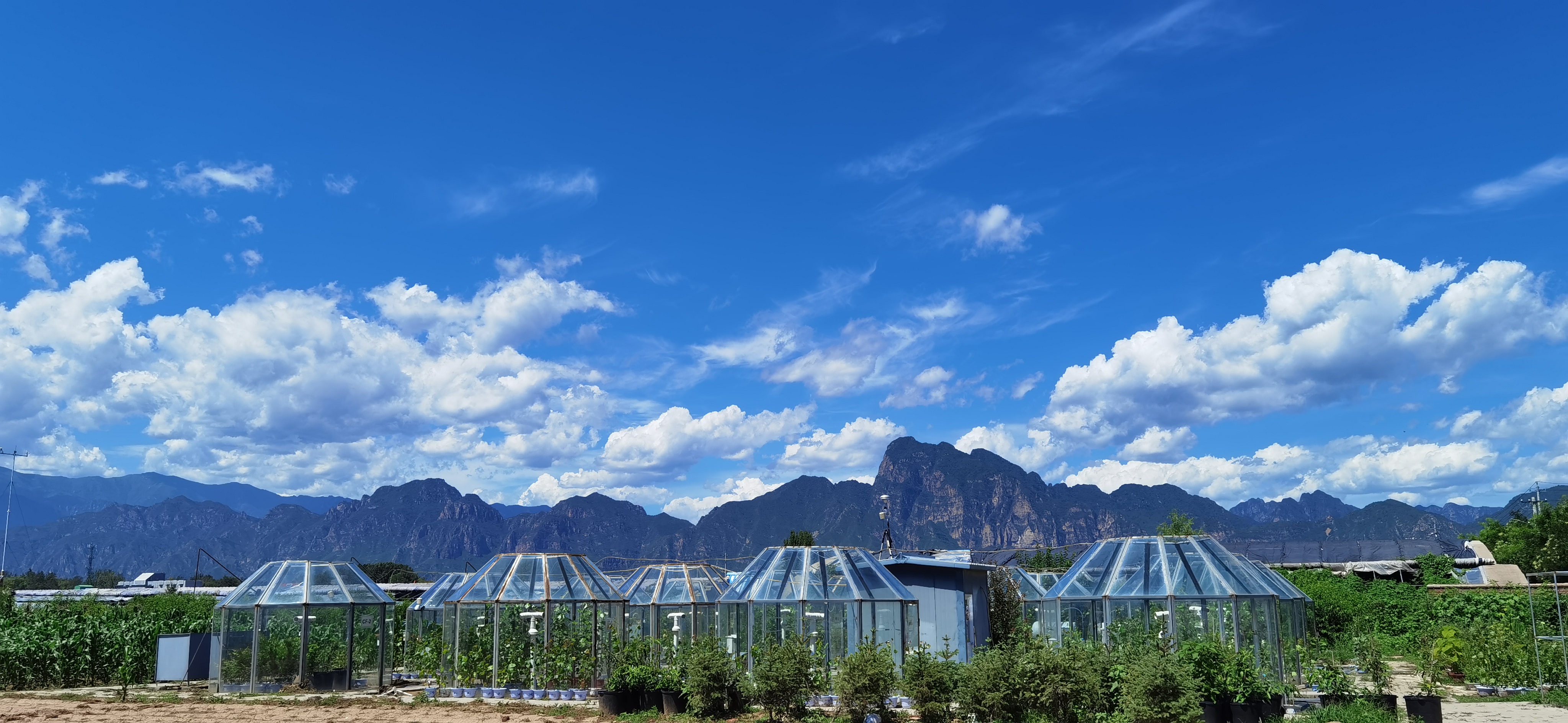
Methods In this study, plants of four common tree species (Camellia sinensis, Acer negundo, Koelreuteria paniculata and Quercus mongolica) were exposed to two O3 treatments (CF, charcoal-filtered air; E-O3, ambient air + 60 nmol·mol-1 O3) in open top chambers. The effects of elevated O3 concentration on key parameters of photosynthetic and stomatal conductance models were explored using data from leaf gas exchange measurements.
Important findings Our results indicated that elevated O3 concentration significantly decreased the light-saturated photosynthesis and mesophyll conductance in the four species. However, species showed distinct responses of the maximum rate of Rubisco carboxylation and the maximum rate of electron transport to elevated O3 concentration. The response of stomatal conductance to O3 was also different among species. We found that elevated O3 concentration significantly increased the slope parameters (g1) of Q. mongolica and A. negundo; however, the intercept parameter of stomata model in C. sinensis was decreased in A. negundo. The intrinsic water- use efficiency of the four species was negatively correlated with g1 across O3 treatments. All in all, elevated O3 concentration significantly affected key parameters of the photosynthetic and stomatal conductance models. This study could provide the foundation and support for improving the accuracy of terrestrial ecosystem models under elevated O3 concentration.
Key words: ozone; woody plant; photosynthetic model; stomatal conductance model
MA Yan-Ze, YANG Xi-Lai, XU Yan-Sen, FENG Zhao-Zhong . Response of key parameters of leaf photosynthetic models to increased ozone concentration in four common trees[J]. Chinese Journal of Plant Ecology, 2022 , 46(3) : 321 -329 . DOI: 10.17521/cjpe.2021.0295
| [1] | Ainsworth EA (2017). Understanding and improving global crop response to ozone pollution. The Plant Journal, 90, 886-897. |
| [2] | Agathokleous E, Feng ZZ, Oksanen E, Sicard P, Wang Q, Saitanis CJ, Araminiene V, Blande JD, Hayes F, Calatayud V, Domingos M, Veresoglou SD, Peñuelas J, Wardle DA, de Marco A, et al. (2020). Ozone affects plant, insect, and soil microbial communities: a threat to terrestrial ecosystems and biodiversity. Science Advances, 6, eabc1176. DOI: 10.1126/sciadv.abc1176. |
| [3] | Bernacchi CJ, Portis AR, Nakano H, Caemmerer SV, Long SP (2002). Temperature response of mesophyll conductance. Implications for the determination of Rubisco enzyme kinetics and for limitations to photosynthesis in vivo. Plant Physiology, 130, 1992-1998. |
| [4] | Bernacchi CJ, Singsaas EL, Pimentel C, Portis Jr AR, Long SP (2001). Improved temperature response functions for models of Rubisco-limited photosynthesis. Plant, Cell & Environment, 24, 253-259. |
| [5] | Calatayud A, Iglesias DJ, Talón M, Barreno E (2006). Effects of long-term ozone exposure on citrus: chlorophyll a fluorescence and gas exchange. Photosynthetica, 44, 548-554. |
| [6] | Dai LL, Li P, Shang B, Liu S, Yang AZ, Wang YN, Feng ZZ (2017). Differential responses of peach (Prunus persica) seedlings to elevated ozone are related with leaf mass per area, antioxidant enzymes activity rather than stomatal conductance. Environmental Pollution, 227, 380-388. |
| [7] | Eichelmann H, Oja V, Rasulov B, Padu E, Bichele I, Pettai H, Möls T, Kasparova I, Vapaavuori E, Laisk A (2004). Photosynthetic parameters of birch (Betula pendula Roth) leaves growing in normal and in CO2- and O3-enriched atmospheres. Plant, Cell & Environment, 27, 479-495. |
| [8] | Farquhar GD, von Caemmerer S, Berry JA (1980). A biochemical model of photosynthetic CO2assimilation in leaves of C3 species. Planta, 149, 78-90. |
| [9] | Feng ZZ, Hu EZ, Wang XK, Jiang LJ, Liu XJ (2015). Ground- level O3 pollution and its impacts on food crops in China: a review. Environmental Pollution, 199, 42-48. |
| [10] | Feng ZZ, Li P, Yuan XY, Gao F, Jiang LJ, Dai LL (2018). Progress in ecological and environmental effects of ground- level O3 in China. Acta Ecologica Sinica, 38, 1530-1541. |
| [10] | [冯兆忠, 李品, 袁相洋, 高峰, 姜立军, 代碌碌 (2018). 我国地表臭氧生态环境效应研究进展. 生态学报, 38, 1530-1541.] |
| [11] | Feng ZZ, Niu JF, Zhang WW, Wang XK, Yao FF, Tian Y (2011). Effects of ozone exposure on sub-tropical evergreen Cinnamomum camphora seedlings grown in different nitrogen loads. Trees, 25, 617-625. |
| [12] | Feng ZZ, Sun JS, Wan WX, Hu EZ, Calatayud V (2014). Evidence of widespread ozone-induced visible injury on plants in Beijing, China. Environmental Pollution, 193, 296-301. |
| [13] | Flexas J, Barbour MM, Brendel O, Cabrera HM, Carriquí M, Díaz-Espejo A, Douthe C, Dreyer E, Ferrio JP, Gago J, Gallé A, Galmés J, Kodama N, Medrano H, Niinemets Ü, et al. (2012). Mesophyll diffusion conductance to CO2: an unappreciated central player in photosynthesis. Plant Science, 193-194, 70-84. |
| [14] | Flexas J, Ribas-Carbó M, Diaz-Espejo A, Galmés J, Medrano H (2008). Mesophyll conductance to CO2: current knowledge and future prospects. Plant, Cell & Environment, 31, 602-621. |
| [15] | Franks PJ, Bonan GB, Berry JA, Lombardozzi DL, Holbrook NM, Herold N, Oleson KW (2018). Comparing optimal and empirical stomatal conductance models for application in earth system models. Global Change Biology, 24, 5708-5723. |
| [16] | Goumenaki E, Taybi T, Borland A, Barnes J (2010). Mechanisms underlying the impacts of ozone on photosynthetic performance. Environmental and Experimental Botany, 69, 259-266. |
| [17] | Harley PC, Loreto F, Di Marco G, Sharkey TD (1992). Theoretical considerations when estimating the mesophyll conductance to CO2 flux by analysis of the response of photosynthesis to CO2. Plant Physiology, 98, 1429-1436. |
| [18] | Hoshika Y, Haworth M, Watanabe M, Koike T (2020). Interactive effect of leaf age and ozone on mesophyll conductance in Siebold’s beech. Physiologia Plantarum, 170, 172-186. |
| [19] | Hoshika Y, Watanabe M, Inada N, Koike T (2013). Model- based analysis of avoidance of ozone stress by stomatal closure in Siebold’s beech (Fagus crenata). Annals of Botany, 112, 1149-1158 |
| [20] | IPCC (Intergovernmental Panel on Climate Change) (2013). Climate Change 2013: the Physical Science Basis. Contribution of Working Group I to the Fifth Assessment Report of the Intergovernmental Panel on Climate Change. Cambridge University Press, Cambridge, UK. |
| [21] | Kinose Y, Fukamachi Y, Watanabe M, Izuta T (2020). Ozone- induced change in the relationship between stomatal conductance and net photosynthetic rate is a factor determining cumulative stomatal ozone uptake by Fagus crenata seedlings. Trees, 34, 445-454. |
| [22] | Knauer J, Zaehle S, de Kauwe MG, Bahar NHA, Evans JR, Medlyn BE, Reichstein M, Werner C (2019). Effects of mesophyll conductance on vegetation responses to elevated CO2concentrations in a land surface model. Global Change Biology, 25, 1820-1838. |
| [23] | Leung F, Williams K, Sitch S, Tai APK, Wiltshire A, Gornall J, Ainsworth EA, Arkebauer T, Scoby D (2020). Calibrating soybean parameters in JULES 5.0 from the US-Ne2/3 FLUXNET sites and the SoyFACE-O3 experiment. Geoscientific Model Development, 13, 6201-6213. |
| [24] | Li H, Peng L, Bi F, Li L, Bao JM, Li JL, Zhang H, Chai FH (2019). Strategy of coordinated control of PM2.5 and ozone in China. Research of Environmental Sciences, 32, 1763-1778. |
| [24] | [李红, 彭良, 毕方, 李陵, 鲍捷萌, 李俊玲, 张浩, 柴发合 (2019). 我国PM2.5与臭氧污染协同控制策略研究. 环境科学研究, 32, 1763-1778.] |
| [25] | Li P, Feng ZZ, Catalayud V, Yuan XY, Xu YS, Paoletti E (2017). A meta-analysis on growth, physiological, and biochemical responses of woody species to ground-level ozone highlights the role of plant functional types. Plant, Cell & Environment, 40, 2369-2380. |
| [26] | Lin YS, Medlyn BE, Duursma RA, Prentice IC, Wang H, Baig S, Eamus D, de Dios VR, Mitchell P, Ellsworth DS, Beeck MO, Wallin G, Uddling J, Tarvainen L, Linderson ML, et al. (2015). Optimal stomatal behaviour around the world. Nature Climate Change, 5, 459-464. |
| [27] | Long SP, Postl WF, Bolhár-Nordenkampf HR (1993). Quantum yields for uptake of carbon dioxide in C3 vascular plants of contrasting habitats and taxonomic groupings. Planta, 189, 226-234. |
| [28] | Masutomi Y, Kinose Y, Takimoto T, Yonekura T, Oue H, Kobayashi K (2019). Ozone changes the linear relationship between photosynthesis and stomatal conductance and decreases water use efficiency in rice. Science of the Total Environment, 655, 1009-1016. |
| [29] | Medlyn BE, Duursma RA, Eamus D, Ellsworth DS, Prentice IC, Barton CVM, Crous KY, Angelis PD, Freeman M, Wingate L (2011). Reconciling the optimal and empirical approaches to modelling stomatal conductance. Global Change Biology, 17, 2134-2144. |
| [30] | Reid CD, Fiscus EL (1998). Effects of elevated [CO2] and/or ozone on limitations to CO2 assimilation in soybean (Glycine max). Journal of Experimental Botany, 49, 885-895. |
| [31] | Shang B, Xu YS, Dai LL, Yuan XY, Feng ZZ (2019). Elevated ozone reduced leaf nitrogen allocation to photosynthesis in poplar. Science of the Total Environment, 657, 169-178. |
| [32] | Sitch S, Cox PM, Collins WJ, Huntingford C (2007). Indirect radiative forcing of climate change through ozone effects on the land-carbon sink. Nature, 448, 791-794. |
| [33] | Sun JD, Feng ZZ, Ort DR (2014). Impacts of rising tropospheric ozone on photosynthesis and metabolite levels on field grown soybean. Plant Science, 226, 147-161. |
| [34] | von Caemmerer S (2000). Biochemical Models of Leaf Photosynthesis. Csiro Publishing, Collingwood, VIC, Australia. |
| [35] | von Caemmerer S, Farquhar GD (1981). Some relationships between the biochemistry of photosynthesis and the gas exchange of leaves. Planta, 153, 376-387. |
| [36] | Warren CR, Löw M, Matyssek R, Tausz M (2007). Internal conductance to CO2 transfer of adult Fagus sylvatica: variation between sun and shade leaves and due to free-air ozone fumigation. Environmental and Experimental Botany, 59, 130-138. |
| [37] | Watanabe M, Kamimaki Y, Mori M, Okabe S, Arakawa I, Kinose Y, Nakaba S, Izuta T (2018). Mesophyll conductance to CO2 in leaves of Siebold’s beech (Fagus crenata) seedlings under elevated ozone. Journal of Plant Research, 131, 907-914. |
| [38] | Wittig VE, Ainsworth EA, Long SP (2007). To what extent do current and projected increases in surface ozone affect photosynthesis and stomatal conductance of trees? A meta-analytic review of the last 3 decades of experiments. Plant, Cell & Environment, 30, 1150-1162. |
| [39] | Wolz KJ, Wertin TM, Abordo M, Wang D, Leakey ADB (2017). Diversity in stomatal function is integral to modelling plant carbon and water fluxes. Nature Ecology & Evolution, 1, 1292-1298. |
| [40] | Xu YS, Feng ZZ, Shang B, Dai LL, Uddling J, Tarvainen L (2019). Mesophyll conductance limitation of photosynthesis in poplar under elevated ozone. Science of the Total Environment, 657, 136-145. |
| [41] | Xu YS, Shang B, Feng ZZ, Tarvainen L (2020). Effect of elevated ozone, nitrogen availability and mesophyll conductance on the temperature responses of leaf photosynthetic parameters in poplar. Tree Physiology, 40, 484-497. |
| [42] | Xu YS, Shang B, Peng JL, Feng ZZ, Tarvainen L (2021). Stomatal response drives between-species difference in predicted leaf water-use efficiency under elevated ozone. Environmental Pollution, 269, 116137. DOI: 10.1016/j.envpol.2020.116137. |
| [43] | Yan H, Zhang W, Hou M, Li YS, Gao P, Xia Q, Meng XY, Fan LY, Ye DQ (2020). Sources and control area division of ozone pollution in cities at prefecture level and above in China. Environmental Science, 41, 5215-5224. |
| [43] | [闫慧, 张维, 侯墨, 李银松, 高平, 夏青, 孟晓艳, 范丽雅, 叶代启 (2020). 我国地级及以上城市臭氧污染来源及控制区划分. 环境科学, 41, 5215-5224.] |
| [44] | Yuan XY, Calatayud V, Gao F, Fares S, Paoletti E, Tian Y, Feng ZZ (2016). Interaction of drought and ozone exposure on isoprene emission from extensively cultivated poplar. Plant, Cell & Environment, 39, 2276-2287. |
/
| 〈 |
|
〉 |
Copyright © 2026 Chinese Journal of Plant Ecology
Tel: 010-62836134, 62836138, E-mail: apes@ibcas.ac.cn, cjpe@ibcas.ac.cn

