
Chinese Journal of Plant Ecology >
Research progress and prospect of signal transfer among plants mediated by arbuscular mycorrhizal networks
Received date: 2021-04-17
Accepted date: 2021-10-05
Online published: 2021-12-16
Supported by
National Key R&D Program of China(2016YFC0500702);National Natural Science Foundation of China(42077039)
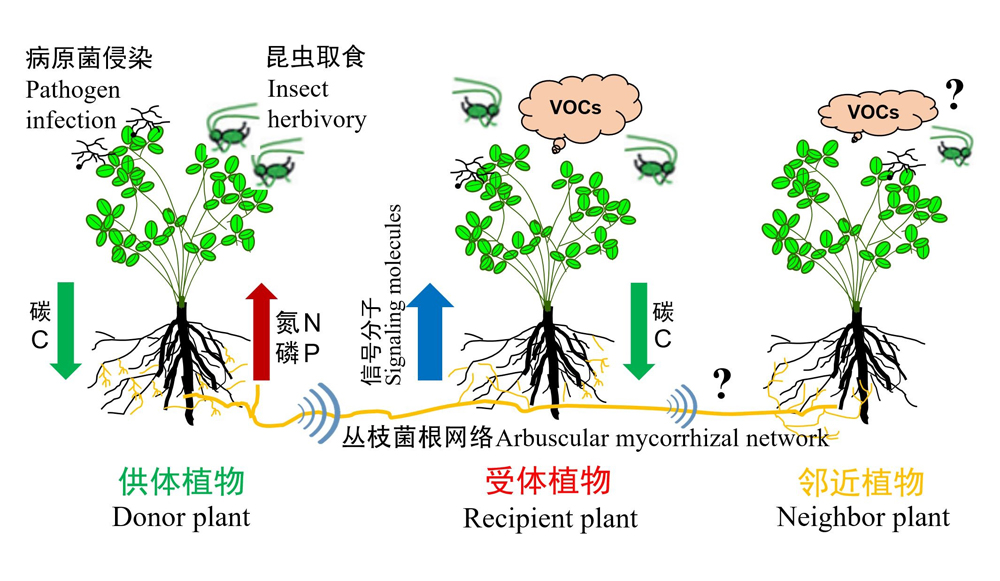
Arbuscular mycorrhizal (AM) fungi are a group of soil-dwelling fungi that can form symbiotic associations with most terrestrial plants. The extraradical mycelium can colonize different plant roots in addition to hyphal fusion, thus form extensive arbuscular mycorrhizal networks (AMNs) underground. AMNs can transport and recycle water and nutrients including carbon, nitrogen, phosphorus among plants, recent evidences show that AMNs can also transfer defensive signals to neighboring plants when plants suffer environmental stresses, thus providing early warning to surrounding neighbors. However, the research on AMNs-mediated signal transfer is still in its infancy. Here, we firstly reviewed current research progresses in this research area, then proposed the unanswered questions that worth exploration in the future, including the possible pathways and mechanisms of signal transfer via AMNs among plants, the possible regulation of mycorrhizal symbionts by AMNs-mediated signal transfer, and the common techniques and their development used in the study of AMNs. Finally, we discussed about the possible ecological applications of AMNs such as filed crop protection.
XIE Wei, HAO Zhi-Peng, ZHANG Xin, CHEN Bao-Dong . Research progress and prospect of signal transfer among plants mediated by arbuscular mycorrhizal networks[J]. Chinese Journal of Plant Ecology, 2022 , 46(5) : 493 -515 . DOI: 10.17521/cjpe.2021.0143
| [1] | Achatz M, Rillig MC (2014). Arbuscular mycorrhizal fungal hyphae enhance transport of the allelochemical juglone in the field. Soil Biology & Biochemistry, 78, 76-82. |
| [2] | Alaux PL, Naveau F, Declerck S, Cranenbrouck S (2020). Common mycorrhizal network induced JA/ET genes expression in healthy potato plants connected to potato plants infected by Phytophthora infestans. Frontiers in Plant Science, 11, 602. DOI: 10.3389/fpls.2020.00602. |
| [3] | Alaux PL, Zhang YQ, Gilbert L, Johnson D (2021). Can common mycorrhizal fungal networks be managed to enhance ecosystem functionality? Plants, People, Planet, 3, 433-444. |
| [4] | Albornoz FE, Dixon KW, Lambers H (2021). Revisiting mycorrhizal dogmas: Are mycorrhizas really functioning as they are widely believed to do? Soil Ecology Letters, 3, 73-82. |
| [5] | Awaydul A, Zhu WY, Yuan YG, Xiao J, Hu H, Chen X, Koide RT, Cheng L (2019). Common mycorrhizal networks influence the distribution of mineral nutrients between an invasive plant, Solidago canadensis, and a native plant, Kummerowa striata. Mycorrhiza, 29, 29-38. |
| [6] | Babikova Z, Gilbert L, Bruce T, Birkett M, Caulfield JC, Woodcock C, Pickett JA, Johnson D (2013a). Underground signals carried through common mycelial networks warn neighbouring plants of aphid attack. Ecology Letters, 16, 835-843. |
| [7] | Babikova Z, Johnson D, Bruce T, Pickett J, Gilbert L (2013b). How rapid is aphid-induced signal transfer between plants via common mycelial networks? Communicative & Integrative Biology, 6, e25904. DOI: 10.4161/cib.25904. |
| [8] | Babikova Z, Johnson D, Bruce TJA, Pickett J, Gilbert L (2014). Underground allies: How and why do mycelial networks help plants defend themselves?: What are the fitness, regulatory, and practical implications of defence-related signaling between plants via common mycelial networks? BioEssays, 36, 21-26. |
| [9] | Barto EK, Hilker M, Müller F, Mohney BK, Weidenhamer JD, Rillig MC (2011). The fungal fast lane: common mycorrhizal networks extend bioactive zones of allelochemicals in soils. PLOS ONE, 6, e27195. DOI: 10.1371/journal.pone.0027195. |
| [10] | Barto EK, Weidenhamer JD, Cipollini D, Rillig MC (2012). Fungal superhighways: Do common mycorrhizal networks enhance below ground communication? Trends in Plant Science, 17, 633-637. |
| [11] | Berger S, Sinha AK, Roitsch T (2007). Plant physiology meets phytopathology: plant primary metabolism and plant- pathogen interactions. Journal of Experimental Botany, 58, 4019-4026. |
| [12] | Bhonwong A, Stout MJ, Attajarusit J, Tantasawat P (2009). Defensive role of tomato polyphenol oxidases against cotton bollworm (Helicoverpa armigera) and beet armyworm (Spodoptera exigua). Journal of Chemical Ecology, 35, 28-38. |
| [13] | Bodenhausen N, Deslandes-Hérold G, Waelchli J, Held A, van der Heijden MGA, Schlaeppi K (2021). Relative qPCR to quantify colonization of plant roots by arbuscular mycorrhizal fungi. Mycorrhiza, 31, 137-148. |
| [14] | Bonneau L, Recorbet G, van Tuinen D, Wipf D, Courty PE (2019). Analysis of common mycorrhizal networks in microcosms//Reinhardt D, Sharma A. Methods in Rhizosphere Biology Research. Springer, Singapore. 271-279. |
| [15] | Brundrett MC, Tedersoo L (2018). Evolutionary history of mycorrhizal symbioses and global host plant diversity. New Phytologist, 220, 1108-1115. |
| [16] | Bücking H, Shachar-Hill Y (2005). Phosphate uptake, transport and transfer by the arbuscular mycorrhizal fungus Glomus intraradices is stimulated by increased carbohydrate availability. New Phytologist, 165, 899-912. |
| [17] | Cabral C, Wollenweber B, António C, Ravnskov S (2019). Activity in the arbuscular mycorrhizal hyphosphere warning neighbouring plants. Frontiers in Plant Science, 10, 511. DOI: 10.3389/fpls.2019.00511. |
| [18] | Cabral C, Wollenweber B, António C, Rodrigues AM, Ravnskov S (2018). Aphid infestation in the phyllosphere affects primary metabolic profiles in the arbuscular mycorrhizal hyphosphere. Scientific Reports, 8, 14442. DOI: 10.1038/s41598-018-32670-1. |
| [19] | Cahanovitc R, Livne-Luzon S, Angel R, Klein T (2022). Ectomycorrhizal fungi mediate belowground carbon transfer between pines and oaks. The ISME Journal, 16, 1420-1429. |
| [20] | Cameron DD, Neal AL, van Wees SCM, Ton J (2013). Mycorrhiza-induced resistance: more than the sum of its parts? Trends in Plant Science, 18, 539-545. |
| [21] | Campos-Soriano L, García-Garrido JM, Segundo BS (2010). Activation of basal defense mechanisms of rice plants by Glomus intraradices does not affect the arbuscular mycorrhizal symbiosis. New Phytologist, 188, 597-614. |
| [22] | Cardini A, Pellegrino E, Declerck S, Calonne-Salmon M, Mazzolai B, Ercoli L (2021). Direct transfer of zinc between plants is channelled by common mycorrhizal network of arbuscular mycorrhizal fungi and evidenced by changes in expression of zinc transporter genes in fungus and plant. Environmental Microbiology, 23, 5883-5900. |
| [23] | Charters MD, Sait SM, Field KJ (2020). Aphid herbivory drives asymmetry in carbon for nutrient exchange between plants and an arbuscular mycorrhizal fungus. Current Biology, 30, 1801-1808. |
| [24] | Chen Y, Bonkowski M, Shen Y, Griffiths BS, Jiang YJ, Wang XY, Sun B (2020). Root ethylene mediates rhizosphere microbial community reconstruction when chemically detecting cyanide produced by neighbouring plants. Microbiome, 8, 4. DOI: 10.1186/s40168-019-0775-6. |
| [25] | Cheol Song G, Sim HJ, Kim SG, Ryu CM (2016). Root-mediated signal transmission of systemic acquired resistance against above-ground and below-ground pathogens. Annals of Botany, 118, 821-831. |
| [26] | Chitarra W, Pagliarani C, Maserti B, Lumini E, Siciliano I, Cascone P, Schubert A, Gambino G, Balestrini R, Guerrieri E (2016). Insights on the impact of arbuscular mycorrhizal symbiosis on tomato tolerance to water stress. Plant Physiology, 171, 1009-1023. |
| [27] | Choudhury FK, Devireddy AR, Azad RK, Shulaev V, Mittler R (2018). Local and systemic metabolic responses during light-induced rapid systemic signaling. Plant Physiology, 178, 1461-1472. |
| [28] | Conrath U, Beckers GJM, Flors V, García-Agustín P, Jakab G, Mauch F, Newman MA, Pieterse CMJ, Poinssot B, Pozo MJ, Pugin A, Schaffrath U, Ton J, Wendehenne D, Zimmerli L, Mauch-Mani B (2006). Priming: getting ready for battle. Molecular Plant-Microbe Interactions, 19, 1062-1071. |
| [29] | Corrales A, Mangan SA, Turner BL, Dalling JW (2016). An ectomycorrhizal nitrogen economy facilitates monodominance in a neotropical forest. Ecology Letters, 19, 383-392. |
| [30] | Croll D, Giovannetti M, Koch AM, Sbrana C, Ehinger M, Lammers PJ, Sanders IR (2009). Nonself vegetative fusion and genetic exchange in the arbuscular mycorrhizal fungus Glomus intraradices. New Phytologist, 181, 924-937. |
| [31] | de Novais CB, Sbrana C, da Conceição Jesus E, Rouws LFM, Giovannetti M, Avio L, Siqueira JO, Saggin Júnior OJ, da Silva EMR, de Faria SM, (2020). Mycorrhizal networks facilitate the colonization of legume roots by a symbiotic nitrogen-fixing bacterium. Mycorrhiza, 30, 389-396. |
| [32] | Duhamel M, Pel R, Ooms A, Bücking H, Jansa J, Ellers J, van Straalen NM, Wouda T, Vandenkoornhuyse P, Kiers ET (2013). Do fungivores trigger the transfer of protective metabolites from host plants to arbuscular mycorrhizal hyphae? Ecology, 94, 2019-2029. |
| [33] | Egerton-Warburton LM, Querejeta JI, Allen MF (2007). Common mycorrhizal networks provide a potential pathway for the transfer of hydraulically lifted water between plants. Journal of Experimental Botany, 58, 1473-1483. |
| [34] | El-Komy MH (2014). Comparative analysis of defense responses in chocolate spot-resistant and -susceptible faba bean (Vicia faba) cultivars following infection by the necrotrophic fungus Botrytis fabae. The Plant Pathology Journal, 30, 355-366. |
| [35] | Fellbaum CR, Mensah JA, Cloos AJ, Strahan GE, Pfeffer PE, Kiers ET, Bücking H (2014). Fungal nutrient allocation in common mycorrhizal networks is regulated by the carbon source strength of individual host plants. New Phytologist, 203, 646-656. |
| [36] | Fernández I, Cosme M, Stringlis IA, Yu K, de Jonge R, van Wees SM, Pozo MJ, Pieterse CMJ, van der Heijden MGA (2019). Molecular dialogue between arbuscular mycorrhizal fungi and the nonhost plant Arabidopsis thaliana switches from initial detection to antagonism. New Phytologist, 223, 867-881. |
| [37] | Fichman Y, Zandalinas SI, Mittler R (2020). Untangling the ties that bind different systemic signals in plants. Science Signaling, 13, eabb9505. DOI: 10.1126/scisignal.abb9505. |
| [38] | Gallou A, Lucero Mosquera HP, Cranenbrouck S, Suárez JP, Declerck S (2011). Mycorrhiza induced resistance in potato plantlets challenged by Phytophthora infestans. Physiological and Molecular Plant Pathology, 76, 20-26. |
| [39] | Gilbert L, Johnson D (2017). Plant-plant communication through common mycorrhizal networks//Becard G. How Plants Communicate with Their Biotic Environment. Academic Press, London. |
| [40] | Giovannetti M, Fortuna P, Citernesi AS, Morini S, Nuti MP (2001). The occurrence of anastomosis formation and nuclear exchange in intact arbuscular mycorrhizal networks. New Phytologist, 151, 717-724. |
| [41] | Gorzelak MA, Asay AK, Pickles BJ, Simard SW (2015). Inter-plant communication through mycorrhizal networks mediates complex adaptive behaviour in plant communities. AoB PLANTS, 7, plv050. DOI: 10.1093/aobpla/plv050. |
| [42] | Goto Y, Maki N, Ichihashi Y, Kitazawa D, Igarashi D, Kadota Y, Shirasu K (2020). Exogenous treatment with glutamate induces immune responses in Arabidopsis. Molecular Plant-Microbe Interactions, 33, 474-487. |
| [43] | Grime JP, Mackey JM, Hillier SH, Read DJ (1988). Mycorrhizal infection and plant species diversity. Nature, 334, 202. |
| [44] | Gruner K, Griebel T, Návarová H, Attaran E, Zeier J (2013). Reprogramming of plants during systemic acquired resistance. Frontiers in Plant Science, 4, 252. DOI: 10.3389/fpls.2013.00252. |
| [45] | Guo T, Liu XL, Shen H (2015). The effect of transfer between roots of different tobacco plants through common arbuscular mycorrhiza networks on enzyme activities related to disease resistance. Journal of Plant Protection, 42, 390-395. |
| [45] | [ 郭涛, 刘先良, 申鸿 (2015). 丛枝菌根菌丝桥传递作用对烟草抗病性相关酶活性的影响. 植物保护学报, 42, 390-395.] |
| [46] | Heil M, Silva Bueno JC (2007). Within-plant signaling by volatiles leads to induction and priming of an indirect plant defense in nature. Proceedings of the National Academy of Sciences of the United States of America, 104, 5467-5472. |
| [47] | Helber N, Wippel K, Sauer N, Schaarschmidt S, Hause B, Requena N (2011). A versatile monosaccharide transporter that operates in the arbuscular mycorrhizal fungus Glomus sp. is crucial for the symbiotic relationship with plants. The Plant Cell, 23, 3812-3823. |
| [48] | Hettenhausen C, Li J, Zhuang HF, Sun HH, Xu YX, Qi JF, Zhang JX, Lei YT, Qin Y, Sun GL, Wang L, Baldwin IT, Wu JQ (2017). Stem parasitic plant Cuscuta australis (dodder) transfers herbivory-induced signals among plants. Proceedings of the National Academy of Sciences of the United States of America, 114, 6703-6709. |
| [49] | Hewins CR, Carrino-Kyker SR, Burke DJ (2015). Seasonal variation in mycorrhizal fungi colonizing roots of Allium tricoccum (wild leek) in a mature mixed hardwood forest. Mycorrhiza, 25, 469-483. |
| [50] | Hodge A, Fitter AH (2010). Substantial nitrogen acquisition by arbuscular mycorrhizal fungi from organic material has implications for N cycling. Proceedings of the National Academy of Sciences of the United States of America, 107, 13754-13759. |
| [51] | Hu YJ, Wu SL, Sun YQ, Li T, Zhang X, Chen CY, Lin G, Chen BD (2015). Arbuscular mycorrhizal symbiosis can mitigate the negative effects of night warming on physiological traits of Medicago truncatula L. Mycorrhiza, 25, 131-142. |
| [52] | Janoušková M, Caklová P (2020). Molecular quantification of arbuscular mycorrhizal fungal root colonization//Ferrol N, Lanfranco L. Arbuscular Mycorrhizal Fungi. Humana, New York. |
| [53] | Jiang FY, Zhang L, Zhou JC, George TS, Feng G (2021). Arbuscular mycorrhizal fungi enhance mineralisation of organic phosphorus by carrying bacteria along their extraradical hyphae. New Phytologist, 230, 304-315. |
| [54] | Jiang YN, Wang WX, Xie QJ, Liu N, Liu LX, Wang DP, Zhang XW, Yang C, Chen XY, Tang DZ, Wang ET (2017). Plants transfer lipids to sustain colonization by mutualistic mycorrhizal and parasitic fungi. Science, 356, 1172-1175. |
| [55] | Johnson D, Gilbert L (2015). Interplant signalling through hyphal networks. New Phytologist, 205, 1448-1453. |
| [56] | Johnson D, Leake JR, Read DJ (2001). Novel in-growth core system enables functional studies of grassland mycorrhizal mycelial networks. New Phytologist, 152, 555-562. |
| [57] | Kachroo A, Kachroo P (2020). Mobile signals in systemic acquired resistance. Current Opinion in Plant Biology, 58, 41-47. |
| [58] | Karban R, Shiojiri K, Ishizaki S, Wetzel WC, Evans RY (2013). Kin recognition affects plant communication and defence. Proceedings of the Royal Society B, 280, 20123062. DOI: 10.1098/rspb.2012.3062. |
| [59] | Kiers ET, Duhamel M, Beesetty Y, Mensah JA, Franken O, Verbruggen E, Fellbaum CR, Kowalchuk GA, Hart MM, Bago A, Palmer TM, West SA, Vandenkoornhuyse P, Jansa J, Bücking H (2011). Reciprocal rewards stabilize cooperation in the mycorrhizal symbiosis. Science, 333, 880-882. |
| [60] | Kirk JL, Beaudette LA, Hart M, Moutoglis P, Klironomos JN, Lee H, Trevors JT (2004). Methods of studying soil microbial diversity. Journal of Microbiological Methods, 58, 169-188. |
| [61] | Koch KE (1996). Carbohydrate-modulated gene expression in plants. Plant Physiology and Plant Molecular Biology, 47, 509-540. |
| [62] | Kong CH, Zhang SZ, Li YH, Xia ZC, Yang XF, Meiners SJ, Wang P (2018). Plant neighbor detection and allelochemical response are driven by root-secreted signaling chemicals. Nature Communications, 9, 3867. DOI: 10.1038/s41467-018-06429-1. |
| [63] | Kong HG, Song GC, Sim HJ, Ryu CM (2021). Achieving similar root microbiota composition in neighbouring plants through airborne signalling. The ISME Journal, 15, 397- 408. |
| [64] | Lei Y, Wu SL, Hao ZP, Chen BD (2013). Development of arbuscular mycorrhizal hyphal networks mediated by different plants and the time effects. Acta Botanica Boreali- Occidentalia Sinica, 33, 154-161. |
| [64] | [ 雷垚, 伍松林, 郝志鹏, 陈保冬 (2013). 丛枝菌根根外菌丝网络形成过程中的时间效应及植物介导作用. 西北植物学报, 33, 154-161.] |
| [65] | Lenz DE (2021). Propagation of anti-herbivore defense cues in a common mycorrhizal network. California State University, Sacramento, USA. |
| [66] | Li B, Li YY, Wu HM, Zhang FF, Li CJ, Li XX, Lambers H, Li L (2016). Root exudates drive interspecific facilitation by enhancing nodulation and N2 fixation. Proceedings of the National Academy of Sciences of the United States of America, 113, 6496-6501. |
| [67] | Li S, Sina YZ, Xu R, Zi SH, Fan LY, Liu T (2021). Defense signal transmission between alfalfa plants through underground mycorrhizal network. Journal of Tropical and Subtropical Botany, 29, 382-388. |
| [67] | [ 李莎, 斯那永宗, 徐若, 字淑慧, 范林元, 刘涛 (2021). 丛枝菌丝网络介导苜蓿植株间机械损伤信号的传递. 热带亚热带植物学报, 29, 382-388.] |
| [68] | Lian FZ, Lin YB, Hu L, Wang J, Zeng RS, Song YY (2019). Transfer of mechanical wounding signaling between tomato plants through common mycorrhizal networks. Journal of Fujian Agriculture and Forestry University (Natural Science Edition), 48, 9-15. |
| [68] | [ 廉法卓, 林熠斌, 胡林, 王杰, 曾任森, 宋圆圆 (2019). 菌根菌丝网络介导的番茄植株间机械损伤信号的传递. 福建农林大学学报(自然科学版), 48, 9-15.] |
| [69] | Liang M, Johnson D, Burslem DFRP, Yu S, Fang M, Taylor JD, Taylor AFS, Helgason T, Liu X (2020). Soil fungal networks maintain local dominance of ectomycorrhizal trees. Nature Communications, 11, 2636. DOI: 10.1038/s41467-020-16507-y. |
| [70] | Lim GH, Liu HZ, Yu KS, Liu RY, Shine MB, Fernandez J, Burch-Smith T, Mobley JK, McLetchie N, Kachroo A, Kachroo P (2020). The plant cuticle regulates apoplastic transport of salicylic acid during systemic acquired resistance. Science Advances, 6, eaaz0478. DOI: 10.1126/sciadv.aaz0478. |
| [71] | Lin XG (2010). Principles and Methods of Soil Microbiology Research. Higher Education Press, Beijing. |
| [71] | [ 林先贵 (2010). 土壤微生物研究原理与方法. 高等教育出版社, 北京.] |
| [72] | Lin YB, Liu TT, Xue RR, Wu L, Zeng RS, Song YY (2018). Transfer of systemic signaling of insect resistance between roots of tomato plant through arbuscular mycorrhizal networks. Journal of Fujian Agriculture and Forestry University (Natural Science Edition), 47, 547-553. |
| [72] | [ 林熠斌, 刘婷婷, 薛蓉蓉, 吴磊, 曾任森, 宋圆圆 (2018). 丛枝菌根菌丝网络介导的番茄植株根系间抗虫系统性信号的传递. 福建农林大学学报(自然科学版), 47, 547-553.] |
| [73] | Liu RJ, Chen YL (2007). Mycorrhizology. Science Press, Beijing. |
| [73] | [ 刘润进, 陈应龙 (2007). 菌根学. 科学出版社, 北京.] |
| [74] | Luthfiana N, Inamura N, Tantriani, Sato T, Saito K, Oikawa A, Chen WG, Tawaraya K (2021). Metabolite profiling of the hyphal exudates of Rhizophagus clarus and Rhizophagus irregularis under phosphorus deficiency. Mycorrhiza, 31, 403-412. |
| [75] | Martínez-Medina A, Pescador L, Fernández I, Rodríguez- Serrano M, García JM, Romero-Puertas MC, Pozo MJ (2019). Nitric oxide and phytoglobin PHYTOGB1 are regulatory elements in the Solanum lycopersicum-Rhizophagus irregularis mycorrhizal symbiosis. New Phytologist, 223, 1560-1574. |
| [76] | McGuire KL (2007). Common ectomycorrhizal networks may maintain monodominance in a tropical rain forest. Ecology, 88, 567-574. |
| [77] | Murata M, Nakai Y, Kawazu K, Ishizaka M, Kajiwara H, Abe H, Takeuchi K, Ichinose Y, Mitsuhara I, Mochizuki A, Seo S (2019). Loliolide, a carotenoid metabolite, is a potential endogenous inducer of herbivore resistance. Plant Physiology, 179, 1822-1833. |
| [78] | Ninkovic V, Markovic D, Rensing M (2021). Plant volatiles as cues and signals in plant communication. Plant, Cell & Environment, 44, 1030-1043. |
| [79] | Noë R, Kiers ET (2018). Mycorrhizal markets, firms, and co-ops. Trends in Ecology & Evolution, 33, 777-789. |
| [80] | Oelmüller R (2019). Interplant communication via hyphal networks. Plant Physiology Reports, 24, 463-473. |
| [81] | Olsson PA, Bååth E, Jakobsen I, Söderström B (1996). Soil bacteria respond to presence of roots but not to mycelium of arbuscular mycorrhizal fungi. Soil Biology & Biochemistry, 28, 463-470. |
| [82] | Öpik M, Vanatoa A, Vanatoa E, Moora M, Davison J, Kalwij JM, Reier Ü, Zobel M (2010). The online database MaarjAM reveals global and ecosystemic distribution patterns in arbuscular mycorrhizal fungi (Glomeromycota). New Phytologist, 188, 223-241. |
| [83] | Orlovskis Z, Reymond P (2020). Pieris brassicae eggs trigger interplant systemic acquired resistance against a foliar pathogen in Arabidopsis. New Phytologist, 228, 1652-1661. |
| [84] | Pepe A, Sbrana C, Ferrol N, Giovannetti M (2017). An in vivo whole-plant experimental system for the analysis of gene expression in extraradical mycorrhizal mycelium. Mycorrhiza, 27, 659-668. |
| [85] | Pfeffer PE, Douds Jr DD, Bücking H, Schwartz DP, Shachar-Hill Y (2004). The fungus does not transfer carbon to or between roots in an arbuscular mycorrhizal symbiosis. New Phytologist, 163, 617-627. |
| [86] | Pickett JA, Khan ZR (2016). Plant volatile-mediated signalling and its application in agriculture: successes and challenges. New Phytologist, 212, 856-870. |
| [87] | Pickles BJ, Wilhelm R, Asay AK, Hahn AS, Simard SW, Mohn WW (2017). Transfer of 13C between paired Douglas-fir seedlings reveals plant kinship effects and uptake of exudates by ectomycorrhizas. New Phytologist, 214, 400-411. |
| [88] | Pusztahelyi T, Holb IJ, Pócsi I (2015). Secondary metabolites in fungus-plant interactions. Frontiers in Plant Science, 6, 573. DOI: 10.3389/fpls.2015.00573. |
| [89] | Ren LX, Lou YS, Zhang N, Zhu XD, Hao WY, Sun SB, Shen QR, Xu GH (2013). Role of arbuscular mycorrhizal network in carbon and phosphorus transfer between plants. Biology and Fertility of Soils, 49, 3-11. |
| [90] | Řezáčová V, Zemková L, Beskid O, Püschel D, Konvalinková T, Hujslová M, Slavíková R, Jansa J (2018). Little cross-feeding of the mycorrhizal networks shared between C3-Panicum bisulcatum and C4-Panicum maximum under different temperature regimes. Frontiers in Plant Science, 9, 449. DOI: 10.3389/fpls.2018.00449. |
| [91] | Rivero J, Lidoy J, Llopis-Giménez Á, Herrero S, Flors V, Pozo MJ (2021). Mycorrhizal symbiosis primes the accumulation of antiherbivore compounds and enhances herbivore mortality in tomato. Journal of Experimental Botany, 72, 5038-5050. |
| [92] | Robert-Seilaniantz A, Grant M, Jones JDG (2011). Hormone crosstalk in plant disease and defense: more than just jasmonate-salicylate antagonism. Annual Review of Phytopathology, 49, 317-343. |
| [93] | Saijo Y, Loo EPI (2020). Plant immunity in signal integration between biotic and abiotic stress responses. New Phytologist, 225, 87-104. |
| [94] | Schweiger R, Baier MC, Müller C (2014). Arbuscular mycorrhiza-induced shifts in foliar metabolism and photosynthesis mirror the developmental stage of the symbiosis and are only partly driven by improved phosphate uptake. Molecular Plant-Microbe Interactions, 27, 1403-1412. |
| [95] | Selosse MA, Richard F, He XH, Simard SW (2006). Mycorrhizal networks: des liaisons dangereuses? Trends in Ecology & Evolution, 21, 621-628. |
| [96] | Shao QL, Gao QF, Lhamo D, Zhang HS, Luan S (2020). Two glutamate-and pH-regulated Ca2+ channels are required for systemic wound signaling in Arabidopsis. Science Signaling, 13, eaba1453. DOI: 10.1126/scisignal.aba1453. |
| [97] | Sharifi R, Ryu CM (2021). Social networking in crop plants: wired and wireless cross-plant communications. Plant, Cell & Environment, 44, 1095-1110. |
| [98] | Sharma E, Anand G, Kapoor R (2017). Terpenoids in plant and arbuscular mycorrhiza-reinforced defence against herbivorous insects. Annals of Botany, 119, 791-801. |
| [99] | Silvani VA, Statello M, Scorza MV, Pérgola M, Colombo RP, Godeas AM (2019). A novel in vitro methodology to cultivate arbuscular mycorrhizal fungi combining soil and synthetic media. Symbiosis, 79, 163-170. |
| [100] | Simard SW, Beiler KJ, Bingham MA, Deslippe JR, Philip LJ, Teste FP (2012). Mycorrhizal networks: mechanisms, ecology and modelling. Fungal Biology Reviews, 26, 39-60. |
| [101] | Smith SE, Read DJ (2008). Mycorrhizal Symbiosis. 3rd ed. Academic Press, New York. |
| [102] | Song YY, Simard SW, Carroll A, Mohn WW, Zeng RS (2015). Defoliation of interior Douglas-fir elicits carbon transfer and stress signalling to ponderosa pine neighbors through ectomycorrhizal networks. Scientific Reports, 5, 8495. DOI: 10.1038/srep08495. |
| [103] | Song YY, Wang M, Zeng RS, Groten K, Baldwin IT (2019). Priming and filtering of antiherbivore defences among Nicotiana attenuata plants connected by mycorrhizal networks. Plant, Cell & Environment, 42, 2945-2961. |
| [104] | Song YY, Ye M, Li CY, He XH, Zhu-Salzman K, Wang RL, Su YJ, Luo SM, Zeng RS (2014). Hijacking common mycorrhizal networks for herbivore-induced defence signal transfer between tomato plants. Scientific Reports, 4, 3915. DOI: 10.1038/srep03915. |
| [105] | Song YY, Zeng RS, Xu JF, Li J, Shen X, Yihdego WG (2010). Interplant communication of tomato plants through underground common mycorrhizal networks. PLOS ONE, 5, e13324. DOI: 10.1371/journal.pone.0013324. |
| [106] | Takahashi F, Shinozaki K (2019). Long-distance signaling in plant stress response. Current Opinion in Plant Biology, 47, 106-111. |
| [107] | Tao C, Li R, Xiong W, Shen Z, Liu S, Wang B, Ruan Y, Geisen S, Shen Q, Kowalchuk GA (2020). Bio-organic fertilizers stimulate indigenous soil Pseudomonas populations to enhance plant disease suppression. Microbiome, 8, 137. DOI: 10.1186/s40168-020-00892-z. |
| [108] | Tedersoo L, Bahram M, Zobel M (2020). How mycorrhizal associations drive plant population and community biology. Science, 367, eaba1223. DOI: 10.1126/science.aba1223. |
| [109] | Tomczak VV, Müller C (2017). Influence of arbuscular mycorrhizal stage and plant age on the performance of a generalist aphid. Journal of Insect Physiology, 98, 258-266. |
| [110] | Toyota M, Spencer D, Sawai-Toyota S, Wang JQ, Zhang T, Koo AJ, Howe GA, Gilroy S (2018). Glutamate triggers long-distance, calcium-based plant defense signaling. Science, 361, 1112-1115. |
| [111] | Vahabi K, Reichelt M, Scholz SS, Furch ACU, Matsuo M, Johnson JM, Sherameti I, Gershenzon J, Oelmüller R (2018). Alternaria brassicae induces systemic jasmonate responses in Arabidopsis which travel to neighboring plants via a Piriformsopora indica hyphal network and activate abscisic acid responses. Frontiers in Plant Science, 9, 626. DOI: 10.3389/fpls.2018.00626. |
| [112] | van der Heijden MGA, Horton TR (2009). Socialism in soil? The importance of mycorrhizal fungal networks for facilitation in natural ecosystems. Journal of Ecology, 97, 1139-1150. |
| [113] | van’t Padje A, Oyarte Galvez L, Klein M, Hink MA, Postma M, Shimizu T, Kiers ET (2021). Temporal tracking of quantum-dot apatite across in vitro mycorrhizal networks shows how host demand can influence fungal nutrient transfer strategies. The ISME Journal, 15, 435-449. |
| [114] | vanʼt Padje A, Werner GDA, Kiers ET (2020). Mycorrhizal fungi control phosphorus value in trade symbiosis with host roots when exposed to abrupt “crashes” and “booms” of resource availability. New Phytologist, 229, 2933-2944. |
| [115] | Varga S, Kytöviita MM (2016). Faster acquisition of symbiotic partner by common mycorrhizal networks in early plant life stage. Ecosphere, 7, e01222. DOI: 10.1002/ecs2.1222. |
| [116] | Vlot AC, Sales JH, Lenk M, Bauer K, Brambilla A, Sommer A, Chen YY, Wenig M, Nayem S (2021). Systemic propagation of immunity in plants. New Phytologist, 229, 1234- 1250. |
| [117] | Voets L, de la Providencia IE, Fernandez K, IJdo M, Cranenbrouck S, Declerck S (2009). Extraradical mycelium network of arbuscular mycorrhizal fungi allows fast colonization of seedlings under in vitro conditions. Mycorrhiza, 19, 347-356. |
| [118] | Voets L, Goubau I, Olsson PA, Merckx R, Declerck S (2008). Absence of carbon transfer between Medicago truncatula plants linked by a mycorrhizal network, demonstrated in an experimental microcosm. FEMS Microbiology Ecology, 65, 350-360. |
| [119] | Walder F, Niemann H, Natarajan M, Lehmann MF, Boller T, Wiemken A (2012). Mycorrhizal networks: common goods of plants shared under unequal terms of trade. Plant Physiology, 159, 789-797. |
| [120] | Wang M, Schäfer M, Li D, Halitschke R, Dong C, McGale E, Paetz C, Song Y, Li S, Dong J, Heiling S, Groten K, Franken P, Bitterlich M, Harrison MJ, Paszkowski U, Baldwin IT (2018). Blumenols as shoot markers of root symbiosis with arbuscular mycorrhizal fungi. Elife, 7, e37093. DOI: 10.7554/eLife.37093. |
| [121] | Wang NQ, Kong CH, Wang P, Meiners SJ (2021). Root exudate signals in plant-plant interactions. Plant, Cell & Environment, 44, 1044-1058. |
| [122] | Wang Q, Wang Q, Wang XJ, Zhang L, Jin L (2015). Research progress on ecological function of arbuscular mycorrhizal network. Chinese Journal of Applied Ecology, 26, 2192- 2202. |
| [122] | [ 王茜, 王强, 王晓娟, 张亮, 金樑 (2015). 丛枝菌根网络的生态学功能研究进展. 应用生态学报, 26, 2192-2202.] |
| [123] | Wang S, Chen A, Xie K, Yang X, Luo Z, Chen J, Zeng D, Ren Y, Yang C, Wang L, Feng H, López-Arredondo DL, Xu G (2020). Functional analysis of the OsNPF4.5 nitrate transporter reveals a conserved mycorrhizal pathway of nitrogen acquisition in plants. Proceedings of the National Academy of Sciences of the United States of America, 117, 16649-16659. |
| [124] | Wang XJ (2019). Plant Physiology. Higher Education Press, Beijing. |
| [124] | [ 王小菁 (2019). 植物生理学. 高等教育出版社, 北京.] |
| [125] | Wei Y, Wang XY, Li YD, Duan TY (2020). Stress tolerance signal transfer by arbuscular mycorrhizal fungi in a white clover-perennial ryegrass mixture. Acta Prataculturae Sinica, 29, 138-146. |
| [125] | [ 魏勇, 王晓瑜, 李应德, 段廷玉 (2020). AM真菌在白三叶-黑麦草体系中对抗逆信号的传导作用. 草业学报, 29, 138-146.] |
| [126] | Weremijewicz J, da Silveira Lobo OʼReilly Sternberg L, Janos DP (2016). Common mycorrhizal networks amplify competition by preferential mineral nutrient allocation to large host plants. New Phytologist, 212, 461-471. |
| [127] | Whiteside MD, Werner GDA, Caldas VEA, van’t Padje A, Dupin SE, Elbers B, Bakker M, Wyatt GAK, Klein M, Hink MA, Postma M, Vaitla B, Noë R, Shimizu TS, West SA, Toby Kiers E (2019). Mycorrhizal fungi respond to resource inequality by moving phosphorus from rich to poor patches across networks. Current Biology, 29, 2043- 2050. |
| [128] | Wilkinson TDJ, Ferrari J, Hartley SE, Hodge A (2019). Aphids can acquire the nitrogen delivered to plants by arbuscular mycorrhizal fungi. Functional Ecology, 33, 576-586. |
| [129] | Wu JQ, Baldwin IT (2010). New insights into plant responses to the attack from insect herbivores. Annual Review of Genetics, 44, 1-24. |
| [130] | Xie LJ, Song YY, Zeng RS, Wang RL, Wei XC, Ye M, Hu L, Zhang H (2012). Disease resistance signal transfer between roots of different tomato plants through common arbuscular mycorrhiza networks. Chinese Journal of Applied Ecology, 23, 1145-1152. |
| [130] | [ 谢丽君, 宋圆圆, 曾任森, 王瑞龙, 魏晓晨, 叶茂, 胡林, 张晖 (2012). 丛枝菌根菌丝桥介导的番茄植株根系间抗病信号的传递. 应用生态学报, 23, 1145-1152.] |
| [131] | Yan FM (2011). Chemical Ecology. Science Press, Beijing. |
| [131] | [ 闫凤鸣 (2011). 化学生态学. 科学出版社, 北京.] |
| [132] | Yuan YG, van Kleunen M, Li JM (2021). A parasite indirectly affects nutrient distribution by common mycorrhizal networks between host and neighboring plants. Ecology, 102, e03339. DOI: 10.1002/ecy.3339. |
| [133] | Zhang JL, Li XL, Yang ZF, Li CJ, Zhang FS (1996). Phosphorus transfer via VA mycorrhizal hyphae link between roots of red clover. Journal of China Agricultural University, 1, 9-14. |
| [133] | [ 张俊伶, 李晓林, 杨志福, 李春俭, 张福锁 (1996). 五室隔板法研究三叶草根间菌丝桥磷传递的可行性. 中国农业大学学报, 1, 9-14.] |
| [134] | Zhang L, Feng G, Declerck S (2018a). Signal beyond nutrient, fructose, exuded by an arbuscular mycorrhizal fungus triggers phytate mineralization by a phosphate solubilizing bacterium. The ISME Journal, 12, 2339-2351. |
| [135] | Zhang PJ, Zhao C, Ye ZH, Yu XP (2020a). Trade-off between defense priming by herbivore-induced plant volatiles and constitutive defense in tomato. Pest Management Science, 76, 1893-1901. |
| [136] | Zhang W, Li XG, Sun K, Tang MJ, Xu FJ, Zhang M, Dai CC (2020b). Mycelial network-mediated rhizobial dispersal enhances legume nodulation. The ISME Journal, 14, 1015- 1029. |
| [137] | Zhang Y, Kastman EK, Guasto JS, Wolfe BE (2018b). Fungal networks shape dynamics of bacterial dispersal and community assembly in cheese rind microbiomes. Nature Communications, 9, 336. DOI: 10.1038/s41467-017-02522-z. |
| [138] | Zhang YC, Zou YN, Liu LP, Wu QS (2019). Common mycorrhizal networks activate salicylic acid defense responses of trifoliate orange (Poncirus trifoliata). Journal of Integrative Plant Biology, 61, 1099-1111. |
| [139] | Zhang Z, Liu Y, Yuan L, Weber E, van Kleunen M, (2021). Effect of allelopathy on plant performance: a meta-analysis. Ecology Letters, 24, 348-362. |
| [140] | Zhao XT, Song LY, Jiang LW, Zhu YT, Gao QH, Wang DD, Xie J, Lv M, Liu P, Li MJ (2020). The integration of transcriptomic and transgenic analyses reveals the involvement of the SA response pathway in the defense of chrysanthemum against the necrotrophic fungus Alternaria sp. Horticulture Research, 7, 20. DOI: 10.1038/s41438-020-0297-1. |
/
| 〈 |
|
〉 |
Copyright © 2026 Chinese Journal of Plant Ecology
Tel: 010-62836134, 62836138, E-mail: apes@ibcas.ac.cn, cjpe@ibcas.ac.cn

