
Chinese Journal of Plant Ecology >
Radial distribution differences of non-structural carbohydrates in stems of tree species of different wood in a temperate forest
Received date: 2021-12-10
Accepted date: 2022-02-18
Online published: 2022-04-25
Supported by
National Key R&D Program of China(SQ2021YFD220008501);National Natural Science Foundation of China(41877426);National Natural Science Foundation of China(42177421)
Aims Temperate forest tree species adopt different strategies in storing and utilizing non-structural carbohydrates (NSC). Trunk is the main storage pool of NSC. However, the radial variation and interspecific difference of trunk NSC are still unclear, and how wood porous group—non-porous wood (gymnosperms), diffuse-porous wood and ring-porous wood (both are angiosperms)—influences NSC concentrations of trunks is still uncertain. The objective of this study was to explore the variation of trunk NSC concentrations of major tree species in temperate forests with wood porosity and trunk tissues.
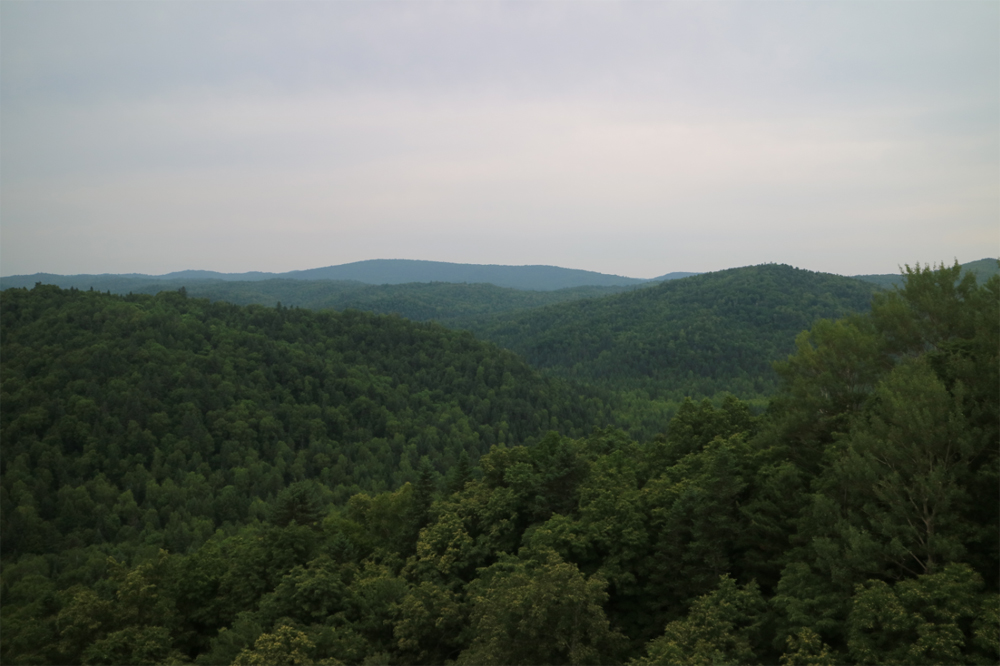
Methods We selected 32 tree species in a broadleaved and Pinus koraiensis mixed forest in Muling City, Heilongjiang Province. Bark, sapwood, and heartwood of stem at the breast height were collected to analyze the variation of NSC concentrations with wood porosity and tissue.
Important findings (1) Tree species, tissue and wood porosity significantly affected the NSC concentration of trunk. The interspecific variation of concentrations of soluble sugars, starch, total NSC and sugar/starch in the three tissues was large, with the lowest coefficient of variation of 37% (total NSC concentration in bark) and the highest of 101% (starch concentration in heartwood). Tissue, species and their interactions significantly affected trunk NSC concentration. (2) The concentrations of soluble sugar, starch and total NSC decreased with the increasing radial depth. The concentration of soluble sugars and sugar/starch in bark of non-porous species was significantly higher than those of diffuse-porous and ring-porous species. The concentration of starch and total NSC in sapwood was in the order of ring-porous > diffuse-porous > non diffuse-porous wood species. (3) The ratio of soluble sugars, starch and total NSC concentrations in sapwood to in heartwood was about 1 for non-porous wood species, which was significantly lower than those for diffuse-porous and ring-porous wood species, and the correlation of the starch concentration between sapwood and heartwood of non-porous wood was more significant than that of the other two wood-porous types, indicating that the functional differentiation between sapwood and heartwood was clearer for angiosperms than for gymnosperms. These results revealed that wood porosity influenced storage strategy of NSC in trunks of temperate tree species, and it was necessary to distinguish trunk tissues in the study of the whole-tree NSC storage and the ecophysiological function of trees.
Key words: non-structural carbohydrate; temperate forest; trunk; soluble sugar; starch
DONG Han-Jun, WANG Xing-Chang, YUAN Dan-Yang, LIU Di, LIU Yu-Long, SANG Ying, WANG Xiao-Chun . Radial distribution differences of non-structural carbohydrates in stems of tree species of different wood in a temperate forest[J]. Chinese Journal of Plant Ecology, 2022 , 46(6) : 722 -734 . DOI: 10.17521/cjpe.2021.0467
| [1] | Anderegg WRL, Callaway ES (2012). Infestation and hydraulic consequences of induced carbon starvation. Plant Physiology, 159, 1866-1874. |
| [2] | Aritsara ANA, Razakandraibe VM, Ramananantoandro T, Gleason SM, Cao KF (2021). Increasing axial parenchyma fraction in the Malagasy Magnoliids facilitated the co- soptimisation of hydraulic efficiency and safety. New Phytologist, 229, 1467-1480. |
| [3] | Barbaroux C, Bréda N (2002). Contrasting distribution and seasonal dynamics of carbohydrate reserves in stem wood of adult ring-porous sessile oak and diffuse-porous beech trees. Tree Physiology, 22, 1201-1210. |
| [4] | Barbaroux C, Bréda N, Dufrêne E (2003). Distribution of above-ground and below-ground carbohydrate reserves in adult trees of two contrasting broad-leaved species (Quercus petraea and Fagus sylvatica). New Phytologist, 157, 605-615. |
| [5] | Chantuma P, Lacointe A, Kasemsap P, Thanisawanyangkura S, Gohet E, Clément A, Guilliot A, Améglio T, Thaler P (2009). Carbohydrate storage in wood and bark of rubber trees submitted to different level of C demand induced by latex tapping. Tree Physiology, 29, 1021-1031. |
| [6] | Chapin III FS, Schulze E, Mooney HA (1990). The ecology and economics of storage in plants. Annual Review of Ecology and Systematics, 21, 423-447. |
| [7] | Chen ZC, Zhu SD, Zhang YT, Luan JW, Li S, Sun PS, Wan XC, Liu SR (2020). Tradeoff between storage capacity and embolism resistance in the xylem of temperate broadleaf tree species. Tree Physiology, 40, 1029-1042. |
| [8] | Cheng FY, Wang CK (2016). Impacts of tree species and tissue on estimation of nonstructural carbohydrates storage in trunk. Scientia Silvae Sinicae, 52(2), 1-9. |
| [8] | [成方妍, 王传宽 (2016). 树种和组织对树干非结构性碳水化合物储量估测的影响. 林业科学, 52(2), 1-9.] |
| [9] | D'Andrea E, Scartazza A, Battistelli A, Collalti A, Proietti S, Rezaie N, Matteucci G, Moscatello S (2021). Unravelling resilience mechanisms in forests: role of non-structural carbohydrates in responding to extreme weather events. Tree Physiology, 41, 1808-1818. |
| [10] | Epron D, Dannoura M, Hölttä T (2019). Introduction to the invited issue on phloem function and dysfunction. Tree Physiology, 39, 167-172. |
| [11] | Furze ME, Huggett BA, Aubrecht DM, Stolz CD, Carbone MS, Richardson AD (2019). Whole-tree nonstructural carbohydrate storage and seasonal dynamics in five temperate species. New Phytologist, 221, 1466-1477. |
| [12] | Godfrey JM, Riggio J, Orozco J, Guzmán-Delgado P, Chin ARO, Zwieniecki MA (2020). Ray fractions and carbohydrate dynamics of tree species along a 2750 m elevation gradient indicate climate response, not spatial storage limitation. New Phytologist, 225, 2314-2330. |
| [13] | Hartmann H, Trumbore S (2016). Understanding the roles of nonstructural carbohydrates in forest trees-From what we can measure to what we want to know. New Phytologist, 211, 386-403. |
| [14] | Hoch G, Richter A, Körner C (2003). Non-structural carbon compounds in temperate forest trees. Plant, Cell & Environment, 26, 1067-1081. |
| [15] | Magel EA, Drouet A, Claudot AC, Ziegler H (1991). Formation of heartwood substances in the stemwood of Robinia pseudoacacia L. Trees, 5, 203-207. |
| [16] | Morris H, Plavcová L, Gorai M, Klepsch MM, Kotowska M, Jochen Schenk H, Jansen S (2018). Vessel-associated cells in angiosperm xylem: highly specialized living cells at the symplast-apoplast boundary. American Journal of Botany, 105, 151-160. |
| [17] | Nakada R, Fukatsu E (2012). Seasonal variation of heartwood formation in Larix kaempferi. Tree Physiology, 32, 1497-1508. |
| [18] | O'Brien MJ, Leuzinger S, Philipson CD, Tay J, Hector A (2014). Drought survival of tropical tree seedlings enhanced by non-structural carbohydrate levels. Nature Climate Change, 4, 710-714. |
| [19] | Plavcová L, Jansen S (2015). The role of xylem parenchyma in the storage and utilization of nonstructural carbohydrates. Functional and Ecological Xylem Anatomy, 209-234. |
| [20] | Pratt RB, Jacobsen AL (2017). Conflicting demands on angiosperm xylem: tradeoffs among storage, transport and biomechanics. Plant, Cell & Environment, 40, 897-913. |
| [21] | Richardson AD, Carbone MS, Keenan TF, Czimczik CI, Hollinger DY, Murakami P, Schaberg PG, Xu XM (2013). Seasonal dynamics and age of stemwood nonstructural carbohydrates in temperate forest trees. New Phytologist, 197, 850-861. |
| [22] | Rosell JA (2019). Bark in woody plants: understanding the diversity of a multifunctional structure. Integrative and Comparative Biology, 59, 535-547. |
| [23] | Rosell JA, Piper FI, Jiménez-Vera C, Vergílio PCB, Marcati CR, Castorena M, Olson ME (2021). Inner bark as a crucial tissue for non-structural carbohydrate storage across three tropical woody plant communities. Plant, Cell & Environment, 44, 156-170. |
| [24] | Sevanto S, McDowell NG, Dickman LT, Pangle R, Pockman WT (2014). How do trees die? A test of the hydraulic failure and carbon starvation hypotheses. Plant, Cell & Environment, 37, 153-161. |
| [25] | Spicer R (2005). Senescence in secondary xylem: heartwood formation as an active developmental program. Vascular Transport in Plants, 22, 457-475. |
| [26] | Spicer R (2016). Variation in angiosperm wood structure and its physiological and evolutionary significance//Groover A, Cronk Q. Comparative and Evolutionary Genomics of Angiosperm Trees, Plant Genetics and Genomics: Crops and Models. Springer, Cham, Switzerland. Switzerland. 19-60. |
| [27] | Taylor AM, Gartner BL, Morrell JJ (2002). Heartwood formation and natural durability: a review. Wood and Fiber Science, 34, 587-611. |
| [28] | Tyree MT, Zimmermann MH (2002). Xylem Structure and the Ascent of Sap. Springer, Berlin. |
| [29] | Wang C, Li YX, Wang ZC, Meng YB (2021). Analysis of NSC variation sources of main tree species in Xiaoxing'An mountains conifer and broadleaf mixed natural secondary forest. Forest Engineering, 37(3), 36-43. |
| [29] | [王晨, 李耀翔, 王子纯, 孟永斌 (2021). 小兴安岭针阔混交天然次生林主要树种NSC变异来源分析. 森林工程, 37(3), 36-43.] |
| [30] | Wang K, Song Q, Zhang RS, Zhang DP, Sun J (2020). Distribution characteristics of non-structural carbohydrate in main tree species of shelterbelt forests in horqin sandy land. Scientia Silvae Sinicae, 56(12), 39-48. |
| [30] | [王凯, 宋琪, 张日升, 张大鹏, 孙菊 (2020). 科尔沁沙地防护林主要树种的非结构性碳水化合物分布特征. 林业科学, 56(12), 39-48.] |
| [31] | Wang XC, Wang CK, Zhang QZ, Quan XK (2010). Heartwood and sapwood allometry of seven Chinese temperate tree species. Annals of Forest Science, 67, 410. DOI: 10.1051/forest/2009131. |
| [32] | Wei LN, Zhou GJ, Sun HL, Zhao X (2021). Effects of nitrogen and phosphorus fertilization on photosynthetic characteristics and non-structural carbohydrate of Fraxinus mandshurica. Forest Engineering, 37(5), 20-27. |
| [32] | [魏丽娜, 周冠军, 孙海龙, 赵鑫 (2021). 氮磷施肥对水曲柳叶片光合特征及体内非结构性碳的影响. 森林工程, 37(5), 20-27.] |
| [33] | Yang QP, Zhang WD, Li RS, Xu M, Wang SL (2016). Different responses of non-structural carbohydrates in above- ground tissues/organs and root to extreme drought and re- watering in Chinese fir (Cunninghamia lanceolata) saplings. Trees, 30, 1863-1871. |
| [34] | Yu LM, Wang CK, Wang XC (2011). Allocation of nonstructural carbohydrates for three temperate tree species in Northeast China. Chinese Journal of Plant Ecology, 35, 1245-1255. |
| [34] | [于丽敏, 王传宽, 王兴昌 (2011). 三种温带树种非结构性碳水化合物的分配. 植物生态学报, 35, 1245-1255.] |
| [35] | Yuan DY, Zhu LJ, Cherubini P, Li ZS, Zhang YD, Wang XC (2021). Species-specific indication of 13 tree species growth on climate warming in temperate forest community of northeast China. Ecological Indicators, 133, 108389. DOI: 10.1016/j.ecolind.2021.108389. |
| [36] | Zhang HY, Wang CK, Wang XC (2014). Spatial variations in non-structural carbohydrates in stems of twelve temperate tree species. Trees, 28, 77-89. |
| [37] | Zhang HY, Wang CK, Wang XC, Cheng FY (2013). Spatial variation of non-structural carbohydrates in Betula platyphylla and Tilia amurensis stems. Chinese Journal of Applied Ecology, 24, 3050-3056. |
| [37] | [张海燕, 王传宽, 王兴昌, 成方妍 (2013). 白桦和紫椴树干非结构性碳水化合物的空间变异. 应用生态学报, 24, 3050-3056.] |
| [38] | Ziemińska K, Rosa E, Gleason SM, Holbrook NM (2020). Wood day capacitance is related to water content, wood density, and anatomy across 30 temperate tree species. Plant, Cell & Environment, 43, 3048-3067. |
/
| 〈 |
|
〉 |
Copyright © 2026 Chinese Journal of Plant Ecology
Tel: 010-62836134, 62836138, E-mail: apes@ibcas.ac.cn, cjpe@ibcas.ac.cn

