
Chin J Plant Ecol ›› 2026, Vol. 50 ›› Issue (3): 660-673.DOI: 10.17521/cjpe.2025.0037 cstr: 32100.14.cjpe.2025.0037
• Research Articles • Previous Articles Next Articles
LI Wen-Zhu1,2, LUAN Jun-Wei1,2,*( ), DI Ya-Ping2,3, WANG Yi2, NIE Xiu-Qing3, LIU Shi-Rong3
Received:2025-01-26
Accepted:2025-03-21
Online:2026-03-20
Published:2026-04-22
Contact:
LUAN Jun-Wei
Supported by:LI Wen-Zhu, LUAN Jun-Wei, DI Ya-Ping, WANG Yi, NIE Xiu-Qing, LIU Shi-Rong. Effects of manipulative drought on mycorrhiza-mediated soil enzyme activities and soil organic carbon fractions in a warm temperate Quercus aliena var. acuteserrata forest[J]. Chin J Plant Ecol, 2026, 50(3): 660-673.
Add to citation manager EndNote|Ris|BibTeX
URL: https://www.plant-ecology.com/EN/10.17521/cjpe.2025.0037
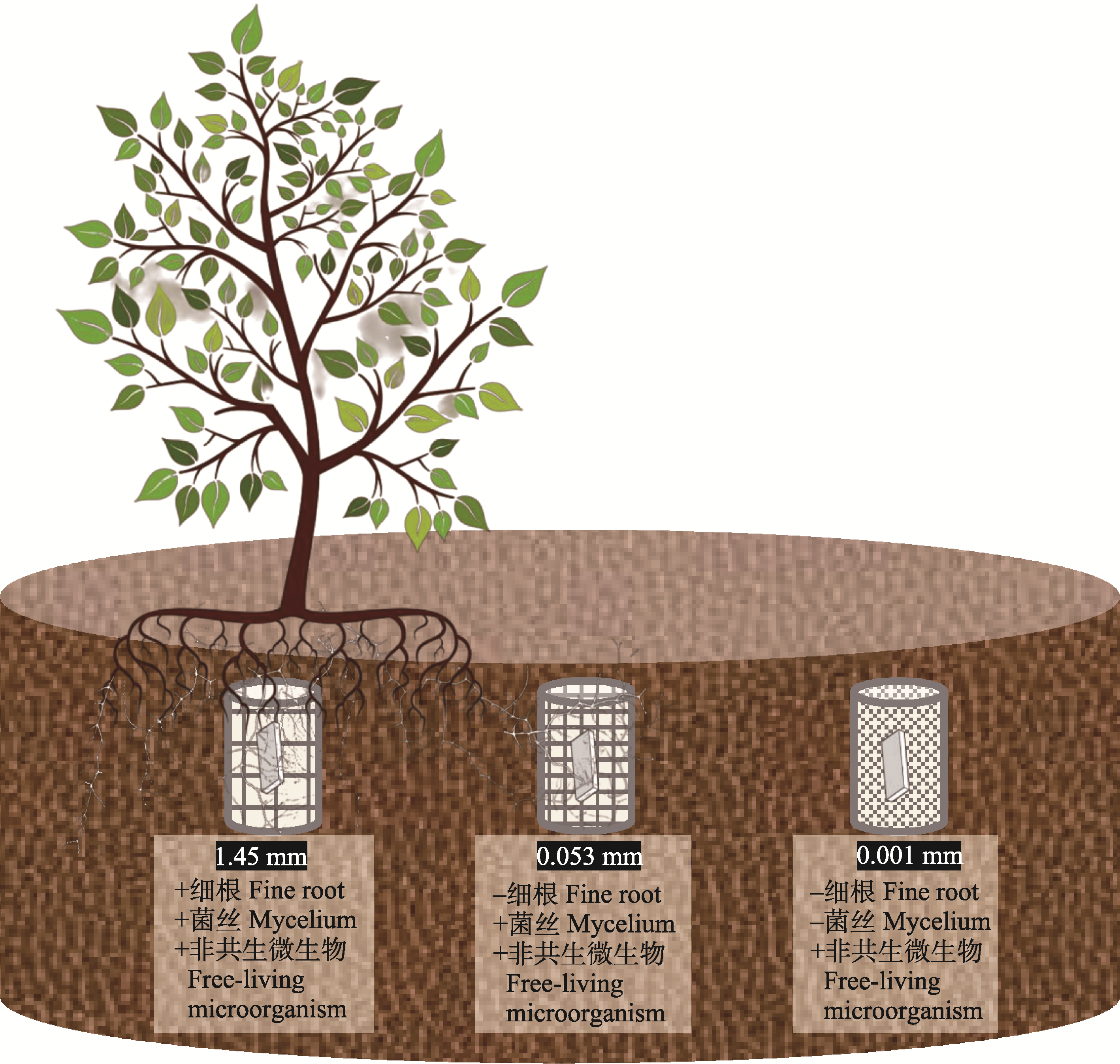
Fig. 1 Schematic diagram of the microcosm setup. Our microcosm model has 3 mesh sizes: 1.45 mm (root-mycorrhizal-microbial interactions), 0.053 mm (mycorrhizal-microbial interactions), and 0.001 mm (only free-living microorganism). Brown lines are roots, white lines are mycelium, and gray rectangles are mycelium bags.
| 胞外酶 Extracellular enzyme | 简称 Acronym | 功能 Function | 底物 Subtrate |
|---|---|---|---|
| β-1,4-葡萄糖苷酶 β-1,4-glucosidase | BG | 分解纤维素生成葡萄糖等单糖 Degrade cellulose to glucose and monosaccharides | 4-甲基伞形酮-α-D-葡萄糖苷 4-MUB-α-D-glucoside |
| β-1,4-木糖苷酶 β-1,4-xylanase | BX | 分解木聚糖生成木糖 Degrade xylan to xylose | 4-甲基伞形酮-α-D-葡萄糖苷 4-MUB-α-D-glucoside |
| 纤维二糖水解酶 Cellobiohydrolase | CB | 分解纤维素为纤维二糖 Degrade cellulose to cellobiose | 4-甲基伞形酮-α-D-葡萄糖苷 4-MUB-α-D-glucoside |
| 过氧化物酶 Peroxidase | PER | 分解难分解物质 Degrade refractory substances | 左旋多巴 L-DOPA |
| 多酚氧化酶 Polyphenol oxidase | POX | 分解难分解物质 Degrade refractory substances | 左旋多巴 L-DOPA |
Table 1 The substrate basic information
| 胞外酶 Extracellular enzyme | 简称 Acronym | 功能 Function | 底物 Subtrate |
|---|---|---|---|
| β-1,4-葡萄糖苷酶 β-1,4-glucosidase | BG | 分解纤维素生成葡萄糖等单糖 Degrade cellulose to glucose and monosaccharides | 4-甲基伞形酮-α-D-葡萄糖苷 4-MUB-α-D-glucoside |
| β-1,4-木糖苷酶 β-1,4-xylanase | BX | 分解木聚糖生成木糖 Degrade xylan to xylose | 4-甲基伞形酮-α-D-葡萄糖苷 4-MUB-α-D-glucoside |
| 纤维二糖水解酶 Cellobiohydrolase | CB | 分解纤维素为纤维二糖 Degrade cellulose to cellobiose | 4-甲基伞形酮-α-D-葡萄糖苷 4-MUB-α-D-glucoside |
| 过氧化物酶 Peroxidase | PER | 分解难分解物质 Degrade refractory substances | 左旋多巴 L-DOPA |
| 多酚氧化酶 Polyphenol oxidase | POX | 分解难分解物质 Degrade refractory substances | 左旋多巴 L-DOPA |
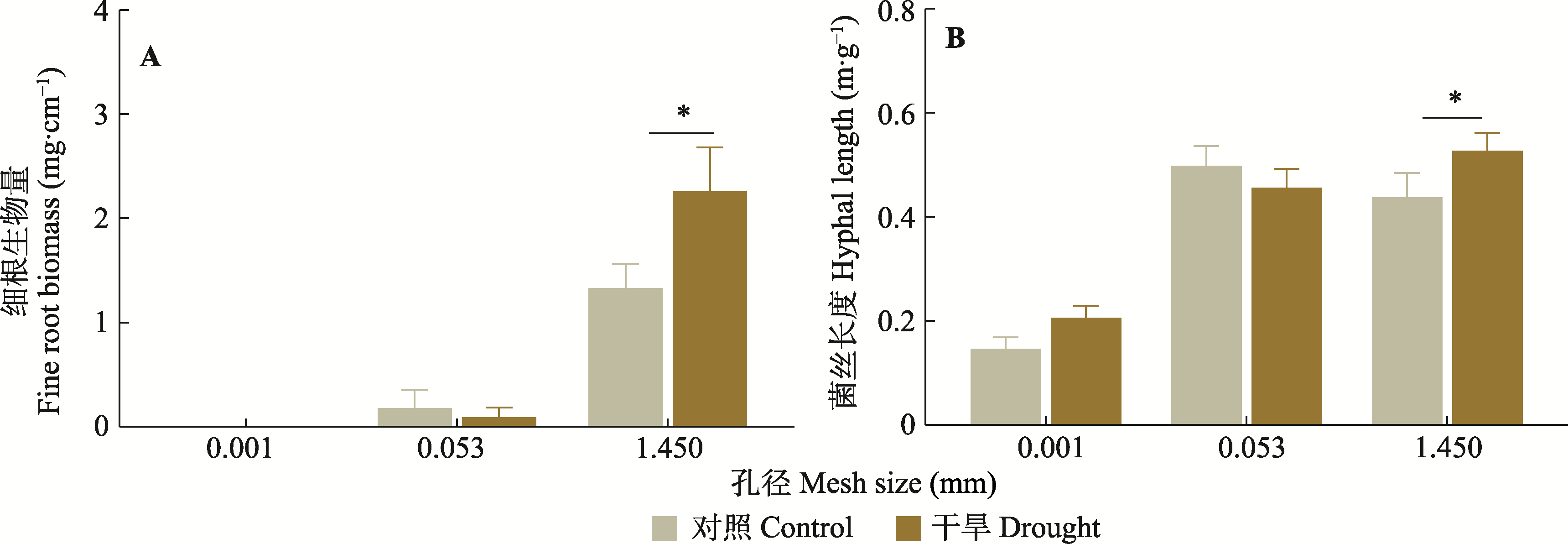
Fig. 2 Effect of drought on fine root biomass (A) and hyphal length (B) (mean ± SE). 0.001 mm, only free-living microbial interactions; 0.053 mm, mycorrhizal fungal-microbial interactions; 1.45 mm, root-mycorrhizal fungal-microbial interactions. *, p < 0.05.
| 因变量 Variable | 孔径 Mesh size | 干旱处理 Drought | 孔径×干旱 Mesh × drought | |||
|---|---|---|---|---|---|---|
| F | p | F | p | F | p | |
| BG | 31.231 | <0.001 | 39.406 | <0.001 | 11.040 | 0.004 |
| BX | 61.029 | <0.001 | 11.606 | <0.001 | 6.070 | 0.048 |
| CB | 89.126 | <0.001 | 14.898 | <0.001 | 3.054 | 0.217 |
| PER | 4.965 | 0.084 | 2.713 | 0.099 | 7.248 | 0.027 |
| POX | 2.644 | 0.266 | 3.506 | 0.061 | 0.460 | 0.794 |
| MBC | 9.008 | <0.001 | 1.475 | 0.227 | 1.533 | 0.221 |
| POC | 25.919 | <0.001 | 3.992 | 0.047 | 0.858 | 0.651 |
| MAOC | 3.641 | 0.162 | 4.014 | 0.045 | 4.232 | 0.121 |
| δ13C-CO2 | 0.958 | 0.387 | 0.370 | 0.544 | 3.314 | 0.040 |
Table 2 Analysis results of soil enzyme activity, carbon fractions and isotopic characteristics
| 因变量 Variable | 孔径 Mesh size | 干旱处理 Drought | 孔径×干旱 Mesh × drought | |||
|---|---|---|---|---|---|---|
| F | p | F | p | F | p | |
| BG | 31.231 | <0.001 | 39.406 | <0.001 | 11.040 | 0.004 |
| BX | 61.029 | <0.001 | 11.606 | <0.001 | 6.070 | 0.048 |
| CB | 89.126 | <0.001 | 14.898 | <0.001 | 3.054 | 0.217 |
| PER | 4.965 | 0.084 | 2.713 | 0.099 | 7.248 | 0.027 |
| POX | 2.644 | 0.266 | 3.506 | 0.061 | 0.460 | 0.794 |
| MBC | 9.008 | <0.001 | 1.475 | 0.227 | 1.533 | 0.221 |
| POC | 25.919 | <0.001 | 3.992 | 0.047 | 0.858 | 0.651 |
| MAOC | 3.641 | 0.162 | 4.014 | 0.045 | 4.232 | 0.121 |
| δ13C-CO2 | 0.958 | 0.387 | 0.370 | 0.544 | 3.314 | 0.040 |
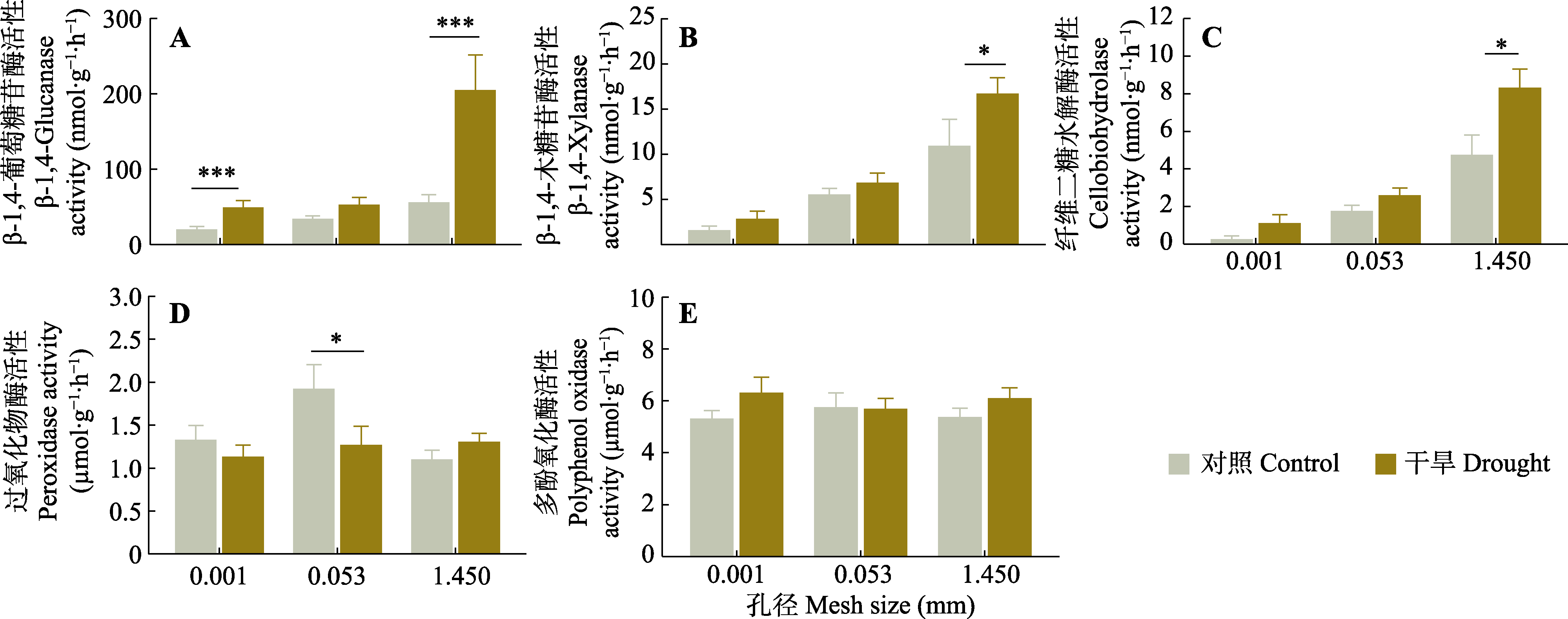
Fig. 3 Effect of drought on soil enzyme activities (mean ± SE). 0.001 mm, only free-living microbial interactions; 0.053 mm, mycorrhizal fungal-microbial interactions; 1.45 mm, root-mycorrhizal fungal-microbial interactions. *, p < 0.05; ***, p < 0.001.
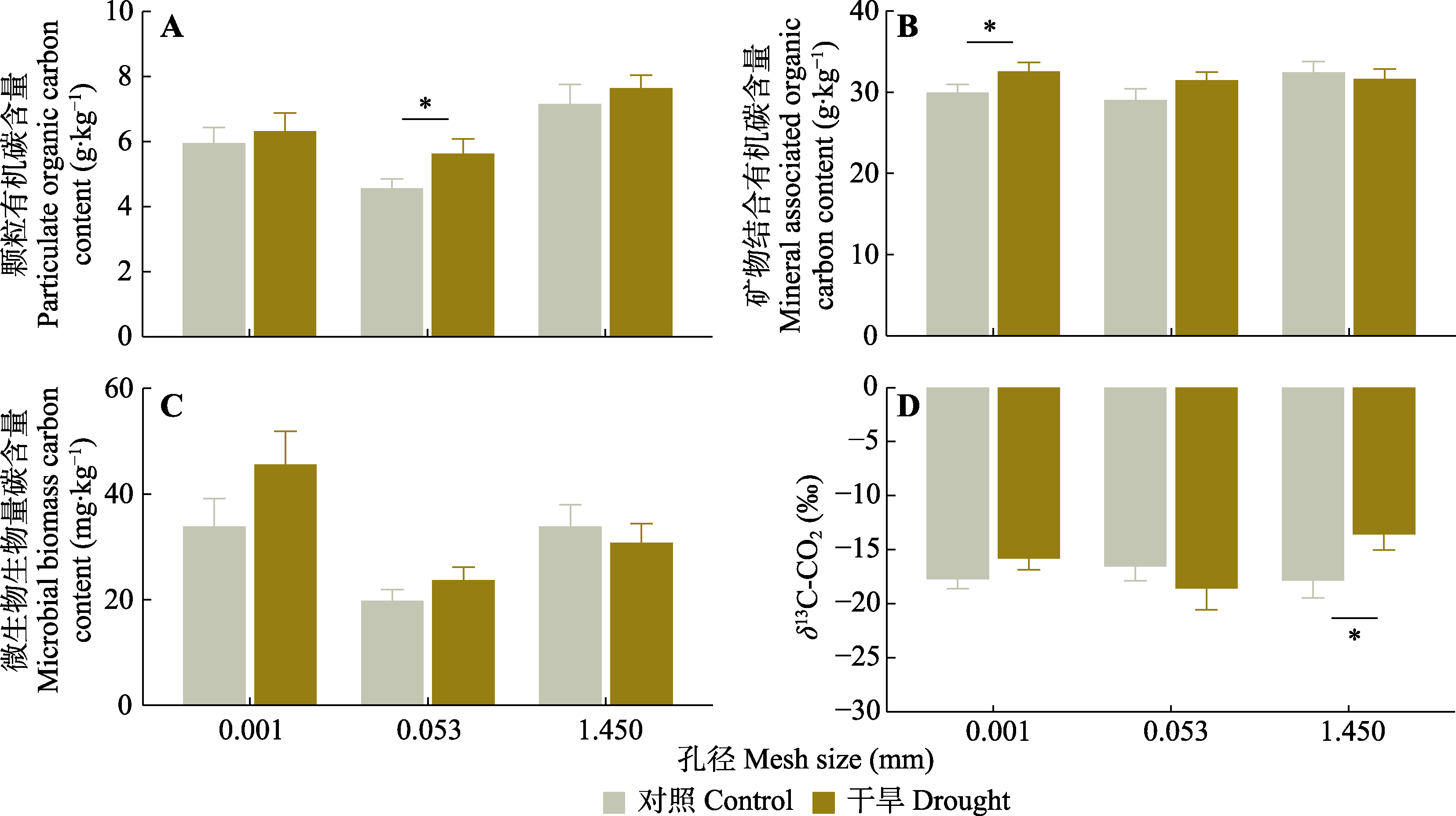
Fig. 4 Effects of drought on soil organic carbon fractions and stable isotopic characteristics (mean ± SE). 0.001 mm, only free-living microbial interactions; 0.053 mm, mycorrhizal fungal-microbial interactions; 1.45 mm, root-mycorrhizal fungal-microbial interactions. *, p < 0.05. δ13C, stable carbon isotope composition.
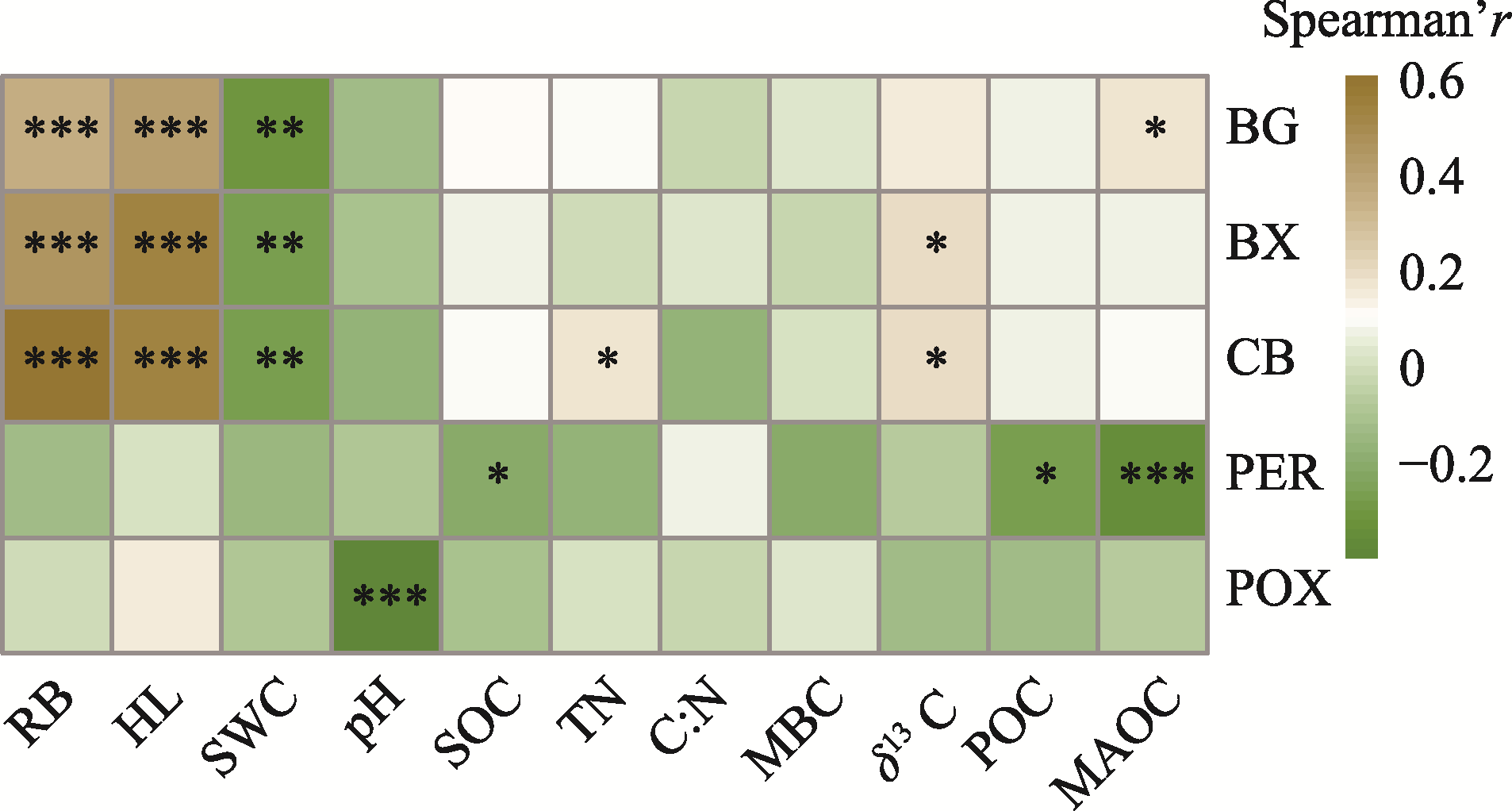
Fig. 5 Correlation analysis between soil biotic and abiotic indicators and soil enzyme activities. δ13C, stable carbon isotopic composition of CO2 in soil respiration; BG, β-1,4-glucanase activity; BX, β-1,4-xylanase activity; C:N, ratio of carbon to nitrogen; CB, cellobiohydrolase activity; HL, hyphal length; MAOC, mineral associated organic carbon content; mBC, Microbial biomass carbon content; PER, peroxidase activity; POC, particulate organic carbon content; POX, polyphenol oxidase activity; RB, fine root biomass; SOC, soil organic carbon content; SWC, soil water content; TN, total nitrogen content. Brown indicates a positive correlation, green indicates a negative correlation, and the darker the color, the greater the correlation coefficient; *, p < 0.05; **, p < 0.01; ***, p < 0.001.
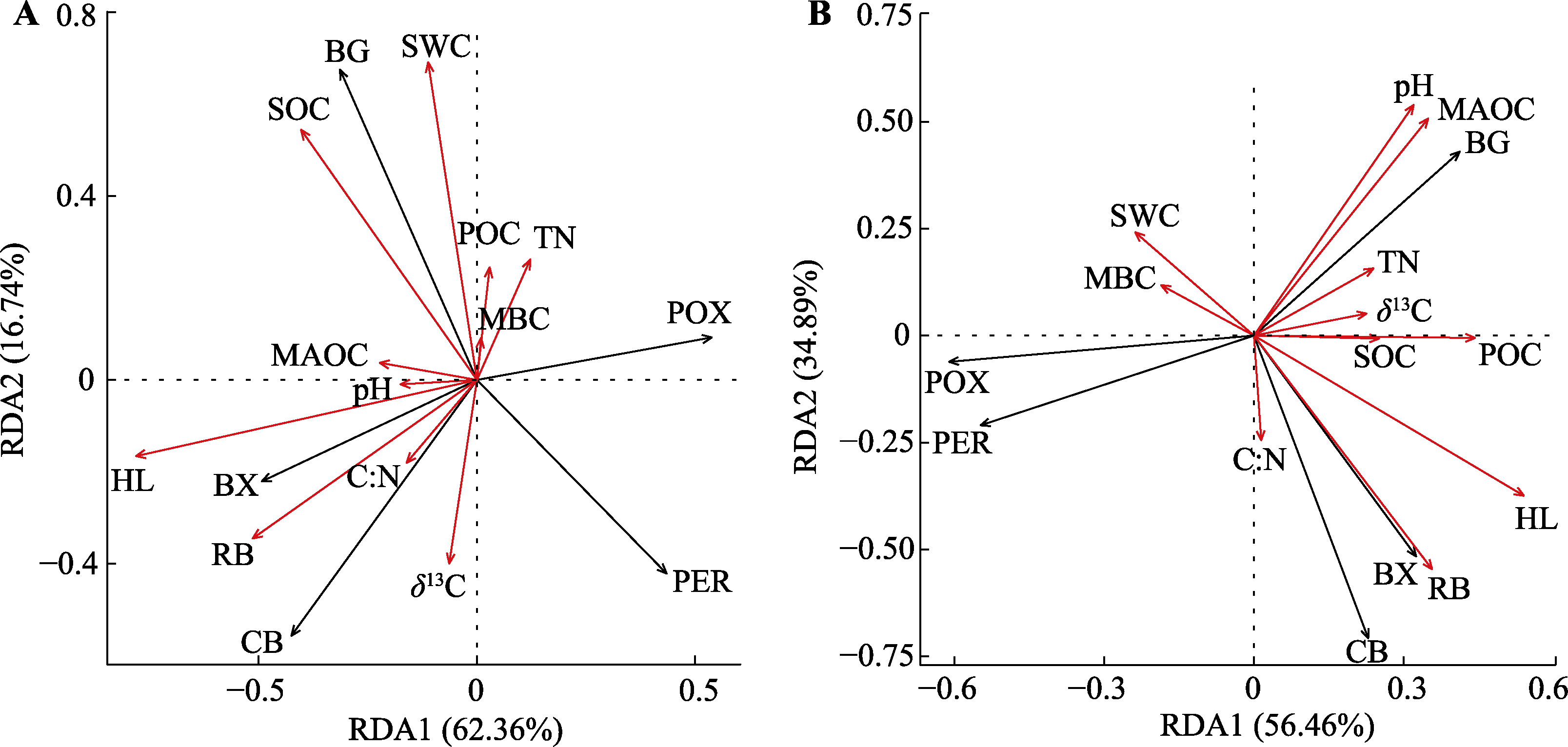
Fig. 6 Redundancy analysis (RDA) of soil biotic and abiotic indicators and soil enzyme activities under different drought treatments. A, Control. B, Drought. Indicators are the same as Fig. 5.
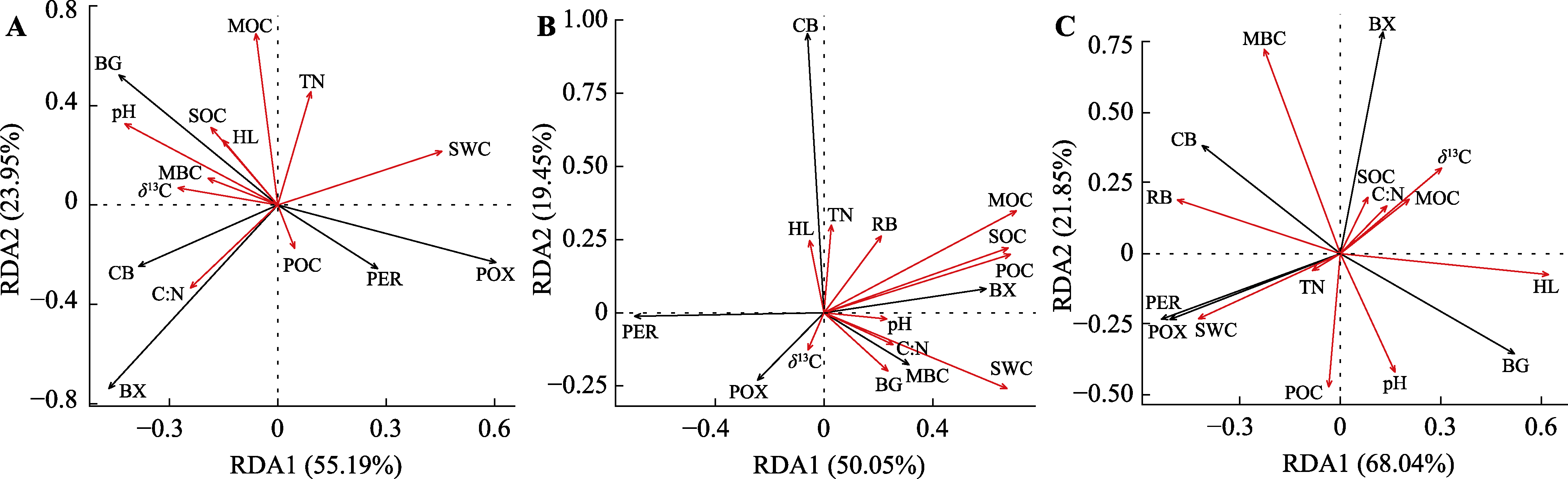
Fig. 7 Redundancy analysis (RDA) of soil biotic and abiotic indicators and soil enzyme activities in different mesh size microcosms. Mesh sizes for A, B, C are 0.001, 0.053 and 1.45 mm, respectively. Indicators are the same as Fig. 5.
| [1] | Allison SD, Weintraub MN, Gartner TB, Waldrop MP (2011). Evolutionary-economic principles as regulators of soil enzyme production and ecosystem function//Shukla G, Varma A. Soil Enzymology. Springer Press, Berlin. |
| [2] | Apostolakis A, Schöning I, Michalzik B, Ammer C, Schall P, Hänsel F, Nauss T, Trumbore S, Schrumpf M (2023). Forest structure and fine root biomass influence soil CO2 efflux in temperate forests under drought. Forests, 14, 411. DOI: 10.3390/f14020411. |
| [3] |
Averill C, Hawkes CV (2016). Ectomycorrhizal fungi slow soil carbon cycling. Ecology Letters, 19, 937-947.
DOI PMID |
| [4] | Baumert VL, Vasilyeva NA, Vladimirov AA, Meier IC, Kögel-Knabner I, Mueller CW (2018). Root exudates induce soil macroaggregation facilitated by fungi in subsoil. Frontiers in Environmental Science, 6, 140. DOI: 10.3389/fenvs.2018.00140. |
| [5] | Bogati K, Walczak M (2022). The impact of drought stress on soil microbial community, enzyme activities and plants. Agronomy, 12, 189. DOI: 10.3390/agronomy12010189. |
| [6] |
Brabcová V, Nováková M, Davidová A, Baldrian P (2016). Dead fungal mycelium in forest soil represents a decomposition hotspot and a habitat for a specific microbial community. New Phytologist, 210, 1369-1381.
DOI PMID |
| [7] |
Broeckling CD, Broz AK, Bergelson J, Manter DK, Vivanco JM (2008). Root exudates regulate soil fungal community composition and diversity. Applied and Environmental Microbiology, 74, 738-744.
DOI PMID |
| [8] |
Brunner I, Herzog C, Dawes MA, Arend M, Sperisen C (2015). How tree roots respond to drought. Frontiers in Plant Science, 6, 547. DOI: 10.3389/fpls.2015.00547.
PMID |
| [9] |
Brzostek ER, Greco A, Drake JE, Finzi AC (2011). Root carbon inputs to the rhizosphere stimulate extracellular enzyme activity and increase nitrogen availability in temperate forest soils. Biogeochemistry, 115, 65-76.
DOI URL |
| [10] |
Burns RG, DeForest JL, Marxsen J, Sinsabaugh RL, Stromberger ME, Wallenstein MD, Weintraub MN, Zoppini A (2013). Soil enzymes in a changing environment: current knowledge and future directions. Soil Biology & Biochemistry, 58, 216-234.
DOI URL |
| [11] | Butcher KR, Nasto MK, Norton JM, Stark JM (2020). Physical mechanisms for soil moisture effects on microbial carbon-use efficiency in a sandy loam soil in the western United States. Soil Biology & Biochemistry, 150, 107969. DOI: 10.1016/j.soilbio.2020.107969. |
| [12] |
Chen BD, Fu W, Wu SL, Zhu YG (2024). Involvements of mycorrhizal fungi in terrestrial ecosystem carbon cycling. Chinese Journal of Plant Ecology, 48, 1-20.
DOI URL |
|
[陈保冬, 付伟, 伍松林, 朱永官 (2024). 菌根真菌在陆地生态系统碳循环中的作用. 植物生态学报, 48, 1-20.]
DOI |
|
| [13] |
Courty PE, Bréda N, Garbaye J (2007). Relation between oak tree phenology and the secretion of organic matter degrading enzymes by Lactarius quietus ectomycorrhizas before and during bud break. Soil Biology & Biochemistry, 39,1655-1663.
DOI URL |
| [14] |
Csonka LN (1989). Physiological and genetic responses of bacteria to osmotic stress. Microbiological Reviews, 53, 121-147.
DOI PMID |
| [15] |
de Nijs EA, Hicks LC, Leizeaga A, Tietema A, Rousk J (2019). Soil microbial moisture dependences and responses to drying-rewetting: The legacy of 18 years drought. Global Change Biology, 25, 1005-1015.
DOI PMID |
| [16] | Deng L, Peng CH, Kim DG, Li JW, Liu YL, Hai XY, Liu QY, Huang CB, Shangguan ZP, Kuzyakov Y (2021). Drought effects on soil carbon and nitrogen dynamics in global natural ecosystems. Earth-Science Reviews, 214, 103501. DOI: 10.1016/j.earscirev.2020.103501. |
| [17] |
Dijkstra FA, Zhu B, Cheng WX (2021). Root effects on soil organic carbon: a double-edged sword. New Phytologist, 230, 60-65.
DOI PMID |
| [18] |
Dungait JAJ, Hopkins DW, Gregory AS, Whitmore AP (2012). Soil organic matter turnover is governed by accessibility not recalcitrance. Global Change Biology, 18, 1781-1796.
DOI URL |
| [19] |
Finzi AC, Abramoff RZ, Spiller KS, Brzostek ER, Darby BA, Kramer MA, Phillips RP (2015). Rhizosphere processes are quantitatively important components of terrestrial carbon and nutrient cycles. Global Change Biology, 21, 2082-2094.
DOI PMID |
| [20] | Gadgil RL, Gadgil PD (1971). Mycorrhiza and litter decomposition. Nature, 233, 133. DOI: 10.1038/233133a0. |
| [21] |
Gallo M, Amonette R, Lauber C, Sinsabaugh R, Zak DR (2004). Microbial community structure and oxidative enzyme activity in nitrogen-amended north temperate forest soils. Microbial Ecology, 48, 218-229.
DOI PMID |
| [22] |
Genre A, Lanfranco L, Perotto S, Bonfante P (2020). Unique and common traits in mycorrhizal symbioses. Nature Reviews Microbiology, 18, 649-660.
DOI |
| [23] |
German DP, Weintraub MN, Grandy AS, Lauber CL, Rinkes ZL, Allison SD (2011). Optimization of hydrolytic and oxidative enzyme methods for ecosystem studies. Soil Biology & Biochemistry, 43, 1387-1397.
DOI URL |
| [24] | Hawkins HJ, Cargill RIM, van Nuland ME, Hagen SC, Field KJ, Sheldrake M, Soudzilovskaia NA, Kiers ET (2023). Mycorrhizal mycelium as a global carbon pool. Current Biology, 33, R560-R573. |
| [25] | Holz M, Zarebanadkouki M, Benard P, Hoffmann M, Dubbert M (2024). Root and rhizosphere traits for enhanced water and nutrients uptake efficiency in dynamic environments. Frontiers in Plant Science, 15, 1383373. DOI: 10.3389/fpls.2024.1383373. |
| [26] | Huang BB, Yan GY, Liu GC, Sun XY, Wang XC, Xing YJ, Wang QG (2022). Effects of long-term nitrogen addition and precipitation reduction on glomalin-related soil protein and soil aggregate stability in a temperate forest. Catena, 214, 106284. DOI: 10.1016/j.catena.2022.106284. |
| [27] | Intergovernmental Panel on Climate Change (2021). Climate Change 2021: The Physical Science Basis. Contribution of Working Group I to the Sixth Assessment Report of the Intergovernmental Panel on Climate Change. Cambridge University Press, Cambridge, UK. |
| [28] |
Itoo ZA, Ahmad Reshi Z (2013). The multifunctional role of ectomycorrhizal associations in forest ecosystem processes. The Botanical Review, 79, 371-400.
DOI URL |
| [29] | Kebert M, Kostić S, Stojnić S, Čapelja E, Markić AG, Zorić M, Kesić L, Flors V (2023). A fine-tuning of the plant hormones, polyamines and osmolytes by ectomycorrhizal fungi enhances drought tolerance in pedunculate oak. International Journal of Molecular Sciences, 24, 7510. DOI: 10.3390/ijms24087510. |
| [30] |
Keiluweit M, Bougoure JJ, Nico PS, Pett-Ridge J, Weber PK, Kleber M (2015). Mineral protection of soil carbon counteracted by root exudates. Nature Climate Change, 5, 588-595.
DOI |
| [31] |
Kuzyakov Y (2010). Priming effects: interactions between living and dead organic matter. Soil Biology & Biochemistry, 42, 1363-1371.
DOI URL |
| [32] |
Lavallee JM, Soong JL, Francesca Cotrufo M (2020). Conceptualizing soil organic matter into particulate and mineral-associated forms to address global change in the 21st century. Global Change Biology, 26, 261-273.
DOI PMID |
| [33] |
Lehmann J, Kleber M (2015). The contentious nature of soil organic matter. Nature, 528, 60-68.
DOI |
| [34] |
Lehto T, Zwiazek JJ (2011). Ectomycorrhizas and water relations of trees: a review. Mycorrhiza, 21, 71-90.
DOI PMID |
| [35] |
Li T, Lin G, Zhang X, Chen YL, Zhang SB, Chen BD (2014). Relative importance of an arbuscular mycorrhizal fungus (Rhizophagus intraradices) and root hairs in plant drought tolerance. Mycorrhiza, 24, 595-602.
DOI PMID |
| [36] |
Lin GG, McCormack ML, Ma CG, Guo DL (2017). Similar below-ground carbon cycling dynamics but contrasting modes of nitrogen cycling between arbuscular mycorrhizal and ectomycorrhizal forests. New Phytologist, 213, 1440-1451.
DOI PMID |
| [37] | Ling HY, Liu SR, Luan JW, Liu XJ, Niu XD, Zhang JL, Li X (2020). Effects of manipulated throughfall reduction on sap flux density of Quercus aliena var. acuteserrata. Acta Ecologica Sinica, 40, 2726-2734. |
| [凌海燕, 刘世荣, 栾军伟, 刘晓静, 牛晓栋, 张京磊, 李想 (2020). 模拟穿透雨减少对锐齿栎(Quercus aliena var. acuteserrata)树干液流密度的影响. 生态学报, 40, 2726-2734.] | |
| [38] | Liu CJ, Chen ZC, Liu SR, Cao KF, Niu BL, Liu XJ, Gao XM (2023). Multi-year throughfall reduction enhanced the growth and non-structural carbohydrate storage of roots at the expenses of above-ground growth in a warm-temperate natural oak forest. Forest Ecosystems, 10, 100118. DOI: 10.1016/j.fecs.2023.100118. |
| [39] |
Liu YC, Liu SR, Wan SQ, Wang JX, Wang H, Liu K (2017). Effects of experimental throughfall reduction and soil warming on fine root biomass and its decomposition in a warm temperate oak forest. Science of the Total Environment, 574, 1448-1455.
DOI URL |
| [40] | Lu HB, Liu SR, Wang H, Luan JW, Schindlbacher A, Liu YC, Wang Y (2017). Experimental throughfall reduction barely affects soil carbon dynamics in a warm-temperate oak forest, central China. Scientific Reports, 7, 15099. DOI: 10.1038/s41598-017-15157-3. |
| [41] | Luan JW, Li SY, Liu SR, Wang Y, Ding LP, Lu HB, Chen L, Zhang JH, Zhou WJ, Han SJ, Zhang YP, Hättenschwiler S (2024). Biodiversity mitigates drought effects in the decomposer system across biomes. Proceedings of the National Academy of Sciences of the United States of America, 121, e2313334121. DOI: 10.1073/pnas.2313334121. |
| [42] | Luan JW, Li SY, Wang Y (2023). A microcosmic device for separating the effects of roots and mycelium on soil carbon, nitrogen and other nutrient processes: CN202221961597.2. 2023-03-03. |
| [栾军伟, 李丝雨, 王一(2023). 一种分离根系和菌丝体对土壤碳氮等养分过程影响的微宇宙装置: CN202221961597.2. 2023-03-03.] | |
| [43] | Ma CK, Meng HB, Xie B, Li Q, Li XD, Zhou BB, Wang QJ, Luo Y (2022). In situ rainwater collection and infiltration system alleviates the negative effects of drought on plant-available water, fine root distribution and plant hydraulic conductivity. Forests, 13, 2082. DOI: 10.3390/f13122082. |
| [44] | Marjanović Ž, Uwe N, Hampp R (2005). Mycorrhiza formation enhances adaptive response of hybrid poplar to drought. Annals of the New York Academy of Sciences, 1048, 496-499. |
| [45] | Merino C, Godoy R, Matus F (2016). Soil enzymes and biological activity at different levels of organic matter stability. Journal of Soil Science and Plant Nutrition, 16, 14-30. |
| [46] |
Miller RM, Jastrow JD (1990). Hierarchy of root and mycorrhizal fungal interactions with soil aggregation. Soil Biology & Biochemistry, 22, 579-584.
DOI URL |
| [47] |
Moore JAM, Jiang J, Patterson CM, Mayes MA, Wang GS, Classen AT (2015). Interactions among roots, mycorrhizas and free-living microbial communities differentially impact soil carbon processes. Journal of Ecology, 103, 1442-1453.
DOI URL |
| [48] | Nannipieri P, Ascher J, Ceccherini MT, Landi L, Pietramellara G, Renella G, Valori F (2007). Microbial diversity and microbial activity in the rhizosphere. Ciencia del suelo, 25, 89-97. |
| [49] | Nickel UT, Weikl F, Kerner R, Schäfer C, Kallenbach C, Munch JC, Pritsch K (2018). Quantitative losses vs. qualitative stability of ectomycorrhizal community responses to 3 years of experimental summer drought in a beech-spruce forest. Global Change Biology, 24, e560-e576. |
| [50] |
Olander LP, Vitousek PM (2000). Regulation of soil phosphatase and chitinase activityby N and P availability. Biogeochemistry, 49, 175-190.
DOI |
| [51] | Pataki DE, Bowling DR, Ehleringer JR (2003). Seasonal cycle of carbon dioxide and its isotopic composition in an urban atmosphere: anthropogenic and biogenic effects. Journal of Geophysical Research: Atmospheres, 108, 4735. DOI: 10.1029/2003JD003865. |
| [52] |
Preece C, Peñuelas J (2016). Rhizodeposition under drought and consequences for soil communities and ecosystem resilience. Plant and Soil, 409, 1-17.
DOI URL |
| [53] | Pulleman M, Wills S, Creamer R, Dick R, Ferguson R, Hooper D, Williams C, Margenot AJ (2021). Soil mass and grind size used for sample homogenization strongly affect permanganate-oxidizable carbon (POXC) values, with implications for its use as a national soil health indicator. Geoderma, 383, 114172. DOI: 10.1016/j.geoderma.2020.114742. |
| [54] |
Raich JW, Potter CS (1995). Global patterns of carbon dioxide emissions from soils. Global Biogeochemical Cycles, 9, 23-36.
DOI URL |
| [55] |
Rasse DP, Rumpel C, Dignac MF (2005). Is soil carbon mostly root carbon? Mechanisms for a specific stabilisation. Plant and Soil, 269, 341-356.
DOI URL |
| [56] |
Reichstein M, Ciais P, Papale D, Valentini R, Running S, Viovy N, Cramer W, Granier A, Ogée J, Allard V, Aubinet M, Bernhofer C, Buchmann N, Carrara A, Grünwald T, et al. (2007). Reduction of ecosystem productivity and respiration during the European summer 2003 climate anomaly: a joint flux tower, remote sensing and modelling analysis. Global Change Biology, 13, 634-651.
DOI URL |
| [57] |
Ren CJ, Zhao FZ, Shi Z, Chen J, Han XH, Yang GH, Feng YZ, Ren GX (2017). Differential responses of soil microbial biomass and carbon-degrading enzyme activities to altered precipitation. Soil Biology & Biochemistry, 115, 1-10.
DOI URL |
| [58] |
Saiya-Cork KR, Sinsabaugh RL, Zak DR (2002). The effects of long term nitrogen deposition on extracellular enzyme activity in an Acer saccharum forest soil. Soil Biology & Biochemistry, 34, 1309-1315.
DOI URL |
| [59] |
Sardans J, Peñuelas J (2005). Drought decreases soil enzyme activity in a Mediterranean Quercus ilex L. forest. Soil Biology & Biochemistry, 37, 455-461.
DOI URL |
| [60] |
Sasse J, Martinoia E, Northen T (2018). Feed your friends: Do plant exudates shape the root microbiome? Trends in Plant Science, 23, 25-41.
DOI PMID |
| [61] |
Schimel J, Balser TC, Wallenstein M (2007). Microbial stress-response physiology and its implications for ecosystem function. Ecology, 88, 1386-1394.
DOI PMID |
| [62] |
Shah F, Nicolás C, Bentzer J, Ellström M, Smits M, Rineau F, Canbäck B, Floudas D, Carleer R, Lackner G, Braesel J, Hoffmeister D, Henrissat B, Ahrén D, Johansson T, et al. (2016). Ectomycorrhizal fungi decompose soil organic matter using oxidative mechanisms adapted from saprotrophic ancestors. New Phytologist, 209, 1705-1719.
DOI PMID |
| [63] | Siemens JA, Zwiazek JJ (2008). Root hydraulic properties and growth of balsam poplar (Populus balsamifera) mycorrhizal with Hebeloma crustuliniforme and Wilcoxina mikolae var. mikolae. Mycorrhiza, 18, 393-401. |
| [64] |
Sinsabaugh RL, Lauber CL, Weintraub MN, Ahmed B, Allison SD, Crenshaw C, Contosta AR, Cusack D, Frey S, Gallo ME, Gartner TB, Hobbie SE, Holland K, Keeler BL, Powers JS, et al. (2008). Stoichiometry of soil enzyme activity at global scale. Ecology Letters, 11, 1252-1264.
DOI PMID |
| [65] |
Sterkenburg E, Clemmensen KE, Ekblad A, Finlay RD, Lindahl BD (2018). Contrasting effects of ectomycorrhizal fungi on early and late stage decomposition in a boreal forest. The ISME Journal, 12, 2187-2197.
DOI URL |
| [66] |
Tisdall JM, Oades JM (1982). Organic matter and water-stable aggregates in soils. Journal of Soil Science, 33, 141-163.
DOI URL |
| [67] |
Väljamäe P, Sild V, Nutt A, Pettersson G, Johansson G (1999). Acid hydrolysis of bacterial cellulose reveals different modes of synergistic action between cellobiohydrolase I and endoglucanase I. European Journal of Biochemistry, 266, 327-334.
DOI PMID |
| [68] |
Vance ED, Brookes PC, Jenkinson DS (1987). An extraction method for measuring soil microbial biomass C. Soil Biology & Biochemistry, 19, 703-707.
DOI URL |
| [69] | Villarino SH, Pinto P, Jackson RB, Piñeiro G (2021). Plant rhizodeposition: a key factor for soil organic matter formation in stable fractions. Science Advances, 7, eabd3176. DOI : 10.1126/sciadvabd3176. |
| [70] |
Walker Jf, Miller OK Jr, Horton JL (2005). Hyperdiversity of ectomycorrhizal fungus assemblages on oak seedlings in mixed forests in the southern Appalachian Mountains. Molecular Ecology, 14, 829-838.
PMID |
| [71] |
Wang RZ, Cavagnaro TR, Jiang Y, Keitel C, Dijkstra FA (2021). Carbon allocation to the rhizosphere is affected by drought and nitrogen addition. Journal of Ecology, 109, 3699-3709.
DOI URL |
| [72] | Wang SY, We H, Chen KY, Dong Q, Ji BM and Zhang J(2022). Practical methods for arbuscular mycorrhizal fungal spore density, hyphal density and colonization rate of AMF. BIO-101, e2104253. DOI: 10.21769/BioProtoc.2104253. |
| [王思雨, 魏涵, 陈科宇, 董强, 纪宝明, 张静 (2022). 丛枝菌根真菌(AMF)孢子、菌丝密度及侵染率定量测定方法. BIO-101, e2104253. DOI: 10.21769/BioProtoc.2104253.] | |
| [73] |
Warcup JH (1980). Ectomycorrhizal associations of Australian indigenous plants. New Phytologist, 85, 531-535.
DOI URL |
| [74] |
Wu SL, Fu W, Rillig MC, Chen BD, Zhu YG, Huang LB (2024). Soil organic matter dynamics mediated by arbuscular mycorrhizal fungi-an updated conceptual framework. New Phytologist, 242, 1417-1425.
DOI URL |
| [75] | Yan ZQ, Li Y, Wu HD, Zhang KR, Hao YB, Wang JZ, Zhang XD, Yan L, Kang XM (2020). Different responses of soil hydrolases and oxidases to extreme drought in an alpine peatland on the Qinghai-Tibet Plateau, China. European Journal of Soil Biology, 99, 103195. DOI: 0.1016/j.ejsobi.2020.103195. |
| [76] | Yang ZY, Zhou BZ, Chen QB, Ge XG, Wang XM, Cao YH, Tong R, Shi Y (2018). Effects of drought on root architecture and non-structural carbohydrate of Cunninghamia lanceolata. Acta Ecologica Sinica, 38, 6729-6740. |
| [杨振亚, 周本智, 陈庆标, 葛晓改, 王小明, 曹永慧, 童冉, 石洋 (2018). 干旱对杉木幼苗根系构型及非结构性碳水化合物的影响. 生态学报, 38, 6729-6740.] | |
| [77] | Zhang JL, Liu SR, Liu CJ, Wang H, Luan JW, Liu XJ, Guo XW, Niu BL (2021a). Soil bacterial and fungal richness and network exhibit different responses to long-term throughfall reduction in a warm-temperate oak forest. Forests, 12, 165. DOI: 10.3390/f12020165. |
| [78] | Zhang XC, Myrold DD, Shi LL, Kuzyakov Y, Dai HC, Thu Hoang DT, Dippold MA, Meng XT, Song XN, Li ZY, Zhou J, Razavi BS (2021b). Resistance of microbial community and its functional sensitivity in the rhizosphere hotspots to drought. Soil Biology & Biochemistry, 161, 108360. DOI: 10.1016/j.soilbio.2021.108360. |
| [79] |
Zhou XH, Zhou LY, Nie YY, Fu YL, Du ZG, Shao JJ, Zheng ZM, Wang XH (2016). Similar responses of soil carbon storage to drought and irrigation in terrestrial ecosystems but with contrasting mechanisms: a meta-analysis. Agriculture, Ecosystems & Environment, 228, 70-81.
DOI URL |
| [80] |
Zuccarini P, Sardans J, Asensio L, Peñuelas J (2023). Altered activities of extracellular soil enzymes by the interacting global environmental changes. Global Change Biology, 29, 2067-2091.
DOI PMID |
| [1] | LU Zhixiao, GAO Lu-Shuang, Yang Zhinian, Zhang Ruibo, Qin Li, Yeerjiang BAIKETUERHAN, HAN Xin-Yu, ZHANG Xinyu, Li Sijie. Drought legacy of Picea schrenkiana across elevations gradient in Western Tianshan Abstract [J]. Chin J Plant Ecol, 2026, 50(预发表): 1-. |
| [2] | TAN Qiu-Yan, ZHANG Qing, GAO Cheng, CHU Hai-Yan, YANG Teng. Ectomycorrhizal fungi: key drivers of carbon and nitrogen cycling in alpine ecosystems [J]. Chin J Plant Ecol, 2026, 50(3): 584-599. |
| [3] | MA Jian-Hui, TONG Xin, ZHANG Si-Rong, MAO Zi-Kun, QIN Jun, MA Ke-Ping. Research advances and perspectives on physiological and ecological functions of mycorrhizal fungi [J]. Chin J Plant Ecol, 2026, 50(3): 498-514. |
| [4] | WANG Meng-Xue, HU Ming-Yan, CHU Cheng-Jin, CHEN Yang, LUO Wen-Qi, MA Zi-Long. C, N, P stoichiometric characteristics of leaves and fine roots in different mycorrhizal tree species in subtropical forests [J]. Chin J Plant Ecol, 2026, 50(2): 334-343. |
| [5] | LIU Ying, LI Jiang-Feng, WU Jia-Qi, WANG Yi-Fan, YIN Qing-Lin, WANG Jing. Effects of root and mycorrhizal fungi of Cleistogenes squarrosa on soil carbon and nitrogen under drought conditions [J]. Chin J Plant Ecol, 2025, 49(9): 1388-1398. |
| [6] | FENG Mei, OUYANG Sheng-Nan, Matthias SAURER, LI Mai-He, ZHOU Xiao-Qian, TIE Lie-Hua, SHEN Wei-Jun, DUAN Hong-Lang, Arthur GESSLER. Effects of previous nitrogen addition on aboveground and belowground carbon and nitrogen allocation dynamics in drought-exposed sessile oak seedlings [J]. Chin J Plant Ecol, 2025, 49(9): 1527-1542. |
| [7] | WANG Yao, WANG Yao-Bin, CHEN Zi-Yan, YI Ru-Han, BAI Yong-Fei, ZHAO Yu-Jin, JIN Jing-Wei. Effect of consecutive drought on the resilience and resistance of the grasslands on the Mongolian Plateau [J]. Chin J Plant Ecol, 2025, 49(7): 1070-1081. |
| [8] | ZHANG Bin, ZHANG Hao-Cheng, QIAO Tian, LÜ Zhi-Bing, XU Ya-Nan, LI Xue-Qin, YUAN Xiang-Yang, FENG Mei-Chen, ZHANG Mei-Jun. Effect of arbuscular mycorrhizal fungi inoculation on non-structural carbohydrates and C, N and P stoichiometry in oat plants under drought stress [J]. Chin J Plant Ecol, 2025, 49(7): 1082-1095. |
| [9] | HU Xiao-Hui, WANG Xing-Chang, DONG Han-Jun, LIU Yu-Long, YUAN Dan-Yang, LIU Di, WANG Xiao-Chun. Variation and coordination of non-structural carbohydrates among organs in 32 tree species from a temperate conifer-broadleaf mixed forest in Northeast China [J]. Chin J Plant Ecol, 2025, 49(3): 432-445. |
| [10] | LIU Ke-Yan, HAN Lu, SONG Wu-Ye, ZHANG Chu-Rui, HU Xu, XU Hang, CHEN Li-Xin. Detection of drought effects on photosynthetic stability of vegetation on the Loess Plateau based on solar-induced chlorophyll fluorescence [J]. Chin J Plant Ecol, 2025, 49(3): 415-431. |
| [11] | WANG Kun-Ying, QIU Gui-Fu, LIU Zi-He, MENG Jun, LIU Yu-Xuan, JIA Guo-Dong. Climate change regulate tree growth and intrinsic water use efficiency of Populus simonii at different levels of degradation [J]. Chin J Plant Ecol, 2025, 49(2): 343-355. |
| [12] | SHAO Chang-Chang, DUAN Hong-Lang, ZHAO Xi-Zhou, DING Gui-Jie. Research progress on the prediction of drought death point and the mechanism of drought- induced tree mortality [J]. Chin J Plant Ecol, 2025, 49(2): 221-231. |
| [13] | JIA Hui-Lin, NI Long-Kang, QIN Jia-Shuang, LIAO Su-Hui, TAN Yu, HE Jia-Yi, GU Da-Xing. Dynamics of hydraulic function recovery of karst trees following extreme drought and its influencing factors [J]. Chin J Plant Ecol, 2025, 49(12): 2004-2014. |
| [14] | HU Jing, LÜ Shi-Qi, LI Bing, MA Zhi-Bo, FU Li-Yong, YIN Jian-Zhang, XIAO Jiu-Jin, YAN Jia-Yuan, HU Zong-Da. Characteristics of soil organic carbon fractions and carbon pool management index in four typical natural forests in temperature-transition zone [J]. Chin J Plant Ecol, 2025, 49(11): 1957-1972. |
| [15] | LU Hao-Fei, DAI Yue, Anwaier ABUDUREYIMU, YE Zhuan-Xiong. Radial growth of Populus euphratica and Tamarix ramosissima in response to climate change at different groundwater depths at the hinterland of Taklamakan Desert, China [J]. Chin J Plant Ecol, 2025, 49(11): 1890-1906. |
| Viewed | ||||||
|
Full text |
|
|||||
|
Abstract |
|
|||||
Copyright © 2026 Chinese Journal of Plant Ecology
Tel: 010-62836134, 62836138, E-mail: apes@ibcas.ac.cn, cjpe@ibcas.ac.cn

