
Chin J Plant Ecol ›› 2026, Vol. 50 ›› Issue (4): 883-894.DOI: 10.17521/cjpe.2025.0347 cstr: 32100.14.cjpe.2025.0347
• Research Articles • Previous Articles Next Articles
HONG Ling-Gui1, AN Qi1, ZHANG Fo-Jun1, REN Yu-Fei1, REN Zheng-Wei3, ZHOU Xiao-Long1,2,*( )
)
Received:2025-09-21
Accepted:2026-01-08
Online:2026-04-20
Published:2026-07-15
Contact:
ZHOU Xiao-Long
Supported by:HONG Ling-Gui, AN Qi, ZHANG Fo-Jun, REN Yu-Fei, REN Zheng-Wei, ZHOU Xiao-Long. Nitrogen and phosphorus addition enhances deterministic processes in community assembly of alpine grasslands in Tianshan Mountains[J]. Chin J Plant Ecol, 2026, 50(4): 883-894.
Add to citation manager EndNote|Ris|BibTeX
URL: https://www.plant-ecology.com/EN/10.17521/cjpe.2025.0347
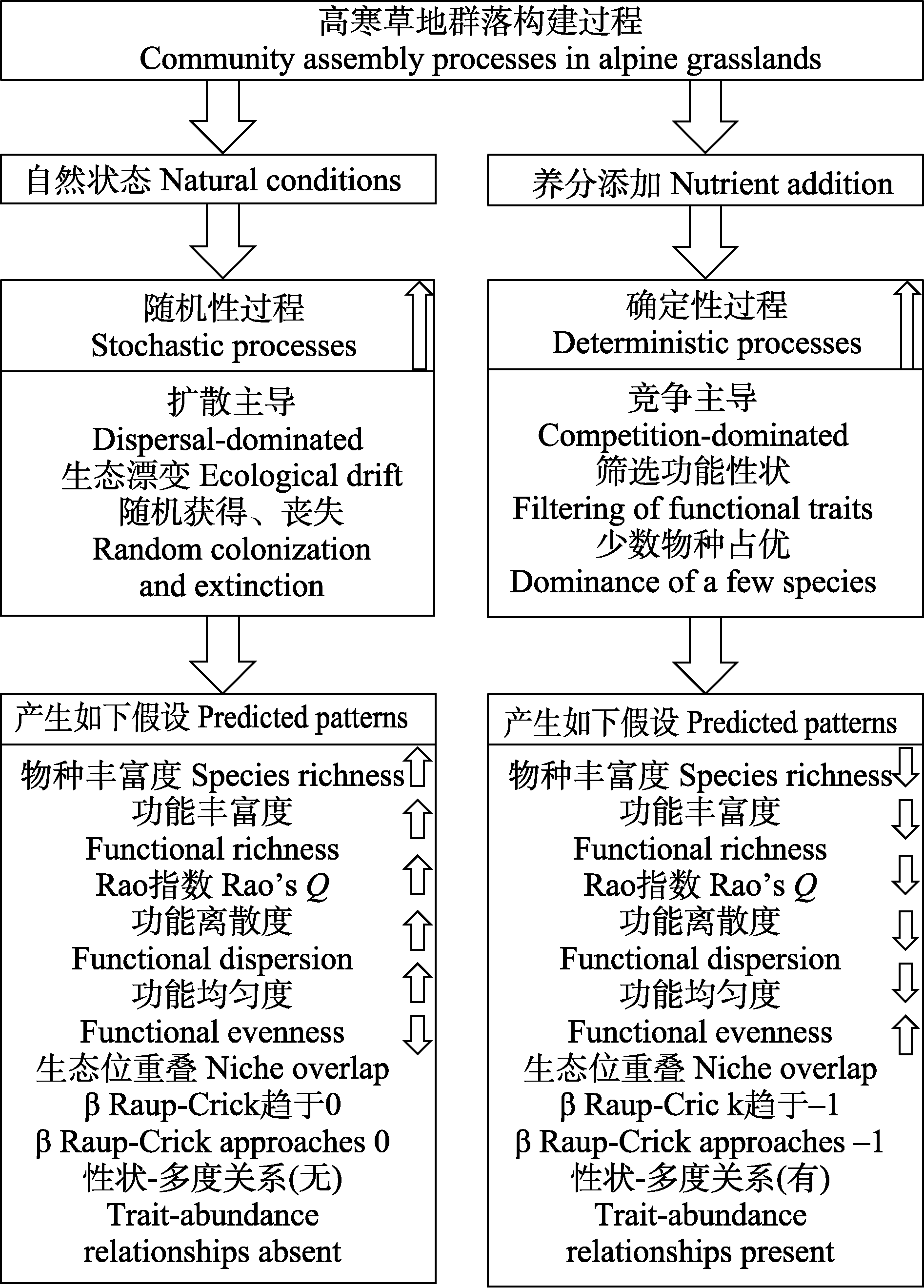
Fig. 1 Conceptual framework illustrating the effects of nutrient addition on grassland community assembly processes.
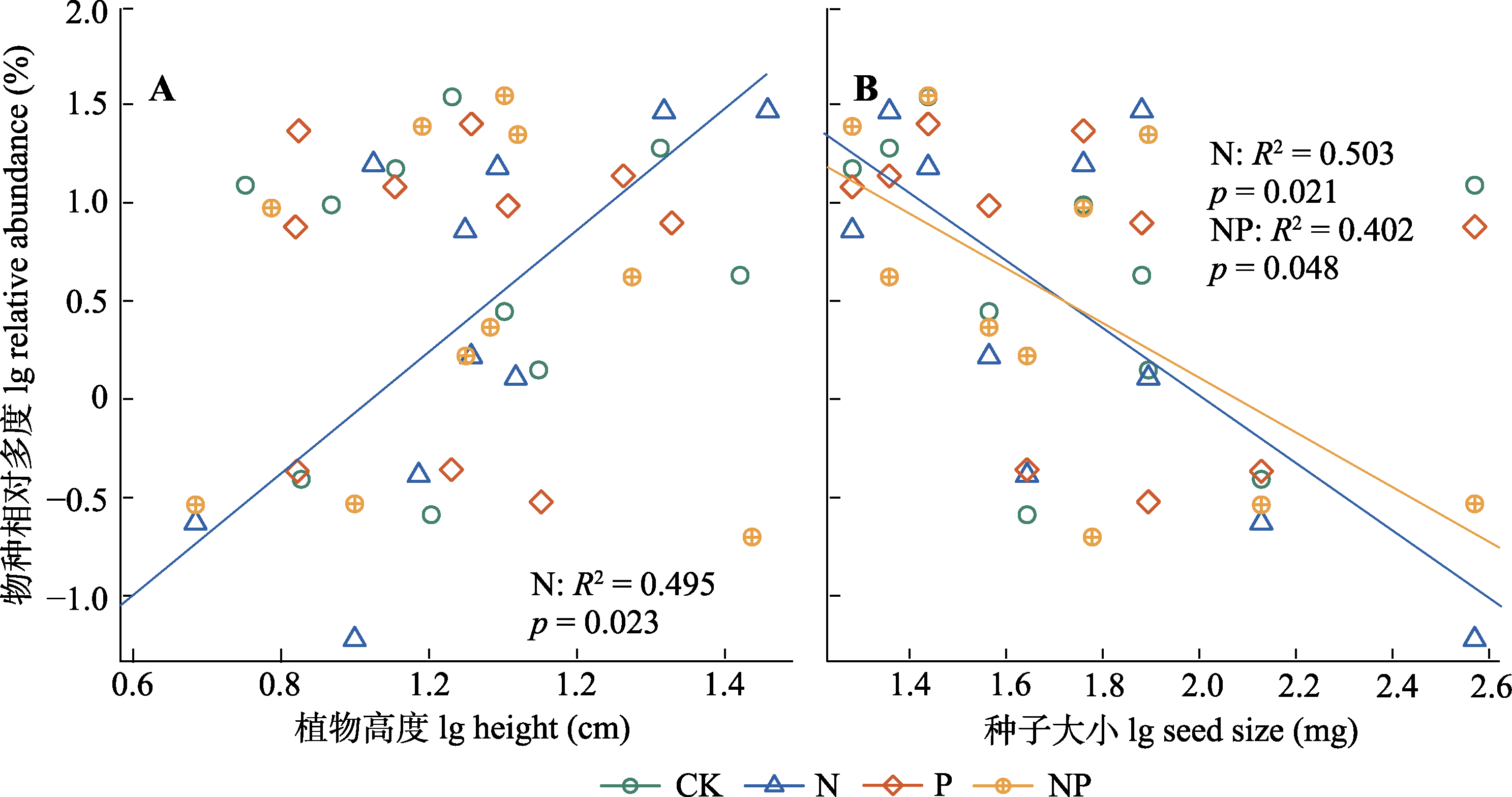
Fig. 2 Linear regression relationships between species relative abundance and functional traits. CK, control; N, nitrogen addition; NP, combined nitrogen and phosphorus addition; P, phosphorus addition. R2 and p values were estimated using standardized major axis (SMA) regression. Significant relationships are indicated in the top-right corner.
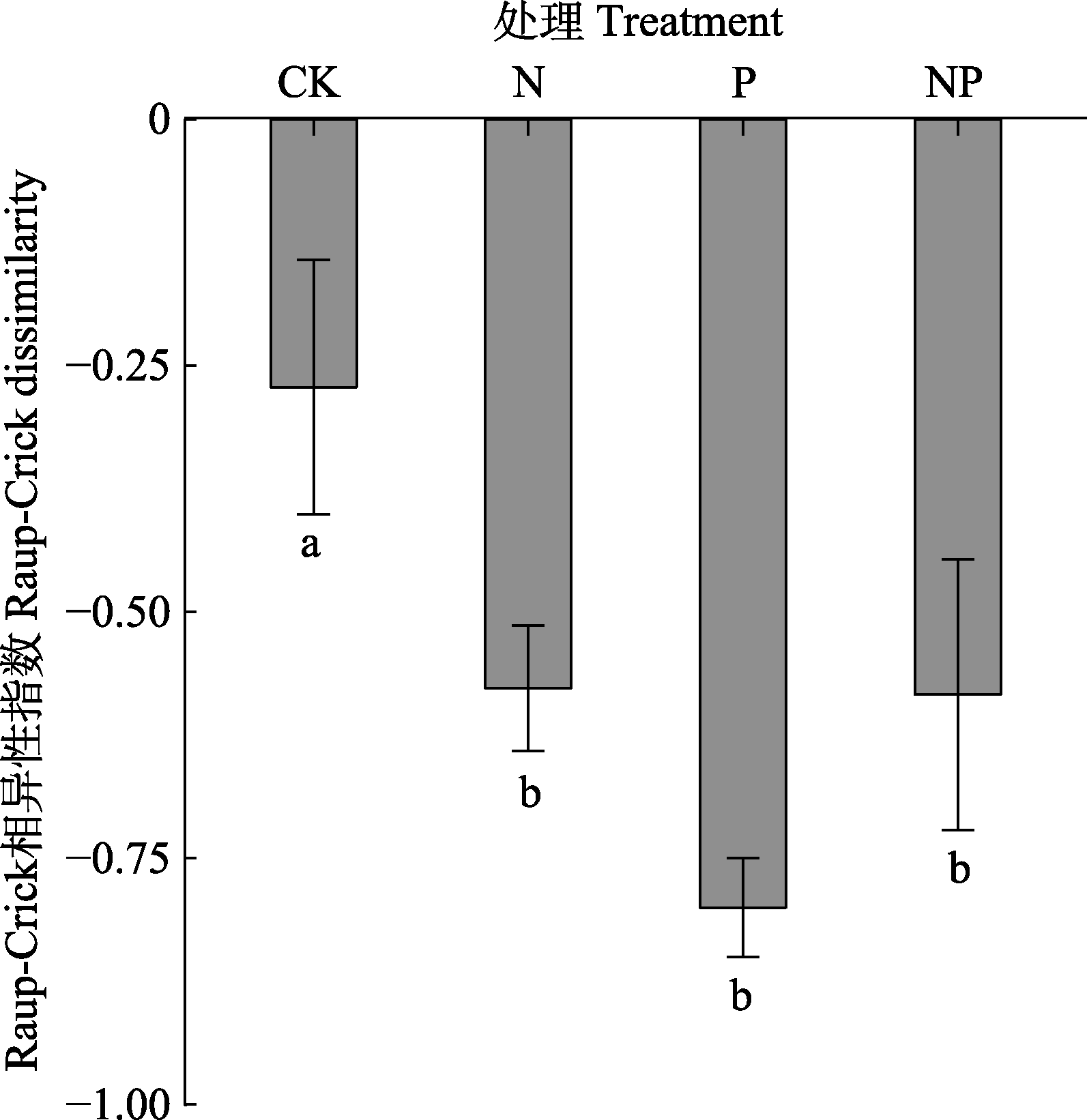
Fig. 3 Effects of nutrient addition on the Raup-Crick dissimilarity index of alpine grassland communities in Tianshan Mountains (mean ± SE). CK, control; N, nitrogen addition; NP, combined nitrogen and phosphorus addition; P, phosphorus addition. Different lowercase letters indicate significant differences (p < 0.05).
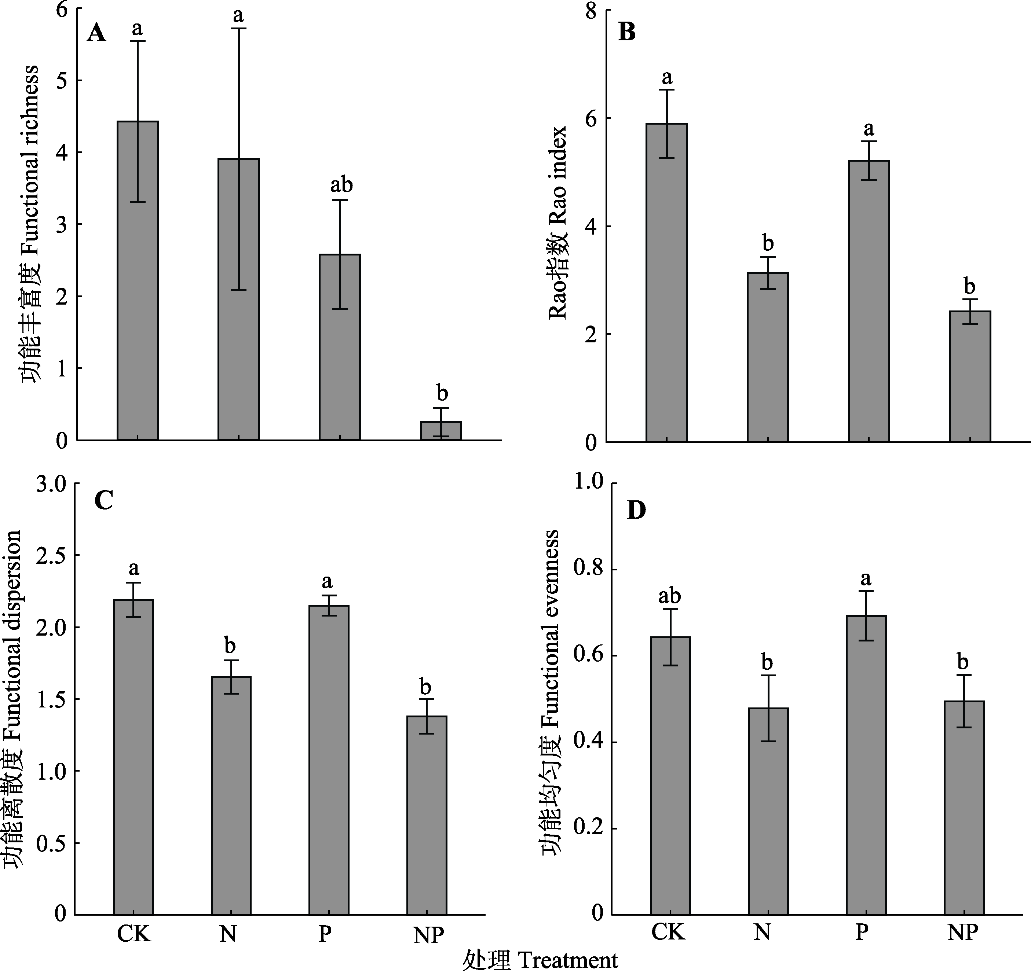
Fig. 4 Effects of nutrient addition on functional diversity of alpine grassland communities in Tianshan Mountains (mean ± SE). CK, control; N, nitrogen addition; NP, combined nitrogen and phosphorus addition; P, phosphorus addition. Different lowercase letters indicate significant differences (p < 0.05).
| 处理 Treatment | 观测指数 Observed index | 模拟指数 Mean of stimulated index | 95%置信区间 95% CI | p |
|---|---|---|---|---|
| CK | 0.944 | 0.288 | 0.234-0.388 | <0.001 |
| N | 0.963 | 0.302 | 0.248-0.401 | <0.001 |
| P | 0.966 | 0.291 | 0.227-0.401 | <0.001 |
| NP | 0.960 | 0.303 | 0.239-0.423 | <0.001 |
Table 1 Comparison of observed niche overlap and null model-simulated niche overlap under different nutrient addition treatments
| 处理 Treatment | 观测指数 Observed index | 模拟指数 Mean of stimulated index | 95%置信区间 95% CI | p |
|---|---|---|---|---|
| CK | 0.944 | 0.288 | 0.234-0.388 | <0.001 |
| N | 0.963 | 0.302 | 0.248-0.401 | <0.001 |
| P | 0.966 | 0.291 | 0.227-0.401 | <0.001 |
| NP | 0.960 | 0.303 | 0.239-0.423 | <0.001 |
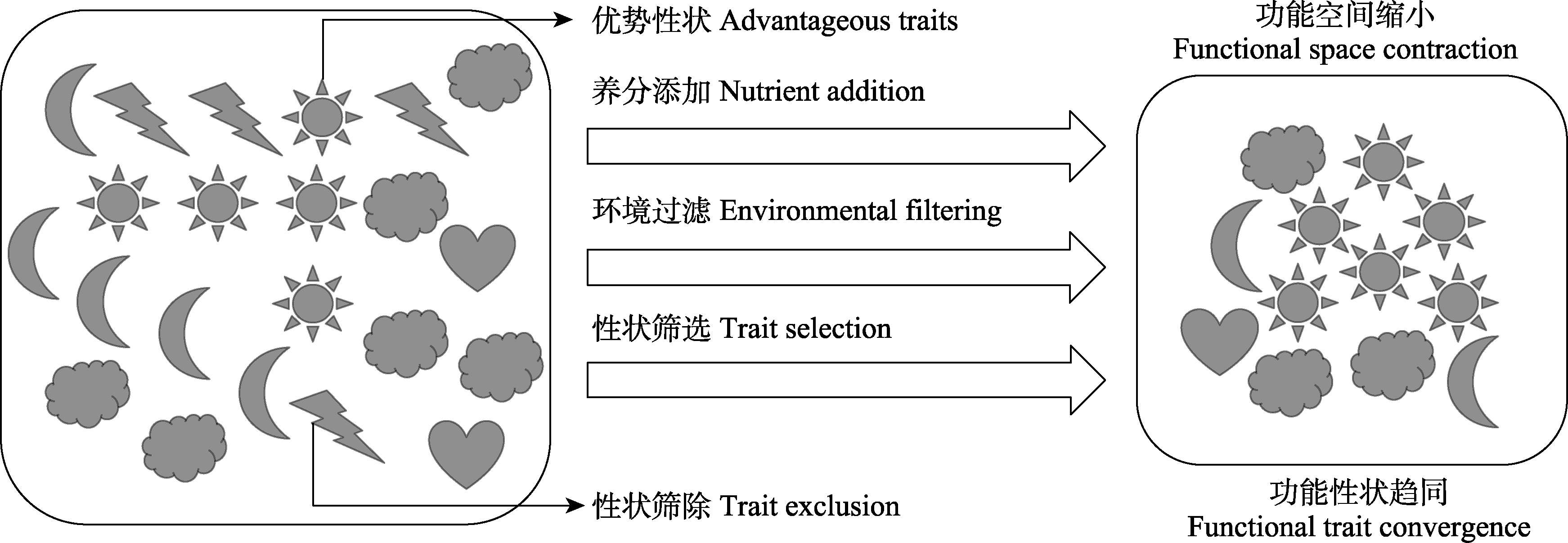
Fig. 5 Conceptual model illustrating the processes of community assembly under nutrient addition. The borders represent the size of the functional space occupied by species in different communities, and the different shapes denote species with distinct functional traits.
| [1] |
Ackerly DD, Cornwell WK (2007). A trait-based approach to community assembly: partitioning of species trait values into within- and among-community components. Ecology Letters, 10, 135-145.
PMID |
| [2] |
Adler PB, HilleRisLambers J, Levine JM (2007). A niche for neutrality. Ecology Letters, 10, 95-104.
PMID |
| [3] |
Alberti J, Bakker ES, van Klink R, Olff H, Smit C (2017). Herbivore exclusion promotes a more stochastic plant community assembly in a natural grassland. Ecology, 98, 961-970.
DOI PMID |
| [4] |
Anderson MJ, Crist TO, Chase JM, Vellend M, Inouye BD, Freestone AL, Sanders NJ, Cornell HV, Comita LS, Davies KF, Harrison SP, Kraft NJB, Stegen JC, Swenson NG (2011). Navigating the multiple meanings of β diversity: a roadmap for the practicing ecologist: roadmap for beta diversity. Ecology Letters, 14, 19-28.
DOI PMID |
| [5] |
Bell G (2000). The distribution of abundance in neutral communities. The American Naturalist, 155, 606-617.
DOI PMID |
| [6] |
Borer ET, Seabloom EW, Gruner DS, Harpole WS, Hillebrand H, Lind EM, Adler PB, Alberti J, Anderson TM, Bakker JD, Biederman L, Blumenthal D, Brown CS, Brudvig LA, Buckley YM, et al. (2014). Herbivores and nutrients control grassland plant diversity via light limitation. Nature, 508, 517-520.
DOI |
| [7] |
Callaway RM, Brooker RW, Choler P, Kikvidze Z, Lortie CJ, Michalet R, Paolini L, Pugnaire FI, Newingham B, Aschehoug ET, Armas C, Kikodze D, Cook BJ (2002). Positive interactions among alpine plants increase with stress. Nature, 417, 844-848.
DOI |
| [8] |
Cavieres LA, Badano EI (2009). Do facilitative interactions increase species richness at the entire community level? Journal of Ecology, 97, 1181-1191.
DOI URL |
| [9] |
Chase JM, Biro EG, Ryberg WA, Smith KG (2009). Predators temper the relative importance of stochastic processes in the assembly of prey metacommunities. Ecology Letters, 12, 1210-1218.
DOI PMID |
| [10] | Chase JM, Kraft NJB, Smith KG, Vellend M, Inouye BD (2011). Using null models to disentangle variation in community dissimilarity from variation in α-diversity. Ecosphere, 2, art24. DOI: 10.1890/ES10-00117.1. |
| [11] |
Chase JM, Myers JA (2011). Disentangling the importance of ecological niches from stochastic processes across scales. Philosophical Transactions of the Royal Society B: Biological Sciences, 366, 2351-2363.
DOI URL |
| [12] |
Chen L, Tian XM, Ren ZW, Dong LW, Xie CD, Zhou XL (2022). Effects of nutrient addition on plant diversity and above-ground biomass in alpine grasslands of Tianshan Mountains, China. Chinese Journal of Plant Ecology, 46, 280-289.
DOI |
|
[陈丽, 田新民, 任正炜, 董六文, 谢晨笛, 周小龙 (2022). 养分添加对天山高寒草地植物多样性和地上生物量的影响. 植物生态学报, 46, 280-289.]
DOI |
|
| [13] |
Chen XX, Tian YQ, Zhang Y, Cui Y, Zhao Y, Sun WJ (2020). Plant community dynamics during the growing season of typical ecosystems on the Tibetan Plateau. Geography and Sustainability, 1, 266-274.
DOI |
| [14] | Clark CM, Bell MD, Boyd JW, Compton JE, Davidson EA, Davis C, Fenn ME, Geiser L, Jones L, Blett TF (2017). Nitrogen-induced terrestrial eutrophication: cascading effects and impacts on ecosystem services. Ecosphere, 8, e01877. DOI: 10.1002/ecs2.1877. |
| [15] |
Conradi T, Temperton VM, Kollmann J (2017). Resource availability determines the importance of niche-based versus stochastic community assembly in grasslands. Oikos, 126, 1134-1141.
DOI URL |
| [16] |
DeMalach N (2018). Toward a mechanistic understanding of the effects of nitrogen and phosphorus additions on grassland diversity. Perspectives in Plant Ecology, Evolution and Systematics, 32, 65-72.
DOI URL |
| [17] | Diamond JM (1975). Assembly of species communities//Cody ML, Diamond JM. Ecology and Evolution of Communities. Belknap Press, Cambridge, USA. 342-444. |
| [18] |
Díaz S, Cabido M, Casanoves F (1998). Plant functional traits and environmental filters at a regional scale. Journal of Vegetation Science, 9, 113-122.
DOI URL |
| [19] |
Dong LW, Ren ZW, Zhang R, Xie CD, Zhou XL (2022). Functional diversity rather than species diversity can explain community biomass variation following short-term nitrogen addition in an alpine grassland. Chinese Journal of Plant Ecology, 46, 871-881.
DOI URL |
|
[董六文, 任正炜, 张蕊, 谢晨笛, 周小龙 (2022). 功能多样性比物种多样性更好解释氮添加对高寒草地生物量的影响. 植物生态学报, 46, 871-881.]
DOI |
|
| [20] |
Fisher CK, Mehta P (2014). The transition between the niche and neutral regimes in ecology. Proceedings of the National Academy of Sciences of the United States of America, 111, 13111-13116.
DOI PMID |
| [21] |
Galloway JN, Townsend AR, Erisman JW, Bekunda M, Cai ZC, Freney JR, Martinelli LA, Seitzinger SP, Sutton MA (2008). Transformation of the nitrogen cycle: recent trends, questions, and potential solutions. Science, 320, 889-892.
DOI PMID |
| [22] |
Hautier Y, Niklaus PA, Hector A (2009). Competition for light causes plant biodiversity loss after eutrophication. Science, 324, 636-638.
DOI PMID |
| [23] | Huang SQ, Liu GX, Han JG (2007). Effect of seed mass and sowing depth on seedling establishment. Pratacultural Science, 24(6), 44-49. |
| [黄双全, 刘桂霞, 韩建国 (2007). 种子大小和播种深度对种苗建植的影响. 草业科学, 24(6), 44-49.] | |
| [24] | Hubbell SP (2001). The Unified Neutral Theory of Biodiversity and Biogeography. Princeton, USA. |
| [25] |
Hubbell SP (2005). Neutral theory in community ecology and the hypothesis of functional equivalence. Functional Ecology, 19, 166-172.
DOI URL |
| [26] |
Jakobsson A, Eriksson O (2000). A comparative study of seed number, seed size, seedling size and recruitment in grassland plants. Oikos, 88, 494-502.
DOI URL |
| [27] |
Keddy PA (1992). Assembly and response rules: two goals for predictive community ecology. Journal of Vegetation Science, 3, 157-164.
DOI URL |
| [28] |
Kraft NJB, Adler PB, Godoy O, James EC, Fuller S, Levine JM (2015). Community assembly, coexistence and the environmental filtering metaphor. Functional Ecology, 29, 592-599.
DOI URL |
| [29] |
Leibold MA, McPeek MA (2006). Coexistence of the niche and neutral perspectives in community ecology. Ecology, 87, 1399-1410.
PMID |
| [30] | Li W, Cheng JM, Yu KL, Epstein HE, Du GZ (2015). Niche and neutral processes together determine diversity loss in response to fertilization in an alpine meadow community. PLoS ONE, 10, e0134560. DOI: 10.1371/journal.pone.0134560. |
| [31] |
Liston A, Wilson BL, Robinson WA, Doescher PS, Harris NR, Svejcar T (2003). The relative importance of sexual reproduction versus clonal spread in an aridland bunchgrass. Oecologia, 137, 216-225.
PMID |
| [32] |
Lloret F, Médail F, Brundu G, Hulme PE (2004). Local and regional abundance of exotic plant species on Mediterranean islands: Are species traits important? Global Ecology and Biogeography, 13, 37-45.
DOI URL |
| [33] |
Ma L, Zhang ZH, Yao BQ, Ma Z, Huang XT, Zhou BR, Xu MH, Guo J, Zhou HK (2021). Effects of drought and heat on the productivity and photosynthetic characteristics of Alpine meadow plants on the Qinghai-Tibetan Plateau. Journal of Mountain Science, 18, 2079-2093.
DOI |
| [34] |
MacArthur R, Levins R (1967). The limiting similarity, convergence, and divergence of coexisting species. The American Naturalist, 101, 377-385.
DOI URL |
| [35] |
Mason NWH, de Bello F, Doležal J, Lepš J (2011). Niche overlap reveals the effects of competition, disturbance and contrasting assembly processes in experimental grassland communities. Journal of Ecology, 99, 788-796.
DOI URL |
| [36] |
Mason NWH, Lanoiselée C, Mouillot D, Wilson JB, Argillier C (2008). Does niche overlap control relative abundance in French lacustrine fish communities? A new method incorporating functional traits. Journal of Animal Ecology, 77, 661-669.
DOI PMID |
| [37] |
Mason NWH, Mouillot D, Lee WG, Wilson JB (2005). Functional richness, functional evenness and functional divergence: the primary components of functional diversity. Oikos, 111, 112-118.
DOI URL |
| [38] |
Michaels HJ, Benner B, Hartgerink AP, Lee TD, Rice S, Willson MF, Bertin RI (1988). Seed size variation: magnitude, distribution, and ecological correlates. Evolutionary Ecology, 2, 157-166.
DOI URL |
| [39] | Moreno-García P, Montaño-Centellas F, Liu Y, Reyes-Mendez EY, Jha RR, Guralnick RP, Folk R, Waller DM, Verheyen K, Baeten L, Becker-Scarpitta A, Berki I, Bernhardt-Römermann M, Brunet J, van Calster H, et al. (2024). Long-term nitrogen deposition reduces the diversity of nitrogen-fixing plants. Science Advances, 10, eadp7953. DOI: 10.1126/sciadv.adp7953. |
| [40] |
Niu KC, Choler P, de Bello F, Mirotchnick N, Du GZ, Sun SC (2014). Fertilization decreases species diversity but increases functional diversity: a three-year experiment in a Tibetan alpine meadow. Agriculture, Ecosystems & Environment, 182, 106-112.
DOI URL |
| [41] |
Niu KC, Zhang ST, Zhao BB, Du GZ (2010). Linking grazing response of species abundance to functional traits in the Tibetan alpine meadow. Plant and Soil, 330, 215-223.
DOI URL |
| [42] |
Peguero G, Coello F, Sardans J, Asensio D, Grau O, Llusià J, Ogaya R, Urbina I, van Langenhove L, Verryckt LT, Stahl C, Bréchet L, Courtois EA, Chave J, Hérault B, et al. (2023). Nutrient-based species selection is a prevalent driver of community assembly and functional trait space in tropical forests. Journal of Ecology, 111, 1218-1230.
DOI URL |
| [43] |
Pillar VD, Duarte LDS, Sosinski EE, Joner F (2009). Discriminating trait-convergence and trait-divergence assembly patterns in ecological community gradients. Journal of Vegetation Science, 20, 334-348.
DOI URL |
| [44] |
Price J, Tamme R, Gazol A, de Bello F, Takkis K, Uria-Diez J, Kasari L, Pärtel M (2017). Within-community environmental variability drives trait variability in species-rich grasslands. Journal of Vegetation Science, 28, 303-312.
DOI URL |
| [45] |
Radny J, van der Putten WH, Tielbörger K, Meyer KM (2018). Influence of seed size on performance of non-native annual plant species in a novel community at two planting densities. Acta Oecologica, 92, 131-137.
DOI URL |
| [46] | Ricklefs RE, Travis J (1980). A morphological approach to the study of avian community organization. The Auk, 97, 321-338. |
| [47] |
Salvagiotti F, Cassman KG, Specht JE, Walters DT, Weiss A, Dobermann A (2008). Nitrogen uptake, fixation and response to fertilizer N in soybeans: a review. Field Crops Research, 108, 1-13.
DOI URL |
| [48] | Skinner DM (2007). Plant propagation protocol for Koeleria macrantha. [2025-09-21]. https://courses.washington.edu/esrm412/protocols/2015/KOMA.pdf |
| [49] |
Stubbs WJ, Wilson JB (2004). Evidence for limiting similarity in a sand dune community. Journal of Ecology, 92, 557-567.
DOI URL |
| [50] |
Tian QY, Liu NN, Bai WM, Li LH, Chen JQ, Reich PB, Yu Q, Guo DL, Smith MD, Knapp AK, Cheng WX, Lu P, Gao Y, Yang A, Wang TZ, et al. (2016). A novel soil manganese mechanism drives plant species loss with increased nitrogen deposition in a temperate steppe. Ecology, 97, 65-74.
PMID |
| [51] |
Villéger S, Mason NWH, Mouillot D (2008). New multidimensional functional diversity indices for a multifaceted framework in functional ecology. Ecology, 89, 2290-2301.
DOI PMID |
| [52] | Wang XJ, Ge WJ, Zhang MT, Fernández-Pascual E, Moles A, Saatkamp A, Rosbakh S, Bu HY, Panahi P, Ma MJ (2024). Large and non-spherical seeds are less likely to form a persistent soil seed bank. Proceedings of the Royal Society B: Biological Sciences, 291, 20232764. DOI: 10.1098/rspb.2023.2764. |
| [53] |
Weiher E, Clarke GDP, Keddy PA (1998). Community assembly rules, morphological dispersion, and the coexistence of plant species. Oikos, 81, 309-322.
DOI URL |
| [54] |
Westoby M (1998). A leaf-height-seed (LHS) plant ecology strategy scheme. Plant and Soil, 199, 213-227.
DOI |
| [55] |
Westoby M, Jurado E, Leishman M (1992). Comparative evolutionary ecology of seed size. Trends in Ecology & Evolution, 7, 368-372.
DOI URL |
| [56] | Wright SJ (2019). Plant responses to nutrient addition experiments conducted in tropical forests. Ecological Monographs, 89, e01382. DOI: 10.1002/ecm.1382. |
| [57] | Yang YT, Chen ZF, Xu BC, Ghanizadeh H, Li W, Ding CQ, Zhou RL, Wen ZM (2023). Contrasting patterns of community-weighted mean traits and functional diversity in driving grassland productivity changes under N and P addition. Frontiers in Plant Science, 14, 1145709. DOI: 10.3389/fpls.2023.1145709. |
| [58] |
Yang ZL, Guo H, Zhang JY, Du GZ (2013). Stochastic and deterministic processes together determine alpine meadow plant community composition on the Tibetan Plateau. Oecologia, 171, 495-504.
DOI PMID |
| [59] | Zhao M, Loreau M, Ochoa-Hueso R, Zhang HX, Yang JJ, Zhang YH, Liu HY, Jiang Y, Han XG (2024). Decoupled responses of above- and below-ground beta-diversity to nitrogen enrichment in a typical steppe. Ecology Letters, 27, e14339. DOI: 10.1111/ele.14339. |
| [60] |
Zhou XL, Wang YS, Zhang PF, Guo Z, Chu CJ, Du GZ (2016). The effects of fertilization on the trait-abundance relationships in a Tibetan alpine meadow community. Journal of Plant Ecology, 9, 144-152.
DOI |
| [1] | Yu Yue, Wang Gang. Empirical study on synergy effect of dispersal and selection processes in community assembly of fig wasps in Ficus auriculata [J]. , 2027, 51(动植物互作): 0-. |
| [2] | LU Ping, NIU Ya-Ping, MENG Yuan-Chao, ZHOU Li-Na, LIU Yang, YANG Yuan-He, CHENG Xiao-Li, PENG Yun-Feng. Linking plant diversity to ecosystem coupling across alpine grasslands [J]. Chin J Plant Ecol, 2026, 50(预发表): 0-. |
| [3] | Jia-Le Chen, Ying-Fei Zhao, Hai-Chao Chang, Bi-Cheng Dong, Fei-Hai Yu. A framework and evaluation system for plant trait extraction based on large language models [J]. , 2026, 50(生态统计方法专题): 0-. |
| [4] | DING Ming-li, 魏 瑶, Jian-yu Jian-yu, LAN Yu-Ting, LIU Huiying, Zhang Zhen-hua. Response of antioxidant and osmotic adjustment systems to seasonal drought and photosynthetic regulation in typical alpine plants [J]. Chin J Plant Ecol, 2026, 50(5): 1187-1201. |
| [5] | FENG Yi-Fan, ZHU Shi-Ying, ZHOU Shu-Rong, JIANG Le-Le, CHEN Long, WANG Miao, DENG Guo-Fang, LIU Lan. Impacts of soil microorganisms on survival and growth traits of different mycorrhizal tree seedlings in tropical secondary forest restoration [J]. Chin J Plant Ecol, 2026, 50(4): 846-858. |
| [6] | RAO Chao-Kang, TANG Liang. Characteristics and drivers of mangrove phyllosphere microbial communities across different tidal elevations [J]. Chin J Plant Ecol, 2026, 50(4): 987-1002. |
| [7] | LIN Lin-Lin, XIAO Jin-Xiang, HUANG Shen-Shen, ZHAO Yang-Mei, ZHANG De-Xu, CHENG Yi-Kang, LONG Wen-Xing. Effects of phosphorus addition on functional traits across seedlings and saplings in a tropical cloud forest [J]. Chin J Plant Ecol, 2026, 50(4): 917-928. |
| [8] | DUAN Jian-Lin, MENG Sheng, CHEN Ren-Li, XIONG Lin-Feng, LU Chun-Yang, XI Nian-Xun. Impact of multiple global change factors on traits of mycorrhizal plants [J]. Chin J Plant Ecol, 2026, 50(4): 907-916. |
| [9] | ZHANG An-Ning, XIAO Ya-Ning, ZHAO Xia, ZHANG Miao, CUI Han-Wen, CHEN Shu-Yan, AN Li-Zhe. Interactions between shrub encroachment and nitrogen addition on nematode community and functional traits on Qingzang Plateau [J]. Chin J Plant Ecol, 2026, 50(4): 859-869. |
| [10] | ZHANG Yong-Jun, LI Jing-Dong, AN Qi, HONG Ling-Gui, REN Zheng-Wei, ZHANG Rui, ZHOU Xiao-Long. Effects of nitrogen addition and warming on community traits in an alpine grassland community of Tianshan Mountains [J]. Chin J Plant Ecol, 2026, 50(2): 417-428. |
| [11] | ZHANG Jing, CHEN Jie, LI Yan-Peng, PAN Li-Jun, XU Han, LI Yi-De, HE Hai-Sheng. Comparison of plant biomass in conifer and broadleaf mixed artificial forests in south subtropical area and analyses of influential factors [J]. Chin J Plant Ecol, 2026, 50(2): 400-416. |
| [12] | DAI Li-Jun, XIANG Ling-Yi, JIAN Chen, WANG Xiao-Feng. Intensified local differentiation in plant functional traits among typical herbaceous plants by backwater disturbance within riparian zone of small watersheds in the Three Gorges Reservoir area [J]. Chin J Plant Ecol, 2026, 50(2): 442-460. |
| [13] | WANG Shuang, CHEN Ya-Xuan, CHEN Yan-Mei, WANG Jia-Le, LIU Qian-Yuan. Root resource-acquisition strategies of Ziziphus jujuba in different habitats in typical areas of Taihang Mountains [J]. Chin J Plant Ecol, 2026, 50(2): 374-387. |
| [14] | CHEN Ya-Xuan, HAN Yu-Yin, CHEN Yan-Mei, LIU Qian-Yuan. Plant functional traits and carbon-nitrogen stoichiometry of plantations at different forest ages in North China [J]. Chin J Plant Ecol, 2026, 50(2): 318-333. |
| [15] | YE Xue-Min, GAO Wei, TANG Xing-Lin, CHEN Fu-Sheng, SUN Rong-Xi, LUO Kun-Shui. Effects of nitrogen and phosphorus additions on leaf herbivory damage and its underlying mechanisms in saplings in an evergreen broad-leaved forest [J]. Chin J Plant Ecol, 2026, 50(2): 256-267. |
| Viewed | ||||||
|
Full text |
|
|||||
|
Abstract |
|
|||||
Copyright © 2026 Chinese Journal of Plant Ecology
Tel: 010-62836134, 62836138, E-mail: apes@ibcas.ac.cn, cjpe@ibcas.ac.cn

