
植物生态学报 ›› 2024, Vol. 48 ›› Issue (1): 21-40.DOI: 10.17521/cjpe.2023.0111 cstr: 32100.14.cjpe.2023.0111
所属专题: 植物功能性状
刘聪聪1,2,3, 何念鹏3,6,*( ), 李颖4, 张佳慧3, 闫镤3, 王若梦3, 王瑞丽5
收稿日期:2023-04-24
接受日期:2023-08-09
出版日期:2024-01-20
发布日期:2023-08-09
通讯作者:
*(henp@igsnrr.ac.cn)基金资助:
LIU Cong-Cong1,2,3, HE Nian-Peng3,6,*(), LI Ying4, ZHANG Jia-Hui3, YAN Pu3, WANG Ruo-Meng3, WANG Rui-Li5
Received:2023-04-24
Accepted:2023-08-09
Online:2024-01-20
Published:2023-08-09
Supported by:摘要:
植物功能性状通常是指能直接或间接影响植物生长、存活和繁殖的形态学、生理学和物候学等相对稳定和可测量的特征参数。经过多年发展, 植物功能性状的定义、内涵以及测量手段已经科学化和规范化, 人们利用在不同地点、不同时间测定的数据, 深入阐述了植物功能性状的种内与种间变异、区域乃至全球植物功能性状的空间变异规律及其调控机制、多种功能性状间的协同与权衡以及植物功能性状的演化等。随着20世纪90年代开始的大尺度和全球整合型植物功能性状数据库的逐步建成, 植物功能性状的研究已经不再局限于个体、特定群落和局域尺度: 一方面, 区域和全球的植物功能性状生物地理学研究蓬勃发展; 另一方面, 植物功能性状研究也逐步被拓展到群落物种共存机制、生态系统功能形成与变异等的机理解释。随着植物功能性状研究逐步深入到复杂的自然群落或生态系统, 科研人员发现传统“零星数据收集性数据库”难以很好地满足相关数据要求, 迫切需要考虑与群落复杂性和植物不同器官功能性状相匹配的新型数据库, 该数据库的基本要求和特色是基于原位群落调查和多种功能性状协同测量。随着科学概念和新型数据库的发展, 相关研究呈现出如下发展趋势: 1)进一步强调了植物不同器官间功能性状的协同机制与权衡关系, 并力争从植物整体观探讨植物对资源环境变化的响应与适应机制; 2)强调多种功能性状对资源环境变化的多维度响应与适应机制, 发展了植物功能性状网络理论体系和技术手段; 3)强调了植物群落结构复杂性, 利用群落内部植物功能性状的分布和功能多样性指数探究群落构建机制; 4)完善了植物功能性状从器官-物种-群落-生态系统拓展理论体系, 进一步搭建了以植物群落功能性为核心的宏观生态学与宏观地学等多学科的桥梁。这些新发展趋势, 让传统功能性状研究逐步深入地走进自然生态系统、社会系统和经济系统, 进而推动以功能性状为基础的整合生态学快速发展, 服务于区域生态环境问题的解决。
刘聪聪, 何念鹏, 李颖, 张佳慧, 闫镤, 王若梦, 王瑞丽. 宏观生态学中的植物功能性状研究: 历史与发展趋势. 植物生态学报, 2024, 48(1): 21-40. DOI: 10.17521/cjpe.2023.0111
LIU Cong-Cong, HE Nian-Peng, LI Ying, ZHANG Jia-Hui, YAN Pu, WANG Ruo-Meng, WANG Rui-Li. Current and future trends of plant functional traits in macro-ecology. Chinese Journal of Plant Ecology, 2024, 48(1): 21-40. DOI: 10.17521/cjpe.2023.0111
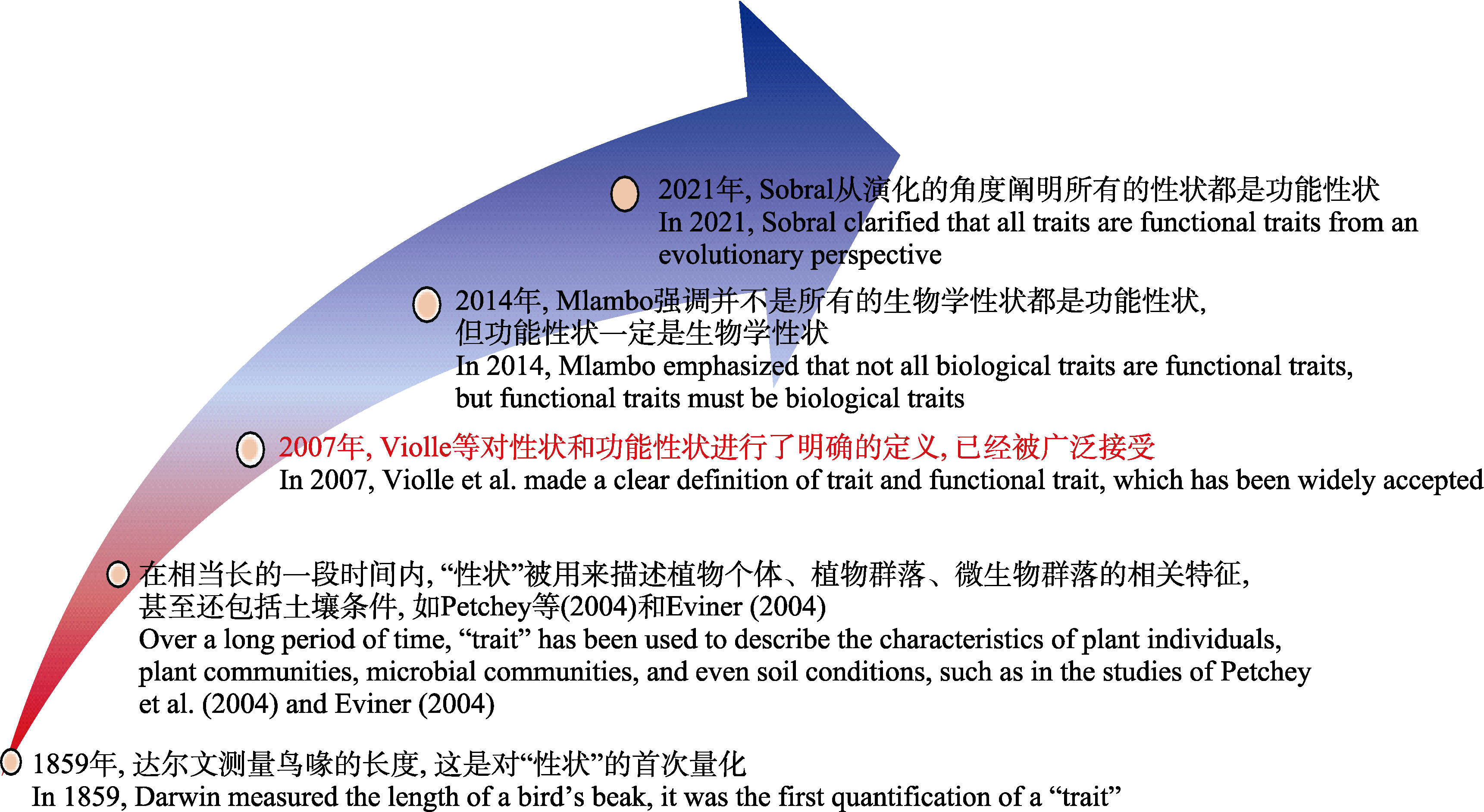
图1 性状定义的发展历程。
Fig. 1 Development of trait definitions.
| 题目 Title | 期刊 Journal | 文献 Reference |
|---|---|---|
| A handbook of protocols for standardised and easy measurement of plant functional traits worldwide | Australian Journal of Botany | Cornelissen et al., |
| New handbook for standardised measurement of plant functional traits worldwide | Australian Journal of Botany | Pérez-Harguindeguy et al., |
| A handbook for the standardised sampling of plant functional traits in disturbance-prone ecosystems, with a focus on open ecosystems | Australian Journal of Botany | Wigley et al., |
| A starting guide to root ecology: strengthening ecological concepts and standardising root classification, sampling, processing and trait measurements | New Phytologist | Freschet et al., |
| Towards a thesaurus of plant characteristics: an ecological contribution | Journal of Ecology | Garnier et al., |
| A unique web resource for physiology, ecology and the environmental sciences: PrometheusWiki. | Functional Plant Biology | Sack et al., |
表1 与植物功能性状规范化测量和名称统一化相关的论著
Table 1 Papers related to standardized measurement and name unification of functional traits
| 题目 Title | 期刊 Journal | 文献 Reference |
|---|---|---|
| A handbook of protocols for standardised and easy measurement of plant functional traits worldwide | Australian Journal of Botany | Cornelissen et al., |
| New handbook for standardised measurement of plant functional traits worldwide | Australian Journal of Botany | Pérez-Harguindeguy et al., |
| A handbook for the standardised sampling of plant functional traits in disturbance-prone ecosystems, with a focus on open ecosystems | Australian Journal of Botany | Wigley et al., |
| A starting guide to root ecology: strengthening ecological concepts and standardising root classification, sampling, processing and trait measurements | New Phytologist | Freschet et al., |
| Towards a thesaurus of plant characteristics: an ecological contribution | Journal of Ecology | Garnier et al., |
| A unique web resource for physiology, ecology and the environmental sciences: PrometheusWiki. | Functional Plant Biology | Sack et al., |
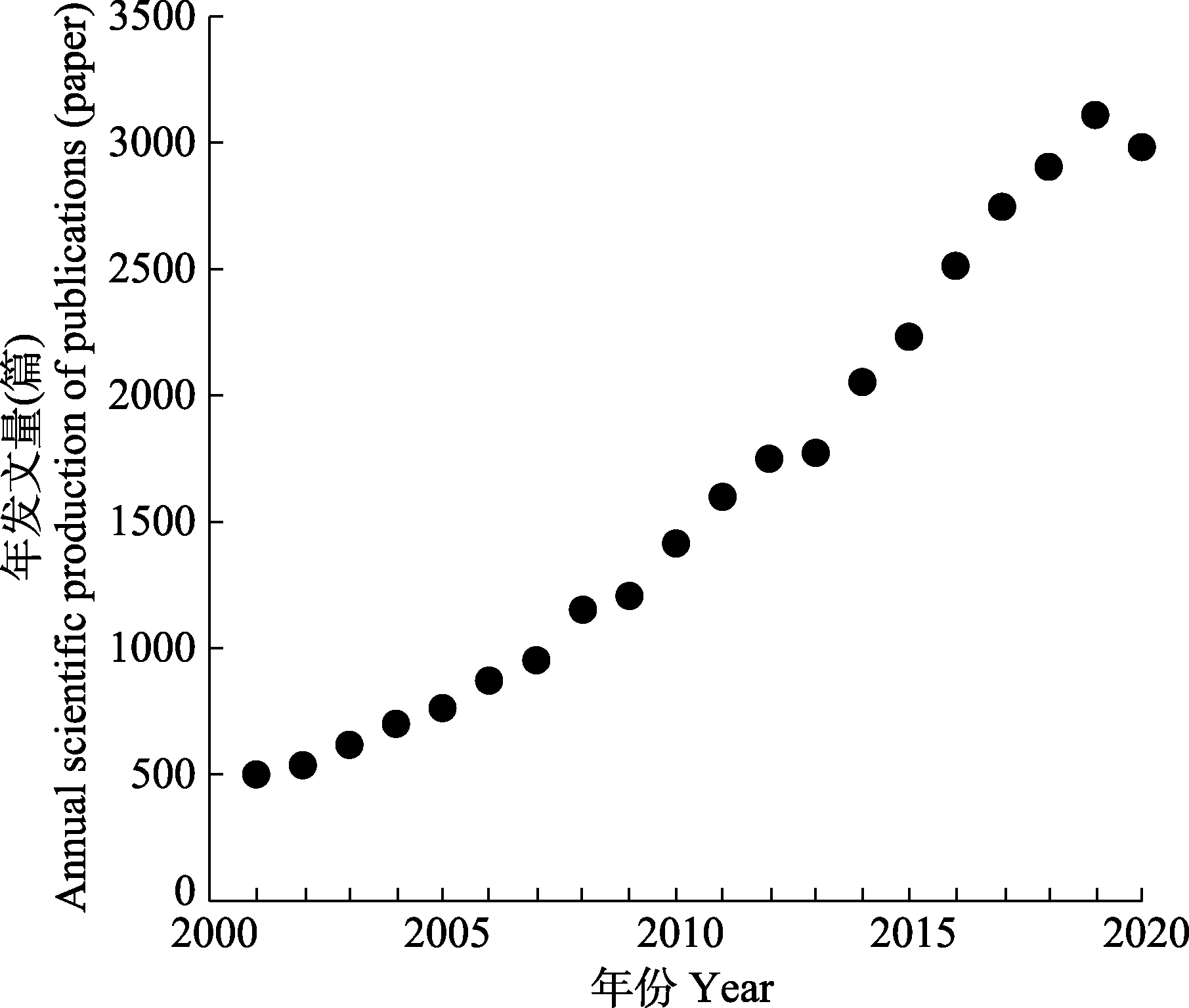
图2 植物功能性状相关文章发文量动态变化。
Fig. 2 Changes in annual scientific publications related to plant functional trait.
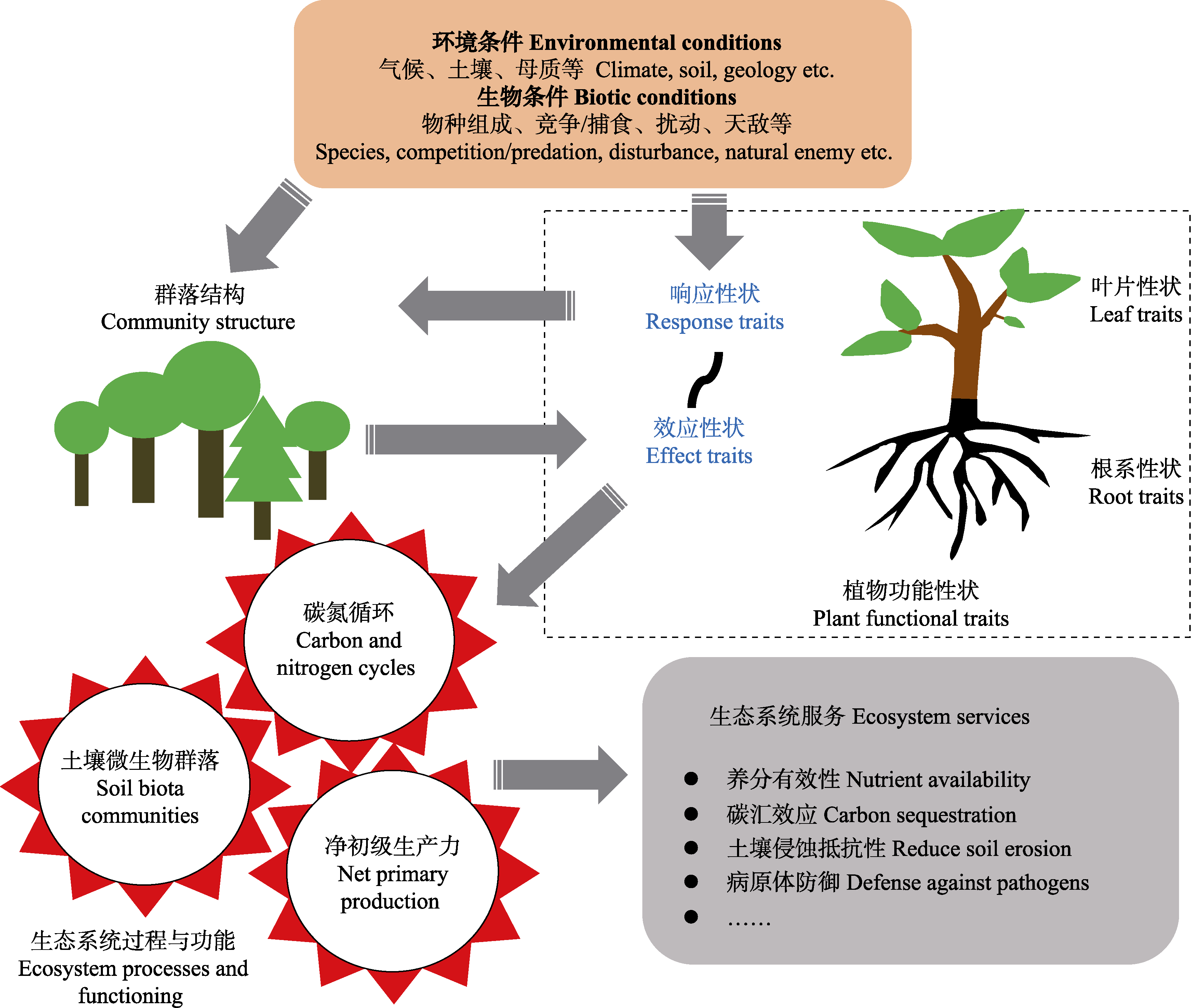
图3 植物功能性状对生态系统过程和功能的影响。
Fig. 3 Influence of plant functional traits on ecosystem processes and functioning.
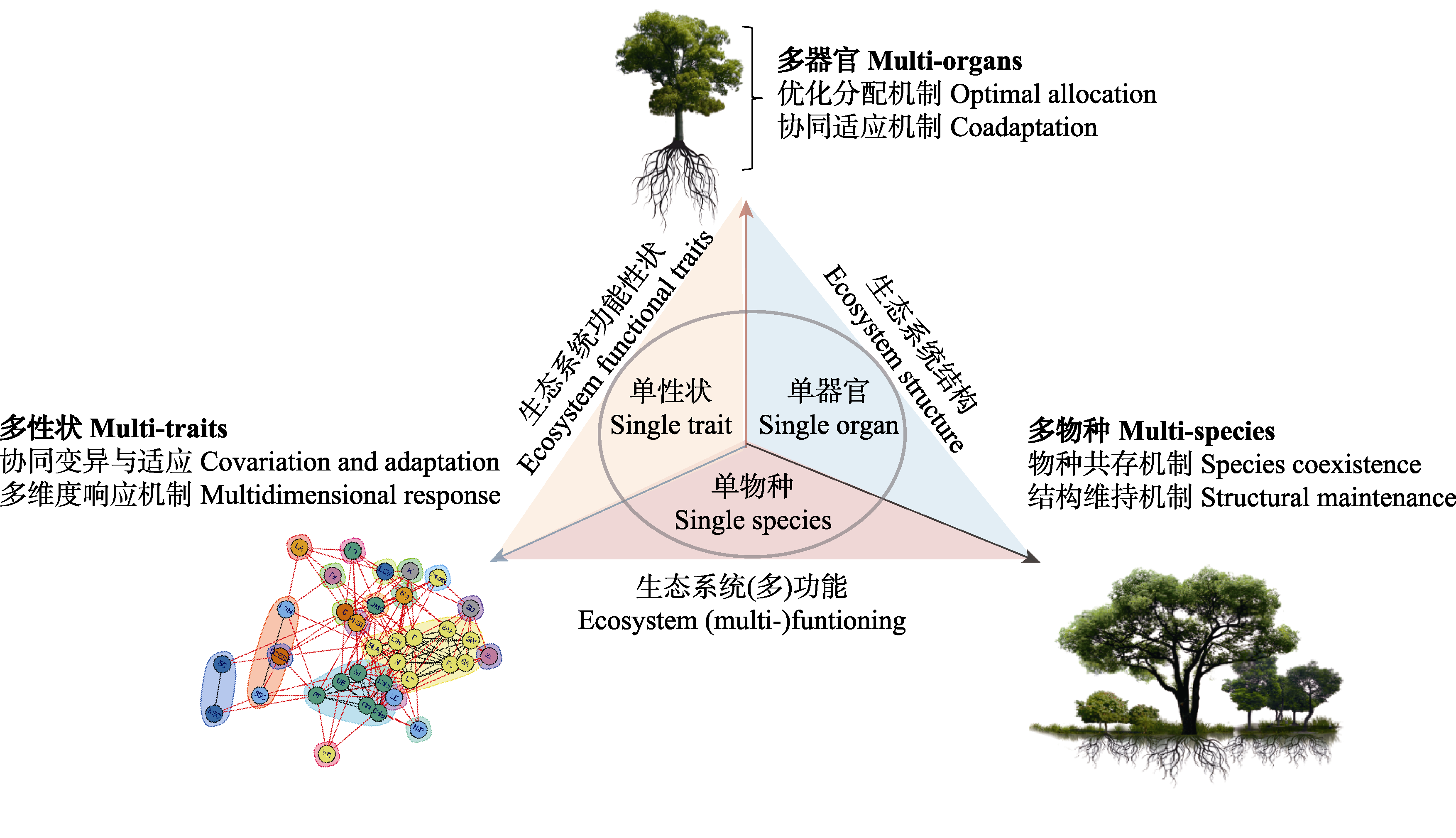
图4 植物功能性状研究的多维度拓展趋势。
Fig. 4 Multi-dimensional expansion of plant functional traits in future.
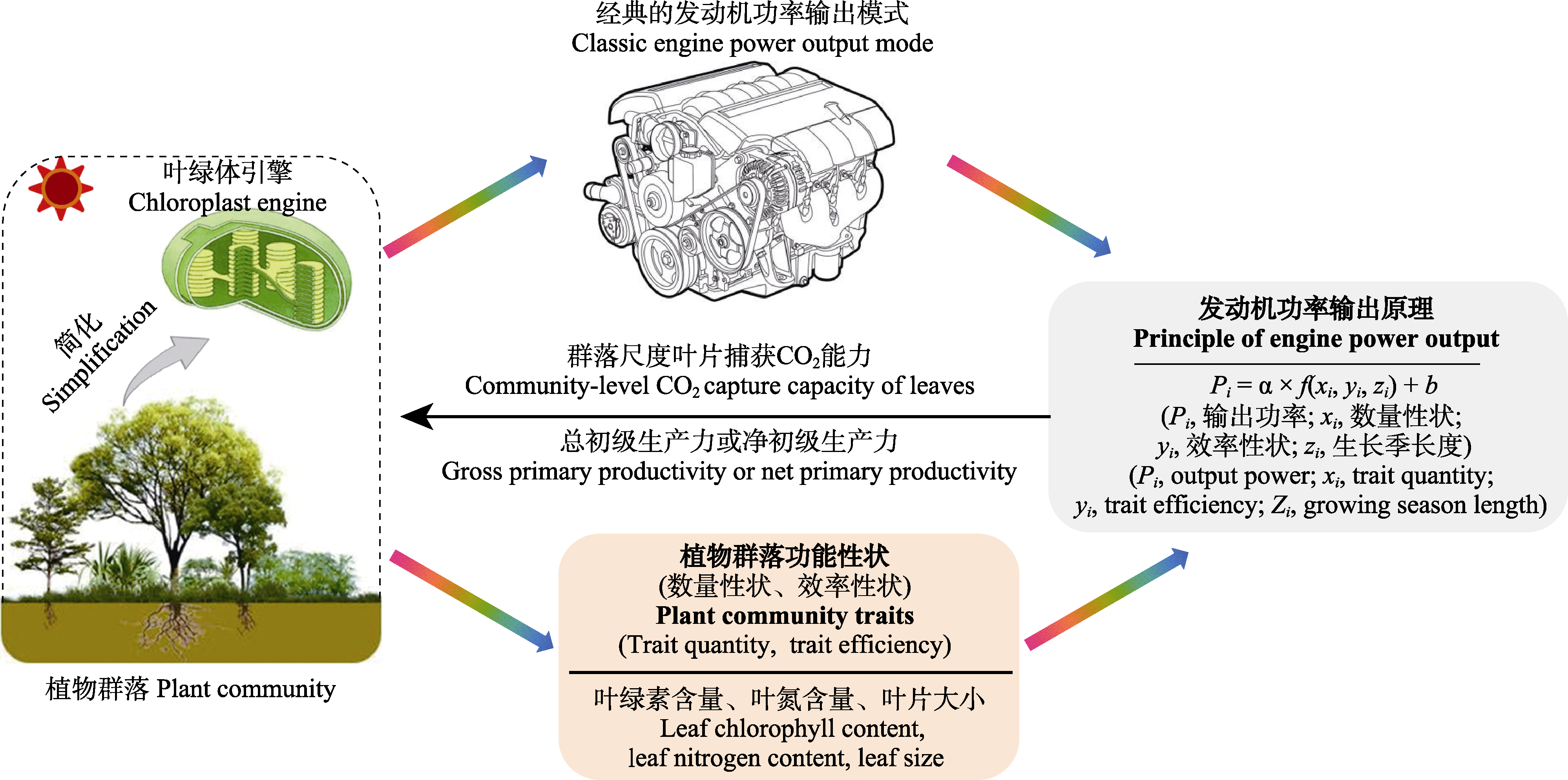
图5 基于植物群落功能性状的生态系统生产力时空变异预测新模式。
Fig. 5 Using plant community functional traits to predict the spatio-temporal variability of ecosystem productivity.
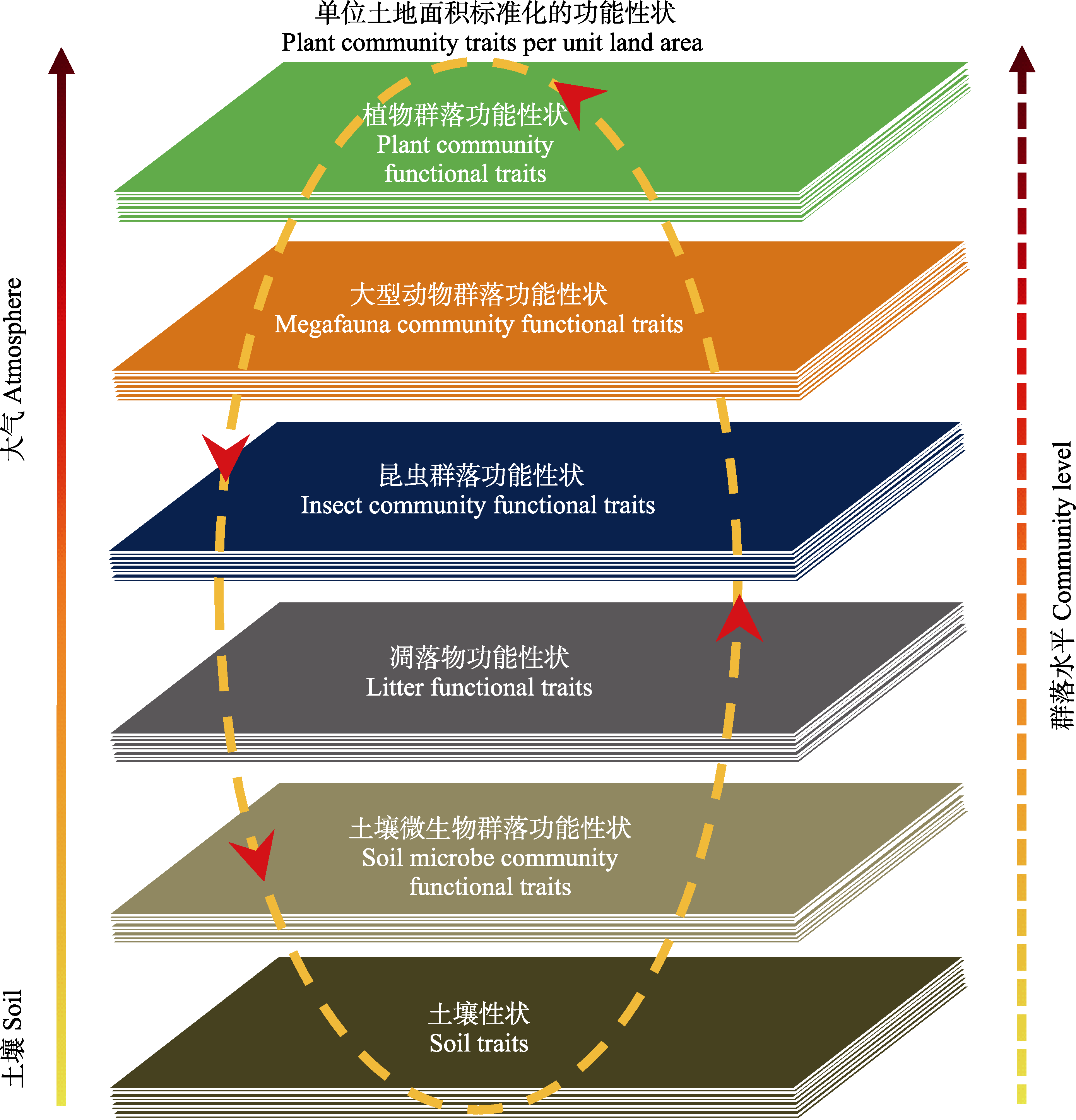
图6 以群落功能性状为基础建立生态系统尺度植物-动物-微生物关系的研究框架。
Fig. 6 A framework to explore plants-animals-microorganisms interactions on basis of plant community functional traits.
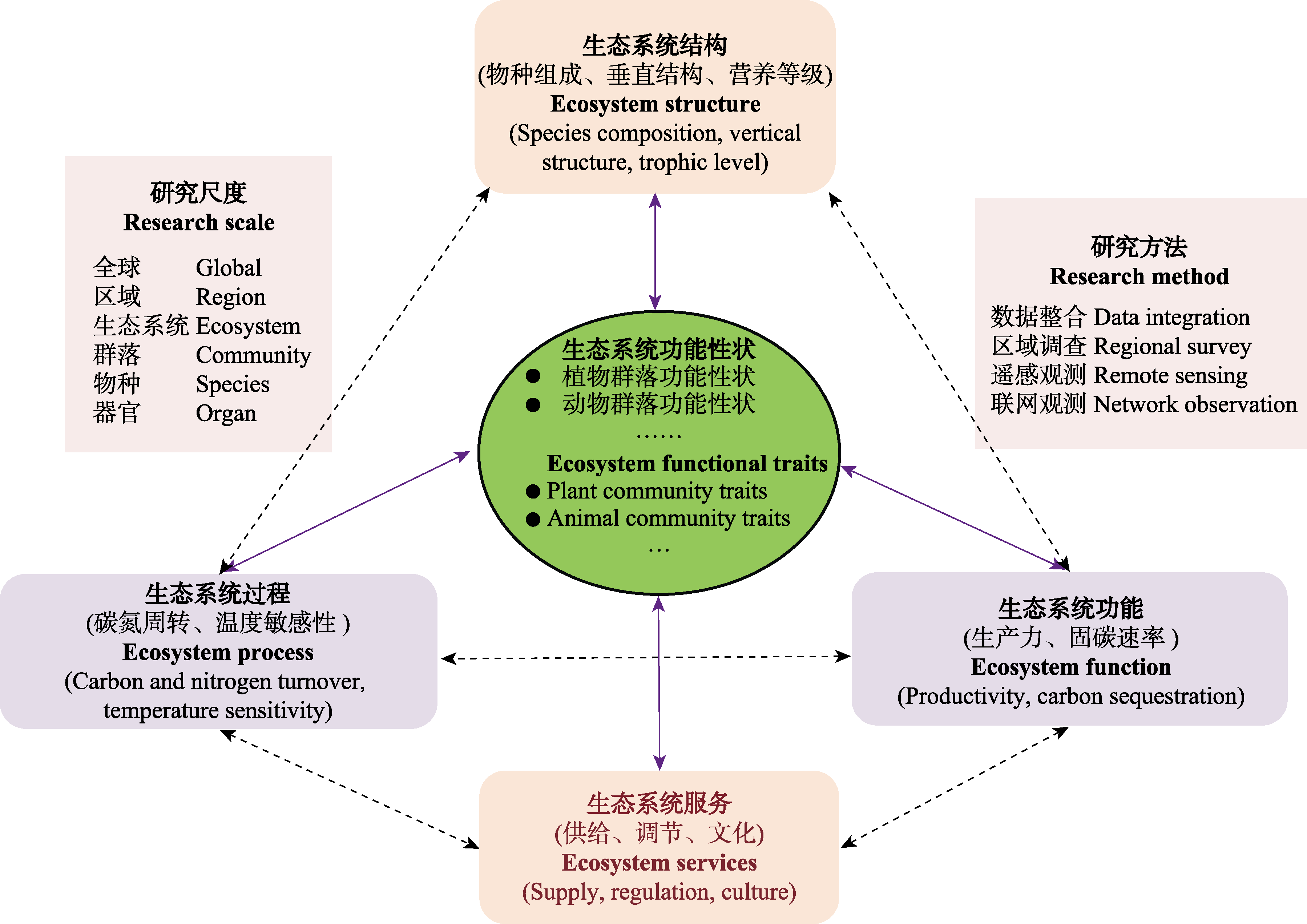
图7 以群落功能性状为核心构建整合生态学研究的理论框架。虚线代表“结构—过程—功能—服务”间的连接, 实线表示通过生态系统功能性状连接“结构—过程—功能—服务”。
Fig. 7 New framework of integrative ecology based on plant community functional traits. The dotted line represents the connection between “structure--process--function--service” and the solid line represents the connection between “structure--process--function--service” and ecosystem functional traits.
| [1] | Bergmann J, Weigelt A, van der Plas F, Laughlin DC, Kuyper TW, Guerrero-Ramirez N, Valverde-Barrantes OJ, Bruelheide H, Freschet GT, Iversen CM, Kattge J, McCormack ML, Meier IC, Rillig MC, Roumet C, et al. (2020). The fungal collaboration gradient dominates the root economics space in plants. Science Advances, 6, eaba3756. DOI: 10.1126/sciadv.aba3756. |
| [2] |
Bernard-Verdier M, Navas ML, Vellend M, Violle C, Fayolle A, Garnier E (2012). Community assembly along a soil depth gradient: contrasting patterns of plant trait convergence and divergence in a Mediterranean rangeland. Journal of Ecology, 100, 1422-1433.
DOI URL |
| [3] | Bjorkman AD, Myers-Smith IH, Elmendorf SC, Normand S, Thomas HJD, Alatalo JM, Alexander H, Anadon-Rosell A, Angers-Blondin S, Bai Y, Baruah G, Beest M, Berner L, Björk RG, Blok D, et al. (2018). Tundra Trait Team: a database of plant traits spanning the tundra biome. Global Ecology and Biogeography, 27, 1402-1411. |
| [4] |
Bolnick DI, Amarasekare P, Araújo MS, Bürger R, Levine JM, Novak M, Rudolf VHW, Schreiber SJ, Urban MC, Vasseur DA (2011). Why intraspecific trait variation matters in community ecology. Trends in Ecology & Evolution, 26, 183-192.
DOI URL |
| [5] | Bongers FJ, Schmid B, Bruelheide H, Bongers F, Li S, von Oheimb G, Li Y, Cheng A, Ma K, Liu X (2021). Functional diversity effects on productivity increase with age in a forest biodiversity experiment. Nature Ecology & Evolution, 5, 1594-1603. |
| [6] |
Boonman CC, Benítez-López A, Schipper AM, Thuiller W, Anand M, Cerabolini BE, Cornelissen JH, Gonzalez-Melo H, Hattingh WN, Higuchi P, Laughlin DC, Onipchenko VG, Peñuelas J, Poorter L, Soudzilovskaia NA, et al. (2020). Assessing the reliability of predicted plant trait distributions at the global scale. Global Ecology and Biogeography, 29, 1034-1051.
DOI PMID |
| [7] |
Bruelheide H, Dengler J, Jimenez-Alfaro B, Purschke O, Hennekens SM, Chytrý M, Pillar VD, Jansen F, Kattge J, Sandel B, Aubin I, Biurrun I, Field R, Haider S, Jandt U, et al. (2019). sPlot—A new tool for global vegetation analyses. Journal of Vegetation Science, 30, 161-186.
DOI |
| [8] | Bruelheide H, Dengler J, Purschke O, Lenoir J, Jiménez-Alfaro B, Hennekens SM, Botta-Dukát Z, Chytrý M, Field R, Jansen F, Kattge J, Pillar VD, Schrodt F, Mahecha MD, Peet RK, et al. (2018). Global trait-environment relationships of plant communities. Nature Ecology & Evolution, 2, 1906-1917. |
| [9] | Castro-Díez P, Villar-Salvador P, Pérez-Rontomé C, Maestro- Martínez M, Montserrat-Martí G (1997). Leaf morphology and leaf chemical composition in three Quercus (Fagaceae) species along a rainfall gradient in NE Spain. Trees, 11, 127-134. |
| [10] |
Chave J, Coomes D, Jansen S, Lewis SL, Swenson NG, Zanne AE (2009). Towards a worldwide wood economics spectrum. Ecology Letters, 12, 351-366.
DOI PMID |
| [11] |
Cornelissen JHC, Lavorel S, Garnier E, Díaz S, Buchmann N, Gurvich DE, Reich PB ter Steege H, Morgan HD, van der Heijden MGA, Pausas JG, Poorter H (2003). A handbook of protocols for standardised and easy measurement of plant functional traits worldwide. Australian Journal of Botany, 51, 335-380.
DOI URL |
| [12] |
Cornelissen JHC, Sibma F, Broekman RA, Thompson K (2011). Leaf pH as a plant trait: species- driven rather than soil-driven variation. Functional Ecology, 25, 449-455.
DOI URL |
| [13] |
Cornwell WK, Ackerly DD (2009). Community assembly and shifts in plant trait distributions across an environmental gradient in coastal California. Ecological Monographs, 79, 109-126.
DOI URL |
| [14] |
Cornwell WK, Schwilk DW, Ackerly DD (2006). A trait-based test for habitat filtering: convex hull volume. Ecology, 87, 1465-1471.
PMID |
| [15] | Cui EQ, Weng ES, Yan ER, Xia JY (2020). Robust leaf trait relationships across species under global environmental changes. Nature Communications, 11, 2999. DOI: 10.1038/s41467-020-16839-9. |
| [16] |
Díaz S, Kattge J, Cornelissen JHC, Wright IJ, Lavorel S, Dray S, Reu B, Kleyer M, Wirth C, Colin Prentice I, Garnier E, Bönisch G, Westoby M, Poorter H, Reich PB, et al. (2016). The global spectrum of plant form and function. Nature, 529, 167-171.
DOI |
| [17] |
Eviner VT (2004). Plant traits that influence ecosystem processes vary independently among species. Ecology, 85, 2215-2229.
DOI URL |
| [18] |
Fernández-Martínez M (2022). From atoms to ecosystems: elementome diversity meets ecosystem functioning. New Phytologist, 234, 35-42.
DOI URL |
| [19] | Freschet GT, Pagès L, Iversen CM, Comas LH, Rewald B, Roumet C, Klimešová J, Zadworny M, Poorter H, Postma JA, Adams TS, Bagniewska-Zadworna A, Bengough AG, Blancaflor EB, Brunner I, et al. (2021). A starting guide to root ecology: strengthening ecological concepts and standardising root classification, sampling, processing and trait measurements. New Phytologist, 232, 973-1122. |
| [20] |
Freschet GT, Valverde-Barrantes OJ, Tucker CM, Craine JM, McCormack ML, Violle C, Fort F, Blackwood CB, Urban-Mead KR, Iversen CM, Bonis A, Comas LH, Cornelissen JHC, Dong M, Guo D, et al. (2017). Climate, soil and plant functional types as drivers of global fine-root trait variation. Journal of Ecology, 105, 1182-1196.
DOI URL |
| [21] | Gallagher RV, Falster DS, Maitner BS, Salguero-Gómez R, Vandvik V, Pearse WD, Schneider FD, Kattge J, Poelen JH, Madin JS, Ankenbrand MJ, Penone C, Feng X, Adams VM, Alroy J, et al. (2020). Open Science principles for accelerating trait-based science across the Tree of Life. Nature Ecology & Evolution, 4, 294-303. |
| [22] |
Garnier E, Cortez J, Billès G, Navas ML, Roumet C, Debussche M, Laurent G, Blanchard A, Aubry D, Bellmann A, Neill C, Toussaint JP (2004). Plant functional markers capture ecosystem properties during secondary succession. Ecology, 85, 2630-2637.
DOI URL |
| [23] |
Garnier E, Stahl U, Laporte MA, Kattge J, Mougenot I, Kühn I, Laporte B, Amiaud B, Ahrestani FS, Bönisch G, Bunker DE, Cornelissen JHC, Díaz S, Enquist BJ, Gachet S, et al. (2017). Towards a thesaurus of plant characteristics: an ecological contribution. Journal of Ecology, 105, 298-309.
DOI URL |
| [24] | Gross N, Le Bagousse-Pinguet Y, Liancourt P, Berdugo M, Gotelli NJ, Maestre FT (2017). Functional trait diversity maximizes ecosystem multifunctionality. Nature Ecology & Evolution, 1, 132. DOI: 10.1038/s41559-017-0132. |
| [25] |
Gross N, Le Bagousse-Pinguet Y, Liancourt P, Saiz H, Violle C, Munoz F (2021). Unveiling ecological assembly rules from commonalities in trait distributions. Ecology Letters, 24, 1668-1680.
DOI URL |
| [26] |
Han W, Fang J, Reich PB, Ian Woodward F, Wang Z (2011). Biogeography and variability of eleven mineral elements in plant leaves across gradients of climate, soil and plant functional type in China. Ecology Letters, 14, 788-796.
DOI PMID |
| [27] |
Hanisch M, Schweiger O, Cord AF, Volk M, Knapp S (2020). Plant functional traits shape multiple ecosystem services, their trade-offs and synergies in grasslands. Journal of Applied Ecology, 57, 1535-1550.
DOI URL |
| [28] |
He NP, Li Y, Liu CC, Xu L, Li MX, Zhang JH, He JS, Tang ZY, Han XG, Ye Q, Xiao CW, Yu Q, Liu SR, Sun W, Niu SL, et al. (2020a). Plant trait networks: improved resolution of the dimensionality of adaptation. Trends in Ecology & Evolution, 35, 908-918.
DOI URL |
| [29] |
He N, Liu C, Piao S, Sack L, Xu L, Luo Y, He J, Han X, Zhou G, Zhou X, Lin Y, Yu Q, Liu S, Sun W, Niu S, et al. (2019). Ecosystem traits linking functional traits to macroecology. Trends in Ecology & Evolution, 34, 200-210.
DOI URL |
| [30] | He NP, Liu CC, Xu L, Yu GR (2020). Ecosystem traits open new insights into macroecology: opportunity and challenge. Acta Ecologica Sinica, 40, 2507-2522. |
| [何念鹏, 刘聪聪, 徐丽, 于贵瑞 (2020). 生态系统性状对宏生态研究的启示与挑战. 生态学报, 40, 2507-2522.] | |
| [31] | He NP, Liu CC, Zhang JH, Xu L, Yu GR (2018a). Perspectives and challenges in plant traits: from organs to communities. Acta Ecologica Sinica, 38, 6787-6796. |
| [何念鹏, 刘聪聪, 张佳慧, 徐丽, 于贵瑞 (2018a). 植物性状研究的机遇与挑战: 从器官到群落. 生态学报, 38, 6787-6796.] | |
| [32] |
He N, Yan P, Liu C, Xu L, Li M, van Meerbeek K, Zhou G, Zhou G, Liu S, Zhou X, Li S, Niu S, Han X, Buckley TN, Sack L, et al. (2023). Predicting ecosystem productivity based on plant community traits. Trends in Plant Science, 28, 43-53.
DOI URL |
| [33] | He NP, Zhang JH, Liu CC, Xu L, Chen Z, Liu Y, Wang RL, Zhao N, Xu ZW, Tian J, Wang Q, Zhu JX, Li Y, Hou JH, Yu GR (2018b). Patterns and influencing factors of traits in forest ecosystems: synthesis and perspectives on the synthetic investigation from the north-east transect of eastern China (NETEC). Acta Ecologica Sinica, 38, 6359-6382. |
| [何念鹏, 张佳慧, 刘聪聪, 徐丽, 陈智, 刘远, 王瑞丽, 赵宁, 徐志伟, 田静, 王情, 朱剑兴, 李颖, 侯继华, 于贵瑞 (2018b). 森林生态系统性状的空间格局与影响因素研究进展——基于中国东部样带的整合分析. 生态学报, 38, 6359-6382.] | |
| [34] |
He P, Gleason SM, Wright IJ, Weng E, Liu H, Zhu S, Lu M, Luo Q, Li R, Wu G, Yan E, Song Y, Mi X, Hao G, Reich PB, et al. (2020b). Growing-season temperature and precipitation are independent drivers of global variation in xylem hydraulic conductivity. Global Change Biology, 26, 1833-1841.
DOI URL |
| [35] | Jin Y, Qian H (2022). V.PhyloMaker2: an updated and enlarged R package that can generate very large phylogenies for vascular plants. Plant Diversity, 4, 335-339. |
| [36] | Kattge J, Díaz S, Lavorel S, Prentice IC, Leadley P, Bönisch G, Garnier E, Westoby M, Reich PB, Wright IJ, Cornelissen JH, Violle C, Harrison SP, van Bodegom PM, Reichstein M, et al. (2011). TRY—A global database of plant traits. Global Change Biology, 17, 2905-2935. |
| [37] |
Kattge J, Sandel B, Díaz S, Lavorel S, Prentice IC, Leadley P, Tautenhahn S, Werner GD, Aakala T, Abedi M, Acosta AT, Adamidis GC, Adamson K, Aiba M, Albert CH, et al. (2020). TRY plant trait database—Enhanced coverage and open access. Global Change Biology, 26, 5343-5343.
DOI URL |
| [38] |
Kraft NJB, Godoy O, Levine JM (2015). Plant functional traits and the multidimensional nature of species coexistence. Proceedings of the National Academy of Sciences of the United States of America, 112, 797-802.
DOI PMID |
| [39] |
Kunstler G, Falster D, Coomes DA, Hui F, Kooyman RM, Laughlin DC, Poorter L, Vanderwel M, Vieilledent G, Wright SJ, Aiba M, Baraloto C, Caspersen J, Cornelissen JHC, Gourlet-Fleury S, et al. (2016). Plant functional traits have globally consistent effects on competition. Nature, 529, 204-207.
DOI |
| [40] |
Li B, Suzuki JI, Hara T (1998). Latitudinal variation in plant size and relative growth rate in Arabidopsis thaliana. Oecologia, 115, 293-301.
DOI URL |
| [41] | Li Y, Hou JH, Xu L, Li MX, Chen Z, Zhang ZH, He NP (2022a). Variation in functional trait diversity from tropical to cold-temperate forests and linkage to productivity. Ecological Indicators, 138, 108864. DOI: 10.1016/j.ecolind.2022.108864. |
| [42] | Li Y, Li Q, Xu L, Li MX, Chen Z, Song ZP, Hou JH, He NP (2021). Plant community traits can explain variation in productivity of selective logging forests after different restoration times. Ecological Indicators, 131, 108181. DOI: 10.1016/j.ecolind.2021.108181. |
| [43] |
Li Y, Liu CC, Sack L, Xu L, Li MX, Zhang JH, He NP (2022b). Leaf trait network architecture shifts with species-richness and climate across forests at continental scale. Ecology Letters, 25, 1442-1457.
DOI URL |
| [44] |
Liang X, Zhang T, Lu X, Ellsworth DS, BassiriRad H, You C, Wang D, He P, Deng Q, Liu H, Mo J, Ye Q (2020). Global response patterns of plant photosynthesis to nitrogen addition: a meta-analysis. Global Change Biology, 26, 3585-3600.
DOI PMID |
| [45] |
Liu C, He N, Zhang J, Li Y, Wang Q, Sack L, Yu G (2018). Variation of stomatal traits from cold temperate to tropical forests and association with water use efficiency. Functional Ecology, 32, 20-28.
DOI URL |
| [46] | Liu CC, Li Y, He NP (2022a). Differential adaptation of lianas and trees in wet and dry forests revealed by trait correlation networks. Ecological Indicators, 135, 108564. DOI: 10.1016/j.ecolind.2022.108564. |
| [47] | Liu CC, Li Y, Xu L, Li MX, Wang JM, Yan P, He NP (2021). Stomatal arrangement pattern: a new direction to explore plant adaptation and evolution. Frontiers in Plant Science, 12, 655255. DOI: 10.3389/fpls.2021.655255. |
| [48] | Liu C, Li Y, Zhang J, Baird AS, He N (2020). Optimal community assembly related to leaf economic-hydraulic- anatomical traits. Frontiers in Plant Science, 11, 341. DOI: 10.3389/fpls.2020.00341. |
| [49] |
Liu C, Sack L, Li Y, He N (2022b). Contrasting adaptation and optimization of stomatal traits across communities at continental scale. Journal of Experimental Botany, 73, 6405-6416.
DOI URL |
| [50] |
Liu H, Ye Q, Simpson KJ, Cui E, Xia J (2022c). Can evolutionary history predict plant plastic responses to climate change? New Phytologist, 235, 1260-1271.
DOI URL |
| [51] |
Liu R, Yang X, Gao R, Huang Z, Cornelissen JHC (2023). Coordination of economics spectra in leaf, stem and root within the genus Artemisia along a large environmental gradient in China. Global Ecology and Biogeography, 32, 324-338.
DOI URL |
| [52] |
Liu SN, Yan ZB, Chen YH, Zhang MX, Chen J, Han WX (2019). Foliar pH, an emerging plant functional trait: biogeography and variability across Northern China. Global Ecology and Biogeography, 28, 386-397.
DOI URL |
| [53] | Liu XJ, Ma KP (2015). Plant functional traits—Concepts, applications and future directions. Scientia Sinica (Vitae), 45, 325-339. |
| [刘晓娟, 马克平 (2015). 植物功能性状研究进展. 中国科学: 生命科学, 45, 325-339.] | |
| [54] |
Luo W, Griffin-Nolan RJ, Song L, Te NW, Chen J, Shi Y, Muraina TO, Wang Z, Smith MD, Yu Q, Knapp AK, Han X, Collins SL (2023). Interspecific and intraspecific trait variability differentially affect community-weighted trait responses to and recovery from long-term drought. Functional Ecology, 37, 504-512.
DOI URL |
| [55] |
Ma Z, Guo D, Xu X, Lu M, Bardgett RD, Eissenstat DM, McCormack ML, Hedin LO (2018). Evolutionary history resolves global organization of root functional traits. Nature, 555, 94-97.
DOI URL |
| [56] | Maitner BS, Boyle B, Casler N, Condit R, Donoghue JI, Durán SM, Guaderrama D, Hinchliff CE, Jørgensen PM, Kraft NJB, McGill B, Merow C, Morueta-Holme N, Peet RK, Sandel B, et al. (2018). The BIEN R package: a tool to access the Botanical Information and Ecology Network (BIEN) database. Methods in Ecology and Evolution, 9, 373-379. |
| [57] |
Martin AR, Isaac ME (2015). REVIEW: plant functional traits in agroecosystems: a blueprint for research. Journal of Applied Ecology, 52, 1425-1435.
DOI URL |
| [58] |
Midolo G, de Frenne P, Hölzel N, Wellstein C (2019). Global patterns of intraspecific leaf trait responses to elevation. Global Change Biology, 25, 2485-2498.
DOI PMID |
| [59] |
Mlambo MC (2014). Not all traits are ‘functional’: insights from taxonomy and biodiversity-ecosystem functioning research. Biodiversity and Conservation, 23, 781-790.
DOI URL |
| [60] |
Moles AT, Ackerly DD, Tweddle JC, Dickie JB, Smith R, Leishman MR, Mayfield MM, Pitman A, Wood JT, Westoby M (2007). Global patterns in seed size. Global Ecology and Biogeography, 16, 109-116.
DOI URL |
| [61] |
Paroshy NJ, Doraisami M, Kish R, Martin AR (2021). Carbon concentration in the world’s trees across climatic gradients. New Phytologist, 232, 123-133.
DOI URL |
| [62] |
Pérez-Harguindeguy N, Díaz S, Garnier E, Lavorel S, Poorter H, Jaureguiberry P, Bret-Harte MS, Cornwell WK, Craine JM, Gurvich DE, Urcelay C, Veneklaas EJ, Reich PB, Poorter L, Wright IJ, et al. (2013). New handbook for standardised measurement of plant functional traits worldwide. Australian Journal of Botany, 61, 167-234.
DOI URL |
| [63] |
Petchey OL, Hector A, Gaston KJ (2004). How do different measures of functional diversity perform? Ecology, 85, 847-857.
DOI URL |
| [64] |
Roddy AB, Martínez-Perez C, Teixido AL, Cornelissen TG, Olson ME, Oliveira RS, Silveira FAO (2021). Towards the flower economics spectrum. New Phytologist, 229, 665-672.
DOI URL |
| [65] |
Sack L, Cornwell WK, Santiago LS, Barbour MM, Choat B, Evans JR, Munns R, Nicotra A (2010). A unique web resource for physiology, ecology and the environmental sciences: PrometheusWiki. Functional Plant Biology, 37, 687-693.
DOI URL |
| [66] |
Sack L, Scoffoni C (2013). Leaf venation: structure, function, development, evolution, ecology and applications in the past, present and future. New Phytologist, 198, 983-1000.
DOI PMID |
| [67] |
Siefert A, Violle C, Chalmandrier L, Albert CH, Taudiere A, Fajardo A, Aarssen LW, Baraloto C, Carlucci MB, Cianciaruso MV, de Dantas V, de Bello F, Duarte LDS, Fonseca CR, Freschet GT, et al. (2015). A global meta- analysis of the relative extent of intraspecific trait variation in plant communities. Ecology Letters, 18, 1406-1419.
DOI PMID |
| [68] |
Sobral M (2021). All traits are functional: an evolutionary viewpoint. Trends in Plant Science, 26, 674-676.
DOI URL |
| [69] |
Song B, Sun L, Barrett SCH, Moles AT, Luo Y, Armbruster WS, Gao Y, Zhang S, Zhang Z, Sun H (2022). Global analysis of floral longevity reveals latitudinal gradients and biotic and abiotic correlates. New Phytologist, 235, 2054-2065.
DOI URL |
| [70] | Tang T, Zhang N, Bongers FJ, Staab M, Schuldt A, Fornoff F, Lin H, Cavender-Bares J, Hipp AL, Li S, Liang Y, Han B, Klein AM, Bruelheide H, Durka W, et al. (2022). Tree species and genetic diversity increase productivity via functional diversity and trophic feedbacks. eLife, 11, e78703. DOI: 10.7554/eLife.78703. |
| [71] | Thomas HJD, Bjorkman AD, Myers-Smith IH, Elmendorf SC, Kattge J, Díaz S, Vellend M, Blok D, Cornelissen JHC, Forbes BC, Henry GHR, Hollister RD, Normand S, Prevéy JS, Rixen C, et al. (2020). Global plant trait relationships extend to the climatic extremes of the tundra biome. Nature Communications, 11, 1351. DOI: 10.1038/s41467-020-15014-4. |
| [72] | Tian D, Kattge J, Chen Y, Han W, Luo Y, He J, Hu H, Tang Z, Ma S, Yan Z, Lin Q, Schmid B, Fang J (2019). A global database of paired leaf nitrogen and phosphorus concentrations of terrestrial plants. Ecology, 100, e02812. DOI: 10.1002/ecy.2812. |
| [73] |
Valverde-Barrantes OJ, Maherali H, Baraloto C, Blackwood CB (2020). Independent evolutionary changes in fine-root traits among main clades during the diversification of seed plants. New Phytologist, 228, 541-553.
DOI URL |
| [74] |
Violle C, Navas ML, Vile D, Kazakou E, Fortunel C, Hummel I, Garnier E (2007). Let the concept of trait be functional! Oikos, 116, 882-892.
DOI URL |
| [75] | Wang H, Harrison SP, Li M, Prentice IC, Qiao S, Wang R, Xu H, Mengoli G, Peng Y, Yang Y (2022). The China plant trait database version 2. Scientific Data, 9, 769. DOI: 10.1038/s41597-022-01884-4. |
| [76] |
Wang H, Harrison SP, Prentice IC, Yang Y, Bai F, Togashi HF, Wang M, Zhou S, Ni J (2018). The China Plant Trait Database: toward a comprehensive regional compilation of functional traits for land plants. Ecology, 99, 500-512.
DOI PMID |
| [77] |
Wang RL, Wang QF, Zhao N, Yu GR, He NP (2017). Complex trait relationships between leaves and absorptive roots: coordination in tissue N concentration but divergence in morphology. Ecology and Evolution, 7, 2697-2705.
DOI PMID |
| [78] |
Wang RL, Yu R, He NP, Wang QF, Zhao N, Xu ZW (2016). Latitudinal variation of leaf morphological traits from species to communities along a forest transect in Eastern China. Journal of Geographical Sciences, 26, 15-26.
DOI |
| [79] | Wang RZ, Huang WW, Chen L, Ma LN, Guo CY, Liu XQ (2011). Anatomical and physiological plasticity in Leymus chinensis (Poaceae) along large-scale longitudinal gradient in Northeast China. PLoS ONE, 6, e26209. DOI: 10.1371/journal.pone.0026209. |
| [80] | Wang ZG, Wang CK (2021). Responses of tree leaf gas exchange to elevated CO2 combined with changes in temperature and water availability: a global synthesis. Global Ecology and Biogeograpy, 30, 2500-2512. |
| [81] |
Weemstra M, Mommer L, Visser EJW, van Ruijven J, Kuyper TW, Mohren GMJ, Sterck FJ (2016). Towards a multidimensional root trait framework: a tree root review. New Phytologist, 211, 1159-1169.
DOI PMID |
| [82] |
Weigelt A, Mommer L, Andraczek K, Iversen CM, Bergmann J, Bruelheide H, Fan Y, Freschet GT, Guerrero-Ramírez NR, Kattge J, Kuyper TW, Laughlin DC, Meier IC, van der Plas F, Poorter H, et al. (2021). An integrated framework of plant form and function: the belowground perspective. New Phytologist, 232, 42-59.
DOI PMID |
| [83] |
Wigley BJ, Charles-Dominique T, Hempson GP, Stevens N, TeBeest M, Archibald S, Bond WJ, Bunney K, Coetsee C, Donaldson J, Fidelis A, Gao X, Gignoux J, Lehmann C, Massad TJ, et al. (2020). A handbook for the standardised sampling of plant functional traits in disturbance-prone ecosystems, with a focus on open ecosystems. Australian Journal of Botany, 68, 473-531.
DOI URL |
| [84] |
Wright IJ, Reich PB, Westoby M, Ackerly DD, Baruch Z, Bongers F, Cavender-Bares J, Chapin T, Cornelissen JH, Diemer M, Flexas J, Garnier E, Groom PK, Gulias J, Hikosaka K, et al. (2004). The worldwide leaf economics spectrum. Nature, 428, 821-827.
DOI |
| [85] | Yan P, Li MX, Yu GR, Qi Y, He NP (2022). Plant community traits associated with nitrogen can predict spatial variability in productivity. Ecological Indicators, 140, 109001. DOI: 10.1016/j.ecolind.2022.109001. |
| [86] |
Yang J, Cao M, Swenson NG (2018). Why functional traits do not predict tree demographic rates. Trends in Ecology & Evolution, 33, 326-336.
DOI URL |
| [87] |
Zhang J, He N, Liu C, Xu L, Chen Z, Li Y, Wang R, Yu G, Sun W, Xiao C, Chen H, Reich PB (2020). Variation and evolution of C:N ratio among different organs enable plants to adapt to N-limited environments. Global Change Biology, 26, 2534-2543.
DOI URL |
| [88] | Zhang JH, Ren TT, Yang JJ, Xu L, Li MX, Zhang YH, Han XG, He NP (2021a). Leaf multi-element network reveals the change of species dominance under nitrogen deposition. Frontiers in Plant Science, 12, 580340. DOI: 10.3389/fpls.2021.580340. |
| [89] |
Zhang J, Zhao N, Liu C, Yang H, Li M, Yu G, Wilcox K, Yu Q, He N (2018). C:N:P stoichiometry in China’s forests: from organs to ecosystems. Functional Ecology, 32, 50-60.
DOI URL |
| [90] | Zhang Y, He NP, Li MX, Yan P, Yu GR (2021b). Community chlorophyll quantity determines the spatial variation of grassland productivity. Science of the Total Environment, 801, 149567. DOI: 10.1016/j.scitotenv.2021.149567. |
| [91] |
Zhao N, Yu GR, He NP, Wang QF, Guo DL, Zhang XY, Wang RL, Xu ZW, Jiao CC, Li NN, Jia YL (2016). Coordinated pattern of multi-element variability in leaves and roots across Chinese forest biomes. Global Ecology and Biogeography, 25, 359-367.
DOI URL |
| [92] |
Zhao N, Yu GR, Wang QF, Wang RL, Zhang JH, Liu CC, He NP (2020). Conservative allocation strategy of multiple nutrients among major plant organs: from species to community. Journal of Ecology, 108, 267-278.
DOI URL |
| [1] | 肖治术, 范宗骥, 于桂清, 范明亮. 油麻藤属(Mucuna)植物的传粉和种子传播研究进展: 现状与展望[J]. , 2027, 51(动植物互作): 0-. |
| [2] | 曹伊菲, 苏涛, 曹敏, 汪海燕, 杨洁. 新生代被子植物叶脉密度演化的驱动因素研究:气候适应与植食压力[J]. , 2027, 51(动植物互作): 0-. |
| [3] | 张安宁, 肖亚宁, 赵霞, 张淼, 崔瀚文, 陈书燕, 安黎哲. 青藏高原灌木化与氮添加对土壤线虫及功能性状的交互作用[J]. 植物生态学报, 2026, 50(预发表): 0-. |
| [4] | 段建林, 孟晟, 陈仁利, 熊林峰, 卢春洋, 席念勋. 全球变化因子多样性对菌根植物性状的影响[J]. , 2026, 50(预发表): 0-. |
| [5] | 林琳琳, 肖劲祥, 黄深深, 赵杨梅, 张德旭, 程毅康, 龙文兴. 磷添加对热带云雾林幼苗及幼树功能性状的影响[J]. , 2026, 50(预发表): 0-. |
| [6] | 饶朝康, 唐亮. 不同潮位红树植物叶际微生物群落特征及其影响因素[J]. 植物生态学报, 2026, 50(预发表): 1-. |
| [7] | 封逸凡, 朱时应, 周淑荣, 江乐乐, 陈隆, 王苗, 邓国芳, 刘兰. 热带次生林恢复中土壤微生物对菌根化树苗存活和生长性状的影响[J]. 植物生态学报, 2026, 50(预发表): 1-. |
| [8] | 刘润洪, 阳柳蓉, 梁慧婷, 申卫军. 丛枝菌根和外生菌根植物磷获取与利用策略研究进展与展望[J]. 植物生态学报, 2026, 50(3): 566-583. |
| [9] | 邹纪开, 吴佳怡, 谷云懿, 陈宝明. 不同形态氮添加与丛枝菌根真菌对外来入侵植物白花鬼针草竞争力的影响[J]. 植物生态学报, 2026, 50(3): 722-730. |
| [10] | 张永军, 李敬东, 安琦, 洪翎桂, 任正炜, 张蕊, 周小龙. 氮添加和增温对天山高寒草地群落性状的影响[J]. 植物生态学报, 2026, 50(2): 417-428. |
| [11] | 李新貌, 金光泽, 刘志理. 毛榛“小枝系统”生长与防御策略的季节动态和器官差异[J]. 植物生态学报, 2026, 50(2): 293-305. |
| [12] | 张静, 陈洁, 李艳朋, 盘李军, 许涵, 李意德, 何海生. 南亚热带针阔混交人工林植物生物量比较及其影响因子分析[J]. 植物生态学报, 2026, 50(2): 400-416. |
| [13] | 戴丽君, 向玲艺, 蹇陈, 王晓锋. 三峡回水扰动增强入库小流域河岸带典型草本植物功能性状的局域分化[J]. 植物生态学报, 2026, 50(2): 442-460. |
| [14] | 贾会丽, 王睿, 常玉良, 林茂, 栗国梁, 武帅楷, 苏原, 董宽虎, $\boxed{\hbox{王常慧}}$. 不同水平氮添加下晋北赖草叶片化学计量特征及其对光合的影响[J]. 植物生态学报, 2026, 50(2): 429-441. |
| [15] | 王爽, 陈雅轩, 陈艳梅, 王佳乐, 刘倩愿. 太行山典型区不同生境酸枣根系资源获取策略[J]. 植物生态学报, 2026, 50(2): 374-387. |
| 阅读次数 | ||||||
|
全文 |
|
|||||
|
摘要 |
|
|||||
Copyright © 2026 版权所有 《植物生态学报》编辑部
地址: 北京香山南辛村20号, 邮编: 100093
Tel.: 010-62836134, 62836138; Fax: 010-82599431; E-mail: apes@ibcas.ac.cn, cjpe@ibcas.ac.cn
备案号: 京ICP备16067583号-19

