
Chin J Plant Ecol ›› 2026, Vol. 50 ›› Issue (3): 674-684.DOI: 10.17521/cjpe.2025.0083 cstr: 32100.14.cjpe.2025.0083
• Research Articles • Previous Articles Next Articles
HE Tang-Qing1, WANG Bian-Bian2, CAO Xin-Xin1, ZHANG Kang-Cheng1, WANG Xiao-Dong1, WANG Hao1, BAI Tong-Shuo1, ZHAO Ye-Xin1, ZHANG Yi1, WANG Yi3, QIU Yun-Peng4,*( ), HU Shui-Jin4
Received:2025-03-05
Accepted:2025-05-27
Online:2026-03-20
Published:2026-04-03
Contact:
QIU Yun-Peng
Supported by:HE Tang-Qing, WANG Bian-Bian, CAO Xin-Xin, ZHANG Kang-Cheng, WANG Xiao-Dong, WANG Hao, BAI Tong-Shuo, ZHAO Ye-Xin, ZHANG Yi, WANG Yi, QIU Yun-Peng, HU Shui-Jin. Responses of plants and arbuscular mycorrhizal fungal communities to long-term precipitation increase in a semi-arid grassland[J]. Chin J Plant Ecol, 2026, 50(3): 674-684.
Add to citation manager EndNote|Ris|BibTeX
URL: https://www.plant-ecology.com/EN/10.17521/cjpe.2025.0083
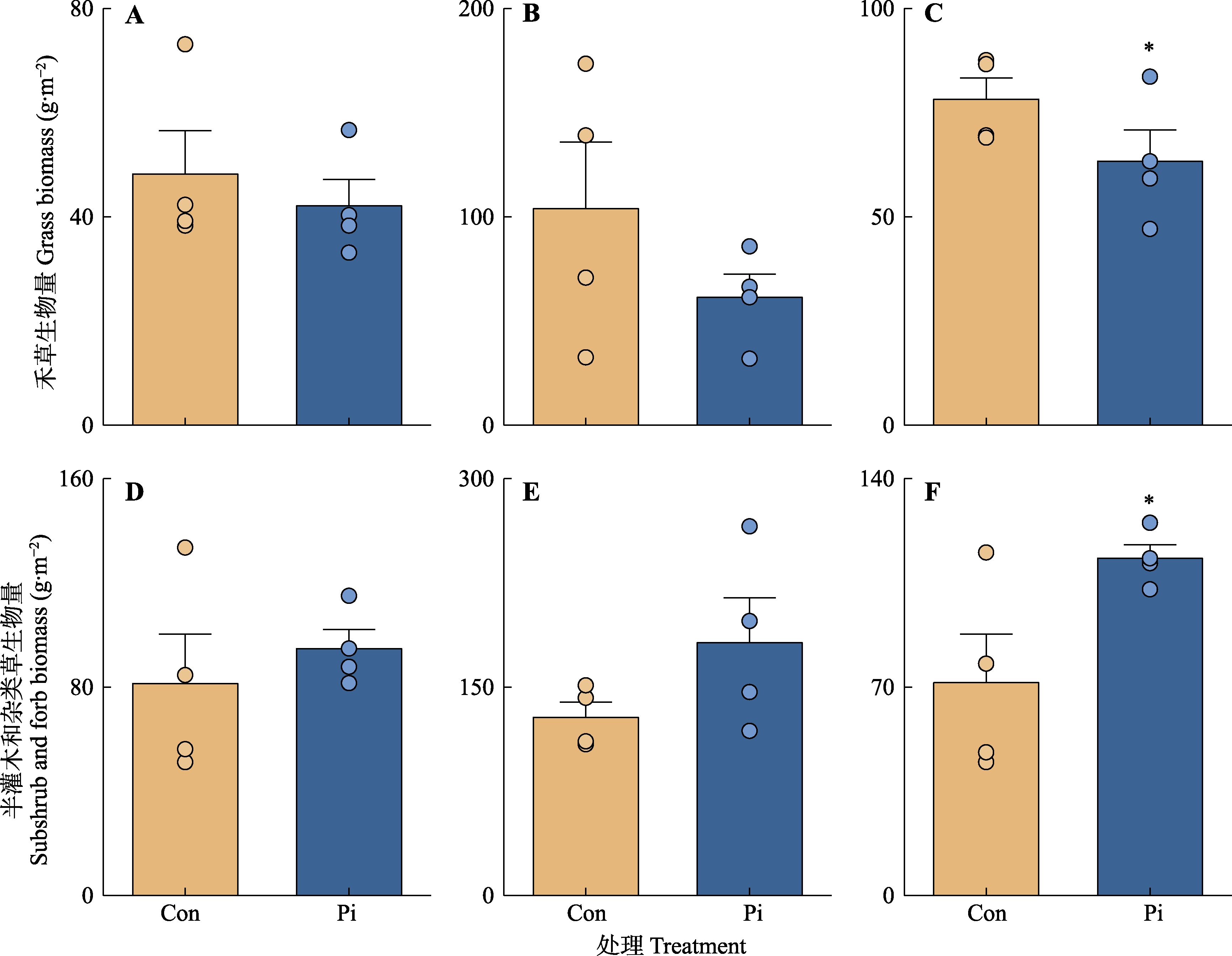
Fig. 1 Effects of precipitation increase on grass biomass (A-C) and on subshrub and forb biomass (D-F) in 2021-2023 (mean ± SE). Dots represent replicate samples. * denote significant differences between treatments at p < 0.05 level. Con, ambient precipitation; Pi, precipitation increase.
| 年份 Year | 处理 Treatment | 土壤含水量 Soil moisture (%) | 铵态氮含量 NH4+-N content (mg·kg-1) | 硝态氮含量 NO3--N content (mg·kg-1) | 可溶性有机碳含量 Dissolved organic carbon content (mg·kg-1) | 速效磷含量 Available phosphorus content (mg·kg-1) | 微生物生物量碳含量 Microbial biomass carbon content (mg·kg-1) |
|---|---|---|---|---|---|---|---|
| 2021 | Con | 8.09 ± 0.19 | 2.80 ± 0.12 | 14.70 ± 1.49 | 185.56 ± 12.58 | - | 628.60 ± 54.70 |
| Pi | 9.48 ± 0.34 | 3.23 ± 0.09 | 16.06 ± 1.16 | 187.79 ± 12.33 | - | 727.32 ± 76.42 | |
| 2022 | Con | 12.67 ± 0.14 | 1.39 ± 0.10 | 8.87 ± 0.15 | 133.96 ± 5.40 | 8.29 ± 0.84 | 708.17 ± 9.17 |
| Pi | 14.01 ± 0.07 | 1.53 ± 0.02 | 9.68 ± 0.58 | 177.05 ± 10.58 | 9.31 ± 0.08 | 740.86 ± 56.27 | |
| 2023 | Con | 8.11 ± 0.15 | 1.82 ± 0.16 | 20.83 ± 4.20 | 152.42 ± 7.50 | - | 656.60 ± 51.97 |
| Pi | 9.26 ± 0.19 | 2.25 ± 0.17 | 21.42 ± 6.62 | 153.31 ± 11.18 | - | 601.09 ± 19.27 |
Table 1 Results of the linear mixed-effects model analysis on the effects of precipitation increase on soil abiotic properties and microbial biomass carbon content (mean ± SE)
| 年份 Year | 处理 Treatment | 土壤含水量 Soil moisture (%) | 铵态氮含量 NH4+-N content (mg·kg-1) | 硝态氮含量 NO3--N content (mg·kg-1) | 可溶性有机碳含量 Dissolved organic carbon content (mg·kg-1) | 速效磷含量 Available phosphorus content (mg·kg-1) | 微生物生物量碳含量 Microbial biomass carbon content (mg·kg-1) |
|---|---|---|---|---|---|---|---|
| 2021 | Con | 8.09 ± 0.19 | 2.80 ± 0.12 | 14.70 ± 1.49 | 185.56 ± 12.58 | - | 628.60 ± 54.70 |
| Pi | 9.48 ± 0.34 | 3.23 ± 0.09 | 16.06 ± 1.16 | 187.79 ± 12.33 | - | 727.32 ± 76.42 | |
| 2022 | Con | 12.67 ± 0.14 | 1.39 ± 0.10 | 8.87 ± 0.15 | 133.96 ± 5.40 | 8.29 ± 0.84 | 708.17 ± 9.17 |
| Pi | 14.01 ± 0.07 | 1.53 ± 0.02 | 9.68 ± 0.58 | 177.05 ± 10.58 | 9.31 ± 0.08 | 740.86 ± 56.27 | |
| 2023 | Con | 8.11 ± 0.15 | 1.82 ± 0.16 | 20.83 ± 4.20 | 152.42 ± 7.50 | - | 656.60 ± 51.97 |
| Pi | 9.26 ± 0.19 | 2.25 ± 0.17 | 21.42 ± 6.62 | 153.31 ± 11.18 | - | 601.09 ± 19.27 |
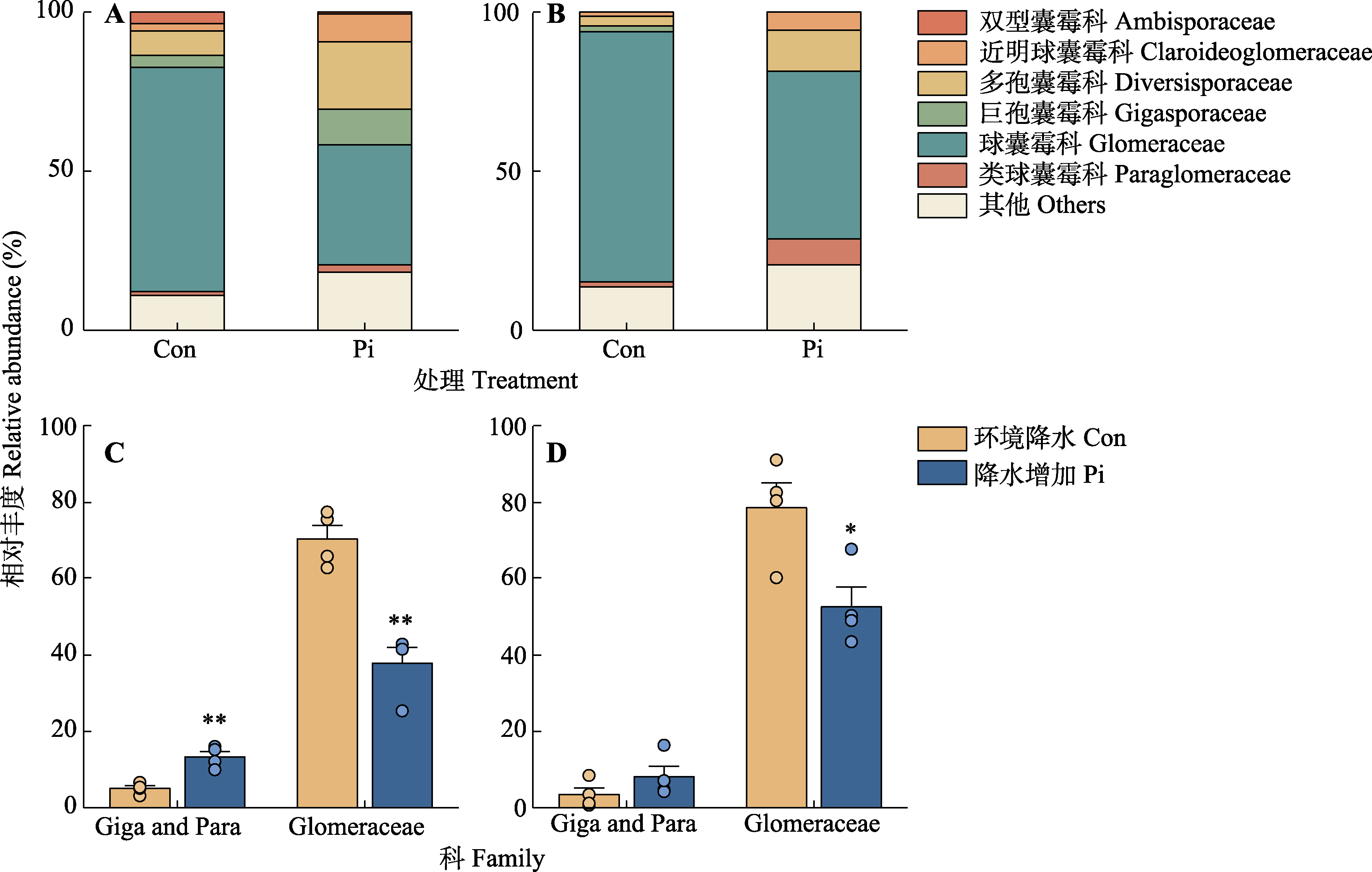
Fig. 2 Effects of precipitation increase on the relative abundance of arbuscular mycorrhizal fungi species (A, B) and on the relative abundance of Gigasporaceae, Paraglomeraceae, and Glomeraceae (C, D) in 2021 and 2022 (mean ± SE). *, p < 0.05; **, p < 0.01. Con, ambient precipitation; Pi, precipitation increase.
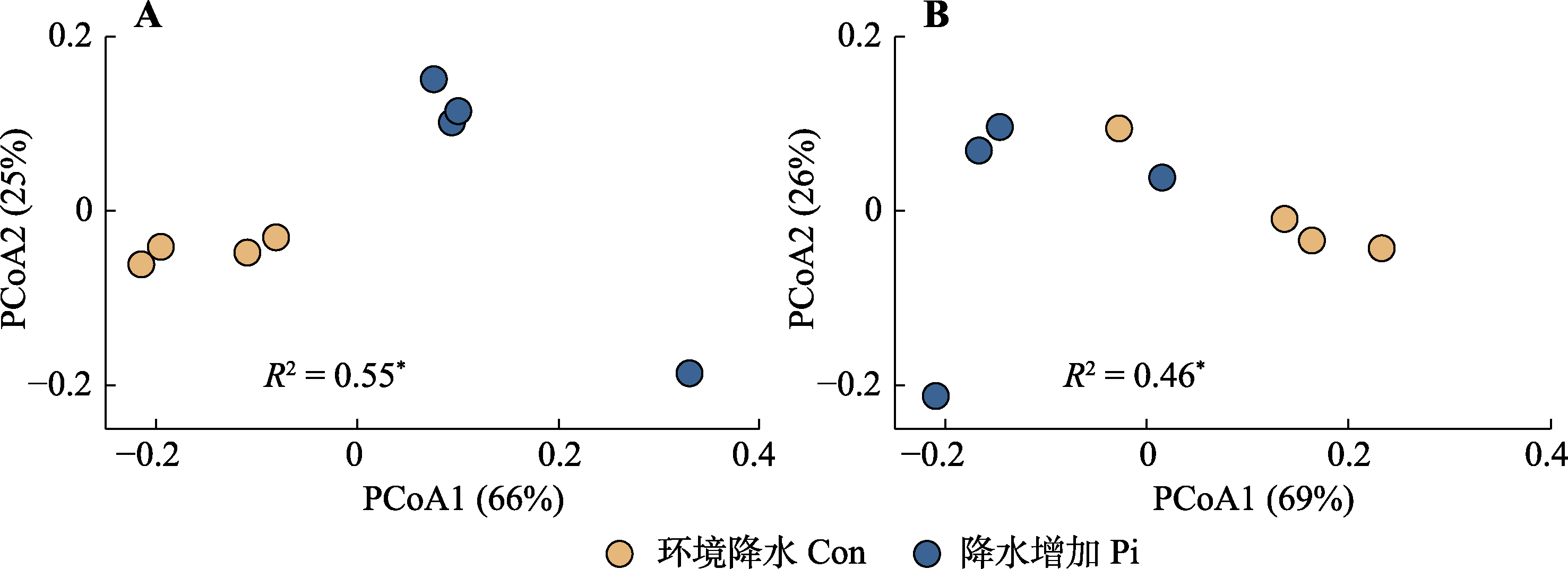
Fig. 3 Effects of precipitation increase on arbuscular mycorrhizal fungal community composition in 2021 and 2022. Con, ambient precipitation; Pi, precipitation increase. * denote significant differences between treatments at p < 0.05 level.
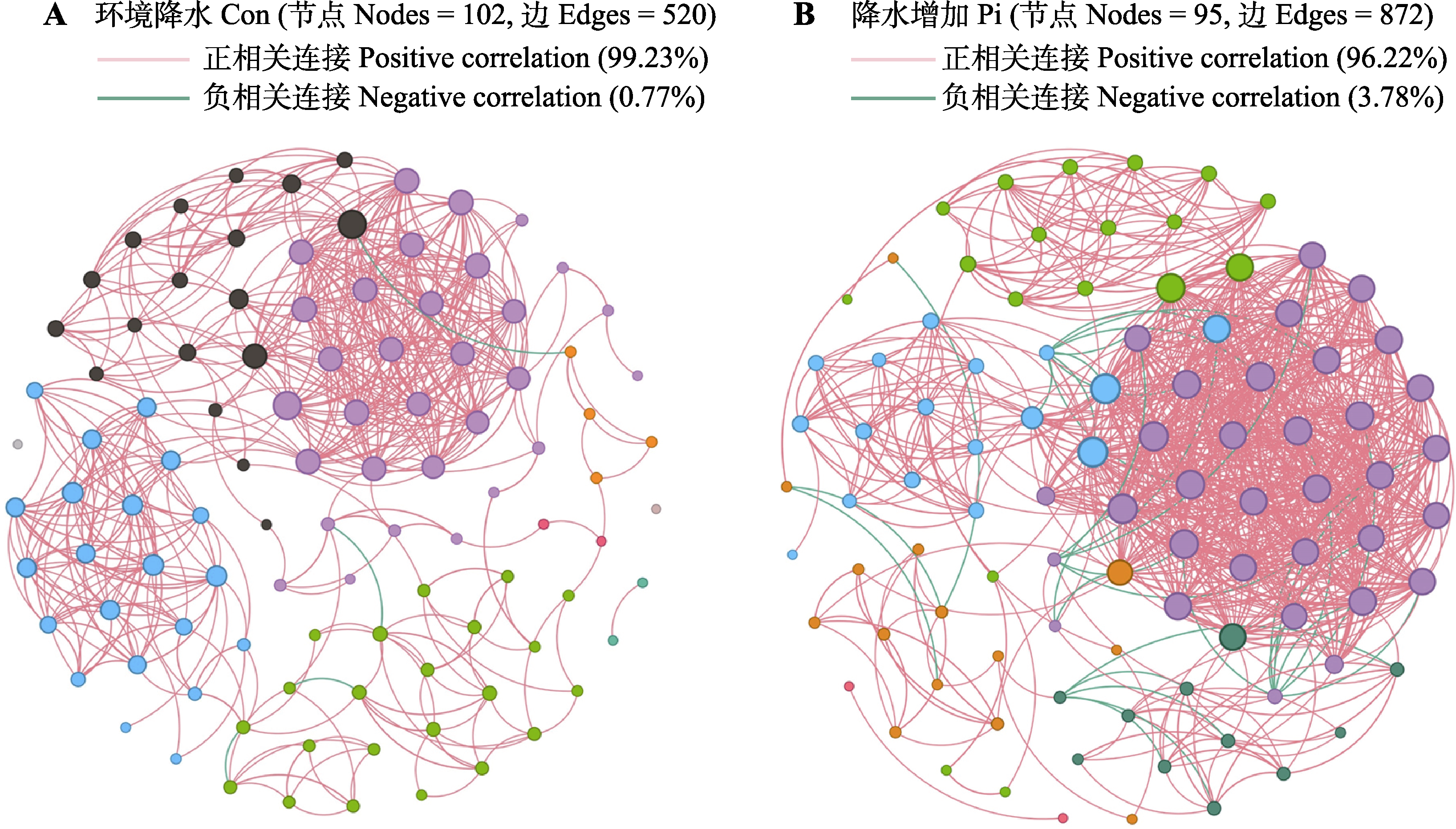
Fig. 4 Effect of precipitation increase on co-occurrence network structure of arbuscular mycorrhizal fungal communities. Con, ambient precipitation; Pi, precipitation increase.
| 处理 Treatment | 平均度 Average degree | 网络直径 Network diameter | 网络密度 Network density | 聚类系数 Clustering coefficient |
|---|---|---|---|---|
| Con | 10.196 | 6.46 | 0.101 | 0.754 |
| Pi | 18.358 | 6.57 | 0.195 | 0.824 |
Table 2 Topological properties of the arbuscular mycorrhizal fungi co-occurrence networks under different treatments
| 处理 Treatment | 平均度 Average degree | 网络直径 Network diameter | 网络密度 Network density | 聚类系数 Clustering coefficient |
|---|---|---|---|---|
| Con | 10.196 | 6.46 | 0.101 | 0.754 |
| Pi | 18.358 | 6.57 | 0.195 | 0.824 |
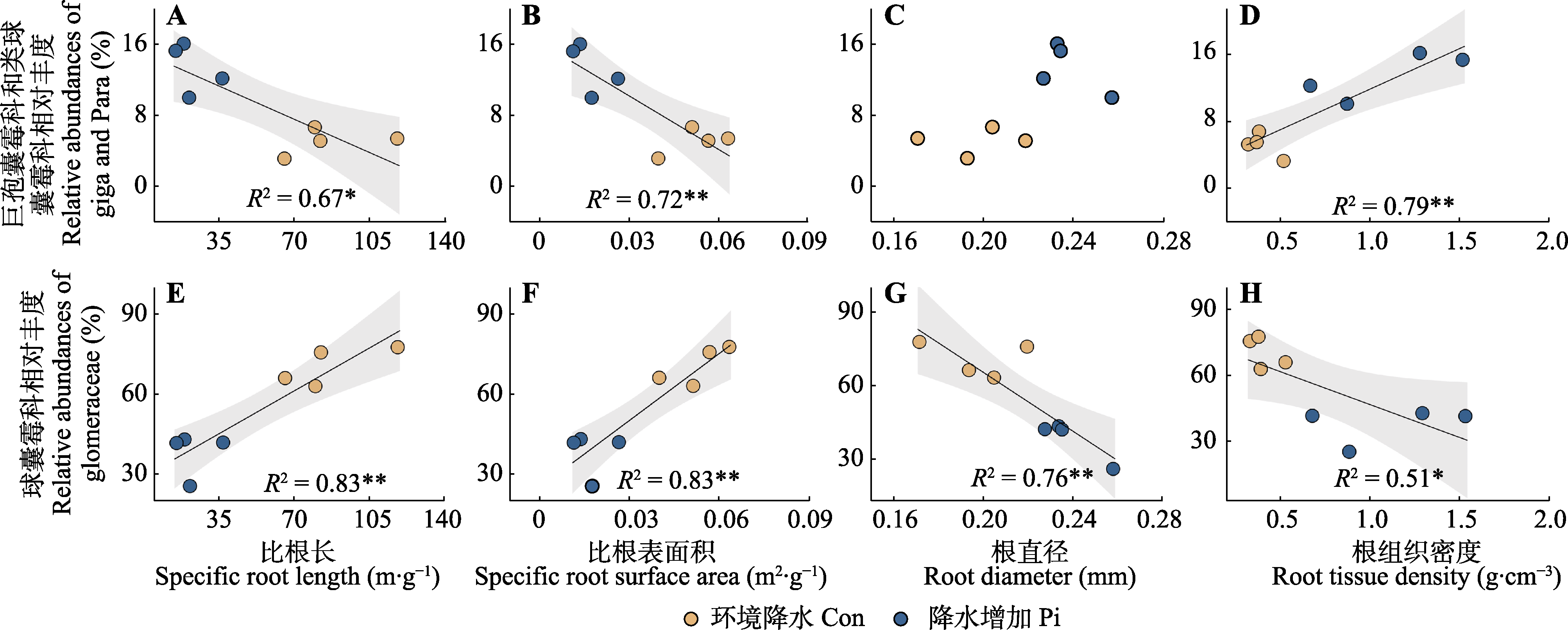
Fig. 5 Relationships between root traits and the relative abundances of Gigasporaceae (Giga), Paraglomeraceae (Para), and Glomeraceae in 2021. Con, ambient precipitation; Pi, precipitation increase. Solid lines indicate significant correlations (*, p < 0.05; **, p < 0.01), and shaded areas represent 95% confidence intervals.
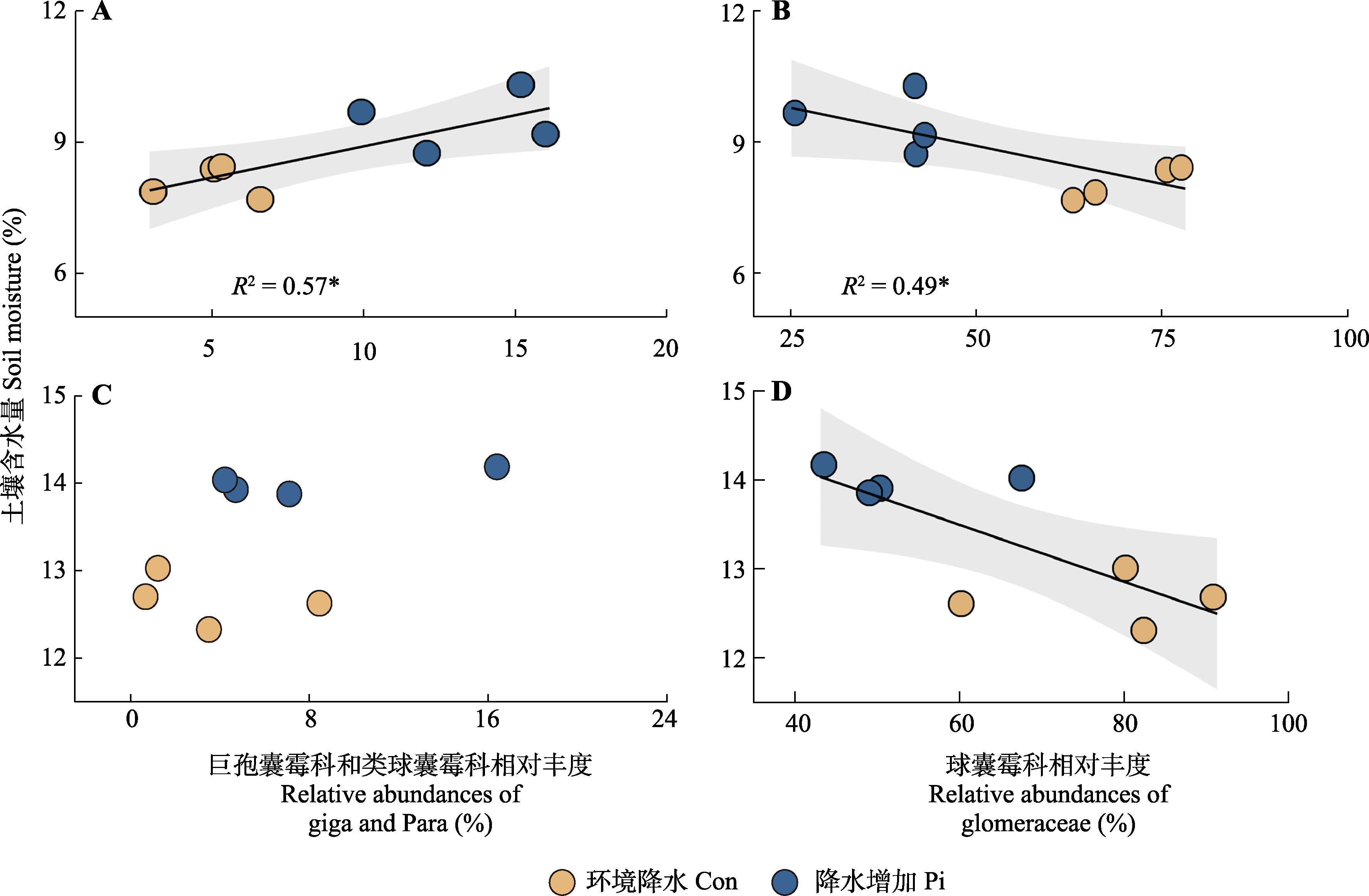
Fig. 6 Relationships between soil moisture and the relative abundances of Gigasporaceae (Giga), Paraglomeraceae (Para), and Glomeraceae in 2021 (A, B) and 2022 (C, D). Con, ambient precipitation; Pi, precipitation increase. Solid lines indicate significant correlations (p < 0.05), and shaded areas represent 95% confidence intervals.
| [1] |
Alaux PL, Zhang YQ, Gilbert L, Johnson D (2021). Can common mycorrhizal fungal networks be managed to enhance ecosystem functionality? Plants, People, Planet, 3, 433-444.
DOI URL |
| [2] |
Bai TS, Wang P, Hall SJ, Wang FW, Ye CL, Li Z, Li SJ, Zhou LY, Qiu YP, Guo JX, Guo H, Wang Y, Hu SJ (2020). Interactive global change factors mitigate soil aggregation and carbon change in a semi-arid grassland. Global Change Biology, 26, 5320-5332.
DOI URL |
| [3] |
Bai WM, Wan SQ, Niu SL, Liu WX, Chen QS, Wang QB, Zhang WH, Han XG, Li LH (2010). Increased temperature and precipitation interact to affect root production, mortality, and turnover in a temperate steppe: implications for ecosystem C cycling. Global Change Biology, 16, 1306-1316.
DOI URL |
| [4] |
Bai YF, Cotrufo MF (2022). Grassland soil carbon sequestration: current understanding, challenges, and solutions. Science, 377, 603-608.
DOI PMID |
| [5] |
Bakker MR, Augusto L, Achat DL (2006). Fine root distribution of trees and understory in mature stands of maritime pine (Pinus pinaster) on dry and humid sites. Plant and Soil, 286, 37-51.
DOI URL |
| [6] |
Bascompte J, Jordano P (2007). Plant-animal mutualistic networks: the architecture of biodiversity. Annual Review of Ecology, Evolution, and Systematics, 38, 567-593.
DOI URL |
| [7] | Bergmann J, Weigelt A, van der Plas F, Laughlin DC, Kuyper TW, Guerrero-Ramirez N, Valverde-Barrantes OJ, Bruelheide H, Freschet GT, Iversen CM, Kattge J, McMormack ML, Meier IC, Rillig MC, Roumet C, et al. (2021). The fungal collaboration gradient dominates the root economics space in plants. Science Advances, 6, eaba3756. DOI: 10.1126/sciadv.aba3756. |
| [8] |
Bever JD (2015). Preferential allocation, physio-evolutionary feedbacks, and the stability and environmental patterns of mutualism between plants and their root symbionts. New Phytologist, 205, 1503-1514.
DOI PMID |
| [9] |
Borken W, Matzner E (2009). Reappraisal of drying and wetting effects on C and N mineralization and fluxes in soils. Global Change Biology, 15, 808-824.
DOI URL |
| [10] |
Chapin III FS, Shaver GR, Giblin AE, Nadelhoffer KJ, Laundre JA (1995). Responses of Arctic tundra to experimental and observed changes in climate. Ecology, 76, 694-711.
DOI URL |
| [11] |
Chen BD, Fu W, Wu SL, Zhu YG (2024). Involvements of mycorrhizal fungi in terrestrial ecosystem carbon cycling. Chinese Journal of Plant Ecology, 48, 1-20.
DOI URL |
|
[陈保冬, 付伟, 伍松林, 朱永官 (2024). 菌根真菌在陆地生态系统碳循环中的作用. 植物生态学报, 48, 1-20.]
DOI |
|
| [12] |
Chen YL, Xu ZW, Xu TL, Veresoglou SD, Yang GW, Chen BD (2017). Nitrogen deposition and precipitation induced phylogenetic clustering of arbuscular mycorrhizal fungal communities. Soil Biology & Biochemistry, 115, 233-242.
DOI URL |
| [13] | Cheng JM (2014). Grassland Ecosystem of the Loess Plateau in China—Yunwushan National Nature Reserve. Science Press, Beijing. |
| [程积民 (2014). 黄土高原草原生态系统研究——云雾山国家级自然保护区. 科学出版社, 北京.] | |
| [14] |
Edgar RC (2010). Search and clustering orders of magnitude faster than BLAST. Bioinformatics, 26, 2460-2461.
DOI PMID |
| [15] |
Gao C, Kim YC, Zheng Y, Yang W, Chen L, Ji NN, Wan SQ, Guo LD (2016). Increased precipitation, rather than warming, exerts a strong influence on arbuscular mycorrhizal fungal community in a semiarid steppe ecosystem. Botany, 94, 459-469.
DOI URL |
| [16] |
Hart MM, Reader RJ (2002). Taxonomic basis for variation in the colonization strategy of arbuscular mycorrhizal fungi. New Phytologist, 153, 335-344.
DOI URL |
| [17] |
He TQ, Zhang XL, Du JQ, Gilliam FS, Yang S, Tian MH, Zhang CX, Zhou YN (2023). Arbuscular mycorrhizal fungi shift soil bacterial community composition and reduce soil ammonia volatilization and nitrous oxide emissions. Microbial Ecology, 85, 951-964.
DOI |
| [18] | He TQ, Zhao YF, Wang XD, Qiu YP, Deng J, Zhang KC, Xu XY, Zhao YX, Qian KY, Wang H, Bai TS, Zhang Y, Feng C, Guo L, Chen HH, et al. (2025). Precipitation increase promotes soil organic carbon formation and stability via the mycorrhizal fungal pathway. Proceedings of the National Academy of Sciences of the United States of America, 122, e1775895174. DOI: 10.1073/pnas.2519072122. |
| [19] | IPCC Intergovernmental Panel on Climate Change (2021). Climate Change 2021: the Physical Science Basis. Contribution of Working Group I to the Sixth Assessment Report of the Intergovernmental Panel on Climate Change. Cambridge Press, Cambridge, UK. |
| [20] | Iversen CM, McCormack ML, Powell AS, Blackwood CB, Freschet GT, Kattge J, Roumet C, Stover DB, Soudzilovskaia NA, Valverde-Barrantes OJ, van Bodegom PM, Violle C (2017). A global Fine-Root Ecology Database to address below-ground challenges in plant ecology. New Phytologist, 215, 15-26. |
| [21] |
Jiang SJ, Liu YJ, Luo JJ, Qin MS, Johnson NC, Öpik M, Vasar M, Chai YX, Zhou XL, Mao L, Du GZ, An LZ, Feng HY (2018). Dynamics of arbuscular mycorrhizal fungal community structure and functioning along a nitrogen enrichment gradient in an alpine meadow ecosystem. New Phytologist, 220, 1222-1235.
DOI PMID |
| [22] |
Jiang YN, Wang WX, Xie QJ, Liu N, Liu LX, Wang DP, Zhang XW, Yang C, Chen XY, Tang DZ, Wang ET (2017). Plants transfer lipids to sustain colonization by mutualistic mycorrhizal and parasitic fungi. Science, 356, 1172-1175.
DOI PMID |
| [23] |
Jung SC, Martinez-Medina A, Lopez-Raez JA, Pozo MJ (2012). Mycorrhiza-induced resistance and priming of plant defenses. Journal of Chemical Ecology, 38, 651-664.
DOI PMID |
| [24] |
Kivlin SN, Hawkes CV, Treseder KK (2011). Global diversity and distribution of arbuscular mycorrhizal fungi. Soil Biology & Biochemistry, 43, 2294-2303.
DOI URL |
| [25] |
Kong DL, Ma CG, Zhang Q, Li L, Chen XY, Zeng H, Guo DL (2014). Leading dimensions in absorptive root trait variation across 96 subtropical forest species. New Phytologist, 203, 863-872.
DOI PMID |
| [26] |
Lee J, Lee SS, Young JPW (2008). Improved PCR primers for the detection and identification of arbuscular mycorrhizal fungi. FEMS Microbiology Ecology, 65, 339-349.
DOI PMID |
| [27] |
Li JW, Deng L, Peñuelas J, Wu JZ, Shangguan ZP, Sardans J, Peng CH, Kuzyakov Y (2023). C:N:P stoichiometry of plants, soils, and microorganisms: response to altered precipitation. Global Change Biology, 29, 7051-7071.
DOI PMID |
| [28] |
Maherali H, Klironomos JN (2007). Influence of phylogeny on fungal community assembly and ecosystem functioning. Science, 316, 1746-1748.
DOI PMID |
| [29] | Morriën E, Hannula SE, Snoek LB, Helmsing NR, Zweers H, de Hollander M, Soto RL, Bouffaud ML, Buée M, Dimmers W, Duyts H, Geisen S, Girlanda M, Griffiths RI, Jørgensen HB, et al. (2017). Soil networks become more connected and take up more carbon as nature restoration progresses. Nature Communications, 8, 14349. DOI: 10.1038/ncomms14349. |
| [30] | Öpik M, Vanatoa A, Vanatoa E, Moora M, Davison J, Kalwij JM, Reier Ü, Zobel M (2010). The online database MaarjAM reveals global and ecosystemic distribution patterns in arbuscular mycorrhizal fungi (Glomeromycota). New Phytologist, 188, 223-241. |
| [31] | Peng JL, Tang JW, Xie SD, Wang YH, Liao JQ, Chen C, Sun CL, Mao JH, Zhou QP, Niu SL (2024). Evidence for the acclimation of ecosystem photosynthesis to soil moisture. Nature Communications, 15, 9795. DOI: 10.1038/s41467-024-54156-7. |
| [32] | Phillips ML, Weber SE, Andrews LV, Aronson EL, Allen MF, Allen EB (2019). Fungal community assembly in soils and roots under plant invasion and nitrogen deposition. Fungal Ecology, 40, 107-117. |
| [33] |
Prescott CE, Grayston SJ, Helmisaari HS, Kaštovská E, Körner C, Lambers H, Meier IC, Millard P, Ostonen I (2020). Surplus carbon drives allocation and plant-soil interactions. Trends in Ecology & Evolution, 35, 1110-1118.
DOI URL |
| [34] | Qiu YP, Guo LJ, Xu XY, Zhang L, Zhang KC, Chen MF, Zhao YX, Burkey KO, Shew HD, Zobel RW, Zhang Y, Hu SJ (2021). Warming and elevated ozone induce tradeoffs between fine roots and mycorrhizal fungi and stimulate organic carbon decomposition. Science Advances, 7, eabe9256. DOI: 10.1126/sciadv.abe9256. |
| [35] |
Reich PB (2014). The world-wide ‘fast-slow’ plant economics spectrum: a traits manifesto. Journal of Ecology, 102, 275-301.
DOI URL |
| [36] |
Ren HY, Xu ZW, Isbell F, Huang JH, Han XG, Wan SQ, Chen SP, Wang RZ, Zeng DH, Jiang Y, Fang YT (2017). Exacerbated nitrogen limitation ends transient stimulation of grassland productivity by increased precipitation. Ecological Monographs, 87, 457-469.
DOI URL |
| [37] |
Sato K, Suyama Y, Saito M, Sugawara K (2005). A new primer for discrimination of arbuscular mycorrhizal fungi with polymerase chain reaction-denature gradient gel electrophoresis. Grassland Science, 51, 179-181.
DOI URL |
| [38] |
Schimel JP (2018). Life in dry soils: effects of drought on soil microbial communities and processes. Annual Review of Ecology, Evolution, and Systematics, 49, 409-432.
DOI URL |
| [39] |
Schwarzott D, Schüßler A (2001). A simple and reliable method for SSU rRNA gene DNA extraction, amplification, and cloning from single AM fungal spores. Mycorrhiza, 10, 203-207.
DOI URL |
| [40] |
Simon L, Lalonde M, Bruns TD (1992). Specific amplification of 18S fungal ribosomal genes from vesicular-arbuscular endomycorrhizal fungi colonizing roots. Applied and Environmental Microbiology, 58, 291-295.
DOI PMID |
| [41] | Smith SE, Read DJ (2008). Mycorrhizal Symbiosis. Academic Press, Boston, USA. |
| [42] |
Staddon PL, Ramsey CB, Ostle N, Ineson P, Fitter AH (2003). Rapid turnover of hyphae of mycorrhizal fungi determined by AMS microanalysis of 14C. Science, 300, 1138-1140.
DOI PMID |
| [43] |
Su FL, Wei YN, Wang FW, Guo JX, Zhang JJ, Wang Y, Guo H, Hu SJ (2019). Sensitivity of plant species to warming and altered precipitation dominates the community productivity in a semiarid grassland on the Loess Plateau. Ecology and Evolution, 9, 7628-7638.
DOI URL |
| [44] |
Sun JM, Zhang B, Pan QM, Liu W, Wang XL, Huang JH, Chen DM, Wang CH, Han XG (2023). Non-linear response of productivity to precipitation extremes in the Inner Mongolia grassland. Functional Ecology, 37, 1663-1673.
DOI URL |
| [45] | Trent JD, Svejcar TJ, Blank RR (1994). Mycorrhizal colonization, hyphal lengths, and soil moisture associated with two Artemisia tridentata subspecies. The Great Basin Naturalist, 54, 291-300. |
| [46] |
Vance ED, Brookes PC, Jenkinson DS (1987). An extraction method for measuring soil microbial biomass C. Soil Biology & Biochemistry, 19, 703-707.
DOI URL |
| [47] |
Verlinden MS, Ven A, Verbruggen E, Janssens IA, Wallander H, Vicca S (2018). Favorable effect of mycorrhizae on biomass production efficiency exceeds their carbon cost in a fertilization experiment. Ecology, 99, 2525-2534.
DOI PMID |
| [48] |
Weber SE, Diez JM, Andrews LV, Goulden ML, Aronson EL, Allen MF (2019). Responses of arbuscular mycorrhizal fungi to multiple coinciding global change drivers. Fungal Ecology, 40, 62-71.
DOI URL |
| [49] |
Weemstra M, Mommer L, Visser EJW, van Ruijven J, Kuyper TW, Mohren GMJ, Sterck FJ (2016). Towards a multidimensional root trait framework: a tree root review. New Phytologist, 211, 1159-1169.
DOI PMID |
| [50] |
Weemstra M, Sterck FJ, Visser EJW, Kuyper TW, Goudzwaard L, Mommer L (2017). Fine-root trait plasticity of beech (Fagus sylvatica) and spruce (Picea abies) forests on two contrasting soils. Plant and Soil, 415, 175-188.
DOI URL |
| [51] |
Whiteside MD, Werner GDA, Caldas VEA, van’t Padje A, Dupin SE, Elbers B, Bakker M, Wyatt GAK, Klein M, Hink MA, Postma M, Vaitla B, Noë R, Shimizu TS, West SA, et al. (2019). Mycorrhizal fungi respond to resource inequality by moving phosphorus from rich to poor patches across networks. Current Biology, 29, 2043-2050.
DOI PMID |
| [52] | Wilcox KR, von Fischer JC, Muscha JM, Petersen MK, Knapp AK (2015). Contrasting above- and belowground sensitivity of three Great Plains grasslands to altered rainfall regimes. Global Change Biology, 21, 335-344. |
| [53] |
Xie W, Hao ZP, Zhang X, Chen BD (2022). Research progress and prospect of signal transfer among plants mediated by arbuscular mycorrhizal networks. Chinese Journal of Plant Ecology, 46, 493-515.
DOI |
|
[谢伟, 郝志鹏, 张莘, 陈保冬 (2022). 丛枝菌根网络介导的植物间信号交流研究进展及展望. 植物生态学报, 46, 493-515.]
DOI |
|
| [54] |
Xu LJ, Hao ZP, Xie W, Li F, Chen BD (2018). Transmembrane H+ and Ca2+ fluxes through extraradical hyphae of arbuscular mycorrhizal fungi in response to drought stress. Chinese Journal of Plant Ecology, 42, 764-773.
DOI |
|
[徐丽娇, 郝志鹏, 谢伟, 李芳, 陈保冬 (2018). 丛枝菌根真菌根外菌丝跨膜H+和Ca2+流对干旱胁迫的响应. 植物生态学报, 42, 764-773.]
DOI |
|
| [55] |
Xu XY, Qiu YP, Zhang KC, Yang F, Chen MF, Luo X, Yan XB, Wang P, Zhang Y, Chen HH, Guo H, Jiang L, Hu SJ (2022). Climate warming promotes deterministic assembly of arbuscular mycorrhizal fungal communities. Global Change Biology, 28, 1147-1161.
DOI URL |
| [56] |
Zheng SX, Ren HY, Lan ZC, Li WH, Wang KB, Bai YF (2010). Effects of grazing on leaf traits and ecosystem functioning in Inner Mongolia grasslands: scaling from species to community. Biogeosciences, 7, 1117-1132.
DOI URL |
| [57] | Zhu HH, Fazliddin K, Li QS, Wang C, Chen PL, Yang JX, Dong Q, Li XC, Kakhramon D, Toshkhon G, Yu B, Xiang H, Gao C (2025). Contrasting adaptations of soil prokaryotes and arbuscular mycorrhizal fungi in saline wildland and non-saline farmland. Fundamental Research. DOI: 10.1016/j.fmre.2025.02.009. |
| [1] | WEI Li, WANG Peng-Sen, LIU Shan, FAN Rui, HUANG Nan, ZHANG Jian-Guo, Qimeilamu , GOU Yang, LIU Mo-Han, HUANG Ting, ZHOU Ji-Qiong. Arbuscular mycorrhizal fungi influence nutrient uptake along vertical niches in legume-grass mixtures [J]. Chin J Plant Ecol, 2026, 50(3): 760-773. |
| [2] | ZHOU Chun-Han, XIONG Zhi-Cheng, YANG Ming-Xin, SHI Hai-Lan, ZHOU Ya-Xing, TANG Yu, ZHANG Jing, JI Bao-Ming, DAI Xin-Ling. Community characteristics and drivers of arbuscular mycorrhizal fungi in alpine wetlands of the Yellow River Source Region [J]. Chin J Plant Ecol, 2026, 50(3): 625-638. |
| [3] | JIANG Qing-Hong, DING Lu, WANG Zhe, ZHENG Chun-Li, FENG Zhao-Chuo. Growth-promoting effects of arbuscular mycorrhizal fungi combined with different functional bacteria on Medicago sativa [J]. Chin J Plant Ecol, 2026, 50(3): 774-788. |
| [4] | MA Jian-Hui, TONG Xin, ZHANG Si-Rong, MAO Zi-Kun, QIN Jun, MA Ke-Ping. Research advances and perspectives on physiological and ecological functions of mycorrhizal fungi [J]. Chin J Plant Ecol, 2026, 50(3): 498-514. |
| [5] | WANG Hai-Lang, FU Wei, WU Song-Lin, CHEN Bao-Dong. Ecological functions and community regulation of arbuscular mycorrhizal fungi [J]. Chin J Plant Ecol, 2026, 50(3): 515-535. |
| [6] | QIN Fei-Fei, TANG Zhao-Hui, SI Tong, CI Dun-Wei. Response mechanisms of growth and rhizosphere soil properties in salt-tolerant and salt-sensitive peanut (Arachis hypogaea) to arbuscular mycorrhizal fungi [J]. Chin J Plant Ecol, 2026, 50(3): 742-759. |
| [7] | ZOU Ji-Kai, WU Jia-Yi, GU Yun-Yi, CHEN Bao-Ming. Effects of different nitrogen forms and arbuscular mycorrhizal fungi on competitive ability of invasive alien plant Bidens alba [J]. Chin J Plant Ecol, 2026, 50(3): 722-730. |
| [8] | HE Zheng-Jia, ZENG Xin-Ran, WANG Lin-Ying, XUE Xin-Yu, SU Qin-Ze, LI Yu, ZHANG Yin-Jie, WU Hui-Huang, CHEN Cheng-Cong, WU Liang-Quan, WEI An-Ni, QIU Yun-Peng, GUO Li-Jin. Response of arbuscular mycorrhizal fungal communities and soil organic carbon to magnesium fertilization in tea plantations [J]. Chin J Plant Ecol, 2026, 50(3): 700-709. |
| [9] | DUAN Shi-Long, YU Cheng-Jin, XU Xin-Yao, FENG Gu, XIE Xian-An, ZHANG Lin. Plant-arbuscular mycorrhizal fungi-bacteria continuum and its maintenance mechanisms [J]. Chin J Plant Ecol, 2026, 50(3): 600-611. |
| [10] | JIANG Kang-Wei, LÜ Cheng, WANG Ya-Fei, LI Hong, ZHANG Zhi-Qing, WANG Yu, ZHANG Qing-Qing, Tuerxunnayi REYIMU. Effects of soil arbuscular mycorrhizal fungal communities on soil multifunctionality under grazing disturbance [J]. Chin J Plant Ecol, 2026, 50(3): 685-699. |
| [11] | WANG Meng-Xue, HU Ming-Yan, CHU Cheng-Jin, CHEN Yang, LUO Wen-Qi, MA Zi-Long. C, N, P stoichiometric characteristics of leaves and fine roots in different mycorrhizal tree species in subtropical forests [J]. Chin J Plant Ecol, 2026, 50(2): 334-343. |
| [12] | ZHANG Bin, ZHANG Hao-Cheng, QIAO Tian, LÜ Zhi-Bing, XU Ya-Nan, LI Xue-Qin, YUAN Xiang-Yang, FENG Mei-Chen, ZHANG Mei-Jun. Effect of arbuscular mycorrhizal fungi inoculation on non-structural carbohydrates and C, N and P stoichiometry in oat plants under drought stress [J]. Chin J Plant Ecol, 2025, 49(7): 1082-1095. |
| [13] | HU Die, JIANG Xin-Qi, DAI Zhi-Cong, CHEN Dai-Yi, ZHANG Yu, QI Shan-Shan, DU Dao-Lin. Arbuscular mycorrhizal fungi enhance the capacity of invasive Sphagneticola trilobata to tolerate herbicides [J]. Chin J Plant Ecol, 2024, 48(5): 651-659. |
| [14] | CHEN Ke-Yu, XING Sen, TANG Yu, SUN Jia-Hui, REN Shi-Jie, ZHANG Jing, JI Bao-Ming. Arbuscular mycorrhizal fungal community characteristics and driving factors in different grassland types [J]. Chin J Plant Ecol, 2024, 48(5): 660-674. |
| [15] | CHEN Bao-Dong, FU Wei, WU Song-Lin, ZHU Yong-Guan. Involvements of mycorrhizal fungi in terrestrial ecosystem carbon cycling [J]. Chin J Plant Ecol, 2024, 48(1): 1-20. |
| Viewed | ||||||
|
Full text |
|
|||||
|
Abstract |
|
|||||
Copyright © 2026 Chinese Journal of Plant Ecology
Tel: 010-62836134, 62836138, E-mail: apes@ibcas.ac.cn, cjpe@ibcas.ac.cn

