
Chin J Plant Ecol ›› 2026, Vol. 50 ›› Issue (6): 1370-1379.DOI: 10.17521/cjpe.2025.0287 cstr: 32100.14.cjpe.2025.0287
• Research Articles • Previous Articles Next Articles
CAI Min-Ling1, CHEN Ming-Hao1, KE Wei-Qian2, PENG Chang-Lian2,*( )(
)( )
)
Received:2025-07-31
Accepted:2025-11-29
Online:2026-06-28
Published:2026-08-26
Contact:
PENG Chang-Lian
Supported by:CAI Min-Ling, CHEN Ming-Hao, KE Wei-Qian, PENG Chang-Lian. Effect of exogenous nitrate addition on anthocyanin accumulation in the main stem and branches of Mikania micrantha[J]. Chin J Plant Ecol, 2026, 50(6): 1370-1379.
Add to citation manager EndNote|Ris|BibTeX
URL: https://www.plant-ecology.com/EN/10.17521/cjpe.2025.0287
| 基因名 Gene name | 正向引物 Forward primer (5′-3′) | 反向引物 Reverse primer (5′-3′) |
|---|---|---|
| 18s | GTCGGGGGCATTCGTATTTC | CGGCATCGTTTATGGTTGAG |
| PAL | CACGGTGGCAACTTTCAAGG | AGCTCGGAAAACTGAGCGAA |
| CHS | TTGGGCATCGACGATTGGAA | GCCGAAGAGTGTCGCATTTC |
| CHI | TATGCCGAAGAACCCGCTAC | AGCCCTGCAGCATAAACCTT |
| F3′H | ACACGAGATGGTGGCAAGAG | GTGTTTGAGTTCACCACGGC |
| DFR | ACACACCTGGCTTGTCCAAA | AGGAGTAGCGACTGCAAACC |
| ANS | ACCATTTGGCCCTCTAAGCC | AGTCTCCCCTCCTCCAATCC |
| UGFT | GGTTGAGAATCCAGGGTGGG | CATTCGATGCGACAGCCTTG |
| LOG | TGGGCTCAACTTGGCATTCA | TTCCGGACCAACACCTTAGC |
Table 1 Primer sequences for internal gene and target gene
| 基因名 Gene name | 正向引物 Forward primer (5′-3′) | 反向引物 Reverse primer (5′-3′) |
|---|---|---|
| 18s | GTCGGGGGCATTCGTATTTC | CGGCATCGTTTATGGTTGAG |
| PAL | CACGGTGGCAACTTTCAAGG | AGCTCGGAAAACTGAGCGAA |
| CHS | TTGGGCATCGACGATTGGAA | GCCGAAGAGTGTCGCATTTC |
| CHI | TATGCCGAAGAACCCGCTAC | AGCCCTGCAGCATAAACCTT |
| F3′H | ACACGAGATGGTGGCAAGAG | GTGTTTGAGTTCACCACGGC |
| DFR | ACACACCTGGCTTGTCCAAA | AGGAGTAGCGACTGCAAACC |
| ANS | ACCATTTGGCCCTCTAAGCC | AGTCTCCCCTCCTCCAATCC |
| UGFT | GGTTGAGAATCCAGGGTGGG | CATTCGATGCGACAGCCTTG |
| LOG | TGGGCTCAACTTGGCATTCA | TTCCGGACCAACACCTTAGC |
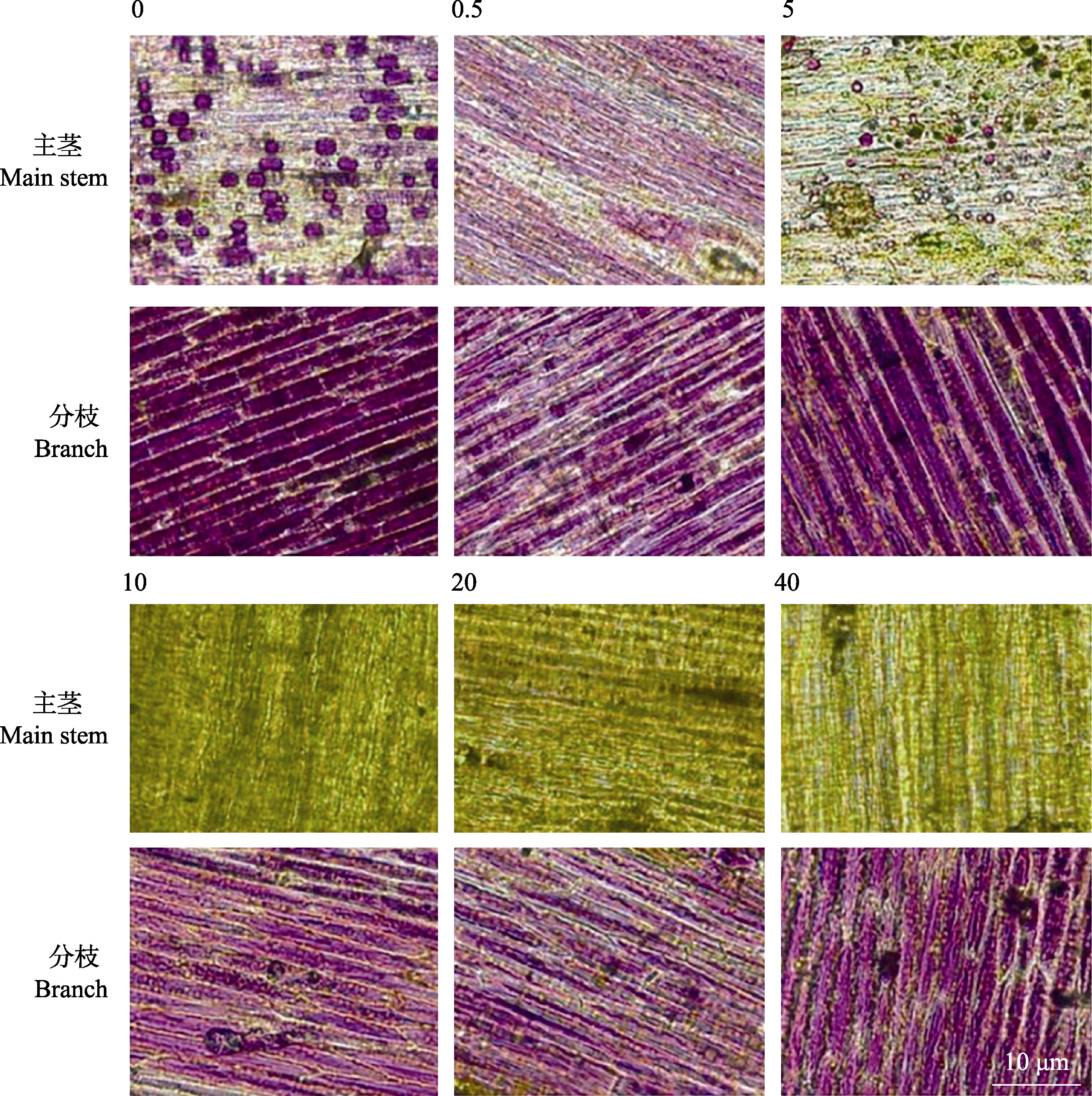
Fig. 1 Differences in anthocyanin content in epidermal cells of main stem and branch of Mikania micrantha in treatments at different nitrate nitrogen concentrations. 0, 0.5, 5, 10, 20 and 40 indicate nitrate nitrogen concentration (mmol·L-1).
| 变量 Variable | 硝态氮浓度 NO3--N concentration | 部位 Position | 硝态氮浓度×部位 NO3--N concentration × position |
|---|---|---|---|
| 花色素苷含量 Anthocyanin content (mmol·g−1) | 50.48 (0.000) | 172.32 (0.000) | 12.73 (0.000) |
| PAL基因表达量 PAL gene relative expression | 67.54 (0.000) | 36.68 (0.000) | 37.24 (0.000) |
| CHS基因表达量 CHS gene relative expression | 278.80 (0.000) | 18.12 (0.000) | 15.18 (0.000) |
| CHI基因表达量 CHI gene relative expression | 350.85 (0.000) | 40.08 (0.000) | 79.09 (0.000) |
| F3′H基因表达量 F3′H gene relative expression | 123.09 (0.000) | 20.38 (0.000) | 22.26 (0.000) |
| DFR基因表达量 DFR gene relative expression | 1.88 (0.186) | 23.23 (0.000) | 2.31 (0.083) |
| ANS基因表达量 ANS gene relative expression | 261.72 (0.000) | 8.01 (0.000) | 7.98 (0.000) |
| UGFT基因表达量 UGFT gene relative expression | 131.03 (0.000) | 20.84 (0.000) | 22.99 (0.000) |
Table 2 Results (F and p) from two-way ANOVA for the effects of nitrate nitrogen (NO3--N) concentration, position, and their interaction on anthocyanin content and the expression levels of anthocyanin biosynthetic genes
| 变量 Variable | 硝态氮浓度 NO3--N concentration | 部位 Position | 硝态氮浓度×部位 NO3--N concentration × position |
|---|---|---|---|
| 花色素苷含量 Anthocyanin content (mmol·g−1) | 50.48 (0.000) | 172.32 (0.000) | 12.73 (0.000) |
| PAL基因表达量 PAL gene relative expression | 67.54 (0.000) | 36.68 (0.000) | 37.24 (0.000) |
| CHS基因表达量 CHS gene relative expression | 278.80 (0.000) | 18.12 (0.000) | 15.18 (0.000) |
| CHI基因表达量 CHI gene relative expression | 350.85 (0.000) | 40.08 (0.000) | 79.09 (0.000) |
| F3′H基因表达量 F3′H gene relative expression | 123.09 (0.000) | 20.38 (0.000) | 22.26 (0.000) |
| DFR基因表达量 DFR gene relative expression | 1.88 (0.186) | 23.23 (0.000) | 2.31 (0.083) |
| ANS基因表达量 ANS gene relative expression | 261.72 (0.000) | 8.01 (0.000) | 7.98 (0.000) |
| UGFT基因表达量 UGFT gene relative expression | 131.03 (0.000) | 20.84 (0.000) | 22.99 (0.000) |
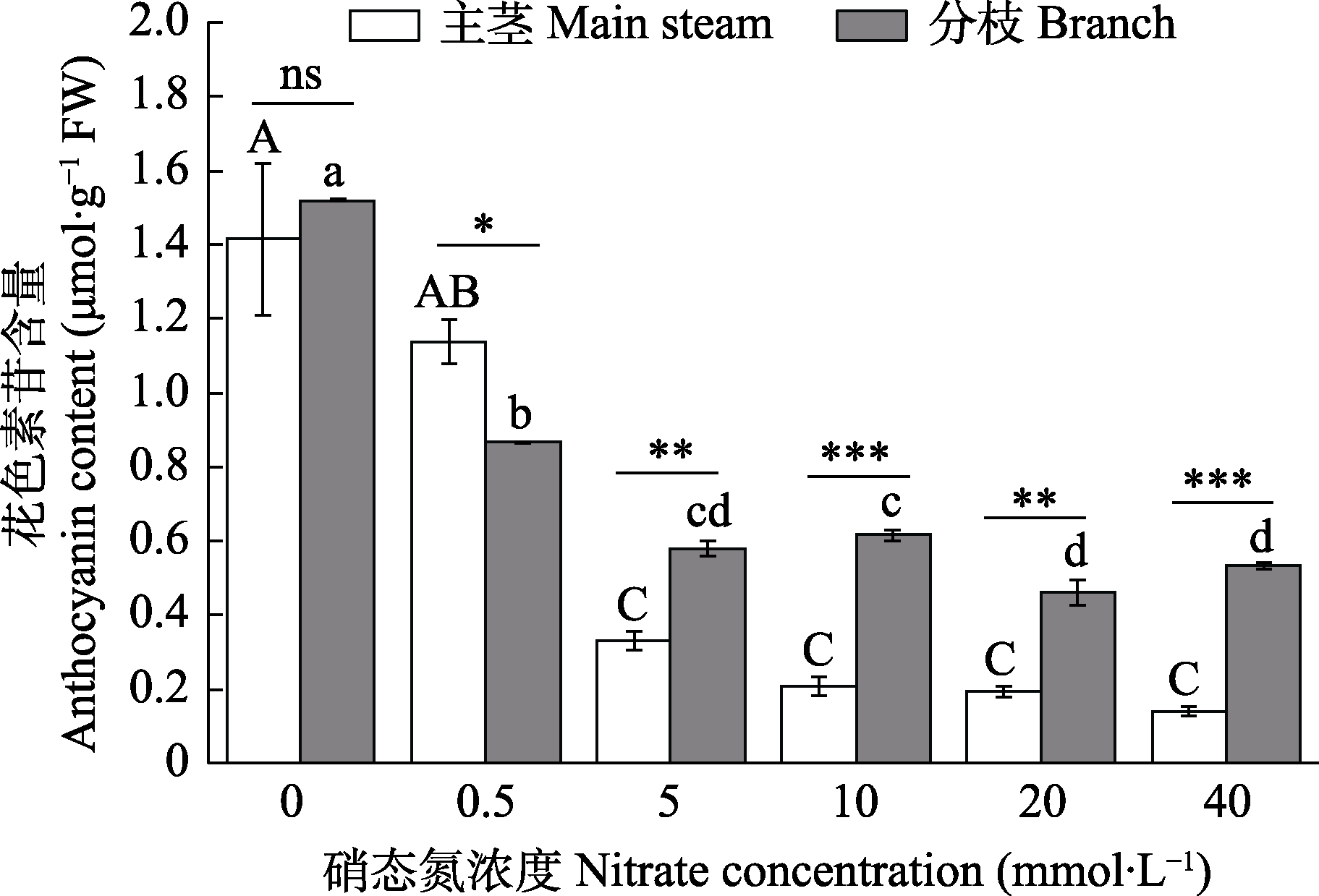
Fig. 2 Changes in the anthocyanin content of main stem and branch of Mikania micrantha under different nitrate nitrogen concentrations (mean ± SE, n = 5). Different letters indicate significant differences among nitrate nitrogen concentrations for each organ (main stem or branch) (p < 0.05). ***, p < 0.001; **, p < 0.01; *, p < 0.05; ns, p ≥ 0.05.
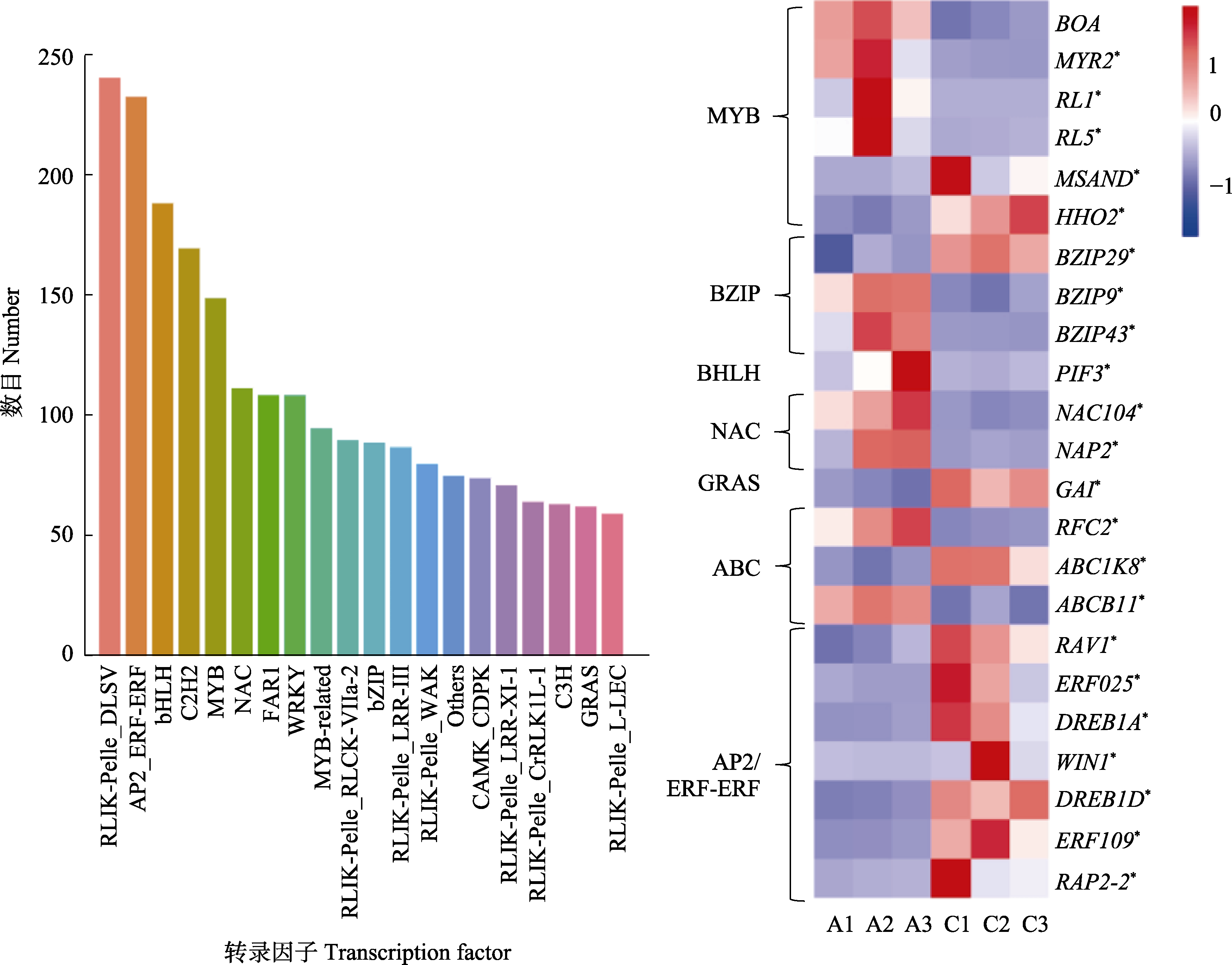
Fig. 3 Analysis of transcription factors in the main stem of Mikania micrantha under two nitrate nitrogen treatments (0 and 5 mmol·L-1 NO3--N). A, Enrichment analysis of transcription factor gene families. B, Heatmap of transcription factor expression. A1-A3 and C1-C3 represent three biological replicate samples under 0 and 5 mmol·L-1 NO3--N treatment group, respectively. * indicate differentially expressed genes (DEGs) (p < 0.05).
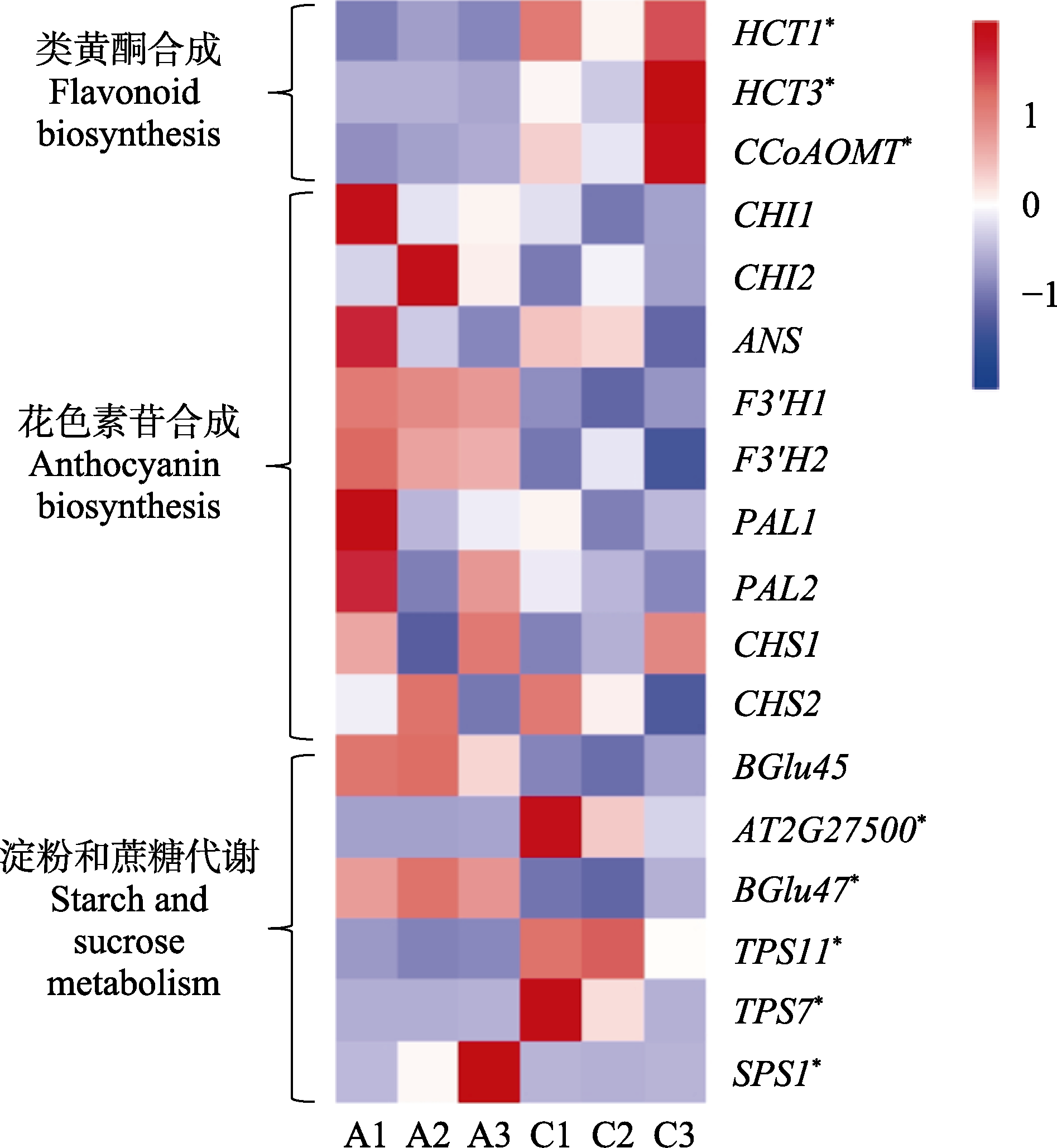
Fig. 4 Heatmap of genes related to anthocyanin biosynthesis in the main stem of Mikania micrantha under two nitrate nitrogen treatments (0 and 5 mmol·L-1 NO3--N). A1-A3 and C1-C3 represent three biological replicate samples under 0 and 5 mmol·L-1 NO3--N treatment group, respectively. * indicate differentially expressed genes (DEGs) (p < 0.05).
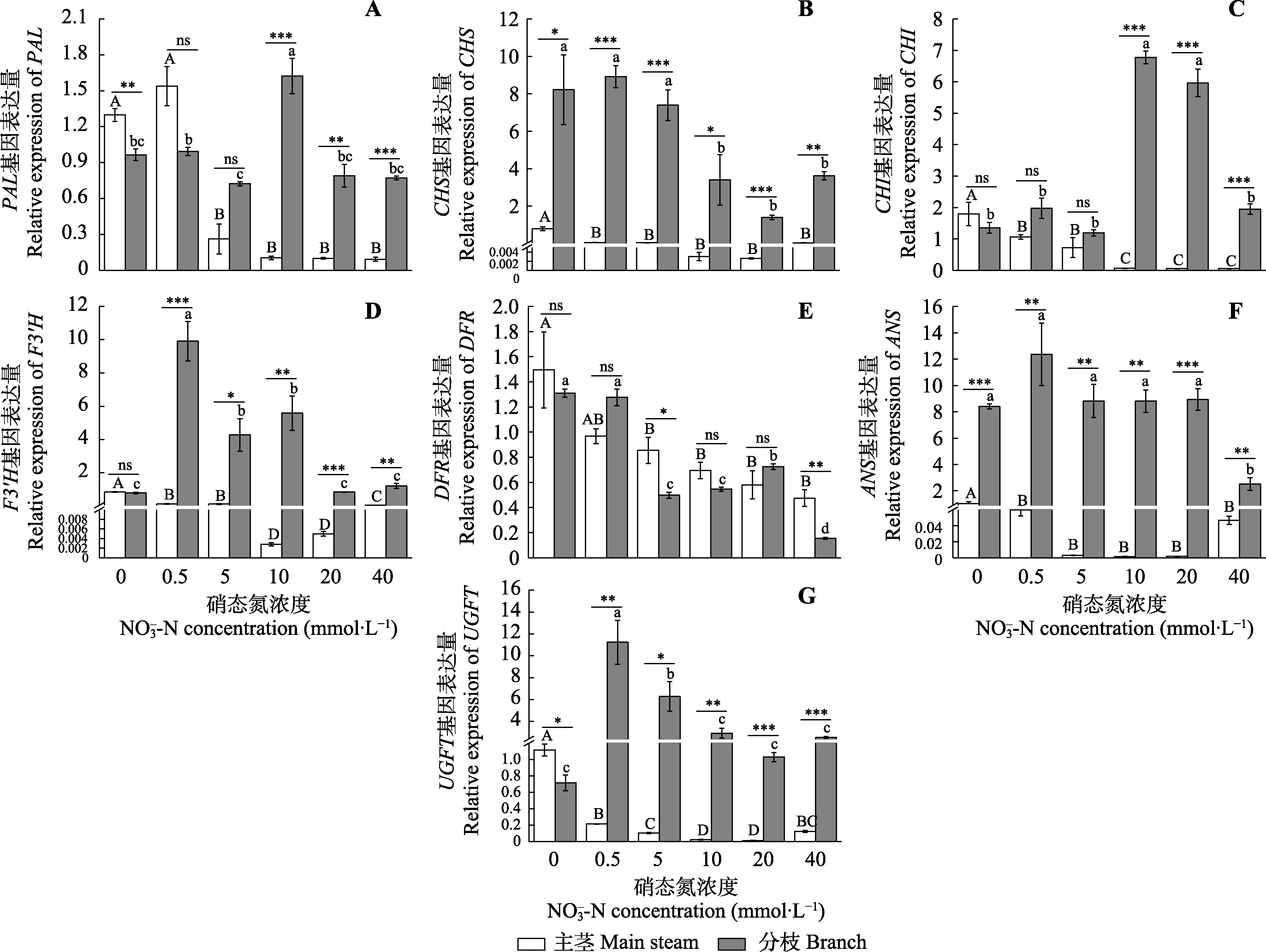
Fig. 5 Analysis of the expression levels of anthocyanin synthesis related genes in the main stem and branches of Mikania micrantha under different concentrations of nitrate nitrogen (NO3--N) (mean ± SE, n = 5). Different letters indicate significant differences among NO3--N concentrations for each organ (main stem or branch) (p < 0.05). ***, p < 0.001; **, p < 0.01; *, p < 0.05; ns, p ≥ 0.05.
| [1] | Anders S, Huber W (2010). Differential expression analysis for sequence count data. Genome Biology, 11, R106. DOI: 10.1189/gb-2010-11-10-r106. |
| [2] |
Behera SN, Sharma M, Aneja VP, Balasubramanian R (2013). Ammonia in the atmosphere: a review on emission sources, atmospheric chemistry and deposition on terrestrial bodies. Environmental Science and Pollution Research, 20, 8092-8131.
DOI URL |
| [3] | Cai ML, Chen LH, Chen MH, Ke WQ, Wang DG, Peng CL (2025). Nitrate nitrogen uptake and metabolism in Mikania micrantha stem: insights into enhanced growth and invasiveness. Frontiers in Plant Science, 16, 1525303. DOI: 10.3389/fpls.2025.1525303. |
| [4] |
Cai ML, Ding WQ, Zhai JJ, Zheng XT, Yu ZC, Zhang QL, Lin XH, Chow WS, Peng CL (2021). Photosynthetic compensation of non-leaf organ stems of the invasive species Sphagneticola trilobata (L.) Pruski at low temperature. Photosynthesis Research, 149, 121-134.
DOI |
| [5] |
Chen BM, Wang ZH, Li SX, Wang GX, Song HX, Wang XN (2004). Effects of nitrate supply on plant growth, nitrate accumulation, metabolic nitrate concentration and nitrate reductase activity in three leafy vegetables. Plant Science, 167, 635-643.
DOI URL |
| [6] |
Craker LE, Standley LA, Starbuck MJ (1971). Ethylene control of anthocyanin synthesis in sorghum. Plant Physiology, 48, 349-352.
DOI PMID |
| [7] | Day MD, Clements DR, Gile C, Senaratne WKAD, Shen S, Weston LA, Zhang F (2016). Biology and impacts of Pacific islands invasive species. 13. Mikania micrantha Kunth (Asteraceae). Pacific Science, 70, 257-285. |
| [8] |
de Andrade-Santos SV, Young JLM, Ramiro LK, Suzuki RM, Souza SR, Tamaki V (2021). Effect of nitrate concentration on plant growth and anthocyanin accumulation in the ornamental bromeliad Alcantarea imperialis. Journal of Plant Nutrition, 44, 181-195.
DOI |
| [9] | Deng X (2010). Morphological and physiological plasticity responding to different light environments of the invasive plant, Mikania micrantha H. B. Kunth. Ecology and Environmental Sciences, 19, 1170-1175. |
|
[邓雄 (2010). 不同光环境下微甘菊形态和生理可塑性及其响应研究. 生态环境学报, 19, 1170-1175.]
DOI |
|
| [10] |
Diagne C, Leroy B, Vaissière AC, Gozlan RE, Roiz D, Jarić I, Salles JM, Bradshaw CJA, Courchamp F (2021). High and rising economic costs of biological invasions worldwide. Nature, 592, 571-576.
DOI |
| [11] |
Escamilla-Treviño LL, Chen W, Card ML, Shih MC, Cheng CL, Poulton JE (2006). Arabidopsis thaliana β-glucosidases BGLU45 and BGLU46 hydrolyse monolignol glucosides. Phytochemistry, 67, 1651-1660.
DOI PMID |
| [12] |
Galloway JN, Dentener FJ, Capone DG, Boyer EW, Howarth RW, Seitzinger SP, Asner GP, Cleveland CC, Green PA, Holland EA, Karl DM, Michaels AF, Porter JH, Townsend AR, Vöosmarty CJ (2004). Nitrogen cycles: past, present, and future. Biogeochemistry, 70, 153-226.
DOI URL |
| [13] | Guo W, Liu Y, Ng WL, Liao PC, Huang BH, Li W, Li C, Shi X, Huang Y (2018). Comparative transcriptome analysis of the invasive weed Mikania micrantha with its native congeners provides insights into genetic basis underlying successful invasion. BMC Genomics, 19, 392. DOI: 10.1186/s12864-018-4784-9. |
| [14] | Guo X, Hu Y, Ma JY, Wang H, Wang KL, Wang T, Jiang SY, Jiao JB, Sun YK, Jiang XL, Li MY (2023). Nitrogen deposition effects on invasive and native plant competition: implications for future invasions. Ecotoxicology and Environmental Safety, 259, 115029. DOI: 10.1016/j.ecoenv.2023.115029. |
| [15] |
Hichri I, Barrieu F, Bogs J, Kappel C, Delrot S, Lauvergeat V (2011). Recent advances in the transcriptional regulation of the flavonoid biosynthetic pathway. Journal of Experimental Botany, 62, 2465-2483.
DOI PMID |
| [16] | Jiang JZ (2018). Study on Cloning and Function of Transcription Factor MYB for Anthaynin Biosyntheis in Mulberry Fruit. Master degree dissertation, China Jiliang University, Hangzhou. |
| [姜建中 (2018). 桑椹花色素苷合成中转录因子MYB的克隆与作用研究. 硕士学位论文, 中国计量大学, 杭州.] | |
| [17] |
Jiang ZY, Wang YT, Zheng YP, Cai ML, Peng CL, Li WH (2021). Physiological and transcriptomic responses of Mikania micrantha stem to shading yield novel insights into its invasiveness. Biological Invasions, 23, 2927-2943.
DOI |
| [18] |
Kanakidou M, Myriokefalitakis S, Daskalakis N, Fanourgakis G, Nenes A, Baker AR, Tsigaridis K, Mihalopoulos N (2016). Past, present, and future atmospheric nitrogen deposition. Journal of the Atmospheric Sciences, 73, 2039-2047.
DOI PMID |
| [19] |
Li Q, Ding GD, Yang NM, White PJ, Ye XS, Cai HM, Lu JW, Shi L, Xu FS (2020). Comparative genome and transcriptome analysis unravels key factors of nitrogen use efficiency in Brassica napus L. Plant, Cell & Environment, 43, 712-731.
DOI URL |
| [20] | Li Y, Schichtel BA, Walker JT, Schwede DB, Chen X, Lehmann CMB, Puchalski MA, Gay DA, Collett Jr JL (2016). Increasing importance of deposition of reduced nitrogen in the United States. Proceedings of the National Academy of Sciences of the United States of America, 113, 5874-5879. |
| [21] |
Liang J, He JX (2018). Protective role of anthocyanins in plants under low nitrogen stress. Biochemical and Biophysical Research Communications, 498, 946-953.
DOI PMID |
| [22] | Liu B, Yan J, Li WH, Yin LJ, Li P, Yu HX, Xing LS, Cai ML, Wang HC, Zhao MX, Zheng J, Sun F, Wang ZZ, Jiang ZY, Ou QJ, et al. (2020). Mikania micrantha genome provides insights into the molecular mechanism of rapid growth. Nature Communications, 11, 340. DOI: 10.1038/s41467-019-13926-4. |
| [23] |
Ni M, Tepperman JM, Quail PH (1998). PIF3, a phytochrome-interacting factor necessary for normal photoinduced signal transduction, is a novel basic helix-loop-helix protein. Cell, 95, 657-667.
DOI PMID |
| [24] |
Pyšek P, Hulme PE, Simberloff D, Bacher S, Blackburn TM, Carlton JT, Dawson W, Essl F, Foxcroft LC, Genovesi P, Jeschke JM, Kühn I, Liebhold AM, Mandrak NE, Meyerson LA, et al. (2020). Scientists’ warning on invasive alien species. Biological Reviews, 95, 1511-1534.
DOI URL |
| [25] |
Rubin G, Tohge T, Matsuda F, Saito K, Scheible WR (2009). Members of the LBD family of transcription factors repress anthocyanin synthesis and affect additional nitrogen responses in Arabidopsis. The Plant Cell, 21, 3567-3584.
DOI PMID |
| [26] |
Solfanelli C, Poggi A, Loreti E, Alpi A, Perata P (2006). Sucrose-specific induction of the anthocyanin biosynthetic pathway in Arabidopsis. Plant Physiology, 140, 637-646.
DOI PMID |
| [27] | Sun JK, Liu MC, Tang KQ, Tang EX, Cong JM, Lu XR, Liu ZX, Feng YL (2023). Advantages of growth and competitive ability of the invasive plant Solanum rostratum over two co-occurring natives and the effects of nitrogen levels and forms. Frontiers in Plant Science, 14, 1169317. DOI: 10.3389/fpls.2023.1169317. |
| [28] |
Tang RM, Zhao CL, Dong JJ, Liu XY, Chang L, Li JH, Dong HT, Lv YT, Luo Z, Wu ML, Shen S, Shan QW, Li Y, Chen QJ, Li RZ, et al. (2025). Post-transcriptional and post-translational regulation of anthocyanin biosynthesis in sweet potato by Ib-miR2111 and IbKFB: implications for health promotion. Journal of Advanced Research, 77, 57-73.
DOI URL |
| [29] |
Teng S, Keurentjes J, Bentsink L, Koornneef M, Smeekens S (2005). Sucrose-specific induction of anthocyanin biosynthesis in Arabidopsis requires the MYB75/PAP 1 gene. Plant Physiology, 139, 1840-1852.
DOI URL |
| [30] |
van den Berg AK, Perkins TD (2007). Contribution of anthocyanins to the antioxidant capacity of juvenile and senescing sugar maple (Acer saccharum) leaves. Functional Plant Biology, 34, 714-719.
DOI PMID |
| [31] |
Wang A, Chen DX, Phillips OL, Gundersen P, Zhou XL, Gurmesa GA, Li SL, Zhu WX, Hobbie EA, Wang XY, Fang YT (2021). Dynamics and multi-annual fate of atmospherically deposited nitrogen in montane tropical forests. Global Change Biology, 27, 2076-2087.
DOI PMID |
| [32] |
Wang J, Wang Y, Yang J, Ma CL, Zhang Y, Ge T, Qi Z, Kang Y (2015). Arabidopsis ROOT HAIR DEFECTIVE3 is involved in nitrogen starvation-induced anthocyanin accumulation. Journal of Integrative Plant Biology, 57, 708-721.
DOI URL |
| [33] |
Wang YY, Cheng YH, Chen KE, Tsay YF (2018). Nitrate transport, signaling, and use efficiency. Annual Review of Plant Biology, 69, 85-122.
DOI URL |
| [34] |
Yan XL, Liu QR, Shou HY, Zeng XF, Zhang Y, Chen L, Liu Y, Ma HY, Qi SY, Ma JS (2014). The categorization and analysis on the geographic distribution patterns of Chinese alien invasive plants. Biodiversity Science, 22, 667-676.
DOI |
|
[闫小玲, 刘全儒, 寿海洋, 曾宪锋, 张勇, 陈丽, 刘演, 马海英, 齐淑艳, 马金双 (2014). 外来入侵植物的等级划分与地理分布格局分析. 生物多样性, 22, 667-676.]
DOI |
|
| [35] | Yang YY, Wang F, Wan Q, Ruan JY (2018). Transcriptome analysis using RNA-Seq revealed the effects of nitrogen form on major secondary metabolite biosynthesis in tea (Camellia sinensis) plants. Acta Physiologiae Plantarum, 40, 127. DOI: 10.1007/s11738-018-2701-0. |
| [36] |
Yu GR, Jia YL, He NP, Zhu JX, Chen Z, Wang QF, Piao SL, Liu XJ, He HL, Guo XB, Wen Z, Li P, Ding GA, Goulding K (2019). Stabilization of atmospheric nitrogen deposition in China over the past decade. Nature Geoscience, 12, 424-429.
DOI |
| [37] | Yu HM (2022). Functional Analysis of Wheat HCT Gene in Stem Lignin Synthesis. Master degree dissertation, Shandong Agricultural University, Tai’an, Shandong. |
| [于海梅 (2022). 小麦HCT基因在茎秆木质素合成中的功能分析. 硕士学位论文, 山东农业大学, 山东泰安.] | |
| [38] |
Yu HX, Le Roux JJ, Jiang ZY, Sun F, Peng CL, Li WH (2021). Soil nitrogen dynamics and competition during plant invasion: insights from Mikania micrantha invasions in China. New Phytologist, 229, 3440-3452.
DOI URL |
| [39] | Zhang M (2022). Preliminary Study on the Function of GhHHO2 in Nitrogen Metabolism of Cotton. Master degree dissertation, Southwest University, Chongqing. |
| [张梅 (2022). 转录因子GhHHO2在棉花氮代谢过程中的功能初探. 硕士学位论文, 西南大学, 重庆.] | |
| [40] | Zhang QL, Zhai JJ, Shao L, Lin W, Peng CL (2019). Accumulation of anthocyanins: an adaptation strategy of Mikania micrantha to low temperature in winter. Frontiers in Plant Science, 10, 1049. DOI: 10.3389/fpls.2019.01049. |
| [41] | Zhang TT, Kang H, Fu LL, Sun WJ, Gao WS, You CX, Wang XF, Hao YJ (2021). NIN-like protein 7 promotes nitrate-mediated lateral root development by activating transcription of TRYPTOPHAN AMINOTRANSFERASE RELATED 2. Plant Science, 303, 110771. DOI: 10.1016/j.plantsci.2020.110771. |
| [42] |
Zheng XT, Yu ZC, Tang JW, Cai ML, Chen YL, Yang CW, Chow WS, Peng CL (2021). The major photoprotective role of anthocyanins in leaves of Arabidopsis thaliana under long-term high light treatment: antioxidant or light attenuator? Photosynthesis Research, 149, 25-40.
DOI |
| [43] |
Zhu JX, He NP, Wang QF, Yuan GF, Wen D, Yu GR, Jia YL (2015). The composition, spatial patterns, and influencing factors of atmospheric wet nitrogen deposition in Chinese terrestrial ecosystems. Science of the Total Environment, 511, 777-785.
DOI URL |
| [1] | MA Teng-Fei, HAO Jie, DIAO Hua-Jie, NING Ya-Nan, $\boxed{\hbox{WANG Chang-Hui}}$ , DONG Kuan-Hu. Seasonal variations of soil inorganic nitrogen contents and their responses to changing grazing intensity in grasslands of an agro-pastoral ecotone in northern Shanxi, China [J]. Chin J Plant Ecol, 2025, 49(6): 965-974. |
| [2] | GE Ping, LI Ang, WANG Yin-Liu, JIANG Liang-Chao, NIU Guo-Xiang, HASI Muqi’er, WANG Yan-Bing, XUE Jian-Guo, ZHAO Wei, HUANG Jian-Hui. Nonlinear response of greenhouse gases emission to nitrogen addition in a meadow steppe [J]. Chin J Plant Ecol, 2023, 47(11): 1483-1492. |
| [3] | MOU Jing, BIN Zhen-Jun, LI Qiu-Xia, BU Hai-Yan, ZHANG Ren-Yi, XU Dang-Hui. Effects of nitrogen and silicon addition on soil nitrogen mineralization in alpine meadows of Qinghai-Xizang Plateau [J]. Chin J Plant Ecol, 2019, 43(1): 77-84. |
| [4] | WANG Hua-Tian, YANG Yang, WANG Yan-Ping, JIANG Yue-Zhong, WANG Zong-Qin. Effects of exogenous phenolic acids on nitrate absorption and utilization of hydroponic cuttings of Populus × euramericana ‘Neva’ [J]. Chin J Plant Ecol, 2011, 35(2): 214-222. |
| [5] | YU Xiang-Qin, FENG Yu-Long, LI Qiao-Ming. Review of research advances and prospects of invasive Chromolaena odorata [J]. Chin J Plant Ecol, 2010, 34(5): 591-600. |
| [6] | ZHANG Ling-Ling, SUN Fang-Fang, WEN Da-Zhi. EFFECTS OF IRRADIANCE AND SOIL MOISTURE ON ANTIOXIDANTS AND MEMBRANE LIPID PEROXIDATION PRODUCTS IN MIKANIA MICRANTHA AND CHROMOLAENA ODORATUM [J]. Chin J Plant Ecol, 2009, 33(5): 974-983. |
| [7] | LI Jun-Min, DONG Ming, ZHONG Zhang-Cheng. POPULATION GENETIC DIFFERENTIATIONS IN THE INVASIVE PLANT MIKANIA MICRANTHA IN CHINA [J]. Chin J Plant Ecol, 2007, 31(4): 680-688. |
| [8] | LU Ping, SANG Wei-Guo, MA Ke-Ping. PROGRESS AND PROSPECTS IN RESEARCH OF AN EXOTIC INVASIVE SPECIES, EUPATORIUM ADENOPHORUM [J]. Chin J Plant Ecol, 2005, 29(6): 1029-1037. |
| Viewed | ||||||
|
Full text |
|
|||||
|
Abstract |
|
|||||
Copyright © 2026 Chinese Journal of Plant Ecology
Tel: 010-62836134, 62836138, E-mail: apes@ibcas.ac.cn, cjpe@ibcas.ac.cn

