
植物生态学报 ›› 2026, Vol. 50 ›› Issue (3): 498-514.DOI: 10.17521/cjpe.2025.0023 cstr: 32100.14.cjpe.2025.0023
马建辉1, 童鑫1,*( )(
)( ), 张思榕2,3, 毛子昆4, 秦俊1, 马克平2
收稿日期:2025-01-13
接受日期:2025-06-09
出版日期:2026-03-20
发布日期:2026-05-20
通讯作者:
*童鑫(txoinng@163.com)基金资助:
MA Jian-Hui1, TONG Xin1,*()(), ZHANG Si-Rong2,3, MAO Zi-Kun4, QIN Jun1, MA Ke-Ping2
Received:2025-01-13
Accepted:2025-06-09
Online:2026-03-20
Published:2026-05-20
Contact:
*TONG Xin(txoinng@163.com)
Supported by:摘要:
菌根真菌是一类广泛分布在自然界中可与大多数陆生植物共生的真菌, 对植物的生理过程和生态功能的维持起到了关键作用。在菌根真菌与植物根系形成的共生体系中, 植物为菌根真菌提供必要的有机碳源, 而菌根真菌则帮助植物提高养分吸收和抗逆境的能力。近年来, 随着分子生物学和生物信息学的快速发展, 人们对菌根真菌的认识和研究都取得了显著进展。为反映菌根真菌生理生态功能研究取得的重要进展, 该文综述了丛枝菌根(AM)和外生菌根(ECM)真菌的进化史差异及其对宿主植物生理生态功能的不同影响, 并进一步论述这些差异对全球陆地生态系统养分循环以及植物群落结构和功能的影响。研究表明, AM和ECM真菌的起源与进化是与陆生植物长期相互适应和选择的结果, 菌根真菌在进化中逐渐完善了依赖植物的养分获取机制, 而植物则进化出与菌根真菌共生的生存策略。此外, 菌根真菌与植物根系形成的共生体不仅改善了植物的营养吸收与利用, 提高了植物在应对生物和非生物胁迫时的抵抗力, 还参与了生物地球化学循环, 维持了陆地生态系统的平衡和稳定。最后, 该文对未来研究方向进行了展望, 包括菌根真菌应对全球变化的响应、在多营养级关联和城市生态系统中的作用以及在生产实践中的应用和多样性保护, 旨在为解决诸多生态学和社会问题提供新的思路和途径。
马建辉, 童鑫, 张思榕, 毛子昆, 秦俊, 马克平. 菌根真菌生理生态功能研究进展及展望. 植物生态学报, 2026, 50(3): 498-514. DOI: 10.17521/cjpe.2025.0023
MA Jian-Hui, TONG Xin, ZHANG Si-Rong, MAO Zi-Kun, QIN Jun, MA Ke-Ping. Research advances and perspectives on physiological and ecological functions of mycorrhizal fungi. Chinese Journal of Plant Ecology, 2026, 50(3): 498-514. DOI: 10.17521/cjpe.2025.0023
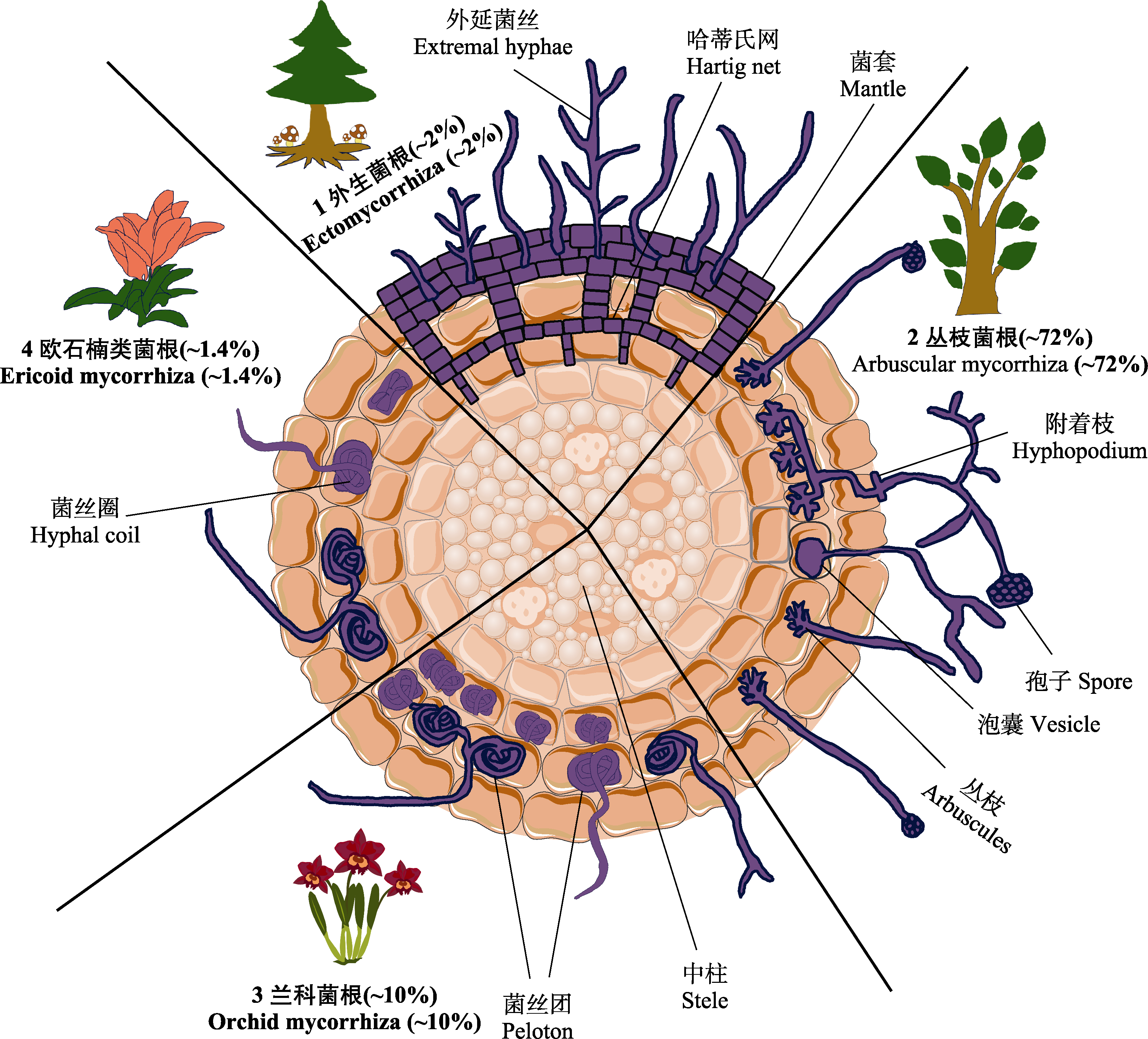
图1 不同菌根类型示意图。
Fig. 1 Diagrams showing different types of mycorrhizal associations.
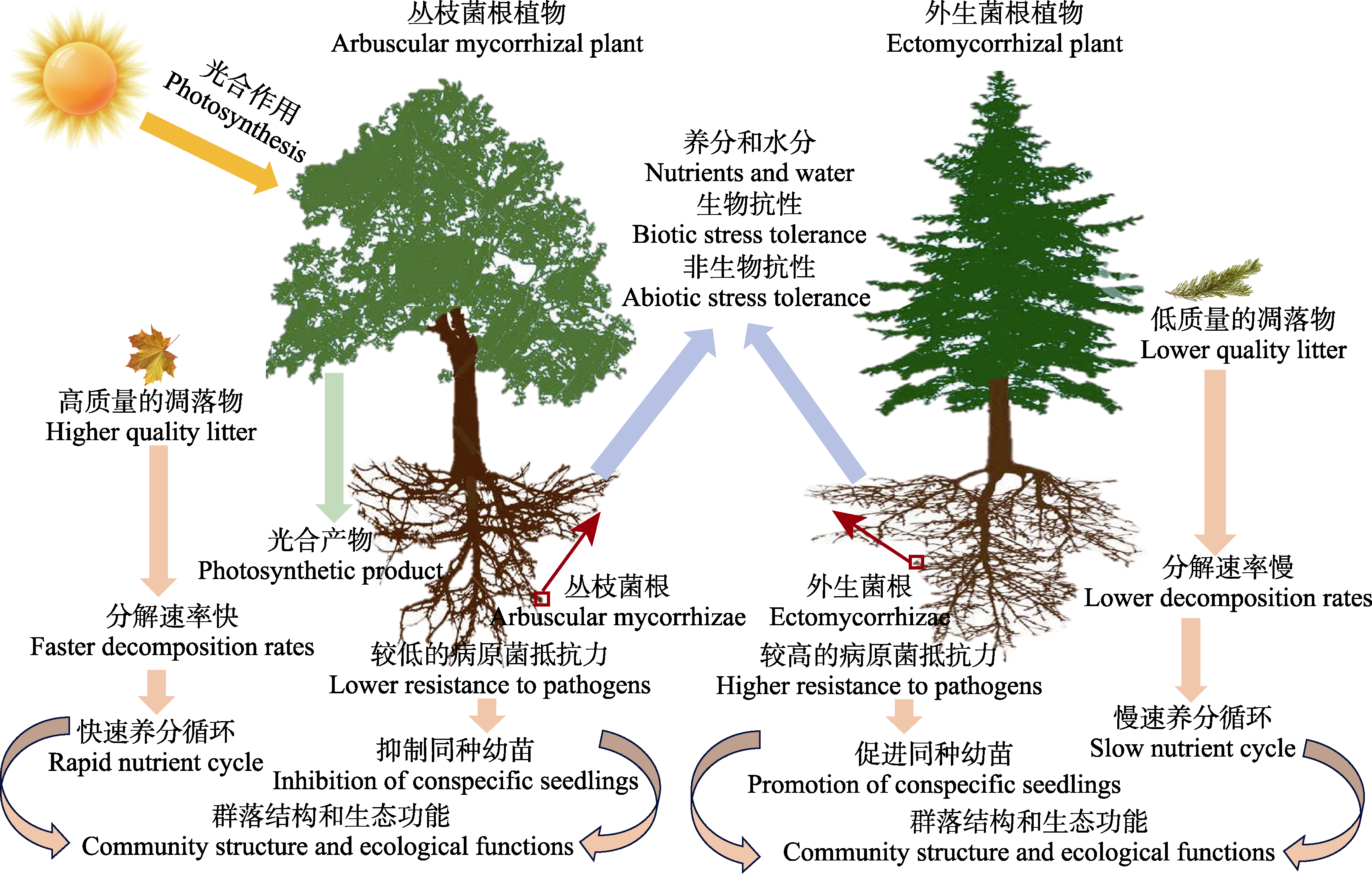
图2 菌根真菌的生理生态功能。
Fig. 2 Physiological and ecological functions of mycorrhizal fungi.
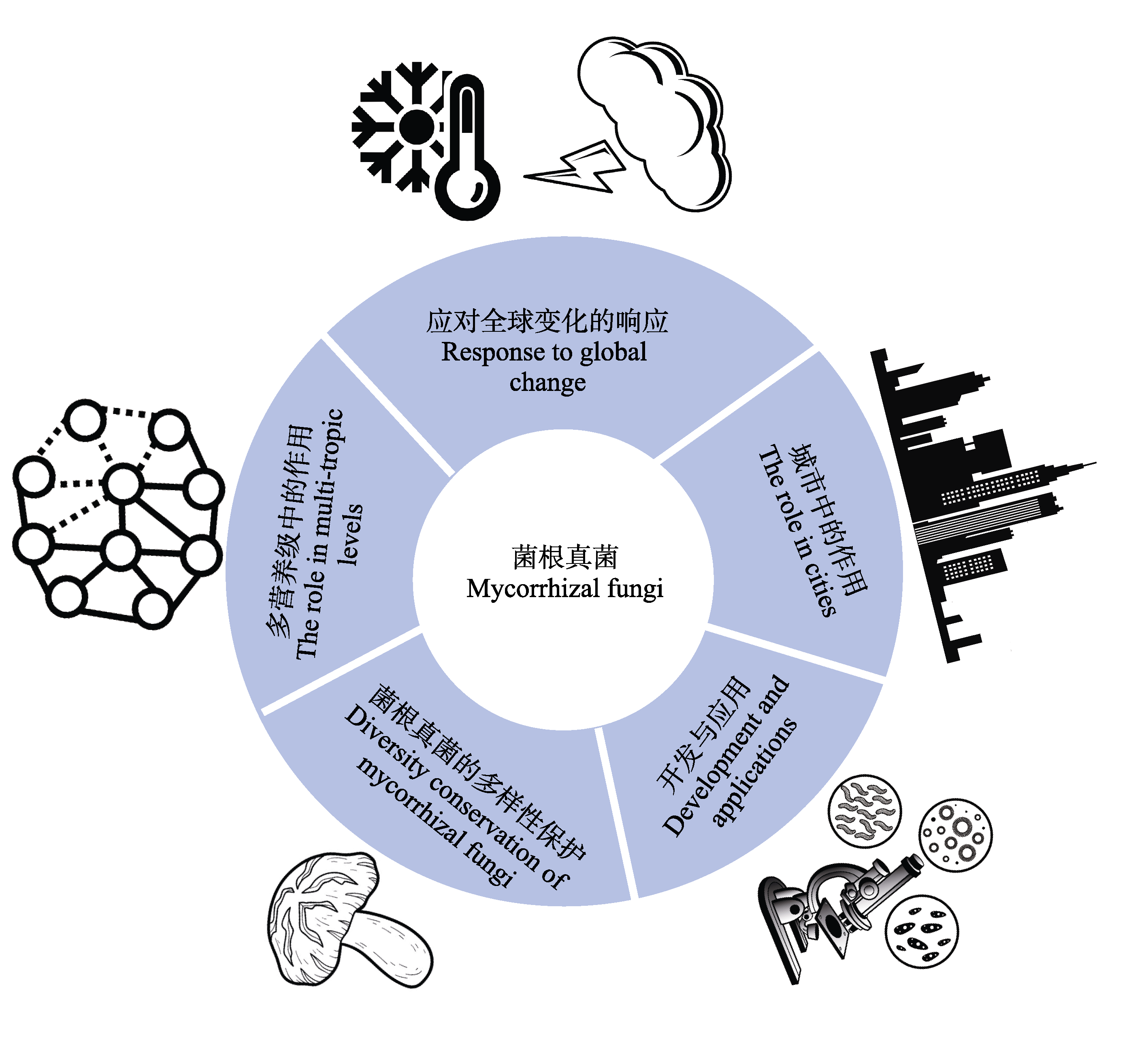
图3 菌根真菌未来研究展望。
Fig. 3 Future outlook of mycorrhizal fungi research.
| [1] |
Abdelmalik AM, Alsharani TS, Al-Qarawi AA, Ahmed AI, Aref IM (2020). Response of growth and drought tolerance of Acacia seyal Del. seedlings to arbuscular mycorrhizal fungi. Plant, Soil and Environment, 66, 264-271.
DOI |
| [2] | Antunes PM, Koyama A (2017). Mycorrhizas as nutrient and energy pumps of soil food webs: multitrophic interactions and feedbacks// Johnson NC, Gehring C, Jansa J. Mycorrhizal Mediation of Soil. Elsevier, Amsterdam. 149-173. |
| [3] |
Averill C, Bhatnagar JM, Dietze MC, Pearse WD, Kivlin SN (2019). Global imprint of mycorrhizal fungi on whole-plant nutrient economics. Proceedings of the National Academy of Sciences of the United States of America, 116, 23163-23168.
DOI PMID |
| [4] | Averill C, Fortunel C, Maynard DS, van den Hoogen J, Dietze MC, Bhatnagar JM, Crowther TW (2022). Alternative stable states of the forest mycobiome are maintained through positive feedbacks. Nature Ecology & Evolution, 6, 375-382. |
| [5] |
Beimforde C, Schäfer N, Dörfelt H, Nascimbene PC, Singh H, Heinrichs J, Reitner J, Rana RS, Schmidt AR (2011). Ectomycorrhizas from a Lower Eocene angiosperm forest. New Phytologist, 192, 988-996.
DOI PMID |
| [6] |
Bennett JA, Maherali H, Reinhart KO, Lekberg Y, Hart MM, Klironomos J (2017). Plant-soil feedbacks and mycorrhizal type influence temperate forest population dynamics. Science, 355, 181-184.
DOI PMID |
| [7] |
Booth MG, Hoeksema JD (2010). Mycorrhizal networks counteract competitive effects of canopy trees on seedling survival. Ecology, 91, 2294-2302.
PMID |
| [8] |
Brundrett MC (2009). Mycorrhizal associations and other means of nutrition of vascular plants: understanding the global diversity of host plants by resolving conflicting information and developing reliable means of diagnosis. Plant and Soil, 320, 37-77.
DOI URL |
| [9] |
Brundrett MC, Tedersoo L (2018). Evolutionary history of mycorrhizal symbioses and global host plant diversity. New Phytologist, 220, 1108-1115.
DOI PMID |
| [10] |
Brundrett MC, Tedersoo L (2019). Misdiagnosis of mycorrhizas and inappropriate recycling of data can lead to false conclusions. New Phytologist, 221, 18-24.
DOI PMID |
| [11] |
Brzostek ER, Dragoni D, Brown ZA, Phillips RP (2015). Mycorrhizal type determines the magnitude and direction of root-induced changes in decomposition in a temperate forest. New Phytologist, 206, 1274-1282.
DOI PMID |
| [12] |
Cardinale BJ, Wright JP, Cadotte MW, Carroll IT, Hector A, Srivastava DS, Loreau M, Weis JJ (2007). Impacts of plant diversity on biomass production increase through time because of species complementarity. Proceedings of the National Academy of Sciences of the United States of America, 104, 18123-18128.
DOI PMID |
| [13] |
Chapman SK, Langley JA, Hart SC, Koch GW (2006). Plants actively control nitrogen cycling: uncorking the microbial bottleneck. New Phytologist, 169, 27-34.
DOI URL |
| [14] |
Chen BD, Fu W, Wu SL, Zhu YG (2024). Involvements of mycorrhizal fungi in terrestrial ecosystem carbon cycling. Chinese Journal of Plant Ecology, 48, 1-20.
DOI URL |
|
[陈保冬, 付伟, 伍松林, 朱永官 (2024). 菌根真菌在陆地生态系统碳循环中的作用. 植物生态学报, 48, 1-20.]
DOI |
|
| [15] | Chen BD, Zhang X, Wu SL, Li LF (2019). The role of arbuscular mycorrhizal fungi in heavy metal translocation, transformation and accumulation in the soil-plant continuum: underlying mechanisms and ecological implications. Rock and Mineral Analysis, 38, 1-25. |
| [陈保冬, 张莘, 伍松林, 李林凤 (2019). 丛枝菌根影响土壤-植物系统中重金属迁移转化和累积过程的机制及其生态应用. 岩矿测试, 38, 1-25.] | |
| [16] |
Chen L, Swenson NG, Ji NN, Mi XC, Ren HB, Guo LD, Ma KP (2019). Differential soil fungus accumulation and density dependence of trees in a subtropical forest. Science, 366, 124-128.
DOI PMID |
| [17] |
Chen WL, Koide RT, Adams TS, DeForest JL, Cheng L, Eissenstat DM (2016). Root morphology and mycorrhizal symbioses together shape nutrient foraging strategies of temperate trees. Proceedings of the National Academy of Sciences of the United States of America, 113, 8741-8746.
DOI PMID |
| [18] | Chen Y, Ma KM (2016). Mycorrhizal fungi in urban environments: diversity, mechanism, and application. Acta Ecologica Sinica, 36, 4221-4232. |
| [陈云, 马克明 (2016). 城市菌根真菌多样性、变化机制及功能应用. 生态学报, 36, 4221-4232.] | |
| [19] | Cheng S, Zou YN, Kuča K, Hashem A, Abd Allah EF, Wu QS (2021). Elucidating the mechanisms underlying enhanced drought tolerance in plants mediated by arbuscular mycorrhizal fungi. Frontiers in Microbiology, 12, 809473. DOI: 10.3389/fmicb.2021.809473. |
| [20] |
Chomicki G, Weber M, Antonelli A, Bascompte J, Kiers ET (2019). The impact of mutualisms on species richness. Trends in Ecology & Evolution, 34, 698-711.
DOI URL |
| [21] |
Chu CJ, Wang YS, Liu Y, Jiang L, He FL (2017). Advances in species coexistence theory. Biodiversity Science, 25, 345-354.
DOI |
|
[储诚进, 王酉石, 刘宇, 蒋林, 何芳良 (2017). 物种共存理论研究进展. 生物多样性, 25, 345-354.]
DOI |
|
| [22] |
Cornelissen J, Aerts R, Cerabolini B, Werger M, van der Heijden M (2001). Carbon cycling traits of plant species are linked with mycorrhizal strategy. Oecologia, 129, 611-619.
DOI PMID |
| [23] |
Craig ME, Turner BL, Liang C, Clay K, Johnson DJ, Phillips RP (2018). Tree mycorrhizal type predicts within-site variability in the storage and distribution of soil organic matter. Global Change Biology, 24, 3317-3330.
DOI PMID |
| [24] |
Cruz-Alonso V, Ruiz-Benito P, Villar-Salvador P, Rey-Benayas JM (2019). Long-term recovery of multifunctionality in Mediterranean forests depends on restoration strategy and forest type. Journal of Applied Ecology, 56, 745-757.
DOI |
| [25] | Diagne N, Ngom M, Djighaly PI, Fall D, Hocher V, Svistoonoff S (2020). Roles of arbuscular mycorrhizal fungi on plant growth and performance: importance in biotic and abiotic stressed regulation. Diversity, 12, 370. DOI: 10.3390/d12100370. |
| [26] |
Duan SL, Feng G, Limpens E, Bonfante P, Xie XN, Zhang L (2024). Cross-Kingdom nutrient exchange in the plant-arbuscular mycorrhizal fungus-bacterium continuum. Nature Reviews Microbiology, 22, 773-790.
DOI |
| [27] |
Eastwood DC, Floudas D, Binder M, Majcherczyk A, Schneider P, Aerts A, Asiegbu FO, Baker SE, Barry K, Bendiksby M, Blumentritt M, Coutinho PM, Cullen D, de Vries RP, Gathman A, et al. (2011). The plant cell wall-decomposing machinery underlies the functional diversity of forest fungi. Science, 333, 762-765.
DOI PMID |
| [28] |
Edwards JS, Thornton IWB (2001). Colonization of an island volcano, Long Island, Papua New Guinea, and an emergent island, Motmot, in its caldera lake. VI. The pioneer arthropod community of Motmot. Journal of Biogeography, 28, 1379-1388.
DOI URL |
| [29] |
Elser JJ, Bracken MES, Cleland EE, Gruner DS, Harpole WS, Hillebrand H, Ngai JT, Seabloom EW, Shurin JB, Smith JE (2007). Global analysis of nitrogen and phosphorus limitation of primary producers in freshwater, marine and terrestrial ecosystems. Ecology Letters, 10, 1135-1142.
DOI PMID |
| [30] |
Evelin H, Giri B, Kapoor R (2012). Contribution of Glomus intraradices inoculation to nutrient acquisition and mitigation of ionic imbalance in NaCl-stressed Trigonella foenum-graecum. Mycorrhiza, 22, 203-217.
DOI URL |
| [31] | Fang YT, Mo JM, Gundersen P, Zhou GY, Li DJ (2004). Nitrogen transformations in forest soils and its responses to atmospheric nitrogen deposition: a review. Acta Ecologica Sinica, 24, 1523-1531. |
| [方运霆, 莫江明, Gundersen P, 周国逸, 李德军 (2004). 森林土壤氮素转换及其对氮沉降的响应. 生态学报, 24, 1523-1531.] | |
| [32] |
Fei SL, Kivlin SN, Domke GM, Jo I, LaRue EA, Phillips RP (2022). Coupling of plant and mycorrhizal fungal diversity: its occurrence, relevance, and possible implications under global change. New Phytologist, 234, 1960-1966.
DOI PMID |
| [33] |
Fenn KM, Malhi Y, Morecroft MD (2010). Soil CO2 efflux in a temperate deciduous forest: environmental drivers and component contributions. Soil Biology & Biochemistry, 42, 1685-1693.
DOI URL |
| [34] | Ferlian O, Cesarz S, Craven D, Hines J, Barry KE, Bruelheide H, Buscot F, Haider S, Heklau H, Herrmann S, Kühn P, Pruschitzki U, Schädler M, Wagg C, Weigelt A, et al. (2018). Mycorrhiza in tree diversity-ecosystem function relationships: conceptual framework and experimental implementation. Ecosphere, 9, e02226. DOI: 10.1002/ecs2.2226. |
| [35] | Frank B (1885). Über die auf Wurzelsymbiose beruhende Ernährung gewisser Bäume durch unterirdische Pilze. Plant Biology, 3(4), 128-145. |
| [36] |
Genre A, Lanfranco L, Perotto S, Bonfante P (2020). Unique and common traits in mycorrhizal symbioses. Nature Reviews Microbiology, 18, 649-660.
DOI |
| [37] |
Gui WY, Ren HY, Liu N, Zhang YJ, Cobb AB, Wilson GWT, Sun X, Hu J, Xiao Y, Zhang FG, Yang GW (2018). Plant functional group influences arbuscular mycorrhizal fungal abundance and hyphal contribution to soil CO2 efflux in temperate grasslands. Plant and Soil, 432, 157-170.
DOI |
| [38] | Guo LD, Tian CJ (2013). Progress of the function of mycorrhizal fungi in the cycle of carbon and nitrogen. Microbiology China, 40, 158-171. |
| [郭良栋, 田春杰 (2013). 菌根真菌的碳氮循环功能研究进展. 微生物学通报, 40, 158-171.] | |
| [39] | Guo LL, Deng MF, Li XF, Schmid B, Huang JS, Wu YT, Peng ZY, Yang L, Liu LL (2024). Evolutionary and ecological forces shape nutrient strategies of mycorrhizal woody plants. Ecology Letters, 27, e14330. DOI: 10.1111/ELE.14330. |
| [40] | Han MG, Feng JG, Chen Y, Sun LJ, Fu LC, Zhu B (2021). Mycorrhizal mycelial respiration: a substantial component of soil respired CO2. Soil Biology & Biochemistry, 163, 108454. DOI: 10.1016/j.soilbio.2021.108454. |
| [41] |
Harley JL (1989). The significance of mycorrhiza. Mycological Research, 92, 129-139.
DOI URL |
| [42] |
Hart MM, Reader RJ, Klironomos JN (2001). Life-history strategies of arbuscular mycorrhizal fungi in relation to their successional dynamics. Mycologia, 93, 1186-1194.
DOI URL |
| [43] | He G, Li X, Zhao RT, Zhang JL (2021). Mechanisms underlying the regulation of soil nitrous oxide emissions by arbuscular mycorrhizal fungi. Acta Pedologica Sinica, 58, 23-30. |
| [何广, 李侠, 赵若桐, 张俊伶 (2021). 丛枝菌根真菌调控土壤氧化亚氮排放的机制. 土壤学报, 58, 23-30.] | |
| [44] |
He XH, Duan YH, Chen YL, Xu MG (2012). A 60-year journey of mycorrhizal research in China: past, present and future directions. Scientia Sinica Vitae, 42, 431-454.
DOI URL |
| [何新华, 段英华, 陈应龙, 徐明岗 (2012). 中国菌根研究60年: 过去、现在和将来. 中国科学: 生命科学, 42, 431-454.] | |
| [45] |
Hodge A, Storer K (2015). Arbuscular mycorrhiza and nitrogen: implications for individual plants through to ecosystems. Plant and Soil, 386, 1-19.
DOI URL |
| [46] | Janos DP, Scott J, Aristizábal C, Bowman DMJS(2013). Arbuscular-mycorrhizal networks inhibit eucalyptus tetrodonta seedlings in rain forest soil microcosms. PLoS ONE, 8, e57716. DOI: 10.1371/journal.pone.0057716. |
| [47] |
Jiang YN, Wang WX, Xie QJ, Liu N, Liu LX, Wang DP, Zhang XW, Yang C, Chen XY, Tang DZ, Wang ET (2017). Plants transfer lipids to sustain colonization by mutualistic mycorrhizal and parasitic fungi. Science, 356, 1172-1175.
DOI PMID |
| [48] |
Johnson DJ, Clay K, Phillips RP (2018). Mycorrhizal associations and the spatial structure of an old-growth forest community. Oecologia, 186, 195-204.
DOI PMID |
| [49] |
Jung SC, Martinez-Medina A, Lopez-Raez JA, Pozo MJ (2012). Mycorrhiza-induced resistance and priming of plant defenses. Journal of Chemical Ecology, 38, 651-664.
DOI PMID |
| [50] | Kadowaki K, Yamamoto S, Sato H, Tanabe AS, Hidaka A, Toju H (2018). Mycorrhizal fungi mediate the direction and strength of plant-soil feedbacks differently between arbuscular mycorrhizal and ectomycorrhizal communities. Communications Biology, 1, 196. DOI: 10.1038/s42003-018-0201-9. |
| [51] | Kamienski F (1881). Die Vegetationsorgane der Monotropa hypopitys L. Vorläufige Mittheilung. Botanische Zeitung, 29, 457-461. |
| [52] |
Kardol P, Martijn Bezemer T, van der Putten WH (2006). Temporal variation in plant-soil feedback controls succession. Ecology Letters, 9, 1080-1088.
DOI PMID |
| [53] |
Keller AB, Brzostek ER, Craig ME, Fisher JB, Phillips RP (2021). Root-derived inputs are major contributors to soil carbon in temperate forests, but vary by mycorrhizal type. Ecology Letters, 24, 626-635.
DOI PMID |
| [54] |
Keller AB, Phillips RP (2019). Leaf litter decay rates differ between mycorrhizal groups in temperate, but not tropical, forests. New Phytologist, 222, 556-564.
DOI PMID |
| [55] | Khan S, Naushad M, Lima EC, Zhang SX, Shaheen SM, Rinklebe J (2021). Global soil pollution by toxic elements: current status and future perspectives on the risk assessment and remediation strategies—A review. Journal of Hazardous Materials, 417, 126039. DOI: 10.1016/j.jhazmat.2021.126039. |
| [56] | Kodama K, Rich MK, Yoda A, Shimazaki S, Xie XN, Akiyama K, Mizuno Y, Komatsu A, Luo Y, Suzuki H, Kameoka H, Libourel C, Keller J, Sakakibara K, Nishiyama T, et al. (2022). An ancestral function of strigolactones as symbiotic rhizosphere signals. Nature Communications, 13, 3974. DOI: 10.1038/s41467-022-31708-3. |
| [57] |
Lambers H, Raven JA, Shaver GR, Smith SE (2008). Plant nutrient-acquisition strategies change with soil age. Trends in Ecology & Evolution, 23, 95-103.
DOI URL |
| [58] |
Lees E (1841). On the parasitic growth of Monotropa hypopitys. Phytologist, 1, 97-101.
DOI URL |
| [59] | Levine JI, Pacala SW, Levine JM (2024). Competition for time: evidence for an overlooked, diversity-maintaining competitive mechanism. Ecology Letters, 27, e14422. DOI: 10.1111/ele.14422. |
| [60] |
Li T, Chen BD (2012). Arbuscular mycorrhizal fungi improving drought tolerance of maize plants by up-regulation of aquaporin gene expressions in roots and the fungi themselves. Chinese Journal of Plant Ecology, 36, 973-981.
DOI |
| [李涛, 陈保冬 (2012). 丛枝菌根真菌通过上调根系及自身水孔蛋白基因表达提高玉米抗旱性. 植物生态学报, 36, 973-981.] | |
| [61] | Li T, Hu YJ, Hao ZP, Li H, Wang YS, Chen BD (2013). First cloning and characterization of two functional aquaporin genes from an arbuscular mycorrhizal fungus Glomus intraradices. New Phytologist, 197, 617-630. |
| [62] |
Li T, Sun YQ, Ruan Y, Xu L, Hu YJ, Hao ZP, Zhang X, Li H, Wang YS, Yang LG, Chen BD (2016). Potential role of D-myo-inositol-3-phosphate synthase and 14-3- 3 genes in the crosstalk between Zea mays and Rhizophagus intraradices under drought stress. Mycorrhiza, 26, 879-893.
DOI URL |
| [63] | Li X, Zhao RT, Li DD, Wang GZ, Bei SK, Ju XT, An R, Li L, Kuyper TW, Christie P, Bender FS, Veen C, van der Heijden MGA, van der Putten WH, Zhang FS, et al. (2023a). Mycorrhiza-mediated recruitment of complete denitrifying Pseudomonas reduces N2O emissions from soil. Microbiome, 11, 45. DOI: 10.1186/s40168-023-01466-5. |
| [64] | Li XR, Sun J, Albinsky D, Zarrabian D, Hull R, Lee T, Jarratt-Barnham E, Chiu CH, Jacobsen A, Soumpourou E, Albanese A, Kohlen W, Luginbuehl LH, Guillotin B, Lawrensen T, et al. (2022a). Nutrient regulation of lipochitooligosaccharide recognition in plants via NSP1 and NSP2. Nature Communications, 13, 6421. DOI: 10.1038/s41467-022-33908-3. |
| [65] | Li XY, Piao SL, Huntingford C, Peñuelas J, Yang H, Xu H, Chen AP, Friedlingstein P, Keenan TF, Sitch S, Wang XH, Zscheischler J, Mahecha MD (2023b). Global variations in critical drought thresholds that impact vegetation. National Science Review, 10, nwad049. DOI: 10.1093/nsr/nwad049. |
| [66] |
Li ZL, Tang Z, Song ZP, Chen WN, Tian DS, Tang SM, Wang XY, Wang JS, Liu WJ, Wang Y, Li J, Jiang LF, Luo YQ, Niu SL (2022b). Variations and controlling factors of soil denitrification rate. Global Change Biology, 28, 2133-2145.
DOI URL |
| [67] | Liang Y, Guo LD, Ma KP (2002). The role of mycorrhizal fungi in ecosystems. Acta Phytoecologica Sinica, 26, 739-745. |
| [梁宇, 郭良栋, 马克平 (2002). 菌根真菌在生态系统中的作用. 植物生态学报, 26, 739-745.] | |
| [68] |
Liers C, Ullrich R, Steffen KT, Hatakka A, Hofrichter M (2006). Mineralization of 14C-labelled synthetic lignin and extracellular enzyme activities of the wood-colonizing ascomycetes Xylaria hypoxylon and Xylaria polymorpha. Applied Microbiology and Biotechnology, 69, 573-579.
PMID |
| [69] |
Lin GG, McCormack ML, Ma CG, Guo DL (2017). Similar below-ground carbon cycling dynamics but contrasting modes of nitrogen cycling between arbuscular mycorrhizal and ectomycorrhizal forests. New Phytologist, 213, 1440-1451.
DOI PMID |
| [70] |
Liu XB, Burslem DFRP, Taylor JD, Taylor AFS, Khoo E, Majalap-Lee N, Helgason T, Johnson D (2018). Partitioning of soil phosphorus among arbuscular and ectomycorrhizal trees in tropical and subtropical forests. Ecology Letters, 21, 713-723.
DOI PMID |
| [71] | Luo S, Phillips RP, Jo I, Fei SL, Liang JJ, Schmid B, Eisenhauer N (2023). Higher productivity in forests with mixed mycorrhizal strategies. Nature Communications, 14, 1377. DOI: 10.1038/s41467-023-36888-0. |
| [72] | Luo S, Schmid B, de Deyn GB, Yu SX (2018). Soil microbes promote complementarity effects among co-existing trees through soil nitrogen partitioning. Functional Ecology, 32, 1879-1889. |
| [73] |
Ma JH, Chen L, Mi XC, Ren HB, Liu XJ, Wang YQ, Wang F, Yao YJ, Zhang Y, Ma KP (2023). The interactive effects of soil fertility and tree mycorrhizal association explain spatial variation of diversity-biomass relationships in a subtropical forest. Journal of Ecology, 111, 1037-1049.
DOI URL |
| [74] |
Ma X, Limpens E (2025). Networking via mycorrhizae. Engineering Agriculture, 12, 37-46.
DOI |
| [75] |
Mao ZK, Corrales A, Zhu K, Yuan ZQ, Lin F, Ye J, Hao ZQ, Wang XG (2019). Tree mycorrhizal associations mediate soil fertility effects on forest community structure in a temperate forest. New Phytologist, 223, 475-486.
DOI PMID |
| [76] |
Marschner H, Dell B (1994). Nutrient uptake in mycorrhizal symbiosis. Plant and Soil, 159, 89-102.
DOI URL |
| [77] |
Martin F, Kohler A, Murat C, Veneault-Fourrey C, Hibbett DS (2016). Unearthing the roots of ectomycorrhizal symbioses. Nature Reviews Microbiology, 14, 760-773.
DOI PMID |
| [78] |
Mony C, Vannier N, Burel F, Ernoult A, Vandenkoornhuyse P (2024). The root microlandscape of arbuscular mycorrhizal fungi. New Phytologist, 244, 394-406.
DOI URL |
| [79] |
Moreno Jiménez E, Ferrol N, Corradi N, Peñalosa JM, Rillig MC (2024). The potential of arbuscular mycorrhizal fungi to enhance metallic micronutrient uptake and mitigate food contamination in agriculture: prospects and challenges. New Phytologist, 242, 1441-1447.
DOI URL |
| [80] |
Naito M, Morton JB, Pawlowska TE (2015). Minimal genomes of mycoplasma-related endobacteria are plastic and contain host-derived genes for sustained life within Glomeromycota. Proceedings of the National Academy of Sciences of the United States of America, 112, 7791-7796.
DOI PMID |
| [81] |
Netherway T, Bengtsson J, Krab EJ, Bahram M (2021). Biotic interactions with mycorrhizal systems as extended nutrient acquisition strategies shaping forest soil communities and functions. Basic and Applied Ecology, 50, 25-42.
DOI |
| [82] |
Ouimette AP, Ollinger SV, Lepine LC, Stephens RB, Rowe RJ, Vadeboncoeur MA, Tumber-Davila SJ, Hobbie EA (2020). Accounting for carbon flux to mycorrhizal fungi may resolve discrepancies in forest carbon budgets. Ecosystems, 23, 715-729.
DOI |
| [83] |
Pan J, Huang CH, Luo J, Peng F, Xue X (2018). Effects of salt stress on plant and the mechanism of arbuscular mycorrhizal fungi enhancing salt tolerance of plants. Advances in Earth Science, 33, 361-372.
DOI |
|
[潘晶, 黄翠华, 罗君, 彭飞, 薛娴 (2018). 盐胁迫对植物的影响及AMF提高植物耐盐性的机制. 地球科学进展, 33, 361-372.]
DOI |
|
| [84] |
Pepe A, Giovannetti M, Sbrana C (2016). Different levels of hyphal self-incompatibility modulate interconnectedness of mycorrhizal networks in three arbuscular mycorrhizal fungi within the Glomeraceae. Mycorrhiza, 26, 325-332.
DOI PMID |
| [85] |
Phillips RP, Brzostek E, Midgley MG (2013). The mycorrhizal-associated nutrient economy: a new framework for predicting carbon-nutrient couplings in temperate forests. New Phytologist, 199, 41-51.
DOI PMID |
| [86] |
Pieterse CMJ, van der Does D, Zamioudis C, Leon-Reyes A, van Wees SCM (2012). Hormonal modulation of plant immunity. Annual Review of Cell and Developmental Biology, 28, 489-521.
DOI PMID |
| [87] |
Pirozynski KA, Malloch DW (1975). The origin of land plants: a matter of mycotrophism. Biosystems, 6, 153-164.
DOI PMID |
| [88] |
Purahong W, Hoppe B, Kahl T, Schloter M, Schulze ED, Bauhus J, Buscot F, Krüger D (2014). Changes within a single land-use category alter microbial diversity and community structure: molecular evidence from wood-inhabiting fungi in forest ecosystems. Journal of Environmental Management, 139, 109-119.
DOI PMID |
| [89] |
Rahimzadeh S, Pirzad A (2017). Arbuscular mycorrhizal fungi and Pseudomonas in reduce drought stress damage in flax (Linum usitatissimum L.): a field study. Mycorrhiza, 27, 537-552.
DOI PMID |
| [90] |
Redecker D, Kodner R, Graham LE (2000). Glomalean fungi from the Ordovician. Science, 289, 1920-1921.
PMID |
| [91] |
Remy W, Taylor TN, Hass H, Kerp H (1994). Four hundred-million-year-old vesicular arbuscular mycorrhizae. Proceedings of the National Academy of Sciences of the United States of America, 91, 11841-11843.
PMID |
| [92] | Riaz M, Kamran M, Fang YZ, Wang QQ, Cao HY, Yang GL, Deng LL, Wang YJ, Zhou YY, Anastopoulos I, Wang XR (2021). Arbuscular mycorrhizal fungi-induced mitigation of heavy metal phytotoxicity in metal contaminated soils: a critical review. Journal of Hazardous Materials, 402, 123919. DOI: 10.1016/j.jhazmat.2020.123919. |
| [93] |
Rillig MC, Mardatin NF, Leifheit EF, Antunes PM (2010). Mycelium of arbuscular mycorrhizal fungi increases soil water repellency and is sufficient to maintain water-stable soil aggregates. Soil Biology & Biochemistry, 42, 1189-1191.
DOI URL |
| [94] | Rosling A, Eshghi Sahraei S, Kalsoom Khan F, Desirò A, Bryson AE, Mondo SJ, Grigoriev IV, Bonito G, Sánchez-García M (2024). Evolutionary history of arbuscular mycorrhizal fungi and genomic signatures of obligate symbiosis. BMC Genomics, 25, 529. DOI: 10.1186/s12864-024-10391-2. |
| [95] |
Roth R, Paszkowski U (2017). Plant carbon nourishment of arbuscular mycorrhizal fungi. Current Opinion in Plant Biology, 39, 50-56.
DOI PMID |
| [96] |
Ruiz-Lozano JM, Aroca R, Zamarreño ÁM, Molina S, Andreo-Jiménez B, Porcel R, García-Mina JM, Ruyter-Spira C, López-Ráez JA (2016). Arbuscular mycorrhizal symbiosis induces strigolactone biosynthesis under drought and improves drought tolerance in lettuce and tomato. Plant, Cell & Environment, 39, 441-452.
DOI URL |
| [97] | Rylands TG (1842). On the nature of the byssoid substance found investing the roots of Monotropa hypopitys. Phytologist, 16, 341-348. |
| [98] | Shen YW, Zhu B (2021). Arbuscular mycorrhizal fungi reduce soil nitrous oxide emission. Geoderma, 402, 115179. DOI: 10.1016/j.geoderma.2021.115179. |
| [99] |
Shi JC, Wang XL, Wang ET (2023). Mycorrhizal symbiosis in plant growth and stress adaptation: from genes to ecosystems. Annual Review of Plant Biology, 74, 569-607.
DOI URL |
| [100] | Smith SE, Read D (2008). Mycorrhizal Symbiosis. 3rd ed. Academic Press and Elsevier, London. 800. |
| [101] |
Smith SE, Smith FA (2011). Roles of arbuscular mycorrhizas in plant nutrition and growth: new paradigms from cellular to ecosystem scales. Annual Review of Plant Biology, 62, 227-250.
DOI PMID |
| [102] |
Song YY, Chen DM, Lu K, Sun ZX, Zeng RS (2015). Enhanced tomato disease resistance primed by arbuscular mycorrhizal fungus. Frontiers in Plant Science, 6, 786. DOI: 10.3389/fpls.2015.00786.
PMID |
| [103] | Soudzilovskaia NA, van Bodegom PM, Terrer C, Zelfde MV, McCallum I, Luke McCormack M, Fisher JB, Brundrett MC, de Sá NC, Tedersoo L (2019). Global mycorrhizal plant distribution linked to terrestrial carbon stocks. Nature Communications, 10, 5077. DOI: 10.1038/s41467-019-13019-2. |
| [104] |
Spagnoletti F, Carmona M, Gómez NET, Chiocchio V, Lavado RS (2017). Arbuscular mycorrhiza reduces the negative effects of M. phaseolina on soybean plants in arsenic-contaminated soils. Applied Soil Ecology, 121, 41-47.
DOI URL |
| [105] |
Steidinger BS, Bhatnagar JM, Vilgalys R, Taylor JW, Qin C, Zhu K, Bruns TD, Peay KG (2020). Ectomycorrhizal fungal diversity predicted to substantially decline due to climate changes in North American Pinaceae forests. Journal of Biogeography, 47, 772-782.
DOI URL |
| [106] |
Steidinger BS, Crowther TW, Liang J, van Nuland ME, Werner GDA, Reich PB, Nabuurs GJ, de-Miguel S, Zhou M, Picard N, Herault B, Zhao X, Zhang C, Routh D, Peay KG (2019). Climatic controls of decomposition drive the global biogeography of forest-tree symbioses. Nature, 569, 404-408.
DOI |
| [107] |
Szlavecz K, Chang CH, Bernard MJ, Pitz SL, Xia LJ, Ma YN, McCormick MK, Filley T, Yarwood SA, Yesilonis ID, Csuzdi C (2018). Litter quality, dispersal and invasion drive earthworm community dynamics and forest soil development. Oecologia, 188, 237-250.
DOI PMID |
| [108] |
Talaat NB, Shawky BT (2011). Influence of arbuscular mycorrhizae on yield, nutrients, organic solutes, and antioxidant enzymes of two wheat cultivars under salt stress. Journal of Plant Nutrition and Soil Science, 174, 283-291.
DOI URL |
| [109] |
Tang B, Man J, Lehmann A, Rillig MC (2023). Arbuscular mycorrhizal fungi benefit plants in response to major global change factors. Ecology Letters, 26, 2087-2097.
DOI PMID |
| [110] |
Tedersoo L, Bahram M (2019). Mycorrhizal types differ in ecophysiology and alter plant nutrition and soil processes. Biological Reviews, 94, 1857-1880.
DOI |
| [111] | Tedersoo L, Bahram M, Põlme S, Kõljalg U, Yorou NS, Wijesundera R, Ruiz LV, Vasco-Palacios AM, Thu PQ, Suija A, Smith ME, Sharp C, Saluveer E, Saitta A, Rosas M, et al. (2014). Global diversity and geography of soil fungi. Science, 346, 1256688. DOI: 10.1126/science.1256688. |
| [112] | Tedersoo L, Bahram M, Zobel M (2020). How mycorrhizal associations drive plant population and community biology. Science, 367, eaba1223. DOI: 10.1126/science.aba1223. |
| [113] |
Tian HQ, Xu RT, Canadell JG, Thompson RL, Winiwarter W, Suntharalingam P, Davidson EA, Ciais P, Jackson RB, Janssens-Maenhout G, Prather MJ, Regnier P, Pan NQ, Pan SF, Peters GP, et al. (2020). A comprehensive quantification of global nitrous oxide sources and sinks. Nature, 586, 248-256.
DOI |
| [114] |
van der Heijden MGA, Klironomos JN, Ursic M, Moutoglis P, Streitwolf-Engel R, Boller T, Wiemken A, Sanders IR (1998). Mycorrhizal fungal diversity determines plant biodiversity, ecosystem variability and productivity. Nature, 396, 69-72.
DOI |
| [115] |
van der Heijden MGA, Martin FM, Selosse MA, Sanders IR (2015). Mycorrhizal ecology and evolution: the past, the present, and the future. New Phytologist, 205, 1406-1423.
DOI PMID |
| [116] |
Voller F, Ardanuy A, Taylor AFS, Johnson D (2024). Maintenance of host specialisation gradients in ectomycorrhizal symbionts. New Phytologist, 242, 1426-1435.
DOI URL |
| [117] |
Vos C, Claerhout S, Mkandawire R, Panis B, De Waele D, Elsen A (2012). Arbuscular mycorrhizal fungi reduce root-knot nematode penetration through altered root exudation of their host. Plant and Soil, 354, 335-345.
DOI URL |
| [118] | Wagg C, Veiga R, van der Heijden MGA (2015). Facilitation and antagonism in mycorrhizal networks//Horton TR. Mycorrhizal Networks. Springer, Dordrecht, the Netherlands. 203-226. |
| [119] | Wahab A, Muhammad M, Munir A, Abdi G, Zaman W, Ayaz A, Khizar C, Reddy SPP (2023). Role of arbuscular mycorrhizal fungi in regulating growth, enhancing productivity, and potentially influencing ecosystems under abiotic and biotic stresses. Plants, 12, 3102. DOI: 10.3390/plants12173102. |
| [120] |
Wang B, Qiu YL (2006). Phylogenetic distribution and evolution of mycorrhizas in land plants. Mycorrhiza, 16, 299-363.
PMID |
| [121] |
Wang SJ, Han LN, Ren Y, Hu WT, Xie XN, Chen H, Tang M (2024). The receptor kinase RiSho1 in Rhizophagus irregularis regulates arbuscule development and drought tolerance during arbuscular mycorrhizal symbiosis. New Phytologist, 242, 2207-2222.
DOI URL |
| [122] | Wang Y, Zou YN, Shu B, Wu QS (2023). Deciphering molecular mechanisms regarding enhanced drought tolerance in plants by arbuscular mycorrhizal fungi. Scientia Horticulturae, 308, 111591. DOI: 10.1016/j.scienta.2022.111591. |
| [123] |
Wang YL, He XH, Yu FQ (2022). Non-host plants: Are they mycorrhizal networks players? Plant Diversity, 44, 127-134.
DOI |
| [124] |
Wiegand T, Wang XG, Fischer SM, Kraft NJB, Bourg NA, Brockelman WY, Cao GH, Cao M, Chanthorn W, Chu CJ, Davies S, Ediriweera S, Savitri Gunatilleke CV, Gunatilleke IAUN, Hao ZQ, et al. (2025). Latitudinal scaling of aggregation with abundance and coexistence in forests. Nature, 640, 967-973.
DOI |
| [125] | Willing CE, Wan J, Yeam JJ, Cessna AM, Peay KG (2024). Arbuscular mycorrhizal fungi equalize differences in plant fitness and facilitate plant species coexistence through niche differentiation. Nature Ecology & Evolution, 8, 2058-2071. |
| [126] |
Wu SL, Fu W, Rillig MC, Chen BD, Zhu YG, Huang LB (2024). Soil organic matter dynamics mediated by arbuscular mycorrhizal fungi—An updated conceptual framework. New Phytologist, 242, 1417-1425.
DOI URL |
| [127] |
Xie XN, Lai WZ, Che XR, Wang SJ, Ren Y, Hu WT, Chen H, Tang M (2022). A SPX domain-containing phosphate transporter from Rhizophagus irregularis handles phosphate homeostasis at symbiotic interface of arbuscular mycorrhizas. New Phytologist, 234, 650-671.
DOI URL |
| [128] | Yao HF, Zhang SC, Shangguan HY, Li ZP, Sun X (2022). Effects of urbanization on soil fauna community structure and diversity. Biodiversity Science, 30, 218-229. |
| [姚海凤, 张赛超, 上官华媛, 李志鹏, 孙新 (2022). 城市化对土壤动物群落结构和多样性的影响. 生物多样性, 30, 218-229.] | |
| [129] |
Yooyongwech S, Samphumphuang T, Tisarum R, Theerawitaya C, Cha-um S (2016). Arbuscular mycorrhizal fungi (AMF) improved water deficit tolerance in two different sweet potato genotypes involves osmotic adjustments via soluble sugar and free proline. Scientia Horticulturae, 198, 107-117.
DOI URL |
| [130] | Zeng RS, Su YJ, Ye M, Xie LJ, Chen M, Song YY (2008). Plant induced defense and biochemical mechanisms. Journal of South China Agricultural University, 29(2), 1-6. |
| [曾任森, 苏贻娟, 叶茂, 谢丽君, 陈敏, 宋圆圆 (2008). 植物的诱导抗性及生化机理. 华南农业大学学报, 29(2), 1-6.] | |
| [131] | Zhang ZF, Zhang JC, Huang YQ, Yang H, Luo YJ, Luo AY (2013). Effects of arbuscular mycorrhizal fungi on plant drought tolerance: research progress. Chinese Journal of Ecology, 32, 1607-1612. |
| [张中峰, 张金池, 黄玉清, 杨慧, 罗亚进, 罗艾滢 (2013). 丛枝菌根真菌对植物耐旱性的影响研究进展. 生态学杂志, 32, 1607-1612.] | |
| [132] | Zhao WQ, Wang XH, Howard MM, Kou YP, Liu Q (2023). Functional shifts in soil fungal communities regulate differential tree species establishment during subalpine forest succession. Science of the Total Environment, 861, 160616. DOI: 10.1016/j.scitotenv.2022.160616. |
| [133] | Zhao ZW (1999). The roles of mycorrhizal fungi in terrestrial ecosysytems. Chinese Biodiversity, 7, 240-244. |
| [赵之伟 (1999). 菌根真菌在陆地生态系统中的作用. 生物多样性, 7, 240-244.] | |
| [134] | Zhu JJ, Xu H, Xu ML, Kang HZ (2003). Review on the ecological relationships between forest trees and ectomycorrhizal fungi. Chinese Journal of Ecology, 22(6), 70-76. |
| [朱教君, 徐慧, 许美玲, 康宏樟 (2003). 外生菌根菌与森林树木的相互关系. 生态学杂志, 22(6), 70-76.] | |
| [135] |
Zhu JK (2002). Salt and drought stress signal transduction in plants. Annual Review of Plant Biology, 53, 247-273.
DOI URL |
| [136] |
Zobel M, Moora M, Pärtel M, Semchenko M, Tedersoo L, Öpik M, Davison J (2023). The multiscale feedback theory of biodiversity. Trends in Ecology & Evolution, 38, 171-182.
DOI URL |
| [137] |
Zobel M, Öpik M (2014). Plant and arbuscular mycorrhizal fungal (AMF) communities—Which drives which? Journal of Vegetation Science, 25, 1133-1140.
DOI URL |
| [1] | 卢萍, 牛亚平, 孟媛超, 周丽娜, 刘洋, 杨元合, 程晓莉, 彭云峰. 高寒草地生态功能耦合特征与植物多样性的关联[J]. 植物生态学报, 2026, 50(预发表): 0-. |
| [2] | 许敏慧, 江子怡, 耿文迪, 王子晴, 林雨蝶, 王建青, 施秀珍. 不同邻体树种丰富度下亚热带杉木幼林凋落物碳氮磷生态化学计量特征[J]. 植物生态学报, 2026, 50(预发表): 0-. |
| [3] | 陈佳乐, 赵颖菲, 昌海超, 董必成, 于飞海. 基于大语言模型的植物性状自动提取框架构建与评价体系[J]. , 2026, 50(生态统计方法专题): 0-. |
| [4] | 姜庆宏, 丁露, 王哲, 郑春丽, 冯昭绰. 丛枝菌根真菌与不同功能细菌联用对苜蓿的促生作用[J]. 植物生态学报, 2026, 50(3): 774-788. |
| [5] | 王海浪, 付伟, 伍松林, 陈保冬. 丛枝菌根真菌生态功能及群落调控[J]. 植物生态学报, 2026, 50(3): 515-535. |
| [6] | 秦斐斐, 唐朝辉, 司彤, 慈敦伟. 盐碱耐受型和敏感型花生生长发育及根际土壤特性对丛枝菌根真菌的响应[J]. 植物生态学报, 2026, 50(3): 742-759. |
| [7] | 邹纪开, 吴佳怡, 谷云懿, 陈宝明. 不同形态氮添加与丛枝菌根真菌对外来入侵植物白花鬼针草竞争力的影响[J]. 植物生态学报, 2026, 50(3): 722-730. |
| [8] | 何正嘉, 曾歆然, 王琳影, 薛昕宇, 苏钦泽, 李宇, 张寅杰, 吴辉煌, 陈成聪, 吴良泉, 魏安妮, 仇云鹏, 郭梨锦. 茶园丛枝菌根真菌群落和土壤有机碳对镁肥的响应[J]. 植物生态学报, 2026, 50(3): 700-709. |
| [9] | 段世龙, 余成瑾, 许心垚, 冯固, 谢贤安, 张林. 植物-丛枝菌根真菌-细菌连续体及其维持机制[J]. 植物生态学报, 2026, 50(3): 600-611. |
| [10] | 江康威, 吕程, 王亚菲, 李宏, 张芷晴, 王雨, 张青青, 吐尔逊娜依•热依木. 放牧干扰下丛枝菌根真菌群落对土壤多功能性的影响[J]. 植物生态学报, 2026, 50(3): 685-699. |
| [11] | 何堂庆, 王变变, 曹鑫鑫, 张康成, 汪晓东, 王浩, 白彤硕, 赵叶新, 张艺, 王益, 仇云鹏, 胡水金. 半干旱草地植物和丛枝菌根真菌群落对长期降水增加的响应[J]. 植物生态学报, 2026, 50(3): 674-684. |
| [12] | 李文竹, 栾军伟, 邸雅平, 王一, 聂秀青, 刘世荣. 模拟干旱对暖温带锐齿槲栎林菌根介导下土壤酶活性和土壤有机碳组分的影响[J]. 植物生态学报, 2026, 50(3): 660-673. |
| [13] | 周春菡, 熊智诚, 杨明新, 史海兰, 周亚星, 唐玉, 张静, 纪宝明, 代心灵. 黄河源园区高寒湿地菌根真菌群落特征及其影响因素[J]. 植物生态学报, 2026, 50(3): 625-638. |
| [14] | 魏莉, 王鹏森, 刘珊, 樊锐, 黄楠, 张建国, 其美拉姆, 苟扬, 刘沫含, 黄婷, 周冀琼. 丛枝菌根真菌对豆禾混播植物垂直生态位养分吸收的影响[J]. 植物生态学报, 2026, 50(3): 760-773. |
| [15] | 谭秋颜, 张清, 高程, 褚海燕, 杨腾. 外生菌根真菌: 高寒生态系统碳氮循环的关键驱动者[J]. 植物生态学报, 2026, 50(3): 584-599. |
| 阅读次数 | ||||||
|
全文 |
|
|||||
|
摘要 |
|
|||||
Copyright © 2026 版权所有 《植物生态学报》编辑部
地址: 北京香山南辛村20号, 邮编: 100093
Tel.: 010-62836134, 62836138; Fax: 010-82599431; E-mail: apes@ibcas.ac.cn, cjpe@ibcas.ac.cn
备案号: 京ICP备16067583号-19

