
Chin J Plant Ecol ›› 2026, Vol. 50 ›› Issue (4): 937-946.DOI: 10.17521/cjpe.2025.0218 cstr: 32100.14.cjpe.2025.0218
• Research Articles • Previous Articles Next Articles
CHEN Peng-Peng1, WU Sheng-Li1,2,*( ), ZHANG Yan3,*(), XIAO Jia-Qi1, HUANG Lu-Rui1, SHI Hui-Jie1
Received:2025-06-12
Accepted:2025-12-17
Online:2026-04-20
Published:2026-06-25
Contact:
WU Sheng-Li, ZHANG Yan
Supported by:CHEN Peng-Peng, WU Sheng-Li, ZHANG Yan, XIAO Jia-Qi, HUANG Lu-Rui, SHI Hui-Jie. Population structure and dynamics of Haloxylon ammodendron on parabolic dunes in Ebinur Lake watershed[J]. Chin J Plant Ecol, 2026, 50(4): 937-946.
Add to citation manager EndNote|Ris|BibTeX
URL: https://www.plant-ecology.com/EN/10.17521/cjpe.2025.0218
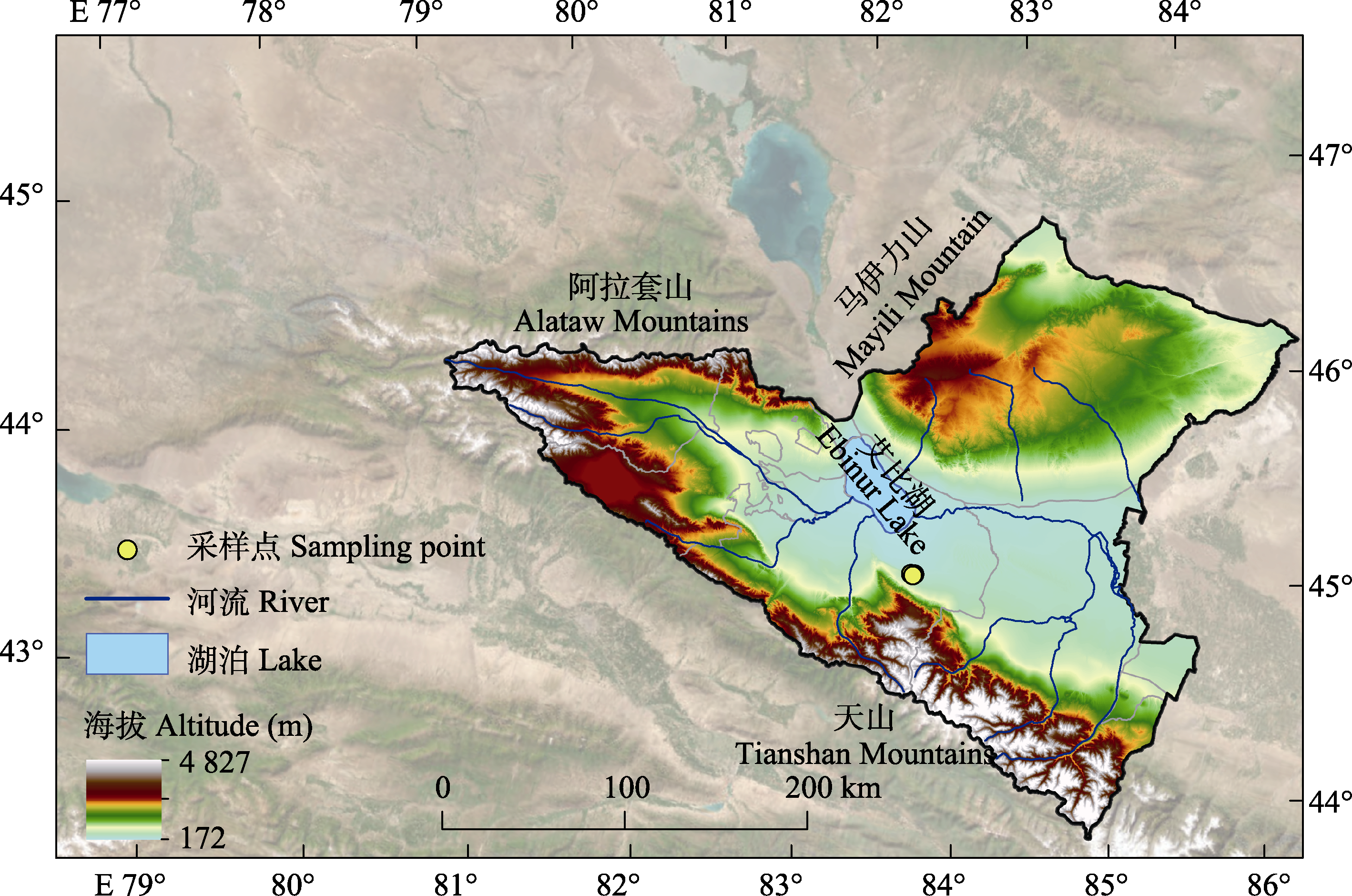
Fig. 1 Overview of the Ebinur Lake Basin study area.
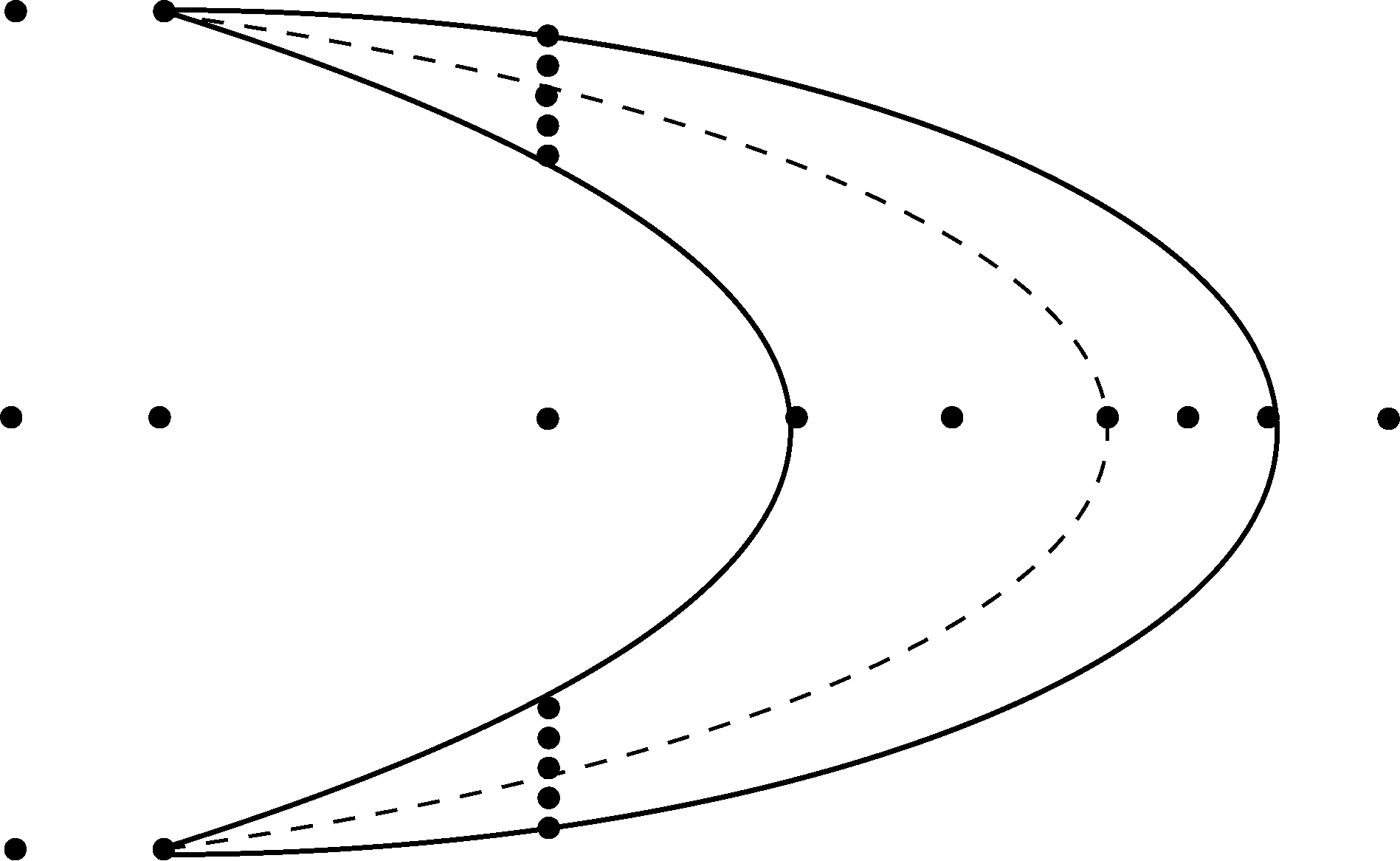
Fig. 2 Schematic diagram of parabolic dune survey plots in the Ebinur Lake Basin. Black dots indicate the locations of sampling points.
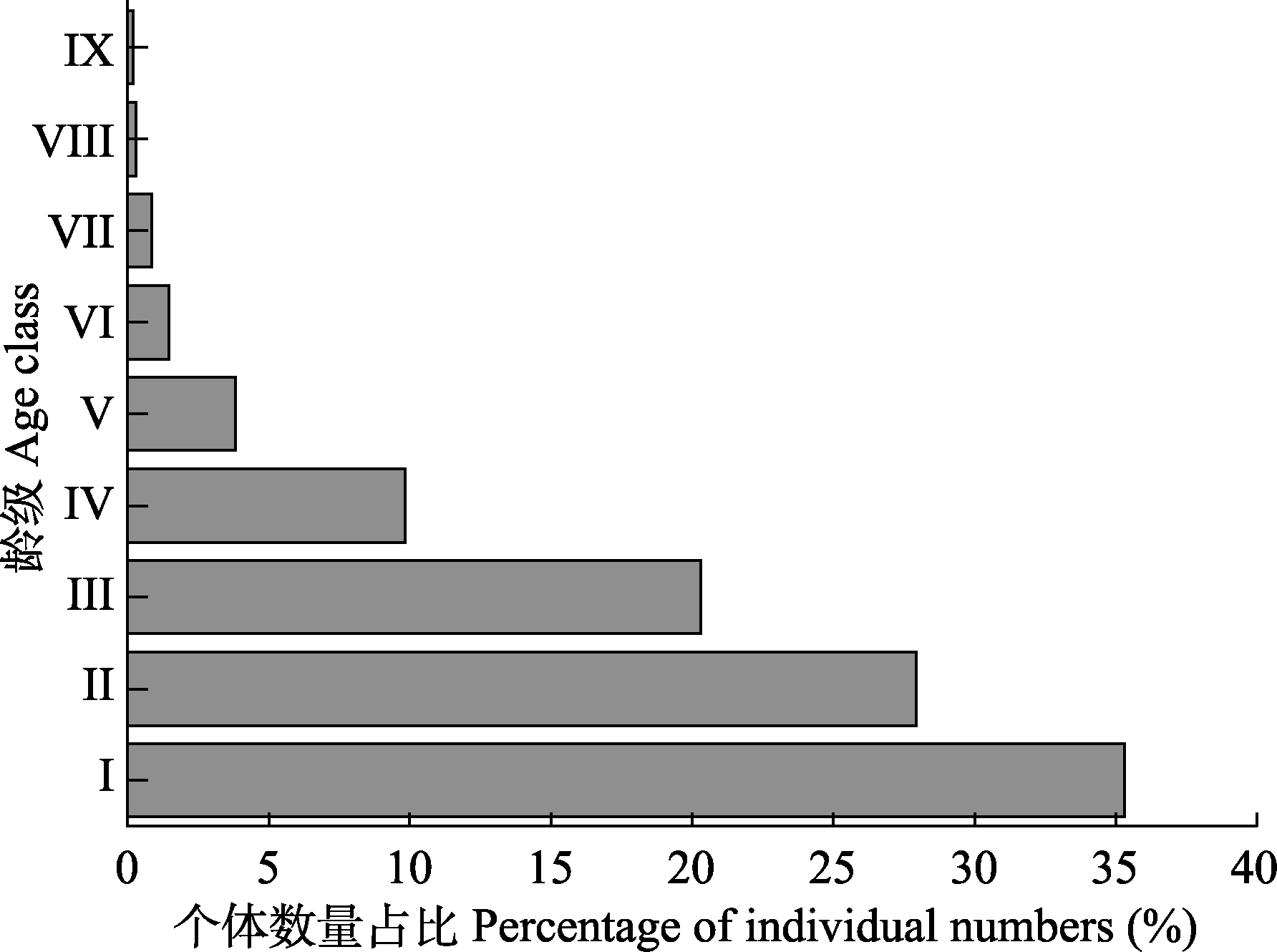
Fig. 3 Age-class structure of the Haloxylon ammodendron population on parabolic dunes in Ebinur Lake watershed.
| 龄级 Age class | 动态指数级 Dynamic index class | 种群动态指数 Population dynamic index (%) |
|---|---|---|
| I-II | V1 | 20.96 |
| II-III | V2 | 27.27 |
| III-IV | V3 | 51.56 |
| IV-V | V4 | 61.29 |
| V-VI | V5 | 61.11 |
| VI-VII | V6 | 42.86 |
| VII-VIII | V7 | 62.50 |
| VIII-IX | V8 | 33.33 |
| Vpi | 35.17 | |
| V′pi | 1.95 | |
| Pmax | 5.55 |
Table 1 Dynamic change index of the age-class structure of the Haloxylon ammodendron population on parabolic dunes in Ebinur Lake watershed
| 龄级 Age class | 动态指数级 Dynamic index class | 种群动态指数 Population dynamic index (%) |
|---|---|---|
| I-II | V1 | 20.96 |
| II-III | V2 | 27.27 |
| III-IV | V3 | 51.56 |
| IV-V | V4 | 61.29 |
| V-VI | V5 | 61.11 |
| VI-VII | V6 | 42.86 |
| VII-VIII | V7 | 62.50 |
| VIII-IX | V8 | 33.33 |
| Vpi | 35.17 | |
| V′pi | 1.95 | |
| Pmax | 5.55 |
| 龄级 Age class | 原始数据 Primary data | M2(1) | M4(1) | M6(1) | M8(1) |
|---|---|---|---|---|---|
| I | 334 | ||||
| II | 264 | 299 | |||
| III | 192 | 228 | |||
| IV | 93 | 143 | 221 | ||
| V | 36 | 65 | 146 | ||
| VI | 14 | 25 | 84 | 156 | |
| VII | 8 | 11 | 38 | 101 | |
| VIII | 3 | 6 | 15 | 58 | 118 |
| IX | 2 | 3 | 7 | 26 | 77 |
Table 2 Time-series prediction of population dynamics for the Haloxylon ammodendron population on parabolic dunes in Ebinur Lake watershed
| 龄级 Age class | 原始数据 Primary data | M2(1) | M4(1) | M6(1) | M8(1) |
|---|---|---|---|---|---|
| I | 334 | ||||
| II | 264 | 299 | |||
| III | 192 | 228 | |||
| IV | 93 | 143 | 221 | ||
| V | 36 | 65 | 146 | ||
| VI | 14 | 25 | 84 | 156 | |
| VII | 8 | 11 | 38 | 101 | |
| VIII | 3 | 6 | 15 | 58 | 118 |
| IX | 2 | 3 | 7 | 26 | 77 |
| 龄级 Age class | nx | lx | lnlx | dx | Lx | Tx | qx | ex | Kx | Sx |
|---|---|---|---|---|---|---|---|---|---|---|
| I | 334 | 1 000 | 6.908 | 210 | 895 | 2 329 | 0.210 | 2.33 | 1.04 | 0.79 |
| II | 264 | 790 | 6.673 | 216 | 683 | 1 434 | 0.273 | 1.81 | 1.05 | 0.73 |
| III | 192 | 575 | 6.354 | 296 | 427 | 751 | 0.516 | 1.31 | 1.13 | 0.48 |
| IV | 93 | 278 | 5.629 | 171 | 193 | 325 | 0.613 | 1.17 | 1.20 | 0.39 |
| V | 36 | 108 | 4.680 | 66 | 75 | 132 | 0.611 | 1.22 | 1.25 | 0.39 |
| VI | 14 | 42 | 3.736 | 18 | 33 | 57 | 0.429 | 1.36 | 1.18 | 0.57 |
| VII | 8 | 24 | 3.176 | 15 | 16 | 24 | 0.625 | 1.00 | 1.45 | 0.38 |
| VIII | 3 | 9 | 2.195 | 3 | 7 | 7 | 0.333 | 0.78 | 1.23 | 0.67 |
| IX | 2 | 6 | 1.790 | - | - | - | - | - | - | - |
Table 3 Static life table of the main sand-fixing Haloxylon ammodendron population on parabolic dunes in Ebinur Lake watershed
| 龄级 Age class | nx | lx | lnlx | dx | Lx | Tx | qx | ex | Kx | Sx |
|---|---|---|---|---|---|---|---|---|---|---|
| I | 334 | 1 000 | 6.908 | 210 | 895 | 2 329 | 0.210 | 2.33 | 1.04 | 0.79 |
| II | 264 | 790 | 6.673 | 216 | 683 | 1 434 | 0.273 | 1.81 | 1.05 | 0.73 |
| III | 192 | 575 | 6.354 | 296 | 427 | 751 | 0.516 | 1.31 | 1.13 | 0.48 |
| IV | 93 | 278 | 5.629 | 171 | 193 | 325 | 0.613 | 1.17 | 1.20 | 0.39 |
| V | 36 | 108 | 4.680 | 66 | 75 | 132 | 0.611 | 1.22 | 1.25 | 0.39 |
| VI | 14 | 42 | 3.736 | 18 | 33 | 57 | 0.429 | 1.36 | 1.18 | 0.57 |
| VII | 8 | 24 | 3.176 | 15 | 16 | 24 | 0.625 | 1.00 | 1.45 | 0.38 |
| VIII | 3 | 9 | 2.195 | 3 | 7 | 7 | 0.333 | 0.78 | 1.23 | 0.67 |
| IX | 2 | 6 | 1.790 | - | - | - | - | - | - | - |
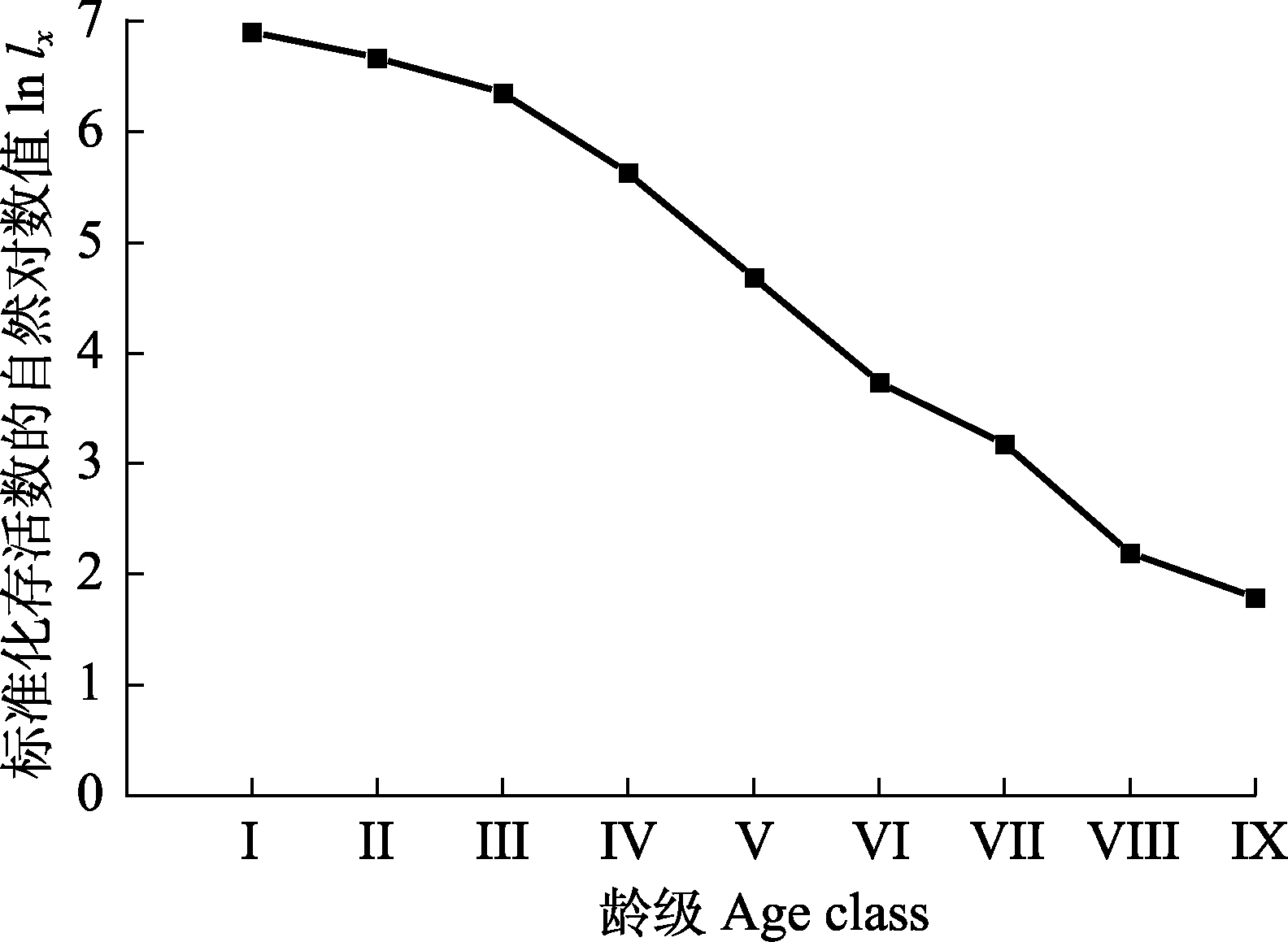
Fig. 4 Survival curve of the Haloxylon ammodendron population on parabolic dunes in Ebinur Lake watershed. lnlx represents the natural logarithm of the standardized individual survival count.
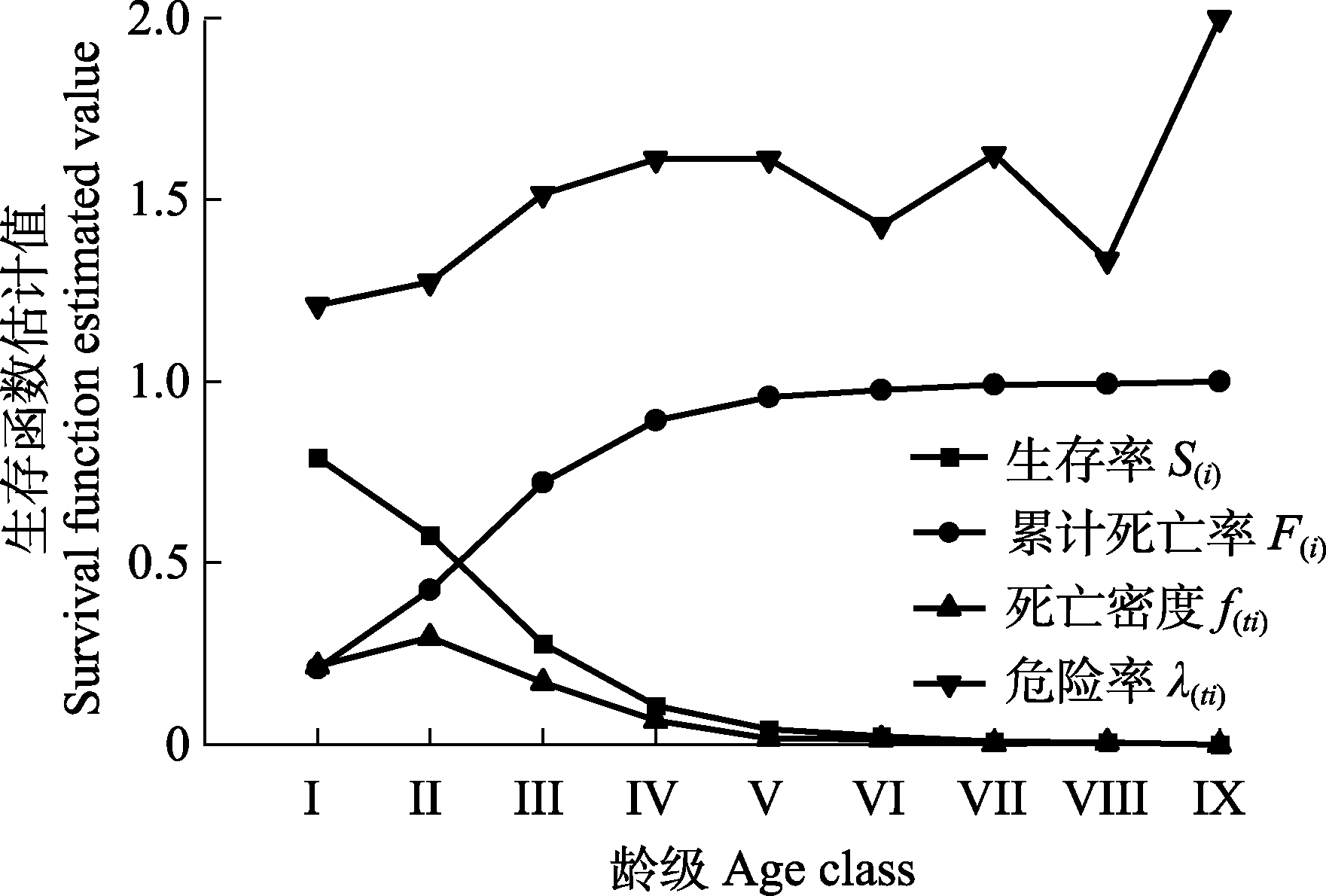
Fig. 5 Survival function curves of the Haloxylon ammodendron population on parabolic dunes in Ebinur Lake watershed. F(i), cumulative mortality; f(ti), mortality density; S(i), survival probability; λ(ti), hazard rate.
| [1] | Bao CY, Sun YY, Li MM, Xing HM, Qi JH (2024). Population structure and dynamic characteristics of the endangered plant Trachycarpus nanus in different habitats. Acta Botanica Boreali-Occidentalia Sinica, 44, 479-490. |
| [包崇寅, 孙永玉, 李敏敏, 邢洪铭, 戚建华 (2024). 不同生境濒危植物龙棕种群结构及其动态特征. 西北植物学报, 44, 479-490.] | |
| [2] | Cai C, Li KJ, Ling SW, Ruan GM, Chen ZP, Pan BZ, Zheng SQ (2025). Population structure and dynamic characteristics of Ormosia microphylla in geomancy forest of Gutian Meeting Site in Fujian. Journal of Plant Resources and Environment, 34(1), 61-69. |
| [蔡晨, 李珂佳, 凌书伟, 阮广鸣, 陈泽平, 潘标志, 郑世群 (2025). 福建古田会址风水林小叶红豆种群结构与动态特征. 植物资源与环境学报, 34(1), 61-69.] | |
| [3] | Cai XB, Wu JX (2016). Characteristics and dynamics analysis of Haloxylon persicum populations in the Nature Reserve of Gan Jia Lake. Journal of Arid Land Resources and Environment, 30(7), 90-94. |
| [蔡新斌, 吴俊侠 (2016). 甘家湖自然保护区白梭梭种群特征与动态分析. 干旱区资源与环境, 30(7), 90-94.] | |
| [4] | Chang ZF, Han FG, Zhong SN, Zhang YC, He FL, Chai CW (2008). Self thinning process of Haloxylon ammodendron planted forest in desert area of Minqin. Acta Botanica Boreali-Occidentalia Sinica, 28, 147-154. |
| [常兆丰, 韩福贵, 仲生年, 张应昌, 何芳兰, 柴成武 (2008). 民勤沙区人工梭梭林自然稀疏过程研究. 西北植物学报, 28, 147-154.] | |
| [5] | Chen XD (1998). A study on the method of quantitative analysis for plant population and community structural dynamics. Acta Ecologica Sinica, 18, 214-217. |
| [陈晓德 (1998). 植物种群与群落结构动态量化分析方法研究. 生态学报, 18, 214-217.] | |
| [6] |
Deevey ES Jr (1947). Life tables for natural populations of animals. The Quarterly Review of Biology, 22, 283-314.
DOI URL |
| [7] |
Frost I, Rydin H (2000). Spatial pattern and size distribution of the animal-dispersed tree Quercus robur in two spruce-dominated forests. Écoscience, 7(1), 38-44.
DOI URL |
| [8] |
Fuchs MA, Krannitz PG, Harestad AS (2000). Factors affecting emergence and first-year survival of seedlings of Garry oaks (Quercus garryana) in British Columbia, Canada. Forest Ecology and Management, 137, 209-219.
DOI URL |
| [9] | Ge JR, Zhang RX, Zhang JF (2025). Population structure and dynamic characteristics of Betula platyphylla in the Datong River Basin of Qilian Mountains. Journal of Arid Land Resources and Environment, 39(4), 156-164. |
| [葛静茹, 张荣霞, 张金峰 (2025). 祁连山大通河流域白桦种群结构与动态特征. 干旱区资源与环境, 39(4), 156-164.] | |
| [10] | Gui HY, Fang FZ, Li ZJ, Zhang XF, Mai YZ (2025). Population structure and dynamic characteristics of endangered plant Firmiana pulcherrima in Diaoluo Mountain of Hainan Province. Guihaia, 45, 197-206. |
| [桂慧颖, 方发之, 黎肇家, 张晓凤, 麦有专 (2025). 海南吊罗山濒危植物美丽火桐种群结构与动态特征. 广西植物, 45, 197-206.] | |
| [11] | Gurevitch J, Scheiner SM, Fox GA (2002). The Ecology of Plants. Sunderland, Massachusetts, USA. |
| [12] |
Harcombe PA (1987). Tree life tables. BioScience, 37, 557-568.
DOI URL |
| [13] |
He CC, Wu YY, Tian YS, Ma R, Wang ZT (2023). Variation characteristics of width-height ratio and migration speed of barchans at the margin of Minqin oasis. Arid Zone Research, 40, 280-291.
DOI |
|
[何晨晨, 吴盈盈, 田永胜, 马瑞, 王振亭 (2023). 民勤绿洲外围新月形沙丘宽高比与移动速率变化特征. 干旱区研究, 40, 280-291.]
DOI |
|
| [14] | Hett JM, Loucks OL (1976). Age structure models of balsam fir and eastern hemlock. Journal of Ecology, 64, 1029. DOI: 10.2307/2258822. |
| [15] |
Jia YY, Liu HQ, Xie XR, Wang B, Zhang W, Yang YF (2025). Age structure and population dynamics of rare and endangered Fraxinus sogdiana, China. Chinese Journal of Plant Ecology, 49, 760-772.
DOI |
|
[贾妍妍, 柳华清, 解欣然, 王博, 张维, 杨允菲 (2025). 珍稀濒危植物天山梣林龄结构及种群动态. 植物生态学报, 49, 760-772.]
DOI |
|
| [16] |
Jiang WB, Zhang DG, Yang XP (2022). Response of dune morphology and grain-size characteristics to the change of wind regimes and vegetation cover. Journal of Desert Research, 42(4), 120-129.
DOI |
|
[姜吴彬, 张德国, 杨小平 (2022). 沙丘形态及表沙粒度特征对风况和地表植被变化的响应. 中国沙漠, 42(4), 120-129.]
DOI |
|
| [17] | Li L, Zhang GF, Wang R, Sun G, Zhao MS (2011). Life table of natural Ginkgo biloba population in Tianmu Mountain Nature Reserve. Chinese Journal of Ecology, 30, 53-58. |
| [李玲, 张光富, 王锐, 孙国, 赵明水 (2011). 天目山自然保护区银杏天然种群生命表. 生态学杂志, 30, 53-58.] | |
| [18] | Li NW, Wu BC, Zhuang WB, Yuan S, Wang Q, Wang T (2024). Analyses on population structure and dynamic characteristics of Yulania zenii in Baohua Mountain of Jiangsu Province. Journal of Plant Resources and Environment, 33(5), 98-105. |
| [李乃伟, 吴宝成, 庄维兵, 袁帅, 王奇, 王涛 (2024). 江苏宝华山宝华玉兰种群结构与动态特征分析. 植物资源与环境学报, 33(5), 98-105.] | |
| [19] |
Li XH, Liu J, Li DD, Zhang LH (2025). Population structure and dynamic characteristics of the endangered plant Rhododendron xiaoxidongense. Chinese Journal of Plant Ecology, 49, 1844-1857.
DOI URL |
|
[李晓花, 刘杰, 李丹丹, 张乐华 (2025). 濒危植物小溪洞杜鹃种群结构与动态特征. 植物生态学报, 49, 1844-1857.]
DOI |
|
| [20] | Ma Q, Wu SL, Liu YQ, Jia CR (2014a). Grain size distribution of the parabolic dunes’ sediments in the Ebinur Lake Basin, Xinjiang, China. Journal of Desert Research, 34, 650-657. |
| [马倩, 武胜利, 刘永泉, 贾春荣 (2014a). 艾比湖流域抛物线沙丘表层沉积物粒度特征. 中国沙漠, 34, 650-657.] | |
| [21] | Ma Q, Wu SL, Zeng YJ, Zhao Y (2014b). Morphology of parabolic dunes in the Ebinur Lake Basin, Xinjiang, China. Journal of Desert Research, 34, 955-960. |
| [马倩, 武胜利, 曾雅娟, 赵阳 (2014b). 艾比湖流域抛物线形沙丘形态特征. 中国沙漠, 34, 955-960. | |
| [22] |
Mao M, Meng ZJ, Dang XH, Zhao FY, Wang DH, Chai XX (2023). Population dynamics of natural Haloxylon ammodendron in the eastern margin of Badain Jaran Desert. Arid Zone Research, 40, 971-978.
DOI |
|
[毛毛, 蒙仲举, 党晓宏, 赵飞燕, 王德慧, 柴享贤 (2023). 巴丹吉林沙漠东缘天然梭梭种群结构与动态特征. 干旱区研究, 40, 971-978.]
DOI |
|
| [23] | Mu R, Zhu L, Wang DY, An JY, Liu YJ, Li XL (2024). Variation characteristics of soil nutrient and grain size in sand pile of Nitraria tangutorum shrub at different succession stages in Ulanbuhe Desert. Acta Agrestia Sinica, 32, 818-826. |
|
[牧仁, 朱亮, 王丹阳, 安景源, 刘雅婧, 李新乐 (2024). 乌兰布和沙漠不同演替阶段白刺灌丛沙堆土壤养分和粒径的变化特征. 草地学报, 32, 818-826.]
DOI |
|
| [24] | Qin AL, Liu B, Chen Q, Zheng XK, Jin K (2025). Population structure and dynamic characteristics of Malus sieversii distributed in Ili and Tacheng regions of Xinjiang, China. Acta Ecologica Sinica, 45, 197-209. |
| [秦爱丽, 刘博, 陈强, 郑祥坤, 金崑 (2025). 伊犁和塔城地区新疆野苹果种群结构及动态特征. 生态学报, 45, 197-209.] | |
| [25] |
Röder D, Kiehl K (2006). Population structure and population dynamic of Pulsatilla patens (L.) Mill. in relation to vegetation characteristics. Flora, 201, 499-507.
DOI URL |
| [26] | Shen P, Bai P, Zhu Z, Chai ZZ (2024). Population structure and quantitative dynamics of degraded Pinus massoniana forest based on tree number and competition index. Journal of West China Forestry Science, 53(1), 40-46. |
| [申鹏, 白萍, 朱洲, 柴宗政 (2024). 基于林木株数与竞争指数的马尾松退化林种群结构及数量动态分析. 西部林业科学, 53(1), 40-46.] | |
| [27] | Wang CW, Zhang XX, Xue YB, Zhou J, Lei JQ, Li SY (2025). Spatiotemporal variations and driving factors of sand dust storms in the Ebinur Lake Basin from 2010 to 2023. China Environmental Science, 45, 5329-5337. |
| [王陈伟, 张小啸, 薛一波, 周杰, 雷加强, 李生宇 (2025). 艾比湖流域2010-2023年沙尘暴时空变化及驱动因素研究. 中国环境科学, 45, 5329-5337.] | |
| [28] |
Wang LL, Wang L, Zhang LF, Liu YY, Xu SJ (2015). Structure and dynamic characteristics of Gymnocarpos przewalskii in different habitats. Chinese Journal of Plant Ecology, 39, 980-989.
DOI |
|
[王立龙, 王亮, 张丽芳, 刘玉洋, 徐世健 (2015). 不同生境下濒危植物裸果木种群结构及动态特征. 植物生态学报, 39, 980-989.]
DOI |
|
| [29] |
Wang T, Liang Y, Ren HB, Yu D, Ni J, Ma KP (2004). Age structure of Picea schrenkiana forest along an altitudinal gradient in the central Tianshan Mountains, northwestern China. Forest Ecology and Management, 196, 267-274.
DOI URL |
| [30] | Wang W, Liang CZ (2001). Studies on the measuring method of growth rings of Haloxylon ammodendron and its growing dynamics. Journal of Arid Land Resources and Environment, 15(2), 67-74. |
| [王炜, 梁存柱 (2001). 梭梭年轮测定方法及生长动态的研究. 干旱区资源与环境, 15(2), 67-74.] | |
| [31] | Xiao YA, He P, Li XH, Deng HP (2004). Study on numeric dynamics of natural populations of the endangered species Disanthus cercidifolius var. longipes. Acta Phytoecologica Sinica, 28, 252-257. |
|
[肖宜安, 何平, 李晓红, 邓洪平 (2004). 濒危植物长柄双花木自然种群数量动态. 植物生态学报, 28, 252-257.]
DOI |
|
| [32] | Xie TT, Su PX, Zhou ZJ, Zhang HN, Li SJ (2014). Structure and dynamic characteristics of Calligonum mongolicum population in the desert-oasis ecotone. Acta Ecologica Sinica, 34, 4272-4279. |
| [解婷婷, 苏培玺, 周紫鹃, 张海娜, 李善家 (2014). 荒漠绿洲过渡带沙拐枣种群结构及动态特征. 生态学报, 34, 4272-4279.] | |
| [33] | Zeng Y, Liu T, Zhao D, Sun QM, Liu HF, Sun YY, Hao XR (2015). Effects of precipitation change on the dominant plant species diversity in the Gurbantünggüt Desert. Journal of Shihezi University: Natural Science, 33, 294-300. |
| [曾勇, 刘彤, 赵丹, 孙钦明, 刘华峰, 孙园园, 郝晓冉 (2015). 降水变化对古尔班通古特沙漠优势植物多样性的影响. 石河子大学学报(自然科学版), 33, 294-300.] | |
| [34] |
Zhang JF, Ge SS, Liang JH, Li JQ (2022). Population age structure and dynamics of Pinus koraiensis in a broadleaved Korean pine forest in Changbai Mountain, China. Chinese Journal of Plant Ecology, 46, 667-677.
DOI URL |
|
[张金峰, 葛树森, 梁金花, 李俊清 (2022). 长白山阔叶红松林红松种群年龄结构与数量动态特征. 植物生态学报, 46, 667-677.]
DOI |
|
| [35] | Zhang JF, Li JQ (2025). Population structure and dynamics of Acer mono, a companion tree species in the broad-leaved Korean pine forest of Changbai Mountain. Chinese Journal of Ecology, 44, 41-48. |
| [张金峰, 李俊清 (2025). 长白山阔叶红松林伴生树种色木槭的种群结构与动态. 生态学杂志, 44, 41-48.] | |
| [36] | Zhang JH, Ma QL, Li DL, Yuan HB, Zhang YK, Chang L (2023). Dynamic state and spatial distribution of natural Haloxylon ammodendron in Ulan Buhe Desert. Acta Botanica Boreali-Occidentalia Sinica, 43, 1198-1207. |
| [张剑挥, 马全林, 李得禄, 袁宏波, 张元恺, 常丽 (2023). 乌兰布和沙漠天然梭梭种群动态及空间分布. 西北植物学报, 43, 1198-1207.] | |
| [37] |
Zhang P, Ha S, Du HS, Wu X, Yang Y (2011). Dynamic relationship between parabolic dunes and Artemisia ordosica. Chinese Science Bulletin, 56, 3003-3010.
DOI URL |
| [张萍, 哈斯, 杜会石, 吴霞, 杨一 (2011). 抛物线形沙丘与油蒿灌丛之间的动态关系. 科学通报, 56, 3003-3010.] | |
| [38] | Zhang RX, Guan JH, Xie HC, Ma YG, Zhang JF (2025). Age structure and dynamics of Picea wilsonii population in Datong River basin of Qilian Mountains, China. Chinese Journal of Applied Ecology, 36, 1740-1748. |
|
[张荣霞, 关晋宏, 谢惠春, 马永贵, 张金峰 (2025). 祁连山大通河流域青杄种群年龄结构与动态. 应用生态学报, 36, 1740-1748.]
DOI |
|
| [39] | Zhang YN, Zhang JN, Xu M, Zhao P, Duan XF (2023). Study on the quantitative dynamics and distribution patterns of Haloxylon ammodendron population in the transition zone of Minqin oasis and desert. Journal of Green Science and Technology, 25(22), 7-11. |
| [张裕年, 张俊年, 许明, 赵鹏, 段晓峰 (2023). 民勤绿洲荒漠过渡带梭梭种群的数量动态及分布格局研究. 绿色科技, 25(22), 7-11.] | |
| [40] | Zhao HJ, Yang R, Yuan CJ, Dai XY, Wang HD, Ma JB, Guo JR (2024). Population structure and spatial distribution pattern of Rhododendron pudingense. Journal of Tropical and Subtropical Botany, 32, 46-54. |
| [赵宏玖, 杨瑞, 袁丛军, 戴晓勇, 王浩东, 马觉兵, 郭家瑞 (2024). 普定杜鹃花种群结构和空间分布格局. 热带亚热带植物学报, 32, 46-54.] | |
| [41] | Zhao P, Xu XY, Zhang YN, Duan XF, Qiu XN, Zhang W, Zhang JN (2023). Age structure and its dynamics of artificial Haloxylon ammodendron population in Minqin oasis-desert ecotone. Acta Ecologica Sinica, 43, 6069-6079. |
| [赵鹏, 徐先英, 张裕年, 段晓峰, 邱晓娜, 张雯, 张俊年 (2023). 民勤绿洲荒漠过渡带人工梭梭种群年龄结构及动态. 生态学报, 43, 6069-6079. ] | |
| [42] | Zhao YY, Li ZH, Wu S, Xing SH (2025). Population structure and dynamic characteristics of Haloxylon in Ganjiahu Nature Reserve. Arid Zone Research, 42, 866-874. |
|
[赵悦悦, 李子涵, 吴爽, 邢韶华 (2025). 甘家湖自然保护区梭梭种群结构与动态特征. 干旱区研究, 42, 866-874.]
DOI |
| [1] | JIA Yan-Yan, LIU Hua-Qing, XIE Xin-Ran, WANG Bo, ZHANG Wei, YANG Yun-Fei. Age structure and population dynamics of rare and endangered Fraxinus sogdiana, China [J]. Chin J Plant Ecol, 2025, 49(5): 760-772. |
| [2] | LI Xiao-Hua, LIU Jie, LI Dan-Dan, ZHANG Le-Hua. Population structure and dynamic characteristics of the endangered plant Rhododendron xiaoxidongense [J]. Chin J Plant Ecol, 2025, 49(11): 1844-1857. |
| [3] | ZHANG Wang, TAN Si-Yi, TU Wen-Qin, LOU An-Ru. Genetic diversity and genetic structure of Haloxylon ammodendron in the Turpan and Hami area, Xinjiang, China [J]. Chin J Plant Ecol, 2025, 49(11): 1858-1868. |
| [4] | HAN Yu-Qing, XIONG Wei, WU Bo, LU Qi, YANG Wen-Bin, LIU Ya-Li, ZHANG Jing-Bo, XIN Zhi-Ming, MA Ying-Bin, LIAN Hong-Lin, WANG Si-Han. Responses of stem sap flow of Haloxylon ammodendron to rainfall pulses in Ulan Buh Desert [J]. Chin J Plant Ecol, 2024, 48(9): 1172-1179. |
| [5] | WANG Yu-Ting, LIU Xu-Jing, TANG Chi-Fei, CHEN Wei-Yu, WANG Mei-Juan, XIANG Song-Zhu, LIU Mei, YANG Lin-Sen, FU Qiang, YAN Zhao-Gui, MENG Hong-Jie. Community characteristics and population dynamics of Acer miaotaiense, an extremely small population species in Shennongjia, China [J]. Chin J Plant Ecol, 2024, 48(1): 80-91. |
| [6] | CHEN Yu-Ting, MA Song-Mei, ZHANG Dan, ZHANG Lin, WANG Chun-Cheng. Diversity pattern and formation mechanism of sympatric Haloxylon ammodendron and Haloxylon persicum in Xinjiang, China [J]. Chin J Plant Ecol, 2024, 48(1): 56-67. |
| [7] | WANG Yan-Ling, ZHAO Li-Jun, ZHU Li-Qiong, MO Ruo-Guo, LIN Ting, ZHAO Xiao-Yu. Seedling quantitative characteristics and dynamics of Syzygium hancei populations in Guangxi, China [J]. Chin J Plant Ecol, 2023, 47(9): 1278-1286. |
| [8] | GUAN Yue, WANG Yan-Xin, CHU Jia-Yao, FENG Lin-Jiao, SONG Xiao-Meng, ZHOU Long. Age structure and dynamic analysis of Amygdalus ledebouriana population in Xinjiang, China [J]. Chin J Plant Ecol, 2023, 47(7): 967-977. |
| [9] | BAI Xue, LI Yu-Jing, JING Xiu-Qing, ZHAO Xiao-Dong, CHANG Sha-Sha, JING Tao-Yu, LIU Jin-Ru, ZHAO Peng-Yu. Response mechanisms of millet and its rhizosphere soil microbial communities to chromium stress [J]. Chin J Plant Ecol, 2023, 47(3): 418-433. |
| [10] | HE Chun-Mei, LI Yu-Shan, YIN Qiu-Long, JIA Shi-Hong, HAO Zhan-Qing. Diameter structure and quantitative characteristics of dominant tree species in warm temperate deciduous broadleaf forest plot in Huangguan of Qinling Mountains, China [J]. Chin J Plant Ecol, 2023, 47(12): 1658-1667. |
| [11] | LIN Chun-Hui, GU Hui-Yi, YE Qin-Liang, ZHANG Zhi-Jian, ZHONG Zhi-Ming, YI Qi-Fei. Characteristics of population structure and dynamics in endangered Camellia granthamiana [J]. Chin J Plant Ecol, 2023, 47(12): 1684-1692. |
| [12] | CHEN Tu-Qiang, XU Gui-Qing, LIU Shen-Si, LI Yan. Hydraulic traits adjustments and nonstructural carbohydrate dynamics of Haloxylon ammodendron under drought stress [J]. Chin J Plant Ecol, 2023, 47(10): 1407-1421. |
| [13] | ZHANG Jin-Feng, GE Shu-Sen, LIANG Jin-Hua, LI Jun-Qing. Population age structure and dynamics of Pinus koraiensis in a broadleaved Korean pine forest in Changbai Mountain, China [J]. Chin J Plant Ecol, 2022, 46(6): 667-677. |
| [14] | YU Liang, LI Jun-Li, BAO An-Ming, BAI Jie, HUANG Yue, LIU Tie, SHEN Zhan-Feng. Temporal areal changes of wetlands in the lower reaches of the Tarim River and their responses to ecological water conveyance [J]. Chin J Plant Ecol, 2020, 44(6): 616-627. |
| [15] | ZHAO Yang, LIU Jin-Qian, CHEN Xue-Long, Yang Meng-Meng, CAO Jia-Hao, QI Rui, CAO Xiu-Wen. Population structure characteristics of Picea purpurea in the upstream of Taohe River [J]. Chin J Plant Ecol, 2020, 44(3): 266-276. |
| Viewed | ||||||
|
Full text |
|
|||||
|
Abstract |
|
|||||
Copyright © 2026 Chinese Journal of Plant Ecology
Tel: 010-62836134, 62836138, E-mail: apes@ibcas.ac.cn, cjpe@ibcas.ac.cn

