Chin J Plant Ecol ›› 2025, Vol. 49 ›› Issue (10): 1685-1697.DOI: 10.17521/cjpe.2025.0018  cstr: 32100.14.cjpe.2025.0018

• Research Articles • Previous Articles     Next Articles

Niche and interspecific associations of Glycine soja community on abandoned farmland near a river in suburban

ZHENG Li-Yuan, XU Xi-Zhu, YIN Jia-Qi, SUN Xiao-Wen, WANG Yan*()   

  1. College of Life Science, Shenyang Normal University, Shenyang 110034, China
  • Received:2025-01-09 Accepted:2025-05-01 Online:2025-10-20 Published:2025-05-07
  • Contact: WANG Yan
  • Supported by:
    Research Topic of the Ministry of Agriculture and Rural Affairs of the People’s Republic of China(019240060);Research Topic of the Ministry of Agriculture and Rural Affairs of the People’s Republic of China(13230201)

Abstract:

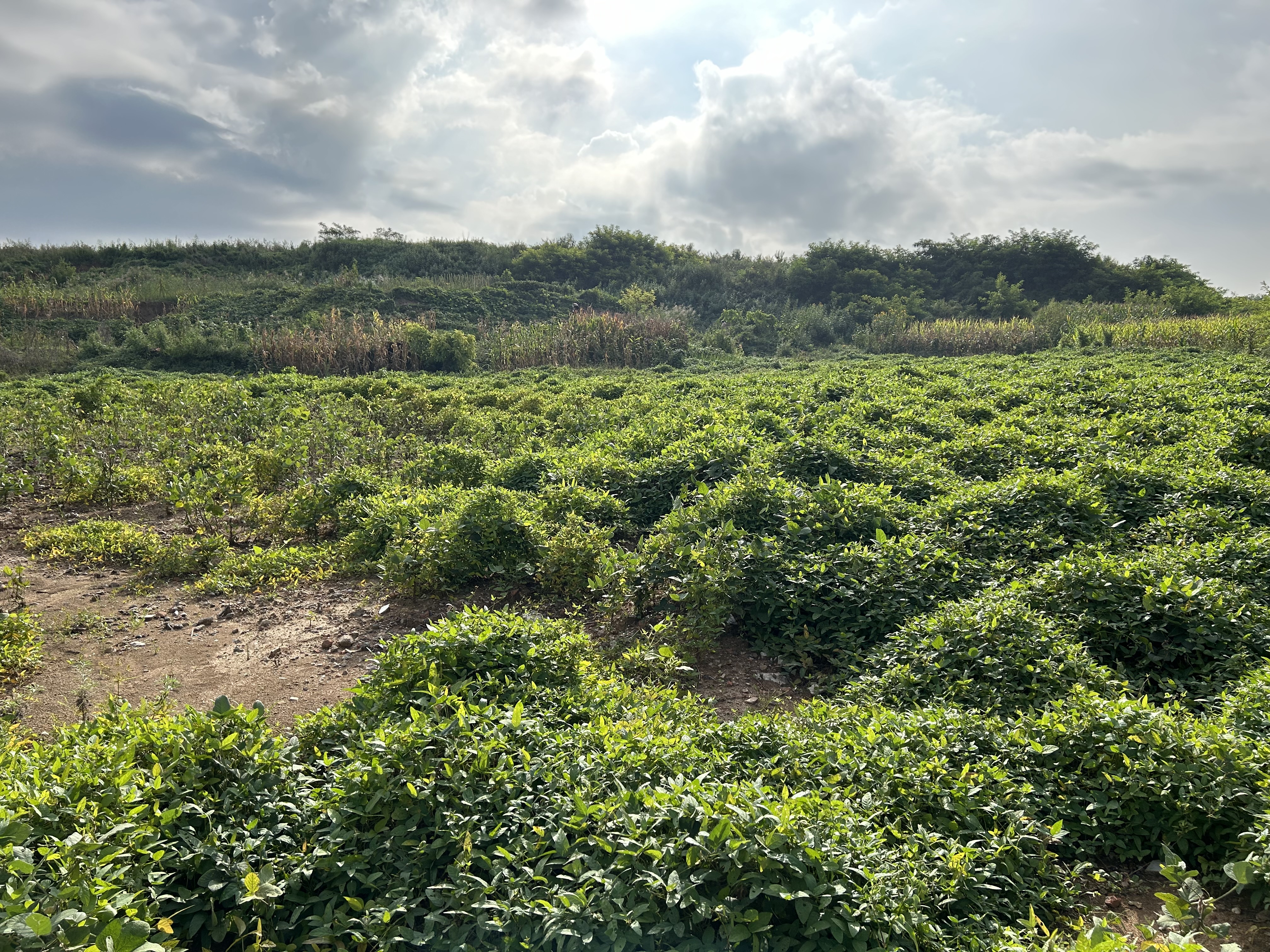
Aims In recent years, resources of Glycine soja had decreased dramatically under human disturbance. This study aimed to reveal the resource recovery and role of Glycine soja in communities on abandoned farmland, evaluate its interspecific association with other species and the stability of the community, and provide a theoretical basis for resource conservation and community restoration of Glycine soja.
Methods In this paper, the quadrat method with 1 m × 1 m was used to investigate the herb communities on three abandoned farmlands near the river located in the suburbs of Shenyang City. The importance value, ecological niche width, the degree of ecological overlap and interspecific association of the major herbaceous plants in the communities, as well as the stability of the community were analyzed.
Important findings There were 65 species of herbaceous plants belonging to 20 families and 51 genera in the investigated community, among which annual plants accounted for 52.31%. Glycine soja was the most dominant species in the community, with the highest frequency (97.18%), coverage (49.75% on average), importance value (33.28) and niche width (BL = 101.92, BS = 4.75). The resource use overlap (Oik) value (0.35) and niche similarity (0.30) between Glycine soja and Artemisia lancea were the largest, and the niche overlap between Glycine soja and Vigna minima was also large (Oik = 0.34). χ2 test and association coefficient (AC) results showed that there was a significant positive association between Glycine soja and Artemisia lancea, and a very significant negative association between Glycine soja and Humulus scandens. The correlation coefficient showed that Glycine soja had a positive association with Vigna minima, but a highly significant negative association with Setaria viridis, Persicaria orientalis and Echinochloa crusgalli. The overall niche overlap values of the important plants in the community were low (0-0.35). The variance ratio (VR) and statistic (W) of the total association were 0.87 and 122.16, indicating a negative association among the major plants in the community. The results of χ2 test, AC, and Spearman rank correlation coefficient showed that there were mainly negative associations among species. The Euclidean distance between the coordinates of the intersection point and the coordinates of the stable point analyzed by M. Godron method was far, indicating that the community stability was relatively poor. However, the Euclidean distance of the community with a longer period of returning farmland to forest was closer than that of the community with a shorter period, suggesting that community stability increases with longer abandonment times.

Key words: abandoned farmland near river, Glycine soja, community species composition, ecological niche, interspecific association, community stability