
Chin J Plant Ecol ›› 2025, Vol. 49 ›› Issue (9): 1363-1373.DOI: 10.17521/cjpe.2024.0470 cstr: 32100.14.cjpe.2024.0470
• Research Articles • Previous Articles Next Articles
ZHENG Zi-Yi1,3, CHEN Jiang-Hui1,3, LIU Hui-Ying1,2,3,4,*( )
)
Received:2024-12-30
Accepted:2025-05-13
Online:2025-09-20
Published:2025-09-01
Contact:
LIU Hui-Ying
Supported by:ZHENG Zi-Yi, CHEN Jiang-Hui, LIU Hui-Ying. Climate warming increases root exudation rates of dominant species in alpine meadow on the Qingzang Plateau[J]. Chin J Plant Ecol, 2025, 49(9): 1363-1373.
Add to citation manager EndNote|Ris|BibTeX
URL: https://www.plant-ecology.com/EN/10.17521/cjpe.2024.0470
| 固定效应 Fixed effect | 模型自由度 NumDF | 残差自由度 DenDF | F | p |
|---|---|---|---|---|
| 处理 Treatment (T) | 1 | 40 | 103.20 | <0.001*** |
| 物种 Species (S) | 9 | 40 | 29.51 | <0.001*** |
| 处理×物种 T × S | 9 | 40 | 7.27 | <0.001*** |
Table 1 Linear mixed effects model results of the effect of warming on carbon exudation rates of 10 dominant species in alpine meadows on the Qingzang Plateau
| 固定效应 Fixed effect | 模型自由度 NumDF | 残差自由度 DenDF | F | p |
|---|---|---|---|---|
| 处理 Treatment (T) | 1 | 40 | 103.20 | <0.001*** |
| 物种 Species (S) | 9 | 40 | 29.51 | <0.001*** |
| 处理×物种 T × S | 9 | 40 | 7.27 | <0.001*** |
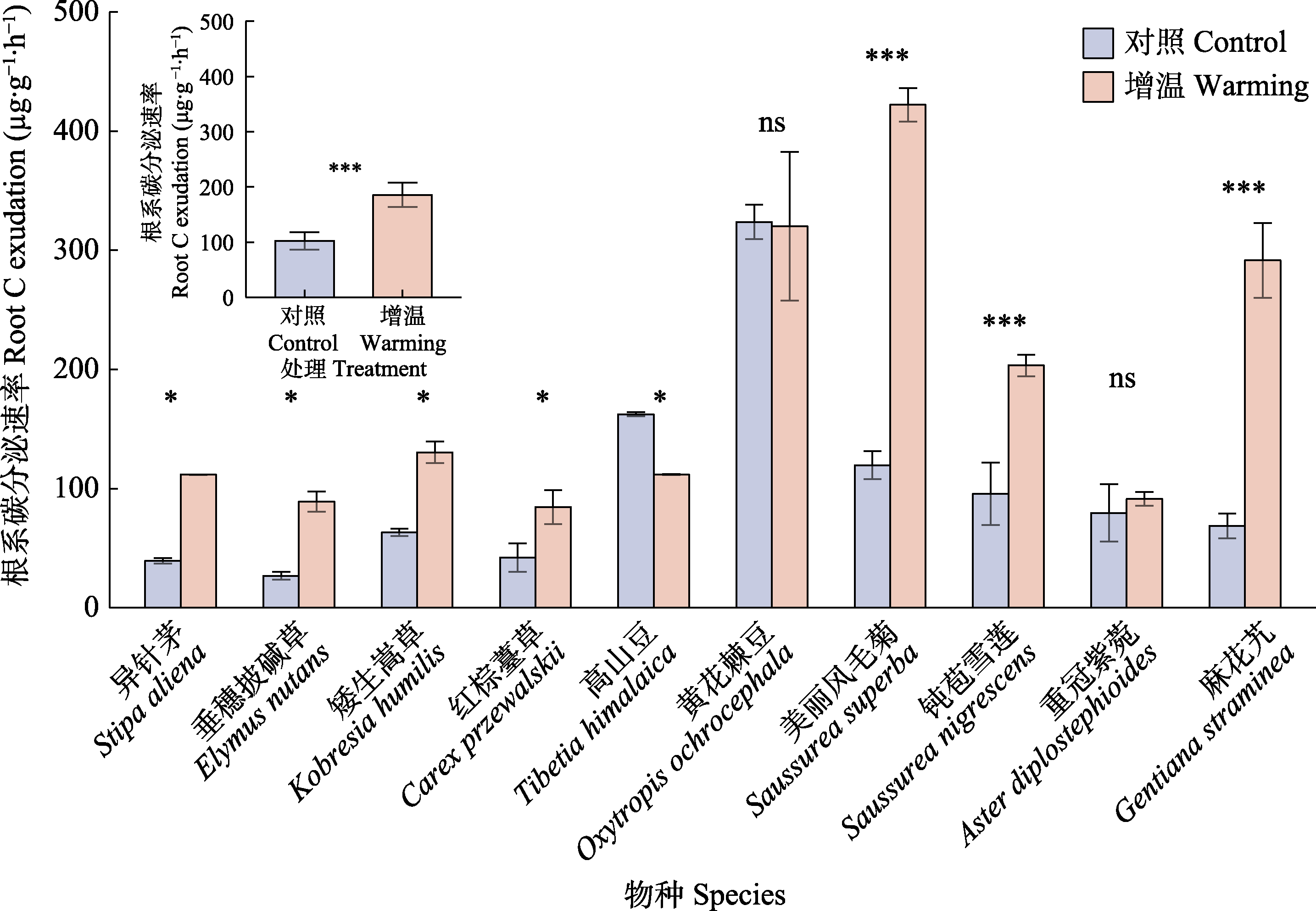
Fig. 1 Effects of warming on root carbon (C) exudation rates of 10 dominant species in alpine meadows on the Qingzang Plateau (mean ± SE, n = 3). The upper left inset shows the effect of warming on root carbon exudation rates of all species (n = 30). Asterisks indicate significant differences between control and warming (*, p < 0.05; ***, p < 0.001), and ns indicates no significant differences between control and warming (p > 0.05).

Fig. 2 Effects of warming on the economic phenotypes of dominant plants in alpine meadows on the Qingzang Plateau. The red arrow indicates the direction of the warming treatment, the brown arrows indicate the root traits, and the green arrows indicate the leaf traits. LC, leaf carbon content; LN, leaf nitrogen content; NPR, net photosynthetic rate; RC, root carbon content; RN, root nitrogen content; Root C exudation, root carbon exudation rate; RTD, root tissue density; SLA, specific leaf area; SPAD, relative chlorophyll content; SRA, specific root area; SRL, specific root length; Warming, warming treatment. PC1, principal component 1; PC2, principal component 2.
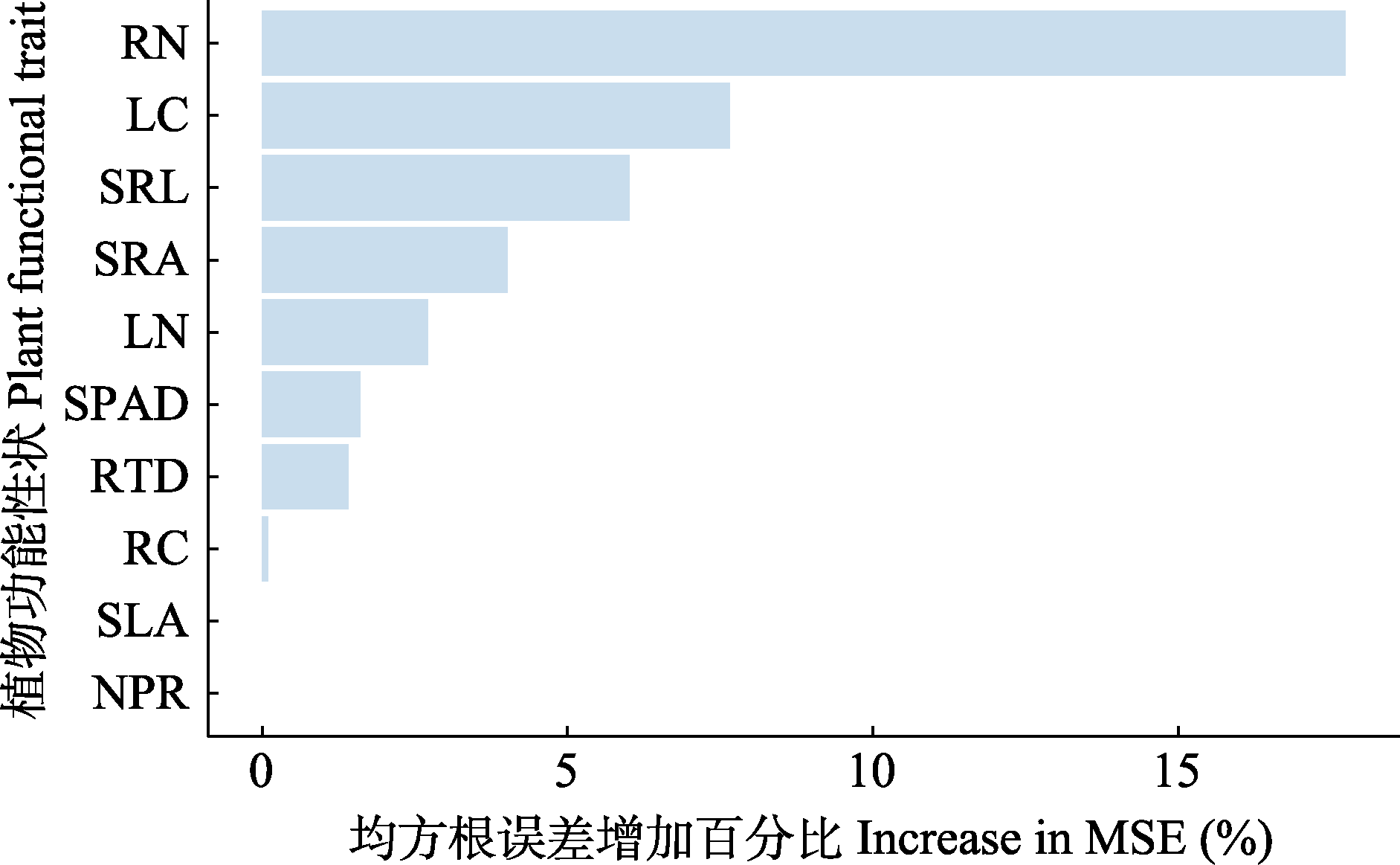
Fig. 3 Contribution of plant functional traits to changes in root carbon exudation rate (n = 60). LC, leaf carbon content; LN, leaf nitrogen content; NPR, net photosynthetic rate; RC, root carbon content; RN, root nitrogen content; RTD, root tissue density; SLA, specific leaf area; SPAD, relative chlorophyll content; SRA, specific root area; SRL, specific root length. MSE, mean squared error.
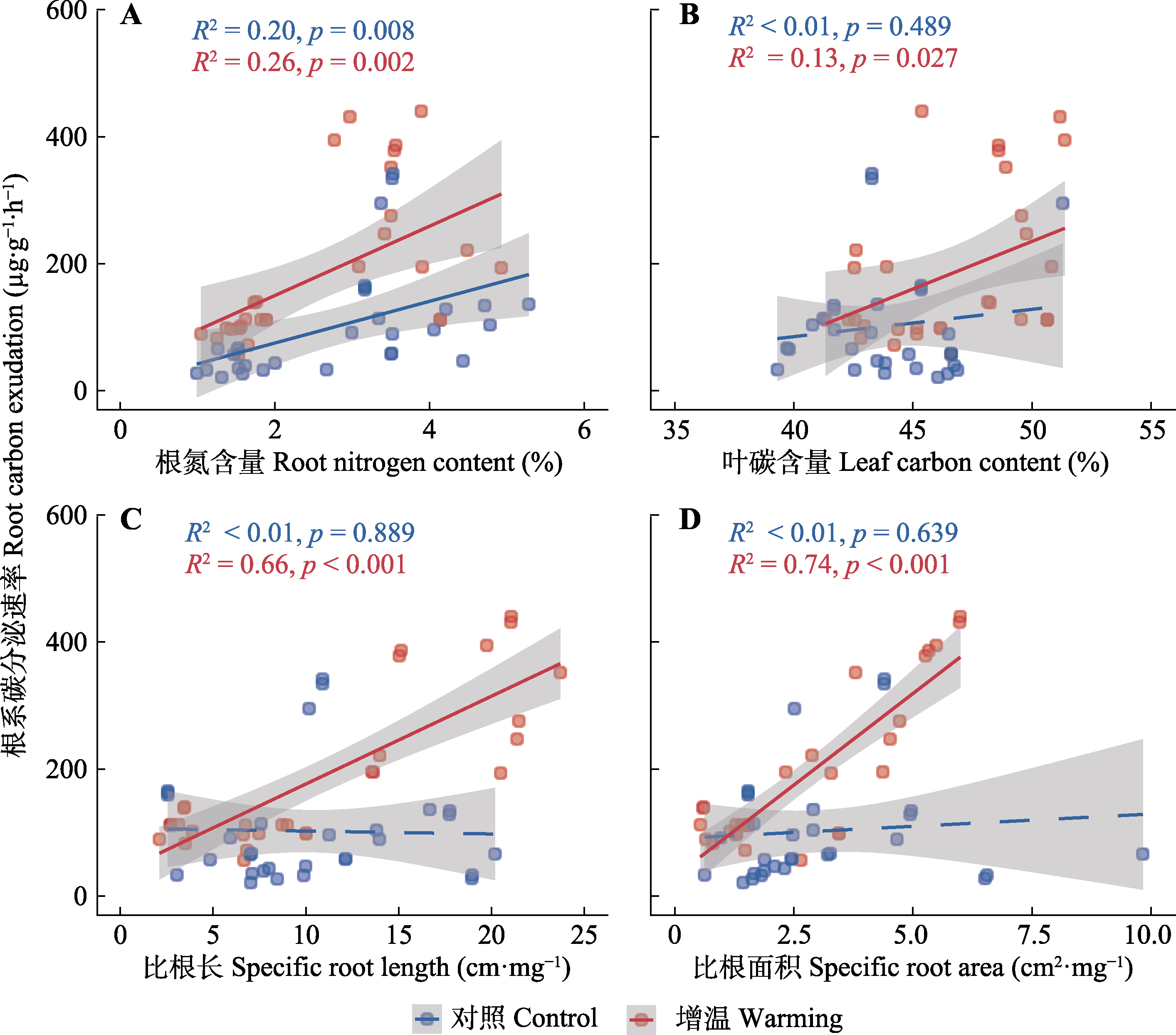
Fig. 4 Linear fit of root carbon exudation rate to key plant traits. Gray shading indicates 95% confidence intervals, and the solid line represents a significant slope of the linear fit (p < 0.05).
| [1] |
Akatsuki M, Makita N (2020). Influence of fine root traits on in situ exudation rates in four conifers from different mycorrhizal associations. Tree Physiology, 40, 1071-1079.
DOI PMID |
| [2] |
Badri DV, Vivanco JM (2009). Regulation and function of root exudates. Plant, Cell & Environment, 32, 666-681.
DOI URL |
| [3] |
Bais HP, Weir TL, Perry LG, Gilroy S, Vivanco JM (2006). The role of root exudates in rhizosphere interactions with plants and other organisms. Annual Review of Plant Biology, 57, 233-266.
PMID |
| [4] | Bates D, Mächler M, Bolker B, Walker S (2015). Fitting linear mixed-effects models using lme4. Journal of Statistical Software, 67(1), 1-48. |
| [5] | Bergmann J, Weigelt A, van der Plas F, Laughlin DC, Kuyper TW, Guerrero-Ramirez N, Valverde-Barrantes OJ, Bruelheide H, Freschet GT, Iversen CM, Kattge J, McCormack ML, Meier IC, Rillig MC, Roumet C, et al. (2020). The fungal collaboration gradient dominates the root economics space in plants. Science Advances, 6, eaba3756. DOI: 10.1126/sciadv.aba3756. |
| [6] | Bhattarai P, Zheng Z, Bhatta KP, Adhikari YP, Zhang Y (2021). Climate-driven plant response and resilience on the Tibetan Plateau in space and time: a review. Plants, 10, 480. DOI: 10.3390/plants10030480. |
| [7] |
Brundrett MC, Tedersoo L (2018). Evolutionary history of mycorrhizal symbioses and global host plant diversity. New Phytologist, 220, 1108-1115.
DOI PMID |
| [8] |
Chai YN, Schachtman DP (2022). Root exudates impact plant performance under abiotic stress. Trends in Plant Science, 27, 80-91.
DOI URL |
| [9] |
Chen H, Zhu QA, Peng CH, Wu N, Wang YF, Fang XQ, Gao YH, Zhu D, Yang G, Tian JQ, Kang XM, Piao SL, Ouyang H, Xiang WH, Luo ZB, et al. (2013). The impacts of climate change and human activities on biogeochemical cycles on the Qinghai-Tibetan Plateau. Global Change Biology, 19, 2940-2955.
DOI PMID |
| [10] | Cheng CJ, He NP, Li MX, Xu L, Cai WX, Li X, Zhao WZ, Li C, Sun OJ (2023). Plant species richness on the Tibetan Plateau: patterns and determinants. Ecography, 1, e06265. DOI: 10.3390/plants14152379. |
| [11] |
Dijkstra FA, Zhu B, Cheng W (2021). Root effects on soil organic carbon: a double-edged sword. New Phytologist, 230, 60-65.
DOI PMID |
| [12] |
Dusenge ME, Duarte AG, Way DA (2019). Plant carbon metabolism and climate change: elevated CO2 and temperature impacts on photosynthesis, photorespiration and respiration. New Phytologist, 221, 32-49.
DOI URL |
| [13] | Eissenstat DM, Yanai RD (1997). The ecology of root lifespan. Advances in Ecological Research, 27, 2-59. |
| [14] | Gao YQ, Wang HM, Yang FT, Dai XQ, Meng SW, Hu MY, Kou L, Fu XL (2024). Relationships between root exudation and root morphological and architectural traits vary with growing season. Tree Physiology, 44. DOI: 10.1093/treephys/tpad118. |
| [15] |
Haichar FZ, Santaella C, Heulin T, Achouak W (2014). Root exudates mediated interactions belowground. Soil Biology & Biochemistry, 77, 69-80.
DOI URL |
| [16] | Han MG, Sun LJ, Gan DY, Fu LC, Zhu B (2020). Root functional traits are key determinants of the rhizosphere effect on soil organic matter decomposition across 14 temperate hardwood species. Soil Biology & Biochemistry, 151, 108019. DOI: 10.1016/j.soilbio.2020.108019. |
| [17] |
Henneron L, Cros C, Picon-Cochard C, Rahimian V, Fontaine S (2020). Plant economic strategies of grassland species control soil carbon dynamics through rhizodeposition. Journal of Ecology, 108, 528-545.
DOI |
| [18] |
Jiang Z, Fu YL, Zhou LY, He YH, Zhou GY, Dietrich P, Long JL, Wang XX, Jia SX, Ji YH, Jia Z, Song BQ, Liu RQ, Zhou XH (2023). Plant growth strategy determines the magnitude and direction of drought-induced changes in root exudates in subtropical forests. Global Change Biology, 29, 3476-3488.
DOI PMID |
| [19] |
Jing JY, Cong WF, Bezemer TM (2022). Legacies at work: plant-soil-microbiome interactions underpinning agricultural sustainability. Trends in Plant Science, 27, 781-792.
DOI PMID |
| [20] |
Keiluweit M, Bougoure JJ, Nico PS, Pett-Ridge J, Weber PK, Kleber M (2015). Mineral protection of soil carbon counteracted by root exudates. Nature Climate Change, 5, 588-595.
DOI |
| [21] |
Lai JS, Zou Y, Zhang S, Zhang XG, Mao LF (2022). glmm.hp: an R package for computing individual effect of predictors in generalized linear mixed models. Journal of Plant Ecology, 15, 1302-1307.
DOI |
| [22] | Lê S, Josse J, Husson F (2008). FactoMineR: an R package for multivariate analysis. Journal of Statistical Software, 25(1), 1-18. |
| [23] |
Liu HY, Mi ZR, Lin L, Wang YH, Zhang ZH, Zhang FW, Wang H, Liu LL, Zhu B, Cao GM, Zhao XQ, Sanders NJ, Classen AT, Reich PB, He JS (2018). Shifting plant species composition in response to climate change stabilizes grassland primary production. Proceedings of the National Academy of Sciences of the United States of America, 115, 4051-4056.
DOI PMID |
| [24] |
Liu M, Wen JH, Chen YM, Xu WJ, Wang Q, Ma ZL (2022). Warming increases soil carbon input in a Sibiraea angustata-dominated alpine shrub ecosystem. Journal of Plant Ecology, 15, 335-346.
DOI URL |
| [25] | Lu JY, Yin LM, Dijkstra FA, Yan SB, Wang P, Cheng WX (2023). Linking plant traits to rhizosphere priming effects across six grassland species with and without nitrogen fertilization. Soil Biology & Biochemistry, 185, 109144. DOI: 10.1016/j.soilbio.2023.109144. |
| [26] | Luo XZ, Zhang LL, Lin YB, Wen DZ, Hou EQ (2023). Nitrogen availability mediates soil organic carbon cycling in response to phosphorus supply: a global meta-analysis. Soil Biology & Biochemistry, 185, 109158. DOI: 10.1016/j.soilbio.2023.109158. |
| [27] | Ma ZL (2020). Responses of root exudative carbon and nitrogen inputs to warming in an alpine scrub ecosystem on the eastern Qinghai-Tibet Plateau. Ecology and Environmental Sciences, 29, 643-649. |
|
[马志良 (2020). 青藏高原东缘高寒灌丛根系分泌物碳氮输入对增温的响应. 生态环境学报, 29, 643-649.]
DOI |
|
| [28] | Ma ZL, Zhao WQ, Zhao CZ, Wang D, Liu M, Li DD, Liu Q (2018). Plants regulate the effects of experimental warming on the soil microbial community in an alpine scrub ecosystem. PLoS ONE, 13, e0195079. DOI: 10.1371/journal.pone.0195079. |
| [29] |
Marenco RA, Antezana-Vera SA, Nascimento HCS (2009). Relationship between specific leaf area, leaf thickness, leaf water content and SPAD-502 readings in six Amazonian tree species. Photosynthetica, 47, 184-190.
DOI URL |
| [30] |
Meier IC, Tückmantel T, Heitkötter J, Müller K, Preusser S, Wrobel TJ, Kandeler E, Marschner B, Leuschner C (2020). Root exudation of mature beech forests across a nutrient availability gradient: the role of root morphology and fungal activity. New Phytologist, 226, 583-594.
DOI PMID |
| [31] |
Oburger E, Jones DL (2018). Sampling root exudates—Mission impossible? Rhizosphere, 6, 116-133.
DOI URL |
| [32] |
Pan SN, Wang X, Yan ZB, Wu J, Guo LL, Peng ZY, Wu YT, Li J, Wang B, Su YJ, Liu LL (2024). Leaf stomatal configuration and photosynthetic traits jointly affect leaf water use efficiency in forests along climate gradients. New Phytologist, 244, 1250-1262.
DOI PMID |
| [33] |
Pérez-Harguindeguy N, Díaz S, Garnier E, Lavorel S, Poorter H, Jaureguiberry P, Bret-Harte MS, Cornwell WK, Craine JM, Gurvich DE, Urcelay C, Veneklaas EJ, Reich PB, Poorter L, Wright IJ, Ray P, Enrico L, et al. (2016). New handbook for standardised measurement of plant functional traits worldwide. Australian Journal of Botany, 64, 715-716.
DOI URL |
| [34] |
Phillips RP, Erlitz Y, Bier R, Bernhardt ES (2008). New approach for capturing soluble root exudates in forest soils. Functional Ecology, 22, 990-999.
DOI URL |
| [35] |
Prescott CE, Grayston SJ, Helmisaari HS, Kaštovská E, Körner C, Lambers H, Meier IC, Millard P, Ostonen I (2020). Surplus carbon drives allocation and plant-soil interactions. Trends in Ecology & Evolution, 35, 1110-1118.
DOI URL |
| [36] |
Sun LJ, Ataka M, Han MG, Han YF, Gan DY, Xu TL, Guo YP, Zhu B (2021). Root exudation as a major competitive fine‐root functional trait of 18 coexisting species in a subtropical forest. New Phytologist, 229, 259-271.
DOI URL |
| [37] |
Tang M, Keck DC, Cheng WX, Zeng H, Zhu B (2019). Linking rhizosphere respiration rate of three grassland species with root nitrogen concentration. Geoderma, 346, 84-90.
DOI |
| [38] |
Walker TS, Bais HP, Grotewold E, Vivanco JM (2003). Root exudation and rhizosphere biology. Plant Physiology, 132, 44-51.
DOI PMID |
| [39] |
Wang C, Morrissey EM, Mau RL, Hayer M, Piñeiro J, Mack MC, Marks JC, Bell SL, Miller SN, Schwartz E, Dijkstra P, Koch BJ, Stone BW, Purcell AM, Blazewicz SJ, et al. (2021a). The temperature sensitivity of soil: microbial biodiversity, growth, and carbon mineralization. The ISME Journal, 15, 2738-2747.
DOI URL |
| [40] | Wang H, Lu JY, Dijkstra FA, Sun LJ, Yin LM, Wang P, Cheng WX (2025). Rhizosphere priming effects and trade-offs among root traits, exudation and mycorrhizal symbioses. Soil Biology & Biochemistry, 202, 109690. DOI: 10.1016/j.soilbio.2024.109690. |
| [41] |
Wang JS, Defrenne C, McCormack ML, Yang L, Tian DS, Luo YQ, Hou EQ, Yan T, Li ZL, Bu WS, Chen Y, Niu SL (2021b). Fine-root functional trait responses to experimental warming: a global meta-analysis. New Phytologist, 230, 1856-1867.
DOI URL |
| [42] |
Weemstra M, Mommer L, Visser EJW, van Ruijven J, Kuyper TW, Mohren GMJ, Sterck FJ (2016). Towards a multidimensional root trait framework: a tree root review. New Phytologist, 211, 1159-1169.
DOI PMID |
| [43] |
Weese DJ, Heath KD, Dentinger BTM, Lau JA (2015). Long-term nitrogen addition causes the evolution of less-cooperative mutualists. Evolution, 69, 631-642.
DOI PMID |
| [44] |
Weigelt A, Mommer L, Andraczek K, Iversen CM, Bergmann J, Bruelheide H, Fan Y, Freschet GT, Guerrero-Ramírez NR, Kattge J, Kuyper TW, Laughlin DC, Meier IC, van der Plas F, Poorter H, et al. (2021). An integrated framework of plant form and function: the belowground perspective. New Phytologist, 232, 42-59.
DOI PMID |
| [45] |
Wen ZH, Li HB, Shen Q, Tang XM, Xiong CY, Li HG, Pang JY, Ryan MH, Lambers H, Shen JB (2019). Tradeoffs among root morphology, exudation and mycorrhizal symbioses for phosphorus-acquisition strategies of 16 crop species. New Phytologist, 223, 882-895.
DOI PMID |
| [46] |
Wen ZH, White PJ, Shen JB, Lambers H (2022). Linking root exudation to belowground economic traits for resource acquisition. New Phytologist, 233, 1620-1635.
DOI URL |
| [47] |
Williams A, Langridge H, Straathof AL, Muhamadali H, Hollywood KA, Goodacre R, de Vries FT (2022). Root functional traits explain root exudation rate and composition across a range of grassland species. Journal of Ecology, 110, 21-33.
DOI URL |
| [48] |
Wright IJ, Reich PB, Westoby M, Ackerly DD, Baruch Z, Bongers F, Cavender-Bares J, Chapin T, Cornelissen JHC, Diemer M, Flexas J, Garnier E, Groom PK, Gulias J, Hikosaka K, et al. (2004). The worldwide leaf economics spectrum. Nature, 428, 821-827.
DOI |
| [49] |
Wu LK, Lin XM, Lin WX (2014). Advances and perspective in research on plant-soil-microbe interactions mediated by root exudates. Chinese Journal of Plant Ecology, 38, 298-310.
DOI |
|
[吴林坤, 林向民, 林文雄 (2014). 根系分泌物介导下植物-土壤-微生物互作关系研究进展与展望. 植物生态学报, 38, 298-310.]
DOI |
|
| [50] |
Xiong DC, Yang ZJ, Chen GS, Liu XF, Lin WS, Huang JX, Bowles FP, Lin CF, Xie JS, Li YQ, Yang YS (2018). Interactive effects of warming and nitrogen addition on fine root dynamics of a young subtropical plantation. Soil Biology & Biochemistry, 123, 180-189.
DOI URL |
| [51] |
Yang L, Li TT, Li XX, Wang YS, Wang XW (2024). Nitrogen addition decreases root exudation of four temperate tree species seedlings, independent of the applied nitrogen form. Plant and Soil, 498, 637-650.
DOI |
| [52] |
Yin HJ, Zhang ZL, Liu Q (2018). Root exudates and their ecological consequences in forest ecosystems: problems and perspective. Chinese Journal of Plant Ecology, 42, 1055-1070.
DOI URL |
|
[尹华军, 张子良, 刘庆 (2018). 森林根系分泌物生态学研究: 问题与展望. 植物生态学报, 42, 1055-1070.]
DOI |
|
| [53] |
Yin R, Qin WK, Wang XD, Xie D, Wang H, Zhao HY, Zhang ZH, He JS, Schädler M, Kardol P, Eisenhauer N, Zhu B (2023). Experimental warming causes mismatches in alpine plant-microbe-fauna phenology. Nature Communications, 14, 2159. DOI: 10.1038/s41467-023-37938-3.
PMID |
| [54] | Yu Y, Zhou Y, Janssens IA, Deng Y, He XJ, Liu LL, Yi Y, Xiao NW, Wang XD, Li C, Xiao CW (2024). Divergent rhizosphere and non-rhizosphere soil microbial structure and function in long-term warmed steppe due to altered root exudation. Global Change Biology, 30, e17111. DOI: 10.1111/gcb.17111. |
| [55] |
Zeng J, Li XY, Xing LH, Chen L, Li Y, Wang X, Zhang Q, Yang G, Ren CJ, Yang GH, Han XH (2024). Soil nitrogen regulates root carbon secretion in the context of global change: a global meta-analysis. Functional Ecology, 38, 2067-2080.
DOI URL |
| [56] | Zhai XF, Zheng Y, Ma FL, Ren LF, Bai WM, Tian QY, Zhang WH (2024). Root exudation is involved in regulation of nitrogen transformation under mowing in a temperate steppe. Soil Biology & Biochemistry, 195, 109481. DOI: 10.1016/j.soilbio.2024.109481. |
| [57] | Zhang CF, Cai YM, Zhao QX, He TB, Mao TX, Zhang T, Zhang LM, Su WC (2024). The quantification of root exudation by an in-situ method based on root morphology over three incubation periods. Frontiers in Plant Science, 15, 1423703. DOI: 10.3389/fpls.2024.1423703. |
| [58] |
Zhang ZL, Qiao MF, Li DD, Yin HJ, Liu Q (2016). Do warming-induced changes in quantity and stoichiometry of root exudation promote soil N transformations via stimulation of soil nitrifiers, denitrifiers and ammonifiers? European Journal of Soil Biology, 74, 60-68.
DOI URL |
| [59] |
Zhu EX, Cao ZJ, Jia J, Liu CZ, Zhang ZH, Wang H, Dai GH, He JS, Feng XJ (2021). Inactive and inefficient: warming and drought effect on microbial carbon processing in alpine grassland at depth. Global Change Biology, 27, 2241-2253.
DOI PMID |
| [60] |
Zong N, Chai X, Shi PL, Yang XC (2018). Effects of warming and nitrogen addition on plant photosynthate partitioning in an alpine meadow on the Tibetan Plateau. Journal of Plant Growth Regulation, 37, 803-812.
DOI |
| [1] | XI Nian-Xun. The impact of multiple global change factors on traits of mycorrhizal plants [J]. , 2026, 50(预发表): 0-. |
| [2] | Li Yi, Huang Huan, Chao ZHAO Yan, CHEN Li-Tong. Effects of nutrient addition on community diversity and composition of alpine meadows across elevations [J]. Chin J Plant Ecol, 2026, 50(预发表): 0-. |
| [3] | ZHANG Fa-Wei, LI Hong-Qin, ZHU Jing-Bin, FAN Bo, ZHOU Hua-Kun, LI Ying-Nian, LIANG Nai-Shen. Response of aboveground and belowground carbon storage to nitrogen addition and precipitation change in an alpine meadow ecosystem [J]. Chin J Plant Ecol, 2025, 49(9): 1399-1409. |
| [4] | CUI Dong-Qing, TIAN Chen, SONG Hui-Min, LU Xiao-Ming, SA Qi-Ri, XU Guo-Qing, YANG Pei-Zhi, BAI Yong-Fei, TIAN Jian-Qing. Response mechanisms of rhizosphere bacterial community diversity and functional group composition of dominant plants in typical grasslands to long-term grazing [J]. Chin J Plant Ecol, 2025, 49(7): 1163-1176. |
| [5] | DU Ying-Jie, FAN Ai-Lian, WANG Xue, YAN Xiao-Jun, CHEN Ting-Ting, JIA Lin-Qiao, JIANG Qi, CHEN Guang-Shui. Coordination and differences in root-leaf functional traits between tree species and understory shrub species in a subtropical natural evergreen broadleaf forest [J]. Chin J Plant Ecol, 2025, 49(4): 585-595. |
| [6] | GE Xiao-Cai, LI Jing-Long, SUN Jun, WU Pan-Pan, HU Dan-Dan, CHENG Dong-Liang, ZHONG Quan-Lin. Characteristics of soil respiration components and influencing factors in the subalpine meadows of Wuyi Mountain [J]. Chin J Plant Ecol, 2025, 49(3): 502-512. |
| [7] | LIU Yang, LIU Ao, SONG Xuan-Zi, YANG Yun, AN Bai-Heng, HAN Meng-Jiao, Banma-Caigeer , Migmar-Wangdwei. Effects of plateau pika disturbance on the niche and interspecific associations of major plant species in alpine rangelands [J]. Chin J Plant Ecol, 2025, 49(12): 2054-2068. |
| [8] | ZHANG Xiao-Ting, WANG Jun-Jie. Chlorophyll fluorescence characteristics of mangrove plants under salt and copper treatments and their relationship with leaf structure and biochemical components [J]. Chin J Plant Ecol, 2025, 49(11): 1944-1956. |
| [9] | TONG Jin-Lian, ZHANG Bo-Na, TANG Lu-Yao, YE Lin-Feng, LI Shu-Wen, XIE Jiang-Bo, LI Yan, WANG Zhong-Yuan. Regional differentiation of functional trait network of C4 plants Setaria viridis along precipitation gradient [J]. Chin J Plant Ecol, 2025, 49(11): 1817-1832. |
| [10] | XU Jia-Xin, XIAO Yuan-Ming, WANG Xiao-Yun, WANG Wen-Ying, MA Yu-Hua, LI Qiang-Feng, ZHOU Guo-Ying. Effects of microbial fertilizer and nitrogen and phosphorus fertilizer backfilling on soil physicochemical properties and enzyme activities in degraded alpine meadows [J]. Chin J Plant Ecol, 2025, 49(1): 159-172. |
| [11] | WANG Wen-Ying, XIAO Yuan-Ming, WANG Xiao-Yun, XU Jia-Xin, MA Yu-Hua, LI Qiang-Feng, ZHOU Guo-Ying. Relationship between plant diversity and ecosystem multifunctionality in degraded alpine meadows under multifunctional group species combination models [J]. Chin J Plant Ecol, 2025, 49(1): 103-117. |
| [12] | ZHANG Hui, ZHAO Yun-Peng, LIU Xiao-Chen, GUO Zeng-Peng, HU Guo-Rui, FENG Yan-Hao, MA Miao-Jun. Dynamics of soil seed bank and its role in plant community regeneration during alpine meadow degradation [J]. Chin J Plant Ecol, 2025, 49(1): 74-82. |
| [13] | MA Dong-Feng, JIA Cun-Zhi, WANG Xue-Peng, ZHAO Peng-Peng, HU Xiao-Wen. Effect of multi-species grouping on restoration of alpine degraded meadows in Gannan, China [J]. Chin J Plant Ecol, 2025, 49(1): 93-102. |
| [14] | QIN Jia-Chen, WANG Huan, ZHU Jiang, WANG Yang, TIAN Chen, BAI Yong-Fei, YANG Pei-Zhi, ZHENG Shu-Xia. Grazing filtering effect based on intraspecific and interspecific trait variation and its scale effects [J]. Chin J Plant Ecol, 2024, 48(7): 858-871. |
| [15] | QIN Wen-Kuan, ZHANG Qiu-Fang, AO Gu-Kai-Lin, ZHU Biao. Responses and mechanisms of soil organic carbon dynamics to warming: a review [J]. Chin J Plant Ecol, 2024, 48(4): 403-415. |
| Viewed | ||||||
|
Full text |
|
|||||
|
Abstract |
|
|||||
Copyright © 2026 Chinese Journal of Plant Ecology
Tel: 010-62836134, 62836138, E-mail: apes@ibcas.ac.cn, cjpe@ibcas.ac.cn

