
Chin J Plant Ecol ›› 2025, Vol. 49 ›› Issue (8): 1215-1228.DOI: 10.17521/cjpe.2024.0340 cstr: 32100.14.cjpe.2024.0340
Special Issue: 数据论文
• Data Papers • Previous Articles Next Articles
ZHAO Chang-Ming( ), XIONG Gao-Ming, SHEN Guo-Zhen, GE Jie-Lin, XU Wen-Ting, XU Kai, WU Yuan-Shuai, XIE Zong-Qiang*()(
 )
)
Received:2024-09-30
Accepted:2025-01-27
Online:2025-08-20
Published:2025-03-26
Contact:
XIE Zong-Qiang
Supported by:ZHAO Chang-Ming, XIONG Gao-Ming, SHEN Guo-Zhen, GE Jie-Lin, XU Wen-Ting, XU Kai, WU Yuan-Shuai, XIE Zong-Qiang. Dataset of plant species composition and community characteristics of mixed evergreen and deciduous broadleaf forest and subalpine coniferous forest of Shennongjia in 2010[J]. Chin J Plant Ecol, 2025, 49(8): 1215-1228.
Add to citation manager EndNote|Ris|BibTeX
URL: https://www.plant-ecology.com/EN/10.17521/cjpe.2024.0340
| 项目 Item | 信息内容 Information content |
|---|---|
| 样地名称 Plot name | 神农架站常绿落叶阔叶混交林综合观测场长期样地 The long-term sample plot of comprehensive observation site for the mixed evergreen and deciduous broadleaf forest of Shennongjia Station |
| 样地代码 Plot code | SNFZH01ABC_01 |
| 建立时间 Establishment time | 2008 |
| 植被类型 Vegetation type | 常绿落叶阔叶混交林 Mixed evergreen and deciduous broadleaf forest |
| 面积 Area | 100 m × 100 m |
| 主要监测内容 Main observation content | 植物群落结构与动态 Plant community structure and dynamics |
Table 1 Basic information on the long-term sample plot of the mixed evergreen and deciduous broadleaf forest of Shennongjia Station
| 项目 Item | 信息内容 Information content |
|---|---|
| 样地名称 Plot name | 神农架站常绿落叶阔叶混交林综合观测场长期样地 The long-term sample plot of comprehensive observation site for the mixed evergreen and deciduous broadleaf forest of Shennongjia Station |
| 样地代码 Plot code | SNFZH01ABC_01 |
| 建立时间 Establishment time | 2008 |
| 植被类型 Vegetation type | 常绿落叶阔叶混交林 Mixed evergreen and deciduous broadleaf forest |
| 面积 Area | 100 m × 100 m |
| 主要监测内容 Main observation content | 植物群落结构与动态 Plant community structure and dynamics |
| 项目 Item | 信息内容 Information content |
|---|---|
| 样地名称 Plot name | 神农架站亚高山针叶林辅助观测场长期样地 The long-term sample plot of auxiliary observation site for the subalpine coniferous forest of Shennongjia Station |
| 样地代码 Plot code | SNFFZ01ABC_01 |
| 建立时间 Establishment time | 2001 |
| 植被类型 Vegetation type | 亚高山针叶林 Subalpine coniferous forest |
| 面积 Area | 100 m × 100 m |
| 主要监测内容 Main observation content | 植物群落结构与动态 Plant community structure and dynamics |
Table 2 Basic information on the long-term sample plot of the subalpine coniferous forest of Shennongjia Station
| 项目 Item | 信息内容 Information content |
|---|---|
| 样地名称 Plot name | 神农架站亚高山针叶林辅助观测场长期样地 The long-term sample plot of auxiliary observation site for the subalpine coniferous forest of Shennongjia Station |
| 样地代码 Plot code | SNFFZ01ABC_01 |
| 建立时间 Establishment time | 2001 |
| 植被类型 Vegetation type | 亚高山针叶林 Subalpine coniferous forest |
| 面积 Area | 100 m × 100 m |
| 主要监测内容 Main observation content | 植物群落结构与动态 Plant community structure and dynamics |
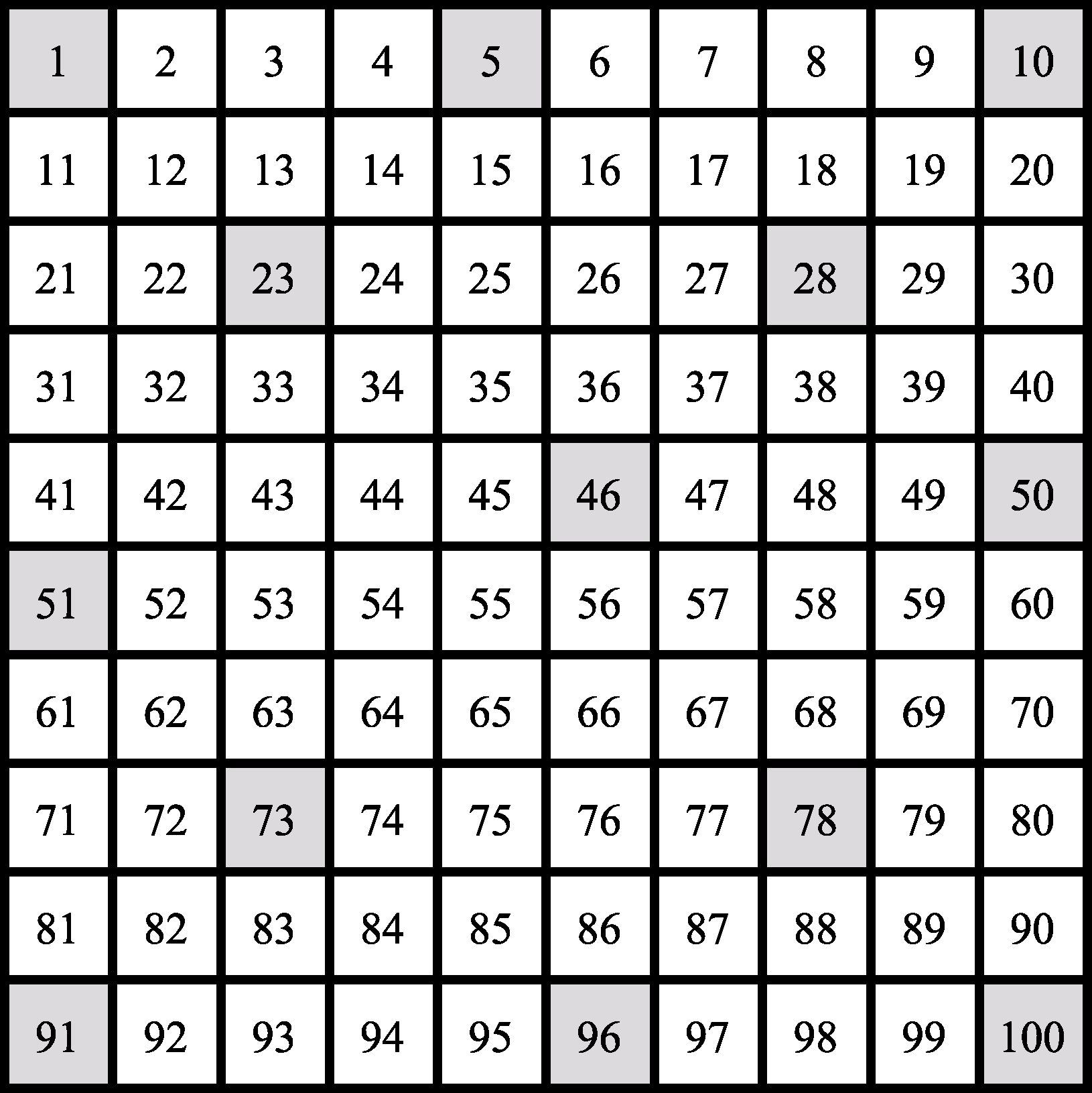
Fig. 1 Layout of the long-term sample plot in the mixed evergreen and deciduous broadleaf forest comprehensive observation site (SNFZH01ABC_01) and the permanent sample plot in the subalpine coniferous forest auxiliary observation site (SNFFZ01ABC_01) of Shennongjia Station. The size of the two sample plots was 100 m × 100 m, and each was divided into 100 sub-sample plots of 10 m × 10 m. The sub-sample plots were numbered from 1 to 100. Shrub layer and herb layer surveys were conducted in 13 sub-sample plots marked in gray.
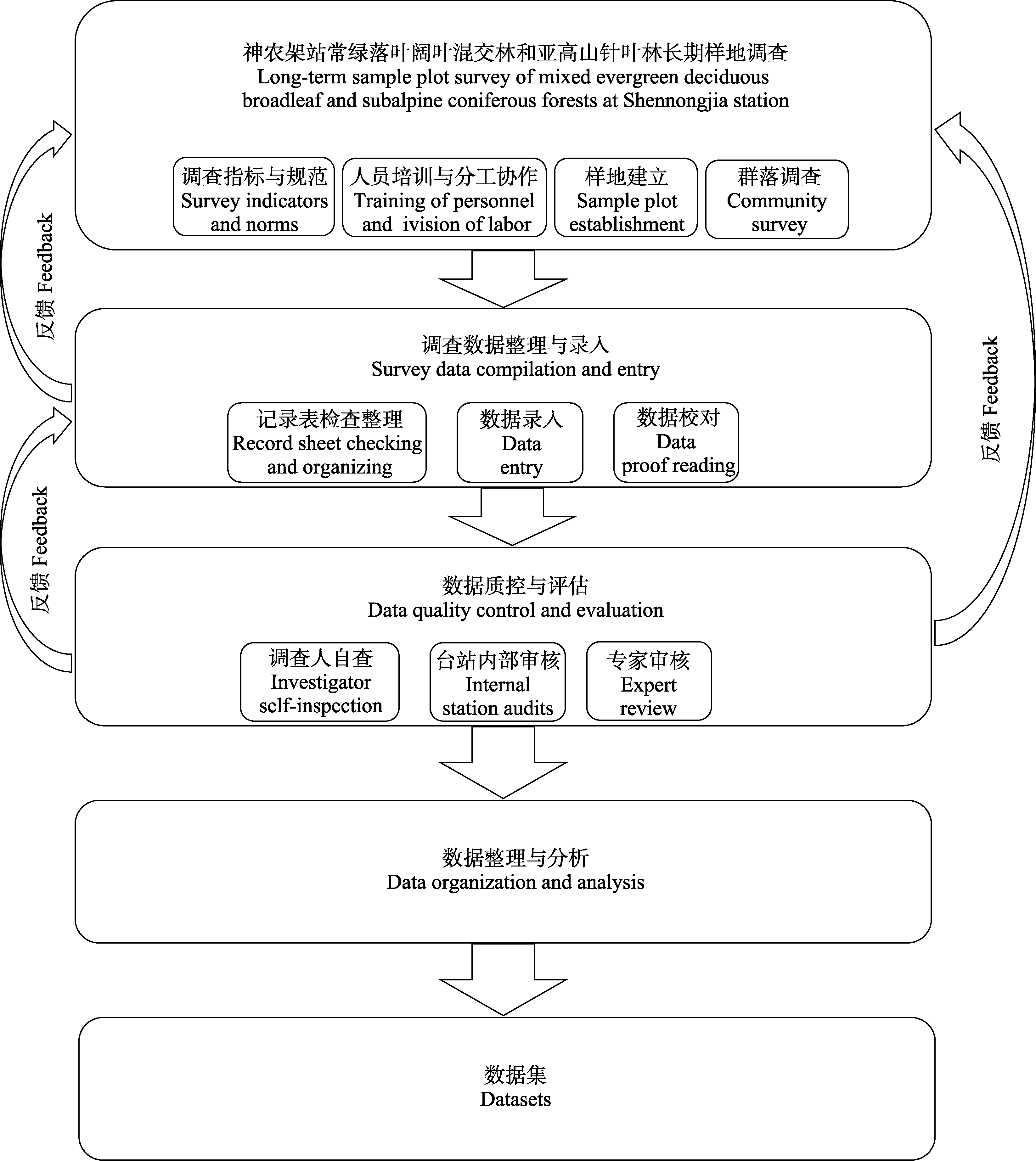
Fig. 2 Dataset construction process.
| 字段名称 Field name | 字段类型Field type | 字段长度 Field length | 保留小数 Decimal places | 字段单位 Field unit | 字段定义 Field definition | 数据记录(示例) Data record (example) |
|---|---|---|---|---|---|---|
| 序号 No. | 数值型 Numeric | 10 | 0 | 当年数据的顺序编 Sequential numbering of current year data | 1 | |
| 生态站代码 Site code | 字符型 Character | 3 | CERN统一的生态站的代码1) CERN harmonized codes for ecological stations1) | SNF | ||
| 年 Year | 字符型 Character | 4 | 采集数据的年份 Year of data collection | 2010 | ||
| 月 Month | 字符型 Character | 2 | 调查、采样月份 Month of survey, sampling | 08 | ||
| 样地代码 Plot code | 字符型 Character | 13 | CERN统一的样地代码2) CERN harmonized sample code2) | SNFZH01ABC_01 | ||
| 样地名称 Plot name | 字符型 Character | 100 | 根据CERN统一规则命名的样地名称, 同一样地在不同年份、不同数据表中只能有唯一一个名称 Names of plots according to CERN harmonized rules, with only one name for the same plot in different years and in different data tables | 神农架站常绿落叶阔叶混交林综合观测场长期样地 The long-term sample plot of comprehensive observation site for the mixed evergreen and deciduous broadleaf forest of Shennongjia Station | ||
| 样地类别 Plot type | 字符型 Character | 20 | 根据CERN统一的样地类型, 分为3类: 综合观测场、辅助观测场、站区调查点 According to CERN’s standardized sample site types, there are three types of sites: comprehensive observation sites, auxiliary observation sites, and station survey sites | 综合观测场 Comprehensive observation site | ||
| II级样方号 2nd level plot No. | 字符型 Character | 10 | 每个样地固定的10 m × 10 m的II级样方编号 Fixed 10 m × 10 m class II sample plots numbered in each sample plot | 1 | ||
| 样方面积 2nd level plot size | 字符型 Character | 20 | m × m | 观测样方的面积 Area of the observation sample | 10 × 10 | |
| 植物种名 Common name_plant | 字符型 Character | 20 | 植物种中文名 Chinese name of plant species | 血皮槭 | ||
| 植物拉丁名 Scientific name_plant | 字符型 Character | 50 | 植物种拉丁名 Latin name of plant species | Acer griseum | ||
| 株数 Count | 数值型 Numeric | 10 | 0 | 株·样方-1 inds.·quadrat-1 | 样方中乔木植物的总株数 Total number of trees in the sample plot | 3.0 |
| 平均胸径 Mean diameter at breast height | 数值型 Numeric | 10 | 2 | cm | 植株的平均胸径 Mean diameter at breast height of plants | 15.20 |
| 平均高度 Mean height | 数值型 Numeric | 10 | 1 | m | 植株的平均高度 Mean height of plants | 13.00 |
| 盖度 Coverage | 数值型 Numeric | 10 | 1 | % | 该植物地上部分的垂直投影面积占样地面积的百分比 Vertical projected area of the above-ground part of the plant as a percentage of the sample plot area | 4.20 |
| 生活型 Life form | 字符型 Character | 40 | 植物长期适应综合生长条件而在外貌上反映出来的特征 Characteristics reflected in the external appearance of a plant as a result of long-term adaptation to integrated growth conditions | 落叶阔叶中乔木 Deciduous broadleaf medium tree | ||
| 备注 Remark | 字符型 Character | 400 | 针对本行数据的说明3) Remarks of data for this row3) |
Table 3 Summary of data sheet on plant species composition in tree layer of forest community and data record examples of Shennongjia Station
| 字段名称 Field name | 字段类型Field type | 字段长度 Field length | 保留小数 Decimal places | 字段单位 Field unit | 字段定义 Field definition | 数据记录(示例) Data record (example) |
|---|---|---|---|---|---|---|
| 序号 No. | 数值型 Numeric | 10 | 0 | 当年数据的顺序编 Sequential numbering of current year data | 1 | |
| 生态站代码 Site code | 字符型 Character | 3 | CERN统一的生态站的代码1) CERN harmonized codes for ecological stations1) | SNF | ||
| 年 Year | 字符型 Character | 4 | 采集数据的年份 Year of data collection | 2010 | ||
| 月 Month | 字符型 Character | 2 | 调查、采样月份 Month of survey, sampling | 08 | ||
| 样地代码 Plot code | 字符型 Character | 13 | CERN统一的样地代码2) CERN harmonized sample code2) | SNFZH01ABC_01 | ||
| 样地名称 Plot name | 字符型 Character | 100 | 根据CERN统一规则命名的样地名称, 同一样地在不同年份、不同数据表中只能有唯一一个名称 Names of plots according to CERN harmonized rules, with only one name for the same plot in different years and in different data tables | 神农架站常绿落叶阔叶混交林综合观测场长期样地 The long-term sample plot of comprehensive observation site for the mixed evergreen and deciduous broadleaf forest of Shennongjia Station | ||
| 样地类别 Plot type | 字符型 Character | 20 | 根据CERN统一的样地类型, 分为3类: 综合观测场、辅助观测场、站区调查点 According to CERN’s standardized sample site types, there are three types of sites: comprehensive observation sites, auxiliary observation sites, and station survey sites | 综合观测场 Comprehensive observation site | ||
| II级样方号 2nd level plot No. | 字符型 Character | 10 | 每个样地固定的10 m × 10 m的II级样方编号 Fixed 10 m × 10 m class II sample plots numbered in each sample plot | 1 | ||
| 样方面积 2nd level plot size | 字符型 Character | 20 | m × m | 观测样方的面积 Area of the observation sample | 10 × 10 | |
| 植物种名 Common name_plant | 字符型 Character | 20 | 植物种中文名 Chinese name of plant species | 血皮槭 | ||
| 植物拉丁名 Scientific name_plant | 字符型 Character | 50 | 植物种拉丁名 Latin name of plant species | Acer griseum | ||
| 株数 Count | 数值型 Numeric | 10 | 0 | 株·样方-1 inds.·quadrat-1 | 样方中乔木植物的总株数 Total number of trees in the sample plot | 3.0 |
| 平均胸径 Mean diameter at breast height | 数值型 Numeric | 10 | 2 | cm | 植株的平均胸径 Mean diameter at breast height of plants | 15.20 |
| 平均高度 Mean height | 数值型 Numeric | 10 | 1 | m | 植株的平均高度 Mean height of plants | 13.00 |
| 盖度 Coverage | 数值型 Numeric | 10 | 1 | % | 该植物地上部分的垂直投影面积占样地面积的百分比 Vertical projected area of the above-ground part of the plant as a percentage of the sample plot area | 4.20 |
| 生活型 Life form | 字符型 Character | 40 | 植物长期适应综合生长条件而在外貌上反映出来的特征 Characteristics reflected in the external appearance of a plant as a result of long-term adaptation to integrated growth conditions | 落叶阔叶中乔木 Deciduous broadleaf medium tree | ||
| 备注 Remark | 字符型 Character | 400 | 针对本行数据的说明3) Remarks of data for this row3) |
| 字段名称 Field name | 字段类型 Field type | 字段长度 Field length | 保留小数 Decimal places | 字段单位 Field unit | 字段定义 Field definition | 数据记录(示例) Data record (example) |
|---|---|---|---|---|---|---|
| 序号 No. | 数值型 Numeric | 10 | 0 | 当年数据的顺序编号 Sequential numbering of current year data | 1 | |
| 生态站代码 Site code | 字符型 Character | 3 | CERN统一的生态站的代码1) CERN harmonized codes for ecological stations1) | SNF | ||
| 年 Year | 字符型 Character | 4 | 采集数据的年份 Year of data collection | 2010 | ||
| 月 Month | 字符型 Character | 2 | 调查、采样月份 Month of data collection | 08 | ||
| 日 Day | 字符型 Character | 2 | 调查的起始日期 Start date of the survey | 08 | ||
| 样地代码 Plot code | 字符型 Character | 13 | CERN统一的样地代码2) CERN harmonized sample code2) | SNFZH01ABC_01 | ||
| 样地名称 Plot name | 字符型 Character | 100 | 根据CERN统一规则命名的样地名称, 同一样地在不同年份、不同数据表中只能有唯一一个名称 Names of plots according to CERN harmonized rules, with only one name for the same plot in different years and in different data tables | 神农架站常绿落叶阔叶混交林综合观测场长期样地 The long-term sample plot of comprehensive observation site for the mixed evergreen and deciduous broadleaf forest of Shennongjia Station | ||
| 样地类别 Plot type | 字符型 Character | 20 | 根据CERN统一的样地类型, 分为3类: 综合观测场、辅助观测场、站区调查点 According to CERN’s standardized sample site types, there are three types of sites: comprehensive observation sites, auxiliary observation sites, and station survey sites | 综合观测场 Comprehensive observation site | ||
| II级样方号 2nd level plot No. | 字符型 Character | 10 | 每个样地固定的10 m × 10 m的II级样方编号 Fixed 10 m × 10 m class II sample plots numbered in each sample plot | 1 | ||
| 样方面积 2nd level plot size | 字符型 Character | 20 | m × m | 观测样方的面积 Area of the observation sample | 10 × 10 | |
| 植物中文名 Common name_plant | 字符型 Character | 20 | 植物种中文名 Chinese name of plant species | 蓪梗花 | ||
| 植物拉丁名 Scientific name_plant | 字符型 Character | 50 | 植物种拉丁名 Latin name of plant species | Abelia uniflora | ||
| 株(丛)数 Count | 数值型 Numeric | 10 | 0 | 株(丛)·样方-1 inds.·quadrat-1 | 样方中灌木植物的总株数或总丛数 Total number of shrub plants or clumps in the sample plots | 13 |
| 平均基径 Mean basal diameter | 数值型 Numeric | 10 | 1 | cm | 植株的平均基径 Mean basal diameter of plants | 0.5 |
| 平均高度 Mean height | 数值型 Numeric | 10 | 2 | m | 植株的平均高度 Mean height of plants | 0.6 |
| 盖度 Coverage | 数值型 Numeric | 10 | 1 | % | 该植物地上部分的垂直投影面积占样地面积的百分比 Vertical projected area of the above-ground part of the plant as a percentage of the sample plot area | 0.4 |
| 生活型 Life form | 字符型 Character | 40 | 植物长期适应综合生长条件而在外貌上反映出来的特征 Characteristics reflected in the external appearance of a plant as a result of long-term adaptation to integrated growth conditions | 落叶阔叶大灌木 Deciduous broadleaf large shrub | ||
| 备注 Remark | 字符型 Character | 400 | 针对本行数据的说明3) Remarks of data for this row3) |
Table 4 Summary of data sheet on plant species composition in shrub layer of forest community and data record examples of Shennongjia Station
| 字段名称 Field name | 字段类型 Field type | 字段长度 Field length | 保留小数 Decimal places | 字段单位 Field unit | 字段定义 Field definition | 数据记录(示例) Data record (example) |
|---|---|---|---|---|---|---|
| 序号 No. | 数值型 Numeric | 10 | 0 | 当年数据的顺序编号 Sequential numbering of current year data | 1 | |
| 生态站代码 Site code | 字符型 Character | 3 | CERN统一的生态站的代码1) CERN harmonized codes for ecological stations1) | SNF | ||
| 年 Year | 字符型 Character | 4 | 采集数据的年份 Year of data collection | 2010 | ||
| 月 Month | 字符型 Character | 2 | 调查、采样月份 Month of data collection | 08 | ||
| 日 Day | 字符型 Character | 2 | 调查的起始日期 Start date of the survey | 08 | ||
| 样地代码 Plot code | 字符型 Character | 13 | CERN统一的样地代码2) CERN harmonized sample code2) | SNFZH01ABC_01 | ||
| 样地名称 Plot name | 字符型 Character | 100 | 根据CERN统一规则命名的样地名称, 同一样地在不同年份、不同数据表中只能有唯一一个名称 Names of plots according to CERN harmonized rules, with only one name for the same plot in different years and in different data tables | 神农架站常绿落叶阔叶混交林综合观测场长期样地 The long-term sample plot of comprehensive observation site for the mixed evergreen and deciduous broadleaf forest of Shennongjia Station | ||
| 样地类别 Plot type | 字符型 Character | 20 | 根据CERN统一的样地类型, 分为3类: 综合观测场、辅助观测场、站区调查点 According to CERN’s standardized sample site types, there are three types of sites: comprehensive observation sites, auxiliary observation sites, and station survey sites | 综合观测场 Comprehensive observation site | ||
| II级样方号 2nd level plot No. | 字符型 Character | 10 | 每个样地固定的10 m × 10 m的II级样方编号 Fixed 10 m × 10 m class II sample plots numbered in each sample plot | 1 | ||
| 样方面积 2nd level plot size | 字符型 Character | 20 | m × m | 观测样方的面积 Area of the observation sample | 10 × 10 | |
| 植物中文名 Common name_plant | 字符型 Character | 20 | 植物种中文名 Chinese name of plant species | 蓪梗花 | ||
| 植物拉丁名 Scientific name_plant | 字符型 Character | 50 | 植物种拉丁名 Latin name of plant species | Abelia uniflora | ||
| 株(丛)数 Count | 数值型 Numeric | 10 | 0 | 株(丛)·样方-1 inds.·quadrat-1 | 样方中灌木植物的总株数或总丛数 Total number of shrub plants or clumps in the sample plots | 13 |
| 平均基径 Mean basal diameter | 数值型 Numeric | 10 | 1 | cm | 植株的平均基径 Mean basal diameter of plants | 0.5 |
| 平均高度 Mean height | 数值型 Numeric | 10 | 2 | m | 植株的平均高度 Mean height of plants | 0.6 |
| 盖度 Coverage | 数值型 Numeric | 10 | 1 | % | 该植物地上部分的垂直投影面积占样地面积的百分比 Vertical projected area of the above-ground part of the plant as a percentage of the sample plot area | 0.4 |
| 生活型 Life form | 字符型 Character | 40 | 植物长期适应综合生长条件而在外貌上反映出来的特征 Characteristics reflected in the external appearance of a plant as a result of long-term adaptation to integrated growth conditions | 落叶阔叶大灌木 Deciduous broadleaf large shrub | ||
| 备注 Remark | 字符型 Character | 400 | 针对本行数据的说明3) Remarks of data for this row3) |
| 字段名称 Field name | 字段类型 Field type | 字段长度 Field length | 保留小数 Decimal places | 字段单位 Field unit | 字段定义 Field definition | 数据记录(示例) Data record (example) |
|---|---|---|---|---|---|---|
| 序号 No. | 数值型 Numeric | 10 | 0 | 当年数据的顺序编号 Sequential numbering of current year data | 6 | |
| 生态站代码 Site code | 字符型 Character | 3 | CERN统一的生态站的代码1) CERN harmonized codes for ecological stations1) | SNF | ||
| 年 Year | 字符型 Character | 4 | 采集数据的年份 Year of data collection | 2010 | ||
| 月 Month | 字符型 Character | 2 | 调查、采样月份 Month of survey, sampling | 08 | ||
| 日 Day | 字符型 Character | 2 | 调查的起始日期 Start date of the survey | 08 | ||
| 样地代码 Plot code | 字符型 Character | 13 | CERN统一的样地代码2) CERN harmonized sample code2) | SNFZH01ABC_01 | ||
| 样地名称 Plot name | 字符型 Character | 100 | 根据CERN统一规则命名的样地名称, 同一样地在不同年份、不同数据表中只能有唯一一个名称 Names of plots according to CERN harmonized rules, with only one name for the same plot in different years and in different data tables | 神农架站常绿落叶阔叶混交林综合观测场长期样地 The long-term sample plot of comprehensive observation site for the mixed evergreen and deciduous broadleaf forest of Shennongjia Station | ||
| 样地类别 Plot type | 字符型 Character | 20 | 根据CERN统一的样地类型, 分为3类: 综合观测场、辅助观测场、站区调查点 According to CERN’s standardized sample site types, there are three types of sites: comprehensive observation sites, auxiliary observation sites, and station survey sites | 综合观测场 Comprehensive observation site | ||
| II级样方号 2nd level plot No. | 字符型 Character | 10 | 每个样地固定的10 m × 10 m的II级样方编号 Fixed 10 m × 10 m class II sample plots numbered in each sample plot | 1 | ||
| 样方号 Quadrat No. | 字符型 Character | 10 | 观测/采样时的观测样方顺序号或固定编号 Sequential or fixed number of the observation sample at the time of observation/sampling | 1 | ||
| 样方面积 Quadrat size | 字符型 Character | 20 | m × m | 观测样方的面积 Area of the observation sample | 10 × 10 | |
| 植物种名 Common name_plant | 字符型 Character | 20 | 植物种中文名 Chinese name of plant species | 藏薹草 | ||
| 植物拉丁名 Scientific name_plant | 字符型 Character | 50 | 植物种拉丁名 Latin name of plant species | Carex thibetica | ||
| 株(丛)数 Count | 数值型 Numeric | 10 | 0 | 株(丛)·样方-1 inds.·quadrat-1 | 样方中草本植物的总株数或总丛数 Total number of herbaceous plants or clumps in the sample plot | 16.00 |
| 平均高度 Mean height | 数值型 Numeric | 10 | 1 | cm | 植株的平均高度 Average height of plants | 40.00 |
| 盖度 Coverage | 数值型 Numeric | 10 | 1 | % | 该植物地上部分的垂直投影面积占样地面积的百分比 Vertical projected area of the above-ground part of the plant as a percentage of the sample plot area | 2.0 |
| 生活型 Life form | 字符型 Character | 40 | 植物长期适应综合生长条件而在外貌上反映出来的特征 Characteristics reflected in the external appearance of a plant as a result of long-term adaptation to integrated growth conditions | 多年生密丛薹草及嵩草 Perennial densely tufted Carex and Kobresia | ||
| 备注 Remark | 字符型 Character | 400 | 针对本行数据的说明3) Remarks of data for this row3) |
Table 5 Summary of data sheet on plant species composition in herb layer of forest community and data record examples of Shennongjia Station
| 字段名称 Field name | 字段类型 Field type | 字段长度 Field length | 保留小数 Decimal places | 字段单位 Field unit | 字段定义 Field definition | 数据记录(示例) Data record (example) |
|---|---|---|---|---|---|---|
| 序号 No. | 数值型 Numeric | 10 | 0 | 当年数据的顺序编号 Sequential numbering of current year data | 6 | |
| 生态站代码 Site code | 字符型 Character | 3 | CERN统一的生态站的代码1) CERN harmonized codes for ecological stations1) | SNF | ||
| 年 Year | 字符型 Character | 4 | 采集数据的年份 Year of data collection | 2010 | ||
| 月 Month | 字符型 Character | 2 | 调查、采样月份 Month of survey, sampling | 08 | ||
| 日 Day | 字符型 Character | 2 | 调查的起始日期 Start date of the survey | 08 | ||
| 样地代码 Plot code | 字符型 Character | 13 | CERN统一的样地代码2) CERN harmonized sample code2) | SNFZH01ABC_01 | ||
| 样地名称 Plot name | 字符型 Character | 100 | 根据CERN统一规则命名的样地名称, 同一样地在不同年份、不同数据表中只能有唯一一个名称 Names of plots according to CERN harmonized rules, with only one name for the same plot in different years and in different data tables | 神农架站常绿落叶阔叶混交林综合观测场长期样地 The long-term sample plot of comprehensive observation site for the mixed evergreen and deciduous broadleaf forest of Shennongjia Station | ||
| 样地类别 Plot type | 字符型 Character | 20 | 根据CERN统一的样地类型, 分为3类: 综合观测场、辅助观测场、站区调查点 According to CERN’s standardized sample site types, there are three types of sites: comprehensive observation sites, auxiliary observation sites, and station survey sites | 综合观测场 Comprehensive observation site | ||
| II级样方号 2nd level plot No. | 字符型 Character | 10 | 每个样地固定的10 m × 10 m的II级样方编号 Fixed 10 m × 10 m class II sample plots numbered in each sample plot | 1 | ||
| 样方号 Quadrat No. | 字符型 Character | 10 | 观测/采样时的观测样方顺序号或固定编号 Sequential or fixed number of the observation sample at the time of observation/sampling | 1 | ||
| 样方面积 Quadrat size | 字符型 Character | 20 | m × m | 观测样方的面积 Area of the observation sample | 10 × 10 | |
| 植物种名 Common name_plant | 字符型 Character | 20 | 植物种中文名 Chinese name of plant species | 藏薹草 | ||
| 植物拉丁名 Scientific name_plant | 字符型 Character | 50 | 植物种拉丁名 Latin name of plant species | Carex thibetica | ||
| 株(丛)数 Count | 数值型 Numeric | 10 | 0 | 株(丛)·样方-1 inds.·quadrat-1 | 样方中草本植物的总株数或总丛数 Total number of herbaceous plants or clumps in the sample plot | 16.00 |
| 平均高度 Mean height | 数值型 Numeric | 10 | 1 | cm | 植株的平均高度 Average height of plants | 40.00 |
| 盖度 Coverage | 数值型 Numeric | 10 | 1 | % | 该植物地上部分的垂直投影面积占样地面积的百分比 Vertical projected area of the above-ground part of the plant as a percentage of the sample plot area | 2.0 |
| 生活型 Life form | 字符型 Character | 40 | 植物长期适应综合生长条件而在外貌上反映出来的特征 Characteristics reflected in the external appearance of a plant as a result of long-term adaptation to integrated growth conditions | 多年生密丛薹草及嵩草 Perennial densely tufted Carex and Kobresia | ||
| 备注 Remark | 字符型 Character | 400 | 针对本行数据的说明3) Remarks of data for this row3) |
| 字段名称 Field Name | 字段类型 Field type | 字段长度 Field length | 保留小数 Decimal places | 字段单位 Field unit | 字段定义 Field definition | 数据记录(示例) Data record (example) |
|---|---|---|---|---|---|---|
| 序号 No. | 数值型 Numeric | 10 | 0 | 当年数据的顺序编号 Sequential numbering of current year data | 106 | |
| 生态站代码 Site code | 字符型 Character | 3 | CERN统一的生态站的代码1) CERN harmonized codes for ecological stations1) | SNF | ||
| 年 Year | 字符型 Character | 4 | 采集数据的年份 Year of data collection | 2010 | ||
| 月 Month | 字符型 Character | 2 | 调查、采样月份 Month of data collection | 08 | ||
| 样地代码 Plot code | 字符型 Character | 13 | CERN统一的样地代码2) CERN harmonized sample code2) | SNFFZ01ABC_01 | ||
| 样地名称 Plot name | 字符型 Character | 100 | 根据CERN统一规则命名的样地名称, 同一样地在不同年份、不同数据表中只能有唯一一个名称 Names of plots according to CERN harmonized rules, with only one name for the same plot in different years and in different data tables | 神农架站亚高山针叶林辅助观测场长期样地 The long-term sample plot of auxiliary observation site for the subalpine coniferous forest of Shennongjia Station | ||
| 样地类别 Plot type | 字符型 Character | 20 | 根据CERN统一的样地类型, 分为3类: 综合观测场、辅助观测场、站区调查点 According to CERN’s standardized sample site types, there are three types of sites: comprehensive observation sites, auxiliary observation sites, and station survey sites | 辅助观测场 Auxiliary observation sites | ||
| II级样方号 2nd level plot No. | 字符型 Character | 10 | 每个样地固定的10 m × 10 m的II级样方编号 Fixed 10 m × 10 m class II sample plots numbered in each sample plot | 6 | ||
| 样方面积 2nd level plot size | 字符型 Character | 20 | m × m | 观测样方的面积 Area of the observation sample | 10 × 10 | |
| 优势种 Dominant species | 字符型 Character | 40 | 群落乔木层中在数量、体积上最大,对生境 影响最大的单个或多个植物种类 The single or multiple plant species in the tree layer of the community that is the largest in number, size, and impact on habitat | 巴山冷杉 Abies fargesii | ||
| 植物种数 Number of species per quadrat | 数值型 Numeric | 10 | 0 | 样方中所观测到的植物种总数 Total number of plant species observed in the samples | 10 | |
| 密度 Density | 数值型 Numeric | 10 | 0 | 株.·hm-2 inds.·hm-2 | 单位面积上, 植物种的株数 Number of plant species per unit area | 1 900 |
| 优势种平均高度 Mean height_dominant species | 数值型 Numeric | 10 | 1 | m | 优势种植物的平均高度 Mean height of dominant species | 22.50 |
| 郁闭度 Canopy density | 数值型 Numeric | 10 | 1 | % | 林冠层在地面的投影面积与林地面积之比 Ratio of the projected area of the forest canopy on the ground to the area of the forest floor | 84.6 |
| 备注 Remark | 字符型 Character | 400 | 针对本行数据的说明3) Remarks of data for this row3) |
Table 6 Summary of data sheet on community characteristics in tree layer of forest community and data record examples of Shennongjia Station
| 字段名称 Field Name | 字段类型 Field type | 字段长度 Field length | 保留小数 Decimal places | 字段单位 Field unit | 字段定义 Field definition | 数据记录(示例) Data record (example) |
|---|---|---|---|---|---|---|
| 序号 No. | 数值型 Numeric | 10 | 0 | 当年数据的顺序编号 Sequential numbering of current year data | 106 | |
| 生态站代码 Site code | 字符型 Character | 3 | CERN统一的生态站的代码1) CERN harmonized codes for ecological stations1) | SNF | ||
| 年 Year | 字符型 Character | 4 | 采集数据的年份 Year of data collection | 2010 | ||
| 月 Month | 字符型 Character | 2 | 调查、采样月份 Month of data collection | 08 | ||
| 样地代码 Plot code | 字符型 Character | 13 | CERN统一的样地代码2) CERN harmonized sample code2) | SNFFZ01ABC_01 | ||
| 样地名称 Plot name | 字符型 Character | 100 | 根据CERN统一规则命名的样地名称, 同一样地在不同年份、不同数据表中只能有唯一一个名称 Names of plots according to CERN harmonized rules, with only one name for the same plot in different years and in different data tables | 神农架站亚高山针叶林辅助观测场长期样地 The long-term sample plot of auxiliary observation site for the subalpine coniferous forest of Shennongjia Station | ||
| 样地类别 Plot type | 字符型 Character | 20 | 根据CERN统一的样地类型, 分为3类: 综合观测场、辅助观测场、站区调查点 According to CERN’s standardized sample site types, there are three types of sites: comprehensive observation sites, auxiliary observation sites, and station survey sites | 辅助观测场 Auxiliary observation sites | ||
| II级样方号 2nd level plot No. | 字符型 Character | 10 | 每个样地固定的10 m × 10 m的II级样方编号 Fixed 10 m × 10 m class II sample plots numbered in each sample plot | 6 | ||
| 样方面积 2nd level plot size | 字符型 Character | 20 | m × m | 观测样方的面积 Area of the observation sample | 10 × 10 | |
| 优势种 Dominant species | 字符型 Character | 40 | 群落乔木层中在数量、体积上最大,对生境 影响最大的单个或多个植物种类 The single or multiple plant species in the tree layer of the community that is the largest in number, size, and impact on habitat | 巴山冷杉 Abies fargesii | ||
| 植物种数 Number of species per quadrat | 数值型 Numeric | 10 | 0 | 样方中所观测到的植物种总数 Total number of plant species observed in the samples | 10 | |
| 密度 Density | 数值型 Numeric | 10 | 0 | 株.·hm-2 inds.·hm-2 | 单位面积上, 植物种的株数 Number of plant species per unit area | 1 900 |
| 优势种平均高度 Mean height_dominant species | 数值型 Numeric | 10 | 1 | m | 优势种植物的平均高度 Mean height of dominant species | 22.50 |
| 郁闭度 Canopy density | 数值型 Numeric | 10 | 1 | % | 林冠层在地面的投影面积与林地面积之比 Ratio of the projected area of the forest canopy on the ground to the area of the forest floor | 84.6 |
| 备注 Remark | 字符型 Character | 400 | 针对本行数据的说明3) Remarks of data for this row3) |
| 字段名称 Field name | 字段类型 Field type | 字段长度Field length | 保留小数Decimal places | 字段单位 Field unit | 字段定义 Field definition | 数据记录(示例) Data record (example) |
|---|---|---|---|---|---|---|
| 序号 No. | 数值型 Numeric | 10 | 0 | 当年数据的顺序编号 Sequential numbering of current year data | 17 | |
| 生态站代码 Site code | 字符型 Character | 3 | CERN统一的生态站的代码1) CERN harmonized codes for ecological stations1) | SNF | ||
| 年 Year | 字符型 Character | 4 | 采集数据的年份 Year of data collection | 2010 | ||
| 月 Month | 字符型 Character | 2 | 调查、采样月份 Month of data collection | 08 | ||
| 样地代码 Plot code | 字符型 Character | 13 | CERN统一的样地代码2) CERN harmonized sample code2) | SNFFZ01ABC_01 | ||
| 样地名称 Plot name | 字符型 Character | 100 | 根据CERN统一规则命名的样地名称, 同一样地在不同年份、不同数据表中只能有唯一一个名称 Names of plots according to CERN harmonized rules, with only one name for the same plot in different years and in different data tables | 神农架站亚高山针叶林辅助观测场长期样地 The long-term sample plot of auxiliary observation site for the subalpine coniferous forest of Shennongjia Station | ||
| 样地类别 Plot type | 字符型 Character | 20 | 根据CERN统一的样地类型, 分为3类: 综合观测场、辅助观测场、站区调查点 According to CERN’s standardized sample site types, there are three types of sites: comprehensive observation sites, auxiliary observation sites, and station survey sites | 辅助观测场 Auxiliary observation sites | ||
| II级样方号 2nd level plot No. | 字符型 Character | 10 | 每个样地固定的10 m × 10 m的II级样方编号 Fixed 10 m × 10 m class II sample plots numbered in each sample plot | 23 | ||
| 样方面积 2nd level plot size | 字符型 Character | 20 | m × m | 观测样方的面积 Area of the observation sample | 10 × 10 | |
| 优势种 Dominant species | 字符型 Character | 40 | 群落灌木层中在数量、体积上最大,对生境影响最大的单个或多个植物种类 The single or multiple plant species in the shrub layer of the community that is the largest in number, size, and impact on the habitat | 野梦花 Daphne tangutica var. wilsonii | ||
| 植物种数 Number of species per quadrat | 数值型 Numeric | 10 | 0 | 样方中所观测到的植物种总数 Total number of plant species observed in the samples | 17 | |
| 密度 Density | 数值型 Numeric | 10 | 0 | 株(丛)·hm-2 inds.·hm-2 | 单位面积上, 植物种的株数或丛数 Number of plants or clumps of plant species per unit area | 24 500 |
| 优势种平均高度 Mean height_dominant species | 数值型 Numeric | 10 | 2 | m | 优势种植物的平均高度 Average height of dominant species | 0.80 |
| 总盖度 Total vegetation coverage | 数值型 Numeric | 10 | 1 | % | 全部灌木植物植冠在一定地面所形成的投影面积占地表面积的百分比 Percentage of surface area covered by the projected area of all shrub plant crowns on a given ground surface | 30.0 |
| 备注 Remark | 字符型 Character | 400 | 针对本行数据的说明3) Remarks of data for this row3) |
Table 7 Summary of data sheet on community characteristics in shrub layer of forest community and data record examples of Shennongjia Station
| 字段名称 Field name | 字段类型 Field type | 字段长度Field length | 保留小数Decimal places | 字段单位 Field unit | 字段定义 Field definition | 数据记录(示例) Data record (example) |
|---|---|---|---|---|---|---|
| 序号 No. | 数值型 Numeric | 10 | 0 | 当年数据的顺序编号 Sequential numbering of current year data | 17 | |
| 生态站代码 Site code | 字符型 Character | 3 | CERN统一的生态站的代码1) CERN harmonized codes for ecological stations1) | SNF | ||
| 年 Year | 字符型 Character | 4 | 采集数据的年份 Year of data collection | 2010 | ||
| 月 Month | 字符型 Character | 2 | 调查、采样月份 Month of data collection | 08 | ||
| 样地代码 Plot code | 字符型 Character | 13 | CERN统一的样地代码2) CERN harmonized sample code2) | SNFFZ01ABC_01 | ||
| 样地名称 Plot name | 字符型 Character | 100 | 根据CERN统一规则命名的样地名称, 同一样地在不同年份、不同数据表中只能有唯一一个名称 Names of plots according to CERN harmonized rules, with only one name for the same plot in different years and in different data tables | 神农架站亚高山针叶林辅助观测场长期样地 The long-term sample plot of auxiliary observation site for the subalpine coniferous forest of Shennongjia Station | ||
| 样地类别 Plot type | 字符型 Character | 20 | 根据CERN统一的样地类型, 分为3类: 综合观测场、辅助观测场、站区调查点 According to CERN’s standardized sample site types, there are three types of sites: comprehensive observation sites, auxiliary observation sites, and station survey sites | 辅助观测场 Auxiliary observation sites | ||
| II级样方号 2nd level plot No. | 字符型 Character | 10 | 每个样地固定的10 m × 10 m的II级样方编号 Fixed 10 m × 10 m class II sample plots numbered in each sample plot | 23 | ||
| 样方面积 2nd level plot size | 字符型 Character | 20 | m × m | 观测样方的面积 Area of the observation sample | 10 × 10 | |
| 优势种 Dominant species | 字符型 Character | 40 | 群落灌木层中在数量、体积上最大,对生境影响最大的单个或多个植物种类 The single or multiple plant species in the shrub layer of the community that is the largest in number, size, and impact on the habitat | 野梦花 Daphne tangutica var. wilsonii | ||
| 植物种数 Number of species per quadrat | 数值型 Numeric | 10 | 0 | 样方中所观测到的植物种总数 Total number of plant species observed in the samples | 17 | |
| 密度 Density | 数值型 Numeric | 10 | 0 | 株(丛)·hm-2 inds.·hm-2 | 单位面积上, 植物种的株数或丛数 Number of plants or clumps of plant species per unit area | 24 500 |
| 优势种平均高度 Mean height_dominant species | 数值型 Numeric | 10 | 2 | m | 优势种植物的平均高度 Average height of dominant species | 0.80 |
| 总盖度 Total vegetation coverage | 数值型 Numeric | 10 | 1 | % | 全部灌木植物植冠在一定地面所形成的投影面积占地表面积的百分比 Percentage of surface area covered by the projected area of all shrub plant crowns on a given ground surface | 30.0 |
| 备注 Remark | 字符型 Character | 400 | 针对本行数据的说明3) Remarks of data for this row3) |
| 字段名称 Field name | 字段类型Field type | 字段长度Field length | 保留小数Decimal places | 字段单位Field unit | 字段定义 Field definition | 数据记录(示例) Data record (example) |
|---|---|---|---|---|---|---|
| 序号 No. | 数值型 Numeric | 10 | 0 | 当年数据的顺序编号 Sequential numbering of current year data | 14 | |
| 生态站代码 Site code | 字符型 Character | 3 | CERN统一的生态站的代码1) CERN harmonized codes for ecological stations1) | SNF | ||
| 年 Year | 字符型 Character | 4 | 采集数据的年份 Year of data collection | 2010 | ||
| 月 Month | 字符型 Character | 2 | 调查、采样月份 Month of data collection | 08 | ||
| 样地代码 Plot code | 字符型 Character | 13 | CERN统一的样地代码2) CERN harmonized sample code2) | SNFFZ01ABC_01 | ||
| 样地名称 Plot name | 字符型 Character | 100 | 根据CERN统一规则命名的样地名称, 同一样地在不同年份、不同数据表中只能有唯一一个名称 Names of plots according to CERN harmonized rules, with only one name for the same plot in different years and in different data tables | 神农架站亚高山针叶林辅助观测场长期样地 The long-term sample plot of auxiliary observation site for the subalpine coniferous forest of Shennongjia Station | ||
| 样地类别 Plot type | 字符型 Character | 20 | 根据CERN统一的样地类型, 分为3类: 综合观测场、辅助观测场、站区调查点 According to CERN’s standardized sample site types, there are three types of sites: comprehensive observation sites, auxiliary observation sites, and station survey sites | 辅助观测场 Auxiliary observation sites | ||
| II级样方号 2nd level plot No. | 字符型 Character | 10 | 每个样地固定的10 m × 10 m的II级样方编号 | 1 | ||
| 样方号 Quadrat No. | 字符型 Character | 10 | 观测/采样时的观测样方顺序号或固定编号 Fixed 10 m × 10 m class II sample plots numbered in each sample plot | 1 | ||
| 样方面积 Quadrat size | 字符型 Character | 20 | m × m | 观测样方的面积 Area of the observation sample | 10 × 10 | |
| 优势种 Dominant species | 字符型 Character | 40 | 群落草本层中在数量、体积上最大,对生境影响最大的单个或多个植物种类 The single or multiple plant species in the herbaceous layer of the community that is the largest in number, size, and impact on the habitat | 星果草 Asteropyrum peltatum | ||
| 植物种数 Number of species per quadrat | 数值型 Numeric | 10 | 0 | 样方中所观测到的植物种总数 Total number of plant species observed in the samples | 23 | |
| 密度 Density | 数值型 Numeric | 10 | 0 | 株(丛)·hm-2 inds.·hm-2 | 单位面积上, 植物种的株数或丛数 Number of plants or clumps of plant species per unit area | 255 |
| 优势种平均高度 Mean height_dominant species | 数值型 Numeric | 10 | 1 | cm | 优势种植物的平均高度 Mean height of dominant species | 10.0 |
| 总盖度 Total vegetation coverage | 数值型 Numeric | 10 | 1 | % | 全部草本植物植冠在一定地面所形成的的投影面积占地表面积的百分比 Percentage of the surface area covered by the projected area of the entire herbaceous canopy on a given ground surface | 97.0 |
| 备注 Remark | 字符型 Character | 400 | 针对本行数据的说明3) Remarks of data for this row3) |
Table 8 Summary of data sheet on community characteristics in herb layer of forest community and data record examples of Shennongjia Station
| 字段名称 Field name | 字段类型Field type | 字段长度Field length | 保留小数Decimal places | 字段单位Field unit | 字段定义 Field definition | 数据记录(示例) Data record (example) |
|---|---|---|---|---|---|---|
| 序号 No. | 数值型 Numeric | 10 | 0 | 当年数据的顺序编号 Sequential numbering of current year data | 14 | |
| 生态站代码 Site code | 字符型 Character | 3 | CERN统一的生态站的代码1) CERN harmonized codes for ecological stations1) | SNF | ||
| 年 Year | 字符型 Character | 4 | 采集数据的年份 Year of data collection | 2010 | ||
| 月 Month | 字符型 Character | 2 | 调查、采样月份 Month of data collection | 08 | ||
| 样地代码 Plot code | 字符型 Character | 13 | CERN统一的样地代码2) CERN harmonized sample code2) | SNFFZ01ABC_01 | ||
| 样地名称 Plot name | 字符型 Character | 100 | 根据CERN统一规则命名的样地名称, 同一样地在不同年份、不同数据表中只能有唯一一个名称 Names of plots according to CERN harmonized rules, with only one name for the same plot in different years and in different data tables | 神农架站亚高山针叶林辅助观测场长期样地 The long-term sample plot of auxiliary observation site for the subalpine coniferous forest of Shennongjia Station | ||
| 样地类别 Plot type | 字符型 Character | 20 | 根据CERN统一的样地类型, 分为3类: 综合观测场、辅助观测场、站区调查点 According to CERN’s standardized sample site types, there are three types of sites: comprehensive observation sites, auxiliary observation sites, and station survey sites | 辅助观测场 Auxiliary observation sites | ||
| II级样方号 2nd level plot No. | 字符型 Character | 10 | 每个样地固定的10 m × 10 m的II级样方编号 | 1 | ||
| 样方号 Quadrat No. | 字符型 Character | 10 | 观测/采样时的观测样方顺序号或固定编号 Fixed 10 m × 10 m class II sample plots numbered in each sample plot | 1 | ||
| 样方面积 Quadrat size | 字符型 Character | 20 | m × m | 观测样方的面积 Area of the observation sample | 10 × 10 | |
| 优势种 Dominant species | 字符型 Character | 40 | 群落草本层中在数量、体积上最大,对生境影响最大的单个或多个植物种类 The single or multiple plant species in the herbaceous layer of the community that is the largest in number, size, and impact on the habitat | 星果草 Asteropyrum peltatum | ||
| 植物种数 Number of species per quadrat | 数值型 Numeric | 10 | 0 | 样方中所观测到的植物种总数 Total number of plant species observed in the samples | 23 | |
| 密度 Density | 数值型 Numeric | 10 | 0 | 株(丛)·hm-2 inds.·hm-2 | 单位面积上, 植物种的株数或丛数 Number of plants or clumps of plant species per unit area | 255 |
| 优势种平均高度 Mean height_dominant species | 数值型 Numeric | 10 | 1 | cm | 优势种植物的平均高度 Mean height of dominant species | 10.0 |
| 总盖度 Total vegetation coverage | 数值型 Numeric | 10 | 1 | % | 全部草本植物植冠在一定地面所形成的的投影面积占地表面积的百分比 Percentage of the surface area covered by the projected area of the entire herbaceous canopy on a given ground surface | 97.0 |
| 备注 Remark | 字符型 Character | 400 | 针对本行数据的说明3) Remarks of data for this row3) |
| [1] | Callahan JT (1984). Long-term ecological research. BioScience, 34, 363-367. |
| [2] | Chen YC, Lou J, Wu YH, Yu D, She J, Zhou P (2012). Carbon pool of subalpine dark coniferous// Proceedings of Conference on Environmental Pollution and Public Health (CEPPH 2012). Shanghai, China, 721-723. |
| [陈有超, 罗辑, 吴艳宏, 余东, 佘佳, 周鹏 (2012). 亚高山暗针叶林的碳汇作用. 2012年环境污染与大众健康学术会议论文集. 中国上海. 721-723.] | |
| [3] | Fu BJ, Liu SL (2002). Problems and trends of long-term ecological research. Chinese Journal of Applied Ecology, 13, 476-480. |
| [傅伯杰, 刘世梁 (2002). 长期生态研究中的若干重要问题及趋势. 应用生态学报, 13, 476-480.] | |
| [4] | Ge JL, Berg B, Xie ZQ (2019). Climatic seasonality is linked to the occurrence of the mixed evergreen and deciduous broad-leaved forests in China. Ecosphere, 10, e02862. DOI: 10.1002/ecs2.2862. |
| [5] |
Ge JL, Xie ZQ (2017). Geographical and climatic gradients of evergreen versus deciduous broad-leaved tree species in subtropical China: implications for the definition of the mixed forest. Ecology and Evolution, 7, 3636-3644.
DOI PMID |
| [6] | Jiang YX (1963). Community characteristics and classification principles of subalpine dark coniferous forests in western Sichuan. Acta Phytoecologica et Geobotanica Sinica, 1, 42-50. |
| [蒋有绪 (1963). 川西亚高山暗针叶林的群落特点及其分类原则. 植物生态学与地植物学丛刊, 1, 42-50.] | |
| [7] |
Liao XH, Feng ZM, Gao X, Sun HL, Sun JL, Yu GR, Dai EF, Zhan CS, Ma ZQ, Yu XB, He HL, Yang YP, Liu RG, Dai JH, Liu C, Wang JL (2020). The development of field scientific observation and research stations (networks) and scientific data centers. Acta Geographica Sinica, 75, 2669-2683.
DOI |
|
[廖小罕, 封志明, 高星, 孙鸿烈, 孙九林, 于贵瑞, 戴尔阜, 占车生, 马泽清, 于秀波, 何洪林, 杨雅萍, 刘荣高, 戴君虎, 刘闯, 王卷乐 (2020). 野外科学观测研究台站(网络)和科学数据中心建设发展. 地理学报, 75, 2669-2683.]
DOI |
|
| [8] | Liu HJ, Sun C, Qi Y, He LH, Peng FL, Yu Y (2014). A brief review of progress of the eco-environmental research network in China and aboard. Environmental Monitoring in China, 30(5), 125-131. |
| [刘海江, 孙聪, 齐杨, 何立环, 彭福利, 于洋 (2014). 国内外生态环境观测研究台站网络发展概况. 中国环境监测, 30(5), 125-131.] | |
| [9] | Liu Q, Wu Y, He H (2001). Ecological problems of subalpine coniferous forest in the southwest of China. World Sci-tech R&D, 23(2), 63-69. |
| [刘庆, 吴彦, 何海 (2001). 中国西南亚高山针叶林的生态学问题. 世界科技研究与发展, 23(2), 63-69.] | |
| [10] | The Editorial Committee of Vegetation of China (1980). Vegetation of China. Science Press, Beijing. |
| [中国植被编辑委员会 (1980). 中国植被. 科学出版社, 北京.] | |
| [11] | Wu DX, Zhang L, Song CY, Zhang SM (2019). Protocols and Standard Biological Observations and Measurement in Terrestrial Ecosystems. China Environment Publishing Group, Beijing. |
| [吴冬秀, 张琳, 宋创业, 张淑敏 (2019). 陆地生态系统生物观测指标与规范. 中国环境出版集团, 北京.] | |
| [12] | Zhang XC, Ma C, Gu S, Yang J, Song BY, He XD, Gao YB (2009). Complexity of ecosystem dynamics. Acta Scientiarum Naturalium Universitatis Nankaiensis, 42(2), 99-104. |
| [张晓春, 马春, 古松, 杨劼, 宋炳煜, 何兴东, 高玉葆 (2009). 生态系统动态的复杂性分析. 南开大学学报(自然科学版), 42(2), 99-104.] | |
| [13] | Zhao SD (2001). International long-term ecological research network (ILTER)—Background, present situation and prospect. Acta Phytoecologica Sinica, 25, 510-512. |
| [赵士洞 (2001). 国际长期生态研究网络(ILTER)——背景、现状和前景. 植物生态学报, 25, 510-512.] |
| Viewed | ||||||
|
Full text |
|
|||||
|
Abstract |
|
|||||
Copyright © 2026 Chinese Journal of Plant Ecology
Tel: 010-62836134, 62836138, E-mail: apes@ibcas.ac.cn, cjpe@ibcas.ac.cn

