
Chin J Plant Ecol ›› 2025, Vol. 49 ›› Issue (8): 1229-1235.DOI: 10.17521/cjpe.2024.0317 cstr: 32100.14.cjpe.2024.0317
Special Issue: 数据论文
• Data Papers • Previous Articles Next Articles
BAI Fan, WANG Yang*( )
)
Received:2024-09-23
Accepted:2025-05-01
Online:2025-08-20
Published:2025-05-07
Contact:
WANG Yang
Supported by:BAI Fan, WANG Yang. Dataset of plant species composition and community characteristics from a long-term observation plot of warm-temperate deciduous broadleaf forests in Dongling Mountain, Beijing from 2007 to 2015[J]. Chin J Plant Ecol, 2025, 49(8): 1229-1235.
Add to citation manager EndNote|Ris|BibTeX
URL: https://www.plant-ecology.com/EN/10.17521/cjpe.2024.0317
| 项目 Item | 信息内容 Information content |
|---|---|
| 样地名称 Plot name | 北京森林站综合观测场土壤生物水分采样地 Comprehensive observation plot of the warm-temperate deciduous broadleaf forest at the Beijing Forest Ecosystem Research Station |
| 样地代码 Plot code | BJFZH01ABC_01 |
| 建立时间 Establishment time | 1992 |
| 植被类型 Vegetation type | 暖温带落叶阔叶林 Warm-temperate deciduous broadleaf forest |
| 面积 Area | 30 m × 70 m |
| 主要监测内容 Main observation content | 森林植物群落物种组成和群落特征 Forest plant species composition and community characteristics |
Table 1 Basic information of the comprehensive observation field of the warm-temperate deciduous broadleaf forest at the Beijing Forest Ecosystem Research Station
| 项目 Item | 信息内容 Information content |
|---|---|
| 样地名称 Plot name | 北京森林站综合观测场土壤生物水分采样地 Comprehensive observation plot of the warm-temperate deciduous broadleaf forest at the Beijing Forest Ecosystem Research Station |
| 样地代码 Plot code | BJFZH01ABC_01 |
| 建立时间 Establishment time | 1992 |
| 植被类型 Vegetation type | 暖温带落叶阔叶林 Warm-temperate deciduous broadleaf forest |
| 面积 Area | 30 m × 70 m |
| 主要监测内容 Main observation content | 森林植物群落物种组成和群落特征 Forest plant species composition and community characteristics |
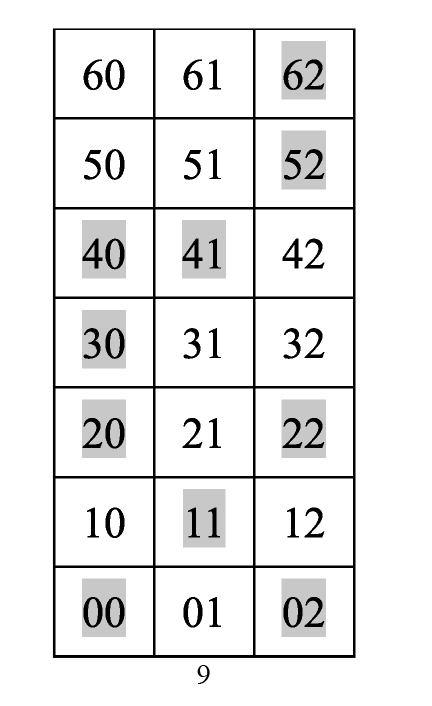
Fig. 1 Sample layout of the comprehensive observation plot of the warm-temperate deciduous broadleaf forest at the Beijing Forest Ecosystem Research Station. The numbers represent the second level plot numbers, and the shaded second level plots should be surveyed for the shrub and herb layers.
| 字段名称 Field name | 字段类型 Field type | 字段长度 Field length | 保留小数 Decimal places | 字段单位 Field unit | 字段定义 Field definition | 示例 Example |
|---|---|---|---|---|---|---|
| 年 Year | 字符型 Character | 4 | 调查年份 Year | 2007 | ||
| 月 Month | 字符型 Character | 2 | 调查月份 Month | 07 | ||
| 日 Day | 字符型 Character | 2 | 调查的起始日期 Start date of sampling | 21 | ||
| II级样方号 2nd level plot No. | 字符型 Character | 10 | 每个样地固定的10 m × 10 m的II级样方编号 No. of fixed second level plots (10 m × 10 m) | 00 (参见 (refer to | ||
| 样方面积 2nd level plot size | 字符型 Character | 20 | m × m | 调查样方的面积 Area of observation plot | 乔(灌)木层为10 m × 10 m; 草本层为1 m × 1 m 10 m × 10 m for tree (shrub) layer, 1 m × 1 m for herb layer | |
| 株数 Count | 数值型 Numeric | 10 | 0 | 株·样方-1 inds.·quadrat-1 | 样方中植物的总株数 The total number of plants in the plot | 5 |
| 平均胸径 Mean diameter at breast height | 数值型 Numeric | 10 | 1 | cm | 乔木植株的平均胸径, The mean tree diameter at breast height | 13.0 |
| 平均基径 Mean basal diameter | 数值型 Numeric | 10 | 1 | cm | 灌木植株的平均基径 The mean shrub basal diameter | 1.5 |
| 平均高度 Mean height | 数值型 Numeric | 10 | 1 | 乔(灌)木层为m; 草本层为cm m for tree (shrub) layer, cm for herb layer | 植株的平均高度 The mean plant height | 1.6 |
| 盖度 Coverage | 数值型 Numeric | 10 | 1 | % | 该植物地上部分的垂直投影面积占样地面积的百分比 The percentage of the vertical projection area of a plant’s aboveground parts relative to the total sample plot area | 50.5 |
| 优势种 Dominant species | 字符型 Character | 40 | 群落各层中最优势的单个或多个植物种类 The most dominant plant species in the community | 辽东栎 Quercus wutaishanica | ||
| 植物种数 Number of species per quadrat | 数值型 Numeric | 10 | 0 | 样方中所观测到的植物种总数 The total number of plant species in the plot | 6 | |
| 密度 Density | 数值型 Numeric | 10 | 0 | 株·hm-2 inds.·hm2 | 单位面积上, 植物种的株数 Plant density | 10 100 |
| 优势种平均高度 Mean height_dominant species | 数值型 Numeric | 10 | 2 | m | 优势种植物的平均高度 Mean height of dominant species | 3.00 |
| 郁闭度 Canopy density | 数值型 Numeric | 10 | 1 | 冠层投影面积与林地面积的比值 The ratio of the canopy projection area to the plot area | 0.8 | |
| 总盖度 Total vegetation coverage | 数值型 Numeric | 10 | 1 | % | 全部灌木或草本冠层在一定地面所形成的投影面积占地表面积的百分比 The percentage of the canopy projection area of shrubs or herbaceous plants relative to the plot area | 50.4 |
Table 2 Description of the dataset indicator fields at the Beijing Forest Ecosystem Research Station
| 字段名称 Field name | 字段类型 Field type | 字段长度 Field length | 保留小数 Decimal places | 字段单位 Field unit | 字段定义 Field definition | 示例 Example |
|---|---|---|---|---|---|---|
| 年 Year | 字符型 Character | 4 | 调查年份 Year | 2007 | ||
| 月 Month | 字符型 Character | 2 | 调查月份 Month | 07 | ||
| 日 Day | 字符型 Character | 2 | 调查的起始日期 Start date of sampling | 21 | ||
| II级样方号 2nd level plot No. | 字符型 Character | 10 | 每个样地固定的10 m × 10 m的II级样方编号 No. of fixed second level plots (10 m × 10 m) | 00 (参见 (refer to | ||
| 样方面积 2nd level plot size | 字符型 Character | 20 | m × m | 调查样方的面积 Area of observation plot | 乔(灌)木层为10 m × 10 m; 草本层为1 m × 1 m 10 m × 10 m for tree (shrub) layer, 1 m × 1 m for herb layer | |
| 株数 Count | 数值型 Numeric | 10 | 0 | 株·样方-1 inds.·quadrat-1 | 样方中植物的总株数 The total number of plants in the plot | 5 |
| 平均胸径 Mean diameter at breast height | 数值型 Numeric | 10 | 1 | cm | 乔木植株的平均胸径, The mean tree diameter at breast height | 13.0 |
| 平均基径 Mean basal diameter | 数值型 Numeric | 10 | 1 | cm | 灌木植株的平均基径 The mean shrub basal diameter | 1.5 |
| 平均高度 Mean height | 数值型 Numeric | 10 | 1 | 乔(灌)木层为m; 草本层为cm m for tree (shrub) layer, cm for herb layer | 植株的平均高度 The mean plant height | 1.6 |
| 盖度 Coverage | 数值型 Numeric | 10 | 1 | % | 该植物地上部分的垂直投影面积占样地面积的百分比 The percentage of the vertical projection area of a plant’s aboveground parts relative to the total sample plot area | 50.5 |
| 优势种 Dominant species | 字符型 Character | 40 | 群落各层中最优势的单个或多个植物种类 The most dominant plant species in the community | 辽东栎 Quercus wutaishanica | ||
| 植物种数 Number of species per quadrat | 数值型 Numeric | 10 | 0 | 样方中所观测到的植物种总数 The total number of plant species in the plot | 6 | |
| 密度 Density | 数值型 Numeric | 10 | 0 | 株·hm-2 inds.·hm2 | 单位面积上, 植物种的株数 Plant density | 10 100 |
| 优势种平均高度 Mean height_dominant species | 数值型 Numeric | 10 | 2 | m | 优势种植物的平均高度 Mean height of dominant species | 3.00 |
| 郁闭度 Canopy density | 数值型 Numeric | 10 | 1 | 冠层投影面积与林地面积的比值 The ratio of the canopy projection area to the plot area | 0.8 | |
| 总盖度 Total vegetation coverage | 数值型 Numeric | 10 | 1 | % | 全部灌木或草本冠层在一定地面所形成的投影面积占地表面积的百分比 The percentage of the canopy projection area of shrubs or herbaceous plants relative to the plot area | 50.4 |
| 层次 Layer | 植物种名 Common name_plant | 植物拉丁名 Scientific name_plant | 层次 Layer | 植物种名 Common name_plant | 植物拉丁名 Scientific name_plant |
|---|---|---|---|---|---|
| 乔木层 Tree layer | 辽东栎 | Quercus wutaishanica | 草本层 Herb layer | 斑叶堇菜 | Viola variegata |
| 黑桦 | Betula dahurica | 半钟铁线莲 | Clematis sibirica var. ochotensis | ||
| 五角槭 | Acer pictum subsp. mono | 北柴胡 | Bupleurum chinense | ||
| 糠椴 | Tilia mandshurica | 抱茎小苦荬 | Ixeridium sonchifolium | ||
| 花曲柳 | Fraxinus chinensis subsp. rhynchophylla | 贝加尔唐松草 | Thalictrum baicalense | ||
| 白桦 | Betula platyphylla | 苍术 | Atractylodes lancea | ||
| 蒙椴 | Tilia mongolica | 糙苏 | Phlomis umbrosa | ||
| 北京花楸 | Sorbus discolor | 穿龙薯蓣 | Dioscorea nipponica | ||
| 灌木层 Shrub layer | 六道木 | Abelia biflora | 大油芒 | Spodiopogon sibiricus | |
| 大花溲疏 | Deutzia grandiflora | 华北耧斗菜 | Aquilegia yabeana | ||
| 小花溲疏 | Deutzia parviflora | 黄菜 | Phedimus aizoon | ||
| 毛榛 | Corylus mandshurica | 鸡腿堇菜 | Viola acuminata | ||
| 金花忍冬 | Lonicera chrysantha | 宽叶薹草 | Carex siderosticta | ||
| 巧玲花 | Syringa pubescens | 蓝萼毛叶香茶菜 | Isodon japonicus var. glaucocalyx | ||
| 土庄绣线菊 | Spiraea pubescens | 藜芦 | Veratrum nigrum | ||
| 绣球绣线菊 | Spiraea blumei | 铃兰 | Convallaria majalis | ||
| 卫矛 | Euonymus alatus | 龙须菜 | Asparagus schoberioides | ||
| 沙梾 | Cornus bretschneider | 二苞黄精 | Polygonatum involucratum | ||
| 鼠李 | Rhamnus davurica | 蒙古蒿 | Artemisia mongolica | ||
| 小叶鼠李 | Rhamnus parvifolia | 牛叠肚 | Rubus crataegifolius | ||
| 胡枝子 | Lespedeza bicolor | 球果堇菜 | Viola collina | ||
| 迎红杜鹃 | Rhododendron mucronulatum | 歪头菜 | Vicia unijuga | ||
| 照山白 | Rhododendron micranthum | 线叶拉拉藤 | Galium linearifolium | ||
| 草本层 Herb layer | 野青茅 | Deyeuxia pyramidalis | 小红菊 | Chrysanthemum chanetii | |
| 蒙古风毛菊 | Saussurea mongolica | 玉竹 | Polygonatum odoratum | ||
| 三脉紫菀 | Aster ageratoides | 展枝沙参 | Adenophora divaricata | ||
| 银背风毛菊 | Saussurea nivea | 地榆 | Sanguisorba officinalis | ||
| 白颖薹草 | Carex duriuscula subsp. rigescens | 东风菜 | Doellingeria scabra |
Table 3 Plant list of the comprehensive observation plot of the warm-temperate deciduous broadleaf forest at the Beijing Forest Ecosystem Research Station
| 层次 Layer | 植物种名 Common name_plant | 植物拉丁名 Scientific name_plant | 层次 Layer | 植物种名 Common name_plant | 植物拉丁名 Scientific name_plant |
|---|---|---|---|---|---|
| 乔木层 Tree layer | 辽东栎 | Quercus wutaishanica | 草本层 Herb layer | 斑叶堇菜 | Viola variegata |
| 黑桦 | Betula dahurica | 半钟铁线莲 | Clematis sibirica var. ochotensis | ||
| 五角槭 | Acer pictum subsp. mono | 北柴胡 | Bupleurum chinense | ||
| 糠椴 | Tilia mandshurica | 抱茎小苦荬 | Ixeridium sonchifolium | ||
| 花曲柳 | Fraxinus chinensis subsp. rhynchophylla | 贝加尔唐松草 | Thalictrum baicalense | ||
| 白桦 | Betula platyphylla | 苍术 | Atractylodes lancea | ||
| 蒙椴 | Tilia mongolica | 糙苏 | Phlomis umbrosa | ||
| 北京花楸 | Sorbus discolor | 穿龙薯蓣 | Dioscorea nipponica | ||
| 灌木层 Shrub layer | 六道木 | Abelia biflora | 大油芒 | Spodiopogon sibiricus | |
| 大花溲疏 | Deutzia grandiflora | 华北耧斗菜 | Aquilegia yabeana | ||
| 小花溲疏 | Deutzia parviflora | 黄菜 | Phedimus aizoon | ||
| 毛榛 | Corylus mandshurica | 鸡腿堇菜 | Viola acuminata | ||
| 金花忍冬 | Lonicera chrysantha | 宽叶薹草 | Carex siderosticta | ||
| 巧玲花 | Syringa pubescens | 蓝萼毛叶香茶菜 | Isodon japonicus var. glaucocalyx | ||
| 土庄绣线菊 | Spiraea pubescens | 藜芦 | Veratrum nigrum | ||
| 绣球绣线菊 | Spiraea blumei | 铃兰 | Convallaria majalis | ||
| 卫矛 | Euonymus alatus | 龙须菜 | Asparagus schoberioides | ||
| 沙梾 | Cornus bretschneider | 二苞黄精 | Polygonatum involucratum | ||
| 鼠李 | Rhamnus davurica | 蒙古蒿 | Artemisia mongolica | ||
| 小叶鼠李 | Rhamnus parvifolia | 牛叠肚 | Rubus crataegifolius | ||
| 胡枝子 | Lespedeza bicolor | 球果堇菜 | Viola collina | ||
| 迎红杜鹃 | Rhododendron mucronulatum | 歪头菜 | Vicia unijuga | ||
| 照山白 | Rhododendron micranthum | 线叶拉拉藤 | Galium linearifolium | ||
| 草本层 Herb layer | 野青茅 | Deyeuxia pyramidalis | 小红菊 | Chrysanthemum chanetii | |
| 蒙古风毛菊 | Saussurea mongolica | 玉竹 | Polygonatum odoratum | ||
| 三脉紫菀 | Aster ageratoides | 展枝沙参 | Adenophora divaricata | ||
| 银背风毛菊 | Saussurea nivea | 地榆 | Sanguisorba officinalis | ||
| 白颖薹草 | Carex duriuscula subsp. rigescens | 东风菜 | Doellingeria scabra |
| [1] | Chen LZ, Sun H, Guo K (2015). Flora and Vegetation Geography of China. Science Press, Beijing. |
| [陈灵芝, 孙航, 郭柯 (2015). 中国植物区系与植被地理. 科学出版社, 北京.] | |
| [2] | Chen LZ, Huang JH (1997). Research on Structure and Function of Warm Temperate Forest Ecosystem. Science Press, Beijing. |
| [陈灵芝, 黄建辉 (1997). 暖温带森林生态系统结构与功能的研究. 科学出版社, 北京.] | |
| [3] | Ma KP, Huang JH, Yu SL, Chen LZ (1995). Plant community diversity in Dongling Mountain, Beijing, China: II. Species richness, evenness and species diversities. Acta Ecologica Sinica, 15, 268-277. |
| [马克平, 黄建辉, 于顺利, 陈灵芝 (1995). 北京东灵山地区植物群落多样性的研究Ⅱ. 丰富度、均匀度和物种多样性指数. 生态学报, 15, 268-277.] | |
| [4] | Wu DX, Zhang L, Song CY, Zhang SM (2019). Protocols for Standard Biological Observation and Measurement in Terrestrial Ecosystems. China Environment Publishing Group, Beijing. |
| [吴冬秀, 张琳, 宋创业, 张淑敏 (2019). 陆地生态系统生物观测指标与规范. 中国环境出版集团, 北京.] | |
| [5] | Sun XF, Chen LZ (1995). A preliminary study on the environment of radiation energy of deciduous broad-leaved forest in the warm temperate zone. Acta Ecologica Sinica, 15, 278-286. |
| [孙雪峰, 陈灵芝 (1995). 暖温带落叶阔叶林辐射能量环境初步研究. 生态学报, 15, 278-286.] | |
| [6] | The Scientific Committee of Chinese Ecosystem Research Network (2007). Protocols for Standard Biological Observation and Measurement in Terrestrial Ecosystems. China Environmental Science Press, Beijing. |
| [中国生态系统研究网络科学委员会 (2007). 陆地生态系统生物观测规范. 中国环境科学出版社, 北京.] | |
| [7] | Xie JY, Chen LZ (1994). Species diversity characteristics of deciduous forests in the warm temperate zone of north China. Acta Ecologica Sinica, 14, 337-344. |
| [谢晋阳, 陈灵芝 (1994). 暖温带落叶阔叶林的物种多样性特征. 生态学报, 14, 337-344.] |
| Viewed | ||||||
|
Full text |
|
|||||
|
Abstract |
|
|||||
Copyright © 2026 Chinese Journal of Plant Ecology
Tel: 010-62836134, 62836138, E-mail: apes@ibcas.ac.cn, cjpe@ibcas.ac.cn

