
Chin J Plant Ecol ›› 2025, Vol. 49 ›› Issue (10): 1600-1611.DOI: 10.17521/cjpe.2025.0021 cstr: 32100.14.cjpe.2025.0021
Special Issue: 虚拟专辑 | 濒危植物多样性与保护
• Research Articles • Previous Articles Next Articles
ZHANG Zi-Rui1, ZHOU Jing1, HU Yan-Ping2, LIANG Shuang1, MA Yong-Peng3, CHEN Wei-Le1,*( )
)
Received:2025-01-13
Accepted:2025-03-10
Online:2025-10-20
Published:2025-11-26
Contact:
CHEN Wei-Le
Supported by:ZHANG Zi-Rui, ZHOU Jing, HU Yan-Ping, LIANG Shuang, MA Yong-Peng, CHEN Wei-Le. Root-associated fungal communities of the critically endangered plant Pinus squamata[J]. Chin J Plant Ecol, 2025, 49(10): 1600-1611.
Add to citation manager EndNote|Ris|BibTeX
URL: https://www.plant-ecology.com/EN/10.17521/cjpe.2025.0021
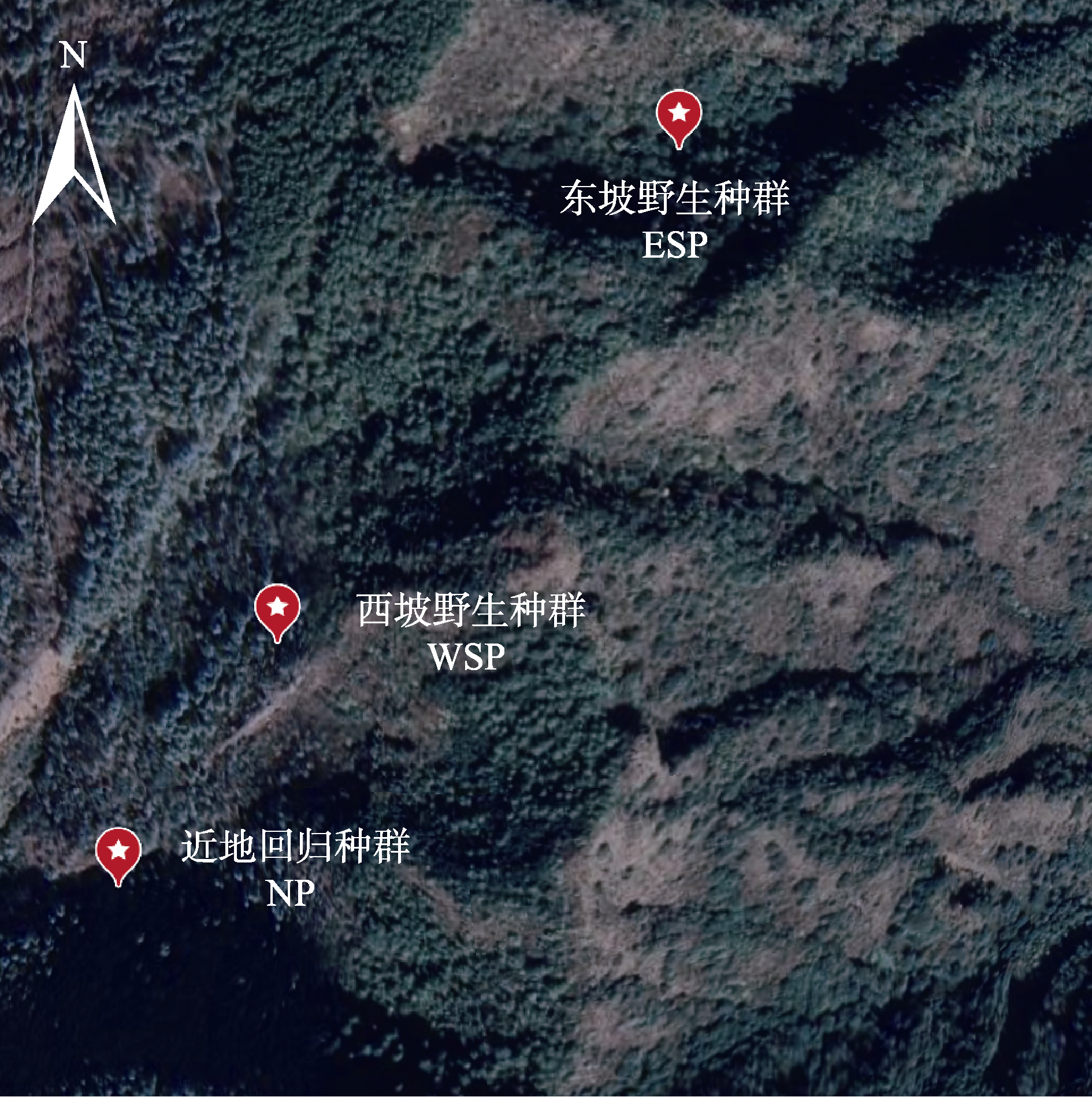
Fig. 1 Sampling points distribution map of Yaoshan Nature Reserve in Qiaojia County. ESP, east-slope population; NP, near-situ reintroduced population; WSP west-slope population.
| 土壤性质 Soil property | 野生种群 Wild population | 人工繁育种群 Cultivated population | ||
|---|---|---|---|---|
| 西坡种群 WSP | 东坡种群 ESP | 近地回归 NP | 迁地保护 EP | |
| 土壤全氮含量 TN content (mg·g-1) | 4.27 ± 1.84b | 7.27 ± 2.44a | 2.22 ± 0.95c | 5.28 ± 2.28b |
| 土壤全碳含量 TC content (mg·g-1) | 50.62 ± 24.65b | 86.36 ± 32.10a | 30.07 ± 11.53b | 78.42 ± 24.87a |
| 含水量 SWC (%) | 8.09 ± 1.32b | 7.88 ± 2.58b | 7.70 ± 2.35b | 20.44 ± 8.37a |
Table 1 Soil physicochemical properties (mean ± SE) at different sampling sites of Pinus squamata
| 土壤性质 Soil property | 野生种群 Wild population | 人工繁育种群 Cultivated population | ||
|---|---|---|---|---|
| 西坡种群 WSP | 东坡种群 ESP | 近地回归 NP | 迁地保护 EP | |
| 土壤全氮含量 TN content (mg·g-1) | 4.27 ± 1.84b | 7.27 ± 2.44a | 2.22 ± 0.95c | 5.28 ± 2.28b |
| 土壤全碳含量 TC content (mg·g-1) | 50.62 ± 24.65b | 86.36 ± 32.10a | 30.07 ± 11.53b | 78.42 ± 24.87a |
| 含水量 SWC (%) | 8.09 ± 1.32b | 7.88 ± 2.58b | 7.70 ± 2.35b | 20.44 ± 8.37a |
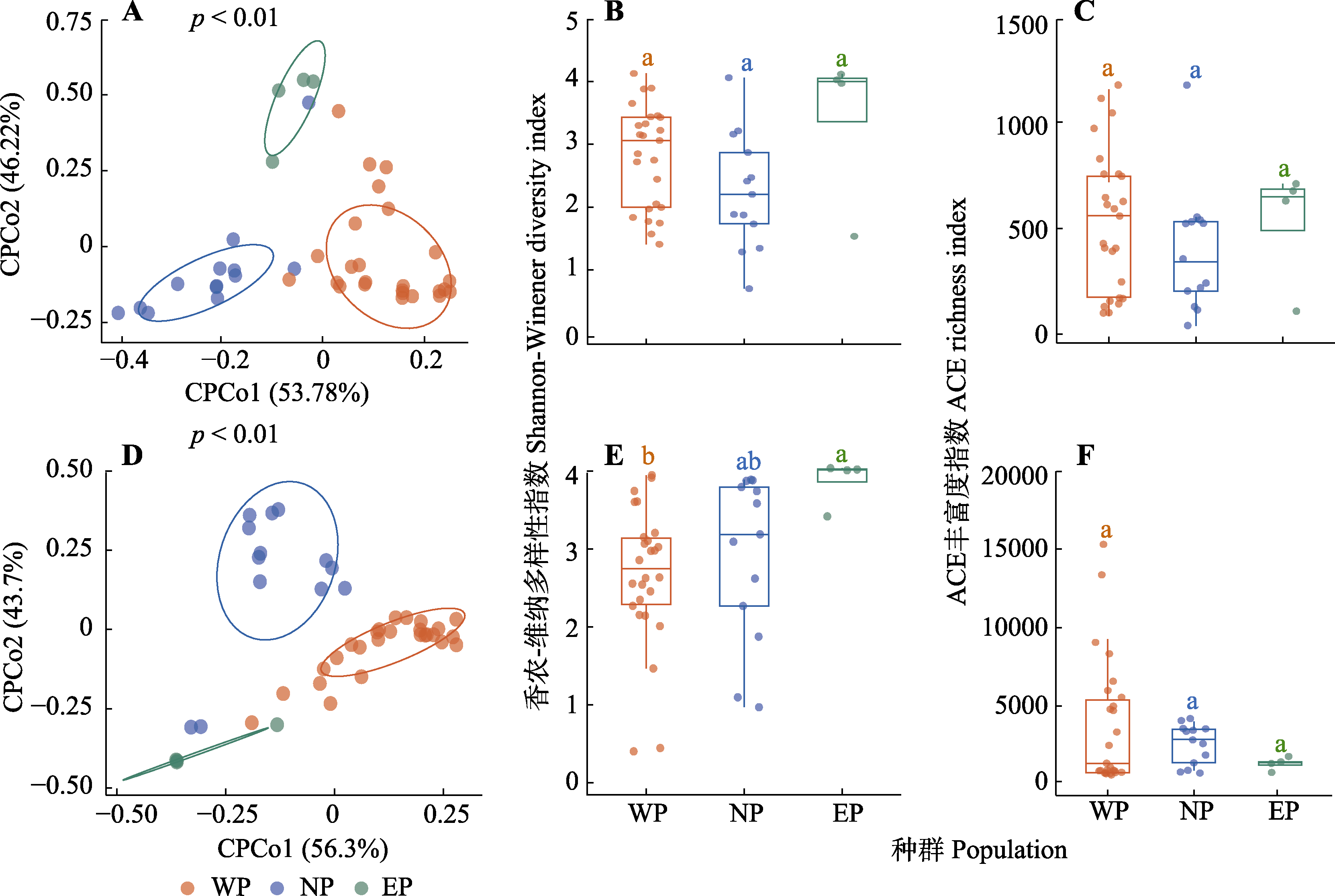
Fig. 2 Constrained Principal Coordinate (CPCo) analysis based on Bray-Curtis distances was conducted to explore the differences in the structure of endophytic (A) and rhizosphere (D) fungal communities among the wild population, near-situ reintroduced population, and ex-situ conserved population. Shannon-Wiener diversity index and ACE richness index were used to measure the α-diversity of fungal communities in endophytic (B, C) and rhizosphere (E, F). Different lowercase letters indicate significant differences (p < 0.05). EP, ex-situ conserved population; NP, near-situ reintroduced population; WP, wild population.
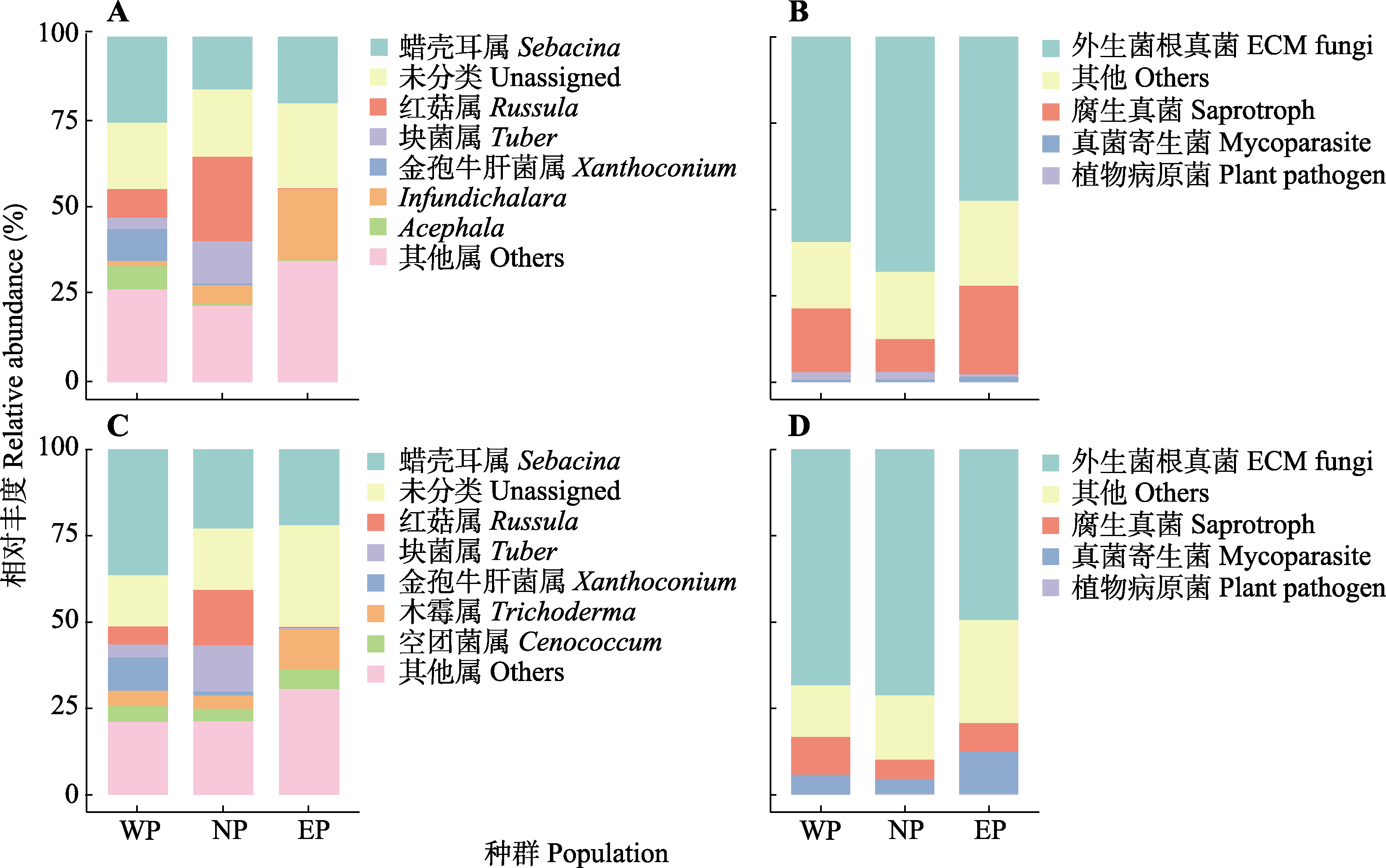
Fig. 3 Relative abundance (at the genus level) of endophytic (A) and rhizosphere (C) fungal communities in the wild population, near-situ reintroduced population, and ex-situ conserved population, as well as the relative abundance of different functional types in endophytic (B) and rhizosphere (D) fungal communities. EP, ex-situ conserved population; NP, near-situ reintroduced population; WP, wild population. ECM, ectomycorrhizal.
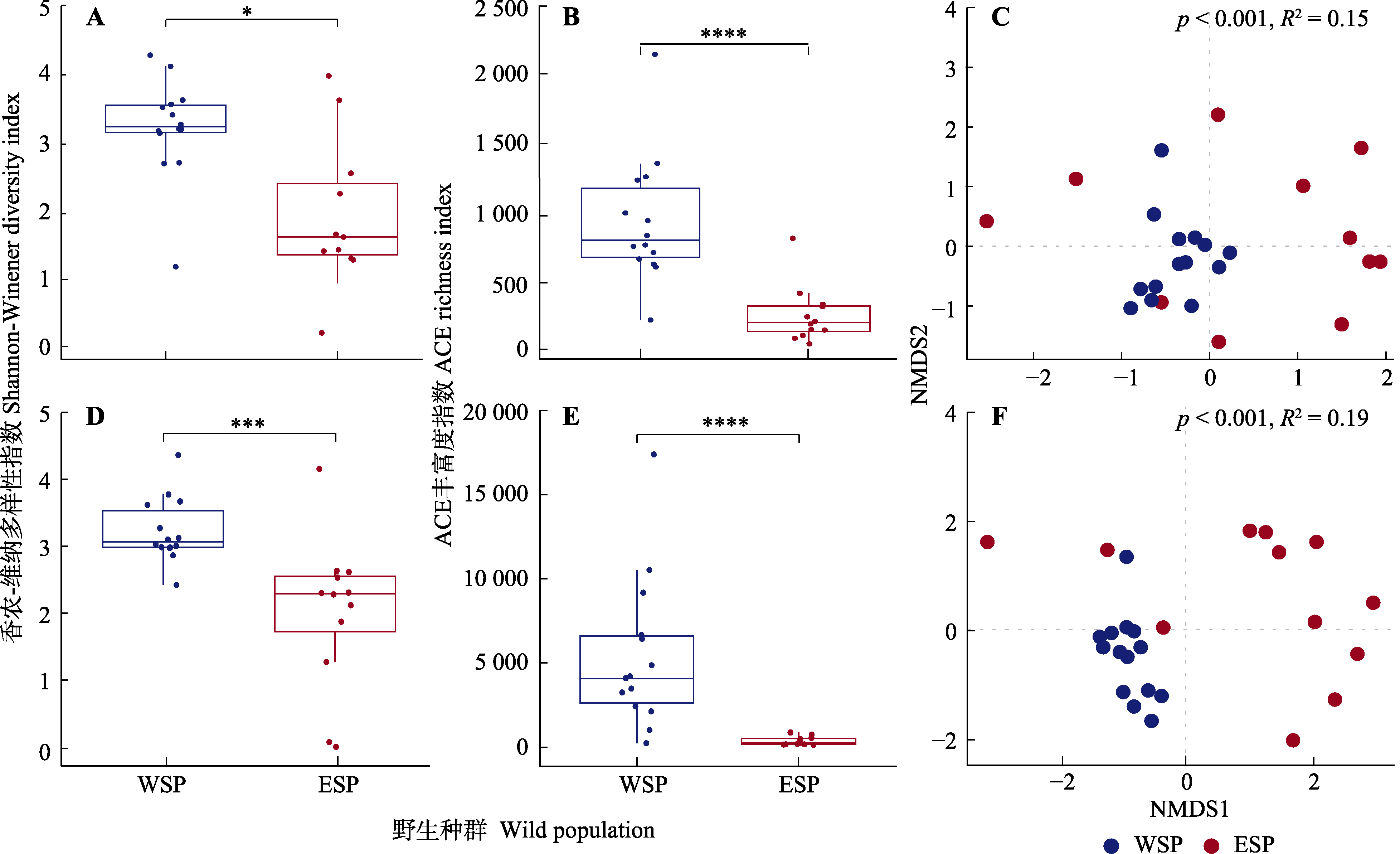
Fig. 4 Shannon-Wiener diversity index and ACE richness index of the endophytic (A, B) and rhizosphere (D, E) fungal communities in the west-slope population and east-slope population were tested for significant differences using the Mann-Whitney U test, and Non-metric Multidimensional Scaling (NMDS) analysis based on Bray-Curtis distances of endophytic (C) and rhizosphere (F) fungal communities in the west-slope population and east-slope population. *, p < 0.05; ***, p < 0.001; ****, p < 0.000 1. ESP, east-slope population; WSP, west-slope population.
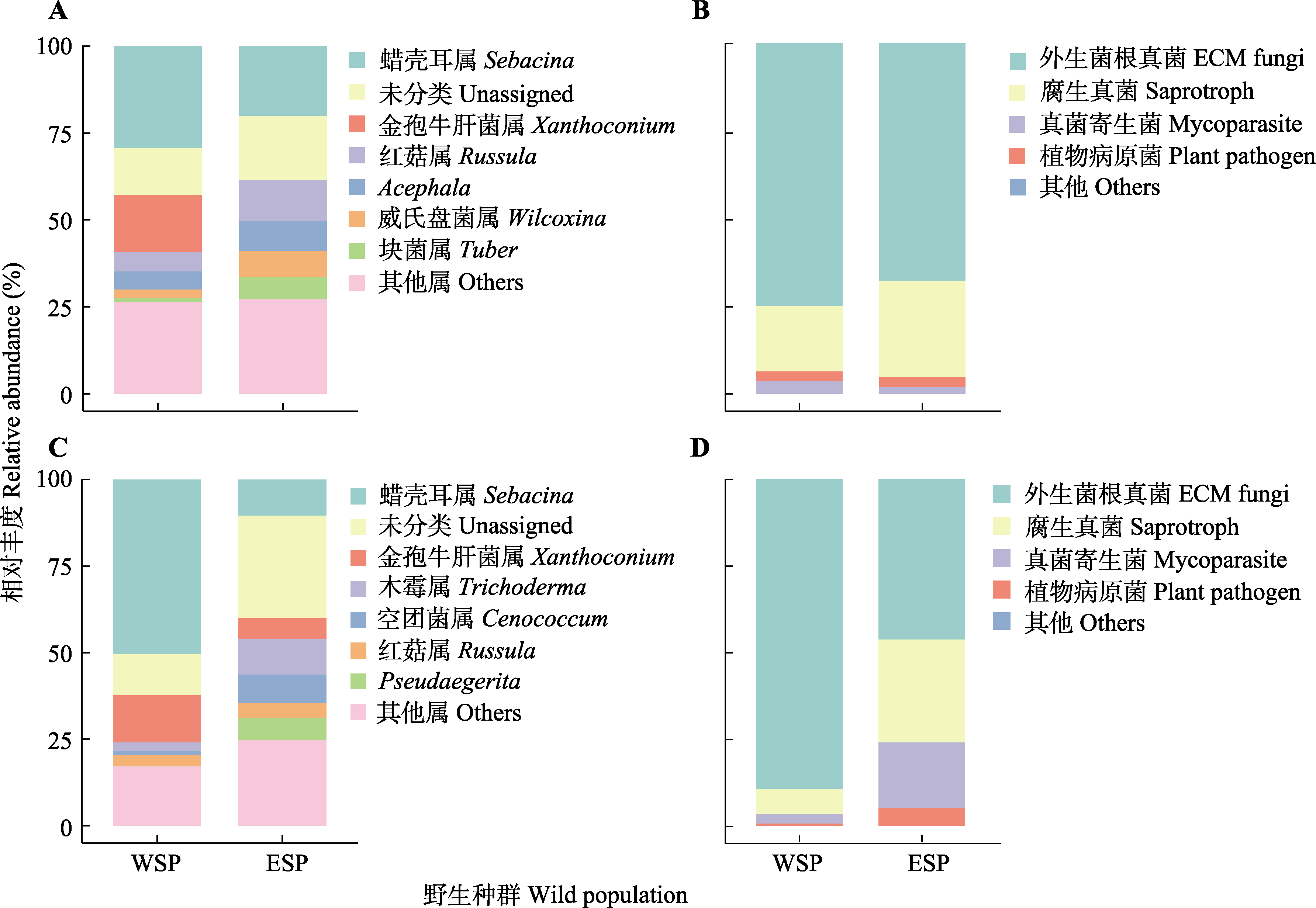
Fig. 5 Relative abundance (at the genus level) of endophytic (A) and rhizosphere (C) fungal communities in the west-slope population and east-slope population, as well as the relative abundance of different functional types in endophytic (B) and rhizosphere (D) fungal communities. ESP, east-slope population; WSP, west-slope population. ECM, ectomycorrhizal.
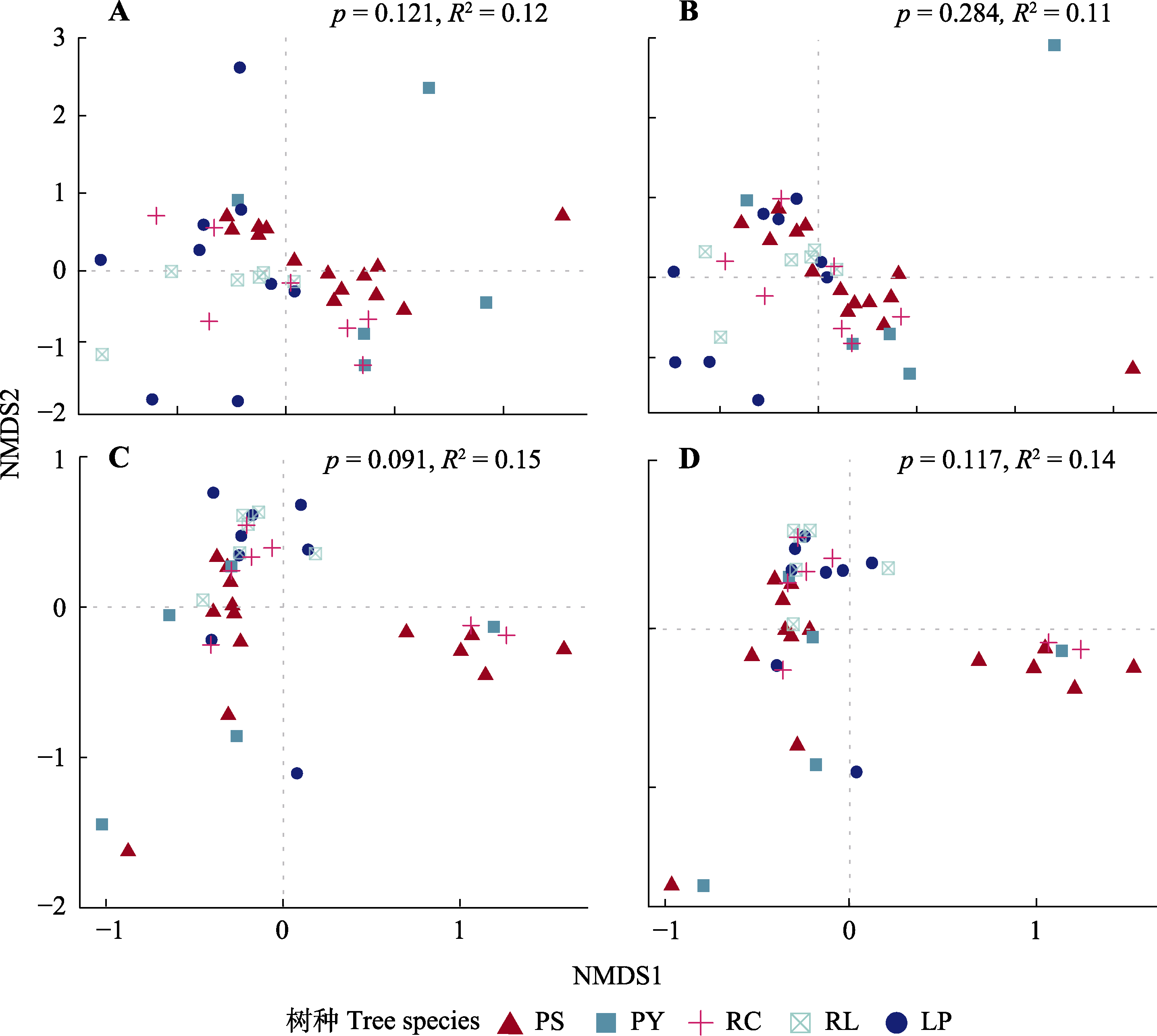
Fig. 6 Non-metric Multidimensional Scaling (NMDS) analysis based on Bray-Curtis distances of the Pinus squamata and four neighboring species for all fungal communities within the roots (A) and ectomycorrhizal (ECM) fungal communities (B), as well as all fungal communities in the rhizosphere (C) and ECM fungal communities (D). LP, Lithocarpus polystachyus; PS, Pinus squamata; PY, Pinus yunnanensis; RC, Rhus chinensis; RL, Rhamnus leptophylla.
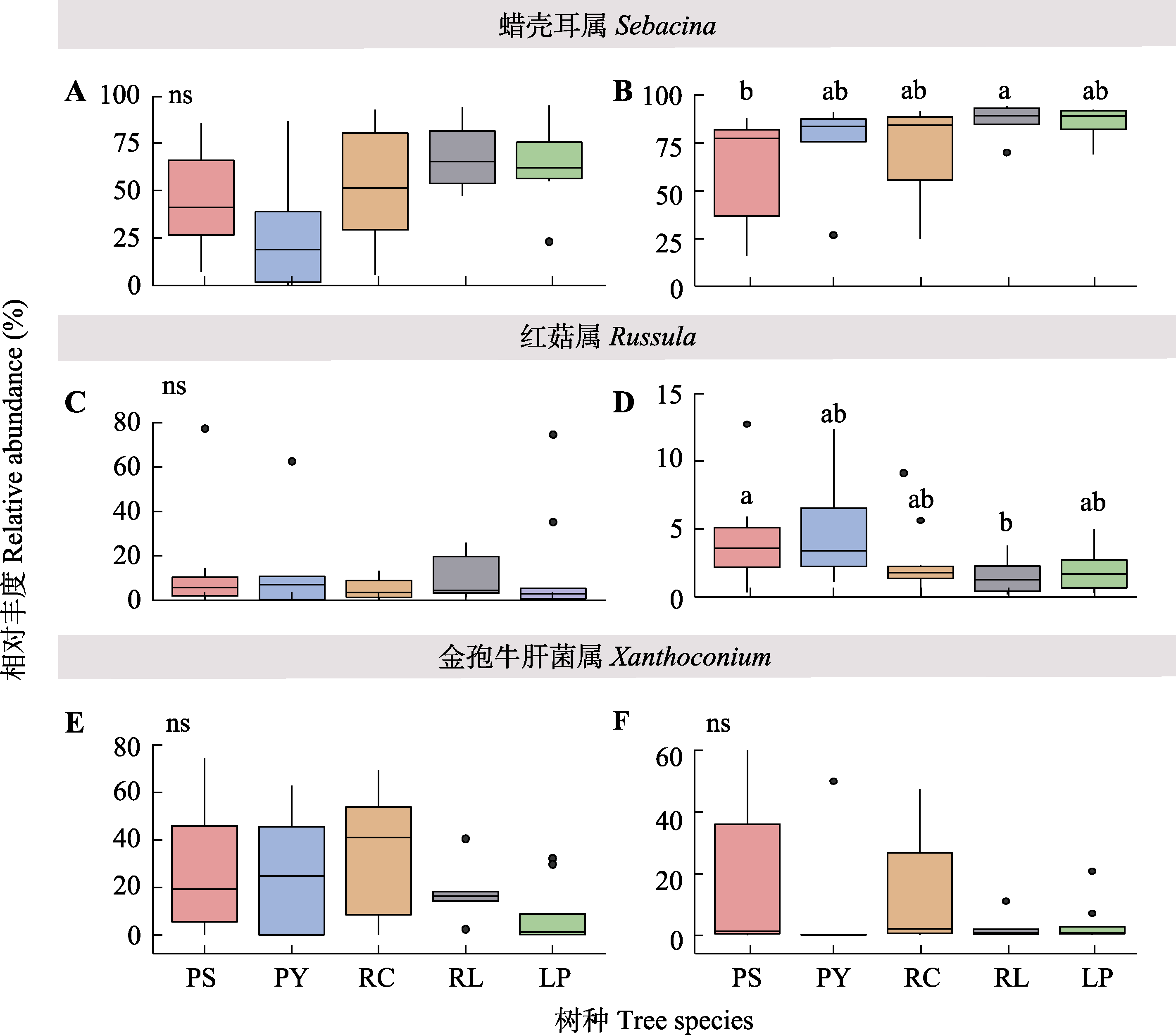
Fig. 7 Relative abundance of the top 3 ectomycorrhizal (ECM) fungal genera within the roots (A, C, E) and in the rhizosphere (B, D, F) of the wild west-slope Pinus squamata and four neighboring species. All differences were tested using the Kruskal-Wallis test, with different lowercase letters indicating significant difference (p < 0.001), and ns marked for non-significance. LP, Lithocarpus polystachyus; PS, Pinus squamata; PY, Pinus yunnanensis; RC, Rhus chinensis; RL, Rhamnus leptophylla.
| [1] |
Agerer R (2001). Exploration types of ectomycorrhizae. Mycorrhiza, 11, 107-114.
DOI URL |
| [2] |
Agerer R (2006). Fungal relationships and structural identity of their ectomycorrhizae. Mycological Progress, 5, 67-107.
DOI URL |
| [3] |
Argüelles-Moyao A, Garibay-Orijel R (2018). Ectomycorrhizal fungal communities in high mountain conifer forests in central Mexico and their potential use in the assisted migration of Abies religiosa. Mycorrhiza, 28, 509-521.
DOI PMID |
| [4] | Bennett AE, Classen AT (2020). Climate change influences mycorrhizal fungal-plant interactions, but conclusions are limited by geographical study bias. Ecology, 101, e02978. DOI: 10.1002/ecy.2978. |
| [5] |
Berendsen RL, Pieterse CMJ, Bakker PAHM (2012). The rhizosphere microbiome and plant health. Trends in Plant Science, 17, 478-486.
DOI PMID |
| [6] |
Cahanovitc R, Livne-Luzon S, Angel R, Klein T (2022). Ectomycorrhizal fungi mediate belowground carbon transfer between pines and oaks. The ISME Journal, 16, 1420-1429.
DOI URL |
| [7] | Chao A, Chiu CH (2016). Species richness: estimation and comparison//Wiley StatsRef: Statistics Reference Online. [2024-12-1]. [https://onlinelibrary.wiley.com/doi/book/10.1002/9781118445112.] |
| [8] | Chauhan P, Sharma N, Tapwal A, Kumar A, Verma GS, Meena M, Seth CS, Swapnil P (2023). Soil microbiome: diversity, benefits and interactions with plants. Sustainability, 15, 14643. DOI: 10.3390/su151914643. |
| [9] |
Chen BD, Fu W, Wu SL, Zhu YG (2024). Involvements of mycorrhizal fungi in terrestrial ecosystem carbon cycling. Chinese Journal of Plant Ecology, 48, 1-20.
DOI URL |
|
[陈保冬, 付伟, 伍松林, 朱永官 (2024). 菌根真菌在陆地生态系统碳循环中的作用. 植物生态学报, 48, 1-20.]
DOI |
|
| [10] |
Courty PE, Buée M, Diedhiou AG, Frey-Klett P, Le Tacon F, Rineau F, Turpault MP, Uroz S, Garbaye J (2010). The role of ectomycorrhizal communities in forest ecosystem processes: new perspectives and emerging concepts. Soil Biology & Biochemistry, 42, 679-698.
DOI URL |
| [11] |
Garbaye J (1994). Tansley review No. 76 helper bacteria: a new dimension to the mycorrhizal symbiosis. New Phytologist, 128, 197-210.
DOI PMID |
| [12] |
Guo LQ, Yan XL, Cao L, Gao J, Liu RQ, Zhou XH (2025). Effects of mycorrhizal types and root traits of tree species on rhizosphere microbial network complexity. Chinese Journal of Plant Ecology, 49, 573-584.
DOI |
|
[郭李琦, 闫晓蕾, 曹磊, 高景, 刘瑞强, 周旭辉 (2025). 树种菌根类型与根系性状对根际微生物网络复杂性的影响. 植物生态学报, 49, 573-584.]
DOI |
|
| [13] |
Harman GE, Howell CR, Viterbo A, Chet I, Lorito M (2004). Trichoderma species-opportunistic, avirulent plant symbionts. Nature Reviews: Microbiology, 2, 43-56.
DOI |
| [14] | Hu R (2022). Exploring Potential Endangered Reasons for Abies beshanzuensis Based on Plant-microbiome Interactions. Master degree dissertation, East China Normal University, Shanghai. |
| [胡瑞 (2022). 基于植物-微生物相互作用探究极小种群百山祖冷杉潜在濒危原因. 硕士学位论文, 华东师范大学, 上海.] | |
| [15] | IUCN (2010). The IUCN Red List of Threatened Species. [2024-2-15]. https://www.iucnredlist.org. |
| [16] |
Klein T, Siegwolf RTW, Körner C (2016). Belowground carbon trade among tall trees in a temperate forest. Science, 352, 342-344.
DOI PMID |
| [17] | Kõljalg U, Nilsson HR, Schigel D, Tedersoo L, Larsson KH, May TW, Taylor AFS, Jeppesen TS, Frøslev TG, Lindahl BD, Põldmaa K, Saar I, Suija A, Savchenko A, Yatsiuk I, et al. (2020). The taxon hypothesis paradigm—On the unambiguous detection and communication of taxa. Microorganisms, 8, 1910. DOI: 10.3390/microorganisms 8121910. |
| [18] | Li FR, Lu SG, Sun WB (2024). Comparison of rhizosphere bacterial communities of Pinus squamata, a plant species with extremely small populations (PSESP) in different conservation sites. Microorganisms, 12, 638. DOI: 10.3390/microorganisms12040638. |
| [19] | Li FR, Sun WB (2023). Comparative analysis of rhizospheric fungi using high-throughput sequencing between wild, ex situ, and reintroduced Pinus squamata, a plant species with extremely small populations in Yunnan Province, China. Diversity, 15, 868. DOI: 10.3390/d15070868. |
| [20] | Li XW (1992). A new series and a new species of Pinus from Yunnan. Acta Botanica Yunnanica, 14, 259-260. |
| [李乡旺 (1992). 云南松属一新系一新种. 云南植物研究, 14, 259-260.] | |
| [21] |
Liang S, Guo H, McCormack ML, Qian ZH, Huang KH, Yang Y, Xi MJ, Qi XB, Ou XB, Liu Y, Juenger TE, Koide RT, Chen WL (2023). Positioning absorptive root respiration in the root economics space across woody and herbaceous species. Journal of Ecology, 111, 2710-2720.
DOI URL |
| [22] |
Lilleskov EA, Hobbie EA, Horton TR (2011). Conservation of ectomycorrhizal fungi: exploring the linkages between functional and taxonomic responses to anthropogenic N deposition. Fungal Ecology, 4, 174-183.
DOI URL |
| [23] | Liu YX, Chen L, Ma TF, Li XF, Zheng MS, Zhou X, Chen L, Qian XB, Xi J, Lu HY, Cao HL, Ma XY, Bian B, Zhang PF, Wu JQ, et al. (2023). EasyAmplicon: an easy-to-use, open-source, reproducible, and community-based pipeline for amplicon data analysis in microbiome research. iMeta, 2, e83. DOI: 10.1002/imt2.83. |
| [24] | Lu SJ, Deng LL (1994). Ecological factors and potential distributional areas of Pinus squamata. Journal of Southwest Forestry College, 14(3), 144-148. |
| [陆素娟, 邓莉兰 (1994). 五针白皮松的生态条件及其潜在分布区的分析. 西南林学院学报, 14(3), 144-148.] | |
| [25] |
Mangan SA, Schnitzer SA, Herre EA, Mack KML, Valencia MC, Sanchez EI, Bever JD (2010). Negative plant-soil feedback predicts tree-species relative abundance in a tropical forest. Nature, 466, 752-755.
DOI |
| [26] |
Mendes R, Garbeva P, Raaijmakers JM (2013). The rhizosphere microbiome: significance of plant beneficial, plant pathogenic, and human pathogenic microorganisms. FEMS Microbiology Reviews, 37, 634-663.
DOI PMID |
| [27] | Ministry of Ecology and Environment of the People’s Republic of China (2020). China Biodiversity Red List: Higher Plants Volume. [2023-05-19]. http://www.mee.gov.cn. |
| [中华人民共和国生态环境部 (2020). 中国生物多样性红色名录-高等植物卷. [2023-05-19]. http://www.mee.gov.cn.] | |
| [28] | National Forestry and Grassland Administration, Ministry of Agriculture and Rural Affairs(2021). National Key Protected Wild Plant List. [2021-09-08]. http://www.forestry.gov.cn. |
| [国家林业和草原局, 农业农村部(2021). 国家重点保护野生植物名录. [2021-09-08]. http://www.forestry.gov.cn.] | |
| [29] |
Peay KG, Kennedy KG, Bruns TD (2011). Rethinking ectomycorrhizal succession: Are root density and hyphal exploration types drivers of spatial and temporal zonation? Fungal Ecology, 4, 233-240.
DOI URL |
| [30] | Philippot L, Raaijmakers JM, Lemanceau P,van der Putten WH (2013). Going back to the roots: the microbial ecology of the rhizosphere. Nature Reviews: Microbiology, 11, 789-799. |
| [31] | Policelli N, Horton T, Hudon A, Patterson T, Bhatnagar J (2020). Back to roots: the role of ectomycorrhizal fungi in boreal and temperate forest restoration. Frontiers in Forests and Global Change, 3, 97. DOI: 10.3389/ ffgc.2020.00097. |
| [32] | Põlme S, Abarenkov K, Henrik Nilsson R, Lindahl BD, Clemmensen KE, Kauserud H, Nguyen N, Kjøller R, Bates ST, Baldrian P, Frøslev TG, Adojaan K, Vizzini A, Suija A, Pfister D, et al. (2021). FungalTraits: a user-friendly traits database of fungi and fungus-like stramenopiles. Fungal Diversity, 105, 466. DOI: 10.1007/s13225-020-00466-2. |
| [33] |
Reed SC, Cleveland CC, Townsend AR (2011). Functional ecology of free-living nitrogen fixation: a contemporary perspective. Annual Review of Ecology, Evolution, and Systematics, 42, 489-512.
DOI URL |
| [34] |
Ren H, Zhang QM, Lu HF, Liu HX, Guo QF, Wang J, Jian SG, Bao HO (2012). Wild plant species with extremely small populations require conservation and reintroduction in China. Ambio, 41, 913-917.
DOI PMID |
| [35] |
Rigg JL, Offord CA, Singh BK, Anderson I, Clarke S, Powell JR (2016). Soil microbial communities influence seedling growth of a rare conifer independent of plant-soil feedback. Ecology, 97, 3346-3358.
DOI PMID |
| [36] |
Sala OE, Chapin III FS, Armesto JJ, Berlow E, Bloomfield J, Dirzo R, Huber-Sanwald E, Huenneke LF, Jackson RB, Kinzig A, Leemans R, Lodge DM, Mooney HA, Oesterheld M, Poff NL, et al. (2000). Global biodiversity scenarios for the year 2100. Science, 287, 1770-1774.
DOI PMID |
| [37] | Shao QY, Dong CB, Han YF, Liang ZQ (2021). Research progress in the rhizosphere microbiome of plants. Journal of Plant Nutrition and Fertilizers, 27(1), 144-152. |
| [邵秋雨, 董醇波, 韩燕峰, 梁宗琦 (2021). 植物根际微生物组的研究进展. 植物营养与肥料学报, 27(1), 144-152.] | |
| [38] |
Shi JC, Wang XL, Wang ET (2023). Mycorrhizal symbiosis in plant growth and stress adaptation: from genes to ecosystems. Annual Review of Plant Biology, 74, 569-607.
DOI URL |
| [39] |
Shoresh M, Harman GE, Mastouri F (2010). Induced systemic resistance and plant responses to fungal biocontrol agents. Annual Review of Phytopathology, 48, 21-43.
DOI PMID |
| [40] | Shu H (2024). Population Structure and Conservation Effectiveness of Pinus squamata X. W. Li. Master degree dissertation, Kunming Institute of Botany, Chinese Academy of Science, Kunming. |
| [舒恒 (2024). 五针白皮松的种群结构与保护成效评价. 硕士学位论文, 中国科学院昆明植物研究所, 昆明.] | |
| [41] |
Simard SW, Beiler KJ, Bingham MA, Deslippe JR, Philip LJ, Teste FP (2012). Mycorrhizal networks: mechanisms, ecology and modelling. Fungal Biology Reviews, 26, 39-60.
DOI URL |
| [42] |
Simard SW, Perry DA, Jones MD, Myrold DD, Durall DM, Molina R (1997). Net transfer of carbon between ectomycorrhizal tree species in the field. Nature, 388, 579-582.
DOI URL |
| [43] |
Stork NE (2010). Re-assessing current extinction rates. Biodiversity and Conservation, 19, 357-371.
DOI URL |
| [44] | Tao C (2013). The Study of Endangered Mechanism About the Threatened Plants of Pinus Sect. Strobus in China. Master degree dissertation, Beijing Forestry University, Beijing. |
| [陶翠 (2013). 中国五针松组濒危植物的濒危机制探究. 硕士学位论文, 北京林业大学, 北京.] | |
| [45] |
Teste FP, Simard SW, Durall DM, Guy RD, Jones MD, Schoonmaker AL (2009). Access to mycorrhizal networks and roots of trees: importance for seedling survival and resource transfer. Ecology, 90, 2808-2822.
PMID |
| [46] | The State Council Information Office of the People’s Republic of China (2021). Biodiversity Conservation in China. [2021-10-08]. http://www.scio.gov.cn/zfbps. |
| [中华人民共和国国务院新闻办公室 (2021). 中国生物多样性保护白皮书. [2021-10-08]. http://www.scio.gov.cn/zfbps.] | |
| [47] |
van der Heijden MGA, Bardgett RD, van Straalen NM (2008). The unseen majority: soil microbes as drivers of plant diversity and productivity in terrestrial ecosystems. Ecology Letters, 11, 296-310.
DOI PMID |
| [48] |
Volis S (2018). Securing a future for China’s plant biodiversity through an integrated conservation approach. Plant Diversity, 40, 91-105.
DOI URL |
| [49] | Wang J (2021). A Study on Survival Pressure and Competitiveness of Pinus Sect. Cembra in China. PhD dissertation, Beijing Forestry University, Beijing. |
| [王俊 (2021). 中国五针松组植物生存压力和竞争力研究. 博士学位论文, 北京林业大学, 北京.] | |
| [50] |
Wu LK, Lin XM, Lin WX (2014). Advances and perspective in research on plant-soil-microbe interactions mediated by root exudates. Chinese Journal of Plant Ecology, 38, 298-310.
DOI |
|
[吴林坤, 林向民, 林文雄 (2014). 根系分泌物介导下植物-土壤-微生物互作关系研究进展与展望. 植物生态学报, 38, 298-310.]
DOI |
|
| [51] |
Wurzburger N, Jack Brookshire EN, McCormack ML, Lankau RA (2017). Mycorrhizal fungi as drivers and modulators of terrestrial ecosystem processes. New Phytologist, 213, 996-999.
DOI PMID |
| [52] |
Xi MJ, Zeng XY, Yang Y, Liang S, Cai LY, Pan ZC, Liu Y, Fernandez CW, Koide RT, Chen WL (2024). Soil moisture mediates the effect of plant below-ground carbon allocation on the decomposition of root litter in a subtropical forest. Journal of Ecology, 113, 206-219.
DOI URL |
| [53] | Yang X, Wang P, Gao DW, Gao NN, Li LS, Yang XL, Zhong QJ (2019). Ecological stoichiometry of Form. Quercus pannosa and Form. Pinus squamata in the Yaoshan Nature Reserve, Yunnan. Acta Ecologica Sinica, 39, 4021-4028. |
| [杨幸, 王平, 高大威, 高宁宁, 李璐杉, 杨晓柳, 钟乾娟 (2019). 云南药山自然保护区黄背栎林和巧家五针松林生态化学计量特征. 生态学报, 39, 4021-4028.] | |
| [54] | Zhang M (2016). Molecular Phylogenetic Studies on the Family Boletaceae in Southern China, and Taxonomic Study on the Genus Aureoboletus in China. PhD dissertation, South China University of Technology, Guangzhou. |
| [张明 (2016). 华南地区牛肝菌科分子系统学及中国金牛肝菌属分类学研究. 博士学位论文, 华南理工大学, 广州.] | |
| [55] | Zhang ZY, Li DZ (2003). Conservation genetics of an extremely endangered pine, Pinus squamata. Acta Botanica Yunnanica, 25, 544-550. |
| [张志勇, 李德铢 (2003). 极度濒危植物五针白皮松的保护遗传学研究. 云南植物研究, 25, 544-550.] | |
| [56] | Zheng JJ, Freschet GT, Tedersoo L, Li SG, Yan H, Jiang L, Wang HM, Ma N, Dai XQ, Fu XL, Kou L (2024). A trait-based root acquisition-defence-decomposition framework in angiosperm tree species. Nature Communications, 15, 5311. DOI: 10.1038/s41467-024-49666-3. |
| [57] | Zhu BH (1993). Ecological characteristics and growth process of Pinus squamata. Yunnan Forestry Science and Technology, 22(1), 29-33. |
| [朱宝华 (1993). 五针白皮松的生态特性及生长过程. 云南林业科技, 22(1), 29-33.] |
| [1] | TAN Qiu-Yan, ZHANG Qing, GAO Cheng, CHU Hai-Yan, YANG Teng. Ectomycorrhizal fungi: key drivers of carbon and nitrogen cycling in alpine ecosystems [J]. Chin J Plant Ecol, 2026, 50(3): 584-599. |
| [2] | MA Jian-Hui, TONG Xin, ZHANG Si-Rong, MAO Zi-Kun, QIN Jun, MA Ke-Ping. Research advances and perspectives on physiological and ecological functions of mycorrhizal fungi [J]. Chin J Plant Ecol, 2026, 50(3): 498-514. |
| [3] | LI Wen-Zhu, LUAN Jun-Wei, DI Ya-Ping, WANG Yi, NIE Xiu-Qing, LIU Shi-Rong. Effects of manipulative drought on mycorrhiza-mediated soil enzyme activities and soil organic carbon fractions in a warm temperate Quercus aliena var. acuteserrata forest [J]. Chin J Plant Ecol, 2026, 50(3): 660-673. |
| [4] | WANG Meng-Xue, HU Ming-Yan, CHU Cheng-Jin, CHEN Yang, LUO Wen-Qi, MA Zi-Long. C, N, P stoichiometric characteristics of leaves and fine roots in different mycorrhizal tree species in subtropical forests [J]. Chin J Plant Ecol, 2026, 50(2): 334-343. |
| [5] | LI Xiao-Hua, LIU Jie, LI Dan-Dan, ZHANG Le-Hua. Population structure and dynamic characteristics of the endangered plant Rhododendron xiaoxidongense [J]. Chin J Plant Ecol, 2025, 49(11): 1844-1857. |
| [6] | GAO Yu-Xuan, SU Yan-Jun, FENG Yu-Cai, ZHANG Jun, WANG Xiao-Quan, LIU Ling-Li. Research and conservation status of the rare and endangered relict plant Cathaya argyrophylla [J]. Chin J Plant Ecol, 2025, 49(10): 1572-1582. |
| [7] | HUANG Cheng-Ling, LI Rong-Han, QIN Hong-Ling, YANG Sheng-Xiong, TIAN Xiao-Ling, XIA Guo-Wei, CHEN Zheng-Ren, ZHOU Wei. Conservation genetics of Rhododendron liboense based on SNP molecular markers, a plant species with extremely small populations [J]. Chin J Plant Ecol, 2025, 49(10): 1677-1684. |
| [8] | CHEN Bao-Dong, FU Wei, WU Song-Lin, ZHU Yong-Guan. Involvements of mycorrhizal fungi in terrestrial ecosystem carbon cycling [J]. Chin J Plant Ecol, 2024, 48(1): 1-20. |
| [9] | WANG Yu-Ting, LIU Xu-Jing, TANG Chi-Fei, CHEN Wei-Yu, WANG Mei-Juan, XIANG Song-Zhu, LIU Mei, YANG Lin-Sen, FU Qiang, YAN Zhao-Gui, MENG Hong-Jie. Community characteristics and population dynamics of Acer miaotaiense, an extremely small population species in Shennongjia, China [J]. Chin J Plant Ecol, 2024, 48(1): 80-91. |
| [10] | REN Yue, GAO Guang-Lei, DING Guo-Dong, ZHANG Ying, ZHAO Pei-Shan, LIU Ye. Species composition and driving factors of the ectomycorrhizal fungal community associated with Pinus sylvestris var. mongolica at different growth periods [J]. Chin J Plant Ecol, 2023, 47(9): 1298-1309. |
| [11] | HU Tong-Xin, LI Bei, LI Guang-Xin, REN Yue-Xiao, DING Hai-Lei, SUN Long. Effects of fire originated black carbon on species composition of ectomycorrhizal fungi in a Larix gmelinii forest in growing season [J]. Chin J Plant Ecol, 2023, 47(6): 792-803. |
| [12] | SHAN Ting-Ting, CHEN Tong-Yao, CHEN Xiao-Mei, GUO Shun-Xing, WANG Ai-Rong. Advance on the association between mycorrhizal fungi and Orchidaceae in nitrogen nutrition [J]. Chin J Plant Ecol, 2022, 46(5): 516-528. |
| [13] | LI Kui, ZHENG Bao-Qiang, WANG Yan, BU Wen-Sheng. Numeric dynamics of natural populations of Paeonia delavayi (Paeoniaceae) [J]. Chin J Plant Ecol, 2012, 36(6): 522-529. |
| [14] | SONG Rui-Qing, LI Xi-Mei, QI Jin-Yu. EFFECTS OF INOCULATION OF ECTOMYCORRHIZAL FUNGI ON THE SEEDLING GROWTH OF MONGOL SCOTCH PINE (PINUS SYLVESTRISVAR. MONGOLICA) [J]. Chin J Plant Ecol, 2008, 32(6): 1378-1385. |
| [15] | HUANG Yi, PENG Bo, LI Ting, LIANG Zhen-Chun. GROWTH AND ELEMENT ACCUMULATION OF PINUS TABULAEFORMIS SEEDLINGS INFLUENCED BY INOCULATION OF ECTOMYCORRHIZAL FUNGI IN Cu AND Cd CONTAMINATED SOIL [J]. Chin J Plant Ecol, 2007, 31(5): 923-929. |
| Viewed | ||||||
|
Full text |
|
|||||
|
Abstract |
|
|||||
Copyright © 2026 Chinese Journal of Plant Ecology
Tel: 010-62836134, 62836138, E-mail: apes@ibcas.ac.cn, cjpe@ibcas.ac.cn

