
Chin J Plant Ecol ›› 2026, Vol. 50 ›› Issue (6): 1436-1447.DOI: 10.17521/cjpe.2025.0120 cstr: 32100.14.cjpe.2025.0120
• Research Articles • Previous Articles Next Articles
GUO Xin-Wei1,3, WANG Guan-Ze2, SUN Rui1,3, XU Wen-Xian1,3, WU Zhi-Xiang1,3,*( )
)
Received:2025-04-02
Accepted:2025-12-17
Online:2026-06-28
Published:2026-07-25
Contact:
WU Zhi-Xiang
Supported by:GUO Xin-Wei, WANG Guan-Ze, SUN Rui, XU Wen-Xian, WU Zhi-Xiang. Seasonal variation in stem sap flow and its driving mechanisms across different leaf phenophases in Hevea brasiliensis[J]. Chin J Plant Ecol, 2026, 50(6): 1436-1447.
Add to citation manager EndNote|Ris|BibTeX
URL: https://www.plant-ecology.com/EN/10.17521/cjpe.2025.0120
| 编号 No. of sample trees | 树高 Tree height (m) | 胸径 Diameter at breast height (cm) | 边材面积 Sapwood area (cm2) |
|---|---|---|---|
| R1 | 14.15 | 22.15 | 284.94 |
| R2 | 14.00 | 24.05 | 302.78 |
| R3 | 13.50 | 20.99 | 254.90 |
| R4 | 15.31 | 27.39 | 382.77 |
Table 1 Major parameters of Hevea brasiliensis in Danzhou experimental site, Hainan
| 编号 No. of sample trees | 树高 Tree height (m) | 胸径 Diameter at breast height (cm) | 边材面积 Sapwood area (cm2) |
|---|---|---|---|
| R1 | 14.15 | 22.15 | 284.94 |
| R2 | 14.00 | 24.05 | 302.78 |
| R3 | 13.50 | 20.99 | 254.90 |
| R4 | 15.31 | 27.39 | 382.77 |
| 叶片物候期 Leaf phenological stages | 开始时间 Onset time | 结束时间 Cessation time | 持续天数 Duration days |
|---|---|---|---|
| 落叶期 Defoliation | 2018-02-05 | 2018-03-01 | 25 |
| 展叶前期 Early leaf-expansion | 2018-03-02 | 2018-03-13 | 12 |
| 展叶中期 Mid leaf-expansion | 2018-03-14 | 2018-03-31 | 17 |
| 展叶后期 Late leaf-expansion | 2018-04-01 | 2018-04-14 | 14 |
Table 2 Onset and cessation timing of different leaf phenophases of Hevea brasiliensis in Danzhou experimental site, Hainan
| 叶片物候期 Leaf phenological stages | 开始时间 Onset time | 结束时间 Cessation time | 持续天数 Duration days |
|---|---|---|---|
| 落叶期 Defoliation | 2018-02-05 | 2018-03-01 | 25 |
| 展叶前期 Early leaf-expansion | 2018-03-02 | 2018-03-13 | 12 |
| 展叶中期 Mid leaf-expansion | 2018-03-14 | 2018-03-31 | 17 |
| 展叶后期 Late leaf-expansion | 2018-04-01 | 2018-04-14 | 14 |
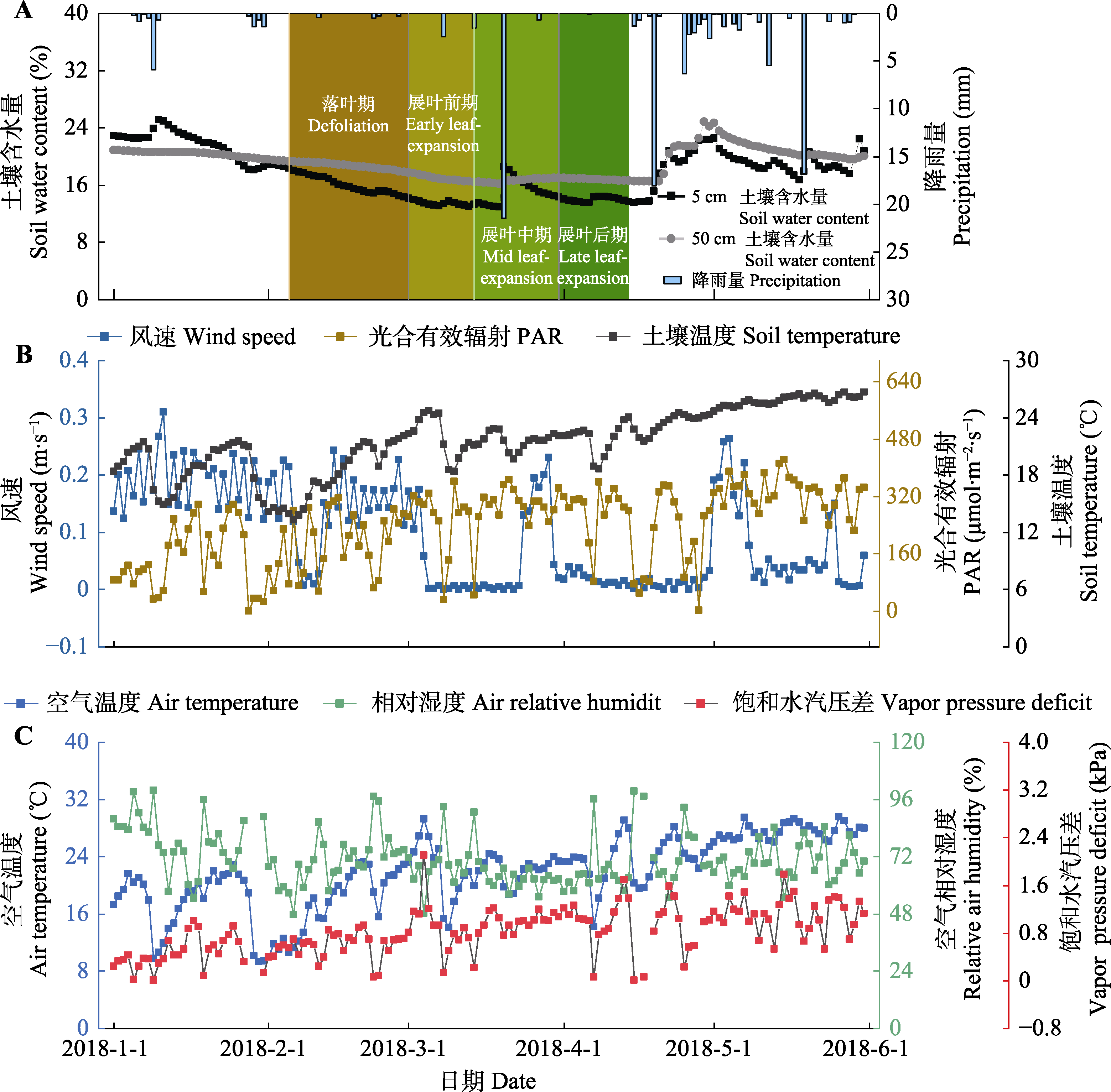
Fig. 1 Daily variation of environmental factors in the sample plot of the rubber plantation at Danzhou, Hainan. PAR, photosynthetically active radiation.
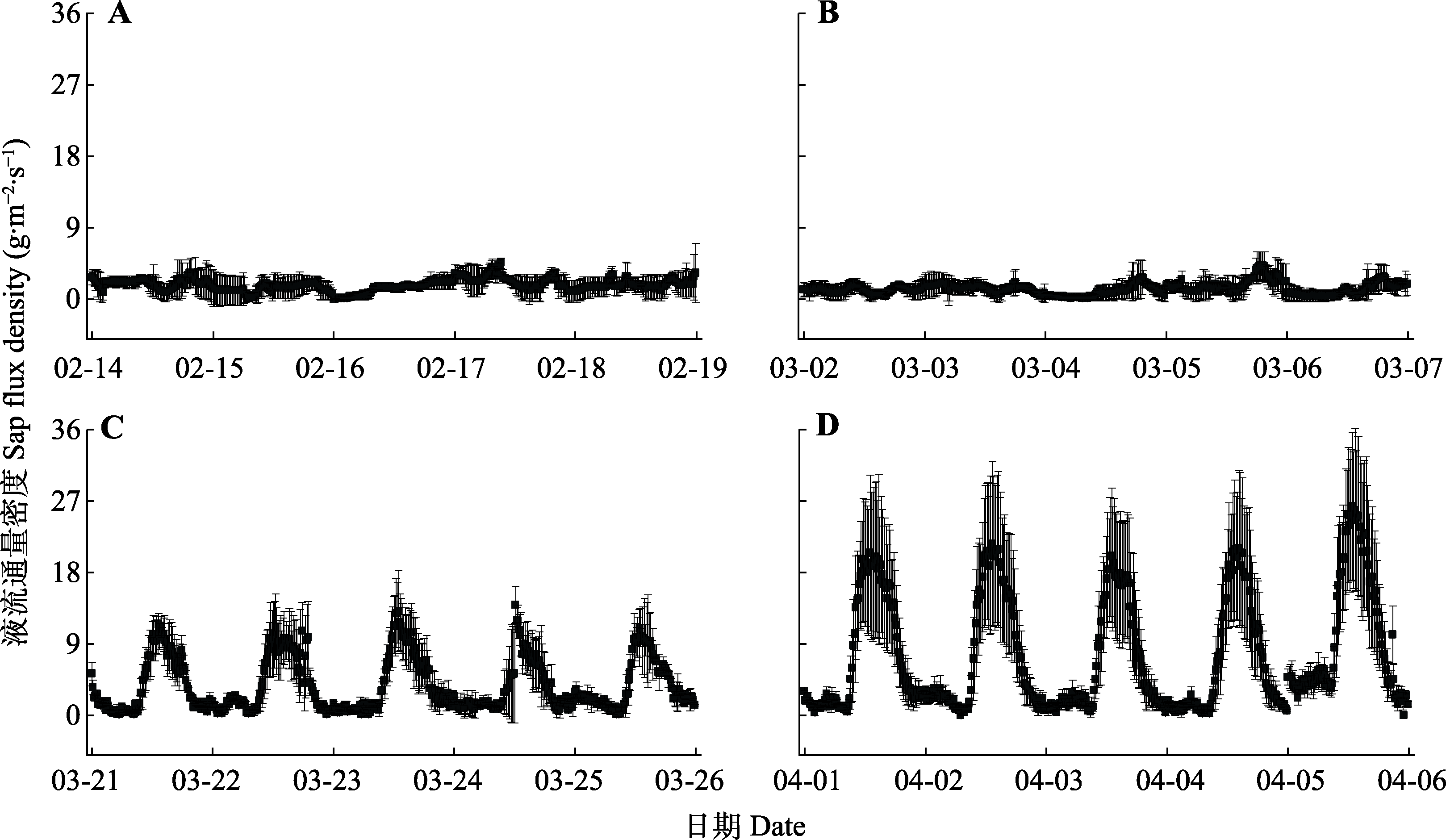
Fig. 2 Daily variation of rubber tree sap flux density at different leaf phenophases (mean ± SD). A, Defoliation. B, Early leaf-expansion. C, Mid leaf-expansion. D, Late leaf-expansion.
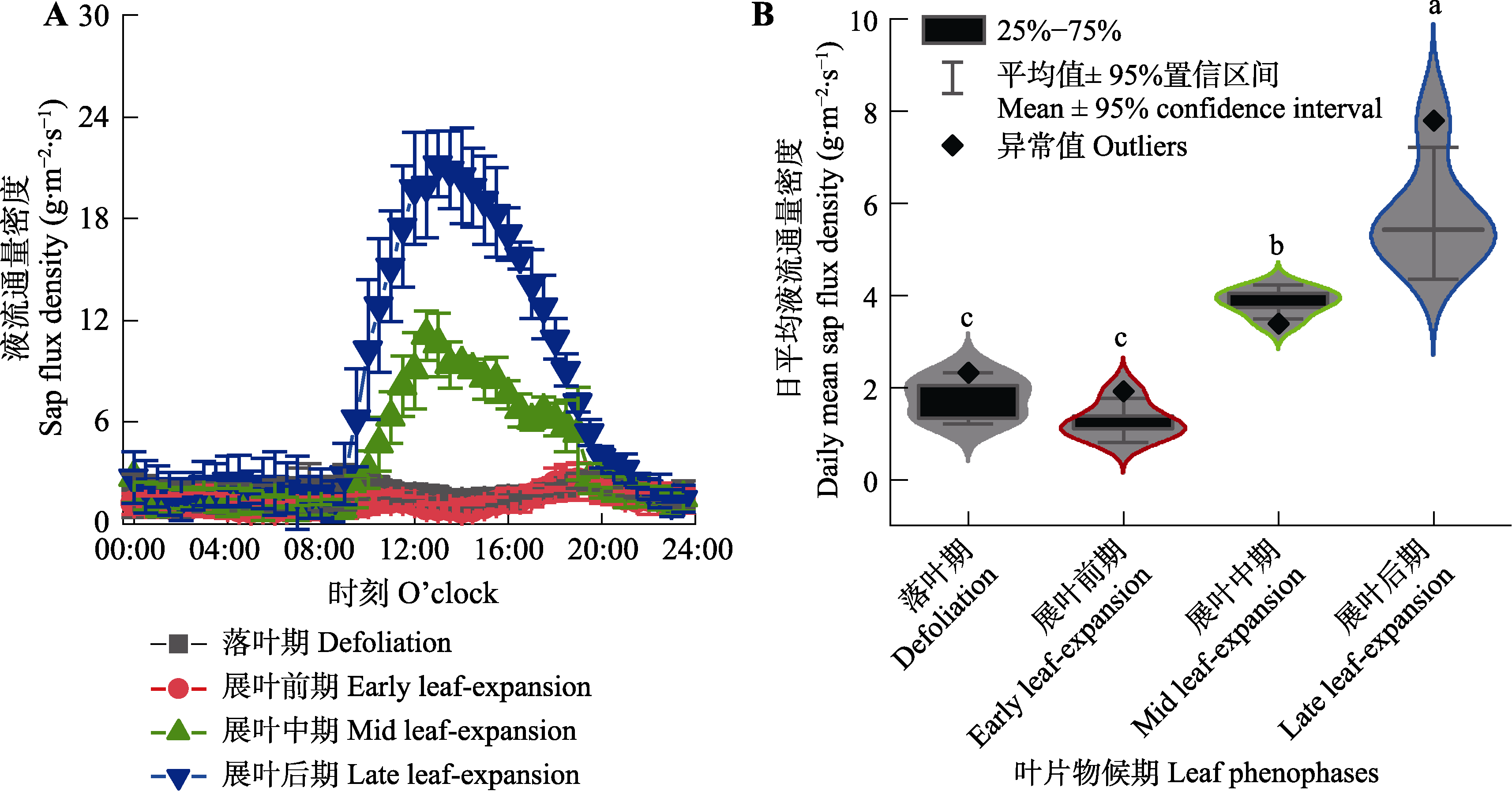
Fig. 3 Daily variation (mean ± SD) (A) and comparative analysis of sap flux density (B) in rubber tree stems during different leaf phenophases. Different lowercase letters indicated significant differences in stem sap flux density between leaf phenophases (p < 0.05).
| 叶片物候期 Leaf phenological stages | 单日水分利用量 Daily water use amount (kg) | |||
|---|---|---|---|---|
| R1 | R2 | R3 | R4 | |
| 落叶期 Defoliation | 4.72 ± 1.20C | 4.17 ± 1.22C | 3.95 ± 1.33C | - |
| 展叶前期 Early leaf-expansion | 3.86 ± 0.65C | 3.91 ± 1.13C | 1.84 ± 0.39D | 5.01 ± 1.21C |
| 展叶中期 Mid leaf-expansion | 7.10 ± 0.93B | 20.24 ± 3.28B | 12.09 ± 1.64B | 14.01 ± 2.76B |
| 展叶后期 Late leaf-expansion | 11.58 ± 4.09A | 31.33 ± 4.73A | 17.33 ± 2.85A | 22.00 ± 3.16A |
Table 3 Daily water use (Qtree) of individual rubber trees in different leaf phenophases (mean ± SD)
| 叶片物候期 Leaf phenological stages | 单日水分利用量 Daily water use amount (kg) | |||
|---|---|---|---|---|
| R1 | R2 | R3 | R4 | |
| 落叶期 Defoliation | 4.72 ± 1.20C | 4.17 ± 1.22C | 3.95 ± 1.33C | - |
| 展叶前期 Early leaf-expansion | 3.86 ± 0.65C | 3.91 ± 1.13C | 1.84 ± 0.39D | 5.01 ± 1.21C |
| 展叶中期 Mid leaf-expansion | 7.10 ± 0.93B | 20.24 ± 3.28B | 12.09 ± 1.64B | 14.01 ± 2.76B |
| 展叶后期 Late leaf-expansion | 11.58 ± 4.09A | 31.33 ± 4.73A | 17.33 ± 2.85A | 22.00 ± 3.16A |
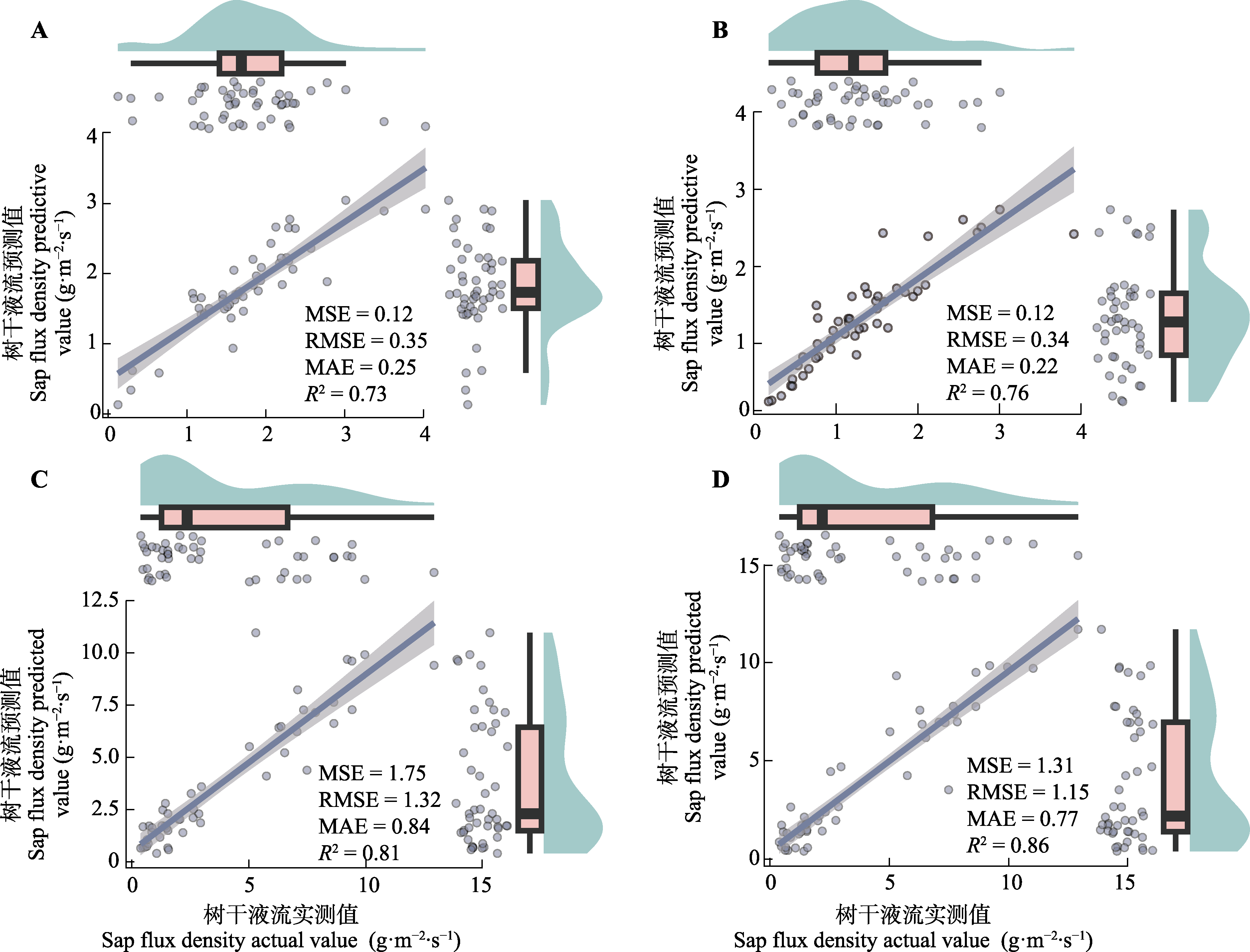
Fig. 4 Fitting curves of predicted and observed sap flux density values of rubber trees across different leaf phenophases based on the XGBoost model. A, Defoliation. B, Early leaf-expansion. C, Mid leaf-expansion. D, Late leaf-expansion. MSE, mean squared Error; RMSE, root mean squared error; MAE, mean absolute error.
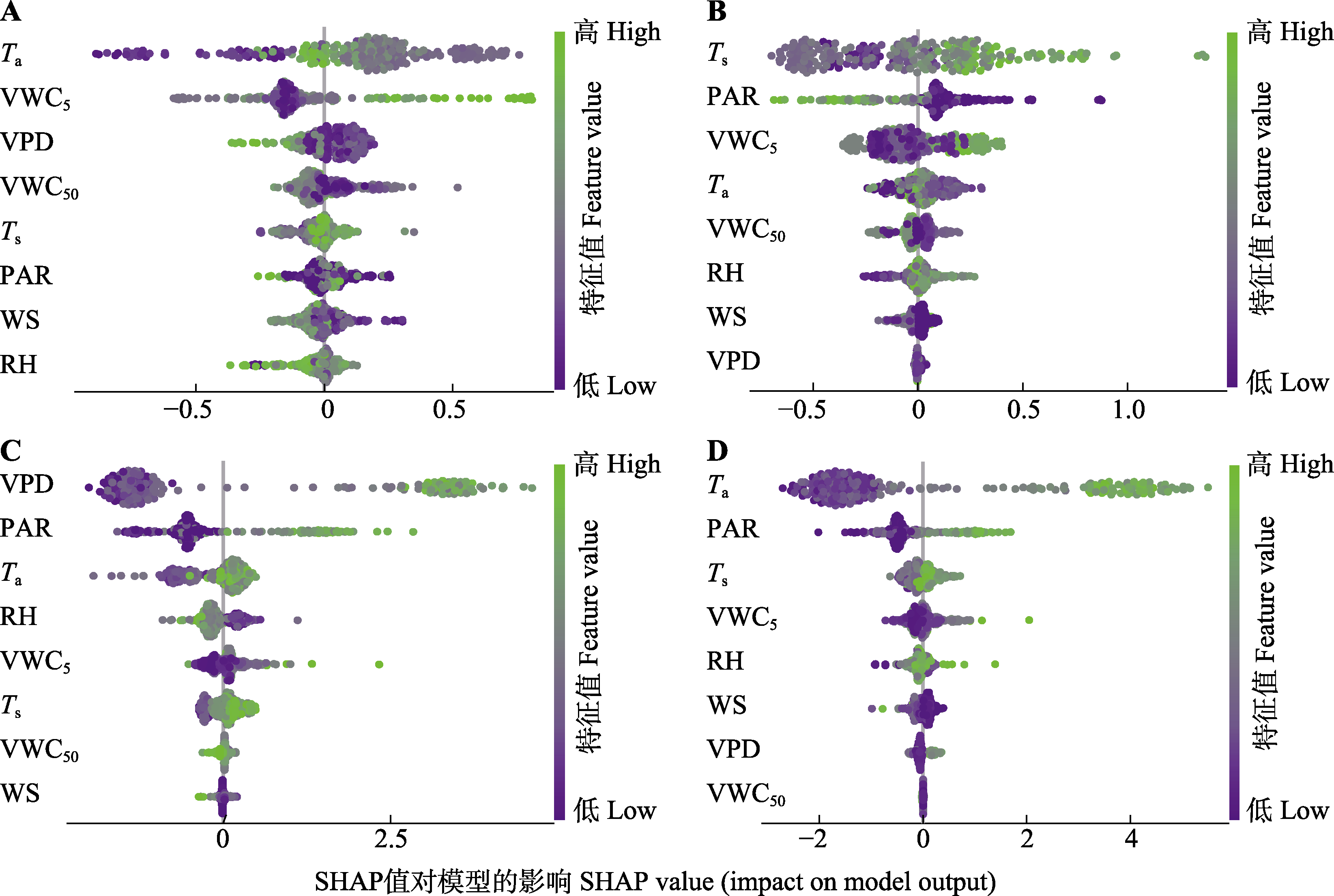
Fig. 5 SHAP summary figures of rubber plantations during different leaf phenophases. A, Defoliation. B, Early leaf-expansion. C, Mid leaf-expansion. D, Late leaf-expansion. In this figure, SHAP values > 0 indicate that the corresponding feature increases the predicted value of instantaneous liquid flow density (Fd) output by the model. Green and purple dots represent high and low feature values, respectively. Features are ordered vertically by their overall contribution to the model output. PAR, photosynthetically active radiation (μmol·m-2·s-1); RH, relative air humidity (%); Ta, air temperature (℃); Ts, soil temperature (℃); VPD, vapor pressure deficit (kPa); VWC5 and VWC50, volumetric water content (%) at soil depths of 5 cm and 50 cm; WS, wind speed (m·s-1).
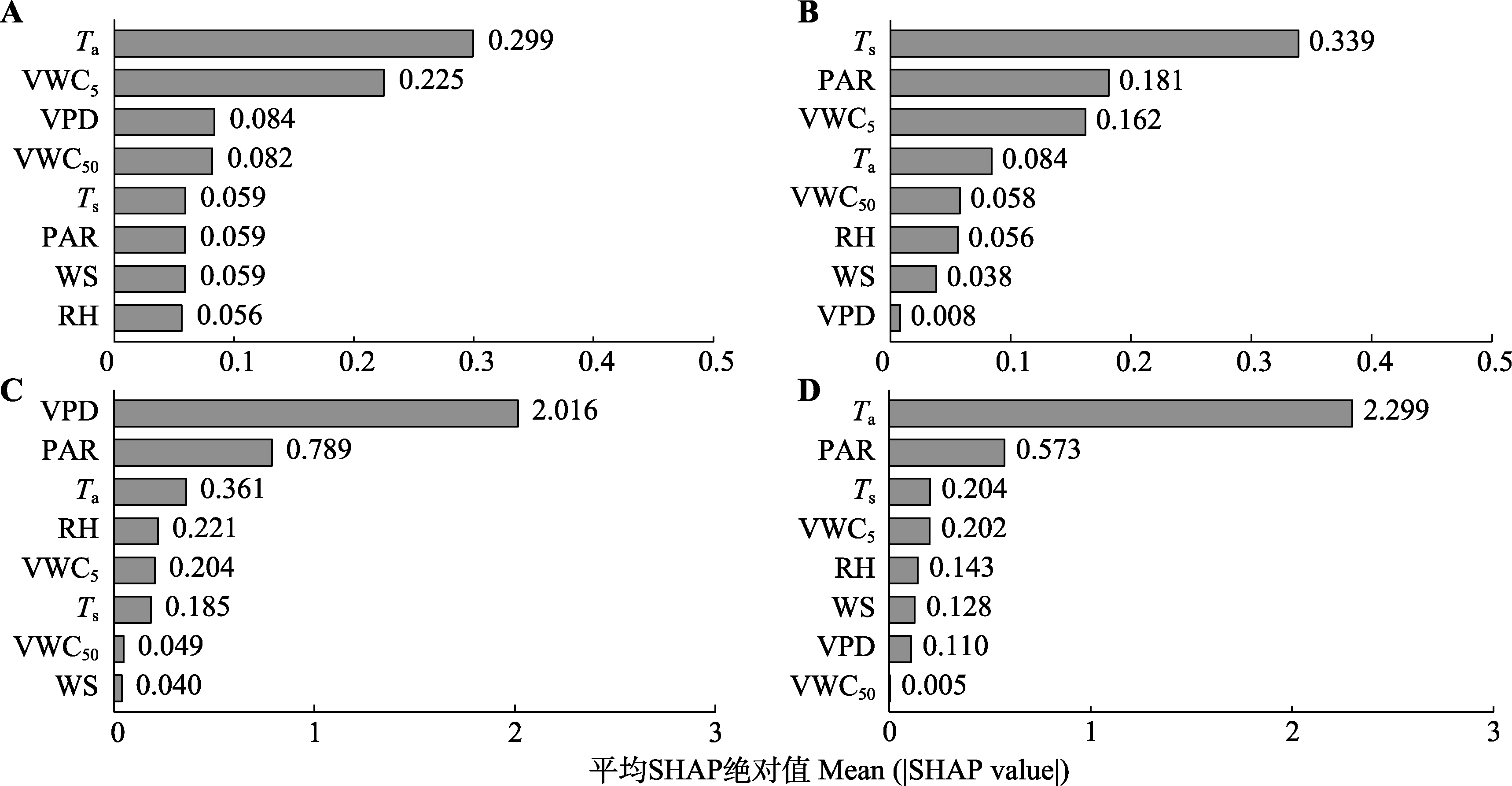
Fig. 6 SHAP feature importance bar plots for stem sap flow in rubber trees across leaf phenophases. A, Defoliation. B, Early leaf-expansion. C, Mid leaf-expansion. D, Late leaf-expansion. PAR, photosynthetically active radiation (μmol·m-2·s-1); RH, relative air humidity (%); Ta, air temperature (℃); Ts, soil temperature (℃); VPD, vapor pressure deficit (kPa); VWC5 and VWC50, volumetric water content (%) at soil depths of 5 cm and 50 cm; WS, wind speed (m·s-1).
| [1] |
Ahongshangbam J, Kulmala L, Soininen J, Frühauf Y, Karvinen E, Salmon Y, Lintunen A, Karvonen A, Järvi L (2023). Sap flow and leaf gas exchange response to a drought and heatwave in urban green spaces in a Nordic city. Biogeosciences, 20, 4455-4475.
DOI URL |
| [2] | Annamalainathan K, Joseph J, Alam B, Satheesh PR, Jacob J (2013). Seasonal changes in xylem sap flow rate in mature rubber plants. Journal of Plantation Crops, 41, 343-349. |
| [3] | Campbell GS, Norman JM (1977). An Introduction to Environmental Biophysics. Springer-Verlag, New York. |
| [4] | Charrier G, Améglio T (2024). Dynamic modeling of stem water content during the dormant period in walnut trees. Tree Physiology, 44, tpad128. DOI: 10.1093/treephys/tpad128. |
| [5] | Chen BQ, Ma J, Yang C, Xiao XM, Kou WL, Wu ZX, Yun T, Zaw ZN, Nawan P, Sengprakhon R, Zhou JN, Wang JK, Sun R, Zhang XC, Xie GS, et al. (2023). Diversified land conversion deepens understanding of impacts of rapid rubber plantation expansion on plant diversity in the tropics. Science of the Total Environment, 874, 162505. DOI: 10.1016/j.scitotenv.2023.162505. |
| [6] | Chen HB, Tang GP, Jiang N, Ren ZK, Fang XP, Chen YL (2025). Seasonal dynamics, environmental drivers, and hysteresis of sap flow in forests of China’s subtropical transitional zone. Forests, 16, 1480. DOI: 10.3390/f16091480. |
| [7] | Cui ZL, Zhang Y, Wang AZ, Fei WL, Shen LD, Wu JB (2025). Physiology dominates over phenology in influencing variation and trends of forest transpiration. Journal of Hydrology, 661, 133641. DOI: 10.1016/j.jhydrol.2025.133641. |
| [8] | Deng Y, Wu S, Ke J, Zhu AJ (2021). Effects of meteorological factors and groundwater depths on plant sap flow velocities in karst critical zone. Science of the Total Environment, 781, 146764. DOI: 10.1016/j.scitotenv.2021.146764. |
| [9] |
di Francescantonio D, Villagra M, Goldstein G, Campanello PI (2018). Leaf phenology and water-use patterns of canopy trees in Northern Argentinean subtropical forests. Tree Physiology, 38, 1841-1854.
DOI PMID |
| [10] | Forster MA, Kim TDH, Kunz S, Abuseif M, Chulliparambil VR, Srichandra J, Michael RN (2022). Phenology and canopy conductance limit the accuracy of 20 evapotranspiration models in predicting transpiration. Agricultural and Forest Meteorology, 315, 108824. DOI: 10.1016/j.agrformet.2022.108824. |
| [11] |
Fu ZQ, Hu X, Tian QR, Ge YL, Zhou HJ, Wu XY, Chen LX (2024). Nocturnal sap flow characteristics of two typical forest tree species and responses to environmental factors in the loess region of West Shanxi, China. Chinese Journal of Plant Ecology, 48, 1128-1142.
DOI URL |
|
[付照琦, 胡旭, 田沁瑞, 葛艳灵, 周红娟, 吴小云, 陈立欣 (2024). 晋西黄土区2种典型森林树种夜间液流特征及对环境因子的响应. 植物生态学报, 48, 1128-1142.]
DOI |
|
| [12] |
Granier A, Huc R, Barigah ST (1996). Transpiration of natural rain forest and its dependence on climatic factors. Agricultural and Forest Meteorology, 78, 19-29.
DOI URL |
| [13] | He JJ (2024). Exploring the Impact Mechanism and Scale Effect of Shanghai’s Urban Thermal Environment Using XGBoost Machine Learning. Master degree dissertation, Zhejiang A&F University, Hangzhou. |
| [何静娟 (2024). 基于XGBoost机器学习的上海市城市热环境影响机制与尺度效应研究. 硕士学位论文, 浙江农林大学, 杭州.] | |
| [14] | Huang WX, Luo X, Cheng XL, Yang MM, Meng Z, Li YL (2025). Sap flow and water use characteristics of dominant tree species in the transitional conifer-broadleaf mixed forest of Dinghushan Mountain. Acta Ecologica Sinica, 45, 3341-3352. |
| [黄婉萱, 罗璇, 成仙利, 杨萌萌, 孟泽, 李跃林 (2025). 鼎湖山过渡性针阔混交林主要树种树干液流与水分利用特征. 生态学报, 45, 3341-3352.] | |
| [15] |
Iida S, Shimizu T, Tamai K, Kabeya N, Shimizu A, Ito E, Ohnuki Y, Chann S, Keth N (2016). Interrelationships among dry season leaf fall, leaf flush and transpiration: insights from sap flux measurements in a tropical dry deciduous forest. Ecohydrology, 9, 472-486.
DOI URL |
| [16] | Jin C, Jian JS, Bourque CPA, Zha TD, Dai LC, Yang Y, Fu RY, Chen QY, Liu P, Li XH, Guo ZF, Hu ZM (2024). Soil autotrophic-to-heterotrophic-respiration ratio and its controlling factors across several terrestrial biomes: a global synthesis. Catena, 242, 108118. DOI: 10.1016/j.catena.2024.108118. |
| [17] | Lavrič M, Eler K, Ferlan M, Vodnik D, Gričar J (2017). Chronological sequence of leaf phenology, xylem and phloem formation and sap flow of Quercus pubescens from abandoned karst grasslands. Frontiers in Plant Science, 8, 314. DOI: 10.3389/fpls.2017.00314. |
| [18] | Li WX, He JJ, Zhang HL, Luo P (2019). Research progress in the phenology of hevea brasiliensis leaf canopy. Guangdong Agricultural Sciences, 46, 37-44. |
| [李文秀, 贺军军, 张华林, 罗萍 (2019). 橡胶树叶蓬物候研究进展. 广东农业科学, 46, 37-44.] | |
| [19] | Lin YX, Zhang YP, Zhao W, Zhang X, Dong YX, Fei XH, Li J (2016). Comparison of transpiration characteristics in different aged rubber plantations. Chinese Journal of Ecology, 35, 855-863. |
| [林友兴, 张一平, 赵玮, 张翔, 董钰鑫, 费学海, 李敬 (2016). 不同林龄橡胶林蒸腾特征的比较. 生态学杂志, 35, 855-863.] | |
| [20] |
Liu XS, Nie YQ, Luo TX, Yu JH, Shen W, Zhang L (2016). Seasonal shift in climatic limiting factors on tree transpiration: evidence from sap flow observations at alpine treelines in southeast Tibet. Frontiers in Plant Science, 7, 1018. DOI: 10.3389/fpls.2016.01018.
PMID |
| [21] | Liu Y, Liu YD, Qi SL, Fan ZY, Xue YD, Tang QX, Liu ZY, Zheng XM, Wu CY, Xi BY, Duan J (2024). Thinning vs. pruning: impacts on sap flow density and water use efficiency in young Populus tomentosa plantations in northern China. Forests, 15, 536. DOI: 10.3390/f15030536. |
| [22] | Luo YT, Ho CL, Helliker BR, Katifori E (2021). Leaf water storage and robustness to intermittent drought: a spatially explicit capacitive model for leaf hydraulics. Frontiers in Plant Science, 12, 725995. DOI: 10.3389/fpls.2021.725995. |
| [23] |
Manoli G, Ivanov VY, Fatichi S (2018). Dry-season greening and water stress in Amazonia: the role of modeling leaf phenology. Journal of Geophysical Research: Biogeosciences, 123, 1909-1926.
DOI URL |
| [24] |
Nord EA, Lynch JP (2009). Plant phenology: a critical controller of soil resource acquisition. Journal of Experimental Botany, 60, 1927-1937.
DOI PMID |
| [25] |
Peters RL, Steppe K, Pappas C, Zweifel R, Babst F, Dietrich L, von Arx G, Poyatos R, Fonti M, Fonti P, Grossiord C, Gharun M, Buchmann N, Steger DN, Kahmen A (2023). Daytime stomatal regulation in mature temperate trees prioritizes stem rehydration at night. New Phytologist, 239, 533-546.
DOI URL |
| [26] |
Qiu J (2009). Where the rubber meets the garden. Nature, 457, 246-247.
DOI |
| [27] |
Savage JA, Chuine I (2021). Coordination of spring vascular and organ phenology in deciduous angiosperms growing in seasonally cold climates. New Phytologist, 230, 1700-1715.
DOI URL |
| [28] | Singh AK, Liu WJ, Zakari S, Wu JN, Yang B, Jiang XJ, Zhu XA, Zou X, Zhang WJ, Chen CF, Singh R, Nath AJ (2021). A global review of rubber plantations: impacts on ecosystem functions, mitigations, future directions, and policies for sustainable cultivation. Science of the Total Environment, 796, 148948. DOI: 10.1016/j.scitotenv.2021.148948. |
| [29] | Tan ZH, Zhang YP, Song QH, Liu WJ, Deng XB, Tang JW, Deng Y, Zhou WJ, Yang LY, Yu GR, Sun XM, Liang NS (2011). Rubber plantations act as water pumps in tropical China. Geophysical Research Letters, 38, L24406. DOI: 10.1029/2011GL050006. |
| [30] |
Wang CS, Wang SP (2015). A review of research on responses of leaf traits to climate change. Chinese Journal of Plant Ecology, 39, 206-216.
DOI URL |
|
[王常顺, 汪诗平 (2015). 植物叶片性状对气候变化的响应研究进展. 植物生态学报, 39, 206-216.]
DOI |
|
| [31] | Wang GH, Chen ZX, Yang XL, Cai GJ, Shen YY (2022). Effect of simulated precipitation regimes on sap flow and water use efficiency for xerophytic Caragana korshinskii. Ecological Indicators, 143, 109309. DOI: 10.1016/j.ecolind.2022.109309. |
| [32] | Wu SP, Gu XX, Peng XF, Chen LZ (2024). Comparative analysis of water-use strategies in three subtropical mangrove species: a study of sap flow and gas exchange monitoring. Tree Physiology, 44, tpae102. DOI: 10.1093/treephys/tpae102. |
| [33] | Wu WJ, Tao Z, Chen GJ, Meng TF, Li Y, Feng H, Si BC, Manevski K, Andersen MN, Siddique KHM (2022). Phenology determines water use strategies of three economic tree species in the semi-arid Loess Plateau of China. Agricultural and Forest Meteorology, 312, 108716. DOI: 10.1016/j.agrformet.2021.108716. |
| [34] | Wu ZX, Chen BQ, Yang C, Tao ZL, Xie GS, Zhou ZD (2012). Distribution of footprint and fluxes source area of rubber plantation in Hainan Island. Journal of Tropical Biology, 3, 42-50. |
| [吴志祥, 陈帮乾, 杨川, 陶忠良, 谢贵水, 周兆德 (2012). 海南岛橡胶林通量足迹与源区分布研究. 热带生物学报, 3, 42-50.] | |
| [35] | Zhang JX (1986). Stomatal regulation of water use— Cowan-Farguahr’s optimization theory of stomatal regulation. Plant Physiology Communications, 22, 12-17. |
| [张建新 (1986). 气孔对水分利用的调节——Cowan和Farquhar的气孔调节最优化理论. 植物生理学通讯, 22, 12-17.] | |
| [36] |
Zhang X, Wu JJ, Jia GD, Lei ZR, Zhang LQ, Liu R, Lü XR, Dai YM (2023). Effects of precipitation variations on characteristics of sap flow and water source of Platycladus orientalis. Chinese Journal of Plant Ecology, 47, 1585-1599.
DOI URL |
|
[张潇, 武娟娟, 贾国栋, 雷自然, 张龙齐, 刘锐, 吕相融, 代远萌 (2023). 降水控制对侧柏液流变化特征及其水分来源的影响. 植物生态学报, 47, 1585-1599.]
DOI |
|
| [37] | Zhang Y, Ma YJ (2021). Stem flow of mature jujube trees during dormancy in arid area of northwest China. Journal of Fruit Science, 38, 934-946. |
| [张洋, 马英杰 (2021). 西北干旱区盛果期灰枣休眠期液流研究. 果树学报, 38, 934-946.] | |
| [38] |
Zhao FF, Ma X, Di N, Wang Y, Liu Y, Li GD, Jia LM, Xi BY (2020). Azimuthal variation in nighttime sap flow and its mainly influence factors of Populus tomentosa. Chinese Journal of Plant Ecology, 44, 864-874.
DOI URL |
| [赵飞飞, 马煦, 邸楠, 王烨, 刘洋, 李广德, 贾黎明, 席本野 (2020). 毛白杨茎干不同方位夜间液流变化规律及其主要影响因子. 植物生态学报, 44, 864-874.] | |
| [39] | Zhao W, Zhang YP, Song QH, Zhang X, Ji HL, Nizami SM, Yu L (2014). Characteristics of transpiration of rubber trees (Hevea brasiliensis) and its relationship with environmental factors. Chinese Journal of Ecology, 33, 1803-1810. |
| [赵玮, 张一平, 宋清海, 张翔, 姬红利, Nizami SM, 余雷 (2014). 橡胶树蒸腾特征及其与环境因子的关系. 生态学杂志, 33, 1803-1810.] |
| [1] | LI Yi, MENG Sheng-Wang, YANG Feng-Ting, GAO De-Cai, DAI Xiao-Qin, KOU Liang, FU Xiao-Li, WANG Hui-Min. Research progress on plant nutrient resorption and its influencing factors [J]. Chin J Plant Ecol, 2026, 50(6): 1265-1281. |
| [2] | WU Guang-Jin, GUO Yao-Xin, REN Cheng-Jie, WANG Jun, YUE Ming, ZHAO Fa-Zhu. Distribution of soil organic carbon content and its influencing factors in different vegetation type on northern foot of Qinling Mountains [J]. Chin J Plant Ecol, 2026, 50(4): 1003-1015. |
| [3] | TIAN Di, CHI Xiao-Long, SHI Liang, LIU Xiao-Han, ZHAO Chang-Ti, WU Mei, ZHANG Yu-Zhong, GAO Yong-Liang. Stoichiometric characteristics of dominant afforestation tree species and their environmental drivers in Saihanba region [J]. Chin J Plant Ecol, 2026, 50(2): 362-373. |
| [4] | WEI Xin, JIANG Lan, ZHENG Chen-Cheng, ZHU Jing, CHEN Bo, LI Wen-Zhou, LAI Shu-Yu, LIU Jin-Fu, HE Zhong-Sheng. Distribution and influencing factors of woody plant sexual systems along elevational gradient on the south slope of Daiyun Mountain [J]. Chin J Plant Ecol, 2026, 50(1): 150-159. |
| [5] | HUANG Mei-Hong, NIU Meng-Qiu, YANG Peng-Fei, LIN Jie, LIAO Zhou-Yu, CHEN Jian-Guo, XIANG Jian-Ying. Effects of temperature and burial depth on seedling emergence and growth of the alpine cushion plant Arenaria oreophila [J]. Chin J Plant Ecol, 2025, 49(12): 2092-2104. |
| [6] | ZHU Wan-Kuan, XU Yu-Xing, HUANG Run-Xia, DU A-Peng, WANG Zhi-Chao. Differences in water use efficiency between dry and rainy seasons and their controlling factors in Eucalyptus plantation in Leizhou Peninsula [J]. Chin J Plant Ecol, 2025, 49(12): 2015-2029. |
| [7] | ZHOU Hong-Juan, LIU Zi-He, LIU Ke-Yan, ZHANG Chu-Rui, HU Xu, HAN Lu, CHEN Li-Xin. Water uptake and niche characteristics of neighboring plants for arbors and shrubs under different rainfall conditions in a rocky mountainous area, Beijing [J]. Chin J Plant Ecol, 2024, 48(9): 1089-1103. |
| [8] | NIU Yun-Ming, JIA Guo-Dong, WANG Xin, LIU Zi-He. Dynamic changes of transpiration water age and water utilization strategies for trees at different altitudes in Lushan area [J]. Chin J Plant Ecol, 2024, 48(9): 1104-1117. |
| [9] | WU Feng-Yan, WU Yong-Sheng, CHEN Xiao-Han, FENG Ji, LU Li-Yuan, CHASINA , WANG Chao-Yu, MENG Yuan-Fa, YIN Qiang. Spatial-temporal variation of water use efficiency in three species of sand-fixing shrubs on the Ordos Plateau [J]. Chin J Plant Ecol, 2024, 48(9): 1180-1191. |
| [10] | WANG Yin, TONG Xiao-Juan, ZHANG Jin-Song, LI Jun, MENG Ping, LIU Pei-Rong, ZHANG Jing-Ru. Impact of drought on carbon and water fluxes and their coupling in a Quercus variabilis plantation [J]. Chin J Plant Ecol, 2024, 48(9): 1157-1171. |
| [11] | FU Zhao-Qi, HU Xu, TIAN Qin-Rui, GE Yan-Ling, ZHOU Hong-Juan, WU Xiao-Yun, CHEN Li-Xin. Nocturnal sap flow characteristics of two typical forest tree species and responses to environmental factors in the loess region of West Shanxi, China [J]. Chin J Plant Ecol, 2024, 48(9): 1128-1142. |
| [12] | PAN Yuan-Fang, PAN Liang-Hao, QIU Si-Ting, QIU Guang-Long, SU Zhi-Nan, SHI Xiao-Fang, FAN Hang-Qing. Variations in tree height among mangroves and their environmental adaptive mechanisms in China’s coastal areas [J]. Chin J Plant Ecol, 2024, 48(4): 483-495. |
| [13] | WANG Li-Li, SONG Xiao-Tong, GU Ji-Qi, SHAO Xiao-Ming. Relationship between morphological characteristics of Didymodon constrictus and environmental changes in Xizang and its response strategies [J]. Chin J Plant Ecol, 2024, 48(10): 1351-1360. |
| [14] | LI Wei-Bin, ZHANG Hong-Xia, ZHANG Yu-Shu, CHEN Ni-Na. Influence of diurnal asymmetric warming on carbon sink capacity in a broadleaf Korean pine forest in Changbai Mountains, China [J]. Chin J Plant Ecol, 2023, 47(9): 1225-1233. |
| [15] | ZHAO Meng-Juan, JIN Guang-Ze, LIU Zhi-Li. Vertical variations in leaf functional traits of three typical ferns in mixed broadleaved- Korean pine forest [J]. Chin J Plant Ecol, 2023, 47(8): 1131-1143. |
| Viewed | ||||||
|
Full text |
|
|||||
|
Abstract |
|
|||||
Copyright © 2026 Chinese Journal of Plant Ecology
Tel: 010-62836134, 62836138, E-mail: apes@ibcas.ac.cn, cjpe@ibcas.ac.cn

