
Chin J Plant Ecol ›› 2026, Vol. 50 ›› Issue (6): 1464-1477.DOI: 10.17521/cjpe.2025.0231 cstr: 32100.14.cjpe.2025.0231
• Research Articles • Previous Articles Next Articles
LI Yu-Heng1, CHEN Guo1,2,*( ), LENG Cong-Yuan1, HUANG Jin3, LI Yu-Zhu3, KONG Xiang-Xiang1
Received:2025-06-18
Accepted:2025-12-24
Online:2026-06-28
Published:2026-08-26
Contact:
CHEN Guo
Supported by:LI Yu-Heng, CHEN Guo, LENG Cong-Yuan, HUANG Jin, LI Yu-Zhu, KONG Xiang-Xiang. Effects of light intensity and soil moisture on adaptive strategies of dominant species Carex muliensis in Zoigê alpine wetland[J]. Chin J Plant Ecol, 2026, 50(6): 1464-1477.
Add to citation manager EndNote|Ris|BibTeX
URL: https://www.plant-ecology.com/EN/10.17521/cjpe.2025.0231
| 指标 Index | 光照强度 Light intensity (df = 1) | 土壤水分含量 Soil moisture (df = 2) | 光照强度×土壤水分含量 Light intensity × soil moisture (df = 2) | |||
|---|---|---|---|---|---|---|
| F | p | F | p | F | p | |
| 叶长 Leaf length | 3.966 | 0.048* | 18.582 | <0.001*** | 2.910 | 0.038* |
| 叶宽 Leaf width | 9.243 | 0.003** | 7.451 | <0.001*** | 3.884 | 0.023* |
| 叶厚 Leaf thickness | 7.695 | 0.006** | 6.808 | 0.002** | 3.124 | 0.047* |
| 比叶面积 Specific leaf area | 72.272 | <0.001*** | 4.546 | 0.034* | 5.066 | 0.025* |
| 叶片干物质含量 Leaf dry matter content | 22.629 | <0.001*** | 1.593 | 0.243 | 0.857 | 0.449 |
| 根长 Root length | 283.236 | <0.001*** | 15.373 | <0.001*** | 0.776 | 0.482 |
| 地上生物量 Aboveground biomass | 5.171 | 0.035* | 7.337 | 0.008** | 0.781 | 0.480 |
| 地下生物量 Belowground biomass | 7.105 | 0.021* | 30.073 | <0.001*** | 0.409 | 0.673 |
| 根冠比 Root-shoot ratio | 6.514 | 0.025* | 1.806 | 0.206 | 10.493 | 0.002** |
Table 1 Effects of light intensity and soil moisture on the growth and morphological traits of Carex muliensis
| 指标 Index | 光照强度 Light intensity (df = 1) | 土壤水分含量 Soil moisture (df = 2) | 光照强度×土壤水分含量 Light intensity × soil moisture (df = 2) | |||
|---|---|---|---|---|---|---|
| F | p | F | p | F | p | |
| 叶长 Leaf length | 3.966 | 0.048* | 18.582 | <0.001*** | 2.910 | 0.038* |
| 叶宽 Leaf width | 9.243 | 0.003** | 7.451 | <0.001*** | 3.884 | 0.023* |
| 叶厚 Leaf thickness | 7.695 | 0.006** | 6.808 | 0.002** | 3.124 | 0.047* |
| 比叶面积 Specific leaf area | 72.272 | <0.001*** | 4.546 | 0.034* | 5.066 | 0.025* |
| 叶片干物质含量 Leaf dry matter content | 22.629 | <0.001*** | 1.593 | 0.243 | 0.857 | 0.449 |
| 根长 Root length | 283.236 | <0.001*** | 15.373 | <0.001*** | 0.776 | 0.482 |
| 地上生物量 Aboveground biomass | 5.171 | 0.035* | 7.337 | 0.008** | 0.781 | 0.480 |
| 地下生物量 Belowground biomass | 7.105 | 0.021* | 30.073 | <0.001*** | 0.409 | 0.673 |
| 根冠比 Root-shoot ratio | 6.514 | 0.025* | 1.806 | 0.206 | 10.493 | 0.002** |
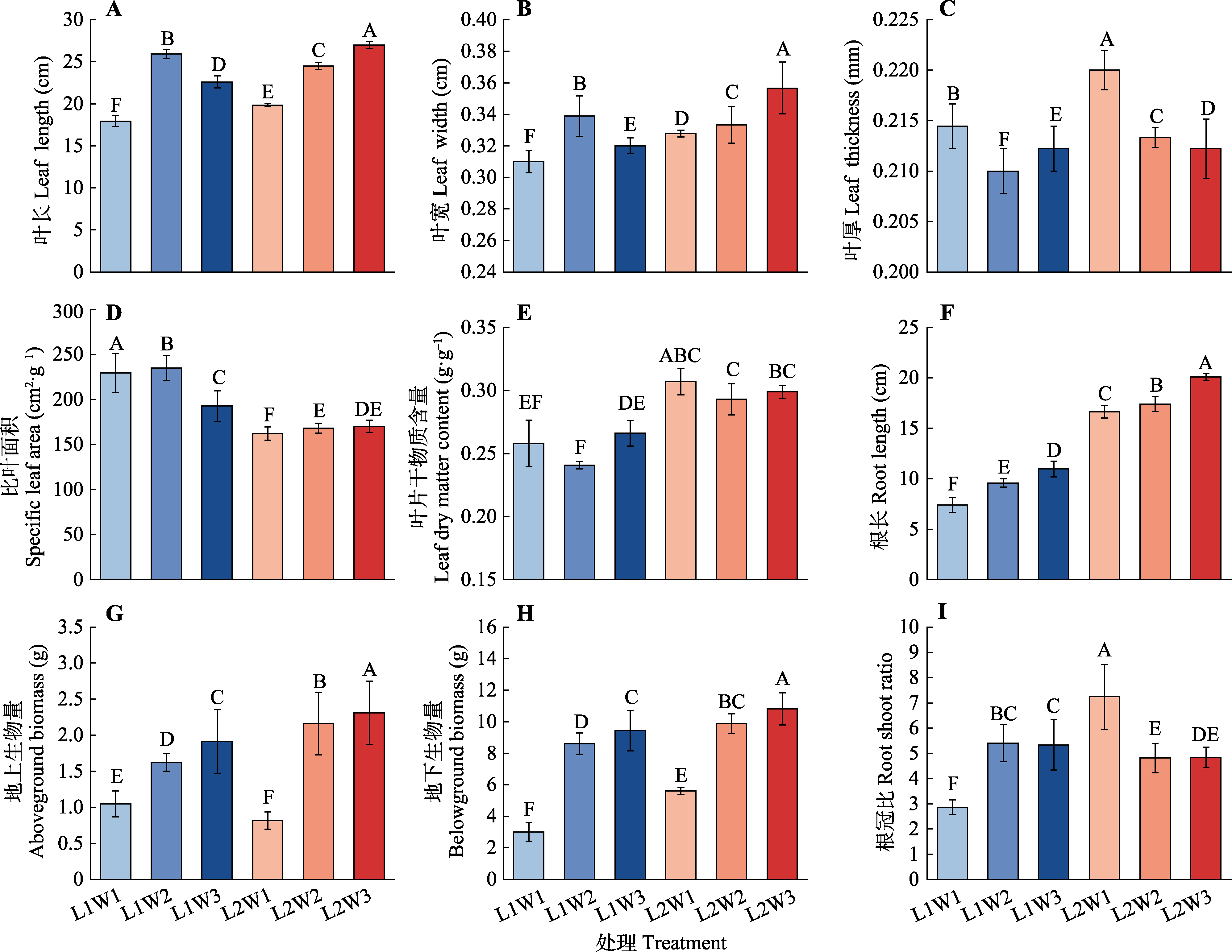
Fig. 1 Growth and morphological characteristics of Carex muliensis under different light intensities and soil moisture conditions (mean ± SD). L1 and L2 represent shading and ambient light, respectively; W1, W2 and W3 represent low, medium and high soil moisture levels, respectively. Different uppercase letters indicate significant differences among treatments (p < 0.05).
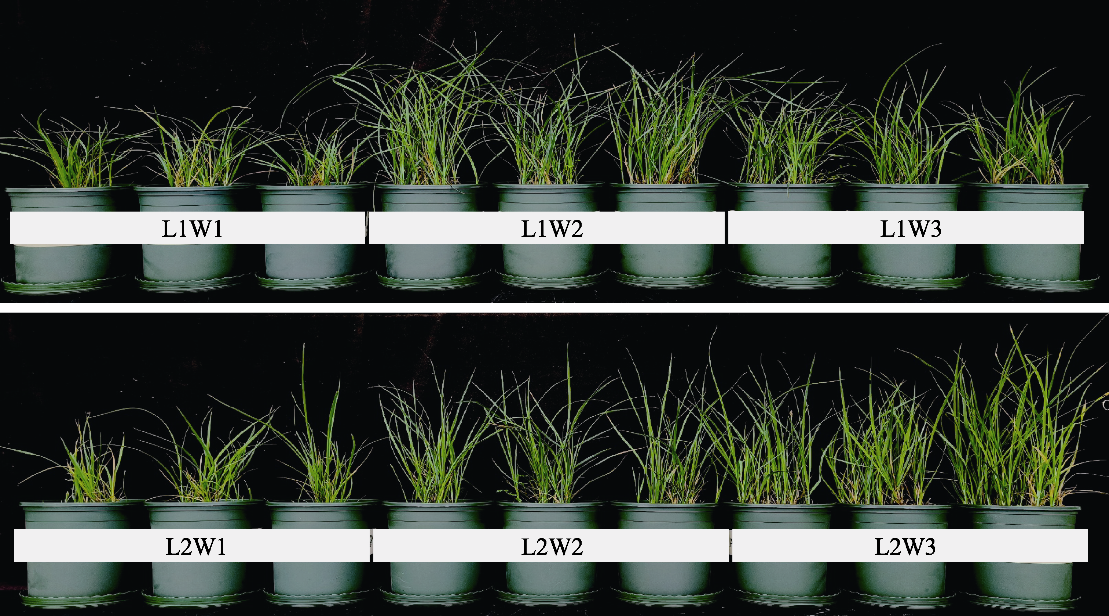
Fig. 2 Morphological characteristics of Carex muliensis under different treatments. L1 and L2 represent shading and ambient light respectively; W1, W2 and W3 represent low, medium and high soil moisture levels, respectively.
| 指标 Index | 光照强度 Light intensity (df = 1) | 土壤水分含量 Soil moisture (df = 2) | 光照强度×土壤水分含量 Light intensity × soil moisture (df = 2) | |||
|---|---|---|---|---|---|---|
| F | p | F | p | F | p | |
| 叶绿素含量 Chlorophyll content | 7.637 | 0.007** | 0.014 | 0.986 | 0.019 | 0.981 |
| 净光合速率 Net photosynthetic rate | 9699.656 | <0.001*** | 1048.175 | <0.001*** | 842.535 | <0.001*** |
| 蒸腾速率 Transpiration rate | 289.931 | <0.001*** | 314.431 | <0.001*** | 69.285 | <0.001*** |
| 细胞间CO2浓度 Intercellular CO2 concentration | 2953.003 | <0.001*** | 206.929 | <0.001*** | 149.919 | <0.001*** |
| 气孔导度 Stomatal conductance | 990.125 | <0.001*** | 662.625 | <0.001*** | 184.625 | <0.001*** |
| 水分利用效率 Water use efficiency | 329.947 | <0.001*** | 11.048 | 0.002** | 1.321 | 0.303 |
| PSII最大光化学量子产量 Maximum quantum yield of PSII efficiency | 9.921 | 0.008** | 2.873 | 0.096 | 0.492 | 0.623 |
| 非光化学淬灭系数 Non-photochemical quenching | 7.051 | 0.021* | 1.095 | 0.366 | 2.092 | 0.166 |
Table 2 Effects of light intensity and soil moisture on the photosynthetic characteristics of Carex muliensis
| 指标 Index | 光照强度 Light intensity (df = 1) | 土壤水分含量 Soil moisture (df = 2) | 光照强度×土壤水分含量 Light intensity × soil moisture (df = 2) | |||
|---|---|---|---|---|---|---|
| F | p | F | p | F | p | |
| 叶绿素含量 Chlorophyll content | 7.637 | 0.007** | 0.014 | 0.986 | 0.019 | 0.981 |
| 净光合速率 Net photosynthetic rate | 9699.656 | <0.001*** | 1048.175 | <0.001*** | 842.535 | <0.001*** |
| 蒸腾速率 Transpiration rate | 289.931 | <0.001*** | 314.431 | <0.001*** | 69.285 | <0.001*** |
| 细胞间CO2浓度 Intercellular CO2 concentration | 2953.003 | <0.001*** | 206.929 | <0.001*** | 149.919 | <0.001*** |
| 气孔导度 Stomatal conductance | 990.125 | <0.001*** | 662.625 | <0.001*** | 184.625 | <0.001*** |
| 水分利用效率 Water use efficiency | 329.947 | <0.001*** | 11.048 | 0.002** | 1.321 | 0.303 |
| PSII最大光化学量子产量 Maximum quantum yield of PSII efficiency | 9.921 | 0.008** | 2.873 | 0.096 | 0.492 | 0.623 |
| 非光化学淬灭系数 Non-photochemical quenching | 7.051 | 0.021* | 1.095 | 0.366 | 2.092 | 0.166 |
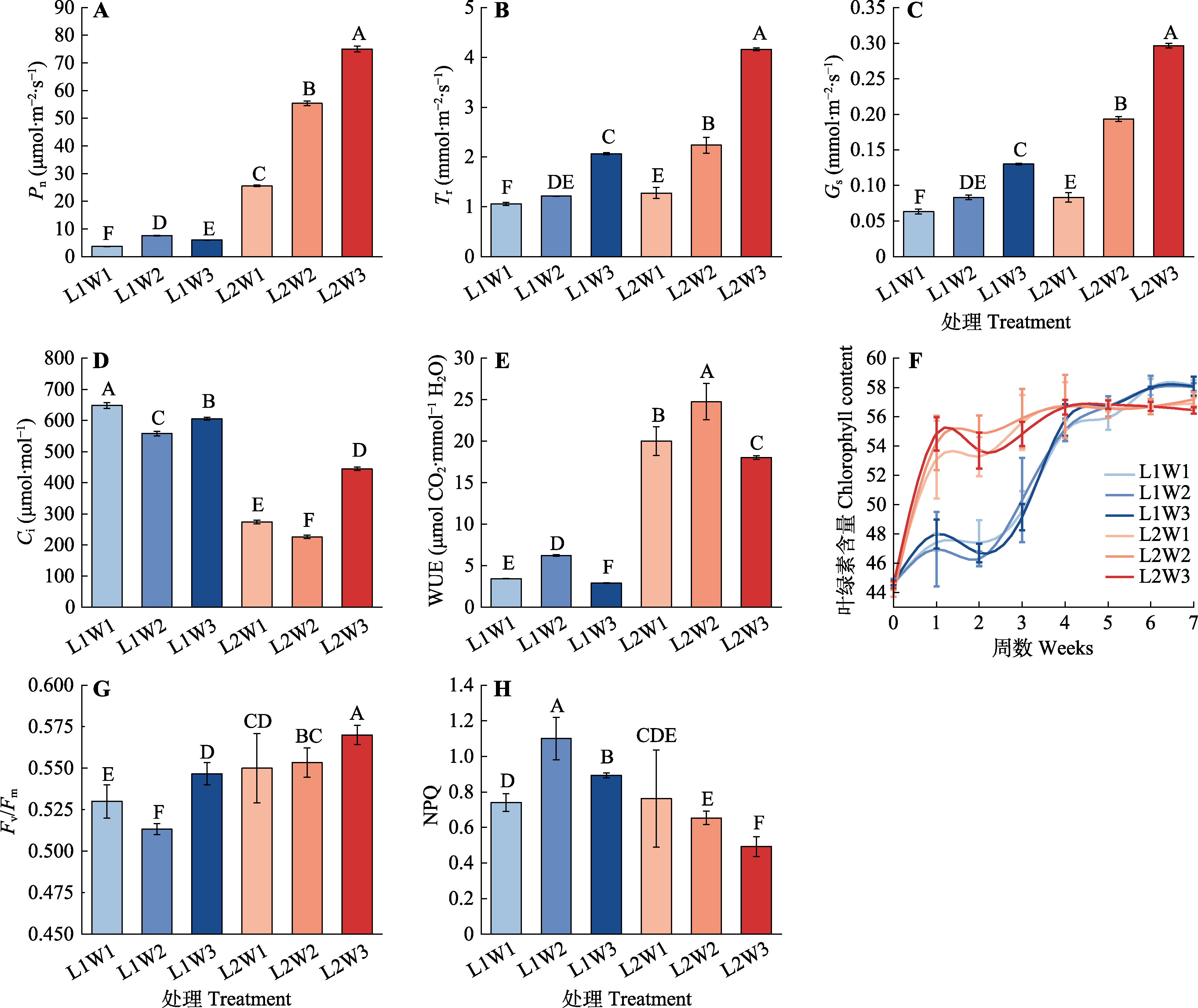
Fig. 3 Photosynthetic characteristics of Carex muliensis under different light intensities and soil moisture conditions (mean ± SD). L1 and L2 represent shading and ambient light, respectively. W1, W2 and W3 represent low, medium and high soil moisture levels, respectively. Different uppercase letters indicate significant differences among treatments (p < 0.05). Ci, intercellular CO2 concentration; Gs, stomatal conductance; Fv/Fm, maximum quantum yield of PSII efficiency; NPQ, non-photochemical quenching; Pn, net photosynthetic rate; Tr, transpiration rate; WUE, water use efficiency.
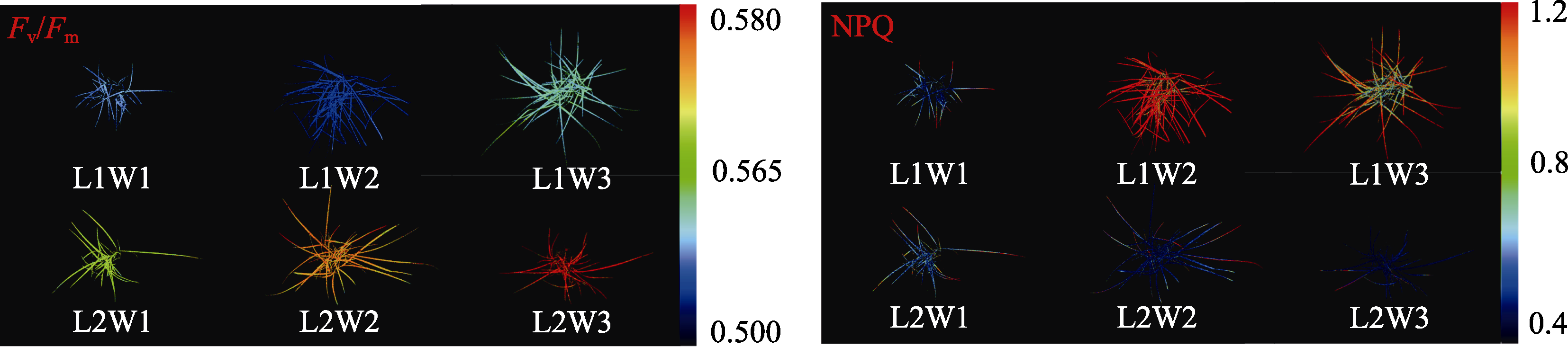
Fig. 4 Chlorophyll fluorescence image of Carex muliensis under different treatments. L1 and L2 represent shading and ambient light, respectively. W1, W2 and W3 represent low, medium and high soil moisture levels, respectively. Fv/Fm, maximum quantum yield of PSII efficiency; NPQ, non-photochemical quenching.
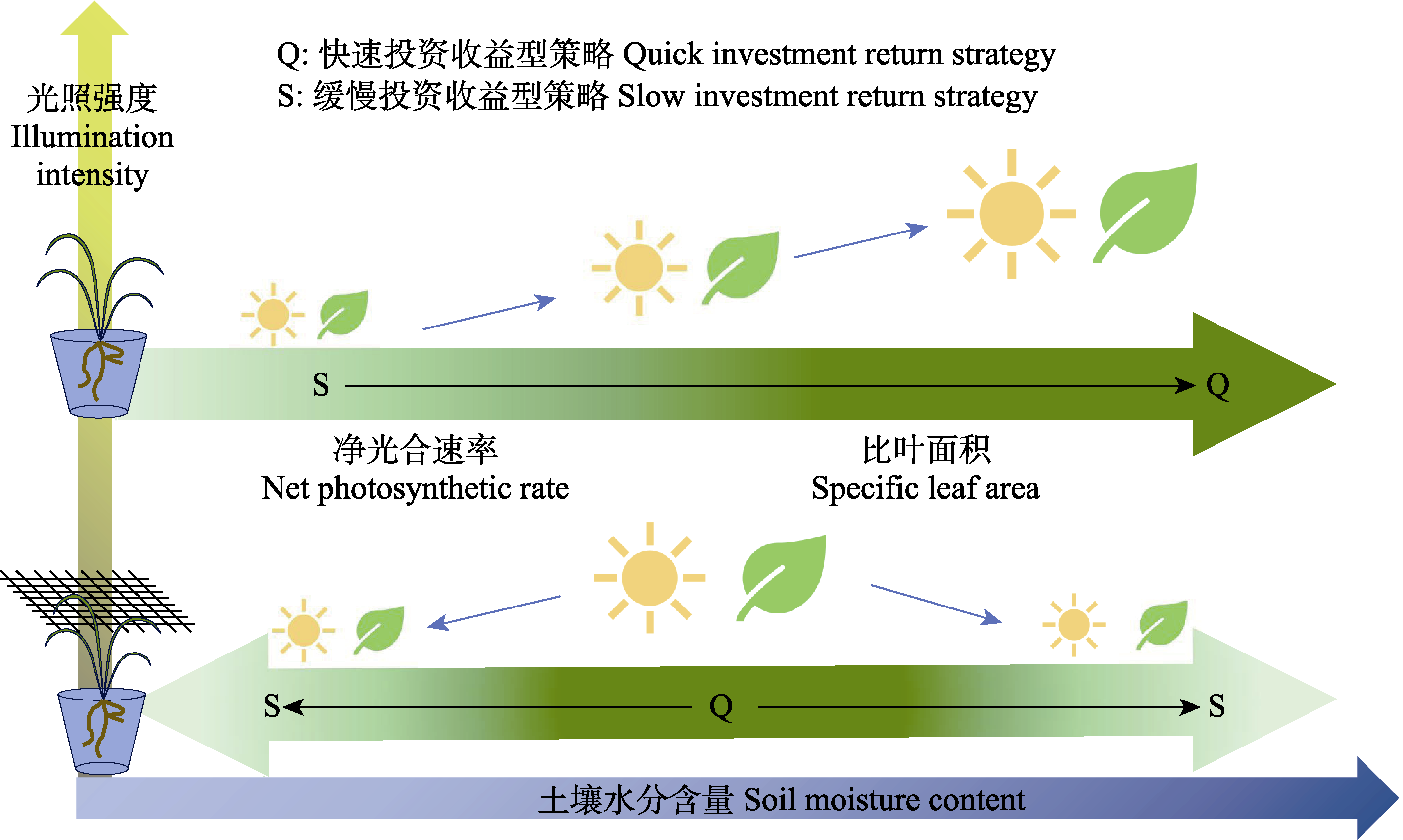
Fig. 5 Adaptive strategies responses of Carex muliensis under different light intensities and soil moisture conditions.
| [1] |
Babilas R, Nowosielski R, Czeppe T (1962). Nutritive influences on the distribution of dry matter in the plant. Netherlands Journal of Agricultural Science, 10, 399-408.
DOI URL |
| [2] |
Beuel S, Alvarez M, Amler E, Behn K, Kotze D, Kreye C, Leemhuis C, Wagner K, Willy DK, Ziegler S, Becker M (2016). A rapid assessment of anthropogenic disturbances in East African wetlands. Ecological Indicators, 67, 684-692.
DOI URL |
| [3] | Cao YQ, Hu J, Huang QC, Zhang W, Lei JF, Wang H, Chen YJ, Zhou QP (2023). A dataset of gradient meteorological observations at Sichuan Zoige Alpine Wetland Station in 2022. China Scientific Data, 8(4), 85-94. |
| [曹永强, 胡健, 黄秋成, 张伟, 雷俊锋, 汪辉, 陈有军, 周青平 (2023). 四川若尔盖高寒湿地生态站2022年梯度气象观测数据集. 中国科学数据, 8(4), 85-94.] | |
| [4] |
Chaves MM, Oliveira MM (2004). Mechanisms underlying plant resilience to water deficits: prospects for water-saving agriculture. Journal of Experimental Botany, 55, 2365-2384.
DOI PMID |
| [5] | Deng ML, Tian K, Duan ZL, Zhou YH, Yang J, Wang JQ (2010). The changes of landscape at Zoige plateau wetland reserve in Sichuan, China. Journal of Mountain Science, 28, 240-246. |
| [邓茂林, 田昆, 段宗亮, 周耀华, 杨佼, 王进琼 (2010). 高原湿地若尔盖国家级自然保护区景观变化. 山地学报, 28, 240-246.] | |
| [6] | Divekar PA, Narayana S, Divekar BA, Kumar R, Gadratagi BG, Ray A, Singh AK, Rani V, Singh V, Singh AK, Kumar A, Singh RP, Meena RS, Behera TK (2022). Plant secondary metabolites as defense tools against herbivores for sustainable crop protection. International Journal of Molecular Sciences, 23, 2690. DOI: 10.3390/ijms23052690. |
| [7] | Dong LQ, Yang W, Yao PJ, Wang HJ, Wang YF, Zhang K (2020). Responses of Carex muliensis growth characteristics to water level gradient in Zoige Plateau wetland. Acta Ecologica Sinica, 40, 590-598. |
| [董李勤, 杨文, 姚鹏举, 王洪军, 王妍方, 张昆 (2020). 若尔盖高原湿地木里苔草生理生态特征对水深梯度的响应. 生态学报, 40, 590-598.] | |
| [8] |
Dong XJ, Zhang XS (2001). Some observations of the adaptations of sandy shrubs to the arid environment in the Mu Us Sandland: leaf water relations and anatomic features. Journal of Arid Environments, 48, 41-48.
DOI URL |
| [9] |
Du N, Guo WH, Zhang XR, Wang RQ (2010). Morphological and physiological responses of Vitex negundo L. var. heterophylla (Franch.) Rehd. to drought stress. Acta Physiologiae Plantarum, 32, 839-848.
DOI URL |
| [10] |
Evans JR, Poorter H (2001). Photosynthetic acclimation of plants to growth irradiance: the relative importance of specific leaf area and nitrogen partitioning in maximizing carbon gain. Plant, Cell & Environment, 24, 755-767.
DOI URL |
| [11] |
Franks SJ (2011). Plasticity and evolution in drought avoidance and escape in the annual plant Brassica rapa. New Phytologist, 190, 249-257.
DOI URL |
| [12] |
Funk JL, Larson JE, Blair MD, Nguyen MA, Rivera BJ (2024). Drought response in herbaceous plants: a test of the integrated framework of plant form and function. Functional Ecology, 38, 679-691.
DOI URL |
| [13] |
Gao B, Liu EQ, Yang Y, Yang M, Yao Y, Guan L, Feng YW (2024). Quantitative contributions of climate change and human activities to vegetation dynamics in the Zoige Plateau from 2001 to 2020. Journal of Mountain Science, 21, 3031-3046.
DOI |
| [14] |
Ghorbanzadeh P, Aliniaeifard S, Esmaeili M, Mashal M, Azadegan B, Seif M (2021). Dependency of growth, water use efficiency, chlorophyll fluorescence, and stomatal characteristics of lettuce plants to light intensity. Journal of Plant Growth Regulation, 40, 2191-2207.
DOI |
| [15] | Guo Q, Wang B, Wang PF, Fan YM, Lu PP, Zhang K, Wang XL (2025). Effects of slope aspect on vegetation characteristics and community assembly of alpine meadows. Pratacultural Science, 42, 1152-1161. |
| [郭倩, 王博, 王平芳, 樊勇明, 卢培培, 张魁, 王喜龙 (2025). 坡向对高寒草甸植被特征和群落构建的影响. 草业科学, 42, 1152-1161.] | |
| [16] |
Guo X, Guo WH, Luo YJ, Tan XF, Du N, Wang RQ (2013). Morphological and biomass characteristic acclimation of trident maple (Acer buergerianum Miq.) in response to light and water stress. Acta Physiologiae Plantarum, 35, 1149-1159.
DOI URL |
| [17] |
Gupta A, Rico-Medina A, Caño-Delgado AI (2020). The physiology of plant responses to drought. Science, 368, 266-269.
DOI PMID |
| [18] | Han JH, Yin HY, Xue J, Zhang ZW, Xing Z, Wang SK, Chang JJ, Chen XQ, Yu B (2023). Vertical distribution differences of the understory herbs and their driving factors on shady and sunny slopes in high altitude mountainous areas. Frontiers in Forests and Global Change, 6, 1138317. DOI: 10.3389/ffgc.2023.1138317. |
| [19] | He ZH, Webster S, He SY (2022). Growth-defense trade-offs in plants. Current Biology, 32, R634-R639. |
| [20] |
Holmgren M (2000). Combined effects of shade and drought on tulip poplar seedlings: trade-off in tolerance or facilitation? Oikos, 90, 67-78.
DOI URL |
| [21] |
Holmgren M, Scheffer M, Huston MA (1997). The interplay of facilitation and competition in plant communities. Ecology, 78, 1966-1975.
DOI URL |
| [22] |
Jahns P, Holzwarth AR (2012). The role of the xanthophyll cycle and of lutein in photoprotection of photosystem II. Biochimica et Biophysica Acta (BBA) - Bioenergetics, 1817, 182-193.
DOI PMID |
| [23] | Jan R, Asaf S, Numan M, Lubna, Kim KM (2021). Plant secondary metabolite biosynthesis and transcriptional regulation in response to biotic and abiotic stress conditions. Agronomy, 11, 968. DOI: 10.3390/agronomy11050968. |
| [24] | Jiang R, Liu JF, Liu WG, Zhang DQ, Hu WH (2023). Changes and driving forces analysis of alpine wetlands in the first meander of the Yellow River based on long-term time series remote sensing data. Frontiers in Ecology and Evolution, 11, 1193059. DOI: 10.3389/fevo.2023.1193059. |
| [25] | Jin L, Song XQ, Shi Y, Guan X, Tang HM, Huang HY, Chen JQ, Zhang ZH, Tang ZH (2024). Photosynthetic acclimation of larch to the coupled effects of light intensity and water deficit in regions with changing water availability. Plants, 13, 1891. DOI: 10.3390/plants13141891. |
| [26] |
Johnson GN, Young AJ, Scholes JD, Horton P (1993). The dissipation of excess excitation energy in British plant species. Plant, Cell & Environment, 16, 673-679.
DOI URL |
| [27] |
Kasulin L, Agrofoglio Y, Botto JF (2013). The receptor-like kinase ERECTA contributes to the shade-avoidance syndrome in a background-dependent manner. Annals of Botany, 111, 811-819.
DOI PMID |
| [28] |
Keep T, Sampoux JP, Barre P, Blanco-Pastor JL, Dehmer KJ, Durand JL, Hegarty M, Ledauphin T, Muylle H, Roldán-Ruiz I, Ruttink T, Surault F, Willner E, Volaire F (2021). To grow or survive: Which are the strategies of a perennial grass to face severe seasonal stress? Functional Ecology, 35, 1145-1158.
DOI URL |
| [29] |
Kromdijk J, Głowacka K, Leonelli L, Gabilly ST, Iwai M, Niyogi KK, Long SP (2016). Improving photosynthesis and crop productivity by accelerating recovery from photoprotection. Science, 354, 857-861.
PMID |
| [30] | Lazzarin M, Driever S, Wassenaar M, Marcelis LFM, van Ieperen W (2024). Shining light on diurnal variation of non-photochemical quenching: impact of gradual light intensity patterns on short-term NPQ over a day. Physiologia Plantarum, 176, e14410. DOI: 10.1111/ppl.14410. |
| [31] |
Li M, Hu R, Pu YL, Zhang SR, Li T, Jia YX, Li Y (2021). Characteristics and temperature effect of soil nitrogen mineralization from alpine marsh wetlands with different degradation degree in Zoige. Acta Agrestia Sinica, 29, 1025-1033.
DOI |
|
[李梦, 胡容, 蒲玉琳, 张世熔, 李婷, 贾永霞, 李云 (2021). 若尔盖不同退化程度高寒沼泽湿地土壤氮矿化特征及温度效应. 草地学报, 29, 1025-1033.]
DOI |
|
| [32] | Li YB, Fan SH, Liu GL, Chen BX, Xu RJ, Jing X, Zeng XL (2019). Effect of shading and drought on the growth and physiological response of Daemonorops jenkinsiana. Acta Botanica Boreali-Occidentalia Sinica, 39, 1096-1104. |
| [李雁冰, 范少辉, 刘广路, 陈本学, 徐瑞晶, 景雄, 曾宪礼 (2019). 遮荫和干旱复合处理对黄藤幼苗个体生长及生理特性的影响. 西北植物学报, 39, 1096-1104.] | |
| [33] |
Li YH, Shi DY, Li GH, Zhao B, Zhang JW, Liu P, Ren BZ, Dong ST (2019). Maize/peanut intercropping increases photosynthetic characteristics, 13C-photosynthate distribution, and grain yield of summer maize. Journal of Integrative Agriculture, 18, 2219-2229.
DOI URL |
| [34] | Liang C, Yue Y, Gao JQ, Zhang XY, Li QW, Yu FH (2022). Effects of soil moisture on organic and inorganic nitrogen uptake by dominant plant species in Zoigê alpine wetlands. Ecological Indicators, 141, 109087. DOI: 10.1016/j.ecolind.2022.109087. |
| [35] | Liu MX, Liu YY, Chen SW, Wang ZQ (2016a). Variation in δ13C and water use efficiency of plant leaf at different slopes in an alpine mea-dow. The Journal of Applied Ecology, 27, 3816-3822. |
| [36] | Liu MX, Ma JZ (2013). Feature variations of plant functional traits and environmental factor in south-and north-facing slope. Research of Soil and Water Conservation, 20, 102-106. |
| [37] | Liu MX, Zhao RD, Zhang C, Li R, Shao P (2017). Responses of physiological parameters in plants on sub-alpine meadow to slope aspects. Chinese Journal of Applied Ecology, 28, 2863-2869. |
|
[刘旻霞, 赵瑞东, 张灿, 李瑞, 邵鹏 (2017). 亚高寒草甸植物叶片生理指标对坡向的响应. 应用生态学报, 28, 2863-2869.]
DOI |
|
| [38] | Liu Q, Li ZH, Wu JY (2016b). Research progress on leaf anatomical structures of plants under drought stress. Agricultural Science & Technology, 17(1), 4-7. |
| [39] | Liu W, Mo XG, Liu SX, Lu CH (2024). Impacts of climate change on grassland fractional vegetation cover variation on the Tibetan Plateau. Science of the Total Environment, 939, 173320. DOI: 10.1016/j.scitotenv.2024.173320. |
| [40] | Liu X, Chen T, Jiang YR, Qiu YY, Zhang Y, Yuan T, Wang YN (2017). Relationship between physiological change and drought tolerance in six perennial flowers under drought stress. Acta Agriculturae Boreali-occidentalis Sinica, 26(1), 70-78. |
| [刘雪, 陈涛, 蒋亚蓉, 仇云云, 张艳, 袁涛, 王亚楠 (2017). 6种宿根花卉在土壤干旱胁迫下的生理变化与抗旱性关系. 西北农业学报, 26(1), 70-78.] | |
| [41] |
Long SP, Humphries S, Falkowski PG (1994). Photoinhibition of photosynthesis in nature. Annual Review of Plant Physiology and Plant Molecular Biology, 45, 633-662.
DOI URL |
| [42] |
Markesteijn L, Poorter L (2009). Seedling root morphology and biomass allocation of 62 tropical tree species in relation to drought- and shade-tolerance. Journal of Ecology, 97, 311-325.
DOI URL |
| [43] |
Mendes MM, Gazarini LC, Rodrigues ML (2001). Acclimation of Myrtus communis to contrasting Mediterranean light environments—Effects on structure and chemical composition of foliage and plant water relations. Environmental and Experimental Botany, 45, 165-178.
PMID |
| [44] |
Möhl P, Hiltbrunner E, Körner C (2020). Halving sunlight reveals no carbon limitation of aboveground biomass production in alpine grassland. Global Change Biology, 26, 1857-1872.
DOI PMID |
| [45] |
Morales LV, Coopman RE, Rojas R, Escandón AB, Flexas J, Galmés J, García-Plazaola JI, Gago J, Cabrera HM, Corcuera LJ (2014). Acclimation of leaf cohorts expanded under light and water stresses: an adaptive mechanism of Eucryphia cordifolia to face changes in climatic conditions? Tree Physiology, 34, 1305-1320.
DOI PMID |
| [46] |
Muraoka H, Tang Y, Koizumi H, Washitani I (1997). Combined effects of light and water availability on photosynthesis and growth of Arisaema heterophyllum in the forest understory and an open site. Oecologia, 112, 26-34.
DOI PMID |
| [47] |
Muraoka H, Tang YH, Koizumi H, Washitani I (2002). Effects of light and soil water availability on leaf photosynthesis and growth of Arisaema heterophyllum, a riparian forest understorey plant. Journal of Plant Research, 115, 419-427.
DOI URL |
| [48] |
Nguyen MA, Ortega AE, Nguyen KQ, Kimball S, Goulden ML, Funk JL (2016). Evolutionary responses of invasive grass species to variation in precipitation and soil nitrogen. Journal of Ecology, 104, 979-986.
DOI URL |
| [49] | Qiu DD, Zhang H, Ren YH, Zhu YP (2024). The lost biodiversity and degraded alpine wetlands caused by strong earthquake on the Qinghai-Tibet Plateau did not self-restore in the short term. Global Ecology and Conservation, 50, e02830. DOI: 10.1016/j.gecco.2024.e02830. |
| [50] |
Reich PB (2014). The world-wide ‘fast-slow’ plant economics spectrum: a traits manifesto. Journal of Ecology, 102, 275-301.
DOI URL |
| [51] |
Sack L, Grubb PJ (2002). The combined impacts of deep shade and drought on the growth and biomass allocation of shade-tolerant woody seedlings. Oecologia, 131, 175-185.
DOI PMID |
| [52] |
Sewelam N, Oshima Y, Mitsuda N, Ohme-Takagi M (2014). A step towards understanding plant responses to multiple environmental stresses: a genome-wide study. Plant, Cell & Environment, 37, 2024-2035.
DOI URL |
| [53] |
Shen G, Yang XC, Jin YX, Xu B, Zhou QB (2019). Remote sensing and evaluation of the wetland ecological degradation process of the Zoige Plateau Wetland in China. Ecological Indicators, 104, 48-58.
DOI |
| [54] |
Sinclair TR, Manandhar A, Shekoofa A, Rosas-Anderson P, Bagherzadi L, Schoppach R, Sadok W, Rufty TW (2017). Pot binding as a variable confounding plant phenotype: theoretical derivation and experimental observations. Planta, 245, 729-735.
DOI PMID |
| [55] |
Smith T, Huston M (1989). A theory of the spatial and temporal dynamics of plant communities. Vegetatio, 83, 49-69.
DOI URL |
| [56] | Stotz GC, Salgado-Luarte C, Escobedo VM, Valladares F, Gianoli E (2022). Phenotypic plasticity and the leaf economics spectrum: plasticity is positively associated with specific leaf area. Oikos, 2022, e09342. DOI: 10.1111/oik.09342. |
| [57] |
Tang H, Hu YY, Yu WW, Song LL, Wu JS (2015). Growth, photosynthetic and physiological responses of Torreya grandis seedlings to varied light environments. Trees, 29, 1011-1022.
DOI URL |
| [58] | Umaña MN, Arellano G, Swenson NG, Zambrano J (2021). Tree seedling trait optimization and growth in response to local-scale soil and light variability. Ecology, 102, e03252. DOI: 10.1002/ecy.3252. |
| [59] |
Wang A, Lv WW, Zhou Y, Li BW, Sun JP, Lv JY, Chen LY, Tsecheo D, Wang SP (2024a). Drought decreases the positive impact of warming on an alpine grassland community. Science China Earth Sciences, 67, 3226-3238.
DOI |
| [60] | Wang ML, Jiang YS, Wei JQ, Wei X, Qi XX, Jiang SY, Wang ZM (2008). Effects of irradiance on growth, photosynthetic characteristics, and artemisinin content of Artemisia annua L. Photosynthetica, 46, 17-20. |
| [61] |
Wang XT, Yang J, Gao Y, Li JQ, Yang YT, Wang PC (2024b). Allocation, morphology, physiology: multiple aspects of above- and below-ground responses to water table stress, duration of drainage in alpine wetland plants (Carex muliensis). Plant and Soil, 505, 703-718.
DOI |
| [62] |
Wang YB, Huang RD, Zhou YF (2021). Effects of shading stress during the reproductive stages on photosynthetic physiology and yield characteristics of peanut (Arachis hypogaea Linn.). Journal of Integrative Agriculture, 20, 1250-1265.
DOI URL |
| [63] | Wang YN, Dong LN, Ding YF, Li H, Song P, Cai H, Xu ZH (2020). Effects of shading on photosynthetic characteristics and chlorophyll fluorescence parameters of four Corydalis species. The Journal of Applied Ecology, 31, 769-777. |
| [64] |
Wang ZG, Wang CK (2023). Individual and interactive responses of woody plants’ biomass and leaf traits to drought and shade. Global Ecology and Biogeography, 32, 35-48.
DOI URL |
| [65] |
Wright IJ, Reich PB, Westoby M, Ackerly DD, Baruch Z, Bongers F, Cavender-Bares J, Chapin T, Cornelissen JHC, Diemer M, Flexas J, Garnier E, Groom PK, Gulias J, Hikosaka K, et al. (2004). The worldwide leaf economics spectrum. Nature, 428, 821-827.
DOI |
| [66] |
Wu CY, Chen W, Cao CX, Tian R, Liu D, Bao DM (2018). Diagnosis of wetland ecosystem health in the Zoige wetland, Sichuan of China. Wetlands, 38, 469-484.
DOI URL |
| [67] |
Wu GL, Li XL, Gao J (2021). The evolution of hummock-depression micro-topography in an alpine marshy wetland in Sanjiangyuan as inferred from vegetation and soil characteristics. Ecology and Evolution, 11, 3901-3916.
DOI PMID |
| [68] | Wu JW, Li JY, Su Y, He Q, Wang JH, Qiu Q, Ma JW (2017). A morphophysiological analysis of the effects of drought and shade on Catalpa bungei plantlets. Acta Physiologiae Plantarum, 39, 80. DOI: 10.1007/s11738-017-2380-2. |
| [69] | Wu XM, Zhong LW, Chen GP, Zhong SH, Gu R (2025). Morphological and physiological plasticity of alpine medicinal plants along an elevational gradient. Journal of Applied Research on Medicinal and Aromatic Plants, 44, 100613. DOI: 10.1016/j.jarmap.2024.100613. |
| [70] | Xiong Y, Mo SH, Wu HP, Qu XY, Liu YY, Zhou L (2023). Influence of human activities and climate change on wetland landscape pattern—A review. Science of the Total Environment, 879, 163112. DOI: 10.1016/j.scitotenv.2023.163112. |
| [71] | Xu ZZ, Zhou GS, Shimizu H (2010). Plant responses to drought and rewatering. Plant Signaling & Behavior, 5, 649-654. |
| [72] |
Yang CQ, Bai YC, Halitschke R, Gase K, Baldwin G, Baldwin IT (2023). Exploring the metabolic basis of growth/defense trade-offs in complex environments with Nicotiana attenuata plants cosilenced in NaMYC2a/b expression. New Phytologist, 238, 349-366.
DOI URL |
| [73] |
Yang J, Gao YH, Zhao C, Chen H (2024). Leaf phenotypic plasticity and integration balance plant adaptation to water table decline: a mesocosm experiment. Plant and Soil, 497, 611-627.
DOI |
| [74] |
Yao XD, Zhou HL, Zhu Q, Li CH, Zhang HJ, Wu JJ, Xie FT (2017). Photosynthetic response of soybean leaf to wide light-fluctuation in maize-soybean intercropping system. Frontiers in Plant Science, 8, 1695. DOI: 10.3389/fpls.2017.01695.
PMID |
| [75] |
Yi ZH, Cui JJ, Fu YM, Liu H (2020). Effect of different light intensity on physiology, antioxidant capacity and photosynthetic characteristics on wheat seedlings under high CO2 concentration in a closed artificial ecosystem. Photosynthesis Research, 144, 23-34.
DOI |
| [76] | Yin H, Tariq A, Zhang B, Lv GH, Zeng FJ, Graciano C, Santos M, Zhang ZH, Wang P, Mu SY (2021). Coupling relationship of leaf economic and hydraulic traits of Alhagi sparsifolia Shap. in a hyper-arid desert ecosystem. Plants, 10, 1867. DOI: 10.3390/plants10091867. |
| [77] | Zeng J, Chen H, Bai YP, Dong FQ, Peng CH, Yan F, Cao Q, Yang ZN, Yang SZ, Yang G (2021). Water table drawdown increases plant biodiversity and soil polyphenol in the Zoige Plateau. Ecological Indicators, 121, 107118. DOI: 10.1016/j.ecolind.2020.107118. |
| [78] | Zhang JD, Li JL, Zhu CM, Bao AM, Frankl A, de Maeyer P, van de Voorde T (2025). A comprehensive environmental index for monitoring ecological quality of typical alpine wetlands in Central Asia. Ecological Indicators, 171, 113216. DOI: 10.1016/j.ecolind.2025.113216. |
| [79] | Zhang YY, Yu T, Ma WB, Tian C, Sha ZP, Li JQ (2019). Morphological and physiological response of Acer catalpifolium Rehd. Seedlings to water and light stresses. Global Ecology and Conservation, 19, e00660. DOI: 10.1016/j.gecco.2019.e00660. |
| [80] | Zhao ST, Zhao XY, Li YL (2023). Relationship between the trait response of aboveground and belowground parts of dominant plant species to groundwater depth change in Horqin Sandy Land, eastern China. Ecological Indicators, 156, 111001. DOI: 10.1016/j.ecolind.2023.111001. |
| [1] | DONG Xiao-Feng, ZHANG Xiao-Chong, LIU Min, XU Hui-Ying, MA Jian-Ying, SUN Wei. Physiological and growth resilience of the dominant C3 and C4 grasses in the Songnen grassland to heatwave and drought [J]. , 2026, 50(7): 0-. |
| [2] | WANG Xuan, GAN Chang-Qing, YUAN Qi-Hua, YI Lin, CAI Ke-Ke, YOU Shan, MA Wen-Yue, ZHANG Xin-Na. Effects of supplemental far-red light on photosynthetic parameters in Quercus variabilis under different growth light intensities [J]. Chin J Plant Ecol, 2026, 50(6): 1478-1495. |
| [3] | JIA Zi-Xuan, FANG Tao, ZHANG Shu-Xin, LIU Yi-Fan, ZHAO Wei, WANG Rong, CHANG Hai-Chao, ZHU Yao-Jun, LUO Fang-Li, GUO Yun-Qian, YU Fei-Hai. Responses of aboveground-belowground traits of Phragmites australis in different marsh wetlands to changes in soil moisture [J]. Chin J Plant Ecol, 2025, 49(9): 1448-1460. |
| [4] | HAN Fei, WANG Ge, WU Shuai-Kai, LIN Mao, DONG Kuan-Hu, $\boxed{\hbox{WANG Chang-Hui}}$ , SU Yuan. Effects of extreme precipitation on soil gross nitrification rate, gross nitrogen mineralization rate and sensitivity of different types of grassland [J]. Chin J Plant Ecol, 2025, 49(5): 697-709. |
| [5] | XU Bo, YANG Zi-Song, LI Bo, SHI Fu-Sun. Altitudinal effects on functional traits and medicinal components of the endangered species Fritillaria unibracteata [J]. Chin J Plant Ecol, 2025, 49(12): 2137-2148. |
| [6] | HAN Yu-Qing, XIONG Wei, WU Bo, LU Qi, YANG Wen-Bin, LIU Ya-Li, ZHANG Jing-Bo, XIN Zhi-Ming, MA Ying-Bin, LIAN Hong-Lin, WANG Si-Han. Responses of stem sap flow of Haloxylon ammodendron to rainfall pulses in Ulan Buh Desert [J]. Chin J Plant Ecol, 2024, 48(9): 1172-1179. |
| [7] | LI Yi-Ding, SANG Qing-Tian, ZHANG Hao, LIU Long-Chang, PAN Qing-Min, WANG Yu, LIU Wei, YUAN Wen-Ping. Effects of air and soil humidification on the growth of young Pinus sylvestris var. mongolica trees in semi-arid area of Nei Mongol, China [J]. Chin J Plant Ecol, 2022, 46(9): 1077-1085. |
| [8] | Li-Ting YANG, Yan-Yan XIE, Ke-Yi ZUO, Sen XU, Rui GU, Shuang-Lin CHEN, Zi-Wu GUO. Effects of ramet ratio on photosynthetic physiology of Indocalamus decorus clonal system under heterogeneous light environment [J]. Chin J Plant Ecol, 2022, 46(1): 88-101. |
| [9] | SONG Xiao-Yan, WANG Gen-Xu, RAN Fei, YANG Yan, ZHANG Li, XIAO Yao. Flowering phenology and growth of typical shrub grass plants in response to simulated warmer and drier climate in early succession Taiga forests in the Da Hinggan Ling of northeast China [J]. Chin J Plant Ecol, 2018, 42(5): 539-549. |
| [10] | LI Jin-Bo, YAO Nan, ZHAO Ying, FAN Ting, ZHANG Jian-Guo, LAN Zhi-Long, YI Jun, SI Bing-Cheng. Characteristics of soil water distribution and evaluation of recharge rate under different grazing history in the Xilin Gol Steppe [J]. Chin J Plant Ecol, 2018, 42(10): 1033-1042. |
| [11] | Ting XU, Cheng-Zhang ZHAO, Ling HAN, Wei FENG, Bei-Bei DUAN, Hui-Ling ZHENG. Correlation between vein density and water use efficiency of Salix matsudana in Zhangye Wetland, China [J]. Chin J Plan Ecolo, 2017, 41(7): 761-769. |
| [12] | Hong-Tao XIE, Mu-Kui YU, Xiang-Rong CHENG. Effects of light intensity variation on nitrogen and phosphorus contents, allocation and limitation in five shade-enduring plants [J]. Chin J Plant Ecol, 2017, 41(5): 559-569. |
| [13] | Xiao-Gai GE, Ben-Zhi ZHOU, Wen-Fa XIAO, Xiao-Ming WANG, Yong-Hui CAO, Ming YE. Effects of biochar addition on dynamics of soil respiration and temperature sensitivity in a Phyllostachys edulis forest [J]. Chin J Plant Ecol, 2017, 41(11): 1177-1189. |
| [14] | Qiang ZHANG, Jia-Xiang LI, Zong-Qiang XIE. Effects of nitrogen addition on soil respiration of Rhododendron simsii shrubland in the subtropical mountainous areas of China [J]. Chin J Plant Ecol, 2017, 41(1): 95-104. |
| [15] | Min-Ling CHEN, Bing-Wei ZHANG, Ting-Ting REN, Shan-Shan WANG, Shi-Ping CHEN. Responses of soil moisture to precipitation pattern change in semiarid grasslands in Nei Mongol, China [J]. Chin J Plant Ecol, 2016, 40(7): 658-668. |
| Viewed | ||||||
|
Full text |
|
|||||
|
Abstract |
|
|||||
Copyright © 2026 Chinese Journal of Plant Ecology
Tel: 010-62836134, 62836138, E-mail: apes@ibcas.ac.cn, cjpe@ibcas.ac.cn

