
Chin J Plant Ecol ›› 2025, Vol. 49 ›› Issue (11): 1934-1943.DOI: 10.17521/cjpe.2024.0228 cstr: 32100.14.cjpe.2024.0228
• Research Articles • Previous Articles Next Articles
ZHEN Yu-Qi, DENG Chen-Xi, BAO Meng-Lin, ZANG Sha-Sha, YAN Fang, WU Hong-Yan*( )
)
Received:2024-07-12
Accepted:2024-10-09
Online:2025-11-20
Published:2025-11-20
Contact:
WU Hong-Yan
Supported by:ZHEN Yu-Qi, DENG Chen-Xi, BAO Meng-Lin, ZANG Sha-Sha, YAN Fang, WU Hong-Yan. Effects of ocean warming and ultraviolet radiation on the photosynthetic characteristics of Thalassiosira weissflogii[J]. Chin J Plant Ecol, 2025, 49(11): 1934-1943.
Add to citation manager EndNote|Ris|BibTeX
URL: https://www.plant-ecology.com/EN/10.17521/cjpe.2024.0228
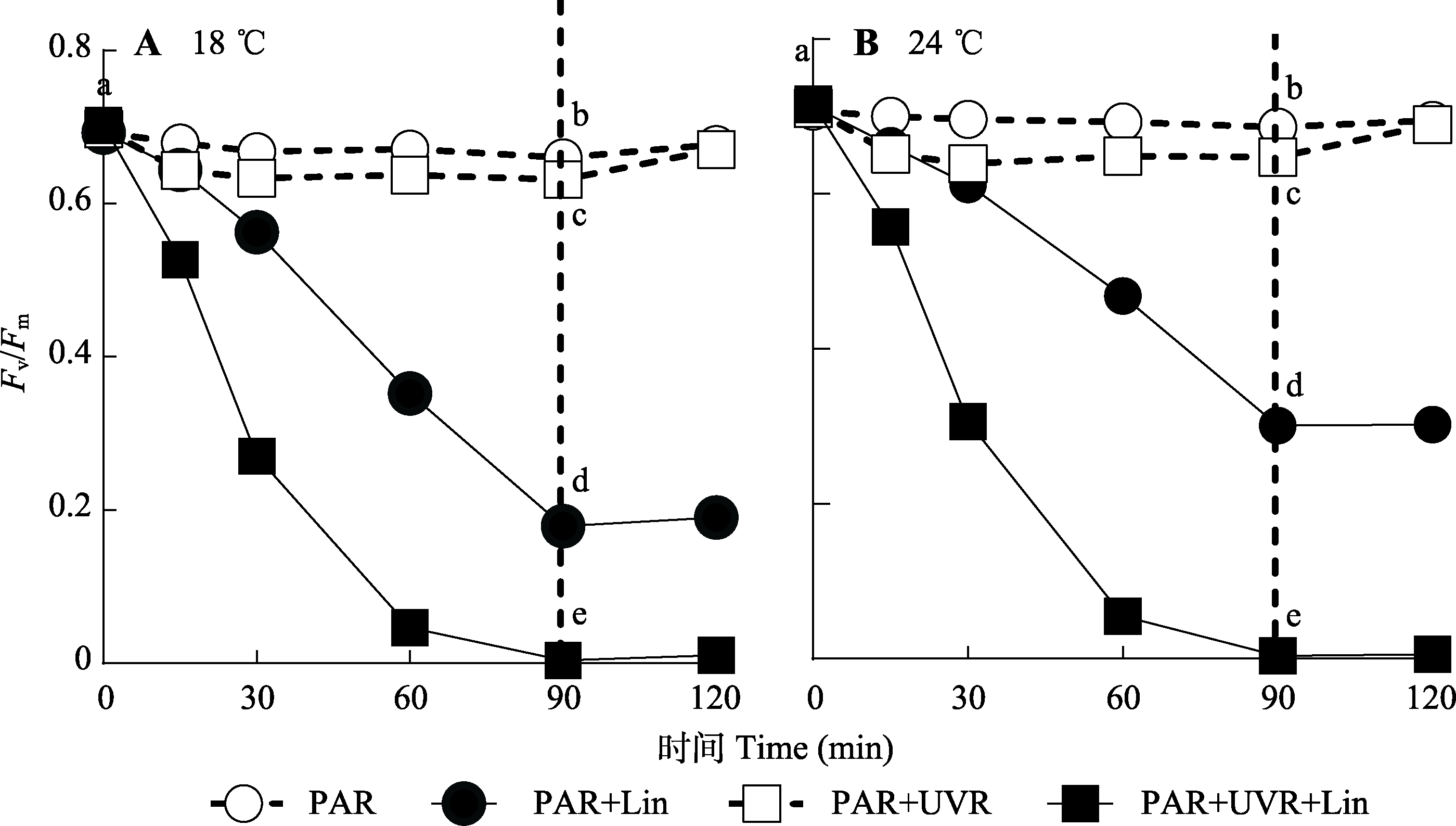
Fig. 1 Maximum photochemical yield (Fv/Fm) changes in Thalassiosira weissflogii cells grown at 18 °C or 24 °C treated without or with lincomycin (+Lin) when exposed to PAR or PAR + UVR for 90 min and low growth light for 30 min (mean ± SE, n = 4). The division between high light exposure and recover period was indicated by the dotted line. PAR, photosynthetically active radiation; UVR, ultraviolent radiation. Different lowercase letters indicate significant differences between treatments (p < 0.05).
| 温度 Temperature | 处理 Treatment | Krec | Kpi | Krec/Kpi |
|---|---|---|---|---|
| 18 ℃ | PAR | 0.005 459 ± 0.000 656 a | 0.000 189 ± 0.000 013 b | 28.9 |
| PAR+UVR | 0.005 403 ± 0.000 146 a | 0.000 521 ± 0.000 036 a | 10.4 | |
| 24 ℃ | PAR | 0.006 946 ± 0.001 114 a | 0.000 129 ± 0.000 008 c | 53.8 |
| PAR+UVR | 0.004 947 ± 0.000 247 b | 0.000 487 ± 0.000 003 a | 10.2 |
Table 1 Rate constant for photosystem II (PSII) repair (Krec, s-1) and photoinactivation (Kpi, s-1) and the ratio of Krec to Kpi for various treatments in Thalassiosira weissflogii (mean ± SE, n = 4)
| 温度 Temperature | 处理 Treatment | Krec | Kpi | Krec/Kpi |
|---|---|---|---|---|
| 18 ℃ | PAR | 0.005 459 ± 0.000 656 a | 0.000 189 ± 0.000 013 b | 28.9 |
| PAR+UVR | 0.005 403 ± 0.000 146 a | 0.000 521 ± 0.000 036 a | 10.4 | |
| 24 ℃ | PAR | 0.006 946 ± 0.001 114 a | 0.000 129 ± 0.000 008 c | 53.8 |
| PAR+UVR | 0.004 947 ± 0.000 247 b | 0.000 487 ± 0.000 003 a | 10.2 |
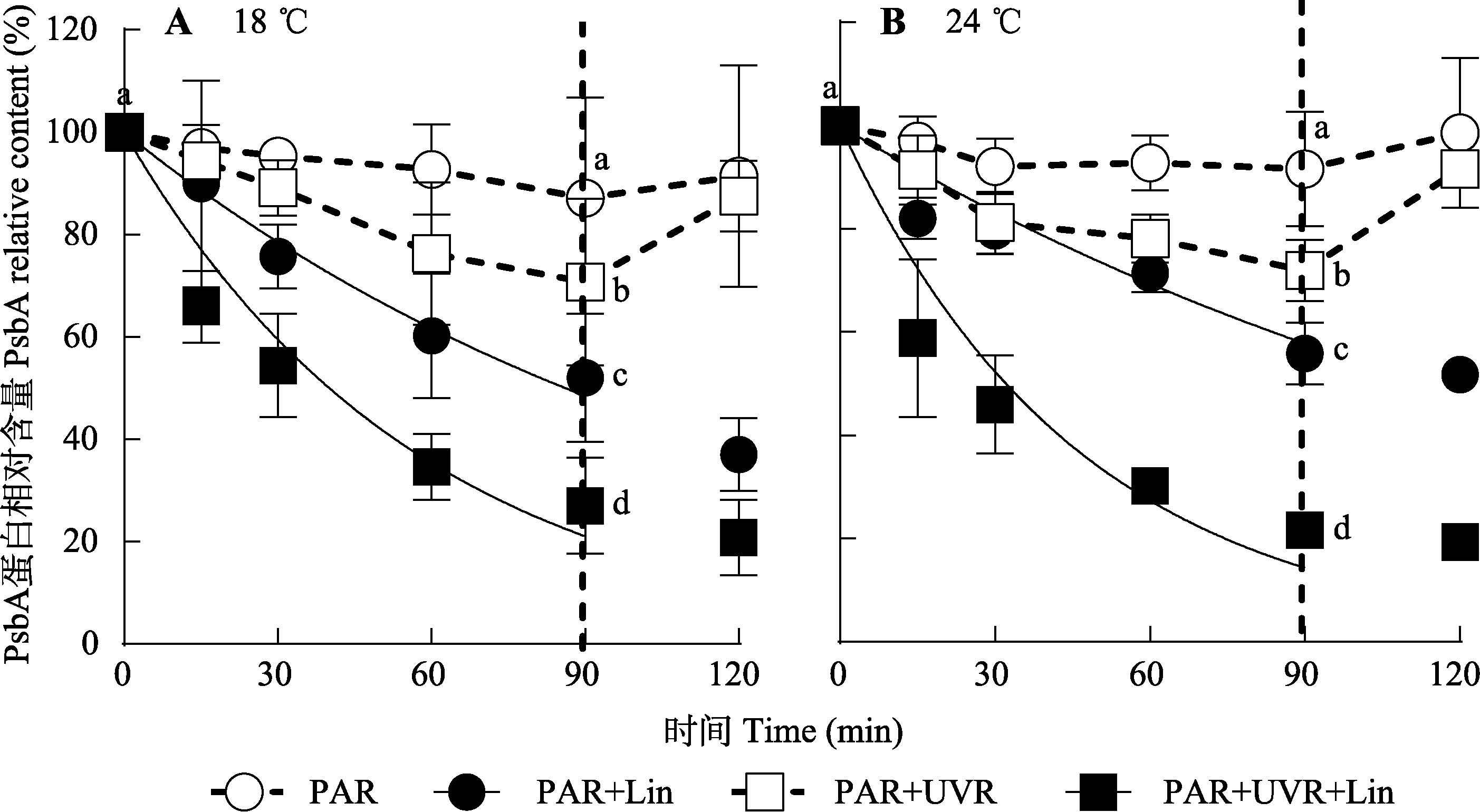
Fig. 2 PsbA relative content changes in Thalassiosira weissflogii cells grown at 18 °C or 24 °C treated without or with lincomycin (+Lin) when exposed to PAR or PAR + UVR for 90 min and low growth light for 30 min (mean ± SE, n = 4). The division between high light exposure and recover period was indicated by the dotted line. PAR, photosynthetically active radiation; UVR, ultraviolet radiation. Different lowercase letters indicate significant differences under different treatments (p < 0.05).
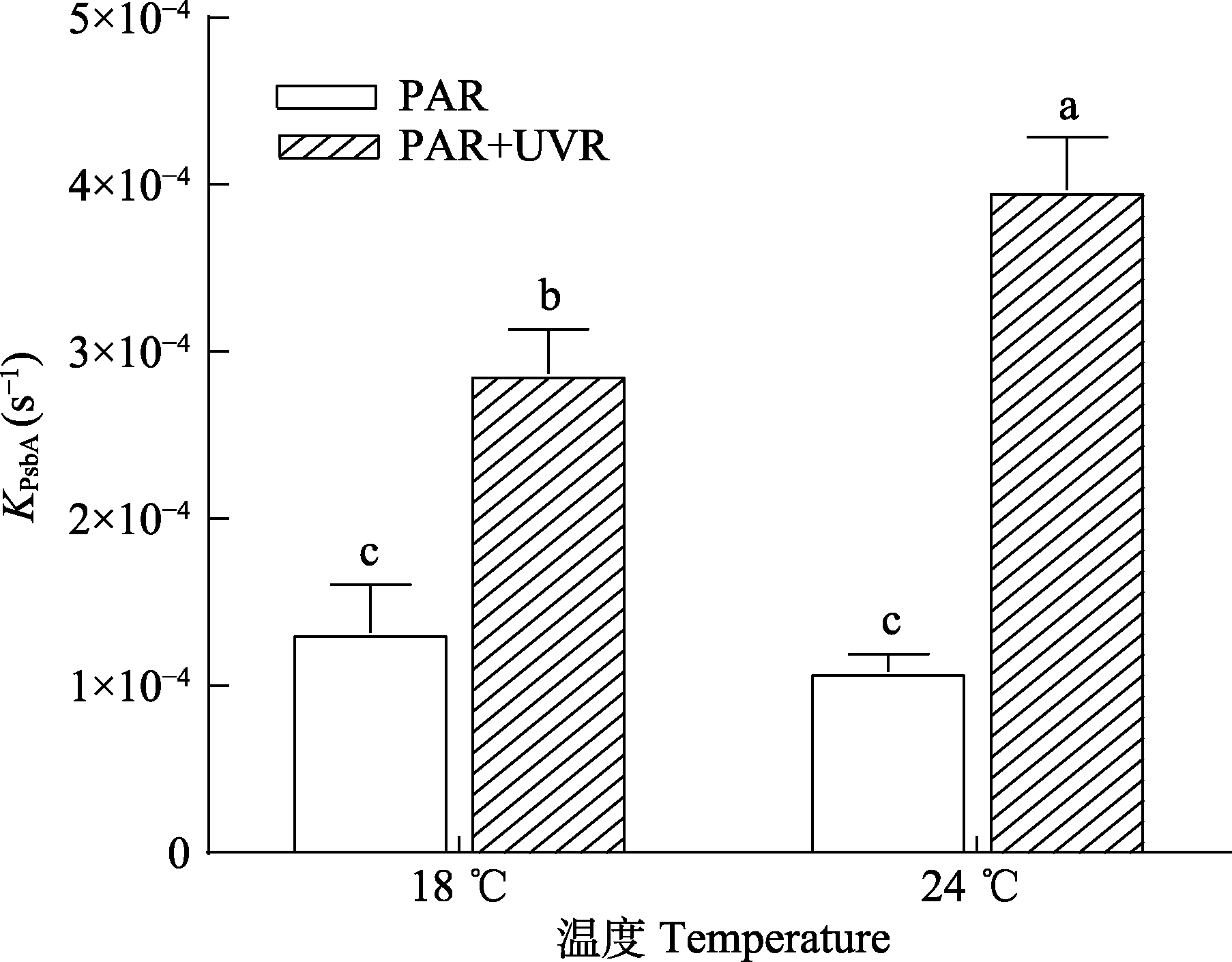
Fig. 3 Removal rate constant of PsbA (KPsbA) in Thalassiosira weissflogii grown at 18 °C or 24 °C (mean ± SE, n = 4). PAR, photosynthetically active radiation; UVR, ultraviolet radiation. Different lowercase letters indicate significant differences under different treatments (p < 0.05).
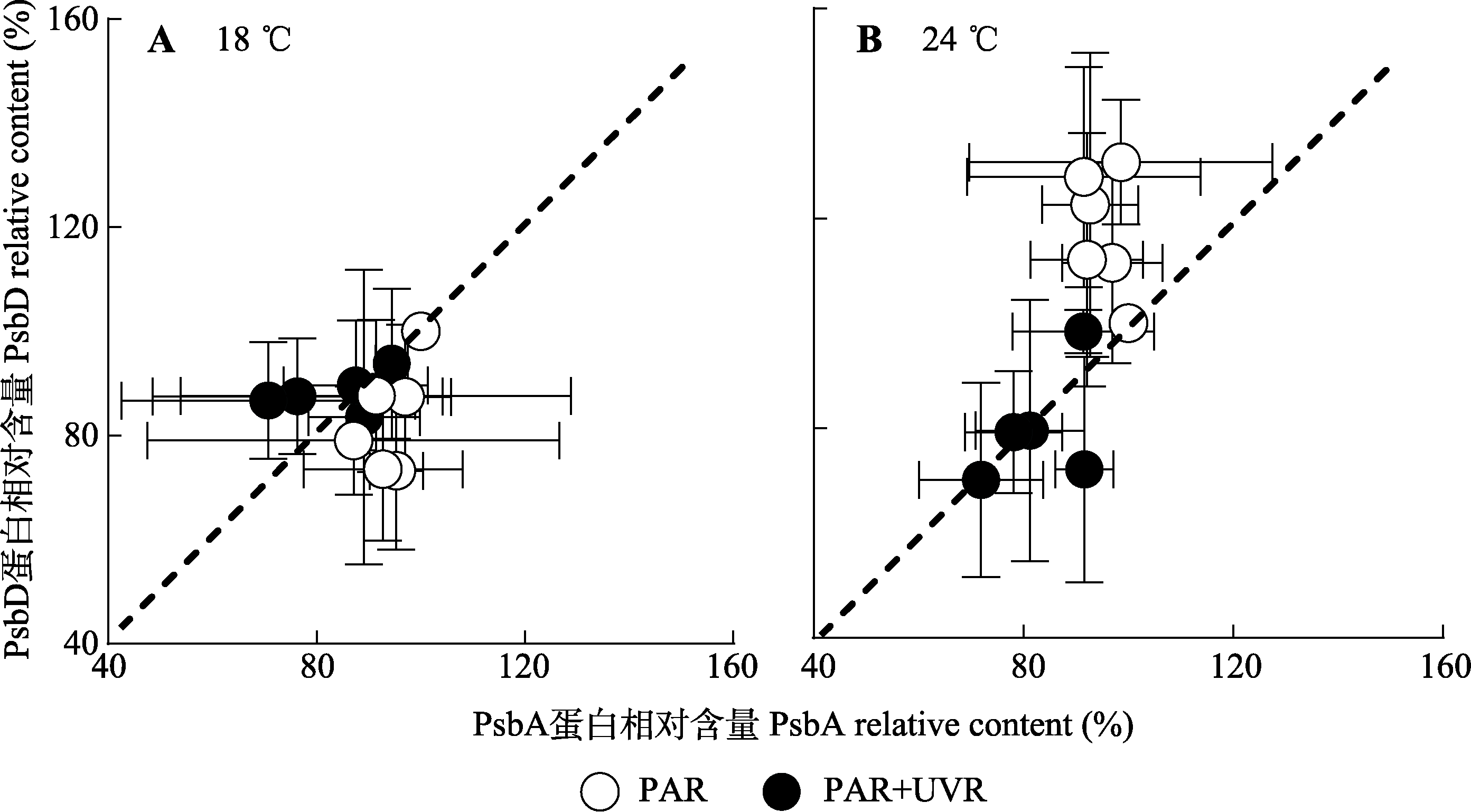
Fig. 4 PsbA relative content versus PsbD relative content in Thalassiosira weissflogii grown at 18 °C or 24 °C exposed to PAR and PAR + UVR (mean ± SE, n = 3). PAR, photosynthetically active radiation; UVR, ultraviolet radiation.
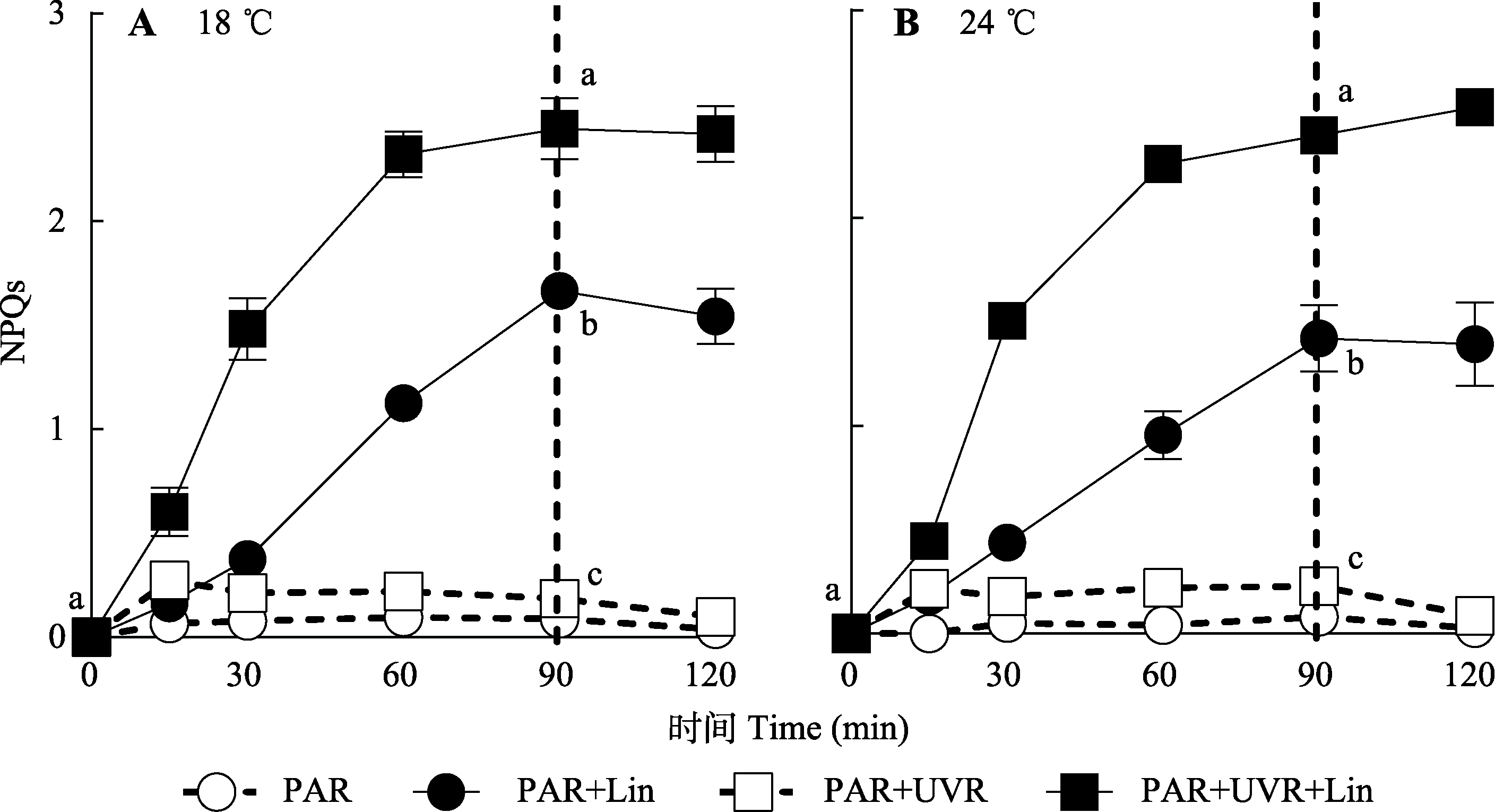
Fig. 5 Non-photochemical quenching (NPQs) changes in Thalassiosira weissflogii cells grown at 18 °C or 24 °C treated without or with lincomycin (+Lin) when exposed to PAR or PAR + UVR for 90 min and low growth light for 30 min (mean ± SE, n = 4). The division between high light exposure and recover period was indicated by the dotted line. PAR, photosynthetically active radiation; UVR, ultraviolet radiation. Different lowercase letters indicate significant differences under different treatments (p < 0.05).
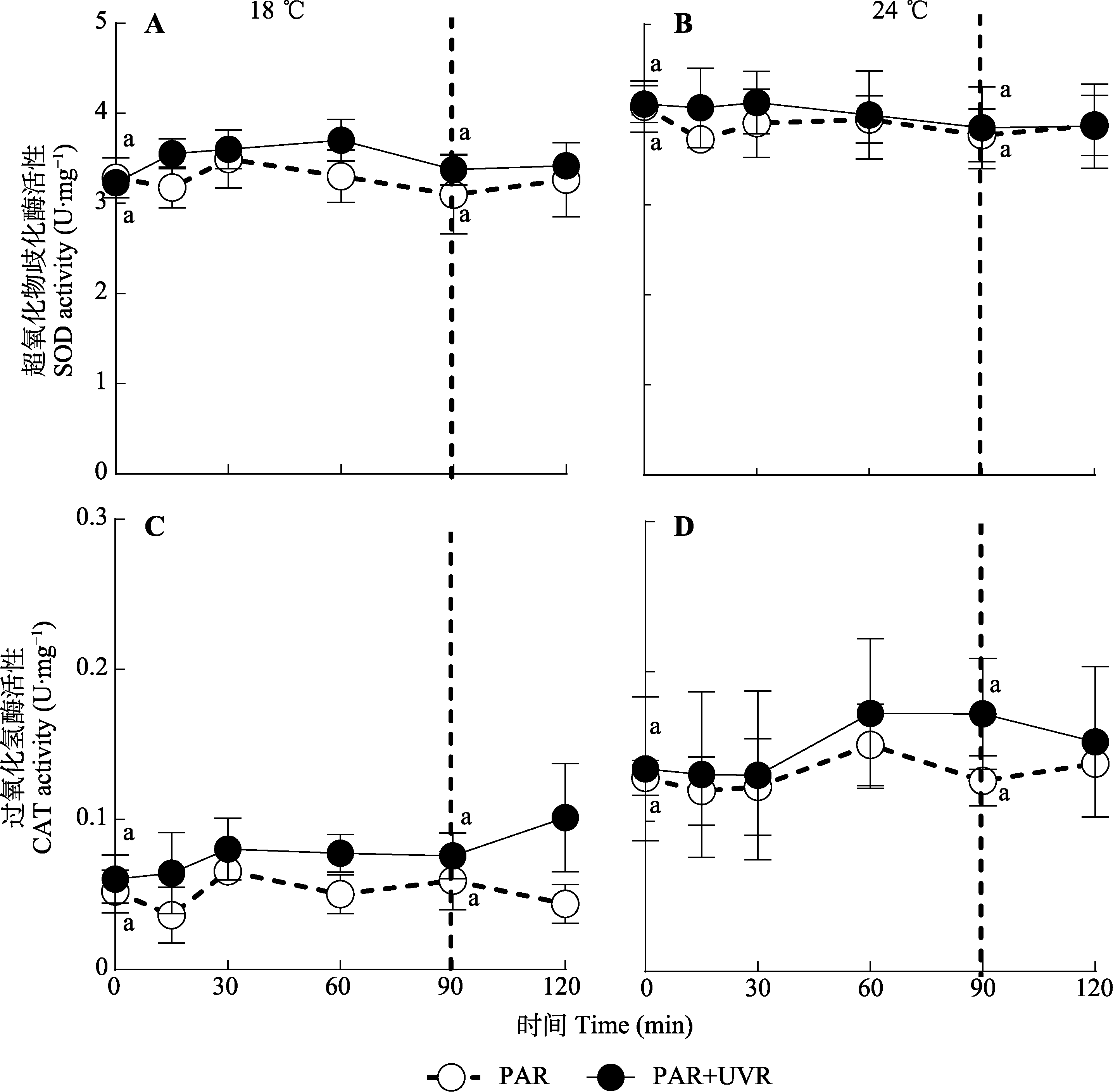
Fig. 6 Superoxide dismutase (SOD) and catalase (CAT) activity changes in Thalassiosira weissflogii cells grown at 18 °C (A, C) or 24 °C (B, D) when exposed to PAR or PAR + UVR for 90 min and low growth light for 30 min (mean ± SE, n = 4). The division between high light exposure and recover period was indicated by the dotted line. PAR, photosynthetically active radiation; UVR, ultraviolet radiation. Same lowercase letters indicate no significant differences under different treatments (p ≥ 0.05).
| [1] |
Campbell D, Eriksson MJ, Öquist G, Gustafsson P, Clarke AK (1998). The cyanobacterium Synechococcus resists UV-B by exchanging photosystem II reaction center D1 proteins. Proceedings of the National Academy of Sciences of the United States of America, 95, 364-369.
DOI PMID |
| [2] |
Campbell DA, Tyystjärvi E (2012). Parameterization of photosystem II photoinactivation and repair. Biochimica et Biophysica Acta, 1817, 258-265.
DOI PMID |
| [3] |
Cao L, Bi D, Fan W, Xu J, Beardall J, Gao K, Wu Y (2024). Warming exacerbates the impacts of ultraviolet radiation in temperate diatoms but alleviates the effect on polar species. Photochemistry and Photobiology, 100, 491-498.
DOI URL |
| [4] |
Cross WF, Hood JM, Benstead JP, Huryn AD, Nelson D (2015). Interactions between temperature and nutrients across levels of ecological organization. Global Change Biology, 21, 1025-1040.
DOI PMID |
| [5] |
Dobretsov S, Coutinho R, Rittschof D, Salta M, Ragazzola F, Hellio C (2019). The oceans are changing: impact of ocean warming and acidification on biofouling communities. Biofouling, 35, 585-595.
DOI PMID |
| [6] |
Ebenhöh O, Spelberg S (2018). The importance of the photosynthetic Gibbs effect in the elucidation of the Calvin-Benson-Bassham cycle. Biochemical Society Transactions, 46, 131-140.
DOI PMID |
| [7] |
Edelman M, Mattoo AK (2008). D1-protein dynamics in photosystem II: the lingering enigma. Photosynthesis Research, 98, 609-620.
DOI PMID |
| [8] |
Gao G, Shi Q, Xu Z, Xu J, Campbell DA, Wu H (2018). Global warming interacts with ocean acidification to alter PSII function and protection in the diatom Thalassiosira weissflogii. Environmental and Experimental Botany, 147, 95-103.
DOI URL |
| [9] |
Gao K, Yu H, Brown MT (2007). Solar PAR and UV radiation affects the physiology and morphology of the Cyanobacterium anabaena sp. PCC 7120. Journal of Photochemistry and Photobiology B: Biology, 89, 117-124.
DOI URL |
| [10] | Gao KS, Beardall J, Häder DP, Hall-Spencer JM, Gao G, Hutchins DA (2019). Effects of ocean acidification on marine photosynthetic organisms under the concurrent influences of warming, UV radiation, and deoxygenation. Frontiers in Marine Science, 6, 322. DOI: 10.3389/fmars.2019.00322. |
| [11] | Gattuso JP, Magnan A, Billé R, Cheung WWL, Howes EL, Joos F, Allemand D, Bopp L, Cooley SR, Eakin CM, Hoegh-Guldberg O, Kelly RP, Pörtner HO, Rogers AD, Baxter JM, et al. (2015). Contrasting futures for ocean and society from different anthropogenic CO2 emissions scenarios. Science, 349, aac4722. DOI: 10.1126/science.aac4722. |
| [12] |
Goss R, Lepetit B (2015). Biodiversity of NPQ. Journal of Plant Physiology, 172, 13-32.
DOI PMID |
| [13] | Häder DP, Gao KS (2015). Interactions of anthropogenic stress factors on marine phytoplankton. Frontiers in Environmental Science, 3, 1-14. |
| [14] |
Halac SR, Villafañe VE, Gonçalves RJ, Helbling EW (2014). Photochemical responses of three marine phytoplankton species exposed to ultraviolet radiation and increased temperature: role of photoprotective mechanisms. Journal of Photochemistry and Photobiology B: Biology, 141, 217-227.
DOI URL |
| [15] |
Halac SR, Villafañe VE, Helbling EW (2010). Temperature benefits the photosynthetic performance of the diatoms Chaetoceros gracilis and Thalassiosira weissflogii when exposed to UVR. Journal of Photochemistry and photobiology B:Biology, 101, 196-205.
DOI URL |
| [16] |
Helbling EW, Buma AGJ, Boelen P, van der Strate HJ, Giordanino MVF, Villafañe VE (2011). Increase in Rubisco activity and gene expression due to elevated temperature partially counteracts ultraviolet radiation- induced photoinhibition in the marine diatom Thalassiosira weissflogii. Limnology and Oceanography, 56, 1330-1342.
DOI URL |
| [17] |
Jin P, Wan JF, Zhou YY, Gao KS, Beardall J, Lin JM, Huang JL, Lu YC, Liang SM, Wang KQ, Ma ZL, Xia JR (2022). Increased genetic diversity loss and genetic differentiation in a model marine diatom adapted to ocean warming compared to high CO2. The ISME Journal, 16, 2587-2598.
DOI URL |
| [18] |
Kok B (1956). On the inhibition of photosynthesis by intense light. Biochimica et Biophysica Acta, 21, 234-244.
PMID |
| [19] |
Komenda J, Sobotka R, Nixon PJ (2012). Assembling and maintaining the photosystem II complex in chloroplasts and cyanobacteria. Current Opinion in Plant Biology, 15, 245-251.
DOI PMID |
| [20] |
Kós PB, Deák Z, Cheregi O, Vass I (2008). Differential regulation of psbA and psbD gene expression, and the role of the different D 1 protein copies in the Cyanobacterium thermosynechococcus elongatus BP-1. Biochimica et Biophysica Acta - Bioenergetics, 1777, 74-83.
DOI URL |
| [21] | Krause GH, Jahns P (2007). Non-photochemical energy dissipation determined by chlorophyll fluorescence quenching: characterization and function// Papageorgiou GC, Govindjee. Chlorophyll a Fluorescence: A Signature of Photosynthesis. Springer, Dordrecht. 463-495. |
| [22] |
Lavaud J, Six C, Campbell DA (2016). Photosystem II repair in marine diatoms with contrasting photophysiologies. Photosynthesis Research, 127, 189-199.
DOI PMID |
| [23] | Malviya S, Scalco E, Audic S, Vincent F, Veluchamy A, Poulain J, Wincker P, Iudicone D, de Vargas C, Bittner L, Zingone A, Bowler C (2016). Insights into global diatom distribution and diversity in the world’s ocean. Proceedings of the National Academy of Sciences of the United States of America, 113, E1516-E1525. |
| [24] |
Murata N, Takahashi S, Nishiyama Y, Allakhverdiev SI (2007). Photoinhibition of photosystem II under environmental stress. Biochimica et Biophysica Acta-Bioenergetics, 1767, 414-421.
DOI PMID |
| [25] |
Noyma NP, Mesquita MCB, Roland F, Marinho MM, Huszar VLM, Lürling M (2021). Increasing temperature counteracts the negative effect of UV radiation on growth and photosynthetic efficiency of Microcystis aeruginosa and Raphidiopsis raciborskii. Photochemistry and Photobiology, 97, 753-762.
DOI URL |
| [26] |
Sippola K, Aro EM (2000). Expression of psbA genes is regulated at multiple levels in the Cyanobacterium synechococcus sp. PCC 7942. Photochemistry and Photobiology, 71, 706-714.
PMID |
| [27] | Takahashi S, Whitney S, Itoh S, Maruyama T, Badger M (2008). Heat stress causes inhibition of the de novo synthesis of antenna proteins and photobleaching in cultured Symbiodinium. Proceedings of the National Academy of Sciences of the United States of America, 105, 4203-4208. |
| [28] |
Tong SY, Hutchins DA, Gao KS (2019). Physiological and biochemical responses of Emiliania huxleyi to ocean acidification and warming are modulated by UV radiation. Biogeosciences, 16, 561-572.
DOI URL |
| [29] |
Toseland A, Daines SJ, Clark JR, Kirkham A, Strauss J, Uhlig C, Lenton TM, Valentin K, Pearson GA, Moulton V, Mock T (2013). The impact of temperature on marine phytoplankton resource allocation and metabolism. Nature Climate Change, 3, 979-984.
DOI |
| [30] | Williamson CE, Neale PJ, Hylander S, Rose KC, Figueroa FL, Robinson SA, Häder DP, Wä SÅ, Worrest RC (2019). The interactive effects of stratospheric ozone depletion, UV radiation, and climate change on aquatic ecosystems. Photochemical & Photobiological Sciences, 18, 717-746. |
| [31] | Wong CY, Teoh ML, Phang SM, Lim PE, Beardall J (2015). Interactive effects of temperature and UV radiation on photosynthesis of Chlorella strains from polar, temperate and tropical environments: differential impacts on damage and repair. PLoS ONE, 10, e0139469. DOI: 10.1371/journal.pone.0139469. |
| [32] |
Wu HY, Cockshutt AM, McCarthy A, Campbell DA (2011). Distinctive photosystem II photoinactivation and protein dynamics in marine diatoms. Plant Physiology, 156, 2184-2195.
DOI PMID |
| [33] |
Wu XX, Zhu ZW, Li X, Zha DS (2012). Effects of cytokinin on photosynthetic gas exchange, chlorophyll fluorescence parameters and antioxidative system in seedlings of eggplant (Solanum melongena L.) under salinity stress. Acta Physiologiae Plantarum, 34, 2105-2114.
DOI URL |
| [34] |
Wu YP, Zhang MJ, Li ZZ, Xu JT, Beardall J (2020). Differential responses of growth and photochemical performance of marine diatoms to ocean warming and high light irradiance. Photochemistry and Photobiology, 96, 1074-1082.
DOI PMID |
| [35] | Xu ZG, Yang SD, Li MZ, Bao ML, Wu HY (2023). Warming modulates the photosynthetic performance of Thalassiosira pseudonana in response to UV radiation. Frontiers in Microbiology, 14, 1284792. DOI: 10.3389/fmicb.2023.1284792. |
| [36] |
Ye YT, Shi DL (2020). Effects of global change on key processes of primary production in marine ecosystems. Chinese Journal of Plant Ecology, 44, 575-582.
DOI URL |
|
[叶幼亭, 史大林 (2020). 全球变化对海洋生态系统初级生产关键过程的影响. 植物生态学报, 44, 575-582.]
DOI |
|
| [37] |
Zang SS, Yan F, Yu DD, Song JJ, Wang L, Xu ZG, Wu HY (2022). Reduced salinity interacts with ultraviolet radiation to alter photosystem II function in diatom Skeletonema costatum. Journal of Oceanology and Limnology, 40, 1615-1627.
DOI |
| [38] | Zhang PY, Tang XX, Cai HJ, Yu J, Yang Z (2005). Effects of UV-B radiation on protein and nucleic acid synthesis in three marine red-tide microalgae. Acta Phytoecologica Sinica, 29, 405-409. |
| [张培玉, 唐学玺, 蔡恒江, 于娟, 杨震 (2005). 3种海洋赤潮微藻蛋白质和核酸合成对UV-B辐射增强的响应. 植物生态学报, 29, 405-409.] |
| [1] | QIN Fei-Fei, TANG Zhao-Hui, SI Tong, CI Dun-Wei. Response mechanisms of growth and rhizosphere soil properties in salt-tolerant and salt-sensitive peanut (Arachis hypogaea) to arbuscular mycorrhizal fungi [J]. Chin J Plant Ecol, 2026, 50(3): 742-759. |
| [2] | LIANG Tian-Hao, WU Fan, HUANG Jin-Xue, JING Chen-Hong, FU He-Jing, YANG Zhi-Jie, XIONG De-Cheng. Effects of soil warming on fine root growth and morphology of Castanopsis kawakamii in mid-subtropical forests [J]. Chin J Plant Ecol, 2026, 50(1): 94-106. |
| [3] | ZHENG Zi-Yi, CHEN Jiang-Hui, LIU Hui-Ying. Climate warming increases root exudation rates of dominant species in alpine meadow on the Qingzang Plateau [J]. Chin J Plant Ecol, 2025, 49(9): 1363-1373. |
| [4] | OUYANG Zi-Long, JIA Xiang-Lu, SHI Jing-Zhong, TENG Wei-Chao, LIU Xiu. Effects of growth regulators on photosynthetic characteristics of Rhizophora stylosa seedlings under low temperature stress and re-warming [J]. Chin J Plant Ecol, 2025, 49(4): 638-652. |
| [5] | LIU Ke-Yan, HAN Lu, SONG Wu-Ye, ZHANG Chu-Rui, HU Xu, XU Hang, CHEN Li-Xin. Detection of drought effects on photosynthetic stability of vegetation on the Loess Plateau based on solar-induced chlorophyll fluorescence [J]. Chin J Plant Ecol, 2025, 49(3): 415-431. |
| [6] | YAN Xiao-Hong, FU Ying-Jiang, HU Wen-Hai. Responses of photosystem II function of three evergreen broadleaf species to transient warming at winter in subtropical region [J]. Chin J Plant Ecol, 2025, 49(2): 331-342. |
| [7] | HAN Run-Yu, CHEN Shi-Dong, TAN Yi-Hua, CHEN Xiang-Biao, XIONG De-Cheng, LIU Xiao-Fei, XU Chao, YANG Zhi-Jie, YANG Yu-Sheng. Leaf structural response of dominant understory shrubs in subtropical natural forests to long-term soil warming [J]. Chin J Plant Ecol, 2025, 49(11): 1907-1918. |
| [8] | RAN Jia-Xin, ZHANG Yu-Hui, WANG Yun, YANG Zhi-Jie, MAO Chao. Effects of warming and nitrogen and phosphorus addition on dissolved organic carbon biodegradability of litter in a subtropical forest [J]. Chin J Plant Ecol, 2024, 48(9): 1232-1242. |
| [9] | QIN Wen-Kuan, ZHANG Qiu-Fang, AO Gu-Kai-Lin, ZHU Biao. Responses and mechanisms of soil organic carbon dynamics to warming: a review [J]. Chin J Plant Ecol, 2024, 48(4): 403-415. |
| [10] | DU Xu-Long, HUANG Jin-Xue, YANG Zhi-Jie, XIONG De-Cheng. Effects of warming on oxidative damage and defense characteristics and their correlation in leaf and fine root of plants: a review [J]. Chin J Plant Ecol, 2024, 48(2): 135-146. |
| [11] | SUONAN Ji, LI Bo-Wen, LÜ Wang-Wang, WANG Wen-Ying, LA Ben, LU Xu-Wei, SONGZHA Cuo, CHEN Cheng-Hao, MIAO Qi, SUN Fang-Hui, WANG Shi-Ping. Changes of phenological sequence of Potentilla saundersiana and its frost resistance under the scenarios of warming and increasing precipitation [J]. Chin J Plant Ecol, 2024, 48(2): 158-170. |
| [12] | LI Yun-Yi, ZHENG Jin, YAN Xiao-Yan, LI Shuang, LUO Lin, TONG Jin, ZHAO Chun-Zhang. Effects of warming on phyllosphere and rhizosphere bacterial communities in Picea asperata and Fargesia nitida [J]. Chin J Plant Ecol, 2024, 48(12): 1692-1707. |
| [13] | LI Min-Qing, ZHOU Xiao-Ming, WANG Shuang-Long, CHEN Li-Dan, LI Cong-Juan, LIU Ran. Effects of stem photosynthesis on hydraulic traits and leaf photosynthesis in Calligonum arborescens under drought stress [J]. Chin J Plant Ecol, 2024, 48(11): 1524-1535. |
| [14] | ZHANG Xue-Yuan, GAO Cui-Ping, TANG Jing-Lei, ZHU Yi, TIAN Lei, HAN Guo-Dong, REN Hai-Yan. Responses of soil CH4 and CO2 flux to warming and nitrogen addition during freeze-thaw cycles in a desert steppe of Nei Mongol, China [J]. Chin J Plant Ecol, 2024, 48(10): 1291-1301. |
| [15] | LI Wei-Bin, ZHANG Hong-Xia, ZHANG Yu-Shu, CHEN Ni-Na. Influence of diurnal asymmetric warming on carbon sink capacity in a broadleaf Korean pine forest in Changbai Mountains, China [J]. Chin J Plant Ecol, 2023, 47(9): 1225-1233. |
| Viewed | ||||||
|
Full text |
|
|||||
|
Abstract |
|
|||||
Copyright © 2026 Chinese Journal of Plant Ecology
Tel: 010-62836134, 62836138, E-mail: apes@ibcas.ac.cn, cjpe@ibcas.ac.cn

