
Chin J Plant Ecol ›› 2025, Vol. 49 ›› Issue (10): 1643-1655.DOI: 10.17521/cjpe.2024.0405 cstr: 32100.14.cjpe.2024.0405
Special Issue: 虚拟专辑 | 濒危植物多样性与保护
• Research Articles • Previous Articles Next Articles
ZHOU Xin-Yu1,2, LIU Hui-Liang1,3,4,*( ), GAO Bei1,3, LU Yu-Ting1, TAO Ling-Qing1, WEN Xiao-Hu1, ZHANG Lan1,2, ZHANG Yuan-Ming1
Received:2024-11-07
Accepted:2025-04-08
Online:2025-10-20
Published:2025-11-20
Contact:
LIU Hui-Liang
Supported by:ZHOU Xin-Yu, LIU Hui-Liang, GAO Bei, LU Yu-Ting, TAO Ling-Qing, WEN Xiao-Hu, ZHANG Lan, ZHANG Yuan-Ming. Reproductive biology of endangered and endemic species Nymphaea candida in Xinjiang, China[J]. Chin J Plant Ecol, 2025, 49(10): 1643-1655.
Add to citation manager EndNote|Ris|BibTeX
URL: https://www.plant-ecology.com/EN/10.17521/cjpe.2024.0405
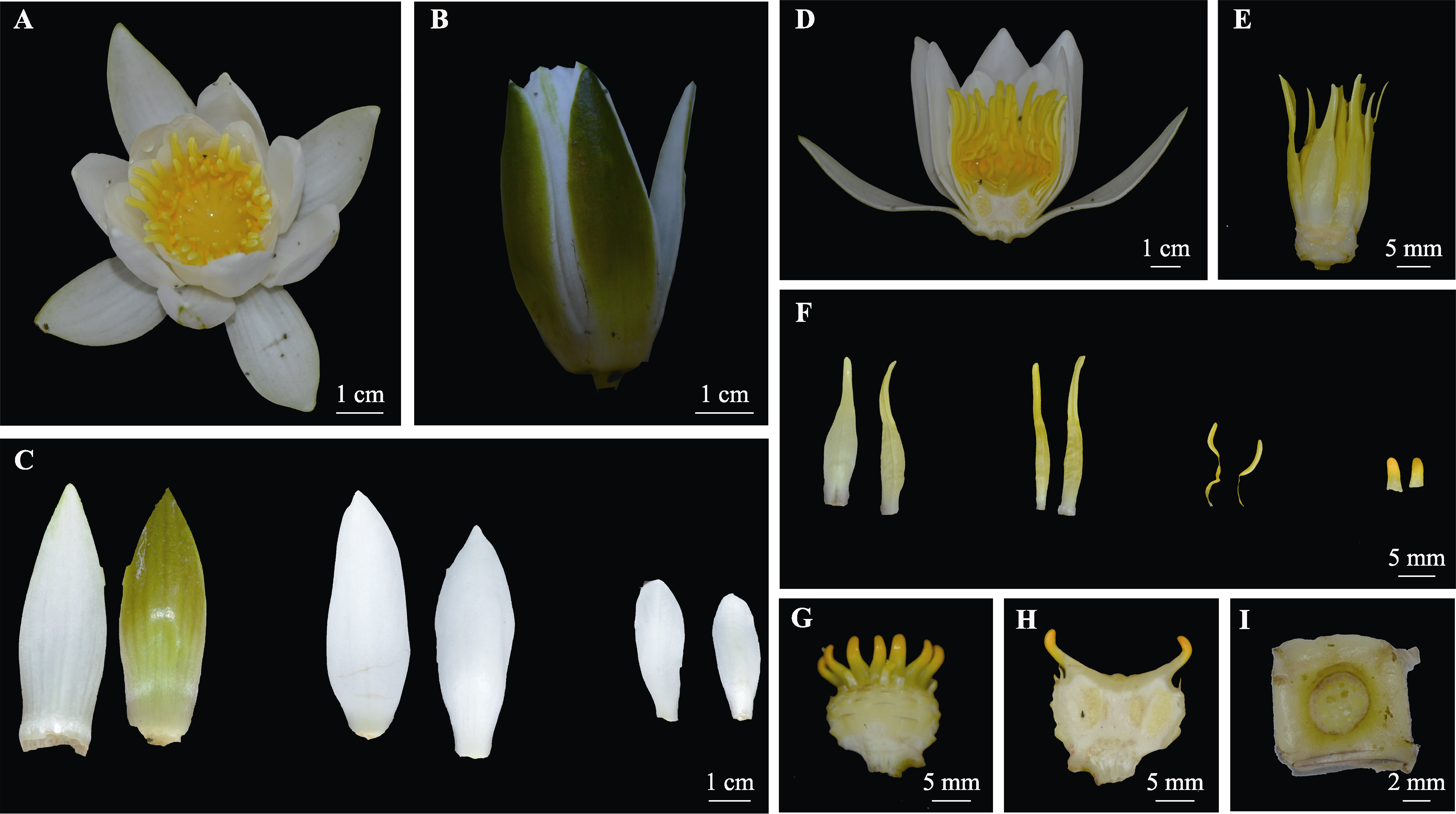
Fig. 1 Morphological characteristics of floral organs in Nymphaea candida. A, Floral organs (open). B, Floral organs (closed). C, Sepals and petals (from left to right: sepal, outer petal, inner petal). D, Cross-section of floral organs. E, Stamen (whole view). F, Outer stamen, middle stamen, inner stamen, and carpel appendages. G, Carpel. H, Cross-section of the carpel. I, Receptacle.
| 花部参数 Flower parameter | 平均值(±标准误) Average value (± SE) | 最大值 Maximum | 最小值 Minimum |
|---|---|---|---|
| 花冠直径 Corolla diameter (mm) | 102.24 ± 9.23 | 123.26 | 89.14 |
| 花冠口直径 Corolla mouth diameter (mm) | 30.73 ± 2.79 | 37.32 | 25.44 |
| 萼片长度 Sepal length (mm) | 51.72 ± 3.95 | 60.08 | 40.48 |
| 萼片宽度 Sepal width (mm) | 17.01 ± 1.30 | 19.66 | 14.63 |
| 花瓣长度 Petal length (mm) | 49.90 ± 3.59 | 58.28 | 39.96 |
| 花瓣宽度 Petal width (mm) | 17.66 ± 1.33 | 19.66 | 14.47 |
| 外层雄蕊长度 Outer stamen length (mm) | 24.12 ± 1.74 | 26.97 | 20.15 |
| 外层雄蕊花药长度 Outer stamen anther length (mm) | 5.03 ± 0.67 | 6.24 | 3.29 |
| 中层雄蕊长度 Middle stamen length (mm) | 27.77 ± 1.68 | 29.56 | 23.17 |
| 中层雄蕊花药长度 Middle stamen anther length (mm) | 9.92 ± 0.78 | 11.37 | 8.08 |
| 内层雄蕊长度 Inner stamen length (mm) | 17.57 ± 1.62 | 19.56 | 13.54 |
| 内层雄蕊花药长度 Inner stamen anther length (mm) | 7.13 ± 0.76 | 7.97 | 5.90 |
| 花柱长度 Flower column length (mm) | 12.28 ± 1.73 | 15.18 | 10.05 |
| 子房宽度 Ovary width (mm) | 12.17 ± 1.49 | 15.37 | 10.49 |
Table 1 Morphological parameters of Nymphaea candida flowers (n = 25)
| 花部参数 Flower parameter | 平均值(±标准误) Average value (± SE) | 最大值 Maximum | 最小值 Minimum |
|---|---|---|---|
| 花冠直径 Corolla diameter (mm) | 102.24 ± 9.23 | 123.26 | 89.14 |
| 花冠口直径 Corolla mouth diameter (mm) | 30.73 ± 2.79 | 37.32 | 25.44 |
| 萼片长度 Sepal length (mm) | 51.72 ± 3.95 | 60.08 | 40.48 |
| 萼片宽度 Sepal width (mm) | 17.01 ± 1.30 | 19.66 | 14.63 |
| 花瓣长度 Petal length (mm) | 49.90 ± 3.59 | 58.28 | 39.96 |
| 花瓣宽度 Petal width (mm) | 17.66 ± 1.33 | 19.66 | 14.47 |
| 外层雄蕊长度 Outer stamen length (mm) | 24.12 ± 1.74 | 26.97 | 20.15 |
| 外层雄蕊花药长度 Outer stamen anther length (mm) | 5.03 ± 0.67 | 6.24 | 3.29 |
| 中层雄蕊长度 Middle stamen length (mm) | 27.77 ± 1.68 | 29.56 | 23.17 |
| 中层雄蕊花药长度 Middle stamen anther length (mm) | 9.92 ± 0.78 | 11.37 | 8.08 |
| 内层雄蕊长度 Inner stamen length (mm) | 17.57 ± 1.62 | 19.56 | 13.54 |
| 内层雄蕊花药长度 Inner stamen anther length (mm) | 7.13 ± 0.76 | 7.97 | 5.90 |
| 花柱长度 Flower column length (mm) | 12.28 ± 1.73 | 15.18 | 10.05 |
| 子房宽度 Ovary width (mm) | 12.17 ± 1.49 | 15.37 | 10.49 |
| 开花时间 Flower time (d) | 花粉活力 Pollen viability (%) | 柱头可授性 Stigma receptivity | 柱头形状 Stigma shape |
|---|---|---|---|
| 开花1天 Flowering 1 d | 0 | ++ | 竖立 Erect |
| 开花2天 Flowering 2 d | 89.68 | +/- | 竖立 Erect |
| 开花3天 Flowering 3 d | 88.02 | - | 竖立、内扣 Erect, incurved |
| 开花4天 Flowering 4 d | 86.98 | - | 内扣 Incurved |
Table 2 Nymphaea candida pollen vitality and stigma receptivity
| 开花时间 Flower time (d) | 花粉活力 Pollen viability (%) | 柱头可授性 Stigma receptivity | 柱头形状 Stigma shape |
|---|---|---|---|
| 开花1天 Flowering 1 d | 0 | ++ | 竖立 Erect |
| 开花2天 Flowering 2 d | 89.68 | +/- | 竖立 Erect |
| 开花3天 Flowering 3 d | 88.02 | - | 竖立、内扣 Erect, incurved |
| 开花4天 Flowering 4 d | 86.98 | - | 内扣 Incurved |
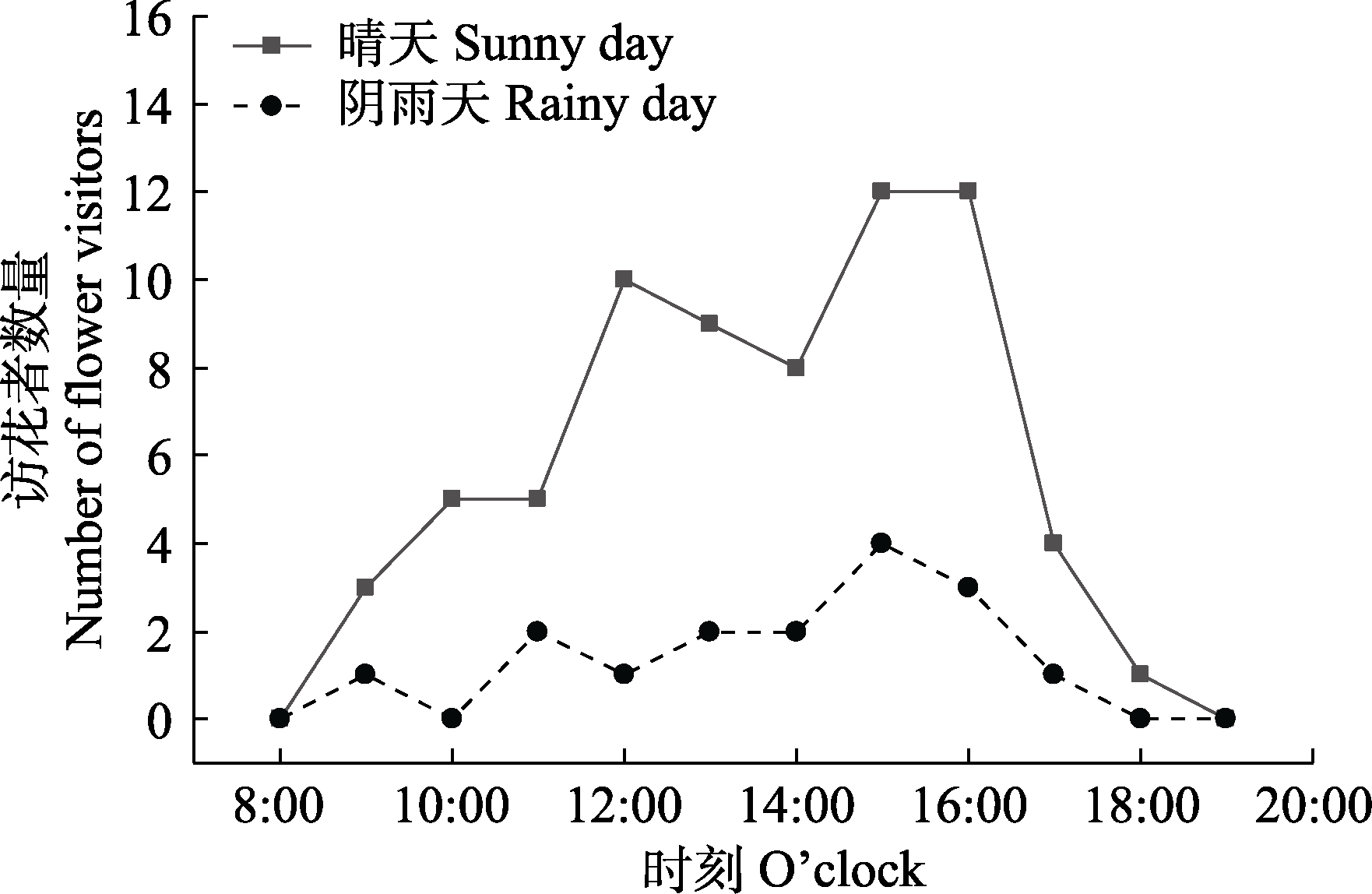
Fig. 2 Total daily activity of floral visitors under different weather conditions.
| 处理 Treatment | 授粉花数 Flower number | 结实数 Fruit number | 结实率 Seed-set ratio (%) |
|---|---|---|---|
| 自然对照 Natural control | 15 | 7 | 46.67 |
| 自然自花授粉 Natural self-pollination | 10 | 4 | 40.00 |
| 自然异花授粉 Natural cross-pollination | 10 | 3 | 30.00 |
| 同株异花授粉 Cross-pollination in one plant | 10 | 7 | 70.00 |
| 异株异花授粉 Cross-pollination in different plant | 10 | 8 | 80.00 |
| 无融合授粉 No fusion pollination | 10 | 0 | 0.00 |
Table 3 Seed-set ratio of Nymphaea candida under different treatments
| 处理 Treatment | 授粉花数 Flower number | 结实数 Fruit number | 结实率 Seed-set ratio (%) |
|---|---|---|---|
| 自然对照 Natural control | 15 | 7 | 46.67 |
| 自然自花授粉 Natural self-pollination | 10 | 4 | 40.00 |
| 自然异花授粉 Natural cross-pollination | 10 | 3 | 30.00 |
| 同株异花授粉 Cross-pollination in one plant | 10 | 7 | 70.00 |
| 异株异花授粉 Cross-pollination in different plant | 10 | 8 | 80.00 |
| 无融合授粉 No fusion pollination | 10 | 0 | 0.00 |
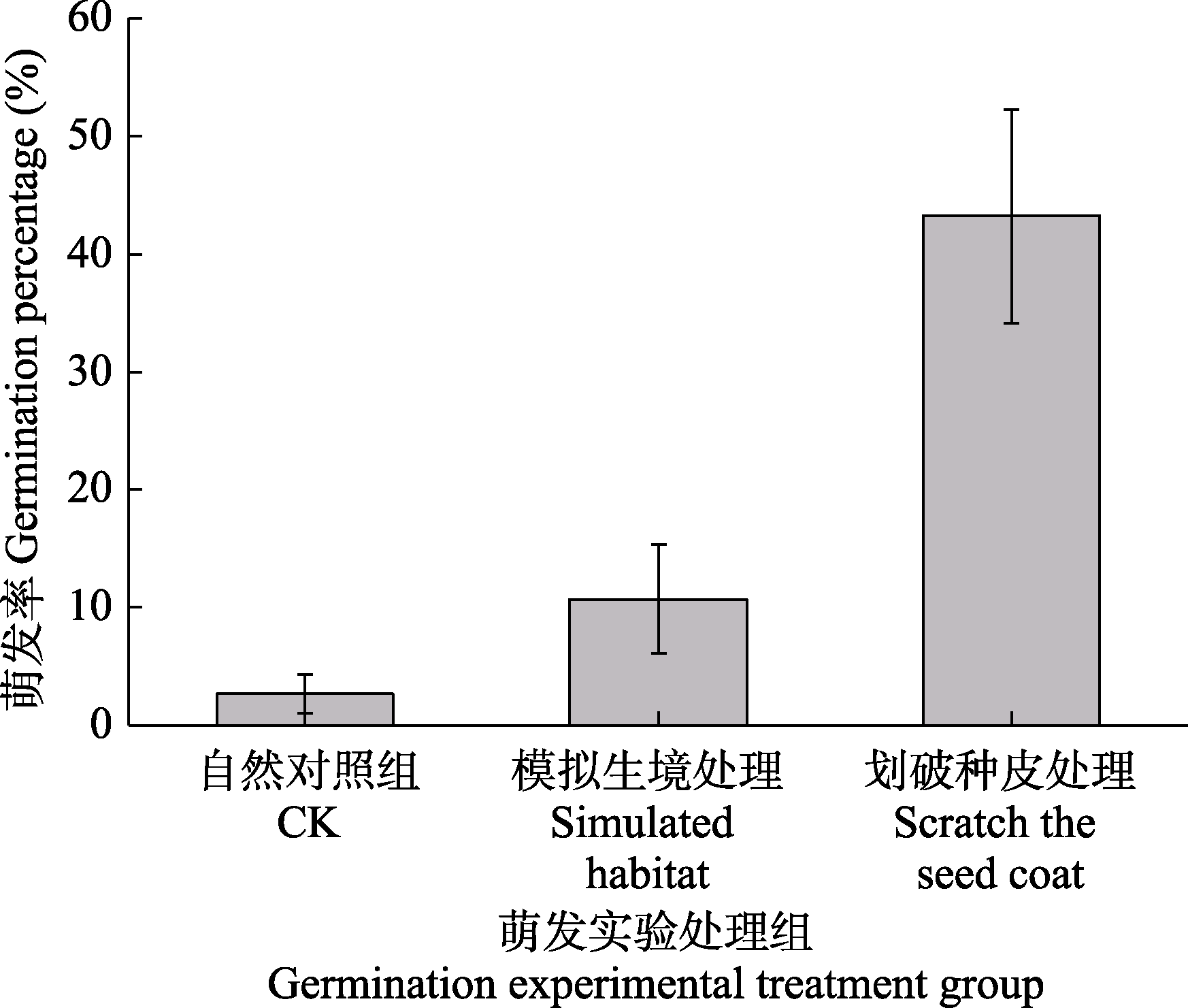
Fig. 3 Germination rate of Nymphaea candida seeds under different treatments (mean ± SE). CK, control.
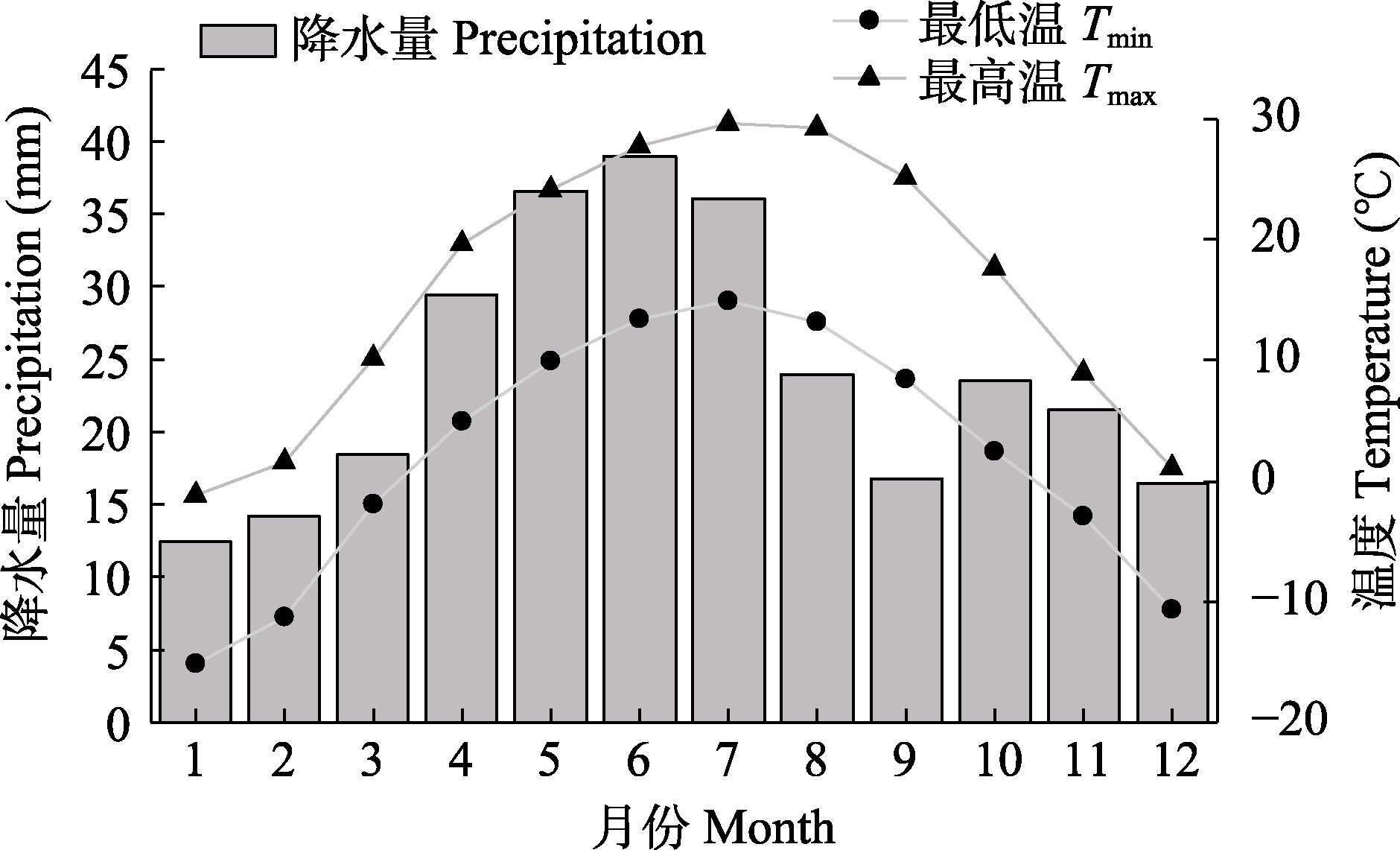
Fig. 4 Temperature and rainfall variation in Nymphaea candida populations’ habitats in relation to flowering period. Tmax, maximum temperature; Tmin, minimum temperature.
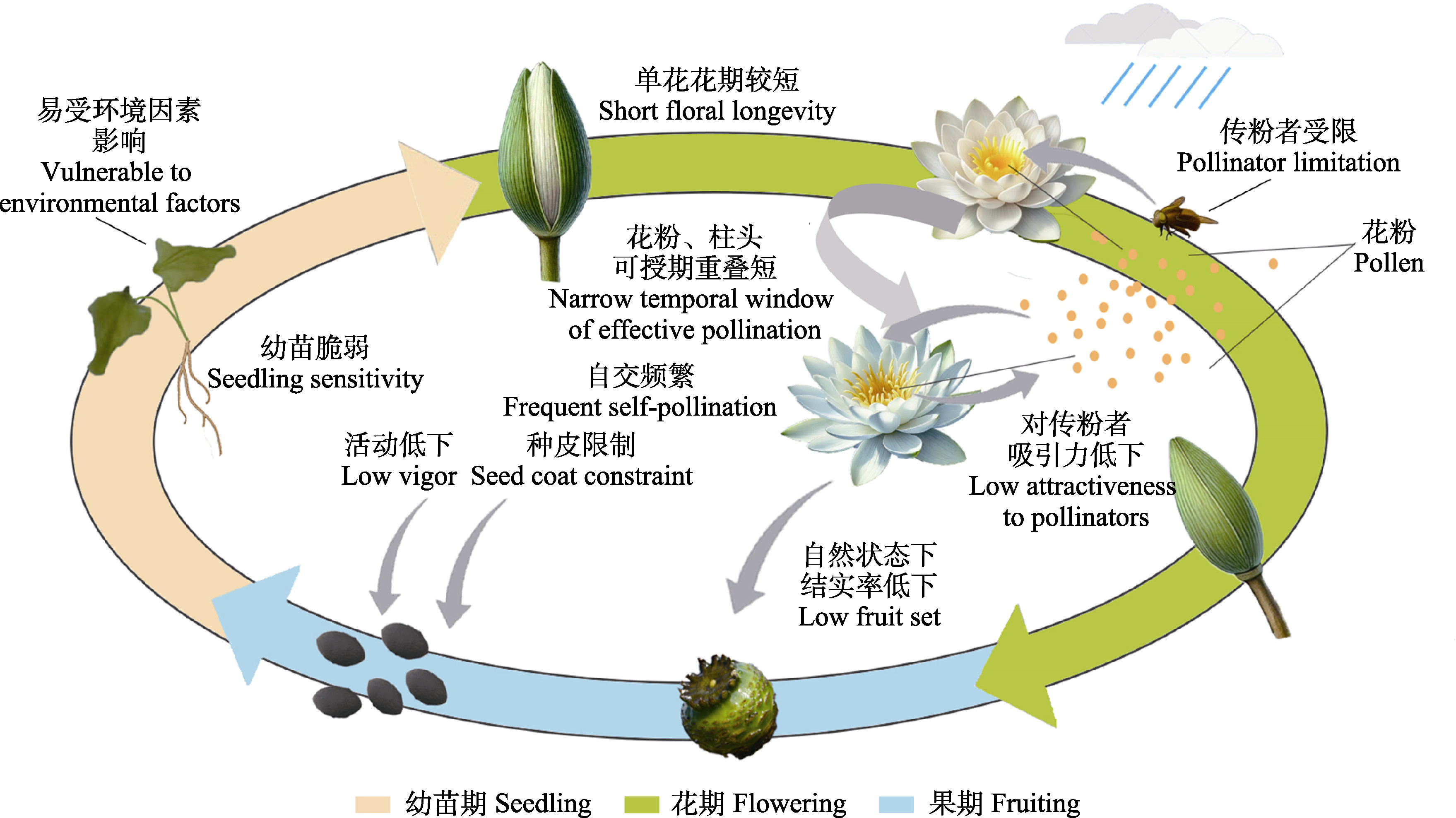
Fig. 5 Conceptual diagram of the reproductive process and endangerment factors of Nymphaea candida.
| [1] |
Anderson S (1994). Area and endemism. The Quarterly Review of Biology, 69, 451-471.
DOI URL |
| [2] |
Andersson S, Dobson HEM (2003). Behavioral foraging responses by the butterfly Heliconius melpomene to Lantana camara floral scent. Journal of Chemical Ecology, 29, 2303-2318.
PMID |
| [3] |
Arroyo MTK, Armesto JJ, Primack RB (1985). Community studies in pollination ecology in the high temperate Andes of central Chile II. Effect of temperature on visitation rates and pollination possibilities. Plant Systematics and Evolution, 149, 187-203.
DOI URL |
| [4] |
Ashman TL, Schoen DJ (1994). How long should flowers live? Nature, 371, 788-791.
DOI |
| [5] |
Barrett SCH (1998). The evolution of mating strategies in flowering plants. Trends in Plant Science, 3, 335-341.
DOI URL |
| [6] | Barrett SCH (2003). Mating strategies in flowering plants: the outcrossing-selfing paradigm and beyond. Philosophical Transactions of the Royal Society of London Series B: Biological Sciences, 358, 991-1004. |
| [7] |
Barrett SCH, Harder LD (1996). Ecology and evolution of plant mating. Trends in Ecology & Evolution, 11, 73-79.
DOI URL |
| [8] |
Buide ML, Díaz-Peromingo JA, Guitián J (2002). Flowering phenology and female reproductive success in Silene acutifolia Link ex Rohrb. Plant Ecology, 163, 93-103.
DOI |
| [9] |
Byers DL (1995). Pollen quantity and quality as explanations for low seed set in small populations exemplified by Eupatorium (Asteraceae). American Journal of Botany, 82, 1000-1006.
DOI URL |
| [10] | Chai SF, Jiang YS, Wei X, Wang ML, Li H, Qi XX (2010). Seed germination characteristics of endangered plant Sinia rhodoleuca. Chinese Journal of Ecology, 29, 233-237. |
| [柴胜丰, 蒋运生, 韦霄, 王满莲, 李虹, 漆小雪 (2010). 濒危植物合柱金莲木种子萌发特性. 生态学杂志, 29, 233-237.] | |
| [11] |
Chen B, Da LJ, Song YC (2003). Flowering Phenology and Floral Distribution of Castanopsis fargesii in Tiantong, Zhejiang Province. Chinese Journal of Plant Ecology, 27, 249-255.
DOI URL |
|
[陈波, 达良俊, 宋永昌 (2003). 常绿阔叶树种栲树开花物候动态及花的空间配置. 植物生态学报, 27, 249-255.]
DOI |
|
| [12] |
Cogoni D, Sulis E, Bacchetta G, Fenu G (2019). The unpredictable fate of the single population of a threatened narrow endemic Mediterranean plant. Biodiversity and Conservation, 28, 1799-1813.
DOI |
| [13] |
Cowling RM, Rundel PW, Lamont BB, Kalin Arroyo M, Arianoutsou M (1996). Plant diversity in Mediterranean-climate regions. Trends in Ecology & Evolution, 11, 362-366.
DOI URL |
| [14] | Dafni A (1992). Pollination Ecology: a Practical Approach. Oxford University Press, Oxford, UK. |
| [15] |
Dafni A, Maués MM (1998). A rapid and simple procedure to determine stigma receptivity. Sexual Plant Reproduction, 11, 177-180.
DOI URL |
| [16] |
Duan YW, Liu JQ (2007). Pollinator shift and reproductive performance of the Qinghai-Tibetan Plateau endemic and endangered Swertia przewalskii (Gentianaceae). Biodiversity and Conservation, 16, 1839-1850.
DOI URL |
| [17] |
Dudash MR, Fenster CB (2001). The role of breeding system and inbreeding depression in the maintenance of an outcrossing mating strategy in Silene virginica (Caryophyllaceae). American Journal of Botany, 88, 1953-1959.
PMID |
| [18] | Duffy KJ, Stout JC (2008). The effects of plant density and nectar reward on bee visitation to the endangered orchid Spiranthes romanzoffiana. Acta Oecologica, 34, 131-138. |
| [19] |
Eckert CG, Kalisz S, Geber MA, Sargent R, Elle E, Cheptou PO, Goodwillie C, Johnston MO, Kelly JK, Moeller DA, Porcher E, Ree RH, Vallejo-Marín M, Winn AA (2010). Plant mating systems in a changing world. Trends in Ecology & Evolution, 25, 35-43.
DOI URL |
| [20] |
Escaravage N, Flubacker E, Pornon A, Doche B, Till-Bottraud I (2001). Stamen dimorphism in Rhododendron ferrugineum (Ericaceae): development and function. American Journal of Botany, 88, 68-75.
PMID |
| [21] |
Evans MEK, Menges ES, Gordon DR (2003). Reproductive biology of three sympatric endangered plants endemic to Florida scrub. Biological Conservation, 111, 235-246.
DOI URL |
| [22] | Forgiarini C, Parzefall F, Reisch C (2023). The impact of ex situ cultivation on the genetic variation of endangered plant species—Implications for restoration. Biological Conservation, 284, 110221. DOI: 10.1016/j.biocon.2023. 110221. |
| [23] | Galen C (1996). Rates of floral evolution: adaptation to bumblebee pollination in an alpine wildflower, Polemonium viscosum. Evolution, 50, 120. DOI: 10.2307/ 2410786. |
| [24] | Goodwillie C (1999). Multiple origins of self-compatibility in Linanthus section Leptosiphon (Polemoniaceae): phylogenetic evidence from internal-transcribed-spacer sequence data. Evolution, 53, 1387. DOI: 10.2307/ 2640885. |
| [25] |
Goodwin EK, Rader R, Encinas-Viso F, Saunders ME (2021). Weather conditions affect the visitation frequency, richness and detectability of insect flower visitors in the Australian alpine zone. Environmental Entomology, 50, 348-358.
DOI PMID |
| [26] | Gu HY, Yang N, Xie KP, He LQ, Li CH (2024). Flowering dynamics and breeding system of Holcoglossum omeiense, a wild plant with extremely small populations. Plant Physiology Journal, 60, 1201-1210. |
| [谷海燕, 杨楠, 谢孔平, 何利钦, 李策宏 (2024). 极小种群峨眉槽舌兰的开花动态及繁育系统. 植物生理学报, 60, 1201-1210.] | |
| [27] |
Harder LD, Jordan CY, Gross WE, Routley MB (2004). Beyond floricentrism: the pollination function of inflorescences. Plant Species Biology, 19, 137-148.
DOI URL |
| [28] |
Halibunuer,Abdukirim G, Maimaitituerxun R, Abdusalam A (2022). Flower syndrome and pollination characteristics of two flower morphs in Lycium ruthenicum (Solanaceae). Chinese Journal of Plant Ecology, 46, 1050-1063.
DOI |
|
[哈里布努尔,古丽扎尔·阿不都克力木, 热依拉穆·麦麦提吐尔逊, 艾沙江·阿不都沙拉木 (2022). 黑果枸杞两种花型的花部综合征与传粉特性. 植物生态学报, 46, 1050-1063.]
DOI |
|
| [29] |
He YP, Liu JQ (2003). A Review on Recent Advances in the Studies of Plant Breeding System. Chinese Journal of Plant Ecology, 27, 151-163.
DOI URL |
|
[何亚平, 刘建全 (2003). 植物繁育系统研究的最新进展和评述. 植物生态学报, 27, 151-163.]
DOI |
|
| [30] | Hu J, Jiang JL, Cheng WN, Wei LN, Wang Y, Hu FC, Deng XX, Li Y (2024). Pollination biology and breeding system of endangered plant Petrocosmea qinlingensis. Acta Ecologica Sinica, 44, 8595-8604. |
| [胡佳, 蒋景龙, 程文娜, 魏丽娜, 王勇, 胡凤成, 邓茜茜, 李耘 (2024). 濒危植物秦岭石蝴蝶传粉生物学与繁育系统研究. 生态学报, 44, 8595-8604.] | |
| [31] | Huang GZ, Deng HQ, Zou XW, Li G (2003). Reproductive forms of Nymphaea species. China Flowers & Horticulture, (4), 26-27. |
| [黄国振, 邓惠勤, 邹秀文, 李钢 (2003). 睡莲属植物的繁殖形式. 中国花卉园艺, (4), 26-27.] | |
| [32] | Huang SQ, Guo YH (2000). Research progress in pollination biology. Chinese Science Bulletin, 45, 225-237. |
| [黄双全, 郭友好 (2000). 传粉生物学的研究进展. 科学通报, 45, 225-237.] | |
| [33] | Huang ZH (2020). The research progress of endangered causes and protection strategy of rare and endangered plants in China. Journal of University of South China (Science and Technology), 34, 42-50. |
| [黄至欢 (2020). 中国珍稀植物濒危原因及保护对策研究进展. 南华大学学报(自然科学版), 34, 42-50.] | |
| [34] | Jawhari FZ, Imtara H, El Moussaoui A, Khalis H, Es-safi I, Saleh A, Al Kamaly O, Parvez MK, Bari A (2023). Effects of pre-treatments and conservation conditions on seed viability and germination of two varieties of an endangered species Anacyclus pyrethrum (L.) Link (Asteraceae). Horticulturae, 9, 472. DOI: 10.3390/ horticulturae9040472. |
| [35] |
Jordan CY, Harder LD (2006). Manipulation of bee behavior by inflorescence architecture and its consequences for plant mating. The American Naturalist, 167, 496-509.
PMID |
| [36] |
Kudo G (1993). Relationship between flowering time and fruit-set of the entomophilous alpine shrub, Rhododendron aureum (Ericaceae), inhabiting snow patches. American Journal of Botany, 80, 1300-1304.
DOI URL |
| [37] |
Lawson DA, Rands SA (2019). The effects of rainfall on plant-pollinator interactions. Arthropod-Plant Interactions, 13, 561-569.
DOI |
| [38] |
Li JM, Jin ZX (2006). High genetic differentiation revealed by RAPD analysis of narrowly endemic Sinocalycanthus chinensis Cheng et S. Y. Chang, an endangered species of China. Biochemical Systematics and Ecology, 34, 725-735.
DOI URL |
| [39] | Liu HL, Zhang YM, Guan KY, Zhou XY (2023). Successful ex situ conservation of Nymphaea candida. Oryx, 57, 560-560. |
| [40] | Liu KQ, Deng HP (2011). Floral biology and breeding system of endangered plant Scutellaria tsinyunensis endemic to Chongqing, China. Bulletin of Botanical Research, 31, 403-407. |
|
[刘开全, 邓洪平 (2011). 重庆特有濒危植物缙云黄芩的繁育系统研究. 植物研究, 31, 403-407.]
DOI |
|
| [41] | Majetic CJ, Raguso RA, Ashman TL (2009). The sweet smell of success: floral scent affects pollinator attraction and seed fitness in Hesperis matronalis. Functional Ecology, 23, 480-487. |
| [42] |
Marcinko SE, Randall JL (2008). Protandry, mating systems, and sex expression in the federally endangered Ptilimnium nodosum (Apiaceae). The Journal of the Torrey Botanical Society, 135, 178-188.
DOI URL |
| [43] |
McIntosh ME (2002). Flowering phenology and reproductive output in two sister species of Ferocactus (Cactaceae). Plant Ecology, 159, 1-13.
DOI |
| [44] | Mou Y, Zhang YH, Lou AR (2007). A preliminary study on floral syndroma and breeding system of the rare plant Rhodiola dumulosa. Journal of Plant Ecology (Chinese Version), 31, 528-535. |
|
[牟勇, 张云红, 娄安如 (2007). 稀有植物小丛红景天花部综合特征与繁育系统. 植物生态学报, 31, 528-535.]
DOI |
|
| [45] | Moza MK, Bhatnagar AK (2007). Plant reproductive biology studies crucial for conservation. Current Science, 92, 1207-1207. |
| [46] |
N’Danikou S, Achigan-Dako EG, Wong JLG (2011). Eliciting local values of wild edible plants in southern Bénin to identify priority species for conservation. Economic Botany, 65, 381-395.
DOI URL |
| [47] | Niu ZZ, Zhu YT, Han DY (2022). Assessment of the resource distribution of Nymphaea candida in Bosten Lake, Xinjiang. Forestry of Xinjiang, 6, 25-27. |
| [牛忠泽, 朱跃韬, 韩大勇 (2022). 新疆博斯腾湖雪白睡莲资源分布评估报告. 新疆林业, 6, 25-27.] | |
| [48] |
Okullo JBL, Hall JB, Obua J (2004). Leafing, flowering and fruiting of Vitellaria paradoxa subsp. nilotica in savanna parklands in Uganda. Agroforestry Systems, 60, 77-91.
DOI URL |
| [49] |
Ollerton J, Diaz A (1999). Evidence for stabilising selection acting on flowering time in Arum maculatum (Araceae): the influence of phylogeny on adaptation. Oecologia, 119, 340-348.
DOI PMID |
| [50] |
Orsenigo S, Montagnani C, Fenu G, Gargano D, Peruzzi L, Abeli T, Alessandrini A, Bacchetta G, Bartolucci F, Bovio M, Brullo C, Brullo S, Carta A, Castello M, Cogoni D, et al. (2018). Red Listing Plants under full national responsibility: extinction risk and threats in the vascular flora endemic to Italy. Biological Conservation, 224, 213-222.
DOI URL |
| [51] | Peng DH, Lan SR, Wu SS (2014). Pollination biology and breeding system of Melastoma dendrisetosum. Forest Research, 27, 11-16. |
| [彭东辉, 兰思仁, 吴沙沙 (2014). 中国特有种枝毛野牡丹传粉生物学及繁育系统研究. 林业科学研究, 27, 11-16.] | |
| [52] | Pimm SL, Jenkins CN, Abell R, Brooks TM, Gittleman JL, Joppa LN, Raven PH, Roberts CM, Sexton JO (2014). The biodiversity of species and their rates of extinction, distribution, and protection. Science, 344, 1246752. DOI: 10.1126/science.1246752. |
| [53] | Rathcke B, Jules E (1993). Habitat fragmentation and plant-pollinator interactions. Current Science, 65, 273-277. |
| [54] | Real L (1983). Pollination Biology. Academic Press, Orlando. |
| [55] | Ren FY, Zhang F, Zhang LN, Wang SQ (2021). Seed germination traits of endangered mangrove plant Sonneratia ovata. Molecular Plant Breeding, 19, 5150-5156. |
| [任飞艳, 张峰, 张丽娜, 王士泉 (2021). 濒危红树植物卵叶海桑的种子萌发特性. 分子植物育种, 19, 5150-5156.] | |
| [56] |
Rodriguez-Riano T, Dafni A (2000). A new procedure to asses pollen viability. Sexual Plant Reproduction, 12, 241-244.
DOI URL |
| [57] |
Routley MB, Husband BC (2003). The effect of protandry on siring success in Chamerion angustifolium (Onagraceae) with different inflorescence sizes. Evolution, 57, 240-248.
DOI URL |
| [58] | Ruan CJ, Jiang GB (2006). Adaptive significance of herkogamy and floral behavior. Journal of Plant Ecology (Chinese Version), 30, 210-220. |
|
[阮成江, 姜国斌 (2006). 雌雄异位和花部行为适应意义的研究进展. 植物生态学报, 30, 210-220.]
DOI |
|
| [59] |
Sawyer NW (2010). Reproductive ecology of Trillium recurvatum (Trilliaceae) in Wisconsin. American Midland Naturalist, 163, 146-160.
DOI URL |
| [60] | Schurr L, Affre L, Flacher F, Tatoni T, Le Mire Pecheux L, Geslin B (2019). Pollination insights for the conservation of a rare threatened plant species, Astragalus tragacantha (Fabaceae). Biodiversity and Conservation, 28, 1389-1409. |
| [61] | Sinébou V, Quinet M, Ahohuendo BC, Jacquemart AL (2016). Reproductive traits affect the rescue of valuable and endangered multipurpose tropical trees. AoB Plants, 8, plw051. DOI: 10.1093/aobpla/plw051. |
| [62] | Song YX, Guo SH, Niu DL, Zheng GQ, Ma HA, Li M (2008). A study on breeding system of the endangered plant Cistanche deserticola. Bulletin of Botanical Research, 28, 278-282. |
|
[宋玉霞, 郭生虎, 牛东玲, 郑国琦, 马洪爱, 李苗 (2008). 濒危植物肉苁蓉(Cistanche deserticola)繁育系统研究. 植物研究, 28, 278-282.]
DOI |
|
| [63] |
Takebayashi N, Morrell PL (2001). Is self-fertilization an evolutionary dead end? Revisiting an old hypothesis with genetic theories and a macroevolutionary approach. American Journal of Botany, 88, 1143-1150.
PMID |
| [64] | Tang R, Huang BG, Sun WB, Chen G (2020). Pollination biology of Amorphophallus albus (Araceae), an endemic plant in the dry-hot valley of Jinsha River. Plant Science Journal, 38, 458-466. |
| [唐荣, 黄保国, 孙卫邦, 陈高 (2020). 金沙江干热河谷特有植物白魔芋的传粉生物学研究. 植物科学学报, 38, 458-466.] | |
| [65] | Tang YW, Mao LY, Yu YP, Lu ZZ, Ding LQ, Rong T, Long LY, Xie ZX (2019). Advances in breeding research of Nymphaea L. in China. Agricultural Research and Application, 32, 36-41. |
| [唐毓玮, 毛立彦, 於艳萍, 陆祖正, 丁丽琼, 荣涛, 龙凌云, 谢振兴 (2019). 我国睡莲属植物育种研究进展. 农业研究与应用, 32, 36-41.] | |
| [66] | Wan HX, Deng HP, He P, Jiang QQ, Liu Q (2018). Breeding system and pollination biology of endangered Plantago fengdouensis. Acta Ecologica Sinica, 38, 4018-4026. |
| [万海霞, 邓洪平, 何平, 蒋庆庆, 刘钦 (2018). 濒危植物丰都车前的繁育系统与传粉生物学研究. 生态学报, 38, 4018-4026.] | |
| [67] | Wang J, Yang ZL, Yang X (2011). Advances in the studies of endangered plants’ breeding system. Journal of Northwest A&F University (Natural Science Edition), 39, 207-213. |
| [王洁, 杨志玲, 杨旭 (2011). 濒危植物繁育系统研究进展. 西北农林科技大学学报(自然科学版), 39, 207-213.] | |
| [68] | Wang W, Dai HG, Chen FD, Guo WM (2008). Correlation between floral traits of Chrysanthemum (Dendranthema morifolium) and insect visitors. Chinese Journal of Plant Ecology, 32, 776-785. |
|
[王伟, 戴华国, 陈发棣, 郭维明 (2008). 菊花花部特征及花冠精油组分与访花昆虫的相关性. 植物生态学报, 32, 776-785.]
DOI |
|
| [69] |
Wang XY, Tang J, Wu T, Wu D, Huang SQ (2019). Bumblebee rejection of toxic pollen facilitates pollen transfer. Current Biology, 29, 1401-1406.
DOI URL |
| [70] |
Wiemer AP, Sérsic AN, Marino S, Simões AO, Cocucci AA (2012). Functional morphology and wasp pollination of two South American asclepiads (Asclepiadoideae- Apocynaceae). Annals of Botany, 109, 77-93.
DOI PMID |
| [71] |
Xu KY, Servedio MR (2021). The evolution of flower longevity in unpredictable pollination environments. Journal of Evolutionary Biology, 34, 1781-1792.
DOI URL |
| [72] | Yang J, He J, Yang Y, Zhao J, Yang KX (2023). Resource investigation and research on biological characteristics of Nymphaea candida Presl in Xinjiang. Shandong Forestry Science and Technology, 53(4), 36-41. |
| [杨军, 何江, 杨媛, 赵军, 杨可欣 (2023). 新疆雪白睡莲资源调查与生物学特性研究. 山东林业科技, 53(4), 36-41.] | |
| [73] | Yang L, Zhou TH, Wang Y, Niu X (2023). Flowering and pollination biology of rare and endangered plant Primula filchnerae Knuth. Acta Botanica Boreali-Occidentalia Sinica, 43, 1218-1226. |
| [杨柳, 周天华, 王勇, 牛鑫 (2023). 珍稀濒危植物陕西羽叶报春的开花及传粉生物学研究. 西北植物学报, 43, 1218-1226.] | |
| [74] | Yang X, Yang ZL, Wang J, Tan GY, He ZS (2012). Floral syndrome and breeding system of endangered species Magnolia officinalis subsp. biloba. Chinese Journal of Ecology, 31, 551-556. |
| [杨旭, 杨志玲, 王洁, 檀国印, 何正松 (2012). 濒危植物凹叶厚朴的花部综合特征和繁育系统. 生态学杂志, 31, 551-556.] | |
| [75] | Yesuf GU, Brown KA, Walford NS, Rakotoarisoa SE, Rufino MC (2021). Predicting range shifts for critically endangered plants: Is habitat connectivity irrelevant or necessary? Biological Conservation, 256, 109033. DOI: 10.1016/j.biocon.2021.109033. |
| [76] | Zhang DY (2004). Evolution and Reproductive Ecology of Plant Life History. Science Press, Beijing. 130-143. |
| [张大勇 (2004). 植物生活史进化与繁殖生态学. 科学出版社, 北京. 130-143.] | |
| [77] | Zhang FP, Zhang SB (2023). Floral longevity is related to flower nutrient stoichiometry in endangered orchids, Paphiopedilum species. Global Ecology and Conservation, 47, e02663. DOI: 10.1016/j.gecco.2023.e02663. |
| [78] | Zhang JJ, Ye QG, Yao XH, Zhang SJ, Huang HW (2008). Preliminary studies on the floral biology, breeding system and reproductive success of Sinojackia huangmeiensis, an endangered plant in a fragmented habitat in Hubei Province, China. Chinese Journal of Plant Ecology, 32, 743-750. |
|
[张金菊, 叶其刚, 姚小洪, 张胜菊, 黄宏文 (2008). 片断化生境中濒危植物黄梅秤锤树的开花生物学、繁育系统与生殖成功的因素. 植物生态学报, 32, 743-750.]
DOI |
|
| [79] | Zhang WL, Gao JY (2021). A comparative study on the reproductive success of two rewarding Habenaria species (Orchidaceae) occurring in roadside verge habitats. BMC Plant Biology, 21, 187. DOI: 10.1186/s12870-021-02968-w. |
| [80] |
Zhang Y, Li YH, Zhang XN, Yang Y (2017). Flower phenology and breeding system of endangered mangrove Lumnitzera littorea (Jack.) Voigt. Chinese Journal of Applied and Environmental Biology, 23, 77-81.
DOI URL |
| [张颖, 李燕华, 张晓楠, 杨勇 (2017). 濒危红树植物红榄李的开花生物学特征及繁育系统. 应用与环境生物学报, 23, 77-81.] | |
| [81] |
Zhang YL, Jeppesen E, Liu XH, Qin BQ, Shi K, Zhou YQ, Thomaz SM, Deng JM (2017). Global loss of aquatic vegetation in lakes. Earth-Science Reviews, 173, 259-265.
DOI URL |
| [82] | Zhang ZQ, Li QJ (2009). Review of the evolutionary ecology of floral longevity. Chinese Journal of Plant Ecology, 33, 598-606. |
|
[张志强, 李庆军 (2009). 花寿命的进化生态学意义. 植物生态学报, 33, 598-606.]
DOI |
|
| [83] |
Zou JL, Zhang ZQ (2022). Application and progress of sexual selection and sexual conflict theory in plant reproductive evolutionary ecology. Chinese Journal of Plant Ecology, 46, 984-994.
DOI URL |
|
[邹金莲, 张志强 (2022). 性选择与性冲突理论在植物繁殖生态学中的应用与进展. 植物生态学报, 46, 984-994.]
DOI |
| [1] | XIAO Zhi-Shu. Advances in pollination and seed dispersal of tropical liana Mucuna (Fabaceae): current status and outlook [J]. , 2027, 51(动植物互作): 0-. |
| [2] | JIA Yan-Yan, LIU Hua-Qing, XIE Xin-Ran, WANG Bo, ZHANG Wei, YANG Yun-Fei. Age structure and population dynamics of rare and endangered Fraxinus sogdiana, China [J]. Chin J Plant Ecol, 2025, 49(5): 760-772. |
| [3] | SUN Long, LI Wen-Bo, LOU Hu, YU Cheng, HAN Yu, HU Tong-Xin. Effects of fire disturbance on seed germination of Larix gmelinii [J]. Chin J Plant Ecol, 2024, 48(6): 770-779. |
| [4] | YUAN Han, ZHONG Ai-Wen, LIU Song-Ping, PENG Yan-Song, XU Lei. Differences in the germination characteristics of Schoenoplectiella triangulata seeds and methods for breaking seed dormancy [J]. Chin J Plant Ecol, 2024, 48(5): 638-650. |
| [5] | Halibunuer , Gulzar ABDUKIRIM, Reyilamu MAIMAITITUERXUN, Aysajan ABDUSALAM. Flower syndrome and pollination characteristics of two flower morphs in Lycium ruthenicum (Solanaceae) [J]. Chin J Plant Ecol, 2022, 46(9): 1050-1063. |
| [6] | ZENG Kai-Na, SUN Hao-Ran, SHEN Yi-Chun, REN Ming-Xun. Pollination network and seasonal dynamics of Yangshan Wetland in Hainan Island, China [J]. Chin J Plant Ecol, 2022, 46(7): 775-784. |
| [7] | SU Qi-Tao, DU Zhi-Xuan, ZHOU Bing, LIAO Yong-Hui, WANG Cheng-Cheng, XIAO Yi-An. Potential distribution of Impatiens davidii and its pollinator in China [J]. Chin J Plant Ecol, 2022, 46(7): 785-796. |
| [8] | ZHANG Di, DU Ye-Qin, WANG Lei, CHEN Xin, YAN Xing-Fu, TANG Zhan-Hui. Differences in flowering and pollination characteristics of two gender phenotypes of Lilium concolor var. megalanthum between two habitats [J]. Chin J Plant Ecol, 2022, 46(5): 580-592. |
| [9] | ZHONG Nan-Die, WANG Li, XIAO Jie, WANG Qiong. Effect of pollen source on reproductive success of Impatiens oxyanthera under warming conditions [J]. Chin J Plant Ecol, 2022, 46(4): 416-427. |
| [10] | LI Shao-Yang, MA Hong-Yuan, ZHAO Dan-Dan, MA Meng-Yao, QI Wen-Wen. Research progress on the effects of fire-related cues on seed germination [J]. Chin J Plant Ecol, 2021, 45(11): 1177-1190. |
| [11] | Aysajan ABDUSALAM, Dilinaer ABULA, ZHANG Kai, Maireyemugu TUERXUN, Kadir ABDULRASHID, LI Ling. Fruit set and seed germination traits of Zygophyllum kaschgaricum [J]. Chin J Plant Ecol, 2019, 43(5): 437-446. |
| [12] | FAN Zi-Teng, WU Yu-Ling, WANG Xin-Ju, LI Tai-Qiang, GAO Jiang-Yun. Effects of symbiotic fungi on seed germination of interspecific hybrid progenies in Orchidaceae [J]. Chin J Plant Ecol, 2019, 43(4): 374-382. |
| [13] | WU Xiao-Qi, YANG Sheng-He, HUANG Li, LI Xiao-Han, YANG Chao, QIAN Shen-Hua, YANG Yong-Chuan. Effects of forest canopy condition on the establishment of Castanopsis fargesii seedlings in a subtropical evergreen broad-leaved forest [J]. Chin J Plant Ecol, 2019, 43(1): 55-64. |
| [14] | HUANG Yan-Bo,WEI Yu-Kun,WANG Qi,XIAO Yue-E,YE Xi-Yang. Floral morphology and pollination mechanism of Salvia liguliloba, a narrow endemic species with degraded lever-like stamens [J]. Chin J Plan Ecolo, 2015, 39(7): 753-761. |
| [15] | LIU Bo,LÜ Xian-Guo,JIANG Ming,ZHANG Wen-Guang,WU Hai-Tao. Effects of light and water depth on seed germination of Phragmites australis in the wetlands of Songnen Plain [J]. Chin J Plan Ecolo, 2015, 39(6): 616-620. |
| Viewed | ||||||
|
Full text |
|
|||||
|
Abstract |
|
|||||
Copyright © 2026 Chinese Journal of Plant Ecology
Tel: 010-62836134, 62836138, E-mail: apes@ibcas.ac.cn, cjpe@ibcas.ac.cn

