
Chin J Plant Ecol ›› 2025, Vol. 49 ›› Issue (11): 1919-1933.DOI: 10.17521/cjpe.2024.0352 cstr: 32100.14.cjpe.2024.0352
• Research Articles • Previous Articles Next Articles
TIAN Tong-Tong1, SHANG Bo1,2,*( ), XU Yan-Sen1,2, YUAN Xiang-Yang1,2, LIU Shuo3, FENG Zhao-Zhong1,2
Received:2024-10-10
Accepted:2025-01-10
Online:2025-11-20
Published:2025-11-20
Contact:
SHANG Bo
Supported by:TIAN Tong-Tong, SHANG Bo, XU Yan-Sen, YUAN Xiang-Yang, LIU Shuo, FENG Zhao-Zhong. Effects of elevated ozone concentration and nitrogen addition on the photosynthetic characteristics of poplar at different leaf positions and growth stages[J]. Chin J Plant Ecol, 2025, 49(11): 1919-1933.
Add to citation manager EndNote|Ris|BibTeX
URL: https://www.plant-ecology.com/EN/10.17521/cjpe.2024.0352
| 变量 Parameter | 净光合速率 Net photosynthetic rate | 气孔导度 Stomatal conductance | 胞间CO2浓度 Intercellular CO2 concentration | 叶绿素相对值 Relative chlorophyll content |
|---|---|---|---|---|
| 臭氧 O3 | <0.01 | <0.01 | <0.01 | <0.01 |
| 氮处理 Nitrogen (N) | <0.01 | 0.33 | <0.01 | <0.01 |
| 时期 Date | <0.01 | <0.01 | <0.01 | <0.01 |
| 臭氧×氮处理 O3 × N | 0.49 | 0.72 | 0.37 | 0.65 |
| 臭氧×时期 O3 × Date | <0.01 | 0.32 | <0.01 | <0.01 |
| 氮处理×时期 N × Date | 0.40 | 0.10 | 0.18 | 0.02 |
| 臭氧×氮处理×时期 O3 × N × Date | 0.70 | 0.63 | 0.90 | 0.02 |
Table 1 RM-ANOVA results (p values) of the interaction between O3 treatment, nitrogen addition, different growth stages and their interaction on photosynthetic parameters of poplar
| 变量 Parameter | 净光合速率 Net photosynthetic rate | 气孔导度 Stomatal conductance | 胞间CO2浓度 Intercellular CO2 concentration | 叶绿素相对值 Relative chlorophyll content |
|---|---|---|---|---|
| 臭氧 O3 | <0.01 | <0.01 | <0.01 | <0.01 |
| 氮处理 Nitrogen (N) | <0.01 | 0.33 | <0.01 | <0.01 |
| 时期 Date | <0.01 | <0.01 | <0.01 | <0.01 |
| 臭氧×氮处理 O3 × N | 0.49 | 0.72 | 0.37 | 0.65 |
| 臭氧×时期 O3 × Date | <0.01 | 0.32 | <0.01 | <0.01 |
| 氮处理×时期 N × Date | 0.40 | 0.10 | 0.18 | 0.02 |
| 臭氧×氮处理×时期 O3 × N × Date | 0.70 | 0.63 | 0.90 | 0.02 |
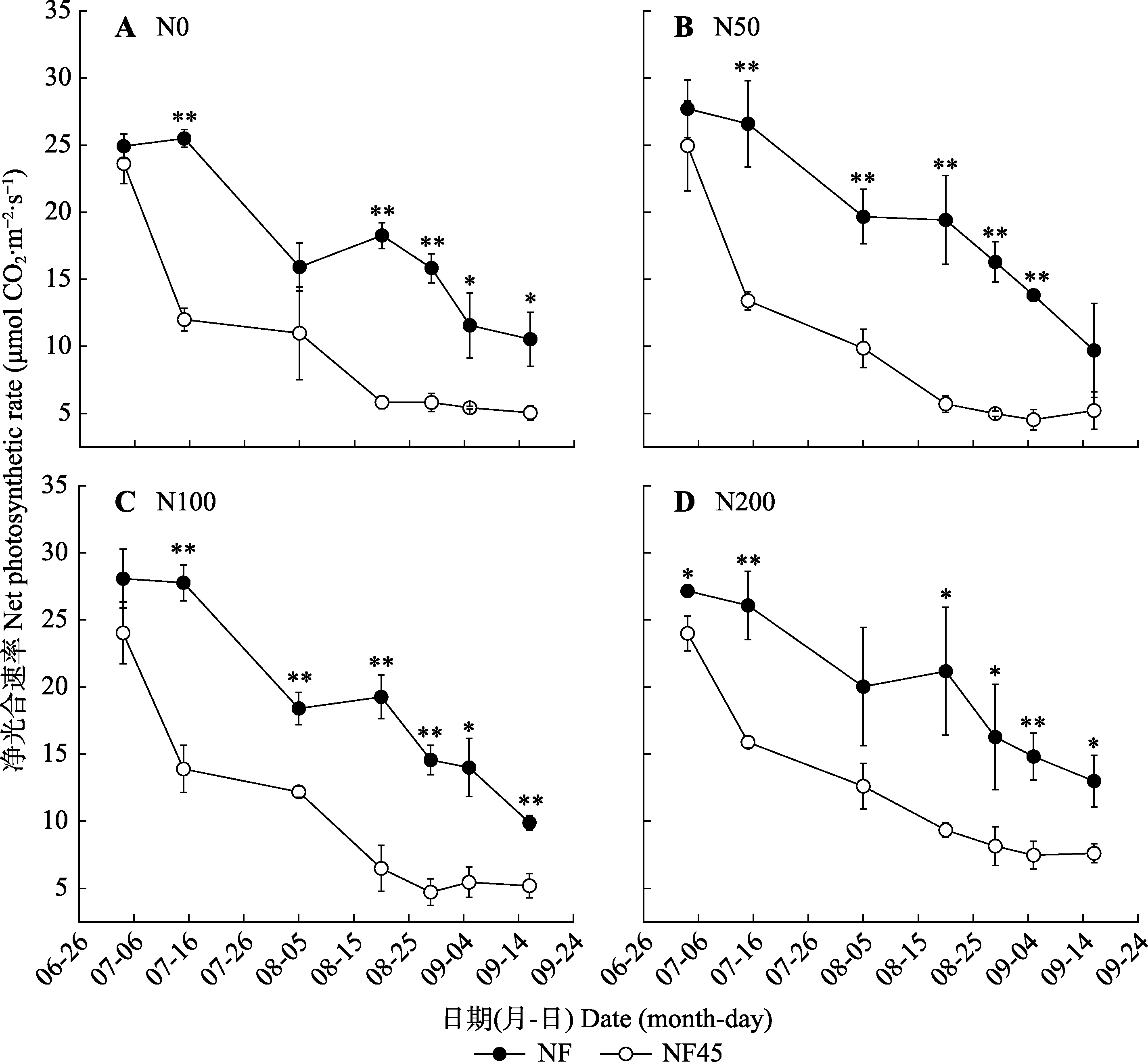
Fig. 1 Effects of different ozone and nitrogen (N) addition treatments on the leaf photosynthetic rate (Pn) of poplar at different growth stages (mean ± SD). NF, non-filtered ambient air; NF45, NF + 45 nmol·mol-1 O3. N0, no N added; N50, N0 + 50 kg N·hm-2·a-1; N100, N0 + 100 kg N·hm-2·a-1; N200, N0 + 200 kg N·hm-2·a-1. *, p < 0.05; **, p < 0.01.
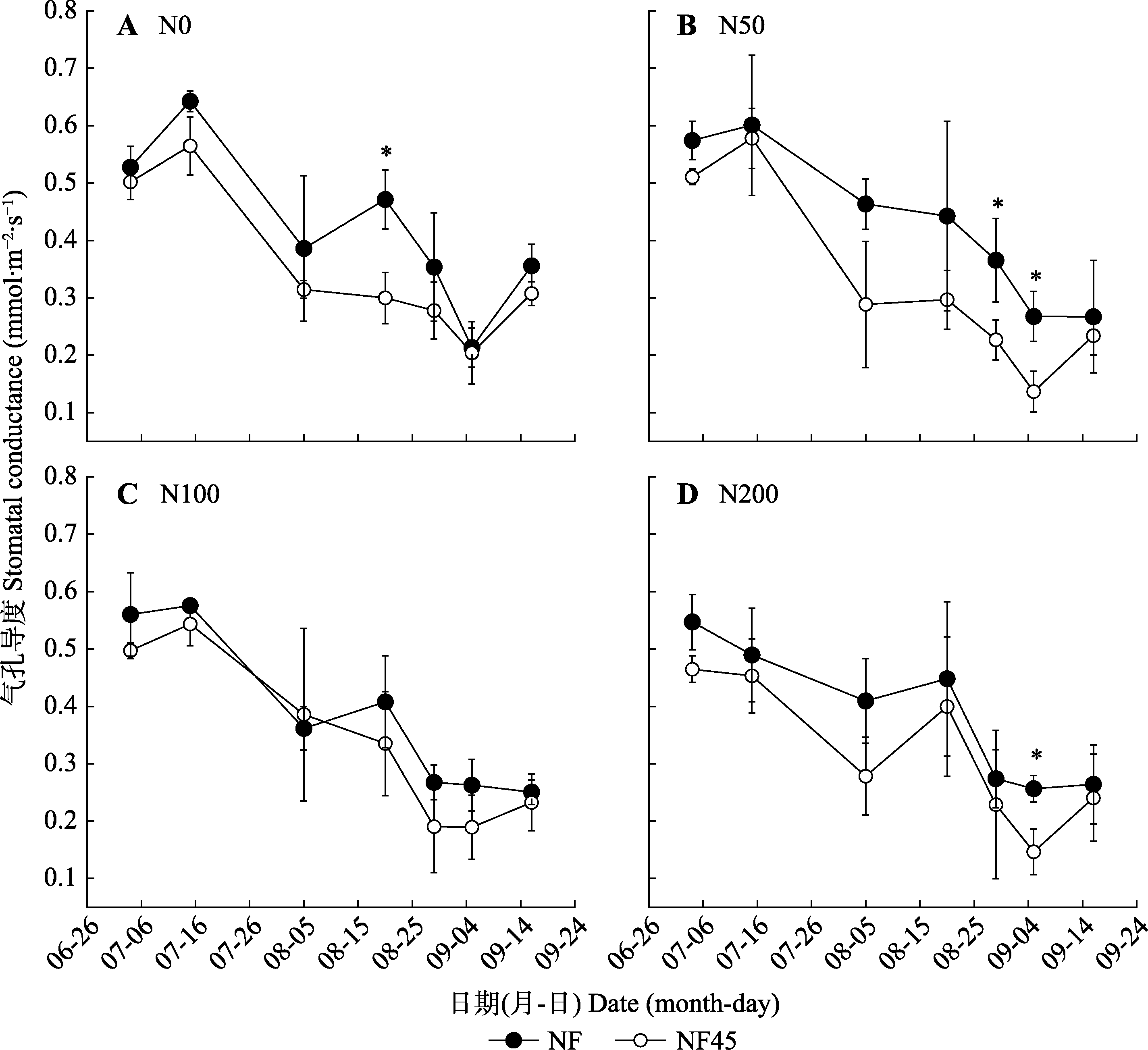
Fig. 2 Effects of different ozone and nitrogen (N) addition treatments on the stomatal conductance (gs) of poplar at different growth stages (mean ± SD). NF, non-filtered ambient air; NF45, NF + 45 nmol·mol-1 O3. N0, no N added; N50, N0 + 50 kg N·hm-2·a-1; N100, N0 + 100 kg N·hm-2·a-1; N200, N0 + 200 kg N·hm-2·a-1. *, p < 0.05; **, p < 0.01.
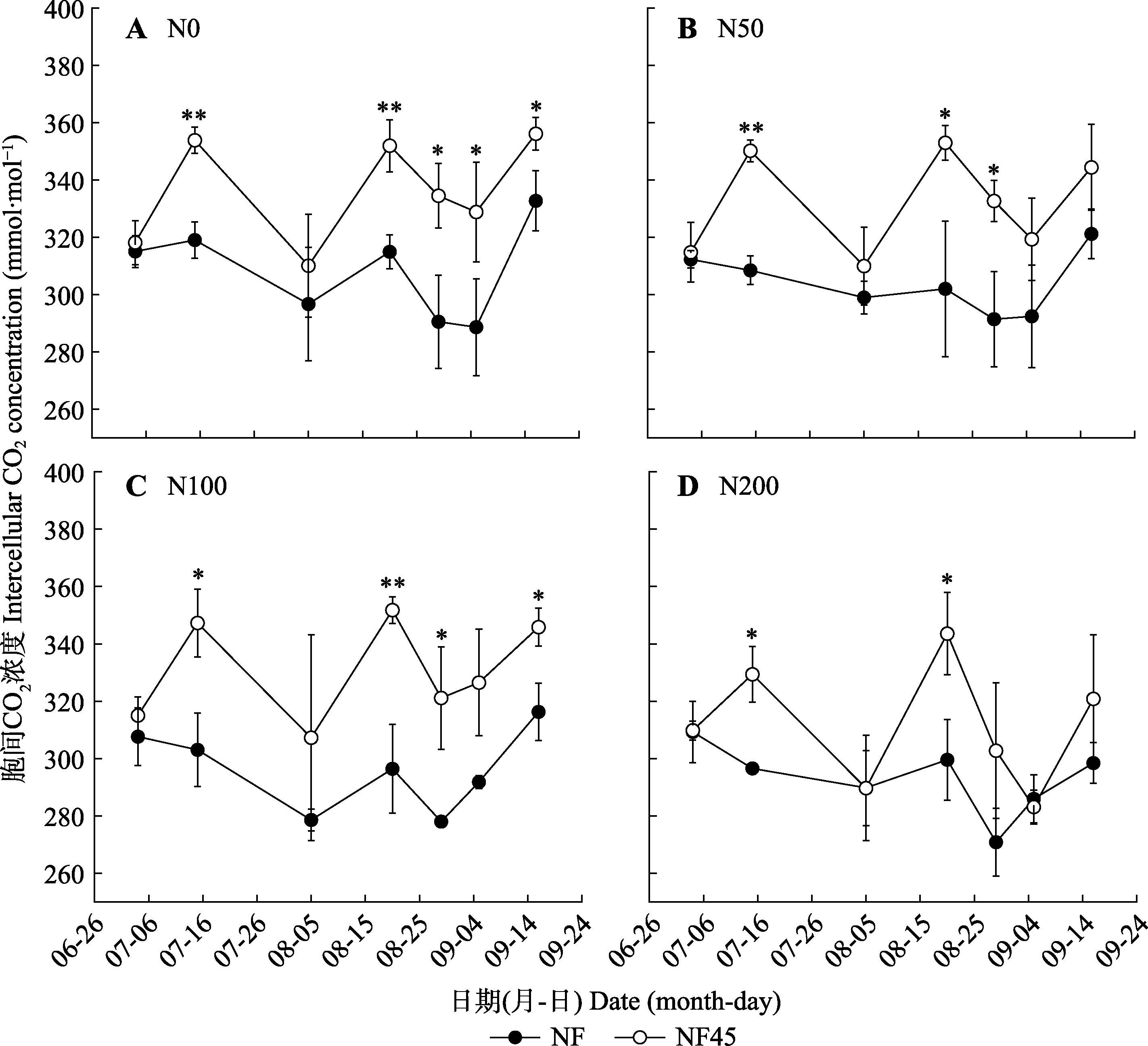
Fig. 3 Effects of different ozone and nitrogen (N) addition treatments on the intercellular CO2 concentration (Ci) of poplar at different growth stages (mean ± SD). NF, non-filtered ambient air; NF45, NF + 45 nmol·mol-1 O3. N0, no N added; N50, N0 + 50 kg N·hm-2·a-1; N100, N0 + 100 kg N·hm-2·a-1; N200, N0 + 200 kg N·hm-2·a-1. *, p < 0.05; **, p < 0.01.
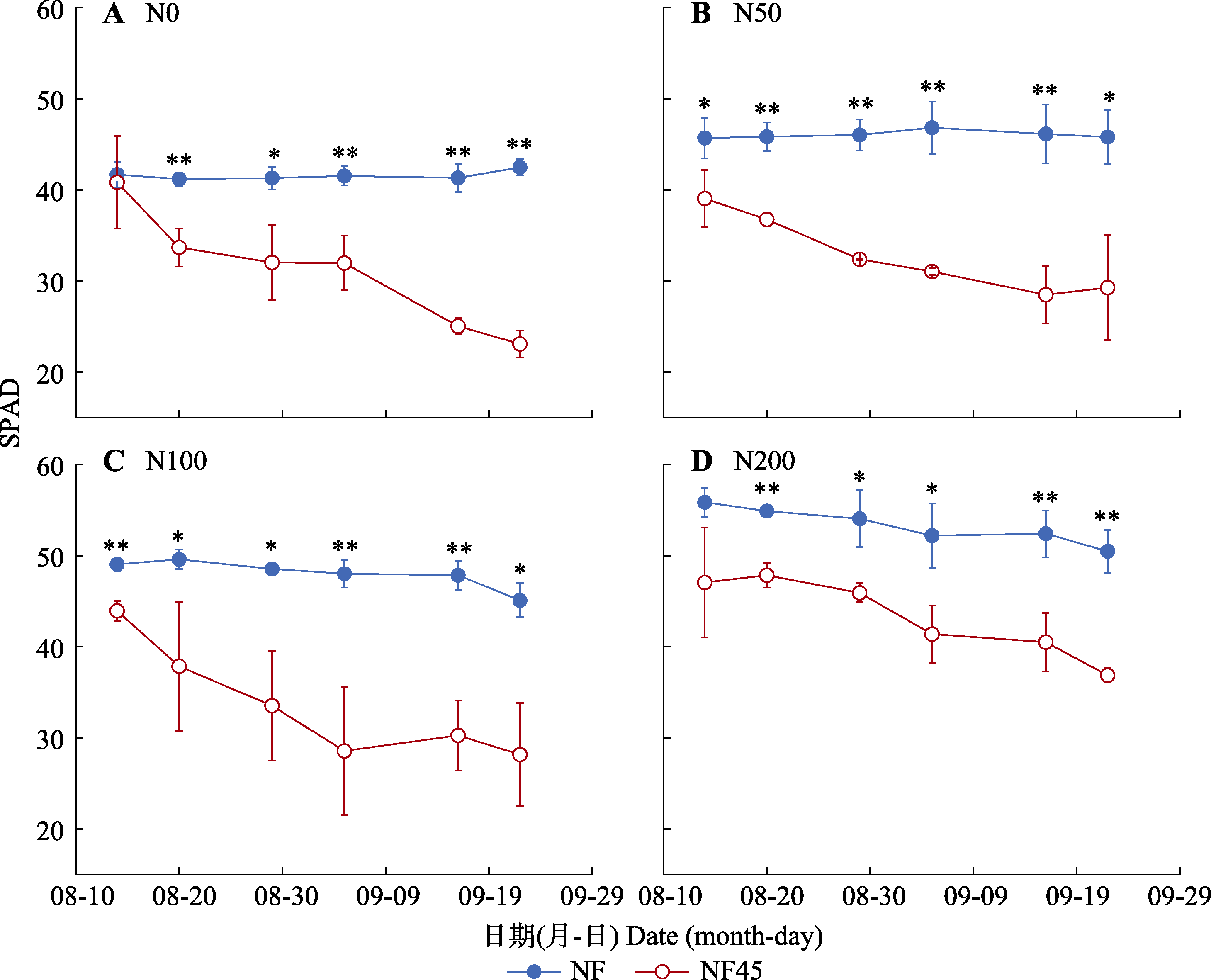
Fig. 4 Effects of different ozone and nitrogen (N) addition treatments on the relative chlorophyll content (SPAD) of poplar at different growth stages (mean ± SD). NF, non-filtered ambient air; NF45, NF + 45 nmol·mol-1 O3. N0, no N added; N50, N0 + 50 kg N·hm-2·a-1; N100, N0 + 100 kg N·hm-2·a-1; N200, N0 + 200 kg N·hm-2·a-1. *, p < 0.05; **, p < 0.01.
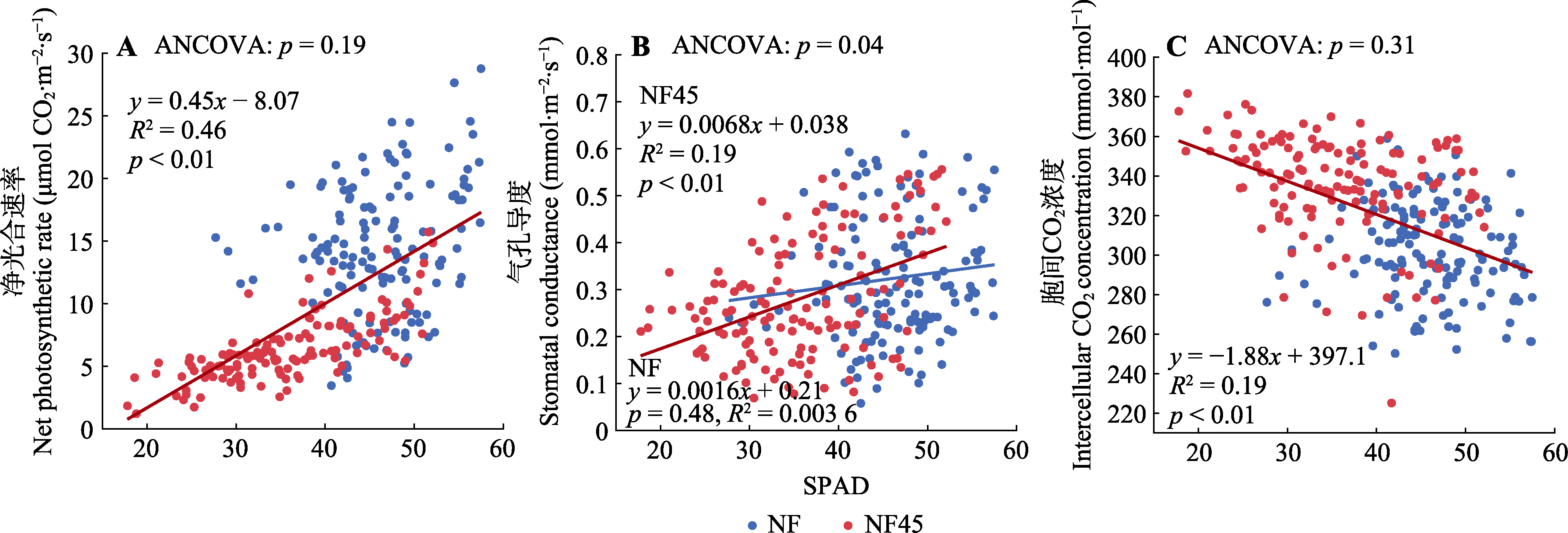
Fig. 5 Linear relationship between relative chlorophyll content (SPAD) and photosynthetic rate (Pn), stomatal conductance (gs), and intercellular CO2 concentration (Ci) of poplar leaves under different ozone treatments throughout the growth season. NF, non-filtered ambient air; NF45, NF + 45 nmol·mol-1 O3. ANCOVA, analysis of covariance.
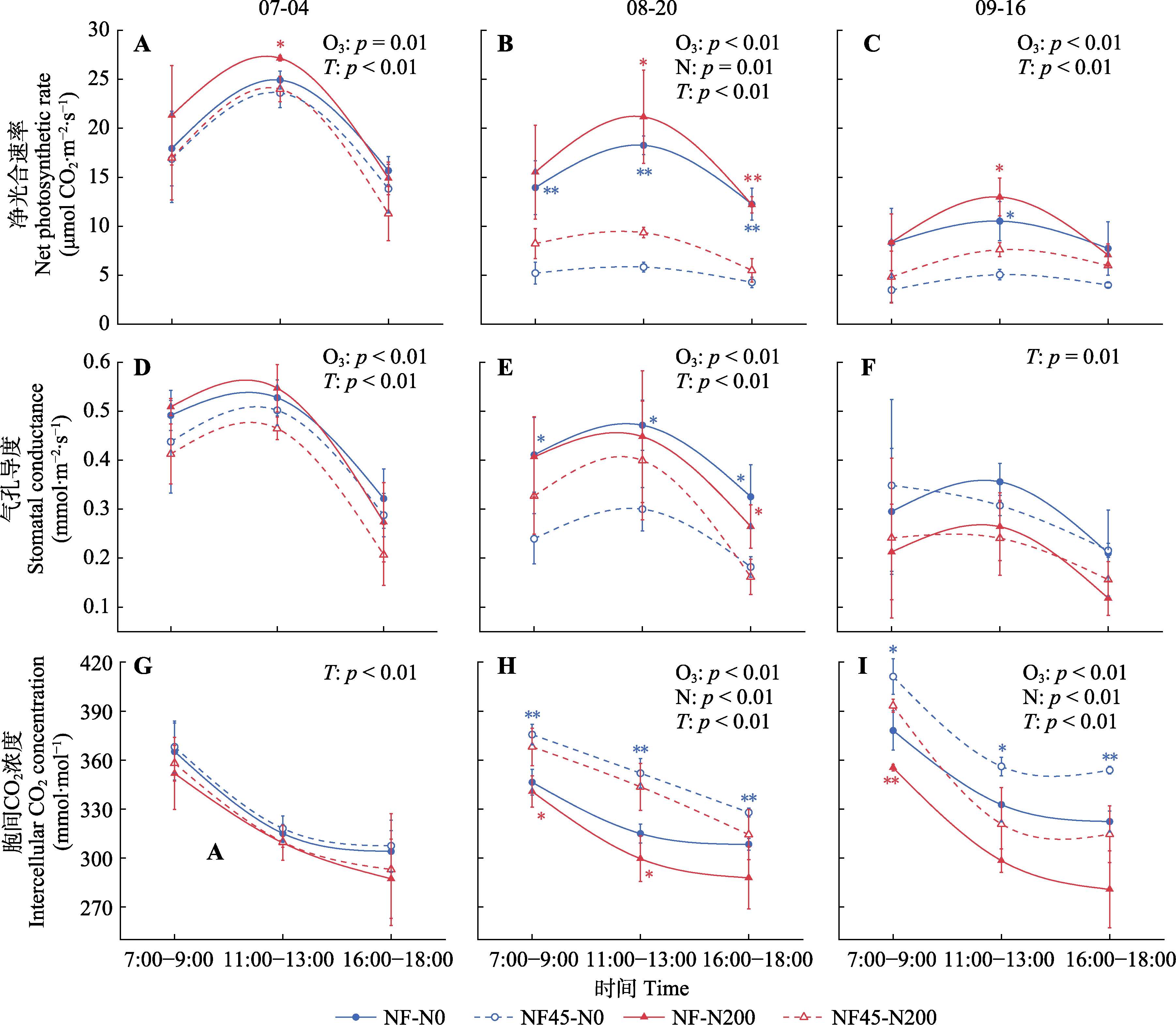
Fig. 6 Effects of different ozone (O3) and nitrogen (N) addition treatments on the diurnal variation (T) of photosynthetic rate (Pn), stomatal conductance (gs), and intercellular CO2 concentration (Ci) in poplar leaves (mean ± SD). NF, non-filtered ambient air; NF45, NF + 45 nmol mol-1·O3. N0, no N added; N200, N0 + 200 kg N·hm-2·a-1. The blue asterisk indicated significant differences between the two O3 treatments under N0 treatment; The red asterisk indicated a significant difference between the two O3 treatments under N200 treatment. *, p < 0.05; **, p < 0.01. Only statistically significant p-values are shown.
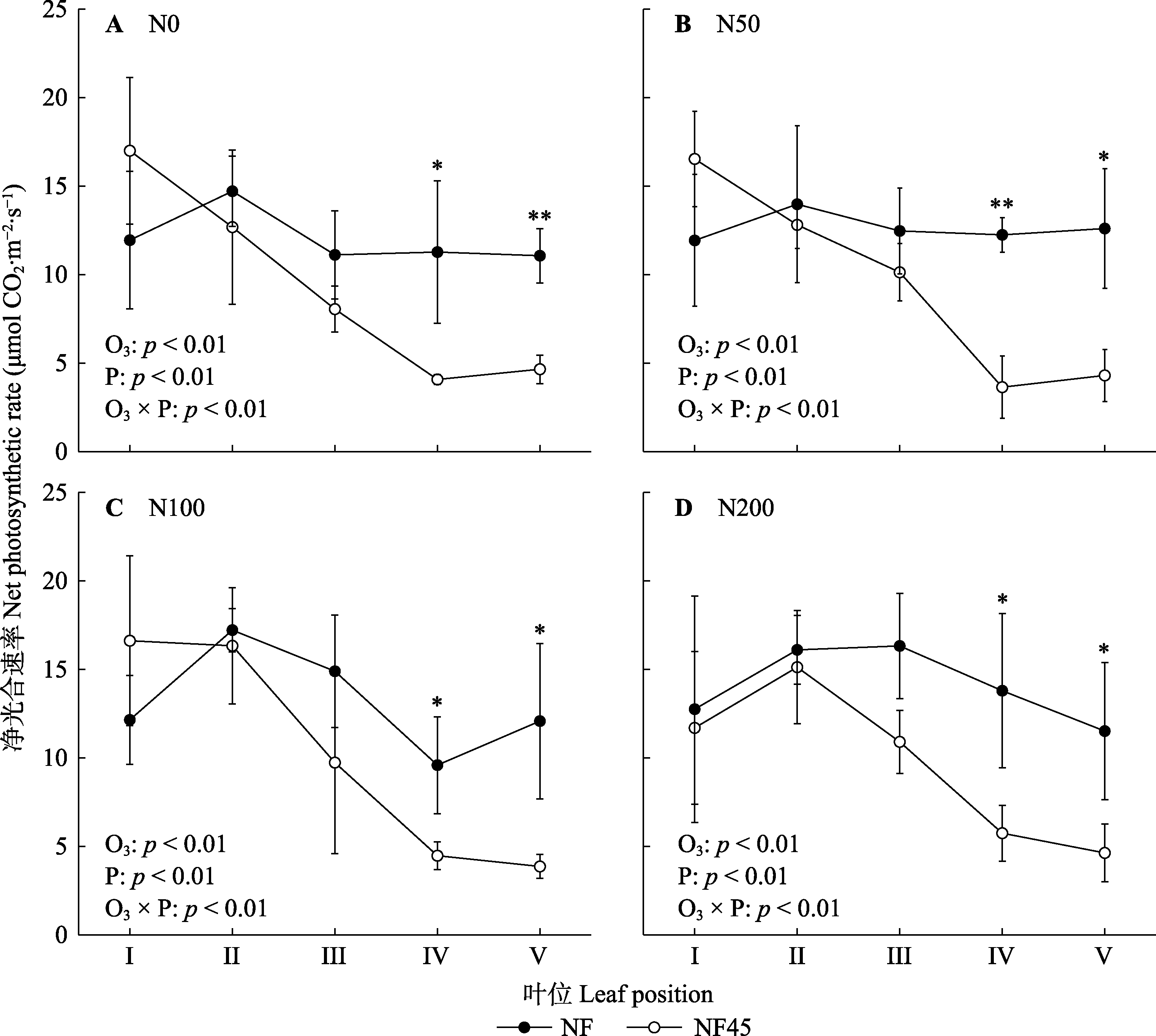
Fig. 7 Effects of different ozone (O3) and nitrogen (N) addition treatments on the photosynthetic rate (Pn) at different leaf positions (P) of poplar (mean ± SD). NF, non-filtered ambient air; NF45, NF + 45 nmol·mol-1 O3. N0, no N added; N50, N0 + 50 kg N·hm-2·a-1; N100, N0 + 100 kg N·hm-2·a-1; N200, N0 + 200 kg N·hm-2·a-1. *, p < 0.05; **, p < 0.01. I-V is 1-5, 6-10, 11-15, 16-20, 21 to botton leaves form top to bottom, respectively.
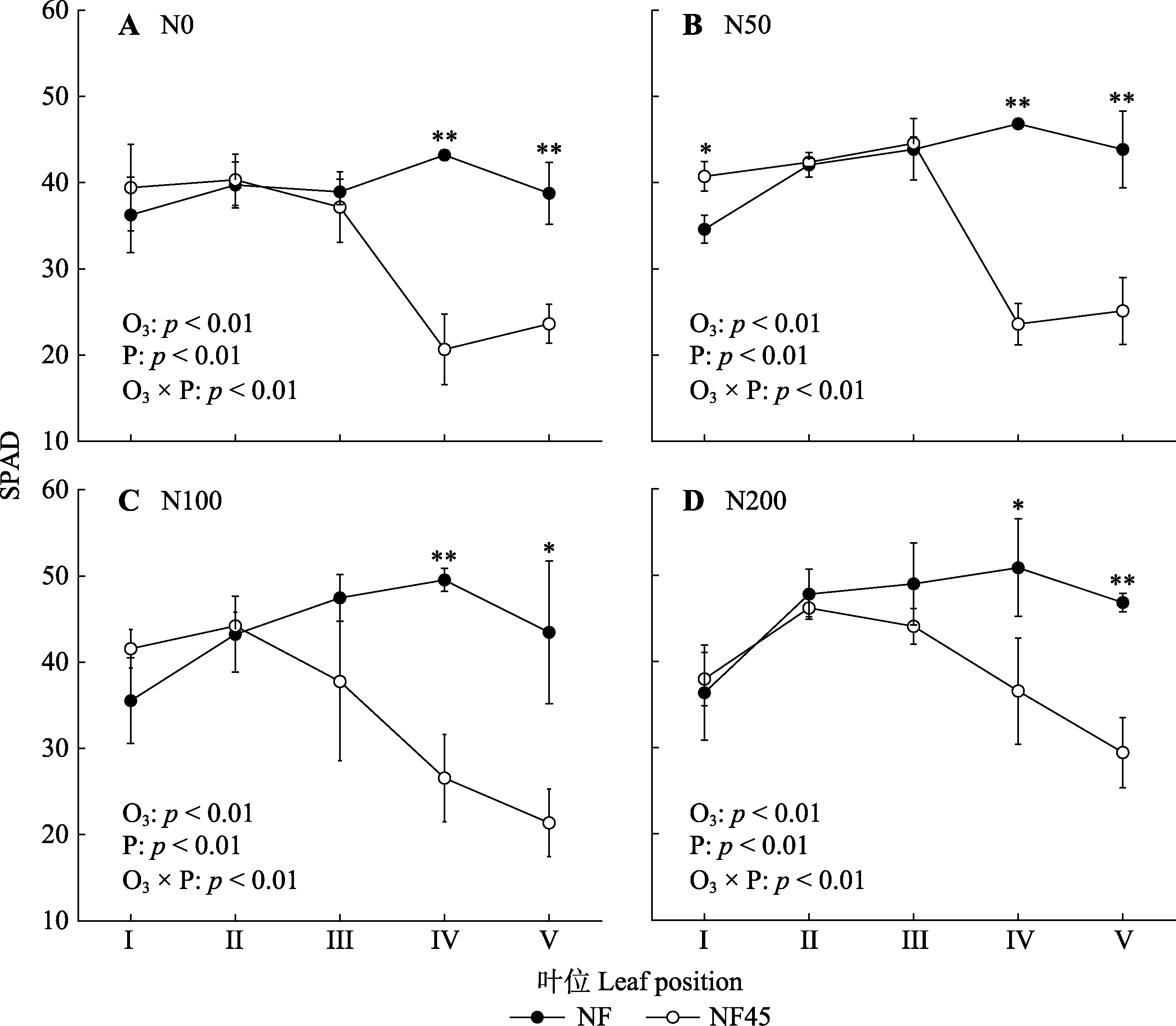
Fig. 8 Effects of different ozone (O3) and nitrogen (N) addition treatments on the relative chlorophyll content (SPAD) at different leaf positions (P) of poplar (mean ± SD). NF, non-filtered ambient air; NF45, NF + 45 nmol·mol-1 O3. N0, no N added; N50, N0 + 50 kg N·hm-2·a-1; N100, N0 + 100 kg N·hm-2·a-1; N200, N0 + 200 kg N·hm-2·a-1. *, p < 0.05; **, p < 0.01. I-V is 1-5, 6-10, 11-15, 16-20, 21 to botton leaves form top to bottom, respectively.
| [1] | Agathokleous E, Feng ZZ, Oksanen E, Sicard P, Wang Q, Saitanis CJ, Araminiene V, Blande JD, Hayes F, Calatayud V, Domingos M, Veresoglou SD, Peñuelas J, Wardle DA, de Marco A, et al. (2020). Ozone affects plant, insect, and soil microbial communities: a threat to terrestrial ecosystems and biodiversity. Science Advances, 6, eabc1176. DOI: 10.1126/sciadv.abc1176. |
| [2] |
Ainsworth EA, Rogers A, Leakey ADB, Heady LE, Gibon Y, Stitt M, Schurr U (2007). Does elevated atmospheric [CO2] alter diurnal C uptake and the balance of C and N metabolites in growing and fully expanded soybean leaves? Journal of Experimental Botany, 58, 579-591.
DOI PMID |
| [3] |
Ainsworth EA, Yendrek CR, Sitch S, Collins WJ, Emberson LD (2012). The effects of tropospheric ozone on net primary productivity and implications for climate change. Annual Review of Plant Biology, 63, 637-661.
DOI PMID |
| [4] |
Andersen CP (2003). Source-sink balance and carbon allocation below ground in plants exposed to ozone. New Phytologist, 157, 213-228.
DOI PMID |
| [5] |
Azuchi F, Kinose Y, Matsumura T, Kanomata T, Uehara Y, Kobayashi A, Yamaguchi M, Izuta T (2014). Modeling stomatal conductance and ozone uptake of Fagus crenata grown under different nitrogen loads. Environmental Pollution, 184, 481-487.
DOI URL |
| [6] |
Bohler S, Sergeant K, Lefèvre I, Jolivet Y, Hoffmann L, Renaut J, Dizengremel P, Hausman JF (2010). Differential impact of chronic ozone exposure on expanding and fully expanded poplar leaves. Tree Physiology, 30, 1415-1432.
DOI PMID |
| [7] |
Desotgiu R, Pollastrini M, Cascio C, Gerosa G, Marzuoli R, Bussotti F (2012). Chlorophyll a fluorescence analysis along a vertical gradient of the crown in a poplar (Oxford clone) subjected to ozone and water stress. Tree Physiology, 32, 976-986.
DOI PMID |
| [8] | Feng ZZ, Li P, Yuan XY, Gao F, Jiang LJ, Dai LL (2018). Progress in ecological and environmental effects of ground- level O3 in China. Acta Ecologica Sinica, 38, 1530-1541. |
| [冯兆忠, 李品, 袁相洋, 高峰, 姜立军, 代碌碌 (2018). 我国地表臭氧生态环境效应研究进展. 生态学报, 38, 1530-1541.] | |
| [9] |
Feng ZZ, Pang J, Kobayashi K, Zhu JG, Ort DR (2011). Differential responses in two varieties of winter wheat to elevated ozone concentration under fully open-air field conditions. Global Change Biology, 17, 580-591.
DOI URL |
| [10] |
Feng ZZ, Shang B, Gao F, Calatayud V (2019a). Current ambient and elevated ozone effects on poplar: a global meta-analysis and response relationships. Science of the Total Environment, 654, 832-840.
DOI URL |
| [11] |
Feng ZZ, Shang B, Li ZZ, Calatayud V, Agathokleous E (2019b). Ozone will remain a threat for plants independently of nitrogen load. Functional Ecology, 33, 1854-1870.
DOI URL |
| [12] |
Feng ZZ, Wang L, Pleijel H, Zhu J, Kobayashi K (2016). Differential effects of ozone on photosynthesis of winter wheat among cultivars depend on antioxidative enzymes rather than stomatal conductance. Science of the Total Environment, 572, 404-411.
DOI URL |
| [13] |
Feng ZZ, Yuan XY, Li P, Shang B, Ping Q, Hu TJ, Liu S (2020). Progress in the effects of elevated ground-level ozone on terrestrial ecosystems. Chinese Journal of Plant Ecology, 44, 526-542.
DOI URL |
|
[冯兆忠, 袁相洋, 李品, 尚博, 平琴, 胡廷剑, 刘硕 (2020). 地表臭氧浓度升高对陆地生态系统影响的研究进展. 植物生态学报, 44, 526-542.]
DOI |
|
| [14] | Fu R, Shang B, Zhang GY, Feng ZZ (2021). Differential effects of ozone pollution on photosynthesis and growth of rice during two growth stages. Journal of Agro-Environment Science, 40, 2066-2075. |
| [付娆, 尚博, 张国友, 冯兆忠 (2021). 不同生育期臭氧熏蒸对水稻光合作用及生长的影响差异. 农业环境科学学报, 40, 2066-2075.] | |
| [15] |
Galloway JN, Townsend AR, Erisman JW, Bekunda M, Cai Z, Freney JR, Martinelli LA, Seitzinger SP, Sutton MA (2008). Transformation of the nitrogen cycle: recent trends, questions, and potential solutions. Science, 320, 889-892.
DOI PMID |
| [16] |
Gao F, Li P, Feng ZZ (2017). Interactive effects of ozone and drought stress on plants: a review. Chinese Journal of Plant Ecology, 41, 252-268.
DOI |
|
[高峰, 李品, 冯兆忠 (2017). 臭氧与干旱对植物复合影响的研究进展. 植物生态学报, 41, 252-268.]
DOI |
|
| [17] |
Hu EZ, Gao F, Xin Y, Jia HX, Li KH, Hu JJ, Feng ZZ (2015). Concentration- and flux-based ozone dose-response relationships for five poplar clones grown in North China. Environmental Pollution, 207, 21-30.
DOI PMID |
| [18] | Hu JW, Wang QC, Ma SJ (2020). Research advances in precision fertilization regime for plantation forests. World Forestry Research, 33, 37-42. |
| [胡建文, 王庆成, 马双娇 (2020). 人工林精准施肥研究进展. 世界林业研究, 33, 37-42.] | |
| [19] |
Johnson DW, Curtis PS (2001). Effects of forest management on soil C and N storage: meta analysis. Forest Ecology and Management, 140, 227-238.
DOI URL |
| [20] |
Kets K, Darbah JNT, Sober A, Riikonen J, Sober J, Karnosky DF (2010). Diurnal changes in photosynthetic parameters of Populus tremuloides, modulated by elevated concentrations of CO2 and/or O3 and daily climatic variation. Environmental Pollution, 158, 1000-1007.
DOI URL |
| [21] |
Kinose Y, Fukamachi Y, Okabe S, Hiroshima H, Watanabe M, Izuta T (2017). Photosynthetic responses to ozone of upper and lower canopy leaves of Fagus crenata Blume seedlings grown under different soil nutrient conditions. Environmental Pollution, 223, 213-222.
DOI URL |
| [22] |
LeBauer DS, Treseder KK (2008). Nitrogen limitation of net primary productivity in terrestrial ecosystems is globally distributed. Ecology, 89, 371-379.
DOI PMID |
| [23] |
Li CY, Korpelainen H (2015). Transcriptomic regulatory network underlying morphological and physiological acclimation to nitrogen starvation and excess in poplar roots and leaves. Tree Physiology, 35, 1279-1282.
DOI PMID |
| [24] |
Li K, Jacob DJ, Liao H, Shen L, Zhang Q, Bates KH (2019). Anthropogenic drivers of 2013-2017 trends in summer surface ozone in China. Proceedings of the National Academy of Sciences of the United States of America, 116, 422-427.
DOI PMID |
| [25] |
Li P, Feng ZZ, Catalayud V, Yuan XY, Xu YS, Paoletti E (2017). A meta-analysis on growth, physiological, and biochemical responses of woody species to ground-level ozone highlights the role of plant functional types. Plant, Cell & Environment, 40, 2369-2380.
DOI URL |
| [26] |
Li P, Zhou HM, Feng ZZ (2021). Ozone pollution, nitrogen addition, and drought stress interact to affect non- structural carbohydrates in the leaves and fine roots of poplar. Environmental Science, 42, 1004-1012.
DOI URL |
| [李品, 周慧敏, 冯兆忠 (2021). 臭氧污染、氮沉降和干旱胁迫交互作用对杨树叶和细根非结构性碳水化合物的影响. 环境科学, 42, 1004-1012.] | |
| [27] | Li SJ, Yuan XY, Feng ZZ, Du YD, Agathokleous E, Paoletti E (2022). Whole-plant compensatory responses of isoprene emission from hybrid poplar seedlings exposed to elevated ozone. Science of the Total Environment, 806, 150949. DOI: 10.1016/j.scitotenv.2021.150949. |
| [28] |
Liang XY, Zhang T, Lu XK, Ellsworth DS, BassiriRad H, You CM, Wang D, He PC, Deng Q, Liu H, Mo JM, Ye Q (2020). Global response patterns of plant photosynthesis to nitrogen addition: a meta-analysis. Global Change Biology, 26, 3585-3600.
DOI PMID |
| [29] |
Liu XJ, Zhang Y, Han WX, Tang AH, Shen JL, Cui ZL, Vitousek P, Erisman JW, Goulding K, Christie P, Fangmeier A, Zhang FS (2013). Enhanced nitrogen deposition over China. Nature, 494, 459-462.
DOI |
| [30] | Lu X, Hong JY, Zhang L, Cooper OR, Schultz MG, Xu XB, Wang T, Gao M, Zhao YH, Zhang YH (2018a). Severe surface ozone pollution in China: a global perspective. Environmental Science & Technology Letters, 5, 487-494. |
| [31] | Lu XK, Vitousek PM, Mao QG, Gilliam FS, Luo YQ, Zhou GY, Zou XM, Bai E, Scanlon TM, Hou EQ, Mo JM (2018b). Plant acclimation to long-term high nitrogen deposition in an N-rich tropical forest. Proceedings of the National Academy of Sciences of the United States of America, 115, 5187-5192. |
| [32] |
Mäenpää M, Riikonen J, Kontunen-Soppela S, Rousi M, Oksanen E (2011). Vertical profiles reveal impact of ozone and temperature on carbon assimilation of Betula pendula and Populus tremula. Tree Physiology, 31, 808-818.
DOI PMID |
| [33] | Maurer S, Matyssek R (1997). Nutrition and the ozone sensitivity of birch (Betula pendula). Trees, 12, 11-20. |
| [34] | Ning Z, Hou YK, Xu X (2024). Optimized strategies for nitrogen fertilizer application in Populus plantations in the context of climate change mitigation. Forest Policy and Economics, 159, 103139. DOI: 10.1016/j.forpol.2023.103139. |
| [35] |
Olsson P, Linder S, Giesler R, Högberg P (2005). Fertilization of boreal forest reduces both autotrophic and heterotrophic soil respiration. Global Change Biology, 11, 1745-1753.
DOI URL |
| [36] |
Pell EJ, Sinn JP, Johansen CV (1995). Nitrogen supply as a limiting factor determining the sensitivity of Populus tremuloides Michx. to ozone stress. New Phytologist, 130, 437-446.
DOI URL |
| [37] | Pukkala T (2017). Optimal nitrogen fertilization of boreal conifer forest. Forest Ecosystems, 4, 3. DOI: 10.1186/s40663-017-0090-2. |
| [38] |
Reay DS, Dentener F, Smith P, Grace J, Feely RA (2008). Global nitrogen deposition and carbon sinks. Nature Geoscience, 1, 430-437.
DOI |
| [39] |
Ren W, Tian HQ, Tao B, Chappelka A, Sun G, Lu CQ, Liu ML, Chen GS, Xu XF (2011). Impacts of tropospheric ozone and climate change on net primary productivity and net carbon exchange of China’s forest ecosystems. Global Ecology and Biogeography, 20, 391-406.
DOI URL |
| [40] | Shang B, Deng TT, Chen H, Xu YS, Feng ZZ (2024). Effects of elevated ozone on physiology, growth, yield and grain quality of rice (Oryza sativa L.): an ozone gradient experiment. Agriculture, Ecosystems & Environment, 363, 108858. DOI: 10.1016/j.agee.2023.108858. |
| [41] |
Shang B, Feng ZZ, Li P, Calatayud V (2018). Elevated ozone affects C, N and P ecological stoichiometry and nutrient resorption of two poplar clones. Environmental Pollution, 234, 136-144.
DOI PMID |
| [42] | Shang B, Feng ZZ, Li P, Yuan XY, Xu YS, Calatayud V (2017). Ozone exposure- and flux-based response relationships with photosynthesis, leaf morphology and biomass in two poplar clones. Science of the Total Environment, 603, 185-195. |
| [43] | Shang B, Xu YS, Peng JL, Agathokleous E, Feng ZZ (2021). High nitrogen addition decreases the ozone flux by reducing the maximum stomatal conductance in poplar saplings. Environmental Pollution, 272, 115979. DOI: 10.1016/j.envpol.2020.115979. |
| [44] |
Stevens CJ, Dise NB, Owen Mountford J, Gowing DJ (2004). Impact of nitrogen deposition on the species richness of grasslands. Science, 303, 1876-1879.
PMID |
| [45] |
Sugai T, Watanabe T, Kita K, Koike T (2019). Nitrogen loading increases the ozone sensitivity of larch seedlings with higher sensitivity to nitrogen loading. Science of the Total Environment, 663, 587-595.
DOI URL |
| [46] |
Sutton MA, Simpson D, Levy PE, Smith RI, Reis S, van Oijen M, de Vries W (2008). Uncertainties in the relationship between atmospheric nitrogen deposition and forest carbon sequestration. Global Change Biology, 14, 2057-2063.
DOI URL |
| [47] |
Vingarzan R (2004). A review of surface ozone background levels and trends. Atmospheric Environment, 38, 3431-3442.
DOI URL |
| [48] |
Wang JL, Liu G, Liu FX, Zhu JG (2019). Responses of antioxidant enzymes to chronic free-air ozone stress in rice (Oryza sativa L.) cultivars with different ozone-sensitivities. Bulletin of Environmental Contamination and Toxicology, 103, 428-434.
DOI |
| [49] |
Wang L, Pang J, Feng ZZ, Zhu JG, Kobayashi K (2015). Diurnal variation of apoplastic ascorbate in winter wheat leaves in relation to ozone detoxification. Environmental Pollution, 207, 413-419.
DOI PMID |
| [50] |
Wang Z, Ma L, Jia ZK, Wei HX, Duan J (2016). Interactive effects of irrigation and exponential fertilization on nutritional characteristics in Populus × euramericana cv. ‘74/76’ cuttings in an open-air nursery in Beijing, China. Journal of Forestry Research, 27, 569-582.
DOI URL |
| [51] |
Wittig VE, Ainsworth EA, Naidu SL, Karnosky DF, Long SP (2009). Quantifying the impact of current and future tropospheric ozone on tree biomass, growth, physiology and biochemistry: a quantitative meta-analysis. Global Change Biology, 15, 396-424.
DOI URL |
| [52] |
Wu F, Zhang HQ, Fang FR, Wu N, Zhang YX, Tang M (2017). Effects of nitrogen and exogenous Rhizophagus irregularis on the nutrient status, photosynthesis and leaf anatomy of Populus × canadensis ‘Neva’. Journal of Plant Growth Regulation, 36, 824-835.
DOI URL |
| [53] |
Xu YS, Feng ZZ, Kobayashi K (2021). Performances of a system for free-air ozone concentration elevation with poplar plantation under increased nitrogen deposition. Environmental Science and Pollution Research, 28, 58298-58309.
DOI |
| [54] |
Xu YS, Feng ZZ, Peng JL, Tarvainen L (2022). Elevated ozone decreases the activity of Rubisco in poplar but not its activation under fluctuating light. Tree Physiology, 42, 1762-1775.
DOI URL |
| [55] |
Xu YS, Feng ZZ, Shang B, Dai LL, Uddling J, Tarvainen L (2019). Mesophyll conductance limitation of photosynthesis in poplar under elevated ozone. Science of the Total Environment, 657, 136-145.
DOI URL |
| [56] |
Yamaguchi M, Watanabe M, Iwasaki M, Tabe C, Matsumura H, Kohno Y, Izuta T (2007). Growth and photosynthetic responses of Fagus crenata seedlings to O3 under different nitrogen loads. Trees, 21, 707-718.
DOI URL |
| [57] |
Yendrek CR, Leisner CP, Ainsworth EA (2013). Chronic ozone exacerbates the reduction in photosynthesis and acceleration of senescence caused by limited N availability in Nicotiana sylvestris. Global Change Biology, 19, 3155-3166.
DOI PMID |
| [58] | Zhang H, Tian TT, Shang B, Feng ZZ (2024). Effects of elevated ozone on the photosynthesis of different rice cultivars under different fertilization measures. Acta Ecologica Sinica, 44, 5583-5595. |
| [张涵, 田彤彤, 尚博, 冯兆忠 (2024). 不同施肥措施臭氧浓度升高对不同水稻品种光合特性的影响. 生态学报, 44, 5583-5595.] | |
| [59] | Zhang SR, Gao RF (2000). Ecophysiological characteristics of photosynthesis of hybrid poplar clones under light stress. Acta Phytoecologica Sinica, 24, 528-533. |
| [张守仁, 高荣孚 (2000). 光胁迫下杂种杨无性系光合生理生态特性的研究. 植物生态学报, 24, 528-533.] | |
| [60] |
Zhang WW, Feng ZZ, Wang XK, Niu JF (2012). Responses of native broadleaved woody species to elevated ozone in subtropical China. Environmental Pollution, 163, 149-157.
DOI URL |
| [61] |
Zhang WW, Feng ZZ, Wang XK, Niu JF (2014). Impacts of elevated ozone on growth and photosynthesis of Metasequoia glyptostroboides Hu et Cheng. Plant Science, 226, 182-188.
DOI URL |
| [1] | Wang Ziping, Mao Zikun, HE Han, Jiang Pengcheng, YAN Ruihuan, WANG Xugao. Spatial distribution and association patterns of tree species across successional stages in broad-leaved Korean pine forests of Northeast China [J]. Chin J Plant Ecol, 2026, 50(预发表): 1-. |
| [2] | Li Yi, Huang Huan, Chao ZHAO Yan, CHEN Li-Tong. Effects of nutrient addition on community diversity and composition of alpine meadows across elevations [J]. Chin J Plant Ecol, 2026, 50(预发表): 0-. |
| [3] | ZHANG An-Ning, XIAO Ya-Ning, ZHAO Xia, ZHANG Miao, CUI Han Wen, Chen Shu-Yan, AN Li-Zhe. Interactions between shrub encroachment and nitrogen addition on nematode community and functional traits on Qinghai–Tibetan Plateau [J]. Chin J Plant Ecol, 2026, 50(预发表): 0-. |
| [4] | HOU Xiao-Fan, MA Chen-Han, SUN Yu-Qian, GAO Yu-Han, LI Pin. Differential ecological stoichiometry of leaf and fine root litter decomposition under ozone stress [J]. Chin J Plant Ecol, 2026, 50(2): 268-278. |
| [5] | PI Hui-Zhi, ZHANG Qiu-Fang, SUN Hao, ZENG Quan-Xin, PENG Yuan-Zhen, YUAN Xiao-Chun, XU Jian-Guo, CHEN Yue-Min. Microbial carbon-nitrogen imbalance affects the response of microbial nitrogen use efficiency to nitrogen enrichment in Castanopsis faberi forest soils [J]. Chin J Plant Ecol, 2026, 50(1): 34-44. |
| [6] | FENG Mei, OUYANG Sheng-Nan, Matthias SAURER, LI Mai-He, ZHOU Xiao-Qian, TIE Lie-Hua, SHEN Wei-Jun, DUAN Hong-Lang, Arthur GESSLER. Effects of previous nitrogen addition on aboveground and belowground carbon and nitrogen allocation dynamics in drought-exposed sessile oak seedlings [J]. Chin J Plant Ecol, 2025, 49(9): 1527-1542. |
| [7] | ZHANG Fa-Wei, LI Hong-Qin, ZHU Jing-Bin, FAN Bo, ZHOU Hua-Kun, LI Ying-Nian, LIANG Nai-Shen. Response of aboveground and belowground carbon storage to nitrogen addition and precipitation change in an alpine meadow ecosystem [J]. Chin J Plant Ecol, 2025, 49(9): 1399-1409. |
| [8] | HAO Jie, DIAO Hua-Jie, SU Yuan, WU Shuai-Kai, GAO Yang-Yang, LIANG Wen-Jun, NIU Hui-Min, YANG Qian-Wen, CHANG Jie, WANG Ge, XU Wen-Li, MA Teng-Fei, DONG Kuan-Hu, $\boxed{\hbox{WANG Chang-Hui}}$. Precipitation regulates the response of salinized grassland net primary productivity to nitrogen addition and mowing in the agro-pastoral zone [J]. Chin J Plant Ecol, 2025, 49(5): 710-719. |
| [9] | TANG Yuan-Xiang, XIONG Shi-Chen, ZHU Hong-Feng, ZHANG Xin-Sheng, YOU Cheng-Ming, LIU Si-Ning, TAN Bo, XU Zhen-Feng. Effects of long-term nitrogen addition on leaf litter production and carbon, nitrogen and phosphorus return of the dominant tree species in broadleaf evergreen forests on the western margin of Sichuan Basin [J]. Chin J Plant Ecol, 2025, 49(5): 720-731. |
| [10] | YAN Xiao-Li, LIU Gui-Mei, LI Xiao-Yu, JIANG Yu-Xiang, QUAN Xiao-Qiang, WANG Yan-Ru, QU Lu-Ping, TANG Xing-Hao. Photosynthetic characteristics and chlorophyll fluorescence parameters in Schima superba seedlings under different level of nitrogen addition and NH4+-N to NO3--N ratio [J]. Chin J Plant Ecol, 2025, 49(4): 624-637. |
| [11] | RAN Jia-Xin, ZHANG Yu-Hui, WANG Yun, YANG Zhi-Jie, MAO Chao. Effects of warming and nitrogen and phosphorus addition on dissolved organic carbon biodegradability of litter in a subtropical forest [J]. Chin J Plant Ecol, 2024, 48(9): 1232-1242. |
| [12] | QUAN Xiao-Qiang, WANG Yan-Ru, LI Xiao-Yu, LIANG Hai-Yan, WANG Li-Dong, YAN Xiao-Li. Effects of nitrogen addition level and NH4+-N to NO3--N ratio on photosynthetic characteristics and chlorophyll fluorescence parameters in Cunninghamia lanceolata seedling [J]. Chin J Plant Ecol, 2024, 48(8): 1050-1064. |
| [13] | YANG Shang-Jin, FAN Yun-Xiang, ZHANG Yu-Wen, HAN Qiao-Ling, ZHAO Yue, DUAN Jie, DI Nan, XI Ben-Ye. Comparison of methods for dividing nighttime sap flow components in Populus tomentosa trees [J]. Chin J Plant Ecol, 2024, 48(4): 496-507. |
| [14] | HUANG Ling, WANG Zhen, MA Ze, YANG Fa-Lin, LI Lan, SEREKPAYEV Nurlan, NOGAYEV Adilbek, HOU Fu-Jiang. Effects of long-term grazing and nitrogen addition on the growth of Stipa bungeana population in typical steppe of Loess Plateau [J]. Chin J Plant Ecol, 2024, 48(3): 317-330. |
| [15] | GENG Xue-Qi, TANG Ya-Kun, WANG Li-Na, DENG Xu, ZHANG Ze-Ling, ZHOU Ying. Nitrogen addition increases biomass but reduces nitrogen use efficiency of terrestrial plants in China [J]. Chin J Plant Ecol, 2024, 48(2): 147-157. |
| Viewed | ||||||
|
Full text |
|
|||||
|
Abstract |
|
|||||
Copyright © 2026 Chinese Journal of Plant Ecology
Tel: 010-62836134, 62836138, E-mail: apes@ibcas.ac.cn, cjpe@ibcas.ac.cn

