
Chin J Plant Ecol ›› 2026, Vol. 50 ›› Issue (1): 202-212.DOI: 10.17521/cjpe.2025.0082 cstr: 32100.14.cjpe.2025.0082
• Research Articles • Previous Articles Next Articles
HAO Huan-Huan1,2, LI Dan1,2, GUO Zi-Hua1,2, ZHOU Ao1,2, LI Yan-Jie1,2, YANG Liang1,2, ZHANG Ran1,2, LU Ying-Shuai1,2, ZHAO Xiang1,2, CHEN Xiao-Peng1,2,*( )
)
Received:2025-03-05
Accepted:2025-06-09
Online:2026-01-20
Published:2026-02-13
Contact:
CHEN Xiao-Peng
Supported by:HAO Huan-Huan, LI Dan, GUO Zi-Hua, ZHOU Ao, LI Yan-Jie, YANG Liang, ZHANG Ran, LU Ying-Shuai, ZHAO Xiang, CHEN Xiao-Peng. Effects of salt stress on secretion of amino acids and their derivatives in root of Elytrigia elongata[J]. Chin J Plant Ecol, 2026, 50(1): 202-212.
Add to citation manager EndNote|Ris|BibTeX
URL: https://www.plant-ecology.com/EN/10.17521/cjpe.2025.0082
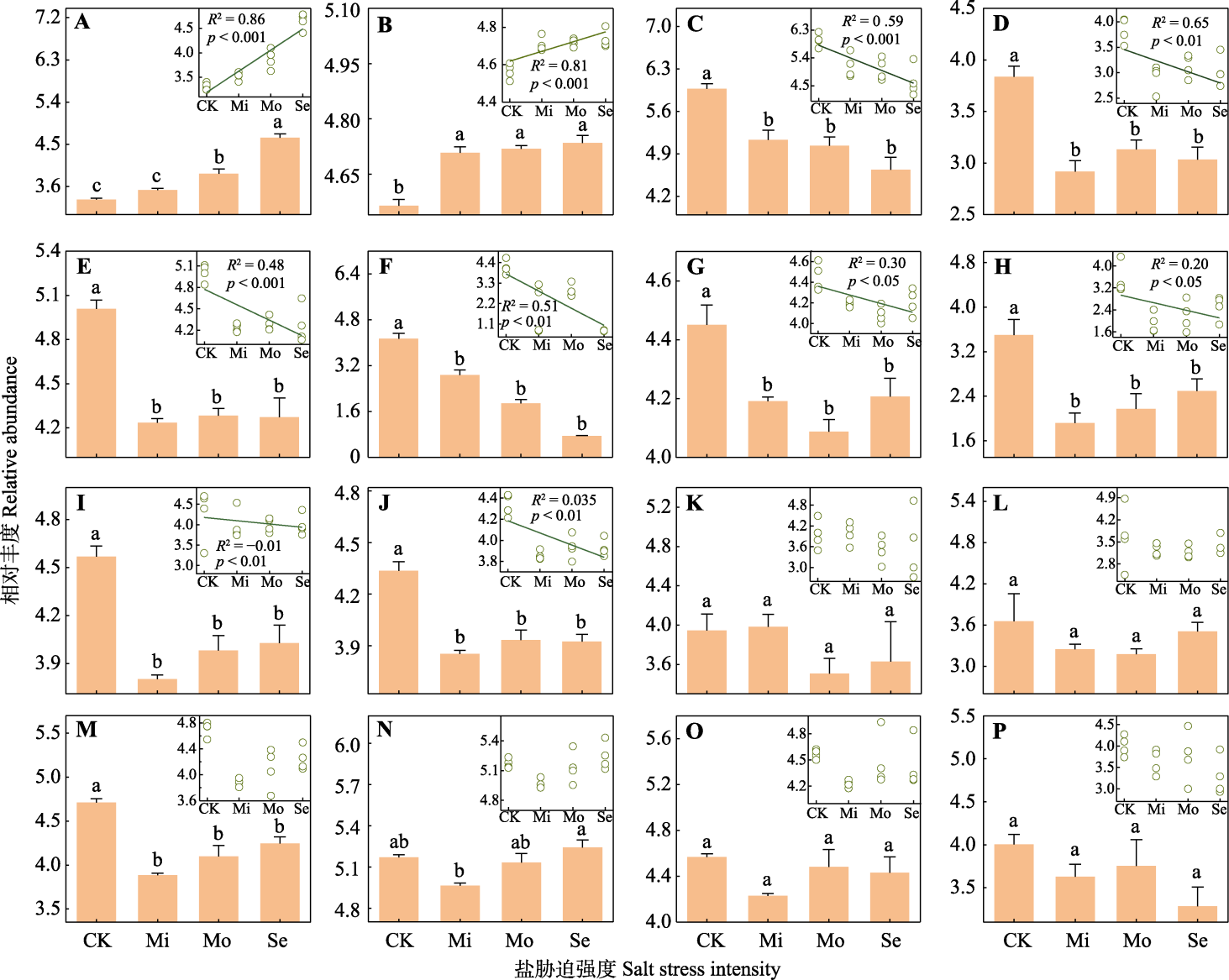
Fig. 1 Effects of salt stress on the relative abundance of amino acids and their derivatives secreted by roots (mean ± SE). A, N-Jasmonic acid isoleucine. B, Betaine. C, L-Arginine. D, L-Dopachrome. E, 2,3,4,5-Tetrahydropyridine-2,6-dicarboxylic acid. F, N-Acetyl-L-aspartic acid. G, L-Phenylalanine. H, L-Methionine. I, Trans-3-Hydroxy-L-proline. J, N-Acetyl-L-phenylalanine. K, Biocytin. L, Citrulline. M, Pipecolic acid. N, Homomethionine. O, 4-Acetamidobutanoic acid. P, Saccharopine. CK, mild (Mi), moderate (Mo), severe (Se) stress NaCl concentrations were 0%, 0.2%, 0.4%, and 0.6%. Different lowercase letters indicate significant difference across different salt stress conditions (p < 0.05).
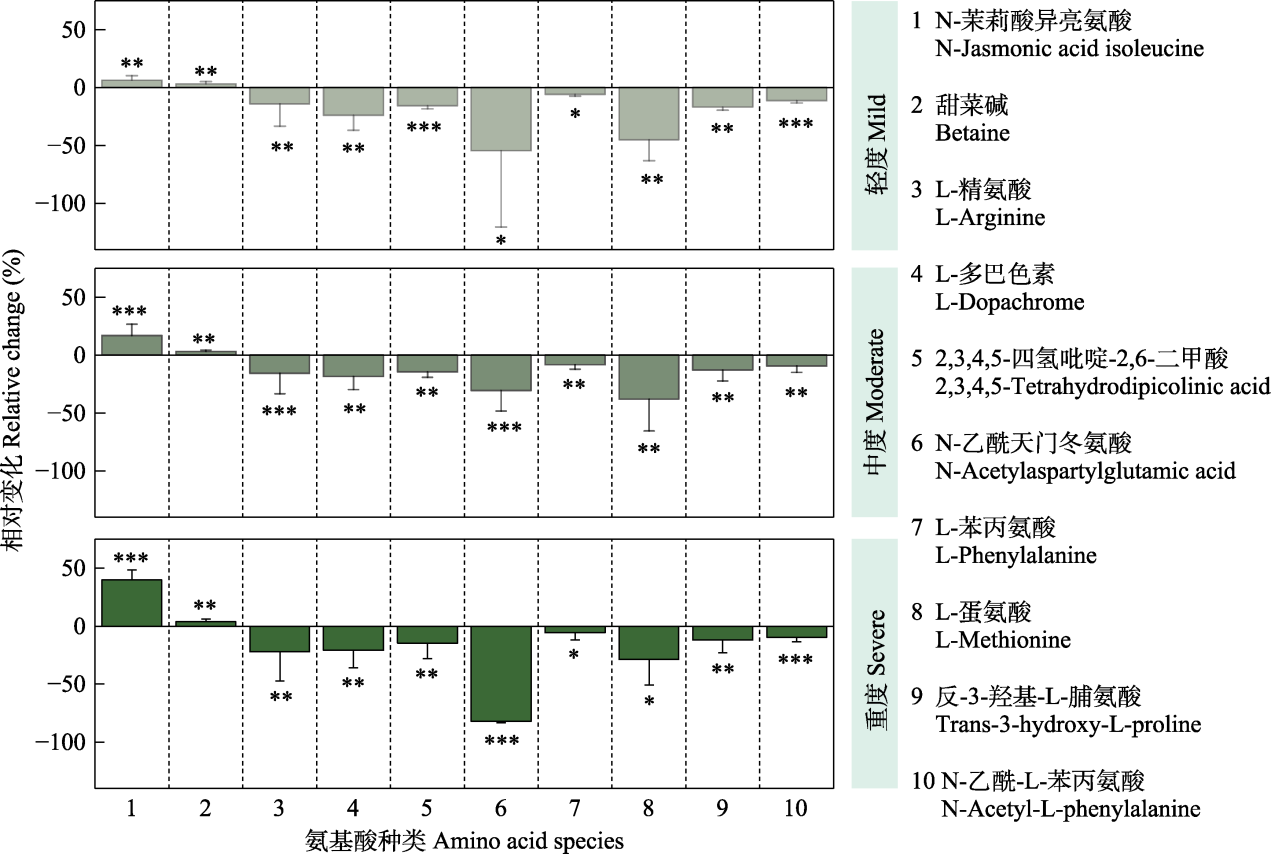
Fig. 2 Relative changes in the abundance of amino acids and their derivatives secreted by the roots of Elytrigia elongata (mean ± SE). Mild, moderate, severe stress NaCl concentrations were 0.2%, 0.4%, and 0.6%. *, p < 0.05; **, p < 0.01; ***, p < 0.001.
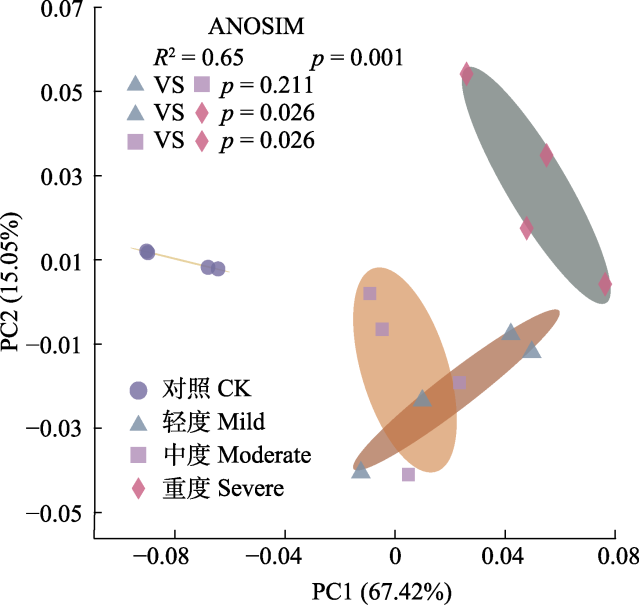
Fig. 3 Principal Co-ordinates Analysis (PCoA) of the relative abundance of amino acids and their derivatives secreted by the roots of Elytrigia elongata. CK, mild, moderate, severe stress NaCl concentrations were 0%, 0.2%, 0.4%, and 0.6%.
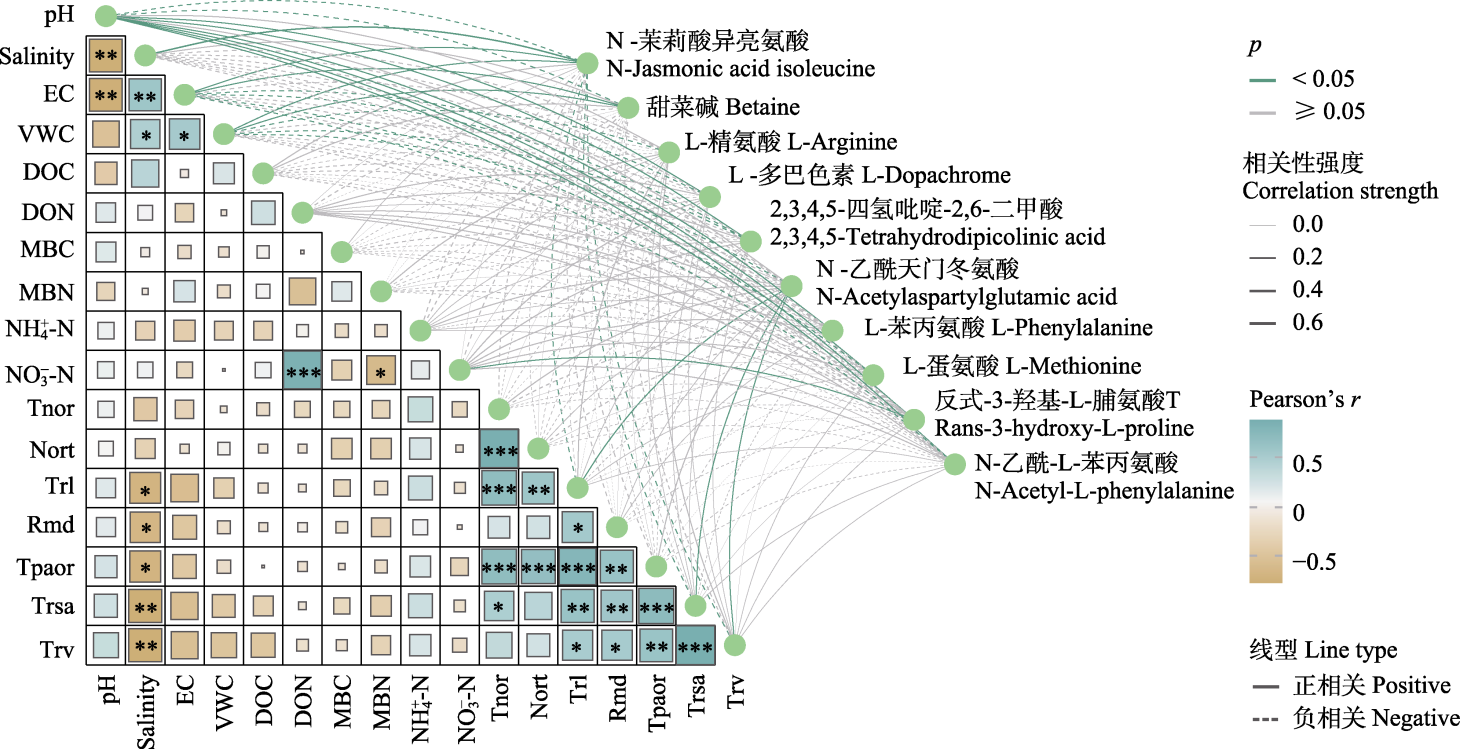
Fig. 4 Pearson correlation analysis among environmental factors and Mantel test between environmental factors and the abundance of amino acids and their derivatives under salt stress. DOC, dissolved organic carbon content; DON, dissolved organic nitrogen content; EC, electrical conductivity; MBC, microbial biomass carbon content; MBN, microbial biomass nitrogen content; NH4+-N, ammonium nitrogen content; NO3--N, nitrate nitrogen content; Nort, number of root tips; Rmd, root average diameter; Tnor, total number of roots; Tpaor, total projected area of roots; Trl, total root length; Trsa, total root surface area; Trv, total root volume; VWC, volumetric water content. *, p < 0.05; **, p < 0.01; ***, p < 0.001.
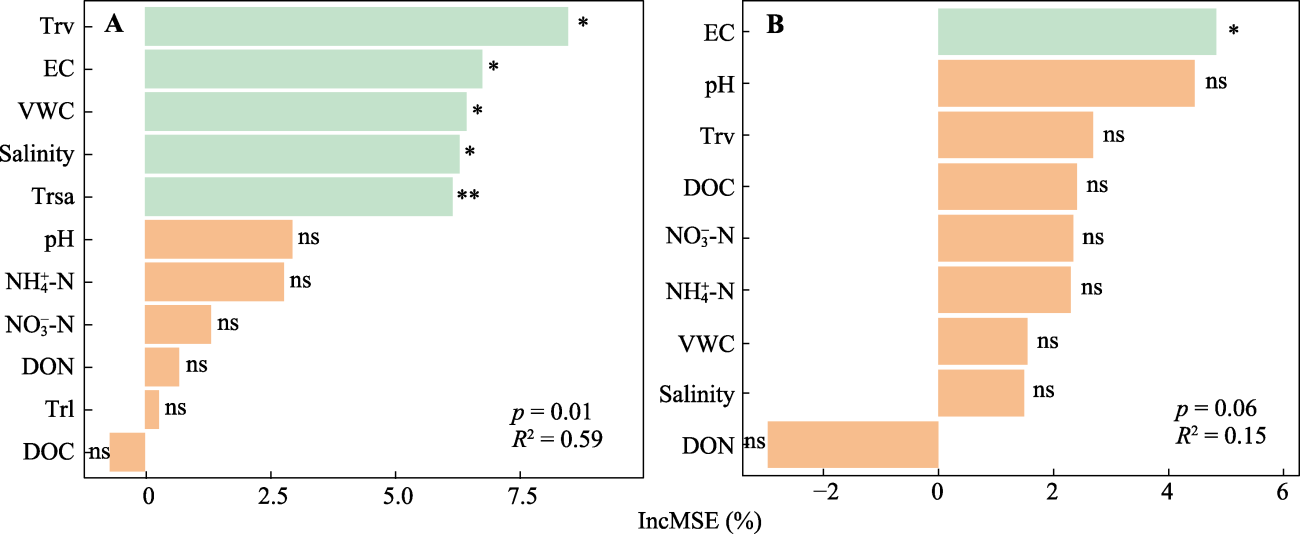
Fig. 5 Random forest model analysis of the contributions of the physical and chemical properties of rhizosphere soil and the traits of plant roots to the upregulated amino acids and their derivatives (A) and downregulated amino acids and their derivatives (B). IncMSE, increase in mean squared error. DOC, dissolved organic carbon content; DON, dissolved organic nitrogen content; EC, electrical conductivity; NH4+-N, ammonium nitrogen content; NO3--N, nitrate nitrogen content; Trl, total root length; Trsa, total root surface area; Trv, total root volume; VWC, volumetric water content. *, p < 0.05; **, p < 0.01; ns, p 0.05.
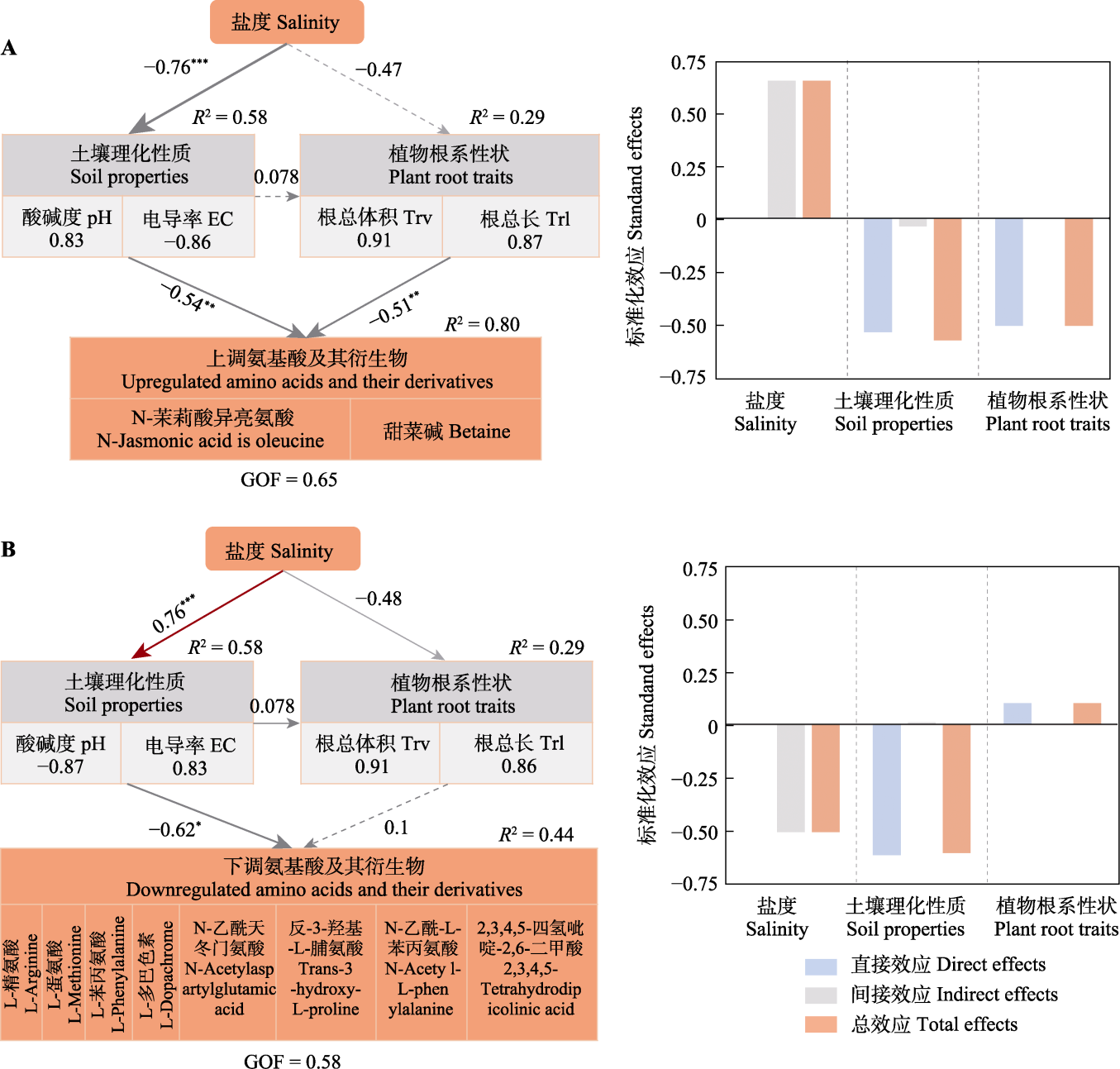
Fig. 6 Structural equation modeling of the abundances of amino acids and their derivatives secreted by roots that are upregulated (A) and downregulated (B) under salt stress. Red solid lines represent significant positive correlations, the gray solid lines indicate significant negative correlations, and the gray dashed lines denote non-significant effects. The numerical values next to the arrow denotes the normalized path coefficient, R2 denotes the interpretation degree of the model. GOF, goodness of fit. EC, electrical conductivity; Trl, total root length; Trv, total root volume. *, p < 0.05; **, p < 0.01; ***, p < 0.001.
| [1] | Abdelkader M, Voronina L, Shelepova O, Puchkov M, Loktionova E, Zhanbyrshina N, Yelnazarkyzy R, Tleppayeva A, Ksenofontov A (2023). Monitoring role of exogenous amino acids on the proteinogenic and ionic responses of lettuce plants under salinity stress conditions. Horticulturae, 9, 626. DOI: 10.3390/horticulturae9060626. |
| [2] |
Cao FQ, Werner AK, Dahncke K, Romeis T, Liu LH, Witte CP (2010). Identification and characterization of proteins involved in rice urea and arginine catabolism. Plant Physiology, 154, 98-108.
DOI URL |
| [3] |
Chen THH, Murata N (2002). Enhancement of tolerance of abiotic stress by metabolic engineering of betaines and other compatible solutes. Current Opinion in Plant Biology, 5, 250-257.
DOI PMID |
| [4] | Chen XJ, Xu ZS, Zhao BP, Mi JZ, Yan WK, Liu JH (2021). Effects of salt stress on respiratory metabolism, antioxidant enzyme activities and yield of oat. Chinese Journal of Ecology, 40, 2773-2782. |
| [陈晓晶, 徐忠山, 赵宝平, 米俊珍, 严威凯, 刘景辉 (2021). 盐胁迫对燕麦根系呼吸代谢、抗氧化酶活性及产量的影响. 生态学杂志, 40, 2773-2782.] | |
| [5] | Chen Y, Luo R, Zhang HM (2023). Research progress in response of plant root exudates to salt stress. Acta Agriculturae Jiangxi, 35(11), 93-101. |
| [陈娅, 罗瑞, 张汉马 (2023). 植物根系分泌物在盐胁迫下响应的研究进展. 江西农业学报, 35(11), 93-101.] | |
| [6] |
Dai WS, Wang M, Gong XQ, Liu JH (2018). The transcription factor FcWRKY40 of Fortunella crassifolia functions positively in salt tolerance through modulation of ion homeostasis and proline biosynthesis by directly regulating SOS2 and P5CS1 homologs. New phytologist, 219, 972-989.
DOI URL |
| [7] | Feng HC, Fu RX, Hou XQ, Lv Y, Zhang N, Liu YP, Xu ZH, Miao YZ, Krell T, Shen QR, Zhang RF (2021). Chemotaxis of beneficial rhizobacteria to root exudates: the first step towards root-microbe rhizosphere Interactions. International Journal of Molecular Sciences, 22, 6655. DOI: 10.3390/ijms22136655. |
| [8] | Gao L (2017). The Prolyl-4-hydroxylase GhP4H2 is Involved in Regulating Fiber Development of Cotton. Master degree dissertation, Central China Normal University, Wuhan. |
| [高璐 (2017). 脯氨酸羟化酶GhP4H2参与调控棉花纤维发育的研究. 硕士学位论文, 华中师范大学, 武汉.] | |
| [9] |
Gomes J, Kumar D (2005). Production of L-methionine by submerged fermentation: a review. Enzyme and Microbial Technology, 37, 3-18.
DOI URL |
| [10] | Gong ZL, EER Demutu, Su XG, Cheng RR, Yang HM, Zhang XL, Zhai PH (2024). Effects of water and fertilizer addition on soil respiration rate in grass-field rotation system. Acta Agrestia Sinica, 32, 562-569. |
|
[巩泽琳, 额尔德木图, 苏小港, 成蓉蓉, 杨鹤明, 张晓琳, 翟鹏辉 (2024). 水肥添加对草田轮作系统土壤呼吸速率的影响. 草地学报, 32, 562-569.]
DOI |
|
| [11] |
Guo YL, Tan YQ, Qu MH, Hong K, Zeng LJ, Wang L, Zhuang CX, Qian Q, Hu J, Xiong GS (2023). OsWR2 recruits HDA704 to regulate the deacetylation of H4K8ac in the promoter of OsABI5 in response to drought stress. Journal of Integrative Plant Biology, 65, 1651-1669.
DOI URL |
| [12] | Han MG (2023). Analysis of Metabolomics and Study of the Functional Network Responding to NaCl Stress in Cotton. PhD dissertation, Xinjiang Agricultural University, Ürümqi. |
| [韩明格 (2023). 棉花响应NaCl胁迫的代谢组学分析及耐盐调控网络研究. 博士学位论文, 新疆农业大学, 乌鲁木齐.] | |
| [13] |
Howe GA, Major IT, Koo AJ (2018). Modularity in jasmonate signaling for multistress resilience. Annual Review of Plant Biology, 69, 387-415.
DOI PMID |
| [14] |
Jensen KB, Pearse G, Larson SR, Robins JG (2020). ‘AlkarXL’, a new tall wheatgrass cultivar for use on saline semiarid lands. Journal of Plant Registrations, 14, 298-305.
DOI URL |
| [15] | Jiang B, Ma J, Zhang DM, Li MB, Liu Y, Fan HB (2025). Soil salinization and nutrient characteristics in the southern coast of Laizhou Bay. Soils, 57, 187-194. |
| [姜冰, 马健, 张德明, 李明波, 刘阳, 范海滨 (2025). 莱州湾南岸土壤盐渍化与养分特征. 土壤, 57, 187-194.] | |
| [16] |
Koevoets IT, Venema JH, Elzenga JTM, Testerink C (2016). Roots withstanding their environment: exploiting root system architecture responses to abiotic stress to improve crop tolerance. Frontiers in Plant Science, 7, 1335. DOI: 10.3389/fpls.2016.01335.
PMID |
| [17] | Li HW, Zheng Q, Li B, Zhao ML, Li ZS (2022). Progress in research on tall wheatgrass as a salt-alkali tolerant forage grass. Acta Prataculturae Sinica, 31, 190-199. |
|
[李宏伟, 郑琪, 李滨, 赵茂林, 李振声 (2022). 一种耐盐碱牧草——长穗偃麦草研究进展. 草业学报, 31, 190-199.]
DOI |
|
| [18] | Li HW, Zheng Q, Wang JL, Sun HY, Zhang KX, Fang HM, Xing XR, Yang WC, Cao XF, Liu XJ, Jing HC, Chong K, Li ZS (2023). Industrialization of tall wheatgrass for construction of “coastal grass belt”. Bulletin of Chinese Academy of Sciences, 38, 622-631. |
| [李宏伟, 郑琪, 王建林, 孙宏勇, 张可心, 方红曼, 邢雪荣, 杨维才, 曹晓风, 刘小京, 景海春, 种康, 李振声 (2023). 发展长穗偃麦草, 建设“滨海草带”. 中国科学院院刊, 38, 622-631.] | |
| [19] |
Li MF, Guo SJ, Xu Y, Meng QW, Li G, Yang XH (2014). Glycine betaine-mediated potentiation of HSP gene expression involves calcium signaling pathways in tobacco exposed to NaCl stress. Physiologia Plantarum, 150, 63-75.
DOI URL |
| [20] |
Liu JH, Nada K, Honda C, Kitashiba H, Wen XP, Pang XM, Moriguchi T (2006). Polyamine biosynthesis of apple callus under salt stress: importance of the arginine decarboxylase pathway in stress response. Journal of Experimental Botany, 57, 2589-2599.
DOI URL |
| [21] | Lu PN, Yang T, Li LJ, Zhao BP, Liu JH (2020). Response of oat morphologies, root exudates, and rhizosphere fungal communities to amendments in a saline-alkaline environment. PLoS ONE, 15, e0243301. DOI: 10.1371/journal.pone.0243301. |
| [22] | Ministry of Natural Resources of the People’s Republic of China (2016). Specifications for the Geochemical Evaluation of Land Quality: DZ/T 0295-2016. Standards Press of China, Beijing. |
| [中华人民共和国国土资源部 (2016). 土地质量地球化学评价规范: DZ/T 0295-2016. 中国标准出版社, 北京.] | |
| [23] | Mushtaq NU, Saleem S, Tahir I, Seth CS, Rehman RU (2024). Crosstalk in proline biosynthesis regulates proline augmentation and resilience to salt stress in Panicum miliaceum L. Environmental and Experimental Botany, 224, 105810. DOI: 10.1016/j.envexpbot.2024.105810. |
| [24] | Pang B (2024). Transeriptomic and Metabolomic Analysis of Cotton in Response to Salt Stress and Study on the Regulatory Network of Salt Tolerance. PhD dissertation, Xinjiang Agricultural University, Ürümqi. |
| [庞博 (2024). 棉花响应盐胁迫的转录组学和代谢组学分析及耐盐调控网络研究. 博士学位论文, 新疆农业大学, 乌鲁木齐.] | |
| [25] |
Phillips WA, Northup BN, Venuto BC (2009). Dry matter intake and digestion of perennial and annual cool-season grasses by sheep. The Professional Animal Scientist, 25, 610-618.
DOI URL |
| [26] |
Salinas R, Sánchez E, Ruíz JM, Lao MT, Romero L (2013). Proline, betaine, and choline responses to different phosphorus levels in green bean. Communications in Soil Science and Plant Analysis, 44, 465-472.
DOI URL |
| [27] | Shu HM, Guo SQ, Gong YY, Ni WC, Shen XL, Zhang XG, Xu P (2013). The influence of salt stress on crop root and its genetic improvement. Molecular Plant Breeding, 11, 657-662. |
| [束红梅, 郭书巧, 巩元勇, 倪万潮, 沈新莲, 张香桂, 徐鹏 (2013). 盐胁迫对作物根系的影响及基因工程改良. 分子植物育种, 11, 657-662.] | |
| [28] | Song XW, Gong SF (2008). Ecotype of wild grassland vegetation of Elytrigia repens and Polygonum aviculare. Journal of Northeast Forestry University, 36(10), 73-74. |
| [宋喜文, 龚束芳 (2008). 生态型野生草地植被偃麦草和扁蓄蓼. 东北林业大学学报, 36(10), 73-74.] | |
| [29] |
Teixeira WF, Fagan EB, Soares LH, Umburanas RC, Reichardt K, Neto DD (2017). Foliar and seed application of amino acids affects the antioxidant metabolism of the soybean crop. Frontiers in Plant Science, 8, 327. DOI: 10.3389/fpls.2017.00327.
PMID |
| [30] | Vives-Peris V, López-Climent MF, Pérez-Clemente RM, Gómez-Cadenas A (2020). Root involvement in plant responses to adverse environmental conditions. Agronomy, 10, 942. DOI: 10.3390/agronomy10070942. |
| [31] |
Wang DJ, Liu Z, Lu X, Gao Y, Sun SM, Guo HX, Tian W, Wang L, Li ZC, Li LW, Wang K, Liu JH (2024). Advances and prospect on mechanism of salt tolerance in plants. Acta Agriculturae Boreali-Sinica, 39(5), 80-92.
DOI |
|
[王大江, 刘昭, 路翔, 高源, 孙思邈, 郭含欣, 田雯, 王霖, 李子琛, 李连文, 王昆, 刘继红 (2024). 植物耐盐机制研究进展及展望. 华北农学报, 39(5), 80-92.]
DOI |
|
| [32] |
Wang HX, Wang QY, Liu FC, Pang YY, Fang SM, Liang XL (2024). Regulation effect of exogenous arginine on mung bean seedling growth under salt-alkali stress. Chinese Journal of Ecology, 43, 1263-1270.
DOI |
| [王晗昕, 王庆燕, 刘繁超, 庞园园, 方淑梅, 梁喜龙 (2024). 外源精氨酸对盐碱胁迫下绿豆苗期生长的调控效用. 生态学杂志, 43, 1263-1270.] | |
| [33] | Wang LD, Nan HY, Zhang MH, Guang LJ, Meng JT, Liu MY, Meng Y, Chen WH, Fan YP, Huang H, Sun YP, Yang ZN, Chen X, Wu FG, Song RZ, et al. (2025). GhADT5 enhances alkali stress tolerance in cotton by regulating phenylalanine-derived flavonoid biosynthesis and antioxidant defense. BMC Plant Biology, 25, 225. DOI: 10.1186/s12870-025-06204-7. |
| [34] | Wang WJ, Song YX, Hu WJ, Li B, Zheng Q, Li ZS, Li HW (2020). Comparison of biomass accumulation-related traits in the F1 hybrids of common wheat and tall wheatgrass and their parents. Pratacultural Science, 37, 1821-1832. |
| [汪文佳, 宋运贤, 胡伟娟, 李滨, 郑琪, 李振声, 李宏伟 (2020). (小麦×长穗偃麦草) F1与长穗偃麦草生物量积累相关性状的比较. 草业科学, 37, 1821-1832.] | |
| [35] | Wang YQ, Ma ZQ, Hou JX, Zong YQ, Hao HR, Liu GY, Wei H, Lian BL, Chen YH, Zhang J (2024). Research progress in the composition analysis and ecological function of plant root exudates under salt stress. Biotechnology Bulletin, 40(1), 12-23. |
|
[王雨晴, 马子奇, 侯嘉欣, 宗钰琪, 郝晗睿, 刘国元, 魏辉, 连博琳, 陈艳红, 张健 (2024). 盐胁迫下植物根系分泌物的成分分析与生态功能研究进展. 生物技术通报, 40(1), 12-23.]
DOI |
|
| [36] | Wang YX, Du Y, Chen YX, Maimaitiabudula Y, Zhang B (2022). Effects of salt stress on seed germination and seedling physiological indexes of Bromus inermis Leyss. Journal of Arid Land Resources and Environment, 36(5), 139-145. |
| [王玉祥, 杜雨, 陈映霞, 伊丽姆努尔•麦麦提阿卜拉, 张博 (2022). 盐胁迫对无芒雀麦种子萌发及苗期生理指标的影响. 干旱区资源与环境, 36(5), 139-145.] | |
| [37] | Xu PY, Wu YX, He TM (2020). Research progress on adaptation mechanism of plants to saline-alkali stress. Chinese Wild Plant Resources, 39(10), 41-49. |
| [许盼云, 吴玉霞, 何天明 (2020). 植物对盐碱胁迫的适应机理研究进展. 中国野生植物资源, 39(10), 41-49.] | |
| [38] | Xu Y, Xiao HY, Zheng NJ, Zhang ZY, Qu LL (2016). Progress on responding of free amino acid in plants to salt stress. Environmental Science & Technology, 39(7), 40-47. |
| [徐宇, 肖化云, 郑能建, 张忠义, 瞿玲露 (2016). 植物组织中游离氨基酸在盐胁迫下响应的研究进展. 环境科学与技术, 39(7), 40-47.] | |
| [39] | Yang JS (2008). Development and prospect of the research on salt-affected soils in China. Acta Pedologica Sinica, 45, 837-845. |
| [杨劲松 (2008). 中国盐渍土研究的发展历程与展望. 土壤学报, 45, 837-845.] | |
| [40] |
Yu J, Chen YH, Ma CF, Qin JJ, Nguyen THN, Liu D, Gan HH, Shen D, Luo ZB (2018). Phenylalanine as a nitrogen source induces root growth and nitrogen-use efficiency in Populus × canescens. Tree Physiology, 38, 66-82.
DOI URL |
| [41] | Yue CN, Peng H, Li WJ, Tong ZF, Wang ZH, Yang PX (2022). Untargeted metabolomics and transcriptomics reveal the mechanism of metabolite differences in spring tender shoots of tea plants of different ages. Foods, 11, 2303. DOI: 10.3390/foods11152303. |
| [42] | Zhang LH, Zou CY, Zhu TX, Du MX, Zou XP, He YR, Chen SC, Long Q (2024). The role of jasmonic acid in stress resistance of plants: a review. Chinese Journal of Biotechnology, 40(1), 15-34. |
| [张乐欢, 邹昌玉, 朱天翔, 杜美霞, 邹修平, 何永睿, 陈善春, 龙琴 (2024). 茉莉酸在植物抗逆性中的研究进展. 生物工程学报, 40(1), 15-34.] | |
| [43] | Zhang TP, Yang XH (2017). Research on the mechanism of glycinebetaine regulating plants stress resistance and development. Plant Physiology Journal, 53, 1955-1962. |
| [张天鹏, 杨兴洪 (2017). 甜菜碱提高植物抗逆性及促进生长发育研究进展. 植物生理学报, 53, 1955-1962.] | |
| [44] |
Zhang X, Yan JF, Khashi u Rahman M, Wu FZ (2022). The impact of root exudates, volatile organic compounds, and common mycorrhizal networks on root system architecture in root-root interactions. Journal of Plant Interactions, 17, 685-694.
DOI URL |
| [45] | Zhou ZY (2022). Metabolomics Analysis of Medicago sativa L. in Response to Saline and Alkali Stress. Master degree dissertation, Harbin Normal University, Harbin. |
| [周泽宇 (2022). 紫花苜蓿响应盐和碱胁迫的代谢组学分析. 硕士学位论文, 哈尔滨师范大学, 哈尔滨.] |
| [1] | LIANG Tian-Hao, XIONG De-Cheng, LIU Yuan-Hao, DU Xu-Long, YANG Zhi-Jie, HUANG Jin-Xue. Research progress on root exudates and rhizosphere effects of tree species associated with different mycorrhizal types [J]. Chin J Plant Ecol, 2025, 49(7): 1038-1052. |
| [2] | LONG Ji-Lan, JIANG Zheng, LIU Ding-Qin, MIAO Yu-Xuan, ZHOU Ling-Yan, FENG Ying, PEI Jia-Ning, LIU Rui-Qiang, ZHOU Xu-Hui, FU Yu-Ling. Effects of drought on plant root exudates and associated rhizosphere priming effect: review and prospect [J]. Chin J Plant Ecol, 2024, 48(7): 817-827. |
| [3] | Sheng-Wang PAN, Xin YUAN, Can LIU, Yan-Lan LI, Ting YANG, Hai-Yuan TANG. Effects of benzo [α] pyrene on the organic compounds of low molecule weight excreted by root systems in five Festuca species with different remediation potentials [J]. Chin J Plant Ecol, 2016, 40(6): 604-614. |
| [4] | Qing-Xian KONG, Jiang-Bao XIA, Zi-Guo ZHAO, Fan-Zhu QU. Effects of groundwater salinity on the characteristics of leaf photosynthesis and stem sap flow in Tamarix chinensis [J]. Chin J Plan Ecolo, 2016, 40(12): 1298-1309. |
| [5] | GUO Rui,LI Feng,ZHOU Ji,LI Hao-Ru,XIA Xu,LIU Qi. Eco-physiological responses of linseed (Linum usitatissimum) to salt and alkali stresses [J]. Chin J Plan Ecolo, 2016, 40(1): 69-79. |
| [6] | MENG De-Yun,HOU Lin-Lin,YANG Sha,MENG Jing-Jing,GUO Feng,LI Xin-Guo,WAN Shu-Bo. Exogenous polyamines alleviating salt stress on peanuts (Arachis hypogaea) grown in pots [J]. Chin J Plan Ecolo, 2015, 39(12): 1209-1215. |
| [7] | HU Chu-Qi,LIU Jin-Ke,WANG Tian-Hong,WANG Wen-Lin,LU Shan,ZHOU Chang-Fang. Influence of three types of salt stress on photosynthesis in Spartina alterniflora and Phragmites australis [J]. Chin J Plan Ecolo, 2015, 39(1): 92-103. |
| [8] | CHEN Jian,LI Ni-Ya,LIU Qiang,ZHONG Cai-Rong,HUANG Min,ZENG Jia. Antioxidant defense and photosynthesis for non-indigenous mangrove species Sonneratia apetala and Laguncularia racemosa under NaCl stress [J]. Chin J Plant Ecol, 2013, 37(5): 443-453. |
| [9] | CI Dun-Wei,DAI Liang-Xiang,SONG Wen-Wu,ZHANG Zhi-Meng. Genotypic differences in salt tolerance from germination to seedling stage in peanut [J]. Chin J Plant Ecol, 2013, 37(11): 1018-1027. |
| [10] | SONG Xu-Li, HU Chun-Mei, MENG Jing-Jing, HOU Xi-Lin, HE Qi-Wei, LI Xin-Guo. NaCl stress aggravates photoinhibition of photosystem II and photosystem I in Capsicum annuum leaves under high irradiance stress [J]. Chin J Plant Ecol, 2011, 35(6): 681-686. |
| [11] | ZHOU Feng, CHEN Jun, XU Rong, YU Jing. REVIEW OF RESEARCH ADVANCEMENTS ON SEED GERMINATION STIMULANTS OF ROOT PARASITIC PLANTS [J]. Chin J Plant Ecol, 2009, 33(3): 607-616. |
| [12] | MENG Fan-Juan, WANG Qiu-Yu, WANG Jian-Zhong, LI Shu-Yan, WANG Jiang-Jiang. SALT RESISTANCE OF TETRAPLOID ROBINIA PSEUDOACACIA [J]. Chin J Plant Ecol, 2008, 32(3): 654-663. |
| [13] | CHEN Hui-Zhe, Natalia Ladatko, ZHU De-Feng, LIN Xian-Qing, ZHANG Yu-Ping, SUN Zong-Xiu. ABSORPTION AND DISTRIBUTION OF Na+ AND K+ IN RICE SEEDLING UNDER SALT STRESS [J]. Chin J Plant Ecol, 2007, 31(5): 937-945. |
| [14] | HU Sheng-Rong, GAO Yong, WU Fei, MI Zhi-Ying, ZHANG Yu. EFFECT OF SALT STRESS ON GERMINATION OF BROMUS STAMINEUS AND BROMUS INERMIS CV. XILINGUOLE [J]. Chin J Plant Ecol, 2007, 31(3): 513-520. |
| [15] | ZHANG Nai-Hua, GAO Hui-Yuan, ZOU Qi. EFFECT OF CALCIUM ON ALLEVIATION OF DECREASED PHOTOSYNTHETIC ABILITY IN SALT-STRESSED MAIZE LEAVES [J]. Chin J Plant Ecol, 2005, 29(2): 324-330. |
| Viewed | ||||||
|
Full text |
|
|||||
|
Abstract |
|
|||||
Copyright © 2026 Chinese Journal of Plant Ecology
Tel: 010-62836134, 62836138, E-mail: apes@ibcas.ac.cn, cjpe@ibcas.ac.cn

