
Chin J Plant Ecol ›› 2026, Vol. 50 ›› Issue (3): 710-721.DOI: 10.17521/cjpe.2025.0173 cstr: 32100.14.cjpe.2025.0173
• Research Articles • Previous Articles Next Articles
REN Xi-Tong1,2, LI Ying1, ZHANG Yu3, XIONG Hu-An-He1, ZHANG Rui-Ke1, QI Shan-Shan3, DAI Zhi-Cong1,2,4,*( )(
)( ), DU Dao-Lin5
Received:2025-05-15
Accepted:2025-07-21
Online:2026-03-20
Published:2026-04-22
Contact:
DAI Zhi-Cong
Supported by:REN Xi-Tong, LI Ying, ZHANG Yu, XIONG Hu-An-He, ZHANG Rui-Ke, QI Shan-Shan, DAI Zhi-Cong, DU Dao-Lin. Interaction between arbuscular mycorrhizal fungi and litter contributes to responses of Solidago canadensis to nutrient stress[J]. Chin J Plant Ecol, 2026, 50(3): 710-721.
Add to citation manager EndNote|Ris|BibTeX
URL: https://www.plant-ecology.com/EN/10.17521/cjpe.2025.0173
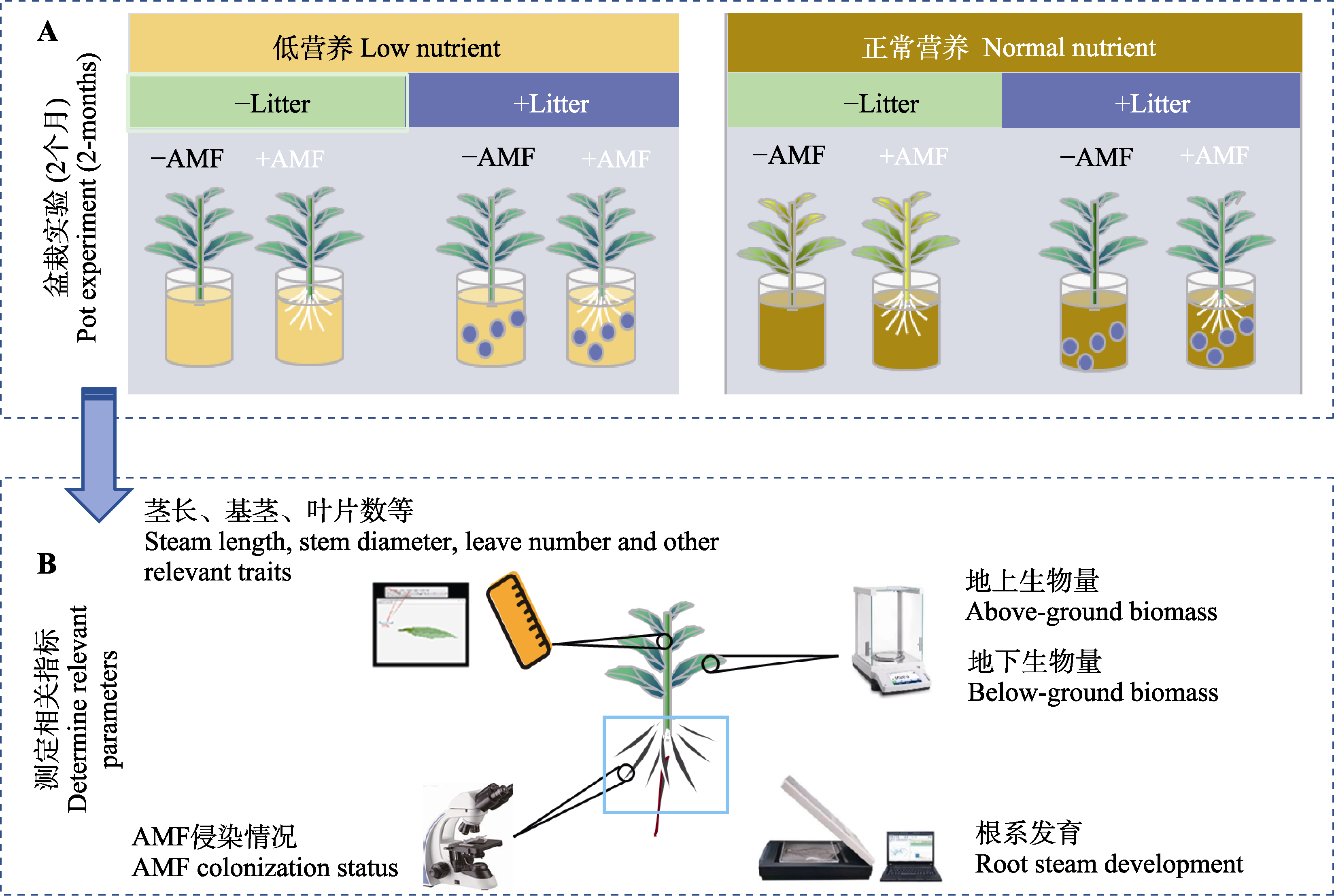
Fig. 1 Procedure schematic of experimental design. AMF, arbuscular mycorrhizal fungi. -AMF, without AMF addition; +AMF, with AMF addition; -Litter, without litter addition ; +Litter, with litter addition.
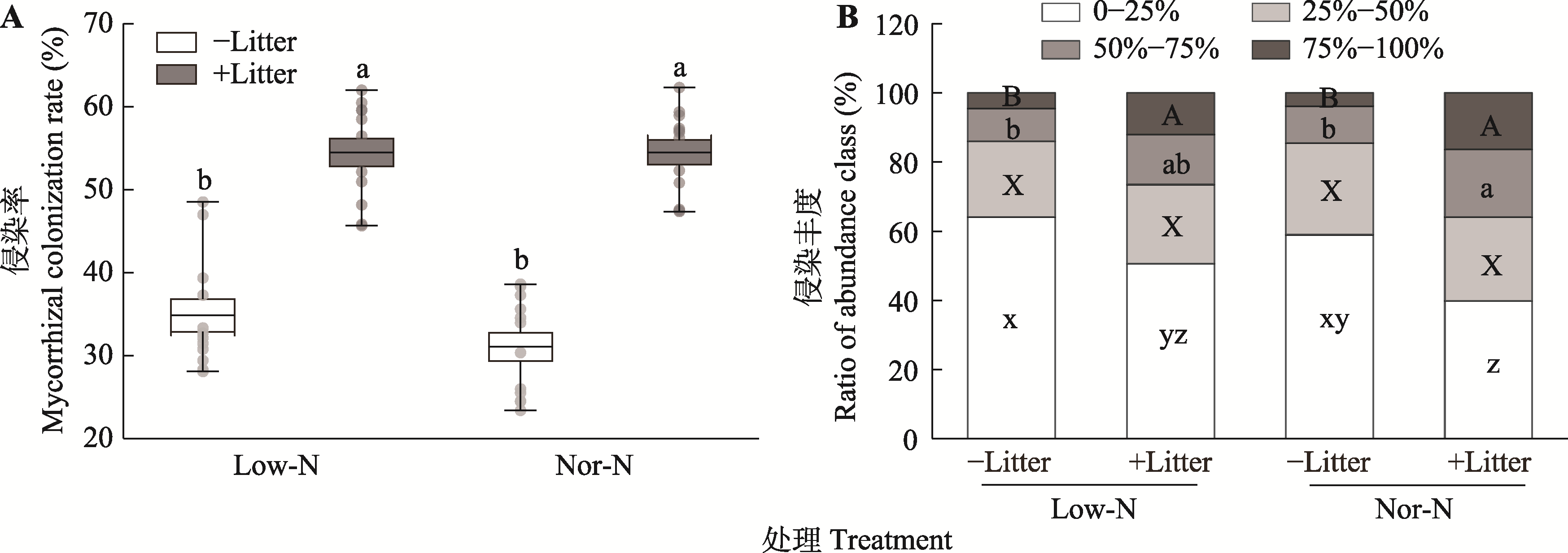
Fig. 2 Mycorrhizal colonization rate (A) and Ratio of abundance class (B) of arbuscular mycorrhizal fungi (AMF) under different conditions. -Litter/+Litter, without/with litter addition; Low-N/Nor-N, low/normal nutrient conditions. Different letters indicate significant differences between treatments (n = 11, p < 0.05).
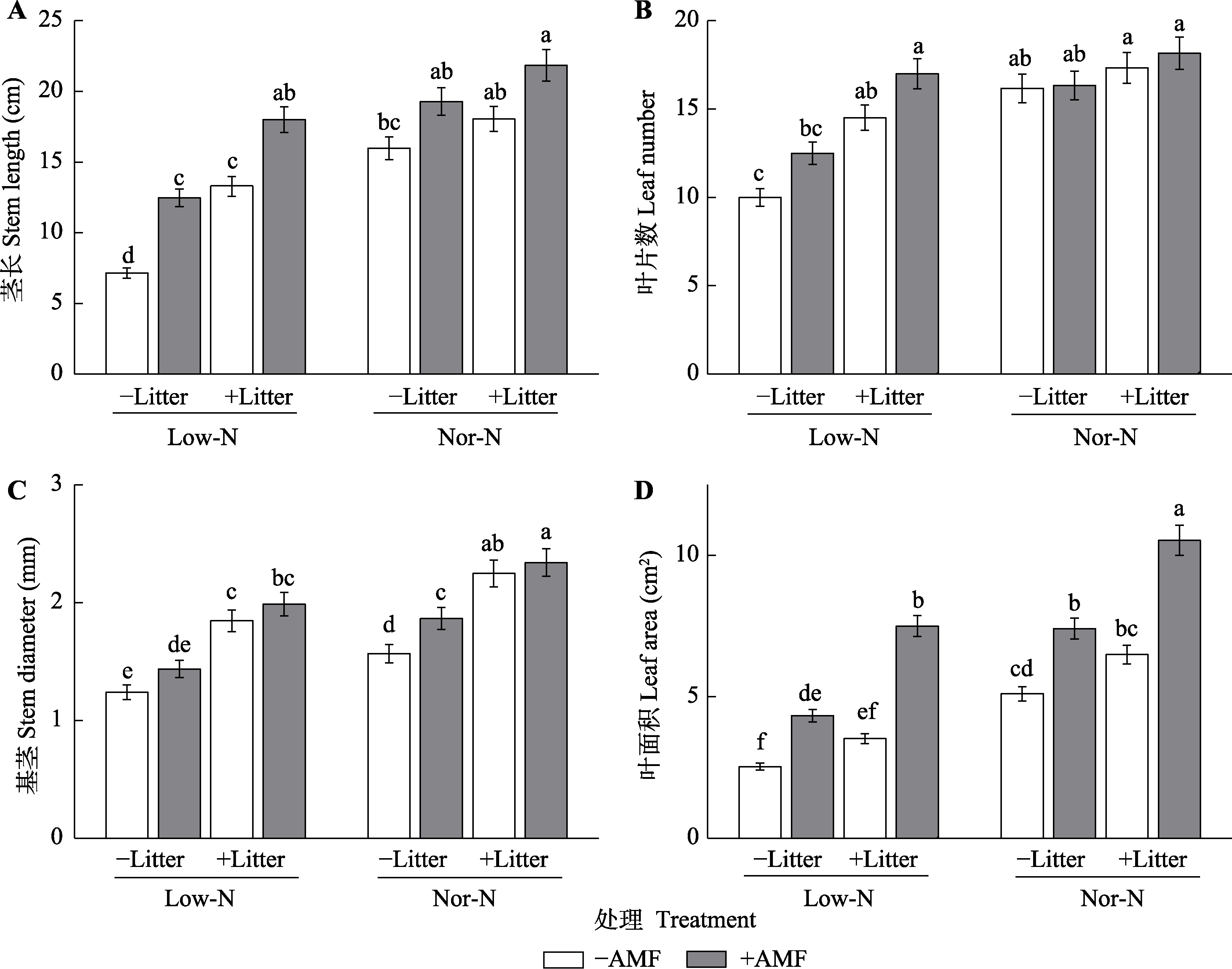
Fig. 3 Growth phenotype of above-ground parts of Solidago canadensis under different conditions (mean ± SD). AMF, arbuscular mycorrhizal fungi; -AMF/+AMF, without/with AMF addition; -Litter/+Litter, without/with litter addition; Low-N/Nor-N, low/normal nutrient conditions. Different lowercase letters indicate significant differences between treatments (n = 11, p < 0.05).
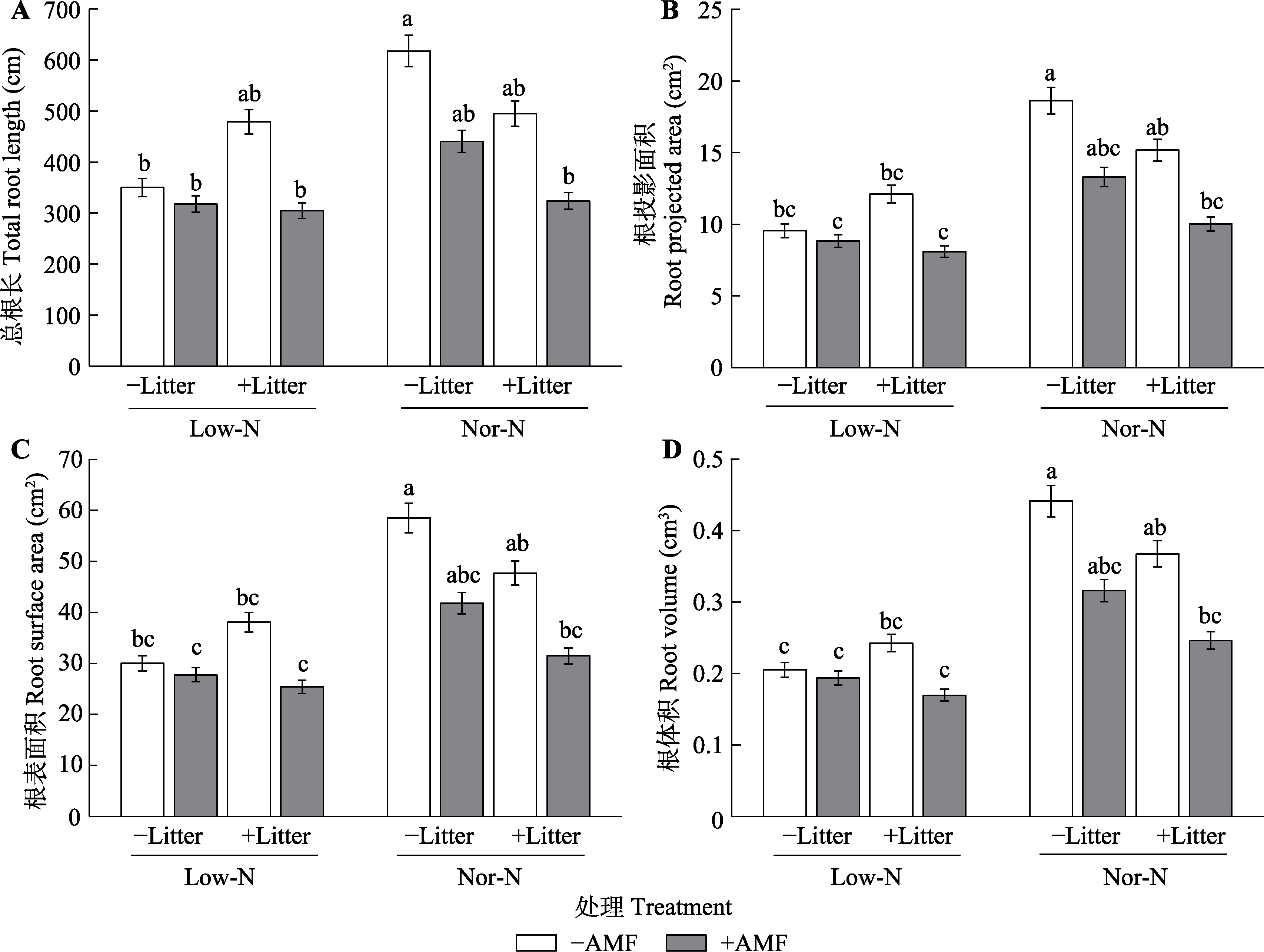
Fig. 4 Growth phenotype of belowground parts of Solidago canadensis under different conditions (mean ± SD). AMF, arbuscular mycorrhizal fungi; -AMF/+AMF, without/with AMF addition; -Litter/+Litter, without/with litter addition; Low-N/Nor-N, low/normal nutrient conditions. Different lowercase letters indicate significant differences between treatments (n = 11, p < 0.05).
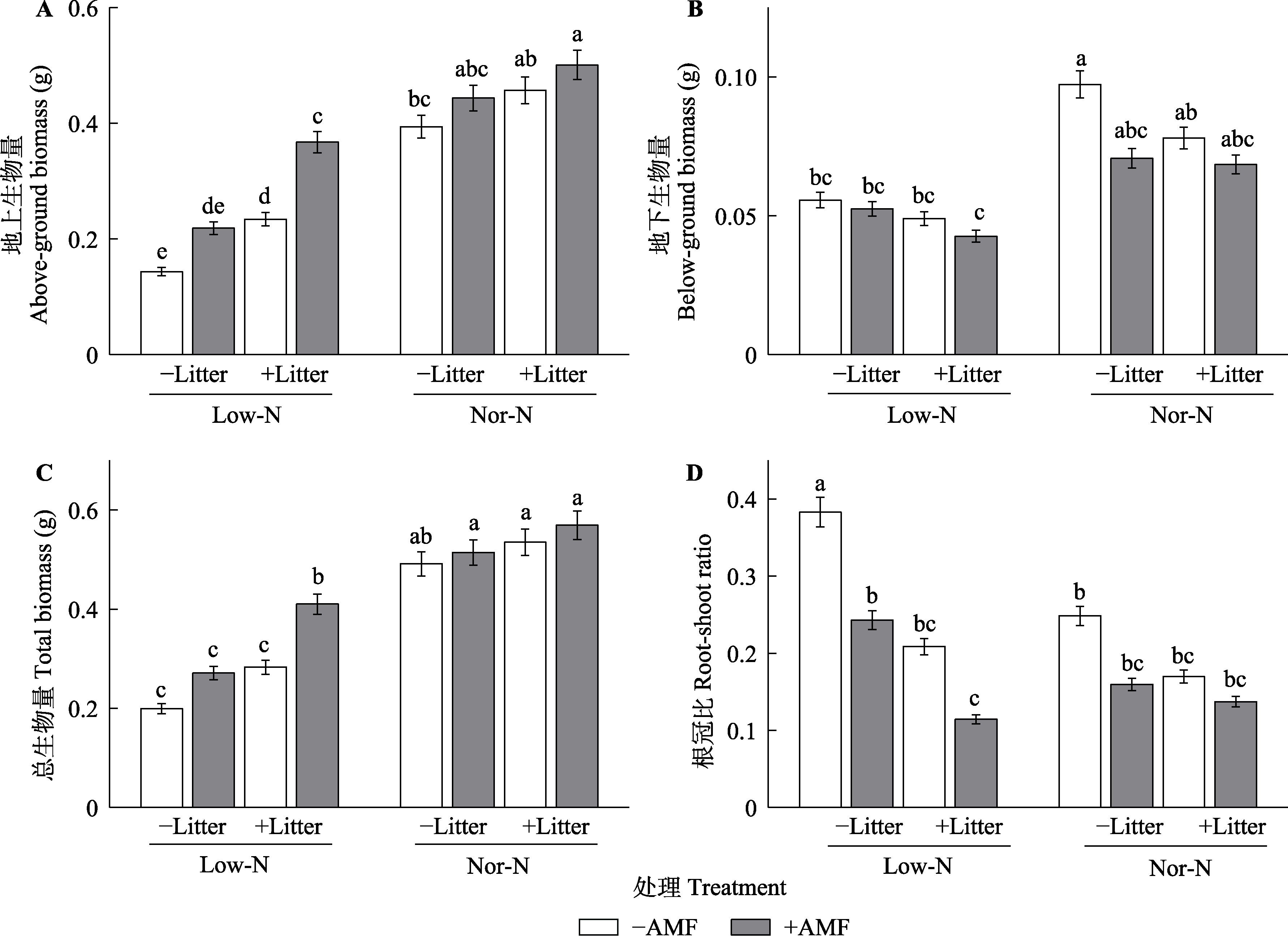
Fig. 5 Biomass and its allocation of Solidago canadensis under different conditions (mean ± SD). AMF, arbuscular mycorrhizal fungi; -AMF/+AMF, without/with AMF addition; -Litter/+Litter, without/with litter addition; Low-N/Nor-N, low/normal nutrient conditions. Different lowercase letters indicate significant differences between treatments (n = 11, p < 0.05).
| 变异来源 Source of variation | 自由度 df | 地上生物量 Above-ground biomass | 地下生物量 Below-ground biomass | 总生物量 Total biomass | ||||||
|---|---|---|---|---|---|---|---|---|---|---|
| F | p | Partial η2 | F | p | Partial η2 | F | p | Partial η2 | ||
| 丛枝菌根真菌 AMF | 1 | 37.78 | <0.001 | 0.486 | 4.98 | 0.031 | 0.111 | 17.78 | <0.001 | 0.308 |
| 凋落物 Litter | 1 | 53.49 | <0.001 | 0.572 | 3.45 | 0.071 | 0.079 | 27.95 | <0.001 | 0.411 |
| 营养条件 Nutrient | 1 | 286.70 | <0.001 | 0.878 | 31.40 | <0.001 | 0.440 | 242.54 | <0.001 | 0.858 |
| AMF ×凋落物 AMF × litter | 1 | 1.14 | 0.291 | 0.028 | 0.47 | 0.498 | 0.012 | 1.20 | 0.280 | 0.029 |
| AMF ×营养条件 AMF × nutrient | 1 | 5.50 | 0.024 | 0.121 | 1.70 | 0.200 | 0.041 | 5.45 | 0.025 | 0.120 |
| 凋落物×营养条件 litter × nutrient | 1 | 5.89 | 0.020 | 0.128 | 0.06 | 0.808 | 0.001 | 4.18 | 0.048 | 0.095 |
| AMF ×凋落物×营养条件 AMF × litter × nutrient | 1 | 1.69 | 0.201 | 0.041 | 0.99 | 0.326 | 0.024 | 0.51 | 0.478 | 0.013 |
Table 1 Three-way ANOVA and simple effect analysis (Partial η2) on the effects of arbuscular mycorrhizal fungi (AMF) and litter on the biomass of Solidago canadensis under different nutrient conditions
| 变异来源 Source of variation | 自由度 df | 地上生物量 Above-ground biomass | 地下生物量 Below-ground biomass | 总生物量 Total biomass | ||||||
|---|---|---|---|---|---|---|---|---|---|---|
| F | p | Partial η2 | F | p | Partial η2 | F | p | Partial η2 | ||
| 丛枝菌根真菌 AMF | 1 | 37.78 | <0.001 | 0.486 | 4.98 | 0.031 | 0.111 | 17.78 | <0.001 | 0.308 |
| 凋落物 Litter | 1 | 53.49 | <0.001 | 0.572 | 3.45 | 0.071 | 0.079 | 27.95 | <0.001 | 0.411 |
| 营养条件 Nutrient | 1 | 286.70 | <0.001 | 0.878 | 31.40 | <0.001 | 0.440 | 242.54 | <0.001 | 0.858 |
| AMF ×凋落物 AMF × litter | 1 | 1.14 | 0.291 | 0.028 | 0.47 | 0.498 | 0.012 | 1.20 | 0.280 | 0.029 |
| AMF ×营养条件 AMF × nutrient | 1 | 5.50 | 0.024 | 0.121 | 1.70 | 0.200 | 0.041 | 5.45 | 0.025 | 0.120 |
| 凋落物×营养条件 litter × nutrient | 1 | 5.89 | 0.020 | 0.128 | 0.06 | 0.808 | 0.001 | 4.18 | 0.048 | 0.095 |
| AMF ×凋落物×营养条件 AMF × litter × nutrient | 1 | 1.69 | 0.201 | 0.041 | 0.99 | 0.326 | 0.024 | 0.51 | 0.478 | 0.013 |
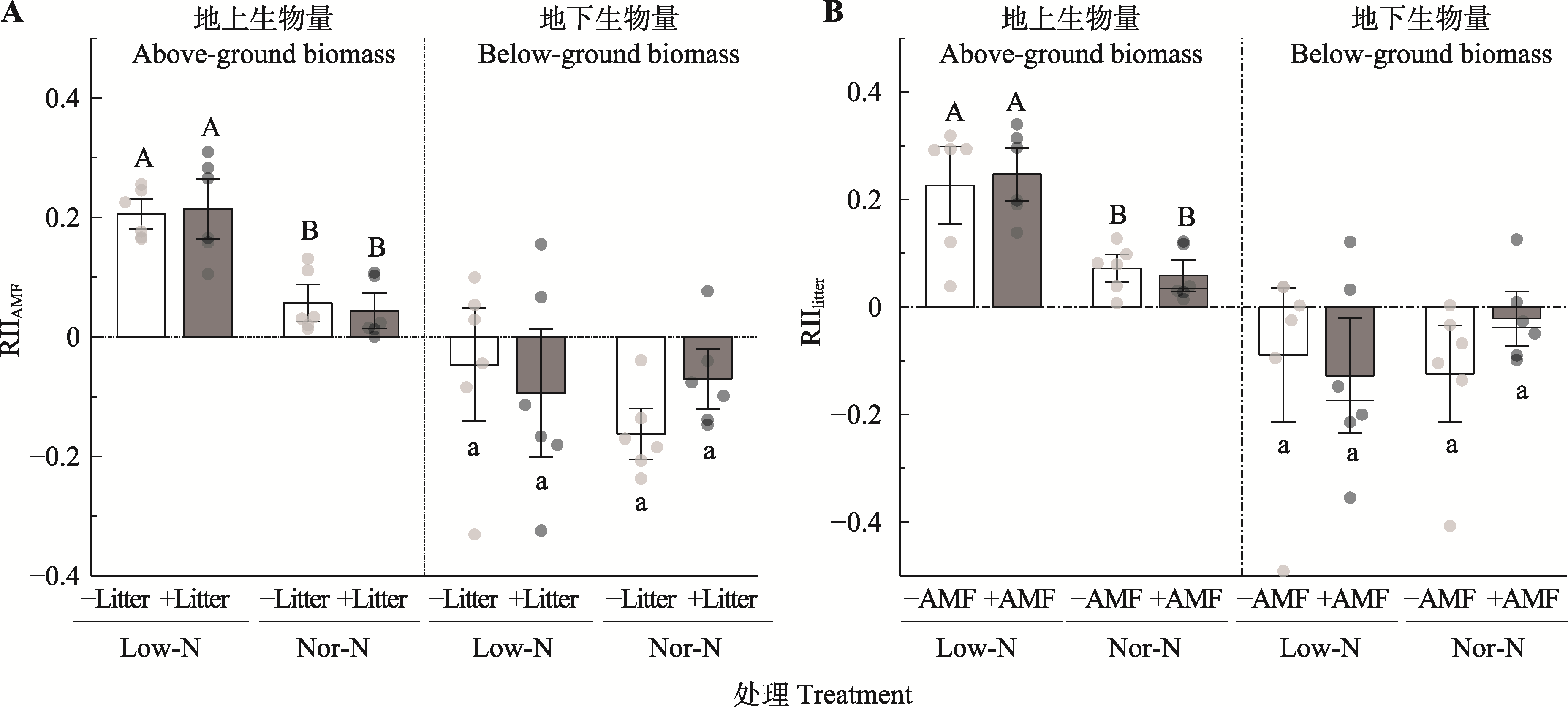
Fig. 6 Relative Interaction Intensity (RII) of arbuscular mycorrhizal fungi (AMF) (A) and Litter (B) on the biomass of Solidago canadensis under different conditions (mean ± SD). -AMF/+AMF, without/with AMF addition; -Litter/+Litter, without/with litter addition; Low-N/Nor-N, low/normal nutrient conditions. Different letters indicate significant differences between treatments (n = 11, p < 0.05).
| [1] |
Allison SD, Vitousek PM (2004). Rapid nutrient cycling in leaf litter from invasive plants in Hawai’i. Oecologia, 141, 612-619.
DOI PMID |
| [2] | Begum N, Qin C, Ahanger MA, Raza S, Khan MI, Ashraf M, Ahmed N, Zhang LX (2019). Role of arbuscular mycorrhizal fungi in plant growth regulation: implications in abiotic stress tolerance. Frontiers in Plant Science, 10, 01068. DOI: 10.3389/fpls.2019.01068. |
| [3] | Benitez L, Kendig AE, Adhikari A, Clay K, Harmon PF, Holt RD, Goss EM, Flory SL (2022). Invasive grass litter suppresses a native grass species and promotes disease. Ecosphere, 13, e3907. DOI: 10.1002/ecs2.3907. |
| [4] | Cao TT, Fang Y, Chen YR, Kong XS, Yang JB, Alharbi H, Kuzyakov Y, Tian XJ (2022). Synergy of saprotrophs with mycorrhiza for litter decomposition and hotspot formation depends on nutrient availability in the rhizosphere. Geoderma, 410, 115662. DOI: 10.1016/j.geoderma.2021.115662. |
| [5] |
Chen Q, Wu WW, Qi SS, Cheng H, Li Q, Ran Q, Dai ZC, Du DL, Egan S, Thomas T (2021). Arbuscular mycorrhizal fungi improve the growth and disease resistance of the invasive plant Wedelia trilobata. Journal of Applied Microbiology, 130, 582-591.
DOI |
| [6] | Cuthbert RN, Pattison Z, Taylor NG, Verbrugge L, Diagne C, Ahmed DA, Leroy B, Angulo E, Briski E, Capinha C, Catford JA, Dalu T, Essl F, Gozlan RE, Haubrock PJ, et al. (2021). Global economic costs of aquatic invasive alien species. Science of the Total Environment, 775, 145238. DOI: 10.1016/j.scitotenv.2021.145238. |
| [7] | Dai ZC, Du DL, Si CC, Lin Y, Hao JL, Sun F (2009). A method to exactly measure the morphological quantity of leaf using scanner and Image J software. Guihaia, 29, 342-347. |
| [戴志聪, 杜道林, 司春灿, 林英, 郝建良, 孙凤 (2009). 用扫描仪及Image J软件精确测量叶片形态数量特征的方法. 广西植物, 29, 342-347.] | |
| [8] |
Diagne C, Leroy B, Gozlan RE, Vaissière AC, Assailly C, Nuninger L, Roiz D, Jourdain F, Jarić I, Courchamp F (2020). InvaCost, a public database of the economic costs of biological invasions worldwide. Scientific Data, 7, 277. DOI: 10.1038/s41597-020-00586-z.
PMID |
| [9] |
Du LS, Liu HY, Guan WB, Li JM, Li JS (2019). Drought affects the coordination of belowground and aboveground resource-related traits in Solidago canadensis in China. Ecology and Evolution, 9, 9948-9960.
DOI URL |
| [10] |
Fu W, Wang N, Pang F, Huang YL, Wu J, Qi SS, Dai ZC, Du DL (2017). Soil microbiota and plant invasions: current and future. Biodiversity Science, 25, 1295-1302.
DOI |
|
[付伟, 王宁, 庞芳, 黄玉龙, 吴俊, 祁珊珊, 戴志聪, 杜道林 (2017). 土壤微生物与植物入侵: 研究现状与展望. 生物多样性, 25, 1295-1302.]
DOI |
|
| [11] | Gui H, Hyde K, Xu JC, Mortimer P (2017). Arbuscular mycorrhiza enhance the rate of litter decomposition while inhibiting soil microbial community development. Scientific Reports, 7, 42184. DOI: 10.1038/srep42184. |
| [12] |
Herman DJ, Firestone MK, Nuccio E, Hodge A (2012). Interactions between an arbuscular mycorrhizal fungus and a soil microbial community mediating litter decomposition. FEMS Microbiology Ecology, 80, 236-247.
DOI PMID |
| [13] | Jacott CN, Murray JD, Ridout CJ (2017). Trade-offs in arbuscular mycorrhizal symbiosis: disease resistance, growth responses and perspectives for crop breeding. Agronomy, 7, 75. DOI: 10.3390/agronomy7040075. |
| [14] |
Kakouridis A, Yuan MT, Nuccio EE, Hagen JA, Fossum CA, Moore ML, Estera-Molina KY, Nico PS, Weber PK, Pett-Ridge J, Firestone MK (2024). Arbuscular mycorrhiza convey significant plant carbon to a diverse hyphosphere microbial food web and mineral-associated organic matter. New Phytologist, 242, 1661-1675.
DOI PMID |
| [15] | Kaźmierczak M, Błońska E, Lasota J (2024). Effect of litter decomposition and nutrient release from shrub litter on enzymatic activity and C/N/P stoichiometry of soils in a temperate pine forest. Acta Oecologica, 124, 104020. DOI: 10.1016/j.actao.2024.104020. |
| [16] | Khan Y, Shah S, Hui T (2022). The roles of arbuscular mycorrhizal fungi in influencing plant nutrients, photosynthesis, and metabolites of cereal crops—A review. Agronomy, 12, 2191. DOI: 10.3390/agronomy12092191. |
| [17] |
Lakens D (2013). Calculating and reporting effect sizes to facilitate cumulative science: a practical primer for t-tests and ANOVAs. Frontiers in Psychology, 4, 863. DOI: 10.3389/fpsyg.2013.00863.
PMID |
| [18] |
Leifheit EF, Verbruggen E, Rillig MC (2015). Arbuscular mycorrhizal fungi reduce decomposition of woody plant litter while increasing soil aggregation. Soil Biology & Biochemistry, 81, 323-328.
DOI URL |
| [19] | Li HN, Liu YY, Gong YM, Zhang XH, Li WJ (2023). Effects of Pedicularis kansuensis invasion on litter decomposition in Bayanbulak alpine steppe. Grassland and Turf, 43(1), 1-11. |
| [李海宁, 柳妍妍, 公延明, 张鲜花, 李文军 (2023). 甘肃马先蒿入侵对巴音布鲁克高寒草原凋落物分解的影响. 草原与草坪, 43(1), 1-11.] | |
| [20] | Lin HY, Chen LX, Li JM (2023). Multiple introductions and distinct genetic groups of Canada goldenrod (Solidago canadensis) in China revealed by genomic single-nucleotide polymorphisms. Plants, 12, 1734. DOI: 10.3390/plants12091734. |
| [21] |
Lind EM, Borer E, Seabloom E, Adler P, Bakker JD, Blumenthal DM, Crawley M, Davies K, Firn J, Gruner DS, Stanley Harpole W, Hautier Y, Hillebrand H, Knops J, Melbourne B, et al. (2013). Life-history constraints in grassland plant species: a growth-defence trade-off is the norm. Ecology Letters, 16, 513-521.
DOI PMID |
| [22] | Liu YJ, Huang W, Yang Q, Zheng YL, Li SP, Wu H, Ju RT, Sun Y, Ding JQ (2022). Research advances of plant invasion ecology over the past 10 years. Biodiversity Science, 30, 22438. DOI: 10.17520/biods.2022438. |
| [刘艳杰, 黄伟, 杨强, 郑玉龙, 黎绍鹏, 吴昊, 鞠瑞亭, 孙燕, 丁建清 (2022). 近十年植物入侵生态学重要研究进展. 生物多样性, 30, 22438. DOI: 10.17520/biods.2022438.] | |
| [23] | Men XX, Bao Y, Zhai DP, Liao C, Wang YY, Wang C, Cheng XL (2024). Different regulatory mechanisms on carbon-degrading enzyme activities under short-term litter input manipulations in subalpine coniferous and broad-leaved forest soils. Soil Biology & Biochemistry, 196, 109512. DOI: 10.1016/j.soilbio.2024.109512. |
| [24] |
Perreault R, Laforest-Lapointe I (2022). Plant-microbe interactions in the phyllosphere: facing challenges of the anthropocene. The ISME Journal, 16, 339-345.
DOI URL |
| [25] | Qi SS, Wang JH, Wan LY, Dai ZC, da Silva Matos DM, Du DL, Egan S, Bonser SP, Thomas T, Moles AT (2022). Arbuscular mycorrhizal fungi contribute to phosphorous uptake and allocation strategies of Solidago canadensis in a phosphorous-deficient environment. Frontiers in Plant Science, 13, 831654. DOI: 10.3389/fpls.2022.831654. |
| [26] | Ran Q, Zhang SL, Arif M, Yin XT, Chen SS, Ren GQ (2024). Effects of arbuscular mycorrhizal fungi on carbon assimilation and ecological stoichiometry of maize under combined abiotic stresses. Journal of Plant Ecology, 17, rtae010. DOI: 10.1093/jpe/rtae010. |
| [27] |
Reinhart KO, Callaway RM (2006). Soil biota and invasive plants. New Phytologist, 170, 445-457.
DOI PMID |
| [28] | Salmeron-Santiago IA, Martínez-Trujillo M, Valdez-Alarcón JJ, Pedraza-Santos ME, Santoyo G, Pozo MJ, Chávez-Bárcenas AT (2021). An updated review on the modulation of carbon partitioning and allocation in arbuscular mycorrhizal plants. Microorganisms, 10, 75. DOI: 10.3390/microorganisms10010075. |
| [29] |
Smith SE, Smith FA (2011). Roles of arbuscular mycorrhizas in plant nutrition and growth: new paradigms from cellular to ecosystem scales. Annual Review of Plant Biology, 62, 227-250.
DOI PMID |
| [30] |
Sun JF, Rutherford S, Saif Ullah M, Ullah I, Javed Q, Rasool G, Ajmal M, Azeem A, Nazir MJ, Du DL (2022). Plant-soil feedback during biological invasions: effect of litter decomposition from an invasive plant (Sphagneticola trilobata) on its native congener (S. calendulacea). Journal of Plant Ecology, 15, 610-624.
DOI URL |
| [31] |
Ullah MS, Farooque AA, Javed Q, Ullah I, Bo YW, Jabran K, Sun JF (2024). Under biological invasion: impacts of litter decomposition mediated by invasive plant species on soil nutrients and functional growth traits of both invasive and native plant species. Russian Journal of Ecology, 55, 89-100.
DOI |
| [32] | Wang L, Chen X, Du YQ, Zhang D, Tang ZH (2022). Nutrients regulate the effects of arbuscular mycorrhizal fungi on the growth and reproduction of cherry tomato. Frontiers in Microbiology, 13, 843010. DOI: 10.3389/fmicb.2022.843010. |
| [33] | Wu SQ, Cheng JL, Xu XY, Zhang Y, Zhao YX, Li HX, Qiang S (2019). Polyploidy in invasive Solidago canadensis increased plant nitrogen uptake, and abundance and activity of microbes and nematodes in soil. Soil Biology & Biochemistry, 138, 107594. DOI: 10.1016/j.soilbio.2019.107594. |
| [34] | Yu L, Zhang H, Zhang WT, Liu KS, Liu M, Shao XQ (2022). Cooperation between arbuscular mycorrhizal fungi and plant growth-promoting bacteria and their effects on plant growth and soil quality. PeerJ, 10, e13080. DOI: 10.7717/peerj.13080. |
| [35] | Yu ZC, Yan MJ, Bu CL, Shen Q, Liu G, Dong TF, Xu X (2024). Effects of different AMF fertilizers on the growth and leaf quality of mulberry “Jialing 30”. Journal of China West Normal University (Natural Sciences), 45, 246-253. |
| [余泽岑, 晏梅静, 补春兰, 沈谦, 刘刚, 董廷发, 胥晓 (2024). 不同AMF菌肥对桑树“嘉陵30”生长和叶品质的影响. 西华师范大学学报(自然科学版), 45, 246-253.] | |
| [36] |
Yuan YG, Wang B, Zhang SS, Tang JJ, Tu C, Hu SJ, Yong JWH, Chen X (2013). Enhanced allelopathy and competitive ability of invasive plant Solidago canadensis in its introduced range. Journal of Plant Ecology, 6, 253-263.
DOI URL |
| [37] | Zhang HY, Goncalves P, Copeland E, Qi SS, Dai ZC, Li GL, Wang CY, Du DL, Thomas T (2020). Invasion by the weed Conyza canadensis alters soil nutrient supply and shifts microbiota structure. Soil Biology & Biochemistry, 143, 107739. DOI: 10.1016/j.soilbio.2020.107739. |
| [38] | Zhang JY, Lin X, Zhang XY, Huang H, Qi YL, Zhang Z, Chen BD, Morriën E, Zhu YG (2024). Bacterial and fungal keystone taxa play different roles in maintaining community resistance and driving soil organic carbon dynamics in response to Solidago canadensis invasion. Science of the Total Environment, 954, 176664. DOI: 10.1016/j.scitotenv.2024.176664. |
| [39] |
Zhang L, Ma XC, Wang H, Liu SW, Siemann E, Zou JW (2016). Soil respiration and litter decomposition increased following perennial forb invasion into an annual grassland. Pedosphere, 26,567-576.
DOI URL |
| [40] |
Zhang SS, Zhu WJ, Wang B, Tang JJ, Chen X (2011). Secondary metabolites from the invasive Solidago canadensis L. accumulation in soil and contribution to inhibition of soil pathogen Pythium ultimum. Applied Soil Ecology, 48, 280-286.
DOI URL |
| [41] |
Zhou XG, Zhang JY, Khashi u Rahman M, Gao DM, Wei Z, Wu FZ, Dini-Andreote F (2023). Interspecific plant interaction via root exudates structures the disease suppressiveness of rhizosphere microbiomes. Molecular Plant, 16, 849-864.
DOI URL |
| [42] |
Zhou Y, Li X, Gao Y, Liu H, Gao YB, van der Heijden MGA, Ren AZ (2018). Plant endophytes and arbuscular mycorrhizal fungi alter plant competition. Functional Ecology, 32, 1168-1179.
DOI URL |
| [1] | Qing He, Xudong Yuan, Boshen Ren, Zhiyang Feng, Mengzhen Lu, Qiaoling Lin, Qinghu Jiang, Linsen Yang, Huiliang Yu, Hui Yao, Jingyuan Yang, Feng Liu, Mingxi Jiang. Effects of Erigeron annuus invasion on plant community structure and diversity in subalpine peat wetlands [J]. Chin J Plant Ecol, 2026, 50(4): 895-906. |
| [2] | ZOU Ji-Kai, WU Jia-Yi, GU Yun-Yi, CHEN Bao-Ming. Effects of different nitrogen forms and arbuscular mycorrhizal fungi on competitive ability of invasive alien plant Bidens alba [J]. Chin J Plant Ecol, 2026, 50(3): 722-730. |
| [3] | BAI Hao-Ran, HOU Meng, LIU Yan-Jie. Mechanisms of the invasion of Cenchrus spinifex and drought effects on productivity of Leymus chinensis community [J]. Chin J Plant Ecol, 2024, 48(5): 577-589. |
| [4] | YANG Jia-Ting, PAN Ying-Ji, CHANG Chun-Ling, LIU Yan-Jie. Effects of native plant-soil microbe interaction on plant invasion [J]. Chin J Plant Ecol, 2024, 48(12): 1547-1560. |
| [5] | LUO Lai-Cong, LAI Xiao-Qin, BAI Jian, LI Ai-Xin, FANG Hai-Fu, Nasir SHAD, TANG Ming, HU Dong-Nan, ZHANG Ling. Effects of soil bacteria and fungi on growth of invasive plant Triadica sebifera with different provenances under nitrogen addition [J]. Chin J Plant Ecol, 2023, 47(2): 206-215. |
| [6] | WANG Jing-Jing, WANG Jia-Hao, HUANG Zhi-Yun, Vanessa Chiamaka OKECHUKW, HU Die, QI Shan-Shan, DAI Zhi-Cong, DU Dao-Lin. Effects of endophytic nitrogen-fixing bacteria on the growth strategy of an invasive plant Sphagneticola trilobata under different nitrogen levels [J]. Chin J Plant Ecol, 2023, 47(2): 195-205. |
| [7] | LIU Mu-Qing, YANG Xiao-Feng, SHI Yu-Ming, LIU Yu-Wei, LI Xiao-Meng, LIAO Wan-Jin. Effects of simulated acid rain on the competitive relationship between invasive Ambrosia artemisiifolia and its co-occurring indigenous forb Bidens bipinnata [J]. Chin J Plant Ecol, 2022, 46(8): 932-940. |
| [8] | QIN Hui-Jun, JIAO Liang, ZHOU Yi, XUE Ru-Hong, QI Chang-Liang, DU Da-Shi. Effects of altitudes on non-structural carbohydrate allocation in different dominate trees in Qilian Mountains, China [J]. Chin J Plant Ecol, 2022, 46(2): 208-219. |
| [9] | QI Lu-Yu, CHEN Hao-Nan, Kulihong SAIREBIELI, JI Tian-Yu, MENG Gao-De, QIN Hui-Ying, WANG Ning, SONG Yi-Xin, LIU Chun-Yu, DU Ning, GUO Wei-Hua. Growth strategies of five shrub seedlings in warm temperate zone based on plant functional traits [J]. Chin J Plant Ecol, 2022, 46(11): 1388-1399. |
| [10] | FENG Ji-Guang, ZHU Biao. A review on the effects of nitrogen and phosphorus addition on tree growth and productivity in forest ecosystems [J]. Chin J Plant Ecol, 2020, 44(6): 583-597. |
| [11] | Bang-Liang DENG, Qian LIU, Xi-Shuai LIU, Li-Ya ZHENG, Liang-Bo JIANG, Xiao-Min GUO, Yuan-Qiu LIU, Ling ZHANG. Effects of enhanced UV-B radiation and nitrogen deposition on the growth of invasive plant Triadica sebifera [J]. Chin J Plant Ecol, 2017, 41(4): 471-479. |
| [12] | Chao-Chen HU, Xue-Yan LIU, Yan-Bao LEI, Yun-Hong TAN, Peng ZHANG, Yu-Ping DONG, Cong-Qiang LIU. Foliar nitrogen and phosphorus stoichiometry of alien invasive plants and co-occurring natives in Xishuangbanna [J]. Chin J Plan Ecolo, 2016, 40(11): 1145-1153. |
| [13] | LI Dan-Feng,YU Shun-Li,WANG Guo-Xun,FANG Wei-Wei. Environmental heterogeneity and mechanism of stoichiometry properties of vegetative organs in dominant shrub communities across the Loess Plateau [J]. Chin J Plan Ecolo, 2015, 39(5): 453-465. |
| [14] | WANG Na-Na, CHEN Ying, YING Jiao-Yan, GAO Yong-Sheng, BAI Yong-Fei. Effects of typical plant on soil microbial communities in an Inner Mongolia grassland [J]. Chin J Plant Ecol, 2014, 38(2): 201-208. |
| [15] | TIAN Run-Wei,LU Jia-Hui,LI Xue-Yu,YU Ying,XIE Liang-Bi,QIN Zhong-Li. Diadelphous stamens in Glycyrrhiza glabra: their development and adaptive significance [J]. Chin J Plant Ecol, 2013, 37(7): 641-649. |
| Viewed | ||||||
|
Full text |
|
|||||
|
Abstract |
|
|||||
Copyright © 2026 Chinese Journal of Plant Ecology
Tel: 010-62836134, 62836138, E-mail: apes@ibcas.ac.cn, cjpe@ibcas.ac.cn

