
Chin J Plant Ecol ›› 2025, Vol. 49 ›› Issue (12): 2137-2148.DOI: 10.17521/cjpe.2025.0253 cstr: 32100.14.cjpe.2025.0253
• Research Articles • Previous Articles Next Articles
XU Bo1,2, YANG Zi-Song1, LI Bo1, SHI Fu-Sun2,*( )
)
Received:2025-07-02
Accepted:2025-10-17
Online:2025-12-20
Published:2025-12-25
Contact:
SHI Fu-Sun
Supported by:XU Bo, YANG Zi-Song, LI Bo, SHI Fu-Sun. Altitudinal effects on functional traits and medicinal components of the endangered species Fritillaria unibracteata[J]. Chin J Plant Ecol, 2025, 49(12): 2137-2148.
Add to citation manager EndNote|Ris|BibTeX
URL: https://www.plant-ecology.com/EN/10.17521/cjpe.2025.0253
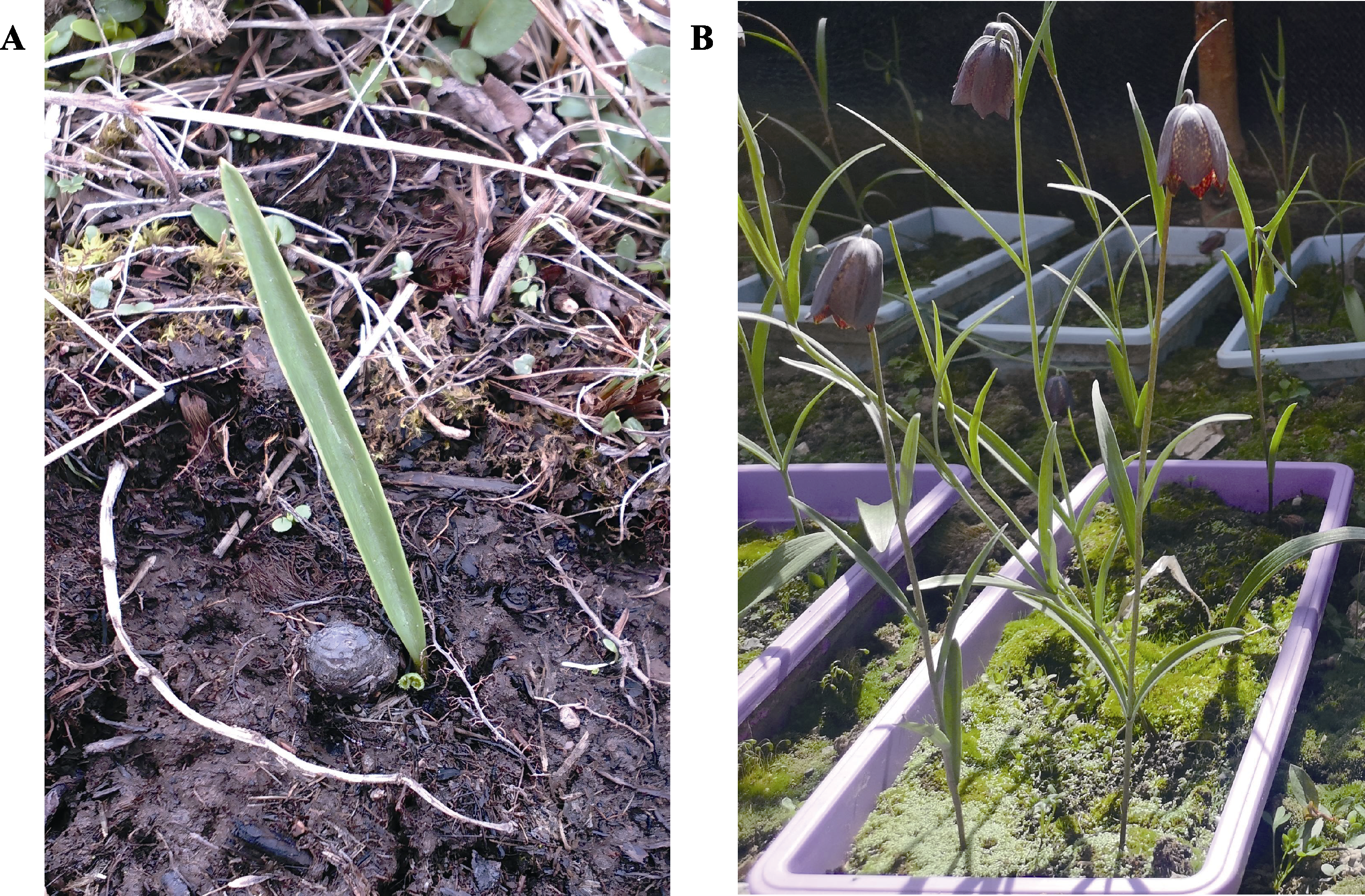
Fig. 1 Wild Fritillaria unibracteata at “One leaf” stage (A) and artificial planting F. unibracteata at “Lantern flower” stage at altitude 3 080 m (B).
| 地点 Location | 海拔 Altitude (m) | 坡向 Aspect | 经纬度 Latitude and longitude | 5 cm深处土壤温度(平均值±标准差) Soil temperature at 5 cm depth (mean ± SD) | |||||
|---|---|---|---|---|---|---|---|---|---|
| 生长季(2019和2020年4-9月) Growing season (April to Sept. of year 2019 and 2020) | 非生长季(2019年10月至2020年3月) Non growing season (Oct. 2019 to March 2020) | ||||||||
| 白天 Day (07:00-19:00) | 夜间 Night (19:00-07:00) | 温差 ΔT | 白天 Day (07:00-19:00) | 夜间 Night (19:00-07:00) | 温差 ΔT | ||||
| 松潘县卡卡山 Kaka Mountain, Songpan County | 3 410 | 西南 Southwest | 103.85° E, 32.99° N | 11.27 ± 3.83 | 9.19 ± 3.78 | 4.20 ± 2.87 | 3.83 ± 5.90 | 0.87 ± 5.60 | 3.11 ± 2.11 |
| 松潘县川主寺镇 Chuanzhusi Town, Songpan County | 3 080 | 西南 Southwest | 103.65° E, 32.80° N | 13.25 ± 4.13 | 11.29 ± 3.80 | 2.44 ± 1.70 | 4.69 ± 5.97 | 3.30 ± 5.33 | 1.39 ± 2.35 |
| 茂县飞虹乡 Feihong Country, Mao County | 2 370 | 西南 Southwest | 103.73° E, 31.76° N | 15.66 ± 3.42 | 14.50 ± 3.20 | 1.54 ± 1.23 | 6.83 ± 5.64 | 6.02 ± 5.06 | 0.81 ± 1.13 |
| 茂县飞虹乡 Feihong Country, Mao County | 1 780 | 西南 Southwest | 103.72° E, 31.78° N | 17.54 ± 3.03 | 15.86 ± 3.53 | 2.90 ± 3.12 | 8.62 ± 5.83 | 7.51 ± 5.23 | 1.11 ± 1.29 |
| 汶川县水磨镇 Shuimo Town, Wenchuan County | 1 170 | 西南 Southwest | 103.44° E, 30.92° N | 19.34 ± 3.03 | 17.78 ± 3.06 | 2.13 ± 1.98 | 10.46 ± 5.76 | 9.36 ± 5.31 | 1.10 ± 0.86 |
Table 1 Overview of Fritillaria unibracteata experimental plots
| 地点 Location | 海拔 Altitude (m) | 坡向 Aspect | 经纬度 Latitude and longitude | 5 cm深处土壤温度(平均值±标准差) Soil temperature at 5 cm depth (mean ± SD) | |||||
|---|---|---|---|---|---|---|---|---|---|
| 生长季(2019和2020年4-9月) Growing season (April to Sept. of year 2019 and 2020) | 非生长季(2019年10月至2020年3月) Non growing season (Oct. 2019 to March 2020) | ||||||||
| 白天 Day (07:00-19:00) | 夜间 Night (19:00-07:00) | 温差 ΔT | 白天 Day (07:00-19:00) | 夜间 Night (19:00-07:00) | 温差 ΔT | ||||
| 松潘县卡卡山 Kaka Mountain, Songpan County | 3 410 | 西南 Southwest | 103.85° E, 32.99° N | 11.27 ± 3.83 | 9.19 ± 3.78 | 4.20 ± 2.87 | 3.83 ± 5.90 | 0.87 ± 5.60 | 3.11 ± 2.11 |
| 松潘县川主寺镇 Chuanzhusi Town, Songpan County | 3 080 | 西南 Southwest | 103.65° E, 32.80° N | 13.25 ± 4.13 | 11.29 ± 3.80 | 2.44 ± 1.70 | 4.69 ± 5.97 | 3.30 ± 5.33 | 1.39 ± 2.35 |
| 茂县飞虹乡 Feihong Country, Mao County | 2 370 | 西南 Southwest | 103.73° E, 31.76° N | 15.66 ± 3.42 | 14.50 ± 3.20 | 1.54 ± 1.23 | 6.83 ± 5.64 | 6.02 ± 5.06 | 0.81 ± 1.13 |
| 茂县飞虹乡 Feihong Country, Mao County | 1 780 | 西南 Southwest | 103.72° E, 31.78° N | 17.54 ± 3.03 | 15.86 ± 3.53 | 2.90 ± 3.12 | 8.62 ± 5.83 | 7.51 ± 5.23 | 1.11 ± 1.29 |
| 汶川县水磨镇 Shuimo Town, Wenchuan County | 1 170 | 西南 Southwest | 103.44° E, 30.92° N | 19.34 ± 3.03 | 17.78 ± 3.06 | 2.13 ± 1.98 | 10.46 ± 5.76 | 9.36 ± 5.31 | 1.10 ± 0.86 |
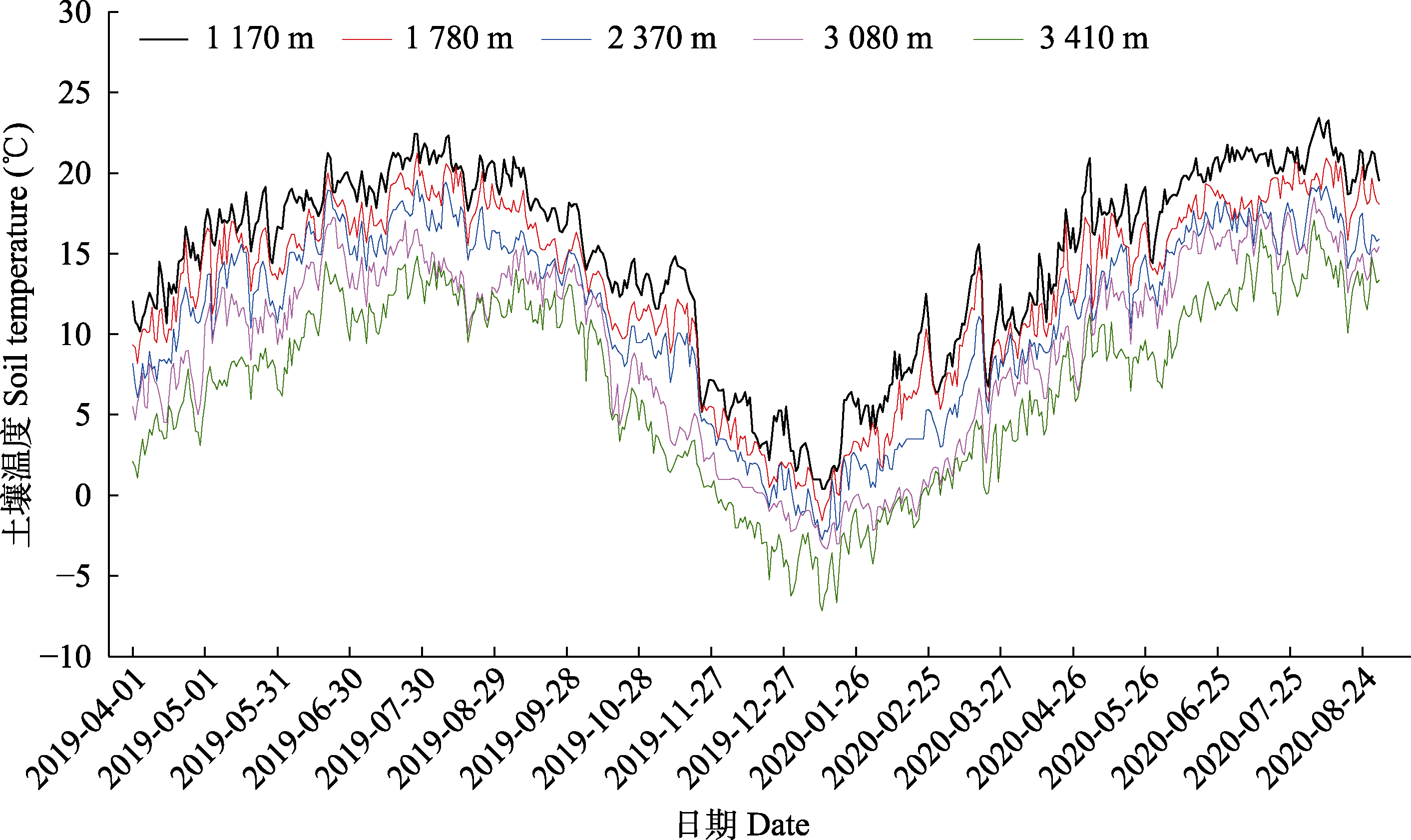
Fig. 2 Mean daily temperature of potting soil.
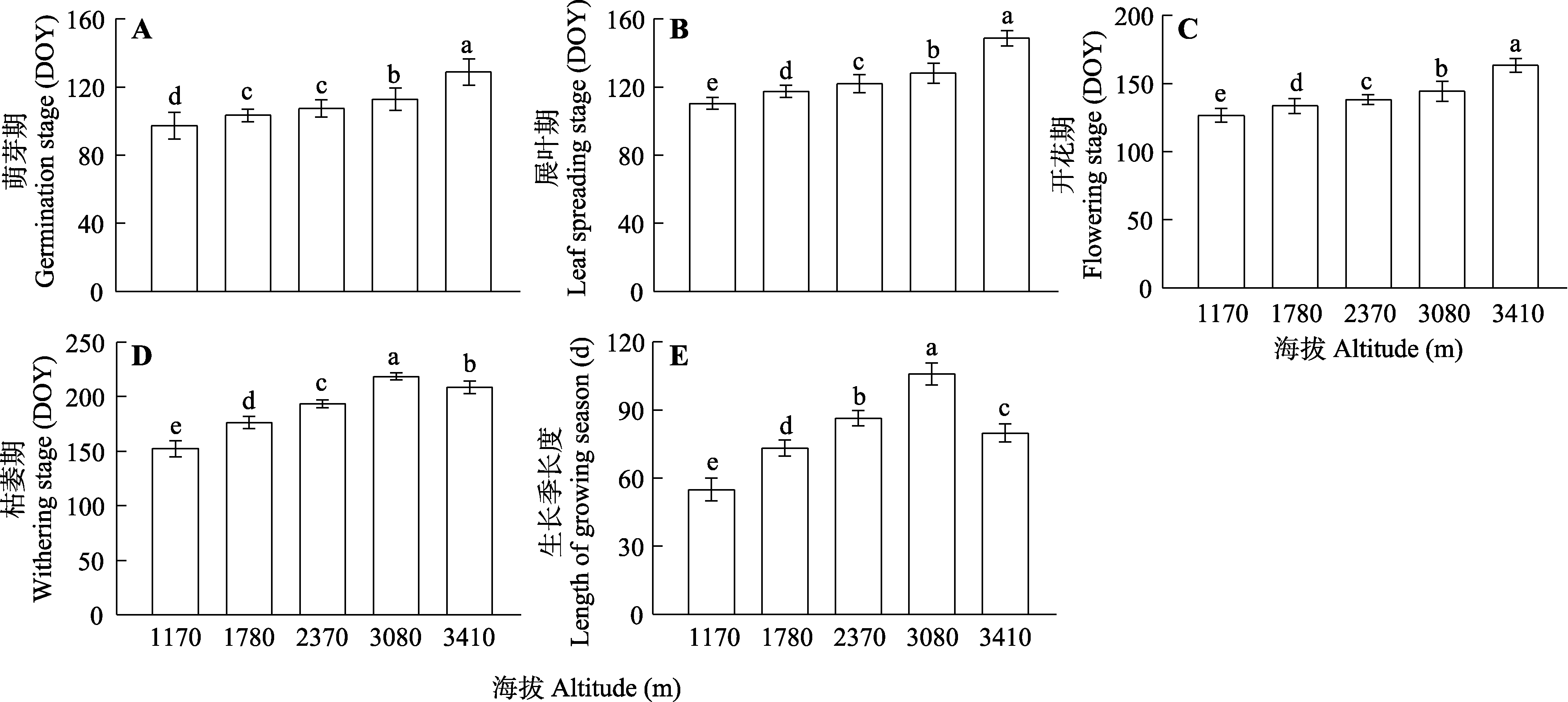
Fig. 3 Effects of altitude on phenological patterns of Fritillaria unibracteata (mean ± SD). DOY, day of the year. Different lowercase letters indicate highly significant differences (p < 0.01) in the effect of altitudes on phenological indexes.
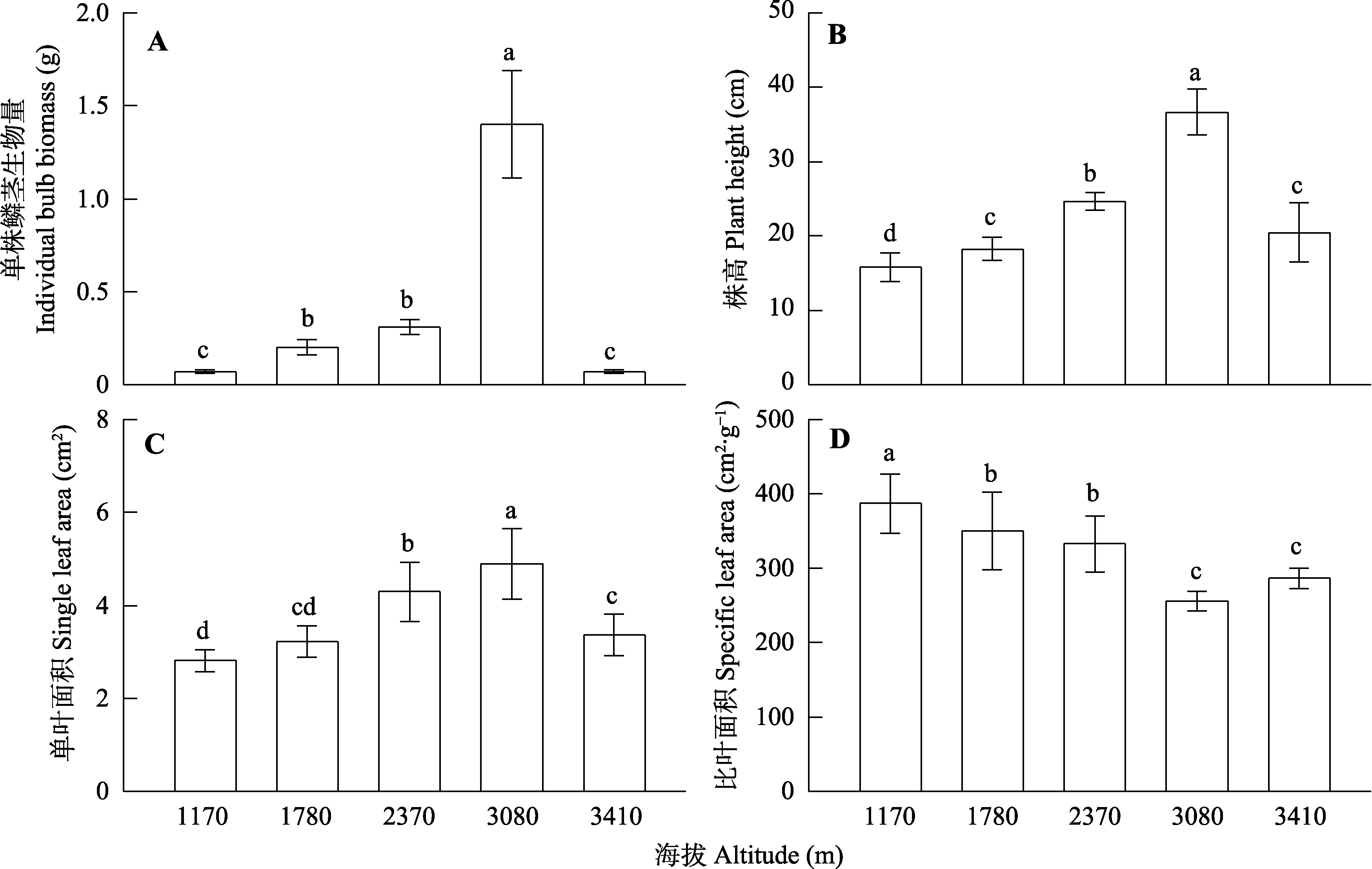
Fig. 4 Effects of altitude on bulb biomass and morphological characteristics of Fritillaria unibracteata (mean ± SD). Different lowercase letters indicate highly significant differences (p < 0.01) in the effect of altitudes on bulb biomass and morphological characteristics.
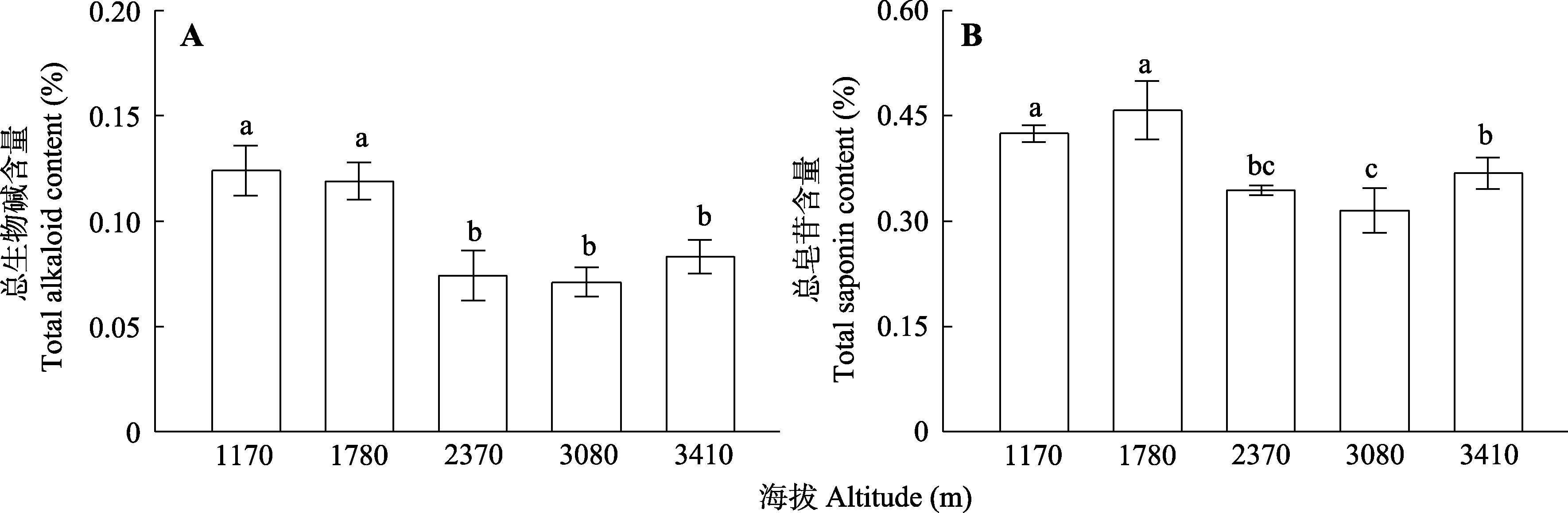
Fig. 5 Effects of altitude on the contents of total alkaloids and total saponins in bulbs of Fritillaria unibracteata (mean ± SD). Different lowercase letters indicate highly significant differences (p < 0.01) in the effect of altitudes on the contents of total alkaloids and total saponins in bulbs.
| [1] |
Ball MC, Wolfe J, Canny M, Hofmann M, Nicotra AB, Hughes D (2002). Space and time dependence of temperature and freezing in evergreen leaves. Functional Plant Biology, 29, 1259-1272.
DOI PMID |
| [2] | Chen SL, Xiao XH, Chen SY (1997). Unmerical studies on spatial distribution pattern of fritillaria unibracteata community. Journal of Southwest China Normal University (Natural Science Edition), 22, 416-420. |
| [陈士林, 肖小河, 陈善墉 (1997). 暗紫贝母植被分布格局的数值分析. 西南师范大学学报(自然科学版), 22, 416-420.] | |
| [3] | Chen WN, Cai PY (2021). Effects of altitude on leaf traits of Fritillaria unibracteata. Guihaia, 41, 1450-1456. |
| [陈文年, 蔡平原 (2021). 海拔高度对暗紫贝母叶特征的影响. 广西植物, 41, 1450-1456.] | |
| [4] | Chen WN, Chen FJ, Xie YH, Wang Y, Duan HG, Qi ZM (2012). Variation of phenology and bulbs of Fritillaria unibracteata along altitudinal gradients. Acta Prataculturae Sinica, 21, 319-324. |
| [陈文年, 陈发军, 谢玉华, 王淯, 段辉国, 齐泽民 (2012). 暗紫贝母的物候和鳞茎在海拔梯度上的变化. 草业学报, 21, 319-324.] | |
| [5] | Chen WN, Xiao XJ, Chen FJ, Wang H, Zhang ZY, Qi ZM, Huang ZX (2015). Reproductive organ variation in Fritillaria unibracteata along an altitudinal gradient. Acta Prataculturae Sinica, 24, 155-163. |
|
[陈文年, 肖小君, 陈发军, 王辉, 张志勇, 齐泽民, 黄作喜 (2015). 暗紫贝母的繁殖器官在海拔梯度上的变异. 草业学报, 24, 155-163.]
DOI |
|
| [6] | Chen XT, Wang YF (2023). Responses of leaf traits of Saussurea stella to an elevational gradient in Qinghai-Tibet Plateau. Grassland and Turf, 43, 130-136. |
| [陈希婷, 王一峰 (2023). 青藏高原星状雪兔子叶性状对海拔梯度的响应. 草原与草坪, 43, 130-136.] | |
| [7] | Chinese Pharmacopoeia Commission (2020). Pharmacopoeia of the People’s Republic of China (2020 edition): Volume I. China Pharmaceutical Science and Technology Press, Beijing. 87-87. |
| [国家药典委员会 (2020). 中华人民共和国药典(2020年版)一部. 中国医药科技出版社, 北京. 87-87.] | |
| [8] | Dai Q, Ma LK, Ye QB, Lei L, Ai QQ, Ai GL (2024). Research advance in chemical constituents and pharmacological effects of Fritillariae Cirrhosae Bulbus from different base sources. Asia-Pacific Traditional Medicine, 20, 239-243. |
|
[代琪, 马珑珂, 叶俏波, 雷蕾, 艾青青, 艾光丽 (2024). 不同基源川贝母化学成分和药理作用研究进展. 亚太传统医药, 20, 239-243.]
DOI |
|
| [9] | Dai WJ, Jin HY, Zhang YH, Zhou ZQ, Liu T (2020). Advances in plant phenology. Acta Ecologica Sinica, 40, 6705-6719. |
| [代武君, 金慧颖, 张玉红, 周志强, 刘彤 (2020). 植物物候学研究进展. 生态学报, 40, 6705-6719.] | |
| [10] | Dang D (2013). The Study for the Activity of Anti-acetylcholinesterase from Gentiana purdomii and the Bioactivity of Extract from Fritillaria pallidiflora Schrenk. Master degree dissertation, Lanzhou University of Technology, Lanzhou. 18-22. |
| [党朵 (2013). 秦艽花抗乙酰胆碱酯酶活性成分及伊贝母提取物生物活性研究. 硕士学位论文, 兰州理工大学, 兰州. 18-22.] | |
| [11] | Ding DD, Yu Q, Wang XR, Li XW, Xiang L (2019). Pollution-free emulational cultivation system of Fritillaria cirrhosa D. Don. Modernization of Traditional Chinese Medicine and Materia Medica-World Science and Technology, 21, 775-783. |
| [丁丹丹, 余强, 王晓蓉, 李西文, 向丽 (2019). 川贝母无公害仿生态栽培体系. 世界科学技术-中医药现代化, 21, 775-783.] | |
| [12] |
Gratani L, Catoni R, Pirone G, Frattaroli AR, Varone L (2012). Physiological and morphological leaf trait variations in two Apennine plant species in response to different altitudes. Photosynthetica, 50, 15-23.
DOI URL |
| [13] | Gu J, Li J, Tan R, Zhang E, Luo XW, Fan LN, Feng L (2012). Total saponins contents and anti-inflammatory effect of fritillariae cirrhosae bulbus of different species. Journal of Southwest University for Nationalities (Natural Science Edition), 38, 252-255. |
| [顾健, 李婧, 谭睿, 张娥, 罗小文, 樊丽娜, 冯岭 (2012). 不同基源川贝母的总皂甙含量以及抗炎作用比较研究. 西南民族大学学报(自然科学版), 38, 252-255.] | |
| [14] | Guo HX, Xu B, Shi FS, Wu Y (2017). Effects of shading and nitrogen addition on the growth and C-N balance of Fritillaria unibracteata. Bulletin of Botanical Research, 37, 738-743. |
|
[郭海霞, 徐波, 石福孙, 吴彦 (2017). 遮光和施氮对暗紫贝母生长和C-N平衡的影响. 植物研究, 37, 738-743.]
DOI |
|
| [15] | Huang LQ, Guo LP (2007). Secondary metabolites accumulating and geoherbs formation under enviromental stress. China Journal of Chinese Materia Medica, 32, 277-280. |
| [黄璐琦, 郭兰萍 (2007). 环境胁迫下次生代谢产物的积累及道地药材的形成. 中国中药杂志, 32, 277-280.] | |
| [16] | Körner C (2003). Alpine Plant Life: Functional Plant Ecology of High Mountain Ecosystems. 2nd ed. Springer-Verlag, Heidelberg. 60-80. |
| [17] | Li KQ, Wu W, Zheng YL, Dai Y, Mou L, Liao K (2008). Effect of temperature on physiologic indexes, bulb yielding and total alkaloids contents of Fritillaria cirrhosa. China Journal of Chinese Materia Medica, 33, 1948-1951. |
| [黎开强, 吴卫, 郑有良, 代勇, 牟兰, 廖凯 (2008). 温度对川贝母生理指标、鳞茎产量及总生物碱含量的影响. 中国中药杂志, 33, 1948-1951.] | |
| [18] |
Liu Q, Fu YH, Zhu ZC, Liu YW, Liu Z, Huang MT, Janssens IA, Piao SL (2016). Delayed autumn phenology in the Northern Hemisphere is related to change in both climate and spring phenology. Global Change Biology, 22, 3702-3711.
DOI PMID |
| [19] | Liu ST, Liu MR, Li GE, Wang MX, Ma CY, Fu YS, Hou FJ, Liu YJ (2024). Research progress in plant phenology. Pratacultural Science, 41, 2402-2418. |
| [刘世婷, 刘明蕊, 李国娥, 王明霞, 马春燕, 付永硕, 侯扶江, 刘永杰 (2024). 植物物候研究进展. 草业科学, 41, 2402-2418.] | |
| [20] | Liu XQ (1994). Comparative experiment on introduction of Fritillaria unibracteata and Fritillaria taipaiensis. China Journal of Chinese Materia Medica, 19, 81-82. |
| [刘先齐 (1994). 暗紫贝母与太白贝母的引种比较试验. 中国中药杂志, 19, 81-82.] | |
| [21] | Lu PL, Yu Q, He QT (2006). Responses of plant phenology to climatic change. Acta Ecologica Sinica, 26, 923-929. |
| [陆佩玲, 于强, 贺庆棠 (2006). 植物物候对气候变化的响应. 生态学报, 26, 923-929.] | |
| [22] |
Ma WL, Shi PL, Li WH, He YT, Zhang XZ, Shen ZX, Chai SY (2010). Changes in individual plant traits and biomass allocation in alpine meadow with elevation variation on the Qinghai-Tibetan Plateau. Science China: Life Sciences, 53, 1142-1151.
DOI URL |
| [23] | Ma YZ, Zhang WG, Li R, Cheng CY, Wu HX, Jin L, Cui ZJ, Ma Y, Wang ZH, Wang YY (2022). A study of the different cultivation treatments and effects on the sowing process of Fritillaria cirrhosa and Fritillaria unibracteata. Acta Prataculturae Sinica, 31, 86-95. |
|
[马艳珠, 张文广, 李冉, 成春亚, 吴海旭, 晋玲, 崔治家, 马毅, 王振恒, 王圆圆 (2022). 不同栽培因素处理对川贝母和暗紫贝母种苗建成的影响动态及比较研究. 草业学报, 31, 86-95.]
DOI |
|
| [24] | Pan LM (2021). Effects of Altitude and Flowering Phenology on Reproductive Allocation of 32 Alpine Plants. Master degree dissertation, Yunnan Normal University, Kunming. 8-14. |
| [潘黎梅 (2021). 海拔与开花物候对32种高山植物繁殖分配的影响. 硕士学位论文, 云南师范大学, 昆明. 8-14.] | |
| [25] |
Poorter H, Niinemets Ü, Poorter L, Wright IJ, Villar R (2009). Causes and consequences of variation in leaf mass per area (LMA): a meta-analysis. New Phytologist, 182, 565-588.
DOI URL |
| [26] |
Sherry RA, Zhou XH, Gu SL, Arnone JA, Schimel DS, Verburg PS, Wallace LL, Luo YQ (2007). Divergence of reproductive phenology under climate warming. Proceedings of the National Academy of Sciences of the United States of America, 104, 198-202.
DOI PMID |
| [27] | Su WH, Zhang GF, Li XH, Ou XK (2005). Relationship between accumulation of secondary metabolism in medicinal plant and environmental condition. Chinese Traditional and Herbal Drugs, 36, 1415-1418. |
| [苏文华, 张光飞, 李秀华, 欧晓昆 (2005). 植物药材次生代谢产物的积累与环境的关系. 中草药, 36, 1415-1418.] | |
| [28] |
Wang S, Xu XP, Li T (2002). Determination and contrastion of alkaloids and saponins in Bulbus fritillariae cirrhosae and in other beimus. China Journal of Chinese Materia Medica, 27, 342-344.
PMID |
| [王曙, 徐小平, 李涛 (2002). 川贝母与其他贝母类药材总生物碱和总皂苷的含量测定与比较. 中国中药杂志, 27, 342-344.] | |
| [29] | Wang Y, Feng X, Gao D, Xie HM, Fu SB, Li XW (2022). Comparative analysis of physiological indexes and alkaloid content of Fritillaria cirrhosa D. Don of different bulb sizes. World Chinese Medicine, 17, 1833-1839. |
| [王业, 冯雪, 高旦, 谢慧敏, 付绍兵, 李西文 (2022). 川贝母不同规格鳞茎的生理指标和生物碱含量比较分析. 世界中医药, 17, 1833-1839.] | |
| [30] |
Wright IJ, Westoby M, Reich PB (2002). Convergence towards higher leaf mass per area in dry and nutrient-poor habitats has different consequences for leaf life span. Journal of Ecology, 90, 534-543.
DOI URL |
| [31] | Wu HX, Ma YZ, Cheng CY, Li R, Cui ZJ, Jin L, Ma Y, Wang ZH, Wang YY, Liu L (2024). Study on the biomass and allometry of Fritillaria cirrhosa of different ages. Pratacultural Science, 41, 126-133. |
| [吴海旭, 马艳珠, 成春亚, 李冉, 崔治家, 晋玲, 马毅, 王振恒, 王圆圆, 刘立 (2024). 不同年限川贝母生物量及异速生长. 草业科学, 41, 126-133.] | |
| [32] | Wu Y, Wang H, Fang MF, Yue M, Li YF, Li S (2013). Review of studies on influence of environmental factors on formation of medicinal materials from botanicals. Natural Product Research and Development, 25, 416-420. |
| [吴洋, 王慧, 房敏峰, 岳明, 李易非, 李珊 (2013). 环境因子对药用植物药材形成的影响研究进展. 天然产物研究与开发, 25, 416-420.] | |
| [33] | Xiong HR, Ma ZX, Guo H, Yang ZA, Zhao C, Yang G (2020). Research progress on wild source plant resources distribution and conservation of Fritillariae Cirrhosae Bulbus. Chinese Traditional and Herbal Drugs, 51, 2573-2579. |
| [熊浩荣, 马朝旭, 国慧, 杨振安, 赵川, 杨刚 (2020). 川贝母野生基原植物资源分布和保育研究进展. 中草药, 51, 2573-2579.] | |
| [34] |
Xu B, Shi FS, Wang LH, Yang ZS (2021). Effects of altitude on phenology and morphological characteristics of Fritillaria unibracteata. Bulletin of Botanical Research, 41, 666-674.
DOI |
|
[徐波, 石福孙, 王丽华, 杨子松 (2021). 海拔对暗紫贝母物候及形态特征的影响. 植物研究, 41, 666-674.]
DOI |
|
| [35] |
Xu B, Wang JN, Guo HX, Shi FS, Wu N (2014). Morphological adaptation of wild Fritillaria unibracteata to alpine conditions in the eastern Qinghai-Tibet Plateau. Chinese Journal of Applied and Environmental Biology, 20, 955-961.
DOI URL |
| [徐波, 王金牛, 郭海霞, 石福孙, 吴宁 (2014). 青藏高原东缘野生暗紫贝母形态特征对高山环境的适应. 应用与环境生物学报, 20, 955-961.] | |
| [36] |
Xu B, Wang JN, Shi FS (2020). Impacts of ontogenetic and altitudinal changes on morphological traits and biomass allocation patterns of Fritillaria unibracteata. Journal of Mountain Science, 17, 83-94.
DOI |
| [37] |
Xu B, Wang JN, Shi FS, Gao J, Wu N (2013). Adaptation of biomass allocation patterns of wild Fritillaria unibracteata to alpine environment in the eastern Qinghai-Xizang Plateau. Chinese Journal of Plant Ecology, 37, 187-196.
DOI URL |
|
[徐波, 王金牛, 石福孙, 高景, 吴宁 (2013). 青藏高原东缘野生暗紫贝母生物量分配格局对高山生态环境的适应. 植物生态学报, 37, 187-196.]
DOI |
|
| [38] | Yao RX, Chen Y, Lü XQ, Wang JH, Yang FJ, Wang XY (2023). Altitude-related environmental factors shape the phenotypic characteristics and chemical profile of Rhododendron. Biodiversity Science, 31, 27-41. |
| [姚仁秀, 陈燕, 吕晓琴, 王江湖, 杨付军, 王晓月 (2023). 海拔及环境因子影响杜鹃属植物的表型特征和化学性状. 生物多样性, 31, 27-41.] | |
| [39] | Yun HX, Chen Z (2010). General situation of research on Fritillaria unibracteata. Chinese Traditional Patent Medicine, 32, 1020-1024. |
| [韵海霞, 陈志 (2010). 暗紫贝母的研究概况. 中成药, 32, 1020-1024.] | |
| [40] | Zhang L, Zhu XW, Huang Q, Kang Y, Ren JF, Yang H, Chen J, Li Q (2016). Variation of seedling growth and the content of total alkaloid of Fritillaria unibracteata along altitudinal gradients. Journal of Sichuan Forestry Science and Technology, 37, 80-83. |
| [张利, 朱欣伟, 黄泉, 康英, 任君芳, 杨华, 陈俊, 李强 (2016). 海拔对暗紫贝母生长及总生物碱含量的影响. 四川林业科技, 37, 80-83.] | |
| [41] |
Zhang Q, Kong DD, Shi PJ, Singh VP, Sun P (2018). Vegetation phenology on the Qinghai-Tibetan Plateau and its response to climate change (1982-2013). Agricultural and Forest Meteorology, 248, 408-417.
DOI URL |
| [42] | Zhang ZY, Yang J, Qi ZM (2017). Research progress of Fritillaria cirrhosa. Jiangsu Agricultural Sciences, 45, 9-13. |
| [张志勇, 杨洁, 齐泽民 (2017). 川贝母的研究进展. 江苏农业科学, 45, 9-13.] | |
| [43] |
Zhao DY (1994). Determination of total saponins, alkaloids and sipeimine in four species of Chuanbeimu. China Journal of Chinese Materia Medica, 19, 71-72.
PMID |
| [赵德永 (1994). 4种川贝母的总皂甙、总生物碱及西贝素的含量测定. 中国中药杂志, 19, 71-72.] | |
| [44] | Zhao M (2022). Study on Key Techniques of Improved Variety Breeding and Cultivation of Fritillariae Cirrhosae Bulbus. Master degree dissertation, Yunnan Agricultural University, Kunming. 20-21. |
| [赵敏 (2022). 川贝母良种繁育及栽培关键技术研究. 硕士学位论文, 云南农业大学, 昆明. 20-21.] | |
| [45] | Zhao WL, Chen HG, Lin L, Cui ZJ, Jin L (2018). Distribution of habitat suitability for different sources of Fritillariae Cirrhosae Bulbus. Chinese Journal of Ecology, 37, 1037-1042. |
| [赵文龙, 陈红刚, 林丽, 崔治家, 晋玲 (2018). 不同基原的中药川贝母生境适宜性分布. 生态学杂志, 37, 1037-1042.] | |
| [46] |
Zhao ZG, Du GZ, Zhou XH, Wang MT, Ren QJ (2006). Variations with altitude in reproductive traits and resource allocation of three Tibetan species of Ranunculaceae. Australian Journal of Botany, 54, 691-700.
DOI URL |
| [47] | Zhou WD, Zhang C (2025). Research progress on quality control and evaluation of Fritillaria cirrhosa. Chinese Traditional Patent Medicine, 47, 533-538. |
| [周文迪, 张聪 (2025). 川贝母质量控制与评价的研究进展. 中成药, 47, 533-538.] |
| [1] | MA Fu-Long, WANG Yu-Qing, HAO Yu, DUAN Ji-Chao, LIU Fei-Fei, XI Lin-Qiao, HAN Lu. Effects of altitude gradient on plant and soil microbial community structure and diversity in the middle part of the northern slope of the Kunlun Mountains, China [J]. Chin J Plant Ecol, 2025, 49(5): 732-747. |
| [2] | LI Si-Yu, YANG Feng-Ting, WANG Hui-Min, DAI Xiao-Qin, MENG Sheng-Wang. Seasonal dynamics of xylem formation in Cunninghamia lanceolata and Schima superba and its response to environmental factors [J]. Chin J Plant Ecol, 2025, 49(2): 295-307. |
| [3] | WAN Dong-Mei, YANG Zhi-Jie, LIU Xiao-Fei, XIONG De-Cheng, XU Chao, CHEN Shi-Dong, YANG Yu-Sheng. Subtropical tree saplings growth phenology based on solid-state Lidar altimetry and its response to environmental factors [J]. Chin J Plant Ecol, 2025, 49(12): 2080-2091. |
| [4] | ZHOU Xin-Yu, LIU Hui-Liang, GAO Bei, LU Yu-Ting, TAO Ling-Qing, WEN Xiao-Hu, ZHANG Lan, ZHANG Yuan-Ming. Reproductive biology of endangered and endemic species Nymphaea candida in Xinjiang, China [J]. Chin J Plant Ecol, 2025, 49(10): 1643-1655. |
| [5] | REN Pei-Xin, LI Peng, PENG Chang-Hui, ZHOU Xiao-Lu, YANG Ming-Xia. Temporal and spatial variation of vegetation photosynthetic phenology in Dongting Lake basin and its response to climate change [J]. Chin J Plant Ecol, 2023, 47(3): 319-330. |
| [6] | XIA Jing-Yu, ZHANG Yang-Jian, ZHENG Zhou-Tao, ZHAO Guang, ZHAO Ran, ZHU Yi-Xuan, GAO Jie, SHEN Ruo-Nan, LI Wen-Yu, ZHENG Jia-He, ZHANG Yu-Xue, ZHU Jun-Tao, SUN Osbert Jianxin. Asynchronous response of plant phenology to warming in a Kobresia pygmaea meadow in Nagqu, Qingzang Plateau [J]. Chin J Plant Ecol, 2023, 47(2): 183-194. |
| [7] | ZHANG Yao, CHEN Lan, WANG Jie-Ying, LI Yi, WANG Jun, GUO Yao-Xin, REN Cheng-Jie, BAI Hong-Ying, SUN Hao-Tian, ZHAO Fa-Zhu. Differences and influencing factors of microbial carbon use efficiency in forest rhizosphere soils at different altitudes in Taibai Mountain, China [J]. Chin J Plant Ecol, 2023, 47(2): 275-288. |
| [8] | CHEN Xin-Yi, WU Chen, HUANG Jin-Xue, XIONG De-Cheng. Effects of warming on fine root phenology of forests: a review [J]. Chin J Plant Ecol, 2023, 47(11): 1471-1482. |
| [9] | WEI Yao, MA Zhi-Yuan, ZHOU Jia-Ying, ZHANG Zhen-Hua. Experimental warming changed reproductive phenology and height of alpine plants on the Qingzang Plateau [J]. Chin J Plant Ecol, 2022, 46(9): 995-1004. |
| [10] | CHEN Yi-Zhu, LANG Wei-Guang, CHEN Xiao-Qiu. Process-based simulation of autumn phenology of trees and the regional differentiation attribution in northern China [J]. Chin J Plant Ecol, 2022, 46(7): 753-765. |
| [11] | LU Jing, MA Zong-Qi, GAO Peng-Fei, FAN Bao-Li, SUN Kun. Changes in the Hippophae tibetana population structure and dynamics, a pioneer species of succession, to altitudinal gradients in the Qilian Mountains, China [J]. Chin J Plant Ecol, 2022, 46(5): 569-579. |
| [12] | ZHANG Di, DU Ye-Qin, WANG Lei, CHEN Xin, YAN Xing-Fu, TANG Zhan-Hui. Differences in flowering and pollination characteristics of two gender phenotypes of Lilium concolor var. megalanthum between two habitats [J]. Chin J Plant Ecol, 2022, 46(5): 580-592. |
| [13] | TIAN Lei, ZHU Yi, LI Xin, HAN Guo-Dong, REN Hai-Yan. Responses of plant phenology to warming and nitrogen addition under different precipitation conditions in a desert steppe of Nei Mongol, China [J]. Chin J Plant Ecol, 2022, 46(3): 290-299. |
| [14] | CONG Nan, ZHANG Yang-Jian, ZHU Jun-Tao. Temperature sensitivity of vegetation phenology in spring in mid- to high-latitude regions of Northern Hemisphere during the recent three decades [J]. Chin J Plant Ecol, 2022, 46(2): 125-135. |
| [15] | YU Hai-Ying, YANG Li-Lin, FU Su-Jing, ZHANG Zhi-Min, YAO Qi-Fu. Response of leaf-unfolding dates of woody species to variation of chilling and heat accumulation in warm temperate forests [J]. Chin J Plant Ecol, 2022, 46(12): 1573-1584. |
| Viewed | ||||||
|
Full text |
|
|||||
|
Abstract |
|
|||||
Copyright © 2026 Chinese Journal of Plant Ecology
Tel: 010-62836134, 62836138, E-mail: apes@ibcas.ac.cn, cjpe@ibcas.ac.cn

