
植物生态学报 ›› 2026, Vol. 50 ›› Issue (3): 660-673.DOI: 10.17521/cjpe.2025.0037 cstr: 32100.14.cjpe.2025.0037
李文竹1,2, 栾军伟1,2,*( ), 邸雅平2,3, 王一2, 聂秀青3, 刘世荣3
收稿日期:2025-01-26
接受日期:2025-03-21
出版日期:2026-03-20
发布日期:2026-04-22
通讯作者:
*栾军伟(Junweiluan@icbr.ac.cn)基金资助:
LI Wen-Zhu1,2, LUAN Jun-Wei1,2,*(), DI Ya-Ping2,3, WANG Yi2, NIE Xiu-Qing3, LIU Shi-Rong3
Received:2025-01-26
Accepted:2025-03-21
Online:2026-03-20
Published:2026-04-22
Contact:
*LUAN Jun-Wei(Junweiluan@icbr.ac.cn)
Supported by:摘要:
干旱是全球范围内森林生态系统面临的主要胁迫之一, 直接影响植物生长和土壤微生物活性, 并间接改变土壤碳循环过程。温带森林在全球碳储存和气候调节中发挥了重要作用, 但针对其土壤碳动态在干旱胁迫下的响应机制研究仍显不足, 尤其对菌根介导的土壤碳过程缺乏理解。该研究利用河南宝天曼长期模拟干旱实验平台结合不同孔径(0.001、0.053、1.45 mm)原位微宇宙培养实验, 探讨了暖温带锐齿槲栎(Quercus aliena var. acuteserrata)林土壤中细根、菌根真菌与非共生微生物在干旱胁迫下分别对碳循环相关的土壤酶活性和颗粒有机碳(POC)及矿物结合有机碳(MAOC)这两种有机碳组分含量的影响。结果显示, 植物通过增加地下碳分配来应对水分胁迫。水解酶活性由于细根与菌根真菌分泌物提供了关键碳源支持而增强, 与此不同, 氧化酶活性主要受水分和pH调控。过氧化物酶活性在干旱处理中显著下降, 其通过抑制复杂化合物的分解促进了0.001、0.053 mm微宇宙中POC的积累。此外, 细根与菌根真菌生物量形成的碳输入也是POC的重要来源。相比植物地下生物量的影响, MAOC更多受干旱条件下微生物代谢活动和土壤环境变化的影响。该研究首次阐明了暖温带锐齿槲栎林中细根、菌根真菌及非共生微生物在干旱胁迫下的功能分化及其协同作用。研究结果表明, 干旱通过改变土壤环境与地下碳分配调控酶活性及碳组分的动态, 进而显著影响土壤碳库的稳定性。这些发现为预测气候变化下森林土壤碳循环提供了新的理论依据, 同时为土壤管理和碳库优化提供了科学支撑。
李文竹, 栾军伟, 邸雅平, 王一, 聂秀青, 刘世荣. 模拟干旱对暖温带锐齿槲栎林菌根介导下土壤酶活性和土壤有机碳组分的影响. 植物生态学报, 2026, 50(3): 660-673. DOI: 10.17521/cjpe.2025.0037
LI Wen-Zhu, LUAN Jun-Wei, DI Ya-Ping, WANG Yi, NIE Xiu-Qing, LIU Shi-Rong. Effects of manipulative drought on mycorrhiza-mediated soil enzyme activities and soil organic carbon fractions in a warm temperate Quercus aliena var. acuteserrata forest. Chinese Journal of Plant Ecology, 2026, 50(3): 660-673. DOI: 10.17521/cjpe.2025.0037
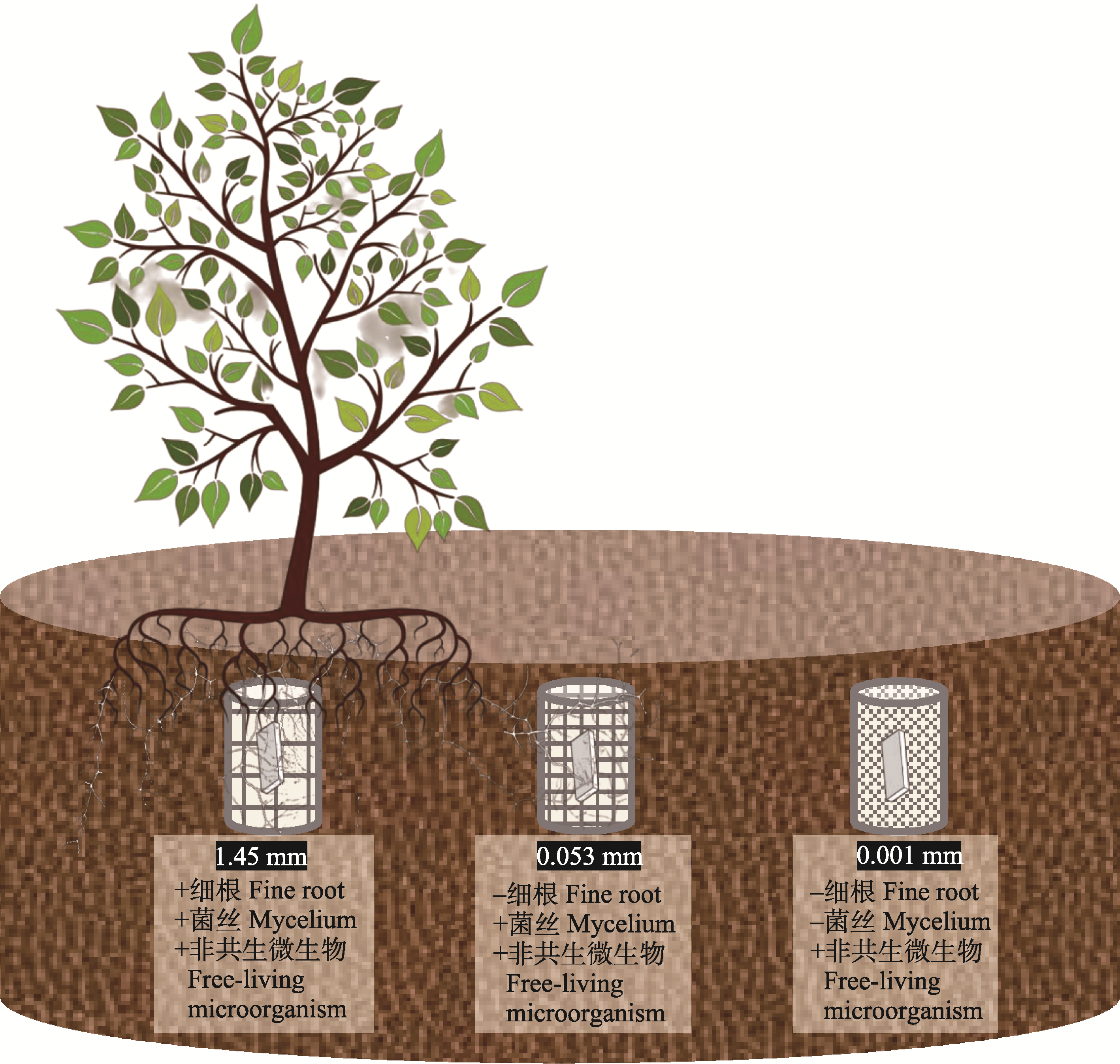
图1 微宇宙装置示意图。微宇宙模型有3种孔径: 1.45 mm (允许所有生物组分进入)、0.053 mm (排除根但允许菌丝进入)和0.001 mm (仅含有非共生微生物)。棕色线条为根系, 白色线条为菌丝, 灰色矩形为菌袋。
Fig. 1 Schematic diagram of the microcosm setup. Our microcosm model has 3 mesh sizes: 1.45 mm (root-mycorrhizal-microbial interactions), 0.053 mm (mycorrhizal-microbial interactions), and 0.001 mm (only free-living microorganism). Brown lines are roots, white lines are mycelium, and gray rectangles are mycelium bags.
| 胞外酶 Extracellular enzyme | 简称 Acronym | 功能 Function | 底物 Subtrate |
|---|---|---|---|
| β-1,4-葡萄糖苷酶 β-1,4-glucosidase | BG | 分解纤维素生成葡萄糖等单糖 Degrade cellulose to glucose and monosaccharides | 4-甲基伞形酮-α-D-葡萄糖苷 4-MUB-α-D-glucoside |
| β-1,4-木糖苷酶 β-1,4-xylanase | BX | 分解木聚糖生成木糖 Degrade xylan to xylose | 4-甲基伞形酮-α-D-葡萄糖苷 4-MUB-α-D-glucoside |
| 纤维二糖水解酶 Cellobiohydrolase | CB | 分解纤维素为纤维二糖 Degrade cellulose to cellobiose | 4-甲基伞形酮-α-D-葡萄糖苷 4-MUB-α-D-glucoside |
| 过氧化物酶 Peroxidase | PER | 分解难分解物质 Degrade refractory substances | 左旋多巴 L-DOPA |
| 多酚氧化酶 Polyphenol oxidase | POX | 分解难分解物质 Degrade refractory substances | 左旋多巴 L-DOPA |
表1 底物基本信息
Table 1 The substrate basic information
| 胞外酶 Extracellular enzyme | 简称 Acronym | 功能 Function | 底物 Subtrate |
|---|---|---|---|
| β-1,4-葡萄糖苷酶 β-1,4-glucosidase | BG | 分解纤维素生成葡萄糖等单糖 Degrade cellulose to glucose and monosaccharides | 4-甲基伞形酮-α-D-葡萄糖苷 4-MUB-α-D-glucoside |
| β-1,4-木糖苷酶 β-1,4-xylanase | BX | 分解木聚糖生成木糖 Degrade xylan to xylose | 4-甲基伞形酮-α-D-葡萄糖苷 4-MUB-α-D-glucoside |
| 纤维二糖水解酶 Cellobiohydrolase | CB | 分解纤维素为纤维二糖 Degrade cellulose to cellobiose | 4-甲基伞形酮-α-D-葡萄糖苷 4-MUB-α-D-glucoside |
| 过氧化物酶 Peroxidase | PER | 分解难分解物质 Degrade refractory substances | 左旋多巴 L-DOPA |
| 多酚氧化酶 Polyphenol oxidase | POX | 分解难分解物质 Degrade refractory substances | 左旋多巴 L-DOPA |
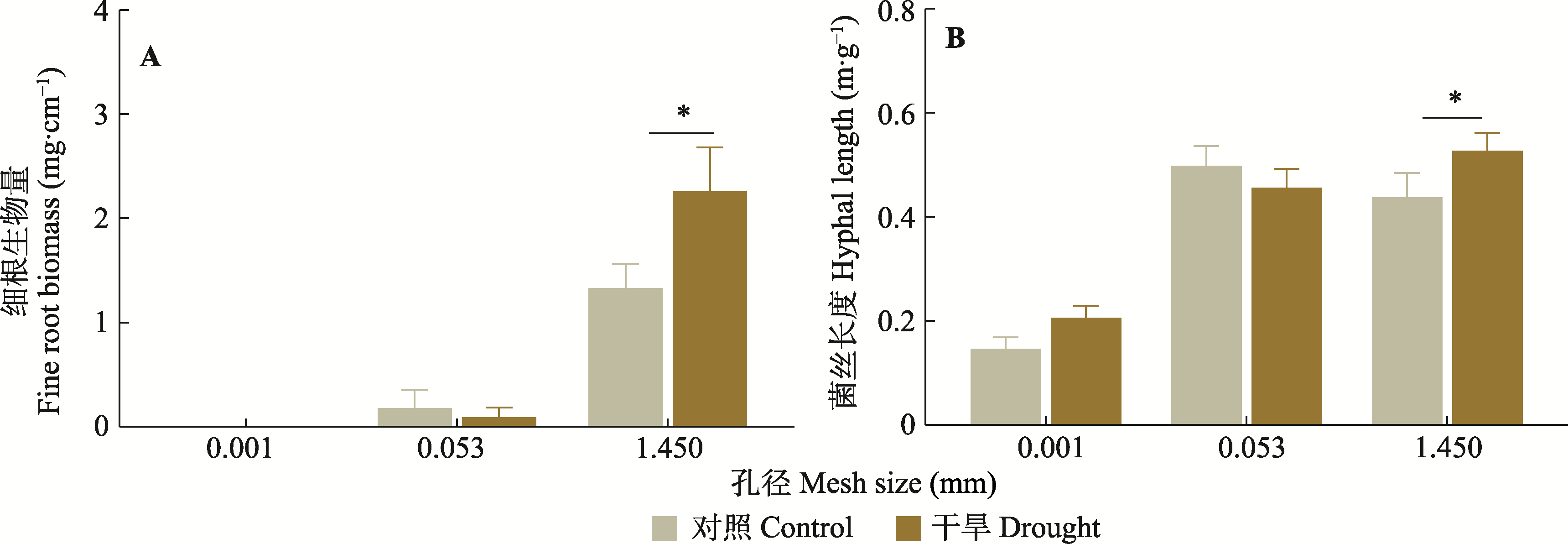
图2 干旱对细根生物量(A)和菌丝长度(B)的影响(平均值±标准差)。0.001 mm, 只有非共生微生物的作用; 0.053 mm, 菌根-微生物相互作用; 1.45 mm, 根-菌根-微生物相互作用。*, p < 0.05。
Fig. 2 Effect of drought on fine root biomass (A) and hyphal length (B) (mean ± SE). 0.001 mm, only free-living microbial interactions; 0.053 mm, mycorrhizal fungal-microbial interactions; 1.45 mm, root-mycorrhizal fungal-microbial interactions. *, p < 0.05.
| 因变量 Variable | 孔径 Mesh size | 干旱处理 Drought | 孔径×干旱 Mesh × drought | |||
|---|---|---|---|---|---|---|
| F | p | F | p | F | p | |
| BG | 31.231 | <0.001 | 39.406 | <0.001 | 11.040 | 0.004 |
| BX | 61.029 | <0.001 | 11.606 | <0.001 | 6.070 | 0.048 |
| CB | 89.126 | <0.001 | 14.898 | <0.001 | 3.054 | 0.217 |
| PER | 4.965 | 0.084 | 2.713 | 0.099 | 7.248 | 0.027 |
| POX | 2.644 | 0.266 | 3.506 | 0.061 | 0.460 | 0.794 |
| MBC | 9.008 | <0.001 | 1.475 | 0.227 | 1.533 | 0.221 |
| POC | 25.919 | <0.001 | 3.992 | 0.047 | 0.858 | 0.651 |
| MAOC | 3.641 | 0.162 | 4.014 | 0.045 | 4.232 | 0.121 |
| δ13C-CO2 | 0.958 | 0.387 | 0.370 | 0.544 | 3.314 | 0.040 |
表2 土壤酶活性、碳组分及同位素特征分析结果
Table 2 Analysis results of soil enzyme activity, carbon fractions and isotopic characteristics
| 因变量 Variable | 孔径 Mesh size | 干旱处理 Drought | 孔径×干旱 Mesh × drought | |||
|---|---|---|---|---|---|---|
| F | p | F | p | F | p | |
| BG | 31.231 | <0.001 | 39.406 | <0.001 | 11.040 | 0.004 |
| BX | 61.029 | <0.001 | 11.606 | <0.001 | 6.070 | 0.048 |
| CB | 89.126 | <0.001 | 14.898 | <0.001 | 3.054 | 0.217 |
| PER | 4.965 | 0.084 | 2.713 | 0.099 | 7.248 | 0.027 |
| POX | 2.644 | 0.266 | 3.506 | 0.061 | 0.460 | 0.794 |
| MBC | 9.008 | <0.001 | 1.475 | 0.227 | 1.533 | 0.221 |
| POC | 25.919 | <0.001 | 3.992 | 0.047 | 0.858 | 0.651 |
| MAOC | 3.641 | 0.162 | 4.014 | 0.045 | 4.232 | 0.121 |
| δ13C-CO2 | 0.958 | 0.387 | 0.370 | 0.544 | 3.314 | 0.040 |
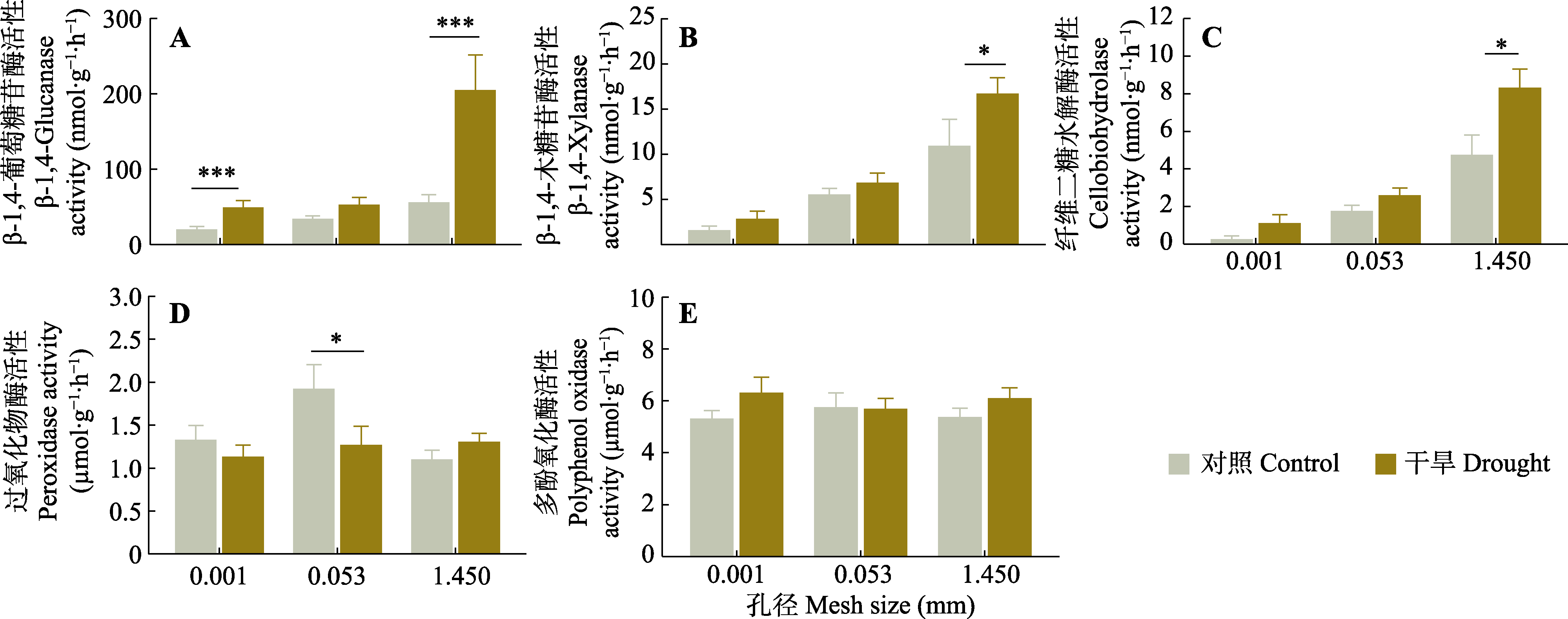
图3 干旱对土壤酶活性的影响(平均值±标准差)。0.001 mm, 只有非共生微生物的作用; 0.053 mm, 菌根-微生物相互作用; 1.45 mm, 根-菌根-微生物相互作用。*, p < 0.05; ***, p < 0.001。
Fig. 3 Effect of drought on soil enzyme activities (mean ± SE). 0.001 mm, only free-living microbial interactions; 0.053 mm, mycorrhizal fungal-microbial interactions; 1.45 mm, root-mycorrhizal fungal-microbial interactions. *, p < 0.05; ***, p < 0.001.
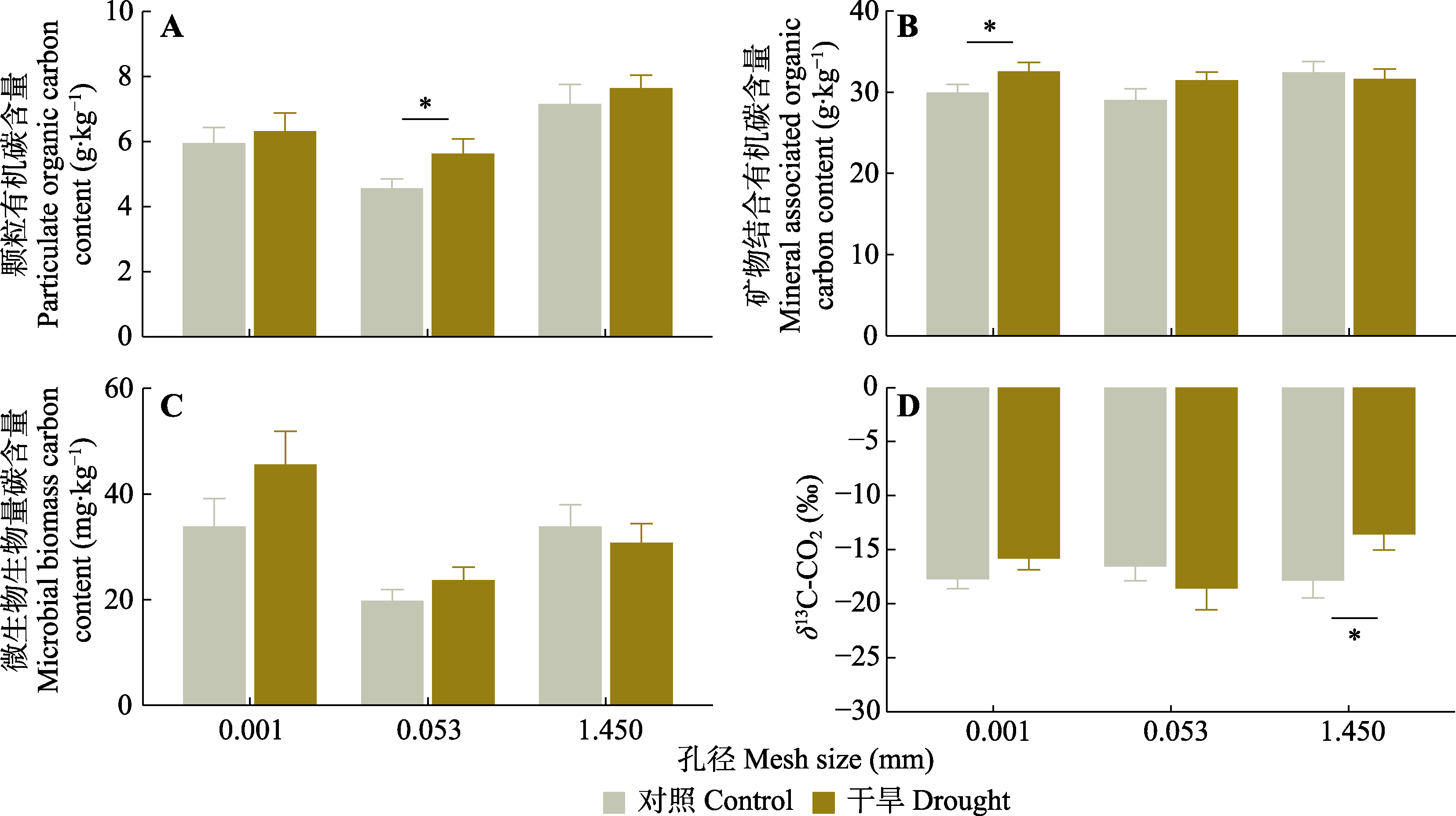
图4 干旱对土壤有机碳组分与同位素特征的影响(平均值±标准差)。0.001 mm, 只有非共生微生物的作用; 0.053 mm, 菌根-微生物相互作用; 1.45 mm, 根-菌根-微生物相互作用。*, p < 0.05。δ13C, 稳定碳同位素组成。
Fig. 4 Effects of drought on soil organic carbon fractions and stable isotopic characteristics (mean ± SE). 0.001 mm, only free-living microbial interactions; 0.053 mm, mycorrhizal fungal-microbial interactions; 1.45 mm, root-mycorrhizal fungal-microbial interactions. *, p < 0.05. δ13C, stable carbon isotope composition.
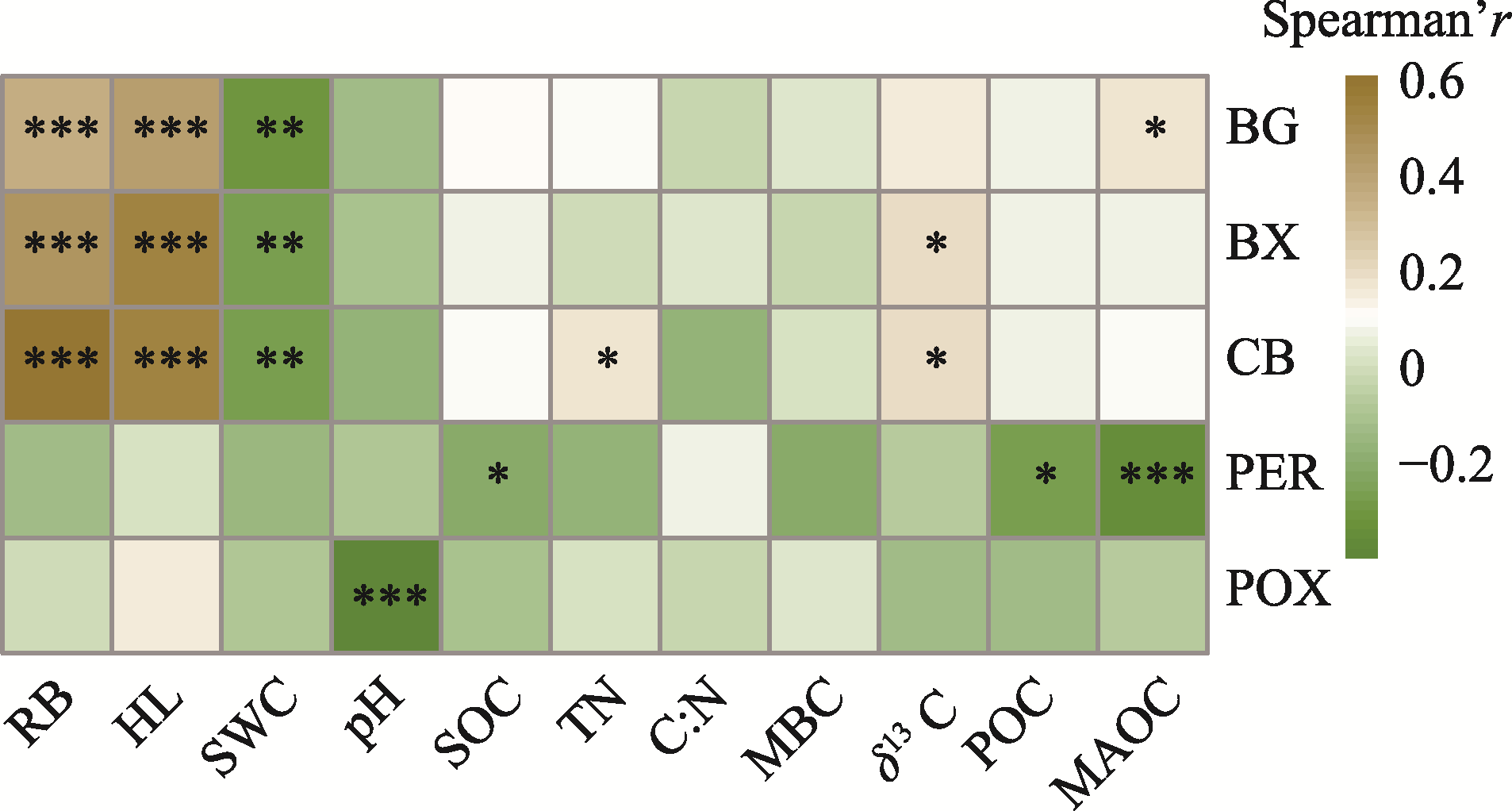
图5 土壤生物和非生物指标与土壤酶活性的相关性分析。δ13C, 土壤呼吸中CO2的稳定碳同位素组成; BG, β-1,4-葡萄糖苷酶活性; BX, β-1,4-木糖苷酶活性; C:N, 碳氮比; CB, 纤维二糖水解酶活性; HL, 菌丝长度; MAOC, 矿物结合有机碳含量; MBC, 微生物生物量碳含量; PER, 过氧化物酶活性; POC, 颗粒有机碳含量; POX, 多酚氧化酶活性; RB, 细根生物量; SOC, 土壤有机碳含量; SWC, 土壤含水率; TN, 全氮含量。棕色表示正相关, 绿色表示负相关。*, p < 0.05; **, p < 0.01; ***, p < 0.001。
Fig. 5 Correlation analysis between soil biotic and abiotic indicators and soil enzyme activities. δ13C, stable carbon isotopic composition of CO2 in soil respiration; BG, β-1,4-glucanase activity; BX, β-1,4-xylanase activity; C:N, ratio of carbon to nitrogen; CB, cellobiohydrolase activity; HL, hyphal length; MAOC, mineral associated organic carbon content; mBC, Microbial biomass carbon content; PER, peroxidase activity; POC, particulate organic carbon content; POX, polyphenol oxidase activity; RB, fine root biomass; SOC, soil organic carbon content; SWC, soil water content; TN, total nitrogen content. Brown indicates a positive correlation, green indicates a negative correlation, and the darker the color, the greater the correlation coefficient; *, p < 0.05; **, p < 0.01; ***, p < 0.001.
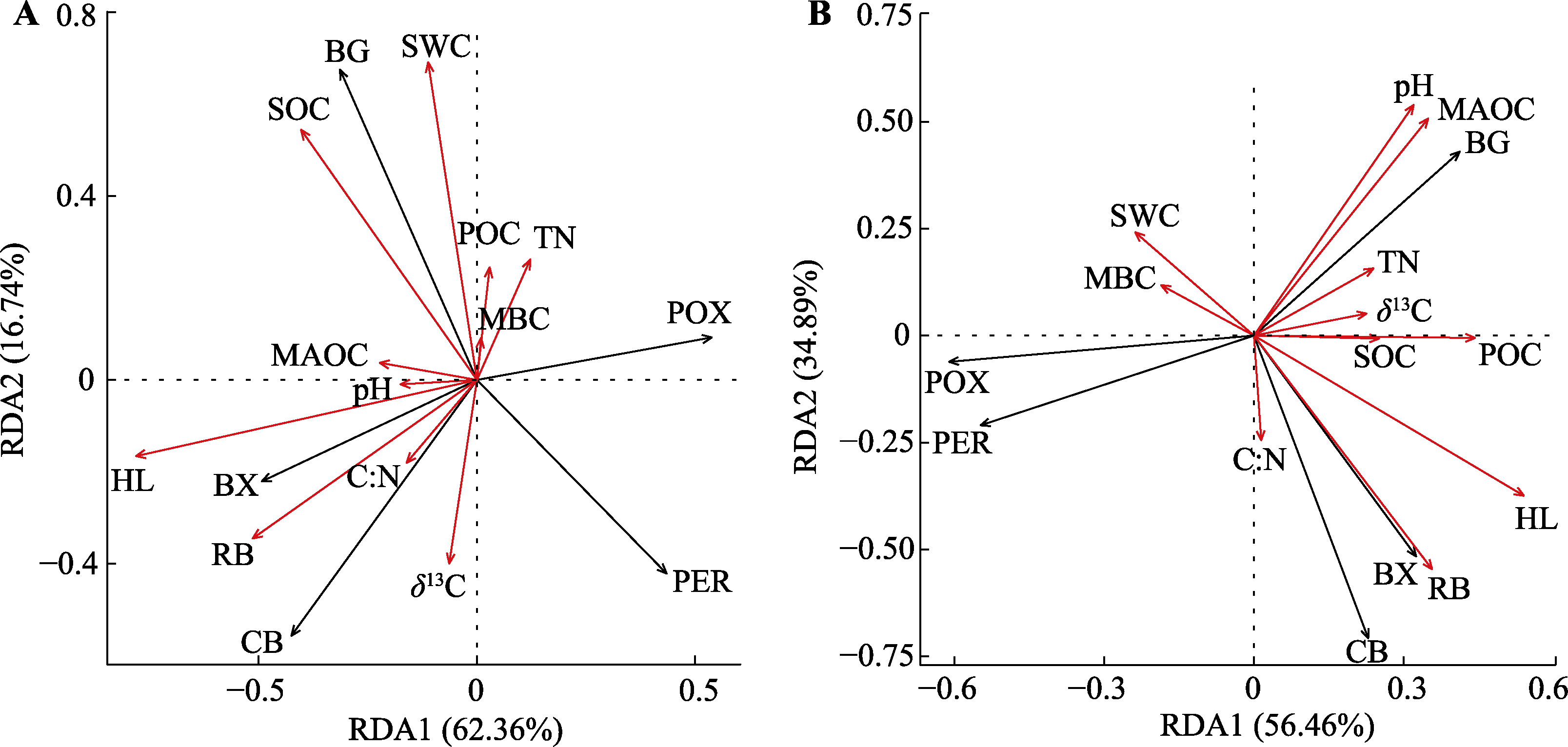
图6 不同干旱处理下土壤生物和非生物指标与土壤酶活性的冗余分析(RDA)。A, 对照。B, 干旱。指标同图5。
Fig. 6 Redundancy analysis (RDA) of soil biotic and abiotic indicators and soil enzyme activities under different drought treatments. A, Control. B, Drought. Indicators are the same as Fig. 5.
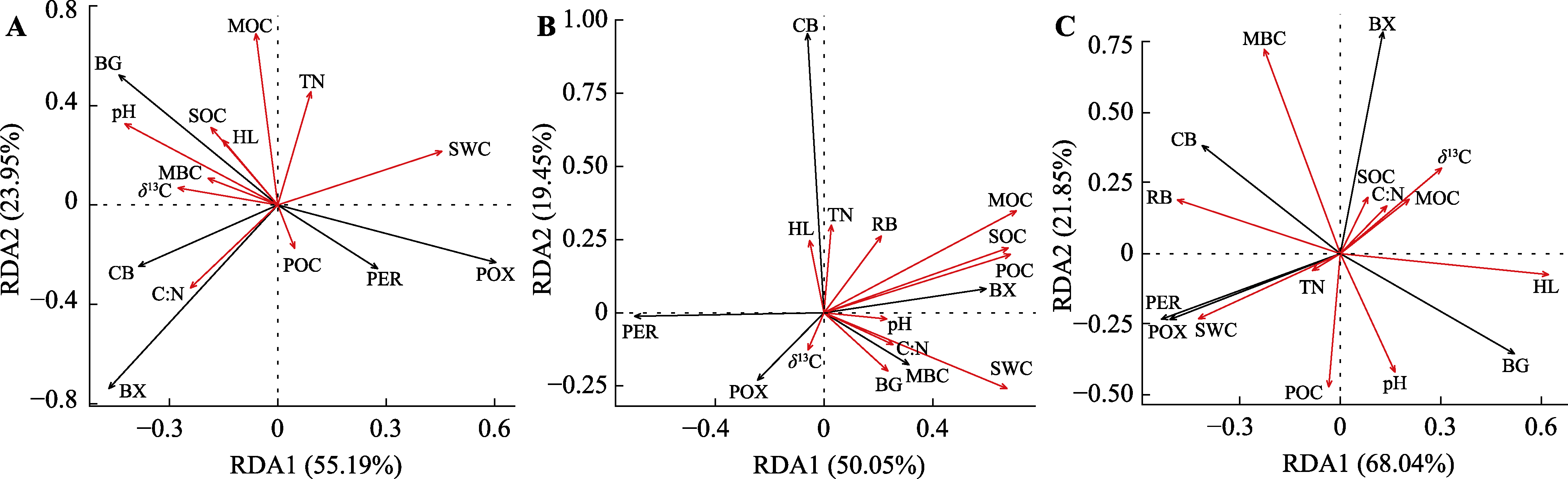
图7 不同孔径微宇宙中土壤生物和非生物指标与土壤酶活性的冗余分析(RDA)。A, B, C孔径分别为0.001、0.0053、1.45 mm。指标同图5。
Fig. 7 Redundancy analysis (RDA) of soil biotic and abiotic indicators and soil enzyme activities in different mesh size microcosms. Mesh sizes for A, B, C are 0.001, 0.053 and 1.45 mm, respectively. Indicators are the same as Fig. 5.
| [1] | Allison SD, Weintraub MN, Gartner TB, Waldrop MP (2011). Evolutionary-economic principles as regulators of soil enzyme production and ecosystem function//Shukla G, Varma A. Soil Enzymology. Springer Press, Berlin. |
| [2] | Apostolakis A, Schöning I, Michalzik B, Ammer C, Schall P, Hänsel F, Nauss T, Trumbore S, Schrumpf M (2023). Forest structure and fine root biomass influence soil CO2 efflux in temperate forests under drought. Forests, 14, 411. DOI: 10.3390/f14020411. |
| [3] |
Averill C, Hawkes CV (2016). Ectomycorrhizal fungi slow soil carbon cycling. Ecology Letters, 19, 937-947.
DOI PMID |
| [4] | Baumert VL, Vasilyeva NA, Vladimirov AA, Meier IC, Kögel-Knabner I, Mueller CW (2018). Root exudates induce soil macroaggregation facilitated by fungi in subsoil. Frontiers in Environmental Science, 6, 140. DOI: 10.3389/fenvs.2018.00140. |
| [5] | Bogati K, Walczak M (2022). The impact of drought stress on soil microbial community, enzyme activities and plants. Agronomy, 12, 189. DOI: 10.3390/agronomy12010189. |
| [6] |
Brabcová V, Nováková M, Davidová A, Baldrian P (2016). Dead fungal mycelium in forest soil represents a decomposition hotspot and a habitat for a specific microbial community. New Phytologist, 210, 1369-1381.
DOI PMID |
| [7] |
Broeckling CD, Broz AK, Bergelson J, Manter DK, Vivanco JM (2008). Root exudates regulate soil fungal community composition and diversity. Applied and Environmental Microbiology, 74, 738-744.
DOI PMID |
| [8] |
Brunner I, Herzog C, Dawes MA, Arend M, Sperisen C (2015). How tree roots respond to drought. Frontiers in Plant Science, 6, 547. DOI: 10.3389/fpls.2015.00547.
PMID |
| [9] |
Brzostek ER, Greco A, Drake JE, Finzi AC (2011). Root carbon inputs to the rhizosphere stimulate extracellular enzyme activity and increase nitrogen availability in temperate forest soils. Biogeochemistry, 115, 65-76.
DOI URL |
| [10] |
Burns RG, DeForest JL, Marxsen J, Sinsabaugh RL, Stromberger ME, Wallenstein MD, Weintraub MN, Zoppini A (2013). Soil enzymes in a changing environment: current knowledge and future directions. Soil Biology & Biochemistry, 58, 216-234.
DOI URL |
| [11] | Butcher KR, Nasto MK, Norton JM, Stark JM (2020). Physical mechanisms for soil moisture effects on microbial carbon-use efficiency in a sandy loam soil in the western United States. Soil Biology & Biochemistry, 150, 107969. DOI: 10.1016/j.soilbio.2020.107969. |
| [12] |
Chen BD, Fu W, Wu SL, Zhu YG (2024). Involvements of mycorrhizal fungi in terrestrial ecosystem carbon cycling. Chinese Journal of Plant Ecology, 48, 1-20.
DOI URL |
|
[陈保冬, 付伟, 伍松林, 朱永官 (2024). 菌根真菌在陆地生态系统碳循环中的作用. 植物生态学报, 48, 1-20.]
DOI |
|
| [13] |
Courty PE, Bréda N, Garbaye J (2007). Relation between oak tree phenology and the secretion of organic matter degrading enzymes by Lactarius quietus ectomycorrhizas before and during bud break. Soil Biology & Biochemistry, 39,1655-1663.
DOI URL |
| [14] |
Csonka LN (1989). Physiological and genetic responses of bacteria to osmotic stress. Microbiological Reviews, 53, 121-147.
DOI PMID |
| [15] |
de Nijs EA, Hicks LC, Leizeaga A, Tietema A, Rousk J (2019). Soil microbial moisture dependences and responses to drying-rewetting: The legacy of 18 years drought. Global Change Biology, 25, 1005-1015.
DOI PMID |
| [16] | Deng L, Peng CH, Kim DG, Li JW, Liu YL, Hai XY, Liu QY, Huang CB, Shangguan ZP, Kuzyakov Y (2021). Drought effects on soil carbon and nitrogen dynamics in global natural ecosystems. Earth-Science Reviews, 214, 103501. DOI: 10.1016/j.earscirev.2020.103501. |
| [17] |
Dijkstra FA, Zhu B, Cheng WX (2021). Root effects on soil organic carbon: a double-edged sword. New Phytologist, 230, 60-65.
DOI PMID |
| [18] |
Dungait JAJ, Hopkins DW, Gregory AS, Whitmore AP (2012). Soil organic matter turnover is governed by accessibility not recalcitrance. Global Change Biology, 18, 1781-1796.
DOI URL |
| [19] |
Finzi AC, Abramoff RZ, Spiller KS, Brzostek ER, Darby BA, Kramer MA, Phillips RP (2015). Rhizosphere processes are quantitatively important components of terrestrial carbon and nutrient cycles. Global Change Biology, 21, 2082-2094.
DOI PMID |
| [20] | Gadgil RL, Gadgil PD (1971). Mycorrhiza and litter decomposition. Nature, 233, 133. DOI: 10.1038/233133a0. |
| [21] |
Gallo M, Amonette R, Lauber C, Sinsabaugh R, Zak DR (2004). Microbial community structure and oxidative enzyme activity in nitrogen-amended north temperate forest soils. Microbial Ecology, 48, 218-229.
DOI PMID |
| [22] |
Genre A, Lanfranco L, Perotto S, Bonfante P (2020). Unique and common traits in mycorrhizal symbioses. Nature Reviews Microbiology, 18, 649-660.
DOI |
| [23] |
German DP, Weintraub MN, Grandy AS, Lauber CL, Rinkes ZL, Allison SD (2011). Optimization of hydrolytic and oxidative enzyme methods for ecosystem studies. Soil Biology & Biochemistry, 43, 1387-1397.
DOI URL |
| [24] | Hawkins HJ, Cargill RIM, van Nuland ME, Hagen SC, Field KJ, Sheldrake M, Soudzilovskaia NA, Kiers ET (2023). Mycorrhizal mycelium as a global carbon pool. Current Biology, 33, R560-R573. |
| [25] | Holz M, Zarebanadkouki M, Benard P, Hoffmann M, Dubbert M (2024). Root and rhizosphere traits for enhanced water and nutrients uptake efficiency in dynamic environments. Frontiers in Plant Science, 15, 1383373. DOI: 10.3389/fpls.2024.1383373. |
| [26] | Huang BB, Yan GY, Liu GC, Sun XY, Wang XC, Xing YJ, Wang QG (2022). Effects of long-term nitrogen addition and precipitation reduction on glomalin-related soil protein and soil aggregate stability in a temperate forest. Catena, 214, 106284. DOI: 10.1016/j.catena.2022.106284. |
| [27] | Intergovernmental Panel on Climate Change (2021). Climate Change 2021: The Physical Science Basis. Contribution of Working Group I to the Sixth Assessment Report of the Intergovernmental Panel on Climate Change. Cambridge University Press, Cambridge, UK. |
| [28] |
Itoo ZA, Ahmad Reshi Z (2013). The multifunctional role of ectomycorrhizal associations in forest ecosystem processes. The Botanical Review, 79, 371-400.
DOI URL |
| [29] | Kebert M, Kostić S, Stojnić S, Čapelja E, Markić AG, Zorić M, Kesić L, Flors V (2023). A fine-tuning of the plant hormones, polyamines and osmolytes by ectomycorrhizal fungi enhances drought tolerance in pedunculate oak. International Journal of Molecular Sciences, 24, 7510. DOI: 10.3390/ijms24087510. |
| [30] |
Keiluweit M, Bougoure JJ, Nico PS, Pett-Ridge J, Weber PK, Kleber M (2015). Mineral protection of soil carbon counteracted by root exudates. Nature Climate Change, 5, 588-595.
DOI |
| [31] |
Kuzyakov Y (2010). Priming effects: interactions between living and dead organic matter. Soil Biology & Biochemistry, 42, 1363-1371.
DOI URL |
| [32] |
Lavallee JM, Soong JL, Francesca Cotrufo M (2020). Conceptualizing soil organic matter into particulate and mineral-associated forms to address global change in the 21st century. Global Change Biology, 26, 261-273.
DOI PMID |
| [33] |
Lehmann J, Kleber M (2015). The contentious nature of soil organic matter. Nature, 528, 60-68.
DOI |
| [34] |
Lehto T, Zwiazek JJ (2011). Ectomycorrhizas and water relations of trees: a review. Mycorrhiza, 21, 71-90.
DOI PMID |
| [35] |
Li T, Lin G, Zhang X, Chen YL, Zhang SB, Chen BD (2014). Relative importance of an arbuscular mycorrhizal fungus (Rhizophagus intraradices) and root hairs in plant drought tolerance. Mycorrhiza, 24, 595-602.
DOI PMID |
| [36] |
Lin GG, McCormack ML, Ma CG, Guo DL (2017). Similar below-ground carbon cycling dynamics but contrasting modes of nitrogen cycling between arbuscular mycorrhizal and ectomycorrhizal forests. New Phytologist, 213, 1440-1451.
DOI PMID |
| [37] | Ling HY, Liu SR, Luan JW, Liu XJ, Niu XD, Zhang JL, Li X (2020). Effects of manipulated throughfall reduction on sap flux density of Quercus aliena var. acuteserrata. Acta Ecologica Sinica, 40, 2726-2734. |
| [凌海燕, 刘世荣, 栾军伟, 刘晓静, 牛晓栋, 张京磊, 李想 (2020). 模拟穿透雨减少对锐齿栎(Quercus aliena var. acuteserrata)树干液流密度的影响. 生态学报, 40, 2726-2734.] | |
| [38] | Liu CJ, Chen ZC, Liu SR, Cao KF, Niu BL, Liu XJ, Gao XM (2023). Multi-year throughfall reduction enhanced the growth and non-structural carbohydrate storage of roots at the expenses of above-ground growth in a warm-temperate natural oak forest. Forest Ecosystems, 10, 100118. DOI: 10.1016/j.fecs.2023.100118. |
| [39] |
Liu YC, Liu SR, Wan SQ, Wang JX, Wang H, Liu K (2017). Effects of experimental throughfall reduction and soil warming on fine root biomass and its decomposition in a warm temperate oak forest. Science of the Total Environment, 574, 1448-1455.
DOI URL |
| [40] | Lu HB, Liu SR, Wang H, Luan JW, Schindlbacher A, Liu YC, Wang Y (2017). Experimental throughfall reduction barely affects soil carbon dynamics in a warm-temperate oak forest, central China. Scientific Reports, 7, 15099. DOI: 10.1038/s41598-017-15157-3. |
| [41] | Luan JW, Li SY, Liu SR, Wang Y, Ding LP, Lu HB, Chen L, Zhang JH, Zhou WJ, Han SJ, Zhang YP, Hättenschwiler S (2024). Biodiversity mitigates drought effects in the decomposer system across biomes. Proceedings of the National Academy of Sciences of the United States of America, 121, e2313334121. DOI: 10.1073/pnas.2313334121. |
| [42] | Luan JW, Li SY, Wang Y (2023). A microcosmic device for separating the effects of roots and mycelium on soil carbon, nitrogen and other nutrient processes: CN202221961597.2. 2023-03-03. |
| [栾军伟, 李丝雨, 王一(2023). 一种分离根系和菌丝体对土壤碳氮等养分过程影响的微宇宙装置: CN202221961597.2. 2023-03-03.] | |
| [43] | Ma CK, Meng HB, Xie B, Li Q, Li XD, Zhou BB, Wang QJ, Luo Y (2022). In situ rainwater collection and infiltration system alleviates the negative effects of drought on plant-available water, fine root distribution and plant hydraulic conductivity. Forests, 13, 2082. DOI: 10.3390/f13122082. |
| [44] | Marjanović Ž, Uwe N, Hampp R (2005). Mycorrhiza formation enhances adaptive response of hybrid poplar to drought. Annals of the New York Academy of Sciences, 1048, 496-499. |
| [45] | Merino C, Godoy R, Matus F (2016). Soil enzymes and biological activity at different levels of organic matter stability. Journal of Soil Science and Plant Nutrition, 16, 14-30. |
| [46] |
Miller RM, Jastrow JD (1990). Hierarchy of root and mycorrhizal fungal interactions with soil aggregation. Soil Biology & Biochemistry, 22, 579-584.
DOI URL |
| [47] |
Moore JAM, Jiang J, Patterson CM, Mayes MA, Wang GS, Classen AT (2015). Interactions among roots, mycorrhizas and free-living microbial communities differentially impact soil carbon processes. Journal of Ecology, 103, 1442-1453.
DOI URL |
| [48] | Nannipieri P, Ascher J, Ceccherini MT, Landi L, Pietramellara G, Renella G, Valori F (2007). Microbial diversity and microbial activity in the rhizosphere. Ciencia del suelo, 25, 89-97. |
| [49] | Nickel UT, Weikl F, Kerner R, Schäfer C, Kallenbach C, Munch JC, Pritsch K (2018). Quantitative losses vs. qualitative stability of ectomycorrhizal community responses to 3 years of experimental summer drought in a beech-spruce forest. Global Change Biology, 24, e560-e576. |
| [50] |
Olander LP, Vitousek PM (2000). Regulation of soil phosphatase and chitinase activityby N and P availability. Biogeochemistry, 49, 175-190.
DOI |
| [51] | Pataki DE, Bowling DR, Ehleringer JR (2003). Seasonal cycle of carbon dioxide and its isotopic composition in an urban atmosphere: anthropogenic and biogenic effects. Journal of Geophysical Research: Atmospheres, 108, 4735. DOI: 10.1029/2003JD003865. |
| [52] |
Preece C, Peñuelas J (2016). Rhizodeposition under drought and consequences for soil communities and ecosystem resilience. Plant and Soil, 409, 1-17.
DOI URL |
| [53] | Pulleman M, Wills S, Creamer R, Dick R, Ferguson R, Hooper D, Williams C, Margenot AJ (2021). Soil mass and grind size used for sample homogenization strongly affect permanganate-oxidizable carbon (POXC) values, with implications for its use as a national soil health indicator. Geoderma, 383, 114172. DOI: 10.1016/j.geoderma.2020.114742. |
| [54] |
Raich JW, Potter CS (1995). Global patterns of carbon dioxide emissions from soils. Global Biogeochemical Cycles, 9, 23-36.
DOI URL |
| [55] |
Rasse DP, Rumpel C, Dignac MF (2005). Is soil carbon mostly root carbon? Mechanisms for a specific stabilisation. Plant and Soil, 269, 341-356.
DOI URL |
| [56] |
Reichstein M, Ciais P, Papale D, Valentini R, Running S, Viovy N, Cramer W, Granier A, Ogée J, Allard V, Aubinet M, Bernhofer C, Buchmann N, Carrara A, Grünwald T, et al. (2007). Reduction of ecosystem productivity and respiration during the European summer 2003 climate anomaly: a joint flux tower, remote sensing and modelling analysis. Global Change Biology, 13, 634-651.
DOI URL |
| [57] |
Ren CJ, Zhao FZ, Shi Z, Chen J, Han XH, Yang GH, Feng YZ, Ren GX (2017). Differential responses of soil microbial biomass and carbon-degrading enzyme activities to altered precipitation. Soil Biology & Biochemistry, 115, 1-10.
DOI URL |
| [58] |
Saiya-Cork KR, Sinsabaugh RL, Zak DR (2002). The effects of long term nitrogen deposition on extracellular enzyme activity in an Acer saccharum forest soil. Soil Biology & Biochemistry, 34, 1309-1315.
DOI URL |
| [59] |
Sardans J, Peñuelas J (2005). Drought decreases soil enzyme activity in a Mediterranean Quercus ilex L. forest. Soil Biology & Biochemistry, 37, 455-461.
DOI URL |
| [60] |
Sasse J, Martinoia E, Northen T (2018). Feed your friends: Do plant exudates shape the root microbiome? Trends in Plant Science, 23, 25-41.
DOI PMID |
| [61] |
Schimel J, Balser TC, Wallenstein M (2007). Microbial stress-response physiology and its implications for ecosystem function. Ecology, 88, 1386-1394.
DOI PMID |
| [62] |
Shah F, Nicolás C, Bentzer J, Ellström M, Smits M, Rineau F, Canbäck B, Floudas D, Carleer R, Lackner G, Braesel J, Hoffmeister D, Henrissat B, Ahrén D, Johansson T, et al. (2016). Ectomycorrhizal fungi decompose soil organic matter using oxidative mechanisms adapted from saprotrophic ancestors. New Phytologist, 209, 1705-1719.
DOI PMID |
| [63] | Siemens JA, Zwiazek JJ (2008). Root hydraulic properties and growth of balsam poplar (Populus balsamifera) mycorrhizal with Hebeloma crustuliniforme and Wilcoxina mikolae var. mikolae. Mycorrhiza, 18, 393-401. |
| [64] |
Sinsabaugh RL, Lauber CL, Weintraub MN, Ahmed B, Allison SD, Crenshaw C, Contosta AR, Cusack D, Frey S, Gallo ME, Gartner TB, Hobbie SE, Holland K, Keeler BL, Powers JS, et al. (2008). Stoichiometry of soil enzyme activity at global scale. Ecology Letters, 11, 1252-1264.
DOI PMID |
| [65] |
Sterkenburg E, Clemmensen KE, Ekblad A, Finlay RD, Lindahl BD (2018). Contrasting effects of ectomycorrhizal fungi on early and late stage decomposition in a boreal forest. The ISME Journal, 12, 2187-2197.
DOI URL |
| [66] |
Tisdall JM, Oades JM (1982). Organic matter and water-stable aggregates in soils. Journal of Soil Science, 33, 141-163.
DOI URL |
| [67] |
Väljamäe P, Sild V, Nutt A, Pettersson G, Johansson G (1999). Acid hydrolysis of bacterial cellulose reveals different modes of synergistic action between cellobiohydrolase I and endoglucanase I. European Journal of Biochemistry, 266, 327-334.
DOI PMID |
| [68] |
Vance ED, Brookes PC, Jenkinson DS (1987). An extraction method for measuring soil microbial biomass C. Soil Biology & Biochemistry, 19, 703-707.
DOI URL |
| [69] | Villarino SH, Pinto P, Jackson RB, Piñeiro G (2021). Plant rhizodeposition: a key factor for soil organic matter formation in stable fractions. Science Advances, 7, eabd3176. DOI : 10.1126/sciadvabd3176. |
| [70] |
Walker Jf, Miller OK Jr, Horton JL (2005). Hyperdiversity of ectomycorrhizal fungus assemblages on oak seedlings in mixed forests in the southern Appalachian Mountains. Molecular Ecology, 14, 829-838.
PMID |
| [71] |
Wang RZ, Cavagnaro TR, Jiang Y, Keitel C, Dijkstra FA (2021). Carbon allocation to the rhizosphere is affected by drought and nitrogen addition. Journal of Ecology, 109, 3699-3709.
DOI URL |
| [72] | Wang SY, We H, Chen KY, Dong Q, Ji BM and Zhang J(2022). Practical methods for arbuscular mycorrhizal fungal spore density, hyphal density and colonization rate of AMF. BIO-101, e2104253. DOI: 10.21769/BioProtoc.2104253. |
| [王思雨, 魏涵, 陈科宇, 董强, 纪宝明, 张静 (2022). 丛枝菌根真菌(AMF)孢子、菌丝密度及侵染率定量测定方法. BIO-101, e2104253. DOI: 10.21769/BioProtoc.2104253.] | |
| [73] |
Warcup JH (1980). Ectomycorrhizal associations of Australian indigenous plants. New Phytologist, 85, 531-535.
DOI URL |
| [74] |
Wu SL, Fu W, Rillig MC, Chen BD, Zhu YG, Huang LB (2024). Soil organic matter dynamics mediated by arbuscular mycorrhizal fungi-an updated conceptual framework. New Phytologist, 242, 1417-1425.
DOI URL |
| [75] | Yan ZQ, Li Y, Wu HD, Zhang KR, Hao YB, Wang JZ, Zhang XD, Yan L, Kang XM (2020). Different responses of soil hydrolases and oxidases to extreme drought in an alpine peatland on the Qinghai-Tibet Plateau, China. European Journal of Soil Biology, 99, 103195. DOI: 0.1016/j.ejsobi.2020.103195. |
| [76] | Yang ZY, Zhou BZ, Chen QB, Ge XG, Wang XM, Cao YH, Tong R, Shi Y (2018). Effects of drought on root architecture and non-structural carbohydrate of Cunninghamia lanceolata. Acta Ecologica Sinica, 38, 6729-6740. |
| [杨振亚, 周本智, 陈庆标, 葛晓改, 王小明, 曹永慧, 童冉, 石洋 (2018). 干旱对杉木幼苗根系构型及非结构性碳水化合物的影响. 生态学报, 38, 6729-6740.] | |
| [77] | Zhang JL, Liu SR, Liu CJ, Wang H, Luan JW, Liu XJ, Guo XW, Niu BL (2021a). Soil bacterial and fungal richness and network exhibit different responses to long-term throughfall reduction in a warm-temperate oak forest. Forests, 12, 165. DOI: 10.3390/f12020165. |
| [78] | Zhang XC, Myrold DD, Shi LL, Kuzyakov Y, Dai HC, Thu Hoang DT, Dippold MA, Meng XT, Song XN, Li ZY, Zhou J, Razavi BS (2021b). Resistance of microbial community and its functional sensitivity in the rhizosphere hotspots to drought. Soil Biology & Biochemistry, 161, 108360. DOI: 10.1016/j.soilbio.2021.108360. |
| [79] |
Zhou XH, Zhou LY, Nie YY, Fu YL, Du ZG, Shao JJ, Zheng ZM, Wang XH (2016). Similar responses of soil carbon storage to drought and irrigation in terrestrial ecosystems but with contrasting mechanisms: a meta-analysis. Agriculture, Ecosystems & Environment, 228, 70-81.
DOI URL |
| [80] |
Zuccarini P, Sardans J, Asensio L, Peñuelas J (2023). Altered activities of extracellular soil enzymes by the interacting global environmental changes. Global Change Biology, 29, 2067-2091.
DOI PMID |
| [1] | 卢芝晓, 高露双, 杨智年, 张瑞波, 秦莉, 叶尔江·拜克吐尔汉, 韩新宇, 张昕宇, 李思杰. 天山西部雪岭云杉干旱遗留效应的海拔差异[J]. 植物生态学报, 2026, 50(预发表): 1-. |
| [2] | 何堂庆, 王变变, 曹鑫鑫, 张康成, 汪晓东, 王浩, 白彤硕, 赵叶新, 张艺, 王益, 仇云鹏, 胡水金. 半干旱草地植物和丛枝菌根真菌群落对长期降水增加的响应[J]. 植物生态学报, 2026, 50(3): 674-684. |
| [3] | 谭秋颜, 张清, 高程, 褚海燕, 杨腾. 外生菌根真菌: 高寒生态系统碳氮循环的关键驱动者[J]. 植物生态学报, 2026, 50(3): 584-599. |
| [4] | 马建辉, 童鑫, 张思榕, 毛子昆, 秦俊, 马克平. 菌根真菌生理生态功能研究进展及展望[J]. 植物生态学报, 2026, 50(3): 498-514. |
| [5] | 田地, 迟小龙, 石亮, 刘宵含, 赵常提, 吴梅, 张玉忠, 高永亮. 塞罕坝地区优势造林树种叶片化学计量特征及其环境驱动[J]. 植物生态学报, 2026, 50(2): 362-373. |
| [6] | 王梦雪, 胡明艳, 储诚进, 陈阳, 罗文启, 马子龙. 亚热带森林不同菌根真菌树种叶片和细根的碳氮磷化学计量特征[J]. 植物生态学报, 2026, 50(2): 334-343. |
| [7] | 冯梅, 欧阳胜男, 李迈和, 周晓倩, 铁烈华, 申卫军, 段洪浪. 前期氮添加对无梗花栎幼苗干旱响应中地上-地下碳氮分配动态的影响[J]. 植物生态学报, 2025, 49(9): 1527-1542. |
| [8] | 刘影, 李疆枫, 吴佳琪, 王艺帆, 尹清琳, 王静. 干旱下草地植物糙隐子草根系和菌根真菌对土壤碳氮的影响[J]. 植物生态学报, 2025, 49(9): 1388-1398. |
| [9] | 王尧, 王耀彬, 陈子彦, 伊如汉, 白永飞, 赵玉金, 金晶炜. 连续干旱对蒙古高原草地恢复力和抵抗力的影响[J]. 植物生态学报, 2025, 49(7): 1070-1081. |
| [10] | 张斌, 张浩成, 乔天, 吕治兵, 许亚男, 李雪芹, 原向阳, 冯美臣, 张美俊. 接种丛枝菌根真菌对干旱胁迫燕麦非结构性碳水化合物及碳氮磷化学计量特征的影响[J]. 植物生态学报, 2025, 49(7): 1082-1095. |
| [11] | 王秀媛, 申磊, 刘婷婷, 尉雯雯, 张帅, 张伟. ‘塞外红’苹果-大豆复合系统根系时空分布与种间竞争策略[J]. 植物生态学报, 2025, 49(5): 748-759. |
| [12] | 马富龙, 王雨晴, 郝瑜, 段继超, 刘霏霏, 席琳乔, 韩路. 海拔梯度对昆仑山北坡中部草原植物与土壤微生物群落结构与多样性的影响[J]. 植物生态学报, 2025, 49(5): 732-747. |
| [13] | 赵洪贤, 刘鹏, 史曼英, 徐铭泽, 贾昕, 田赟, 查天山. 毛乌素沙地典型固沙植物黑沙蒿和赖草叶片氮分配对最大净光合速率的影响[J]. 植物生态学报, 2025, 49(3): 460-474. |
| [14] | 胡晓慧, 王兴昌, 董涵君, 刘玉龙, 苑丹阳, 柳荻, 王晓春. 东北温带针阔混交林32个树种非结构性碳水化合物的器官间变化与协同[J]. 植物生态学报, 2025, 49(3): 432-445. |
| [15] | 刘柯言, 韩璐, 宋午椰, 张初蕊, 胡旭, 许行, 陈立欣. 基于日光诱导叶绿素荧光探测干旱对黄土高原植被光合稳定性的影响[J]. 植物生态学报, 2025, 49(3): 415-431. |
| 阅读次数 | ||||||
|
全文 |
|
|||||
|
摘要 |
|
|||||
Copyright © 2026 版权所有 《植物生态学报》编辑部
地址: 北京香山南辛村20号, 邮编: 100093
Tel.: 010-62836134, 62836138; Fax: 010-82599431; E-mail: apes@ibcas.ac.cn, cjpe@ibcas.ac.cn
备案号: 京ICP备16067583号-19

