
Chin J Plant Ecol ›› 2025, Vol. 49 ›› Issue (10): 1677-1684.DOI: 10.17521/cjpe.2025.0008 cstr: 32100.14.cjpe.2025.0008
Special Issue: 虚拟专辑 | 濒危植物多样性与保护
• Research Articles • Previous Articles Next Articles
HUANG Cheng-Ling1, LI Rong-Han1, QIN Hong-Ling2, YANG Sheng-Xiong2, TIAN Xiao-Ling2, XIA Guo-Wei1, CHEN Zheng-Ren3, ZHOU Wei1,*( )
)
Received:2025-01-07
Accepted:2025-05-01
Online:2025-10-20
Published:2025-11-20
Contact:
ZHOU Wei
Supported by:HUANG Cheng-Ling, LI Rong-Han, QIN Hong-Ling, YANG Sheng-Xiong, TIAN Xiao-Ling, XIA Guo-Wei, CHEN Zheng-Ren, ZHOU Wei. Conservation genetics of Rhododendron liboense based on SNP molecular markers, a plant species with extremely small populations[J]. Chin J Plant Ecol, 2025, 49(10): 1677-1684.
Add to citation manager EndNote|Ris|BibTeX
URL: https://www.plant-ecology.com/EN/10.17521/cjpe.2025.0008
| 采样地点 Sampling location | 种群 Population | 采样数 Number of samples | 经度 Longitude | 纬度 Latitude | 海拔 Altitude (m) | 是否在保护区内 Located within the Maolan Natural Reserv (Y/N) |
|---|---|---|---|---|---|---|
| 洞泊 Dongbo | DB | 19 | 107.98° E | 25.37° N | 890 | N |
| 洞塘 Dongtang | DT | 19 | 107.88° E | 25.25° N | 650 | Y |
| 西竹 Xizhu | XZ | 5 | 107.95° E | 25.33° N | 900 | N |
Table 1 Information on the sampling of Rhododendron liboense
| 采样地点 Sampling location | 种群 Population | 采样数 Number of samples | 经度 Longitude | 纬度 Latitude | 海拔 Altitude (m) | 是否在保护区内 Located within the Maolan Natural Reserv (Y/N) |
|---|---|---|---|---|---|---|
| 洞泊 Dongbo | DB | 19 | 107.98° E | 25.37° N | 890 | N |
| 洞塘 Dongtang | DT | 19 | 107.88° E | 25.25° N | 650 | Y |
| 西竹 Xizhu | XZ | 5 | 107.95° E | 25.33° N | 900 | N |
| 种群 Population | 特有等位基因 Private allele | 期望杂合度 He | 核苷酸多样性 π | 近交系数 FIS |
|---|---|---|---|---|
| DB | 1 076 | 0.149 24 ± 0.002 96 | 0.162 41 ± 0.005 17 | 0.138 26 ± 0.012 71 |
| DT | 1 010 | 0.143 97 ± 0.003 01 | 0.158 15 ± 0.003 14 | 0.307 79 ± 0.038 75 |
| XZ | 357 | 0.125 67 ± 0.003 98 | 0.152 35 ± 0.003 19 | 0.341 78 ± 0.034 49 |
| 平均值 Average value | 814 | 0.139 62 ± 0.003 32 | 0.157 64 ± 0.003 83 | 0.262 61 ± 0.028 65 |
Table 2 Genetic diversity parameters of Rhododendron liboense populations (mean ± SD)
| 种群 Population | 特有等位基因 Private allele | 期望杂合度 He | 核苷酸多样性 π | 近交系数 FIS |
|---|---|---|---|---|
| DB | 1 076 | 0.149 24 ± 0.002 96 | 0.162 41 ± 0.005 17 | 0.138 26 ± 0.012 71 |
| DT | 1 010 | 0.143 97 ± 0.003 01 | 0.158 15 ± 0.003 14 | 0.307 79 ± 0.038 75 |
| XZ | 357 | 0.125 67 ± 0.003 98 | 0.152 35 ± 0.003 19 | 0.341 78 ± 0.034 49 |
| 平均值 Average value | 814 | 0.139 62 ± 0.003 32 | 0.157 64 ± 0.003 83 | 0.262 61 ± 0.028 65 |
| 变异来源 Source of variation | 自由度 df | 总方差 Sum of squares | 变异组分 Variance components | 变异比 Percentage variation (%) |
|---|---|---|---|---|
| 种群间 Among populations | 2 | 463.938 | 6.910 1 | 11.78 |
| 种群内 Within populations | 81 | 4 169.336 | 51.726 3 | 88.22 |
| 共计 Total | 83 | 4 633.274 | 58.636 4 |
Table 3 Analysis of molecular variance (AMOVA ) of Rhododendron liboense populations
| 变异来源 Source of variation | 自由度 df | 总方差 Sum of squares | 变异组分 Variance components | 变异比 Percentage variation (%) |
|---|---|---|---|---|
| 种群间 Among populations | 2 | 463.938 | 6.910 1 | 11.78 |
| 种群内 Within populations | 81 | 4 169.336 | 51.726 3 | 88.22 |
| 共计 Total | 83 | 4 633.274 | 58.636 4 |
| 种群 Population | DB | DT | XZ |
|---|---|---|---|
| DB | 0.0894 | 0.0524 | |
| DT | 16.38 | 0.0857 | |
| XZ | 5.24 | 12.73 |
Table 4 Genetic differentiation coefficient (FST) values and geographic distances among Rhododendron liboense populations
| 种群 Population | DB | DT | XZ |
|---|---|---|---|
| DB | 0.0894 | 0.0524 | |
| DT | 16.38 | 0.0857 | |
| XZ | 5.24 | 12.73 |
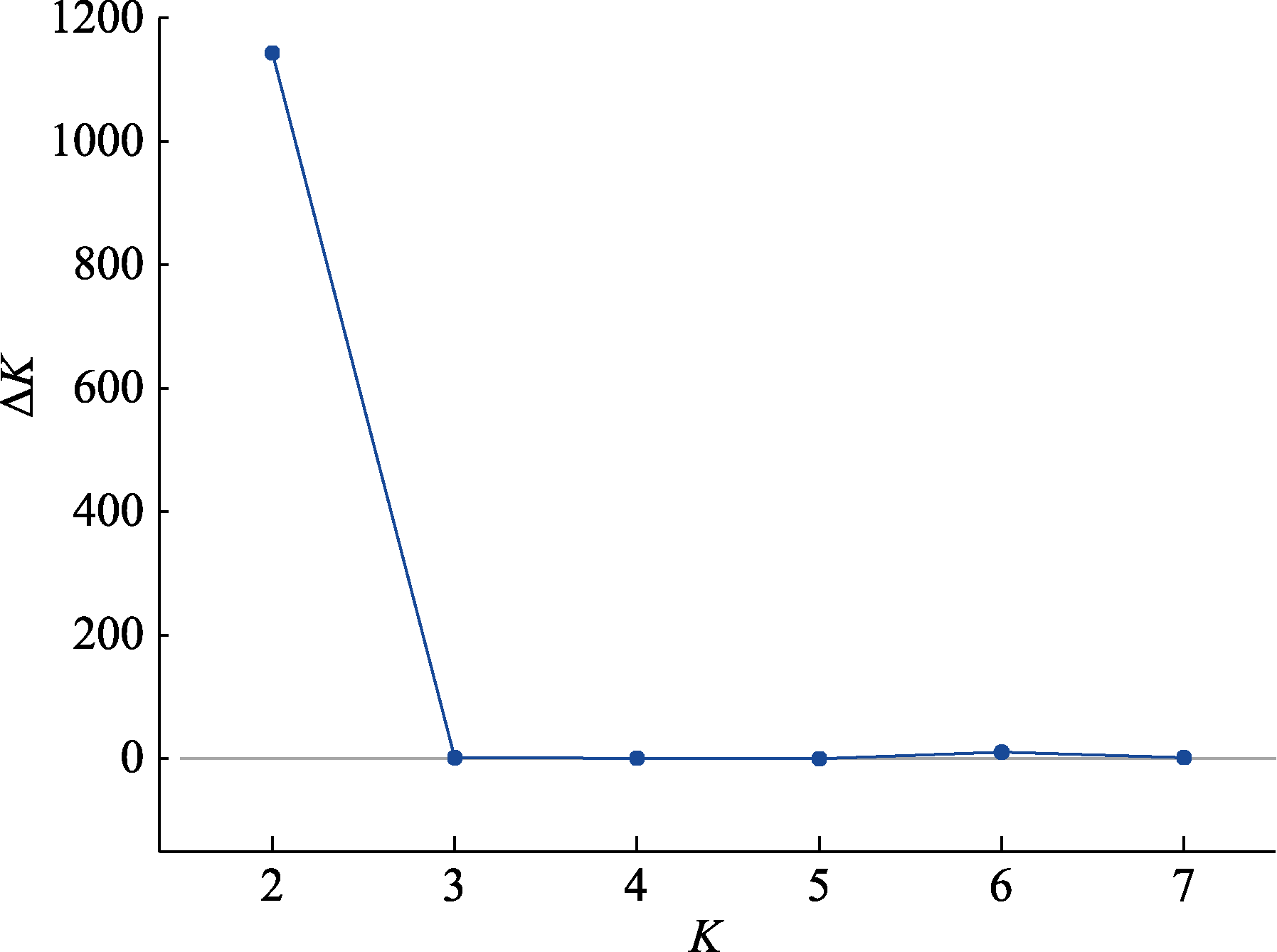
Fig. 1 Trend of genetic differentiation (ΔK) with number of groups (K) of Rhododendron liboense populations.
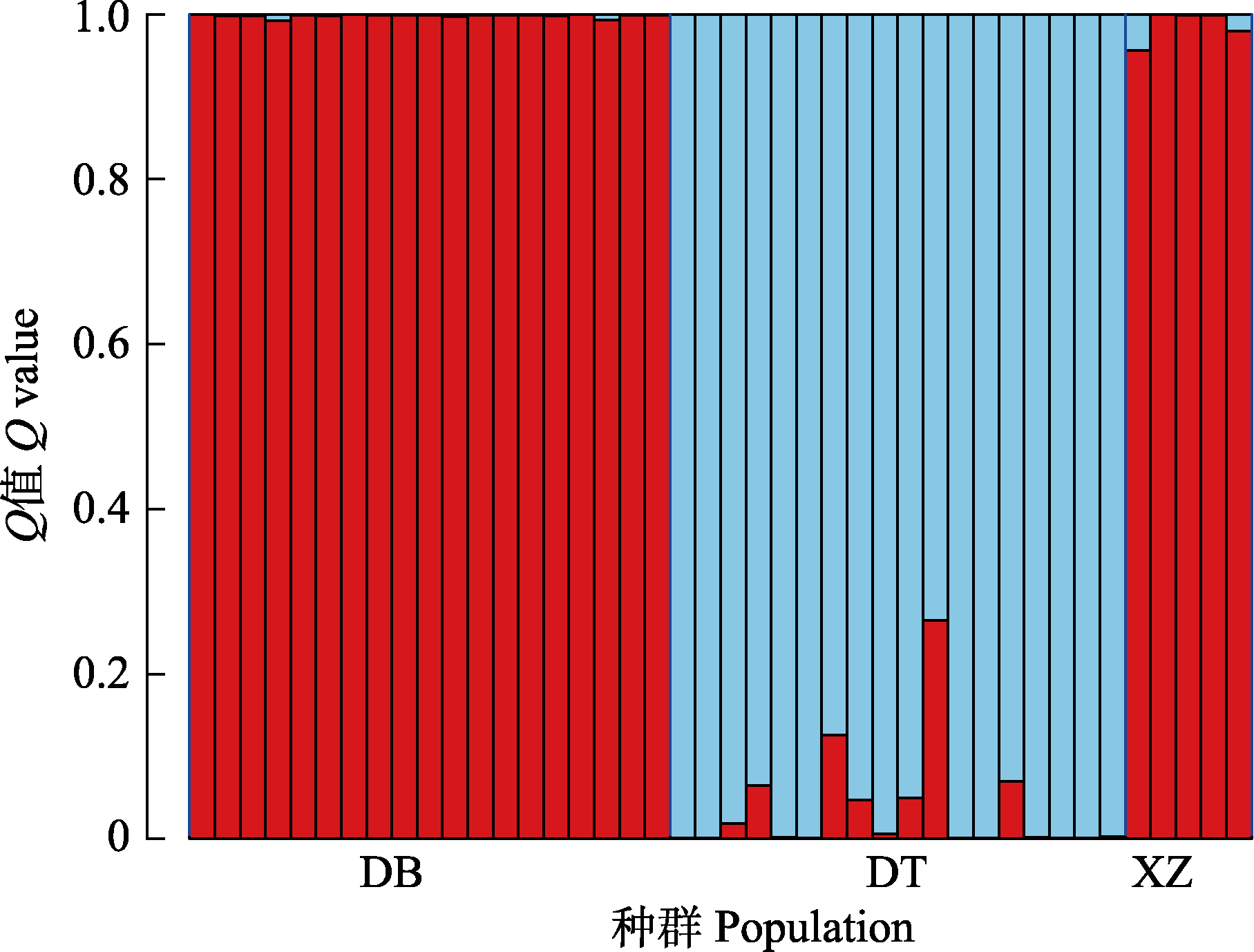
Fig. 2 Structure plot of Rhododendron liboense with number of groups (K) is 2. Population see Table 1.
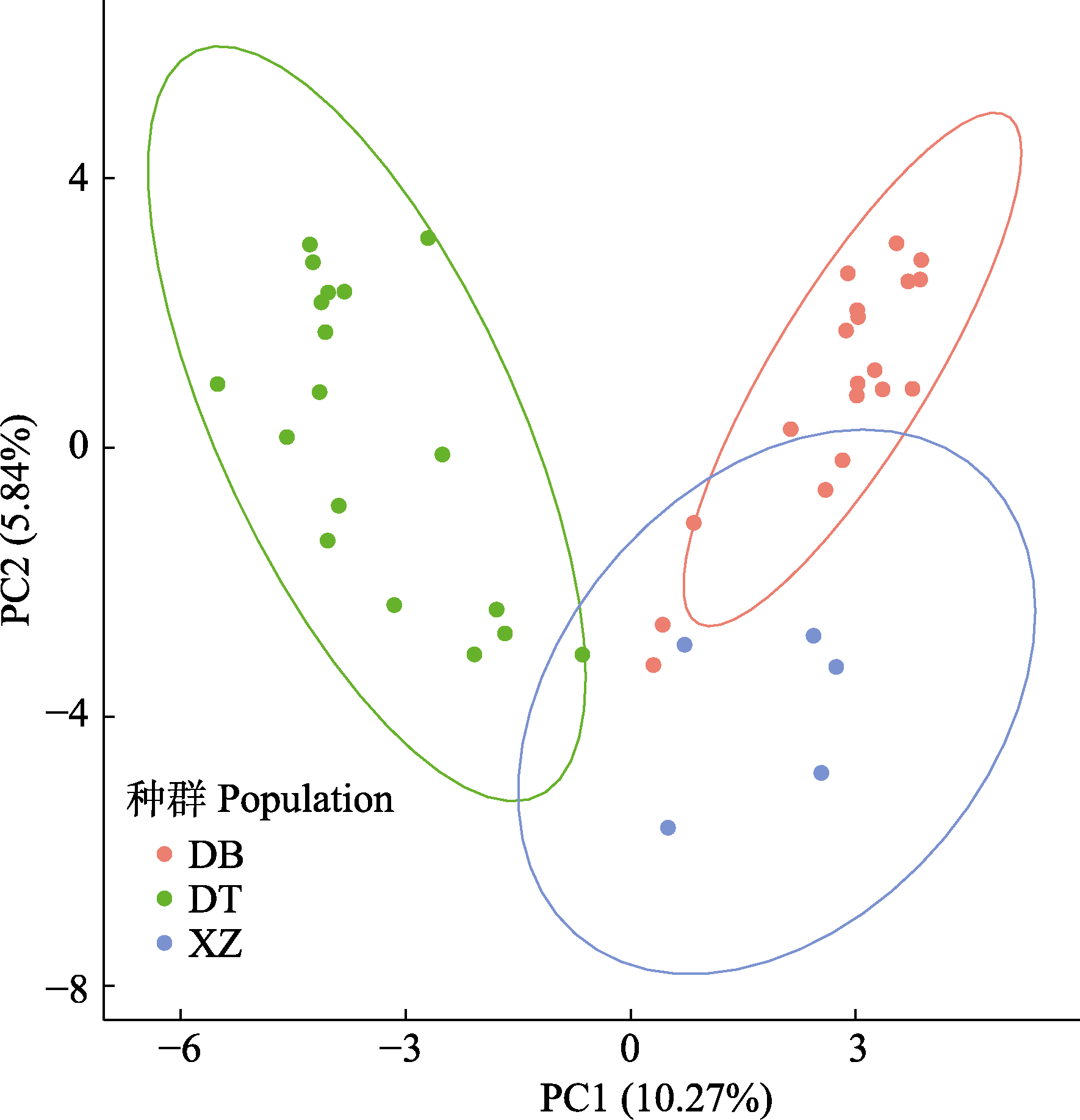
Fig. 3 Principal component (PC) analysis of Rhododendron liboense individuals. Population see Table 1.
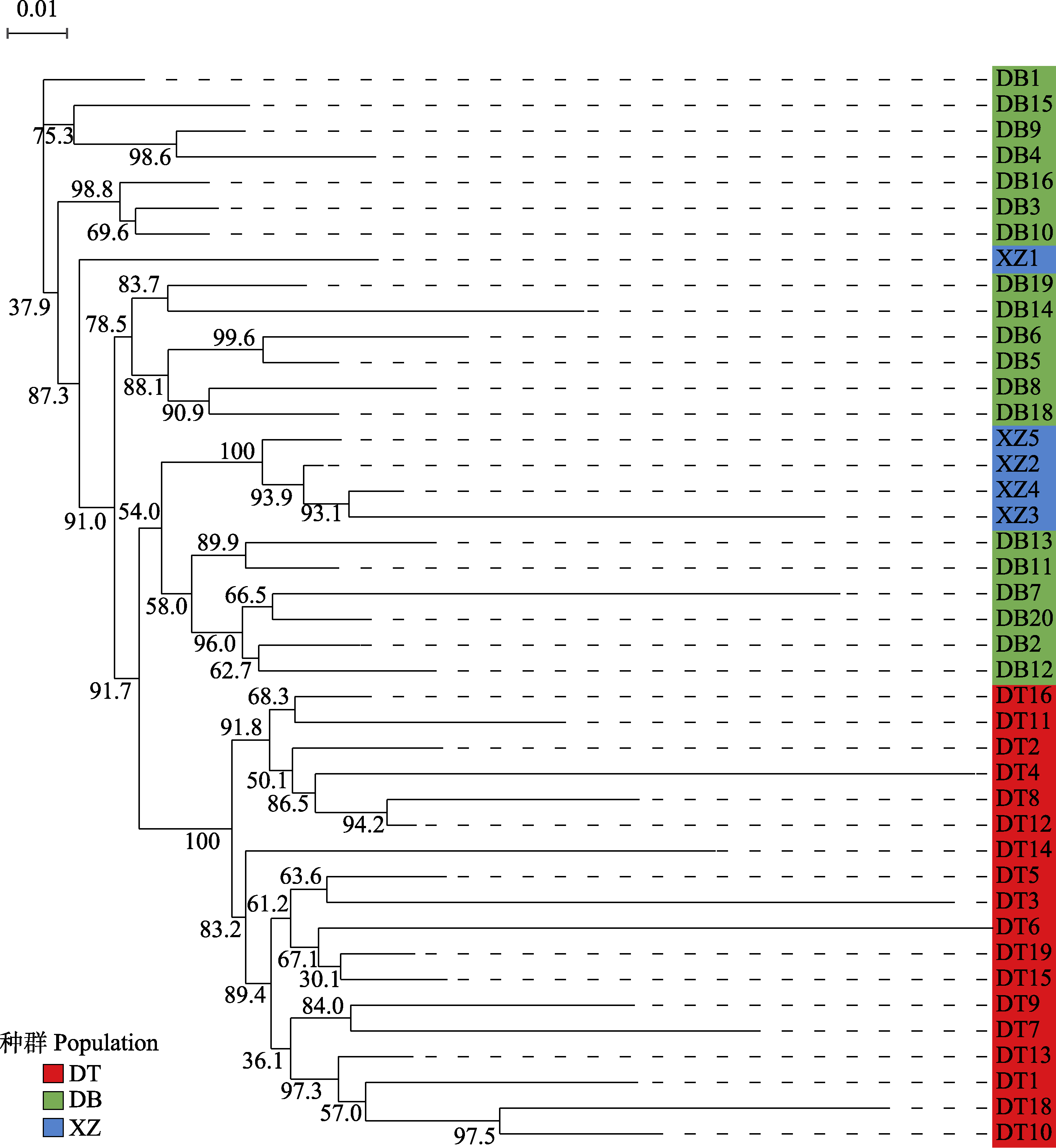
Fig. 4 Cluster diagram of individual participants about Rhododendron liboense. Population see Table 1.
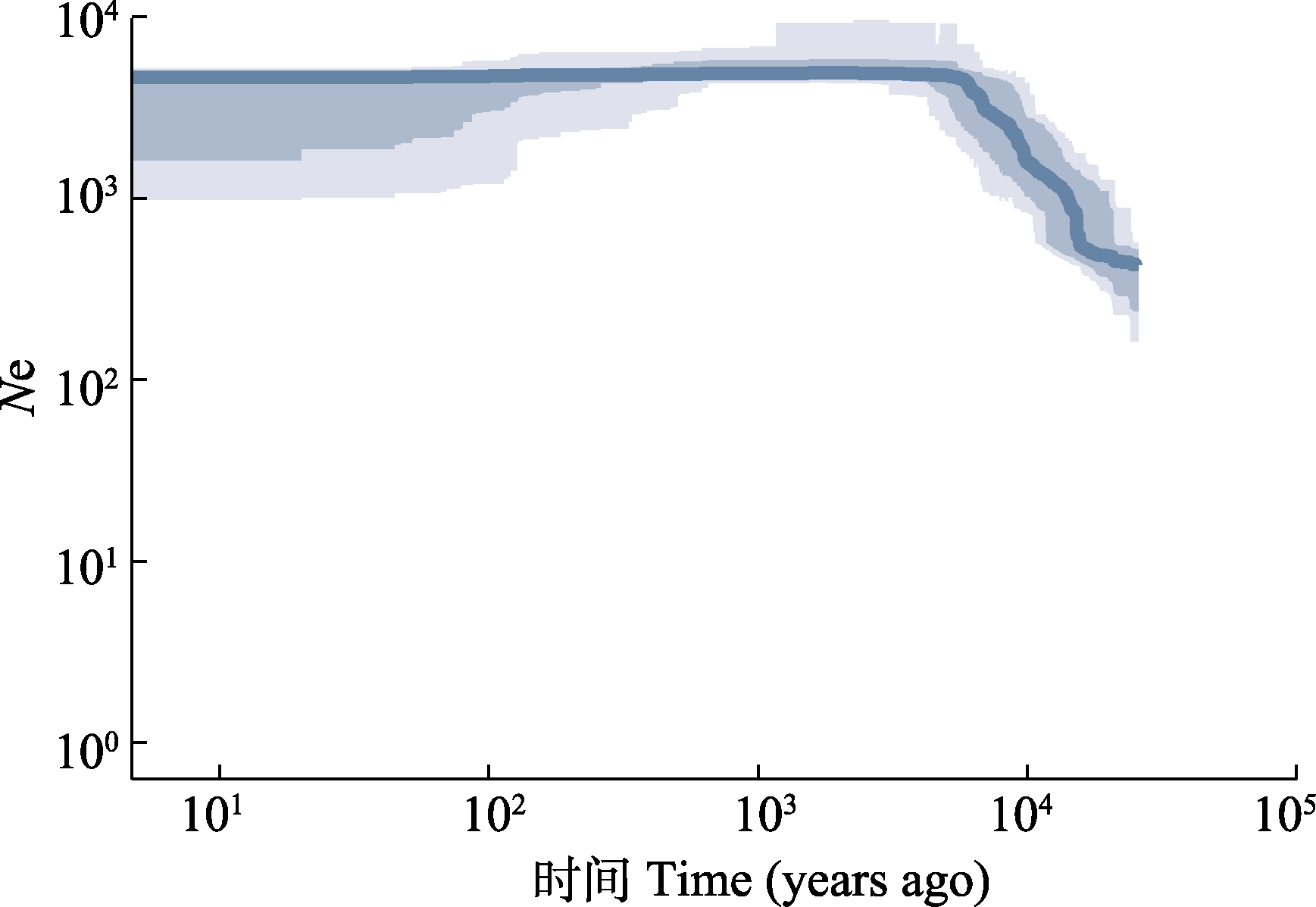
Fig. 5 Demographic history of Rhododendron liboense lineages. The light and dark shaded areas represent the 95% and 75% confidence intervals, respectively.
| [1] | Anderson CJ, Tay WT, McGaughran A, Gordon K, Walsh TK (2016). Population structure and gene flow in the global pest, Helicoverpa armigera. Molecular Ecology, 25, 5296-5311. |
| [2] |
Andrews KR, Good JM, Miller MR, Luikart G, Hohenlohe PA (2016). Harnessing the power of RADseq for ecological and evolutionary genomics. Nature Reviews Genetics, 17, 81-92.
DOI PMID |
| [3] | Cao YR (2022). Conservation Biology of Rhododendron hemsleyanum, a Plant Species with Extremely Small Populations. Master degree dissertation, Chinese Academy of Forestry, Beijing. |
| [曹毓蓉 (2022). 极小种群野生植物波叶杜鹃的保护生物学研究. 硕士学位论文, 中国林业科学研究院, 北京.] | |
| [4] | Cao YR, Ma YP, Zhang XJ, Liu XF, Liu DT, Zhang Y, Li ZH, Ma H (2022). Genetic characteristics of Rhododendron Hemsleyanum based on SNP molecular markers. Journal of Yunnan University (Natural Sciences Edition), 44, 859-869. |
| [曹毓蓉, 马永鹏, 张秀姣, 刘雄芳, 刘德团, 张垚, 李正红, 马宏 (2022). 基于SNP分子标记的波叶杜鹃遗传特征分析. 云南大学学报(自然科学版), 44, 859-869.] | |
| [5] | Catchen JM, Hohenlohe PA, Bassham S, Amores A, Cresko WA (2013). Stacks: an analysis tool set for population genomics. Molecular Ecology, 11, 3124-3140. |
| [6] | Chang CC, Chow CC, Tellier LC, Vattikuti S, Purcell SM, Lee JJ (2015). Second-generation PLINK: rising to the challenge of larger and richer datasets. GigaScience, 4, 7. DOI: 10.1186/s13742-015-0047-8. |
| [7] | Chen ZR, Lan KM (2003). Rhododendron liboense, a new species of the Ericaceae from Guizhou, China. Acta Phytotaxonomica Sinica, 41, 563-565. |
| [陈正仁, 蓝开敏 (2003). 贵州杜鹃花属(杜鹃花科)一新种——荔波杜鹃. 植物分类学报, 41, 563-565.] | |
| [8] |
Doyle JJ, Doyle JL (1990). Isolation of plant DNA from fresh tissue. Focus, 12, 13-15.
DOI URL |
| [9] |
Earl DA, vonHoldt BM (2012). STRUCTURE HARVESTER: a website and program for visualizing STRUCTURE output and implementing the Evanno method. Conservation Genetics Resources, 4, 359-361.
DOI URL |
| [10] |
Evanno G, Regnaut S, Goudet J (2005). Detecting the number of clusters of individuals using the software STRUCTURE: a simulation study. Molecular Ecology, 14, 2611-2620.
DOI PMID |
| [11] | Fei SP, Zhou W, Chen ZR, Huang CL (2023). Effects of different hormone treatments on seed germination of Rhododendron liboense, a critically endangered plant. Guizhou Forestry Science and Technology, 51(2), 15-18. |
| [费仕鹏, 周玮, 陈正仁, 黄承玲 (2023). 不同激素处理对荔波杜鹃种子萌发的影响. 贵州林业科技, 51(2), 15-18.] | |
| [12] |
Frankham R (2003). Genetics and conservation biology. Comptes Rendus Biologies, 326, 22-29.
DOI URL |
| [13] | Gibbs D, Chamberlain DF, Argent G (2011). The Red List of Rhododendrons. Botanic Gardens Conservation Internationa, Richmond, UK. 56. |
| [14] |
Hewitt G (2000). The genetic legacy of the Quaternary ice ages. Nature, 405, 907-913.
DOI |
| [15] |
Holsinger KE, Weir BS (2009). Genetics in geographically structured populations: defining, estimating and interpreting FST. Nature Reviews Genetics, 10, 639-650.
DOI PMID |
| [16] |
Hu W, Zhang ZY, Chen LD, Peng YS, Wang X (2020). Changes in potential geographical distribution of Tsoongiodendron odorum since the Last Glacial Maximum. Chinese Journal of Plant Ecology, 44, 44-55.
DOI |
|
[胡菀, 张志勇, 陈陆丹, 彭焱松, 汪旭 (2020). 末次盛冰期以来观光木的潜在地理分布变迁. 植物生态学报, 44, 44-55.]
DOI |
|
| [17] |
Huang CL, Su CH, Tian XL, Chen ZR, Wen XY (2018). Discovery of two new populations of the rare endemic Rhododendron liboense in Guizhou, China. Oryx, 52, 610-611.
DOI URL |
| [18] |
Konar A, Choudhury O, Bullis R, Fiedler L, Kruser JM, Stephens MT, Gailing O, Schlarbaum S, Coggeshall MV, Staton ME, Carlson JE, Emrich S, Romero-Severson J (2017). High-quality genetic mapping with ddRADseq in the non-model tree Quercus rubra. BMC Genomics, 18, 417.
DOI PMID |
| [19] |
Kumar S, Stecher G, Li M, Knyaz C, Tamura K (2018). MEGA X: molecular evolutionary genetics analysis across computing platforms. Molecular Biology and Evolution, 35, 1547-1549.
DOI PMID |
| [20] |
Li A, Ge S (2002). Advances in plant conservation genetics. Biodiversity Science, 10, 61-71.
DOI |
|
[李昂, 葛颂 (2002). 植物保护遗传学研究进展. 生物多样性, 10, 61-71.]
DOI |
|
| [21] | Lischer HEL, Excoffier L (2012). PGDSpider: an automated data conversion tool for connecting population genetics and genomics programs. Bioinformatics, 2, 298-299. |
| [22] | Liu DT, Zhang L, Wang JH, Ma YP (2020). Conservation genomics of a threatened Rhododendron: contrasting patterns of population structure revealed from neutral and selected SNPs. Frontiers in Genetics, 11, 757. DOI: 10.3389/fgene.2020.00757. |
| [23] |
Liu XM, Fu YX (2015). Exploring population size changes using SNP frequency spectra. Nature Genetics, 47, 555-559.
DOI PMID |
| [24] | Liu YH, Wang HC, Yang J, Dao ZL, Sun WB (2024). Conservation genetics and potential geographic distribution modeling of Corybas taliensis, a small ‘sky Island’ orchid species in China. BMC Plant Biology, 24, 11. DOI: 10.1186/s12870-023-04693-y. |
| [25] | Ministry of Ecology and Environment of the People’s Republic of China, Chinese Academy of Sciences (2023). Comparison of China Biodiversity Red List—Higher Plants Volume (2020). [2023-5-18]. https://www.mee.gov.cn/xxgk2018/xxgk/xxgk01/202305/t20230522_1030745.html. |
| [中华人民共和国生态环境部, 中国科学院 (2023). 中国生物多样性红色名录——高等植物卷(2020). [2023-5-18]. https://www.mee.gov.cn/xxgk2018/xxgk/xxgk01/202305/t20230522_1030745.html.] | |
| [26] | Nagano Y, Tashiro H, Nishi S, Hiehata N, Nagano AJ, Fukuda S (2022). Genetic diversity of loquat (Eriobotrya japonica) revealed using RAD-Seq SNP markers. Scientific Reports, 12, 10200. DOI: 10.1038/s41598-022-14358-9. |
| [27] |
Ni J, Yu G, Harrison SP, Prentice IC (2010). Palaeovegetation in China during the late Quaternary: biome reconstructions based on a global scheme of plant functional types. Palaeogeography, Palaeoclimatology, Palaeoecology, 289, 44-61.
DOI URL |
| [28] |
Nielsen R (2000). Estimation of population parameters and recombination rates from single nucleotide polymorphisms. Genetics, 154, 931-942.
DOI PMID |
| [29] | Pan WT, Sun JJ, Yuan QQ, Zhang LL, Deng KQ, Li YQ (2022). Analysis of genetic diversity and structure in different provenances of Liriodendron by RAD-seq technique. Scientia Silvae Sinicae, 58(4), 74-81. |
| [潘文婷, 孙建军, 原勤勤, 张利利, 邓康桥, 厉月桥 (2022). RAD-seq技术研究鹅掌楸属种源遗传多样性和遗传结构. 林业科学, 58(4), 74-81.] | |
| [30] | Premarathne MDGP, Fukutome N, Yamasaki K, Hayakawa F, Nagano AJ, Mizuno H, Ibaragi N, Nagano Y (2021). Elucidation of Japanese pepper (Zanthoxylum piperitum De Candolle) domestication using RAD-Seq. Scientific Reports, 11, 6464. DOI: 10.1038/s41598-021-85909-9. |
| [31] |
Pritchard JK, Stephens M, Donnelly P (2000). Inference of population structure using multilocus genotype data. Genetics, 155, 945-959.
DOI PMID |
| [32] |
Rochette NC, Rivera-Colón AG, Catchen JM (2019). Stacks 2: analytical methods for paired-end sequencing improve RADseq-based population genomics. Molecular Ecology, 28, 4737-4754.
DOI PMID |
| [33] |
Shen YT, Yao G, Li YF, Tian XL, Li SM, Wang N, Zhang CJ, Wang F, Ma YP (2024). RAD-seq data reveals robust phylogeny and morphological evolutionary history of Rhododendron. Horticultural Plant Journal, 10, 866-878.
DOI URL |
| [34] | Sun WB, Yang J, Dao ZL (2019). Study Conservation of Plant Species with Extremely Small Populations (PSESP) in Yunnan Province, China. Science Press, Beijing. 2-27. |
| [孙卫邦, 杨静, 刀志灵 (2019). 云南省极小种群野生植物研究与保护. 科学出版社, 北京. 2-27.] | |
| [35] | Wright S (1968). Evolution and the Genetics of Populations. University of Chicago Press, Chicago, USA. |
| [36] | Yang CH, Yao BF, Dai J (2019). Preliminary Investigation on Rhododendron liboense in Guizhou. Guizhou Forestry Science and Technology, 47(3), 14-17. |
| [杨成华, 姚炳矾, 代杰 (2019). 贵州荔波杜鹃初步调查. 贵州林业科技, 47(3), 14-17.] | |
| [37] |
Yoichi W, Tamaki I, Sakaguchi S, Song JS, Yamamoto SI, Tomaru N (2016). Population demographic history of a temperate shrub, Rhododendron weyrichii (Ericaceae), on continental islands of Japan and South Korea. Ecology and Evolution, 6, 8800-8810.
DOI URL |
| [38] | Zhang X, Zhang XJ, Ma YP, Li ZH, Wan YM, Ma H (2021). Genetic diversity assessment of Rhododendron sinofalconeri with genotyping by sequencing (GBS). Bulletin of Botanical Research, 41, 429-435. |
|
[张序, 张秀姣, 马永鹏, 李正红, 万友名, 马宏 (2021). 基于GBS简化基因组技术的宽杯杜鹃遗传多样性分析. 植物研究, 41, 429-435.]
DOI |
|
| [39] |
Zhang XJ, Liu XF, Liu DT, Cao YR, Li ZH, Ma YP, Ma H (2021). Genetic diversity and structure of Rhododendron meddianum, a plant species with extremely small populations. Plant Diversity, 43, 472-479.
DOI URL |
| [40] | Zhu XL, Tang JM, Jiang HD, Yang YS, Chen ZY, Zou R, Xu AZ, Luo YJ, Deng ZH, Wei X, Chai SF (2023). Genomic evidence reveals high genetic diversity in a narrowly distributed species and natural hybridization risk with a widespread species in the genus Geodorum. BMC Plant Biology, 23, 317. DOI: 10.1186/s12870-023-04285-w. |
| [1] | YIN Si, YANG Yi-Ting, LU Rui-Ling, NIAN Rui, HAO Zhuan, GAO Yong. Phylogeographic study of natural populations of Amorphophallus yunnanensis (Araceae) in China [J]. Chin J Plant Ecol, 2025, 49(2): 308-319. |
| [2] | ZHANG Wang, TAN Si-Yi, TU Wen-Qin, LOU An-Ru. Genetic diversity and genetic structure of Haloxylon ammodendron in the Turpan and Hami area, Xinjiang, China [J]. Chin J Plant Ecol, 2025, 49(11): 1858-1868. |
| [3] | ZHANG Hong-Xiang, WEN Zhi-Bin, WANG Qian. Population genetic structure of Malus sieversii and environmental adaptations [J]. Chin J Plant Ecol, 2022, 46(9): 1098-1108. |
| [4] | CHEN Tian-Yi, LOU An-Ru. Genetic diversity and genetic structure of the Betula platyphylla populations on the eastern side of the Qingzang Plateau [J]. Chin J Plant Ecol, 2022, 46(5): 561-568. |
| [5] | WANG Chun-Cheng, MA Song-Mei, ZHANG Dan, WANG Shao-Ming. Spatial genetic structure of Lycium ruthenicum in the Qaidam Basin [J]. Chin J Plant Ecol, 2020, 44(6): 661-668. |
| [6] | XU Jin-Shi,CHAI Yong-Fu,LIU Xiao,YUE Ming,GUO Yao-Xin,KANG Mu-Yi,LIU Quan-Ru,ZHENG Cheng-Yang,JI Cheng-Jun,YAN Ming,ZHANG Feng,GAO Xian-Ming,WANG Ren-Qing,SHI Fu-Chen,ZHANG Qin-Di,WANG Mao. Community assembly, diversity patterns and distributions of broad-leaved forests in North China [J]. Chin J Plant Ecol, 2019, 43(9): 732-741. |
| [7] | CHAI Yong-Fu, XU Jin-Shi, LIU Hong-Yan, LIU Quan-Ru, ZHENG Cheng-Yang, KANG Mu-Yi, LIANG Cun-Zhu, WANG Ren-Qing, GAO Xian-Ming, ZHANG Feng, SHI Fu-Chen, LIU Xiao, YUE Ming. Species composition and phylogenetic structure of major shrublands in North China [J]. Chin J Plant Ecol, 2019, 43(9): 793-805. |
| [8] | QIN Hao, ZHANG Yin-Bo, DONG Gang, ZHANG Feng. Altitudinal patterns of taxonomic, phylogenetic and functional diversity of forest communities in Mount Guandi, Shanxi, China [J]. Chin J Plant Ecol, 2019, 43(9): 762-773. |
| [9] | ZHANG Xin-Xin, WANG Xi, HU Ying, ZHOU Wei, CHEN Xiao-Yang, HU Xin-Sheng. Advances in the study of population genetic diversity at plant species’ margins [J]. Chin J Plant Ecol, 2019, 43(5): 383-395. |
| [10] | CHENG Yi-Kang, ZHANG Hui, WANG Xu, LONG Wen-Xing, LI Chao, FANG Yan-Shan, FU Ming-Qi, ZHU Kong-Xin. Effects of functional diversity and phylogenetic diversity on the tropical cloud forest community assembly [J]. Chin J Plant Ecol, 2019, 43(3): 217-226. |
| [11] | ZHANG Li-Wen, HAN Guang-Xuan. A review on the relationships between plant genetic diversity and ecosystem functioning [J]. Chin J Plan Ecolo, 2018, 42(10): 977-989. |
| [12] | Ming-Fei ZHAO, Feng XUE, Yu-Hang WANG, Guo-Yi WANG, Kai-Xiong XING, Mu-Yi KANG, Jing-Lan WANG. Phylogenetic structure and diversity of herbaceous communities in the conifer forests along an elevational gradient in Luya Mountain, Shanxi, China [J]. Chin J Plan Ecolo, 2017, 41(7): 707-715. |
| [13] | Xi-Xi WANG, Wen-Xing LONG, Xiao-Bo YANG, Meng-Hui XIONG, Yong KANG, Jin HUANG, Xu WANG, Xiao-Jiang HONG, Zhao-Li ZHOU, Yong-Quan LU, Jing FANG, Shi-Xing LI. Patterns of plant diversity within and among three tropical cloud forest communities in Hainan Island [J]. Chin J Plant Ecol, 2016, 40(5): 469-479. |
| [14] | WANG Jin-Nan,CHEN Jin-Fu,Chen Wu-Sheng,Zhou Xin-Yang,XU Dong,LI Ji-Hong,QI Xiao. Population genetic diversity of wild Lycium ruthenicum in Qaidam inferred from AFLP markers [J]. Chin J Plan Ecolo, 2015, 39(10): 1003-1011. |
| [15] | LIU Jun, JIANG Jing-Min, ZOU Jun, XU Jin-Liang, SHEN Han, DIAO Song-Feng. Genetic diversity of central and peripheral populations of Toona ciliata var. pubescens, an endangered tree species endemic to China [J]. Chin J Plant Ecol, 2013, 37(1): 52-60. |
| Viewed | ||||||
|
Full text |
|
|||||
|
Abstract |
|
|||||
Copyright © 2026 Chinese Journal of Plant Ecology
Tel: 010-62836134, 62836138, E-mail: apes@ibcas.ac.cn, cjpe@ibcas.ac.cn

