
Chin J Plant Ecol ›› 2025, Vol. 49 ›› Issue (11): 1907-1918.DOI: 10.17521/cjpe.2024.0281 cstr: 32100.14.cjpe.2024.0281
• Research Articles • Previous Articles Next Articles
HAN Run-Yu1,2, CHEN Shi-Dong1,2,*( ), TAN Yi-Hua1,2, CHEN Xiang-Biao1,2, XIONG De-Cheng1,2, LIU Xiao-Fei1,2, XU Chao1,2, YANG Zhi-Jie1,2,*(), YANG Yu-Sheng1,2
Received:2024-08-21
Accepted:2025-01-09
Online:2025-11-20
Published:2025-11-20
Contact:
CHEN Shi-Dong, YANG Zhi-Jie
Supported by:HAN Run-Yu, CHEN Shi-Dong, TAN Yi-Hua, CHEN Xiang-Biao, XIONG De-Cheng, LIU Xiao-Fei, XU Chao, YANG Zhi-Jie, YANG Yu-Sheng. Leaf structural response of dominant understory shrubs in subtropical natural forests to long-term soil warming[J]. Chin J Plant Ecol, 2025, 49(11): 1907-1918.
Add to citation manager EndNote|Ris|BibTeX
URL: https://www.plant-ecology.com/EN/10.17521/cjpe.2024.0281
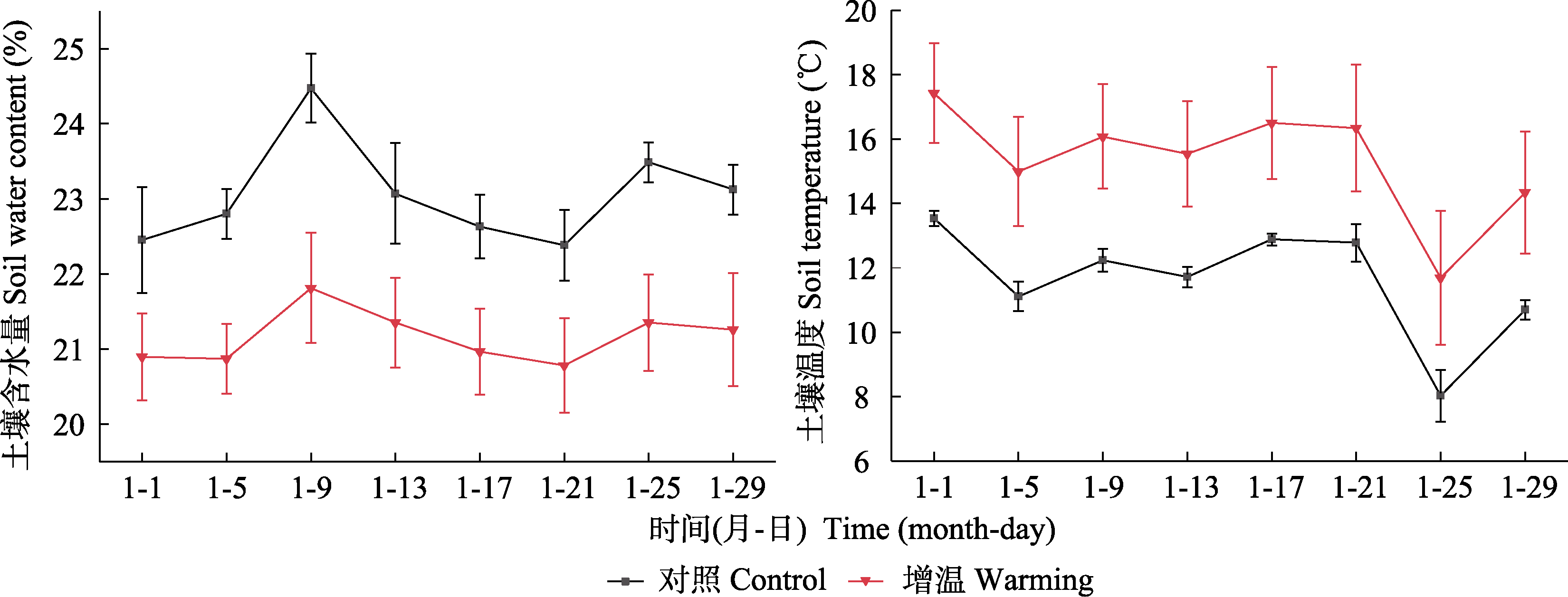
Fig. 1 Temporal dynamics of soil temperature and water content at 0-10 cm depth in natural forest plot of Castanopsis kawaiensis (mean ± SE).
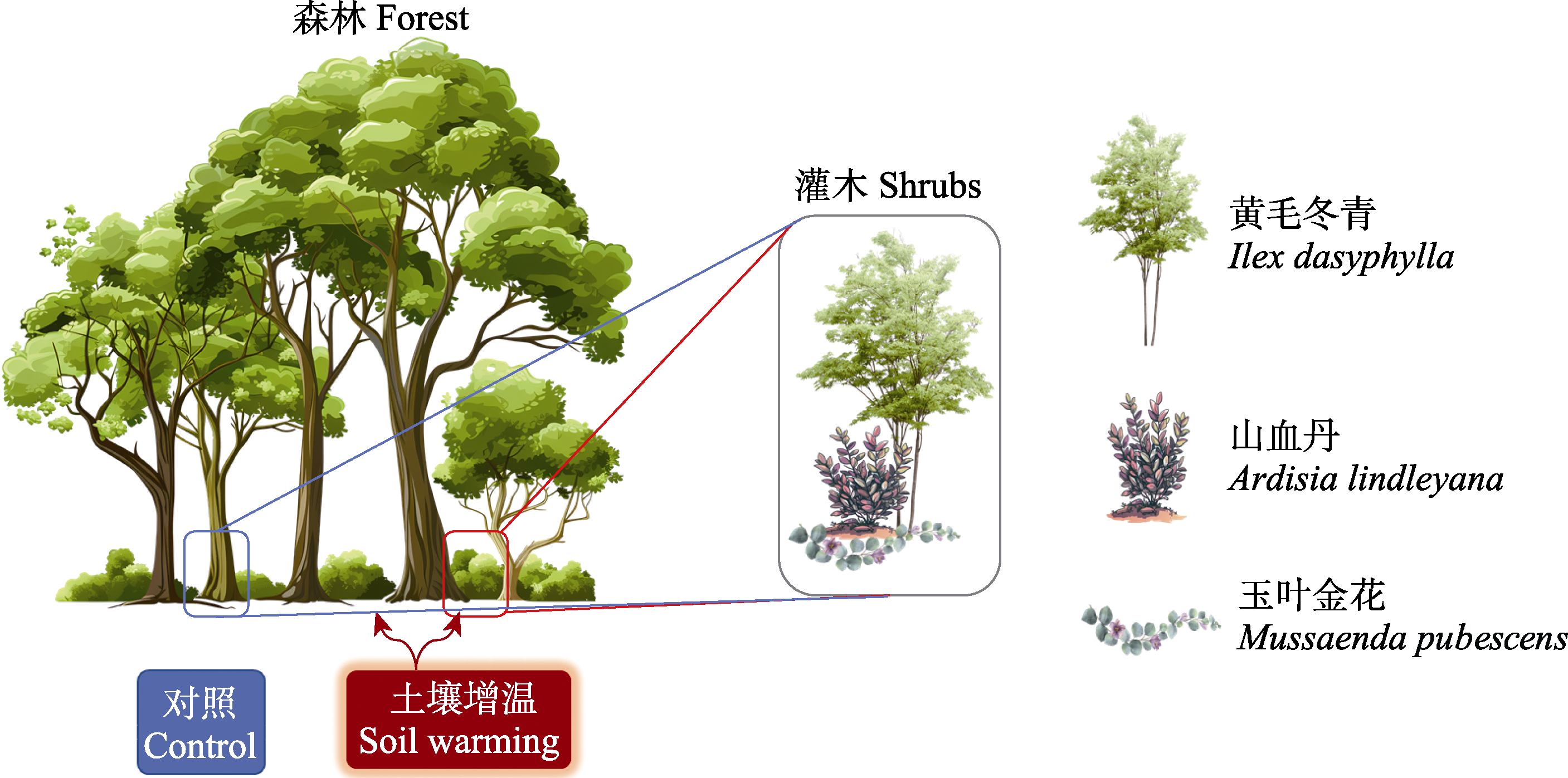
Fig. 2 Schematic diagram of vertical distribution of understory shrub species.
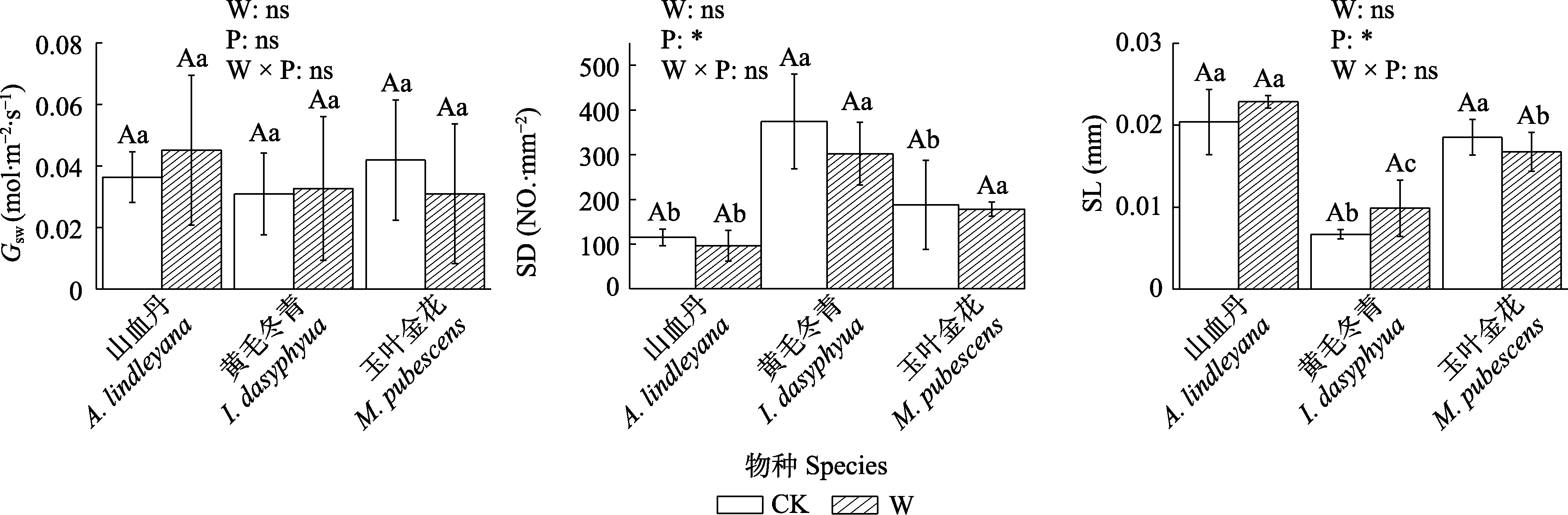
Fig. 3 Analysis of stomatal conductance for water vapor (Gsw), stomatal density (SD) and stomatal length (SL) differences among Ardisia lindleyana, Ilex dasyphylla and Mussaenda pubescens between warming and control treatments (mean ± SE, n = 15). Different uppercase letters indicate significant differences (p < 0.05) between the warming and control treatments of the same plant species, while different lowercase letters indicate significant differences (p < 0.05) between different plants under the same treatment; CK, control; P, species; W, warming; W × P, warming and species interaction. *, p < 0.05; ns, denotes no significant effect.
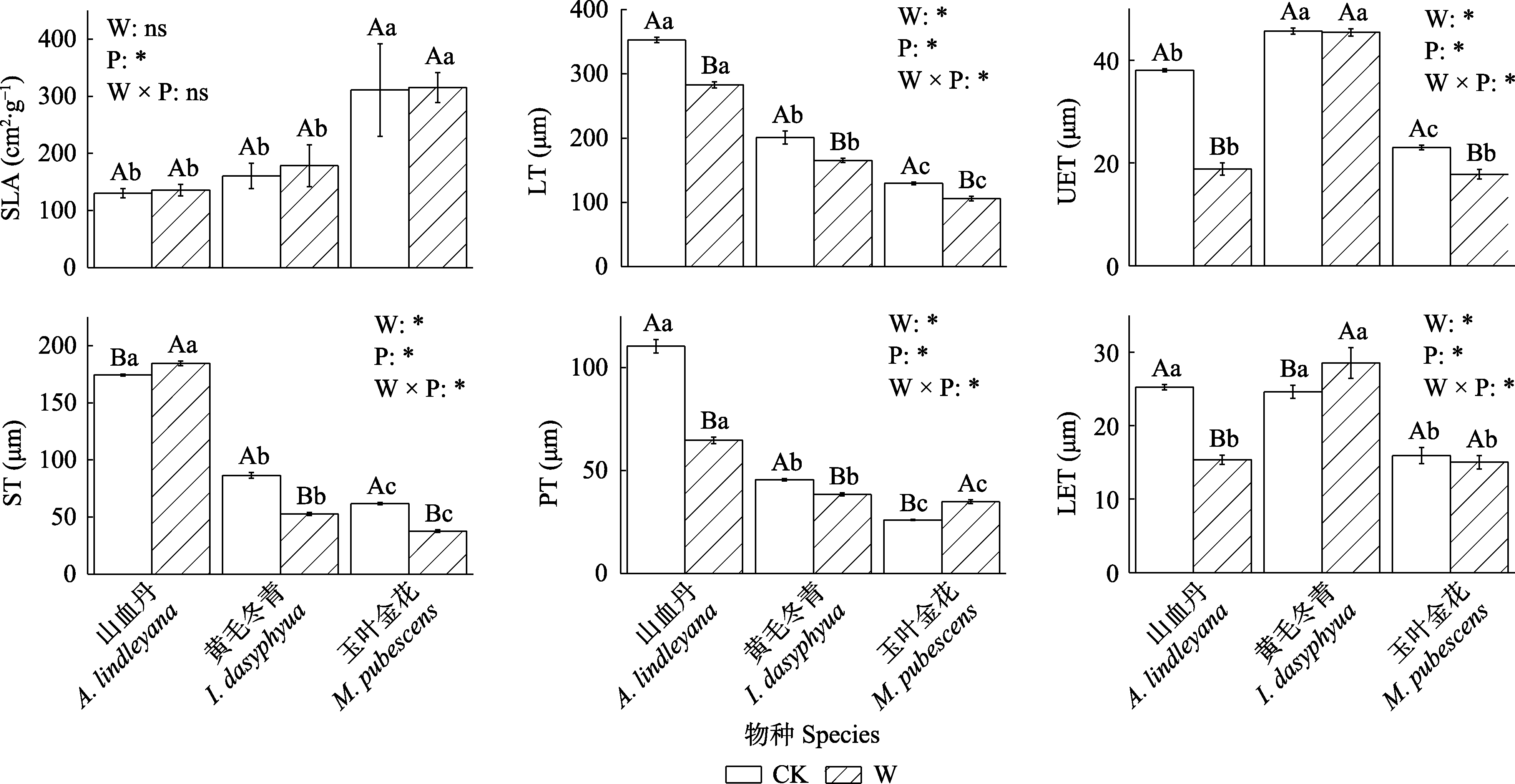
Fig. 4 Analysis of specific leaf area (SLA), leaf thickness (LT), upper epidermis thickness (UET), palisade tissue thickness (PT), spongy tissue thickness (ST) and lower epidermis thickness (LET) differences among Ardisia lindleyana, Ilex dasyphylla and Mussaenda pubescens between warming and control treatments (mean ± SE, n = 15). Different uppercase letters indicate significant differences (p < 0.05) between the warming and control treatments of the same plant species, while different lowercase letters indicate significant differences (p < 0.05) between different plants under the same treatment. CK, control; P, species; W, warming; W × P, warming and species interaction. *, p < 0.05; ns, denotes no significant effect.
| 指标 Index | 山血丹 Ardisia lindleyana | 黄毛冬青 Ilex dasyphylla | 玉叶金花 Mussaenda pubescens | |||
|---|---|---|---|---|---|---|
| PC1 | PC2 | PC1 | PC2 | PC1 | PC2 | |
| 气孔长度 Stomatal length | -0.172 | 0.384 | -0.375 | 0.255 | 0.314 | 0.354 |
| 气孔密度 Stomatal density | 0.172 | -0.399 | 0.048 | 0.664 | 0.168 | 0.590 |
| 气孔导度 Stomatal conductance | 0.068 | 0.807 | -0.318 | 0.472 | 0.043 | -0.646 |
| 叶片厚度 Leaf thickness | 0.432 | 0.116 | 0.424 | 0.078 | 0.457 | -0.034 |
| 上表皮厚度 Upper epidermis thickness | 0.433 | 0.077 | 0.168 | -0.378 | 0.445 | -0.174 |
| 栅栏组织厚度 Palisade tissue thickness | 0.434 | 0.066 | 0.428 | 0.285 | -0.451 | 0.148 |
| 海绵组织厚度 Spongy tissue thickness | -0.428 | 0.125 | 0.445 | 0.161 | 0.451 | -0.149 |
| 下表皮厚度 Lower epidermis thickness | 0.437 | 0.049 | -0.409 | -0.125 | 0.242 | 0.183 |
| 特征值 Feature value | 5.201 | 1.267 | 4.600 | 1.460 | 4.681 | 1.475 |
Table 1 Factor load matrix of leaf stomatal and anatomical traits of Ardisia lindleyana, Ilex dasyphylla and Mussaenda pubescens
| 指标 Index | 山血丹 Ardisia lindleyana | 黄毛冬青 Ilex dasyphylla | 玉叶金花 Mussaenda pubescens | |||
|---|---|---|---|---|---|---|
| PC1 | PC2 | PC1 | PC2 | PC1 | PC2 | |
| 气孔长度 Stomatal length | -0.172 | 0.384 | -0.375 | 0.255 | 0.314 | 0.354 |
| 气孔密度 Stomatal density | 0.172 | -0.399 | 0.048 | 0.664 | 0.168 | 0.590 |
| 气孔导度 Stomatal conductance | 0.068 | 0.807 | -0.318 | 0.472 | 0.043 | -0.646 |
| 叶片厚度 Leaf thickness | 0.432 | 0.116 | 0.424 | 0.078 | 0.457 | -0.034 |
| 上表皮厚度 Upper epidermis thickness | 0.433 | 0.077 | 0.168 | -0.378 | 0.445 | -0.174 |
| 栅栏组织厚度 Palisade tissue thickness | 0.434 | 0.066 | 0.428 | 0.285 | -0.451 | 0.148 |
| 海绵组织厚度 Spongy tissue thickness | -0.428 | 0.125 | 0.445 | 0.161 | 0.451 | -0.149 |
| 下表皮厚度 Lower epidermis thickness | 0.437 | 0.049 | -0.409 | -0.125 | 0.242 | 0.183 |
| 特征值 Feature value | 5.201 | 1.267 | 4.600 | 1.460 | 4.681 | 1.475 |
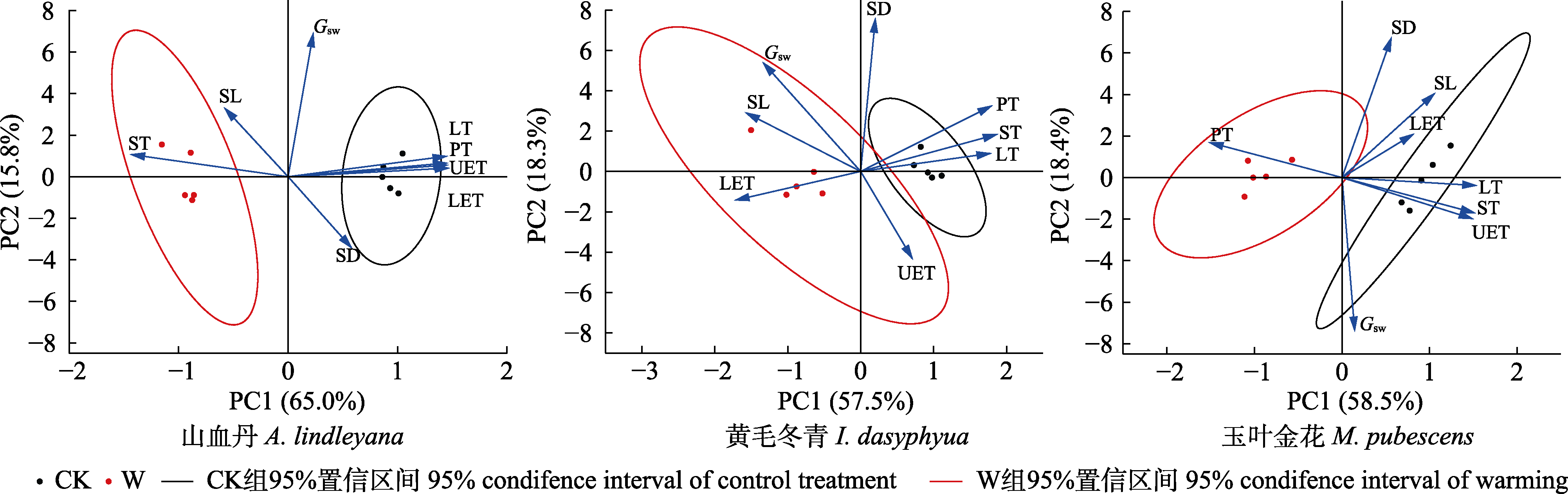
Fig. 5 Principal component (PC) analysis of stomatal and anatomical traits of Ardisia lindleyana, Ilex dasyphylla and Mussaenda pubescens (each point represents a sample plot). CK, control; Gsw, stomatal conductance for water vapor; LET, lower epidermis thickness; LT, leaf thickness; PT, palisade tissue thickness; SD, stomatal density; SL, stomatal length; ST, spongy tissue thickness; UET, upper epidermis thickness; W, warming.
| 指标 Index | 山血丹 Ardisia lindleyana | 黄毛冬青 Ilex dasyphylla | 玉叶金花 Mussaenda pubescens | |||
|---|---|---|---|---|---|---|
| T | M | T | M | T | M | |
| 气孔长度 Stomatal length | 0.427 | -0.364 | 0.701* | -0.668* | -0.476 | 0.586 |
| 气孔密度 Stomatal density | -0.404 | 0.338 | -0.076 | 0.204 | -0.215 | 0.223 |
| 气孔导度 Stomatal conductance | -0.106 | 0.167 | 0.550 | -0.559 | -0.399 | 0.222 |
| 叶片厚度 Leaf thickness | -0.951*** | 0.993*** | -0.962*** | 0.941*** | -0.911*** | 0.975*** |
| 上表皮厚度 Upper epidermis thickness | -0.956*** | 0.996** | -0.250 | 0.210 | -0.916*** | 0.968*** |
| 栅栏组织厚度 Palisade tissue thickness | -0.961*** | 0.995** | -0.943*** | 0.986*** | 0.961*** | -0.992*** |
| 海绵组织厚度 Spongy tissue thickness | 0.951*** | -0.963*** | -0.970*** | 0.995*** | -0.958*** | 0.996*** |
| 下表皮厚度 Lower epidermis thickness | -0.964*** | 0.996*** | 0.839** | -0.811** | -0.395 | 0.439 |
Table 2 Correlation analysis between environmental factors and each index of Ardisia lindleyana, Ilex dasyphylla and Mussaenda pubescens
| 指标 Index | 山血丹 Ardisia lindleyana | 黄毛冬青 Ilex dasyphylla | 玉叶金花 Mussaenda pubescens | |||
|---|---|---|---|---|---|---|
| T | M | T | M | T | M | |
| 气孔长度 Stomatal length | 0.427 | -0.364 | 0.701* | -0.668* | -0.476 | 0.586 |
| 气孔密度 Stomatal density | -0.404 | 0.338 | -0.076 | 0.204 | -0.215 | 0.223 |
| 气孔导度 Stomatal conductance | -0.106 | 0.167 | 0.550 | -0.559 | -0.399 | 0.222 |
| 叶片厚度 Leaf thickness | -0.951*** | 0.993*** | -0.962*** | 0.941*** | -0.911*** | 0.975*** |
| 上表皮厚度 Upper epidermis thickness | -0.956*** | 0.996** | -0.250 | 0.210 | -0.916*** | 0.968*** |
| 栅栏组织厚度 Palisade tissue thickness | -0.961*** | 0.995** | -0.943*** | 0.986*** | 0.961*** | -0.992*** |
| 海绵组织厚度 Spongy tissue thickness | 0.951*** | -0.963*** | -0.970*** | 0.995*** | -0.958*** | 0.996*** |
| 下表皮厚度 Lower epidermis thickness | -0.964*** | 0.996*** | 0.839** | -0.811** | -0.395 | 0.439 |
| [1] |
Albrich K, Rammer W, Seidl R (2020). Climate change causes critical transitions and irreversible alterations of mountain forests. Global Change Biology, 26, 4013-4027.
DOI PMID |
| [2] |
Balandier P, Gobin R, Prévosto B, Korboulewsky N (2022). The contribution of understorey vegetation to ecosystem evapotranspiration in boreal and temperate forests: a literature review and analysis. European Journal of Forest Research, 141, 979-997.
DOI |
| [3] |
Bjorkman AD, Myers-Smith IH, Elmendorf SC, Normand S, Rüger N, Beck PSA, Blach-Overgaard A, Blok D, Hans C, Cornelissen J, Forbes BC, Georges D, Goetz SJ, Guay KC, Henry GHR, et al. (2018). Plant functional trait change across a warming tundra biome. Nature, 562, 57-62.
DOI |
| [4] | Carter KR, Wood TE, Reed SC, Schwartz EC, Reinsel MB, Yang X, Cavaleri MA (2020). Photosynthetic and respiratory acclimation of understory shrubs in response to in situ experimental warming of a wet tropical forest. Frontiers in Forests and Global Change, 3, 576320. DOI: 10.3389/ffgc.2020.576320. |
| [5] | Carvalho CE, Sfair JC, Eller CB, Menezes BS, Menezes MOT, Araújo FS (2023). Tree height, leaf thickness and seed size drive Caatinga plants’ sensitivity to climate change. Journal of Biogeography, 50, 2057-2068. |
| [6] |
Casson S, Gray JE (2008). Influence of environmental factors on stomatal development. New Phytologist, 178, 9-23.
DOI PMID |
| [7] |
Crous KY, Uddling J, de Kauwe MG (2022). Temperature responses of photosynthesis and respiration in evergreen trees from boreal to tropical latitudes. New Phytologist, 234, 353-374.
DOI PMID |
| [8] |
de Boer HJ, Price CA, Wagner-Cremer F, Dekker SC, Franks PJ, Veneklaas EJ (2016). Optimal allocation of leaf epidermal area for gas exchange. New Phytologist, 210, 1219-1228.
DOI PMID |
| [9] | Deng JJ, Fang S, Fang XM, Jin YQ, Kuang YW, Lin FM, Liu JQ, Ma JR, Nie YX, Ouyang SN, Ren J, Tie LH, Tang SB, Tan XP, Wang XG, et al. (2023). Forest understory vegetation study: current status and future trends. Forestry Research, 3, 6. DOI: 10.48130/FR-2023-0006. |
| [10] |
Drake PL, Froend RH, Franks PJ (2013). Smaller, faster stomata: scaling of stomatal size, rate of response, and stomatal conductance. Journal of Experimental Botany, 64, 495-505.
DOI PMID |
| [11] |
Elliott-Kingston C, Haworth M, Yearsley JM, Batke SP, Lawson T, McElwain JC (2016). Does size matter? Atmospheric CO2 may be a stronger driver of stomatal closing rate than stomatal size in taxa that diversified under low CO2. Frontiers in Plant Science, 7, 1253. DOI: 10.3389/fpls.2016.01253.
PMID |
| [12] |
Fauset S, Oliveira L, Buckeridge MS, Foyer CH, Galbraith D, Tiwari R, Gloor M (2019). Contrasting responses of stomatal conductance and photosynthetic capacity to warming and elevated CO2 in the tropical tree species Alchornea glandulosa under heatwave conditions. Environmental and Experimental Botany, 158, 28-39.
DOI URL |
| [13] |
Feng JQ, Wang JH, Zhang SB (2021). Leaf physiological and anatomical responses of two sympatric Paphiopedilum species to temperature. Plant Diversity, 44, 101-108.
DOI URL |
| [14] | Ferdous J, Islam M, Rahman M (2023). The role of tree size, wood anatomical and leaf stomatal traits in shaping tree hydraulic efficiency and safety in a South Asian tropical moist forest. Global Ecology and Conservation, 43, e02453. DOI: 10.1016/j.gecco.2023.e02453. |
| [15] |
Garnier E, Cortez J, Billès G, Navas ML, Roumet C, Debussche M, Laurent G, Blanchard A, Aubry D, Bellmann A, Neill C, Toussaint JP (2004). Plant functional markers capture ecosystem properties during secondary succession. Ecology, 85, 2630-2637.
DOI URL |
| [16] | Gazol A, Valeriano C, Colangelo M, Ibáñez R, Valerio M, Rubio-Cuadrado Á, Camarero JJ (2024). Growth of tree (Pinus sylvestris) and shrub (Amelanchier ovalis) species is constrained by drought with higher shrub sensitivity in dry sites. Science of the Total Environment, 918, 170539. DOI: 10.1016/j.scitotenv.2024.170539. |
| [17] | Gong C, Tan QY, Liu GB, Xu MX (2021). Impacts of tree mixtures on understory plant diversity in China. Forest Ecology and Management, 498, 119545. DOI: 10.1016/j.foreco.2021.119545. |
| [18] |
Haworth M, Marino G, Cosentino SL, Brunetti C, de Carlo A, Avola G, Riggi E, Loreto F, Centritto M (2018). Increased free abscisic acid during drought enhances stomatal sensitivity and modifies stomatal behaviour in fast growing giant reed (Arundo donax L.). Environmental and Experimental Botany, 147, 116-124.
DOI URL |
| [19] | Haworth M, Marino G, Materassi A, Raschi A, Scutt CP, Centritto M (2023). The functional significance of the stomatal size to density relationship: interaction with atmospheric [CO2] and role in plant physiological behaviour. Science of the Total Environment, 863, 160908. DOI: 10.1016/j.scitotenv.2022.160908.] |
| [20] |
He LM, Chen JM, Gonsamo A, Luo XZ, Wang R, Liu Y, Liu RG (2018). Changes in the shadow: the shifting role of shaded leaves in global carbon and water cycles under climate change. Geophysical Research Letters, 45, 5052-5061.
DOI URL |
| [21] | Hu WT, Zhao P (2024). Soil warming affects sap flow and stomatal gas exchange through altering functional traits in a subtropical forest. Science of the Total Environment, 918, 170581. DOI: 10.1016/j.scitotenv.2024.170581. |
| [22] |
James SA, Bell DT (2000). Influence of light availability on leaf structure and growth of two Eucalyptus globulus ssp. globulus provenances. Tree Physiology, 20, 1007-1018.
PMID |
| [23] | Ji Y, Chen SD, Xiong DC, Xu C, Liu XF, He ZM, Yang ZJ (2023). Effects of short-term warming on species diversity of understory vegetation in subtropical evergreen broad- leaved forest. Journal of Tropical and Subtropical Botany, 31(2), 153-162. |
| [籍烨, 陈仕东, 熊德成, 胥超, 刘小飞, 何宗明, 杨智杰 (2023). 短期增温对亚热带常绿阔叶林林下植被物种多样性的影响. 热带亚热带植物学报, 31(2), 153-162.] | |
| [24] |
Jin B, Wang L, Wang J, Jiang KZ, Wang Y, Jiang XX, Ni CY, Wang YL, Teng NJ (2011). The effect of experimental warming on leaf functional traits, leaf structure and leaf biochemistry in Arabidopsis thaliana. BMC Plant Biology, 11, 1-10.
DOI |
| [25] | Khan R, Ma XH, Hussain Q, Chen KL, Farooq S, Asim M, Ren XC, Shah S, Shi Y (2023). Transcriptome and anatomical studies reveal alterations in leaf thickness under long-term drought stress in tobacco. Journal of Plant Physiology, 281, 153920. DOI: 10.1016/j.jplph.2023.153920. |
| [26] |
Kim S, Hwang G, Kim S, Thi TN, Kim H, Jeong J, Kim J, Choi G, Oh E (2020). The epidermis coordinates thermoresponsive growth through the phyB-PIF4-auxin pathway. Nature Communications, 11, 1053. DOI: 10.1038/s41467-020-14905-w.
PMID |
| [27] |
Lammertsma EI, de Boer HJ, Dekker SC, Dilcher DL, Lotter AF, Wagner-Cremer F (2011). Global CO2 rise leads to reduced maximum stomatal conductance in Florida vegetation. Proceedings of the National Academy of Sciences of the United States of America, 108, 4035-4040.
DOI PMID |
| [28] |
Landuyt D, de Lombaerde E, Perring MP, Hertzog LR, Ampoorter E, Maes SL, de Frenne P, Ma SY, Proesmans W, Blondeel H, Sercu BK, Wang B, Wasof S, Verheyen K (2019). The functional role of temperate forest understorey vegetation in a changing world. Global Change Biology, 25, 3625-3641.
DOI PMID |
| [29] | Landuyt D, Perring MP, Blondeel H, de Lombaerde E, Depauw L, Lorer E, Maes SL, Baeten L, Bergès L, Bernhardt- Römermann M, Brūmelis G, Brunet J, Chudomelová M, Czerepko J, Decocq G, et al. (2024). Combining multiple investigative approaches to unravel functional responses to global change in the understorey of temperate forests. Global Change Biology, 30, e17086. DOI: 10.1111/gcb.17086. |
| [30] | Lee H, Calvin K, Dasgupta D, Krinner G, Mukherji A, Thorne P, Trisos C, Romero J, Aldunce P, Barrett K, Blanco G, Cheung WWL, Connors SL, Denton F, Diongue-Niang A, et al. (2023). IPCC, 2023: Climate Change 2023: Synthesis Report, Summary for Policymakers. Contribution of Working Groups I, II and III to the Sixth Assessment Report of the Intergovernmental Panel on Climate Change. IPCC, Geneva, Switzerland. 1-34. |
| [31] | Li FL, Bao WK (2005). Responses of the morphological and anatomical structure of the plant leaf to environmental change. Chinese Bulletin of Botany, 40(S1), 118-127. |
| [李芳兰, 包维楷 (2005). 植物叶片形态解剖结构对环境变化的响应与适应. 植物学通报, 40(S1), 118-127.] | |
| [32] | Li LX, Tao CZ, Lin JQ, Li M, Ma XQ, Wu PF (2022). Response of needle anatomical structure of different Chinese fir clones to atmospheric warming. Acta Ecologica Sinica, 42, 8385-8397. |
| [李林鑫, 陶长铸, 林景泉, 李明, 马祥庆, 吴鹏飞 (2022). 不同杉木无性系叶片解剖结构对大气增温的响应. 生态学报, 42, 8385-8397.] | |
| [33] |
Li Q, Gao Y, Hamani AKM, Fu YY, Liu JM, Wang HB, Wang XP (2023). Effects of warming and drought stress on the coupling of photosynthesis and transpiration in winter wheat (Triticum aestivum L.). Applied Sciences, 13, 2759-2759.
DOI URL |
| [34] |
Li X, Wu T, Cheng Y, Tan ND, Jiang F, Liu SZ, Chu GW, Meng Z, Liu JX (2020). Ecophysiological adaptability of four tree species in the southern subtropical evergreen broad-leaved forest to warming. Chinese Journal of Plant Ecology, 44, 1203-1214.
DOI URL |
| [李旭, 吴婷, 程严, 谭钠丹, 蒋芬, 刘世忠, 褚国伟, 孟泽, 刘菊秀 (2020). 南亚热带常绿阔叶林4个树种对增温的生理生态适应能力比较. 植物生态学报, 44, 1203-1214.] | |
| [35] | Li ZL, Bai XY, Tan Q, Zhao CW, Li YB, Luo GJ, Chen F, Li CJ, Ran C, Zhang SR, Xiong L, Song FJ, Du CC, Xiao BQ, Xue YY, et al. (2024). Dryness stress weakens the sustainability of global vegetation cooling. Science of the Total Environment, 909, 168474. DOI: 10.1016/j.scitotenv.2023.168474. |
| [36] | Liu L (2023). Effects of Elevated Atmospheric [CO2] and Temperature on Water Use Efficiency of Maize. PhD dissertation, Hebei University of Engineering, Handan, Hebei. |
| [刘亮 (2023). CO2浓度和温度升高对玉米水分利用效率影响机理研究. 博士学位论文, 河北工程大学, 河北邯郸.] | |
| [37] | Ma M, Zhao CZ, Kang MP, Li XY, Zhang ZW, Bai XQ (2023). Periploca sepium leaf dry weight, area, and thickness scale differently under different light environments in Taohe riparian forests. Flora, 301, 152255. DOI: 10.1016/j.flora.2023.152255. |
| [38] |
Martínez-García E, Nilsson MB, Laudon H, Lundmark T, Fransson JES, Wallerman J, Peichl M (2024). Drought response of the boreal forest carbon sink is driven by understorey-tree composition. Nature Geoscience, 17, 197-204.
DOI |
| [39] | Nie XY, Zhu CX, Zheng DS, Chen YF, Li ZQ, Xiao SG (2021). Effects of shading treatment on photosynthetic characteristics and leaf anatomical structure of Sarcandra glabra. Acta Botanica Boreali-Occidentalia Sinica, 41, 995-1002. |
| [聂小英, 朱春晓, 郑东升, 陈阳峰, 李自强, 肖深根 (2021). 遮光处理对草珊瑚光合特性及叶片解剖结构的影响. 西北植物学报, 41, 995-1002.] | |
| [40] |
Pan SN, Wang X, Yan ZB, Wu J, Guo LL, Peng ZY, Wu YT, Li J, Wang B, Su YJ, Liu LL (2024). Leaf stomatal configuration and photosynthetic traits jointly affect leaf water use efficiency in forests along climate gradients. New Phytologist, 244, 1250-1262.
DOI PMID |
| [41] |
Pang XY, Hu B, Bao WK, de Oliveira Vargas T, Tian GL (2016). Effect of thinning-induced gap size on soil CO2 efflux in a reforested spruce forest in the eastern Tibetan Plateau. Agricultural and Forest Meteorology, 220, 1-9.
DOI URL |
| [42] |
Pearce DW, Millard S, Bray DF, Rood SB (2006). Stomatal characteristics of riparian poplar species in a semi-arid environment. Tree Physiology, 26, 211-218.
PMID |
| [43] | Qiu YF, Yang T, Li XQ, Zhang FL, Wu Y, Chen YP (2020). Some features on leaf anatomy and drought tolerance in 9 rubber tree clones (Hevea brasiliensis). Journal of West China Forestry Science, 49(1), 92-98. |
| [邱彦芬, 杨湉, 李小琴, 张凤良, 吴裕, 陈严平 (2020). 橡胶树无性系叶片解剖结构及耐旱性研究. 西部林业科学, 49(1), 92-98.] | |
| [44] |
Saini K, Dwivedi A, Ranjan A (2022). High temperature restricts cell division and leaf size by coordination of PIF4 and TCP 4 transcription factors. Plant Physiology, 190, 2380-2397.
DOI URL |
| [45] |
Sendall KM, Reich PB, Zhao CM, Hou JH, Wei XR, Stefanski A, Rice KR, Rich RL, Montgomery RA (2015). Acclimation of photosynthetic temperature optima of temperate and boreal tree species in response to experimental forest warming. Global Change Biology, 21, 1342-1357.
DOI PMID |
| [46] | Shen JY, Chen TS, Dong LQ, Zhang K (2023). Responses of leaf stomata and anatomical characters of Carex muliensis to simulated warming in an alpine marsh on the Ruoergai Plateau. Journal of West China Forestry Science, 52(5), 76-83. |
| [申金阳, 陈天松, 董李勤, 张昆 (2023). 若尔盖高寒草本沼泽木里薹草叶片气孔和解剖性状对模拟增温的响应. 西部林业科学, 52(5), 76-83.] | |
| [47] |
Shimazaki KI, Doi M, Assmann SM, Kinoshita T (2007). Light regulation of stomatal movement. Annual Review of Plant Biology, 58, 219-247.
DOI URL |
| [48] | Shui XL (2022). Effects of Simulated Warming on Morphological Characteristics and Photosynthetic Characteristics of Competing Plants Veratrum oxysepalum and Rhododendron aureum in the Tundra of Changbai Mountain. Master degree dissertation, Northeast Normal University, Changchun. |
| [水新利 (2022). 模拟增温对长白山苔原竞争植物尖被黎芦与牛皮杜鹃形态特征和光合特性的影响. 硕士学位论文, 东北师范大学, 长春.] | |
| [49] |
Slot M, Winter K (2017). Photosynthetic acclimation to warming in tropical forest tree seedlings. Journal of Experimental Botany, 68, 2275-2284.
DOI PMID |
| [50] | Smith GF, Gittings T, Wilson M, French L, Oxbrough A, O’Donoghue S, O’Halloran J, Kelly DL, Mitchell FJG, Kelly T, Iremonger S, McKee AM, Giller P (2005). Assessment of biodiversity at different stages of the forest cycle. Bioforest Project, 3, 1-200. |
| [51] |
Smith RA, Lewis JD, Ghannoum O, Tissue DT (2012). Leaf structural responses to pre-industrial, current and elevated atmospheric [CO2] and temperature affect leaf function in Eucalyptus sideroxylon. Functional Plant Biology, 39, 285-296.
DOI URL |
| [52] | Sun J, Li JL, Wu YJ, Gu HL, Jin BS (2023). The relationships between leaf traits and photosynthesis characteristics of understory plant at Dalongshan in winter. Journal of Shenyang Agricultural University, 54, 266-274. |
| [孙俊, 李锦隆, 吴雅静, 顾洪亮, 金宝石 (2023). 冬季大龙山林下植物叶片性状与光合特征间的关系. 沈阳农业大学学报, 54, 266-274.] | |
| [53] |
Tripathi SK, Sumida A, Ono K, Shibata H, Uemura S, Takahashi K, Hara T (2006). The effects of understorey dwarf bamboo (Sasa kurilensis) removal on soil fertility in a Betula ermanii forest of northern Japan. Ecological Research, 21, 315-320.
DOI URL |
| [54] | Wang LY (2023). Effects of Long-term Nitrogen Addition on Functional Traits of Understory Herbs in Larch Plantation. Master degree dissertation, Lanzhou University, Lanzhou. |
| [王丽英 (2023). 长期氮添加对落叶松人工林林下草本植物功能性状的影响. 硕士学位论文, 兰州大学, 兰州.] | |
| [55] | Wang SC, Zou YJ, Ma FW (2014). Influence of drought stress on leaf anatomical structure and micro-morphology traits and chloroplast ultrastructure of three Malus species. Agricultural Research in the Arid Areas, 32(3), 15-23. |
| [王顺才, 邹养军, 马锋旺 (2014). 干旱胁迫对3种苹果属植物叶片解剖结构、微形态特征及叶绿体超微结构的影响. 干旱地区农业研究, 32(3), 15-23.] | |
| [56] |
Wang XF, Li RY, Li XZ, Ma FJ, Sun BN, Wu JY, Wang YK (2014). Variations in leaf characteristics of three species of angiosperms with changing of altitude in Qilian Mountains and their inland high-altitude pattern. Science China Earth Sciences, 57, 662-670.
DOI URL |
| [57] | Wang Y, Liang ZS, Gong CM, Han RL, Yu J (2014). Effect of drought on leaf anatomical characteristics of four Artemisia species in the Loess Plateau. Acta Ecologica Sinica, 34, 4535-4548. |
| [王勇, 梁宗锁, 龚春梅, 韩蕊莲, 于靖 (2014). 干旱胁迫对黄土高原4种蒿属植物叶形态解剖学特征的影响. 生态学报, 34, 4535-4548.] | |
| [58] | Werker E (2000). Trichome diversity and development. Advances in Botanical Research, 31, 1-35. |
| [59] |
Wright IJ, Reich PB, Westoby M, Ackerly DD, Baruch Z, Bongers F, Cavender-Bares J, Chapin T, Cornelissen JHC, Diemer M, Flexas J, Garnier E, Groom PK, Gulias J, Hikosaka K, et al. (2004). The worldwide leaf economics spectrum. Nature, 428, 821-827.
DOI |
| [60] |
Wu GL, Liu H, Hua L, Luo Q, Lin YX, He PC, Feng SW, Liu JX, Ye Q (2018). Differential responses of stomata and photosynthesis to elevated temperature in two co-occurring subtropical forest tree species. Frontiers in Plant Science, 9, 467. DOI: 10.3389/fpls.2018.00467.
PMID |
| [61] | Wu JY, Abudureheman R, Zhong HX, Yadav V, Zhang C, Ma YN, Liu XY, Zhang FC, Zha Q, Wang XP (2023). The impact of high temperatures in the field on leaf tissue structure in different grape cultivars. Horticulturae, 9, 731. DOI: 10.3390/horticulturae9070731. |
| [62] | Xiao CW, Zhang XS, Zhao JZ, Wu G (2001). Response of seedlings of three dominant shrubs to climate warming in Ordos Plateau. Journal of Integrative Plant Biology, 43, 736-741. |
| [肖春旺, 张新时, 赵景柱, 吴钢 (2001). 鄂尔多斯高原3种优势灌木幼苗对气候变暖的响应. 植物学报, 43, 736-741.] | |
| [63] | Xiong L, Long CL, Liang S, Wu TH, Liu Q, Liao QL, Xue F (2024). Response of leaf functional traits of woody plants to soil characteristics in karst forests. Journal of Tropical and Subtropical Botany, 32, 310-318. |
| [熊玲, 龙翠玲, 梁盛, 吴陶红, 刘奇, 廖全兰, 薛飞 (2024). 喀斯特森林木本植物叶片功能性状对土壤特性的响应. 热带亚热带植物学报, 32, 310-318.] | |
| [64] |
Xu ZZ, Zhou GS (2008). Responses of leaf stomatal density to water status and its relationship with photosynthesis in a grass. Journal of Experimental Botany, 59, 3317-3325.
DOI PMID |
| [65] | Ye WM, Xiong DC, Yang ZJ, Zhu YG, Zhang QF, Liu XF, Lin WS, Xu C, Zhang J, Yang YS (2019). Effect of soil warming on growth and photosynthetic characteristics of Cunninghamia lanceolata saplings. Acta Ecologica Sinica, 39, 2501-2509. |
| [叶旺敏, 熊德成, 杨智杰, 朱益广, 张秋芳, 刘小飞, 林伟盛, 胥超, 张景, 杨玉盛 (2019). 模拟增温对杉木幼树生长和光合特性的影响. 生态学报, 39, 2501-2509.] | |
| [66] | Zhai JT, Zhang X, Li ZJ, Han XL, Zhang SH (2023). Differences in the functional traits of Populus pruinosa leaves in different developmental stages. Plants, 12, 2262. DOI: 10.3390/plants12122262. |
| [67] | Zhang H, Xu CH (2016). Research on photosynthesis characteristics of three tree bushes in Beishan Mountain of Lanzhou City. Pratacultural Science, 33, 1809-1817. |
| [张华, 徐春华 (2016). 兰州北山3个灌木优势种光合特性. 草业科学, 33, 1809-1817.] | |
| [68] | Zhang JW, Zhao JC, Zhou Q, Chen GX (2018). Progress in research of plant trichome. Chinese Bulletin of Botany, 53, 726-737. |
|
[张继伟, 赵杰才, 周琴, 陈国雄 (2018). 植物表皮毛研究进展. 植物学报, 53, 726-737.]
DOI |
|
| [69] | Zhao HX, Su T, Wang RF, Sun YL, Gao YL, Wei JC, Li XH, Tian Y, Jia X, Zha TS (2023). Seasonal variation and environmental control of leaf resource use efficiencies of an understory shrub, Rhamnus parvifolia in Pinus tabuliformis forest in Miyun, Beijing. Scientia Silvae Sinicae, 59(7), 1-11. |
| [赵洪贤, 苏同, 王瑞福, 孙艳丽, 高永龙, 隗骥超, 李鑫豪, 田赟, 贾昕, 查天山 (2023). 北京密云油松林下灌木小叶鼠李叶片资源利用效率季节变异及环境调控. 林业科学, 59(7), 1-11.] | |
| [70] | Zhao LY (2022). Light-induced Stomatal Dynamics of Typical Tree Species in Huanglong Mountain Forest Region Under Shading and Drought. Master degree dissertation, Northwest Agriculture and Forestry University, Yangling, Shaanxi. |
| [赵霖玉 (2022). 遮阴和干旱下黄龙山林区典型树种光诱导的气孔动力学研究. 硕士学位论文, 西北农林科技大学, 陕西杨凌.] | |
| [71] |
Zheng YP, Xu M, Hou RX, Shen RC, Qiu S, Ouyang Z (2013a). Effects of experimental warming on stomatal traits in leaves of maize (Zea may L.). Ecology and Evolution, 3, 3095-3111.
DOI URL |
| [72] |
Zheng YP, Xu M, Shen RC, Qiu S (2013b). Effects of artificial warming on the structural, physiological, and biochemical changes of maize (Zea mays L.) leaves in northern China. Acta Physiologiae Plantarum, 35, 2891-2904.
DOI URL |
| [73] |
Zhou YM, Yang M, Tai ZJ, Jia JJ, Luan DT, Ma X (2022). Carbohydrates and secondary compounds of alpine tundra shrubs in relation to experimental warming. BMC Plant Biology, 22, 482. DOI: 10.1186/s12870-022-03851-y.
PMID |
| [74] | Zhu HY, Li HY, Wang XL, Jiang T, Sun T, Luo Y (2022). Characteristics and modeling of canopy stomatal conductance and transpiration of Pinus tabuliformis on the Loess Plateau. Acta Ecologica Sinica, 42, 9130-9142. |
| [朱昊阳, 李洪宇, 王晓蕾, 姜婷, 孙林, 罗毅 (2022). 黄土高原油松冠层气孔导度和蒸腾变化特征与模拟. 生态学报, 42, 9130-9142.] |
| [1] | LIANG Tian-Hao, WU Fan, HUANG Jin-Xue, JING Chen-Hong, FU He-Jing, YANG Zhi-Jie, XIONG De-Cheng. Effects of soil warming on fine root growth and morphology of Castanopsis kawakamii in mid-subtropical forests [J]. Chin J Plant Ecol, 2026, 50(1): 94-106. |
| [2] | ZHENG Zi-Yi, CHEN Jiang-Hui, LIU Hui-Ying. Climate warming increases root exudation rates of dominant species in alpine meadow on the Qingzang Plateau [J]. Chin J Plant Ecol, 2025, 49(9): 1363-1373. |
| [3] | OUYANG Zi-Long, JIA Xiang-Lu, SHI Jing-Zhong, TENG Wei-Chao, LIU Xiu. Effects of growth regulators on photosynthetic characteristics of Rhizophora stylosa seedlings under low temperature stress and re-warming [J]. Chin J Plant Ecol, 2025, 49(4): 638-652. |
| [4] | YAN Xiao-Hong, FU Ying-Jiang, HU Wen-Hai. Responses of photosystem II function of three evergreen broadleaf species to transient warming at winter in subtropical region [J]. Chin J Plant Ecol, 2025, 49(2): 331-342. |
| [5] | ZHEN Yu-Qi, DENG Chen-Xi, BAO Meng-Lin, ZANG Sha-Sha, YAN Fang, WU Hong-Yan. Effects of ocean warming and ultraviolet radiation on the photosynthetic characteristics of Thalassiosira weissflogii [J]. Chin J Plant Ecol, 2025, 49(11): 1934-1943. |
| [6] | RAN Jia-Xin, ZHANG Yu-Hui, WANG Yun, YANG Zhi-Jie, MAO Chao. Effects of warming and nitrogen and phosphorus addition on dissolved organic carbon biodegradability of litter in a subtropical forest [J]. Chin J Plant Ecol, 2024, 48(9): 1232-1242. |
| [7] | QIN Wen-Kuan, ZHANG Qiu-Fang, AO Gu-Kai-Lin, ZHU Biao. Responses and mechanisms of soil organic carbon dynamics to warming: a review [J]. Chin J Plant Ecol, 2024, 48(4): 403-415. |
| [8] | DU Xu-Long, HUANG Jin-Xue, YANG Zhi-Jie, XIONG De-Cheng. Effects of warming on oxidative damage and defense characteristics and their correlation in leaf and fine root of plants: a review [J]. Chin J Plant Ecol, 2024, 48(2): 135-146. |
| [9] | SUONAN Ji, LI Bo-Wen, LÜ Wang-Wang, WANG Wen-Ying, LA Ben, LU Xu-Wei, SONGZHA Cuo, CHEN Cheng-Hao, MIAO Qi, SUN Fang-Hui, WANG Shi-Ping. Changes of phenological sequence of Potentilla saundersiana and its frost resistance under the scenarios of warming and increasing precipitation [J]. Chin J Plant Ecol, 2024, 48(2): 158-170. |
| [10] | LI Yun-Yi, ZHENG Jin, YAN Xiao-Yan, LI Shuang, LUO Lin, TONG Jin, ZHAO Chun-Zhang. Effects of warming on phyllosphere and rhizosphere bacterial communities in Picea asperata and Fargesia nitida [J]. Chin J Plant Ecol, 2024, 48(12): 1692-1707. |
| [11] | ZHANG Xue-Yuan, GAO Cui-Ping, TANG Jing-Lei, ZHU Yi, TIAN Lei, HAN Guo-Dong, REN Hai-Yan. Responses of soil CH4 and CO2 flux to warming and nitrogen addition during freeze-thaw cycles in a desert steppe of Nei Mongol, China [J]. Chin J Plant Ecol, 2024, 48(10): 1291-1301. |
| [12] | LI Wei-Bin, ZHANG Hong-Xia, ZHANG Yu-Shu, CHEN Ni-Na. Influence of diurnal asymmetric warming on carbon sink capacity in a broadleaf Korean pine forest in Changbai Mountains, China [J]. Chin J Plant Ecol, 2023, 47(9): 1225-1233. |
| [13] | BAI Yu-Xin, YUAN Dan-Yang, WANG Xing-Chang, LIU Yu-Long, WANG Xiao-Chun. Comparison of characteristics of tree trunk xylem vessels among three species of Betula in northeast China and their relationships with climate [J]. Chin J Plant Ecol, 2023, 47(8): 1144-1158. |
| [14] | WU Chen, CHEN Xin-Yi, LIU Yuan-Hao, HUANG Jin-Xue, XIONG De-Cheng. Effects of warming on fine root growth, mortality and turnover: a review [J]. Chin J Plant Ecol, 2023, 47(8): 1043-1054. |
| [15] | ZHAO Yan-Chao, CHEN Li-Tong. Soil nutrients modulate response of aboveground biomass to warming in alpine grassland on the Qingzang Plateau [J]. Chin J Plant Ecol, 2023, 47(8): 1071-1081. |
| Viewed | ||||||
|
Full text |
|
|||||
|
Abstract |
|
|||||
Copyright © 2026 Chinese Journal of Plant Ecology
Tel: 010-62836134, 62836138, E-mail: apes@ibcas.ac.cn, cjpe@ibcas.ac.cn

