
Chin J Plant Ecol ›› 2025, Vol. 49 ›› Issue (11): 1878-1889.DOI: 10.17521/cjpe.2025.0084 cstr: 32100.14.cjpe.2025.0084
• Research Articles • Previous Articles Next Articles
ZHANG Le, JIAO Liang*( ), XUE Ru-Hong, ZHANG Peng, WANG Xu-Ge, QIN Ya-Rong, HOU Sai-Peng, MA Yuan-Yuan
Received:2025-03-07
Accepted:2025-05-28
Online:2025-11-20
Published:2025-12-09
Contact:
JIAO Liang
Supported by:ZHANG Le, JIAO Liang, XUE Ru-Hong, ZHANG Peng, WANG Xu-Ge, QIN Ya-Rong, HOU Sai-Peng, MA Yuan-Yuan. Response of intra-annual radial growth of Juniperus przewalskii in the Qilian Mountains to hydrothermal factors[J]. Chin J Plant Ecol, 2025, 49(11): 1878-1889.
Add to citation manager EndNote|Ris|BibTeX
URL: https://www.plant-ecology.com/EN/10.17521/cjpe.2025.0084
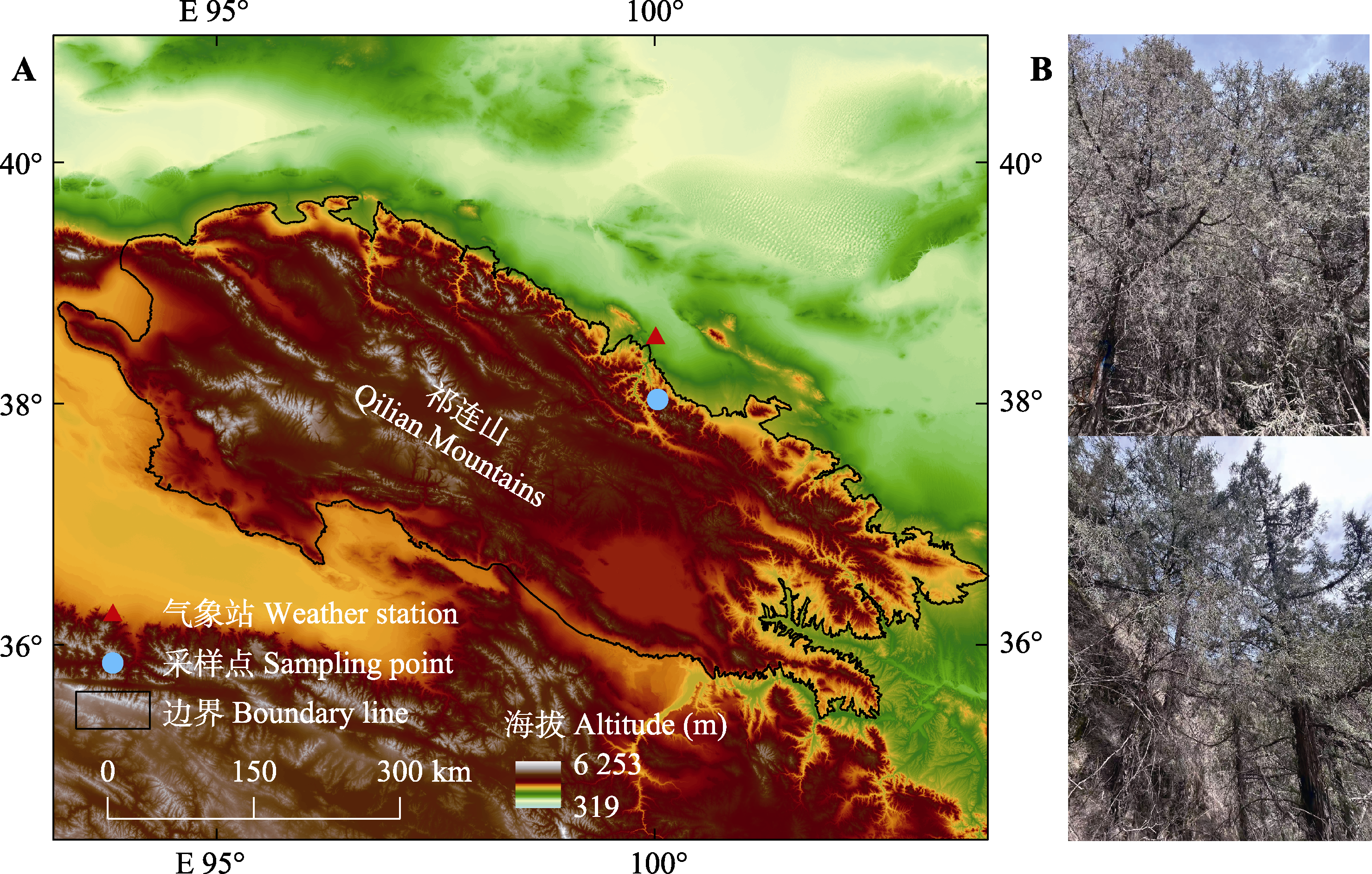
Fig. 1 Sampling site of Juniperus przewalskii and the location of meteorological station in the Qilian Mountains (A) and the habitat conditions of Juniperus przewalskii (B).
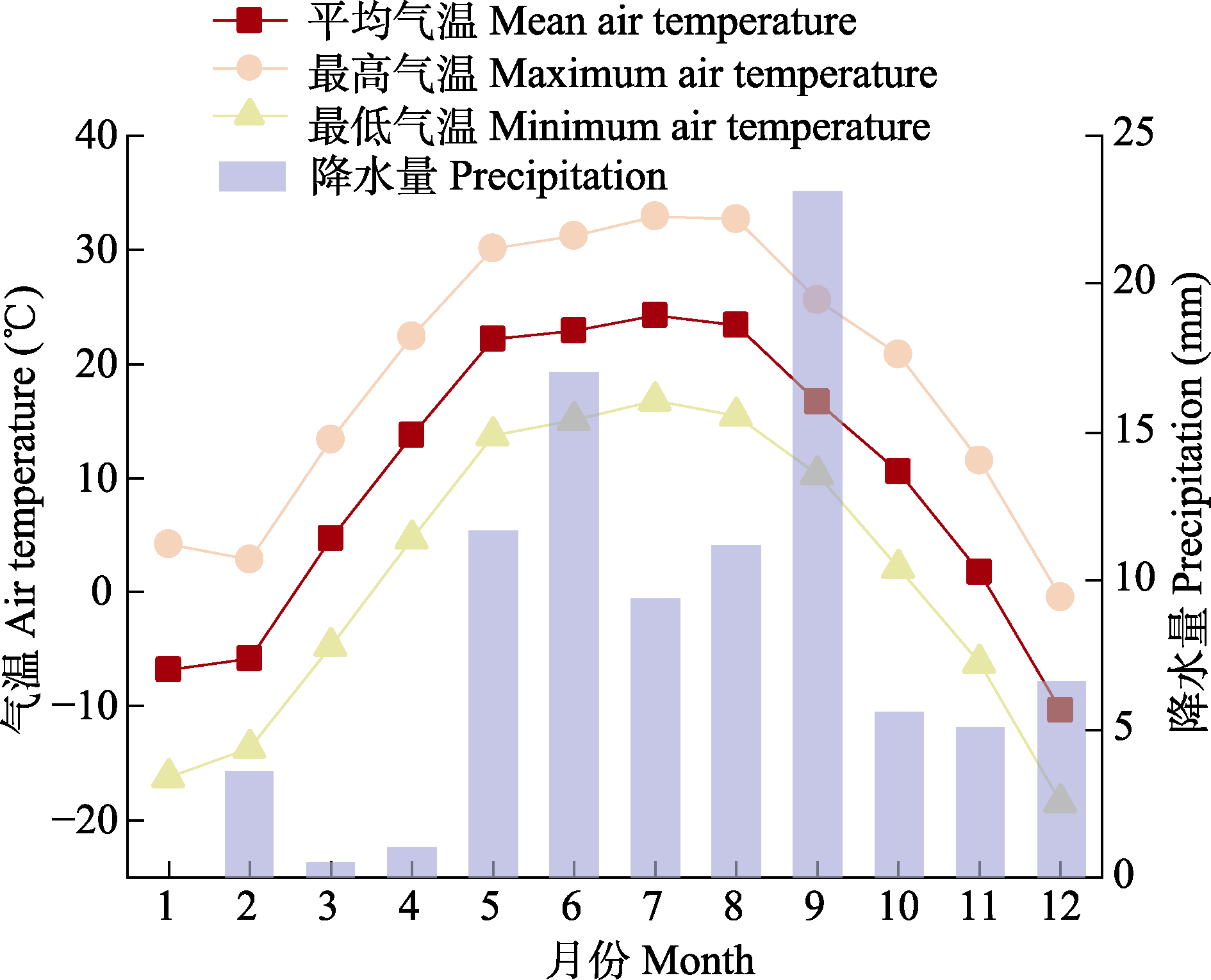
Fig. 2 Monthly average temperature, average maximum temperature, average minimum temperature, and total monthly precipitation in the study area in 2024.

Fig. 3 Schematic diagram of each stages of radial growth in Juniperus przewalskii. CZ, cambial cells; EC, enlargement phase cells; MC, maturation phase cells; WT, wall thickening phase cells. Figure B shows the effect of figure A under polarized light.
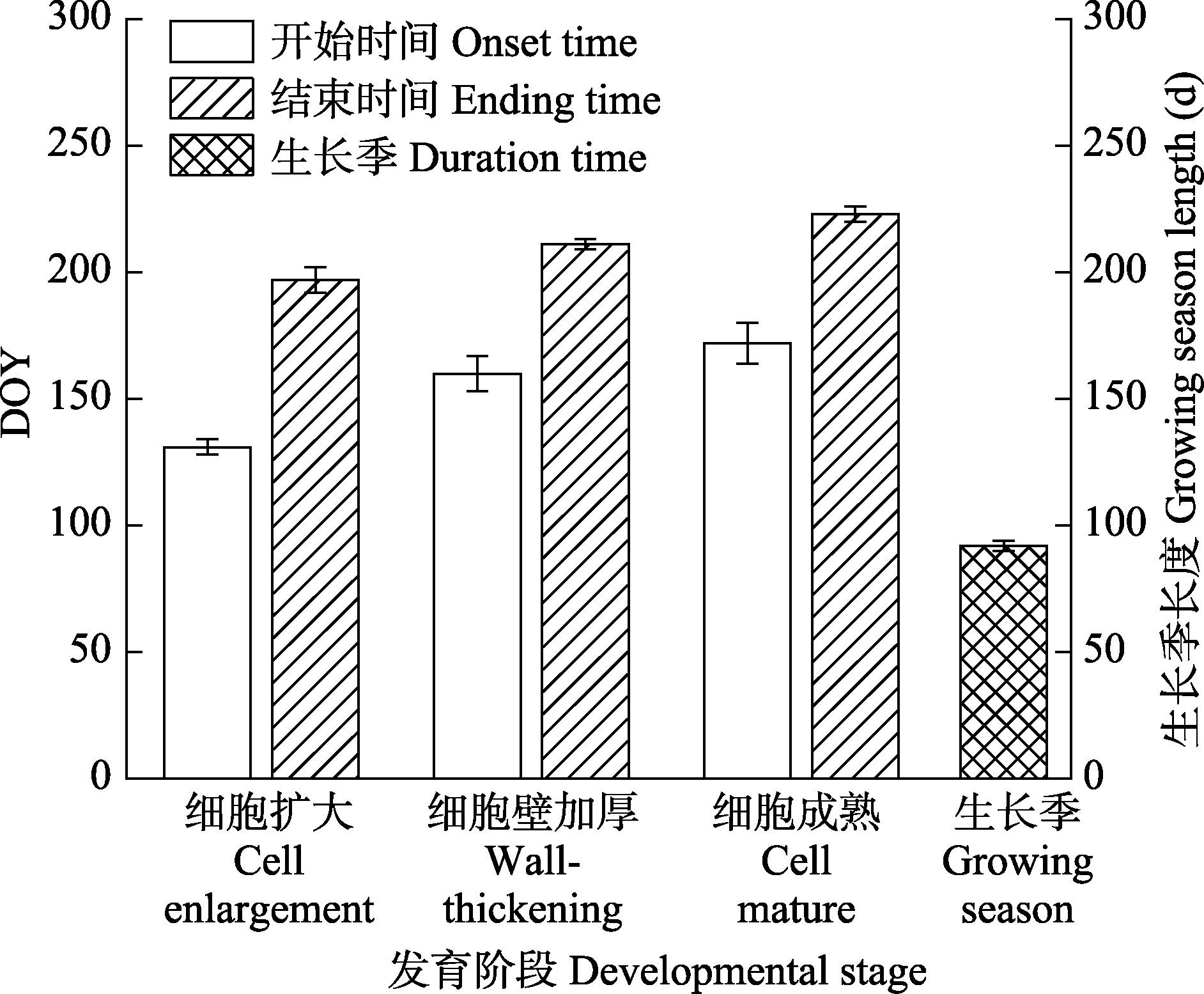
Fig. 4 Start and end times of each developmental stage of radial growth in Juniperus przewalskii in 2024, along with the length of the growing season (mean ± SE). DOY, day of year.
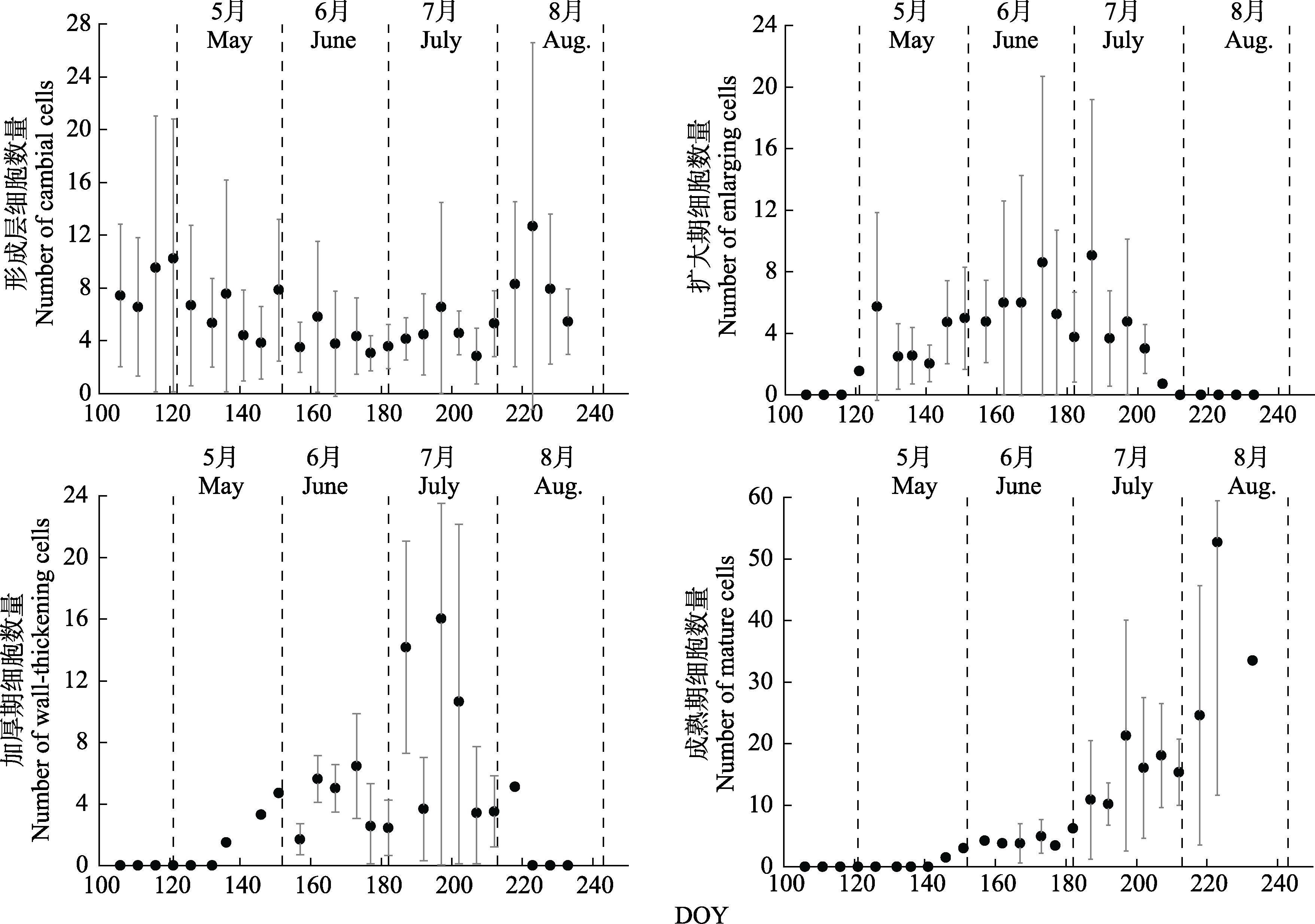
Fig. 5 Variation in the number of cells during each developmental stage of radial growth in Juniperus przewalskii in 2024 (mean ± SE). The dashed lines indicate the division between different months of the growing season. DOY, day of year.
| 样树 Sample tree | R2 | ||||||
|---|---|---|---|---|---|---|---|
| 1 | 12.41 | 0.08 | 12.15 | 0.81 | 149.75 | 0.37 | 0.23 |
| 2 | 20.61 | 0.04 | 5.81 | 0.85 | 162.75 | 0.27 | 0.17 |
| 3 | 29.90 | 0.03 | 4.36 | 0.86 | 171.51 | 0.28 | 0.17 |
| 4 | 32.67 | 0.02 | 3.43 | 0.89 | 164.75 | 0.25 | 0.15 |
| 5 | 23.79 | 0.05 | 7.25 | 0.87 | 156.72 | 0.41 | 0.25 |
| 平均值±标准误 Mean ± SE | 23.88 ± 3.58 | 0.04 ± 0.01 | 6.60 ± 1.53 | 0.86 ± 0.01 | 161.10 ± 3.70 | 0.32 ± 0.03 | 0.19 ± 0.02 |
Table 1 Parameter values of the Gompertz function fitted for various trees of Juniperus przewalskii in 2024 and the explanatory power of the fitting
| 样树 Sample tree | R2 | ||||||
|---|---|---|---|---|---|---|---|
| 1 | 12.41 | 0.08 | 12.15 | 0.81 | 149.75 | 0.37 | 0.23 |
| 2 | 20.61 | 0.04 | 5.81 | 0.85 | 162.75 | 0.27 | 0.17 |
| 3 | 29.90 | 0.03 | 4.36 | 0.86 | 171.51 | 0.28 | 0.17 |
| 4 | 32.67 | 0.02 | 3.43 | 0.89 | 164.75 | 0.25 | 0.15 |
| 5 | 23.79 | 0.05 | 7.25 | 0.87 | 156.72 | 0.41 | 0.25 |
| 平均值±标准误 Mean ± SE | 23.88 ± 3.58 | 0.04 ± 0.01 | 6.60 ± 1.53 | 0.86 ± 0.01 | 161.10 ± 3.70 | 0.32 ± 0.03 | 0.19 ± 0.02 |
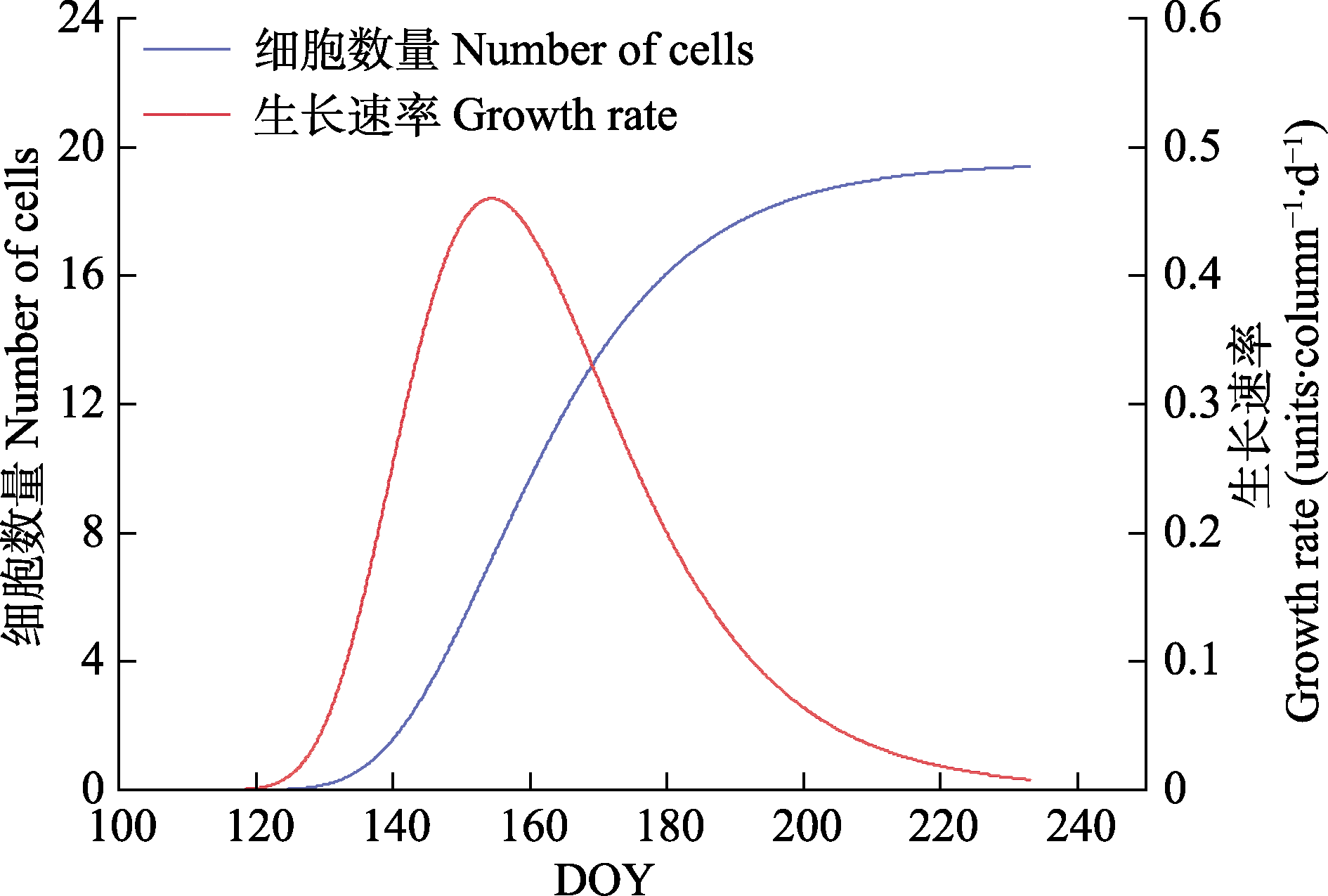
Fig. 6 Growth trend and growth rate of Juniperus przewalskii in 2024 as fitted by the Gompertz function. DOY, day of year.
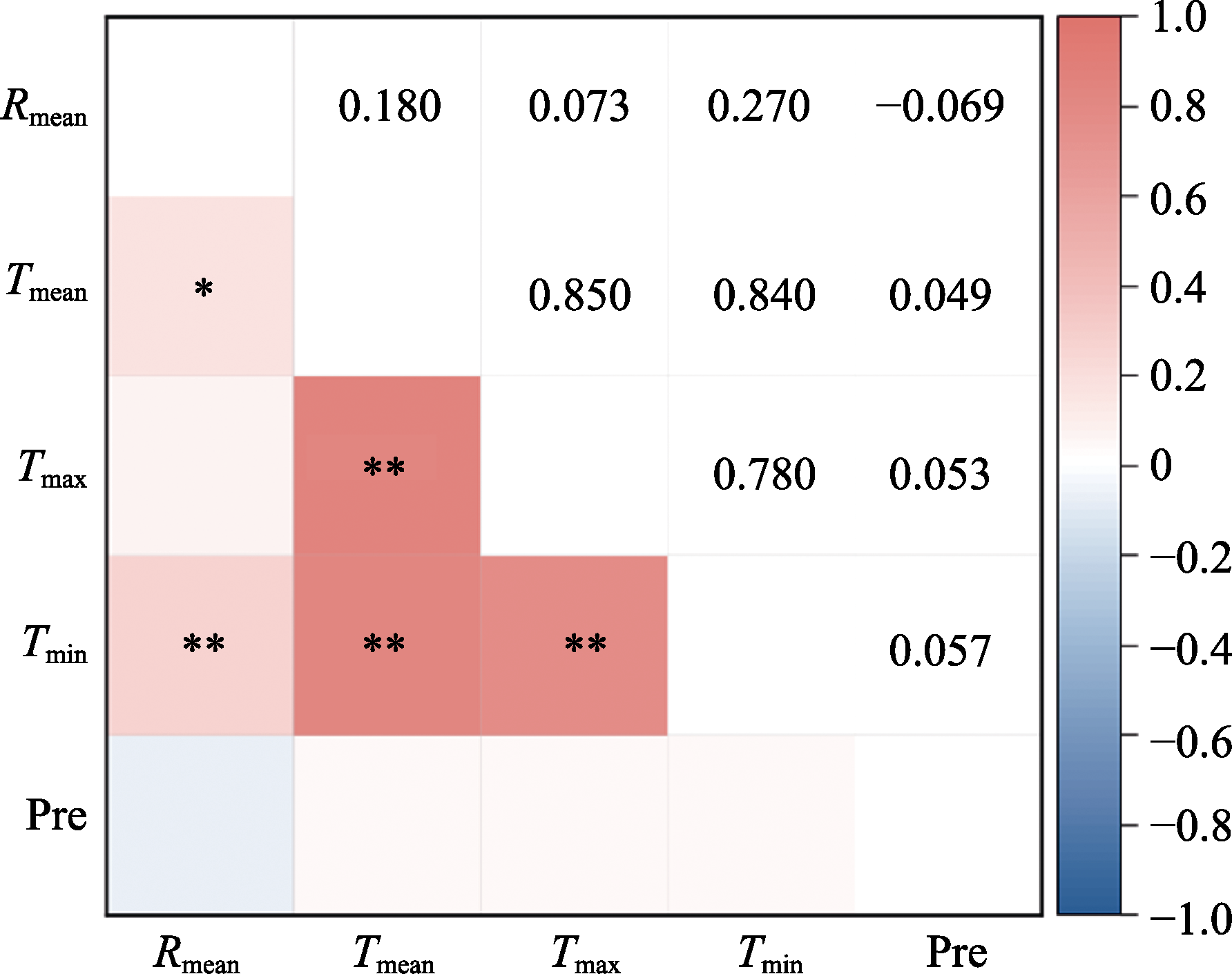
Fig. 7 Correlation analysis between temperature, precipitation, and the growth rate of Juniperus przewalskii. Pre, precipitation; Rmean, the growth rate of Juniperus przewalskii; Tmax, maximum air temperature; Tmean, mean air temperature; Tmin, minimum air temperature. *, p < 0.05; **, p < 0.01.
| 影响因素 Impact factor | 变量 Variable | 估计值 Estimate | 标准误差 Standard error | t | p |
|---|---|---|---|---|---|
| 气温 Air temperature | 截距 Intercept | -0.045 | 0.070 | -0.644 | 0.520 |
| T3-max | 0.007 | 0.002 | 2.871 | 0.004 | |
| 截距 Intercept | -0.037 | 0.048 | -0.767 | 0.443 | |
| T3-mean | 0.009 | 0.002 | 4.129 | 0.000 | |
| 截距 Intercept | 0.005 | 0.031 | 0.159 | 0.874 | |
| T3-min | 0.011 | 0.002 | 5.374 | 0.000 | |
| 截距 Intercept | -0.130 | 0.074 | -1.762 | 0.078 | |
| T7-max | 0.009 | 0.002 | 3.900 | 0.000 | |
| 截距 Intercept | -0.085 | 0.050 | -1.690 | 0.091 | |
| T7-mean | 0.011 | 0.002 | 4.958 | 0.000 | |
| 截距 Intercept | 0.007 | 0.031 | 0.216 | 0.829 | |
| T7-min | 0.011 | 0.002 | 5.462 | 0.000 | |
| 截距 Intercept | -0.045 | 0.070 | -0.644 | 0.520 | |
| T10-max | 0.007 | 0.002 | 2.871 | 0.004 | |
| 截距 Intercept | -0.037 | 0.048 | -0.767 | 0.443 | |
| T10-mean | 0.009 | 0.002 | 4.129 | 0.000 | |
| 截距 Intercept | 0.005 | 0.031 | 0.159 | 0.874 | |
| T10-min | 0.011 | 0.002 | 5.374 | 0.000 | |
| 降水量 Precipitation | 截距 Intercept | 0.135 | 0.017 | 8.100 | 0.000 |
| Pre-3 | 0.011 | 0.003 | 3.198 | 0.001 | |
| 截距 Intercept | 0.120 | 0.018 | 6.767 | 0.000 | |
| Pre-7 | 0.011 | 0.003 | 3.899 | 0.000 | |
| 截距 Intercept | 0.135 | 0.017 | 8.100 | 0.000 | |
| Pre-10 | 0.011 | 0.003 | 3.198 | 0.001 |
Table 2 Impact of temperature and precipitation from 3, 7, and 10 days prior to the sampling date on the growth rate of Juniperus przewalskii
| 影响因素 Impact factor | 变量 Variable | 估计值 Estimate | 标准误差 Standard error | t | p |
|---|---|---|---|---|---|
| 气温 Air temperature | 截距 Intercept | -0.045 | 0.070 | -0.644 | 0.520 |
| T3-max | 0.007 | 0.002 | 2.871 | 0.004 | |
| 截距 Intercept | -0.037 | 0.048 | -0.767 | 0.443 | |
| T3-mean | 0.009 | 0.002 | 4.129 | 0.000 | |
| 截距 Intercept | 0.005 | 0.031 | 0.159 | 0.874 | |
| T3-min | 0.011 | 0.002 | 5.374 | 0.000 | |
| 截距 Intercept | -0.130 | 0.074 | -1.762 | 0.078 | |
| T7-max | 0.009 | 0.002 | 3.900 | 0.000 | |
| 截距 Intercept | -0.085 | 0.050 | -1.690 | 0.091 | |
| T7-mean | 0.011 | 0.002 | 4.958 | 0.000 | |
| 截距 Intercept | 0.007 | 0.031 | 0.216 | 0.829 | |
| T7-min | 0.011 | 0.002 | 5.462 | 0.000 | |
| 截距 Intercept | -0.045 | 0.070 | -0.644 | 0.520 | |
| T10-max | 0.007 | 0.002 | 2.871 | 0.004 | |
| 截距 Intercept | -0.037 | 0.048 | -0.767 | 0.443 | |
| T10-mean | 0.009 | 0.002 | 4.129 | 0.000 | |
| 截距 Intercept | 0.005 | 0.031 | 0.159 | 0.874 | |
| T10-min | 0.011 | 0.002 | 5.374 | 0.000 | |
| 降水量 Precipitation | 截距 Intercept | 0.135 | 0.017 | 8.100 | 0.000 |
| Pre-3 | 0.011 | 0.003 | 3.198 | 0.001 | |
| 截距 Intercept | 0.120 | 0.018 | 6.767 | 0.000 | |
| Pre-7 | 0.011 | 0.003 | 3.899 | 0.000 | |
| 截距 Intercept | 0.135 | 0.017 | 8.100 | 0.000 | |
| Pre-10 | 0.011 | 0.003 | 3.198 | 0.001 |
| [1] | Alam SA, Huang JG, Stadt KJ, Comeau PG, Dawson A, Gea-Izquierdo G, Aakala T, Hölttä T, Vesala T, Mäkelä A, Berninger F (2017). Effects of competition, drought stress and photosynthetic productivity on the radial growth of white spruce in western Canada. Frontiers in Plant Science, 8, 1915. DOI: 10.3389/fpls.2017.01915. |
| [2] |
Begum S, Kudo K, Matsuoka Y, Nakaba S, Yamagishi Y, Nabeshima E, Rahman MH, Nugroho WD, Oribe Y, Jin HO, Funada R (2016). Localized cooling of stems induces latewood formation and cambial dormancy during seasons of active cambium in conifers. Annals of Botany, 117, 465-477.
DOI PMID |
| [3] | Cai SH, Song XN, Hu RH, Guo D (2021). Ecosystem-dependent responses of vegetation coverage on the Tibetan Plateau to climate factors and their lag periods. ISPRS International Journal of Geo-Information, 10, 394. DOI: 10.3390/ijgi10060394. |
| [4] | Carroll CJW, Knapp AK, Martin PH (2021). Higher temperatures increase growth rates of Rocky Mountain montane tree seedlings. Ecosphere, 12, e03414. DOI: 10.1002/ecs2.3414. |
| [5] | Currier CM, Sala OE (2022). Precipitation versus temperature as phenology controls in drylands. Ecology, 103, e3793. DOI: 10.1002/ecy.3793. |
| [6] |
Davis MB (1989). Lags in vegetation response to greenhouse warming. Climatic Change, 15, 75-82.
DOI URL |
| [7] |
Day ME, Greenwood MS, White AS (2001). Age-related changes in foliar morphology and physiology in red spruce and their influence on declining photosynthetic rates and productivity with tree age. Tree Physiology, 21, 1195-1204.
DOI URL |
| [8] |
Diers M, Leuschner C, Dulamsuren C, Schulz TC, Weigel R (2024). Increasing winter temperatures stimulate Scots pine growth in the north German Lowlands despite stationary sensitivity to summer drought. Ecosystems, 27, 428-442.
DOI |
| [9] | Duchesne L, Houle D, D’Orangeville L (2012). Influence of climate on seasonal patterns of stem increment of balsam fir in a boreal forest of Québec, Canada. Agricultural and Forest Meteorology, 162, 108-114. |
| [10] |
Gantois J (2022). New tree-level temperature response curves document sensitivity of tree growth to high temperatures across a US-wide climatic gradient. Global Change Biology, 28, 6002-6020.
DOI PMID |
| [11] |
Gao JN, Yang B, He MH, Shishov V (2019). Intra-annual stem radial increment patterns of Chinese pine, Helan Mountains, Northern Central China. Trees, 33, 751-763.
DOI |
| [12] |
Gao S, Liang EY, Julio Camarero J, Zhu HF, Peñuelas J, Piao SL, Chen FH (2025). Tree rings uncover dynamic linkages of Earth spheres. Science Bulletin, 70, 313-316.
DOI URL |
| [13] |
Gea-Izquierdo G, Cherubini P, Cañellas I (2011). Tree-rings reflect the impact of climate change on Quercus ilex L. along a temperature gradient in Spain over the last 100 years. Forest Ecology and Management, 262, 1807-1816.
DOI URL |
| [14] |
Gruber A, Strobl S, Veit B, Oberhuber W (2010). Impact of drought on the temporal dynamics of wood formation in Pinus sylvestris. Tree Physiology, 30, 490-501.
DOI URL |
| [15] |
Hu LF, Fan ZX (2016). Stem radial growth in response to microclimate in an Asian tropical dry Karst forest. Acta Ecologica Sinica, 36, 401-409.
DOI URL |
| [16] | Huang JG, Ma QQ, Rossi S, Biondi F, Deslauriers A, Fonti P, Liang EY, Mäkinen H, Oberhuber W, Rathgeber CBK, Tognetti R, Treml V, Yang B, Zhang JL, Antonucci S, et al. (2020). Photoperiod and temperature as dominant environmental drivers triggering secondary growth resumption in Northern Hemisphere conifers. Proceedings of the National Academy of Sciences of the United States of America, 117, 20645-20652. |
| [17] | Huang JG, Tardif JC, Bergeron Y, Denneler B, Berninger F, Girardin MP (2010).Radial growth response of four dominant boreal tree species to climate along a latitudinal gradient in the eastern Canadian boreal forest. Global Change Biology, 16, 711-731. |
| [18] | Jin MY, Li JJ, Che ZX, Wang F, Zhang JZ, Gou XH (2020). Intra-annual radial growth responses of Qilian juniper (Juniperus przewalskii) to climate factors in the central Qilian Mountains, northwest China. Acta Ecologica Sinica, 40, 7699-7708. |
| [金敏艳, 李进军, 车宗玺, 王放, 张军周, 勾晓华 (2020). 祁连山中部祁连圆柏年内径向生长对气候因子的响应. 生态学报, 40, 7699-7708.] | |
| [19] | Kaewmano A, Fu PL, Fan ZX, Pumijumnong N, Zuidema PA, Bräuning A (2022). Climatic influences on intra-annual stem radial variations and xylem formation of Toona ciliata at two Asian tropical forest sites with contrasting soil water availability. Agricultural and Forest Meteorology, 318, 108906. DOI: 10.1016/j.agrformet.2022.108906. |
| [20] |
Kalliokoski T, Mäkinen H, Jyske T, Nöjd P, Linder S (2013). Effects of nutrient optimization on intra-annual wood formation in Norway spruce. Tree Physiology, 33, 1145-1155.
DOI PMID |
| [21] | Kang J, Yang ZL, Yu BY, Ma QQ, Jiang SW, Shishov VV, Zhou P, Huang JG, Ding XG (2023). An earlier start of growing season can affect tree radial growth through regulating cumulative growth rate. Agricultural and Forest Meteorology, 342, 109738. DOI: 10.1016/j.agrformet.2023.109738. |
| [22] | Kong DX, Miao CY, Wu JW, Zheng HY, Wu SH (2020). Time lag of vegetation growth on the Loess Plateau in response to climate factors: estimation, distribution, and influence. Science of the Total Environment, 744, 140726. DOI: 10.1016/j.scitotenv.2020.140726. |
| [23] | Körner C (2003). Alpine Plant Life: Functional Plant Ecology of High Mountain Ecosystems. Springer, Berlin. |
| [24] |
Körner C, Paulsen J (2004). A world-wide study of high altitude treeline temperatures. Journal of Biogeography, 31, 713-732.
DOI URL |
| [25] | Li JX, Song FB, Jin YT, Yun RX, Chen ZJ, Lyu ZY, Zhao Y, Cui D (2021). Critical temperatures controlling the phenology and radial growth of Pinus sylvestris var. mongolica on the southern margin of a cold temperate coniferous forest. Ecological Indicators, 126, 107674. DOI: 10.1016/j.ecolind.2021.107674. |
| [26] | Li QL, Guo MG, Li JY, Guo XL, Huang JG, Chen L, Li XB (2024). Effects of temperature and precipitation on intra-annual xylem growth of Quercus mongolica in Liupan Mountain Nature Reserve, China. Bulletin of Botanical Research, 44, 289-297. |
|
[李乾林, 郭明钢, 李佳音, 郭霞丽, 黄建国, 陈林, 李学斌 (2024). 温度和降水对宁夏六盘山自然保护区蒙古栎年内木质部生长的影响. 植物研究, 44, 289-297.]
DOI |
|
| [27] |
Liang HX, Huang JG, Ma QQ, Li JY, Wang Z, Guo XL, Zhu HX, Jiang SW, Zhou P, Yu BY, Luo DW (2019). Contributions of competition and climate on radial growth of Pinus massoniana in subtropics of China. Agricultural and Forest Meteorology, 274, 7-17.
DOI URL |
| [28] | Liu YN, Fan ZX, Lin YX, Kaewmano A, Wei XL, Fu PL, Grießinger J, Bräuning A (2024). Impact of extreme pre-monsoon drought on xylogenesis and intra-annual radial increments of two tree species in a tropical montane evergreen broad-leaved forest, southwest China. Tree Physiology, 44, tpae086. DOI: 10.1093/treephys/tpae086. |
| [29] | Liu ZB, Wang YH, Tian A, Yu PT, Xiong W, Xu LH, Wang YR (2017). Intra-annual variation of stem radius of Larix principis-rupprechtii and its response to environmental factors in liupan mountains of northwest China. Forests, 8, 382. DOI: 10.3390/f8100382. |
| [30] | Ma YR, Guan QY, Sun YF, Zhang J, Yang LQ, Yang EQ, Li HC, Du QQ (2022). Three-dimensional dynamic characteristics of vegetation and its response to climatic factors in the Qilian Mountains. Catena, 208, 105694. DOI: 10.1016/j.catena.2021.105694. |
| [31] |
Mencuccini M, Martínez-Vilalta J, Vanderklein D, Hamid HA, Korakaki E, Lee S, Michiels B (2005). Size-mediated ageing reduces vigour in trees. Ecology Letters, 8, 1183-1190.
DOI PMID |
| [32] | Mu YM, Fang OY, Lyu LX (2021). Nighttime warming alleviates the incidence of juniper forest growth decline on the Tibetan Plateau. Science of the Total Environment, 782, 146924. DOI: 10.1016/j.scitotenv.2021.146924. |
| [33] | Ning TT, Liu WZ, Lin W, Song XQ (2015). NDVI variation and its responses to climate change on the northern Loess Plateau of China from 1998 to 2012. Advances in Meteorology, 2015, 725427. DOI: 10.1155/2015/725427. |
| [34] | Pandey S (2021). Climatic influence on tree wood anatomy: a review. Journal of Wood Science, 67, 24. DOI: 10.1186/s10086-021-01956-w. |
| [35] |
Paudel KP, Andersen P (2013). Response of rangeland vegetation to snow cover dynamics in Nepal Trans Himalaya. Climatic Change, 117, 149-162.
DOI URL |
| [36] |
Qian NP, Gao HX, Song CJ, Dong CC, Liu QJ (2024). Seasonal dynamics of radial growth of Betula platyphylla and its response to environmental factors in Changbai Mountains. Chinese Journal of Plant Ecology, 48, 1001-1010.
DOI URL |
|
[钱尼澎, 高浩鑫, 宋超杰, 董淳超, 刘琪璟 (2024). 长白山白桦径向生长季节动态及其对环境因子的响应. 植物生态学报, 48, 1001-1010.]
DOI |
|
| [37] |
Rathgeber CBK, Rossi S, Bontemps JD (2011). Cambial activity related to tree size in a mature silver-fir plantation. Annals of Botany, 108, 429-438.
DOI PMID |
| [38] |
Ren P, Rossi S, Gricar J, Liang EY, Cufar K (2015). Is precipitation a trigger for the onset of xylogenesis in Juniperus przewalskii on the north-eastern Tibetan Plateau? Annals of Botany, 115, 629-639.
DOI URL |
| [39] |
Ren P, Rossi S, Julio Camarero J, Ellison AM, Liang EY, Peñuelas J (2018). Critical temperature and precipitation thresholds for the onset of xylogenesis of Juniperus przewalskii in a semi-arid area of the north-eastern Tibetan Plateau. Annals of Botany, 121, 617-624.
DOI URL |
| [40] | Ren XL, Jia JB, Hu YW, Han B, Peng P, Zhang MJ, Liu M (2024). Cunninghamia lanceolata cannot Depend solely on xylem embolism resistance to Withstand prolonged seasonal drought. Journal of Hydrology, 645, 132255. DOI: 10.1016/j.jhydrol.2024.132255. |
| [41] |
Richardson AD, Hufkens K, Milliman T, Aubrecht DM, Furze ME, Seyednasrollah B, Krassovski MB, Latimer JM, Robert Nettles W, Heiderman RR, Warren JM, Hanson PJ (2018). Ecosystem warming extends vegetation activity but heightens vulnerability to cold temperatures. Nature, 560, 368-371.
DOI |
| [42] |
Rossi S, Anfodillo T, Cufar K, Cuny HE, Deslauriers A, Fonti P, Frank D, Gricar J, Gruber A, King GM, Krause C, Morin H, Oberhuber W, Prislan P, Rathgeber CBK (2013). A meta-analysis of cambium phenology and growth: linear and non-linear patterns in conifers of the Northern Hemisphere. Annals of Botany, 112, 1911-1920.
DOI PMID |
| [43] |
Rossi S, Deslauriers A, Anfodillo T (2006a). Assessment of cambial activity and xylogenesis by microsampling tree species: an example at the alpine timberline. IAWA Journal, 27, 383-394.
DOI URL |
| [44] |
Rossi S, Deslauriers A, Anfodillo T, Morin H, Saracino A, Motta R, Borghetti M (2006b). Conifers in cold environments synchronize maximum growth rate of tree-ring formation with day length. New Phytologist, 170, 301-310.
DOI URL |
| [45] |
Rossi S, Deslauriers A, Morin H (2003). Application of the Gompertz equation for the study of xylem cell development. Dendrochronologia, 21, 33-39.
DOI URL |
| [46] |
Rossi S, Girard MJ, Morin H (2014). Lengthening of the duration of xylogenesis engenders disproportionate increases in xylem production. Global Change Biology, 20, 2261-2271.
DOI PMID |
| [47] |
Ryan MG, Waring RH (1992). Maintenance respiration and stand development in a subalpine lodgepole pine forest. Ecology, 73, 2100-2108.
DOI URL |
| [48] | Shan SY, Xu HJ, Qi XL, Chen T, Wang XD (2023). Evaluation and prediction of ecological carrying capacity in the Qilian Mountain National Park, China. Journal of Environmental Management, 339, 117856. DOI: 10.1016/j.jenvman.2023.117856. |
| [49] |
Spiecker H, Kahle HP (2023). Climate-driven tree growth and mortality in the Black Forest, Germany—Long-term observations. Global Change Biology, 29, 5908-5923.
DOI URL |
| [50] | Sun HZ, Wang JY, Xiong JN, Bian JH, Jin HA, Cheng WM, Li AN (2021). Vegetation change and its response to climate change in Yunnan Province, China. Advances in Meteorology, 2021, 8857589. DOI: 10.1155/2021/8857589. |
| [51] | Tang WX, Liu SG, Jing MD, Healey JR, Smith MN, Farooq TH, Zhu LJ, Zhao SQ, Wu YP (2024). Vegetation growth responses to climate change: a cross-scale analysis of biological memory and time lags using tree ring and satellite data. Global Change Biology, 30, e17441. DOI: 10.1111/gcb.17441. |
| [52] | Tang WX, Liu SG, Kang P, Peng X, Li YY, Guo R, Jia JN, Liu MC, Zhu LJ (2021). Quantifying the lagged effects of climate factors on vegetation growth in 32 major cities of China. Ecological Indicators, 132, 108290. DOI: 10.1016/j.ecolind.2021.108290. |
| [53] | Tardif JC, Conciatori F, Bergeron Y (2001). Comparative analysis of the climatic response of seven boreal tree species from northwestern Québec, Canada. Tree-Ring Research, 57, 169-181. |
| [54] |
Vicente-Serrano SM, Gouveia C, Camarero JJ, Beguería S, Trigo R, López-Moreno JI, Azorín-Molina C, Pasho E, Lorenzo-Lacruz J, Revuelto J, Morán-Tejeda E, Sanchez-Lorenzo A (2013). Response of vegetation to drought time-scales across global land biomes. Proceedings of the National Academy of Sciences of the United States of America, 110, 52-57.
DOI PMID |
| [55] | Wang J, Yu BY, Huang JG (2020). Xylem formation and response to climate of Castanea henryi in Dinghushan Mountain. Journal of Tropical and Subtropical Botany, 28, 445-454. |
| [王婕, 余碧云, 黄建国 (2020). 鼎湖山锥栗木质部形成及其对气候的响应. 热带亚热带植物学报, 28, 445-454.] | |
| [56] | Wang LL, Gou XH, Xia JQ, Wang F, Zhang F, Zhang JZ (2021). Research progress on cambial activity of trees and the influencing factors. Chinese Journal of Applied Ecology, 32, 3761-3770. |
|
[王玲玲, 勾晓华, 夏敬清, 王放, 张芬, 张军周 (2021). 树木形成层活动及其影响因素研究进展. 应用生态学报, 32, 3761-3770.]
DOI |
|
| [57] | Wang WJ, Huang JG, Jiang SW, Yu BY, Zhou P, Zhang YL (2023). Response of xylem formation of Larix sibirica to climate change along the southern Altai Mountains, Central Asia. Dendrochronologia, 77, 126049. DOI: 10.1016/j.dendro.2022.126049. |
| [58] |
Way DA, Sage RF (2008). Elevated growth temperatures reduce the carbon gain of black spruce [Picea mariana (Mill.) B.S.P.]. Global Change Biology, 14, 624-636.
DOI URL |
| [59] |
Wu DH, Zhao X, Liang SL, Zhou T, Huang KC, Tang BJ, Zhao WQ (2015). Time-lag effects of global vegetation responses to climate change. Global Change Biology, 21, 3520-3531.
DOI PMID |
| [60] | Yuan WP, Zheng Y, Piao SL, Ciais P, Lombardozzi D, Wang YP, Ryu Y, Chen GX, Dong WJ, Hu ZM, Jain AK, Jiang CY, Kato E, Li SH, Lienert S, et al. (2019). Increased atmospheric vapor pressure deficit reduces global vegetation growth. Science Advances, 5, eaax1396. DOI: 10.1126/sciadv.aax1396. |
| [61] |
Zellweger F, de Frenne P, Lenoir J, Vangansbeke P, Verheyen K, Bernhardt-Römermann M, Baeten L, Hédl R, Berki I, Brunet J, van Calster H, Chudomelová M, Decocq G, Dirnböck T, Durak T, et al. (2020). Forest microclimate dynamics drive plant responses to warming. Science, 368, 772-775.
DOI PMID |
| [62] | Zeng LH, Zhou L, Kou L, Chi YG (2023). Dendrometer-derived radial variations of Pinus Massoniana at multiple time scales and its response to environmental factors in subtropical region. Acta Ecologica Sinica, 43, 6637-6648. |
| [曾林辉, 周蕾, 寇亮, 迟永刚 (2023). 基于生长测量仪监测的亚热带地区马尾松多时间尺度径向变化及其与环境因子的关系. 生态学报, 43, 6637-6648.] | |
| [63] | Zhang HS, Lv XZ, Ni YX, Zhang QF, Wang JW, Ma L (2025). Time-lag effects of NEP and NPP to meteorological factors in the source regions of the Yangtze and Yellow Rivers. Frontiers in Plant Science, 15, 1502384. DOI: 10.3389/fpls.2024.1502384. |
| [64] | Zhang JZ, Gou XH, Alexander MR, Xia JQ, Wang F, Zhang F, Man ZH, Pederson N (2021). Drought limits wood production of Juniperus przewalskii even as growing seasons lengthens in a cold and arid environment. Catena, 196, 104936. DOI: 10.1016/j.catena.2020.104936. |
| [65] |
Zhang JZ, Gou XH, Pederson N, Zhang F, Niu HG, Zhao SD, Wang F (2018). Cambial phenology in Juniperus przewalskii along different altitudinal gradients in a cold and arid region. Tree Physiology, 38, 840-852.
DOI URL |
| [66] | Zhang JZ, Gou XH, Rademacher T, Wang LJ, Li YL, Sun QP, Wang F, Cao ZY (2023). Interaction of age and elevation on xylogenesis in Juniperus przewalskii in a cold and arid region. Agricultural and Forest Meteorology, 337, 109480. DOI: 10.1016/j.agrformet.2023.109480. |
| [67] | Zhang JZ, Gou XH, Wang YT, Sun QP, Liu JJ, Wang F, Xu M, Yang JQ, Fonti P (2024). Impacts of site aridity on intra-annual radial variation of two alpine coniferous species in cold and dry ecosystems. Ecological Indicators, 158, 111420. DOI: 10.1016/j.ecolind.2023.111420. |
| [68] |
Zhang JZ, Gou XH, Zhao ZQ, Liu WH, Zhang F, Cao ZY, Zhou FF (2013). Improved method of obtaining micro-core paraffin sections in dendroecological research. Chinese Journal of Plant Ecology, 37, 972-977.
DOI URL |
|
[张军周, 勾晓华, 赵志千, 刘文火, 张芬, 曹宗英, 周非飞 (2013). 树轮生态学研究中微树芯石蜡切片制作的方法探讨. 植物生态学报, 37, 972-977.]
DOI |
|
| [69] |
Zhang RB, Yuan YJ, Gou XH, Zhang TW, Zou C, Ji CR, Fan ZA, Qin L, Shang HM, Li XJ (2016). Intra-annual radial growth of Schrenk spruce (Picea schrenkiana Fisch. et Mey) and its response to climate on the northern slopes of the Tianshan Mountains. Dendrochronologia, 40, 36-42.
DOI URL |
| [70] |
Zhu MY, Lin L, She YL, Xiao CC, Zhao TX, Hu CX, Zhao CY, Wang WL (2022). Radial growth and its low-temperature threshold of Abies georgei var. smithii at different altitudes in Jiaozi Mountain, Yunnan, China. Chinese Journal of Plant Ecology, 46, 1038-1049.
DOI URL |
|
[朱明阳, 林琳, 佘雨龙, 肖城材, 赵通兴, 胡春相, 赵昌佑, 王文礼 (2022). 云南轿子山不同海拔急尖长苞冷杉径向生长动态及其低温阈值. 植物生态学报, 46, 1038-1049.]
DOI |
|
| [71] |
Zweifel R, Zimmermann L, Newbery DM (2005). Modeling tree water deficit from microclimate: an approach to quantifying drought stress. Tree Physiology, 25, 147-156.
PMID |
| [1] | WANG Wang-Lin Xu Lin Xu, QIAN Ni-Peng, Li Gang-Dun, LIU Qi-Jing. Seasonal dynamics of radial growth and its responses to non-structural carbohydrates in Pinus koraiensis and Quercus mongolica [J]. Chin J Plant Ecol, 2026, 50(预发表): 1-. |
| [2] | LI Gang-Dun, QIAN Ni-Peng, WANG Lin-Xu, DONG Chun-Chao, LIU Qi-Jing. Seasonal dynamics of radial growth of Pinus koraiensis and Ulmus davidiana var. japonica are related to environmental factors in Changbai Mountain, China [J]. Chin J Plant Ecol, 2025, 49(7): 1110-1118. |
| [3] | LI Shi-Jie, WANG Li, DU Ying-Jun, ZHENG Lei, ZENG Fan-Suo, XIN Ying. Radial growth response of natural Fraxinus mandshurica to climate in the Changbai Mountains [J]. Chin J Plant Ecol, 2024, 48(8): 1011-1020. |
| [4] | ZHANG Peng, JIAO Liang, XUE Ru-Hong, WEI Meng-Yuan, DU Da-Shi, WU Xuan, WANG Xu-Ge, LI Qian. Drought intensity affected the growth recovery of Picea crassifolia across different altitudes in western Qilian Mountains [J]. Chin J Plant Ecol, 2024, 48(8): 977-987. |
| [5] | QIAN Ni-Peng, GAO Hao-Xin, SONG Chao-Jie, DONG Chun-Chao, LIU Qi-Jing. Seasonal dynamics of radial growth of Betula platyphylla and its response to environmental factors in Changbai Mountains [J]. Chin J Plant Ecol, 2024, 48(8): 1001-1010. |
| [6] | LIU Mei-Jun, CHEN Qiu-Wen, LÜ Jin-Lin, LI Guo-Qing, DU Sheng. Seasonal dynamics of radial growth and micro-variation in stems of Quercus mongolica var. liaotungensis and Robinia pseudoacacia in loess hilly region [J]. Chin J Plant Ecol, 2023, 47(2): 227-237. |
| [7] | LI Yi-Ding, SANG Qing-Tian, ZHANG Hao, LIU Long-Chang, PAN Qing-Min, WANG Yu, LIU Wei, YUAN Wen-Ping. Effects of air and soil humidification on the growth of young Pinus sylvestris var. mongolica trees in semi-arid area of Nei Mongol, China [J]. Chin J Plant Ecol, 2022, 46(9): 1077-1085. |
| [8] | ZHU Ming-Yang, LIN Lin, SHE Yu-Long, XIAO Cheng-Cai, ZHAO Tong-Xing, HU Chun-Xiang, ZHAO Chang-You, WANG Wen-Li. Radial growth and its low-temperature threshold of Abies georgei var. smithii at different altitudes in Jiaozi Mountain, Yunnan, China [J]. Chin J Plant Ecol, 2022, 46(9): 1038-1049. |
| [9] | LI Xiao, PIALUANG Bounthong, KANG Wen-Hui, JI Xiao-Dong, ZHANG Hai-Jiang, XUE Zhi-Guo, ZHANG Zhi-Qiang. Responses of radial growth to climate change over the past decades in secondary Betula platyphylla forests in the mountains of northwest Hebei, China [J]. Chin J Plant Ecol, 2022, 46(8): 919-931. |
| [10] | KANG Jian, LIANG Han-Xue, JIANG Shao-Wei, ZHU Huo-Xing, ZHOU Peng, HUANG Jian-Guo. Effects of competition and climate on tree radial growth of Pinus sibirica in Altai Mountains, Xinjiang, China [J]. Chin J Plant Ecol, 2020, 44(12): 1195-1202. |
| [11] | Xia-Li GUO, Bi-Yun YU, Han-Xue LIANG, Jian-Guo HUANG. Advancement in studies of tree growth and ecophysiology incorporating micro-sampling approach [J]. Chin J Plan Ecolo, 2017, 41(7): 795-804. |
| [12] | Yong-Xing CHANG, Zhen-Ju CHEN, Xian-Liang ZHANG, Xue-Ping BAI, Xue-Peng ZHAO, Jun-Xia LI, Xu LU. Responses of radial growth to temperature in Larix gmelinii of the Da Hinggan Ling under climate warming [J]. Chin J Plant Ecol, 2017, 41(3): 279-289. |
| [13] | DONG Man-Yu, JIANG Yuan, YANG Hao-Chun, WANG Ming-Chang, ZHANG Wen-Tao, GUO Yuan-Yuan. Dynamics of stem radial growth of Picea meyeri during the growing season at the treeline of Luya Mountain, China [J]. Chin J Plant Ecol, 2012, 36(9): 956-964. |
| [14] | ZHANG Chun-Yu, GAO Lu-Shuang, ZHAO Ya-Zhou, JIA Yu-Zhen, LI Jin-Xin, ZHAO Xiu-Hai. RESPONSE OF RADIAL GROWTH TO NEIGHBORING COMPETITION AND CLIMATE FACTORS IN TAXUS CUSPIDATA [J]. Chin J Plant Ecol, 2009, 33(6): 1177-1183. |
| Viewed | ||||||
|
Full text |
|
|||||
|
Abstract |
|
|||||
Copyright © 2026 Chinese Journal of Plant Ecology
Tel: 010-62836134, 62836138, E-mail: apes@ibcas.ac.cn, cjpe@ibcas.ac.cn

