
Chin J Plant Ecol ›› 2026, Vol. 50 ›› Issue (6): 1357-1369.DOI: 10.17521/cjpe.2025.0172 cstr: 32100.14.cjpe.2025.0172
• Research Articles • Previous Articles Next Articles
FANG Ni1,2,4, LIANG Nian-Nian1,2,4, Ramil KOHKAEW1,2,4, FAN Song-Le1,2,4, JIA Yong-Xia1, NING Qiu-Rui1,3, LIU Hui1,2,3, YU Hui1,2,*( )
)
Received:2025-05-14
Accepted:2025-11-29
Online:2026-06-28
Published:2026-08-26
Contact:
YU Hui
Supported by:FANG Ni, LIANG Nian-Nian, Ramil KOHKAEW, FAN Song-Le, JIA Yong-Xia, NING Qiu-Rui, LIU Hui, YU Hui. Coordinated responses of volatile odors and stomatal characteristics in Ficus hispida under natural ozone gradients[J]. Chin J Plant Ecol, 2026, 50(6): 1357-1369.
Add to citation manager EndNote|Ris|BibTeX
URL: https://www.plant-ecology.com/EN/10.17521/cjpe.2025.0172
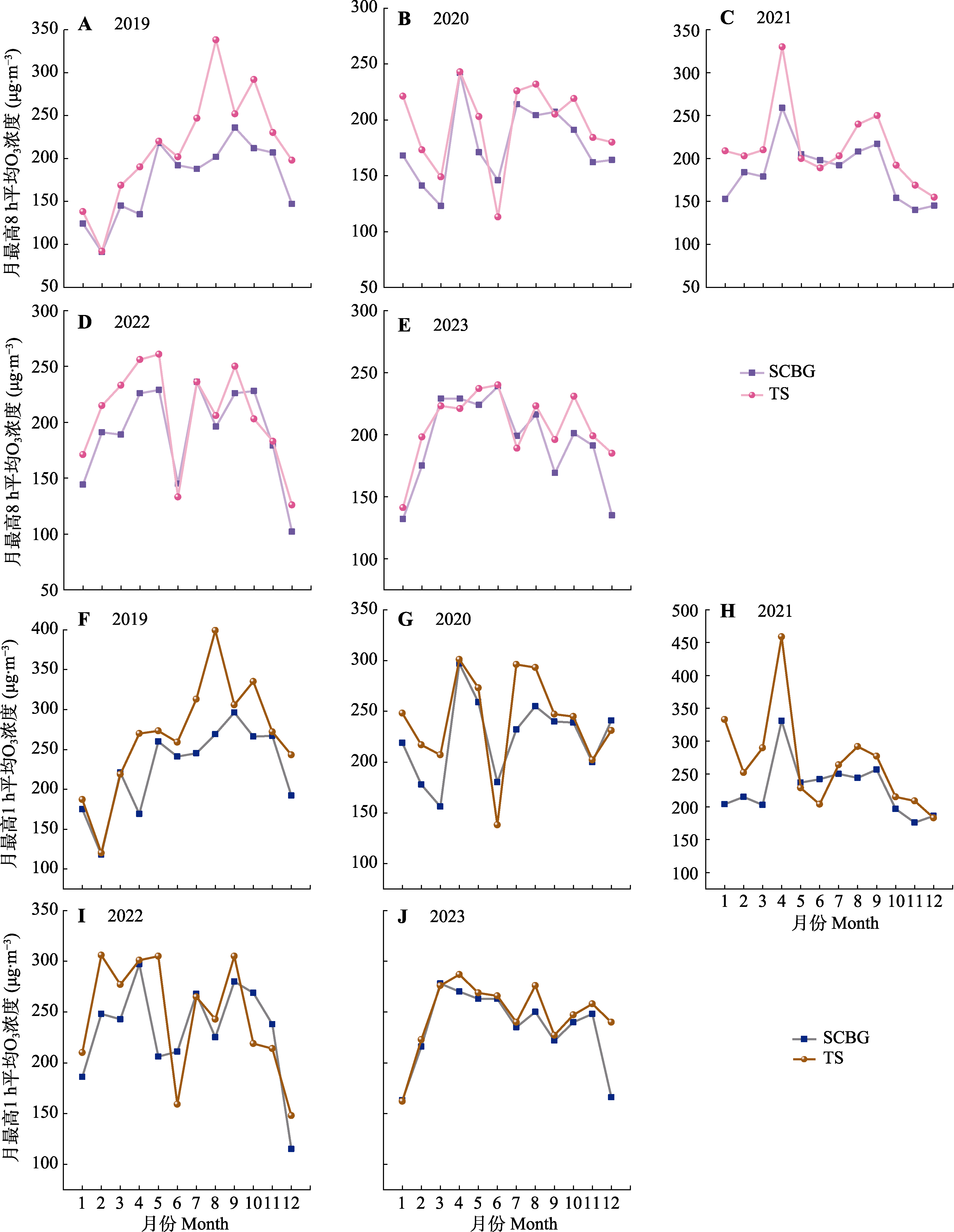
Fig. 1 Monthly maximum 8 h average ozone (O3) concentration (A-E) and monthly maximum 1 h average O3 concentration (F-J) in Tongsha Ecological Park (TS) and South China Botanical Garden, Chinese Academy of Science (SCBG).
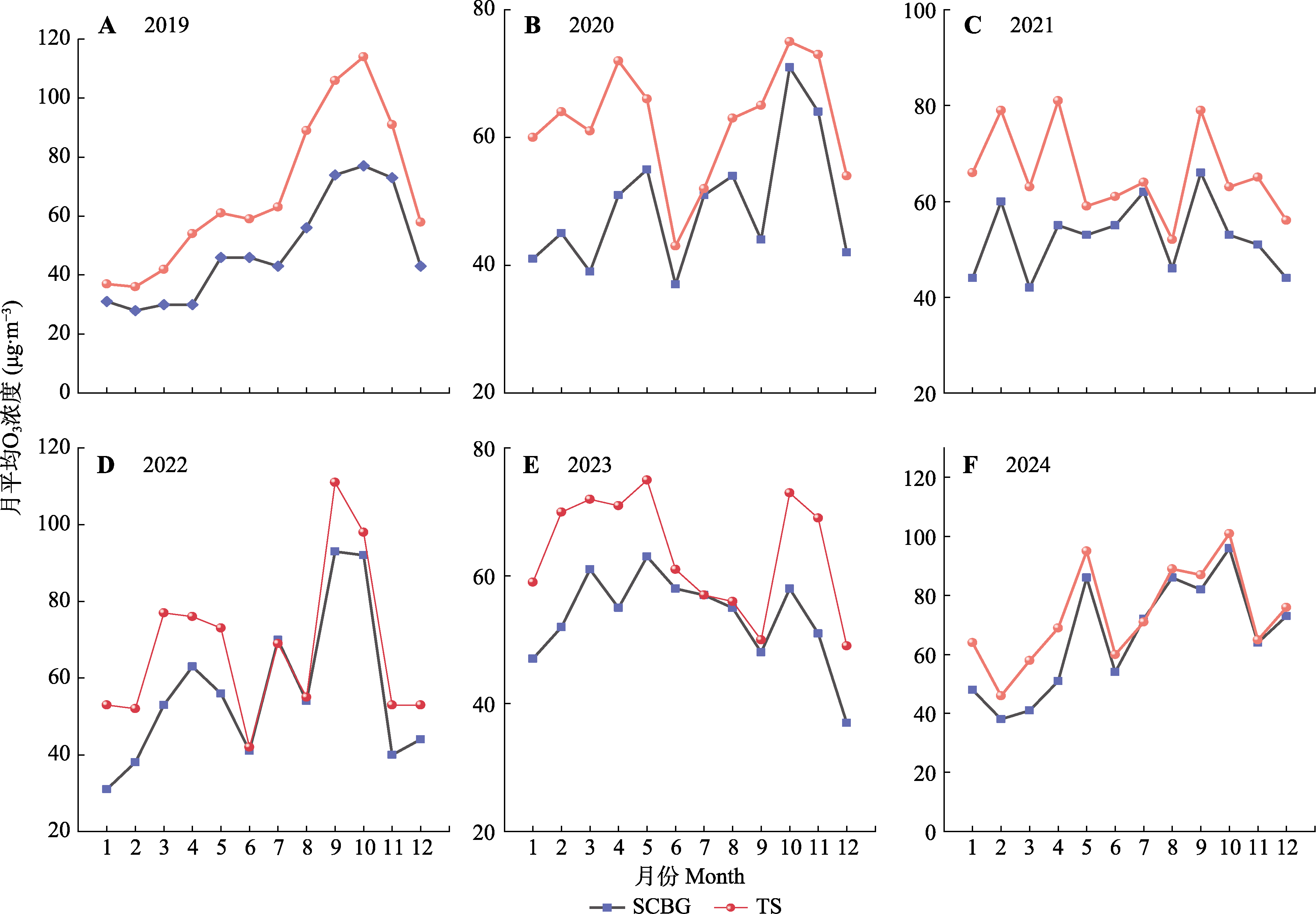
Fig. 2 Monthly average ozone (O3) concentration in in Tongsha Ecological Park (TS) and South China Botanical Garden, Chinese Academy of Science (SCBG).
| 化合物 Compound | 保留指数 Retention index | 相对含量 Relative content (%) | |
|---|---|---|---|
| TS | SCBG | ||
| 脂肪族化合物 Aliphatic compound | |||
| 2-乙基己醇 2-Ethylhexan-1-ol | 1 025 | 0.09 ± 0.03 | |
| (3Z)-己烯醇乙酸酯* Hex-(3Z)-enyl acetate* | 1 001 | 0.90 ± 0.45 | 6.53 ± 0.85 |
| 乙酸己酯 Hexyl acetate | 1 008 | 1.95 ± 1.63 | |
| 3-甲基-1,2-环己二酮 3-methyl-1,2-Cyclohexanedione | 1 024 | 1.23 ± 0.94 | 0.25 ± 0.19 |
| 癸醛 Decanal | 1 195 | 0.72 ± 0.45 | |
| 倍半桉烯醇 Sesquicineole | 1 512 | 1.08 ± 0.39 | |
| 橙花叔醇 Nerolidol | 1 554 | 1.69 ± 1.32 | 0.82 ± 0.03 |
| 石竹烯氧化物 Caryophyllene oxide | 1 590 | 0.63 ± 0.48 | |
| 肉豆蔻醛 Tetradecanal | 1 601 | 1.47 ± 0.86 | 1.77 ± 0.78 |
| 单萜 Monoterpenes | |||
| 桧烯 Sabinene | 976 | 0.18 ± 0.07 | |
| β-月桂烯 β-Myrcene | 991 | 0.62 ± 0.42 | 0.54 ± 0.23 |
| 柠檬烯 Limonene | 1 029 | 1.38 ± 1.43 | 0.77 ± 0.75 |
| 1,8-桉叶素 1,8-Cineole | 1 035 | 0.95 ± 1.04 | 0.49 ± 0.67 |
| (Z)-(β)-罗勒烯 (Z)-(β)-Ocimene | 1 036 | 0.71 ± 0.40 | 1.11 ± 1.06 |
| (E)-(β)-罗勒烯* (E)-(β)-Ocimene* | 1 046 | 3.91 ± 1.75 | 9.37 ± 1.88 |
| 顺式-芳樟醇氧化物 cis-Linalool oxide | 1 070 | 0.49 ± 0.27 | 0.32 ± 0.22 |
| 反式-芳樟醇氧化物* trans-Linalool oxide* | 1 085 | 4.10 ± 2.49 | 0.83 ± 0.45 |
| 芳樟醇 Linalool | 1 094 | 23.83 ± 4.21 | 24.68 ± 1.96 |
| 倍半萜 Sesquiterpenes | |||
| α-依兰烯 α-Ylangene | 1 371 | 0.34 ± 0.26 | 1.03 ± 0.55 |
| α-古巴烯 α-Copaene | 1 378 | 2.21 ± 1.27 | 3.80 ± 1.25 |
| 未知物1 Unknown1 | 1 380 | 2.41 ± 1.13 | 2.37 ± 1.59 |
| β-荜澄茄烯* β-Cubebene* | 1 386 | 0.09 ± 0.08 | 1.66 ± 1.06 |
| β-榄香烯* β-elemene* | 1 391 | 3.21 ± 1.56 | 1.14 ± 0.51 |
| 顺式-α-佛手柑烯 cis-α-Bergamotene | 1 414 | 0.53 ± 0.24 | 1.39 ± 1.30 |
| α-檀香烯 α-Santalene | 1 419 | 0.23 ± 0.10 | |
| (E)-石竹烯* (E)-Caryophyllene* | 1 425 | 9.19 ± 2.17 | 1.95 ± 0.69 |
| 反式-α-佛手柑烯* trans-α-Bergamotene* | 1 434 | 3.04 ± 1.36 | 1.15 ± 0.52 |
| (Z)-(β)-法尼烯 (Z)-(β)-Farnesene | 1 440 | 1.52 ± 0.71 | 1.31 ± 0.95 |
| (E)-(β)-法尼烯* (E)-(β)-Farnesene* | 1 448 | 9.80 ± 2.05 | 23.95 ± 3.72 |
| 倍半桧烯 Sesquisabinene | 1 453 | 1.09 ± 0.64 | 1.74 ± 0.23 |
| 未知物2 Unknown2 | 1 458 | 1.55 ± 0.38 | |
| α-蛇麻烯* α-Humulene* | 1 460 | 3.76 ± 1.53 | 1.53 ± 0.29 |
| 未知物3 Unknown3 | 1 465 | 0.97 ± 0.35 | 1.52 ± 0.02 |
| α-紫穗槐烯* α-Amorphene* | 1 475 | 3.14 ± 1.54 | 1.34 ± 0.64 |
| γ-依兰油烯 γ-Muurolene | 1 479 | 5.51 ± 0.03 | 1.88 ± 0.85 |
| 大牻牛儿烯D* Germacrene D* | 1 488 | 3.91 ± 2.15 | 1.13 ± 0.35 |
| 姜烯 Zingiberene | 1 491 | 0.71 ± 0.35 | 0.89 ± 0.47 |
| α-依兰油烯 α-Muurolene | 1 498 | 0.71 ± 0.03 | |
| β-没药烯 β-Bisabolene | 1 502 | 1.12 ± 0.93 | 1.66 ± 1.06 |
| (Z)-γ-没药烯 (Z)-γ-Bisabolene | 1 518 | 0.97 ± 0.35 | |
| β-倍半水芹烯 β-Sesquiphellandrene | 1 521 | 3.27 ± 2.23 | 2.25 ± 1.27 |
| α-花柏烯 α-Chamigrene | 1 535 | 1.56 ± 1.95 | |
| 芳香族化合物 Aromatic compounds | |||
| 吲哚* Indole* | 1 290 | 10.82 ± 1.82 | 3.55 ± 0.36 |
Table 1 Composition of volatile emissions at the receptive stage of Ficus hispida at the low ozone (O3) natural site (SCBG) and the high O3 site (TS)
| 化合物 Compound | 保留指数 Retention index | 相对含量 Relative content (%) | |
|---|---|---|---|
| TS | SCBG | ||
| 脂肪族化合物 Aliphatic compound | |||
| 2-乙基己醇 2-Ethylhexan-1-ol | 1 025 | 0.09 ± 0.03 | |
| (3Z)-己烯醇乙酸酯* Hex-(3Z)-enyl acetate* | 1 001 | 0.90 ± 0.45 | 6.53 ± 0.85 |
| 乙酸己酯 Hexyl acetate | 1 008 | 1.95 ± 1.63 | |
| 3-甲基-1,2-环己二酮 3-methyl-1,2-Cyclohexanedione | 1 024 | 1.23 ± 0.94 | 0.25 ± 0.19 |
| 癸醛 Decanal | 1 195 | 0.72 ± 0.45 | |
| 倍半桉烯醇 Sesquicineole | 1 512 | 1.08 ± 0.39 | |
| 橙花叔醇 Nerolidol | 1 554 | 1.69 ± 1.32 | 0.82 ± 0.03 |
| 石竹烯氧化物 Caryophyllene oxide | 1 590 | 0.63 ± 0.48 | |
| 肉豆蔻醛 Tetradecanal | 1 601 | 1.47 ± 0.86 | 1.77 ± 0.78 |
| 单萜 Monoterpenes | |||
| 桧烯 Sabinene | 976 | 0.18 ± 0.07 | |
| β-月桂烯 β-Myrcene | 991 | 0.62 ± 0.42 | 0.54 ± 0.23 |
| 柠檬烯 Limonene | 1 029 | 1.38 ± 1.43 | 0.77 ± 0.75 |
| 1,8-桉叶素 1,8-Cineole | 1 035 | 0.95 ± 1.04 | 0.49 ± 0.67 |
| (Z)-(β)-罗勒烯 (Z)-(β)-Ocimene | 1 036 | 0.71 ± 0.40 | 1.11 ± 1.06 |
| (E)-(β)-罗勒烯* (E)-(β)-Ocimene* | 1 046 | 3.91 ± 1.75 | 9.37 ± 1.88 |
| 顺式-芳樟醇氧化物 cis-Linalool oxide | 1 070 | 0.49 ± 0.27 | 0.32 ± 0.22 |
| 反式-芳樟醇氧化物* trans-Linalool oxide* | 1 085 | 4.10 ± 2.49 | 0.83 ± 0.45 |
| 芳樟醇 Linalool | 1 094 | 23.83 ± 4.21 | 24.68 ± 1.96 |
| 倍半萜 Sesquiterpenes | |||
| α-依兰烯 α-Ylangene | 1 371 | 0.34 ± 0.26 | 1.03 ± 0.55 |
| α-古巴烯 α-Copaene | 1 378 | 2.21 ± 1.27 | 3.80 ± 1.25 |
| 未知物1 Unknown1 | 1 380 | 2.41 ± 1.13 | 2.37 ± 1.59 |
| β-荜澄茄烯* β-Cubebene* | 1 386 | 0.09 ± 0.08 | 1.66 ± 1.06 |
| β-榄香烯* β-elemene* | 1 391 | 3.21 ± 1.56 | 1.14 ± 0.51 |
| 顺式-α-佛手柑烯 cis-α-Bergamotene | 1 414 | 0.53 ± 0.24 | 1.39 ± 1.30 |
| α-檀香烯 α-Santalene | 1 419 | 0.23 ± 0.10 | |
| (E)-石竹烯* (E)-Caryophyllene* | 1 425 | 9.19 ± 2.17 | 1.95 ± 0.69 |
| 反式-α-佛手柑烯* trans-α-Bergamotene* | 1 434 | 3.04 ± 1.36 | 1.15 ± 0.52 |
| (Z)-(β)-法尼烯 (Z)-(β)-Farnesene | 1 440 | 1.52 ± 0.71 | 1.31 ± 0.95 |
| (E)-(β)-法尼烯* (E)-(β)-Farnesene* | 1 448 | 9.80 ± 2.05 | 23.95 ± 3.72 |
| 倍半桧烯 Sesquisabinene | 1 453 | 1.09 ± 0.64 | 1.74 ± 0.23 |
| 未知物2 Unknown2 | 1 458 | 1.55 ± 0.38 | |
| α-蛇麻烯* α-Humulene* | 1 460 | 3.76 ± 1.53 | 1.53 ± 0.29 |
| 未知物3 Unknown3 | 1 465 | 0.97 ± 0.35 | 1.52 ± 0.02 |
| α-紫穗槐烯* α-Amorphene* | 1 475 | 3.14 ± 1.54 | 1.34 ± 0.64 |
| γ-依兰油烯 γ-Muurolene | 1 479 | 5.51 ± 0.03 | 1.88 ± 0.85 |
| 大牻牛儿烯D* Germacrene D* | 1 488 | 3.91 ± 2.15 | 1.13 ± 0.35 |
| 姜烯 Zingiberene | 1 491 | 0.71 ± 0.35 | 0.89 ± 0.47 |
| α-依兰油烯 α-Muurolene | 1 498 | 0.71 ± 0.03 | |
| β-没药烯 β-Bisabolene | 1 502 | 1.12 ± 0.93 | 1.66 ± 1.06 |
| (Z)-γ-没药烯 (Z)-γ-Bisabolene | 1 518 | 0.97 ± 0.35 | |
| β-倍半水芹烯 β-Sesquiphellandrene | 1 521 | 3.27 ± 2.23 | 2.25 ± 1.27 |
| α-花柏烯 α-Chamigrene | 1 535 | 1.56 ± 1.95 | |
| 芳香族化合物 Aromatic compounds | |||
| 吲哚* Indole* | 1 290 | 10.82 ± 1.82 | 3.55 ± 0.36 |
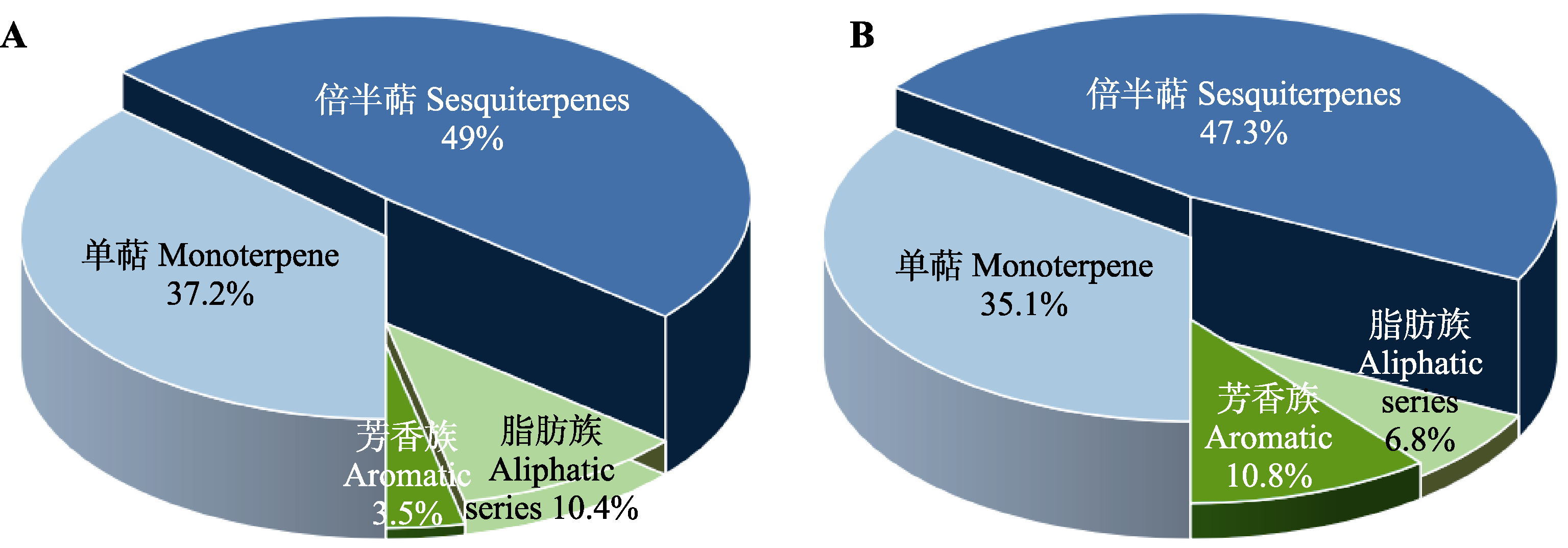
Fig. 3 Composition and abundance of volatile compounds emitted at the receptive stage of Ficus hispida at the low ozone (O3) natural site (South China Botanical Garden, Chinese Academy of Science, A) and the high O3 site (Tongsha Ecological Park, B).
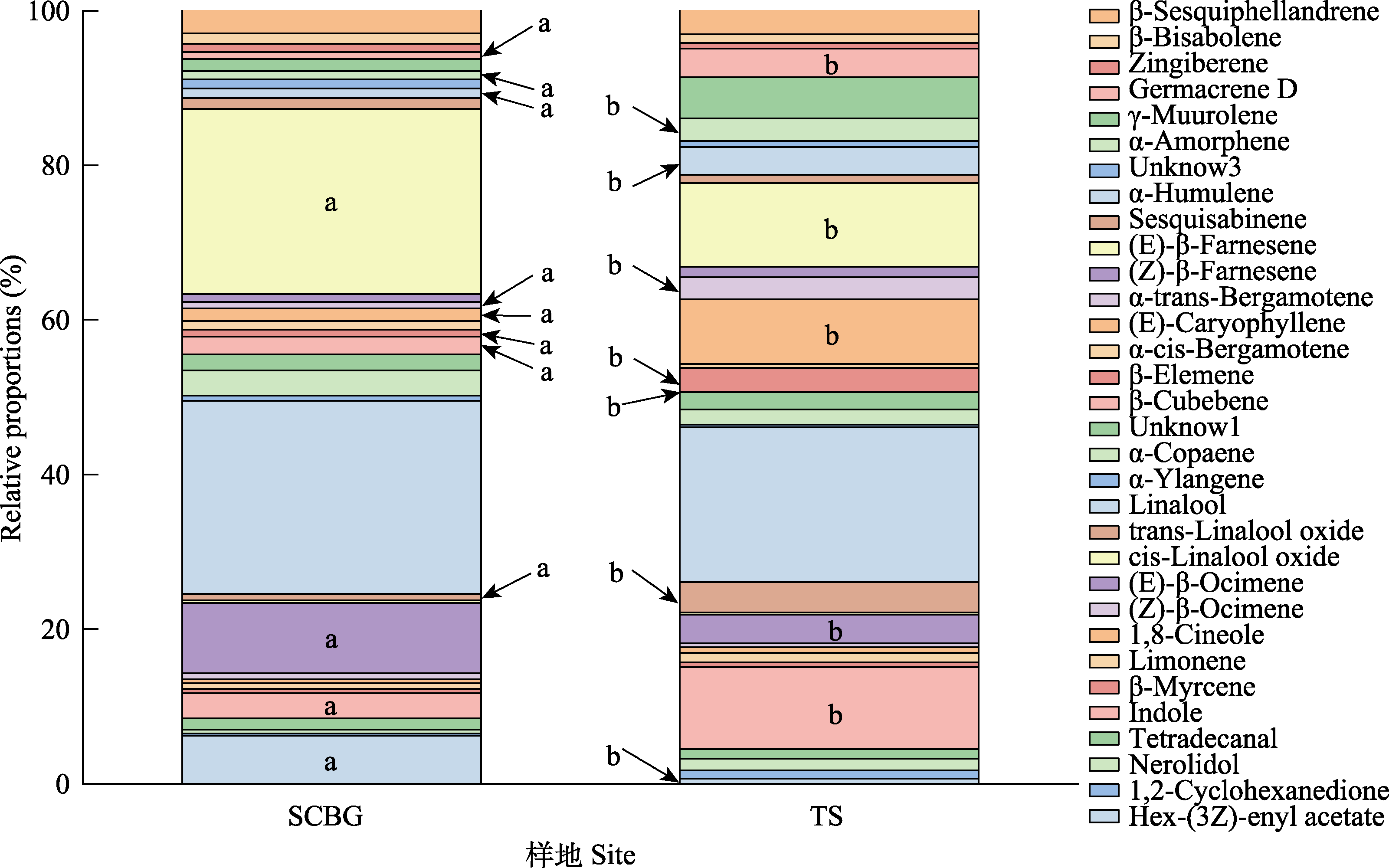
Fig. 4 Comparative analysis of differences in receptive-stage volatile profiles of Ficus hispida between the low ozone (O3) natural site (SCBG) and the high O3 site (TS). Different letters denote volatile compounds showing significant differences between the two groups. Letter a corresponds to differential compounds in SCBG, letter b corresponds to differential compounds in TS.
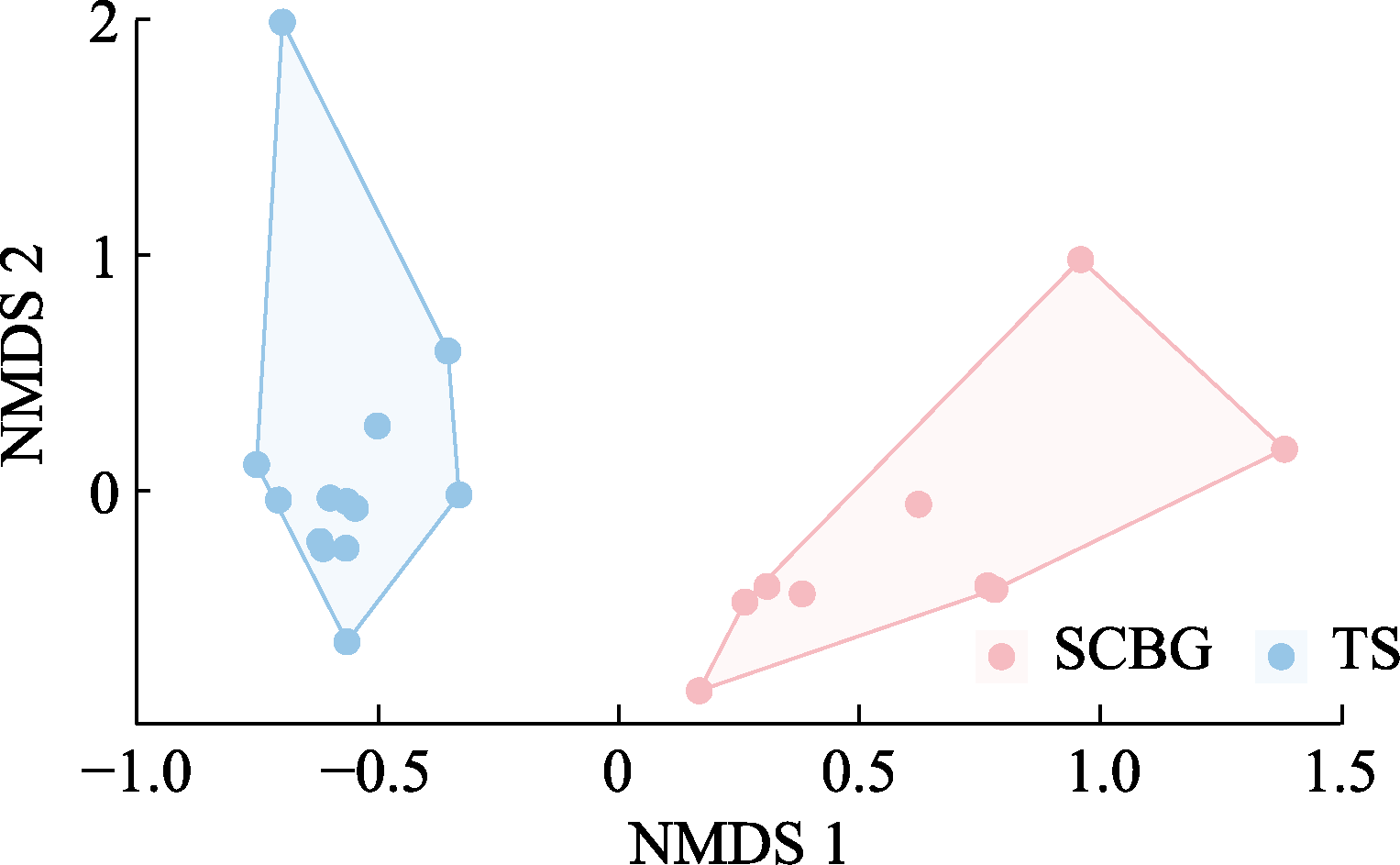
Fig. 5 Non-metric multidimensional scaling (NMDS) analysis of floral odour during the reception phase of Ficus hispida at high ozone (O3) concentration site (TS) and low O3 concentration natural site (SCBG).
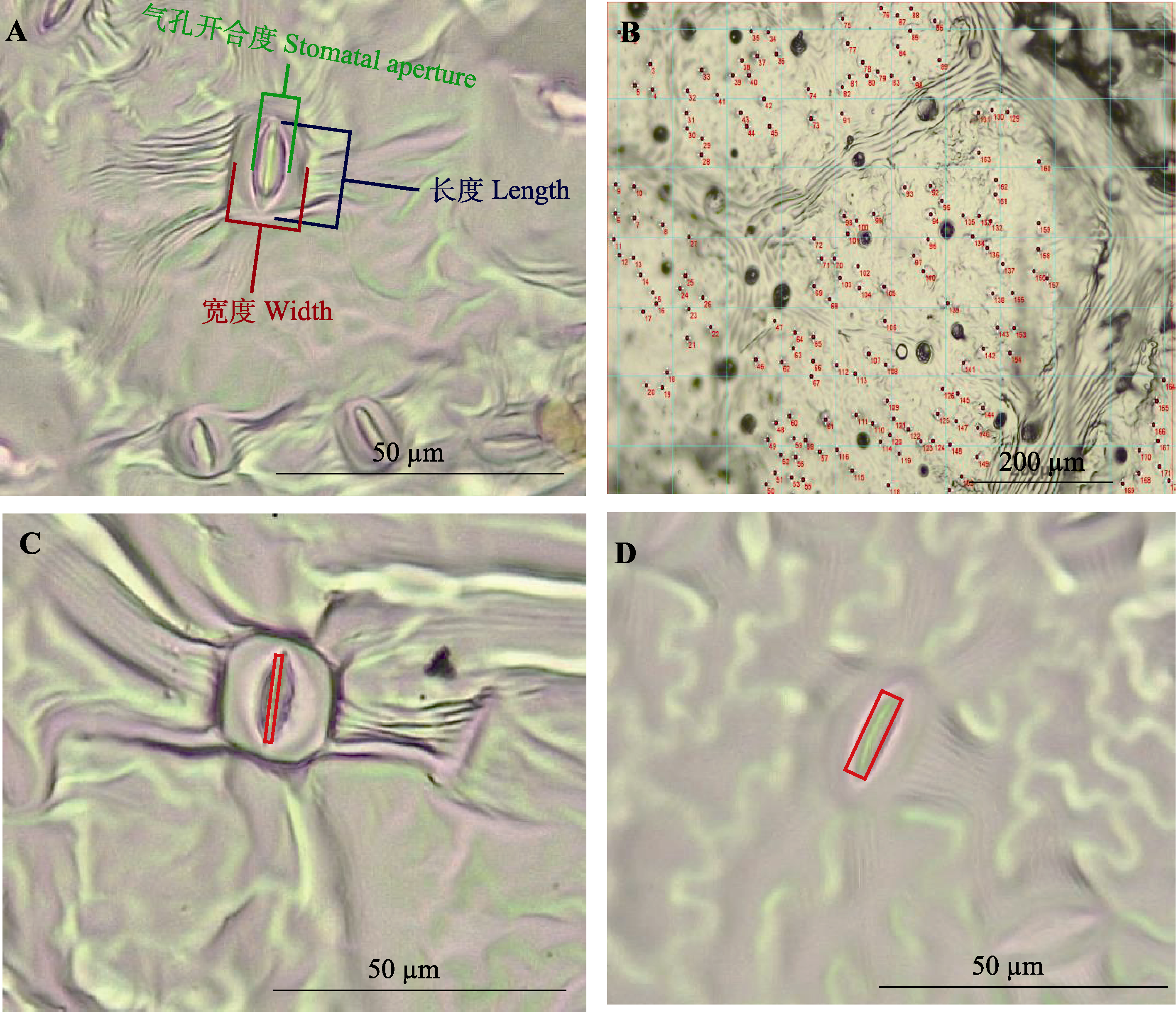
Fig. 6 Microscopic observation of stomatal morphological features in Ficus hispida leaves from high ozone (O3) concentration site (TS) and low O3 concentration natural site (SCBG). A, Measurement of stomata. B, Observation of stomatal density. C, Observation of stomata in SCBG. D, Observation of stomata in TS.
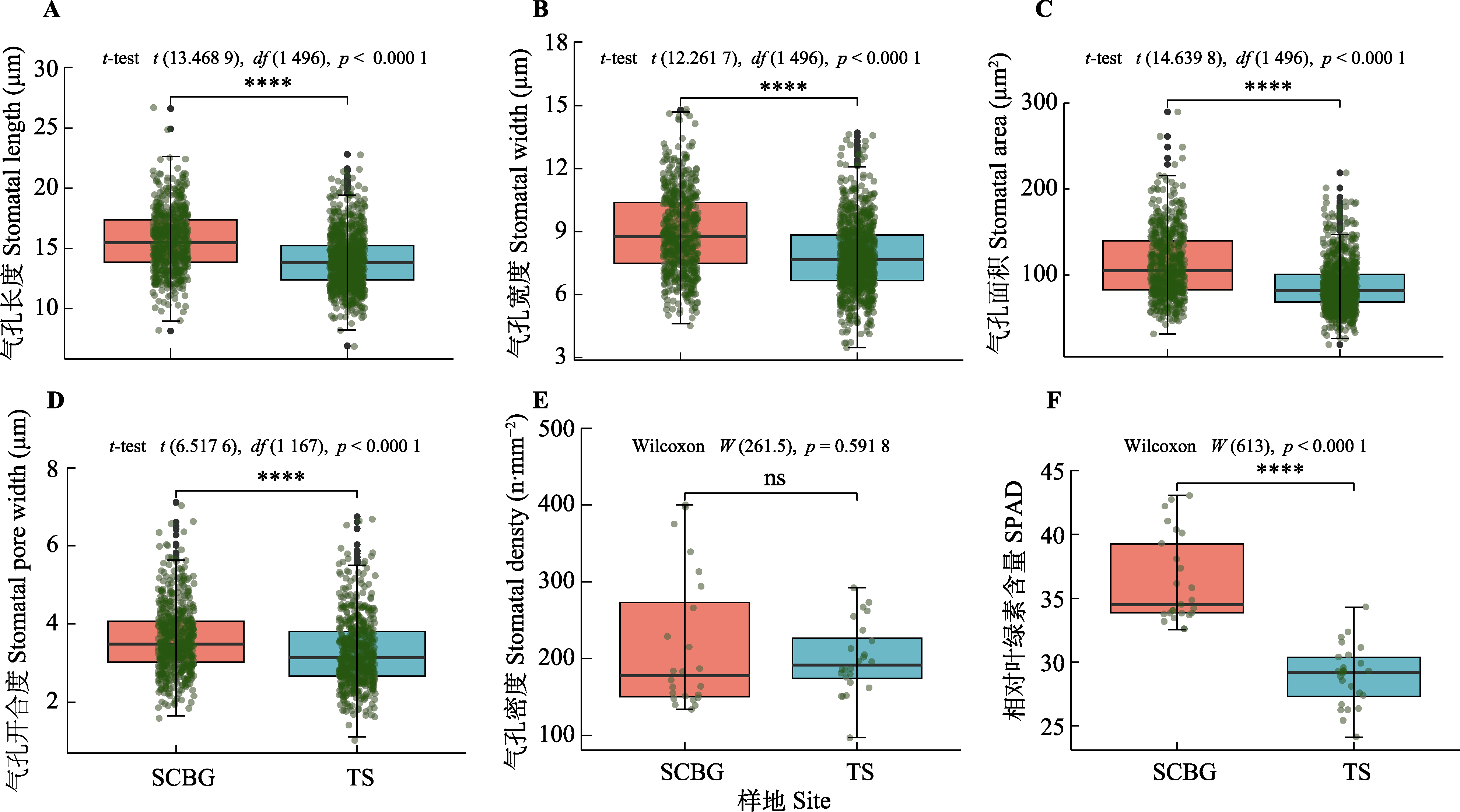
Fig. 7 Comparison of stomata and relative chlorophyll contents (SPAD) of Ficus hispida leaves in high ozone (O3) concentration site (TS) and low O3 concentration natural site (SCBG). ns, p > 0.5; ****, p < 0.0001.
| [1] | Agathokleous E, Feng ZZ, Oksanen E, Sicard P, Wang Q, Saitanis CJ, Araminiene V, Blande JD, Hayes F, Calatayud V, Domingos M, Veresoglou SD, Peñuelas J, Wardle DA, de Marco A, et al. (2020). Ozone affects plant, insect, and soil microbial communities: a threat to terrestrial ecosystems and biodiversity. Science Advances, 6, eabc1176. DOI: 10.1126/sciadv.abc1176. |
| [2] |
Ainsworth EA, Yendrek CR, Sitch S, Collins WJ, Emberson LD (2012). The effects of tropospheric ozone on net primary productivity and implications for climate change. Annual Review of Plant Biology, 63, 637-661.
DOI PMID |
| [3] |
Bergmann E, Bender J, Weigel HJ (1999). Ozone threshold doses and exposure-response relationships for the development of ozone injury symptoms in wild plant species. New Phytologist, 144, 423-435.
DOI PMID |
| [4] | Blande JD (2021). Effects of air pollution on plant-insect interactions mediated by olfactory and visual cues. Current Opinion in Environmental Science & Health, 19, 100228. DOI: 10.1016/j.coesh.2020.100228. |
| [5] |
Blande JD, Holopainen JK, Niinemets U (2014). Plant volatiles in polluted atmospheres: stress responses and signal degradation. Plant, Cell & Environment, 37, 1892-1904.
DOI URL |
| [6] |
Bussotti F, Desotgiu R, Cascio C, Pollastrini M, Gravano E, Gerosa G, Marzuoli R, Nali C, Lorenzini G, Salvatori E, Manes F, Schaub M, Strasser RJ (2011). Ozone stress in woody plants assessed with chlorophyll a fluorescence. A critical reassessment of existing data. Environmental and Experimental Botany, 73, 19-30.
DOI URL |
| [7] |
Chen C, Song Q, Proffit M, Bessière JM, Li Z, Hossaert-McKey M (2009). Private channel: a single unusual compound assures specific pollinator attraction in Ficus semicordata. Functional Ecology, 23, 941-950.
DOI URL |
| [8] | Cheng YF, Zhang ZW, Jia YX, Chen LF, Yu H (2019). Odour composition variation at different stages of Ficus hispida inflorescence and the attraction to ollinators. Journal of Tropical and Subtropical Botany, 27, 299-308. |
| [程玉芬, 张志伟, 贾永霞, 陈连福, 于慧 (2019). 对叶榕花序不同发育时期气味成分的变化及其对传粉者的吸引作用. 热带亚热带植物学报, 27, 299-308.] | |
| [9] |
Chiron F, Chalchat J, Garry RP, Pilichowski J, Lacoste J (1997). Photochemical hydroperoxidation of terpenes I. Synthesis and characterization of α-pinene, β-pinene and limonene hydroperoxides. Journal of Photochemistry and Photobiology A: Chemistry, 111, 75-86.
DOI URL |
| [10] | Cooper OR, Parrish DD, Ziemke J, Balashov NV, Cupeiro M, Galbally IE, Gilge S, Horowitz L, Jensen NR, Lamarque JF, Naik V, Oltmans SJ, Schwab J, Shindell DT, Thompson AM, et al. (2014). Global distribution and trends of tropospheric ozone: an observation-based review. Elementa: Science of the Anthropocene, 2, 000029. DOI: 10.12952/journal.elementa.000029. |
| [11] | Dubuisson C, Nicolè F, Buatois B, Hossaert-McKey M, Proffit M (2022). Tropospheric ozone alters the chemical signal emitted by an emblematic plant of the mediterranean region: the true lavender (Lavandula angustifolia Mill.). Frontiers in Ecology and Evolution, 10, 795588. DOI: 10.3389/fevo.2022.795588. |
| [12] | Dubuisson C, Wortham H, Garinie T, Hossaert-McKey M, Lapeyre B, Buatois B, Temime-Roussel B, Ormeño E, Staudt M, Proffit M (2024). Ozone alters the chemical signal required for plant- insect pollination: the case of the Mediterranean fig tree and its specific pollinator. Science of the total Environment, 919, 170861. DOI: 10.1016/j.scitotenv.2024.170861. |
| [13] |
Dumont J, Spicher F, Montpied P, Dizengremel P, Jolivet Y le Thiec D (2013). Effects of ozone on stomatal responses to environmental parameters (blue light, red light, CO2 and vapour pressure deficit) in three Populus deltoides × Populus nigra genotypes. Environmental Pollution, 173, 85-96.
DOI URL |
| [14] |
Fäldt J, Arimura G, Gershenzon J, Takabayashi J, Bohlmann J (2003). Functional identification of AtTPS03 as (E)-β-ocimene synthase: a monoterpene synthase catalyzing jasmonate- and wound-induced volatile formation in Arabidopsis thaliana. Planta, 216, 745-751.
DOI |
| [15] |
Farré-Armengol G, Peñuelas J, Li T, Yli-Pirilä P, Filella I, Llusia J, Blande JD (2015). Ozone degrades floral scent and reduces pollinator attraction to flowers. New Phytologist, 209, 152-160.
DOI URL |
| [16] |
Guenther AB, Jiang X, Heald CL, Sakulyanontvittaya T, Duhl T., Emmons LK, Wang X (2012). The model of emissions of gases and aerosols from nature version 2.1 (MEGAN2.1): an extended and updated framework for modeling biogenic emissions. Geoscientific Model Development, 5, 1471-1492.
DOI URL |
| [17] | Hilaire RS (2019). Plant response to oxidative stress//Dai W. Stress Physiology of Woody Plants. CRC Press, Boca Raton, USA. |
| [18] |
Holopainen JK, Virjamo V, Ghimire RP, Blande JD, Julkunen-Tiitto R, Kivimäenpää M (2018). Climate change effects on secondary compounds of forest trees in the northern hemisphere. Frontiers in Plant Science, 9, 1445. DOI: 10.3389/fpls.2018.01445.
PMID |
| [19] |
Hundacker J, Bittner N, Weise C, Bröhan G, Varama M, Hilker M (2022). Pine defense against eggs of an herbivorous sawfly is elicited by an annexin-like protein present in egg-associated secretion. Plant, Cell & Environment, 45, 1033-1048.
DOI URL |
| [20] |
Kangasjärvi J, Jaspers P, Kollist H (2005). Signalling and cell death in ozone-exposed plants. Plant, Cell & Environment, 28, 1021-1036.
DOI URL |
| [21] | Kataoka S, Hanada Y (1956). Studies on the oxidation of terpenes with ozone. Bulletin of the Agricultural Chemical Society of Japan, 20, 223-242. |
| [22] |
Kessler D, Gase K, Baldwin IT (2008). Field experiments with transformed plants reveal the sense of floral scents. Science, 321, 1200-1202.
DOI PMID |
| [23] |
Khamaganov VG, Hites RA (2001). Rate constants for the gas-phase reactions of ozone with isoprene, α-and β-pinene, and limonene as a function of temperature. The Journal of Physical Chemistry A, 105, 815-822.
DOI URL |
| [24] |
Kliebenstein DJ (2004). Secondary metabolites and plant/environment interactions: a view through Arabidopsis thaliana tinged glasses. Plant, Cell & Environment, 27, 675-684.
DOI URL |
| [25] | Kovilpillai B, Nedumaran S, Mani S, Raja Mani J, Natarajan S, Ramasamy J (2023). Impacts of elevated ozone and ozone protectants on plant growth, nutrients, biochemical and yield properties of turnip (Brassica Rapa L.). Ozone: Science & Engineering, 45, 475-487. |
| [26] | Kreps F, Burčová Z, Jablonský M, Ház A, Frecer V, Kyselka J, Schmidt S, Šurina I, Filip V (2017). Bioresource of antioxidant and potential medicinal compounds from waste biomass of spruce. ACS Sustainable Chemistry & Engineering, 5, 8161-8170. |
| [27] |
Li J, Luo Y, Li M, Li J, Zeng T, Luo J, Chang X, Wang M, Jongsma MA, Hu H, Wang C (2024). Nocturnal burst emissions of germacrene D from the open disk florets of pyrethrum flowers induce moths to oviposit on a nonhost and improve pollination success. New Phytologist, 244, 2036-2048.
DOI URL |
| [28] | Li ZB (2010). The Role of Fig Volatiles on the Host Selecting Behavior of the Pollinating Fig Wasps. PhD dissertation, Xishuangbanna Tropical Botanical Garden, Chinese Academy of Sciences, Mengla, Yunnan. 103-117. |
| [李宗波 (2010). 榕树隐头果挥发性化合物在传粉小蜂寄主选择过程中的作用. 博士学位论文, 中国科学院西双版纳热带植物园, 云南勐腊. 103-117.] | |
| [29] |
Loreto F, Schnitzler JP (2010). Abiotic stresses and induced BVOCs. Trends in Plant Science, 15, 154-166.
DOI PMID |
| [30] | Mao LX, Song QF, Li XY, Zheng HQ, Zhu XG (2024). Would reducing chlorophyll content result in a higher photosynthesis nitrogen use efficiency in crops? Food and Energy Security, 13, e576. DOI: 10.1002/fes3.576. |
| [31] |
Matyssek R, Günthardt-Goerg MS, Maurer S, Keller T (1995). Nighttime exposure to ozone reduces whole-plant production in Betula pendula. Tree Physiology, 15, 159-165.
PMID |
| [32] |
Michereff MFF, Magalhães DM, do Nascimento IN, Laumann RA, Borges M, Withall DM, Birkett MA, Blassioli-Moraes MC (2024). Attracting scelionidae egg parasitoids to enhance stink bug egg parasitisation in soybean crops using methyl salicylate and (E,E)-α-farnesene. Pest Management Science, 80, 5452-5464.
DOI URL |
| [33] |
Mills G, Sharps K, Simpson D, Pleijel H, Broberg M, Uddling J, Jaramillo F, Davies WJ, Dentener F, van den Berg M, Agrawal M, Agrawal SB, Ainsworth EA, Büker P, Emberson L, et al. (2018). Ozone pollution will compromise efforts to increase global wheat production. Global Change Biology, 24, 3560-3574.
DOI PMID |
| [34] | Mofikoya AO, Yli-Pirilä P, Kivimäenpää M, Blande JD, Virtanen A, Holopainen JK (2020). Deposition of α-pinene oxidation products on plant surfaces affects plant VOC emission and herbivore feeding and oviposition. Environmental Pollution, 263, 114437. DOI: 10.1016/j.envpol.2020114437. |
| [35] | Nieuwenhuizen NJ, Green S, Atkinson RG (2010). Floral sesquiterpenes and their synthesis in dioecious kiwifruit. Plant Signaling & Behavior, 5, 61-63. |
| [36] |
Nieuwenhuizen NJ, Wang MY, Matich AJ, Green SA, Chen X, Yauk YK, Beuning LL, Nagegowda DA, Dudareva N, Atkinson RG (2009). Two terpene synthases are responsible for the major sesquiterpenes emitted from the flowers of kiwifruit (Actinidia deliciosa). Journal of Experimental Botany, 60, 3203-3219.
DOI PMID |
| [37] |
Niinemets Ü, Arneth A, Kuhn U, Monson R, Peñuelas J, Staudt M (2010). The emission factor of volatile isoprenoids: stress, acclimation, and developmental responses. Biogeosciences, 7, 2203-2223.
DOI URL |
| [38] |
Noboru M, Evgenios A, Tomoki M, Akira T, Hideyuki M, Takayoshi K (2021). Ozone disrupts the communication between plants and insects in urban and suburban areas: an updated insight on plant volatiles. Journal of Forestry Research, 32, 1337-1349.
DOI |
| [39] |
Noge K, Becerra JX (2009). Germacrene D, a common sesquiterpene in the genus Bursera (Burseraceae). Molecules, 14, 5289-5297.
DOI URL |
| [40] | Nowroz F, Hasanuzzaman M, Siddika A, Parvin K, Caparros PG, Nahar K, Prasad PVV (2023). Elevated tropospheric ozone and crop production: potential negative effects and plant defense mechanisms. Frontiers in Plant Science, 14, 1244515. DOI: 10.3389/fpls.2023.1244515. |
| [41] | Palmer-Young EC, Veit D, Gershenzon J, Schuman MC (2015). The sesquiterpenes (E)-β-farnesene and (E)-α-bergamotene quench ozone but fail to protect the wild tobacco Nicotiana attenuata from ozone, UVB, and drought stresses. PLoS ONE, 10, e0127296. DOI: 10.1371/journal.pone.0127296. |
| [42] |
Pare PW, Tumlinson JH (1997). De Novo biosynthesis of volatiles induced by insect herbivory in cotton plants. Plant Physiology, 114, 1161-1167.
PMID |
| [43] |
Pellmyr O (2003). Yuccas, yucca moths, and coevolution: a review. Annals of the Missouri Botanical Garden, 90, 35-55.
DOI URL |
| [44] |
Pellmyr O, Leebens-Mack J (2000). Reversal of mutualism as a mechanism for adaptive radiation in yucca moths. The American Naturalist, 156, S62-S76.
DOI URL |
| [45] |
Proffit M, Johnson SD (2009). Specificity of the signal emitted by figs to attract their pollinating wasps: comparison of volatile organic compounds emitted by receptive syconia of Ficus sur and F. sycomorus in Southern Africa. South African Journal of Botany, 75, 771-777.
DOI URL |
| [46] | Proffit M, Schatz B, Bessière JM, Chen C, Soler C, Hossaert-McKey M (2008). Signalling receptivity: comparison of the emission of volatile compounds by figs of Ficus hispida before, during and after the phase of receptivity to pollinators. Symbiosis, 45, 15-24. |
| [47] | Proffit M, Lapeyre B, Buatois B, Deng X, Arnal P, Gouzerh F, Carrasco D, Hossaert-McKey M (2020). Chemical signal is in the blend: bases of plant-pollinator encounter in a highly specialized interaction. Scientific Reports, 10, 10234. DOI: 10.1038/s41598-020-66655-w. |
| [48] |
Rai R, Agrawal M, Agrawal SB (2007). Assessment of yield losses in tropical wheat using open top chambers. Atmospheric Environment, 41, 9543-9554.
DOI URL |
| [49] |
Soler C, Hossaert-McKey M, Buatois B, Bessière JM, Schatz B, Proffit M (2011). Geographic variation of floral scent in a highly specialized pollination mutualism. Phytochemistry, 72, 74-81.
DOI PMID |
| [50] |
Souza SR, Blande JD, Holopainen JK (2013). Pre-exposure to nitric oxide modulates the effect of ozone on oxidative defenses and volatile emissions in lima bean. Environmental Pollution, 179, 111-119.
DOI PMID |
| [51] |
Vahisalu T, Puzõrjova I, Brosché M, Valk E, Lepiku M, Moldau H, Pechter P, Wang YS, Lindgren O, Salojärvi J (2010). Ozone-triggered rapid stomatal response involves the production of reactive oxygen species, and is controlled by SLAC1 and OST1. The Plant Journal, 62, 442-453.
DOI PMID |
| [52] |
Vainonen JP, Kangasjärvi J (2015). Plant signalling in acute ozone exposure. Plant, Cell & Environment, 38, 240-252.
DOI URL |
| [53] | Wang R, Yang Y, Jing Y, Segar ST, Zhang Y, Wang G, Chen J, Liu QF, Chen S, Chen Y, Cruaud A, Ding YY, Dunn DW, Gao Q, Gilmartin PM, et al. (2021). Molecular mechanisms of mutualistic and antagonistic interactions in a plant-pollinator association. Nature Ecology & Evolution, 5, 974-986. |
| [54] |
Wiebes JT (1979). Co-evolution of figs and their insect pollinators. Annual Review of Ecology and Systematics, 10, 1-12.
DOI URL |
| [55] |
Wilkinson S, Davies WJ (2010). Drought, ozone, ABA and ethylene: new insights from cell to plant to community. Plant, Cell & Environment, 33, 510-525.
DOI URL |
| [56] | Yuan JS, Himanen SJ, Holopainen JK, Chen F, Stewart CN (2009). Smelling global climate change: mitigation of function for plant volatile organic compounds. Trends in Ecology & Evolution, 24, 323-331. |
| [57] | Zhang Y (2022). Molecular Mechanisms of Wiebesia pumilae Recognizing Specific VOCs Released by Ficus pumila var. Pumila. PhD dissertation, East China Normal University, Shanghai. 16-32. |
| [张瑜 (2022). 薜荔小蜂特异性识别薜荔挥发物的分子机制. 博士学位论文, 华东师范大学, 上海. 16-32.] | |
| [58] | Zidi K, Kati DE, Bachir-bey M, Genva M, Fauconnier ML (2021). Comparative study of fig volatile compounds using headspace solid-phase microextraction-gas chromatography/mass spectrometry: effects of cultivars and ripening stages. Frontiers in Plant Science, 12, 667809. DOI: 10.3389/fpls.2021.667809. |
| [1] | WANG Rui-Qi, JI Qiu-Ping, LUO Yu, HE Long-Xin, ZHENG Hai-Feng, XU Yan-Sen, FENG Zhao-Zhong. Responses of wheat leaf temperature and photosynthesis to extreme heat [J]. Chin J Plant Ecol, 2026, 50(6): 1292-1303. |
| [2] | WANG Yan-Yuan, MA Guo-Yong, TIAN Peng, DAI Yong-Xin, WANG Lin. Pressure-volume traits and stomatal sensitivity of leaves and fine roots of 12 common tree species in loess gully region [J]. Chin J Plant Ecol, 2026, 50(6): 1408-1418. |
| [3] | HOU Xiao-Fan, MA Chen-Han, SUN Yu-Qian, GAO Yu-Han, LI Pin. Differential ecological stoichiometry of leaf and fine root litter decomposition under ozone stress [J]. Chin J Plant Ecol, 2026, 50(2): 268-278. |
| [4] | ZHU Run-Cheng, CAI Xi-An, HUANG Juan. Emission of defense-related biogenic volatile organic compounds from plants and their response to nitrogen deposition [J]. Chin J Plant Ecol, 2025, 49(5): 681-696. |
| [5] | WANG Kun-Ying, QIU Gui-Fu, LIU Zi-He, MENG Jun, LIU Yu-Xuan, JIA Guo-Dong. Climate change regulate tree growth and intrinsic water use efficiency of Populus simonii at different levels of degradation [J]. Chin J Plant Ecol, 2025, 49(2): 343-355. |
| [6] | TIAN Tong-Tong, SHANG Bo, XU Yan-Sen, YUAN Xiang-Yang, LIU Shuo, FENG Zhao-Zhong. Effects of elevated ozone concentration and nitrogen addition on the photosynthetic characteristics of poplar at different leaf positions and growth stages [J]. Chin J Plant Ecol, 2025, 49(11): 1919-1933. |
| [7] | LI Ya-Chao, ZHANG Hui, XU Shan-Shan, LI Ming, MA Xiang-Qing, WU Peng-Fei. Effects of exogenous volatile organic compounds on phosphorus utilization in Cunninghamia lanceolata seedling roots under low phosphorus stress [J]. Chin J Plant Ecol, 2025, 49(10): 1744-1754. |
| [8] | ZHANG Xiao-Yu, JIA Guo-Dong, YU Xin-Xiao, SUN Li-Bo, JIANG Tao. Characteristics of canopy stomatal conductance of Populus simonii stands with different degradation degrees and its responses to environmental factors [J]. Chin J Plant Ecol, 2024, 48(9): 1143-1156. |
| [9] | JIANG Hai-Gang, ZENG Yun-Hong, TANG Hua-Xin, LIU Wei, LI Jie-Lin, HE Guo-Hua, QIN Hai-Yan, WANG Li-Chao, Victor RESCO de DIOS, YAO Yin-An. Rhythmic regulation of carbon fixation and water dissipation in three mosses [J]. Chin J Plant Ecol, 2023, 47(7): 988-997. |
| [10] | WANG Jia-Yi, WANG Xiang-Ping, XU Cheng-Yang, XIA Xin-Li, XIE Zong-Qiang, FENG Fei, FAN Da-Yong. Response of hydraulic architecture in Fraxinus velutina street trees to the percentage of impervious pavement in Beijing [J]. Chin J Plant Ecol, 2023, 47(7): 998-1009. |
| [11] | MA Yan-Ze, YANG Xi-Lai, XU Yan-Sen, FENG Zhao-Zhong. Response of key parameters of leaf photosynthetic models to increased ozone concentration in four common trees [J]. Chin J Plant Ecol, 2022, 46(3): 321-329. |
| [12] | LUO Dan-Dan, WANG Chuan-Kuan, JIN Ying. Response mechanisms of hydraulic systems of woody plants to drought stress [J]. Chin J Plant Ecol, 2021, 45(9): 925-941. |
| [13] | YE Zi-Piao, YU Feng, AN Ting, WANG Fu-Biao, KANG Hua-Jing. Investigation on CO2-response model of stomatal conductance for plants [J]. Chin J Plant Ecol, 2021, 45(4): 420-428. |
| [14] | YANG Ke-Tong, CHANG Hai-Long, CHEN Guo-Peng, YU Xiao-Ya, XIAN Jun-Ren. Stomatal traits of main greening plant species in Lanzhou [J]. Chin J Plant Ecol, 2021, 45(2): 187-196. |
| [15] | LI Tang-Ji, WANG Mao-Lin, CAO Ying, XU Gang, YANG Qi-Qi, REN Si-Yuan, HU Shang-Lian. Diurnal transpiration of bamboo culm and sheath and their potential effects on water transport during the bamboo shoot stage [J]. Chin J Plant Ecol, 2021, 45(12): 1365-1379. |
| Viewed | ||||||
|
Full text |
|
|||||
|
Abstract |
|
|||||
Copyright © 2026 Chinese Journal of Plant Ecology
Tel: 010-62836134, 62836138, E-mail: apes@ibcas.ac.cn, cjpe@ibcas.ac.cn

