
植物生态学报 ›› 2026, Vol. 50 ›› Issue (3): 625-638.DOI: 10.17521/cjpe.2025.0342 cstr: 32100.14.cjpe.2025.0342
周春菡1,*, 熊智诚1,*, 杨明新2, 史海兰1, 周亚星1, 唐玉1, 张静1, 纪宝明1, 代心灵1,**( )
)
收稿日期:2025-09-16
接受日期:2026-02-25
出版日期:2026-03-20
发布日期:2026-05-18
通讯作者:
**代心灵(daixinling_1995@bjfu.edu.cn)作者简介:*同等贡献
基金资助:
ZHOU Chun-Han1,*, XIONG Zhi-Cheng1,*, YANG Ming-Xin2, SHI Hai-Lan1, ZHOU Ya-Xing1, TANG Yu1, ZHANG Jing1, JI Bao-Ming1, DAI Xin-Ling1,**()
Received:2025-09-16
Accepted:2026-02-25
Online:2026-03-20
Published:2026-05-18
Contact:
**DAI Xin-Ling(daixinling_1995@bjfu.edu.cn)
About author:*Contributed equally to this work
Supported by:摘要:
探究三江源国家公园黄河源园区高寒湿地丛枝菌根真菌(AMF)群落结构变化及其驱动因素, 可为该区域生态系统的保护和可持续管理提供科学依据。该研究以黄河源园区内的高寒河流湿地和高寒沼泽湿地为研究对象, 采用野外调查取样、室内样品分析和高通量测序相结合的方法, 系统探究了不同湿地类型及优势植物种间AMF群落结构的变化及影响群落变化的关键因子。结果表明, 沼泽湿地的植被盖度显著低于河流湿地, 土壤电导率、全碳和全氮含量显著高于河流湿地。该研究共鉴定出2 799个球囊菌门的扩增子序列变体, 隶属于9科10属, 其中近明球囊霉属(Claroideoglomus)和球囊霉属(Glomus)为主要优势类群。沼泽湿地与河流湿地的AMF群落α多样性无显著差异, 但β多样性存在显著差异。方差分解分析表明, 湿地类型与非生物因子的总解释力为4.67% (非生物因子独立解释3.39%,高于湿地类型独立解释的1.04%), 而植物物种与非生物因子共同解释了AMF群落结构变异的5.00% (非生物因子独立解释2.04%,略高于植物物种的1.38%)。曼特尔检验与典型对应分析进一步表明, 植物丰富度、土壤含水量、养分含量及海拔是驱动AMF群落结构的关键因子。综上, 高寒湿地AMF群落结构主要受非生物因子驱动, 同时受生物因子协同影响。
周春菡, 熊智诚, 杨明新, 史海兰, 周亚星, 唐玉, 张静, 纪宝明, 代心灵. 黄河源园区高寒湿地菌根真菌群落特征及其影响因素. 植物生态学报, 2026, 50(3): 625-638. DOI: 10.17521/cjpe.2025.0342
ZHOU Chun-Han, XIONG Zhi-Cheng, YANG Ming-Xin, SHI Hai-Lan, ZHOU Ya-Xing, TANG Yu, ZHANG Jing, JI Bao-Ming, DAI Xin-Ling. Community characteristics and drivers of arbuscular mycorrhizal fungi in alpine wetlands of the Yellow River Source Region. Chinese Journal of Plant Ecology, 2026, 50(3): 625-638. DOI: 10.17521/cjpe.2025.0342
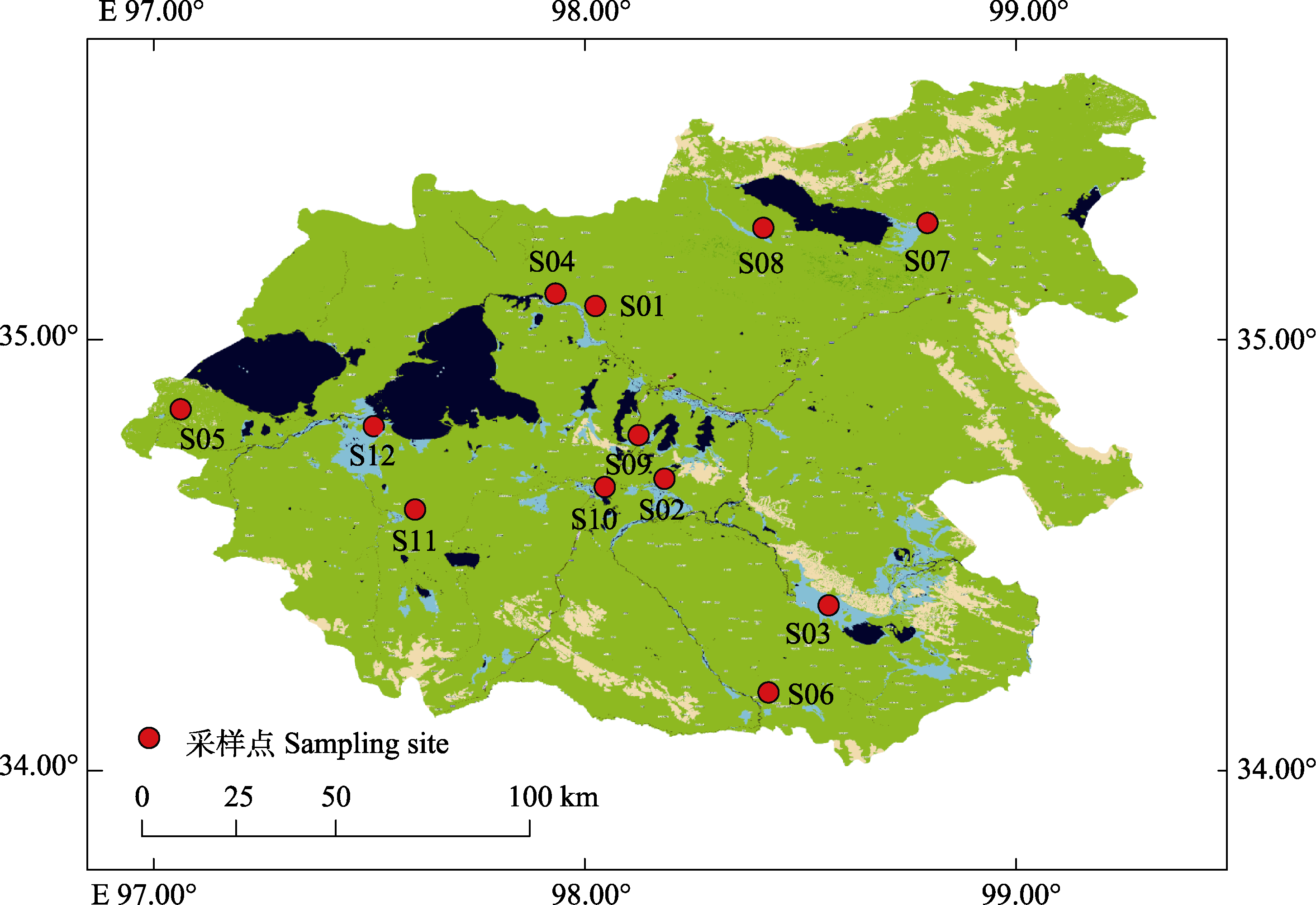
图1 黄河源园区高寒湿地样点分布图。
Fig. 1 Distribution map of sampling site in alpine wetlands of the Yellow River Source Region.
| 样点 Sampling site | 经度 Longitude (E) | 纬度 Latitude (N) | 海拔 Altitude (m) | 优势植物 Dominant species | 湿地类型 Wetland type |
|---|---|---|---|---|---|
| S01 | 98.01° | 35.07° | 4 248 | 无脉薹草 Carex enervis | 沼泽湿地 Swamp wetland |
| S02 | 98.17° | 34.66° | 4 212 | 无脉薹草 Carex enervis | 河流湿地 Riverine wetland |
| S03 | 98.55° | 34.37° | 4 180 | 无脉薹草 Carex enervis | 沼泽湿地 Swamp wetland |
| S04 | 97.92° | 35.09° | 4 255 | 无脉薹草 Carex enervis | 沼泽湿地 Swamp wetland |
| S05 | 97.05° | 34.83° | 4 367 | 西藏嵩草 Carex tibetikobresia | 沼泽湿地 Swamp wetland |
| S06 | 98.41° | 34.17° | 4 333 | 西藏嵩草 Carex tibetikobresia | 河流湿地 Riverine wetland |
| S07 | 98.78° | 35.26° | 4 093 | 尖苞薹草 Carex microglochin | 沼泽湿地 Swamp wetland |
| S08 | 98.40° | 35.25° | 4 120 | 尖苞薹草 Carex microglochin | 沼泽湿地 Swamp wetland |
| S09 | 98.11° | 34.77° | 4 245 | 高山嵩草 Carex parvula | 沼泽湿地 Swamp wetland |
| S10 | 98.03° | 34.64° | 4 222 | 高山嵩草 Carex parvula | 沼泽湿地 Swamp wetland |
| S11 | 97.59° | 34.59° | 4 322 | 线叶嵩草 Carex capillifolia | 河流湿地 Riverine wetland |
| S12 | 97.50° | 34.79° | 4 272 | 华扁穗草 Blysmus sinocompressus | 沼泽湿地 Swamp wetland |
表1 黄河源园区高寒湿地采样点信息
Table 1 Information of the sampling sites in alpine wetlands of the Yellow River Source Region
| 样点 Sampling site | 经度 Longitude (E) | 纬度 Latitude (N) | 海拔 Altitude (m) | 优势植物 Dominant species | 湿地类型 Wetland type |
|---|---|---|---|---|---|
| S01 | 98.01° | 35.07° | 4 248 | 无脉薹草 Carex enervis | 沼泽湿地 Swamp wetland |
| S02 | 98.17° | 34.66° | 4 212 | 无脉薹草 Carex enervis | 河流湿地 Riverine wetland |
| S03 | 98.55° | 34.37° | 4 180 | 无脉薹草 Carex enervis | 沼泽湿地 Swamp wetland |
| S04 | 97.92° | 35.09° | 4 255 | 无脉薹草 Carex enervis | 沼泽湿地 Swamp wetland |
| S05 | 97.05° | 34.83° | 4 367 | 西藏嵩草 Carex tibetikobresia | 沼泽湿地 Swamp wetland |
| S06 | 98.41° | 34.17° | 4 333 | 西藏嵩草 Carex tibetikobresia | 河流湿地 Riverine wetland |
| S07 | 98.78° | 35.26° | 4 093 | 尖苞薹草 Carex microglochin | 沼泽湿地 Swamp wetland |
| S08 | 98.40° | 35.25° | 4 120 | 尖苞薹草 Carex microglochin | 沼泽湿地 Swamp wetland |
| S09 | 98.11° | 34.77° | 4 245 | 高山嵩草 Carex parvula | 沼泽湿地 Swamp wetland |
| S10 | 98.03° | 34.64° | 4 222 | 高山嵩草 Carex parvula | 沼泽湿地 Swamp wetland |
| S11 | 97.59° | 34.59° | 4 322 | 线叶嵩草 Carex capillifolia | 河流湿地 Riverine wetland |
| S12 | 97.50° | 34.79° | 4 272 | 华扁穗草 Blysmus sinocompressus | 沼泽湿地 Swamp wetland |
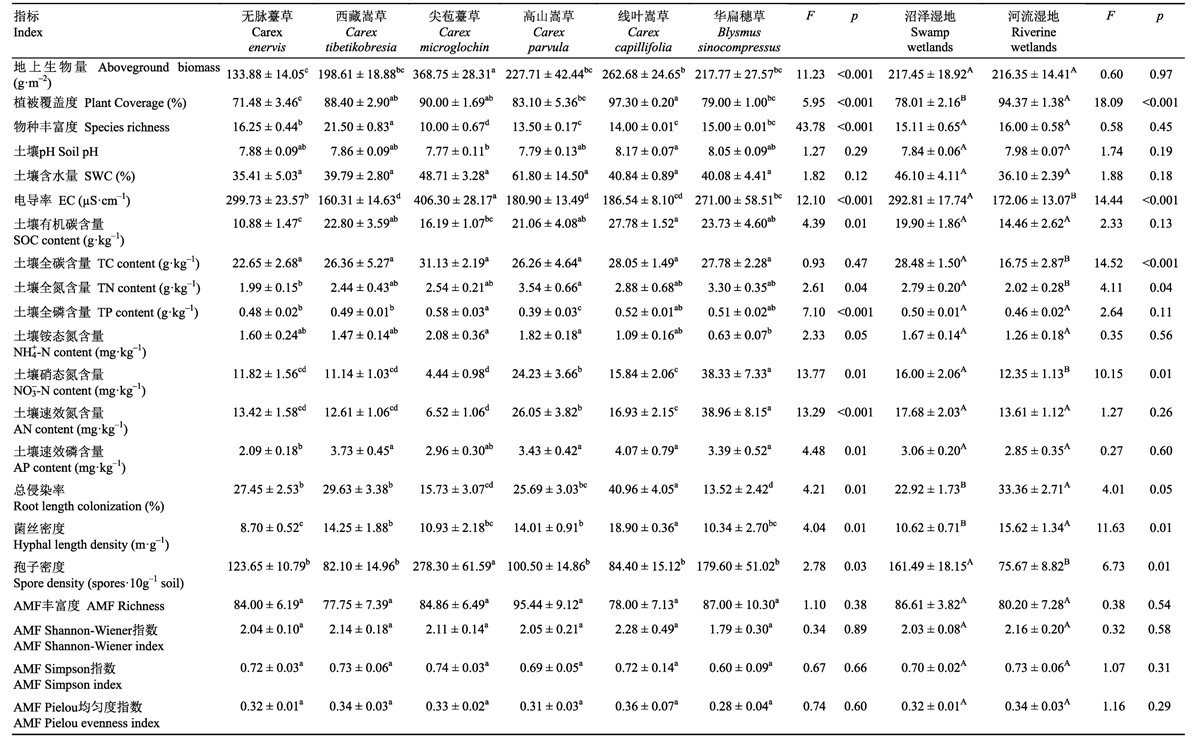 |
表2 黄河源区高寒湿地不同优势种样地和湿地类型中的植物特征、土壤理化性质以及丛枝菌根真菌(AMF)指标(标准差±标准误)
Table 2 Plant characteristics, soil physical and chemical properties, and arbuscular mycorrhizal fungi (AMF) in plots with different dominant species and wetland types (mean ± SE)
| |
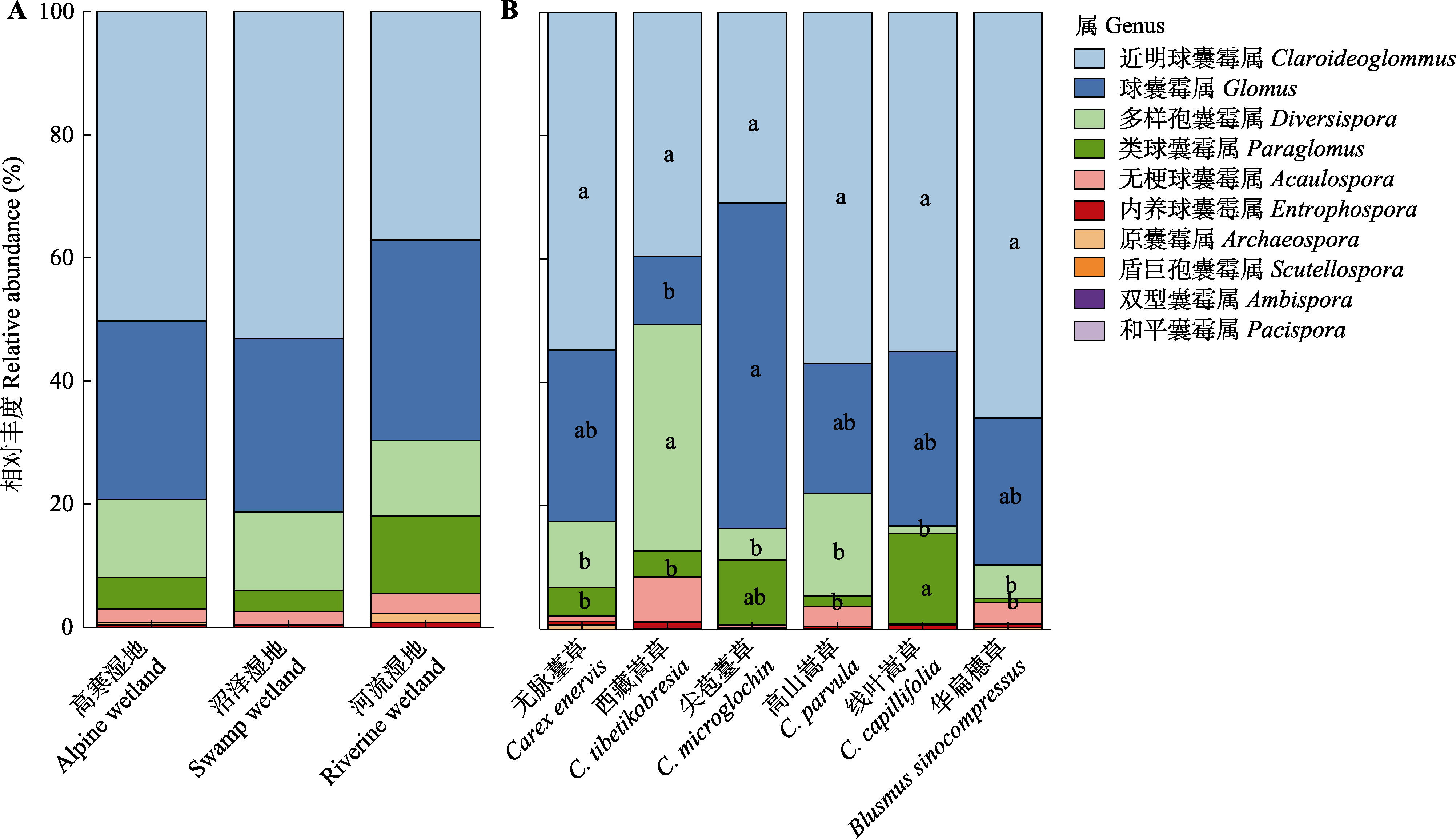
图2 黄河源区高寒湿地丛枝菌根真菌(AMF)在属水平的相对丰度: 按湿地类型(A)及优势植物种(B)的划分。不同小写字母表示同一属在优势植物种间的相对丰度存在显著差异。
Fig. 2 Relative abundance of arbuscular mycorrhizal fungi (AMF) community in the alpine wetlands of the Yellow River Source Region at the genus level: classified by wetland type (A) and dominant plant species (B). Different lowercase letters indicate significant differences (p < 0.05) in the relative abundance of the same AMF genus among dominant species.
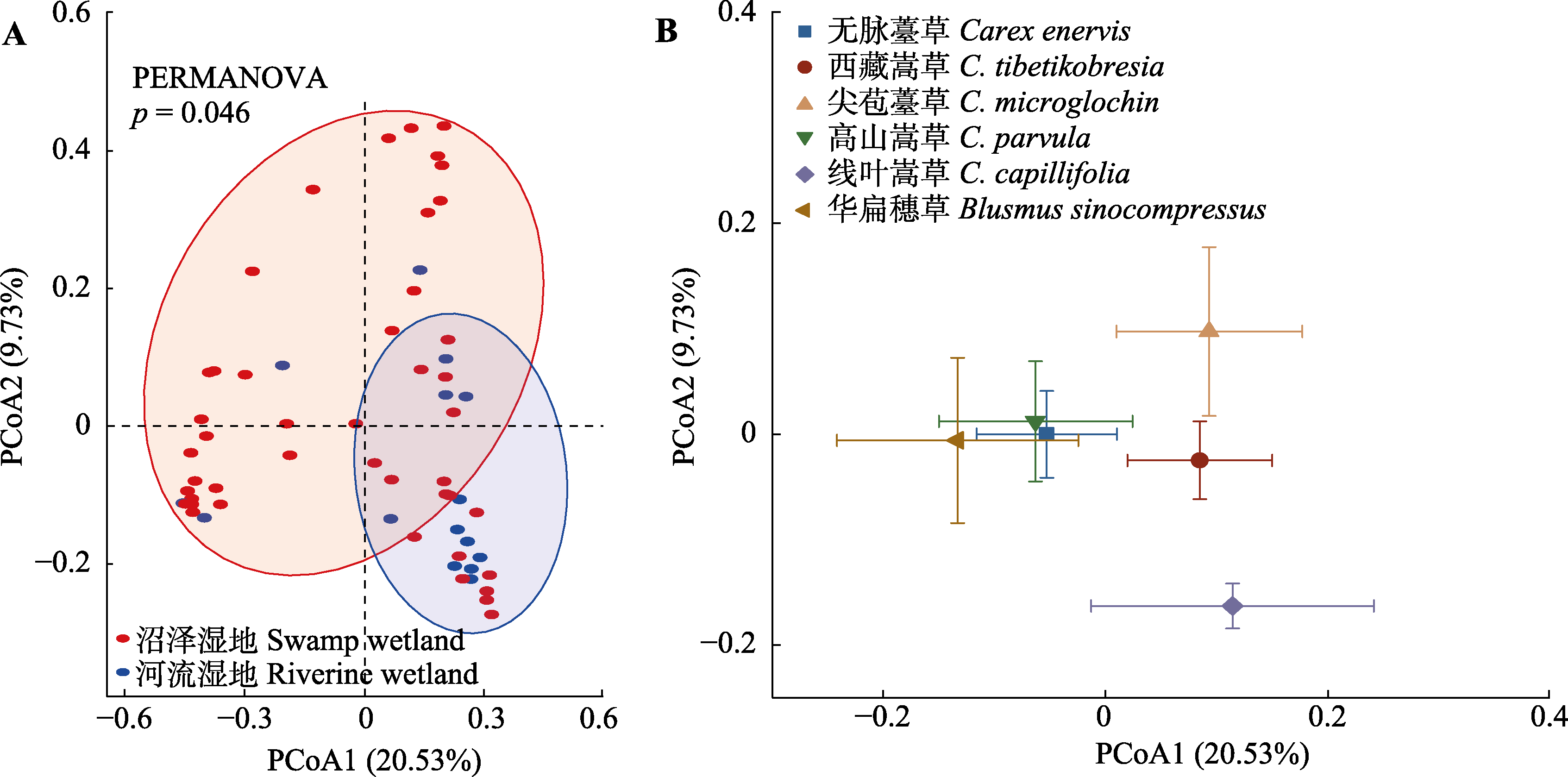
图3 不同湿地类型(A)与优势植物种(B)中丛枝菌根真菌(AMF)群落结构的主坐标分析(PCoA)与置换多元方差分析。
Fig. 3 Principal coordinates analysis (PCoA) and permutational multivariate analysis of variance (PERMANOVA) of arbuscular mycorrhizal fungi (AMF) community across different wetlands types (A) and vegetation types (B).
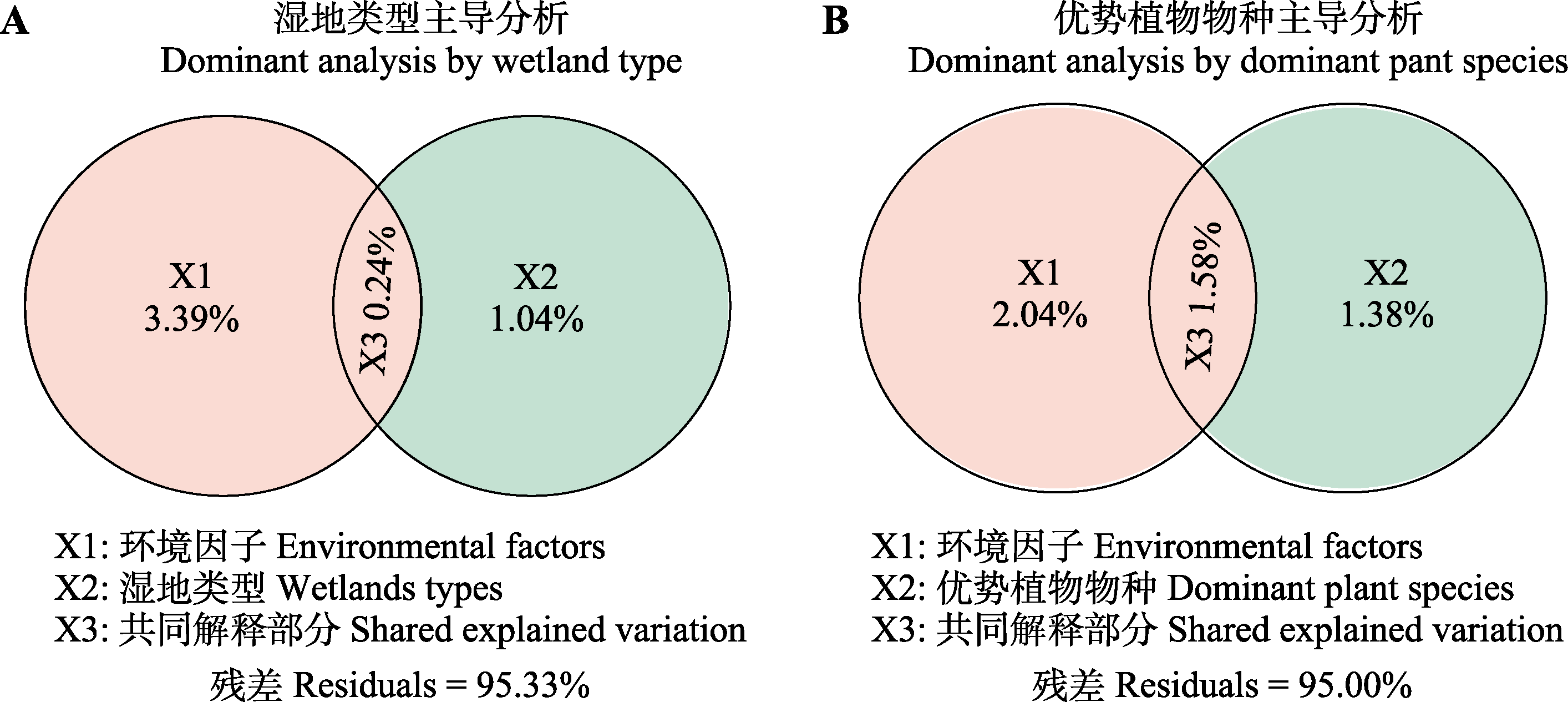
图4 湿地类型(A)与优势植物种(B)对丛枝菌根真菌(AMF)群落影响的方差分解分析。
Fig. 4 Variance partitioning analysis (VPA) of arbuscular mycorrhizal fungi (AMF) community with different wetland types (A) and dominant species (B).
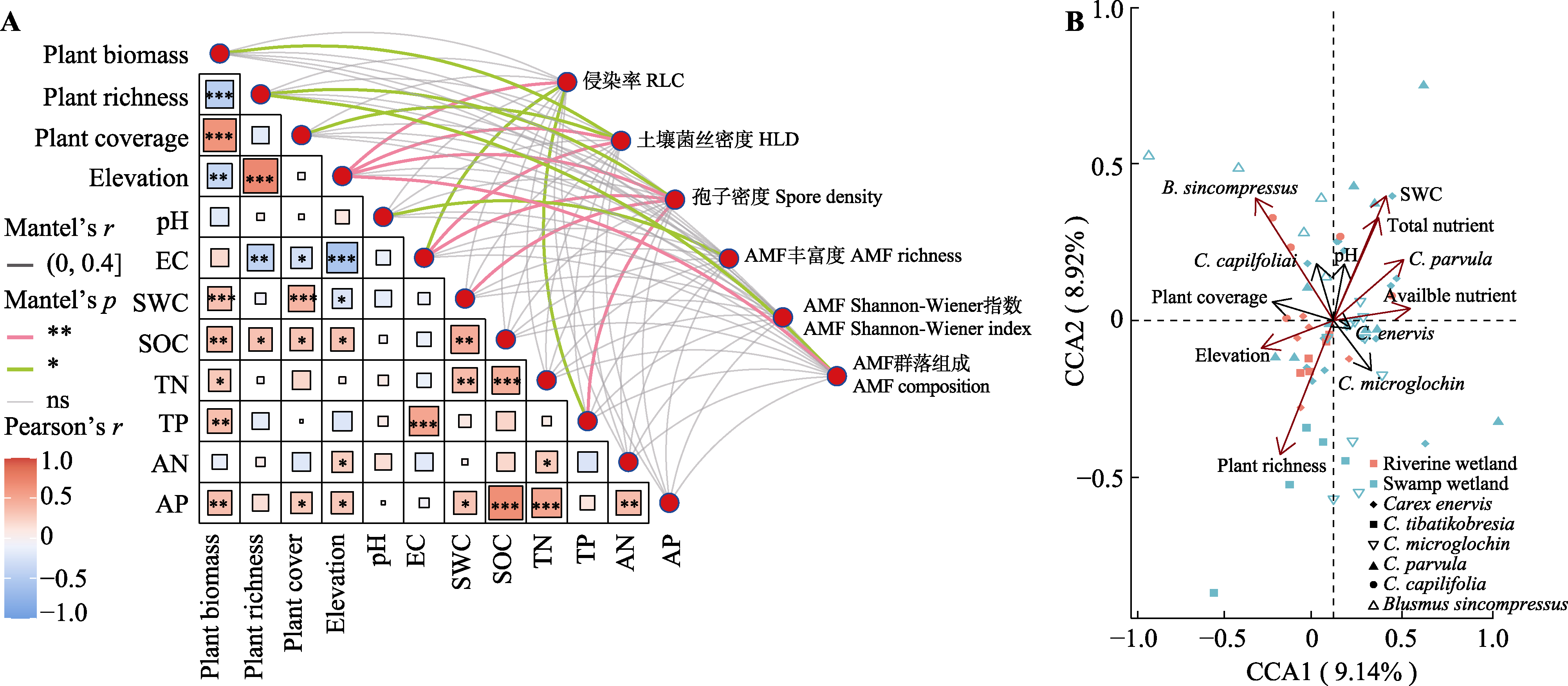
图5 植物群落、土壤理化性质与丛枝菌根真菌(AMF)群落间的曼特尔相关性(A)及影响AMF群落结构的关键环境因子的典型对应分析(CCA)排序图(B)。图A中, *, p < 0.05; **, p < 0.01; ***, p < 0.001。图B中红线表示显著相关(p < 0.05), 黑线表示不显著(p > 0.05)。AN, 土壤速效氮含量; AP, 土壤速效磷含量; Available nutrient, 速效养分含量; EC, 电导率; Elevation, 海拔; pH, 土壤pH; Plant biomass, 植物地上生物量; Plant coverage, 植物覆盖度; Plant richness, 物种丰富度; Riverine wetland, 河流湿地; SOC, 土壤有机碳含量; Swamp wetland, 沼泽湿地; SWC, 土壤含水量; TN, 土壤全氮含量; Total nutrient, 养分总量; TP, 土壤全磷含量。Carex enervis, 无脉薹草; C. tibetikobresia, 西藏嵩草; C. microglochin, 尖苞薹草; C. parvula, 高山嵩草; C. capillifolia, 线叶嵩草; Blysmus sinocompressus, 华扁穗草。
Fig. 5 Mantel test correlation of plant communities, soil physicochemical properties, and AMF communities (A). *, p < 0.05; **, p < 0.01; ***, p < 0.001. Canonical correspondence analysis (CCA) showing key environmental factors influencing AMF community structure (B). Red lines in B indicate significant correlations, while black lines indicate non-significant correlation. AN, available nitrogen content; AP, available phosphorus content; EC, electrical conductivity; pH, soil pH; SOC, soil organic carbon content; SWC, soil water content; TN, total nitrogen content; TP, total phosphorus content.
| [1] |
Ba L, Ning JX, Wang DL, Facelli E, Facelli JM, Yang YN, Zhang LC (2012). The relationship between the diversity of arbuscular mycorrhizal fungi and grazing in a meadow steppe. Plant and Soil, 352, 143-156.
DOI URL |
| [2] |
Bhadalung NN, Suwanarit A, Dell B, Nopamornbodi O, Thamchaipenet A, Rungchuang J (2005). Effects of long-term NP-fertilization on abundance and diversity of arbuscular mycorrhizal fungi under a maize cropping system. Plant and Soil, 270, 371-382.
DOI URL |
| [3] | Boddington CL, Bassett EE, Jakobsen I, Dodd JC (1999). Comparison of techniques for the extraction and quantification of extraradical mycelium of arbuscular mycorrhizal fungi in soils. Soil Biology & Biochemistry, 31, 479-482. |
| [4] | Brundrett M, Melville L, Peterson L (1994). Practical Methods in Mycorrhiza Research. Mycologue Publications, Sidney, Canada. |
| [5] | Cai XB, Peng YL (2016). Geographical distribution of arbuscular mycorrhizal fungi in the grassland ecosystems of the Tibetan Plateau. Acta Ecologica Sinica, 36, 2807-2818. |
| [蔡晓布, 彭岳林 (2016). 西藏高原草地生态系统丛枝菌根真菌的地理分布. 生态学报, 36, 2807-2818.] | |
| [6] | Chen KY, Xing S, Shi HL, Tang Y, Yang MX, Gu Q, Li YM, Zhang J, Ji BM (2023). Long-term fencing can’t benefit plant and microbial network stability of alpine meadow and alpine steppe in Three-River-Source National Park. Science of the Total Environment, 902, 166076. DOI: 10.1016/j.scitotenv.2023.166076. |
| [7] | Chiocchio V, Venedikian N, Martínez AE, Menéndez A, Ocampo JA, Godeas A (2000). Effect of the fungicide benomyl on spore germination and hyphal length of the arbuscular mycorrhizal fungus Glomus mosseae. International Microbiology, 3, 173-175. |
| [8] |
Choudhury B, Kalita MC, Azad P (2010). Distribution of arbuscular mycorrhizal fungi in marshy and shoreline vegetation of Deepar Beel Ramsar Site of Assam, India. World Journal of Microbiology & Biotechnology, 26, 1965-1971.
DOI URL |
| [9] | Coban O, de Deyn GB, van der Ploeg M (2022). Soil microbiota as game-changers in restoration of degraded lands. Science, 375, abe0725. DOI: 10.1126/science.abe0725. |
| [10] |
Cornwell WK, Bedford BL, Chapin CT (2001). Occurrence of arbuscular mycorrhizal fungi in a phosphorus-poor wetland and mycorrhizal response to phosphorus fertilization. American Journal of Botany, 88, 1824-1829.
PMID |
| [11] | Dashtebani F, Hajiboland R, Aliasgharzad N (2014). Characterization of salt-tolerance mechanisms in mycorrhizal (Claroideoglomus etunicatum) halophytic grass, Puccinellia distans. Puccinellia distans. Acta Physiologiae Plantarum, 36, 1713-1726. |
| [12] | Dolezal J, Dvorsky M, Kopecky M, Liancourt P, Hiiesalu I, Macek M, Altman J, Chlumska Z, Rehakova K, Capkova K, Borovec J, Mudrak O, Wild J, Schweingruber F (2016). Vegetation dynamics at the upper elevational limit of vascular plants in Himalaya. Scientific Reports, 6, 24881. DOI: 10.1038/srep24881. |
| [13] |
Dolinar N, Regvar M, Abram D, Gaberščik A (2016). Water-level fluctuations as a driver of Phragmites australis primary productivity, litter decomposition, and fungal root colonisation in an intermittent wetland. Hydrobiologia, 774, 69-80.
DOI URL |
| [14] | Domeignoz-Horta LA, Cappelli SL, Shrestha R, Gerin S, Lohila AK, Heinonsalo J, Nelson DB, Kahmen A, Duan PP, Sebag D, Verrecchia E, Laine AL (2024). Plant diversity drives positive microbial associations in the rhizosphere enhancing carbon use efficiency in agricultural soils. Nature Communications, 15, 8065. DOI: 10.1038/s41467-024-52449-5. |
| [15] | Du L, Liu SZ, Wang SQ, Yang J, Tang B, Li K, Zhou JC, Xu Y, Ye YF, Yang YQ, Tang H (2025). Arbuscular mycorrhizal fungi-mediated formation of different carbon fractions in various wetland types enhances carbon sequestration post-restoration on the Tibetan Plateau. Catena, 252, 108847. DOI: 10.1016/j.catena.2025.108847. |
| [16] |
Egan CP, Callaway RM, Hart MM, Pither J, Klironomos J (2017). Phylogenetic structure of arbuscular mycorrhizal fungal communities along an elevation gradient. Mycorrhiza, 27, 273-282.
DOI PMID |
| [17] |
Fuchs B, Haselwandter K (2004). Red list plants: colonization by arbuscular mycorrhizal fungi and dark septate endophytes. Mycorrhiza, 14, 277-281.
PMID |
| [18] |
Gaberščik A, Krek JL, Zelnik I (2018). Habitat diversity along a hydrological gradient in a complex wetland results in high plant species diversity. Ecological Engineering, 118, 84-92.
DOI URL |
| [19] |
Gai JP, Tian H, Yang FY, Christie P, Li XL, Klironomos JN (2012). Arbuscular mycorrhizal fungal diversity along a Tibetan elevation gradient. Pedobiologia, 55, 145-151.
DOI URL |
| [20] |
Guo XJ, Shao QQ, Yang F, Li YZ, Wang YC, Wang DL (2019). Using UAV remote sensing for a population census of blue sheep (Pseudois nayaur) in Maduo County, source region of the Yellow River. Journal of Natural Resources, 34, 1054-1065.
DOI URL |
|
[郭兴健, 邵全琴, 杨帆, 李愈哲, 汪阳春, 王东亮 (2019). 无人机遥感调查黄河源玛多县岩羊数量及分布. 自然资源学报, 34, 1054-1065.]
DOI |
|
| [21] |
Hart M, Reader R (2002). Host plant benefit from association with arbuscular mycorrhizal fungi: variation due to differences in size of Mycelium. Biology and Fertility of Soils, 36, 357-366.
DOI URL |
| [22] |
Hu D, Jiang XQ, Dai ZC, Chen DY, Zhang Y, Qi SS, Du DL (2024). Arbuscular mycorrhizal fungi enhance the capacity of invasive Sphagneticola trilobata to tolerate herbicides. Chinese Journal of Plant Ecology, 48, 651-659.
DOI URL |
|
[胡蝶, 蒋欣琪, 戴志聪, 陈戴一, 张雨, 祁珊珊, 杜道林 (2024). 丛枝菌根真菌提高入侵杂草南美蟛蜞菊对除草剂的耐受性. 植物生态学报, 48, 651-659.]
DOI |
|
| [23] |
Jakobsen I, Abbott LK, Robson AD (1992). External hyphae of vesicular-arbuscular mycorrhizal fungi associated with Trifolium subterraneum L.: 2. Hyphal transport of 32P over defined distances. New Phytologist, 120, 509-516.
DOI URL |
| [24] |
Jiang SJ, Liu YJ, Luo JJ, Qin MS, Johnson NC, Öpik M, Vasar M, Chai YX, Zhou XL, Mao L, Du GZ, An LZ, Feng HY (2018). Dynamics of arbuscular mycorrhizal fungal community structure and functioning along a nitrogen enrichment gradient in an Alpine meadow ecosystem. New Phytologist, 220, 1222-1235.
DOI PMID |
| [25] |
Johnson D, Vandenkoornhuyse PJ, Leake JR, Gilbert L, Booth RE, Grime JP, Young JPW, Read DJ (2004). Plant communities affect arbuscular mycorrhizal fungal diversity and community composition in grassland microcosms. New Phytologist, 161, 503-515.
DOI PMID |
| [26] |
Johnson NC (2010). Resource stoichiometry elucidates the structure and function of arbuscular mycorrhizas across scales. New Phytologist, 185, 631-647.
DOI PMID |
| [27] |
Johnson NC, Wolf J, Koch GW (2003). Interactions among mycorrhizae, atmospheric CO2 and soil N impact plant community composition. Ecology Letters, 6, 532-540.
DOI URL |
| [28] | Kang LY, Song YT, Mackelprang R, Zhang DY, Qin SQ, Chen LY, Wu LW, Peng YF, Yang YH (2024). Metagenomic insights into microbial community structure and metabolism in alpine permafrost on the Tibetan Plateau. Nature Communications, 15, 5920. DOI: 10.1038/S41467-024-50276-2. |
| [29] | Li CC, Zhou YX, Gu Q, Yang MX, Zhu CL, Peng ZY, Xue K, Zhao XQ, Wang YF, Ji BM, Zhang J (2021). The species diversity and community assembly of arbuscular mycorrhizal fungi in typical alpine grassland in Sanjiangyuan region. Acta Prataculturae Sinica, 30(1), 46-58. |
|
[李聪聪, 周亚星, 谷强, 杨明新, 朱传鲁, 彭子原, 薛凯, 赵新全, 王艳芬, 纪宝明, 张静 (2021). 三江源区典型高寒草地丛枝菌根真菌多样性及构建机制. 草业学报, 30(1), 46-58.]
DOI |
|
| [30] |
Li T, Chen BD (2012). Arbuscular mycorrhizal fungi improving drought tolerance of maize plants by up-regulation of aquaporin gene expressions in roots and the fungi themselves. Chinese Journal of Plant Ecology, 36, 973-981.
DOI |
| [李涛, 陈保冬 (2012). 丛枝菌根真菌通过上调根系及自身水孔蛋白基因表达提高玉米抗旱性. 植物生态学报, 36, 973-981.] | |
| [31] |
Li XL, Zhang JL, Gai JP, Cai XB, Christie P, Li XL (2015). Contribution of arbuscular mycorrhizal fungi of sedges to soil aggregation along an altitudinal alpine grassland gradient on the Tibetan Plateau. Environmental Microbiology, 17, 2841-2857.
DOI PMID |
| [32] | Liu S, Che LN, Wan LH, Zhang WX, Chen J (2025). Wetland types and soil properties shape microbial communities in permafrost-degraded swamps. Catena, 249, 108666. DOI: 10.1016/j.catena.2024.108666. |
| [33] |
Liu Y, Liu GH, Xiong ZQ, Liu WZ (2017). Response of greenhouse gas emissions from three types of wetland soils to simulated temperature change on the Qinghai-Tibetan Plateau. Atmospheric Environment, 171, 17-24.
DOI URL |
| [34] |
Liu Y, Shi AQ, Chen Y, Xu ZH, Liu YX, Yao YL, Wang YM, Jia BL (2024). Beneficial microorganisms: regulating growth and defense for plant welfare. Plant Biotechnology Journal, 23, 986-998.
DOI URL |
| [35] |
Liu YJ, He JX, Shi GX, An LZ, Öpik M, Feng HY (2011). Diverse communities of arbuscular mycorrhizal fungi inhabit sites with very high altitude in Tibet Plateau: diverse AM fungi in Tibet Plateau. FEMS Microbiology Ecology, 78, 355-365.
DOI PMID |
| [36] |
Liu YJ, Shi GX, Mao L, Cheng G, Jiang SJ, Ma XJ, An LZ, Du GZ, Collins Johnson N, Feng HY (2012). Direct and indirect influences of 8 yr of nitrogen and phosphorus fertilization on Glomeromycota in an alpine meadow ecosystem. New Phytologist, 194, 523-535.
DOI PMID |
| [37] | Lu RK (2000). Soil Agricultural Chemical Analysis Methods. China Agricultural Science and Technology Press, Beijing. 12-14. |
| [鲁如坤 (2000). 土壤农业化学分析方法. 中国农业科技出版社, 北京. 12-14.] | |
| [38] |
Ma YT, Li JQ, Wu J, Kong ZY, Feinstein LM, Ding X, Ge G, Wu L (2018). Bacterial and fungal community composition and functional activity associated with lake wetland water level gradients. Scientific Reports, 8, 760. DOI: 10.1038/s41598-018-19153-z.
PMID |
| [39] | Mao H, Whalen JK, Zhang ZK, Sheng XJ, Hu GR, Chen B, Ma MJ (2024). Arbuscular mycorrhizal fungi associated with alpine meadow multifunctionality in a warmer climate with variable precipitation. Soil Biology & Biochemistry, 198, 109555. DOI: 10.1016/j.soilbio.2024.109555. |
| [40] |
Mayerhofer MS, Kernaghan G, Harper KA (2013). The effects of fungal root endophytes on plant growth: a meta-analysis. Mycorrhiza, 23, 119-128.
DOI PMID |
| [41] |
Miller SP (2000). Arbuscular mycorrhizal colonization of semi-aquatic grasses along a wide hydrologic gradient. New Phytologist, 145, 145-155.
DOI URL |
| [42] |
Miller SP, Sharitz RR (2000). Manipulation of flooding and arbuscular mycorrhiza formation influences growth and nutrition of two semiaquatic grass species. Functional Ecology, 14, 738-748.
DOI URL |
| [43] | Nelson DW (1996). Total carbon, organic carbon, and organic matter//Sparks DL. Methods of Soil Analysis, Part 3: Chemical Methods. Soil Science Society of America and American Society of Agronomy, Madison, USA. |
| [44] | Niu ZG, Jing YH, Zhang DQ, Zhang B (2024). An overview and the outlook for wetland ecosystems in the Qinghai-Tibetan Plateau under climate change. Climate Change Research, 20, 509-518. |
| [牛振国, 景雨航, 张东启, 张波 (2024). 气候变化背景下青藏高原湿地生态系统响应特征: 回顾与展望. 气候变化研究进展, 20, 509-518.] | |
| [45] |
Niu ZG, Zhang HY, Wang XW, Yao WB, Zhou DM, Zhao KY, Zhao H, Li NN, Huang HB, Li CC, Yang J, Liu CX, Liu S, Wang L, Li Z, et al. (2012). Mapping wetland changes in China between 1978 and 2008. Chinese Science Bulletin, 57, 2813-2823.
DOI URL |
| [46] |
Ohsowski BM, Zaitsoff PD, Öpik M, Hart MM (2014). Where the wild things are: looking for uncultured Glomeromycota. New Phytologist, 204, 171-179.
DOI PMID |
| [47] | Oliveira RS, Dodd JC, Castro PML (2001). The mycorrhizal status of Phragmites australis in several polluted soils and sediments of an industrialised region of Northern Portugal. Mycorrhiza, 10, 241-247. |
| [48] | Ouyang JX, Li W, Cao Y (2024). Preliminary study on factors driving arbuscular mycorrhizal fungi diversity with elevation in the South-Xizang River Basin. Plant Science Journal, 42(1), 34-42. |
| [欧阳建鑫, 李伟, 操瑜 (2024). 藏南谷地湿地植物丛枝菌根真菌群落结构随海拔变化的驱动因素初探. 植物科学学报, 42(1), 34-42.] | |
| [49] | Peng YL, Cai XB (2015). Changes of arbuscular mycorrhizal fungal community in an alpine grassland altitudinal gradient. Acta Ecologica Sinica, 35, 7475-7484. |
| [彭岳林, 蔡晓布 (2015). 丛枝菌根真菌群落沿高寒草原海拔梯度的变化特征. 生态学报, 35, 7475-7484.] | |
| [50] |
Saint-Etienne L, Paul S, Imbert D, Dulormne M, Muller F, Toribio A, Plenchette C, Bâ AM (2006). Arbuscular mycorrhizal soil infectivity in a stand of the wetland tree Pterocarpus officinalis along a salinity gradient. Forest Ecology and Management, 232, 86-89.
DOI URL |
| [51] |
Schenck NC, Smith GS (1982). Responses of six species of vesicular-arbuscular mycorrhizal fungi and their effects on soybean at four soil temperatures. New Phytologist, 92, 193-201.
DOI URL |
| [52] | Shi GX, Yao BQ, Liu YJ, Pan JB, Jiang SJ, Wang YB, Wang ZB, Feng HY, Zhou HK (2021). The effects of long-term warming on arbuscular mycorrhizal fungal communities depend on habitat type on the Qinghai-Tibet Plateau. Applied Soil Ecology, 167, 104030. DOI: 10.1016/j.apsoil.2021.104030. |
| [53] |
Silvani VA, Colombo RP, Scorza MV, Fernández Bidondo L, Rothen CP, Scotti A, Fracchia S, Godeas A (2017). Arbuscular mycorrhizal fungal diversity in high-altitude hypersaline Andean wetlands studied by 454-sequencing and morphological approaches. Symbiosis, 72, 143-152.
DOI URL |
| [54] | Smith SE, Read DJ (2008). Mycorrhizal Symbiosis. 3rd ed. Academic Press, London. |
| [55] |
Smith SE, Smith FA (2011). Roles of arbuscular mycorrhizas in plant nutrition and growth: new paradigms from cellular to ecosystem scales. Annual Review of Plant Biology, 62, 227-250.
DOI PMID |
| [56] |
Stephen DT, James PA, Robert MS, Carl FF (2000). Mycorrhizal fungi associated with plants in ground-water fed wetlands. Wetlands, 20, 200-204.
DOI URL |
| [57] |
Sun XF, Su YY, Zhang Y, Wu MY, Zhang Z, Pei KQ, Sun LF, Wan SQ, Liang Y (2013). Diversity of arbuscular mycorrhizal fungal spore communities and its relations to plants under increased temperature and precipitation in a natural grassland. Chinese Science Bulletin, 58, 4109-4119.
DOI URL |
| [58] |
Taylor J, Harrier L (2000). A comparison of nine species of arbuscular mycorrhizal fungi on the development and nutrition of micropropagated Rubus idaeus L. cv. Glen Prosen (Red Raspberry). Plant and Soil, 225, 53-61.
DOI |
| [59] |
Vallino M, Fiorilli V, Bonfante P (2014). Rice flooding negatively impacts root branching and arbuscular mycorrhizal colonization, but not fungal viability. Plant, Cell & Environment, 37, 557-572.
DOI URL |
| [60] |
van der Heijden MGA, Bardgett RD, van Straalen NM (2008). The unseen majority: soil microbes as drivers of plant diversity and productivity in terrestrial ecosystems. Ecology Letters, 11, 296-310.
DOI PMID |
| [61] |
van der Heijden MGA, Klironomos JN, Ursic M, Moutoglis P, Streitwolf-Engel R, Boller T, Wiemken A, Sanders IR (1998). Mycorrhizal fungal diversity determines plant biodiversity, ecosystem variability and productivity. Nature, 396, 69-72.
DOI |
| [62] |
van der Heyde MGA, Ohsowski B, Abbott LK, Hart M (2017). Arbuscular mycorrhizal fungus responses to disturbance are context-dependent. Mycorrhiza, 27, 431-440.
DOI PMID |
| [63] |
van Geel M, Jacquemyn H, Plue J, Saar L, Kasari L, Peeters G, van Acker K, Honnay O, Ceulemans T (2018). Abiotic rather than biotic filtering shapes the arbuscular mycorrhizal fungal communities of European seminatural grasslands. New Phytologist, 220, 1262-1272.
DOI PMID |
| [64] |
Wagg C, Jansa J, Schmid B, van der Heijden MGA (2011). Belowground biodiversity effects of plant symbionts support aboveground productivity: biodiversity effects of soil symbionts. Ecology Letters, 14, 1001-1009.
DOI PMID |
| [65] |
Wang YT, Qiu Q, Yang ZY, Hu ZJ, Tam NF, Xin GR (2010). Arbuscular mycorrhizal fungi in two mangroves in South China. Plant and Soil, 331, 181-191.
DOI URL |
| [66] |
Wei D, Xu-Ri, Tenzin-Tarchen, Wang YS, Wang YH (2015). Considerable methane uptake by alpine grasslands despite the cold climate: in situ measurements on the central Tibetan Plateau, 2008-2013. Global Change Biology, 21, 777-788.
DOI PMID |
| [67] |
Wu MY, Franz EH, Chen SL (2001). Oxygen fluxes and ammonia removal efficiencies in constructed treatment wetlands. Water Environment Research, 73, 661-666.
PMID |
| [68] |
Wu QS, Srivastava AK, Zou YN (2013). AMF-induced tolerance to drought stress in Citrus: a review. Scientia Horticulturae, 164, 77-87.
DOI URL |
| [69] | Wu S, Sui X, Zhang T, Chen YT, Zhu DG, Cui FX, Yang LB (2019). Research on the progress of AMF in wetland. Territory & Natural Resources Study, (6), 80-84. |
| [吴松, 隋心, 张童, 陈雨彤, 朱道光, 崔福星, 杨立宾 (2019). 湿地丛枝菌根真菌研究进展. 国土与自然资源研究, (6), 80-84.] | |
| [70] | Yan JZ, Wu FS, Feng HY (2008). Review on the relationship between wetland plants and arbuscular mycorrhizal fungi (AMF). Acta Botanica Boreali-Occidentalia Sinica, 28, 4836-4842. |
| [鄢金灼, 武发思, 冯虎元 (2008). 湿地植物与丛枝菌根真菌(AMF)相互关系的研究进展. 西北植物学报, 28, 4836-4842.] | |
| [71] | Yang R, Qin ZF, Wang JJ, Xu S, Zhao W, Zhang XX, Huang ZY (2020). Salinity changes root occupancy by arbuscular mycorrhizal fungal species. Pedobiologia, 81, 150665. DOI: 10.1016/j.pedobi.2020.150665. |
| [72] |
Zhang B, Li QY, Jing YH, Niu ZG, Gong P, Zhang DQ (2025). Alpine wetland distribution patterns and decreasing trends in the Qinghai-Tibetan Plateau. Science Bulletin, 70, 3509-3511.
DOI URL |
| [73] | Zhang B, Xue K, Zhou ST, Che RX, Du JQ, Tang L, Pang Z, Wang F, Wang D, Cui XY, Hao YB, Wang YF (2019). Phosphorus mediates soil prokaryote distribution pattern along a small-scale elevation gradient in Noijin Kangsang Peak, Tibetan Plateau. FEMS Microbiology Ecology, 95, fiz076. DOI: 10.1093/femsec/fiz076. |
| [74] | Zhang J, Tang XL, Zhong SY, Yin GC, Gao YF, He XH (2017). Recalcitrant carbon components in glomalin-related soil protein facilitate soil organic carbon preservation in tropical forests. Scientific Reports, 7, 2391. DOI: 10.1038/s41598-017-02486-6. |
| [75] | Zhang Q, Sun QX, Koide RT, Peng ZH, Zhou JX, Gu XG, Gao WD, Yu M (2014). Arbuscular mycorrhizal fungal mediation of plant-plant interactions in a marshland plant community. The Scientific World Journal, 2014, 923610. DOI: 10.1155/2014/923610. |
| [76] |
Zhao L, Zou DF, Hu GJ, Du EJ, Pang QQ, Xiao Y, Li R, Sheng Y, Wu XD, Sun Z, Wang LX, Wang C, Ma L, Zhou HY, Liu SB (2020). Changing climate and the permafrost environment on the Qinghai-Tibet (Xizang) Plateau. Permafrost and Periglacial Processes, 31, 396-405.
DOI |
| [77] | Zheng J, Dong DH, Dong X, et al. (2015). China Wetland Resources: Qinghai Volume. China Forestry Publishing House, Beijing. |
| [郑杰, 董得红, 董旭 (2015). 中国湿地资源·青海卷. 中国林业出版社, 北京.] | |
| [78] | Zhou YX, Chen KY, Muneer MA, Li CC, Shi HL, Tang Y, Zhang J, Ji BM (2022). Soil moisture and pH differentially drive arbuscular mycorrhizal fungal composition in the riparian zone along an alpine river of Nam Co watershed. Frontiers in Microbiology, 13, 994918. DOI: 10.3389/fmicb.2022.994918. |
| [1] | 魏莉, 王鹏森, 刘珊, 樊锐, 黄楠, 张建国, 其美拉姆, 苟扬, 刘沫含, 黄婷, 周冀琼. 丛枝菌根真菌对豆禾混播植物垂直生态位养分吸收的影响[J]. 植物生态学报, 2026, 50(3): 760-773. |
| [2] | 姜庆宏, 丁露, 王哲, 郑春丽, 冯昭绰. 丛枝菌根真菌与不同功能细菌联用对苜蓿的促生作用[J]. 植物生态学报, 2026, 50(3): 774-788. |
| [3] | 马建辉, 童鑫, 张思榕, 毛子昆, 秦俊, 马克平. 菌根真菌生理生态功能研究进展及展望[J]. 植物生态学报, 2026, 50(3): 498-514. |
| [4] | 王海浪, 付伟, 伍松林, 陈保冬. 丛枝菌根真菌生态功能及群落调控[J]. 植物生态学报, 2026, 50(3): 515-535. |
| [5] | 秦斐斐, 唐朝辉, 司彤, 慈敦伟. 盐碱耐受型和敏感型花生生长发育及根际土壤特性对丛枝菌根真菌的响应[J]. 植物生态学报, 2026, 50(3): 742-759. |
| [6] | 邹纪开, 吴佳怡, 谷云懿, 陈宝明. 不同形态氮添加与丛枝菌根真菌对外来入侵植物白花鬼针草竞争力的影响[J]. 植物生态学报, 2026, 50(3): 722-730. |
| [7] | 何正嘉, 曾歆然, 王琳影, 薛昕宇, 苏钦泽, 李宇, 张寅杰, 吴辉煌, 陈成聪, 吴良泉, 魏安妮, 仇云鹏, 郭梨锦. 茶园丛枝菌根真菌群落和土壤有机碳对镁肥的响应[J]. 植物生态学报, 2026, 50(3): 700-709. |
| [8] | 段世龙, 余成瑾, 许心垚, 冯固, 谢贤安, 张林. 植物-丛枝菌根真菌-细菌连续体及其维持机制[J]. 植物生态学报, 2026, 50(3): 600-611. |
| [9] | 江康威, 吕程, 王亚菲, 李宏, 张芷晴, 王雨, 张青青, 吐尔逊娜依•热依木. 放牧干扰下丛枝菌根真菌群落对土壤多功能性的影响[J]. 植物生态学报, 2026, 50(3): 685-699. |
| [10] | 何堂庆, 王变变, 曹鑫鑫, 张康成, 汪晓东, 王浩, 白彤硕, 赵叶新, 张艺, 王益, 仇云鹏, 胡水金. 半干旱草地植物和丛枝菌根真菌群落对长期降水增加的响应[J]. 植物生态学报, 2026, 50(3): 674-684. |
| [11] | 王梦雪, 胡明艳, 储诚进, 陈阳, 罗文启, 马子龙. 亚热带森林不同菌根真菌树种叶片和细根的碳氮磷化学计量特征[J]. 植物生态学报, 2026, 50(2): 334-343. |
| [12] | 张斌, 张浩成, 乔天, 吕治兵, 许亚男, 李雪芹, 原向阳, 冯美臣, 张美俊. 接种丛枝菌根真菌对干旱胁迫燕麦非结构性碳水化合物及碳氮磷化学计量特征的影响[J]. 植物生态学报, 2025, 49(7): 1082-1095. |
| [13] | 蒋晓玉, 于欣淼, 廖琴, 张金伟, 吴雪峰, 王旭, 潘俊彤, 王俊锋, 穆春生, 石玉杰. 陆地植物排放氧化亚氮的研究进展[J]. 植物生态学报, 2025, 49(4): 513-525. |
| [14] | 刘盈麟, 李春明, 王昊, 武长路, 贺强. 长江口滨海湿地水鸟对底栖微藻群落的营养级联效应[J]. 植物生态学报, 2025, 49(3): 367-378. |
| [15] | 胡蝶, 蒋欣琪, 戴志聪, 陈戴一, 张雨, 祁珊珊, 杜道林. 丛枝菌根真菌提高入侵杂草南美蟛蜞菊对除草剂的耐受性[J]. 植物生态学报, 2024, 48(5): 651-659. |
| 阅读次数 | ||||||
|
全文 |
|
|||||
|
摘要 |
|
|||||
Copyright © 2026 版权所有 《植物生态学报》编辑部
地址: 北京香山南辛村20号, 邮编: 100093
Tel.: 010-62836134, 62836138; Fax: 010-82599431; E-mail: apes@ibcas.ac.cn, cjpe@ibcas.ac.cn
备案号: 京ICP备16067583号-19

