
植物生态学报 ›› 2026, Vol. 50 ›› Issue (2): 293-305.DOI: 10.17521/cjpe.2024.0361 cstr: 32100.14.cjpe.2024.0361
李新貌1,2, 金光泽1, 刘志理1,*( )(
)( )
)
收稿日期:2024-10-18
接受日期:2025-04-08
出版日期:2026-02-28
发布日期:2026-04-01
通讯作者:
*刘志理 (liuzl2093@126.com)基金资助:
LI Xin-Mao1,2, JIN Guang-Ze1, LIU Zhi-Li1,*()()
Received:2024-10-18
Accepted:2025-04-08
Online:2026-02-28
Published:2026-04-01
Contact:
*LIU Zhi-Li (liuzl2093@126.com)Supported by:摘要:
探究不同季节毛榛(Corylus mandshurica) “小枝系统” (老枝、新枝和叶)的生活策略差异可为野生毛榛的保护和管理提供理论基础, 同时促进对植物多器官联动响应气候变化的理解。该研究以阔叶红松林中灌木层优势种——毛榛为例, 在春(5月)、夏(7月)和秋(9月) 3个季节分别测量了毛榛老枝、新枝和叶的碳、氮、磷、可溶性糖、淀粉、总非结构性碳水化合物、总酚、单宁和类黄酮含量9个性状。结果表明: 除器官对淀粉含量的影响不显著外, 季节、器官及其交互作用对毛榛功能性状均具有较显著的影响。老枝在春季和夏季时, 总酚和单宁含量较高, 秋季时可溶性糖含量较高; 新枝在春季时氮含量较高, 而夏季和秋季时, 其总非结构性碳水化合物、单宁和类黄酮含量较高; 叶在春季和夏季时氮和磷含量较高, 而秋季时类黄酮含量较高。另外, 在春季和夏季, 叶相比新枝和老枝, 其性状相关性网络更复杂; 在秋季时则相反。这反映在毛榛“小枝系统”中, 春季时, 叶和新枝趋向“生长”策略, 老枝趋向“防御”策略; 在夏季时, 叶趋向“生长”策略, 而新枝和老枝趋向“防御”策略。在秋季时, 叶趋向“防御”策略, 新枝和老枝趋向“资源回收”策略。研究结果揭示了毛榛“小枝系统”的生长与防御策略存在差异, 这有利于促进关于植物如何响应环境变化的理论研究向系统化和精细化的方向发展。
李新貌, 金光泽, 刘志理. 毛榛“小枝系统”生长与防御策略的季节动态和器官差异. 植物生态学报, 2026, 50(2): 293-305. DOI: 10.17521/cjpe.2024.0361
LI Xin-Mao, JIN Guang-Ze, LIU Zhi-Li. Seasonal dynamics and organ differences in growth and defense strategies of “twig system” of Corylus mandshurica. Chinese Journal of Plant Ecology, 2026, 50(2): 293-305. DOI: 10.17521/cjpe.2024.0361
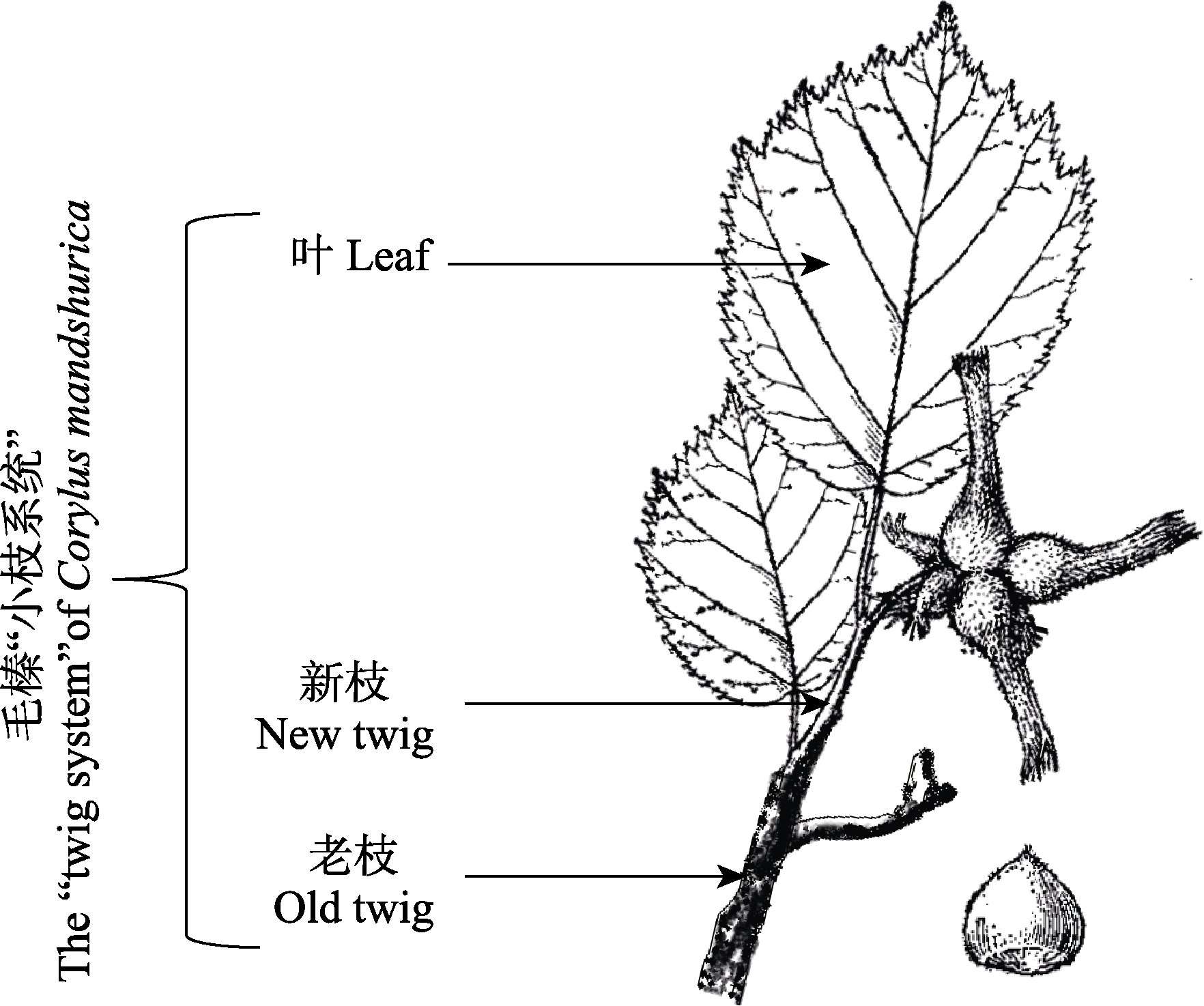
图1 毛榛“小枝系统”示意图。图中素材来源于《中国植物志》(https://www.iplant.cn)。
Fig. 1 Schematic diagram of the “twig system” of Corylus mandshurica. The materials in the figure are sourced from Flora of China (https://www.iplant.cn).
| 性状类别 Trait category | 简称 Abbreviation | 性状 Trait | 单位 Unit |
|---|---|---|---|
| 化学性状 Chemical trait | CT | 碳含量 Carbon (C) content | mg·g-1 |
| 氮含量 Nitrogen (N) content | mg·g-1 | ||
| 磷含量 Phosphorus (P) content | mg·g-1 | ||
| 非结构性碳 Non-structural carbon | NSC | 可溶性糖含量 Soluble sugar (SS) content | % DM |
| 淀粉含量 Starch (ST) content | % DM | ||
| 总非结构性碳水化合物含量 Total nonstructural carbohydrates (TNC) content | % DM | ||
| 防御性状 Defensive trait | DT | 总酚含量 Total phenol (TP) content | mg·g-1 |
| 单宁含量 Tannin (TA) content | mg·g-1 | ||
| 类黄酮含量 Flavonoid (FLA) content | mg·g-1 |
表1 毛榛的9个性状及其分类信息
Table 1 Nine traits of Corylus mandshurica and their classification information
| 性状类别 Trait category | 简称 Abbreviation | 性状 Trait | 单位 Unit |
|---|---|---|---|
| 化学性状 Chemical trait | CT | 碳含量 Carbon (C) content | mg·g-1 |
| 氮含量 Nitrogen (N) content | mg·g-1 | ||
| 磷含量 Phosphorus (P) content | mg·g-1 | ||
| 非结构性碳 Non-structural carbon | NSC | 可溶性糖含量 Soluble sugar (SS) content | % DM |
| 淀粉含量 Starch (ST) content | % DM | ||
| 总非结构性碳水化合物含量 Total nonstructural carbohydrates (TNC) content | % DM | ||
| 防御性状 Defensive trait | DT | 总酚含量 Total phenol (TP) content | mg·g-1 |
| 单宁含量 Tannin (TA) content | mg·g-1 | ||
| 类黄酮含量 Flavonoid (FLA) content | mg·g-1 |
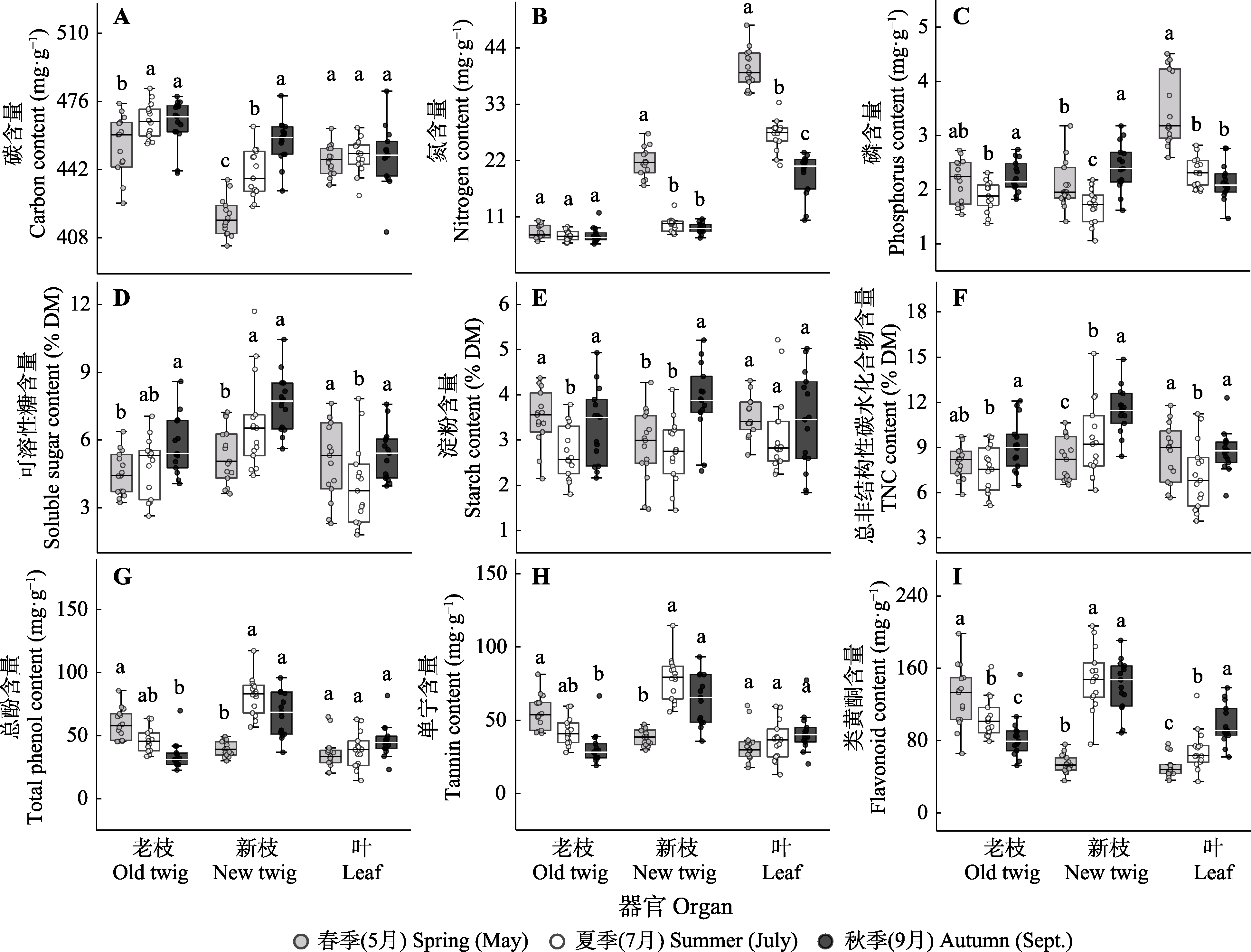
图2 不同季节毛榛老枝、新枝和叶的化学、非结构性碳和防御性状的含量。不同小写字母表示同一个器官内不同月份差异显著(p < 0.05)。
Fig. 2 Contents of chemical, non-structural carbon and defense traits in old twigs, new twigs and leaves of Corylus mandshurica in different seasons. Different lowercase letters indicate significant differences (p < 0.05) among different months within the same organ. TNC, total non-structural carbohydrates.
| 因素 Factor | 性状 Trait | df | 均方 Mean square | F | p | 偏Eta平方 Partial Eta squared |
|---|---|---|---|---|---|---|
| 季节 Season | C | 2 | 0.004 | 24.774 | <0.001 | 0.282 |
| N | 2 | 0.753 | 170.300 | <0.001 | 0.730 | |
| P | 2 | 0.129 | 23.601 | <0.001 | 0.273 | |
| SS | 2 | 0.160 | 10.580 | <0.001 | 0.144 | |
| ST | 2 | 0.090 | 7.732 | <0.01 | 0.109 | |
| TNC | 2 | 0.107 | 13.512 | <0.001 | 0.177 | |
| TP | 2 | 0.058 | 3.678 | <0.05 | 0.055 | |
| TA | 2 | 0.062 | 3.691 | <0.05 | 0.055 | |
| FLA | 2 | 0.406 | 37.153 | <0.001 | 0.371 | |
| 器官 Organ | C | 2 | 0.005 | 33.414 | <0.001 | 0.347 |
| N | 2 | 3.616 | 817.676 | <0.001 | 0.928 | |
| P | 2 | 0.150 | 27.443 | <0.001 | 0.303 | |
| SS | 2 | 0.264 | 17.426 | <0.001 | 0.217 | |
| ST | 2 | 0.012 | 1.005 | ns | 0.016 | |
| TNC | 2 | 0.080 | 10.145 | <0.001 | 0.139 | |
| TP | 2 | 0.485 | 31.031 | <0.001 | 0.330 | |
| TA | 2 | 0.611 | 36.476 | <0.001 | 0.367 | |
| FLA | 2 | 0.446 | 40.838 | <0.001 | 0.393 | |
| 季节×器官 Season × organ | C | 4 | 0.001 | 8.196 | <0.001 | 0.206 |
| N | 4 | 0.172 | 39.002 | <0.001 | 0.553 | |
| P | 4 | 0.088 | 16.094 | <0.001 | 0.338 | |
| SS | 4 | 0.045 | 2.983 | <0.05 | 0.087 | |
| ST | 4 | 0.040 | 3.383 | <0.05 | 0.097 | |
| TNC | 4 | 0.026 | 3.297 | <0.05 | 0.095 | |
| TP | 4 | 0.318 | 20.318 | <0.001 | 0.392 | |
| TA | 4 | 0.323 | 19.304 | <0.001 | 0.380 | |
| FLA | 4 | 0.456 | 41.781 | <0.001 | 0.570 |
表2 季节、器官及其交互作用对毛榛功能性状的影响
Table 2 Impacts of seasons, organs and their interactions on the functional traits of Corylus mandshurica
| 因素 Factor | 性状 Trait | df | 均方 Mean square | F | p | 偏Eta平方 Partial Eta squared |
|---|---|---|---|---|---|---|
| 季节 Season | C | 2 | 0.004 | 24.774 | <0.001 | 0.282 |
| N | 2 | 0.753 | 170.300 | <0.001 | 0.730 | |
| P | 2 | 0.129 | 23.601 | <0.001 | 0.273 | |
| SS | 2 | 0.160 | 10.580 | <0.001 | 0.144 | |
| ST | 2 | 0.090 | 7.732 | <0.01 | 0.109 | |
| TNC | 2 | 0.107 | 13.512 | <0.001 | 0.177 | |
| TP | 2 | 0.058 | 3.678 | <0.05 | 0.055 | |
| TA | 2 | 0.062 | 3.691 | <0.05 | 0.055 | |
| FLA | 2 | 0.406 | 37.153 | <0.001 | 0.371 | |
| 器官 Organ | C | 2 | 0.005 | 33.414 | <0.001 | 0.347 |
| N | 2 | 3.616 | 817.676 | <0.001 | 0.928 | |
| P | 2 | 0.150 | 27.443 | <0.001 | 0.303 | |
| SS | 2 | 0.264 | 17.426 | <0.001 | 0.217 | |
| ST | 2 | 0.012 | 1.005 | ns | 0.016 | |
| TNC | 2 | 0.080 | 10.145 | <0.001 | 0.139 | |
| TP | 2 | 0.485 | 31.031 | <0.001 | 0.330 | |
| TA | 2 | 0.611 | 36.476 | <0.001 | 0.367 | |
| FLA | 2 | 0.446 | 40.838 | <0.001 | 0.393 | |
| 季节×器官 Season × organ | C | 4 | 0.001 | 8.196 | <0.001 | 0.206 |
| N | 4 | 0.172 | 39.002 | <0.001 | 0.553 | |
| P | 4 | 0.088 | 16.094 | <0.001 | 0.338 | |
| SS | 4 | 0.045 | 2.983 | <0.05 | 0.087 | |
| ST | 4 | 0.040 | 3.383 | <0.05 | 0.097 | |
| TNC | 4 | 0.026 | 3.297 | <0.05 | 0.095 | |
| TP | 4 | 0.318 | 20.318 | <0.001 | 0.392 | |
| TA | 4 | 0.323 | 19.304 | <0.001 | 0.380 | |
| FLA | 4 | 0.456 | 41.781 | <0.001 | 0.570 |
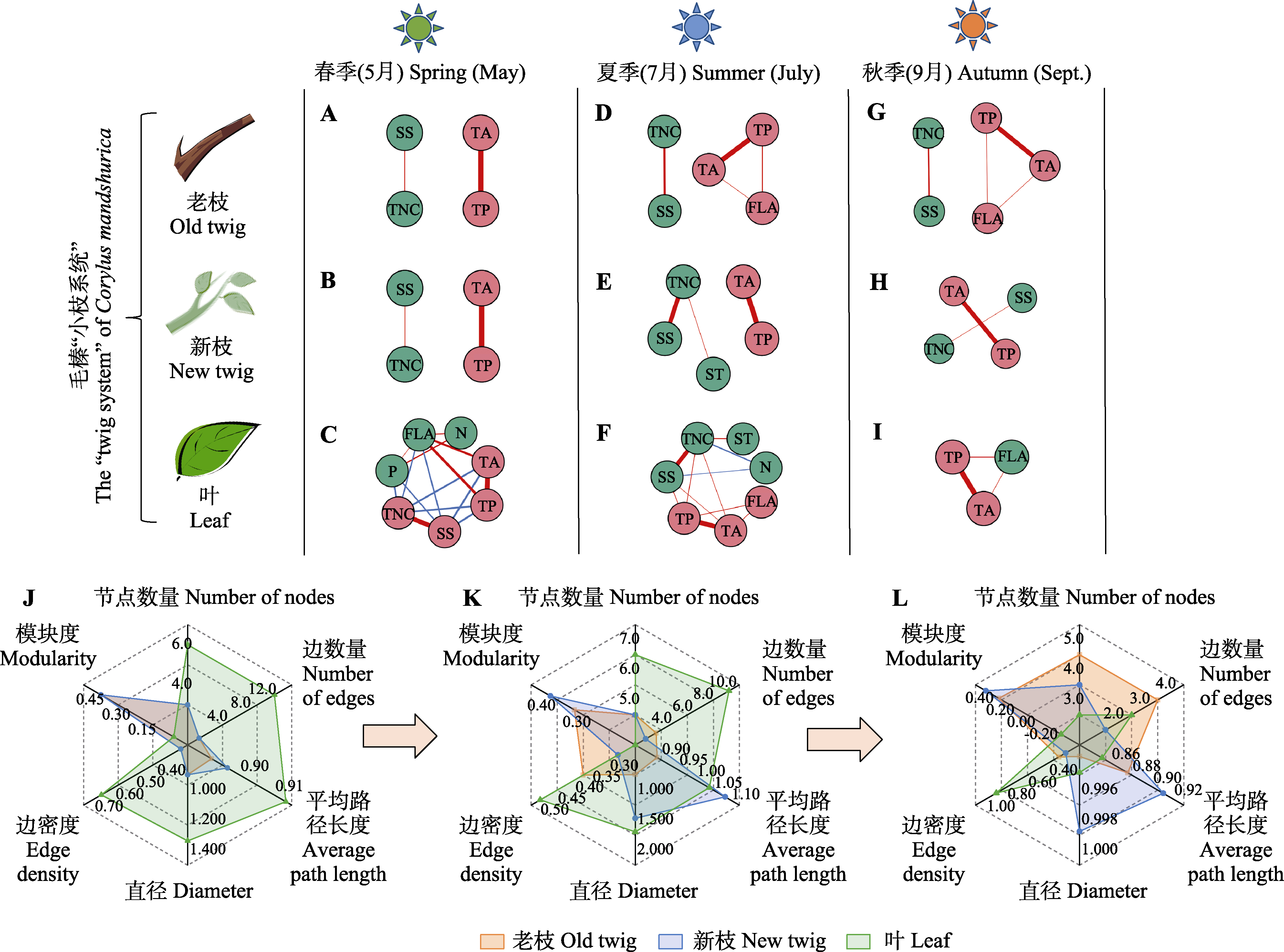
图3 不同季节毛榛老枝、新枝和叶功能性状相关性网络及其整体特征参数。A、B和C分别为春季(5月)时老枝、新枝和叶的性状网络, D、E和F分别为夏季(7月)时老枝、新枝和叶的性状网络, G、H和I分别为秋季(9月)时老枝、新枝和叶的性状网络。红色和蓝色连接线分别代表正相关和负相关关系, 线越粗则相关性越强。用不同颜色的节点圆圈表示性状所处不同的模块, 即绿色和粉红色圆圈。性状缩写信息见表1。J、K和L分别为“小枝系统” (老枝、新枝和叶)在春季(5月)、夏季(7月)和秋季(9月)时其性状相关性网络的整体特征。
Fig. 3 Functional trait correlation networks and their overall characteristic parameters of old twigs, new twigs and leaves of Corylus mandshurica in different seasons. A, B, and C represent the trait networks of old twigs, new twigs, and leaves in spring (May) respectively. D, E, and F represent the trait networks of old twigs, new twigs, and leaves in summer (July) respectively. G, H, and I represent the trait networks of old twigs, new twigs, and leaves in autumn (September) respectively. Red and blue connecting lines represent positive and negative correlations respectively. The thicker the line, the stronger the correlation. Node circles of different colors represent different modules to which the traits belong, namely green and pink circles. The trait abbreviation information is shown in Table 1. J, K, and L represent the overall characteristics of the trait-correlation networks of the “twig system” (old twig, new twig, and leaf) in spring (May), summer (July), and autumn (September), respectively.
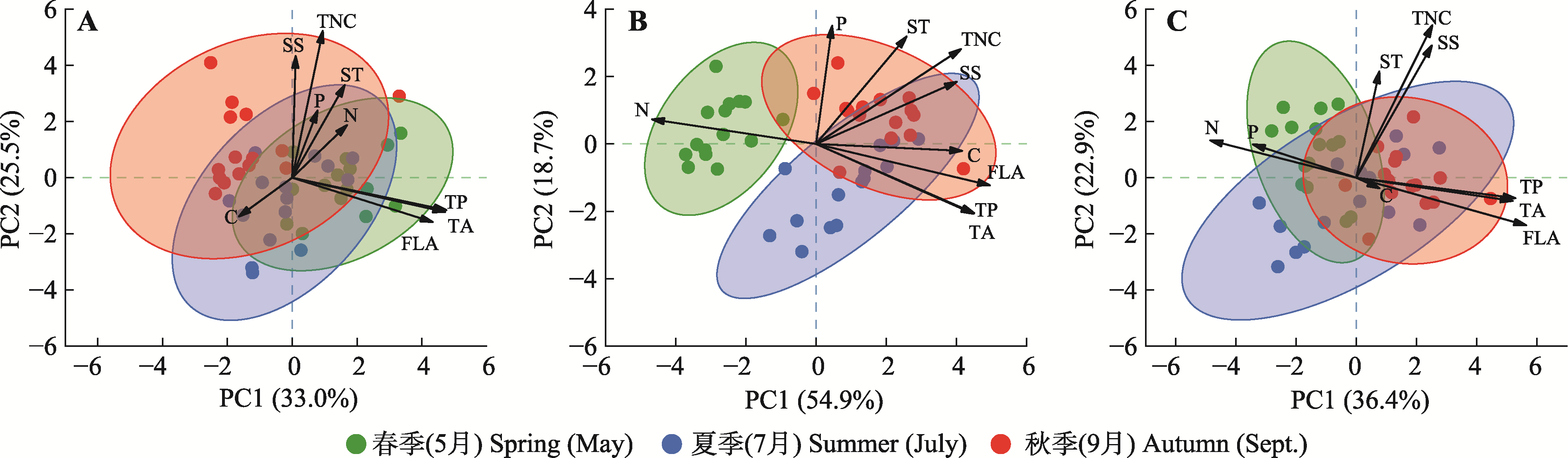
图4 不同季节毛榛老枝(A)、新枝(B)和叶(C)性状的主成分分析。性状缩写信息见表1。
Fig. 4 Principal component analysis of the traits of old twigs (A), new twigs (B) and leaves (C) of Corylus mandshurica in different seasons. Information on trait abbreviations is shown in Table 1.
| [1] |
Barbehenn RV, Constabel CP (2011). Tannins in plant- herbivore interactions. Phytochemistry, 72, 1551-1565.
DOI PMID |
| [2] |
Blumstein M, Gersony J, Martínez-Vilalta J, Sala A (2023). Global variation in nonstructural carbohydrate stores in response to climate. Global Change Biology, 29, 1854-1869.
DOI URL |
| [3] |
Buysse J, Merckx R (1993). An improved colorimetric method to quantify sugar content of plant tissue. Journal of Experimental Botany, 44, 1627-1629.
DOI URL |
| [4] |
Chacón-Fuentes M, Parra L, Lizama M, Seguel I, Urzúa A, Quiroz A (2017). Plant flavonoid content modified by domestication. Environmental Entomology, 46, 1080-1089.
DOI PMID |
| [5] |
Chen FS, Niklas KJ, Liu Y, Fang XM, Wan SZ, Wang HM (2015). Nitrogen and phosphorus additions alter nutrient dynamics but not resorption efficiencies of Chinese fir leaves and twigs differing in age. Tree Physiology, 35, 1106-1117.
DOI URL |
| [6] |
Cheng SQ, Jiang F, Jin GZ (2022). Leaf economics spectrum of broadleaved plant seedlings and its relationship with defense traits in a temperate forest. Chinese Journal of Plant Ecology, 46, 678-686.
DOI URL |
|
[程思祺, 姜峰, 金光泽 (2022). 温带森林阔叶植物幼苗叶经济谱及其与防御性状的关系. 植物生态学报, 46, 678-686.]
DOI |
|
| [7] | Ciocan AG, Tecuceanu V, Enache-Preoteasa C, Mitoi EM, Helepciuc FE, Dimov TV, Simon-Gruita A, Cogălniceanu GC (2023). Phenological and environmental factors’ impact on secondary metabolites in medicinal plant Cotinus coggygria Scop. Plants, 12, 1762. DOI: 10.3390/plants12091762. |
| [8] |
Corner EJH (1949). The durian theory or the origin of the modern tree. Annals of Botany, 13, 367-414.
DOI URL |
| [9] | Fan JP (2006). Research on the Extraction and Separation of Active Ingredients in Persimmon Leaves. PhD dissertation, Zhejiang University, Hangzhou. |
| [范杰平 (2006). 柿叶中有效成分的提取与分离研究. 博士学位论文, 浙江大学, 杭州.] | |
| [10] |
Furze ME, Huggett BA, Aubrecht DM, Stolz CD, Carbone MS, Richardson AD (2019). Whole-tree nonstructural carbohydrate storage and seasonal dynamics in five temperate species. New Phytologist, 221, 1466-1477.
DOI PMID |
| [11] |
Hartmann H, Trumbore S (2016). Understanding the roles of nonstructural carbohydrates in forest trees—From what we can measure to what we want to know. New Phytologist, 211, 386-403.
DOI PMID |
| [12] |
He NP, Li Y, Liu CC, Xu L, Li MX, Zhang JH, He JS, Tang ZY, Han XG, Ye Q, Xiao CW, Yu Q, Liu SR, Sun W, Niu SL, et al. (2020). Plant trait networks: improved resolution of the dimensionality of adaptation. Trends in Ecology & Evolution, 35, 908-918.
DOI URL |
| [13] |
Henn JJ, Buzzard V, Enquist BJ, Halbritter AH, Klanderud K, Maitner BS, Michaletz ST, Pötsch C, Seltzer L, Telford RJ, Yang Y, Zhang L, Vandvik V (2018). Intraspecific trait variation and phenotypic plasticity mediate alpine plant species response to climate change. Frontiers in Plant Science, 9, 1548. DOI: 10.3389/fpls.2018.01548.
PMID |
| [14] | Hou YL (2023). Research on the Nutritional Value, Solubility and Stability of Corylus mandshurica Kernel Protein. Master degree dissertation, Northeast Forestry University, Harbin. |
| [候艳丽 (2023). 毛榛榛仁蛋白营养价值及溶解性和稳定性的研究. 硕士学位论文, 东北林业大学, 哈尔滨.] | |
| [15] |
Huang PX, Dong Z, Guo PR, Zhang X, Qiu YP, Li BS, Wang YC, Guo HW (2020). Salicylic acid suppresses apical hook formation via NPR1-Mediated repression of EIN3 and EIL1 in Arabidopsis. Plant Cell, 32, 612-629.
DOI URL |
| [16] | Jiang HJ, Su JH, Ren ZR, Wang DX, Hills A, Kinoshita T, Blatt MR, Wang Y, Wang YZ (2024). Dual function of overexpressing plasma membrane H+-ATPase in balancing carbon-water use. Science Advances, 10, eadp8017. DOI: 10.1126/sciadv.adp8017. |
| [17] |
Johnson KS (2005). Plant phenolics behave as radical scavengers in the context of insect (Manduca sexta) hemolymph and midgut fluid. Journal of Agricultural and Food Chemistry, 53, 10120-10126.
PMID |
| [18] | Jónsdóttir IS, Halbritter AH, Christiansen CT, Althuizen IHJ, Haugum SV, Henn JJ, Björnsdóttir K, Maitner BS, Malhi Y, Michaletz ST, Roos RE, Klanderud K, Lee H, Enquist BJ, Vandvik V (2023). Intraspecific trait variability is a key feature underlying high Arctic plant community resistance to climate warming. Ecological Monographs, 93, e1555. DOI: 10.1002/ecm.1555. |
| [19] |
Kleyer M, Trinogga J, Cebrián-Piqueras MA, Trenkamp A, Fløjgaard C, Ejrnæs R, Bouma TJ, Minden V, Maier M, Mantilla-Contreras J, Albach DC, Blasius B (2019). Trait correlation network analysis identifies biomass allocation traits and stem specific length as hub traits in herbaceous perennial plants. Journal of Ecology, 107, 829-842.
DOI URL |
| [20] | Kong DL, Wang JJ, Wu HF, Valverde-Barrantes OJ, Wang RL, Zeng H, Kardol P, Zhang HY, Feng YL (2019). Nonlinearity of root trait relationships and the root economics spectrum. Nature Communications, 10, 2203. DOI: 10.1038/s41467-019-10245-6. |
| [21] |
Li JL, Chen XP, Niklas KJ, Sun J, Wang ZY, Zhong QL, Hu DD, Cheng DL (2022a). A whole-plant economics spectrum including bark functional traits for 59 subtropical woody plant species. Journal of Ecology, 110, 248-261.
DOI URL |
| [22] |
Li L, Wang XK, Manning WJ (2019). Effects of elevated CO2 on leaf senescence, leaf nitrogen resorption, and late-season photosynthesis in Tilia americana L. Frontiers in Plant Science, 10, 1217. DOI: 10.3389/fpls.2019.01217.
PMID |
| [23] | Li XM, Jin GZ, Liu ZL (2024). The seasonal dynamics of cross-sectional tissue characteristics of Corylus mandshurica twig, petiole, and leaf vein are inconsistent. Global Ecology and Conservation, 53, e02998. DOI: 10.1016/j.gecco.2024.e02998. |
| [24] | Li XN, Wang JT, Gu L, Qi X, Liu JW, Lin Z, Li Y (2021). Study on the material basis of medicinal properties and activities in hazelnuts. Journal of Changchun University of Chinese Medicine, 37, 1441-1445. |
| [李曦凝, 王俊桐, 谷乐, 齐鑫, 刘金薇, 林喆, 李勇 (2021). 榛子药效物质基础及活性研究. 长春中医药大学学报, 37, 1441-1445.] | |
| [25] |
Li Y, Liu CC, Sack L, Xu L, Li MX, Zhang JH, He NP (2022b). Leaf trait network architecture shifts with species-richness and climate across forests at continental scale. Ecology Letters, 25, 1442-1457.
DOI URL |
| [26] | Liang ZC, Liu TT, Chen XY, Xu WJ, Dong TF, Liu QS, Xu X (2023). Twigs of dove tree in high-latitude region tend to increase biomass accumulation in vegetative organs but decrease it in reproductive organs. Frontiers in Plant Science, 13, 1088955. DOI: 10.3389/fpls.2022.1088955. |
| [27] |
Liu HY, Shangguan HL, Zhou M, Airebule P, Zhao PW, He WQ, Xiang CL, Wu XC (2019). Differentiated responses of nonstructural carbohydrate allocation to climatic dryness and drought events in the Inner Asian arid timberline. Agricultural and Forest Meteorology, 271, 355-361.
DOI URL |
| [28] |
Liu R, Yang XJ, Gao RR, Huang ZY, Cornelissen JHC (2023). Coordination of economics spectra in leaf, stem and root within the genus Artemisia along a large environmental gradient in China. Global Ecology and Biogeography, 32, 324-338.
DOI URL |
| [29] |
Makkar HPS, Blümmel M, Borowy NK, Becker K (1993). Gravimetric determination of tannins and their correlations with chemical and protein precipitation methods. Journal of the Science of Food and Agriculture, 61, 161-165.
DOI URL |
| [30] |
Niinemets Ü, Ostonen I (2020). Plant organ senescence above- and belowground in trees: How to best salvage resources for new growth. Tree Physiology, 40, 981-986.
DOI PMID |
| [31] |
Olson ME, Aguirre-Hernández R, Rosell JA (2009). Universal foliage-stem scaling across environments and species in dicot trees: plasticity, biomechanics and Corner’s Rules. Ecology Letters, 12, 210-219.
DOI PMID |
| [32] |
Pan SN, Wang X, Yan ZB, Wu J, Guo LL, Peng ZY, Wu YT, Li J, Wang B, Su YJ, Liu LL (2024). Leaf stomatal configuration and photosynthetic traits jointly affect leaf water use efficiency in forests along climate gradients. New Phytologist, 244, 1250-1262.
DOI PMID |
| [33] | Paponov M, Antonyan M, Slimestad R, Paponov IA (2021). Decoupling of plant growth and accumulation of biologically active compounds in leaves, roots, and root exudates of Hypericum perforatum L. by the combination of jasmonate and far-red lighting. Biomolecules, 11, 1283. DOI: 10.3390/biom11091283. |
| [34] |
Peng X, Jin GZ (2022). Effects of plant characteristics and environmental factors on the dark diversity in a broadleaved Korean pine forest. Chinese Journal of Plant Ecology, 46, 656-666.
DOI |
|
[彭鑫, 金光泽 (2022). 植物特性和环境因子对阔叶红松林暗多样性的影响. 植物生态学报, 46, 656-666.]
DOI |
|
| [35] |
Primack RB, Laube J, Gallinat AS, Menzel A (2015). From observations to experiments in phenology research: investigating climate change impacts on trees and shrubs using dormant twigs. Annals of Botany, 116, 889-897.
DOI PMID |
| [36] | Rao QY, Su HJ, Ruan LW, Deng XW, Wang LT, Rao X, Liu JR, Xia WL, Xu PK, Shen H, Chen J, Xie P (2021). Stoichiometric and physiological mechanisms that link hub traits of submerged macrophytes with ecosystem structure and functioning. Water Research, 202, 117392. DOI: 10.1016/j.watres.2021.117392. |
| [37] | Signori-Müller C, Oliveira RS, de Vasconcellos Barros F, Tavares JV, Gilpin M, Diniz FC, Zevallos MJM, Yupayccana CAS, Acosta M, Bacca J, Chino RSC, Cuellar GMA, Cumapa ERM, Martinez F, Mullisaca FMP, et al. (2021). Non-structural carbohydrates mediate seasonal water stress across Amazon forests. Nature Communications, 12, 2310. DOI: 10.1038/s41467-021-22378-8. |
| [38] |
Tian D, Yan ZB, Fang JY (2021). Review on characteristics and main hypotheses of plant ecological stoichiometry. Chinese Journal of Plant Ecology, 45, 682-713.
DOI |
|
[田地, 严正兵, 方精云 (2021). 植物生态化学计量特征及其主要假说. 植物生态学报, 45, 682-713.]
DOI |
|
| [39] |
Tian DS, Reich PB, Chen HYH, Xiang YZ, Luo YQ, Shen Y, Meng C, Han WX, Niu SL (2019). Global changes alter plant multi-element stoichiometric coupling. New Phytologist, 221, 807-817.
DOI PMID |
| [40] |
Umaña MN, Salgado-Negret B, Norden N, Salinas V, Garzón F, Medina SP, Rodríguez-M GM, López-Camacho R, Castaño-Naranjo A, Cuadros H, Franke-Ante R, Avella A, Idárraga-Piedrahita Á, Jurado R, Nieto J, et al. (2023). Upscaling the effect of traits in response to drought: the relative importance of safety-efficiency and acquisitive- conservation functional axes. Ecology Letters, 26, 2098-2109.
DOI URL |
| [41] | Wang H, Prentice IC, Wright IJ, Warton DI, Qiao SC, Xu XT, Zhou J, Kikuzawa K, Stenseth NC (2023). Leaf economics fundamentals explained by optimality principles. Science Advances, 9, eadd5667. DOI: 10.1126/sciadv.add5667. |
| [42] | Wang L, Li JP, Wang Y, Xue H, Dai YX, Han YZ (2022). Interactive effect between tree ageing and trunk-boring pest reduces hydraulics and carbon metabolism in Hippophae rhamnoides. AoB Plants, 14, plac051. DOI: 10.1093/aobpla/plac051. |
| [43] | Wei B, Zhang DY, Wang GQ, Liu Y, Li QL, Zheng ZH, Yang GB, Peng YF, Niu KC, Yang YH (2023). Experimental warming altered plant functional traits and their coordination in a permafrost ecosystem. New Phytologist, 240, 1802-1816. |
| [44] | Wei SB, Li X, Lu ZF, Zhang H, Ye XY, Zhou YJ, Li J, Yan YY, Pei HC, Duan FY, Wang DY, Chen S, Wang P, Zhang C, Shang LG, et al. (2022). A transcriptional regulator that boosts grain yields and shortens the growth duration of rice. Science, 377, eabi8455. DOI: 10.1126/science.abi8455. |
| [45] |
Weigelt A, Mommer L, Andraczek K, Iversen CM, Bergmann J, Bruelheide H, Fan Y, Freschet GT, Guerrero-Ramírez NR, Kattge J, Kuyper TW, Laughlin DC, Meier IC, van der Plas F, Poorter H, et al. (2021). An integrated framework of plant form and function: the belowground perspective. New Phytologist, 232, 42-59.
DOI URL |
| [46] |
Westerband AC, Funk JL, Barton KE (2021). Intraspecific trait variation in plants: a renewed focus on its role in ecological processes. Annals of Botany, 127, 397-410.
DOI PMID |
| [47] |
Westoby M, Wright IJ (2003). The leaf size-twig size spectrum and its relationship to other important spectra of variation among species. Oecologia, 135, 621-628.
PMID |
| [48] |
Wojciechowska N, Sobieszczuk-Nowicka E, Bagniewska- Zadworna A (2018). Plant organ senescence-regulation by manifold pathways. Plant Biology, 20, 167-181.
DOI PMID |
| [49] |
Wright IJ, Reich PB, Westoby M, Ackerly DD, Baruch Z, Bongers F, Cavender-Bares J, Chapin T, Cornelissen JHC, Diemer M, Flexas J, Garnier E, Groom PK, Gulias J, Hikosaka K, et al. (2004). The worldwide leaf economics spectrum. Nature, 428, 821-827.
DOI |
| [50] |
Wu ZF, Fu YH, Crowther TW, Wang SX, Gong YF, Zhang J, Zhao YP, Janssens I, Penuelas J, Zohner CM (2023). Poleward shifts in the maximum of spring phenological responsiveness of Ginkgo biloba to temperature in China. New Phytologist, 240, 1421-1432.
DOI URL |
| [51] |
Xu LN, Jin GZ (2012). Species composition and community structure of a typical mixed broadleaved-Korean pine (Pinus koraiensis) forest plot in Liangshui Nature Reserve, Northeast China. Biodiversity Science, 20, 470-481.
DOI |
|
[徐丽娜, 金光泽 (2012). 小兴安岭凉水典型阔叶红松林动态监测样地: 物种组成与群落结构. 生物多样性, 20, 470-481.]
DOI |
|
| [52] |
Ye YH, Kitayama K, Onoda Y (2022). A cost-benefit analysis of leaf carbon economy with consideration of seasonal changes in leaf traits for sympatric deciduous and evergreen congeners: implications for their coexistence. New Phytologist, 234, 1047-1058.
DOI PMID |
| [53] |
Zhang JH, He NP, Liu CC, Xu L, Chen Z, Li Y, Wang RM, Yu GR, Sun W, Xiao CW, Chen HYH, Reich PB (2020). Variation and evolution of C:N ratio among different organs enable plants to adapt to N-limited environments. Global Change Biology, 26, 2534-2543.
DOI URL |
| [54] |
Zheng J, Jiang Y, Qian H, Mao YJ, Zhang C, Tang XX, Jin Y, Yi Y (2022). Size-dependent and environment-mediated shifts in leaf traits of a deciduous tree species in a subtropical forest. Ecology and Evolution, 12, e8516. DOI: 10.1002/ece3.8516.
PMID |
| [1] | 陈欣蕊, 宋维峰, 王燚, 王浩, 孙诗瑶, 王彩江, 蔡世鹏, 任红, 何玉陶, 潘珉, 曹光秀, 严毅, 谢志勇, 王行. 滇池湖滨带典型挺水植物氮磷重吸收特征及其适应策略[J]. , 2026, 50(预发表): 0-. |
| [2] | 张安宁, 肖亚宁, 赵霞, 张淼, 崔瀚文, 陈书燕, 安黎哲. 青藏高原灌木化与氮添加对土壤线虫及功能性状的交互作用[J]. 植物生态学报, 2026, 50(预发表): 0-. |
| [3] | 任曦彤, 李颖, 张雨, 熊胡安赫, 张蕊科, 祁珊珊, 戴志聪, 杜道林. 丛枝菌根真菌与凋落物互作有助于加拿大一枝黄花应对营养胁迫[J]. 植物生态学报, 2026, 50(3): 710-721. |
| [4] | 王梦雪, 胡明艳, 储诚进, 陈阳, 罗文启, 马子龙. 亚热带森林不同菌根真菌树种叶片和细根的碳氮磷化学计量特征[J]. 植物生态学报, 2026, 50(2): 334-343. |
| [5] | 张竟文, 李晶, 王汝苗, 王贺年, 崔丽娟. 不同纬度滨海湿地植物根系与土壤生态化学计量特征及内稳性分析[J]. 植物生态学报, 2026, 50(2): 461-473. |
| [6] | 于江珊, 许浩, 郭永忠, 侯继华. 器官年龄在油松叶、枝、根化学计量特征变异以及协调中的重要作用[J]. 植物生态学报, 2026, 50(2): 306-317. |
| [7] | 冯哲, 许格希, 刘顺, 陈健, 李非凡, 巩闪闪, 贾磊, 孙镇, 余美霓, 史作民, 周庆宏, 蒋冬梅. 生境因子和系统发育协同驱动云南金沙江干热河谷植物叶片化学计量特征[J]. 植物生态学报, 2026, 50(2): 352-361. |
| [8] | 田地, 迟小龙, 石亮, 刘宵含, 赵常提, 吴梅, 张玉忠, 高永亮. 塞罕坝地区优势造林树种叶片化学计量特征及其环境驱动[J]. 植物生态学报, 2026, 50(2): 362-373. |
| [9] | 谭聪, 石亮, 赵常提, 甘沛钦, 陈冰瑞, 谭深, 卜燕华, 田地. 基于叶片功能性状多维特征的北京平原林生态优化策略解析[J]. 植物生态学报, 2026, 50(2): 388-399. |
| [10] | 侯霄帆, 马辰涵, 孙语倩, 高钰涵, 李品. 臭氧胁迫下叶片与细根凋落物分解的生态化学计量特征差异[J]. 植物生态学报, 2026, 50(2): 268-278. |
| [11] | 皮惠之, 张秋芳, 孙浩, 曾泉鑫, 彭园珍, 元晓春, 徐建国, 陈岳民. 微生物碳氮不平衡影响罗浮栲林土壤微生物氮利用效率对氮富集的响应[J]. 植物生态学报, 2026, 50(1): 34-44. |
| [12] | 沈会涛, 俞筱押, 秦彦杰, 武爱彬. 太行山东麓核桃林生态化学计量及碳储量随林龄变化特征[J]. 植物生态学报, 2025, 49(9): 1543-15555. |
| [13] | 陈刚刚, 朱思洁, 郭亮娜, 付芳伟, 刘昱灼, 李江荣. 藏东南色季拉山高山树线乔灌地上-地下养分分配策略[J]. 植物生态学报, 2025, 49(9): 1515-1526. |
| [14] | 张箫荻, 王晓霞, 章毓文, 侯靖雨, 石骁鹏, 和璐璐, 刘亚栋, 薛柳, 何宝华, 段劼. 北京山区三种林下灌木水力结构、叶片功能性状及其环境适应策略[J]. 植物生态学报, 2025, 49(7): 1128-1143. |
| [15] | 王世松, 曲孝云, 董劭琼, 李佳鸿, 杨琦, 侯满福, 赵利清, 郭柯, 刘长成, 胥晓. 西藏札达典型荒漠植被类型及群落特征[J]. 植物生态学报, 2025, 49(5): 801-812. |
| 阅读次数 | ||||||
|
全文 |
|
|||||
|
摘要 |
|
|||||
Copyright © 2026 版权所有 《植物生态学报》编辑部
地址: 北京香山南辛村20号, 邮编: 100093
Tel.: 010-62836134, 62836138; Fax: 010-82599431; E-mail: apes@ibcas.ac.cn, cjpe@ibcas.ac.cn
备案号: 京ICP备16067583号-19

