
植物生态学报 ›› 2025, Vol. 49 ›› Issue (9): 1472-1484.DOI: 10.17521/cjpe.2024.0118 cstr: 32100.14.cjpe.2024.0118
所属专题: 2025年集群网站期刊最受关注文章TOP10
赵珮杉1, 高广磊1,2,3,4,*( )(
)( ), 丁国栋1,2,3,4, 张英1,4
收稿日期:2024-04-19
接受日期:2024-09-28
出版日期:2025-09-20
发布日期:2025-04-14
通讯作者:
*高广磊: ORCID: 0000-0002-0486-1532 (gaoguanglei@bjfu.edu.cn)基金资助:
ZHAO Pei-Shan1, GAO Guang-Lei1,2,3,4,*()(), DING Guo-Dong1,2,3,4, ZHANG Ying1,4
Received:2024-04-19
Accepted:2024-09-28
Online:2025-09-20
Published:2025-04-14
Supported by:摘要:
樟子松(Pinus sylvestris var. mongolica)是北方风沙区生态环境建设中重要的常绿乔木树种。该研究旨在揭示樟子松人工林地下真菌群落构建模式, 以期深化对“樟子松-真菌”互馈调节关系的理解, 并为樟子松人工林可持续经营管理提供微生物视角下的理论基础。该研究以呼伦贝尔沙地不同林龄(26、37和46 a)樟子松人工林为研究对象, 探究其不同生态位(根系、根际土壤和非根际土壤)下真菌多样性和群落组成时空动态特征, 并阐明其构建模式。主要结果有: (1)林龄和生态位对樟子松人工林地下真菌多样性有显著影响。地下真菌群落物种丰富度和多样性指数均值排序为46 a > 26 a > 37 a, 随林龄增加群落间相异性逐渐增加; 地下真菌群落物种丰富度、多样性指数和相异性指数均呈现非根际土壤真菌(NRhSF) >根际土壤真菌(RhSF) >根内真菌(RAF)。(2)樟子松人工林地下真菌属于14门592属。26、37和46 a人工林地下真菌分别包含3、1和5个丰富属, 均具有内生真菌或外生菌根真菌的共生能力; RAF、RhSF和NRhSF分别包含3、8和5个丰富属, 被孢霉门(Mortierellomycota)和腐生营养型真菌占比逐渐增加。(3)樟子松人工林地下真菌主要构建过程为扩散限制(63.54%), 其次是生态漂变(22.06%)和同质选择(12.90%)。林龄与地下真菌群落结构呈显著正相关关系; 影响RAF、RhSF和NRhSF的主要土壤因子分别为土壤全磷含量(RAF)、全氮含量和全磷含量(RhSF)以及土壤有机质含量(NRhSF)。研究结果表明, 樟子松人工林地下真菌多样性和群落组成在不同林龄和不同生态位存在时空异质性, 随机性过程主要由扩散限制主导影响着这些群落, 确定性过程是宿主选择和环境过滤共同作用的结果。
赵珮杉, 高广磊, 丁国栋, 张英. 林龄和生态位对樟子松人工林地下真菌群落构建的影响. 植物生态学报, 2025, 49(9): 1472-1484. DOI: 10.17521/cjpe.2024.0118
ZHAO Pei-Shan, GAO Guang-Lei, DING Guo-Dong, ZHANG Ying. Effects of stand age and niche on community assembly of belowground fungi in Pinus sylvestris var. mongolica plantations. Chinese Journal of Plant Ecology, 2025, 49(9): 1472-1484. DOI: 10.17521/cjpe.2024.0118

图1 樟子松人工林地下真菌可操作分类单元(OTU)分布Venn图。A, 26、37和46 a人工林地下真菌OTU在各生态位分布情况。B, 根系(Root)、根际土壤(RhS)和非根际土壤(NRhS)中真菌OTU在各林龄中分布情况。
Fig. 1 Venn diagrams of belowground fungal operational taxonomic unit (OTU) in Pinus sylvestris var. mongolica plantations. A, Distribution of fungal OTUs in 26, 37 and 46 a plantations among the different niches. B, Distribution of fungal OTUs in root, rhizosphere soil (RhS) and non-rhizosphere soil (NRhS) among the different stand ages.
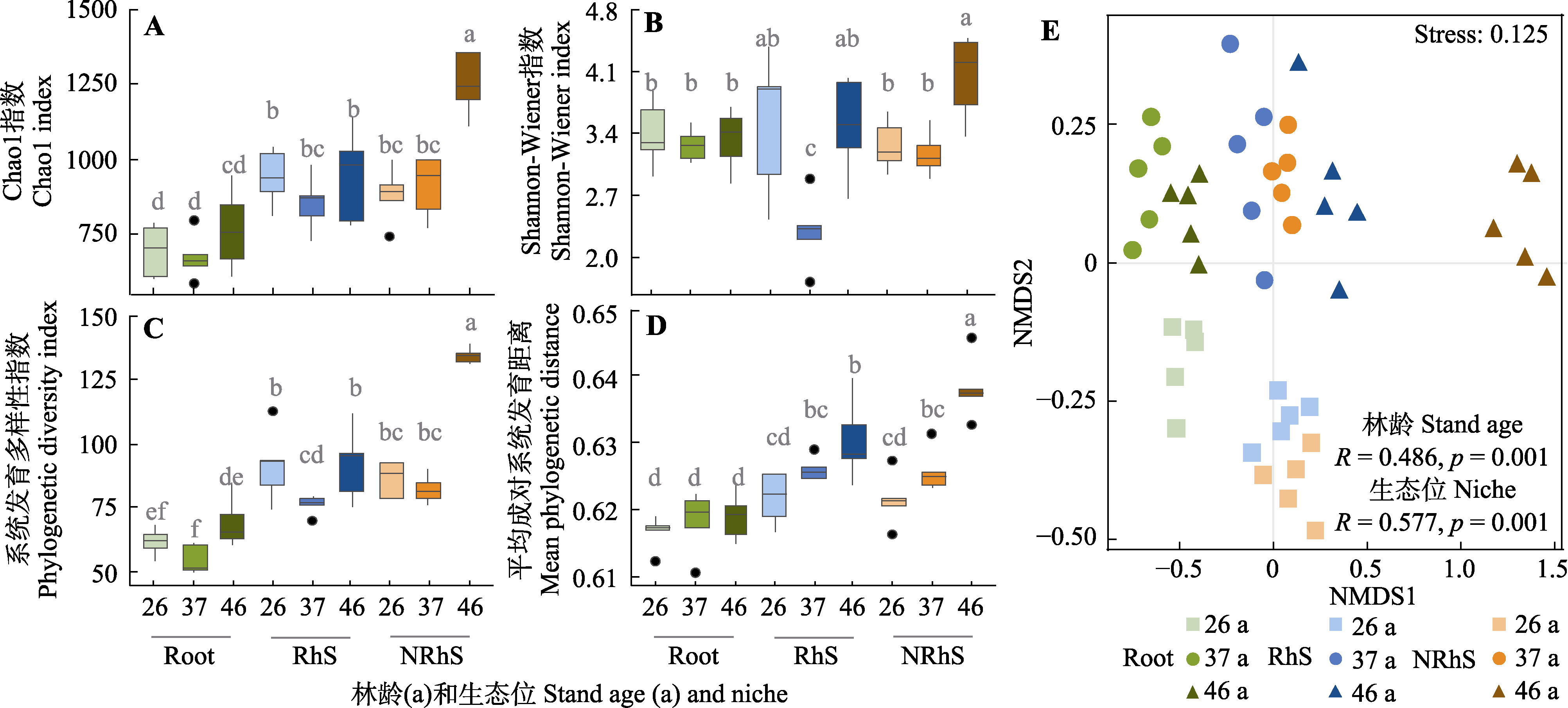
图2 樟子松人工林地下真菌群落多样性和结构。A, Chao1多样性。B, Shannon-Wiener多样性。C, 系统发育多样性。D, 平均成对系统发育距离。E, 真菌结构非度量多维尺度排序(NMDS)及相似性分析(ANOSIM)。不同小写字母表示差异显著(p < 0.05)。NRhS, 非根际土壤; RhS, 根际土壤; Root, 根系。Stress, 应力值。
Fig. 2 Diversity and structure of belowground fungal community in Pinus sylvestris var. mongolica plantations. A, Chao1 index. B, Shannon-Wiener index. C, Phylogenetic diversity (PD). D, Mean phylogenetic distance (MPD). E, Non-metric multidimensional scaling (NMDS) and analysis of similarities (ANOSIM) of fungal community structure. Different lowercase letters indicate significant differences (p < 0.05). NRhS, non-rhizosphere soil; RhS, rhizosphere soil.
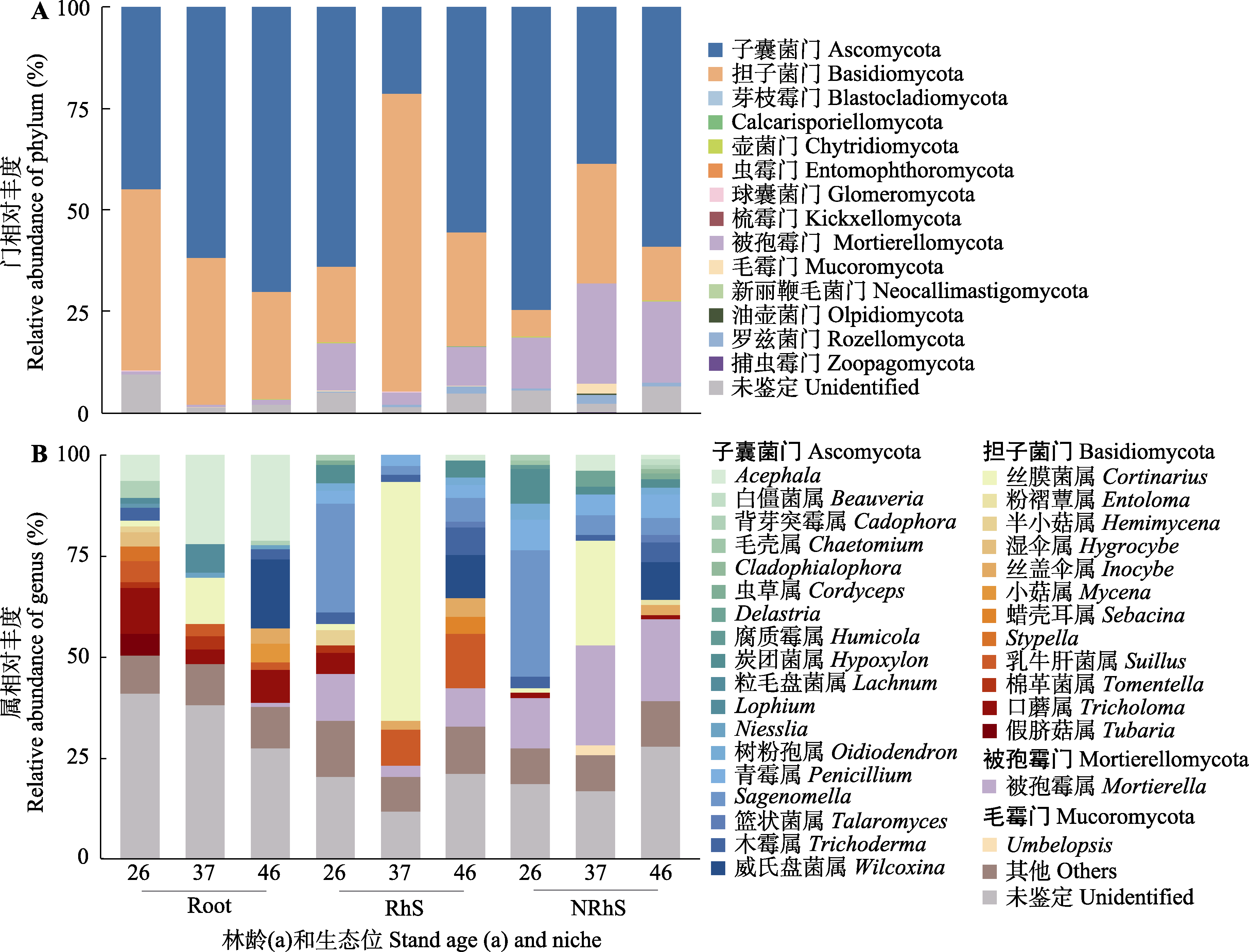
图3 樟子松人工林地下真菌群落分类学组成及其相对丰度。A, 门水平组成。B, 属水平组成(仅列出相对丰度>1.00%的丰富属)。NRhS, 非根际土壤; RhS, 根际土壤; Root, 根系。
Fig. 3 Distribution and relative abundances of belowground fungal taxonomic groups in Pinus sylvestris var. mongolica plantations. A, Phylum level. B, Genus level (genera with abundances > 1.00% are listed). NRhS, non-rhizosphere soil; RhS, rhizosphere soil.
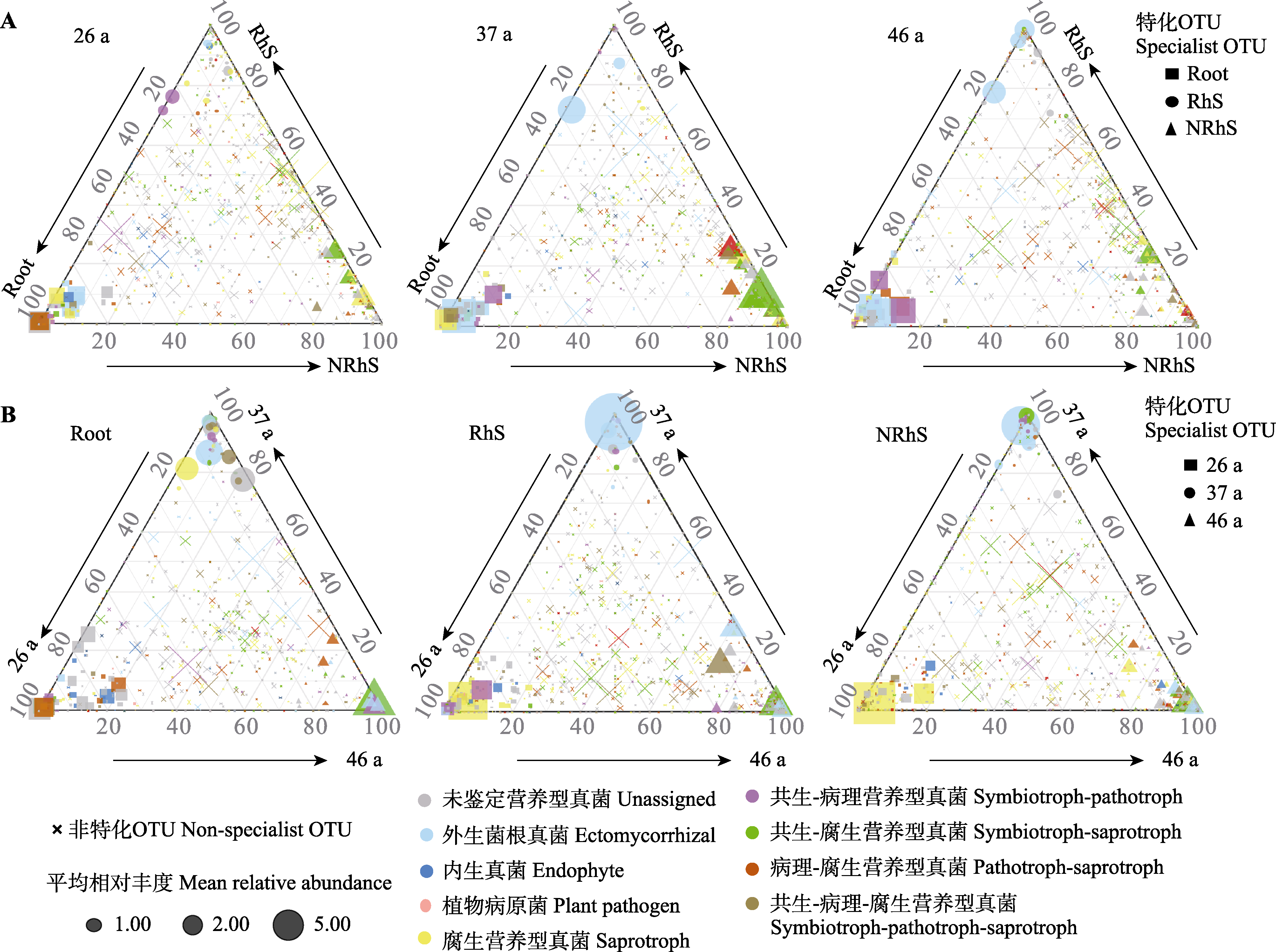
图4 樟子松人工林地下真菌特化可操作分类单元(OTU)分布。A, 26、37和46 a人工林特化OTU在各生态位分布情况。B, 根系(Root)、根际土壤(RhS)和非根际土壤(NRhS)中特化OTU在各林龄分布情况。点的形状表示不同生态位/林龄人工林中特化和非特化OTU类型, 点的大小表示OTU平均相对丰度, 点的颜色表示真菌功能类型。
Fig. 4 Specialist operational taxonomic unit (OTU) of belowground fungal community in Pinus sylvestris var. mongolica plantations. A, Distribution of specialists in 26, 37 and 46 a plantations among the different niches. B, Distribution of specialists in root, rhizosphere soil (RhS) and non-rhizosphere soil (NRhS) among the different stand ages. Point shape indicates non-specialist OTUs and specialist OTUs in different niches or stand ages, point size indicates the average relative abundance of OTUs, and point color indicates different fungal functional groups of OTUs.
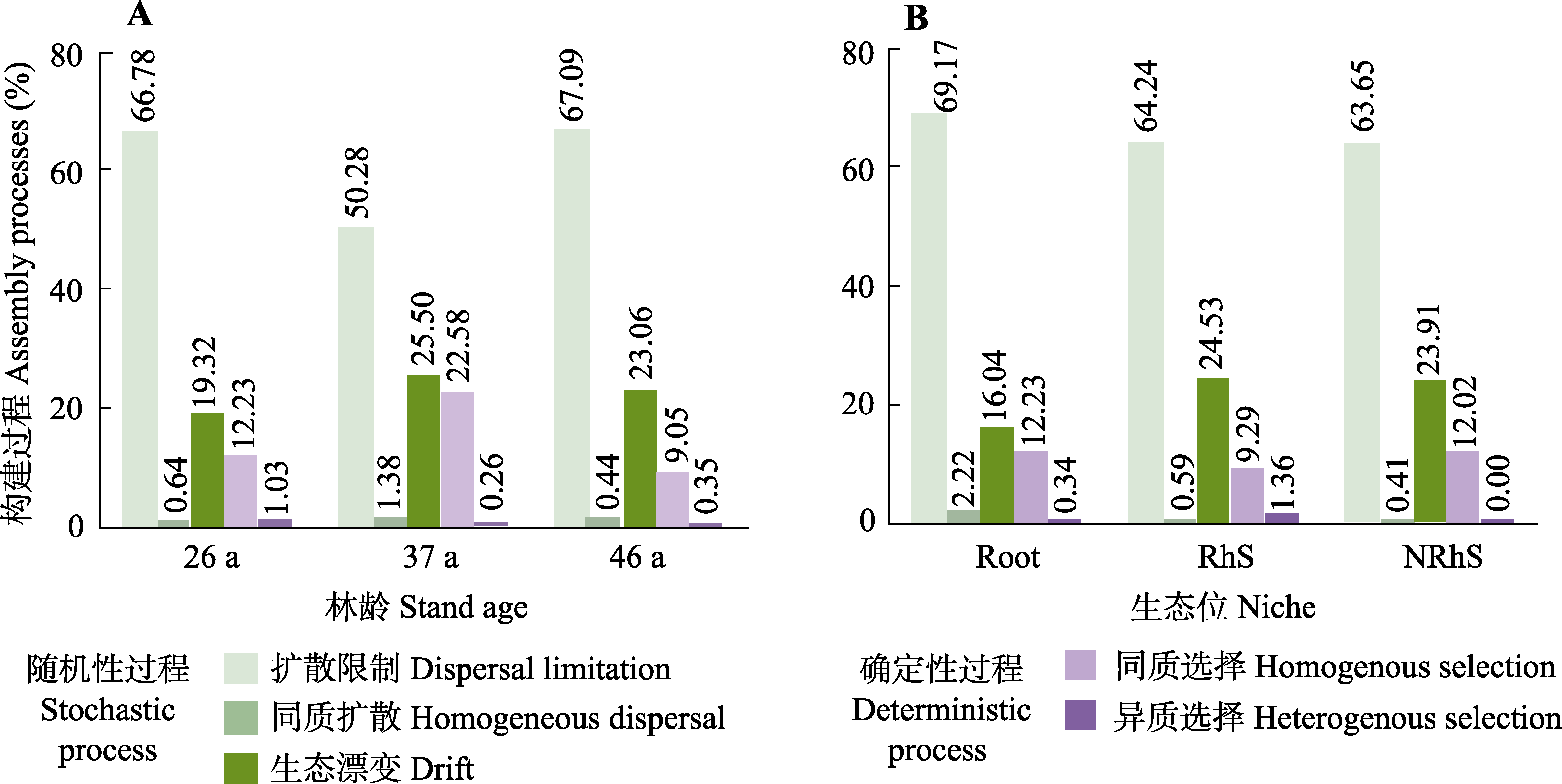
图5 樟子松人工林地下真菌群落构建过程。A, 26、37和46 a人工林真菌群落构建过程。B, 根系(Root)、根际土壤(RhS)和非根际土壤(NRhS)中真菌群落构建过程。
Fig. 5 Variations in assembly processes of belowground fungal community in Pinus sylvestris var. mongolica plantations. A, Assembly processes of fungal community in 26, 37 and 46 a plantations. B, Assembly processes of fungal community in root, rhizosphere soil (RhS) and non-rhizosphere soil (NRhS).
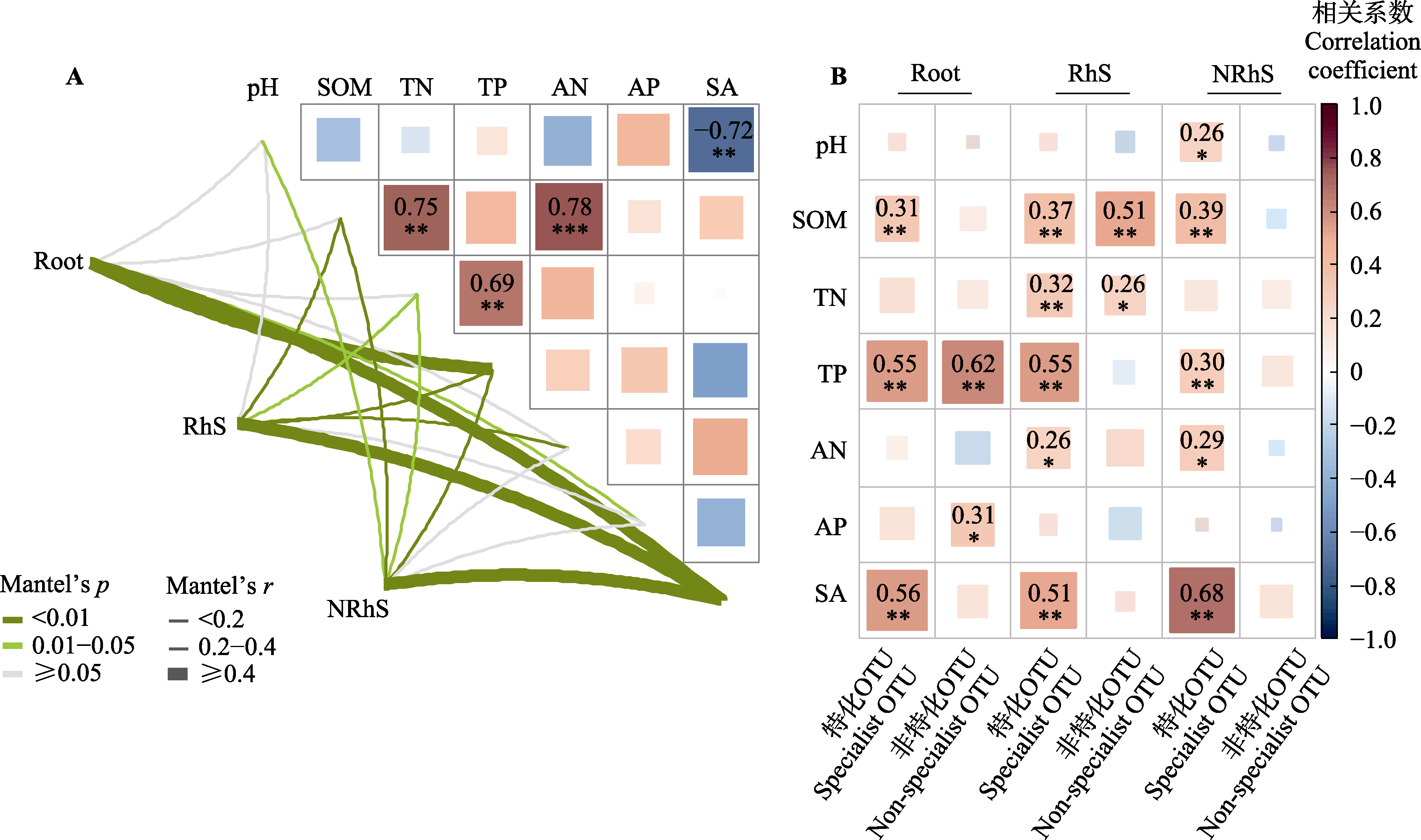
图6 樟子松人工林地下真菌群落与环境因子(土壤因子和林龄)的相关性。A, 根系(Root)、根际土壤(RhS)和非根际土壤(NRhS)中真菌群落结构与环境因子的Mantel检验、环境因子间的斯皮尔曼相关性。B, 各生态位真菌群落中特化可操作分类单元(OTU)和非特化OTU结构与环境因子的相关性。AN, 土壤速效氮含量; AP, 土壤速效磷含量; pH, 土壤pH; SA, 林龄; SOM, 土壤有机质含量; TN, 土壤全氮含量; TP, 土壤全磷含量。*, p < 0.05; **, p < 0.01; ***, p < 0.001。
Fig. 6 Correlations between belowground fungal community and environmental factors (soil factors and stand age) in Pinus sylvestris var. mongolica plantations. A, Correlations between fungal community in root, rhizosphere soil (RhS) and non-rhizosphere soil (NRhS) and environmental factors based on Mantel test. Pairwise comparisons of environmental factors based on Spearman’s correlation. B, Correlations between fungal specialist and non-specialist operational taxonomic units (OTUs) and environmental factors in the different niches. AN, available nitrogen content; AP, available phosphorus content; pH, soil pH; SA, stand age; SOM, soil organic matter content; TN, total nitrogen content; TP, total phosphorus content. *, p < 0.05; **, p < 0.01; ***, p < 0.001.
| [1] | Abarenkov K, Nilsson RH, Larsson KH, Alexander IJ, Eberhardt U, Erland S, Høiland K, Kjøller R, Larsson E, Pennanen T, Sen R, Taylor AFS, Tedersoo L, Ursing BM, Vrålstad T, et al. (2010). The UNITE database for molecular identification of fungi—Recent updates and future perspectives. New Phytologist, 186, 281-285. |
| [2] | Berg G, Köberl M, Rybakova D, Müller H, Grosch R, Smalla K (2017). Plant microbial diversity is suggested as the key to future biocontrol and health trends. FEMS Microbiology Ecology, 93, fix050. DOI: 10.1093/femsec/fix050. |
| [3] | Birch JD, Lutz JA, Turner BL, Karst J (2021). Divergent, age-associated fungal communities of Pinus flexilis and Pinus longaeva. Forest Ecology and Management, 494, 119277. DOI: 10.1016/j.foreco.2021.119277. |
| [4] |
Bödeker ITM, Clemmensen KE, de Boer W, Martin F, Olson Å, Lindahl BD (2014). Ectomycorrhizal Cortinarius species participate in enzymatic oxidation of humus in northern forest ecosystems. New Phytologist, 203, 245-256.
DOI PMID |
| [5] |
Caporaso JG, Kuczynski J, Stombaugh J, Bittinger K, Bushman FD, Costello EK, Fierer N, Peña AG, Goodrich JK, Gordon JI, Huttley GA, Kelley ST, Knights D, Koenig JE, Ley RE, et al. (2010). QIIME allows analysis of high-throughput community sequencing data. Nature Methods, 7, 335-336.
DOI PMID |
| [6] |
Chai YF, Cao Y, Yue M, Tian TT, Yin QL, Dang H, Quan JX, Zhang RC, Wang M (2019). Soil abiotic properties and plant functional traits mediate associations between soil microbial and plant communities during a secondary forest succession on the Loess Plateau. Frontiers in Microbiology, 10, 895. DOI: 10.3389/fmicb.2019.00895.
PMID |
| [7] |
Delgado M, Zúñiga-Feest A, Almonacid L, Lambers H, Borie F (2015). Cluster roots of Embothrium coccineum (Proteaceae) affect enzyme activities and phosphorus lability in rhizosphere soil. Plant and Soil, 395, 189-200.
DOI URL |
| [8] |
Edgar RC (2013). UPARSE: highly accurate OTU sequences from microbial amplicon reads. Nature Methods, 10, 996-998.
DOI PMID |
| [9] |
Frąc M, Hannula SE, Bełka M, Jędryczka M (2018). Fungal biodiversity and their role in soil health. Frontiers in Microbiology, 9, 707. DOI: 10.3389/fmicb.2018.00707.
PMID |
| [10] | Gao C, Guo LD (2022). Progress on microbial species diversity, community assembly and functional traits. Biodiversity Science, 30, 168-180. |
| [高程, 郭良栋 (2022). 微生物物种多样性、群落构建与功能性状研究进展. 生物多样性, 30, 168-180.] | |
| [11] |
Goldmann K, Schröter K, Pena R, Schöning I, Schrumpf M, Buscot F, Polle A, Wubet T (2016). Divergent habitat filtering of root and soil fungal communities in temperate beech forests. Scientific Reports, 6, 31439. DOI: 10.1038/srep31439.
PMID |
| [12] |
Grau O, Geml J, Pérez-Haase A, Ninot JM, Semenova-Nelsen TA, Peñuelas J (2017). Abrupt changes in the composition and function of fungal communities along an environmental gradient in the high Arctic. Molecular Ecology, 26, 4798-4810.
DOI PMID |
| [13] |
Gumiere T, Durrer A, Bohannan BJM, Andreote FD (2016). Biogeographical patterns in fungal communities from soils cultivated with sugarcane. Journal of Biogeography, 43, 2016-2026.
DOI URL |
| [14] |
Guo Q, Wen ZM, Ghanizadeh H, Fan YM, Zheng C, Yang X, Yan XH, Li W (2023). Stochastic processes dominate assembly of soil fungal community in grazing excluded grasslands in Northwestern China. Journal of Soils and Sediments, 23, 156-171.
DOI |
| [15] | Guzmán-Guzmán P, Kumar A, de Los Santos-Villalobos S, Parra-Cota FI, Orozco-Mosqueda MDC, Fadiji AE, Hyder S, Babalola OO, Santoyo G (2023). Trichoderma species: our best fungal allies in the biocontrol of plant diseases—A review. Plants, 12, 432. DOI: 10.3390/plants12030432. |
| [16] |
Gweon HS, Bowes MJ, Moorhouse HL, Oliver AE, Bailey MJ, Acreman MC, Read DS (2021). Contrasting community assembly processes structure lotic bacteria metacommunities along the river continuum. Environmental Microbiology, 23, 484-498.
DOI PMID |
| [17] | Halifu S, Deng X, Song XS, Song RQ (2019). Effects of two Trichoderma strains on plant growth, rhizosphere soil nutrients, and fungal community of Pinus sylvestris var. mongolica annual seedlings. Forests, 10, 758. DOI: 10.3390/f10090758. |
| [18] |
Jiao S, Chen WM, Wang JL, Du NN, Li QP, Wei GH (2018). Soil microbiomes with distinct assemblies through vertical soil profiles drive the cycling of multiple nutrients in reforested ecosystems. Microbiome, 6, 146. DOI: 10.1186/s40168-018-0526-0.
PMID |
| [19] | Kang HZ, Zhu JJ, Li ZH, Xu ML (2004). Natural distribution of Pinus sylvestris var. mongolica on sandy land and its cultivation as an exotic species. Chinese Journal of Ecology, 23(5), 134-139. |
| [康宏樟, 朱教君, 李智辉, 许美玲 (2004). 沙地樟子松天然分布与引种栽培. 生态学杂志, 23(5), 134-139.] | |
| [20] | Khalid M, Du BM, Tan HX, Liu XX, Su LT, Saeed-ur-Rahman, Ali M, Liu CJ, Sun NX, Hui N (2021). Phosphorus elevation erodes ectomycorrhizal community diversity and induces divergence of saprophytic community composition between vegetation types. Science of the Total Environment, 793, 148502. DOI: 10.1016/j.scitotenv.2021.148502. |
| [21] |
Kyaschenko J, Clemmensen KE, Hagenbo A, Karltun E, Lindahl BD (2017). Shift in fungal communities and associated enzyme activities along an age gradient of managed Pinus sylvestris stands. ISME Journal, 11, 863-874.
DOI PMID |
| [22] | Li JJ, Fan MC, Wei ZH, Zhang K, Ma X, Shangguan ZP (2024). Broad environmental adaptation of abundant microbial taxa in Robinia pseudoacacia forests during long-term vegetation restoration. Environmental Research, 242, 117720. DOI: 10.1016/j.envres.2023.117720. |
| [23] | Li JL, Guo MS, Gao GL, A LS, Du FM, Yin XL, Ding GD (2021). Physiological responses of mycorrhizal seedlings of Pinus sylvestris var. mongolica to drought stress. Arid Zone Research, 38, 1704-1712. |
|
[李嘉珞, 郭米山, 高广磊, 阿拉萨, 杜凤梅, 殷小琳, 丁国栋 (2021). 沙地樟子松菌根化幼苗对干旱胁迫的生理响应. 干旱区研究, 38, 1704-1712.]
DOI |
|
| [24] | Li QH, Zhang J, Wang L, Wang YP (2018). Desiccation and nutrient status of the soil in apple orchards in hilly-gully region of the Loess Plateau. Acta Pedologica Sinica, 55, 503-514. |
| [李青华, 张静, 王力, 王延平 (2018). 黄土丘陵沟壑区山地苹果林土壤干化及养分变异特征. 土壤学报, 55, 503-514.] | |
| [25] |
Li S, Shakoor A, Wubet T, Zhang NL, Liang Y, Ma KP (2018). Fine-scale variations of fungal community in a heterogeneous grassland in Inner Mongolia: effects of the plant community and edaphic parameters. Soil Biology & Biochemistry, 122, 104-110.
DOI URL |
| [26] | Liu HT, Hu TL, Wang H, Zhang YH, Guo SW, Xie ZB (2023). Community assembly and functional potential of habitat generalists and specialists in typical paddy soils. Acta Pedologica Sinica, 60, 546-557. |
| [刘红涛, 胡天龙, 王慧, 张燕辉, 郭世伟, 谢祖彬 (2023). 典型水稻土细菌亚类群——泛化种、特化种的群落构建及功能潜力. 土壤学报, 60, 546-557.] | |
| [27] | Liu L, Zhu K, Krause SMB, Li SP, Wang X, Zhang ZC, Shen MW, Yang QS, Lian JY, Wang XH, Ye WH, Zhang J (2021). Changes in assembly processes of soil microbial communities during secondary succession in two subtropical forests. Soil Biology & Biochemistry, 154, 108144. DOI: 10.1016/j.soilbio.2021.108144. |
| [28] |
Luo XZ, Hou EQ, Zhang LL, Kuang Y, Wen DZ (2023). Altered soil microbial properties and functions after afforestation increase soil carbon and nitrogen but not phosphorus accumulation. Biology and Fertility of Soils, 59, 645-658.
DOI |
| [29] | Lutter R, Riit T, Agan A, Rähn E, Tullus A, Sopp R, Ots K, Kaivapalu M, Täll K, Tullus T, Tedersoo L, Drenkhan R, Tullus H (2023). Soil fungal diversity of birch plantations on former agricultural land resembles naturally regenerated birch stands on agricultural and forest land. Forest Ecology and Management, 542, 121100. DOI: 10.1016/j.foreco.2023.121100. |
| [30] |
Maherali H, Klironomos JN (2007). Influence of phylogeny on fungal community assembly and ecosystem functioning. Science, 316, 1746-1748.
DOI PMID |
| [31] |
Nguyen DQ, Schneider D, Brinkmann N, Song B, Janz D, Schöning I, Daniel R, Pena R, Polle A (2020). Soil and root nutrient chemistry structure root-associated fungal assemblages in temperate forests. Environmental Microbiology, 22, 3081-3095.
DOI PMID |
| [32] |
Nguyen NH, Song ZW, Bates ST, Branco S, Tedersoo L, Menke J, Schilling JS, Kennedy PG (2016). FUNGuild: an open annotation tool for parsing fungal community datasets by ecological guild. Fungal Ecology, 20, 241-248.
DOI URL |
| [33] |
Ning DL, Yuan MT, Wu LW, Zhang Y, Guo X, Zhou XS, Yang YF, Arkin AP, Firestone MK, Zhou JZ (2020). A quantitative framework reveals ecological drivers of grassland microbial community assembly in response to warming. Nature Communications, 11, 4717. DOI: 10.1038/s41467-020-18560-z.
PMID |
| [34] | Rożek K, Chmolowska D, Odriozola I, Větrovský T, Rola K, Kohout P, Baldrian P, Zubek S (2023). Soil fungal and bacterial community structure in monocultures of fourteen tree species of the temperate zone. Forest Ecology and Management, 530, 120751. DOI: 10.1016/j.foreco.2022.120751. |
| [35] |
Schmidt R, Mitchell J, Scow K (2019). Cover cropping and no-till increase diversity and symbiotroph: saprotroph ratios of soil fungal communities. Soil Biology & Biochemistry, 129, 99-109.
DOI URL |
| [36] | Shi LL, Dossa GGO, Paudel E, Zang HD, Xu JC, Harrison RD (2019). Changes in fungal communities across a forest disturbance gradient. Applied and Environmental Microbiology, 85, e00080-19. DOI: 10.1128/AEM.00080-19. |
| [37] |
Shi Y, Li YT, Xiang XJ, Sun RB, Yang T, He D, Zhang KP, Ni YY, Zhu YG, Adams JM, Chu HY (2018). Spatial scale affects the relative role of stochasticity versus determinism in soil bacterial communities in wheat fields across the North China Plain. Microbiome, 6, 27. DOI: 10.1186/s40168-018-0409-4.
PMID |
| [38] |
Stegen JC, Lin XJ, Fredrickson JK, Chen XY, Kennedy DW, Murray CJ, Rockhold ML, Konopka A (2013). Quantifying community assembly processes and identifying features that impose them. The ISME Journal, 7, 2069-2079.
DOI URL |
| [39] |
Stegen JC, Lin XJ, Fredrickson JK, Konopka AE (2015). Estimating and mapping ecological processes influencing microbial community assembly. Frontiers in Microbiology, 6, 370. DOI: 10.3389/fmicb.2015.00370.
PMID |
| [40] |
Stroheker S, Queloz V, Sieber TN (2016). Spatial and temporal dynamics in the Phialocephala fortinii s.l.-Acephala applanata species complex (PAC). Plant and Soil, 407, 231-241.
DOI URL |
| [41] |
Talbot JM, Bruns TD, Taylor JW, Smith DP, Branco S, Glassman SI, Erlandson S, Vilgalys R, Liao HL, Smith ME, Peay KG (2014). Endemism and functional convergence across the North American soil mycobiome. Proceedings of the National Academy of Sciences of the United States of America, 111, 6341-6346.
DOI PMID |
| [42] | Tian LX, Yu SP, Zhang L, Dong KJ, Feng BL (2022). Mulching practices manipulate the microbial community diversity and network of root-associated compartments in the Loess Plateau. Soil and Tillage Research, 223, 105476. DOI: 10.1016/j.still.2022.105476. |
| [43] |
van Dam NM, Bouwmeester HJ (2016). Metabolomics in the rhizosphere: tapping into belowground chemical communication. Trends in Plant Science, 21, 256-265.
DOI PMID |
| [44] |
Vandenkoornhuyse P, Quaiser A, Duhamel M, Le Van A, Dufresne A (2015). The importance of the microbiome of the plant holobiont. New Phytologist, 206, 1196-1206.
DOI PMID |
| [45] |
Wan WJ, Gadd GM, Yang YY, Yuan WK, Gu JD, Ye LP, Liu WZ (2021). Environmental adaptation is stronger for abundant rather than rare microorganisms in wetland soils from the Qinghai-Tibet Plateau. Molecular Ecology, 30, 2390-2403.
DOI PMID |
| [46] | Wang Y, Dong LG, Zhang M, Cui YX, Bai XX, Song B, Zhang JW, Yu X (2023). Dynamic microbial community composition, co-occurrence pattern and assembly in rhizosphere and bulk soils along a coniferous plantation chronosequence. Catena, 223, 106914. DOI: 10.1016/j.catena.2023.106914. |
| [47] | Wang Y, Guo MS, Gao GL, Cao HY, Ding GD, Liang HJ, Zhao PS (2021). Effects of three ectomycorrhizal fungi on growth of Pinus sylvestris var. mongolica seedlings. Journal of Arid Land Resources and Environment, 35, 135-140. |
| [王雨, 郭米山, 高广磊, 曹红雨, 丁国栋, 梁海军, 赵珮杉 (2021). 三种外生菌根真菌对沙地樟子松幼苗生长的影响. 干旱区资源与环境, 35, 135-140.] | |
| [48] |
Wilschut RA, van der Putten WH, Garbeva P, Harkes P, Konings W, Kulkarni P, Martens H, Geisen S (2019). Root traits and belowground herbivores relate to plant-soil feedback variation among congeners. Nature Communications, 10, 1564. DOI: 10.1038/s41467-019-09615-x.
PMID |
| [49] |
Woo SL, Hermosa R, Lorito M, Monte E (2023). Trichoderma: a multipurpose, plant-beneficial microorganism for eco-sustainable agriculture. Nature Reviews: Microbiology, 21, 312-326.
DOI |
| [50] |
Xiong W, Li R, Ren Y, Liu C, Zhao QY, Wu HS, Jousset A, Shen QR (2017). Distinct roles for soil fungal and bacterial communities associated with the suppression of vanilla Fusarium wilt disease. Soil Biology & Biochemistry, 107, 198-207.
DOI URL |
| [51] | Xu P, Rong XY, Liu CH, Du F, Yin BF, Tao Y, Zhang YM (2022). Effects of extreme drought on community and ecological network of soil fungi in a temperate desert. Biodiversity Science, 30, 21327. DOI: 10.17520/biods.2021327. |
| [徐鹏, 荣晓莹, 刘朝红, 杜芳, 尹本丰, 陶冶, 张元明 (2022). 极端干旱对温带荒漠土壤真菌群落和生态网络的影响. 生物多样性, 30, 21327. DOI: 10.17520/biods.2021327.] | |
| [52] |
Yan J, He XL, Zhang YJ, Xu W, Zhang J, Zhao LL (2014). Colonization of arbuscular mycorrhizal fungi and dark septate endophytes in roots of desert Salix psammophila. Chinese Journal of Plant Ecology, 38, 949-958.
DOI URL |
|
[闫姣, 贺学礼, 张亚娟, 许伟, 张娟, 赵丽莉 (2014). 荒漠北沙柳根系丛枝菌根真菌和黑隔内生真菌定殖状况. 植物生态学报, 38, 949-958.]
DOI |
|
| [53] | Yu Y, Zhou Y, Janssens IA, Deng Y, He XJ, Liu LL, Yi Y, Xiao NW, Wang XD, Li C, Xiao CW (2024). Divergent rhizosphere and non-rhizosphere soil microbial structure and function in long-term warmed steppe due to altered root exudation. Global Change Biology, 30, e17111. DOI: 10.1111/gcb.17111. |
| [54] |
Zhang HS, Wu XH, Li G, Qin P (2011). Interactions between arbuscular mycorrhizal fungi and phosphate-solubilizing fungus (Mortierella sp.) and their effects on Kostelelzkya virginica growth and enzyme activities of rhizosphere and bulk soils at different salinities. Biology and Fertility of Soils, 47, 543-554.
DOI URL |
| [55] |
Zhang JJ, Kobert K, Flouri T, Stamatakis A (2014). PEAR: a fast and accurate Illumina Paired-End reAd mergeR. Bioinformatics, 30, 614-620.
DOI PMID |
| [56] | Zhao PS, Gao GL, Ding GD, Zhang Y, Ren Y (2024). Fungal complexity and stability across afforestation areas in changing desert environments. Science of the Total Environment, 912, 169398. DOI: 10.1016/j.scitotenv.2023.169398. |
| [57] | Zhao PS, Gao GL, Ren Y, Ding GD, Zhang Y, Wang JY (2022). Intra-annual variation of root-associated fungi of Pinus sylvestris var. mongolica: the role of climate and implications for host phenology. Applied Soil Ecology, 176, 104480. DOI: 10.1016/j.apsoil.2022.104480. |
| [58] |
Zhao S, Liu JJ, Banerjee S, White JF, Zhou N, Zhao ZY, Zhang K, Hu MF, Kingsley K, Tian CY (2019). Not by salinity alone: How environmental factors shape fungal communities in saline soils. Soil Science Society of America Journal, 83, 1387-1398.
DOI URL |
| [59] |
Zheng X, Zhu JJ, Yan QL, Song LN (2012). Effects of land use changes on the groundwater table and the decline of Pinus sylvestris var. mongolica plantations in southern Horqin Sandy Land, Northeast China. Agricultural Water Management, 109, 94-106.
DOI URL |
| [60] |
Zheng Y, Hu HW, Guo LD, Anderson IC, Powell JR (2017). Dryland forest management alters fungal community composition and decouples assembly of root- and soil-associated fungal communities. Soil Biology & Biochemistry, 109, 14-22.
DOI URL |
| [61] | Zhou JZ, Ning DL (2017). Stochastic community assembly: Does it matter in microbial ecology? Microbiology and Molecular Biology Reviews, 81, e00002-17. DOI: 10.1128/MMBR.00002-17. |
| [62] |
Zhu JJ, Fan ZP, Zeng DH, Jiang FQ, Takeshi M (2003). Comparison of stand structure and growth between artificial and natural forests of Pinus sylvestiris var. mongolica on sandy land. Journal of Forestry Research, 14, 103-111.
DOI URL |
| [1] | 任曦彤, 李颖, 张雨, 熊胡安赫, 张蕊科, 祁珊珊, 戴志聪, 杜道林. 丛枝菌根真菌与凋落物互作有助于加拿大一枝黄花应对营养胁迫[J]. 植物生态学报, 2026, 50(3): 710-721. |
| [2] | 田地, 迟小龙, 石亮, 刘宵含, 赵常提, 吴梅, 张玉忠, 高永亮. 塞罕坝地区优势造林树种叶片化学计量特征及其环境驱动[J]. 植物生态学报, 2026, 50(2): 362-373. |
| [3] | 陈雅轩, 韩雨音, 陈艳梅, 刘倩愿. 华北不同林龄人工林植物功能性状与碳氮化学计量[J]. 植物生态学报, 2026, 50(2): 318-333. |
| [4] | 滕安萍, 刘明慧, 高广磊, 丁国栋, 张英, 李启研. 科尔沁沙地不同林龄樟子松人工林土壤真菌-细菌共现模式[J]. 植物生态学报, 2025, 49(9): 1556-1568. |
| [5] | 沈会涛, 俞筱押, 秦彦杰, 武爱彬. 太行山东麓核桃林生态化学计量及碳储量随林龄变化特征[J]. 植物生态学报, 2025, 49(9): 1543-15555. |
| [6] | 李冬梅, 孙龙, 韩宇, 胡同欣, 杨光, 蔡慧颖. 计划火烧对红松人工林生物多样性与生态系统多功能性关系的影响[J]. 植物生态学报, 2025, 49(3): 379-392. |
| [7] | 刘洋, 刘傲, 宋璇紫, 杨云, 安柏衡, 韩梦姣, 班玛才格尔, 米玛旺堆. 高原鼠兔干扰对高寒草甸主要植物生态位及种间联结的影响[J]. 植物生态学报, 2025, 49(12): 2054-2068. |
| [8] | 郑立媛, 徐茜竹, 尹嘉淇, 孙小雯, 王艳. 城郊近河退耕地野大豆群落生态位和种间联结[J]. 植物生态学报, 2025, 49(10): 1685-1697. |
| [9] | 周红娟, 刘子赫, 刘柯言, 张初蕊, 胡旭, 韩璐, 陈立欣. 不同降雨条件下北京土石山区混生乔灌植物的水分吸收和生态位特征[J]. 植物生态学报, 2024, 48(9): 1089-1103. |
| [10] | 童郁强, 吴梦鸽, 王玲, 赵实, 韩叙, 张彤, 刘静, 秦胜金, 董英豪, 魏亚伟, 周永斌. 基于液流径向变化的樟子松蒸腾耗水量估算及影响因素[J]. 植物生态学报, 2024, 48(9): 1118-1127. |
| [11] | 任悦, 高广磊, 丁国栋, 张英, 赵珮杉, 柳叶. 不同生长期樟子松外生菌根真菌群落物种组成及其驱动因素[J]. 植物生态学报, 2023, 47(9): 1298-1309. |
| [12] | 冉松松, 余再鹏, 万晓华, 傅彦榕, 邹秉章, 王思荣, 黄志群. 邻域树种多样性对杉木叶片氮磷生态化学计量比的影响[J]. 植物生态学报, 2023, 47(7): 932-942. |
| [13] | 祝维, 周欧, 孙一鸣, 古丽米热·依力哈木, 王亚飞, 杨红青, 贾黎明, 席本野. 混交林内毛白杨和刺槐根系吸水的动态生态位划分[J]. 植物生态学报, 2023, 47(3): 389-403. |
| [14] | 杨玲, 梁思琪, 潘佳明, 韦金鑫, 丁涛, 蒋日红, 邵毅贞, 张宪春, 刘勇波, 向巧萍. 濒危植物百山祖冷杉和资源冷杉的物种划分及其遗传资源的保护[J]. 植物生态学报, 2023, 47(12): 1629-1645. |
| [15] | 李杰, 郝珉辉, 范春雨, 张春雨, 赵秀海. 东北温带森林树种和功能多样性对生态系统多功能性的影响[J]. 植物生态学报, 2023, 47(11): 1507-1522. |
| 阅读次数 | ||||||
|
全文 |
|
|||||
|
摘要 |
|
|||||
Copyright © 2026 版权所有 《植物生态学报》编辑部
地址: 北京香山南辛村20号, 邮编: 100093
Tel.: 010-62836134, 62836138; Fax: 010-82599431; E-mail: apes@ibcas.ac.cn, cjpe@ibcas.ac.cn
备案号: 京ICP备16067583号-19

