
植物生态学报 ›› 2025, Vol. 49 ›› Issue (10): 1744-1754.DOI: 10.17521/cjpe.2024.0427
• 研究论文 • 上一篇
李亚超1,2,3, 张慧1,4, 许珊珊1,2,3, 李明1,2,3, 马祥庆1,2,3, 吴鹏飞1,2,3,*( )(
)( )
)
收稿日期:2024-11-26
接受日期:2025-03-04
出版日期:2025-10-20
发布日期:2025-11-20
通讯作者:
*吴鹏飞(fjwupengfei@126.com)基金资助:
LI Ya-Chao1,2,3, ZHANG Hui1,4, XU Shan-Shan1,2,3, LI Ming1,2,3, MA Xiang-Qing1,2,3, WU Peng-Fei1,2,3,*()()
Received:2024-11-26
Accepted:2025-03-04
Online:2025-10-20
Published:2025-11-20
Supported by:摘要: 为探究低磷胁迫下杉木(Cunninghamia lanceolata)根系挥发性化合物对邻株杉木生长的影响规律, 采用室内盆栽控制实验, 选择同一杉木无性系幼苗为研究对象, 设置充足供磷(1.0 mmol·L-1 KH2PO4)和不供磷(0 mmol·L-1 KH2PO4) 2个水平, 以正癸烷为外源根系挥发性化合物, 模拟杉木释放根系挥发性化合物对邻株根系形态、生理学和分子水平等生长相关指标的影响。结果表明: 与充足供磷处理相比, 不供磷条件下添加正癸烷显著影响了杉木幼苗根系形态, 相比于充足供磷下添加正癸烷, 不供磷处理下杉木幼苗根系长度减少37.4%, 干物质量减少29.3%, 比表面积增加54.1%; 对根系蛋白组学研究发现, 低磷胁迫下添加正癸烷导致甘氨酸合成酶表达增加1.3倍, 甘氨酸分解酶表达显著降低33.3%, 显著促进甘氨酸的累积, 甘氨酸的累积显著调节根系形态变化; 从磷利用来看, 相比于充足供磷处理, 不供磷条件下添加正癸烷导致根磷含量显著降低15.1%, 根磷利用效率显著增加19.0%。综上, 添加正癸烷可显著提高杉木根系磷利用效率, 并通过调节甘氨酸含量调控杉木根系形态, 以提高杉木对低磷胁迫的适应性。
李亚超, 张慧, 许珊珊, 李明, 马祥庆, 吴鹏飞. 低磷胁迫下外源挥发性有机化合物对杉木幼苗根系磷利用的影响. 植物生态学报, 2025, 49(10): 1744-1754. DOI: 10.17521/cjpe.2024.0427
LI Ya-Chao, ZHANG Hui, XU Shan-Shan, LI Ming, MA Xiang-Qing, WU Peng-Fei. Effects of exogenous volatile organic compounds on phosphorus utilization in Cunninghamia lanceolata seedling roots under low phosphorus stress. Chinese Journal of Plant Ecology, 2025, 49(10): 1744-1754. DOI: 10.17521/cjpe.2024.0427
| 试剂 Reagent | 浓度 Concentration (mmol·L-1) |
|---|---|
| KNO3 | 1.25 |
| MgSO4·7H2O | 0.50 |
| Ca (NO3)2·4H2O | 1.25 |
| FeEDTA | 2.78 × 10⁻⁵ |
| H3BO3 | 1.16 × 10⁻² |
| CuSO4·5H2O | 7.50 × 10⁻⁵ |
| ZuSO4·7H2O | 2.00 × 10⁻⁴ |
| MnCl2·4H2O | 2.28 × 10⁻³ |
| H2MO·4H2O | 1.00 × 10⁻⁴ |
表1 改良1/4霍格兰营养液配方
Table 1 Modified 1/4 Hoagland’s nutrient solution formulation
| 试剂 Reagent | 浓度 Concentration (mmol·L-1) |
|---|---|
| KNO3 | 1.25 |
| MgSO4·7H2O | 0.50 |
| Ca (NO3)2·4H2O | 1.25 |
| FeEDTA | 2.78 × 10⁻⁵ |
| H3BO3 | 1.16 × 10⁻² |
| CuSO4·5H2O | 7.50 × 10⁻⁵ |
| ZuSO4·7H2O | 2.00 × 10⁻⁴ |
| MnCl2·4H2O | 2.28 × 10⁻³ |
| H2MO·4H2O | 1.00 × 10⁻⁴ |
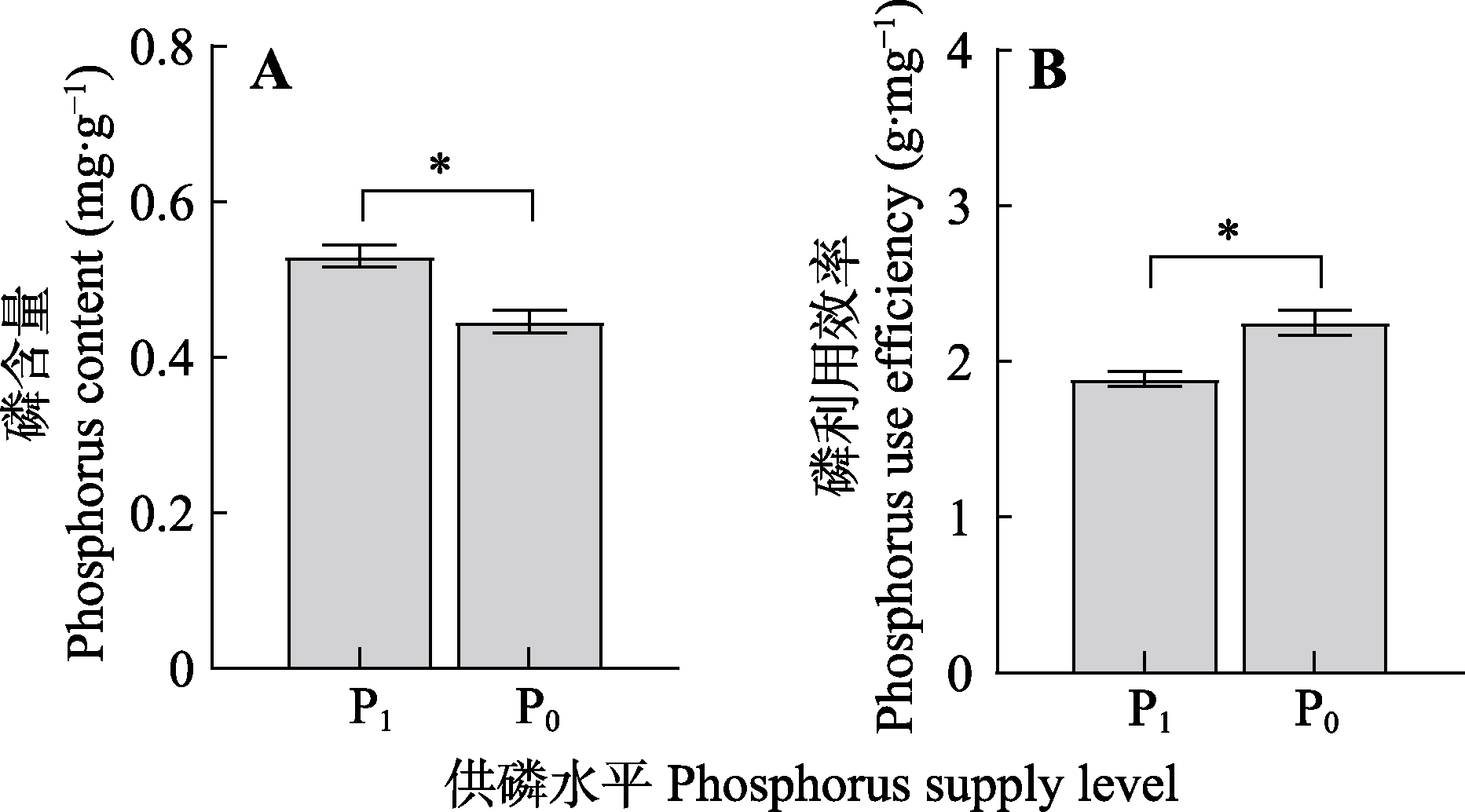
图1 不同供磷水平下添加外源正癸烷对杉木根系磷含量(A)及磷利用效率(B)的影响(平均值±标准误)。P0, 不供磷下添加正癸烷处理; P1, 充足供磷下添加正癸烷处理。*, p < 0.05。
Fig. 1 Effects of addition of exogenous n-decane on root phosphorus content (A) and phosphorus use efficiency (B) of Cunninghamia lanceolata under different phosphorus supply levels (mean ± SE). P0, no phosphorus supply with n-decane treatment; P1, phosphorus supply with n-decane treatment. *, p < 0.05.
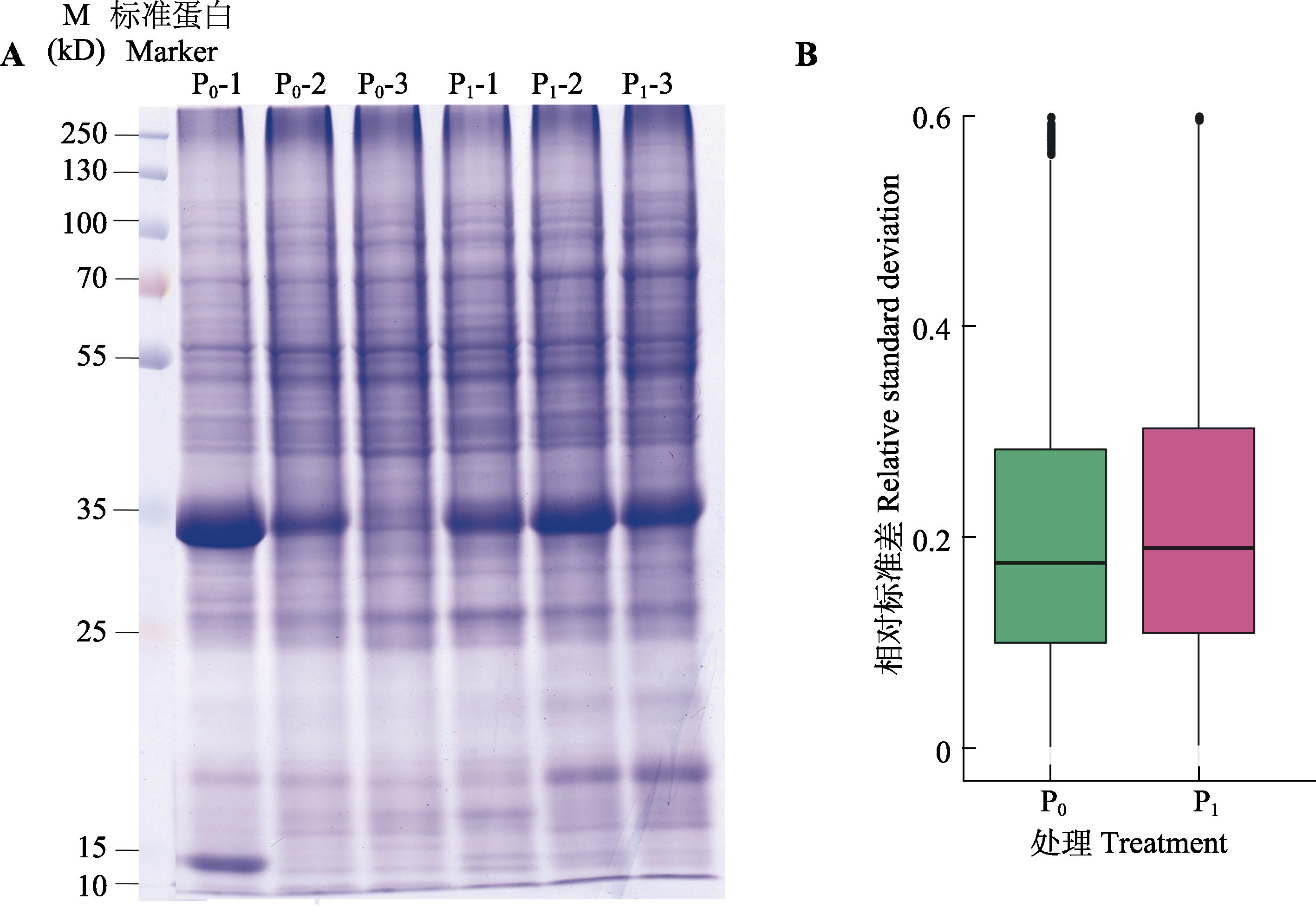
图2 不同处理下杉木根系蛋白组学的蛋白凝胶电泳图(A)和相对标准差分析(B)。M, 标准分子量。P0, 不供磷下添加正癸烷处理; P1, 充足供磷下添加正癸烷处理。
Fig. 2 Protein gel electrophoresis (A) and relative standard deviation analysis (B) of Cunninghamia lanceolata root proteomes under different treatments. M, standard molecular mass. P0, no phosphorus supply with n-decane treatment. P1, phosphorus supply with n-decane treatment.
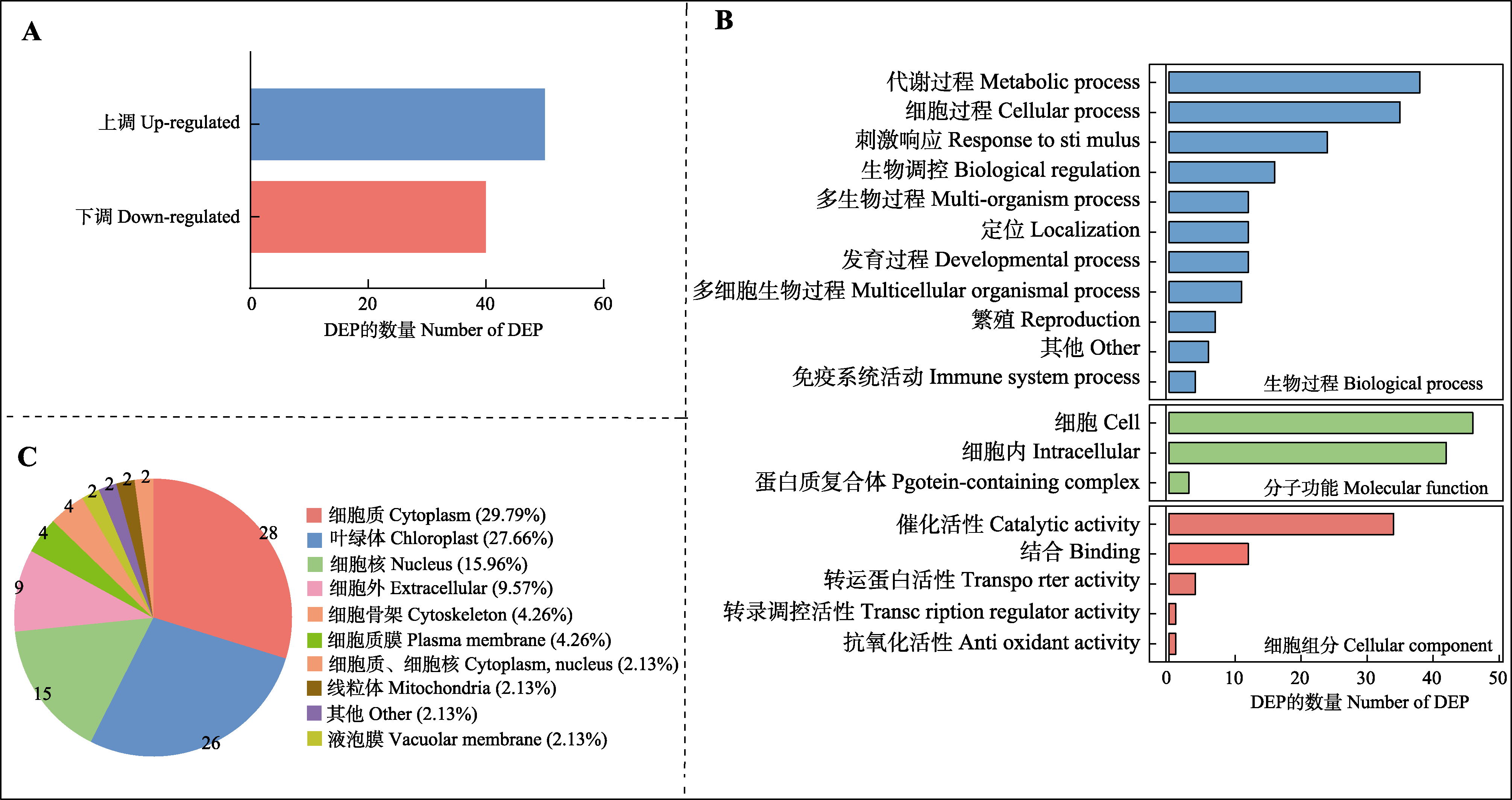
图3 不同处理下杉木根系差异表达蛋白(DEP)的数量(A)、GO分类注释(B)及亚细胞定位(C)。
Fig. 3 Number (A), GO functional classification (B) and subcellular localization (C) of differentially expressed protein (DEP) in Cunninghamia lanceolata root under different treatments.
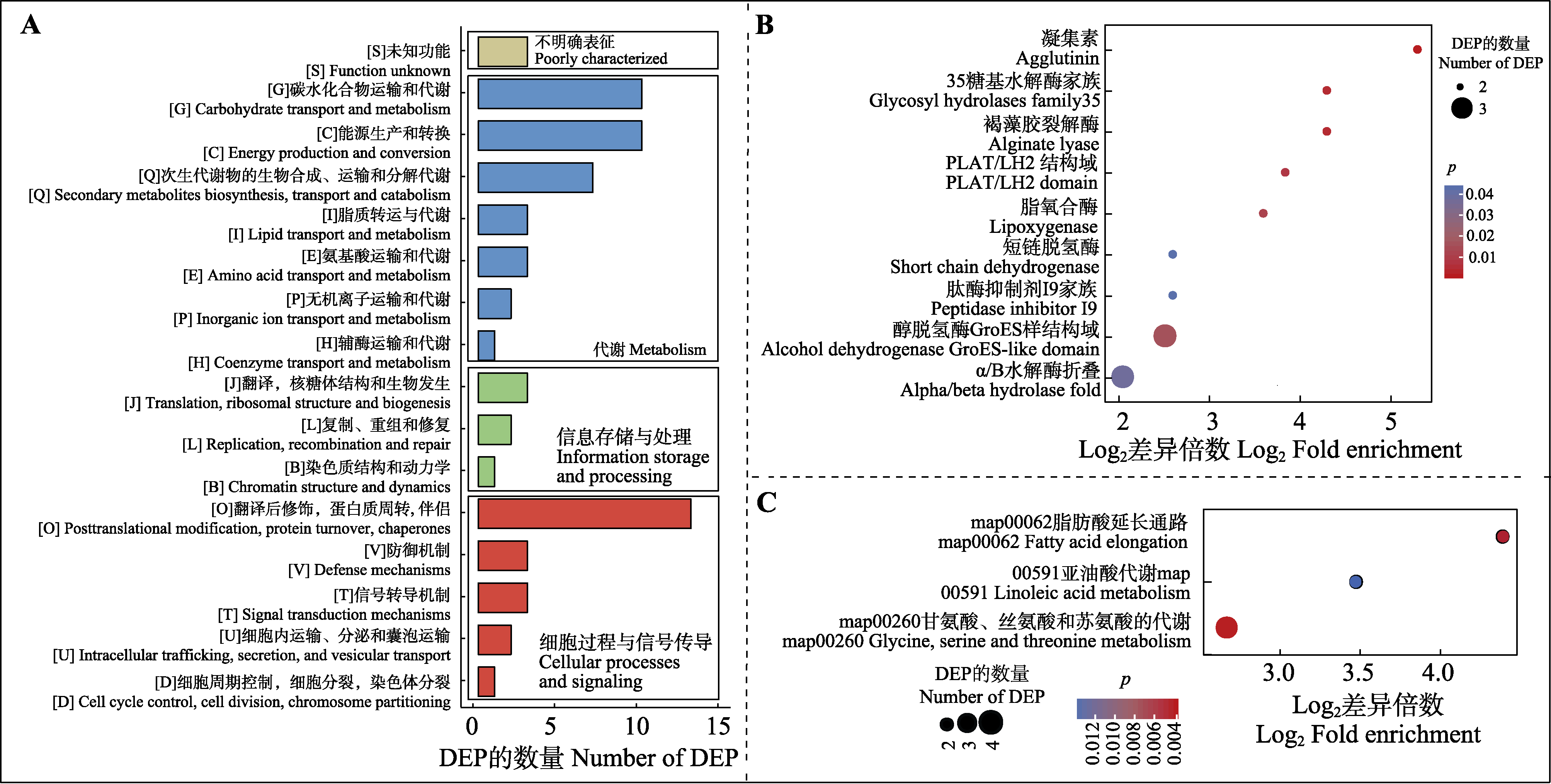
图4 不同处理下杉木根系差异表达蛋白(DEP)的KOG注释(A)、蛋白结构域(B)和KEGG通路(C)富集情况。
Fig. 4 KOG (A), protein domain enrichment (B) and KEGG enrichment (C) of differentially expressed protein (DEP) in Chinese fir root under different treatments.
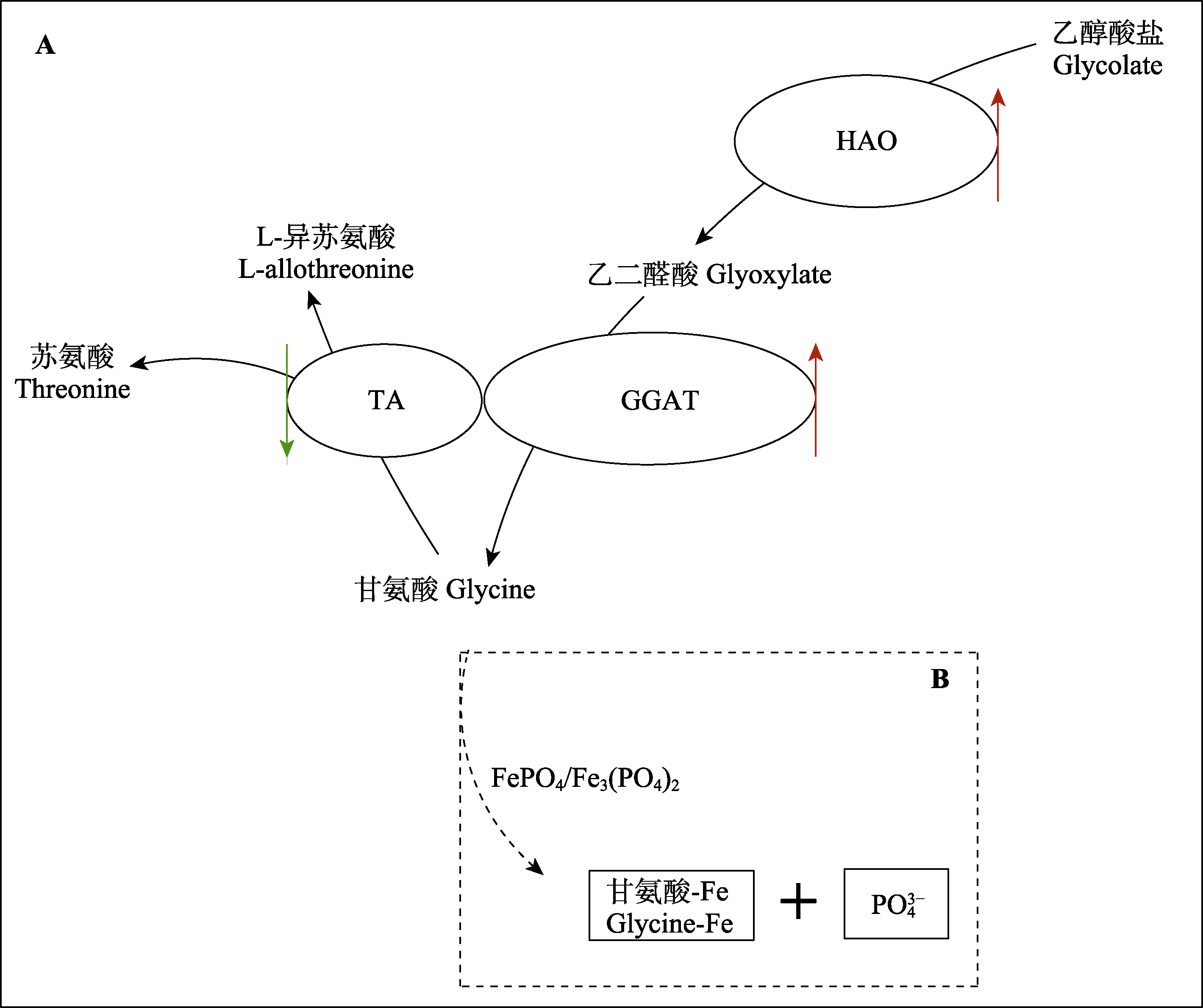
图5 差异表达蛋白(DEP)在甘氨酸代谢相关途径中富集情况(A)和甘氨酸活化难溶性铁磷过程(B)。红色箭头表示DEP在P0 vs. P1中上调表达, 绿色箭头表示DEP在P0 vs. P1中下调表达。B引用于Trevisan等(2024)。GGAT, 谷氨酸-乙二醛氨基转移酶; HAO, (S)-2-羟基酸氧化酶; TA, 苏氨酸醛缩酶。
Fig. 5 Enrichment of differentially expressed protein (DEP) in glycine metabolism-related pathways (A) and the process of glycine-mediated activation of insoluble iron phosphate (B). The red arrow indicates that the DEP were up-regulated in P0 vs. P1, and the green arrow indicates that the DEP were down-regulated in P0 vs. P1. B cited from Trevisan et al. (2024). GGAT, glutamate-glyoxylate aminotransferase; HAO, (S)-2-hydroxy-acid oxidase; TA, threonine aldolase.
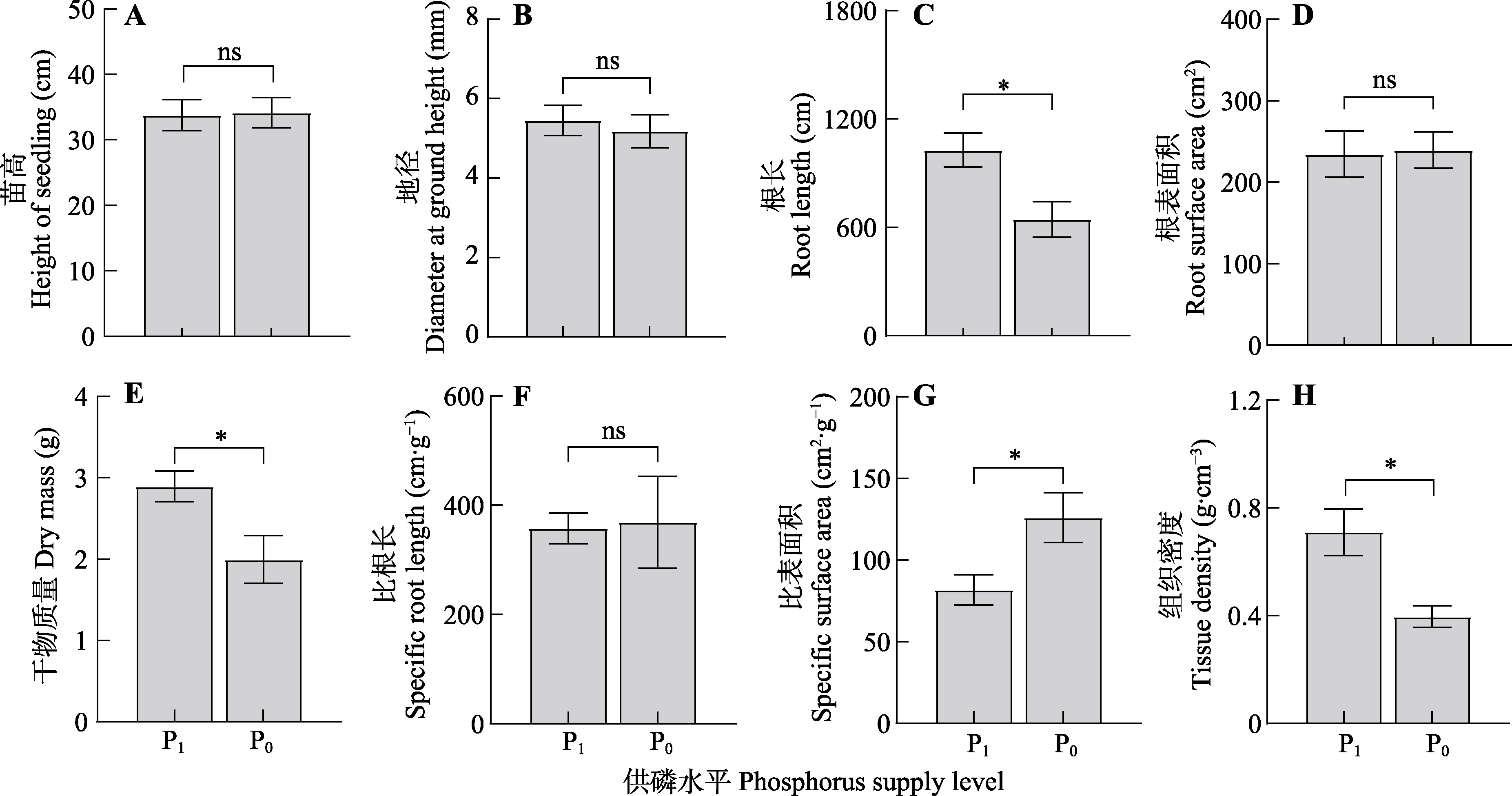
图6 不同供磷水平下添加外源正癸烷后杉木苗高(A)、地径(B)、根长(C)、根表面积(D)、干物质量(E)、比根长(F)、比表面积(G)和组织密度(H)的影响(平均值±标准误)。P1, 充足供磷处理下添加正癸烷; P0, 不供磷处理下添加正癸烷。*, p < 0.05; ns, p ≥ 0.05。
Fig. 6 Effects of addition of exogenous n-decane on height (A), diameter at ground height (B), root length (C), root surface area (D), dry mass (E), specific root length (F), specific surface area (G), and tissue density (H) of Chinese fir under different phosphorus supply levels (mean ± SE). P1, addition of n-decane under sufficient phosphorus supply; P0, addition of n-decane under phosphorus-deficient conditions. *, p < 0.05; ns, p ≥ 0.05.
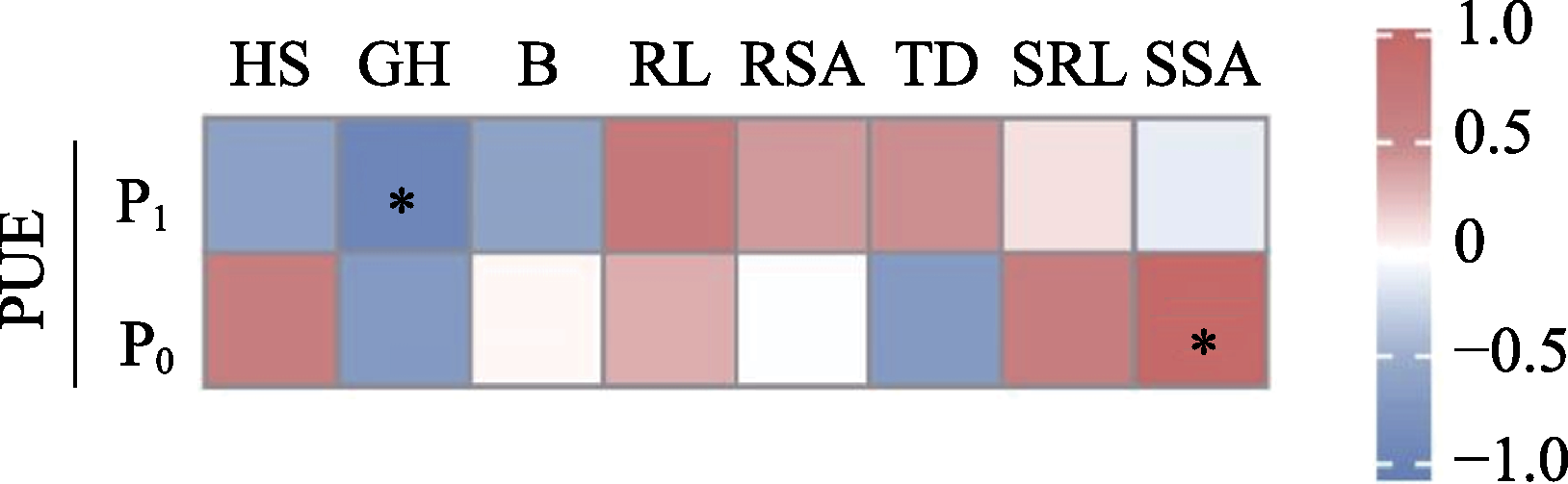
图7 不同处理下杉木根系磷利用效率与各形态指标之间相关性分析。P1, 充足供磷处理下添加正癸烷; P0, 不供磷处理下添加正癸烷。*, p < 0.05。B, 干物质量; GH, 地径; HS, 苗高; PUE, 磷利用效率; RL, 根长; RSA, 根表面积; SRT, 比根长; SSA, 比表面积; TD, 组织密度。
Fig. 7 Correlation analysis between phosphorus use efficiency and each index of Chinese fir under different treatments. P1, addition of n-decane under sufficient phosphorus supply; P0, addition of n-decane under phosphorus-deficient conditions. *, p < 0.05. B, dry mass; GH, ground diameter; HS, height of seedling; PUE, phosphorus use efficiency; RL, root length; RSA, root surface area; SRT, specific root length; SSA, specific surface area; TD, tissue density.
| [1] | Abbas F, Rothenberg DO, Zhou YW, Ke YG, Wang HC (2022). Volatile organic compounds as mediators of plant communication and adaptation to climate change. Physiologia Plantarum, 174, e13840. DOI: 10.1111/ppl.13840. |
| [2] | Berner LT, Orndahl KM, Rose M, Tamstorf M, Arndal MF, Alexander HD, Humphreys ER, Loranty MM, Ludwig SM, Nyman J, Juutinen S, Aurela M, Happonen K, Mikola J, Mack MC, et al. (2024). The arctic plant aboveground biomass synthesis dataset. Scientific Data, 11, 305. DOI: 10.1038/s41597-024-03139-w. |
| [3] |
Bhattacharyya D, Yu SM, Lee YH (2015). Volatile compounds from Alcaligenes faecalis JBCS1294 confer salt tolerance in Arabidopsis thaliana through the auxin and gibberellin pathways and differential modulation of gene expression in root and shoot tissues. Plant Growth Regulation, 75, 297-306.
DOI URL |
| [4] |
Bindraban PS, Dimkpa CO, Pandey R (2020). Exploring phosphorus fertilizers and fertilization strategies for improved human and environmental health. Biology and Fertility of Soils, 56, 299-317.
DOI |
| [5] | Cao MA, Zhang F, Huang GM, Liu RC, Liu LP, Wu QS, Xu YJ (2023). Effects of arbuscular mycorrhizal fungi on phosphorus uptake of walnut seedling roots under low phosphorus stress and the potential mechanisms. Scientia Silvae Sinicae, 59(12), 117-124. |
| [ 曹明奡, 张菲, 黄光明, 刘瑞成, 刘利平, 吴强盛, 徐永杰 (2023). 丛枝菌根真菌对低磷胁迫下核桃幼苗根系磷吸收的影响及机制. 林业科学, 59(12), 117-124.] | |
| [6] | Cao S, Hu HY, Zhang H, Zhou CF, Liu B (2019). Analysis of the causes and countermeasures for soil available phosphorus deficiency in plantation forests in southern China. World Forestry Research, 32(3), 78-84. |
| [ 曹升, 胡华英, 张虹, 周垂帆, 刘博 (2019). 我国南方人工林土壤有效磷匮乏原因及对策分析. 世界林业研究, 32(3), 78-84.] | |
| [7] | Chandrasekaran U, Byeon S, Kim K, Kim SH, Park CO, Han AR, Lee YS, Kim HS (2022). Short-term severe drought influences root volatile biosynthesis in eastern white pine (Pinus strobus L). Frontiers in Plant Science, 13, 1030140. DOI: 10.3389/fpls.2022.1030140. |
| [8] | Chen WT, Zhou MY, Zhao MZ, Chen RH, Tigabu M, Wu PF, Li M, Ma XQ (2021). Transcriptome analysis provides insights into the root response of Chinese fir to phosphorus deficiency. BMC Plant Biology, 21, 525. DOI: 10.1186/s12870-021-03245-6. |
| [9] |
Dani KGS, Loreto F (2022). Plant volatiles as regulators of hormone homeostasis. New Phytologist, 234, 804-812.
DOI PMID |
| [10] |
Dissanayaka DMSB, Plaxton WC, Lambers H, Siebers M, Marambe B, Wasaki J (2018). Molecular mechanisms underpinning phosphorus-use efficiency in rice. Plant, Cell & Environment, 41, 1483-1496.
DOI URL |
| [11] | Erbetta E, Echarte L, Smachetti MES, Gabbanelli N, Echarte MM (2024). Sorghum biomass yield and allocation as affected by the combination of photoperiod sensitivity, sweet-stalk and brown midrib traits. Field Crops Research, 305, 109186. DOI: 10.1016/j.fcr.2023.109186. |
| [12] | Han RF, Khalid M, Juan JX, Huang DF (2018). Exogenous Glycine inhibits root elongation and reduces nitrate-N uptake in pak choi (Brassica campestris ssp. chinensis L.). PLoS ONE, 13, e0204488. DOI: 10.1371/journal.pone. 0204488. |
| [13] | Han RF, Liang Y, Huang DF (2017). Effects of nitrogen form on root morphology and nitrate concentrations of pakchoi. Journal of Shanghai Jiao Tong University (Agricultural Science), 35(3), 37-44. |
| [ 韩瑞锋, 梁韵, 黄丹枫 (2017). 氮素形态对小白菜根系和硝酸盐含量的影响. 上海交通大学学报(农业科学版), 35(3), 37-44.] | |
| [14] |
Han Y, White PJ, Cheng LY (2022). Mechanisms for improving phosphorus utilization efficiency in plants. Annals of Botany, 129, 247-258.
DOI URL |
| [15] | Hong Y, Zheng QX, Cheng LT, Liu PP, Xu GY, Zhang H, Cao PJ, Zhou HN (2023). Identification and characterization of TMV-induced volatile signals in Nicotiana benthamiana: evidence for JA/ET defense pathway priming in congeneric neighbors via airborne (E)-2-octenal. Functional & Integrative Genomics, 23, 272. DOI: 10.1007/s10142-023-01203-z. |
| [16] |
Jones DL, Murphy DV (2007). Microbial response time to sugar and amino acid additions to soil. Soil Biology & Biochemistry, 39, 2178-2182.
DOI URL |
| [17] |
Lai HY, Wu K, Wang NM, Wu WJ, Zou XH, Ma XQ, Wu PF (2018). Relationship between volatile organic compounds released and growth of Cunninghamia lanceolata roots under low-phosphorus conditions. iForest-Biogeosciences and Forestry, 11, 713-720.
DOI URL |
| [18] | Lan ZM, Lin XJ, Zhang WG, Zhang H, Wu YQ (2012). Effect of P deficiency on the emergence of Astragalus L. root exudates and mobilization of sparingly soluble phosphorus. Scientia Agricultura Sinica, 45, 1521-1531. |
| [ 兰忠明, 林新坚, 张伟光, 张辉, 吴一群 (2012). 缺磷对紫云英根系分泌物产生及难溶性磷活化的影响. 中国农业科学, 45, 1521-1531.] | |
| [19] |
Lesuffleur F, Cliquet JB (2010). Characterisation of root amino acid exudation in white clover (Trifolium repens L.). Plant and Soil, 333, 191-201.
DOI URL |
| [20] | Li LX, Deng XH, Zhang T, Tian YL, Ma XQ, Wu PF (2022). Propagation methods decide root architecture of Chinese fir: evidence from tissue culturing, rooted cutting and seed germination. Plants, 11, 2472. DOI: 10.3390/plants11192472. |
| [21] | Li YC, Zhang H, Tian YL, Farooq TH, Li M, Ma XQ, Wu PF (2024). L-Arginine enhances stress resilience against P deficiency of Chinese fir in root system: physiological and proteomics analysis. Environmental and Experimental Botany, 225, 105864. DOI: 10.1016/j.envexpbot.2024. 105864. |
| [22] | Liang X, Liu AQ, Ma XQ, Feng LZ, Huang YJ (2006). Comparison of the phosphorus characteristics of different Chinese fir clones. Journal of Plant Ecology (Chinese Version), 30, 1005-1011. |
|
[ 梁霞, 刘爱琴, 马祥庆, 冯丽贞, 黄益江 (2006). 不同杉木无性系磷素特性的比较. 植物生态学报, 30, 1005-1011.]
DOI |
|
| [23] | Lin DC, Lu JA, Li Q, Zou XH, Li M, Wu PF (2021). Effect of underground space crowding on endogenous organic acids in Chinese fir seedlings. Journal of Fujian Agriculture and Forestry University (Natural Science Edition), 50(1), 54-60. |
| [ 林德城, 卢佳奥, 李琦, 邹显花, 李明, 吴鹏飞 (2021). 地下空间拥挤程度对杉木幼苗根系内源有机酸的影响. 福建农林大学学报(自然科学版), 50(1), 54-60.] | |
| [24] |
Markovic D, Colzi I, Taiti C, Ray S, Scalone R, Gregory Ali J, Mancuso S, Ninkovic V (2019). Airborne signals synchronize the defenses of neighboring plants in response to touch. Journal of Experimental Botany, 70, 691-700.
DOI PMID |
| [25] |
Mohammadipour N, Souri MK (2019). Beneficial effects of Glycine on growth and leaf nutrient concentrations of coriander (Coriandrum sativum) plants. Journal of Plant Nutrition, 42, 1637-1644.
DOI |
| [26] |
Niu JJ, Fang SM, Wang QY, Liang XL (2024). Effects of different concentrations of glycine mixed in soil on growth characteristics of rice seedlings. China Rice, 30(4), 47-52.
DOI |
|
[ 牛娟娟, 方淑梅, 王庆燕, 梁喜龙 (2024). 不同浓度甘氨酸拌土对水稻秧苗生长特性的影响. 中国稻米, 30(4), 47-52.]
DOI |
|
| [27] | State Forestry and Grassland Administration (2019). China Forest Resources Report 2014-2018. China Forestry Publishing House, Beijing. 28-29. |
| [ 国家林业和草原局 (2019). 中国森林资源报告2014-2018. 中国林业出版社, 北京. 28-29.] | |
| [28] |
Sumita T, Iida T, Hirata A, Horiuchi H, Takagi M, Ohta A (2002). Peroxisome deficiency represses the expression of n-alkane-inducible YlALK1 encoding cytochrome P450ALK1 in Yarrowia lipolytica. FEMS Microbiology Letters, 214, 31-38.
PMID |
| [29] |
Tavallali V, Rahmati S, Bahmanzadegan A (2017). Antioxidant activity, polyphenolic contents and essential oil composition of Pimpinella anisum L. as affected by zinc fertilizer. Journal of the Science of Food and Agriculture, 97, 4883-4889.
DOI PMID |
| [30] | Tian YL, Xu JJ, Lian XQ, Wei B, Ma XQ, Wu PF (2023). Effect of Glomus intraradices on root morphology, biomass production and phosphorous use efficiency of Chinese fir seedlings under low phosphorus stress. Frontiers in Plant Science, 13, 1095772. DOI: 10.3389/fpls.2022.1095772. |
| [31] | Trevisan F, Waschgler F, Tiziani R, Cesco S, Mimmo T (2024). Exploring Glycine root uptake dynamics in phosphorus and iron deficient tomato plants during the initial stages of plant development. BMC Plant Biology, 24, 495. DOI: 10.1186/s12870-024-05120-6. |
| [32] |
van der Sande MT, Arets EJMM, Peña-Claros M, Hoosbeek MR, Cáceres-Siani Y, van der Hout P, Poorter L (2018). Soil fertility and species traits, but not diversity, drive productivity and biomass stocks in a Guyanese tropical rainforest. Functional Ecology, 32, 461-474.
DOI URL |
| [33] |
van Doorn MM, Merl-Pham J, Ghirardo A, Fink S, Polle A, Schnitzler JP, Rosenkranz M (2020). Root isoprene formation alters lateral root development. Plant, Cell & Environment, 43, 2207-2223.
DOI URL |
| [34] | Wu WJ, Wang P, Chen NL, Ma XQ, Lin WJ, Wu PF (2019). Root foraging ability for phosphorus of different Chinese fir family seedlings under low phosphorus supply. Journal of Fujian Agriculture and Forestry University (Natural Science Edition), 48, 174-181. |
| [ 吴文景, 汪攀, 陈奶莲, 马祥庆, 林文奖, 吴鹏飞 (2019). 低磷胁迫下不同杉木家系根系觅磷能力分析. 福建农林大学学报(自然科学版), 48, 174-181.] | |
| [35] | Xu P, Li HY, Xu K, Cui XY, Liu ZN, Wang XH (2023). Genetic variation in the glycine-rich protein gene BnGRP 1 contributes to low phosphorus tolerance in Brassica napus. Journal of Experimental Botany, 74, 3531-3543. |
| [36] | Yu X, Chen LC, Guan X, Zhang WD, Yang QP, Zheng WH, Zeng ZQ, Wang SL (2024). Liming shift above- and belowground functional traits of Chinese fir from conservative to acquisitive. Environmental and Experimental Botany, 219, 105642. DOI: 10.1016/j. envexpbot.2023.105642. |
| [37] | Zandalinas SI, Song LH, Sengupta S, McInturf SA, Grant DG, Marjault HB, Castro-Guerrero NA, Burks D, Azad RK, Mendoza-Cozatl DG, Nechushtai R, Mittler R (2020). Expression of a dominant-negative AtNEET-H89C protein disrupts iron-sulfur metabolism and iron homeostasis in Arabidopsis. The Plant Journal, 101, 1152-1169. |
| [38] | Zhao XQ, Pan XZ, Ma HY, Dong XY, Che J, Wang C, Shi Y, Liu KL, Shen RF (2023). Scientific issues and strategies of acid soil use in China. Acta Pedologica Sinica, 60, 1248-1263. |
| [ 赵学强, 潘贤章, 马海艺, 董晓英, 车景, 王超, 时玉, 柳开楼, 沈仁芳 (2023). 中国酸性土壤利用的科学问题与策略. 土壤学报, 60, 1248-1263.] | |
| [39] |
Zou XH, Hu YN, Wei D, Chen ST, Wu PF, Ma XQ (2019). Correlation between endogenous hormone and the adaptability of Chinese fir with high phosphorus-use efficiency to low phosphorus stress. Chinese Journal of Plant Ecology, 43, 139-151.
DOI URL |
|
[ 邹显花, 胡亚楠, 韦丹, 陈思同, 吴鹏飞, 马祥庆 (2019). 磷高效利用杉木对低磷胁迫的适应性与内源激素的相关性. 植物生态学报, 43, 139-151.]
DOI |
| [1] | 瞿亭龙, 张新生, 唐远翔, 朱洪锋, 游成铭, 刘思凝, 徐振锋. 多水平氮添加对华西雨屏区杉木人工林凋落叶产量及碳氮磷归还的短期影响[J]. 植物生态学报, 2025, 49(预发表): 1-. |
| [2] | 郑琳敏, 熊小玲, 姜永孟, 王曼, 张锦秀, 曾志伟, 吕茂奎, 谢锦升. 武夷山不同海拔杉木凋落叶和细根分解规律以及驱动因素的差异[J]. 植物生态学报, 2025, 49(2): 244-255. |
| [3] | 黄智军, 甘子莹, 祝嘉新, 丘清燕, 胡亚林. 杉木不同器官不同碳氮比对土壤激发效应的影响及其机理[J]. 植物生态学报, 2025, 49(10): 1710-1720. |
| [4] | 全小强, 王燕茹, 李小玉, 梁海燕, 王立冬, 闫小莉. 氮添加和铵硝态氮配比对杉木幼苗光合特性及叶绿素荧光参数的影响[J]. 植物生态学报, 2024, 48(8): 1050-1064. |
| [5] | 彭思瑞, 张慧玲, 孙兆林, 赵学超, 田鹏, 陈迪马, 王清奎, 刘圣恩. 长期凋落物去除对亚热带杉木林土壤有机碳及其组分的影响[J]. 植物生态学报, 2024, 48(8): 1078-1088. |
| [6] | 吴帆, 吴晨, 张宇辉, 余恒, 魏智华, 郑蔚, 刘小飞, 陈仕东, 杨智杰, 熊德成. 增温对成熟杉木人工林不同季节细根生长、形态及生理代谢特征的影响[J]. 植物生态学报, 2023, 47(6): 856-866. |
| [7] | 谢欢, 张秋芳, 陈廷廷, 曾泉鑫, 周嘉聪, 吴玥, 林惠瑛, 刘苑苑, 尹云锋, 陈岳民. 氮添加促进丛枝菌根真菌和根系协作维持土壤磷有效性[J]. 植物生态学报, 2022, 46(7): 811-822. |
| [8] | 谢欢, 张秋芳, 曾泉鑫, 周嘉聪, 马亚培, 吴玥, 刘苑苑, 林惠瑛, 尹云锋, 陈岳民. 氮添加对杉木苗期磷转化和分解类真菌的影响[J]. 植物生态学报, 2022, 46(2): 220-231. |
| [9] | 丁凯, 张毓婷, 张俊红, 柴雄, 周世水, 童再康. 不同密度杉木林对林下植被和土壤微生物群落结构的影响[J]. 植物生态学报, 2021, 45(1): 62-73. |
| [10] | 吕中诚, 康文星, 黄志宏, 赵仲辉, 邓湘雯. 不同林龄杉木组织迁移养分的再利用[J]. 植物生态学报, 2019, 43(5): 458-470. |
| [11] | 邹显花, 胡亚楠, 韦丹, 陈思同, 吴鹏飞, 马祥庆. 磷高效利用杉木对低磷胁迫的适应性与内源激素的相关性[J]. 植物生态学报, 2019, 43(2): 139-151. |
| [12] | 沈芳芳, 李燕燕, 刘文飞, 段洪浪, 樊后保, 胡良, 孟庆银. 长期氮沉降对杉木人工林叶、枝氮磷养分再吸收的影响[J]. 植物生态学报, 2018, 42(9): 926-937. |
| [13] | 陈日升, 康文星, 周玉泉, 田大伦, 项文化. 杉木人工林养分循环随林龄变化的特征[J]. 植物生态学报, 2018, 42(2): 173-184. |
| [14] | 彭曦, 闫文德, 王凤琪, 王光军, 玉昉永, 赵梅芳. 基于叶干质量比的杉木比叶面积估算模型的构建[J]. 植物生态学报, 2018, 42(2): 209-219. |
| [15] | 陈思同, 邹显花, 蔡一冰, 韦丹, 李涛, 吴鹏飞, 马祥庆. 基于 32P示踪的不同供磷环境杉木幼苗磷的分配规律分析[J]. 植物生态学报, 2018, 42(11): 1103-1112. |
| 阅读次数 | ||||||
|
全文 |
|
|||||
|
摘要 |
|
|||||
Copyright © 2022 版权所有 《植物生态学报》编辑部
地址: 北京香山南辛村20号, 邮编: 100093
Tel.: 010-62836134, 62836138; Fax: 010-82599431; E-mail: apes@ibcas.ac.cn, cjpe@ibcas.ac.cn
备案号: 京ICP备16067583号-19
